
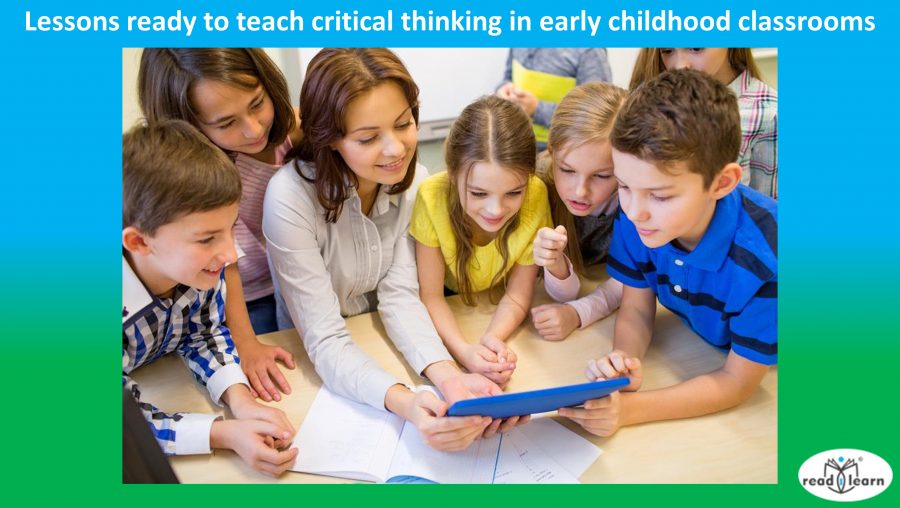
Even young children in early childhood classrooms can be taught to think critically about material that is presented to them. Being able to discern the accuracy of what they read is increasingly important in this era of fake news.
In this post, I provide some suggestions with lessons ready to teach using children’s picture books. The types of questions and ideas can be applied to other books for checking the accuracy of information.
To assist in verification of information, children can be encouraged to ask and answer questions such as:
- What do we already know?
- Does this match what we already know?
- What do we want to find out?
- How can we find out?
- How can we be sure the information is true?
- Is it fact or is it fiction?
Children, and adults, need to be aware that misinformation, often cleverly disguised as fact, is available everywhere, including on the internet. Being able to navigate one’s way through it all is a very important skill, regardless of age. This article by Tech Teacher Jacqui Murray has some useful advice about Fake News or Fact? How do you tell?
We don’t need to present young children with fake news stories to teach them the skills of critical thinking. We can begin with discussions of stories and information we present to them each day.
Continue reading: Lessons ready to teach critical thinking in early childhood classrooms – Readilearn


 Norah Colvin
Leave a reply to Norah Cancel reply