
If I was to ask a group of six year olds what a friend is, I would receive responses such as:
- A friend is someone who plays with you
- A friend is someone who likes you
- A friend is someone who helps you
- A friend is someone who looks after you when you’re hurt
For just over two years now a group of writers have formed a bond of friendship by playing together each week, responding to a flash fiction prompt set by Charli Mills at the Carrot Ranch. You couldn’t get a more supportive group of writers. In fact, a while ago I coined the term S.M.A.G. (Society of Mutual Admiration and Gratitude) to express the relationship many of us feel.
This week Lisa Reiter, who blogs at Sharing the Story, showed that the ability to lend a hand is not restricted to friends who live close by. Although they live at opposite sides of the Atlantic and half the world away from each other; and despite the fact that no request for help had been made, like the true friend that she is, Lisa saw a need and immediately assisted Charli by writing this week’s flash fiction prompt and post. You won’t be surprised to know that the theme is helping out.
This ties in beautifully with a TED talk I listened to this week. The talk by Australian humanitarian Hugh Evans is titled What does it mean to be a citizen of the world? Hugh talks about the organisation he co-founded: Global Citizen; which is described on the website in this way:
“Global Citizen is a community of people like you. People who want to learn about and take action on the world’s biggest challenges—and use their power to get other people involved too.
We bring you stories and actions that make a difference. That help fight extreme poverty and inequality around the world, and support approaches that will make life more sustainable for people and the planet.”

These are some of the points I have brought away from Hugh’s talk:
- A global citizen is “someone who self-identifies first and foremost not as a member of a state, a tribe or a nation, but as a member of the human race, and someone who is prepared to act on that belief, to tackle our world’s greatest challenges.”
- Hugh describes himself as “one of those seriously irritating little kids that never, ever stopped asking, “Why?” He went from asking questions like, “Why can’t I dress up and play with puppets all day?” to why couldn’t he change the world?
- He had already been raising large amounts of money for communities in the developing world when, at age fourteen, he spent a night in a slum in Manila and thought, “Why should anyone have to live like this when I have so much?”
- “that of the total population who even care about global issues, only 18 percent have done anything about it. It’s not that people don’t want to act. It’s often that they don’t know how to take action, or that they believe that their actions will have no effect.”
- Hugh initiated the Global Citizen Festival in New York’s Central Park. Tickets for the festival couldn’t be bought, They had to be earned by taking action for a global cause. He said, “Activism is the currency”.
- By becoming a global citizen one person can achieve a lot because they are not alone – there are now hundreds of thousands of global citizens in more than 150 countries
“We, as global citizens, now have a unique opportunity to accelerate large-scale positive change around the world. “
“Global citizens who stand together, who ask the question “Why?,” who reject the naysayers, and embrace the amazing possibilities of the world we share.”
He finishes his talk with the challenge:
“I’m a global citizen. Are you?”
Hugh’s contribution to the world is a great recommendation for encouraging children to ask questions, isn’t it?
Here is his talk if you would like to be inspired by his own words. You may find other points that speak more clearly to you.
This brings me back to Lisa’s helping hand which, while not on the same scale, clearly demonstrates the opportunities that exist to help if we take the focus from ourselves and place it on others in an attempt to understand their situations and how we might be able to assist.
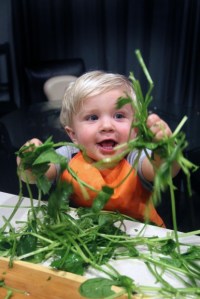
For my flash, I’m bringing you back even closer to home, to a situation with young children that will be familiar to many. Little ones love to help and hate to be helped in almost equal measure. “Let me do it!” and “I can do it myself!” are two frequently heard phrases in households with little ones. Opportunities for both are essential for their developing sense of self, independence and confidence. Both require a great deal of patience on the part of parents and a larger allocation of time than one would normally feel necessary. I think I must have been in a rush and didn’t have time to wait in the queue when patience was being dished out. Fortunately, my children shared some of theirs with me. Sadly, not always soon enough for their benefit. (Sorry, Kids.)
A playdate at Bella’s
Mummy checked the calendar. Oops! Her turn for cake. Dulcie was engrossed playing. Great! Just enough time, if ….
Scarcely was everything out when up popped Dulcie. “Let me do it!”
Too pressed for winnerless battles, Mum kept one eye watching Dulcie, the other on the clock.
With the cake finally baking, Mummy suggested clothes to wear.
“No! I want this one,” pouted Dulcie.
“Let me help with the buttons.”
“No! I can!” objected Dulcie.
Only thirty minutes late, with warm cake and buttons all askew, they arrived.
“Come in,” greeted Bella’s mum, “Looks like you need a hand.”

Thank you for reading. I appreciate your feedback. Please share your thoughts.


 Norah Colvin
Leave a reply to Annecdotist Cancel reply