Yesterday, 2 March was Dr Seuss’s birthday. How did you celebrate? Did you read a favourite Dr Seuss story – maybe even more than just one or two? Which is your favourite?
Children love the rhythmic, rhyming stories written by Theodor Seuss Geisel who was born in 1904. (A question for your children – how old would he be if he was still alive today?)
Having fun with rhyme is a great way for children to learn about the sounds of language.
In the beginning, the rhymes can be real or nonsense words, as are many employed by Dr Seuss, training the ear to hear. Children are delighted when they discover pairs of words that rhyme. It is great when parents and teachers share their excitement of discovery too.
Like those of Dr Seuss, many stories and poems for young children are written in rhyme. The rhyme is pleasant to the ear, and encourages children to join in with the reading or telling, using meaning and sound to predict the next rhyming word.
When children are ready, familiar rhyming texts are often the first they read independently, using a combination of memory and print. How many children do you know who first started reading with a Dr Seuss book; such as The Cat in the Hat, Fox in Socks, One Fish Two Fish, Ten Apples Up On Top, or any other favourite.
For my part in the celebration, I joined in with a challenge extended by Vivian Kirkfield to write a story in 50 words. The reason behind the 50 word challenge is that, although the total word count of Green Eggs and Ham is over 700, only 50 unique words were used. (Some of your children may like to check if that is so. How could they do it?)
I decided to write a rhyming nonsense story in exactly 50 words (title not included). I hope you and your children enjoy it.
In this post I introduce you to Michael Rosen, the storyteller. Michael’s story Going on a Bear Hunt many be more familiar to you than his name. But Michael Rosen is a storyteller extraordinaire and his website is a treasure trove to explore*.
*Note: Not all of Michael’s stories and videos are suitable for early childhood. Please preview them before presenting them to students.
One of my favourites of Michael’s stories is Chocolate Cake. Please follow the link to view it on his website.
In the story from when he was a boy, Michael sneaks downstairs in the middle of the night and eats all of the remaining chocolate cake, leaving not a skerrick for a lunchtime treat. If only he’d been able to restrain himself, then he would have had a treat as well.
Michael tells the humorous story with expressive voice and face. Children laugh out loud as they recognise themselves in the story, if only they dared (or did they?); and beg for it to be retold, often spontaneously joining in with the telling.
After a few repetitions, children are confident enough to retell the story independently, imitating many of Michael’s humorous gestures and intonations.
Listening to Michael tell stories is a great way to encourage the development of expression, in both telling and reading stories.
I love poems. Children do too. Poetry is a great way of introducing children to the joy of language, as well as to features such as rhythm, rhyme, alliteration, similes and metaphors. What is taught through poetry can be as simple or as complex as required by the ages of the children or your teaching purpose.
One of the great benefits of teaching young children through poetry is the fun aspect. It’s enjoyable for teachers and students alike and, when children innovate on poems to create poems of their own, very motivating.
With St Valentine’s Day not far away it is timely to read and write love poems. One of my favourite poems for writing with young children is based on the traditional camping song I love the mountains. I was taught the poem by the amazing literacy educator Bill Martin Jr at a reading conference in the 1980s, and used it with every group of children I taught thereafter. I have previously written about that on my other blog here.
The repetitive structure and easy melody invites children to join in and is easy for children to use in writing poems of their own, whether they are emergent, beginning, or advanced writers. The poems can be completed using pictures or words.
I am a fan of creativity. I like to develop my own creativity, and I like to encourage the development of creativity in others.
One thing I always loved about teaching was the opportunity it gave me to be creative: writing stories, units of work, and lessons plans to interest and excite the children about learning. It is this love that drives me to write my blog posts each week, and to create new early childhood teaching resources for readilearn nearly every week.
Just as exciting was the opportunity to support the development of children’s thinking, imagination, and creativity. I am more in favour of treating children as individuals, than as one of a homogeneous group from which any difference is considered an aberration. After all, imagination and creative thinking are what inspire and drive improvement, innovation and progress.
I affirm my belief in the power of creativity in my tagline: ‘Create the possibilities . . .’, a tagline I previously used for an independent school I was establishing.
Preceding both was my first independent undertaking: Create-A-Way. Create-A-Way provided a richer educational and social setting for my young daughter than what was generally available, allowed me to share my educational philosophy and knowledge, and provided the same rich learning opportunities for other children and their parents. The development of imagination and creativity was a focus.
Guiding parents in play sessions for parents and children.
One of the things I love most about responding to the weekly flash fiction challenges set by Charli Mills at the Carrot Ranch is the additional opportunity to engage in something creative and to hone my writing skills. The supportive environment of a welcoming community makes it a safe and enjoyable experience. There is something affirming about belonging to a community of other creatives, online or in -person.
On Saturday I, along with a whole bunch of other women creatives, attended an excellent Book Marketing Masterclass conducted by authorpreneur Karen Tyrrell. (I am looking forward to interviewing Karen for the Author Spotlight series on readilearn in March.) The class was attended by writers of a variety of genres; including memoir, romance, science fiction, fantasy, YA, and picture books.
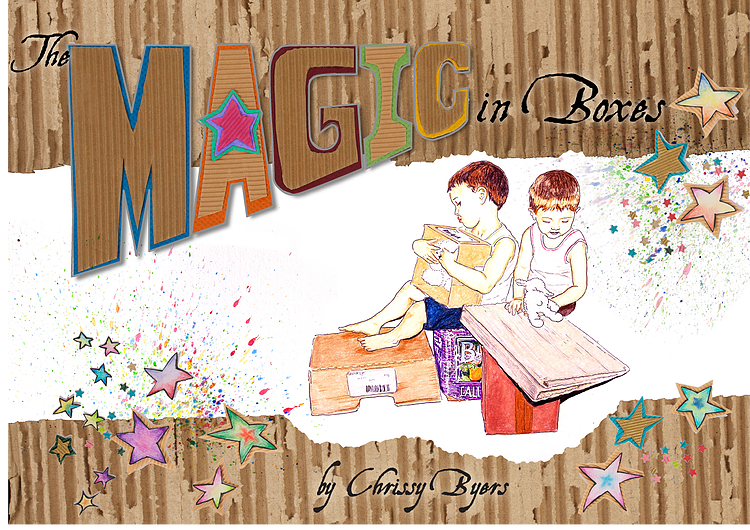
One of the attendees Chrissy Byers has created a lovely picture book The Magic in Boxes which “aims to capture the imagination of young readers and inspire creative play.”
Not only does the book suggest ways of stimulating creativity using recycled materials such as cardboard boxes, the book is made from recycled paper. I think that’s pretty awesome. It’s a beautiful book with a wonderful aim.
For a little more on creativity; in a previous post, Are you a lemon or a grapefruit? I shared ten articles about creativity. They are still relevant and worthy of a read if you haven’t yet done so.
I also shared one of my favourite TED talks by Sir Ken RobinsonHow schools kill creativity. If yours is not yet one of the over 41 million views, I urge you to watch it. As well as sharing a very important message, Ken is hugely entertaining.
I usually find Charli’s prompts a challenge but, with a bit of digging around in the old brain cells, I can usually concoct something with which I am reasonably happy. This time I’ve been scratching around the surface but have found little worthy of further investigation.
I considered a story of epic proportions, as I can’t think of a quarry without thinking of Gilgamesh.
Many years ago, I took my teenage son and a friend to a performance of the ancient story in a disused quarry. Whether it was part of their English or theatre studies, or what prompted the outing, I can’t recall. I think they were no more familiar with this “first great work of literature” than I; and I knew nothing. The performance made a lasting impression, both for its setting and the repetitious dialogue. I recall little of the hero’s epic journey. We were amused rather than awed.
From Gilgamesh, I considered play of a different, but more familiar kind: play in a sandpit or the dirt with diggers and trucks.
The sandpit was always popular for play at lunchtime, particularly if diggers, trucks, and other tools were available. Often the same children would play day after day, creating and re-creating the same scene with roads, rivers, bridges, and cities. Each seemed to have a particular role and responsibility. Found objects; like leaves, bark, feathers, sticks, and stones, would also be incorporated into the designs.
This play was great for the imagination, and for developing the friendship skills of cooperation and getting along, teamwork and working together. Surely I could find a story in there? But any ideas disintegrated faster than the sandpit structures.
It seems timely then, to revisit previous discussions of the difficulty experienced by children when expected to write to a prompt that may have little significance for them, and about which they may have little opportunity for discussion, reflection or planning.
I discussed this in both Writing to order – done in a flash! and Writing woes – Flash fiction. I suggested that, rather than using a one-piece response to a prompt to assess children’s writing, the use of portfolios would provide more valuable information about children’s writing development.
A portfolio, similar to that of professional writers, would consist of work at various stages: some as ideas jotted on slips of paper, some in planning stages, others in draft form, others completed and waiting for the next step, and others in publication. Rarely would a piece need to be completed in one sitting, let alone judged for it worth on the spot.
I believe that:
a one-off writing assessment task does not give students an opportunity to show their best work and puts pressure on them to perform
a portfolio of work collected over time provides a clear picture of student ability, development, and next steps for learning.
However, that writers have a choice about responding to Charli’s flash fiction prompts, makes the process quite different from that experienced by children responding to a prompt as a requirement.
Writers have a choice whether to participate, in what genre to respond, and how to interpret the prompt.
In recent posts Charli has discussed the importance of accepting our first drafts as “rawliterature”, as part of the process. She provide us with the opportunity to hone our writing skills, and share and receive feedback on our writing in a safe, supportive environment. Surely this is no less important when encouraging young writers.
Out of sympathy for the requirements imposed on children almost every day, I thought it only fair to respond to Charli’s prompt. This is it.
The Quarry
Old and disused, the bare earth was dry with no hint of topsoil or sign of life. Rock fragments, remnants of its past, littered the surface still pockmarked by tyre tracks. One wall, etched by diggers’ teeth, stood silently telling its story. Circles of ash littered with shards of glass and cigarette butts told another. But tonight it was to tell a story as old as time. Where once huge trucks had carted away boulders carved from its interior, now rough timber platforms stood. As darkness fell, flaming torches cast an eerie light as storytellers wove their epic tale.
Thank you for reading. I appreciate your feedback. Please share your thoughts.
This week on the readilearn blog I am talking to June Perkins about her wonderful collection of poems for children Magic Fish Dreaming. With the beautiful illustrations by Helene Magisson, this collection is a delight for the ears, the eyes, and the spirit. Read about June’s inspiration for the poems, and use them as inspiration for poems of your own, or use them to inspire poetry writing in your students.
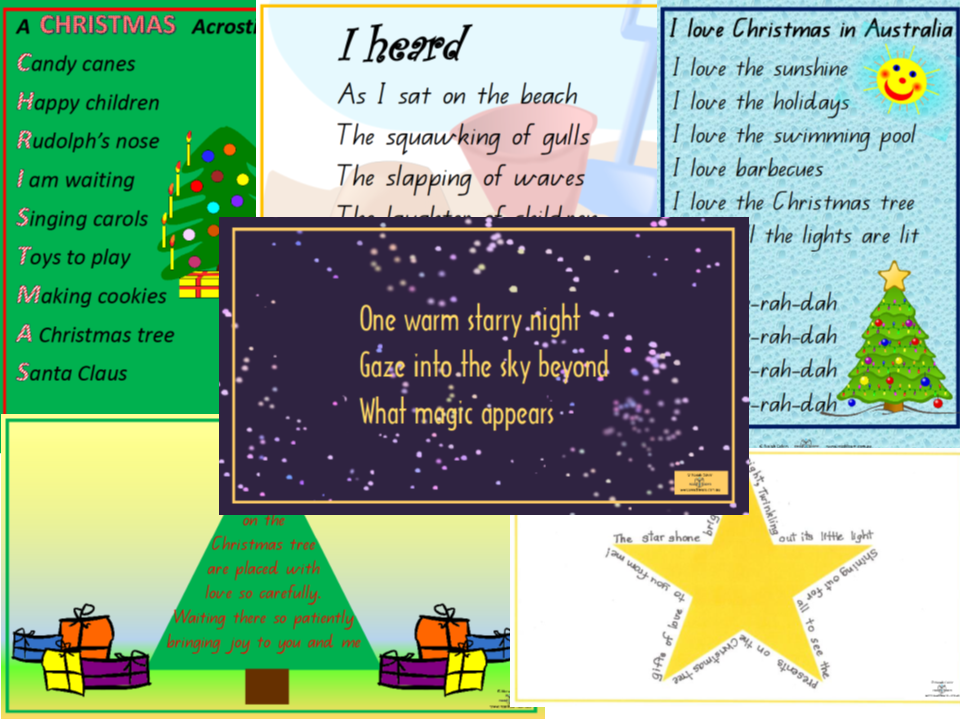
Giving young children a simple structure or a repetitive pattern to start from gets them thinking about words, how they sound, what they mean, the number of syllables and letters. All the while they are having fun, playing with words and sounds, and learning about language.
Five easy poems to write with children are:
Acrostic poems
Sound poems
Haiku
“I love” poems, and
Shape poems
Acrostic poems are one of the easiest. They don’t need to rhyme or follow a set rhythmic pattern.
Hi, welcome to the readilearn blog and the first in our Author Spotlight series.
Spring is here and summer is on its way in Australia. The excitement of new life is everywhere as flowers bloom, birds sing, and insects abound. The excitement flows into the classroom as children observe and record the life stages of the amazing minibeasts that inhabit our world.
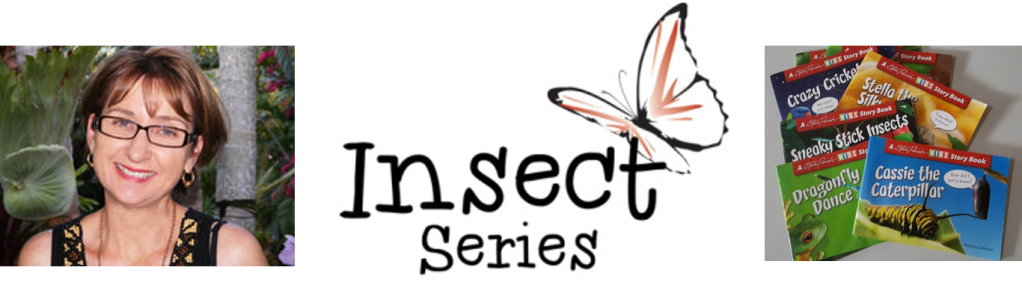
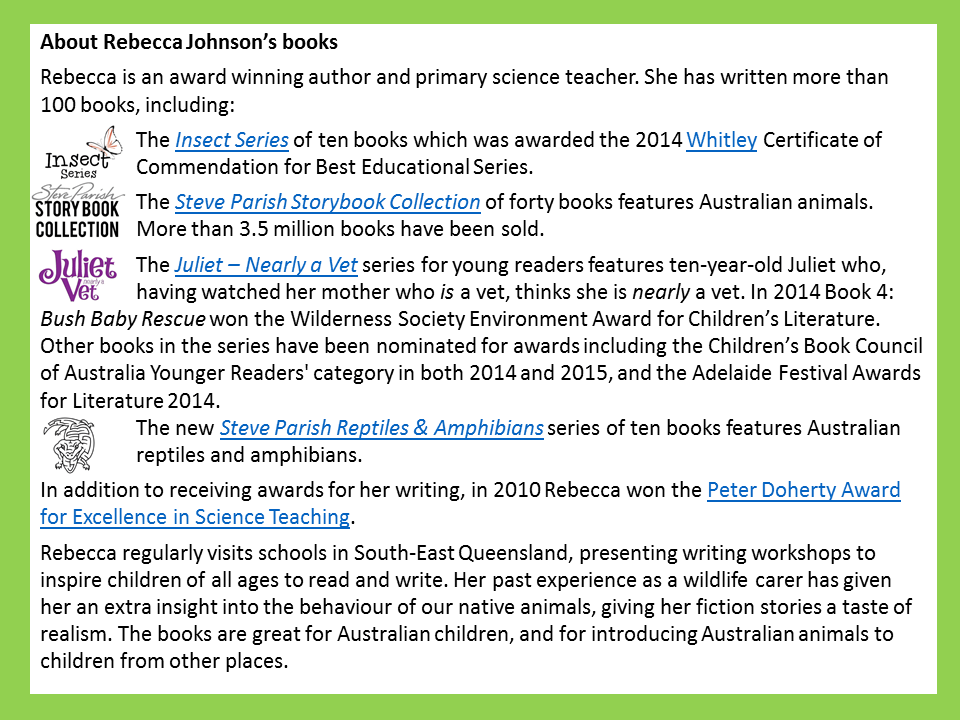
There is no better time than spring to introduce you to Brisbane author Rebecca Johnson and her Insect Series which was awarded the 2014 Whitley Certificate of Commendation for Best Educational Series.
Rebecca Johnson: award-winning author and primary school science teacher
Rebecca’s Insect Series of ten books focuses on metamorphosis, survival, adaptations, properties of natural materials and the usefulness of insects through fiction stories. The stories are accompanied by stunning close-up photos of insects of all kinds.
The books, which won the 2014 Whitley Award for Best Educational Series, have strong listed links to the Australian Curriculum for many year levels. They are a great resource for teaching and learning about insects. The fiction stories that accompany the facts make the learning even more fun. Two free blackline masters support the use of each book. The blackline masters can be accessed on the Blake Education Website.
While the books feature Australian insects and have links to the Australian curriculum, they are loved by children all over the world. I am happy to introduce you to Rebecca and her lovely series of books.
Welcome to readilearn, Rebecca. We are looking forward to getting to know you a little better.
Thanks for inviting me!
When did you know you wanted to be a writer?
When I was reading a lot of picture books to my very young children and could see how much they loved them.
Where do you write? Do you like to be by yourself in the quiet, or do you like to write in a noisy space?
I do most of my ‘writing’ in my head. I think about my stories for ages and pitch them verbally to victims until I am sure I have it all sorted in my head, then I sit to write in my lovely, quiet study overlooking my garden. I encourage children to tell their stories out loud before they write too, because, in my opinion, it is almost impossible to write a good story if you can’t tell one.
What do you use to write – pencil and paper or computer?
Head first. VERY few drafts, then I type it into the computer. I can type a 7000 word novel in a week that is publisher-ready, but I have thought about it and pitched it and sounded it out in my head for weeks beforehand. I hate sitting down all day, and I hate re-doing things over and over even more, so I do heaps of my drafting mentally whilst I do other (fun) stuff like gardening, then by the time I sit down to write, it’s like typing out a movie I know really well. People give you more honest feedback too, when you tell them a story. They feel less nervous about letting you know how they really feel about it. Try it some time.
When is the best time for you to write?
I do my best work from 5am when the house is really quiet. I’m always too tired at night (I still teach three days a week) for anything too creative.
When and where do you get your ideas?
From my life’s experiences as a mother, teacher, child and my own children. I think you have to write about what you know and love.
What gave you the idea for this series about insects?
I am a science teacher and I love insects, and I just couldn’t find the books I needed to succinctly and factually tell kids about the life-cycles and characteristics of insects in a fun way, so I wrote some.
What do you like best about the series?
Kids love them because they are funny and a bit silly, but they are still full of facts and information. I think they remember things better if it is presented in more appealing and humorous way.
What can you tell us about the photographs that illustrate the books?
My sister (Narinda Sandry) took most of them and it was hilarious. We didn’t want to harm any of the insects, so we had to put some, like the mealworms, in the fridge for a while to slow them down to get the shots. I will always smile as I recall the day we sat around a cow pat in a paddock trying to photograph dung beetles before they re-dug themselves in! The old farmer that had let us into the paddock stood to the side scratching his head in disbelief.
How did your feel when you wrote these stories?
I was really pleased when they came out because the photos are just gorgeous, and they were very well received by schools and parents. Winning the Whitley awards was really lovely recognition too.
How do you hope readers will feel?
Hopefully empowered with more information and knowledge, and perhaps inspired to look more closely at the wonderful world of insects and an appreciation of the benefits they bring.
How would you like teachers to present your books to children?
I’d love them to make them part of their science lesson, and even team them with some real insects (like mealworms) to make it all so much more engaging. There are two free blackline masters for each one too, that are designed to be able to be used independently by children in reading groups etc. There are heaps of facts inside the covers, and a glossary of terms, so plenty to learn in each one.
Are there any messages you would like them to discuss?
The main thing is that insects are so important and not just a good excuse to whack something!
Do you have any advice for teachers in their role as writing guides?
As I said earlier….talk before writing as much as you can. It is amazing how hard kids find it to describe something verbally and yet we ask them to do it in the written form all the time with disappointing results.
Do you have any advice for children as writers?
Tell, tell, tell, and don’t be too hard on yourself if it takes a long time to get it right. It took me five years to get my first book published.
What is your favourite picture book? What do you like about it?
I have so many favourites, but Bob Graham’s Greetings from Sandy Beach always makes me laugh out loud, and humour is really important to me in a book.
Who is your favourite children’s author? What do you like about his or her work?
The Lion the Witch and the Wardrobe (CS Lewis). He made me see a movie in my head. I could picture every scene, decades before there was a movie. I remember thinking that one day, I wanted to make a reader feel like that.
Thank you Rebecca Johnson for sharing these insights about your Insect Series and your writing process. We wish you success.
Thank you, and thanks for having me!
To find out more about Rebecca and her award winning books visit her website at rebeccajohnson.com.au. You can find out about and purchase her Insect Series and other books on her website.
This interview and information about Rebecca is available as a printable resource in a new subcategory in readilearnliteracy resources: Author Spotlight. The information may be displayed in your classroom or included in a class book about authors and illustrators.
Hi, and welcome again to the readilearn blog. I hope you’ve had a good week. Thank you for your interest in readilearn. I apologise to those who have experienced difficulty in applying the discount coupon codes at the checkout. Know that I will honour the coupon offer with a PayPal discount refund if your subscription goes through with payment in full. I appreciate your persistence and patience while we improve flow with the payment system. Please contact me if you experience any difficulties.
Getting to know readilearn resources
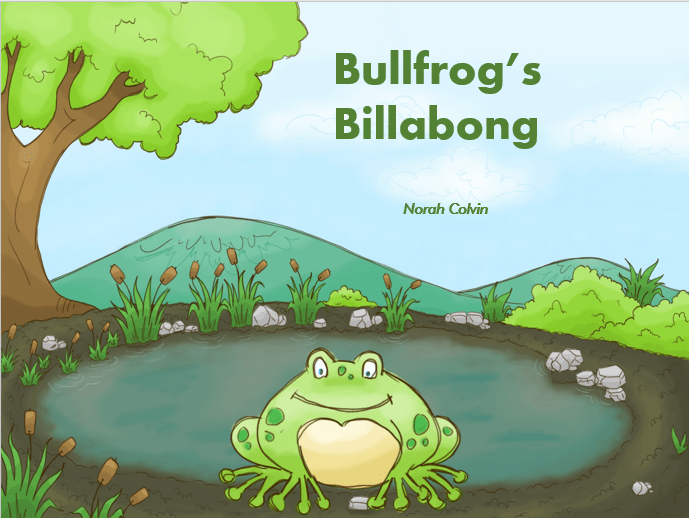
In this post I discuss the Bullfrog’s Billabong suite of resources.
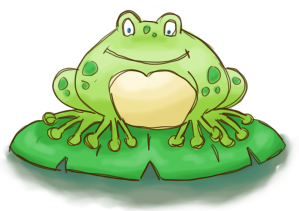
Bullfrog’s Billabong is a cumulative story which takes place at a fictitious Australian Billabong. Bullfrog is the first to arrive at the billabong. He decides it would be a great place to live and makes it his home. Each day, more animals arrive at the billabong. They too think it would be a good home and, after asking permission, decide to stay. Unfortunately, as the billabong becomes more and more crowded, the animals have difficulty in getting along. Their racket attracts another visitor who also sees the potential of the billabong as a home.
The story includes mathematical concepts including counting, growing patterns and days of the week.
The repetitive structure supports children’s reading and encourages them to make predictions based upon obvious patterns involving counting and days of the week. Their knowledge of narrative structure encourages prediction of possible events and conclusion. The end may surprise some children and they may or may not approve of the author’s choice. A discussion of alternative ways to conclude the story could lead to some interesting writing, and an understanding that what happens in stories is a choice made by the author.
While the animals will be familiar to Australian children, the story provides a great opportunity for children from other countries to find out about them too.
I hope you and your children enjoy reading the story and using the resources.
Bullfrog’s Billabong – Covered cloze (This interactive resource for use on the whiteboard is great for teaching effective reading strategies. For best effect, it should be used before any other Bullfrog’s Billabong resources.)
I have been working on new resources to support and complement the existing Bullfrog’s Billabong resources.
This week I have added three new resources to the collection:
Bullfrog’s Billabong – The facts (This information sheet explains what a billabong is and verifies that all the story’s animals may live in a billabong, though possibly not the same one.)
Bullfrog’s Billabong – Days of the week (Use these three sets of printable cards when teaching or revising the days of the week. There are A5 cards for use with the whole class, and smaller cards for use by individuals or small groups.)
I am working on other resources to add to the suite, including presentation of the story as a play. There is also a set of animals to print that can be used to make pop stick puppets for a performance. Watch for these, and others, coming soon.
I hope you and your children enjoy using these resources. I had fun making them and thinking about the responses of children.
Please contact me if you have any questions. I welcome your feedback, especially suggestions for improvements to existing resources and ideas for new ones.
Introductory discount
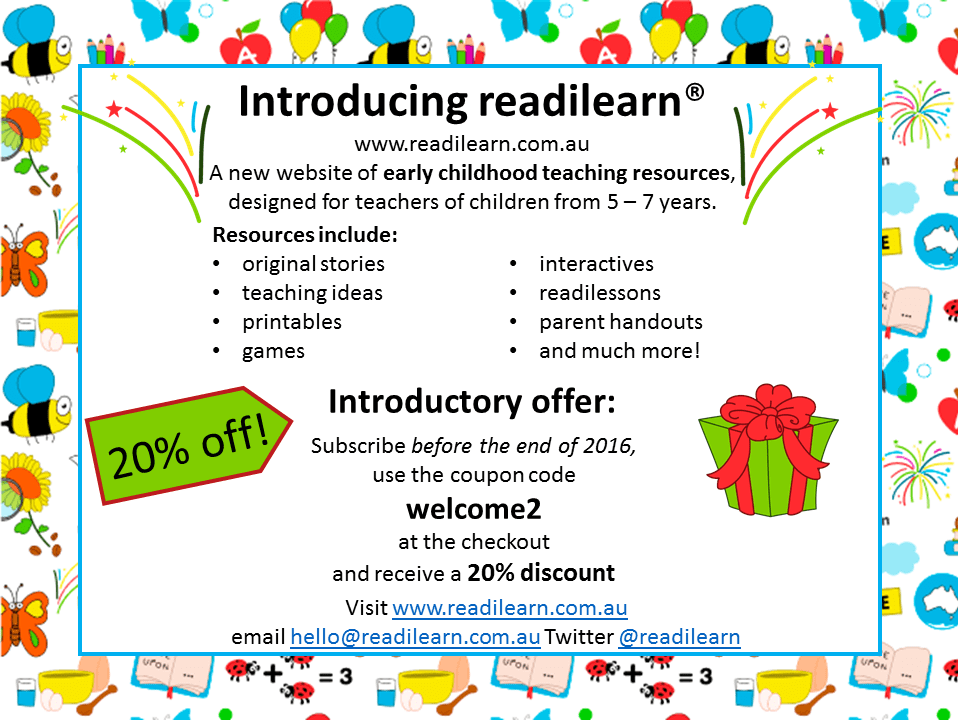
Remember, if you haven’t yet subscribed, an introductory discount of 20% is available to all who subscribe this year. Just use the coupon code welcome2 at the checkout to receive your discount.
I’ll see you next week. In the meantime, enjoy the weekend.
Responses to a previous post on the importance of feedback suggested that I trial republishing readilearn posts here. As the suggestion came from a number of people I considered it sound advice and worth trying. As always, I will be interested to hear what you think.
The first day of September marks the first day of spring in Australia. It is also recognised throughout Australia as Wattle Day. The golden wattle is our national floral emblem. Its colours give the recognisable green and gold to our sporting teams.
Like the people of our land, it is a plant that shows both diversity and resilience. There are hundreds of species of wattle growing in many different habitats across Australia. They may be seen growing wild in bush areas and national parks, and cultivated in botanic gardens, on footpaths and in home gardens.
I have three varieties of wattle growing in my garden. Last year, when the plants were one-year-old, they flowered abundantly and were home to ladybirds. It was wonderful to watch each stage of the ladybird’s growth, from egg to adult. This year, the trees were more heavily laden with blossoms, but there were no ladybirds. I was disappointed as I was looking forward to seeing the ladybirds again. However, it has been suggested that the absence of ladybirds may indicate the tree is healthier this year. I don’t know.
In Australia we generally refer to seasons as occurring in particular months:
Spring in September, October, and November
Summer in December, January, and February
Autumn in March, April, and May
Winter in June, July, and August.
However, it is not as simple as that. Australia is a land of extremes, with different climate zones and types of weather experienced across the country. It can be cooler in the summers of southern areas than it is the months called winter in the north. For example, the average January (summer) daytime temperature in Hobart is 21.7⁰C, and the average July (winter) daytime temperature for Darwin is 30.5⁰C.
Spring is a great time for exploring the garden and it’s inhabitants. What is spring like where you are?
Getting to know readilearn resources
Also coinciding with the beginning of spring is the Australian Father’s Day, celebrated on the first Sunday in September. It is a day not just for dads, but for grandfathers, stepfathers, and other male carers and role models. It is a day to let them know how much they are appreciated.
One great way of providing children with a purpose and targeted audience for writing is to get them to make a book for their father figure. I have provided some ideas to get the writing started in the resource How to make a book cover. The resource itself provides step by step instructions for making a cover for a book using complementary colours. The instructions can be displayed on the white board for children to read and follow.
Suggestions for writing include:
A list of statements about their Dad e.g. My Dad goes to work. My Dad makes my breakfast. My Dad has curly hair and a bushy beard. Children write and illustrate one statement on each page.
A recount or memoir about a favourite holiday or activity they do with their Dad.
A series of things about fathers e.g. Some fathers ride motorbikes. Some fathers ride horses. Children finish with a statement about their own dads, for example; But my father rides a skateboard.
A list of things that Dad likes, one to each page.
Five Fabulous books to read for Father’s Day
Guess How Much I Love You by Sam McBratney, illustrated by Anita Jeram
My Dad by Anthony Browne
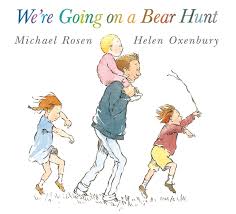
We’re Going on a Bear Hunt by Michael Rosen, illustrated by Helen Oxenbury
Just Me and My Dad by Mercer Mayer
Hey, I Love You by Ian Whybrow, illustrated by Rosie Reeve
Of course, there are many more too.
The readilearn estory The Ice Cream Shop also features an outing with Dad. However, before reading it with your children, decide if you wish to use the interactive covered cloze version with them. If desired, for most effective teaching and learning, the covered cloze should be used prior to any other familiarisation with the story. (You can find information about covered cloze as a teaching strategy here.)
Please contact me if you have any questions. I welcome your feedback, especially suggestions for improvements to existing resources or ideas for new ones.
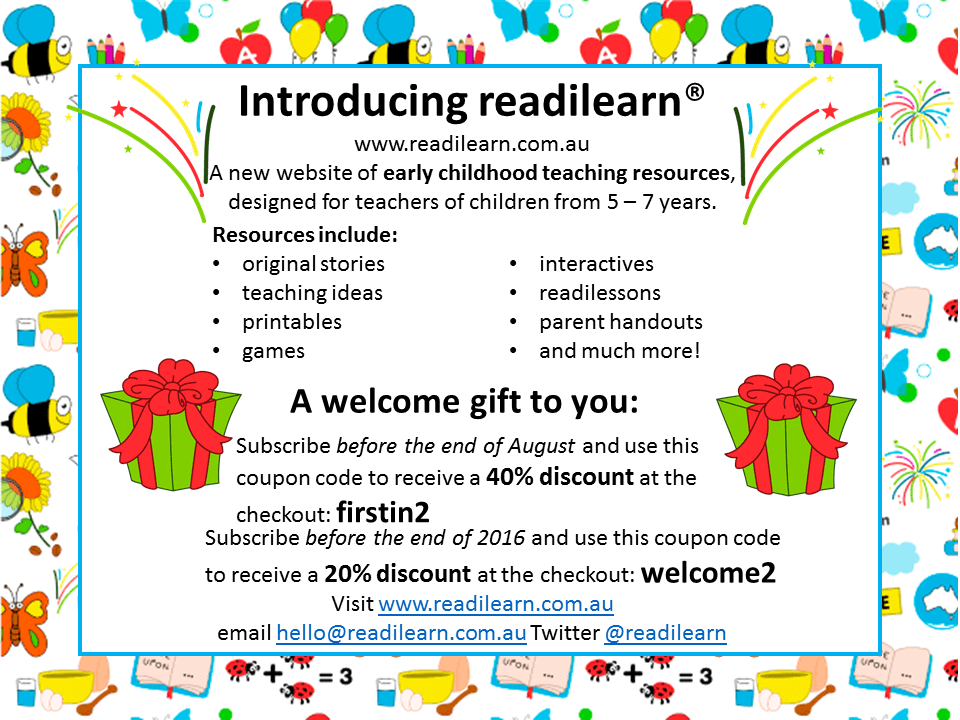
Remember to use your coupon codes at the checkout to activate your discount. If you can’t see where to enter the coupon code, select “View basket“.
Thank you for reading. I appreciate your feedback. Please share your thoughts.

























 Norah Colvin