
By nature, young children are explorers and discovers. Their purpose is to investigate the world around them and figure out what’s in it, how it works, and how they can get it to work for themselves. It takes little effort on the part of parents and early childhood teachers to nurture this innate curiosity and stimulate an interest in the natural world.
Sharing in the excitement of children’s discoveries is a marvellous experience and something I loved about having my own young children and working in early childhood classrooms, I now have the additional privilege of sharing in the wonder with my grandchildren. I feel very proud watching my two children, their dad and aunt, as together they explore the flora and fauna in our backyard. I know I have done something right.
These are just a few of the wonders we found this year:
The ladybird life cycle on our beautiful wattle tree.

A bee on the same wattle tree.

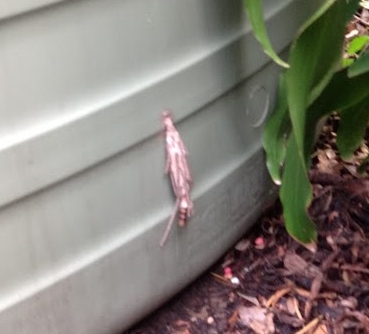
A case moth attached to the rainwater tank.
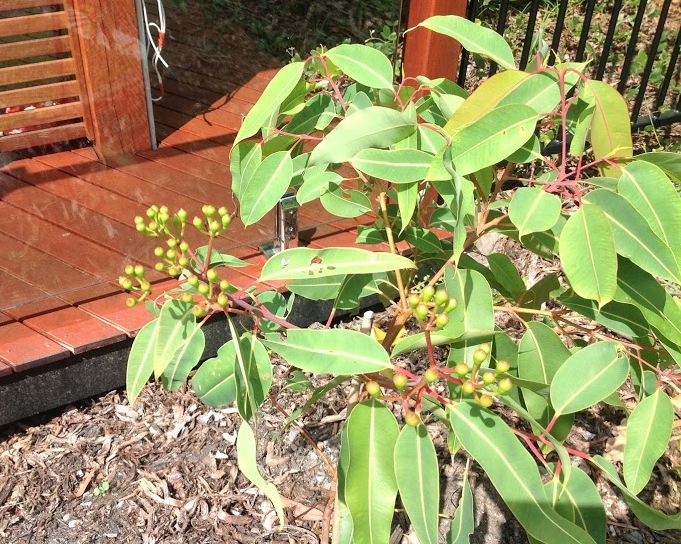
Nuts already forming on my little gum tree.
Flowers on the native ginger.

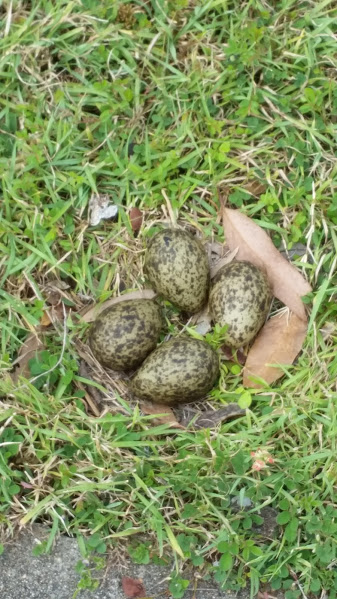
Plover eggs in a nest.
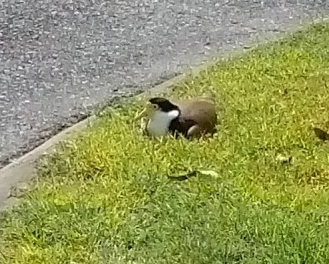
The plover sitting on the eggs.
Fruit on the sandpaper fig.

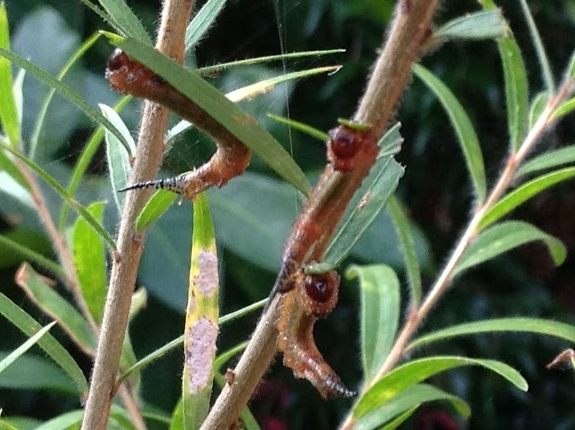
Bottlebrush sawfly larvae.
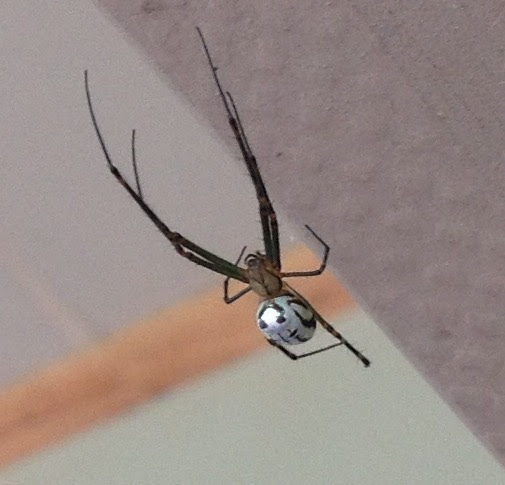
A silver orb spider.
Flowers on my wattle tree.

This week at the Carrot Ranch Charli Mills was talking about having a “looky-loo”, I’d probably call it a “sticky-beak”, at the effects of a river in flood, and described the way that neighbours help each other out, even if they’ve never met before. But Charli dives deep into the analogy of a flooded river, feeling washed out and overwhelmed by the rising tide of fear fuelled by a lack of understanding and appreciation of difference. She pleads for all of us to find our common ground, to realise that, while we are complex and contradictory, we share the same needs and wants. She says that if we don’t understand we should, “Ask, don’t judge. Learn, don’t isolate.”
Charli got me thinking about these issues, as she always does. I wondered, if we value, appreciate and marvel at diversity in the natural world, why don’t we appreciate it in other humans? After all, we are merely part of the natural world. That we have done more than any other species in manipulating it doesn’t alter that fact. Why can’t we all just agree to live and let live? Why do some think otherwise?
These thoughts reminded me of something I had heard in a fascinating TED talk by Ed Yong, called Zombie roaches and other parasite tales. Ed Yong is a science journalist on a mission to “ignite excitement for science in everyone”. He blogs at Not Exactly Rocket Science for National Geographic.
This particular TED talk is fascinating, funny, disgusting and very informative, with a little of something for everyone. He throws in terms like “mind control”, “eaten alive”, and “bursts out of body”. Science fiction has nothing on science fact.
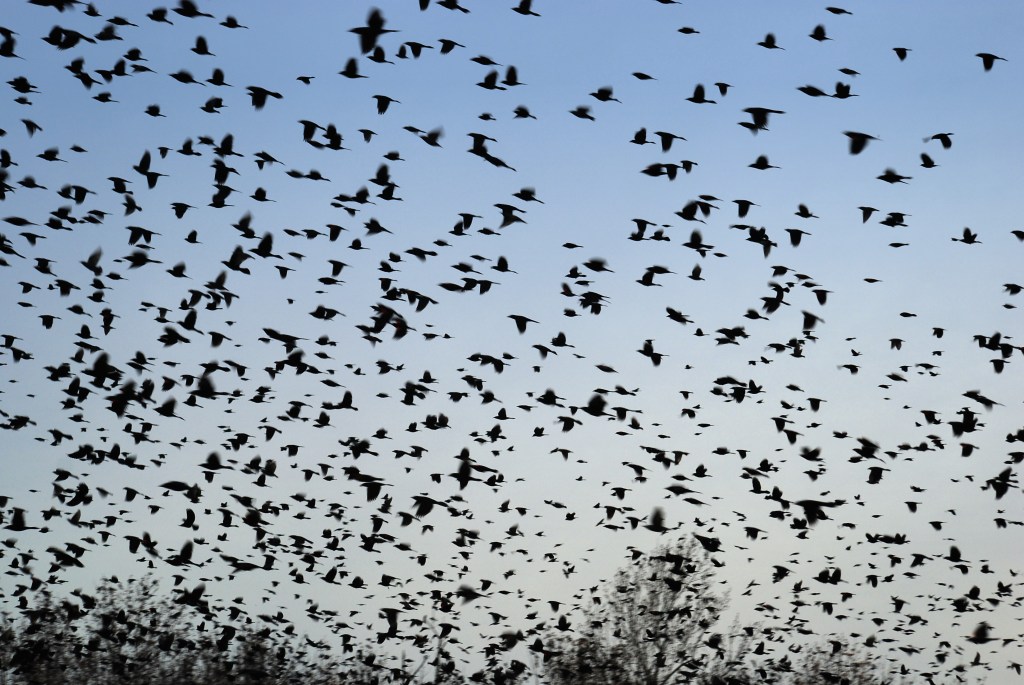
He begins the talk by questioning whether animals choose their behaviour such as gathering in large flocks or herds for safety. He then talks about the popular children’s science “pet” brine shrimp, or sea monkey, and the ways in which a parasitic tapeworm influences the shrimp’s behaviour to enable its own reproductive cycle. He says, “The tapeworm hijacks their brains and their bodies, turning them into vehicles for getting itself into a flamingo.”
But that is just the first of his stories of animals behaving in ways as a result of the mind-control of parasites. He describes others and says that “Manipulation is not an oddity. It is a critical and common part of the world around us, and scientists have now found hundreds of examples of such manipulators, and more excitingly, they’re starting to understand exactly how these creatures control their hosts.”
He describes a wasp that attacks a cockroach and “un-checks the escape-from-danger box in the roach’s operating system”. I wondered if this same box could be un-checked in humans. Not surprisingly, Ed went on to discuss humans but said that our methods of mind control were fairly primitive compared to the techniques of parasites. He said that this is what makes the study of parasites so compelling. We value our free will and fear having our minds controlled by others, but this situation occurs all the time in nature.
Yong then asks what he considers an obvious and disquieting question:
“Are there dark, sinister parasites that are influencing our behaviour without us knowing about it …?”
He talks about a parasite that manipulates cats, a parasite that many people have in their brains. While there is no conclusive evidence of parasitic manipulation of human behaviour, Yong suggests that “it would be completely implausible for humans to be the only species that weren’t similarly affected.” I urge you to have a looky-loo at the now not-so-secret behaviour of these parasites. I’m certain you will be as entertained as you are informed and challenged.
So from a looky-loo in my backyard to a looky-loo at the world of parasites we come to my response to Charli’s flash fiction challenge to In 99 words (no more, no less) write about a looky-loo.
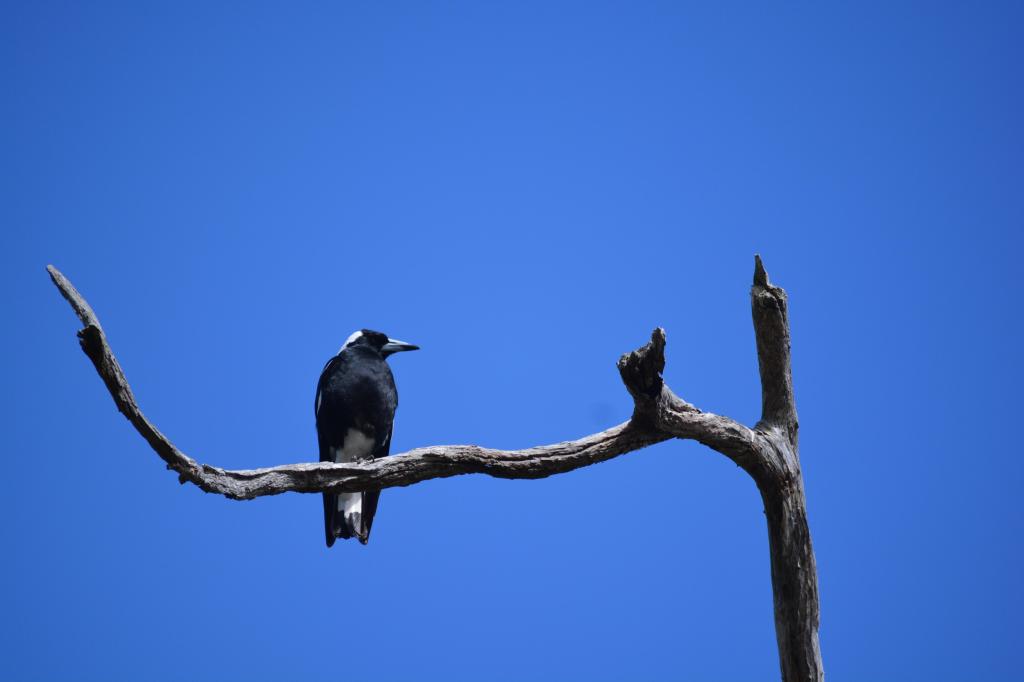
Copy-cat Sticky-beak
High in the branches Maggie practised her repertoire. She watched people scurrying: erecting tents and marking long white lines. She absorbed the rhythm of new songs: thump-thump, clink-clink.
She breakfasted on scarab beetles and was ready when the children arrived. But they didn’t notice her playful mimicry. Instead they flooded the field with colourful shirts and excited chatter.
Maggie watched silently. Soon she heard an unfamiliar song: “Go team, go team, go!” She flew to the top of the biggest tent and joined in. The children listened, then cheered. Maggie felt she’d almost burst. Instead she sang, and sang.
Perhaps we could learn from the magpie, one who looks, listens and learns and shows appreciation for others in the most sincere form of flattery: singing their song.
I love awakening to the beautiful songs of the magpie every morning. I chose to share this particular video, as yesterday we were also visited by a beautiful king parrot such as the one featured in this video. Awesome.

Thank you for reading. I appreciate your feedback. Please share your thoughts about any aspect of this post or flash fiction.


 Norah Colvin
Leave a reply to Charli Mills Cancel reply