Live Love Laugh Learn … Create the possibilities

Category: Literacy education

  • The end

    © Norah Colvin
    © Norah Colvin

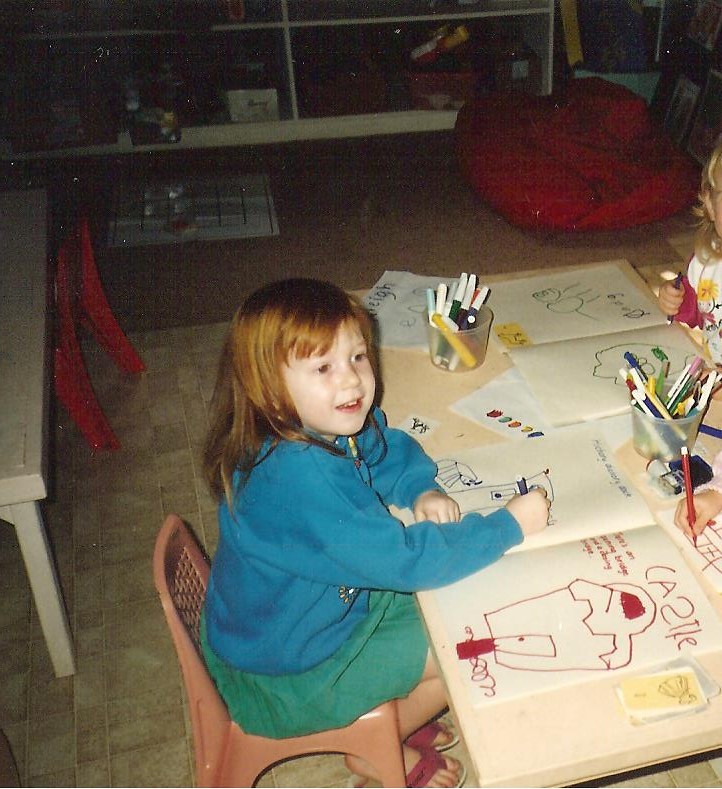
    I have always loved working with beginning writers, rejoicing with them, and sharing their excitement, as they make meaningful marks on paper for the first time.

    Their stories may be just a few writing-like squiggles, one word, one sentence, or one event in length; but the stories in their heads are much more, with elaborate settings, characters and events. Their ability to create stories, for a long time outstrips their ability to express them in written words.

    It is the role of the teacher to acknowledge the effort and, armed with an understanding of the writing process, knowledge of how writing develops, and awareness of each writer’s learning journey and needs, support the learning.

    As soon as they can, many of these beginning writers add the words “The end” to their stories. It gives them a sense of accomplishment, of completion, of a job finished with nothing more to be done.

    But don’t all writers enjoy that sense of accomplishment, of completion, of a job finished?

    However, the reality is that there is usually much more to be done: revisions and rewrites, edits and proofreads, and feedback from readers to consider. The end of the story is only the beginning of the publishing process.

    It is the process of writing that children must also learn. They need to know that not every piece must carry the perfection required of publication. Unrealistic expectations can quickly demolish a child’s willingness to have a go. Appropriate and timely feedback and encouragement is important to the development of beginning writers.
    love of writing

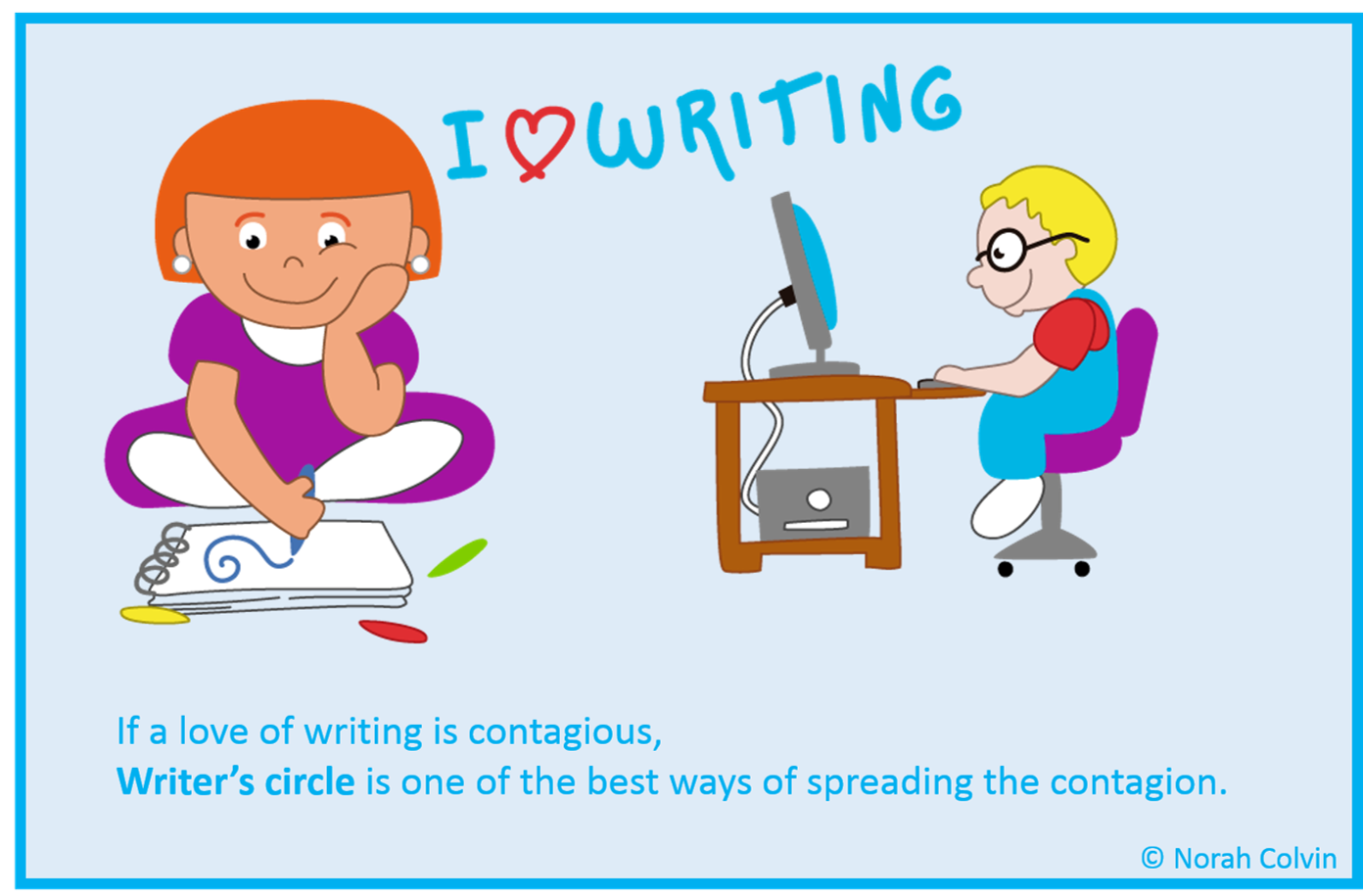
    Providing them with real audiences for their writing provides a purpose and incentive to engage in the process of revision, rewriting, editing and proofreading. Of course, the publication expectations of beginning writers are not as rigorous as for older or professional writers.

    There are many ways of providing young children with readers; including:

    • class books of stories and poems (not unlike the flash fiction compilations of our stories)
    • books made for siblings or children in earlier grades
    • letters written to parents, grandparents, children at other schools
    • blogging, now widely accepted and implemented
    • journal writing

    If all drafts of writing are kept in a folder or portfolio, a favourite can be chosen for improvement and publication. I wrote about this in a previous post: Writing to order. Conferences between the teacher and individual writers are important when choosing a piece and deciding on preparations required for publication.

    The initial conference would be about the content; specifically what the writer wanted to convey, the intended audience, and how the writer wanted the audience to feel.

    When the writer was happy with the message, usually after revisions, edits, and possible rewrites, discussions would focus on choice of words and sentence structures.

    The final conference would target surface features such as spelling and punctuation.

    No red pen is ever used by the teacher to mark a child’s work. All changes are made by the child in pencil. The purpose of conferencing is to help children develop independence in their own writing process. The number of conferences and revisions required would be tailored to an individual writer’s development.

    In order to respond to what has been achieved, it is necessary to understand the individual’s development, and to ascertain whether this piece of writing is reflective of that. Consideration must be given to all aspects of development displayed in the work; for example:

    • is the message clear?
    • is the piece complete?
    • what words are spelled correctly?
    • what language structures are incorporated?
    • does it sounds bookish?
    • does it have elements of figurative or poetic language?

    There is always something new to celebrate in each piece of writing.

    In the end, what is important is to encourage children to write, to wonder, and imagine. The process for young writers is not much different from that of all writers, and their egos are just as tender. We want their engagement with writing to have happy endings.

    This week at the Carrot Ranch Charli Mills wrote that

    “Every good story has a beginning, middle and end. It might be the end of the world as we know it, what comes next?”

    She challenged writers to In 99 words (no more, no less) write a story that pivots around an unexpected ending.”

    The end of my story, I hope, implies a new beginning; and a better one than that of the original I penned. (I’ll let you know at the conclusion.)

    Pretty Princess

    Once upon a time there was a princess, pretty in pink and smothered in cottonwool. In constant preparation for the life arranged for her, there were few opportunities to think outside her royal expectations and obligations: Stand straight. Point your toes. Smile sweetly; and on, and on.

    But think she did: Why does the moon shine? What makes the rain fall? How does the grass grow? Why can’t I: play outside? straighten my hair? eat with my fingers? go to school with other kids?

    One day she said, “That’s it. I’m going.”

    And she did. The end.

    In the original the parents said she’d only leave over their dead bodies. She said that could be arranged!

    “And she did. The end.”

    thank-you-1200x757

    Thank you for reading. I appreciate your feedback. Please share your thoughts.


  • 5 forms of poetry to write with children – Readilearn

    I love to write poems. Children do too.

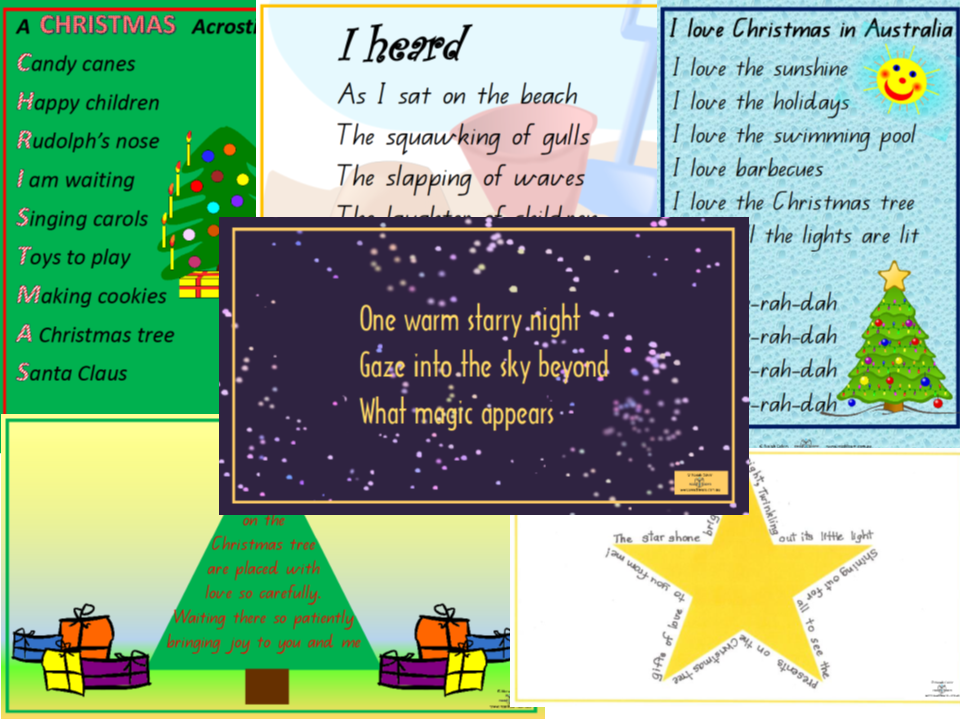
    Giving young children a simple structure or a repetitive pattern to start from gets them thinking about words, how they sound, what they mean, the number of syllables and letters. All the while they are having fun, playing with words and sounds, and learning about language.

    Five easy poems to write with children are:

    • Acrostic poems
    • Sound poems
    • Haiku
    • “I love” poems, and
    • Shape poems

    Acrostic poems are one of the easiest. They don’t need to rhyme or follow a set rhythmic pattern.

    Click to continue reading: 5 forms of poetry to write with children – Readilearn


    Thank you for reading. I appreciate your feedback. Please share your thoughts.
  • Author Spotlight: Lauri Fortino – Readilearn

    The author in the spotlight this month is the wonderful Lauri Fortino, author of The Peddler’s Bed, illustrated by Bong Redila, published by Ripple Grove Press.

    Please pop over to the readilearn blog to read all about Lauri’s writing process and her delightful picture book.

    Source: Author Spotlight: Lauri Fortino – Readilearn

  • Trick or Treat – it’s Halloween! – Readilearn

    The latest post from readilearn explains resources for a new board game to play at Halloween.

    The game is great for literacy and maths groups, to play with buddies or in family groups. It links literacy, maths and physical activity. Players collect treats and perform actions as they move

    Source: Trick or Treat – it’s Halloween! – Readilearn

  • Feeling a little prickly?

    Australia is home to a great diversity of, and many unique animals. Most native Australians are not found anywhere beyond its territories. I guess that’s not surprising since it is the world largest island or smallest continent country with vast expanses of ocean between it and other continents.

    feeling-prickly-marsupials

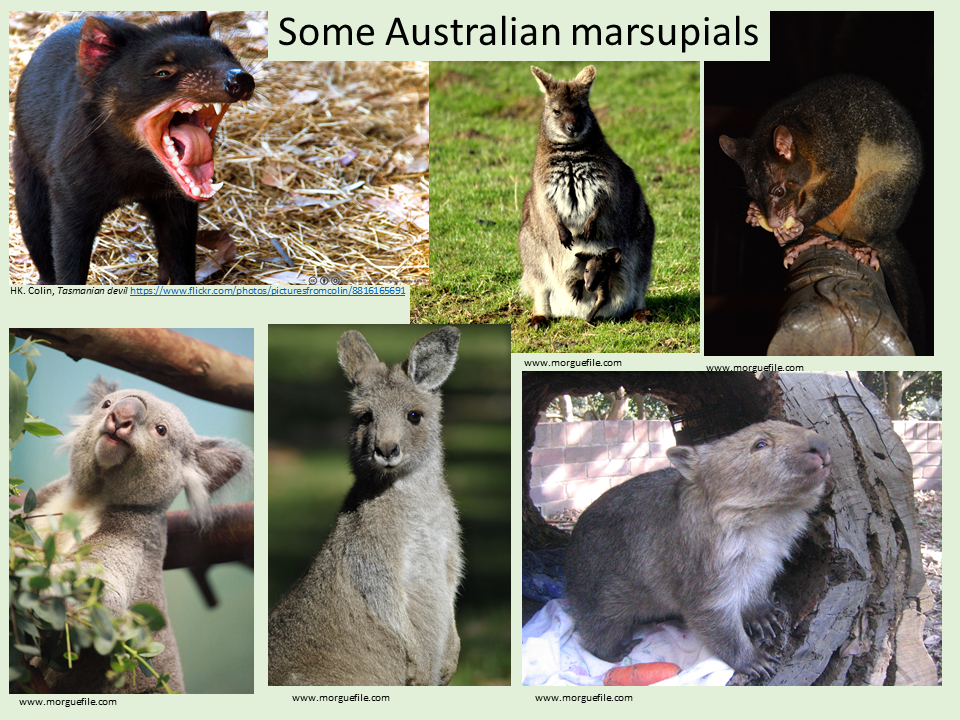
    Australia is home to almost 70% of the world’s marsupials. Other marsupials are found in the Americas, mostly South America. Kangaroos, wallabies, koalas, possums, wombats, Tasmanian devils, numbats, bilbies, and quolls are among the species of marsupials found in Australia.

    Marsupials are mammals that give birth to live young before they are fully developed. The young, usually referred to as joeys, continue to develop in the mother’s pouch for a number of months, suckling on their mother’s milk.

    feeling-prickly-monotremes

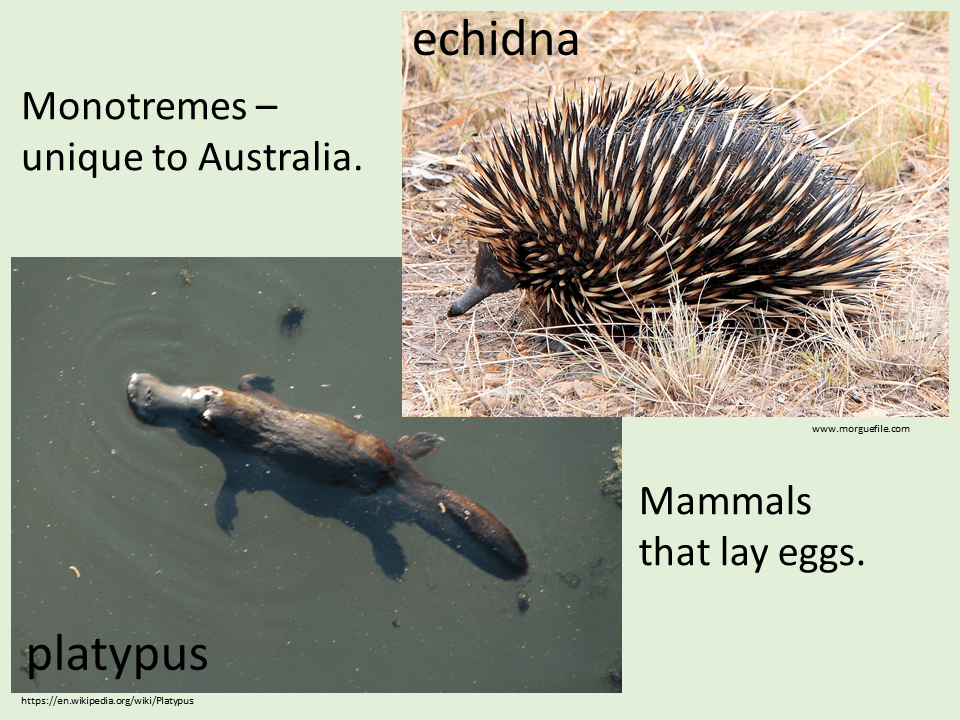
    There is another group of even more unusual mammals: the monotremes. Monotremes are egg-laying mammals. The platypus and the echidna, the only existing species of monotremes, are unique to Australia.

    The platypus

    When Europeans first saw a platypus, they thought it was a hoax with its bill like a duck’s, tail like a beaver’s, and feet like an otter’s. It has fur like other mammals but, unlike other mammals, it lays eggs.

    The platypus lives in burrows on the banks of freshwater streams and small rivers in eastern Australia, including Tasmania. It spends much of its time foraging in the muddy river beds for crayfish, worms and insect larvae.

    Female platypus usually lay two eggs. When the young hatch, the mother releases milk from pores in her skin. The milk pools on her abdomen and is lapped up by the young for about three to four months. There is no special baby name for baby platypus. They are simply called ‘baby platypus’.

    The male platypus, with a poisonous spur on its hind foot, is one of only a few venomous mammals.

    Platypus predators include crocodiles, eagles, dingoes, and introduced animals such as foxes and feral cats.

    The echidna

    Echidnas, the oldest surviving mammals, live all over Australia in many different habitats. They usually live alone and are not territorial. Although it is rare to see an echidna in the wild, they are considered common. They generally hide away under vegetation, in logs, or in the burrows of other animals.

    Echidnas eat termites and ants, and sometimes the larvae of other insects. They use their long snouts to forage in leaf litter, rotting logs, or ant mounds in search of food. Their long tongues are covered in sticky saliva for catching prey.

    Echidnas are covered with spines along the head, back and tail. The spines are sharp and used for defence against predators.

    Female echidnas usually lay one egg at a time. When the young, called a “puggle”, hatches, it makes its way to the mother’s pouch area to suckle milk. When the puggle starts to develop spines, at about 50 days, it is removed from the pouch. The mother continues to suckle it until it is about six to seven months old, at which time she deposits it at the entrance to the burrow, then walks away and abandons it.

    Predators include goannas, Tasmanian devils, dingoes, eagles, and introduced animals such as foxes and feral cats. When threatened an echidna may run away or curl up in a ball.

    Although all have spines, echidnas are not related to either hedgehogs or porcupines.

    Here is a great article about these amazing echidnas.

    If you are looking for books about Australian animals, check out the Steve Parish Storybook Collection by Rebecca Johnson, featured in last month’s Author Spotlight, which includes stories about both monotremes, many marsupials, and other fabulous creatures.

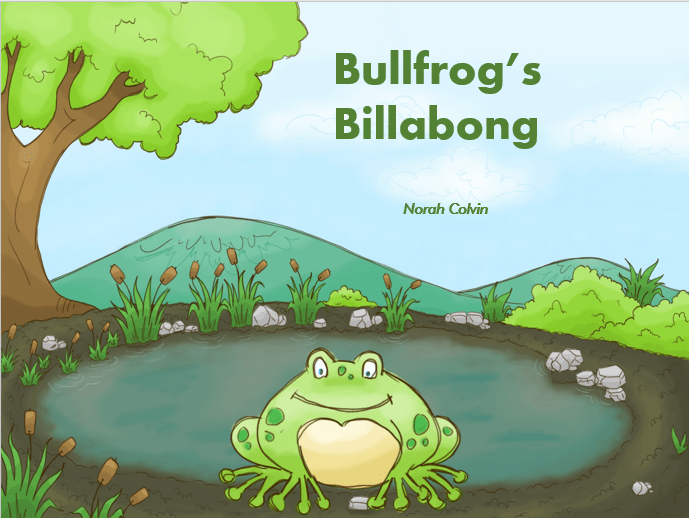
    Monotremes and marsupials feature in the readilearn stories Bullfrog’s Billabong and Little Koala’s Party and their suite of resources.

    Bullfrog's Billabong - coverlittle-koalas-party-cover

    I was prompted to think about the diversity and uniqueness of these Australian animals, especially the echidna, by this week’s flash fiction challenge set by Charli Mills at Carrot Ranch Communications. She challenged writers to In 99 words (no more, no less) write a prickly story. I thought there was no better opportunity to share with you some of our amazing creatures, particularly since just last week I was lucky enough to see an echidna in the wild for the very first time.

    The uniqueness and diversity of Australian animals reflects our own individual uniqueness and the diversity among us. We have much to learn about accepting difference, appreciating diversity, and acknowledging the unique characteristics each individual contributes to the enrichment of our collective humanity. Together we stand. Divided we fall.

    Here is my response. I hope you enjoy it.

    Stronger together

    She bristled, warning platypus to stop. He didn’t.

    “Feeling a little prickly, are we?”

    Kookaburra, oblivious, laughed at the “joke”.

    She smarted. Couldn’t he see the hurt in his words? Like a spur in her side, that last barb, really stung. Mocking difference pushed them apart.

    The bush quietened. Not a breath of wind. Not a leaf’s rustle. Not a bird’s chirrup. Were all waiting for the victor to be decided?

    Suddenly, out of the undergrowth, rushed a devil, hungry for blood.

    Platypus turned to echidna. She contemplated leaving him. But stayed. Spur and spines together: a powerful defence.


    Author’s note: Tasmanian devils have been known to eat echidnas, spines and all!

    Thank you

    Thank you for reading. I appreciate your feedback. Please share your thoughts.

  • What’s the procedure?

    This post is republished from the readilearn blog.

    sift

    Reading and following procedures is a part of everyday life. We need to follow a procedure to make a cake, take medicine, repair a bicycle, treat head lice, assemble a DIY bookcase, or install an app on a digital device. The list in inexhaustible.

    Sometimes procedures are presented as text, sometimes as illustrations or diagrams, and sometimes as a combination of both. They work best when each step of the sequence is accurately described and illustrated.

    However, not all procedural texts are created equal. Sometimes the language may be inappropriate and unclear. Sometimes steps are omitted or sequenced incorrectly. Sometimes diagrams have little resemblance to what is required and confuse, rather than clarify, the process.

    Trying to figure out what to do can cause a great deal of frustration in such circumstances.  The more practised we are with following procedures, the more adept we are at interpreting inadequate instructions to achieve a good outcome.

    It is never too soon for children to learn to read and follow procedures. The inclusion of procedural texts in a classroom literacy program has many benefits.

    Following a procedure provides a context and purpose for reading.  It requires children to interpret instructions through a combination of text and visual representation. It generally implies that children are doing or making something, which engages their interest and encourages participation. It develops an essential real-life skill that is transferrable to a range of situations. The sense of achievement in successfully completing a project is both affirming and empowering and often requires no other feedback.

    Procedural texts can be easily incorporated into a class reading program as an independent or group reading activity. An assistant to support, encourage and oversee can be invaluable.

    Features of procedural texts

    The reading of a procedural texts differs from reading fiction or non-fiction texts.

    • The title, and sometimes a short description, tells what will be done or made.
    • There is generally a list of requirements.
    • The body of the procedure is written as a sequential series of commands.
    • The verb, telling the action to be performed, occurs at the beginning of the sentence.
    • The sentence is directed to the reader, and means, “You do this.”
    • Each sentence is generally short with one action to be performed in each step.

    There is a range of readilearn resources to involve children in reading and following procedural texts. Many of the procedures are provided in different formats for use with the whole class or with small groups or by individuals. Some are supported by additional resources, and How to make a paper plate cat face is presented with two levels of text.

    These include:

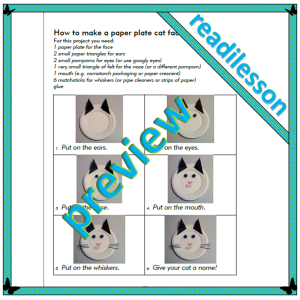
    How to make a paper plate cat face

    how-to-make-a-paper-plate-cat-face-level-1

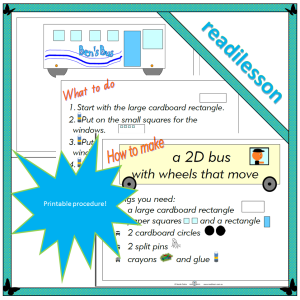
    How to make a 2D bus with wheels that move

    how-to-make-a-2d-bus

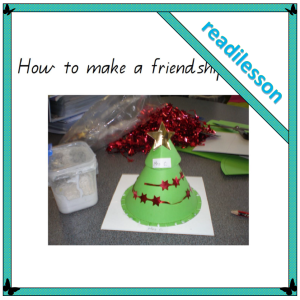
    How to make a friendship tree

    how-to-make-a-friendship-tree-readilesson

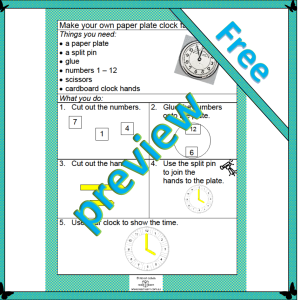
    Make your own paper plate clock face

    make-your-own-paper-plate-clock-face-free-preview

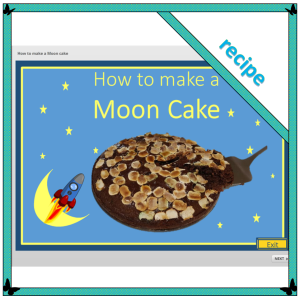
    How to make moon cake

    how-to-make-a-moon-cake-sl

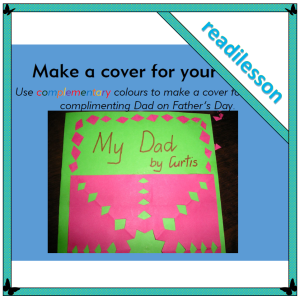
    How to make a book cover

    how-to-make-a-book-cover-readilesson

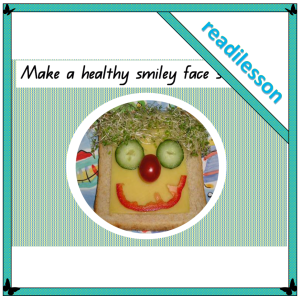
    How to make a healthy smiley face sandwich

    make-a-healthy-smiley-face-sandwich-readilesson

    I hope you and your children enjoy using these resources. They were always enjoyed in my own classroom, and have been the most popular resources in my Teachers Pay Teachers store.

    Please contact me if you have any questions. I welcome your feedback, especially suggestions for improvements to existing resources and ideas for new ones.

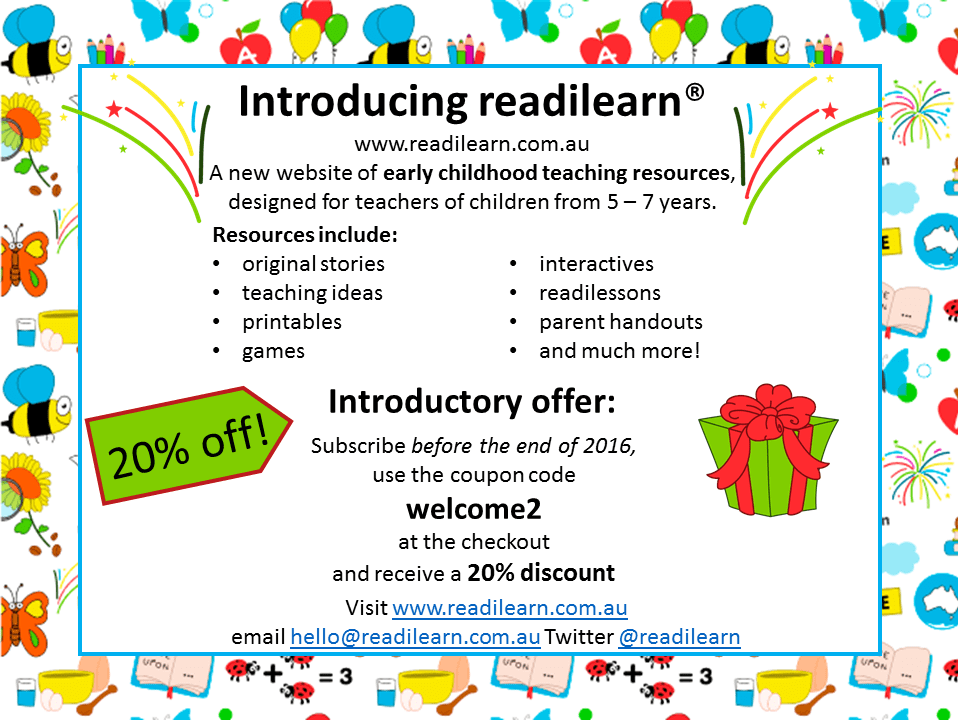
    Remember, if you haven’t yet subscribed, an introductory discount of 20% is available to all who subscribe this year. Just use the coupon code welcome2 at the checkout to receive your discount.

    I’ll see you next week. In the meantime, enjoy the weekend.

    Thank you

    Thank you for reading.

    Happy teaching and learning,

    Norah


    You can contact me:

    via email hello@readilearn.com.au

    via the Contact page

    on Twitter @readilearn or @NorahColvin

    on Facebook @readilearnteachingresources

    on my other blog NorahColvin.com

    I invite you to rate and review any resources you use, and to share information about readilearn on social media.


  • About Bullfrog’s Billabong

    This post is republished from the readilearn blog.

    Hi, and welcome again to the readilearn blog. I hope you’ve had a good week. Thank you for your interest in readilearn. I apologise to those who have experienced difficulty in applying the discount coupon codes at the checkout. Know that I will honour the coupon offer with a PayPal discount refund if your subscription goes through with payment in full. I appreciate your persistence and patience while we improve flow with the payment system. Please contact me if you experience any difficulties.

    Bullfrog's Billabong - cover

    Getting to know readilearn resources

    In this post I discuss the Bullfrog’s Billabong suite of resources.

    Bullfrog’s Billabong is a cumulative story which takes place at a fictitious Australian Billabong. Bullfrog is the first to arrive at the billabong. He decides it would be a great place to live and makes it his home. Each day, more animals arrive at the billabong. They too think it would be a good home and, after asking permission, decide to stay. Unfortunately, as the billabong becomes more and more crowded, the animals have difficulty in getting along. Their racket attracts another visitor who also sees the potential of the billabong as a home.

    The story includes mathematical concepts including counting, growing patterns and days of the week.

    The repetitive structure supports children’s reading and encourages them to make predictions based upon obvious patterns involving counting and days of the week. Their knowledge of narrative structure encourages prediction of possible events and conclusion. The end may surprise some children and they may or may not approve of the author’s choice. A discussion of alternative ways to conclude the story could lead to some interesting writing, and an understanding that what happens in stories is a choice made by the author.

    While the animals will be familiar to Australian children, the story provides a great opportunity for children from other countries to find out about them too.

    I hope you and your children enjoy reading the story and using the resources.

    The suite of existing resources includes:

    Bullfrog’s Billabong – an estory (The story can be displayed on the whiteboard for reading to, with, or by the children.)

    Bullfrog’s Billabong – Covered cloze (This interactive resource for use on the whiteboard is great for teaching effective reading strategies. For best effect, it should be used before any other Bullfrog’s Billabong resources.)

    Bullfrog’s Billabong – Cloze – How to use this resource  (Refer to this resource for suggested use of the covered cloze interactive resource. For more information about covered cloze as a teaching strategy, refer to Covered Cloze – teaching effective reading strategies)

    Bullfrog’s Billabong – Covered cloze Sampler (This is a free one-page sneak peek at how the interactivity works before making a commitment to purchase a subscription.)

     Look what's new

    What’s new – uploaded this week!

    I have been working on new resources to support and complement the existing Bullfrog’s Billabong resources.

    This week I have added three new resources to the collection:

    Bullfrog’s Billabong – The facts (This information sheet explains what a billabong is and verifies that all the story’s animals may live in a billabong, though possibly not the same one.)

    Bullfrog’s Billabong – the next chapter (Children draw and write what they think happens next on this printable sheet.)

    Bullfrog’s Billabong – Days of the week (Use these three sets of printable cards when teaching or revising the days of the week. There are A5 cards for use with the whole class, and smaller cards for use by individuals or small groups.)

    © Norah Colvin
    © Norah Colvin

    I am working on other resources to add to the suite, including presentation of the story as a play. There is also a set of animals to print that can be used to make pop stick puppets for a performance. Watch for these, and others, coming soon.

    I hope you and your children enjoy using these resources. I had fun making them and thinking about the responses of children.

    Please contact me if you have any questions. I welcome your feedback, especially suggestions for improvements to existing resources and ideas for new ones.

    Introductory discount

    Remember, if you haven’t yet subscribed, an introductory discount of 20% is available to all who subscribe this year. Just use the coupon code welcome2 at the checkout to receive your discount.

    ncblog welcome2

    I’ll see you next week. In the meantime, enjoy the weekend.

    Thank you

    Thank you for reading.

    Happy teaching and learning,

    Norah


    You can contact me:

    via email hello@readilearn.com.au

    via the Contact page

    on Twitter @readilearn or @NorahColvin

    on Facebook @readilearnteachingresources

    on my other blog NorahColvin.com

    I invite you to rate and review any resources you use, and to share information about readilearn on social media.


  • Welcome to spring!

    Responses to a previous post on the importance of feedback suggested that I trial republishing readilearn posts here.  As the suggestion came from a number of people I considered it sound advice and worth trying. As always, I will be interested to hear what you think.

    This post is republished from the readilearn blog.

    © Norah Colvin
    © Norah Colvin

    The first day of September marks the first day of spring in Australia. It is also recognised throughout Australia as Wattle Day.  The golden wattle is our national floral emblem. Its colours give the recognisable green and gold to our sporting teams.

    Like the people of our land, it is a plant that shows both diversity and resilience. There are hundreds of species of wattle growing in many different habitats across Australia.  They may be seen growing wild in bush areas and national parks, and cultivated in botanic gardens, on footpaths and in home gardens.

    © Bec Colvin
    © Bec Colvin

    I have three varieties of wattle growing in my garden. Last year, when the plants were one-year-old, they flowered abundantly and were home to ladybirds. It was wonderful to watch each stage of the ladybird’s growth, from egg to adult. This year, the trees were more heavily laden with blossoms, but there were no ladybirds. I was disappointed as I was looking forward to seeing the ladybirds again. However, it has been suggested that the absence of ladybirds may indicate the tree is healthier this year. I don’t know.

    In Australia we generally refer to seasons as occurring in particular months:

    Spring in September, October, and November

    Summer in December, January, and February

    Autumn in March, April, and May

    Winter in June, July, and August.

    However, it is not as simple as that.  Australia is a land of extremes, with different climate zones and types of weather experienced across the country. It can be cooler in the summers of southern areas than it is the months called winter in the north. For example, the average January (summer) daytime temperature in Hobart is 21.7⁰C, and the average July (winter) daytime temperature for Darwin is 30.5⁰C.

    Spring is a great time for exploring the garden and it’s inhabitants. What is spring like where you are?

    Getting to know readilearn resources

    Also coinciding with the beginning of spring is the Australian Father’s Day, celebrated on the first Sunday in September. It is a day not just for dads, but for grandfathers, stepfathers, and other male carers and role models. It is a day to let them know how much they are appreciated.


    how to make a book cover - cover

    One great way of providing children with a purpose and targeted audience for writing is to get them to make a book for their father figure. I have provided some ideas to get the writing started in the resource How to make a book cover. The resource itself provides step by step instructions for making a cover for a book using complementary colours. The instructions can be displayed on the white board for children to read and follow.

    Suggestions for writing include:

    • A list of statements about their Dad e.g. My Dad goes to work. My Dad makes my breakfast. My Dad has curly hair and a bushy beard. Children write and illustrate one statement on each page.
    • A recount or memoir about a favourite holiday or activity they do with their Dad.
    • A series of things about fathers e.g. Some fathers ride motorbikes. Some fathers ride horses. Children finish with a statement about their own dads, for example; But my father rides a skateboard.
    • A list of things that Dad likes, one to each page.

    Five Fabulous books to read for Father’s Day

    2015-09-19 10.52.00

    Guess How Much I Love You by Sam McBratney, illustrated by Anita Jeram

    My Dad

    My Dad by Anthony Browne

    going on a bear hunt

    We’re Going on a Bear Hunt by Michael Rosen, illustrated by Helen Oxenbury

    Just Me and My Dad

    Just Me and My Dad by Mercer Mayer

    2015-09-19 10.54.00

    Hey, I Love You by Ian Whybrow, illustrated by Rosie Reeve

    Of course, there are many more too.

    The Ice Cream Shop - estory

    The readilearn estory The Ice Cream Shop also features an outing with Dad. However, before reading it with your children, decide if you wish to use the interactive covered cloze version with them.  If desired, for most effective teaching and learning, the covered cloze should be used prior to any other familiarisation with the story. (You can find information about covered cloze as a teaching strategy here.)

    Please contact me if you have any questions. I welcome your feedback, especially suggestions for improvements to existing resources or ideas for new ones.

    Remember to use your coupon codes at the checkout to activate your discount. If you can’t see where to enter the coupon code, select “View basket“.

    ncblog firstin2


    Thank you

    Thank you for reading. I appreciate your feedback. Please share your thoughts.


  • Cheating? It never entered my head


    ausines headphones

    I have previously mentioned the enjoyment I get from commuting. It’s not the sitting in traffic I enjoy, it’s the extra time for reading I have while I’m driving: reading with my ears rather than my eyes. I have a new-found love of audiobooks.

    Over the past few years my library of audiobooks has grown alongside my library of ebooks and printed books. The range of genres represented in each category is pretty much the same when considering recent acquisitions, though measured alongside the collection of a lifetime the comparative numbers may differ. My collections include fiction and nonfiction, memoir and biography, children’s stories and picture books. Sadly, books of poetry are almost absent from recent purchases, though I do have one on order. Maybe I should improve on that sometime soon.

    Although I have rarely been disappointed by any narrator, I especially enjoy it when authors read their own work. I recall disappointment and the need to correct, in my head, the narration of only one book. (It wasn’t read by the author.)

    Three things I like about audiobooks:

    • They increase reading time. I can listen while I do other things like driving, walking, ironing.
    • I can take them anywhere and, with a pair of headphones, listen anywhere.
    • There are many genres and titles to choose from. I can catch up on classics I’ve missed, or read new releases.

    Five things that disappoint me about audiobooks:

    • Not all titles I would like to read are available.
    • They are not cheap, with prices equivalent or higher than a hardback edition. The last audiobook I bought was A$38; the next on my list is A$52!
    • It is difficult to skip forward or back, find a particular place, make notes, or highlight quotes (if I find I want to do this with a book I have listened to, I invariably purchase it as an ebook or printed book, and sometimes both).
    • Sometimes, but not always, my place has been lost when I have closed one book and opened another.
    • They cannot be lent or transferred to another device (or maybe that’s because I buy them on iTunes for my iPad and I do not own any other Apple devices. Maybe someone can let me know.) This is probably better for the authors and their royalty payments.

    I find that I very much enjoy being read to, listening to the words spoken by another, thinking about the richness of the voice and its accent, allowing me to be transported into the writer’s world through the voice’s musicality. It is like the author is speaking directly to me.

    I was interested then, to recently read the opinions of two other writers about audiobooks:

    Virginia Franken wrote My Sweet Love Affair With The Audio Book  for Women Writers, Women(‘s) Books, and

    Daniel Willingham posted Is listening to an Audiobook “Cheating” on his own blog.

    Virginia explains her recent delight in finding audiobooks as a way of making more time for reading after her first child was born. She wonders how much boredom may have been prevented in previous years had audiobooks been available. She says,

    ‘even the most frantic among us probably has a few minutes in the day when we can listen to a book, even if there’s no time to physically sit down and read one. Working out, cleaning, commuting, watching your kid’s baseball practice, procrastinating at the office and yes, even grading bananas – now all have the potential to be a lot less dull.”

    As I do, she finds listening to books as she commutes to work a real bonus. In addition to the excitement of listening, Virginia is excited that her novel Life After Coffee is to be produced as an audiobook. How exciting.

    Virginia refers to the Association of American Publishers and its findings that sales of audiobooks are increasing and may be overtaking those of ebooks. Obviously Virginia and I are not the only ones enjoying audiobooks. But are we cheating by listening rather than decoding? Is listening not real reading?

    Daniel Willingham, a cognitive scientist, also has books available in audio format.  I listened to and enjoyed Why Don’t Students Like School?: A Cognitive Scientist Answers Questions About How the Mind Works and What It Means for the Classroom a few months ago. The focus of Willingham’s post about audiobooks is a little different from that of Virginia’s. I guess we should expect that from a cognitive scientist.

    Willingham says that he’s been asked numerous times if listening to an audiobook is cheating. As I indicated in the title, I wouldn’t have thought of it in that way, other than perhaps cheating time. Is making more efficient use of time cheating?

    Willingham says he doesn’t like the question. He chooses to rephrase it this way:

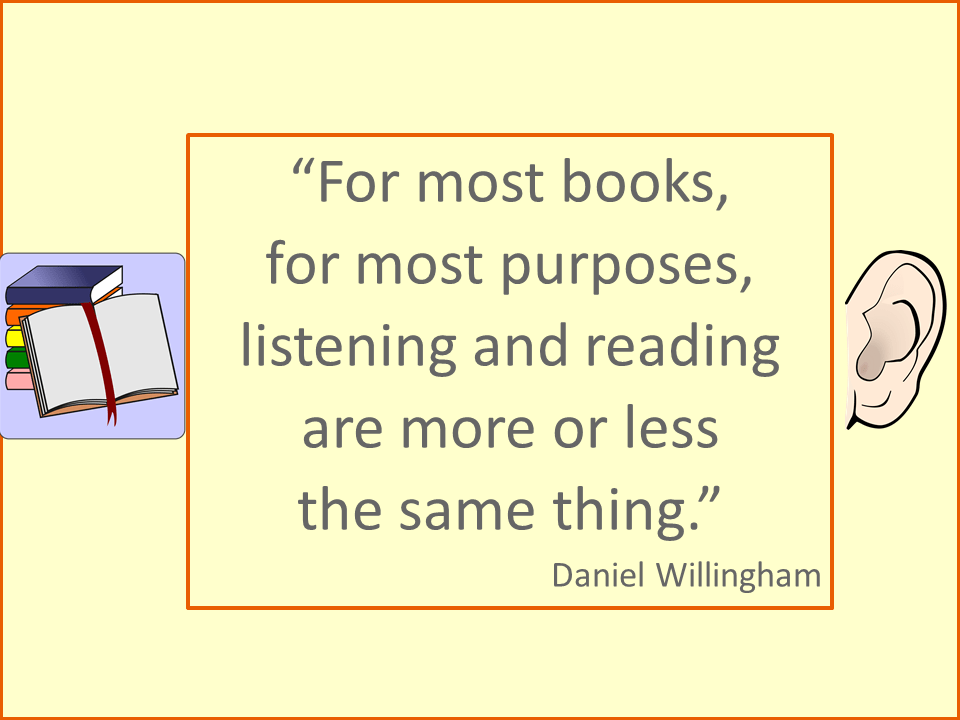
    “does your mind do more or less the same thing when you listen to an audio book and when you read print?”

    He says mostly it does, that “listening to an audio book is exactly like reading print, except that the latter requires decoding and the former doesn’t.” The same language processes are involved, and this is especially true when the purposes for reading are similar to the purposes for listening.

    He cites research showing that differences in reading ability in lower grades are due to differences in decoding ability rather than language processes, and that in higher grades the differences are more to do with language processes that support comprehension. He says that there is a high correlation between listening and reading comprehension in adults.

    However, he says that the processes may differ according to purpose; for example, when studying for a test or a quiz, or scanning for information, perhaps a printed text may be of more benefit. I agree but suggest print is definitely a better choice in these circumstances (see things I listed as disappointments earlier). He implies that listening, however, might provide additional meaning and aid comprehension through intonation. I think this is possibly true too.

    Willingham - reading and listening

    In conclusion, Willingham explains that

    Listening to audiobooks is not cheating because:

    • “Cheating” implies an unfair advantage, as though you are receiving a benefit while skirting some work. Why talk about reading as though it were work?
    • Listening to an audio book might be considered cheating if the act of decoding were the point; audio books allow you to seem to have decoded without doing so. But if appreciating the language and the story is the point, it’s not.
    • Comparing audio books to cheating is like meeting a friend at Disneyland and saying “you took a bus here? I drove myself, you big cheater.” The point is getting to and enjoying the destination. The point is not how you travelled.

    What do you think? Do you listen to audiobooks? Do you consider it cheating? Why would you, or would you not, choose to listen to audiobooks?

    Thank you

    Thank you for reading. I appreciate your feedback. Please share your thoughts.


  • Listen to the sounds

    Charli's picture

    This week at the Carrot Ranch, Charli Mills is talking about sound, and has challenged writers to

    In 99 words (no more, no less) write a story that includes the sense of sound. It can be an onomatopoeia, a swearing session with sound alike substitutes, lyrical prose or a description of a sound. Go where you hear the prompt calling.

    I thought it was quite timely for me as I had just written a piece about audiobooks. However, I have decided to keep that for posting another day and have instead decided to look at picture books. Regular readers may not be surprised.

    Picture books are often a child’s first introduction to stories, poems, fantasy and other worlds. The language of picture books is immensely important and must captivate the ear as the illustrations engage the eye. Through picture books children are learning the sounds of the language: its rhythms and intonations; its accents and pronunciations; its beauty and its meaning.

    Many picture books are written in rhythmic, rhyming language and we are quick to note when the timing is a little off or the rhyme not quite right. Successful picture book authors write and rewrite until they get the sound of the language just right for a read aloud experience. Though the words may be few, the task may be difficult. Children, their parents, and teachers are a discerning audience.

    As onomatopoeia (a word that phonetically imitates, resembles or suggests the source of the sound that it describes) features in many children’s songs and picture books, it is the focus of this post.

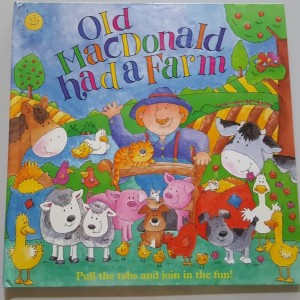
    Old MacDonald had a Farm

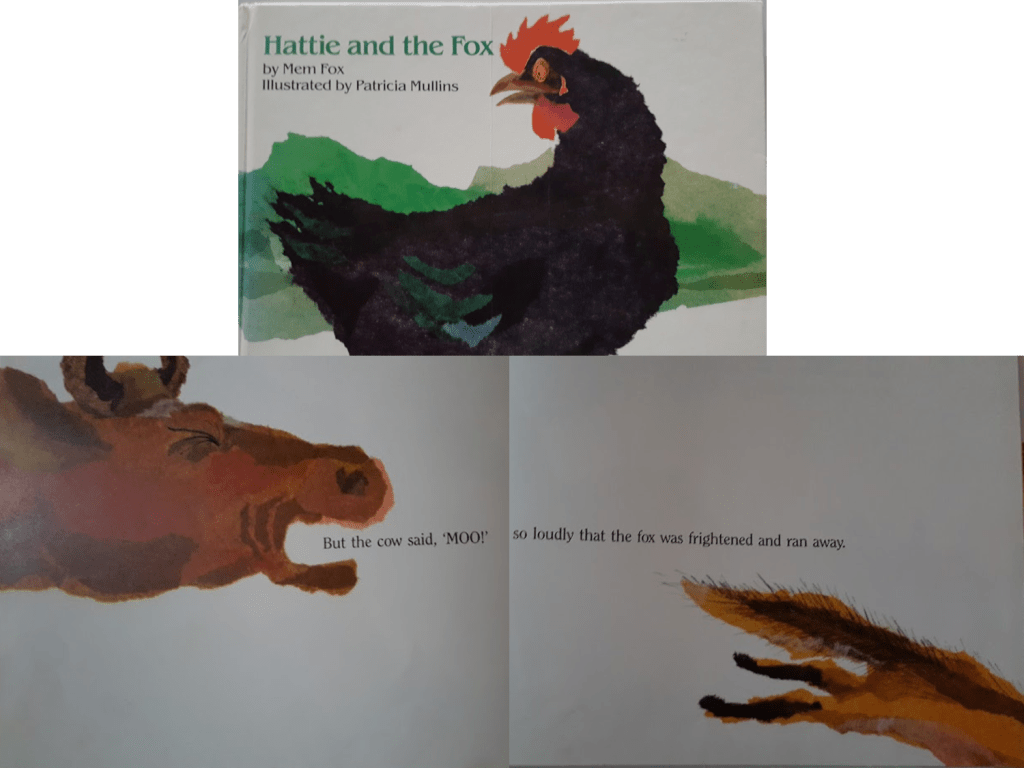
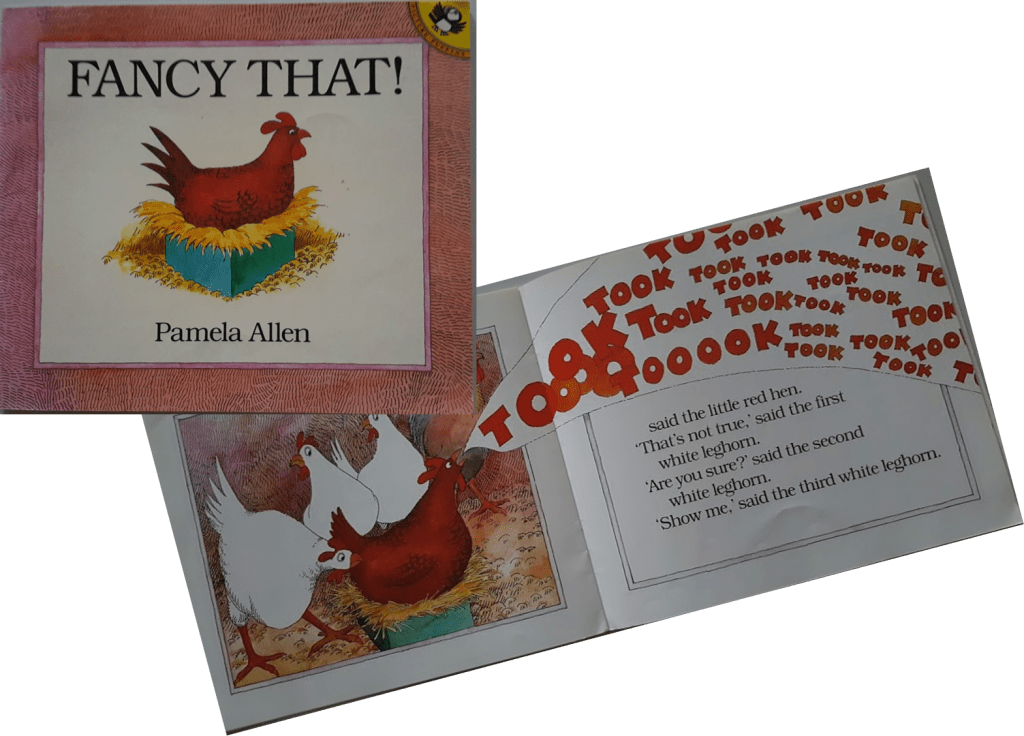
    Animal sounds, familiar through songs such as Old MacDonald Had a Farm, frequently occur in picture books, including Hattie and the Fox and Fancy That!

    Hattie and the Fox

    Fancy That

    The sounds of machines are also popular. Some of you may recall the song about The Marvellous Toy that “went zip when it moved, and bop when it stopped, and whirr when it stood still.”

    the Train to Timbuctu

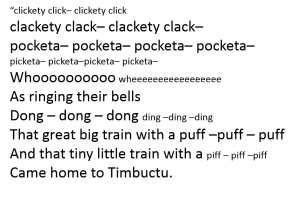
    The repetitive rhythmic sound of a train’s motion is frequently portrayed, as in The Train to Timbuctu that went

    Timbuctu rhyme

    the Little Engine that Could

    and The Little Engine that Could with its

    “I think I can – I think I can – I think I can – I think I can – I think I can – I think I can – I think I can – I think I can – I think I can.”

    followed by

    “I thought I could. I thought I could. I thought I could. I thought I could. I thought I could. I thought I could.”

    A great demonstration of a growth mindset.

    Bertie and the Bear

    There are also the sounds of musical instruments as in Bertie and the Bear.

    An Old Witch Song

    There are the sounds associated with actions, like the swish of the broomstick and the plop of the hop toad in Old Old Witch;

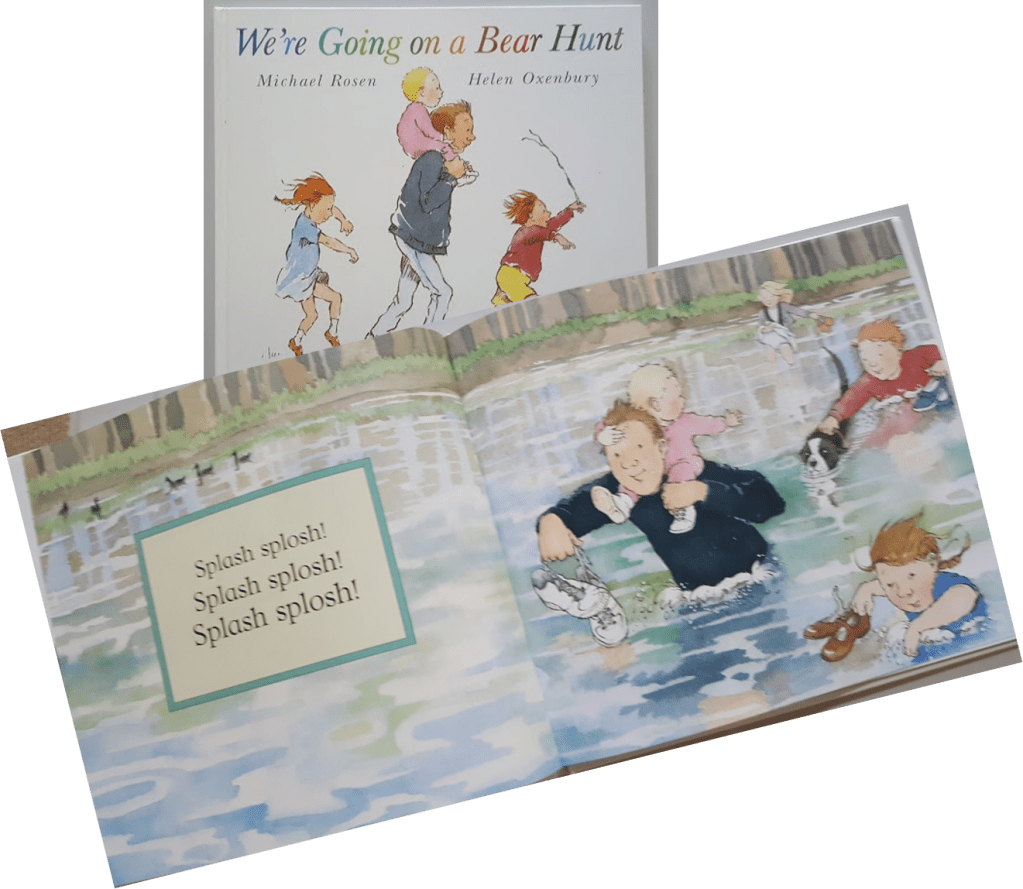
    Going on a bear hunt

    and those from Going on a Bear Hunt with its swishy swashy of moving through grass, splash splosh of wading through water, and squelch squelch of walking in mud.

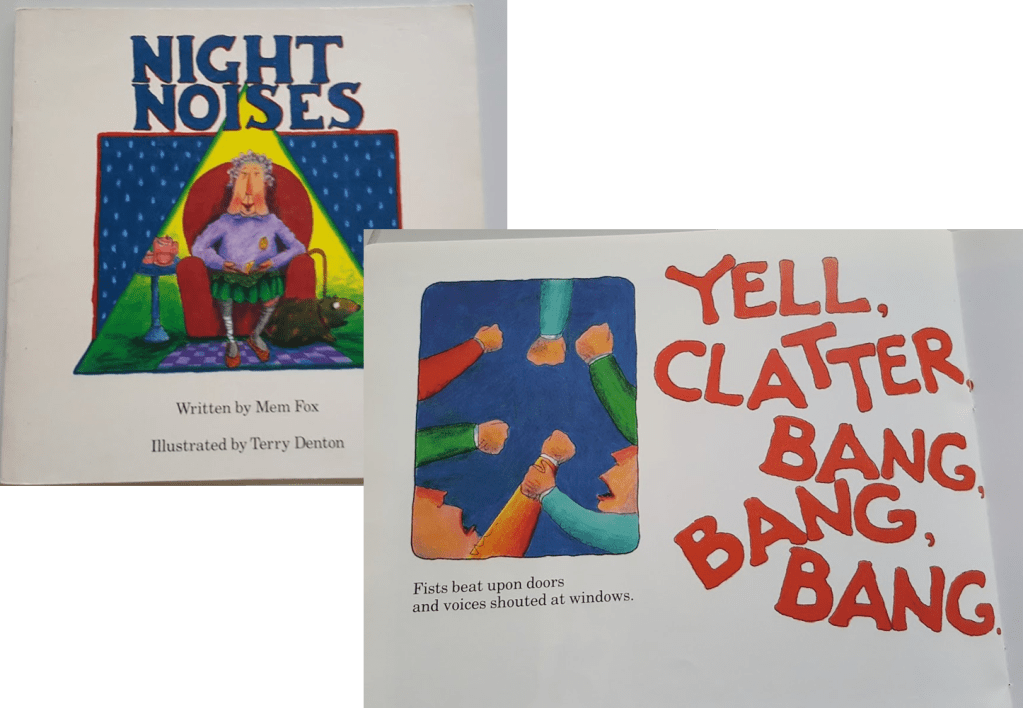
    Night Noises

    Some stories introduce a variety of onomatopoeic words. Night Noises, about a surprise party for Lillie Laceby who was nearly ninety, includes the click clack of car doors opening and closing, the crinch crunch of feet tip-toeing on a garden path, the murmur and mutter of voices whispering, the creak crack of knees, and the snick snack of bolts on the door.

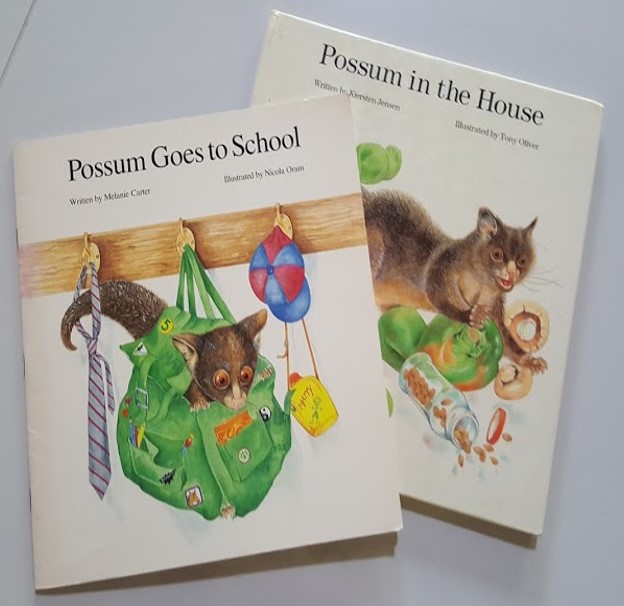
    Possum goes to school

    When there’s a Possum in the House or Possum Goes to School, there is nothing but trouble, with possum making a mess at every opportunity.

    At home, in the pantry the cornflakes go crunch crunch, in the kitchen the saucepans go clatter clatter, and in the study the pages go rustle rustle. Each time the possum’s whereabouts is discovered, it goes screech screech and runs off to another room to create yet more mess.

    The same occurs at school with paints going drip drip in the art room, claws going scratch scratch in the staff room, and the goldfish going splash splash in the science room.

    Burping Baby

    Then of course, there are also the body noises that children seem to take delight in, like those from Burping Baby.

    I recently discovered Lauri Fortino’s Frog on a [B]log, a blog celebrating picture books. Lauri has a delightful picture book of her own The Peddler’s Bed, illustrated by Bong Redila. Lauri recently shared a reading of the story on her blog. Since we are talking about sounds, if you have a few spare minutes, pop over and have a listen.  You will also find an example of onomatopoeia in her story with the repetition of squeak squeak squeak.

    Onomatopoeic words are often presented in fonts of different size or colour, or even different type. Children are fascinated by them, pointing to, asking about, maybe even recognising them, long before they are able to recognise any other words. You can help to get them started by pointing to the words and inviting them to join in the hullabaloo. What a great introduction to the world of reading.

    Now that I have reminded you of these types of onomatopoeia and provided you with these wonderful examples, I wonder what I was thinking. How can I match them in my flash? I need a flash of inspiration, or maybe a flash of lightning to begin my story about a mother and child hurrying to make it home before the storm hits. I hope you enjoy it.
    The eye of the storm

    “Storm’s coming!”

    Pit pitter-patter Pat pitter-patter hasten four feet.

    Lightning and thunder boom down the street.

    “H-h-h-hurry.” Mum urges. “Home – nearly there.”

    Pit scuffle-scuffle Pat scuffle-scuffle “Straight up the stair.”

    Clink-chink-fumble-fumble “No need to knock.”

    Scritch-scratch “I’ve managed – the key’s in the lock.”

    Whoosh! chortles wind, as it rushes inside.

    Damn! cusses chair chucked onto its side.

    P-u-sh!  The door bangs! Avoid pellets of ice

    Smashing and tumbling like millions of dice.

    Rat-a-tat raindrops, another crash-boom!

    Shuffle and scurry. “Straight to the safe room.”

    Huddled together, hardly daring to breathe,

    Listening and waiting for the monster to leave.

    Then sudden quiet, the child whispers hope

    “Is it all over?” Mum answers, “Nope.”


    The first fifteen lines meet Charli’s 99 work criteria. I added the last two because I was thinking of the eye of a storm that brings a quiet calm but not the end of the storm –  there’s still more to come. I’d love to know what you think.

    Thank you

    Thank you for reading. I appreciate your feedback. Please share your thoughts.