Live Love Laugh Learn … Create the possibilities

Category: Early childhood education

  • Visiting with illustrator Hélène Magisson – readilearn

    Visiting with illustrator Hélène Magisson – readilearn

    This week I’m visiting with illustrator Helene Magisson to chat about her latest book Sarah’s Two Nativities written by Janine M Fraser and published by Black Dog Books. The book is due for release this month with a launch scheduled for the 21st.

    About Helene

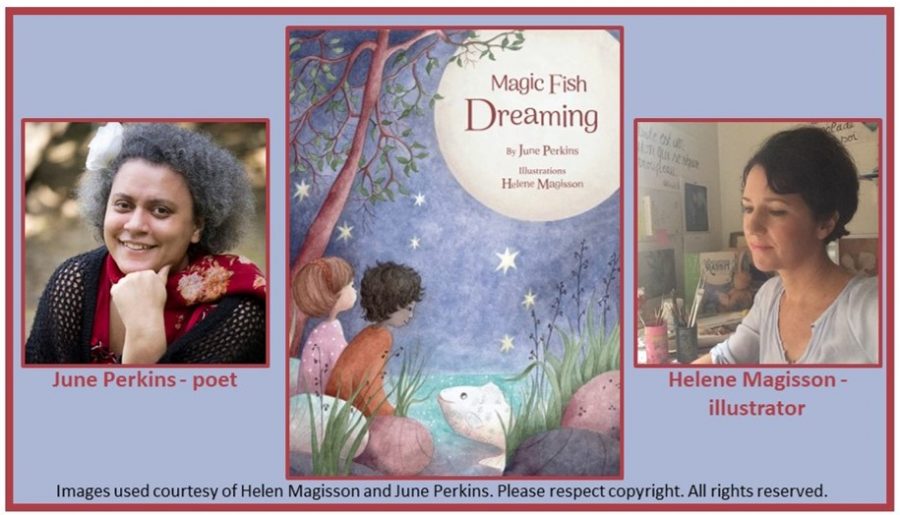
    I first introduced you to Helene in 2017 when she chatted about her process of illustrating, especially as it related to the beautiful book of poetry Magic Fish Dreaming written by June Perkins. You can read that interview here.

    Since the publication of Magic Fish Dreaming, Helene has illustrated a number of other books and now has eleven published books in her portfolio, with more on the way. I am not surprised that Helene is sought after as an illustrator. I think you’d have to agree that her, mainly watercolour, illustrations are exquisite and possess an almost magical quality.

    Although Helene now calls Australia home, she has lived in countries all over the world, including Africa, France, and India. That her travels both inspire and enrich her work is obvious in her delightful illustrations that perfectly complement Janine Fraser’s story Sarah’s Two Nativities.

    About Sarah’s Two Nativities

    From the publisher:

    ‘Sarah loves her two grandmas – Grandmother Azar and Grandmother Maria. Grandmother Azar tells Sarah stories from the Holy Koran, while Grandmother Maria tells her stories from the Bible. At Christmas time, Sarah snuggles in each of her grandmothers’ laps and listens to two nativities stories about the birth of baby Jesus. They are the same in some ways, and different in others … but both can be Sarah’s favourite.’

    Continue reading: Visiting with illustrator Hélène Magisson – readilearn

  • What does your daddy do?

    What does your daddy do?

    This week at the Carrot Ranch, Charli Mills challenged writers to In 99 words (no more, no less) write a story about the safebreaker’s daughter. Who is she, what did she do, and where? Go where the prompt leads you!

    Carrot Ranch flash fiction challenge - safebreaker's daughter

    In her post, Charli linked to the song The Safebreaker’s Daughter. After taking us on a deep mapping journey around the streets of her home, Charli contemplated what might occur should the safebreaker’s daughter turn up on one of those streets and wrote 99 words to share her thoughts. Please pop over and read if you would like to respond to her challenge as well.

    As I have spent most of my life in the classroom, as usual, and not surprisingly, that’s where the prompt took me.

    As teachers in public schools, we work with children from many different backgrounds, family configurations and status. The children of parents who ‘earn’ their living by not-so-honest means must also attend school. Unless those parents are the ‘wealthier’ white-collar criminals and seemingly respectable until caught out, many of the children attend public schools. Most teachers, at some time, will have worked with children whose parents engaged in practices outside the law or may have even been incarcerated. Sometimes we know. Sometimes we suspect. Sometimes we have no idea.

    It is more than likely that the safebreaker’s daughter would have attended school and at some stage, as most children do, written about her parents and their work as part of her social studies. As we’ve just celebrated Father’s Day here in Australia, I decided to place the safebreaker’s daughter in a class writing about their father’s employment.

    What Does Your Daddy Do?

    The children drew portraits and wrote profiles of their fathers’ work. Some had accompanied their father to work and related first-hand knowledge of laying bricks, wearing a fireman’s helmet, sitting in the manager’s chair, or distributing medication to patients. Then it was Patsy’s turn. She read:

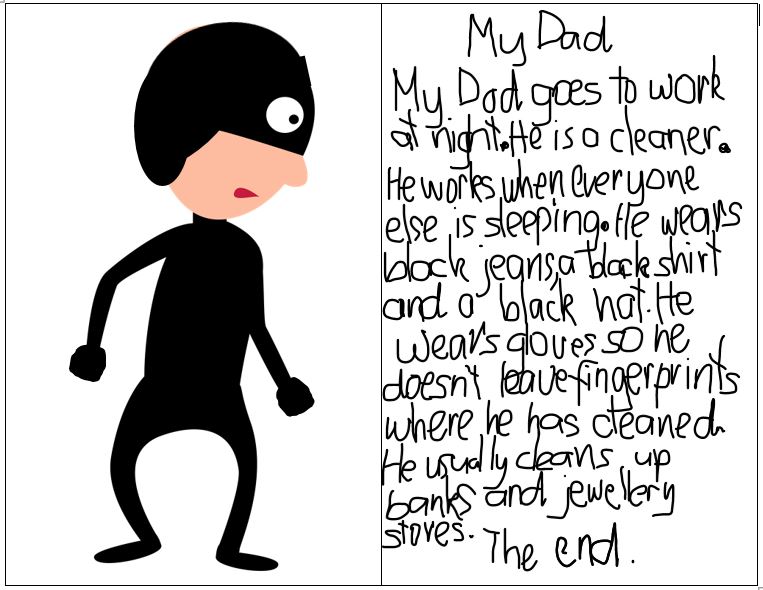
    “My Dad

    My dad goes to work at night. He is a cleaner. He works when everyone else is sleeping. He wears black jeans, a black shirt and a black hat. He wears gloves so he doesn’t leave fingerprints where he has cleaned. He usually cleans up banks and jewellery stores.

    The end.”


    My Dad - a childish story

    Note: The burglar illustrating Patsy story is an alteration of an Image by Joe Alfaraby from Pixabay.

    Thank you blog post

    Thank you for reading. I appreciate your feedback. Please share your thoughts.


  • School Days, Reminiscences of Balroop Singh

    School Days, Reminiscences of Balroop Singh

    Welcome to the School Days, Reminiscences series in which my champion bloggers and authors share reminiscences of their school days. It’s my small way of thanking them for their support and of letting you know about their services and publications.

    This week, I am pleased to introduce Balroop Singh, poet, writer, blogger and teacher. On her blog and in her poetry, Balroop speaks deep truths about life, relationships and emotions. Wherever you are, whatever your stage in life, I’m sure you’ll be able to connect with Balroop’s wisdom.

    When responding to other interviews in this series, Balroop commented, “I have some interesting memories of school, very different from the ones shared here”. How could I not invite her to join in too? I’m sure that, as you read her interview, you will see not only the differences but the similarities, between Balroop’s school days and those of others.

    Before we begin the interview, I’ll allow Balroop to tell you a little of herself:

    Balroop Singh, a former teacher and an educationalist always had a passion for writing.  She would jot down her reflections on a piece of paper and forget about them till each drawer of her home started overflowing with poetic reminders, popping out at will!

    She is a poet, a creative non-fiction writer, a relaxed blogger and a doting grandma. She writes about people, emotions and relationships. Her poetry highlights the fact that happiness is not a destination but a chasm to bury agony, anguish, grief, distress and move on! No sea of solitude is so deep that it can drown us. Sometimes aspirations are trampled upon, the boulders of exploitation and discrimination may block your path but those who tread on undeterred are always successful.

    When turbulences hit, when shadows of life darken, when they come like unseen robbers, with muffled exterior, when they threaten to shatter your dreams, it is better to break free rather than get sucked by the vortex of emotions.

    A self-published author, she is the poet of Sublime Shadows of Life and  Emerging From Shadows and Timeless Echoes. Her latest release is Moments We Love.

    She has also written When Success Eludes, Emotional Truths Of Relationships Read FREE with Kindle Unlimited and Allow Yourself to be a Better Person.

    Balroop Singh has always lived through her heart. She is a great nature lover; she loves to watch birds flying home. The sunsets allure her with their varied hues that they lend to the sky. She can spend endless hours listening to the rustling leaves and the sound of waterfalls. The moonlight streaming through her garden, the flowers, the meadows, the butterflies cast a spell on her. She lives in San Ramon, California.

    Balroop Singh school days reminiscences

    Welcome, Balroop.

    Let’s talk school. First, could you tell us where you attended school?

    I attended various schools in India, all of them in my hometown Ludhiana, (Punjab, a state in Northern India.) 

    Did you attend a government, private or independent school?

    In India, private schools are called public schools, which are managed by an organization or an independent authority. I attended both. I was sent to a Government School after 8th grade. It was traumatic for me because the atmosphere and standard was much lower than the Public School I had attended till then but I adjusted quite well and made some loving friends.

    What is the highest level of education you achieved?

    I got a Master’s degree in English from Punjab University. Later on I also got a Bachelor’s degree in Education and became the topper of Punjab University.

    What work or profession did you choose after school and was there anything in school that influenced this choice?

    The first job that I picked up was that of a lecturer in a college. I was proud of myself that I got the first job I had applied for! At that time earning some money for my family was the main inspiration but I was married off soon and I quit this job just after one year to join my husband in New Delhi. After 6 six years of hiatus, I joined a public school and became a high school teacher. 
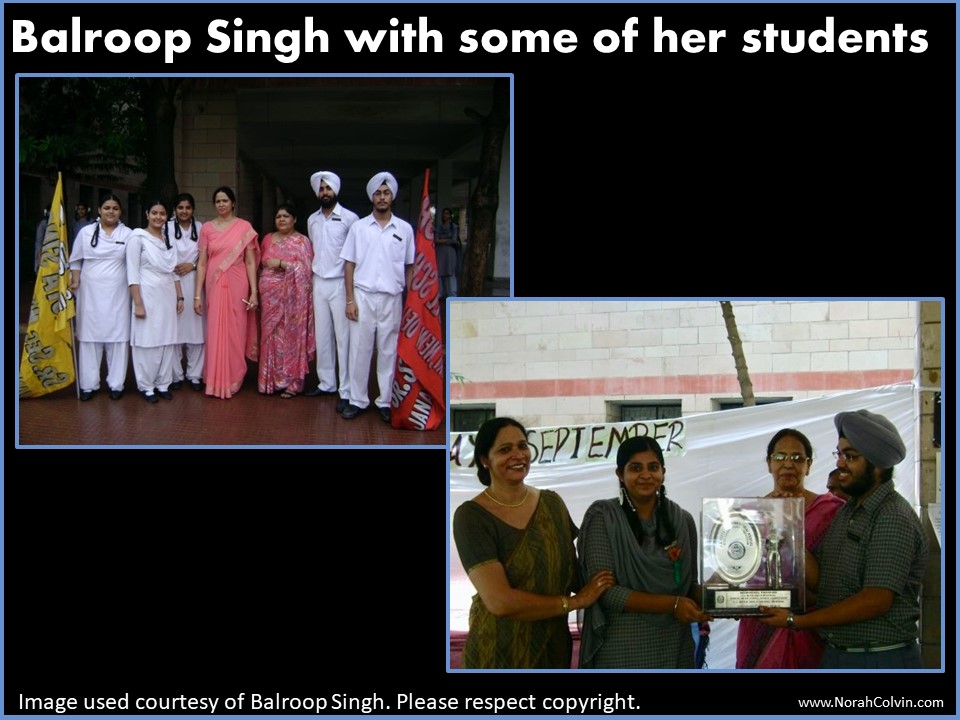
    Balroop Singh school days reminiscences

    What is your earliest memory of school?

    I must be in Kindergarten or class – 1, the teacher told us to learn a story and narrate it. I was beaten for not learning or failing to recite. The memory is hazy but I remember the cane falling on my legs even today.

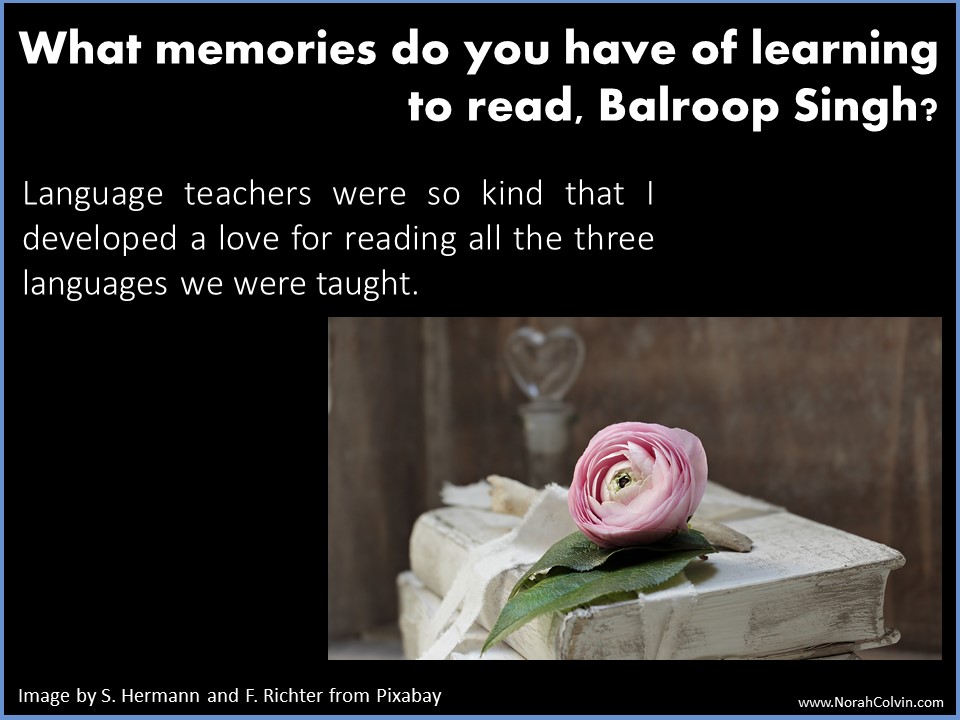
    What memories do you have of learning to read?
    Balroop Singh school days reminiscences 

    This one is from the school I liked the best. Language teachers were so kind that I developed a love for reading all the three languages we were taught.

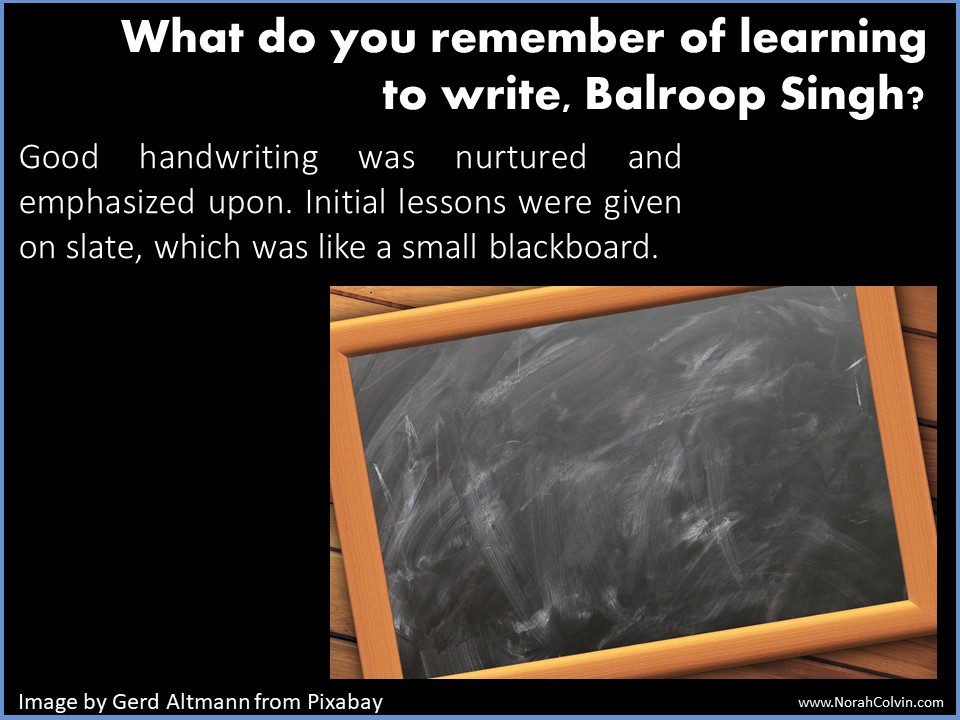
    What memories do you have of learning to write?
    Balroop Singh school days reminiscences

    Good handwriting was nurtured and emphasized upon. Initial lessons were given on slate, which was like a small blackboard. We had to write on a wooden slate, which was washed and plastered everyday with a special material. We used a wooden pen and the ink, which could only be used for a wooden slate. This was done at home everyday.

    What do you remember about math classes?

    I didn’t like Math class and got punished, probably for talking and disturbing others. Learning multiplication tables was the initial dislike that grew into larger proportions.

    What was your favourite subject? 

    English. I admired my English teachers and always got the highest marks in this subject, which further boosted my interest. They praised my handwriting and my papers were shown to other students to exemplify neatness. 

    What did you like best about school? 

    In middle school, I learnt self-discipline, which was taught by the Headmistress in a novice manner. She didn’t believe in corporal punishment. She had her own ways of convincing the students that hard work is a matter of habit.

    She had a number of black conical caps, which were placed in one corner of her room. All those students who didn’t do their homework were brought to her room. She didn’t need to say a word! All of them knew they had to wear those caps, one by one and go single file, out of her room. Nobody accompanied these students, they knew that they had to go into each class, hang their head, stand for a minute and go out. Nobody dared to laugh at them! Nobody wished to repeat this act. Every student learnt a lesson after wearing that conical black cap! The magical cap!

    You may call this a harsh punishment but it carved a deep impact on the students. At least at me! I could never think of neglecting my homework.

    What did you like least about school?  

    I didn’t like PE (Physical Education) classes, as no real training was given about sports. I never played any random games, as I was scared of falling and getting hurt!

    How do you think schools have changed since your school days? 

    There is a sea change! Schools nurture social and emotional development, respect the students and teach them with the latest techniques. Corporal punishment has been abolished. Creativity, cultural awareness, freedom of expression and sports training is encouraged at all stages of schooling. Public schools compete with each other to produce best academic results. Some schools encourage competitive spirit by placing the top scorers in an ability section.
    Balroop Singh school days reminiscences

    How do you think schools could be improved?

    First, recruitment of qualified teachers who feel inspired to take the responsibility of teaching the next generation is essential. Second, they have to be paid at par with others to attract intellect and talent to this profession. Number of students in a class needs to be reduced and value-based education with flexible curriculum could be helpful for those students who want to pursue higher studies.
    thank you for your participation

    Thank you for sharing your reminiscences of school and thoughts about education in general, Balroop. It’s been wonderful to have you here. Although there may be differences in your school days, there are familiar threads that seem to run through them too. 

    Find out more about Balroop Singh on

    her blog: Emotional Shadows

    her Goodreads author page: Balroop Singh

    her Amazon author page: Balroop Singh

    Connect with her on social media

    Twitter: @BalroopShado

    Facebook: Emotional Shadows

    Pinterest: Balroop Singh

    Balroop Singh school days reminiscences

    Purchase your own copy of books by Balroop Singh

    From Amazon

    If you missed previous reminiscences, check them out here:

    Charli Mills

    Sally Cronin

    Anne Goodwin

    Geoff Le Pard

    Hugh Roberts

    Debby Gies

    Pauline King

    JulesPaige

    D. Avery

    Christy Birmingham

    Miriam Hurdle

    Robbie Cheadle

    Marsha Ingrao

    Ritu Bhathal

    Joy Lennick

    Darlene Foster

    Susan Scott

    Barbara Vitelli

    Sherri Matthews

    Mabel Kwong

    Chelsea Owens

    Carol Taylor

    Pamela Wight

    Pete Springer

    Look for future interviews in this series to be posted on Sunday evenings AEST.
    Coming soon:

    Yvette Prior

    Colleen Chesebro
    Thank you blog post

    Thank you for reading. I appreciate your comments. Please share your thoughts.


  • #WATWB Learning to code and a local Aboriginal language from a robot

    #WATWB Learning to code and a local Aboriginal language from a robot

    On the last Friday of each month We Are the World Blogfest invites bloggers to join together in promoting positive news. I join in as often as I can as we need to look beyond the alarmist headlines and see all the good that is happening in the world. If you would like to join in, please check out the rules and links below.

    This year is the International Year of Indigenous Languages.

    I have already shared three good news stories that complement the year’s theme:

    A mindfulness app for Indigenous communities

    Engagement through music and song

    New Indigenous Doll to Foster Understanding

    This month I am adding another about a small robot named Pink that is being used to help children learn the local Aboriginal language at the same time as they learn to code. Interactions with the robot have been found to involve deep learning of both languages and an understanding of and appreciation for the traditional and new cultures. Many in the community have become involved and a new pride in the traditional culture of the area has developed.

    Click to read the whole article: How a robot called Pink helped teach school children an Aboriginal language.

    As stated by #WATWB, “There are many an oasis of love and light out there, stories that show compassion and the resilience of the human spirit. Sharing these stories increases our awareness of hope in our increasingly dark world.”

    I think we can always do with more good news stories so please join in and share positive stories you have found.

    Here are the guidelines for #WATWB:

    1. Keep your post to Below 500 words, as much as possible.

    2. Link to a human news story on your blog, one that shows love, humanity, and brotherhood. Paste in an excerpt and tell us why it touched you. The Link is important, because it actually makes us look through news to find the positive ones to post.

    3. No story is too big or small, as long as it Goes Beyond religion and politics, into the core of humanity.

    4. Place the WE ARE THE WORLD badge or banner on your Post and your Sidebar. Some of you have already done so, this is just a gentle reminder for the others.

    5. Help us spread the word on social media. Feel free to tweet, share using the #WATWB hashtag to help us trend!

    Tweets, Facebook shares, Pins, Instagram, G+ shares using the #WATWB hashtag through the month most welcome. We’ll try and follow and share all those who post on the #WATWB hashtag, and we encourage you to do the same.

    The co-hosts this month:

    Susan Scott

    Peter Nena

     Shilpa Garg

     Mary J. Giese

    Damyanti Biswas

    Please pop over to their blogs to read their stories, comment and share.

    Click here to paste the link to your post in the Facebook group. The bigger the #WATWB group each month, the greater the joy!

    Thank you blog post

    Thank you for reading. I appreciate your comments. Please share your thoughts.

  • Spring into September with Lots to Celebrate – readilearn

    Spring into September with Lots to Celebrate – readilearn

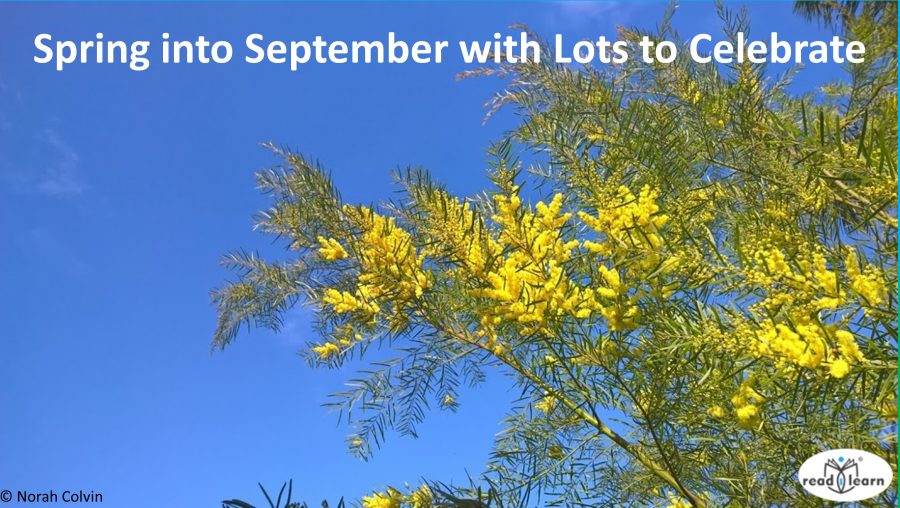
    The beginning of September marks the beginning of spring in the southern hemisphere and brings, along with it, many days to celebrate.

    Wattle day

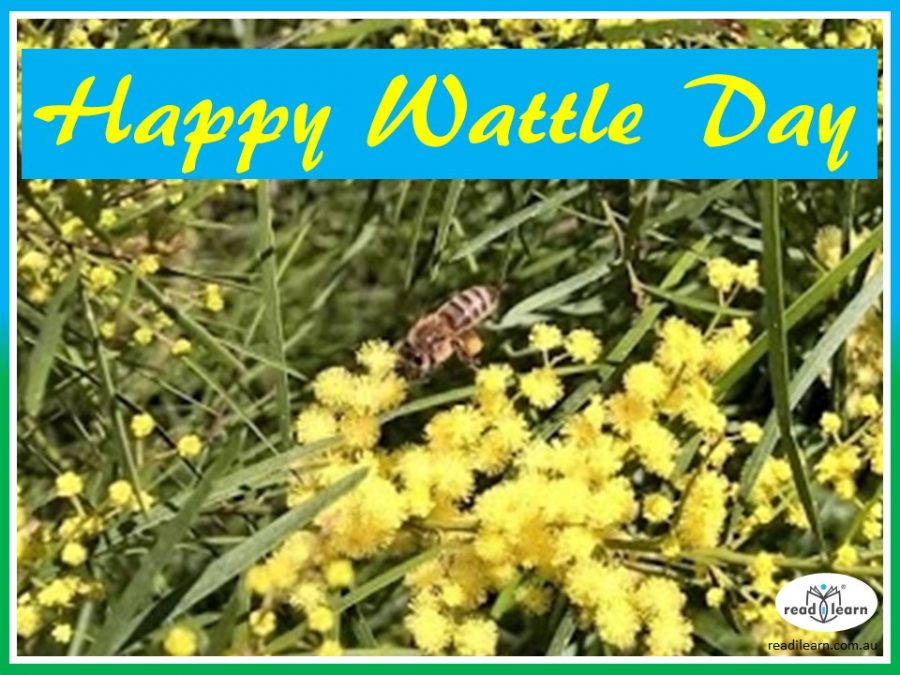
    Here in Australia, we welcome Spring on 1 September with Wattle Day. The golden wattle is Australia’s national floral emblem.

    You could celebrate Wattle Day by:

    • wearing a spray of wattle on your hat
    • writing a poem about wattle flowers and springtime
    • using yellow pom poms to make Happy Wattle Day cards to give to friends and loved ones
    • going for a walk around the school grounds or local neighbourhood to check out the wattle trees in bloom. With nearly one thousand species of wattle in Australia, you are sure to see a variety. Comparing tree bark, leaves and blossoms helps to develop the ability to identify the similarities and differences that support scientific classification.
    • investigating how Aboriginal and Torres Strait Islander peoples use parts of the wattle tree; for example, for food, medicine, fuel, to make rope, fishing lines, string and tools such as boomerangs. Seasonal changes in the wattle trees indicate other changes that occur in the environment.

    Father’s Day

    This year, Father’s Day coincides with Wattle Day on 1 September. Father’s Day is a day to recognise the important role of fathers and other father figures. You can find suggestions for easy and inexpensive gifts in the Father’s Day resources, including a free list of Father’s Day Activities.

    Continue reading: Spring into September with Lots to Celebrate – readilearn

  • School Days, Reminiscences of Pete Springer

    School Days, Reminiscences of Pete Springer

    Welcome to the School Days, Reminiscences series in which my champion bloggers and authors share reminiscences of their school days. It’s my small way of thanking them for their support and of letting you know about their services and publications.

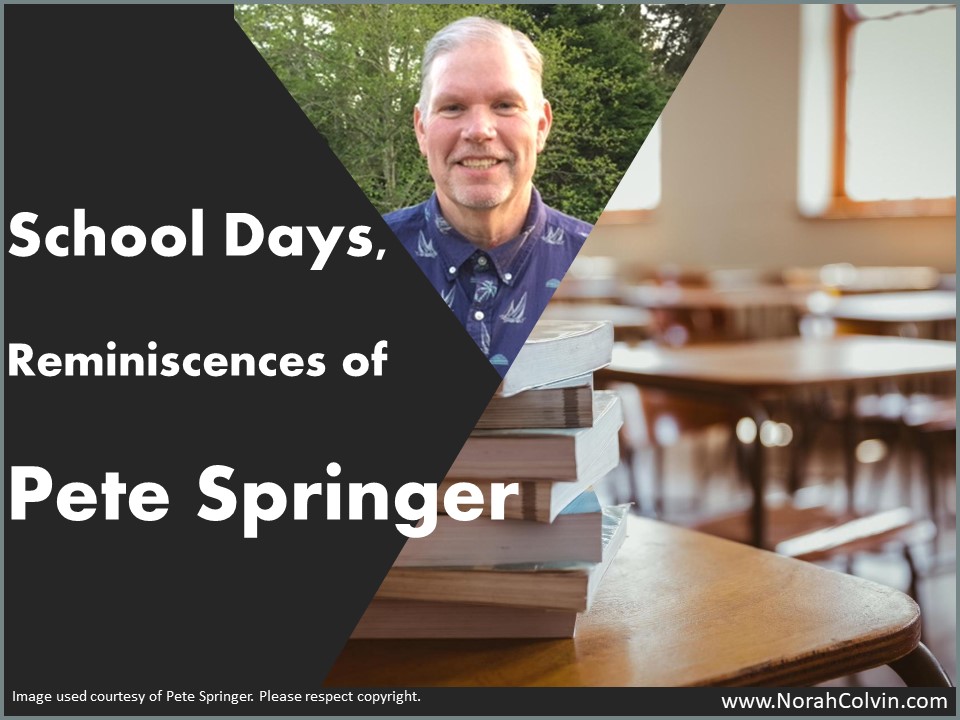
    This week, I am pleased to introduce Pete Springer, teacher, author and blogger. Pete joined in these conversations about school days right from the beginning. Like me, he is a passionate educator and has spent many years in the classroom changing lives.

    Although he is no longer in the classroom, his passion for education remains strong. He has established a Facebook page to support teachers and has written a book sharing his experience as a teacher with the intention of supporting other teachers, especially those just starting their journey.

    He titled his book They Call Me Mom. What a fabulous title. As a teacher, I was called Mum (or even Dad, sometimes) many times. I always considered it a lovely testimony to our respectful relationship. As a parent, I was also sometimes called Mrs x and was just as honoured. I’m sure that, as you read through Pete’s bio and interview, you will be impressed by his ongoing contribution to education and our world.

    But, before we get into Pete’s interview, I’ll allow him to tell you a little of himself:

    I taught elementary school (grades 2-6) for thirty-one years in California.  I loved everything about being a teacher.  I loved my students as if they were my own, and I follow their progress today even though I’ve been retired for three years. I’ve been invited to many extracurricular events (I tried to attend one each for all of my students during the year), birthday, graduations, weddings, and even a housewarming party.  One of my funniest memories was being invited (I obviously didn’t go) to a sleepover party thrown by one of my second graders.

    I don’t like to make a big deal about it, but I was chosen for the Excellence in Teaching Award in 2006. This award is presented annually to ten of the top teachers in the County each year.

    My favorite thing to do in school on a daily basis was to read to kids, and I decided that if I ever got the opportunity that I would try writing books for children when I retired.  I got sidetracked by another project first.  I decided to write a combination memoir/advice book, They Call Me Mom for future teachers.  The title of the book was inspired by the fact that elementary children consistently refer to their teachers as mom (by accident).  I took this as the ultimate compliment because moms are pretty great! I have spoken to college students at my alma mater, Humboldt St. who are studying to become teachers.  I was most touched when one of my former Superintendents purchased my book for all of the new teachers in his district. 

    I am now following my dream and attempting to write books for middle grades that deal with the issues that kids deal with at home and at school.  I’ve joined a critique group (one of the members is my former principal, Nancy Wheeler, who is one of my biggest role models in education serving as one of my master teachers and then as my principal.  (She is 81 and still volunteers in schools, and I couldn’t have a better role model.) My wife, Debbie, was also a career educator, serving as a preschool teacher and then Director.

    In addition, as an advocate for literacy, I joined the Humboldt County Author’s Festival Committee which brings twenty-five children’s authors from across the country to our local schools biennially.  (I someday would love to be one of the presenters.)  I also volunteer for an organization called the Society for the Blind.  This organization helps people who are visually impaired. Once a week I read our local newspaper and send in the articles (using voice memos on my cellphone) where they can be accessed by those who are blind or have low vision. 

    Having been a master teacher for four student teachers, I try to always be an advocate for education, children, and teachers.  I started a Facebook group about eighteen months ago called Supporters of Teachers to highlight positive things that are happening in education. 

    They Call Me Mom by Pete Springer

    Welcome, Pete.

    Let’s talk about school. First, could you tell us where you attended school?

    I attended school for thirteen years (K-12) in the United States.  I then attended Humboldt St. (California) where I graduated and went on to earn my teaching credential.

    Did you attend a government, private or independent school?

    All of the school I attended were government (public) schools.

    What is the highest level of education you achieved?

    The highest level of education I achieved was a Bachelor’s Degree from Humboldt St.

    What work or profession did you choose after school and was there anything in school that influenced this choice?

    I come from a family of teachers, but I think school also influenced my career path because I was inspired by some of the teachers I had. I never planned on becoming a teacher, but I fell into an education job as a one on one aid to a boy who had muscular dystrophy.  I fell in love with working with children from that moment on.

    What is your earliest memory of school?

    My earliest memory of school was attending preschool.  One of the other kids in the class ate a purple crayon and threw it up a few minutes later.  The poor teacher had to deal with the mess.

    What memories do you have of learning to read?

    What do you remember of learning to read, Pete Springer

    I remember loving to read from an early age.  I was read to a lot when I was a child, and I developed an appreciation for books then. I remember reading all of the books in the Hardy Boys series when I was in elementary school.  One of my favorite things to do as a dad was to read with my own son who has gone on to earn his Master’s Degree in education. I still read every night before I go to bed.  John Grisham is my favorite author.

    What memories do you have of learning to write?

    I recall writing stories at a young age.  When I got to high school I became much more self-conscious about having my work read aloud.  When I became a teacher, I often wrote plays that my class and I performed.

    What do you remember about math classes?

    Math came easy to me.  I was always good with numbers and teachers were very impressed with my mental math abilities.  Math was such an intuitive concept to me—I loved it until geometry reared its ugly head.

    What was your favourite subject?

    What was your favourite subject, Pete Springer

    I liked pretty much all subjects, but I would say math because It made me feel smart.

    What did you like best about school?

    I liked the elementary and middle school years because I had a lot of friends.  High school was my least favorite time. I would say that college was my happiest time because I could be myself, and I liked the opportunity for free thinking.

    What did you like least about school?

    My least favorite thing about school was my high school years because it was so cliquish.  We moved to a new place when I was starting high school, and I didn’t have the self-confidence that I possess today.  I tended to withdraw instead of putting myself out there. If I could have one do-over in my life, it would be those years because it was the one time in my life that I wasn’t happy.

    How do you think schools have changed since your school days?

    Pete Springer on how schools have changed

    I think I’m very qualified to answer questions about schools.  One way that schools have changed today is the greater emphasis on technology.  I certainly am a proponent of the basics, but you have to play to your audience as well.  Kids love technology, and we live in a technological society.  Another change is the great emphasis that schools put on state testing.  That is quite unfortunate because it takes the joy out of learning for students and teachers.  While there are always going to be great kids in a school, there is a higher percentage of students with anger and mental health issues.  It makes the job harder to be a teacher and a student in a hostile environment.

    What do you think schools (in general) do well?

    I think schools generally give kids a well-rounded education.  One of the things schools are getting better at recognizing is that not every student is bound for college.  They are providing a path for students who will learn a trade.  There are still plenty of educators who recognize how important it is to keep the arts alive in schools, but I worry about cuts in this area.

    How do you think schools could be improved?

    Pete Springer on how schools could be improved

    Besides de-emphasizing state testing, schools have an increasingly challenging job of dealing with bullying.  Violence is prevalent in our culture, and schools have increasing numbers of violent students who are dealing with mental health issues. The school has to be a safe place for kids; a place that they can learn in a nonthreatening environment with role models who inspire them.  Teaching educators how to equip themselves with firearms is not the answer!


    thank you for your participation

    Thank you for sharing your reminiscences of school and thoughts about education in general, Pete. It’s been wonderful to have you here. I always love meeting other educators, especially those who are as passionate about children and learning as I am. I don’t think anyone who hasn’t been a teacher can ever understand the passion and dedication we have for our roles as life changers.

    Find out more about Pete Springer

    on his blog:  Pete Springer Author

    Connect with him on social media

    Facebook: Pete Springer Author

    Twitter: Pete Springer

    They Call Me Mom by Pete Springer

    Purchase your own copy of They Call Me Mom

    from Amazon

    If you missed previous reminiscences, check them out here:

    Charli Mills

    Sally Cronin

    Anne Goodwin

    Geoff Le Pard

    Hugh Roberts

    Debby Gies

    Pauline King

    JulesPaige

    D. Avery

    Christy Birmingham

    Miriam Hurdle

    Robbie Cheadle

    Marsha Ingrao

    Ritu Bhathal

    Joy Lennick

    Darlene Foster

    Susan Scott

    Barbara Vitelli

    Sherri Matthews

    Mabel Kwong

    Chelsea Owens

    Carol Taylor

    Pamela Wight

    Look for future interviews in this series to be posted on Sunday evenings AEST.
    Coming soon:

    Yvette Prior

    Colleen Chesebro

    Balroop Singh

    Thank you blog post

    Thank you for reading. I appreciate your comments. Please share your thoughts.
     

  • Celebrating Three Years of readilearn with a Gift for You – readilearn

    Celebrating Three Years of readilearn with a Gift for You – readilearn

    This week, readilearn celebrates three years of supporting teachers and parents of children in their first three years of school.

    In recognition of this milestone, we are offering, until the end of the month, a 50% discount on any readilearn resource, including subscription. To take advantage of this offer, simply enter the code *birthday* at the checkout.

    Continue reading: Celebrating Three Years of readilearn with a Gift for You – readilearn

  • School Days, Reminiscences of Pamela Wight

    School Days, Reminiscences of Pamela Wight

    Welcome to the School Days, Reminiscences series in which my champion bloggers and authors share reminiscences of their school days. It’s my small way of thanking them for their support and of letting you know about their services and publications.

    This week, I am pleased to introduce Pamela Wight, author, blogger and creative writing teacher. It seems that Pamela and I have known each other forever. I enjoy reading her blog Roughwighting where she muses on life and amuses with her short stories. Although I enjoyed her romance novel The Right Wrong Man – a fun story that I couldn’t put down – I was delighted when she published her first picture book Birds of Paradise, so delighted that I interviewed her about it on readilearn. I am very excited to hear that she has a new picture book Molly Finds her Purr coming out next month.

    Before we begin the interview, I’ll allow Pam to tell you a little of herself:

                Pamela Wight writes romantic suspense (The Right Wrong Man, Twin Desires) and is also the author of an illustrated children’s book, Birds of Paradise, a finalist in the International Book Awards, and the up-coming picture book Molly Finds Her Purr.  All of Wight’s page-turning novels are available on Amazon and Barnes & Noble as paperbacks or e-books. Birds of Paradise (and Molly Finds Her Purr in September 2019) can be purchased on Amazon and Barnes & Noble as hardbacks.

                Pamela earned her MA in English from Drew University, continued with postgraduate work at UC Berkeley in publishing, and teaches creative writing classes in Boston and San Francisco. She lives in the Boston area with her “right man” and hikes the New England trails while concocting her third novel, As Lovely as a Lie. Wight speaks to book clubs and teaches creative writing classes in both locations. Many readers enjoy her “weekly blog on daily living” called Roughwighting. (www.roughwighting.net)

    Pamela Wight and her books

    Welcome, Pamela.

    Let’s talk school. First, could you tell us where you attended school?

    I attended elementary, middle, and high school in a small New Jersey town called Pitman. We only had about 400 students in the (non-private) high school. I couldn’t wait to leave Pitman and move on to bigger and better things. Now as an adult, I appreciate the wonderful aspects of small town living. 

    What is the highest level of education you achieved?

    I received my B.A. in English Lit from a small Pennsylvania college with excellent professor-to student-relationships. My professors gave me a paid internship when I was a senior to teach their small college Freshman English classes. With that experience, I got a full scholarship for graduate school near New York City, where I earned a Masters in English Literature.

    What work or profession did you choose after school and was there anything in school that influenced this choice?

    I worked as an editor and writer for a small feminist newspaper. 

    What is your earliest memory of school?

    Kindergarten! I was so excited that the teacher had a corner full of costumes, where we could dress up and be anyone we wanted. I choose “Superwoman.”

    What memories do you have of learning to read? 

    I remember a stream of sunlight in my living room when I was young – before Kindergarten – and taking out the picture books on the bottom bookshelf and making up stories from the pictures. That’s when I first started to “read.”

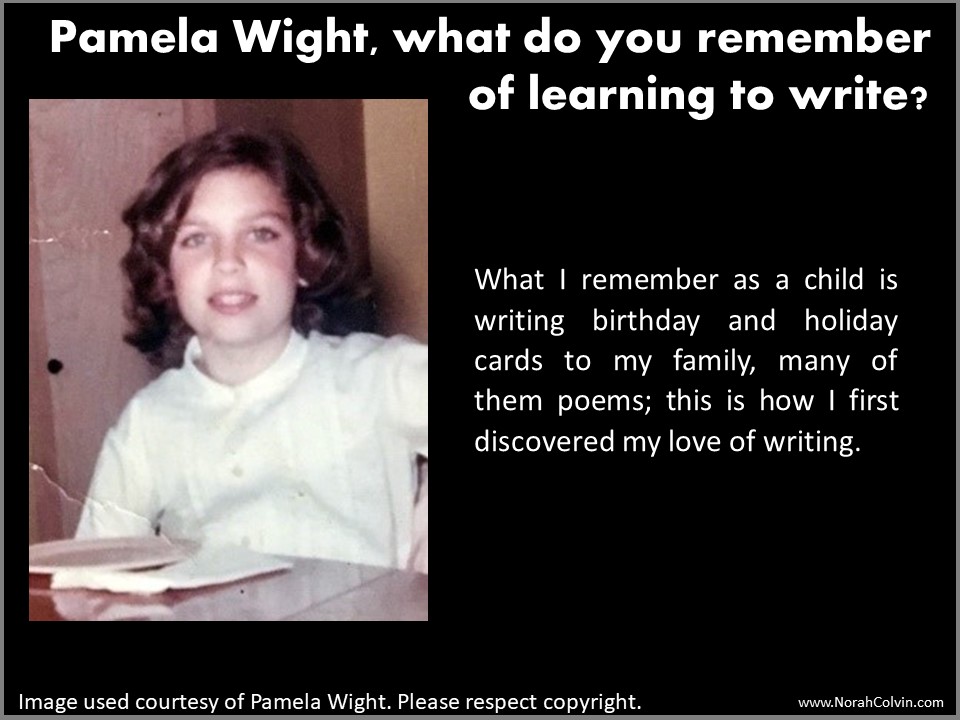
    What memories do you have of learning to write?

    Pamela Wight learning to write

    What I remember as a child is writing birthday and holiday cards to my family, many of them poems; this is how I first discovered my love of writing.

    What do you remember about math classes?

    How much I hated them. Math didn’t make sense to me; stories did.

    What was your favourite subject? 

    English.

    What did you like best about school?

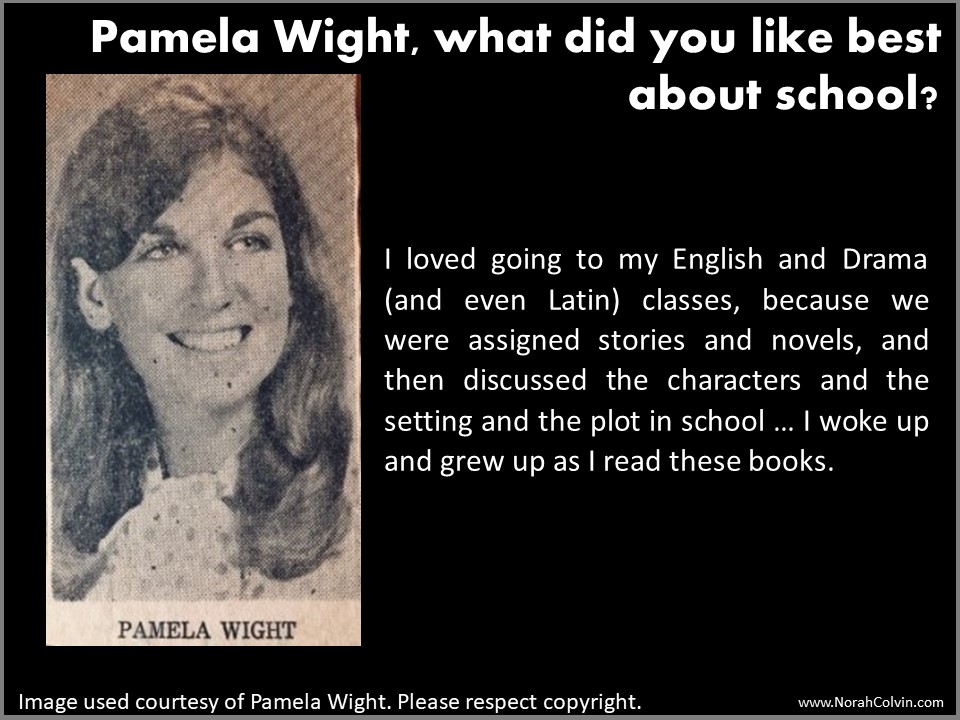
    what Pamela Wight liked best about school

    I loved going to my English and Drama (and even Latin) classes, because we were assigned stories and novels, and then discussed the characters and the setting and the plot in school: Fahrenheit 451 (where I began my love for Ray Bradbury’s writing), 1984 (dystopian!), Of Mice and Men (first book that made me sob), Invisible Man (awakened my social consciousness); Pride and Prejudice (romance with wit!). I woke up and grew up as I read these books.

    What did you like least about school?

    Biology and geometry. The worst? Dissecting frogs. I protested animal cruelty, but the teacher still made me do it.

    How do you think schools have changed since your school days?

    Pamela Wight and granddaughter

    I think my kids (and now my grandkids) are given a wider variety of subjects to learn in each class, even elementary. One of my 6-year-old grandchildren has explained to me the metamorphosis of a butterfly; a 5-year-old grandson has showed me his yogic postures of down dog and plow that he learned in Kindergarten; and my granddaughter recited a speech by John Adams in 4th grade and played the role of John Lennon on “Biography Day” in 5th grade. When I was in school during those grades, we just “followed the lines” in every subject.  Also, special education has improved so much from my school time (when basically there was no “special” education) to my children’s time, to my grandchildren’s, where there’s now much more focus on helping those with different learning abilities.

    What do you think schools (in general) do well? 

    Open up a child’s intellect and curiosity about many subjects, and allow each child to thrive while learning.

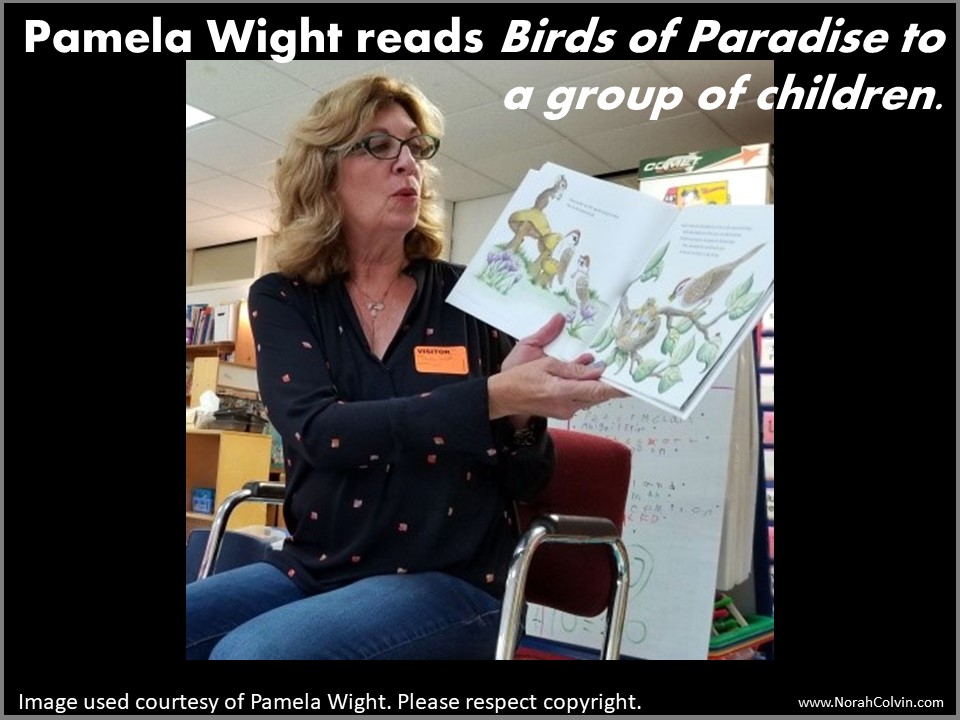
    Pamela Wight reading Birds of Paradise to children

    How do you think schools could be improved?

    I think schools should focus on the importance of empathy and compassion for all living beings, as well as the importance of learning a subject. Open up more lessons on diversity and how we each learn from each other. Additionally, we need more/better high school classes on ‘daily life’ activities like budgeting and nutrition.

    thank you for your participation

    Thank you for sharing your reminiscences of school and thoughts about education in general, Pamela. It’s been wonderful to have you here. I totally agree that we should focus more on the importance of empathy and compassion, and the ability to learn from each other.

    Find out more about Pamela

    Visit her blog: www.roughwighting.net

    Goodreads author page: https://www.goodreads.com/user/show/12334429-pamela

    Connect with her on social media

    Facebook: http://facebook.com/roughwighting

    Linkedin: http://www.linkedin.com/in/pamelawight

    Twitter: https://twitter.com/pamelawight

    Instagram: https://www.instagram.com/pam94920

    Pamela Wight and her books

    Purchase your own copy of

    The Right Wrong Man

    Twin Desires

    Birds of Paradise

    If you missed previous reminiscences, check them out here:

    Charli Mills

    Sally Cronin

    Anne Goodwin

    Geoff Le Pard

    Hugh Roberts

    Debby Gies

    Pauline King

    JulesPaige

    D. Avery

    Christy Birmingham

    Miriam Hurdle

    Robbie Cheadle

    Marsha Ingrao

    Ritu Bhathal

    Joy Lennick

    Darlene Foster

    Susan Scott

    Barbara Vitelli

    Sherri Matthews

    Mabel Kwong

    Chelsea Owens

    Carol Taylor

    Look for future interviews in this series to be posted on Sunday evenings AEST.
    Coming soon:

    Pete Springer

    Yvette Prior

    Colleen Chesebro

    Thank you blog post

    Thank you for reading. I appreciate your comments. Please share your thoughts.


  • Celebrating Book Week’s Secret Power — Reading – readilearn

    Celebrating Book Week’s Secret Power — Reading – readilearn

    The CBCA (Children’s Book Council of Australia) Book Week kicks off tomorrow 17 August for a week of activities celebrating Australian Literature. Book Week is heralded by the announcement of the book awards on the third Friday in August at 12 noon.

    The awards are presented to books in the following categories:

    • Older Readers
    • Younger Readers
    • Early Childhood
    • Picture Book
    • Eve Pownall (for information books)

    (Click this link to see the Notables, a fine collection of books) from which the Short List was compiled and from which Winners were selected in each category.)

    2019 Book Week Theme and Resources

    The theme for this year’s Book Week is Reading is My Secret Power.

    To celebrate, poet Mike Lucas has written a great poem. You can download a copy of Mike’s poem Reading is my Secret Power here.

    The CBCA website provides these useful links to resources to help you celebrate Book Week.

    Children’s Rights to Read

    Reading may be a secret power, but it is also a superpower and a right of every child. Book Week is an appropriate time during which to reflect upon our classroom practices and consider how well they meet the International Literacy Association’s Children’s Rights to Read. (You can download and support the rights through this link.)

    Continue reading: Celebrating Book Week’s Secret Power — Reading – readilearn

  • Apples for the teacher

    Apples for the teacher

    My entire life has been focused on education, both in school and out. As explained in my poem Education is, I don’t consider education and school to be synonymous. While some learning may take place in school, education encompasses much more than that. It occurs through living and is lifelong.

    While my views have always challenged the traditional approach, I haven’t always found other like-minded educators in my personal circle. When I do meet others with a similar passion for children and learning, I feel exhilarated and renewed, excited by the prospect of what could be.

    Recently, on Facebook, I viewed this video by Prince Ea, musician and motivational speaker.

    The video led me to the Innovation Playlist and Ted Dintersmith. I knew I had found others of similar mind when I saw that the first video on the Playlist was Do Schools Kill Creativity by Sir Ken Robinson, which I shared last week (and previously here, here and elsewhere). What joy!

    There is much to explore on the Innovation Playlist, and I have only just begun. If like me, you believe traditional schooling could do with some improvement and are heartened by good things that are going on in many places, I highly recommend you take a look.

    So far, I have watched Ted Dintersmith’s movie Most Likely to Succeed and am currently listening to his book What School Could Be. His book is a fascinating expose of schools in the United States of America. In one school year, he visited schools in every State discovering innovative “teachers doing extraordinary things in ordinary settings, creating innovative classrooms where children learn deeply and joyously.” His findings are inspiring and reassuring that schools can do more than prepare children for tests, they can prepare children for life. It is a fascinating read. If you live in the US, you will find something about schools in your own State. If you live outside the US, you will find something to inspire you.

    For a quick overview of Dintersmith’s book and findings, read this article published in Education Week last year What’s Actually Working in the Classroom?

    This discussion between Ted Dintersmith and Prince EA provides an insight into their motivations for improving education.

    Carrot Ranch flash fiction challenge - poisoned apple

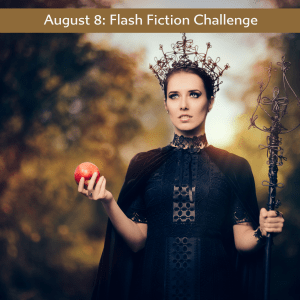
    This week at the Carrot Ranch, Charli Mills challenged writers to In 99 words (no more, no less) write a story about a poisoned apple. Let’s explore dark myth. Deconstruct the original or invent something new. Negotiate the shadows, shed light, but go where the prompt leads you!

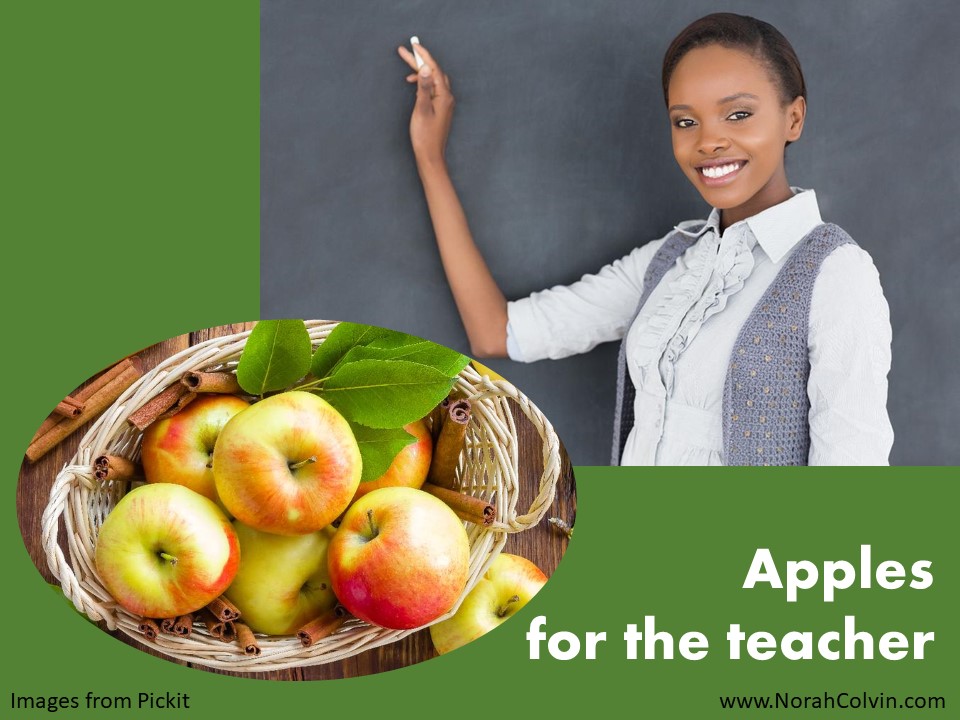
    An apple is often used as a symbol for the teacher, and we talk about ‘an apple for the teacher’. Rather than write a fractured fairy tale, of which I am fond, I thought a poisoned apple was a perfect analogy for what happens when the focus of schooling is on test scores rather than children and learning. Let’s see what you think.

    apples - which would you choose

    It’s an institution

    They arrived with bright eyes, open hearts and curious minds. As they entered, each was handed a shiny apple full of promises. They took their places and followed instructions. In unison, they bit off small portions of their apple and chewed to the beat of the enormous metronome suspended above. On cue, they swallowed but, with insufficient time before the required regurgitation, were unable to digest any components. Before they had finished, the taste was bland, swallowing difficult and regurgitation almost impossible. On exiting, their eyes were dull, their hearts closed, and their minds shrivelled, poisoned by false promises.
    The antidote

    They arrived with bright eyes, open hearts and curious minds. As they entered, each was handed a shiny apple full of promises. No instructions were given. Each was guided in making their own discoveries. Some investigated flavour, nutritional benefits, and created award-winning recipes. Some explored seed propagation, discovering ways of increasing productivity and limiting food scarcity. Some peeled the apple and inspected it layer by layer to determine its innermost secrets. Some cut it in half to reveal and release the stars within unlocking unlimited potential and the secrets of the universe. All were filled with wonder and learning.
    «»

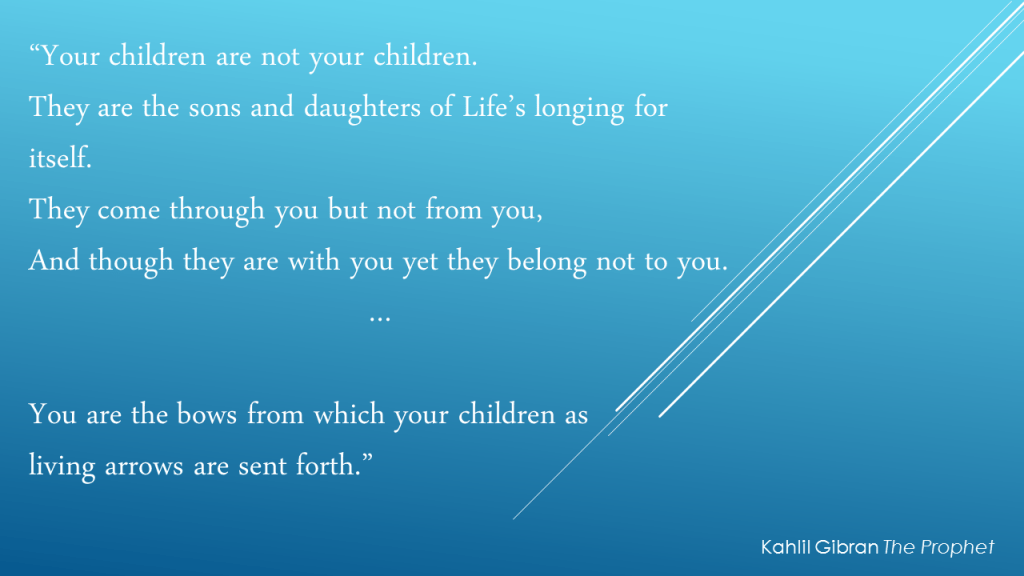
    I conclude with a video in which Prince EA speaks to his teacher and explains to him why he is not a failure and why what happens in the classroom does not inspire learning. He includes one of my favourite quotes by Kahlil Gibran. What’s to not like?

    Kahlil Gibran Children


    Thank you teachers

    To all the wonderful teachers in my community, I thank you for your hard work and dedication, and the positive difference you are making to the lives of so many children and their families. You make the world a better place.

    Thank you blog post

    Thank you for reading. I appreciate your feedback. Please share your thoughts.