Live Love Laugh Learn … Create the possibilities

Category: Creativity

  • Can you imagine a world without The Arts?

    Salvador Dalí [Public domain], via Wikimedia Commons
    How much time do you think should be devoted to the creative arts in school? How much time do you think is spent on creative arts in school? Is it a match?

    The arts include such things as:

    • Visual Arts
    • Drama
    • Music
    • Dance

    Educational policies promote The Arts for their potential to develop creativity and critical thinking. For example, the rationale for The Arts in the Australian Curriculum states that

    “The arts have the capacity to engage, inspire and enrich all students, exciting the imagination and encouraging them to reach their creative and expressive potential.”

    Creativity and critical thinking are mentioned first in the aims.

    How do The Arts contribute to our world?

    If nothing else, they add beauty to uplift and inspire. In many ways, they are time capsules, carrying stories from the past through our present and into the future. While I am neither artist nor art connoisseur, I see the value in each form and the importance of sharing them with younger generations.  I also consider it important for young children to have freedom to explore each of the arts as a medium of self-expression.

    I have shared some thoughts about each of the arts in previous posts, including
    Let’s Dance!

    image courtesy of openclipart.org

    I’ve got the music in me!

    Imagine that!

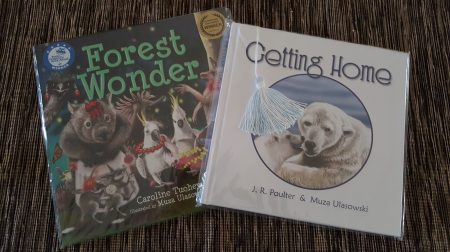
    and introduced you to some amazing illustrators including Jeannie Baker, Kim Michelle Toft, Narelle Oliver, Helene Magisson. Today I have received two beautiful picture books illustrated by the very talented Muza Ulasowski who I’ll be interviewing later this year.
    At the Carrot Ranch this week Charli Mills challenges us to consider what a nation may be like if art was gone. The picture she creates of a possible “post-truth era dystopian” future is not pretty. I’m not into dystopian futures where “everything is unpleasant or bad”. Tell me, we’re not there yet, are we?

    Although The Arts get a good rap in the Australian Curriculum, and other curricula too I’m sure, many teachers grumble that time for creativity and the arts is pushed out as schools focus on the formal tests that pit school against school, state against state, and country against country.

    Hopefully that situation is not as dire in early childhood situations. Fortunately, young children are constantly exposed to some aspects of the visual arts through beautifully illustrated picture books. Hopefully they also enjoy copious amounts of music, song, and movement each day, and lots of time for imaginative play. How much more than that, and how much time for self-expression, may vary from school to school and teacher to teacher.

    Involvement in art programs can also be therapeutic, giving children opportunities for quiet, almost meditative times, in which they can turn off their brains for a little while, relax, and express themselves.

    For Marnie, a character I have been developing through responses to Charli’s flash fiction prompts, art is more than just a release. Art classes with her favourite teacher Miss R., who sees and encourages the possibilities and potential that lie within, offer her welcome respites from the harshness of her reality.

    I introduced this notion in a flash piece Safety, and extended the idea in a longer piece The story behind brown paint.

    In this response to Charli’s prompt to In 99 words (no more, no less) go down the rabbit hole to a place where art is not allowed. It could be a small story or a dystopian vision. Is there a power struggle over art? Would the general public miss it? Is the end of art a natural evolution? I have considered what it might be like for Marnie should her should she be robbed of her treasured art class. I hope you enjoy it.

    No Art

    She’d survived! In just minutes, art class with Miss R. Without Art today, she’d be somewhere else; anywhere. Or nowhere. Breathing deeply, imagining sunshine and calm waters, as Miss R. taught, helped quell the warmth rising from her feet, threatening to explode her heart and head. Somehow she’d avoided Brucie and his bully mates, escaping their lunchtime taunts. Now Art: sanctuary. Suddenly, tears obliterated hope as she read: “No Art today. Classes cancelled.” Where was that white rabbit with a hole down which she could disappear?

    Later, during class, Miss R. asked, “Has anyone seen Marnie?” Brucie just smirked.
    Thank you for reading. I appreciate your feedback. Please share your thoughts.

  • Shaping the future #myfirstpostrevisited

    Almost every week since Charli Mills at Carrot Ranch Communications challenged writers with her first flash fiction prompt in 2014, I have written a 99-word story in response. Sometimes an idea forms quickly, like a cup of instant coffee. Other times the prompt needs to percolate interminably, before the flavour is rich enough to share.

    This is one of those weeks.

    In her wonderful post, Charli writes about the changing desert of Utah that she refers to as Mars, so different is the landscape from that of her beloved mountainous northern states.

    Charli, a historian, seeks clues to lives past and finds traces from different times. “Life is like multiple disconnected plays that share the same stage over and over,” she muses.

    She finds remnants of slag and uses it as an analogy to life, her life, and its changes, many forced upon her like the heat of a smelter and says that, “We are slag forged in the fires …, and want to fully transform into something of beauty and purpose.

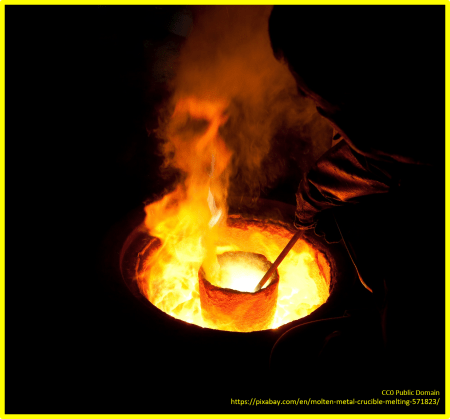
    She concludes her post by challenging writers to “In 99 words (no more, no less) include slag in a story. Slag is a glass-like by-product of smelting or refining ore. Slag is also used in making glass or can result from melting glass. It can be industrious or artistic. Go where the prompt leads.”

    I was lost. How could I possibly tie a challenge like that into the educational focus of my blog? As usual, my thoughts scattered. I guess that makes me a scatterbrain. But I am a scatterbrain with focus, looking for ideas everywhere, trying for the proper fit. Sometimes I’m surprised where I find inspiration.

    A fellow participant in Charli’s challenges is Sarah Brentyn who blogs at Lemon Shark Reef. Sarah, who posted a piece called Transformation, also quoted Charli’s words about slag and transformation, and shared a tweet of her own from August 2016:

    Interesting to me is that August 2016 is when readilearn, my website of early childhood teaching resources, launched; and my first readilearn blog post was published. That was almost three years to the day after my first post here on NorahColvin.com.

    I could say that blogging has been a bit of a trial by fire, and that I too have, through both projects, endeavoured to create something of “beauty and purpose”, with NorahColvin forging the way for readilearn. No doubt a lot of slag has been manufactured and either shared or discarded in the process.

    On her other blog Lemon Shark (she’s got two, I’ve got two), Sarah recently invited me through her post My New Blog Scares me #MyFirstPostRevisited to share my first blog post. She provided me with some rules to follow, so in this post, I will do my best to follow two sets of rules, Sarah’s and Charli. Or not. Rules are meant to be broken. Aren’t they?

    I apologise for the length of this post which is really three rolled into one! Feel free to skip over or speed read any section you wish.

    This is my very first post from 15 August 2013:

    “Welcome to my blog. This is a whole new adventure for me and I am excited about where it may lead. I hope you will be inclined to pop in from time to time to share my journey and offer some encouragement along the way.

    Since education is my life a good deal of what I write will focus on my thoughts and ideas about education and learning. Check out my poem Education is on the “Education is” tab to see how different I believe education and schooling to be. I would love to hear the ways in which you may or may not agree with me. I am in for a bit of education myself as I explore this new world (to me) of blogging and I know there are many wonderful teachers out there ready to teach me what I need to know.

    When the student is ready the teacher appears.”

    I am ready.

    Let the adventure begin!”

    The post drew six comments (five from family and friends, one unknown from the blogosphere) and no likes.

    Three years later, on 23 August 2016, I published my first readilearn blog post:

    “Hi, welcome to readilearn, a new website of early childhood teaching resources.

    I’m Norah Colvin, founder of readilearn and writer of all readilearn materials. I’m excited to be able to share them with you, and hope you find them useful in your early childhood classroom.

    After making the decision to be a teacher at age ten, my focus has never wavered.  I have spent most of my life thinking, reading, discussing and learning about education. I have always been involved in education in some way, whether as classroom teacher, support teacher, home educator, private tutor, play group leader, or simply parent and grandparent.

    I am passionate about young children and their learning.

    I plan to post on this blog about once a week, usually on a Friday, but that may vary from time to time. Through the blog I will keep you updated with information about new resources I add to the site, provide teaching suggestions, and discuss topics relevant to early childhood educators. I also invite you to follow my other blog NorahColvin.com, and join in the conversation there.

    I believe strongly in the value of community and our ability to learn from each other. I welcome your feedback. If there are any topics that you would especially like me to address, suggestions for improvements to existing resources, or ideas for new ones, please let me know.

    In this post I will simply invite you to explore the readilearn website to see what is available. You may register for free to download a variety of free resources, or subscribe to access all resources. I am particularly excited about the range of interactive resources I have available. I hope you are too.”

    The post drew comments from three lovely supporters of this blog, including both Charli and Sarah who rate a big mention in this post. Thank you, lovely ladies, for your ongoing encouragement and support without which I wouldn’t have made it through those first three years.

    It then became obvious to me. Isn’t this our role as teachers – to shape, to sculpt, to mould, and to help each child shine by appreciating their uniqueness, polishing their strengths and abilities, and encouraging each to turn their best side to the world?

    This thought was further confirmed by a recent comment on an older post in which Anita Ferreri said that we teachers must try to pay it forward. Yes, that’s part of it too. We shape lives, hearts, and minds, as we work to create the future we wish to see.  We pay it forward, not only for each individual, but through them to the unknown future. The ripple effect is a mighty powerful thing. Never underestimate the effect of one thought, one word, one action

    So, thank you Charli, Sarah, and Anita, I am mixing up the thoughts, ideas, and challenges that your words have inspired, and (hopefully) refining them to mould something just a little artistic with both beauty and purpose. I hope you enjoy it.

    The artist

    They, each with a single colour, used packaged accessories to form identical sets of flat, life-less shapes. He worked by hand, collecting and incorporating their slag, as he explored the properties of his clump of multi-coloured dough. They proudly displayed neat rows of unimaginative templated shapes. With humble satisfaction, he regarded his creation with its countless possibilities. Each time they started again, they repeated the same familiar fail-safe patterns. Each time he began anew, exploring, seeking, discovering the dormant, hidden potential, sculpting to allow uniqueness to shine. They remained stuck in what is. He focused on creating the future.

    Oh, I almost forgot. One of Sarah’s rules was to tag five people to carry on her #myfirstpostrevisited challenge. Um, well, I did say that rules are meant to be broken. If you have read thus far, thank you, and consider yourself tagged. If you would like to join in the blog hop and wish to do a little better at following the rules than I have, please pop over to Sarah’s post. I would love to read your first posts. Please leave a link, if you wish, or not, in the comments.

    Thank you for reading, I appreciate your feedback. Please share your thoughts.
  • Time for rhyme – Readilearn

    Yesterday, 2 March was Dr Seuss’s birthday. How did you celebrate? Did you read a favourite Dr Seuss story – maybe even more than just one or two? Which is your favourite?

    Children love the rhythmic, rhyming stories written by Theodor Seuss Geisel who was born in 1904. (A question for your children – how old would he be if he was still alive today?)

    Having fun with rhyme is a great way for children to learn about the sounds of language.

    In the beginning, the rhymes can be real or nonsense words, as are many employed by Dr Seuss, training the ear to hear. Children are delighted when they discover pairs of words that rhyme. It is great when parents and teachers share their excitement of discovery too.

    Like those of Dr Seuss, many stories and poems for young children are written in rhyme. The rhyme is pleasant to the ear, and encourages children to join in with the reading or telling, using meaning and sound to predict the next rhyming word.

    When children are ready, familiar rhyming texts are often the first they read independently, using a combination of memory and print. How many children do you know who first started reading with a Dr Seuss book; such as The Cat in the Hat, Fox in Socks, One Fish Two Fish, Ten Apples Up On Top, or any other favourite.

    For my part in the celebration, I joined in with a challenge extended by Vivian Kirkfield to write a story in 50 words. The reason behind the 50 word challenge is that, although the total word count of Green Eggs and Ham is over 700, only 50 unique words were used. (Some of your children may like to check if that is so. How could they do it?)

    I decided to write a rhyming nonsense story in exactly 50 words (title not included). I hope you and your children enjoy it.

    Lucky Duck

    Duck.

    Old Duck.

    Couldn’t see –

    Lost his glasses by the tree.

    Continue reading at: Time for rhyme – Readilearn

  • Number combinations – Readilearn

    number-combinations-for-norahcolvin

    Mathematics is all around us. We use it every day for a wide range of purposes; from deciding on the sequence in which we dress ourselves, to calculating how much time we have available for an activity.

    Number is just one component of mathematics but the ability to use it confidently and competently is essential to life in the 21st century; from managing one’s finances, to calculating time and distance, to knowing how many followers one has on social media.

    The views that people hold of themselves as mathematicians, and their attitudes to mathematics in general, are formed early in life. It is important that we early childhood teachers provide children with mathematical experiences that are meaningful, engaging, and in context.

    readilearn mathematics activities are designed to support you in doing so by providing a range of digital and printable resources that encourage mathematical thinking and discussion alongside hands-on experiences. It is important to provide children with a variety of learning contexts to encourage the development of “I can do it” attitude to number and maths.

    Number combinations

    A child’s ability to count is sometimes seen as an early indicator of ability with numbers. However, an understanding of number requires far more than


    Continue reading at: Number combinations – Readilearn

  • Storytelling with author Michael Rosen – Readilearn


    In this post I introduce you to Michael Rosen, the storyteller.  Michael’s story Going on a Bear Hunt many be more familiar to you than his name. But Michael Rosen is a storyteller extraordinaire and his website is a treasure trove to explore*.

    *Note: Not all of Michael’s stories and videos are suitable for early childhood. Please preview them before presenting them to students.

    One of my favourites of Michael’s stories is Chocolate Cake. Please follow the link to view it on his website.

    In the story from when he was a boy, Michael sneaks downstairs in the middle of the night and eats all of the remaining chocolate cake, leaving not a skerrick for a lunchtime treat. If only he’d been able to restrain himself, then he would have had a treat as well.

    Michael tells the humorous story with expressive voice and face. Children laugh out loud as they recognise themselves in the story, if only they dared (or did they?); and beg for it to be retold, often spontaneously joining in with the telling.

    After a few repetitions, children are confident enough to retell the story independently, imitating many of Michael’s humorous gestures and intonations.

    Listening to Michael tell stories is a great way to encourage the development of expression, in both telling and reading stories.

    Suggestions for using the story:

    Continue reading at: Storytelling with author Michael Rosen – Readilearn

  • I love poems – Readilearn

    I love poems. Children do too. Poetry is a great way of introducing children to the joy of language, as well as to features such as rhythm, rhyme, alliteration, similes and metaphors. What is taught through poetry can be as simple or as complex as required by the ages of the children or your teaching purpose.

    One of the great benefits of teaching young children through poetry is the fun aspect. It’s enjoyable for teachers and students alike and, when children innovate on poems to create poems of their own, very motivating.

    With St Valentine’s Day not far away it is timely to read and write love poems. One of my favourite poems for writing with young children is based on the traditional camping song I love the mountains. I was taught the poem by the amazing literacy educator Bill Martin Jr at a reading conference in the 1980s, and used it with every group of children I taught thereafter. I have previously written about that on my other blog here.

    The repetitive structure and easy melody invites children to join in and is easy for children to use in writing poems of their own, whether they are emergent, beginning, or advanced writers.  The poems can be completed using pictures or words.

    This is one of my favourite versions of the song.

    Continue reading: I love poems – Readilearn

  • What do you create?

    symbol

    I am a fan of creativity. I like to develop my own creativity, and I like to encourage the development of creativity in others.

    One thing I always loved about teaching was the opportunity it gave me to be creative: writing stories, units of work, and lessons plans to interest and excite the children about learning. It is this love that drives me to write my blog posts each week, and to create new early childhood teaching resources for readilearn nearly every week.

    Just as exciting was the opportunity to support the development of children’s thinking, imagination, and creativity. I am more in favour of treating children as individuals, than as one of a homogeneous group from which any difference is considered an aberration.  After all, imagination and creative thinking are what inspire and drive improvement, innovation and progress.

    I affirm my belief in the power of creativity in my tagline: ‘Create the possibilities . . .’, a tagline I previously used for an independent school I was establishing.

    create-the-possibilities

    Preceding both was my first independent undertaking: Create-A-Way.  Create-A-Way provided a richer educational and social setting for my young daughter than what was generally available, allowed me to share my educational philosophy and knowledge, and provided the same rich learning opportunities for other children and their parents. The development of imagination and creativity was a focus.

    Guiding parents in play sessions for parents and children.
    Guiding parents in play sessions for parents and children.

    One of the things I love most about responding to the weekly flash fiction challenges set by Charli Mills at the Carrot Ranch is the additional opportunity to engage in something creative and to hone my writing skills. The supportive environment of a welcoming community makes it a safe and enjoyable experience. There is something affirming about belonging to a community of other creatives, online or in -person.

    karen

    On Saturday I, along with a whole bunch of other women creatives, attended an excellent Book Marketing Masterclass conducted by authorpreneur Karen Tyrrell. (I am looking forward to interviewing Karen for the Author Spotlight series on readilearn in March.) The class was attended by writers of a variety of genres; including memoir, romance, science fiction, fantasy, YA, and picture books.

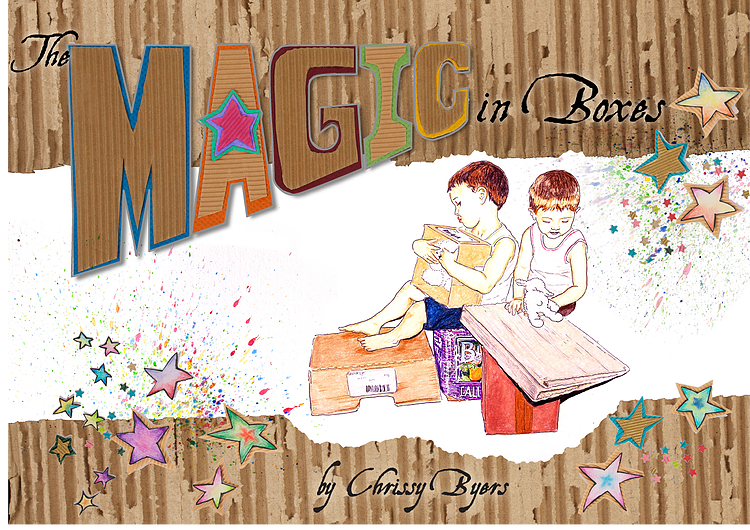
    One of the attendees Chrissy Byers has created a lovely picture book The Magic in Boxes which “aims to capture the imagination of young readers and inspire creative play.”

    the-magic-of-boxes

    Not only does the book suggest ways of stimulating creativity using recycled materials such as cardboard boxes, the book is made from recycled paper. I think that’s pretty awesome. It’s a beautiful book with a wonderful aim.

    lemons and grapefruit

    For a little more on creativity; in a previous post, Are you a lemon or a grapefruit? I shared ten articles about creativity. They are still relevant and worthy of a read if you haven’t yet done so.

    I also shared one of my favourite TED talks by Sir Ken Robinson How schools kill creativity. If yours is not yet one of the over 41 million views, I urge you to watch it. As well as sharing a very important message, Ken is hugely entertaining.

    I hope I have convinced you of the importance and power of creativity. I thank Charli and her flash fiction prompt for the opportunity of revisiting some of my favourite articles and talks about creativity. This week her challenge is to “In 99 words (no more, no less) write a story using the theme, “women create.” It can be art, sewing, ideas, babies. What is at the heart of women as creators? Go where the prompt takes you.”

    I’m a woman, and I create, and education is in my heart.

    In response to Charli’s challenge, I thought I’d get a little dirty. I hope you like it.

    Prize pies

    “Life’s not on a plate. It’s what you create.”

    Two little girls in their Sunday best

    Snuck outside when they should have been at rest;

    Splashed in the puddles, laughed in the rain,

    Shared mud pies and murky champagne.


    Two young girls with flour in their hair

    Climbed on the bench from the back of a chair;

    Opened up the cupboards, emptied out the shelves,

    Less in the bowl and more on themselves.


    Two young women watching TV

    Decide master chefs are what they will be;

    Enter the contest, invent new pies,

    Wow the judges and win the prize.

    thank-you-1200x757

    Thank you for reading. I appreciate your feedback. Please share your thoughts.


  • Scratching around the quarry

    charlis-quarry

    This week at the Carrot Ranch Charli Mills has challenged writers to

    “In 99 words (no more, no less) write a about a quarry. It can be a place or include the the by-product. The quarry can be operational, abandoned, it can be in real-tie or mentioned from another time. Where will the quarry take you? Go where the prompt leads.”

    I usually find Charli’s prompts a challenge but, with a bit of digging around in the old brain cells, I can usually concoct something with which I am reasonably happy. This time I’ve been scratching around the surface but have found little worthy of further investigation.

    I considered a story of epic proportions, as I can’t think of a quarry without thinking of Gilgamesh.

    Many years ago, I took my teenage son and a friend to a performance of the ancient story in a disused quarry. Whether it was part of their English or theatre studies, or what prompted the outing, I can’t recall. I think they were no more familiar with this “first great work of literature” than I; and I knew nothing. The performance made a lasting impression, both for its setting and the repetitious dialogue. I recall little of the hero’s epic journey. We were amused rather than awed.

    From Gilgamesh, I considered play of a different, but more familiar kind: play in a sandpit or the dirt with diggers and trucks.

    The sandpit was always popular for play at lunchtime, particularly if diggers, trucks, and other tools were available. Often the same children would play day after day, creating and re-creating the same scene with roads, rivers, bridges, and cities. Each seemed to have a particular role and responsibility. Found objects; like leaves, bark, feathers, sticks, and stones, would also be incorporated into the designs.

    This play was great for the imagination, and for developing the friendship skills of cooperation and getting along, teamwork and working together. Surely I could find a story in there? But any ideas disintegrated faster than the sandpit structures.

    It seems timely then, to revisit previous discussions of the difficulty experienced by children when expected to write to a prompt that may have little significance for them, and about which they may have little opportunity for discussion, reflection or planning.

    I discussed this in both Writing to order – done in a flash! and Writing woes – Flash fiction. I suggested that, rather than  using a one-piece response to a prompt to assess children’s writing, the use of portfolios would provide more valuable information about children’s writing development.

    A portfolio, similar to that of professional writers, would consist of work at various stages: some as ideas jotted on slips of paper, some in planning stages, others in draft form, others completed and waiting for the next step, and others in publication. Rarely would a piece need to be completed in one sitting, let alone judged for it worth on the spot.

    I believe that:

    • a one-off writing assessment task does not give students an opportunity to show their best work and puts pressure on them to perform
    • a portfolio of work collected over time provides a clear picture of student ability, development, and next steps for learning.

    However, that writers have a choice about responding to Charli’s flash fiction prompts, makes the process quite different from that experienced by children responding to a prompt as a requirement.

    Writers have a choice whether to participate, in what genre to respond, and how to interpret the prompt.

    In recent posts Charli has discussed the importance of accepting our first drafts as “raw literature”, as part of the process. She provide us with the opportunity to hone our writing skills, and share and receive feedback on our writing in a safe, supportive environment. Surely this is no less important when encouraging young writers.

    Out of sympathy for the requirements imposed on children almost every day, I thought it only fair to respond to Charli’s prompt. This is it.

    The Quarry

    Old and disused, the bare earth was dry with no hint of topsoil or sign of life. Rock fragments, remnants of its past, littered the surface still pockmarked by tyre tracks. One wall, etched by diggers’ teeth, stood silently telling its story. Circles of ash littered with shards of glass and cigarette butts told another. But tonight it was to tell a story as old as time.  Where once huge trucks had carted away boulders carved from its interior, now rough timber platforms stood.  As darkness fell, flaming torches cast an eerie light as storytellers wove their epic tale.

    Thank you

    Thank you for reading. I appreciate your feedback. Please share your thoughts.


  • What lies beyond

    This week at the Carrot Ranch Charli Mills has challenged writers to In 99 words (no more, no less) write a story that steps beyond.

    She says,

    “The paths often fork and always seem steep. You just have to keep stepping out, risk being vulnerable, learn as you go from both masters and your own observations, and explore what could be.” 

    How apt a description for learners and teachers alike. The focus of a teacher’s work is always on what lies beyond; encouraging learners to step out, take those risks, embrace vulnerability, and explore the unknown. Each journey is unique with its own periods of calm interrupted by rough patches and inclines that require both teacher and learner to step beyond comfort and what is familiar.

    While learners are appreciated for who they are, and for their achievements, in each moment, a teacher is always stretching them to grow towards the possibilities of an unknown future; preparing learners to grasp, and create, new opportunities.

    In Are you ready to embrace the future? published in July 2014, I introduced you to Tony Ryan, learning consultant and futurist. In his online seminar Future-proofing Kids, Tony says,

    “Many of the children alive today in Western societies will still be around in the 22nd Century. How can we possibly predict what they will experience between now and then? And if we can’t do that, then how do we best prepare them for whatever is up ahead?”

    I listed, as essential to successfully living in that unknown future, the development of the following attitudes and character traits:

    •  Confidence
    • Persistence
    • Resourcefulness
    • Resilience
    • Able to seek solutions to problems
    • Openness to new ideas and possibilities
    • Creativity
    • Divergent thinking
    • Questioning
    • Optimism

    These add to basic levels of literacy and numeracy and the ability to critically evaluate material; for example, using information about an author’s credentials and purpose, and understanding the ways texts are constructed to persuade.

    On his website, Tony Ryan says,

    “The world up ahead will be amazing, but it will take each of us to push our intellect and our spirit beyond all previous possibilities.”

    He describes the focus of his work as supporting others to do just that

    In addition to educating for the future, teachers need to see past the labels to the truths that lie within, encouraging all learners to stretch beyond what they thought was possible. I hope there was a teacher in your life who enriched your journey.

    For the teachers among you: know the importance of your role and the effect on all learners when you help them see the value of self and open their eyes to their own potential. When you help them step beyond the limits imposed by others, you help them create possibilities in their own, and our collective, futures.

    It is from this perspective that I have written my response to Charli’s flash challenge.

    Beyond surface features

    The registrar ushered him to the doorway and promptly disappeared.  He stared blankly: hair askew, face dotted with remnants of meals past, shirt lopsided and collar awry, shoes scruffy. Another needy child. You name it, he had it: split family, mother in jail, successive foster homes, sixth school in two years, learning difficulties, generally unresponsive, prone to aggressive outbursts …  

    No magic ball, just a futures optimism, she saw beyond the exterior to the potential within. In a moment, she was there, smiling, taking his hand, reassuring. “Everyone, say good morning to Zane. Let’s welcome him into our class.”

    Thank you

    Thank you for reading. I appreciate your feedback. Please share your thoughts.

  • You know who you are

    I am one of ten children, though none of us are children any more. The youngest has turned 50, and the oldest is nearing 70 (but don’t tell her that).

    My mother sometimes had difficulty retrieving the correct name and often went through a list before hitting on the child she wanted. I know what it’s like. Sometimes it is difficult enough when there are only two or three to choose from! Maybe you’ve experienced it too. There’s probably a name for this phenomenon, but if there is, I’m not aware of it.

    well-you-know-who-you-are

    One day, when wanting to give me a direction, she rattled off a few names, but not mine.  Finally, exasperated, she said, “Well, you know who you are.” It has become a family joke. It’s mostly true that I do know who I am. However, sometimes I’m not so sure! I must say that Mum had a wonderful memory until the day she passed just a few weeks before her 91st birthday.

    This week at the Carrot Ranch, Charli Mills is talking about the importance of being able to name things and experiences. She says, “Names are such a human attribute,” and asks, “What is in a name?

    The ability to name things is important and a young child’s vocabulary often begins with the names of people and objects in the environment; for example, Mum, Dad, dog, car, cookie, juice.

    I read once that children don’t really become aware of an object until they are able to apply a name to it. This doesn’t mean they must be able to say the name, just recognise it by name. Unfortunately I don’t remember the source and was unable to verify it with a Google search; but there is no denying that a well-developed vocabulary is a definite advantage to learning.

    growing-vocabulary

    Children also quickly learn to recognise their own names. Choosing names for children can be a difficult process for parents, with much to consider; for example:

    • The name’s meaning
    • Whether anyone else in the family has the name
    • How it is spelled
    • What the initials will be
    • How the first and last names sound together

    Teachers always have the extra burden of being influenced by the names of children they have taught.

    Although this blog simply bears my name, choosing a name for my website was a more involved process. Years ago, I ran a home business called Create-a-Way. I chose the name as I thought it expressed the purpose of my business perfectly: children were encouraged to be creative, and it created a way for me to work with children in the way I wanted. I hoped to reuse the name for my website. Unfortunately, the domain names were not available, and I had to think even more creatively.

    registered-logo

    I eventually settled on the name readilearn as I love reading, and I love learning, and the ‘i’ in the centre puts the focus on the individual learner. I wanted the name of my website to show the importance of reading and learning to an individual’s growth and empowerment. However, when I say the name, I pronounce it “ready learn”. This refers to an individual’s innate readiness to learn, as well as to the resources which are ready for teachers to use in their support of learners.

    One of the most important things for a teacher is to get to know the children. I used to pride myself on knowing the children’s names before morning tea on the first day. Of course, I had many strategies in place to help me with that. I have written about some of these strategies before, and there are readilearn resources to support teachers with that as well. In fact, writing this post has stimulated ideas for new resources to create, including resources that help children get to know each other. (Thanks, Charli!)

    I have always found it fun to notice when people’s names are a good match for their profession; for example, Matt Dry the weather forecaster.

    When Charli challenged writers to In 99 words (no more, no less) explore the importance of a name within a story, and reminded us of the classic Abbott and Costello Who’s on First, I decided I’d try a bit of fun with names as well. I hope it works.


    Doctor Morana

    The community hall was abuzz. Everyone was outtalking the other, except Ms Penn who quietly recorded everything.

    “I’m pretty cut up about it,” complained Mr Carver.

    “He fired me,” moaned Mr Burns.

    “Said I was just loafing around,” grumbled Mr Leaven.

    “Could’ve floored me,” griped Mr Lay.

    “He was fishing for something,” remarked Ms Salmon.

    “Said he’d top me,” sprouted Ms Bean.

    “Another nail in his coffin,” whined Mr Chips.

    Ms Chalk took the stand. “It’s not just black or white. He knows why you all avoid him like, well … Give him a chance. He’s not his name.”

    Did you recognise them all: the journalist, the butcher, the fireman, the baker, the tiler, the fishmonger, the greengrocer, the carpenter, the teacher; and, of course, the one they’re all talking about: the new doctor.

    thank-you-1200x757

    Thank you for reading. I appreciate your feedback. Please share your thoughts.