
Article by Gerard Alford, Director of itc publications and thinkdrive and collaborator on readilearn.
As announced last week, I am delighted to introduce Gerard Alford and the first of his series of guest posts for readilearn.
Gerard is a very experienced and respected education consultant, author and education resource developer. He is passionate in promoting high-order thinking and cooperative learning through engaging and effective evidence-based teaching methods. His teaching resources inspire and support busy teachers in creating engaging pedagogy and time-saving strategies to encourage successful student outcomes.
The worth of using thinking tools is well documented; they provide a clear pathway for students to complete a given task, provide students the means to organise their research and thoughts in a systematic way, and provide teachers with a clear insight into their student’s thinking.
That said, can thinking tools also be used to facilitate deeper discussion in the Early Years? I believe so, and here’s an example in action.
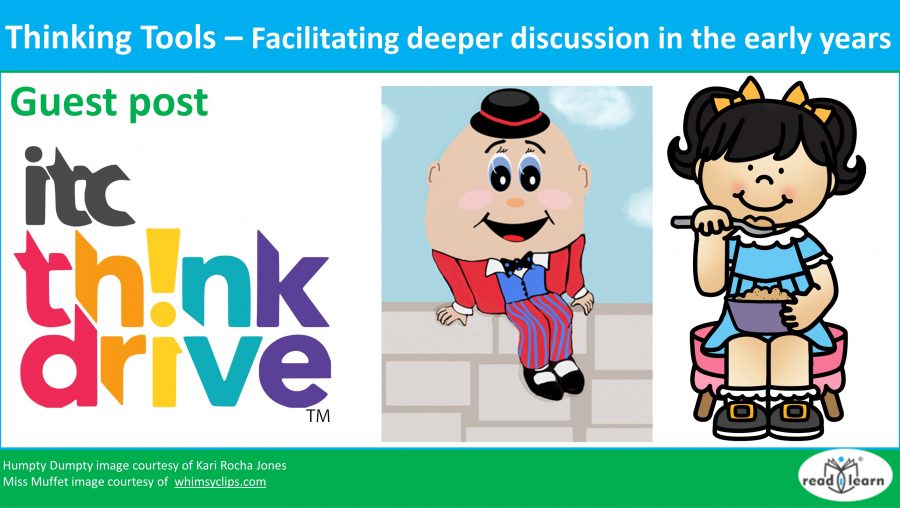
Your students have just read two texts: Humpty Dumpty and Little Miss Muffet, and you now have asked them to compare these texts.
Exactly what they compare (similarities and differences) will depend on the Year level; however, at a minimum, students will be comparing the events and the characters in the texts while also sharing their feelings and thoughts (as per ACELT1783).
Continue reading: Thinking Tools – facilitating deeper discussion in the Early Years – readilearn


 Norah Colvin
I appreciate your feedback. Please share your thoughts.