Live Love Laugh Learn … Create the possibilities

Having fun with Haiku Poetry in the Classroom – #readilearn

Next Saturday 17 April is Haiku Poetry Day. Why not prepare for the day, by reading and writing haiku during the week leading up to it, or for those of us in Australia still on school holidays, celebrate the week after. Of course, any time is good for reading and writing haiku — no excuse is needed.

What is Haiku?

Haiku is a short poem of only three lines with a very structured form. There only 17 syllables in the entire poem:

five on the first line 

seven syllables come next

and five on the third 

The purpose of the haiku is to capture a brief moment in time. Traditionally, it is written about the seasons but can be used to write poems on any topic. Haiku poetry often concludes with a feeling or observation. Sometimes the feeling is not explicit but is left for the reader to interpret.

What is a syllable?

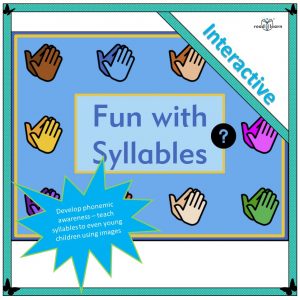
Before you begin to teach your children to write haiku, they need to know what a syllable is. Whether you are teaching or revising syllables, readilearn has some resources to support you, including:
Continue reading: Having fun with Haiku Poetry in the Classroom – readilearn

Comments

26 responses to “Having fun with Haiku Poetry in the Classroom – #readilearn”

  1. Jules Avatar

    I too was taught the American English version of the Japanese style haiku. What amazes me is how persnickity haiku societies can get and how often they change the rules. Now the more common rule is that the tree lines are as short as a breath, whatever that means. And of course you are expected to use a Kigo. Which I don’t always do. But then I am a rebel anyway 🙂

    Other short forms that I think you could also teach are these to American Lune forms:
    ‘From Wikipedia, the free encyclopedia
    Lune is a fixed-form variant haiku created for the English language, and consists of two versions:
    The Robert Kelly lune
    Robert Kelly, a Professor of Literature at Bard College, invented a new form of English-language haiku using the form 5/3/5 syllables, with the intention of making the form closer to the Japanese haiku than English-language haiku written in a 5/7/5 syllable format.[1][2]
    The Jack Collom lune
    It is measured in words rather than syllables, making it easier for children to learn and compose. The form is 3/5/3 words. Jack Collom created this new form of haiku by chance, when he misremembered the original creation of Kelly’s as this form, thereby creating a new one.[1][2]
    Both versions are free from all constraints associated with haiku, thus need contain no kigo (season-word), kire (cut), may rhyme and may use all other poetic devices.[1]’

    Liked by 3 people

    1. Norah Avatar

      Thanks for sharing information about those forms, Jules. Just shows we don’t need to always follow the rules but can be flexible in our interpretation.

      Liked by 3 people

  2. Pam Lazos Avatar

    For some reason we are obsessed with haikus at work so when anyone retires we all write goodbye haikus. 😂

    Liked by 2 people

  3. nightlake Avatar

    This is a wonderful way to teach syllables to children and develop their creative skills. The traditional form does require 5-7-5 syllable count though the modern haiku does not.

    Liked by 2 people

    1. Norah Avatar

      It’s nice to be a bit flexible about things like this. I like to encourage self-expression and not worry too much about the rules. Sometimes a structure provides a bit of guidance and support though, which can be helpful.

      Liked by 2 people

  4. Jacqui Murray Avatar

    What a great poetry form to introduce to children. Great idea, Norah.

    Liked by 2 people

    1. Norah Avatar

      Thanks, Jacqui. Children always enjoy writing it. They can’t really go wrong with poetry.

      Liked by 2 people

  5. Mabel Kwong Avatar

    I really enjoyed reading about haikus and how to write haikus, Norah. I think you explained haikus and approaches to penning them more clearly than my tutors at university did. I like how you focused on the basics and learning to write haikus progressively as you get more familiar with its form. That suggestion of clapping along to each syllable is creative – and such a fun way to learn too. The suggestion of sitting outside to write a haiku is also create. If it was raining or miserable weather outside, I think I’d prefer sitting indoors beside the window trying to get some inspiration 🙂

    Liked by 2 people

    1. Norah Avatar

      Thank you for your lovely comment, Mabel, and your tip about sitting inside on a wet or miserable day. It almost conjures up a haiku in itself. 🙂

      Liked by 1 person

      1. Mabel Kwong Avatar

        It’s great there is a way to pitch haikus to students and the classroom. I think we could write a haiku on a sunny or wet day if we put our minds to it. Happy mid-week, Norah 🙂

        Liked by 3 people

        1. Norah Avatar

          Indeed we could, Mabel. Happy week to you too.

          Liked by 2 people

          1. Mabel Kwong Avatar

            Hope you are having a good week, Norah. Take care 🙂

            Liked by 4 people

            1. Norah Avatar

              Thank you, Mabel. Best to you also.

              Liked by 1 person

              1. Mabel Kwong Avatar

                Have a good weekend, Norah 😊

                Liked by 1 person

  6. Patricia Tilton Avatar

    Yes, I enjoyed your lovely post. Haiku would be a fun way to start kids writing poetry. And, you give such great ideas about beginning. I’ve never written a Haiku poem and should. Sounds like fun!

    Liked by 2 people

    1. Norah Avatar

      Thank you, Patricia. Yes, you should write haiku. It is a beautiful art form. I’m certain you can do it.

      Liked by 1 person

  7. Jennie Avatar

    Excellent post, Norah. I will ask the kindergarten teacher if she has the students write haiku poetry. Of course reading it aloud is always welcome for children.

    Liked by 2 people

    1. Norah Avatar

      Thank you, Jennie. Haiku is a beautiful poetic form. Images in words. They often provide us with a different way of thinking about things, which is great for young children and us older children too.

      Liked by 2 people

      1. Jennie Avatar

        On top of the benefits you speak of, it seems like a good pre-reading activity to focus on syllables. Haiku has many good things.

        Liked by 2 people

        1. Norah Avatar

          It sure does. It can be enjoyed by any age.

          Liked by 2 people

  8. Msdedeng Avatar
    Msdedeng

    Thank you for this post. I have often understood a haiku for a mere shot poem. Had no idea it had precision to it.

    Liked by 2 people

    1. Norah Avatar

      Thank you, Angela. I hope you’ll give it a try. 🙂

      Liked by 2 people

      1. Msdedeng Avatar
        Msdedeng

        Thank you, Norah, I just might. 🙂

        Liked by 2 people

        1. Norah Avatar

          Please share if you do. 🙂

          Liked by 2 people

          1. Msdedeng Avatar
            Msdedeng

            Sure!

            Liked by 2 people

I appreciate your feedback. Please share your thoughts.

This site uses Akismet to reduce spam. Learn how your comment data is processed.