

This week at the Carrot Ranch Charli Mills has challenged writers to in 99 words (no more, no less) write a story that changes with a smile. It reminded me of the old television program I used to watch when growing up: Candid Camera.
Like the situation set-up in Car without a motor, people were presented with an improbable situation, a misrepresentation of reality, a lie. We laughed at their responses; and they laughed when told to “Smile, you’re on candid camera.”
The situations were all meant to be fun and the majority of the people, those we were shown anyway, responded in good humour. However, we don’t always respond with such good humour when we feel we have been lied to intentionally, or mislead for whatever reason.
The story of The Boy Who Cried Wolf is a good example what happens when one habitually lies. Nobody likes to be made a fool of, and generally people try to take what they are told at face value, rather than question the veracity of the speaker’s tale.
Nobody likes to be caught out telling lies either. However, it seems that, no matter how much we protest against or attempt to excuse our own lies, lying may be a part of human nature. Not only that, there may be many different reasons for lying. If you can, recall the last time you told a fib and your reason for doing so. But please don’t share. I’m not interested in true, or false, confessions.
I recently watched this fascinating Ted talk by Kang Lee who asked Can you really tell if a kid is lying?
Lee states that there are three commonly held misconceptions about children and lying:
- Children only start to lie when they are of school age
- Children are not good at lying and adults can easily detect their lies
- If children lie at a young age they will become pathological liars for life
Lee then goes on to disprove these misconceptions, citing studies that show that “lying is really a typical part of development. And some children begin to tell lies as young as two years of age.”
He goes on to suggest that children who lie at a younger age than others are advanced in development of the two key ingredients for successful lying:
Mind reading: I know something that you don’t, and I know that you don’t, therefore I can lie to you; and
Self-control: “the ability to control your speech, your facial expression and your body language, so that you can tell a convincing lie”.
He explains that both mind reading and self-control are essential to function well in society, and that
“In fact, deficits in mind-reading and self-control abilities are associated with serious developmental problems, such as ADHD and autism. So if you discover your two-year-old is telling his or her first lie, instead of being alarmed, you should celebrate –“
I dare say that the typical Candid Camera scenarios relied upon these two ingredients also.
Lee also demonstrates that most adults, including parents, social workers, child-protection workers and police, cannot detect when children are lying. However, he explains that, hidden behind the neutral facial expressions, there are a variety of fleeting emotions including fear, shame, guilt, and possibly “liar’s delight”. These emotions, too subtle to be perceived by the naked eye, can be detected by “transdermal optical imaging” which detects changes in blood flow.
The benefits of the imaging go beyond just lie detection but can be used in assessing people’s health, including pulse, stress levels, mood and pain levels.
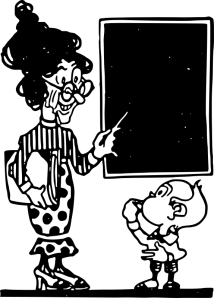
While teachers weren’t listed among those tested for detection of children’s lies, it stands to reason that they would be no better than those included. It makes me wonder about those times when a child may have been punished, not through evidence, but through someone’s conviction that he was lying, or that he was telling the truth. Maybe you were one of those innocents who wasn’t believed and suffered punishment as a result; or was believed when lying to protect another and suffered the punishment anyway.
I know I was never able to convince my mother. She always knew when I was lying (Who me? Never!) Maybe, like Emily in my flash fiction story, I should have been more careful to hide the incriminating evidence! But, as Lee says, Sally should celebrate that Emily is displaying developmentally appropriate, or even advanced, behaviour.
Gotcha!
Investigating the suspicious quiet, Sally found Emily perched on a stool in the bathroom, smiling at her reflection. Sensing Sally’s arrival, Emily turned on her “innocent” face and hid her hands behind her back.
Suppressing a smile, Sally asked, “What’re you doing?”
“Nuthin’.”
“I think you’re doing something.”
Protests belied guilt smeared on the face.
Sally enveloped Emily, and turned her lipstick-painted face towards the mirror.
“How did that get there? ” she asked, feigning seriousness.
“Don’t know. ”
Sally pointed to the brush in Emily’s hand.
“Oh.”
Their eyes met in the mirror, and smiles turned to laughter.

Thank you for reading. I appreciate your feedback. Please share your thoughts.



I appreciate your feedback. Please share your thoughts.