Live Love Laugh Learn … Create the possibilities

Tag: Flash fiction

  • Can you have your carrot cake and eat it too?

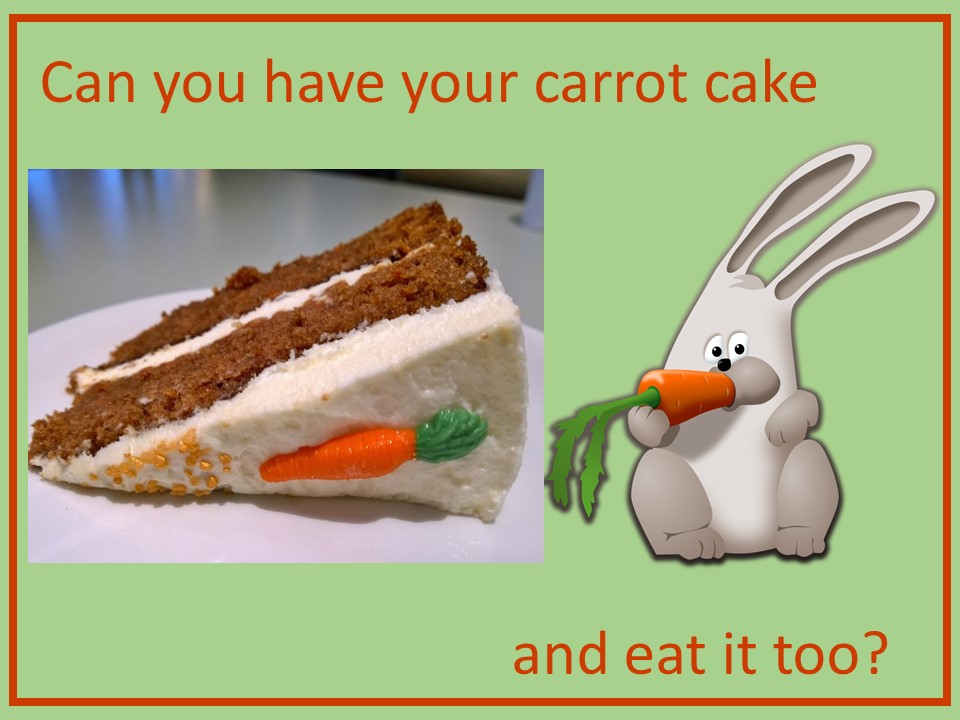
    Can you have your carrot cake and eat it too?

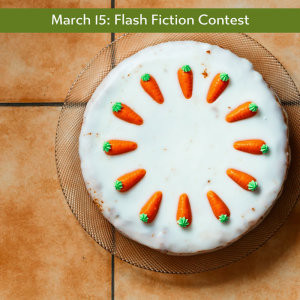
    Charli Mills flash fiction prompt "Carrot cake"

    This week at the Carrot Ranch, Charli Mills challenged writers to In 99 words (no more, no less) write a story about carrot cake. It can be classic or unusual. Why is there cake? How does it feature in the story. Go where the prompt leads.

    Carrot cake is great for a celebration, and with Easter just around the corner, I decided to combine the two. I hope you like it.

    A carrot cake for Easter

    “What will we cook today?” asked Mum.

    “Carrot cake!” chimed the twins.

    “But you don’t like carrot cake.”

    “Carrot cake. Carrot cake.”

    “Why?”

    “Well, it’s going to be–“

    “Easter soon, and we want–“

    “to give the Easter Bunny–“

    “a surprise–”

    “present.”

    The twins smiled at each other.

    “Okay,” smiled Mum. “Carrot cake it is.”

    “Yay!”

    “First, we need the carrots.”

    The children raced ahead to the veggie patch.

    “What–“

    “happened?”

    Their eyes opened wide. The carrot patch was devastated; not one carrot left.

    “Carrot cake’s off,” said Mum. “That old rabbit can’t have carrot cake and eat them too.”

    bunny eating carrot public domain picture

    Thank you blog post

    Thank you for reading. I appreciate your feedback, please share your thoughts; and if you can help me with the following two questions, that would be wonderful.

    1. How should I punctuate the twins’ dialogue to show that they are finishing each other sentences? Have I done it correctly? If not, how should I have shown it? I checked my style guide and online and couldn’t find an explanation.
    2. Word counted the em dashes I have used to punctuate the interruptions, but I haven’t. Should I have? Most punctuation is not counted as words.

    Thanks for your advice.

  • Jump on board the Congress of Rough Writers Round the World Tour

    Jump on board the Congress of Rough Writers Round the World Tour

    Do you remember the moment you fell in love–the moment the passion ignited, and you knew life would never be the same again?

    I remember the moment my love affair with flash fiction began. Like many love affairs, it took me by surprise, lifting me up with its power to seduce, challenge and excite in a whirlpool of emotions.

    That moment occurred exactly four years and one week ago when, on 12 March 2014, I published my response to the first flash fiction prompt posted by Charli Mills at the Carrot Ranch. Charli challenged writers to In 99 words (no more, no less) write the aftermath of an avalanche of any kind from any perspective.

    Flash fiction was new to me. I’d written short stories, children stories, poetry, songs, and educational books and resources, but never flash fiction. However, I do love a challenge and had been anticipating having a go at flash fiction after Charli’s announcement a few months prior.

    This is my response, my first ever attempt at flash fiction:

    Avalanche

    The trickle began; imperceptible, unheeded and ignored.

    Needing more attention, the volume swelled and quickened pace.

    Still no attention was forthcoming so the surge became more urgent and incessant in its plea.

    “Slow down! Stop me!”

    To no avail.

    The avalanche engulfed her.

    Heat flashed through her body, from feet straight to her head.

    Heart pounding loudly, “Let me out of here!” it pled.

    With reverberations magnified in each and every cell,

    the heady swirl became too much –

    she trembling choked. “I’m dying?”

    But no:

    B-r-e-a-t-h-e   s-l-o-w.

    B-r-e-a-t-h-e   d-e-e-p.

    R-e-l-a-x.

    S-o-o-t-h-e.

    B-r-e-a-t-h-e . . .

    The panic abates.

    I was just one of five to respond to that first prompt. Four of those writers, including me of course, are still regular visitors to the Carrot Ranch, are members of the Congress of Rough Writers, and are contributors to the Congress of Rough Writers Flash Fiction Anthology Vol 1. That’s pretty awesome, I think.

    Carrot Ranch Anthology with 5 star review

    Watch the trailer here:

    Over the years, the number of Congress members has grown to thirty-two and the number of participants in the Flash Fiction challenges swells to more than fifty some weeks.
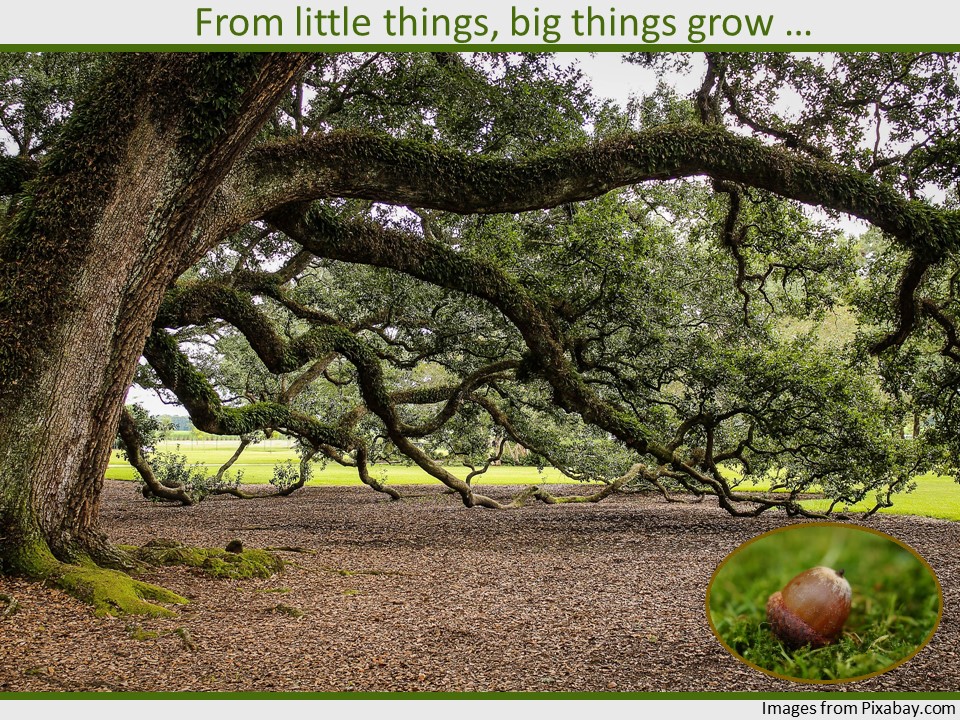
    from little things big things grow

    What an amazing achievement: from small things, big things grow. Charli’s vision has not wavered from the outset. She held to her path through all manner of life’s storms. Battered but not beaten, she persisted when lesser mortals would have caved. She continues to welcome, encourage and support all writers with her vision to make literary arts accessible to all. With the publication of this anthology, a digital compilation of entries in the inaugural Flash Fiction Rodeo now in production, and Anthology Vol 2 in the pipeline, she shows what is possible through vision, determination and growth mindset.

    During the four years I have been participating in Charli’s challenges, I have learned a lot, not only about writing, but about life. The warmth and encouragement of the community of writers that have gathered around Charli is uplifting. The synergy and combined effect of all our stories, written and shared in a safe environment, raises us up together to walk on each other’s shoulders.

    In 2015, I wrote this about what I had learned from writing flash fiction. The learning continues with my own “yet’ mindset.

    Carrot Ranch anthology a brilliant idea

    About the Anthology

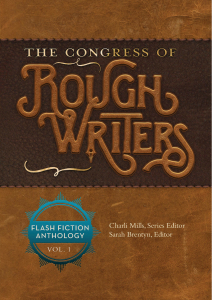
    Thirty writers began with 99 words and forged literary feats. Vol. 1 explores the literary art of flash fiction, beginning with the earliest compilations at Carrot Ranch and later pieces based on a new flash fiction prompt. This is not your typical anthology. It continues with longer stories extended from the original 99-word format and essays on how flash fiction supports memoir writing. Based on the experiences at Carrot Ranch, the concluding section of Vol. 1 offers tips to other groups interested in using the flash fiction format to build a literary community.

    Charli Mills, Series Editor, Publisher & Lead Buckaroo
    Sarah Brentyn, Editor & Contributor

    The Congress of the Rough Writers (contributors):

    Anthony Amore, Rhode Island, USA; Georgia Bell, Toronto, Ontario, Canada; Sacha Black, England, UK; Sarah Brentyn, USA; Norah Colvin, Brisbane, Qld, AU; Pete Fanning, Virginia, USA; C. Jai Ferry, Midwest, USA; Rebecca Glaessner, Melbourne, Vic, AU; Anne Goodwin, England, UK; Luccia Gray, Spain; Urszula Humienik, Poland; Ruchira Khanna, California, USA; Larry LaForge, Clemson, South Carolina, USA; Geoff Le Pard, Dulwich South London, UK; Jeanne Belisle Lombardo, Phoenix, Arizona, USA; Sherri Matthews, Somerset, UK; Allison Mills, Houghton, Michigan, USA; Charli Mills, Hancock, Michigan, USA; Paula Moyer, Lauderdale, Minnesota, USA; JulesPaige, Pennsylvania, USA; Amber Prince, North Texas, USA; Lisa Reiter, UK; Ann Edall-Robson, Airdrie, Alberta, Canada; Christina Rose, Oregon, USA; Roger Shipp, Virginia, USA; Kate Spencer, British Columbia, Canada; Sarah Unsicker, St. Louis, Missouri, USA; Irene Waters, Noosaville, Qld, AU; Sarrah J. Woods, Charleston, West Virginia, USA; Susan Zutautas, Orillia, Ontario, Canada.

    From the back cover:

    Witness great feats of literary art from daring writers around the world: stories crafted in 99 words.

    Flash fiction is a literary prompt, form, and tool that unites writers in wordplay. This creative craft hones a writer’s skills to write tight stories and explore longer works. It’s literary art in thoughtful bites, and the collective stories in this anthology provide an entertaining read for busy modern readers.

    Writers approach the prompts for their 99-word flash with creative diversity. Each of the twelve chapters in Part One features quick, thought-provoking flash fiction. Later sections include responses to a new flash fiction prompt, extended stories from the original 99-word format, and essays from memoir writers working in flash fiction. A final section includes tips on how to use flash fiction in classrooms, book clubs, and writers groups.

    CarrotRanch.com is an online literary community where writers can practice craft the way musicians jam. Vol. 1 includes the earliest writings by these global literary artists at Carrot Ranch. Just as Buffalo Bill Cody once showcased the world’s most daring riding, this anthology highlights the best literary feats from The Congress of Rough Writers.

    The Congress of Rough Writers Anthology Vol 1

    In case you haven’t got yours yet, here’s where to purchase

    The Congress of the Rough Writers Flash Fiction Anthology Vol. 1 is available through distribution in 17 countries worldwide. Buy direct from our Print on Demand distributor at Book Baby.

    Preferred Seller:

    The-Congress-of-Rough-Writers

    Also available from:

    Amazon Global Digital
    Amazon Global Print

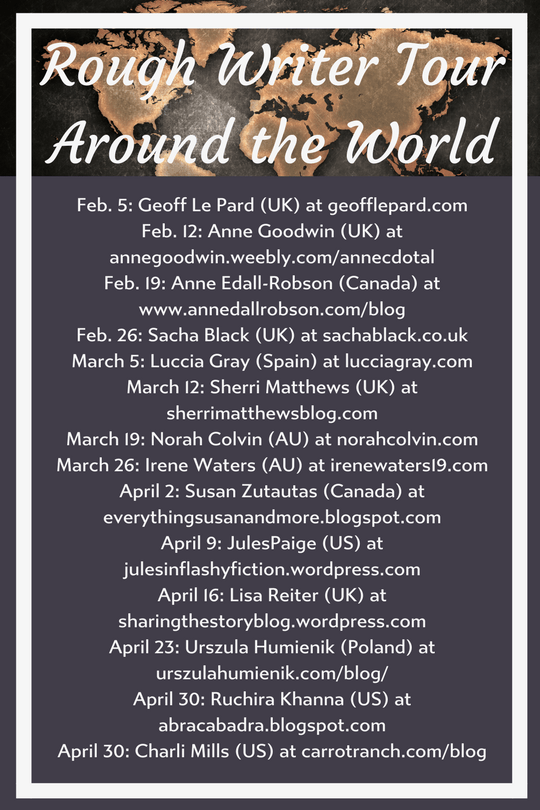
    Be sure to check out other stops on the Congress of Rough Writers Tour Around the World.

    We have already visited

    Sherri Matthews UK

    Luccia Gray in Spain

    Sacha Black in the UK

    Ann Edall-Robson in Canada

    Anne Goodwin in the UK

    Geoff Le Pard in the UK

    Next week we will visit Irene Waters, another Australian. (You’ve travelled so far, we want you to make the most of your journey!)

    The tour continues through April and into May. Be sure to not miss a stop along the way.
     

    Thank you blog post

    Thank you for reading. I appreciate your feedback. Please share your thoughts.

  • Real Memoir Imaginary Flash And Not Your Typical Anthology

    Real Memoir Imaginary Flash And Not Your Typical Anthology

    Welcome to Sherri Matthew’s Summerhouse in the UK: this week’s stop on the Rough Writers Tour Around the World.
    Sherri discusses the role that flash fiction plays in her memoir writing in both an entertaining and informative way.
    After you read Sherri’s post, pack your bags and get ready to travel. Next stop will be with me: from the UK in the north to sunny Queensland in the south. See you then!

    Sherri Matthews's avatarA View From My Summerhouse

    Summerhouse in Spring (c) Sherri Matthews

    When I moved house last October, I said goodbye to my Summerhouse.  That is, to the wood and nails of it.  To the little wooden house painted blue , strung with pretty bunting and lights which no longer belongs to me.

    My Summerhouse wasn’t just my writing space; over the years, it was home to a nest of bumble bees in the ground below, several spiders and their cobwebs spun in dusty corners, and a hedgehog who took up residence at the back.

    I miss it, but I smile through my wistful nostalgia when I look at the photos, because I know that it is the virtual essence of the Summerhouse that remains.

    My Summerhouse is imaginary now, a virtual meeting place, but it is no less real, filled with you, my lovely people.  A community created by the footprints you leave with…

    View original post 1,031 more words

  • Everything you always wanted to know about unicorns

    Everything you always wanted to know about unicorns

    What do you know about unicorns?

    • mythical creatures
    • look similar to horses
    • usually white
    • have a single horn protruding from the forehead.

    What else is there to know?

    It appears there could be much more to learn by engaging in philosophical discussions, especially with young children, about the existence of unicorns and their features.

    For many years I have been a fan of Philosophy for Children (P4C), a pedagogical approach for teaching children to think critically, to wonder, question and reason. The approach is “taught” through student-led discussion in which the teacher is present to offer support, rather than leadership. Students are presented with a stimulus, about which they initially ask questions. When there are no more questions to ask, children discuss their thoughts and responses.

    I knew unicorns would be a great starting point for philosophical discussions with children, so wasn’t surprised to find suggestions for conducting an enquiry into Unicorn Horns – Thinking about Things that Don’t Exist by The Philosophy Foundation.

    The suggested discussion centres around fictional characters, including the more controversial ones such as Santa Claus and the Tooth Fairy which I’ve previously discussed here and here.

    What intrigued me most in the article was

    “The problem (is) characterized in this statement ‘The Tooth Fairy does not exist’, which seems to say ‘there is something that does not exist’, but then if it does not exist then how can it be anything?”

    Or another way of putting it,

    “‘If there is anything that can’t exist, then it exists, so there can’t be anything that can’t exist.’”

    Totally confused?

    Me too! Please pop over to the article for greater clarity. Then maybe you can explain it to me.

    The article continued with suggestions of other questions about unicorns that could be discussed; for example:

    • Are unicorns real?
    • If something doesn’t exist, can it have any special features?
    • How many horns does a unicorn have?
    • What if a unicorn is born without a horn, is it still a unicorn?
    • What if a horse is born with a horn, would it be a unicorn?
    • Since ‘uni’ means one, is any animal with one horn a unicorn?
    • What about a narwhal? Is it a unicorn?

    My thoughts of unicorns this week were instigated by the flash fiction prompt by Charli Mills at the Carrot Ranch to In 99 words (no more, no less) write a story about a unicorn. It can be realistic or fantastical. Go where the prompt leads.

    Now, I have written about unicorns before, here, here and here.

    In a post about security comforters, I explained that a toy unicorn was of comfort to Marnie when she was feeling particularly vulnerable. Her need for it continued into her early school years and its appearance was an indicator to teachers that things were going badly for her again. When, as a confident adult, she returned to her childhood home, she found she had long outgrown the unicorn that had given her comfort as a child.

    In some of Marnie’s stories, she was teased and bullied, mainly by a boy named Brucie. Fortunately, she had a good friend in Jasmine who was often there to offer her support.

    In my response to Charli’s unicorn prompt, I revisit Marnie and Brucie and attempt to add a little philosophy to their discussion. I hope you like it.

    Unicorns aren’t real

    “What’s that supposed to be?” sneered Brucie.

    Marnie bit her lip.

    “Doesn’t look like anything to me,” he scoffed, inviting an audience.

    “A unicorn,” she whispered.

    “Miss said, ‘Draw your favourite animal.’ A unicorn can’t be your favourite animal–it’s not even real.”

    Marnie continued drawing.

    “Anyway, doesn’t look like a unicorn with those four horns.”

    “They’re not horns.”

    “Marnie’s unicorn’s got four horns,” laughed Brucie, a little too loudly.

    Miss investigated.

    “He said my unicorn’s got four horns. He said unicorns aren’t real.”

    “How can unicorns have four horns if they’re not real?” asked Miss.

    Brucie was silent.

    Thank you blog post

    Thank you for reading. I appreciate your feedback. Please share your thoughts.
  • Rough Writer Tour stops in Canada with Ann Edall-Robson

    This week the Carrot Ranch Round the World Tour stops at Alberta in Canada with Ann Edall-Robson, celebrating Family Day, no less.

    Read how Ann became one of the Rough Writers and how writing flash fiction adds to her writing process.

    Find out what she writes about this beautiful little cottage.

    Thanks, Ann. It’s a pleasure to ride the Ranch with you.

    Salute to the Congress of Rough Writers Flash Fiction Anthology Vol 1

    Source: Ann Edall-Robson’s – Ann Edall-Robson

  • Every word counts #roughwriters #blogtour via @Annecdotist – annethology

    The Congress of Rough Writers Anthology 1

    Today my very own printed copy of the Congress of Rough writers’ Flash Fiction Anthology Vol 1, edited by Charli Mills, arrived in the post. How exciting! Have you got yours yet?

    Anne Goodwin gives you all the details for purchasing in her contribution to the Rough Writer Tour Around the World.

    Carrot ranch tour

    Read Anne’s post to find out how she came to be one of the Rough Writers.: Every word counts #roughwriters #blogtour via @Annecdotist – annethology

  • Out of the fire comes hope

    Out of the fire comes hope

    fireweed Charli Mills Carrot Ranch flash fiction

    This week at the Carrot Ranch, Charli Mills wrote about fireweed. She describes it thus:

    “the purple and pink flower that grows like a tall spear in a tribe of flower warriors. After a forest fire, mining reclamation, road grading or any kind of soil disturbance, fireweed grows back first from seeds born of despair. It’s a phoenix flower, a soil nourisher, a defier of the odds when life is bleakest.”

    She then went on to challenge writers to In 99 words (no more, no less) write a story that includes fireweed. You can use it as the plant, a flower, a metaphor or as the name of someone or something. Go where the prompt leads. Burn bright when you write.

    I don’t know of Charli’s fireweed, but I do know that Australia is home to a great variety of plants that are dependent on fire for regeneration. While large tracts of land destroyed by bushfires is devastating, a return to traditional land management practices of the indigenous peoples may see an  improved system.

    There is an oft-repeated quote by German philosopher, Friedrich Nietzsche.

    “What doesn’t kill you, makes you stronger.”

    While that may be true of Charli’s fireweed and much of Australia’s flora, I’m never convinced of the applicability of the saying to every situation, or of its power to lift one up when feeling personally devastated. What does not kill may require a good dose of determination and strength for it not to annihilate the spirit.

    While thoughts of how to approach Charli’s challenge were swirling around in my head, notification of a new post by The Wordy Wizard popped into my inbox. At the top of the post was this quote by  J.K. Rowling from Harry Potter and the Goblet of Fire:

     “Understanding is the first step to acceptance, and only with acceptance can there be recovery.”

    The addition of these words of J.K. Rowling to those of Friedrich Nietzsche, for me, complete the thought. Without acceptance there is denial and an inability to move on, with acceptance we can begin to repair and renew.

    Intermittently, over the past four years while I have been responding to Charli’s flash challenges, I have written about Marnie, an abused child who was able, with determination and support of caring others, to overcome the impact of her dysfunctional upbringing and make a better life for herself.

    Just as we look for green shoots of hope in the blackness of a bushfire’s destruction, we must look for signs of hope and renewal in those who have suffered.

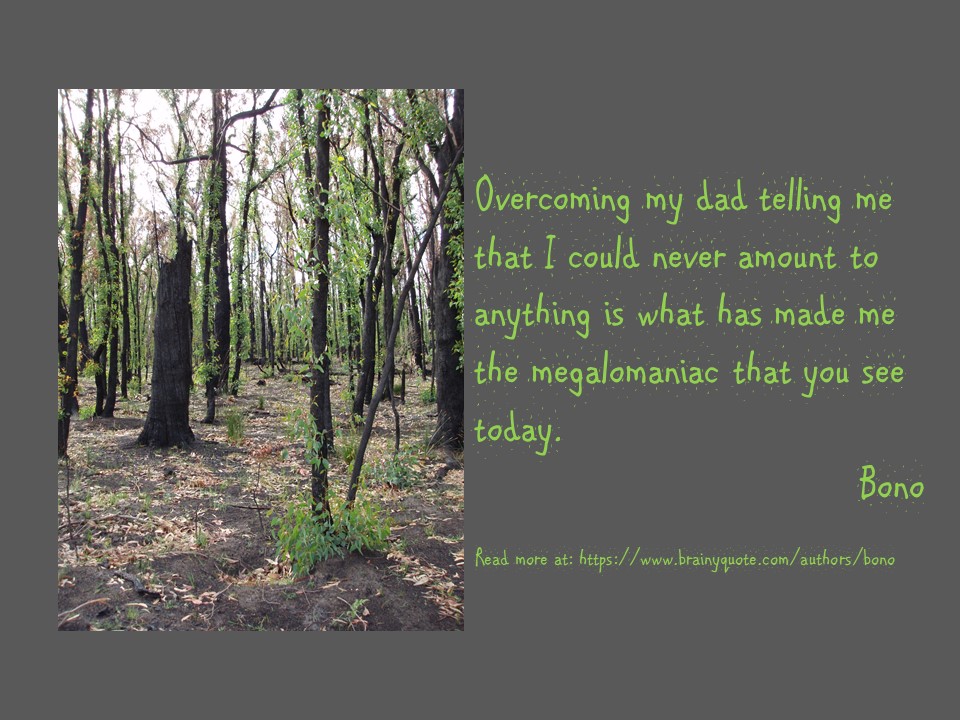
    Bono quote about why he's a megalomaniac

    While at times the negatives of children “burnt” by dysfunctional home lives, poverty, poor nutrition, lack of mental stimulation, and other factors that appear to obliterate potential can seem overwhelming and insurmountable, it is important to see within every child that seed of unlimited possibility and hope that needs to be nurtured.

    Marnie’s teacher Miss R. saw it in her. In one story, “Miss R. handed her a rose from the vase saying, “You are that rose. You may be surrounded by thorns, but the beauty of the rose is inside you. Remember that always. A rose by any other name would smell as sweet.

    Perhaps it would be just as apt to describe her as fireweed, “a defier of the odds when life is bleakest”. This is where Charli’s challenge took me this time:

    Burning with hope

    Miss R. avoided the staffroom’s negativity, popping in, like today, only if necessary. When she glanced over instinctively on hearing her name, regret flooded immediately.

    “Annette, we were just talking about you and that weed–from that noxious family–you know, Marnie-“

    She bristled, failing to withhold the words that exploded, singeing all with their ferocity.

    “Just look at yourselves. If Marnie’s a weed, she’s fireweed. Better than you will ever be. She’ll beat her odds and succeed, despite your belittling words and unhelpful opinions.”

    She left the silenced room, believing in her heart that her words were true.

    Thank you blog post

    Thank you for reading. I appreciate your feedback. Please share your thoughts.
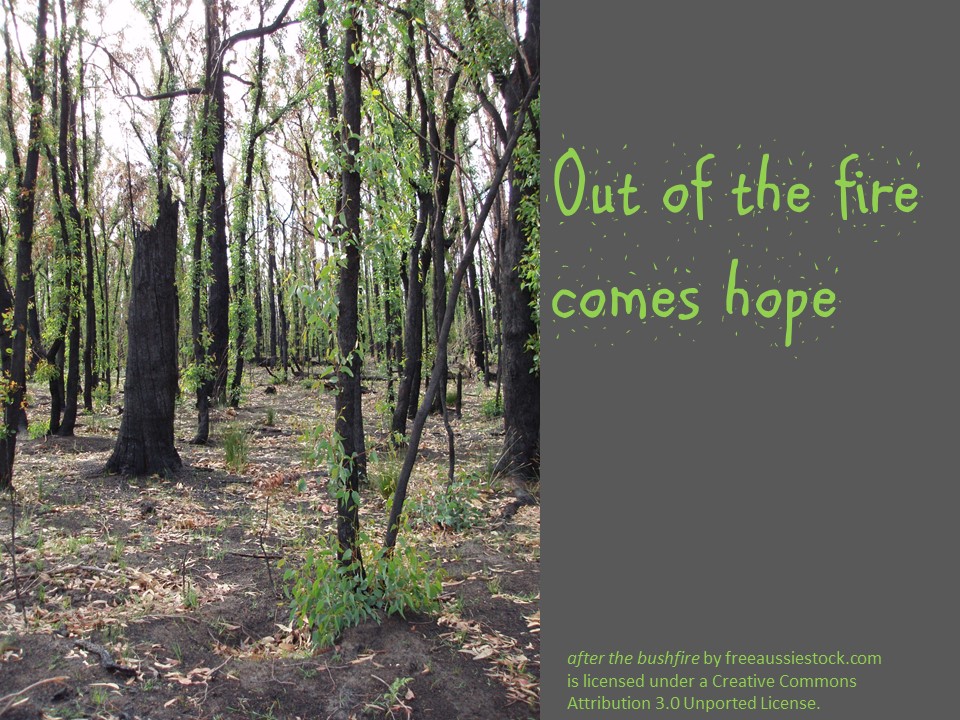
    Note: The feature image after the bushfire by freeaussiestock.com is licensed under a Creative Commons Attribution 3.0 Unported License.


  • The Congress of Rough Writers Flash Fiction Anthology Vol. 1 or Flash Fiction: My (Small) Part In Its The Journey. #Carrotranch #congressofroughwriters #anthology

    Carrot ranch tour

    I am so excited to be in the company of many wonderful writers in this first anthology of flash fiction by Rough Writers at the Carrot Ranch. Geoff Le Pard is one of those writers and kicks off the promotional Around the World Blog tour. Hop on board to meet others of the talented writers and find out to purchase your own copy of the book.

  • Out of respect, not fear

    Out of respect, not fear

    As an early childhood educator, I believe that children need to be respected. It is only through being shown respect, that children learn to respect. It is not learned through fear. Sure, fear may generate what appears to be respect – compliance, conformity, obedience. But inside, feelings of discontent may simmer until, at some future time they manifest in a variety of unpleasant ways.

    https://openclipart.org/image/800px/svg_to_png/192642/Children_holding_hands.png

    Children also need to respect, and not fear, each other. I frequently write about the need to develop a welcoming and supportive classroom in which children feel valued and respected. They need to understand the diversity that exists in our world and learn to accept, appreciate, respect and embrace it. Fear is often the result of the unknown, so by getting to know each other better, that opportunity for fear, at least, can be erased.

    In a previous post Watching ink dry, I wrote a story about a child being singled out and humiliated for an inability to keep between the lines in a handwriting lesson. An interesting discussion developed in the comments about nuns–teaching nuns, which surprised me. You see, although that particular situation wasn’t one I personally experienced, I did have in mind one of my teachers, who happened to be a nun, as I wrote, but I made no mention of it. I really didn’t think the attitude I portrayed was reserved for nuns during my childhood.

    Within a few days of publishing the post, I visited the optometrist where the assistant, without prompting of any kind, (I have no idea how we got onto the subject) told me about nuns who repeatedly humiliated her at school. I then told her about my story, but not my real experiences which were quite similar to hers. I added this to the discussion, and so the conversation grew, prompting Charli Mills from the Carrot Ranch to entertain the thought of “Nun” as a flash fiction prompt.

    black and white flash fiction challenge

    She did shy away from it in the end, fearing, I think stereotyping nuns unfairly. Instead, she challenged writers to In 99 words (no more, no less) write a story that features something black and white. It could be a nun in a zebra monster truck, a rigid way of thinking, a bird in a tuxedo — be imaginative and go where the prompt leads.

    But it was too late for me to consider the fear, or perhaps to feel the fear and resist doing it anyway. I’d already started recording my black and white view, coloured from years under the rule of those nuns in their black and white habits (literally and figuratively).

    One memorable event occurred when, handing out history test results, the teacher (a nun) distributed everyone’s but mine. She then made a big show of trying to find it while telling the class what a dreadful result it was, and that she must have put it aside out of disappointment. Though I am quite tall, she did her best to make me feel small.

    Funnily enough, when I experienced a similar situation at a writers’ critique session over the weekend–one of the writers had everyone’s story but mine–I was able to accept his apology and not relive the earlier trauma, even though it was brought to mind.

    Perhaps I’m more like the nuns of my childhood than I’d like to acknowledge. Perhaps I find forgiveness no easier than they. So, apologies to all the lovely nuns, whom I am sure must exist, this poem is not for you. It is a reflection of my black and white reflections on my black and white experiences. I’m not sure that I expect you to enjoy this one.

    nun praying

    The nun’s prayer

    Now I lay me down to sleep,

    I pray the Lord my soul to keep.

    I have no need for counting sheep,

    I count the girls that I made weep.


    Lord, I ask Thee, help me please

    To do my job with greater ease–

    Bless them even when they sneeze,

    And keep their skirts below their knees.


    I know the task should be not hard

    And I should never drop my guard

    But if they’re ever marred or scarred,

    It puts a mark upon my card.


    And while she dreamed her cunning schemes,

    Her girls were strangling silent screams.


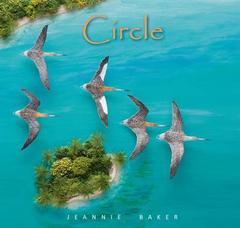
    Circle picture book by Jeannie Baker

    To finish on a more positive note, which is more my way, on her Big Sister Blogs this week, Maria Parenti-Baldey shared a post of wishes creatives have for children. Those wishes are opposite to those of the nun in my disrespectful poem. One of my favourite quotes is that by Jeannie Baker whose books I have previously written about here and here and here.

    According to Maria,

    Jeannie Baker wished for every ‘single’ child ‘to love and be loved’. For children to have a supportive home, a peaceful environment and ‘to be creative and not be criticised’. To go to school with time to ‘exercise their curiosity… use their imagination’ and find and make things. Jeannie wanted children to think for themselves, play outside and engage with nature with feelings of awe and wonder. Some children experience a fear of nature – ‘Nature deficit syndrome’. ‘What one fears, one destroys. What one loves, one defends.’

    I thought it was a perfect quote to round out my post. I wholeheartedly agree with her wishes–they match my dream.

    Please pop over to Maria’s post to read what other creatives; including, Leigh Hobbs, Gus Gordan, Mark Wilson, Anna Fienberg, Kyle Hughes-Odgers and Deborah Abela, wish for children. Great wishes, every one.

    Thank you blog post

    Thank you for reading, I appreciate your feedback. Please share your thoughts.


  • Watching ink dry

    Watching ink dry

    Sometimes we think change occurs at an incredible pace. Other times it’s too slow–like watching paint dry. But what about watching ink dry?

    This week at the Carrot Ranch, Charli Mills challenged writers to In 99 words (no more, no less) write a story about wet ink. It can be artistic, writerly or something completely off-the-wall. Go where the prompt leads.

    Where would I go? To school–where else?

    In my first year of school we wrote on slates (no, not on stone tablets as my children may tease).

    In subsequent years, we wrote in exercise books and special handwriting books with lead pencils (which contain graphite rather than lead).

    As we moved up through the grades, we still used pencils for most work, but were also introduced to pens with nibs which we dipped into inkwells recessed in our desks for handwriting or “copybook” lessons. It was important to get just the right amount of ink on the nib–too little and the nib would scratch but not sufficiently to make a readable mark–too much and the ink would run, blot and smudge.

    In upper primary, we graduated to fountain pens for our copybook work. It was just as difficult to get the right amount of ink, even with the cartridge variety. Should we err and make a blot on our copybook, it was treated as a most serious offence. Luckily, our trusty blotting paper was at the ready to soak up any excess. We always had to begin writing at the top and continue down the page. There was no going back and inserting or altering something at the top, unless we were absolutely certain the ink was dry, lest we smudge the writing with our hand.

    Although ball point pens, commonly called biros in my circles, had been invented–as early as 1888 according to this history, would you believe–we were not allowed to use them in school for fear our handwriting skills would deteriorate. They had their own set of ink issues too–some would fail to write, other would supply too much thick ink. Others would leave ink all over hands, or leak in pockets or bags.

    Over the years, ballpoint pens improved in quality and have now replaced dip nib pens except for specialist writing, and fountain pens are considered more a luxury item. Now the concern is that the use of digital devices; such as, computers, tablets and phones will have a harmful effect upon children’s handwriting skills. I wonder were there similar concerns when papyrus replaced stone tablets; and what those concerns will be in the future, should handwriting have a future.

    I didn’t wish to “blot my copybook” by responding to Charli’s prompt with a story unrelated to education or children. I hope you enjoy it.

    A blot on whose copybook?

    Ever so carefully, she dipped the nib in and out of the inkwell. Her tongue protruded, guiding the pen as she copied the black squiggly lines dancing across the page.

    “Start at the top. Go across; then down. Lift, dip…,“ the teacher droned.

    “Start at the top!” The cane stung her knuckles, sending the nib skidding across the page.

    “Now look what you’ve done!” The teacher grasped the book and held it aloft, sending ink in rivulets down the page. Her thumb intercepted one, smearing another opportunity for humiliation across the page.

    “Girls, this is what not to do!”

    Thank you blog post

    Thank you for reading. I appreciate your feedback. Please share your thoughts.