Live Love Laugh Learn … Create the possibilities

Tag: Early childhood education

  • Meet author-illustrator Chrissy Byers – Readilearn

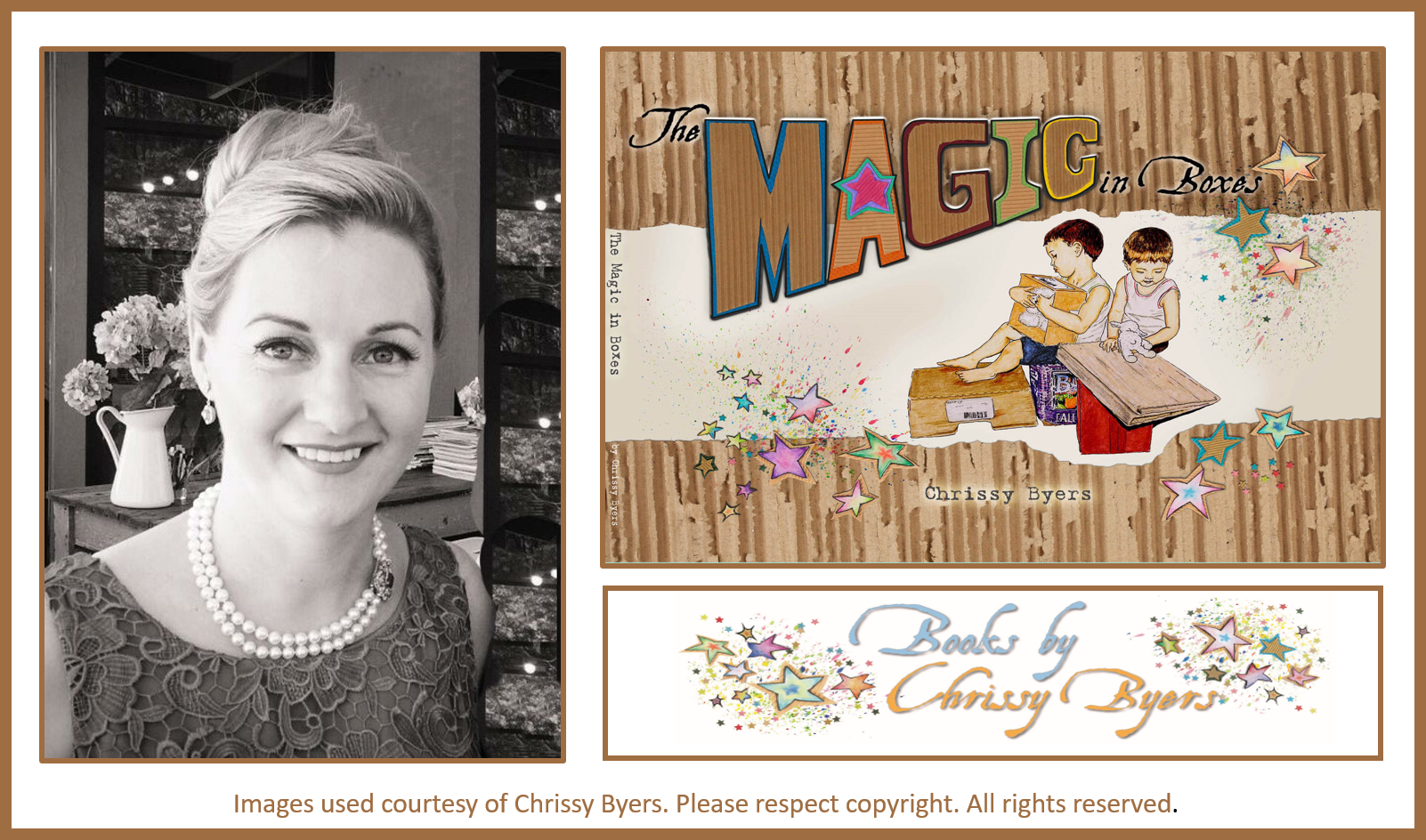
    This month it is my pleasure to introduce you to Chrissy Byers – author, illustrator, and early childhood educator. It was only after many years in the classroom and becoming a parent herself that Chrissy was able to fulfil her lifelong dream of being an author and illustrator. With the success of her first book The Magic in Boxes, and another on its way, Chrissy shows us that dreams can come true.

    Chrissy, what was your motivation for writing this book?

    As an experienced early years class teacher, I had noticed that, with the rise in technology there was a decline in the amount of time children spent engaging in imaginative play.  I was compelled to write and illustrate a children’s book which would remind parents, and inspire children, to see the magic in everyday household junk.

    Unlike a traditional children’s book, I felt that the recount genre would suit my intentions better than a narrative.  I saw this as being an additional bonus for primary teachers, as there are very few examples of recount picture books.

    The repetitive text elements encourage pre-reading children to join in a shared reading experience.  It also provides opportunity to incorporate hand gestures when reading, which helps focus young minds and occupy little hands during carpet time.  The rhyming couplets assist in reading prediction and keep the beat of a fast-moving text.

    Do you think of yourself more as a writer or an illustrator?

    Continue reading: Meet author-illustrator Chrissy Byers – Readilearn

  • Can you guess: Who am I? – Readilearn

    can you guess - who am I

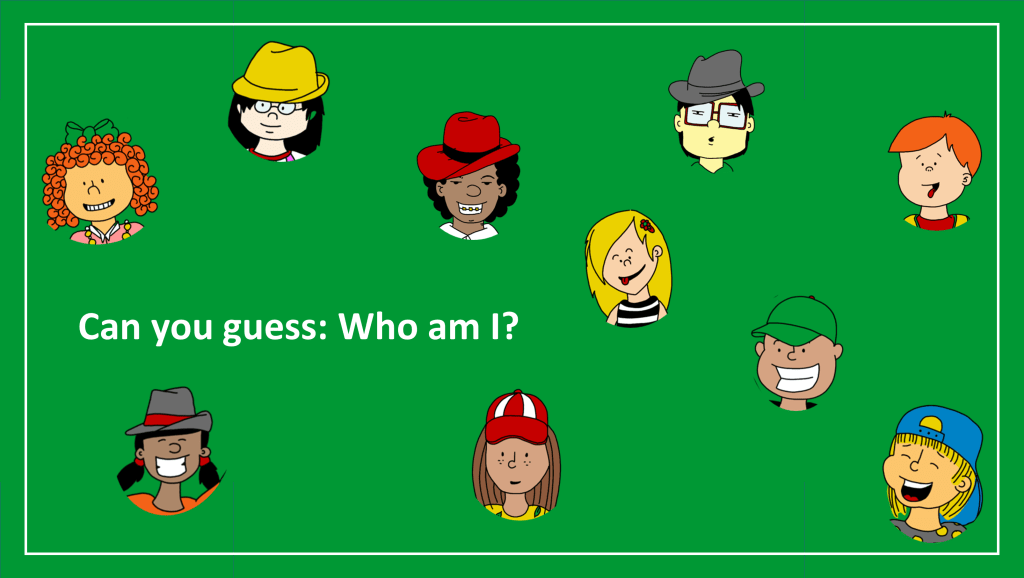
    Last week I shared an interview revealing a little about myself and my hopes and plans for readilearn. I also uploaded some little Who am I? Easter caption books. It’s seems timely then to discuss the value of creating, writing, and reading Who am I? puzzles in the classroom.

    Children love solving puzzles and it is good for them to engage in thinking activities. Who am I? puzzles involve deductive reasoning, and are easy for children to write. Solving them means listening attentively to the clues, remembering all the information, relating new information to existing information, and using the clues to eliminate options in order to identify the specific.

    In addition, the puzzles can be used to discuss and teach the difference between statements and questions and the appropriate way of punctuating each.

    Children can begin by writing statements about themselves, such as those they may have shared in About me booklets. They can also add interesting facts that others may not know about them. Remind children

    Continue reading at: Can you guess: Who am I? – Readilearn

  • Who’s on the move?

    This week at the Carrot Ranch, Charli Mills raised the subject of migration and challenged writers to In 99 words (no more, no less) write a migration story.

    Although Charli always provides suggestions, she also permits writers to go where the prompt leads, allowing their thoughts to migrate in whichever direction they choose. This is good for me as my thoughts always bring me back to early childhood education and, if I can somehow squeeze it in, butterflies.

    Migration is a part of human history. We are told that humans originated in Africa, and that migration out of Africa began about 60 000 years ago (well, that’s one of the stories). That we are now spread across the world is no mean feat, particularly when we acknowledge that most of the migration occurred before the industrial age, long before steam ships and ocean liners, before motor cars and air travel.

    But migration continues still, and our countries and cities become home to those whose lives began far away and who share different cultural traditions. The purpose of the National Geographic Society’s Genographic Project is to discover more about our shared genetic heritage. In an early childhood classroom, we, too, can discover how much we have in common and learn to appreciate our differences.

    Whoever you are.

    Mem Fox’s beautiful book Whoever You Are is great for encouraging children to recognise, respect, and  appreciate each other, similarities and differences included.

    mem-fox-im-australian-too

    This year sees Mem publish another beautiful book I’m Australian Too which shows appreciation for everyone who is part of our wonderful multi-cultural Australia. (Follow the links to both books and you can listen to her read them too!)

    A number of readilearn resources support teachers in developing an appreciation for everyone’s heritage, including a history unit which helps children learn more about their own family history and traditions, and the histories and traditions of their classmates’ families.

    Just as amazing as stories of human migration, are those of animal migration. I was surprised when I first heard of the migration of monarch butterflies from Canada to Mexico in the autumn, and back again in spring, a distance of over 4800 miles or almost 8000 kilometres. What a long flight for a butterfly, I thought, the poor butterfly’s wings must be ragged by the end of the journey. But the round trip involves at least four generations.

    And although monarch butterflies are native to North America, they are now part of the Australian landscape, having arrived, possibly during the gold rushes of the mid-1800s.

    Even longer, twice as long in fact, than the monarch’s migratory flight, is that of a dragonfly which, also over four generations, makes a complete circuit of the Indian Ocean – almost 1000 miles or about 16 000 kilometres. The story of how this tiny insect’s epic journey was discovered is fascinating. Who knows what one may discover when wonder is mixed with observation.

    There’s obviously plenty of diversity from which to draw inspiration for a migration story. I’ve chosen to write a story set a little bit closer to home. I hope you like it.

    Please pop over to Charli’s post to see where the prompt has taken other writers.

    Adventurous plans

    His bag was packed. He was ready. He stopped at the door for one last look, then stepped outside, pulling it closed behind him. At that moment, he was certain; he would never return. There was nothing for him here. Exotic places and untold adventures awaited. At the stop, he hailed a bus and climbed aboard. “Where are you off to?” asked the driver. “I’m on an adventure,” he said, tendering a fistful of plastic coins. “But only if you take me with you,” said his out-of-breath mother, smiling. “Okay,” he said. The driver winked as she climbed aboard.

    Thank you

    Thank you for reading. I appreciate your feedback. Please share your thoughts.

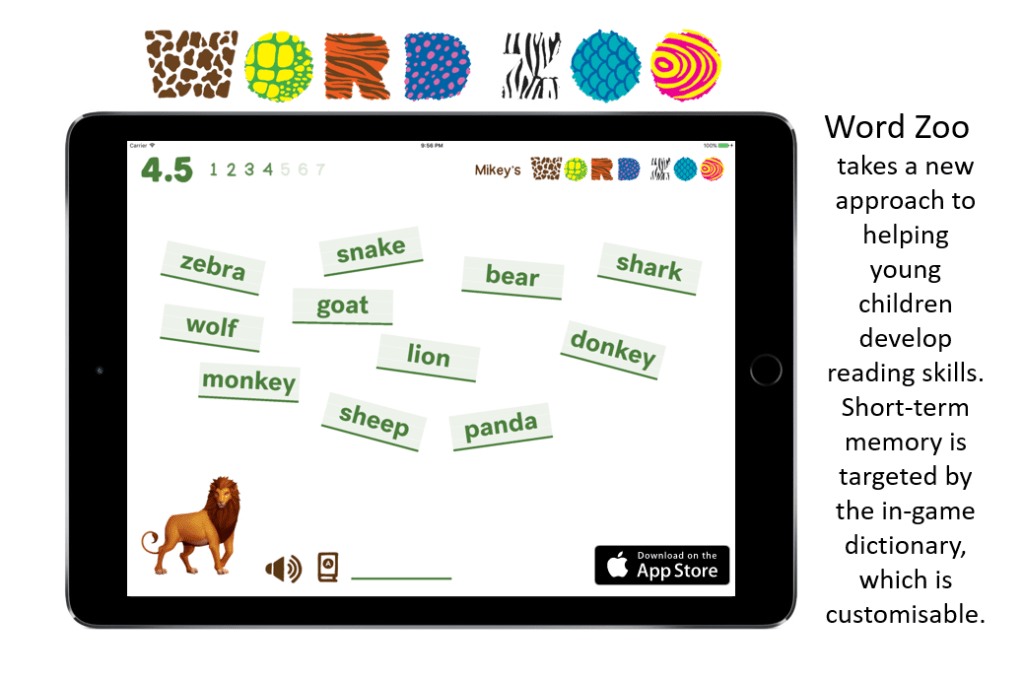
    P.S. I’m excited to announce the launch of a new app for beginning readers created by my son, Robert. If you know anyone with young children who may be interested, please let them know about Word Zoo, available now in the App Store.

    ad1


  • Developing an “I can do it!” attitude – Readilearn


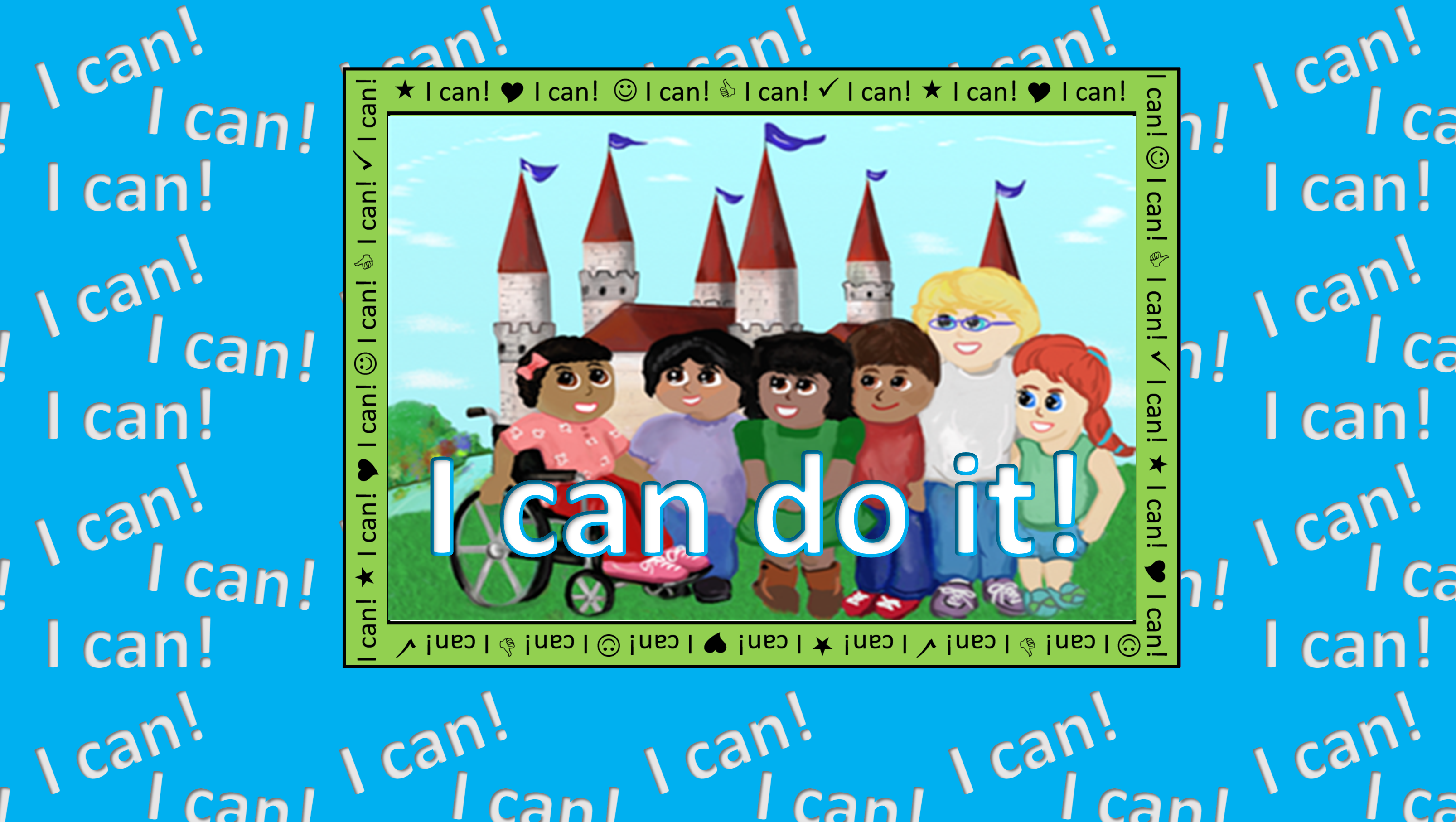
    Developing a positive attitude to learning and an “I can do it!” attitude in young children is important. Children need to be willing to take a risk, to have a go, to try something new. They also need to realise that, if they can’t do it yet, it’s not the end of the world. If they try again, practise, and show persistence, one day they’ll be able to achieve many of the things they want. Giving up doesn’t achieve anything.

    That little word “yet” is very important for children, and adults, to understand. It helps them see that learning is a process, not just a product. Learning is something that continues throughout life.  If we want to develop life-long learners, it is important to view learning as a continuum. Every stage is important in and of itself, not just as a stepping stone to the next. If children are acknowledged for what they can do, they will be more willing to have a go at things they haven’t yet.

    Developing confident children is at the heart of a supportive classroom environment.

    An “I can do it!” attitude consists of three main parts:

    Continue reading on: Developing an “I can do it!” attitude – Readilearn

  • I love poems – Readilearn

    I love poems. Children do too. Poetry is a great way of introducing children to the joy of language, as well as to features such as rhythm, rhyme, alliteration, similes and metaphors. What is taught through poetry can be as simple or as complex as required by the ages of the children or your teaching purpose.

    One of the great benefits of teaching young children through poetry is the fun aspect. It’s enjoyable for teachers and students alike and, when children innovate on poems to create poems of their own, very motivating.

    With St Valentine’s Day not far away it is timely to read and write love poems. One of my favourite poems for writing with young children is based on the traditional camping song I love the mountains. I was taught the poem by the amazing literacy educator Bill Martin Jr at a reading conference in the 1980s, and used it with every group of children I taught thereafter. I have previously written about that on my other blog here.

    The repetitive structure and easy melody invites children to join in and is easy for children to use in writing poems of their own, whether they are emergent, beginning, or advanced writers.  The poems can be completed using pictures or words.

    This is one of my favourite versions of the song.

    Continue reading: I love poems – Readilearn

  • Reading across the curriculum – Readilearn

    The importance of reading cannot be overstated. It is an essential skill, integral to almost everything we do. Teaching children to read is one of the most important, and most rewarding, aspects of our role as early childhood educators.

    Some children come to school already reading. Others come not yet reading, but with a love of books and an expectation that they will learn to read. They understand that reading involves making sense of the squiggles on the page. These children usually learn to read effortlessly regardless of what we do.

    Other children come to school with little experience of books and reading. For them, learning to read is a mystery and a greater challenge. For these children especially, it is important that we provide an environment rich in language and book experiences. We need to excite them about books and reading, interest them in words and language, and show them that books can be both a source of enjoyment and information.

    I often hear teachers lament that there’s just not enough time in the crowded curriculum to read to children any more. But reading aloud to children, especially early childhood children, should be non-negotiable and a priority every day. How can we excite them about books, and interest them in reading, if we don’t read to them?

    It is impossible to turn children onto books in one isolated reading lesson each day. In fact, reading lessons as such probably don’t turn children onto reading at all. That is not their purpose. Their purpose is to teach skills. But those skills should always be taught in context, and never in isolation. Nor should they be confined to lessons timetabled for English. Reading must occur across the curriculum and for a multitude of purposes throughout the day, from noting who is at school, interpreting the job roster and group allocations, to understanding connected text in various subject areas.

    Many readilearn resources are designed to provide children with opportunities for reading across the curriculum. Even those designed specifically to develop reading skills have application in other subject areas.

    Continue reading at: Reading across the curriculum – Readilearn

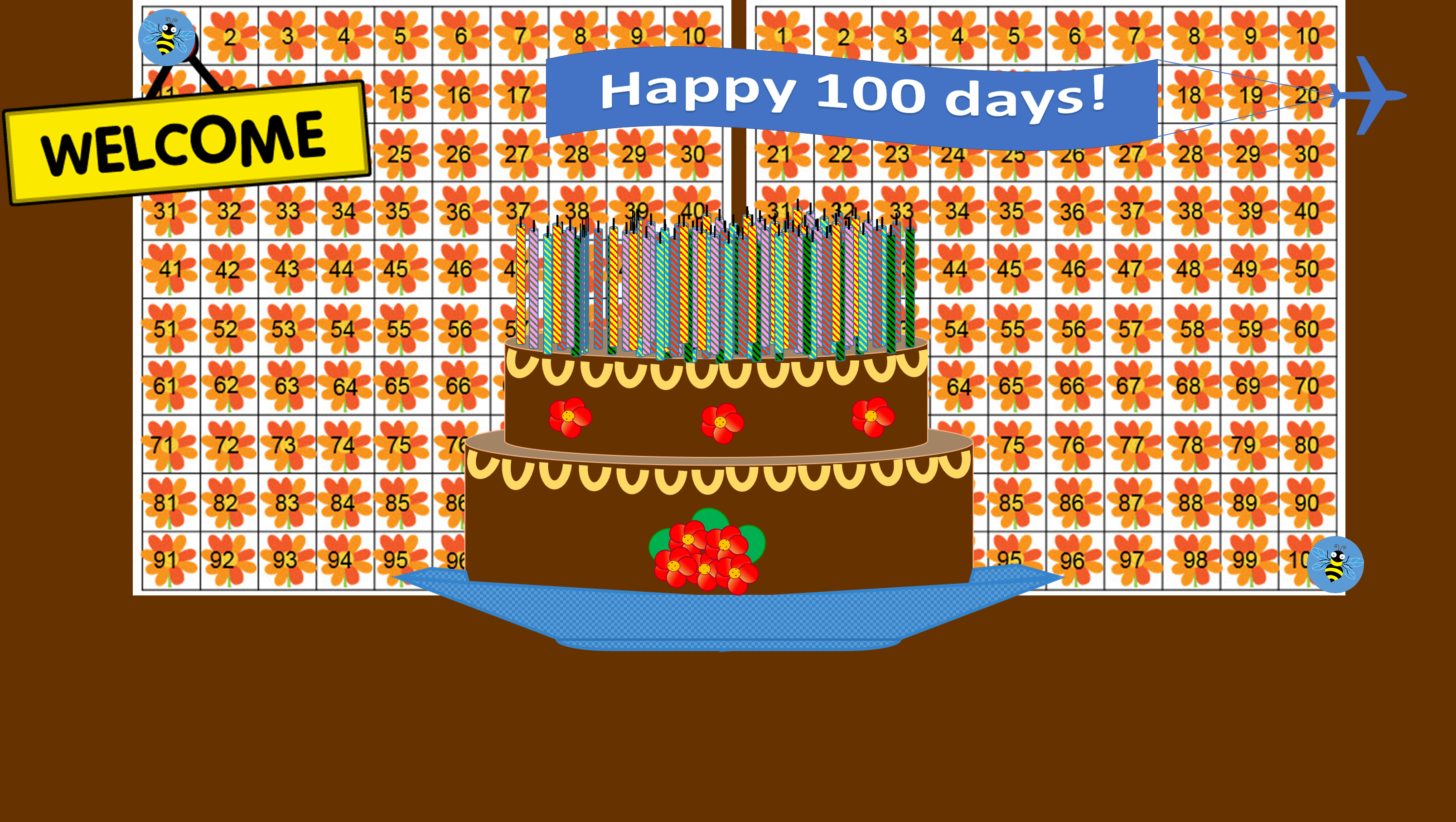
  • Counting one hundred days of school – Readilearn

    With the commencement of the Australian school year still two weeks away, it might seem a bit early to be thinking about the 100th day. Let me assure you it’s not. It’s great to be ready to start counting from day one. However, if you miss the start, you can always go back and count the days on a calendar. For those of you in the US and UK, the one hundredth day will be coming up soon in February.

    In Australia there are 200 school days in a year. So, once you have counted up to 100 days, you are half way through and can then count down the number of days remaining. The US and UK have fewer school days: 180 in the US and 190 in the UK; so they are more than half-way through by the time they reach their 100th days.

    Whatever their year level, children are always excited to count the days to this milestone, and it provides wonderful opportunities for learning about number.

    Several readilearn resources support you and your students as you count up to and celebrate one hundred days, including:

    The interactive digital resource Busy Bees 100 chart is great for all your usual number board activities, and can be used to keep a count of how many days you’ve been at school. Simply display the resource at the beginning of each day and move the bee to the next number.

    Just this week, I have uploaded a short video explaining how to use the resource. I am also including it here. I’d love to know what you think.

    Click to continue reading: Counting one hundred days of school – Readilearn

  • Getting to know you – Readilearn

    getting-to-know-you-2

    The beginning of the year is a great time for getting to know each other. Children will feel comfortable and friendly towards each other in a welcoming classroom environment that values and respects individuals; and in which appreciation for our diversity, as well as our commonality, is nurtured.

    When children feel safe to be who they are, they are more accepting of others.

    While it is important to establish a welcoming environment at the beginning of the school year, it is equally important to maintain the supportive environment throughout the year. It is not something we do to pretty the room and then forget about it. It is a part of who we are, and comes from a firm belief in the value of each individual, of community, of humanity, and of our world.

    Source: Getting to know you – Readilearn

  • Take a gander at this – #early childhood teaching resources


    gander-1559843_1920

    This week at the Carrot Ranch Charli Mills has challenged writers to In 99 words (no more, no less) write using the word gander as a verb.

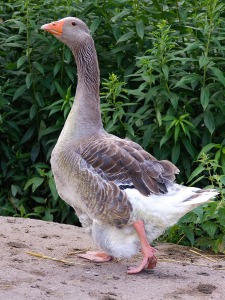
    Gander, the verb, means to look. Since a gander, a male goose, has a long neck which is, without doubt, suitable for sticking out and into things, the meaning to take a look is probably apt. However, I must say that, until reading Charli’s flash pieces, I was unfamiliar with its use as a verb, and still feel a bit uncomfortable in using it so, but I’ll give it a go – later.

    First: What I would love is for people to take a gander at readilearn, a website I have been working on for more years that I care to tally right now.

    It is a year since I took the leap and engaged a company to develop the site. It was nine months (not the one month promised) before the site was launched, just over three months ago. To use the nine months analogy of pregnancy; it wasn’t an easy gestation or birth, and we’re still experiencing teething problems and growing pains, including “how to grow?” pains.

    Audience wanted

    chairs-1738738_1920

    Marketing, as in attracting, building, and maintaining an audience, is difficult, as any writer knows. It is not just a matter of writing the stuff and hoping an audience finds it. It takes time, effort, and know-how. I’m a bit short on all three, but I’m going to stick my neck out, and ask if you’d be willing to help me a little with the know-how in finding my target audience.

    readilearn-home-page

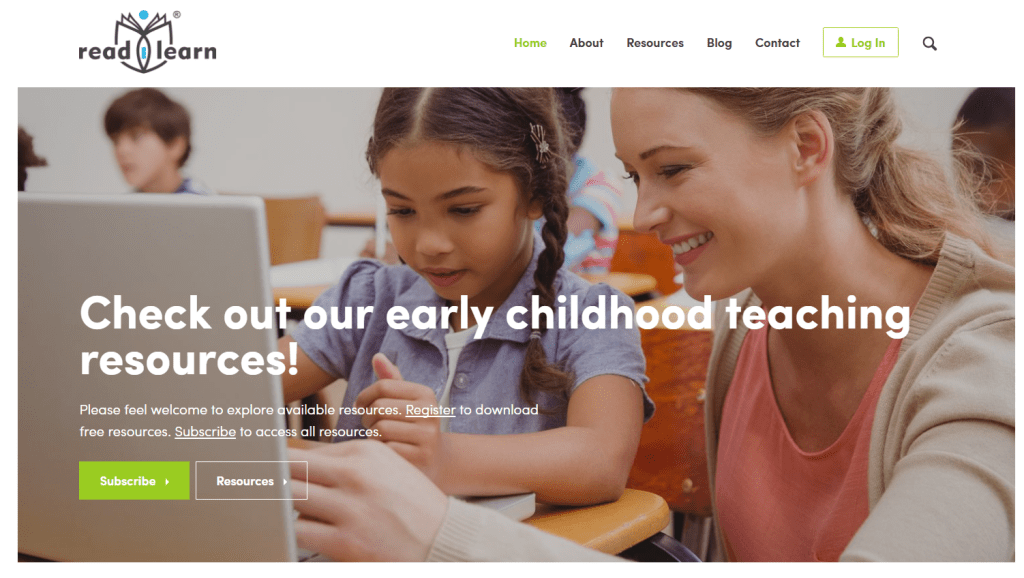
    readilearn is a collection early childhood teaching resources. The target audience is teachers of children between 5 and 7 years of age, be they teaching in a school environment, or homeschooling their children. The resources are also suitable or use with children learning English as a second or other language, and with children with special needs.

    resources

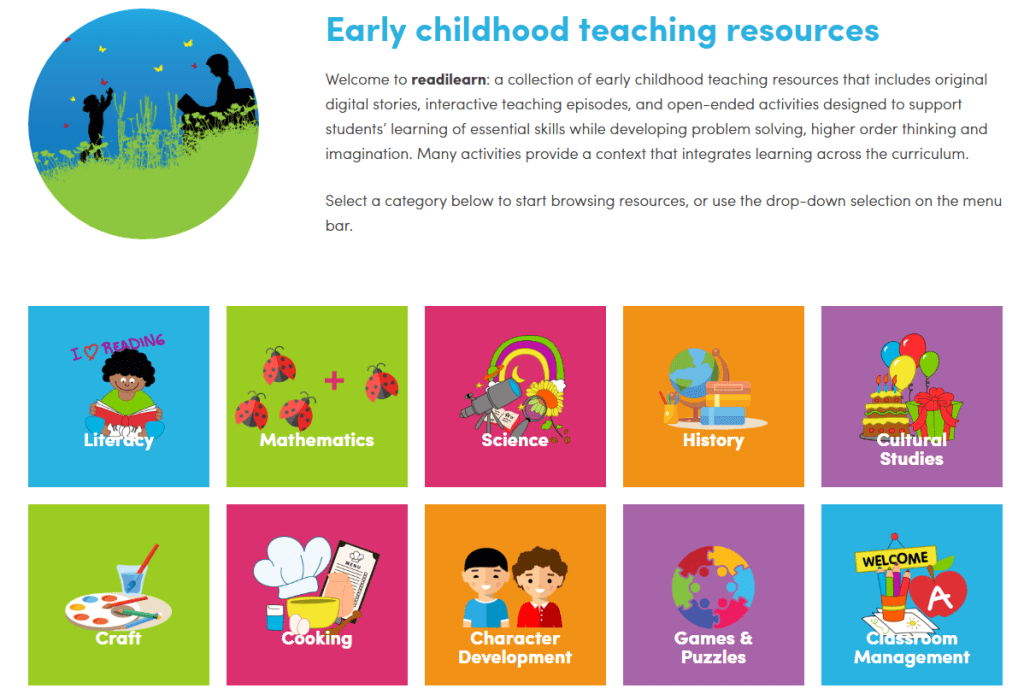
    There are resources for most areas of the curriculum, with suggestions for integrating learning across curriculum areas in a meaningful context.

    The materials are Australian (I’m Australian) but are suitable for use internationally.

    There are:

    • Digital and interactive resources to access and use online
    • Word and PDF documents to download and print

    Including:

    • Original stories
    • estories (digital stories)
    • Teaching ideas and suggestions
    • Lessons plans
    • Readilessons (lessons ready to use)
    • Games
    • Printouts for parents

    Features

    • New resources are added almost every week
    • Many resources are free to registered users
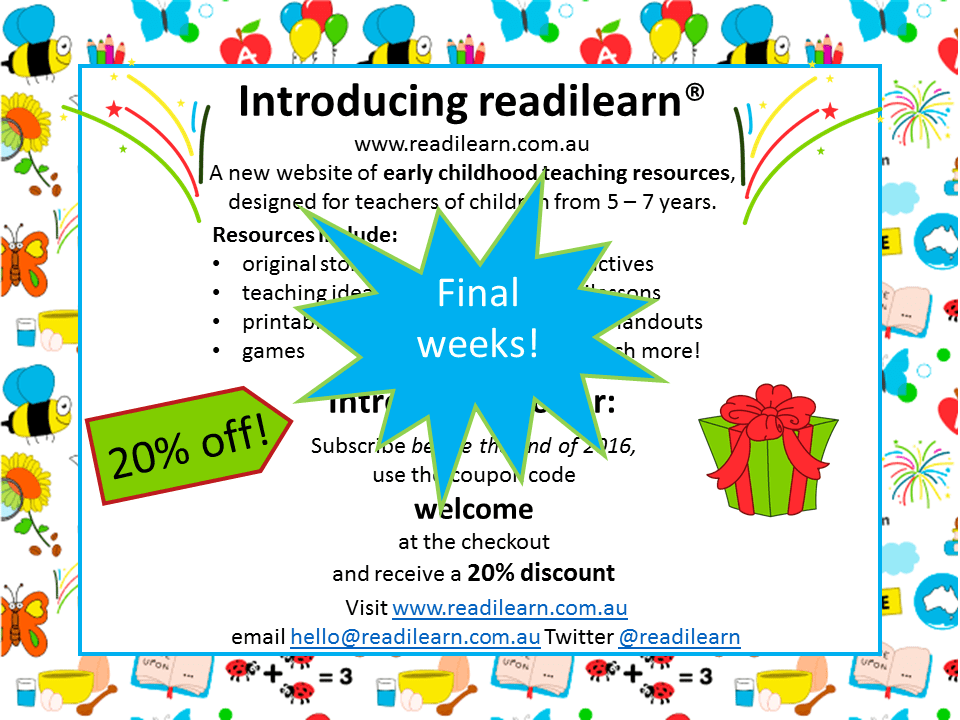
    • An annual subscription of less than 50c per week (or less than the cost of 5 cups of coffee a year!) is easily affordable; and that’s Australian dollars – even less for UK and US subscribers! It’s even discounted until the end of 2016!

    final-weeks

    So what’s different?

    I think that what differentiates readilearn is the integrated resources focusing on purposeful learning in context. The open-ended nature of many of interactive resources allows teachers to adjust the discussion to suit the needs of their students. readilearn is not just bunch of worksheets for repetitive practice of skills in isolation, or endless pretty charts to hang in the room. It is designed to support effective teaching and learning in meaningful contexts.

    More than just resources

    • Each Friday I publish a blog post filled with teaching ideas and information, including how to get the most from readilearn resources.
    • I also email users each Friday to inform them of new resources uploaded during the week – no more wondering if there’s anything new or where to find it.
    • The newsletter, published on the last day of each month, includes a summary of blog posts, a list of new resources, and a preview of events in the coming month.

    I would very much appreciate it if you could spread the word to any of my target audience in your circles: teachers of children from 5 – 7 years. I’d also love some suggestions for ways of connecting with my audience. Although my audience may differ from yours, what you have learned may also be useful for me.

    Maybe you’d like to gift an early childhood teacher their first year’s subscription. It’s easy. Just email hello@readilearn.com.au to find out how.

    special-gift-for-special-teacher-ad

    Now back to Charli’s challenge to include gander as a verb in a 99-word story. It got me thinking about all the bird words in common use, even when not referring to birds. I decided to incorporate as many as I could into a story while still maintaining a certain amount of sense. I have used over twenty. Can you (bird)spot them all? I hope you think it’s grouse! (Well, maybe just a little bit not too bad. 🙂 )

    grouse

    Bird (non)sense

    Finch’d had an eagle eye on the play all day.

    Robin’d been hawking chicken pies. Now sold out, he wandered over to gander with Finch.

    Robin craned his neck, just as “He’s out for a duck!” was announced.

    “He’s out for a duck,” he parroted. “That’s something to crow about.”  One team was swanning around, exuberant as monarchs. The other was as despondent as miners on strike.

    Martin was larking around. “Yeah,” he sniped. “The silly goose was distracted by the kite and missed altogether.”

    “More like a turkey, I’d say,” Robin reterned swiftly.

    “You’re a hoot!” chirped Finch.

    thank-you-1200x757

    Thank you for reading. I appreciate your feedback. Please share your thoughts.

  • Books make the #1 best gifts!

    The love of reading is gift

    I am notorious for gifting books. I’ve written about this before in Guess what you’re getting for Christmas and other posts. It would not surprise me if you are also a notorious gifter of books. Perhaps that could be our super power: The Book Gifters!

    Reading is empowering. A book is a gift that continues to give, long after the occasion has past. It’s effects cannot always be measured.

    books-life-memories

    In this post, I suggest some books you may like to purchase for special people in your life. And why not treat yourself with one or two as well?

    Most, but not all, are fairly recent releases. A few are long-time favourites.

    Most, but not all, are written by people I know personally or through blogging. You might recognise their names from comments on other of my blog posts. A few are long-time favourites written by people who inspire me.

    I have read most. The only two not read (the books of short stories) are very, very recent. However I am happy to recommend them as I am already familiar with some of the stories, and the writers’ work  from their blogs.

    Disclaimer: These are books that appeal to me. They may not appeal to you. The important thing in choosing books for others is in finding something that they will like.

    The list is not exhaustive. It is just a beginning to provide a few ideas that you may not have considered. There are many other wonderful books that could just as easily have been included.

    I have arranged my list in this way:

    For children:

    Picture books (including fiction, non-fiction, and poetry)

    Early chapter books (for readers of about 7 to 12 years)

    For adults:

    Books of short stories

    Novels

    Memoirs

    Books for teachers and parents

    If you follow the links you will be able to discover more about the writers and their other work.

    For children:

    Picture books – Fiction

    picture-books

    Lauri Fortino The Peddler’s Bed This heart-warming story demonstrates that a kindness given can encourage kindness in others. You can read a lovely interview with Lauri on the readilearn blog here.

    Tara Lazar Little Red Gliding Hood In this fun fractured fairy tale, Little Red Riding Hood needs a new pair of skates. The only way she can acquire them is by winning a skating competition. But which fairy tale character will be her partner?

    Galvin Scott Davis Daisy Chain This is a beautifully illustrated, animated and interactive, anti-bullying book app, narrated by Kate Winslet.

    Non-fiction

    non-fiction-picture

    Rebecca Johnson The Insect Series This series of ten little books, each about a different insect, combines both fact and fiction with stunning close-up photographs. You can read a lovely interview with Rebecca on the readilearn blog here.

    Sue Fliess The Bug Book This book about bugs is beautifully illustrated with stunning photographs. Written in rhyme, it introduces children to many tiny creatures.

    Poetry
    book-cover

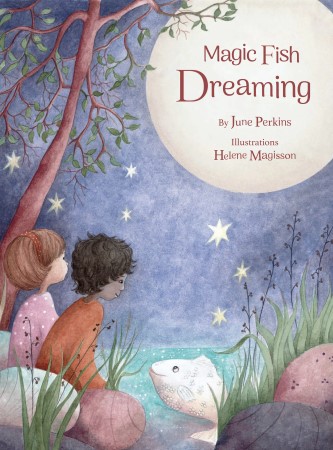
    June Perkins Magic Fish Dreaming This gorgeous book of poems with its focus on nature will uplift and inspire you and your children. You can read a lovely interview with June on the readilearn blog here.

    Early chapter books (about 7 to 12 years)
    early-chapter-books

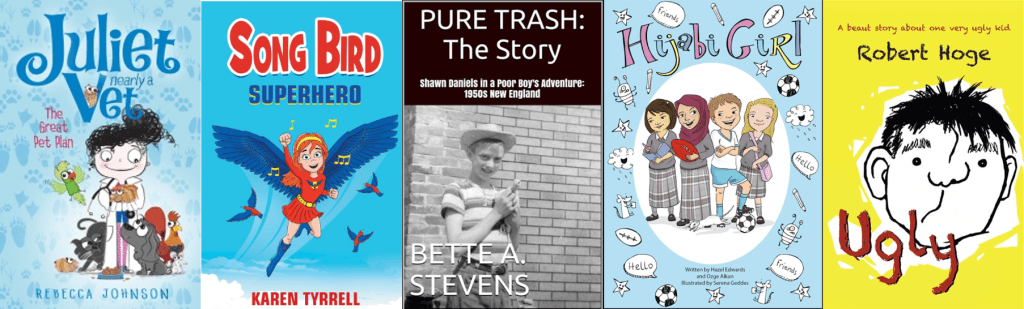
    Rebecca Johnson Juliet nearly a Vet This lovely series of books tells of the adventures of ten-year-old Juliet who aspires to be a vet, just like her mother.

    Karen Tyrrell Song Bird Superhero This story tells of Rosella Bird and her quest to fly. While she battles the bully at school and at home, she is empowered and discovers the joy of flight when she finds her voice.

    Bette A. Stevens Pure Trash: The Story Set in New England in the 1950s, this story tells of a Saturday afternoon adventure of two young boys. The Kindle version is free on Amazon until 29 November (today – be quick!). 

    Hazel Edwards & Ozge Alkan Hijabi Girl In this story, when eight-year-old Melek is deciding what to wear to the book parade, she is unable to find a super-hero who wears a hijab, so she creates her own.

    Robert Hoge Ugly (a memoir) Robert’s story is one of resilience, of survival against the odds, and of making hard decisions. While coping with difference and bullying, Robert shows that strength of character is a trait of survivors. I have introduced you to Robert previously here and here.

    Books of short stories

    short-stories

    Sarah Brentyn Hinting at Shadows This book is a collection of very short stories, each 100 words or less. While each may be a quick read, they will give insight, inspiration, and a greater understanding of what it means to be human.

    Hugh Roberts Glimpses Launching on 2 December, available for pre-order “28 short stories that will take your mind on a rollercoaster of a ride into worlds that conceal unexpected twists and turns.”

    Novels
    novels

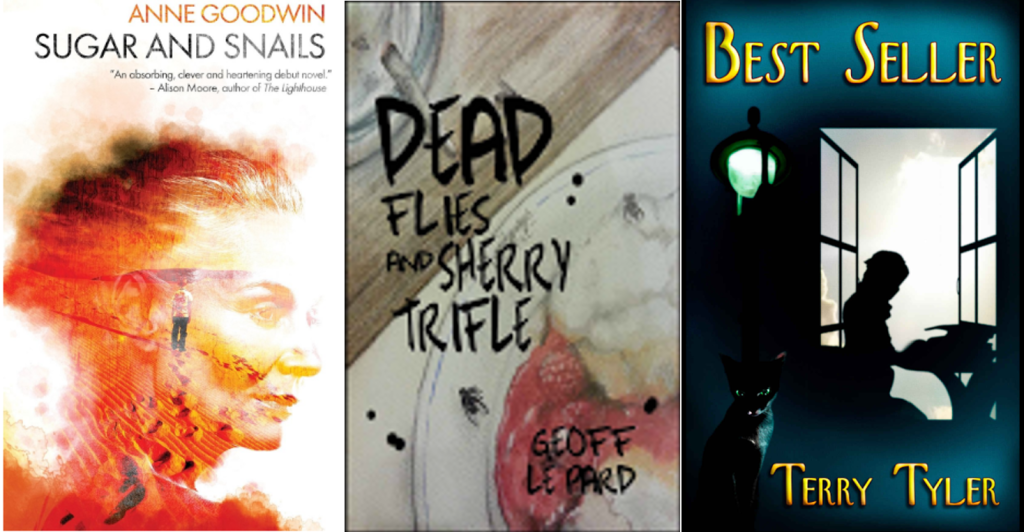
    Anne Goodwin Sugar and Snails In this mid-life coming-of-age story, Diana Dodsworth has some tough decisions to make as she comes to terms with who she really is. Anne has previously talked about her book on my blog here and here.

    Geoff Le Pard Dead Flies and Sherry Trifle This story about nineteen-year-old Harry Spittle, who is home from university for the hottest of hot holidays, will have you laughing out loud at his misadventures.

    Terry Tyler Best Seller This intriguing novella is about three writers, all of whom wish to write a best seller. One does; but which one?

    Memoirs

    memoir

    Robert Hoge Ugly (a biography) Robert’s inspirational story is one of resilience, of survival against the odds, and of making hard decisions. While coping with difference and bullying, Robert shows that strength of character is a trait of survivors. I have introduced you to Robert previously here and here.

    Lesley and Tammy Williams Not Just Black and White Told as a conversation between mother and daughter, this inspirational story tells of the importance of family, of difficulties experienced by many Indigenous Australians in relatively current times, with a drive to ensure that history is neither forgotten nor repeated.

    Malala Yousafzai Malala The Girl Who Stood up for Education and Changed the World The story of Malala, winner of the Nobel Peace Prize, is one of courage and of the difference that one person can make in the world. I have previously written about Malala here.

    Magda Szubanski Reckoning: A Memoir With a Polish father, a Scottish mother and an Australian childhood, Magda’s story is complex, courageous, compassionate, and inspirational.

    Books for teachers and parents

    for-teachers-and-parents

    Mem Fox Reading Magic This book provides lots of practical advice and support for parents in developing a love of reading in their children. I have introduced you to Mem many times previously, including here and here.

    Michael Rosen Good Ideas: How to be Your Child’s (and Your Own) Best Teacher This very readable book is packed full of suggestions for encouraging curiosity and learning in children (and you!) I have previously introduced you to Michael here and here.

    Vivian Kirkfield Show Me How Vivian passion’s for picture books and her understanding of the importance of literacy are obvious in this book that provides great ideas for reading and extending the learning experience associated with many picture books.

    Or, for a special early childhood educator, gift a subscription to readilearn, a collection of teaching resources that can be used throughout the year.

    special-gift-for-special-teacher-ad

    It’s easy. Simply send an email to hello@readilearn.com.au, arrange payment for the currently discounted subscription, and you will be emailed a voucher with a coupon code, unique to your special teacher. Print the voucher and personalise it with your own message before presenting your gift.

    Note: The subscription is for 12 months from date of activation, not purchase: a gift that will go on giving all year long.

    2

    I hope there is something in this list that you can add to your gift list.
    Thank you

    Thank you for reading. I appreciate your feedback. Please share your thoughts.