Live Love Laugh Learn … Create the possibilities

Blog

  • I Feel the Need, the Need to Read! by Tiffany Oppelt

    I Feel the Need, the Need to Read! by Tiffany Oppelt

    One reader’s story!

    Tiffany has a “read for fun everyday” policy. It’s a great one, don’t you think!

    CBethM's avatarNerdy Book Club

    Hello, my name is Tiffany and I am a reader.  Always have been and always will be.  Reading is more than a hobby or a pleasurable activity.  It is a true need in my life.

    It all started early.  I don’t remember learning to read.  I clearly remember the day the words began to make sense to me.  I was about five years old and sitting at the kitchen table with the Sunday comics.  I got up to ask my mom to help me with a word and I never looked back.

    From that day forward, I was unstoppable.  Aided in large part by extremely supportive parents and grandparents, as well as key teachers and librarians, I became a voracious reader.

    Books were my constant companion throughout my childhood.  I received countless books as gifts.  I haunted my public and school libraries.  I would lose myself in stories, making new…

    View original post 519 more words

  • Passionate about literacy education

    Education is my passion.

    I have spent almost my entire life thinking about how to educate, and the rest of it being educated.

    That is to say, just like everyone else, I began to learn about the world from the moment I was born, if not before; probably before.

    From age ten I knew that I wanted to be a teacher and worked hard through school to achieve that goal.

    When I completed school I was fortunate to receive a teacher’s scholarship which meant that my three years of training was provided by the state education system and, in return, I was required to teach within the system for three years. Without the scholarship that path would have been unattainable.

    I remember sitting in my classroom on, what I will say was, my first day of teaching. I gathered a group of children around me, each of us with a reader in our hands, ready for a reading lesson. Suddenly I realised I didn’t have a clue what to do.

    Realisation 1: Teaching reading isn’t as simple as putting book in the hands of children and telling them to read.

    This was a third grade class, so I’m hoping that most of them were already able to read and we figured it out together. Round robin reading seemed to be the method of the moment.

    During that first, and the following year, I put a lot of energy into sorting books into levels and children into groups to read the books at the different levels.  I’m not sure what the children learned but I know I was earning my pay. I was ‘teaching’.

    Realisation 2: Children learn to read at different rates.

    At the beginning of my third year of teaching I was listening to children read individually, in order to group them according to reading ability, when one of the children, considered a good reader by his previous teacher, informed me proudly that he could read the book without looking; and proceeded to do so. He had memorised it! He didn’t recognise any of the words and could not read any other book.

    Realisation 3: Reading is more than reciting the words on the page.

    Major realisation: There was something wrong with the way reading was being taught, and I still didn’t feel confident about teaching it.

    Fortunately most children learn to read despite how it is taught, and although I sometimes think I’d like to apologise to all those students I “taught” when I didn’t have much of a clue, I’d like to say “I hope they’re not reading this”, but I really hope they can!

    Not long after this I had a break from teaching for a few years. During that time I read a lot of books about education, especially alternative views of schooling. I continued to feel strongly about reading instruction and even wrote a series of readers (unpublished) based on instruction in phonics. (Such was my ignorance!)

    I worked with groups of upper primary remedial readers who made great progress ostensibly using a phonics program. However they also received lots of individual attention, encouragement and opportunities for reading real books.

    At the same time I watched my three year old son become a reader without any formal instruction. I read to him, talked with him, wrote stories for him and transcribed his stories which we read together. We played games with language making up rhymes, playing “I spy”, singing songs and talking about print in our environment. Before I knew it he was jumping into bed in the mornings, prising my eyes open and begging to read to me!

    I struggled to make sense of what I was observing.

    Then the serendipitous moment arrived: I saw an advertisement for a graduate diploma in reading and language. It sounded tailored to my needs exactly. And it was.

    We packed up the family and moved across the country to enable me to undertake the study.

    It was one of the best things I have ever done. Suddenly everything made sense. The course about developing literacy skills also supported my developing beliefs and understandings about learning in general. I was at last in a place I felt comfortable. This was where I belonged. The course reignited my passion and provided the knowledge and skills that would underpin everything I have since done in education. Time has moved on but the essential understandings are timeless.

    The coordinator of the course, the person who deserves my sincerest gratitude, is just as passionate about literacy education today as he was then, influencing new generations of teachers and students. His name is Brian Cambourne, Principal Fellow on the Faculty of Education at the University of Wollongong. He is affiliated with the International Reading Association and the Australian Literacy Educators Association.

    Recently a friend sent me a link to an article about reading on The Conversation. It is titled “The seven messages of highly effective reading teachers” and begins with a caption under a photo:

    Teaching kids to read isn’t just about learning the alphabet or “sounding out”, it’s about making sense of what’s on the page.

    I read the article and quickly responded to my friend saying that I agreed wholeheartedly and that I was, in fact, writing a book about those very same ideas, right at that moment!

    Then I checked the author. Imagine my surprise when I discovered it was Brian Cambourne! I am delighted to be able to share his wisdom with you.

    In the article Brian explains the seven messages that highly effective reading teachers share with their students:

    1. A reader’s major focus should always be meaning

    2. Effective readers draw on all sources of information in the text

    3. Effective readers are always predicting

    4. Effective readers self-correct

    5. Effective readers have a range of strategies

    6. Effective readers know how they read

    7. Effective readers love reading


    Please read Brian’s full article on The Conversation.


    I welcome any feedback.

  • Flash fiction: Revival

    The challenge from Charli Mills at Carrot Ranch Communications on April 23, 2014 was to:  In 99 words (no more, no less) describe the climate of a story as it changes to reflect a character’s mood or to create a sense of what is to come. This is my response to the challenge. I hope you enjoy it.

    dry spell
    kconnors http://morguefile.com/archive/display/8583%3C

    Revival

    Her motivation and inspiration was as parched as the cracked red soil beneath her feet. The days were hot and lazy: nothing to do until the rains came. One long languid day followed another. With no work to be done on the land, time did not pressure creativity. Without pressure, there was no rush, no will. The bright blueness of the skies, usually joyous, now oppressive. An occasional cloud or flash on the horizon made empty promises. Finally the winds whipped the clouds into a frenzy, reigniting her creativity as the relentless soaking rains awakened the dormant earth.


    Please let me know what you think.

  • Going on a treasure hunt!

    we're going on a bear hunt

    A few weeks ago I had the great pleasure of taking my two gorgeous grandchildren to a performance of Michael Rosen’s “We’re Going on a Bear Hunt”. To say we enjoyed it would be an understatement. We had a rollicking good time.

    The performance involved a lot of audience participation including spraying the entire audience with water from the “deep cold river”; an event which left everyone slightly wet, screaming with anticipation and laughter, and genuinely having a wonderful time interacting with this fabulous text.

    We were already familiar with the text, of course, and had read it, recited it, acted it out and played a board game which has been made to accompany the text. None of this really prepared us for the delightful stage performance; but these pale in comparison with a telling by the master storyteller himself, Michael Rosen.

    Michael Rosen’s website is a veritable treasure chest with much to explore and delight.  From his home page you can visit his blog which he describes a as a place where he’ll

    “post up some thoughts and ideas – especially on literature in education, children’s literature in general, poetry, reading, writing, teaching and thoughts on current affairs.”

    You can also check out a full list of his publications. He’s very prolific!

    After attending the performance of “We’re Going on a Bear Hunt” I shared with my grandchildren the video of Michael Rosen performing the story, which is also available from his home page. They loved it and we watched it “Again!”

    Then I showed them the video of Rosen performing his fabulous poem Chocolate Cake. We watched it four times! Artie, who is four (and a half) was joining in with the telling the second time, and by the fourth time was copying many of Michael’s actions as well as facial and vocal expressions. Artie laughed along with the story and excitedly called other members of the family to watch it with him.

    The next time Artie came to visit he was performing his own version, “Lollipop”, with similar actions and both facial and vocal expressions. His younger sister also had to have her turn telling the story. It was delightful and convinced me, though I needed no convincing, of the power of a great performer to turn children onto the fun of language, of playing with words, of performing, and of composing writing of their own. Creativity ignited!

    If you haven’t yet watched Michael perform Chocolate Cake, I urge you to do so. You are in for a treat. I’m certain you will not be able to watch it without a smile on your face.

    Michael is so passionate about making poetry come alive for children, he has made many videos on his website freely available to teachers for use in their classrooms.

    In his article “Teachers write to me saying, ‘What about poetry?’”, Michael begins by saying,

    The-best-thing-you-can

    He then goes on to present many fun ways of engaging children with poetry, none of which involve word study or comprehension exercises. He makes suggestions for performing, writing and talking about poems; and says that

    “The best and most important thing you can do with any poem that a child writes is either get it performed or ‘published.”

    and offers suggestions of how to do just that.

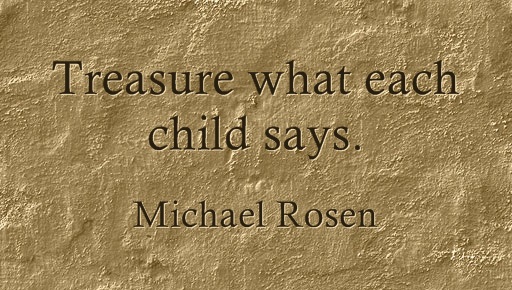
    Another thing he says in that article, which was the inspiration for the title of this post, is

    Treasure-what-each-child

    I couldn’t agree more.

    This is just a brief sample of the riches to be found on the Michael Rosen website. There are so many videos of Michael’s performances available that I have not yet watched them all. Please let me know your favourites and I will make sure I watch those too.

    Thanks Michael Rosen. We can learn so much from you while we are having fun!

  • Ho ho ho! (Q.E.D.)

    Ho ho ho! (Q.E.D.)

    In comments to one or two previous posts on my blog, suggestions were made that I should tackle the issue of Santa. I wasn’t prepared to do that at the time, and am still not. (I didn’t do much of a job of it as a parent.)
    However I came across this post by Michelle Sowey, and I think she tackles it quite well. Being a philosopher, she deals with it much better than I would.
    Although it’s not Christmas yet, it’s never too early or too late to start thinking about issues like these.

  • The magic effect – why children need books

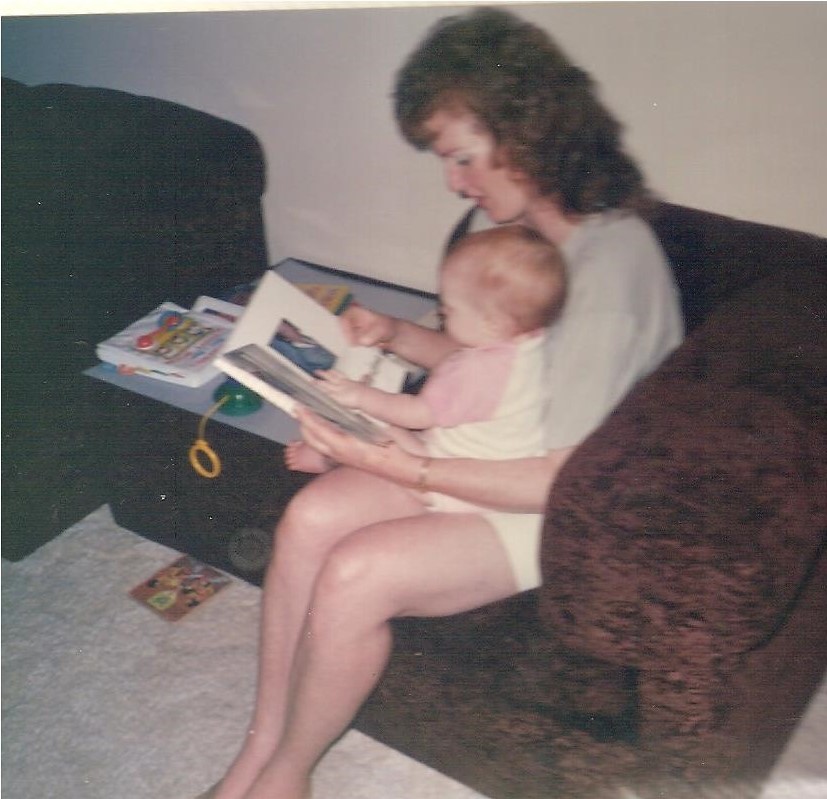
    Nor and Bec reading


    Children can be read to from the moment they are born, if not earlier. Preferably earlier!

    One of my favourite picture book authors and passionate advocate for reading to children is Mem Fox. I own, and have given as gifts, many of her wonderful books. I have attended her seminars and been mesmerised by her reading from her selection of stories. “Read more!” the adults beg. There are no children at these literacy seminars. This time it is a treat for only us: parents and teachers, literacy educators all.

    Currently Prince William, Kate and baby Prince George are visiting Australia. I was delighted to hear that they were given a gift of books by Australian authors, including some by Mem Fox. Over the years I have given many of Mem’s books as gifts; and kept just as many for myself!

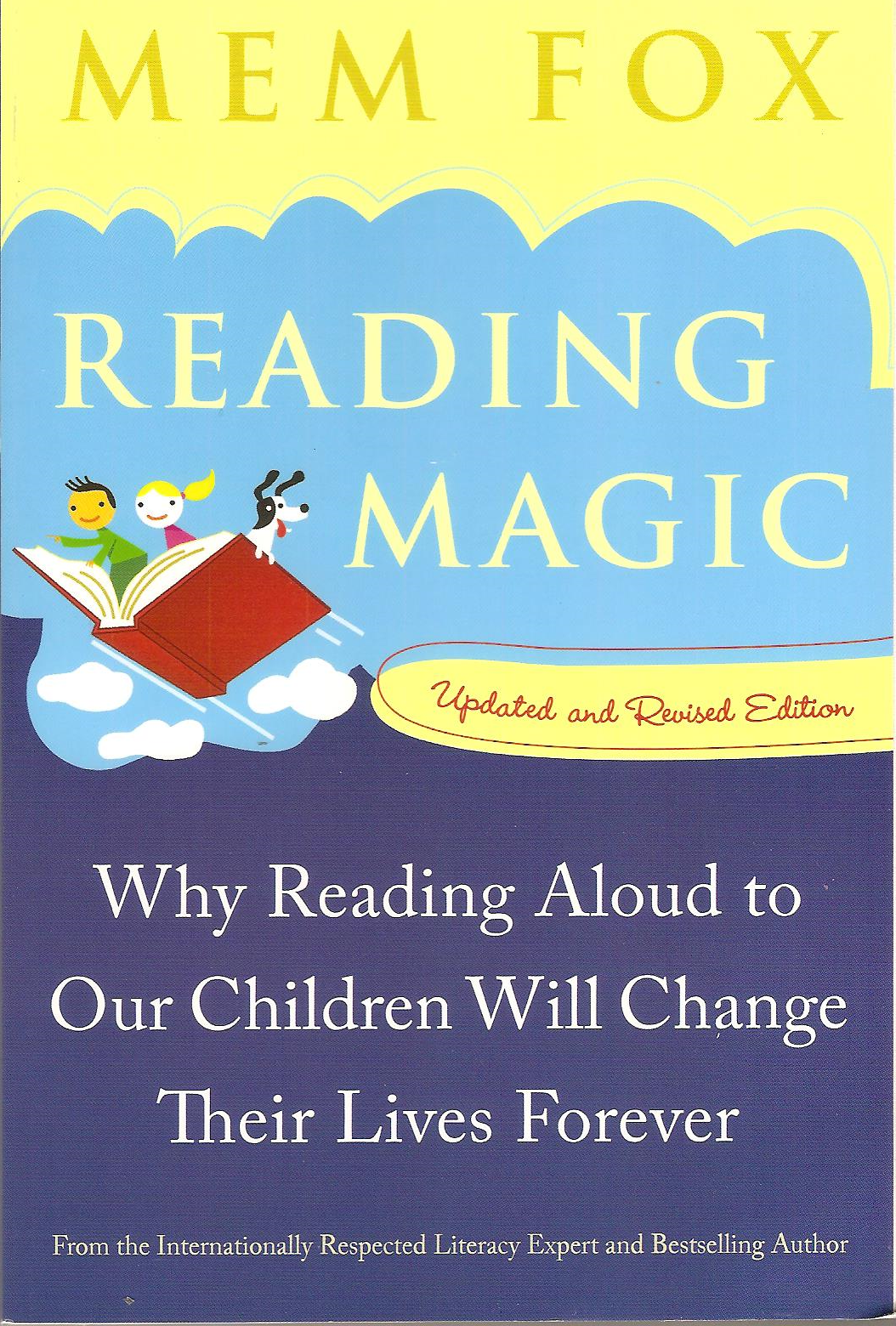
     Reading magic

    One that I have given to many new or expectant parents, as I consider it a “must read”, is Mem’s book “Reading Magic – Why Reading Aloud to Our Children Will Change Their Lives Forever”.

    I would love to quote the entire book for you, but it is better you read it for yourself. I will provide you with this quote from the foreword as a taster for the richness to be found inside.

    “It stands to reason that if we’re able to raise happier, brighter children by reading aloud to them, the well-being of the entire country will ramp up a notch. Children who realize in their first few weeks and months of life that listening to stories is the purest heaven; who understand that books are filled with delights, facts, fun, and food for thought; who fall in love with their parents, and their parents with them, while stores are being shared; and who are read aloud to for ten minutes a day in their first five years, usually learn to read quickly, happily and easily. And a whole lot of goodness follows for the entire community.”

    Mem's website


    Mem’s website, too, is a treasure trove just waiting to be explored by writers, teachers, parents, children and children-at-heart.

    You can listen to Mem read from her selection of books on the Current Read Aloud page. She reads three different books each month. Currently the books are Possum Magic, Harriet, You’ll Drive Me Wild! and Goodnight, Sleep Tight. Be quick to listen to these, though, as they will change at the end of the month. But never mind, there’ll be another three to enjoy next month!

    Mem even gives a read-aloud lesson! Now there’s no excuse! As she says,

    “. . . let’s get on and change the world, one page at a time.”

    Yes, Mem, let’s!


    What are your favourite read-aloud books? What did you enjoy as a child? What do you enjoy now?

  • Flash fiction – Innocence shattered

    Here is my contribution to the seventh flash fiction challenge from Carrot Ranch Communications. I hope you enjoy it.

    In 99 words (no more, no less) write a biography for a character, alter-ego or you. 

    Innocence shattered

    She hurled it with such force that had it been his head, as she had wished it was, it too would have smashed into smithereens, just as the figurine had.

    “You ab-so-lute monster!” she screamed.

    She fell to the floor, sobbing uncontrollably.

    All her life she had thought it was her; something wrong with her; she that was wanting.

    But it wasn’t her. It was him. His wanting. His vile taking.

    The repulsive visions made her want to turn inside out and eradicate any trace of connection.

    Her ignorance had offered no protection; and now no solace.


    I welcome your comments.

  • This is nice

    If you haven’t yet visited Brain Pickings by Maria Popova, this week’s newsletter is a great place to start.

    Maria Popova describes herself as “an interestingness hunter-gatherer and curious mind at large”. She gathers up all sorts of things that you didn’t know you were interested in, until you are.

    Brain Pickings — “is a cross-disciplinary LEGO treasure chest, full of pieces spanning art, design, science, technology, philosophy, history, politics, psychology, sociology, ecology, anthropology, and more”.

    I’m sure you will find something of interest to you!

    This week’s offering If This Isn’t Nice, What Is? Kurt Vonnegut’s Advice to the Young on Kindness, Computers, Community, and the Power of Great Teachers  provides ideas, quotations and excerpts from speeches made by Kurt Vonnegut at college graduation ceremonies between 1978 and 2004.

    Here are just a few that I found particularly interesting or appealing. Please visit Brain Pickings for a more complete synopsis.

    Teaching-is-the-noblest

     “But I say with all my American ancestors, “If what Jesus said was good, and so much of it was absolutely beautiful, what does it matter if he was God or not?”

    If Christ hadn’t delivered the Sermon on the Mount, with its message of mercy and pity, I wouldn’t want to be a human being.

    I would just as soon be a rattlesnake.”

    “But in our personal lives, our inner lives, at least, we can learn to live without the sick excitement, without the kick of having scores to settle with this particular person, or that bunch of people, or that particular institution or race or nation. And we can then reasonably ask forgiveness for our trespasses, since we forgive those who trespass against us. And we can teach our children and then our grandchildren to do the same — so that they, too, can never be a threat to anyone.”

    “I recommend that everybody here join all sorts of organizations, no matter how ridiculous, simply to get more people in his or her life. It does not matter much if all the other members are morons. Quantities of relatives of any sort are what we need.”

    “By working so hard at becoming wise and reasonable and well-informed, you have made our little planet, our precious little moist, blue-green ball, a saner place than it was before you got here.”

    “When things are going sweetly and peacefully, please pause a moment, and then say out loud, “If this isn’t nice, what is?”

    If-this-isnt-nice-what-is

    Which ideas of Kurt Vonnegut do you find interesting?

    With which do you agree or disagree?

  • Flash fiction – White flowers

    The sixth flash fiction challenge from Carrot Ranch Communications:

    In 99 words (no more, no less) write a story that includes white flowers.

    When Charli posted this challenge, I was thinking of writing about my Mum’s white flowers. At the time I didn’t expect that she would pass away before I had it written. After losing her my mind has been otherwise occupied and I have struggled to think beyond those two words “white flowers”. However, tonight I decided to write a brief tribute to my Mum who peacefully went “to Heaven” on Friday evening.  We will say our farewells to her tomorrow. So, it’s not really flash and it’s not really fiction but it is on the topic and is 99 words.

    peace lilies

    These white flowers in the pot at my door remind me of you.
    I bought them for you, to remind you of home, when you moved, with reluctant acceptance.
    Peace lilies.
    Your beautiful peace lily flourished in the warmth of the sunny spot beside your favourite chair; the favourite chair that you took with you to your new home; that transported you to Heaven. You were ready.
    Now they reside with me, in the pot made by his hands; a fitting spot.
    You will rest with him in his plot, together again, now at peace, forever.
    Love you, Mum.

  • Flash fiction – Vagaries of time

    The fifth flash fiction challenge from Carrot Ranch Communications:

    In 99 words (no more, no less) write a story that quotes from a song’s lyrics (could be a classical aria, a rock & roll song, anything).

    This is my contribution. I hope you enjoy it.

    Vagaries of Time

    She rubbed the grimy pane, squinting to peer inside.

    It was all boarded up now with chairs stacked haphazardly on tabletops and piled in corners decorated with cobwebs.

    On one side stood the jukebox covered in dust.

    Suddenly she was back in his arms, their bodies pressed tightly together, swaying to Mick singing “time is my side”. They thought they would be young and in love like this forever.

    “Hmmhmm! You okay, Miss?”

    “Yes,” she stammered, embarrassed.

    She stumbled down the steps, smiling as the words in her head became Van’s “precious time is slipping away…”

    Thanks for reading. I welcome all feedback.