Live Love Laugh Learn … Create the possibilities

Category: Writing

  • Writer in Residence

    Writer in Residence

    This week at the Carrot Ranch, Charli Mills challenged writers to In 99 words (no more, no less), write a story about a new way to office. Has the office changed? Can we return to normal after big changes or time away? Go where the prompt leads!

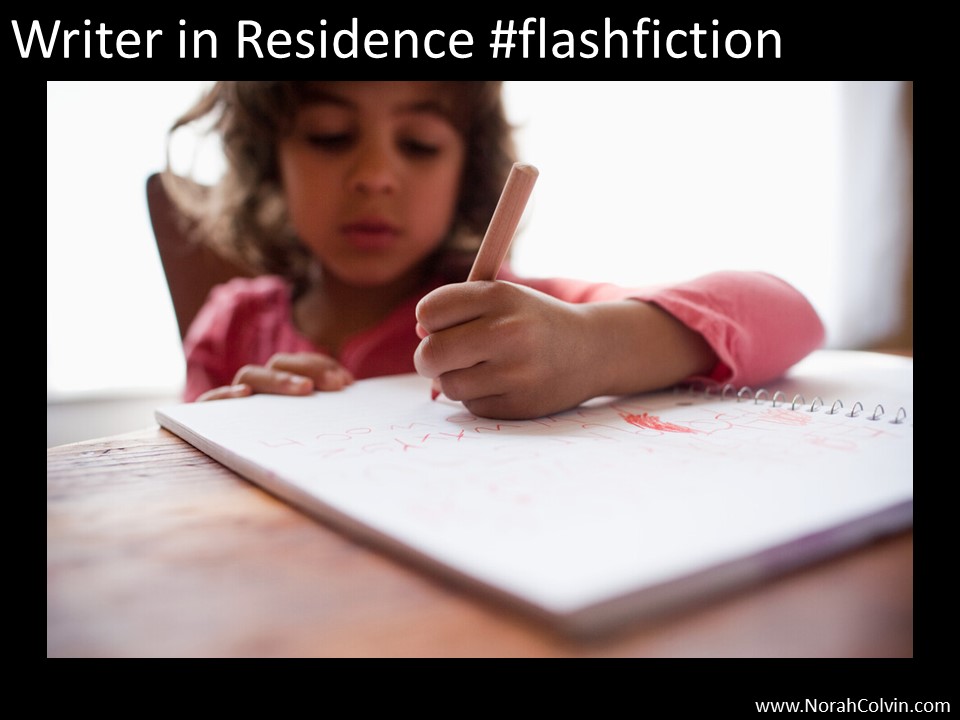
    As a teacher who also loved to write, I used to love inspiring and nurturing a love of writing in my children. The desire equalled my love of reading and of picture books. We wrote together every day (they wrote, and I wrote at the same time). We often wrote collaboratively, authoring stories, songs, and poems together before they wrote their own. They wrote independently and of their own volition, especially in free time. I, and they, would often say, “That would make a good story.” I loved reading and responding to the messages they wrote to me in a daily diary that gave me a window into their lives and the things that were important to them.

    To encourage their writing, there was always a great variety of paper, pens and other essential equipment available to them. While I didn’t ever have a desk such as I describe in my flash fiction (it is fiction, you see), I can just imagine how they would have loved it and how they would have imagined themselves at it while writing in the office (writing corner). I hope you can imagine it too.

    Writer in Residence

    The large old oak writer’s desk with multiple drawers, pigeon holes, an ink well and leather writing mat faced the room.

    Upon it, a multitude of cups stocked with pencils, pens and other writing and drawing tools sat ready. The pigeon holes held a magnificence of paper and cardboard, and the drawers essentials like scissors, glue, rulers, lettering guides, clips and stapler. It was a writer’s paradise — perfect for the daily Writer in Residence.

    The children loved it. Especially when they were Writer for the day with freedom to organise, reorganise and create to their heart’s content — growing writers.
    Thank you blog post

    Thank you for reading. I appreciate your feedback. Please share your thoughts.

  • Unleashed #Flashfiction

    Unleashed #Flashfiction

    Leashed flash fiction prompt

    This week at the Carrot Ranch, Charli Mills challenged writers to In 99 words (no more, no less), write a story being leashed. Is it literal or metaphorical? Who or what is leashed. How does it set the tone? Go where the prompt leads!

    I know the term leashed, and consequently unleased, refers specifically to dogs, and that is how Charli used it. However, I am not particularly familiar with dogs, either leashed or unleashed, so decided for the metaphorical interpretation of being held captive and, conversely, set free.

    I usually try to conjure a story about children or education, or possibly an idea that I may be able to work into a publishable picture book manuscript one day. However, I didn’t realise I’d done that this time. Until I had.

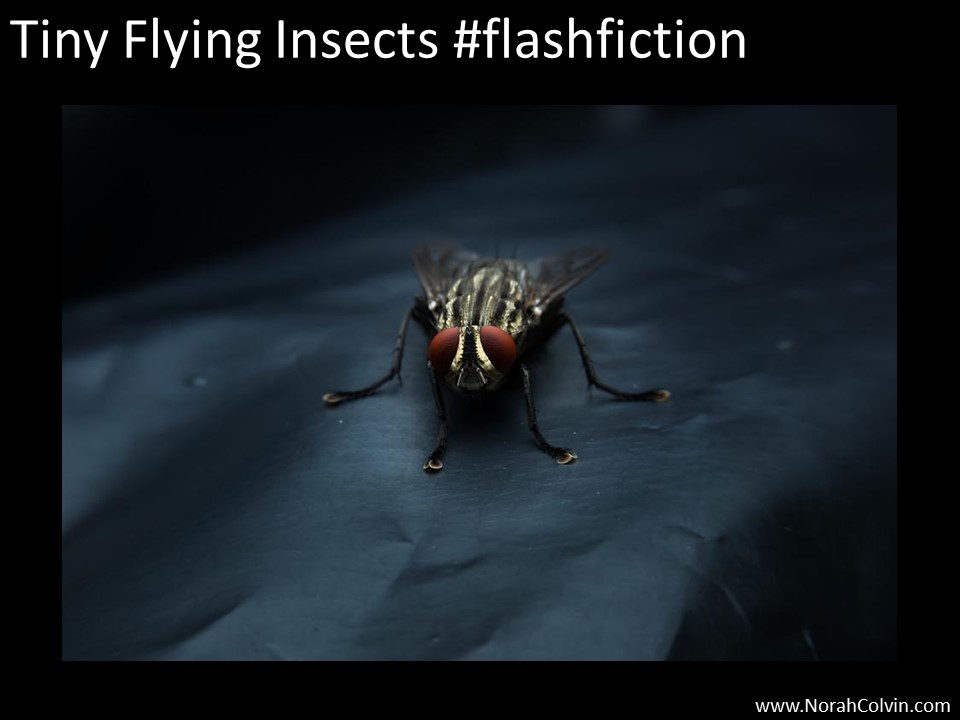
    I was thinking of slinky toys and the practical joke that uses a (fake) snake springing out of a can. I combined the two ideas, thinking how awesome it would be to release (unleash) a whole lot of slinky toys at the top of some stairs at the same time. When I finished writing, I realised that I’d repeated my thoughts about schooling and education once again. I even wondered if it had a theme similar to The Nightingale by Hans Christian Andersen. Let me know what you think.

    Unleashed

    It began harmlessly with a mini-slinky party favour in a birthday bag. The sparkles mesmerised Jamie as it tumbled end over end down the driveway or stairs. Soon it became an obsession. Swapping favours at birthday parties, pleading for them in supermarkets, Jamie hoarded them in a can carried everywhere. The obsession progressed from sparkles to numbers as the can filled. Eventually, no more slinkies would fit. As Jamie pressed and squeezed, the recalcitrant can tipped. Slinkies erupted, springing to life. As they danced away, sparkling in the sunlight, Jamie was captivated. Even slinkies need freedom to be themselves.

    Thank you blog post

    Thank you for reading. I appreciate your feedback. Please share your thoughts.
  • Tiny Flying Insects #flashfiction

    Tiny Flying Insects #flashfiction

    This week at the Carrot Ranch, Charli Mills challenged writers to In 99 words (no more, no less), write a story that includes tiny flying insects. Think about how the insects shape the scene or add to the action. Go where the prompt leads!

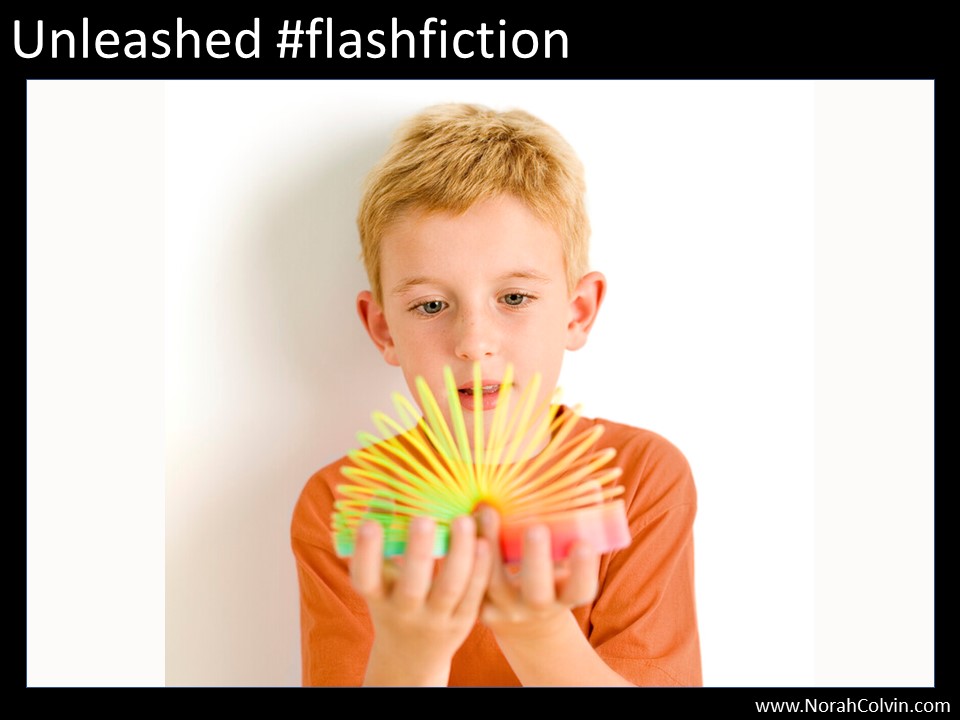
    Like many, I have a love-hate relationship with tiny flying insects. I love some. I hate some. Well, perhaps hate is too strong a word. I dislike their presence but appreciate their contribution to the environment, whether it be as decomposers or valuable food source.

    My love list includes:

    • butterflies
    • bees
    • ladybirds
    • dragonflies

    My not-so-much list includes:

    • cockroaches
    • flies
    • mosquitos
    • midges

    These two groups probably lie at either end of the continuum with thousands more in between.

    My fascination with these tiny creatures can be easily evidenced on readilearn, my collection of teaching resources for the first three years of school, where there are numerous resources devoted to minibeasts, especially bees, butterflies, and ladybirds.

    Keeping caterpillars in the classroom and watching them progress through their life stages until metamorphosing into adult butterflies was one of the children’s and my favourite things. It is a wonderful way to enable children to see nature close up and develop an appreciation for these tiny creatures and their contribution to the environment. It encourages them to look more closely and with more wonder when exploring the outdoors.

    It would be easy to write a story about one of the tiny flying insects that I love and more of a challenge to write about one that I love not-quite-so-much. However, I have previously written a story about a fly for an (imaginary) audience of young children. I share a 99-word synopsis of that story in response to Charli’s challenge. Let’s see what you think of it.

    BBQ the Fly

    Named for their favourite thing, BBQ’s parents farewelled their son on his first independent foray.

    “You can! Avoid the can!” they called. BBQ had trained relentlessly, perfecting every manoeuvre — walking on ceilings, buzzing people and, especially, dodging the dreaded spray.

    BBQ’s antennae zeroed in on a backyard barbecue where he chose a juicy sausage for his ritual dance. He had just extended his proboscis when a swarm muscled in. Through the crowd, one of his compound eyes caught the glint of something metallic —a can!

    He retracted his proboscis and escaped just as the spray downed the unfortunate swarm.

    Thank you blog post

    Thank you for reading. I appreciate your feedback. Please share your thoughts.

  • Hit the Road Jack #flashfiction

    Hit the Road Jack #flashfiction

    This week at the Carrot Ranch, Charli Mills challenged writers to In 99 words (no more, no less), write a story using the phrase, “hit the road, Jack.” You can interpret the phrase any way you like — road trip, goodbye, or story. Go where the prompt leads!

    I’ve written a nonsense story loosely based on young children as much as on characters from nursery rhymes. Anyone who has tried to get to the truth of a ‘situation’ with young children will recognise the complexities and difficulties involved and realise how quickly it can all be resolved with a distraction. I’ve used an interpretation of the phrase rather than the phrase itself. I hope you enjoy it.

    Nursery Rhyme Nursery School

    “What’s upsetting you, Jack?”

    “Mary won’t let me play.”

    “Why are you contrary, Mary? Didn’t Jack build this house?”

    “He broke it too!”

    “Don’t blame me,” said Jack. “The alligator smashed it.”

    “What alligator?”

    “The doctor’s. He trampled everything.”

    “Don’t blame me,” said the doctor. “Polly said come quick.”

    “Because … ?”

    “My dolly got burnt from the kettle.”

    “Who put the kettle on?”

    “I did. But don’t blame me. Jack bumped me.”

    “You were hogging pies.”

    “You were sticking your fingers in them.”

    “Look, everyone! Humpty’s cracked!”

    “Who pushed him?”

    “Jack?!”

    Jack was gone. He’d fled the scene.

    Thank you blog post

    Thank you for reading. I appreciate your feedback. Please share your thoughts.

  • For Earth Day #Flashfiction

    For Earth Day #Flashfiction

    This week at the Carrot Ranch, Charli Mills challenged writers to In 99 words (no more, no less), write a story about earthing. Put a character’s hands, feet or body and soul into the earth. Who needs recharging? What happens between the interaction? Go where the prompt leads!

    The prompt coincided with Earth Day which, celebrated on 22nd April each year, is the anniversary of the beginning of the environmental movement in 1970.

    In her post, Charli says, ‘Earth Day is a good time to talk about earthing. Also known as grounding, earthing describes interacting with the earth barefoot and bare handed.

    It made me think of childhood days of playing in the dirt and making mud pies. As long as we were having fun, we never minded how dirty we got. I think now that maybe Mum may not have been so thrilled.

    There’s nothing like children for being totally absorbed by something they enjoy and for making the most of opportunities that arise.

    This is my response to Charli’s prompt. I hope you enjoy it.

    For Earth Day

    “They’re very quiet,” said Dad.

    “For a change,” said Mum.

    “Suspiciously quiet,” said Dad. Mum didn’t stir — no way she’d abandon her match-3 game mid-level to investigate.

    “Hmpf,” said Dad, marking his page. He slid into his slippers and shuffled to the door.

    “What’re you doin’?” he yelled.

    Two small mud-spattered bodies frolicking under the sprinkler in his freshly-prepared garden bed froze.

    “Nuthin’,” said one.

    The other gaped.

    “Sure don’t look like nuthin’,” said Dad. “Git yerselfs outta there.”

    He killed the sprinkler and fun in one.

    “We thought you made it for us—”

    “—for Earth Day.”

    Thank you blog post

    Thank you for reading. I appreciate your feedback. Please share your thoughts.
  • Seeds of Generosity #flashfiction

    Seeds of Generosity #flashfiction

    This week at the Carrot Ranch, Charli Mills challenged writers to In 99 words (no more, no less), write a story that seeds generosity. Who is generous and why? Think of generosity as planting a future outcome. Go where the prompt leads!

    As for many other qualities and values, I think the seeds of generosity are sown in early childhood. The rewards are reaped throughout life, both for the giver and the recipients of the generosity.

    I expected it to be easy to write a story about generosity. However, as with every other prompt, it was a battle to find an idea that wanted to work. When I finally found one and wrote it down, it was over 300 words!

    I don’t think I’ve ever written that many words when composing flash before. It’s usually only about 150 words I have to whittle down.

    Writing flash fiction is like writing a picture book manuscript. You tell just the bare bones and leave the rest up to the illustrator. However, with flash fiction, there is no illustrator.

    Slowly, through six revisions, I condensed the story to 99 words. I hope it still makes sense and that you can paint in the gaps.

    The Racing Car

    Jamie was spending his birthday money—a rose for Mum, gum for Dad, balloons for Baby and a racing car for himself.

    Mr Green counted Jamie’s coins. “You’ve only enough for three.”

    Jamie pushed the car aside. “These three, please.”

    As Jamie left, Mr Green called, “Wait!” He held out the racing car. Jamie beamed.

    Nearly home, Jamie saw a little boy crouched beside a drain. A car, just like Jamie’s, lay far below.

    “Foolish boy,” said the mother. “I warned you.” She dragged the howling boy away.

    “Wait,” called Jamie, holding out his racing car. The boy beamed.

    Thank you blog post

    Thank you for reading. I appreciate your feedback. Please share your thoughts.

  • The Hero of Your Own Journey

    The Hero of Your Own Journey

    This week at the Carrot Ranch, Charli Mills challenged writers to: In 99 words (no more, no less), write a story that “rethinks the hero.” Define the hero, comparing or contrasting to the classic definition. Break the mold. What happens to the hero in the cave? Is it epic or everyday? Is there resistance or acceptance? Go where the prompt leads!

    If there’s one thing that writers can do is write their characters out of any situation. What many of them wish they could do is write themselves into a publishing contract. Whatever we choose, we all must be the hero of our own journey.

    Nearly every class has a clown who becomes the hero for students by adding a humorous diversion that reduces the stresses of the day. The same student may frustrate the teacher by disrupting the class and not taking the lesson seriously.

    While I was never the class clown—I wouldn’t have enjoyed the attention and would never have been considered funny—I always liked to consider alternative possibilities and was sometimes accused of not taking things seriously enough while fending off accusations of the opposite by others. You’ve probably noticed similar in my writing. What can I say? I’m a Gemini.

    Both writers and class clowns think creatively, which is perfect for World Creativity and Innovation Week which begins this Thursday.

    Not so much in the younger grades in which I mainly taught, but in the older grades, students are often provided with hypothetical situations for which they are required to provide survival strategies. I’ve gone for the opposite of the literal cave, as Charli suggested, but still the literary cave.

    I hope you think my class clown/writer has used their creativity to solve the teacher’s survival puzzle. If only it were that easy.

    Survival Hero

    “Consider this,” said the teacher. “You’re stranded alone in the desert. Your vehicle has broken down about 15 kilometres from your destination. Your visit’s a surprise so you’re not expected. There’s no internet service and your phone is dead. You’ve packed water and a little food in a backpack. What else should you take to be the hero of your own journey?”

    The students huddled, discussing options.

    “Compass,” suggested one.

    “Pocket knife,” said another.

    “Flashlight.”

    “Mirror.”

    “A pencil.”

    “Why?”

    “I’d just add an ‘s’ — change that desert to dessert and she’s sweet.”

    “You’re our hero,” the others agreed, laughing.

    Note: ‘she’s sweet’ is an Australian saying for everything’s okay.

    Thank you blog post

    Thank you for reading. I appreciate your feedback. Please share your thoughts.

  • Time flies …

    Time flies …

    This week at the Carrot Ranch, Charli Mills challenged writers to In 99 words (no more, no less), write a story about a swift passage. You can take inspiration from any source. Who is going where and why. What makes it swift? Go where the prompt leads!

    I think life itself is a quick passage. Time flies, as “they” say, quoting Virgil.

    It is often also said, quoting George Bernard Shaw, that time is wasted on the young.

    It’s only wasted because they have so much of it, they don’t know what to do with it. I wish they could save it up and use it when they get older and don’t have enough. I know I never have enough and wish I’d been able to save more of it for these rainy days.

    Why is it that a day in a child’s life can be so looooong, and a year in an (older) adult’s life can be so short?

    That’s where Charli’s prompt took me. I hope you enjoy it.

    Regardless

    “How long does it take to get old, Grandma?”

    “Not long enough, Mickey. Never long enough.”

    She’d once thought anyone over fifty was old, that it’d take infinity to get there. Now she well exceeded that number. She didn’t feel older, just creaked louder.

    “My birthday takes too long. I want it now.”

    “It’ll come soon enough, Mickey. Then another, and another. Soon you’ll be counting as many years as me.”

    “That’s too long, Grandma.”

    “When you get to my age, Mickey, you’ll see how short life is. Time doesn’t only fly when you’re having fun, it flies regardless.”

    Thank you blog post

    Thank you for reading. I appreciate your feedback. Please share your thoughts.
  • Winning Story — Seeking Peace #flashfiction

    Winning Story — Seeking Peace #flashfiction

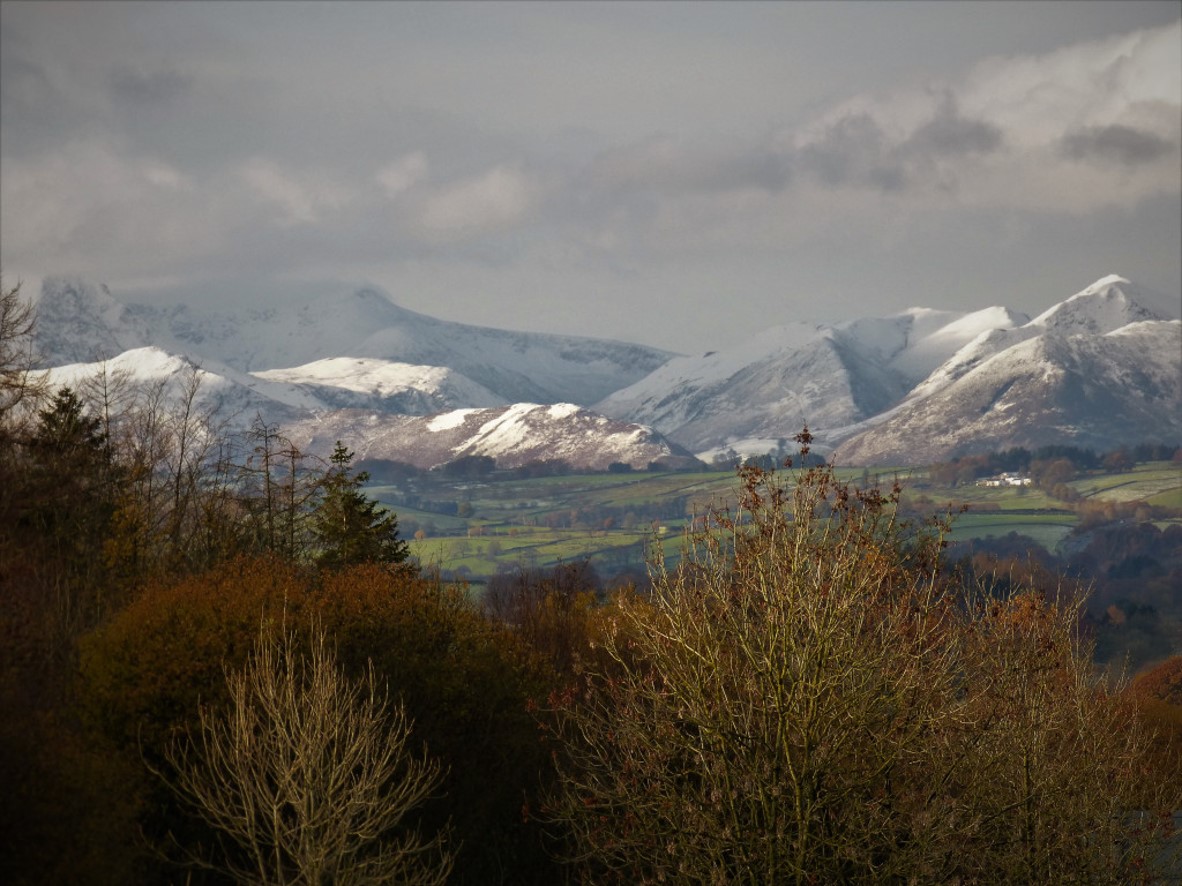
    I recently entered the Sue Vincent Classic Rodeo at the Carrot Ranch and was both surprised and delighted for my entry to be awarded first prize. You can read about other place getters here and all entries here.

    The competition asked for 99-words stories with a beginning, middle and end to be written in response to this photo of Sue’s.

    Here is my winning entry. I hope you enjoy it.

    Seeking Peace

    They stopped on a verge overlooking the valley.

    “It’s beautiful, Dad. And so big. You said it was small.”

    “Not small in size, son. Small in mind.”

    “What’s that mean?”

    “Folks round here didn’t want your mum and me getting married. They threatened to keep us apart. Cruel words were spoken. We left and never returned.”

    “Why’re we coming back?”

    “Your mother asked us — to make peace. Before it’s too late.”

    “Like it is for her?” His voice trembled.

    “Yeah.” He rubbed the boy’s head.

    “Will we?”

    “We’ll know soon enough.”

    He inched the car towards the village.

    ***

    Here is what the judges said about it.

    “This author nailed a response to a photo challenge with the opening line, taking the reader from photo to story with an economy of words. This is a smart strategy when you only have 99 words or 99 syllables. We step out of the image into the lives of a father and son. The dialog is clear, sharp, and tells the story of loss and hopeful redemption. The judges appreciated a place not small in size but small in mind. That single concept conveys much. A well-crafted story with emotion and purpose takes ownership of the photo.”

    What do you think? Do you agree?

    Thank you blog post

    Thank you for reading. I appreciate your comments. Please share your thoughts.