Live Love Laugh Learn … Create the possibilities

Category: Traditional schooling

  • Freeze!


    GDJ, Playful stick figures https://openclipart.org/detail/230070/playful-stick-figure-kids
    GDJ, Playful stick figures https://openclipart.org/detail/230070/playful-stick-figure-kids

    Freeze, or Musical statues as it is sometimes called, is a popular childhood game wherever groups of children gather.

    While not suggesting that playing the game has any great educational benefit, it can be used with good effect from time to time in early childhood classrooms.

    As with other games, it does provide opportunities for children to:

    • participate in a social situation
    • understand and follow game rules
    • accept game decisions, for example  being out
    • respond in positive ways to their own participation and the participation of others
    • have fun

    It also provides opportunities for activity and to release tension.

    In this post I describe how to play the basic game and a few variants and suggest some times suitable for its use.

    How to play Freeze

    The basic game

    Requirements:

    •  a manager, often a teacher or parent but can be a child
    • a group of participants, often children but anyone can play
    • enough space for the participants to move about without bumping into each other, and
    • a source of music that can be played and paused.

    How to play:

    • The participants find a spot within the defined space from which to start the game.
    • The manager plays a piece of music. Moving to the music, the participants move about the space without bumping into any other participants.
    • After a few seconds (varying duration between approximately 2-20 seconds) the manager pauses the music. As soon as the music is paused, the participants must “freeze”. Anyone seen moving is out of the game and sits to the side.
    • The game continues until only one participant remains.

    Variant #1 — Topic words

    No music is required.

    Before the game commences the manager, or the manager in consultation with the participants, decides on a set of specific statues to be used in the game. These statues are explained and demonstrated to participants.

    The manager turns away from the participants and counts loudly to ten, while participants form one of the statues. After ten the manager calls “freeze” and participants freeze in the statue they have chosen. The manager then calls out one of the statues and turns around to see who has made it. Those who did remain in the game. The others are out and sit to the side. (The reverse can also be played with the called statues going out and the others staying in. Participants would need to be informed of this before the game begins.)

    Suggestions:

    Monarch butterfly

    butterfly

    When learning about butterflies, participants could make these four statues:

    egg — curled up in a ball on the floor

    caterpillar — prone on the floor

    chrysalis — standing with knees bent out to the sides and one hand pointing up while resting on the head (attached to a leaf or twig)

    butterfly — fists on hips and elbows out to the side (for wings)

    shapes

    shapes 

    When learning about shapes, participants could make these four statues:

    circle — fingers meeting above head, arms forming a circle, feet and legs together

    square —arms out to side, elbows in line with shoulders, forearms and fingers facing upwards at right angles, feet and legs together

    triangle — legs wide apart, and hands on hips with elbows out to the side, making three triangles in all

    rectangle — lying on back on the floor with arms and legs extended straight upwards

    Suggestion: the possible statues could be written or illustrated on a dice to be rolled or on cards to be selected.

    Variant #2 — Groups

    Music is required.

    The manager calls a number from 2 – 5 then starts the music. While the music plays participants quickly form groups of that number. They must freeze in group formation when the music stops. Groups that do not freeze and participants who are not able to join or form a group are out of the game and sit to the side.

    Play the game until four participants remain. Call all participants back into the game to move to the music once again.
     

    GDJ, Stick figure kids https://openclipart.org/detail/221994/stick-figure-kids
    GDJ, Stick figure kids https://openclipart.org/detail/221994/stick-figure-kids

    Suggestions:

    This game can be a fun way of exploring groups using the number of children in a class. No one is out in this version.

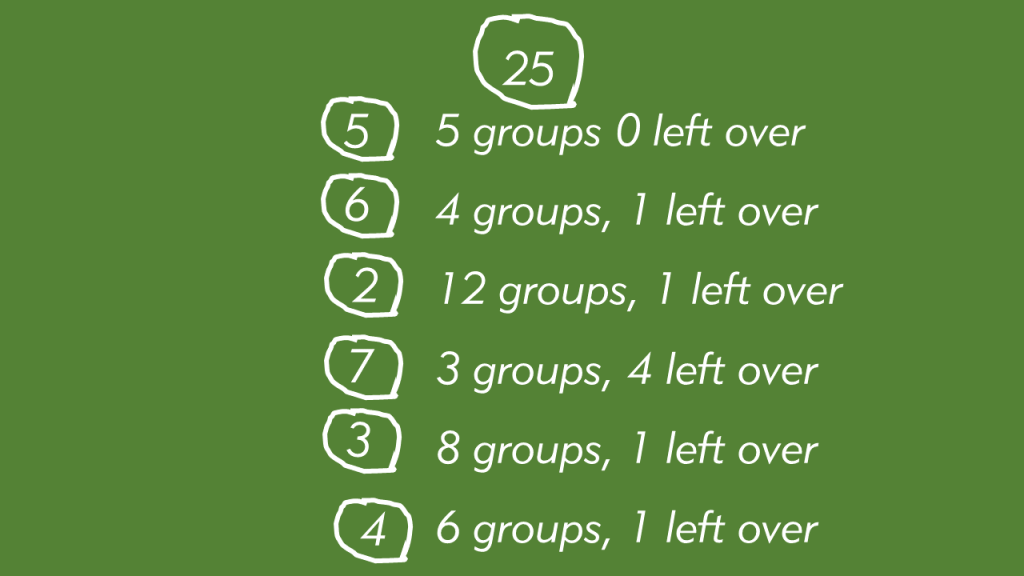
    Count the number of children in the class. Write the number on the board or chart. Play the music. Participants move to the music. When the music is paused call out a number. Children quickly form groups of that number and freeze. As a class count the number of groups, identify the number in each group, and how many “left over”.  Write the information on the board or chart. Repeat with all children participating for different numbers.
    grouping 25

    Variant #3 — Find a partner who

    Music is required.

    This activity will be noisier and require more time than other versions.

    In this version participants try to link up with someone with a similarity; for example the same colour eyes, the same number of people in the family, the same favourite colour, or who plays the same sport.

    Before the music starts tell the participants who they need to find. When the music stops, those who have not found a match sit to the side, as the others explain their matches.

    Everyone joins in again for each new round.

    Suggestion: Add a bit more fun with this one by having partners freeze  touching the same body parts together, for example, ankles, elbows, tops of head, or bottoms.


    Suitable times for playing Freeze

    • To transition from a noisy activity to a quiet activity
    • To provide an opportunity for movement during lengthy sessions of seated work
    • To dismiss children for recess (use Variant #1 rather than the basic game)
    • To ease a tense situation
    • To settle children and prepare them for the next activity
    • To have fun in a few ‘spare’ moments
    • Whenever you think it’s appropriate

    The stimulus for my thinking about the game Freeze this week is the flash fiction prompt set by Charli Mills at the Carrot Ranch to In 99 words (no more, no less) write a frozen story. Charli suggested that the freeze could be related to weather, emotion or time.

    My first thought was to the movie “Frozen” which my granddaughter enjoys, being completely captivated by Elsa and her beautiful blue dress. I thought she should prefer Anna who shares her name (though pronounced differently) and hair colour.

    My second thought was to the scientific explanation of cold as the removal of heat. It’s all relative. Instead I decided to go with a bit of fun. However, for my flash I did incorporate a little science thinking spurred by the question “Why do ice cubes crack when you drop them in drinks?”

    Frozen

    To an external observer she would have appeared immobile as if frozen in place and time. But her insides churned as the heat engulfed her body in a wave from toes to head. She thought her heart would erupt from her chest and wasn’t sure she could contain the contents of her noncompliant belly or from which end of her body they would spew. Others mouthed soundless words, their messages obliterated by the relentless pounding in her head. Just when she thought she’d crack, like ice exposed to sudden temperature change, she breathed deep, composing her tumultuous fear-fuelled mind.

    Thank you

    Thank you for reading. I appreciate your feedback. Please share your thoughts about any aspect of this post or flash fiction.

  • 20 Lifetime changes

    My big sister and me © Norah Colvin
    My big sister and me © Norah Colvin

    When Bec was little she would often say, “Tell me a story of when you were a little girl.” She would listen in wonder (in my dreams!) as I told her about life on a farm, holidays with relatives and funny things that happened in a large family.

    One day, with perfect comedic timing, she followed her request with the question, “What were the dinosaurs like?” We laughed at the time, and still do, but I think that question may have signalled the end of her interest in my childhood, for a time at least. Some aspects of my childhood would have been as unrecognisable to her as the world of the dinosaurs. It is even more so for the children of today.

     © Norah Colvin
    © Norah Colvin

    Learning about the past from parents and grandparents is one way of piquing young children’s interest in history. When I was in primary school we learned a little of history in what was then called Social Studies. Both ancient and modern history were available as discrete subject choices in high school but seemed to be primarily a list of dates, names and wars with little relevance to my teenage experience. Historical fiction brought otherwise remote and unfamiliar situations to life.

    I have touched a little on the topic of history in previous posts, I’m new here, Understanding family relationships and Whose story is it anyway? including mention of an early childhood unit Getting to know you, which is available in my Teachers Pay Teachers Store.

     © Norah Colvin
    © Norah Colvin

    It amuses me now when visiting museums, particularly small local historical museums as opposed to large national museums, to see artefacts from my childhood on display. Although I don’t necessarily consider myself “old”, definitely not passed my “use by” or even “best by” date, I do realise that to younger ones I am probably a relic from the past, holding as much interest for them as the objects on display. (I am not too old to remember what it was like to be young.)

    This week at the Carrot Ranch Charli Mills declares herself a history buff who digs “hanging out in cemeteries where history reads in the names and dates carved in stone.” I confess that I have rarely visited a cemetery other than to farewell a loved one and haven’t taken to reading gravestones to feed an interest in history.

    The teaching of history in my early childhood classrooms involved helping children to discover and record their own personal histories and the more recent histories of their families and local environment. Celebration or commemoration of historical events such as Australia Day, ANZAC Day or Remembrance Day required some elaboration, without too much detail, of their significance.

    Many of the experiences of children growing up now in the early part of the 21st Century are vastly different from those I experienced growing up in the mid-20th Century. Some of the differences are subtle and others more significant.

    Since I grew up in the 20th Century, as part of my historical record I decided to list 20 (random) changes that have occurred during my lifetime:

    1. I listened to music on vinyl records on turntables with manual arms. The records needed to be turned over after each side was played. There were no CDs, iPods, Youtube or streaming
    2. I spent hours in the sun, getting burnt to a crisp, without the protection of sunscreen.
    3. Polio was still a major threat and I knew children who suffered it. Now, thanks to immunisation, it is almost eradicated worldwide.
    4. We could purchase fireworks and set them off in our backyards and parks. I have no memory of huge firework displays such as are now part of most community celebrations.
    5. Shop opening hours were very different with shops closed half day Saturday and all day Sunday. No shops opened on Public Holidays and planning was required to ensure there was enough food in the cupboard to last the four day Easter Weekend.
    6. There were no huge supermarkets selling everything, mainly smaller grocery stores and some “corner” stores that sold a few “essential” items. Air conditioning was not common and chocolate was not readily available as it melted in the heat.
    7. There were no theme parks or water parks; just a few amusement rides such as merry-go-rounds and dodgem cars at local and state shows and fairs, and council swimming pools. Very few people had pools in their backyards.
    8. There were no computers, tablets or smart phones. When I started school I wrote on a slate, a tablet of a different kind.
    9. Fish and chips was the most popular and one of the few take-a-ways. There were no McDonald’s, pizza stores and few Chinese restaurants. There were no eateries in large shopping malls. In fact, there were no large shopping malls!
    10. We had an outside dunny with a pan that was collected and replaced weekly.
    11. Telephones were not in every home. They were attached to the wall and had a circular dial. Calls were manually connected by operators at telephone exchanges.
    12. Televisions first became available in Australia when I was a young child but my family did not own one until after I left home. I used to visit an aunt, who lived close by, to watch on her set after school some days.
    13. Cars ran on leaded petrol. I remember my Dad using a crank handle to start the car. The seats were hard and uncomfortable and there was no air conditioning (unless you count winding down the window).
    14. We would go to beach or the park to swim or play all day, without adult supervision. The only requirement was to be home before dark.
    15. Photographs were taken with a box camera and a roll of film which needed to be sent away to be developed and took weeks to be returned. It could take months to fill the roll and often the occasions were well in the past before the photos were received. It was expensive and multiple shots of the same image were not encouraged.
    16. There was little traffic and cars were slow so children often played in the street, which were sometimes still dirt and mostly without kerbs. It seemed to take forever to get from one place to another.
    17. To keep food cool we had ice boxes for which an ice man would deliver a large block ice daily.
    18. We used imperial standards of measurement including pounds and ounces, inches and feet; and shopped with pounds, shillings and pence before converting to decimal currency in 1966 and other units soon after.
    19. Smacking by parents and corporal punishment in school was the main form of discipline. If children were in trouble at school (I never was!J) then they were usually in more trouble at home.
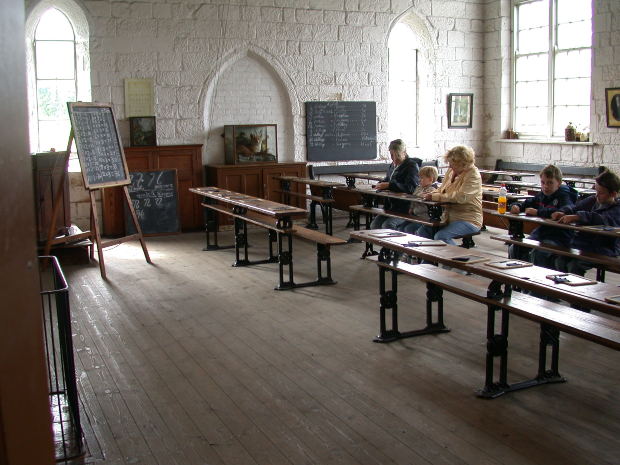
    20. In school we sat in rows of desks nailed to the floor. We listened to the teacher and learned by rote lists of facts which were often chanted repetitively. There was definitely no talking in school and no group work.

    old school room

    I add one wish for another change I’d like to see in my lifetime in the 21st Century:

    For friendship, understanding, tolerance, empathy and peace to rule a sustainable and equitable world!

    I don’t ask for much, do I?

    Now back to the cemetery and Charli’s flash fiction challenge to In 99 words (no more, no less) write a story about a final resting place. I have taken Marnie to the place where her parents rest as she discovers more about them and their history than she had before realised.

    Graveside

    She wasn’t sure why she was here. Miss R., Annette, had suggested she come. So she did. What struck her most, as she read the grave markers, was their ages. She’d never thought of them as young but their life spans were short; both a mere 49 years, going within a year of each other. She worked it out. They were younger than she was now when she’d left home. Who’d have thought? She felt a strange sadness, a familiar hollowness, not for the loss of their lives but for the absence of love, love which had never been.

    Thank you

    Thank you for reading. I appreciate your feedback. Please share your thoughts about any aspect of this post or flash fiction.


  • Curiosity, dead chooks, science and the S.T.E.M. push

    Curiosity, questioning and science are recurring themes on my blog. How could a post entitled “Curiosity, dead chooks, science and the  S.T.E.M. push” not appeal to me? While I don’t think I’ve written about dead chooks, yet, when I was six I was the best chicken catcher in the family and I definitely saw a few chooks running around with their heads chopped off!
    In this post Sheryl Gwyther talks about the awakening of her scientific questioning at age four when seeing a similar a spectacle. The transcript of a talk delivered to other authors “Children are born scientists … It’s called curiosity” (my words exactly!) is included in the post. Sheryl urges authors to include science in their writing for children and suggests three rules for doing so:
    Never be didactic
    Entertain
    Create characters that children can connect with
    While she doesn’t say it in so many words, I think the message of keeping the science accurate is implied. (I have questioned the inaccuracy in The Very Hungry Caterpillar in previous posts.)
    Sheryl’s closing paragraphs motivate and inspire writers. She says,
    “We have the opportunity, the passion and hopefully, the commitment to reach out to young Australian children through stories about the wonder of science, and the responsibility for their future custody of this planet.
    Great stories, cleverly laced with scientific understanding not didactic waffle.
    Great stories to make them feel and think, and question.
    Great stories – for the sake of their future on this planet.”

    Some of the authors from my celebration of Australian picture book series are doing just that:
    Kim Michelle Toft
    Narelle Oliver
    Jeannie Baker
    Please read Sheryl’s post in its entirety. She offers much good advice and inspiration. You can find out more about Sheryl by following these links:
    Sheryl Gwyther SCBWI Assistant Regional Advisor Queensland Public Profile
    Author webpage
    Author blog
    Twitter

    Thank you

    Thank you for reading. I appreciate your feedback. Please share your thoughts.

  • The right place at the right time

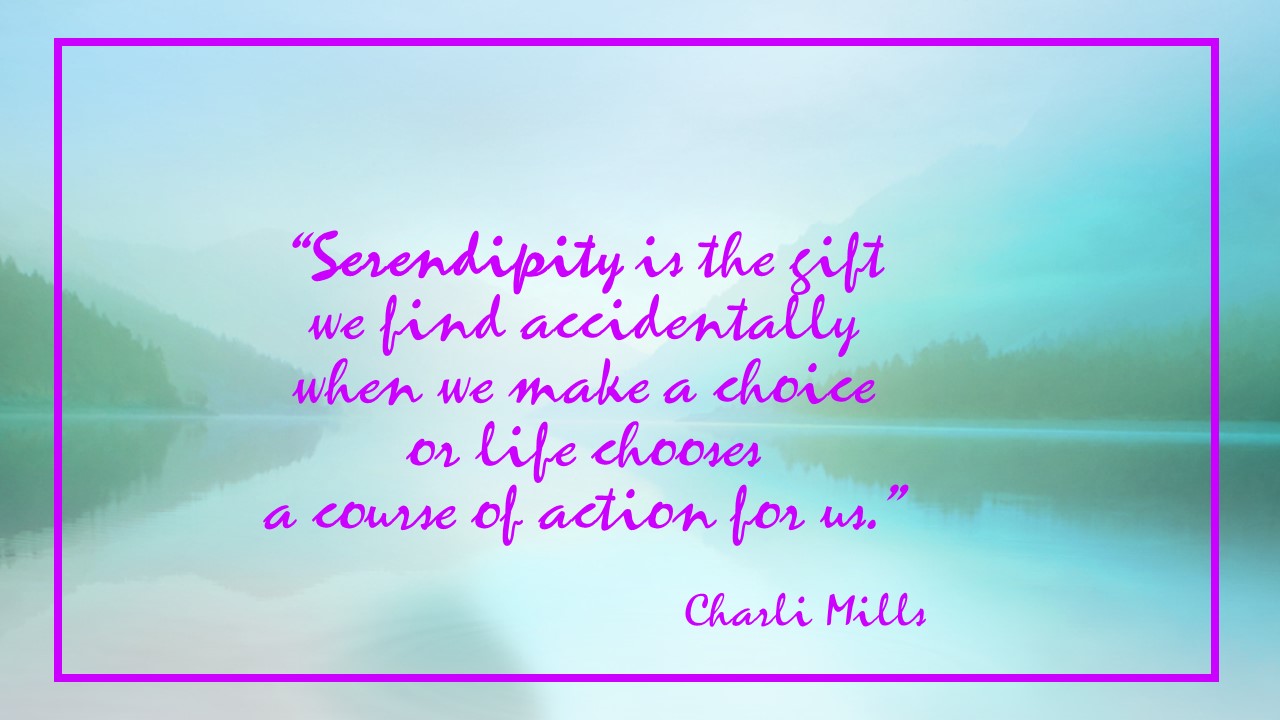
    Charli Mills Serendipity

    This week at the Carrot Ranch Charli Mills is talking about serendipity and describes it this way:

    “Serendipity is the gift we find accidentally when we make a choice or life chooses a course of action for us.”

    I often think of serendipity as being in the right place at the right time. There are many occasions in my life where that has occurred, and probably millions more when I’ve missed by a millisecond, but many of those I’ll never know.

    www.morguefile.com
    http://www.morguefile.com

    Our lives have been improved by many discoveries made through serendipity. This article on NOVA lists seven Accidental Discoveries  in medical science that have changed health outcomes people around the world:

    • Quinine
    • Smallpox vaccination
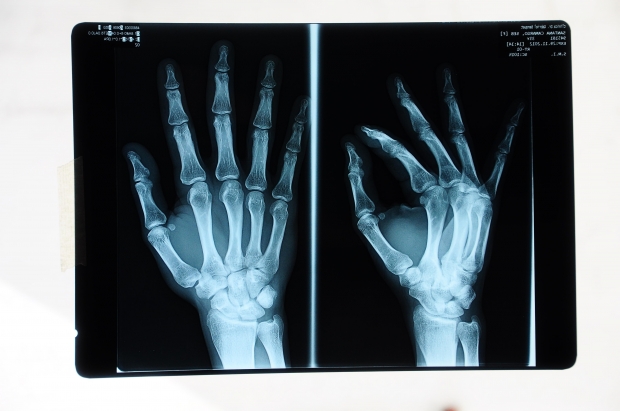
    • X-rays
    • Allergy
    • Insulin
    • Pap Smear
    • Penicillin

    Joseph Henry - seeds of discovery

    Lexi Krock, author of the article reminds us that, though some elements of serendipity, of chance, may have been involved in the discoveries, there was also a great degree of hard work, preparedness, creative thinking and an openness to possibilities. In fact Krock says that having an open mind is the most important ingredient. She quotes the words American physicist Joseph Henry:

     “The seeds of great discoveries are constantly floating around us, but they only take root in minds well prepared to receive them.”

    I came to that article through The story of serendipity on Understanding Science, which also talks about lucky coincidences, such as the story of Newton and the apple. This article states there is more than being in the right place at the right time to make a serendipitous discovery, including:

    • Background knowledge
    • An inquisitive mind
    • Creative thinking
    • The right tools, and
    • Good timing
    www.morguefile.com
    http://www.morguefile.com

    Another who attributes success in part, to serendipity, to being in the right place at the right time, is Malcolm Gladwell. Thanks to a serendipitous recommendation by Rowena, who blogs at Beyond the Flow, I have just finished listening to Gladwell read his book “The Outliers, The Story of Success”.

    Gladwell argues that there is more to success than just intelligence and hard work. Yes both are important: intelligence to a certain level and hard work to a greater degree. Through “The Outliers” Gladwell popularised the idea of 10 thousand being the “magic” number of hours to practice for success to occur, citing sporting heroes, The Beatles and Bill Gates, amongst others..

    However there is much dispute to this “rule”; and I must admit that, although I thoroughly enjoyed listening to and thinking about this book, it raised as many questions as it provided “answers” and I found myself wondering how much manipulation had gone into the figures to make them match his ideas, rather than the other way round. I am not saying there was any manipulation, I just wondered.

    www.openclipart.com
    http://www.openclipart.com

    However, one point he was making, that I think has value and fits with the theme this post, is that one’s circumstances; one’s family, environment and time, including birth year and month, play an enormous role in one’s success. These are things over which we have no control.

    According to Gladwell’s discussion of timing, I am correct in describing myself as “born too soon” in my Twitter bio. I was born just a few, but too many, years before the twelve month period that saw the births of Bill Joy, Steve Jobs and Bill Gates. I didn’t have the opportunities they had either.  Gladwell explains the importance of their timing, environment and opportunities in his book.

    In this Q and A Malcolm explains what an outlier is, what he thinks of as success, and how he thinks we should think of success. As well as the coincidence of Joy, Jobs and Gates, Gladwell says that “a surprising number of New York’s most powerful and successful corporate lawyers have almost the exact same biography: “they are Jewish men, born in the Bronx or Brooklyn in the mid-1930′s to immigrant parents who worked in the garment industry. “ He also says that “a hugely disproportionate number of professional hockey and soccer players are born in January, February and March.” Coincidence? He explains why.

    rg 1024, gift https://openclipart.org/detail/31159/gift
    rg 1024, gift https://openclipart.org/detail/31159/gift

    In her post Charli Mills states that

    “Serendipity holds no guarantees, but we can take the gifts it offers.”

    The gifts were there for the hockey and soccer players born in the first quarter of the year, but stacked against anyone born in the final months of the year. Likewise, serendipity held false promises for me when I was working towards establishing an alternative school.  Meeting the expectations of the Education Department proved no barrier. Meeting town planning requirements was much more elusive.

    The first property with any real potential we investigated was in Skew Street. Not surprisingly the odds were skewed against us and we couldn’t proceed there.

    Shortly after we located a much better property: more central, with ample indoor and outdoor space and a large playground. The arrangements seemed ideal, and the street names were much more promising. It was on the corner of Water and Love Street. Surely that had to bode better for us than Skew Street. Serendipity.

    Unfortunately, though it was definitely the right place, the timing was wrong. At the final moment, when leases were to be signed, a member of the organisation, who had been absent from previous meetings and discussions, turned up, objected and put an end to our plans.

    While some of us did continue to search for another location, it was like trying to find a needle in a haystack; there were few that met town planning requirements, and even fewer that met ours. Parents who had expected their children to start with us decided they could wait no longer and made other arrangements for their children’s education. The last minute loss of the ideal property rocked us to the core. With much heartbreak we finally admitted defeat and disbanded. Having read Gladwell’s book I am now willing to accept that it was not because I didn’t work hard enough but because there were other factors working against us.

    I decided that, in response to Charli’s flash fiction challenge to In 99 words (no more, no less) write a story that reveals or explores a moment of serendipity, this time I would provide Marnie with a positive experience, the beginning of a new phase in her life; serendipity working it’s magic.

    doors

    The wrong place at the right time

    Marnie was puzzled. The card definitely said 225; but there wasn’t any 225. There was 223, and 227, but no 225. She peered at the crack between the apartments as if willing 225 to materialise. Exhausted and confused, unsure of what to do next, she slumped on the step.

    “Can I help you?”

    The question interrupted her muddled thoughts. Seeing kindness in the eyes, Marnie explained her predicament.

    The woman read the card.

    “Street, not Avenue,” she said, pointing to the sign. “Are you Marnie? Lucky I got the wrong bus today. I’m Josephine. Come on. It’s not far.”

    Thank you

    Thank you for reading. I appreciate your feedback. Please share your thoughts about any aspect of this post or flash fiction.


  • Better than a trail of breadcrumbs

    ©Glenn Althor www.http://obscurepieces.com/ Used with permission.
    ©Glenn Althor  Used with permission.

    When I think of children’s stories about being lost, Hansel and Gretel is one of the first that comes to mind. Whether or not this gruesome story is suitable for children, I’ll leave for another discussion. The children were correct in thinking it was important to mark their way into the forest in order to find their way out. They were incorrect in their choice of markers.

    Encouraging children to identify features of their environment has benefits beyond encouraging them to question and wonder. It is important for children to learn, from a young age, to identify markers on routes around the neighbourhood, shopping mall and school, as well as strategies to implement if lost or separated. Taking note of seasonal and other changes, both temporary and permanent, in addition to permanent features helps to build knowledge of one’s environment. This knowledge can be developing long before the need to find one’s way alone arises.

    http://www.morguefile.com/
    http://www.morguefile.com/

    One day there will be a need to navigate independently, whether it be to walk to school, go to the shop, visit a friend, catch a bus or drive a car. All of these will be far less daunting for the child, and much less worrisome for the parents, if the ability to find one’s way around has already been demonstrated through discussions or deciding which route will be taken for a journey.

    Often the first time children are required to navigate independently is when commencing school. They may need to find their way to the classroom in the morning, or to the gate in the afternoon. They will have to find the way to the playground, the office, the library, and the toilets and back to the classroom. Just as parents show children around the neighbourhood by pointing out landmarks, it is important for teachers to orient children in the school grounds and ensure they know how to find their way around confidently.

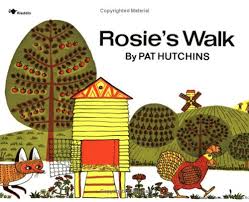
    A delightful book that can be used by both teachers and parents to discuss the importance of knowing one’s way around and of staying safe is the beautiful Pat Hutchins’ book Rosie’s Walk which tells the story of a hen who goes for a walk around the farmyard and gets back home safely in time for dinner. The story also introduces many positional words.

    Rosie's walk

    Understanding of positional terms and describing the location of neighbourhood and school landmarks in relation to each other  helps to develop spatial awareness along with language; for example:

    • past the shop
    • across the bridge
    • over the road
    • through the park
    • in the middle
    • beside the lake
    • along the road
    • next to the bakery
    • around the corner
    • behind the fence
    • as well as left and right.

    Discussing the placement of landmarks on a mud map of the neighbourhood or school and discussing different paths that could be taken encourages divergent thinking about ways of getting from one place to another. Sometimes it helps children to think of these maps as being from a birds’eye view, or from a plane. Other maps, for example Google Maps and street directories are also useful and children can learn to point out or mark places they have visited.

    mud map

    There are many opportunities, whether in the car or on foot, to take note of landmarks; for example:

    • house numbers,
    • types of fences
    • the number of streets to cross
    • large trees
    • the shopping centre entry
    • carpark space row and number
    • bridges crossed

    While the flash fiction challenge set by Charli Mills at the Carrot Ranch this week was to In 99 words (no more, no less) write a story about someone or something that’s lost, I have taken the theme of lost and used it to provide strategies that may help children avoid becoming lost. My flash is a rhyme for young children, and an example of the types of things that children can be encouraged to observe in their neighbourhood.

    To Grandma’s House

    Bub’s buckled in, away we go.

    Mum’s going to work, we can’t be slow.

    Down the street past the green painted door.

    Past the house with big number four.

    Stop at the curb and look each way.

    Off to Grandma’s, hip-hip-hooray!

    Quiet past here so the dogs don’t bark.

    Left at the corner and cut through the park.

    Up the hill, past the posting box.

    Open the gate, give three big knocks.

    Hugs for Grandma waiting for us.

    Wave to Mum as she boards the bus.

    Go inside for milk and toast.

    Days with Grandma we like the most.

    Thank you

    Thank you for reading. I appreciate your feedback. Please share your thoughts about any aspect of this post or flash fiction.


  • Noticing and Wondering: Kicking off and supporting enquiry

    I have written previous posts about the importance of nurturing the ability to wonder in young children and in ourselves, for example here, here and here. It is always a delight, then, to come across a post that expresses ideas similar to, but extending, my own.
    This post by Aaron Eden on Edunautics, Exploring a World of Learning questions whether there could be any skills more important than noticing and wondering. He says that in school students are generally told to think and wonder about what someone else (the teacher, the curriculum writer, the policy maker) thinks is important.
    Eden argues for the importance of learning to learn; of learning to identify what is important and of understanding how to learn it. He promotes developing an environment of questioning and suggests ways of extending students’ learning through participation in genuine inquiry based upon their own wondering and questioning. His suggestions help make the process more explicit, and therefore possible, for teachers to implement.

    Thank you
    Thank you for reading. I appreciate your feedback. Please share your thoughts.

  • I’m new here

    Australia is a land of immigrants. The first Australians arrived, it seems, about 65 000 to 40 000 years ago, after the second migration out of Africa. The second group arrived only little more than 200 years ago. Some think of Australia as a young country with a history beginning with arrival of Europeans in 1788. But Australia is not only the oldest continent, it is also home to the oldest living culture and was inhabited long before many other parts of the world. It is a tragedy that little recognition and respect is given to this culture and its peoples.

    Disharmony and conflict, on a scale from the personal to global, often occurs because of perceived differences: “He’s not like me. She doesn’t think like me. They don’t believe what we believe. I am right and you are wrong.” The realisation that what we share in common far outweighs the differences, and the appreciation of those similarities and differences, would go a long way to soothing that discord.

    The National Geographic Genographic Project aims to find out more of our collective human history; where we originated and how we came to populate the world. Projects such as this may help to strengthen the focus on what we share rather than ways in which we differ.

    Young children are generally accepting of differences they may notice in each other and are usually more concerned about having someone to play with than about visible differences.  Fear of and discomfort with differences is often learned.

    https://openclipart.org/image/800px/svg_to_png/192642/Children_holding_hands.png
    https://openclipart.org/image/800px/svg_to_png/192642/Children_holding_hands.png

    Mostly my classrooms were a microcosm reflecting the rich diversity of cultural heritages represented in Australia. Learning about those heritages from the children and their families, as well as through literature and other media, helped us all develop an appreciation for our differences as well as our commonalities.

    The celebrations of International Days when children would wear traditional clothing, bring items from home to display and discuss, contribute cultural food to a shared lunch, teach how to play traditional games or share traditional stories were always appreciated by the children and families; including those who considered themselves to have a cultural background and those who didn’t.


    http://pixabay.com/en/diversity-ethnic-global-literature-154704/
    http://pixabay.com/en/diversity-ethnic-global-literature-154704/

    Units of work, such as my Getting to know you — Early childhood history unit, learning to greet each other in the languages represented in the class, reading traditional tales and discovering each other’s favourites of anything also contribute to developing understanding and empathy.

    Whoever you are.

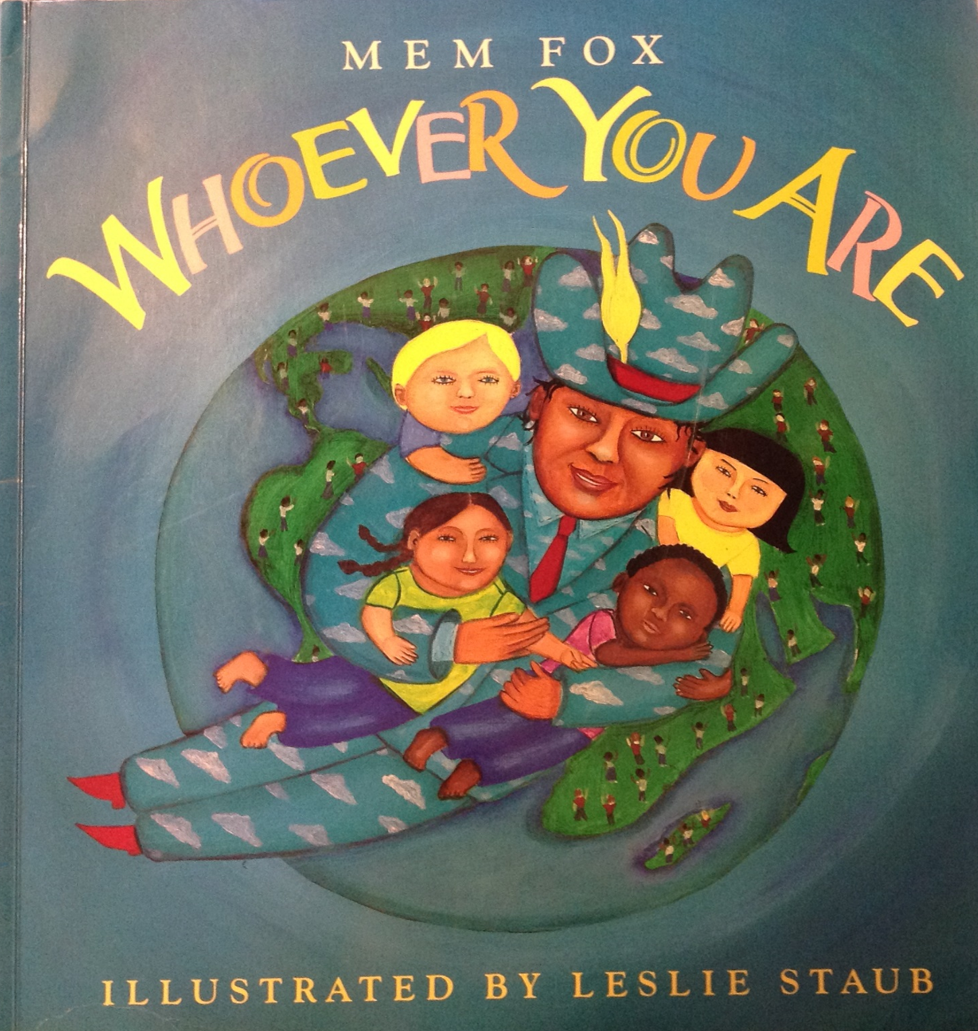
    Whoever You Are by Mem Fox is a wonderful picture book which can be used to discuss similar themes. It explains in a simple and beautiful way that although children around the world may live in different houses, wear different clothes or eat different foods, for example ‘inside, their hearts are just like yours.’ Mem Fox explains the story on her website.

    I have drawn upon the ideas discussed above for my flash fiction response to this week’s challenge by Charli Mills at the Carrot Ranch to In 99 words (no more, no less) write a story that shows the interaction of a migrant culture on the place of migration.

    Playground connections

    The adults dotted the perimeter, holding tight to their own; bound by the security of sameness reflected in their own eyes, excluded by fear felt for differences perceived in others: different dress and hair, unintelligible words and unfamiliar scents.

    In the centre the children romped together, united in the secret language of smiles and laughter, funny looks and gentle patting hands; no words needed.

    The children smiled, waving promises of future plays, as one by one the adults called them home, delighting in their children’s easy ways, wishing for their own nonprejudicial days. A nod. A smile. A beginning.

    Recently I found this quote on Yvonne Spence’s post in 1000 Voices for Compassion. I think it sums up the intentions of this post  beautifully.

    we are together


    Thank you

    Thank you for reading. I appreciate your feedback. Please share your thoughts about any aspect of this post or flash fiction.


  • What is failure?

    rough-writers-web-comp

    Regular readers of my blog know that for the last eighteen months I have been participating in the flash fiction challenges set by Charli Mills at the Carrot Ranch. Each week Charli posts a prompt and invites readers to submit a response in exactly 99 words. I have participated since the first prompt and have missed only a few, maybe one or two.

    I enjoy the way the prompt stretches both my thinking and my writing. I appreciate the opportunity to engage in fiction as a diversion from the mainly expository writing (and reading) I do; and to engage in a supportive and encouraging group of Rough Writers.

    Since education is the focus of my blog I have given myself the added challenge of targeting an aspect of education in my response to Charli’s prompt. Mostly I have succeeded, though sometimes the posts may be a bit convoluted and the links rather tenuous, but nevertheless, I have been mostly pleased with my ability to find a link.

    This time I didn’t think I was going to do it. While I grappled for a suitable link, none was forthcoming and I thought it was going to be an F, a no-show, this time.

    F

    You see, this week Charli is talking about the destruction caused by forest fires and other catastrophic weather events. Though Australia suffers its share of natural disasters, I am fortunate that I have never been more than inconvenienced by them. I haven’t suffered the loss of family, property and livelihood that others have; nor have I worked in a school where loss was experienced on a large scale. You could say I have lived a sheltered life, and I am grateful for it.

    So without a personal experience to share, my next thoughts were to the curriculum. But I am an early childhood teacher, and young children don’t learn about catastrophic events unless they have a personal experience of them. The Australian Curriculum introduces learning about natural disasters in year six.

    Another dead end. The F was looming. Would it engulf me?

    warszawianka, tango face crying https://openclipart.org/detail/30295/tango-face-crying
    warszawianka, tango face crying https://openclipart.org/detail/30295/tango-face-crying

    Then inspiration! I remembered watching a video in which the possibility of an F being the new A was mooted.  I’m sure you’ve all heard about 60 being the new 40, for example; generally put forward by the 60s rather than the 40s I conjecture. But this was a new twist.

    The article on Mind/Shift How we will learn entitled When Educators Make Space For Play and Passion, Students Develop Purpose introduced me to a Harvard education specialist named Tony Wagner who, like Ken Robinson, advocates for a reinvention of the education system.

    In the video Wagner says that “What the world cares about is not what you know, but what you can do with what you know.” Content is now available through a quick internet search. We don’t need to have instant recall of numerous facts.

    Instead of content, Wagner lists a set of core competencies he considers important. He says that to be lifelong learners and active and informed citizens, the following abilities are required:

    1. To ask questions through critical thinking and problem solving
    2. To work collaboratively
    3. To be flexible and adaptable
    4. To show initiative and be entrepreneurial
    5. To communicate effectively in both oral and written modalities
    6. To access and analyse information
    7. To be curious and imaginative

    I agree that each of these attributes is important. I think I have mentioned many of them in previous posts.

    Wagner goes on to say that what is needed is innovation: the ability to generate new and better ideas that can be used to solve the problems facing us today. He questions whether America’s reputation as a leader in innovation is as a result of or despite the education system. He then asks the audience to identify what the following four people have in common.

    Bill Gates (Microsoft)

    Edwin Land (Polaroid camera)

    Mark Zuckerberg (Facebook)

    Bonnie Raitt (folk singer)

    Did you, like the audience, think them to be dropouts? Wagner identified them as not just dropouts; they were Harvard College dropouts! Steve Jobs (Apple) and Michael Dell (Dell computers) were dropouts.

    This fact about innovative dropouts inspired Wagner to investigate conditions that encourage the development of innovators. He interviewed many young innovators, asking if there had been an influential teacher or mentor in their lives. While not many could name one, those identified were outliers, engaging students in teamwork and interdisciplinary work involving problem solving and risk taking.

    Wagner also interviewed people from innovative organisations such as IDEO, whose motto he quoted: “Fail early and fail often.” (“That’s because there is no innovation without trial and error.”) It was from a think tank at Stanford that the idea that an “F is the new A” came.

    F is the new A

    There are iterations, not failure, Wagner says, and he questions the way parents and teachers try to protect children from making mistakes saying that real self-confidence was only to be gained from learning that you could recover and learn from mistakes.

    Tony Wagner - iterations

    So perhaps in thinking about failure, I haven’t really failed. I’m learning. It is only to be hoped that the failures in fire management that Charli talks about in her post lead to improved management practices in the future.

    For my response to Charli’s prompt, to  in 99 words (no more, no less) write a story about the need for help in an extreme weather event, I have chosen a weaker BOTS (based on a true story) from my childhood. The link may be tenuous but hopefully not entirely non-existent. I hope you enjoy it.

    Storm

    A big storm was coming. Two older ones were put in charge of two younger ones. They sat at the fence, watching. Soon other neighbourhood kids gathered, sharing storm stories, waiting.

    Green clouds swirled as dark clouds played leapfrog races above. The children watched the storm rush closer; mesmerised by its beauty, mindful of its power.

    Soon the winds whipped up, chasing the other kids home. The older two called to the younger, but they were nowhere to be seen. Mortified they hurried inside to alert their parents.

    What relief. They were already in, telling of the storm’s approach.

    Thank you

    Thank you for reading. I appreciate your feedback. Please share your thoughts about any aspect of this post or flash fiction.

  • The Power of Reading

    The love of reading is gift

    A constant thread running through posts on my blog is the importance of reading to and with young children every day. I have often said that passing on a love of reading is one of the greatest gifts a parent can give a child. The ability to read for information and for enjoyment is empowering. It allows one to take charge of one’s learning and one’s recreational pursuits.

    While my focus is specifically on early childhood, I am interested in education at all levels. I was pleased therefore to recently see a post about the importance of reading for older students. In his post The Power of Reading, Trevor Pilgrim discusses the “correlation between extensive critical reading and higher academic achievement” through the acquisition of knowledge and understanding of abstract concepts. He makes a link between reading of fiction and the development of emotional intelligence. He goes on to list the important role of reading in the academic lives of students.
    If you ever questioned why it is important for children to read, here are some of the answers:

    Trevor Pilgrim's avatareduflow

    He that loves reading has everything within his reach.”  – William Godwin.

    If anyone were to ask me what is the most effective learning tool available to students, my answer would be frequent reading.  I can speak of this from personal and professional experience.  Students can read traditional books or they can read online.  In fact, online reading is growing by leaps and bounds these days.

    Educational experts agree that there is a strong correlation between extensive critical reading and higher academic achievement.  Eclectic and targeted reading both lead to significant acquisition of knowledge.  Habitual readers develop their reading comprehension skills and derive greater meaning from the text.  They get better at doing this with practice and at the same time they develop their higher order thinking and learning skills along with their understanding of abstract concepts.  All of this helps to create a much better student in…

    View original post 369 more words

  • The expectation of labels


    1 (5)

    In some circles labels can be used as an attempt to define who you are, either to yourself or to others; for example the car you drive, the clothes you wear, the foods you eat, the technology you use, even the books you read. The use of labels can lead to stereotyping and expectations based upon particular characteristics while other, and equally salient, qualities specific to the individual are ignored.

    Applying labels to children can serve similar purposes: to define and explain particular behaviours or characteristics. Labels can range from an informal “naughty” through to medical diagnoses such as ADHD (Attention Deficit Hyperactivity Disorder) or ODD (Oppositional Defiant Disorder).

    Whether the result of an informal observation or a professional assessment, labels can have a profound effect upon a child and family members. The label sets up expectations that may limit the way the child is viewed; so that only those characteristics specific to the label are noticed and responded to. The child is viewed as being “the label” rather than an individual who displays those particular behaviours or characteristics, at this moment.

    People tend to see what they want to see and ignore evidence that doesn’t support their thinking. So if a child is labelled disruptive, it is the disruptive behaviour which is noticed and acted upon. Similar behaviour in a child not bearing the label may be overlooked or excused. While the focus is on one, usually negative or limiting, behaviour other positive characteristics and strengths may be ignored.

    pygmalion effect

    Unfortunately, once a label is applied it is often difficult to remove and it may be used as an excuse for a child’s failure to learn or progress; after all the “fault” is considered to be with the child, not with any methods used or not used. Sadly too, labels can be misapplied or not fully understood. This may accentuate differences that are non-existent or less serious than the label implies.

    However not all effects are negative. There are many positive effects of labelling a child’s condition or behaviour; including:

    • increased opportunities for the child, family and teachers to receive support through funding of programs, assistance of trained personnel and professional development
    • enhanced understanding through discussions using a common language with specific meanings and applications
    • increased awareness in the community with further opportunities for advocacy as well as greater acceptance and tolerance
    • the development of programs aimed specifically to support individuals with the condition.
    rg 1024, gift https://openclipart.org/detail/31159/gift
    rg 1024, gift https://openclipart.org/detail/31159/gift

    But are all labels negative? What about giftedness?

    Previously on this blog there has been some discussion about praise and the effects of different types of praise. The discussions were initiated in response to The Examined Life by Stephen Grosz and can be found here and here. Grosz suggested that praising a child could cause a loss of competence. Why would you continue to try if you were already “the best”?

    Claudia M. Mueller and Carol S. Dweck support the notion that Praise for Intelligence Can Undermine Children’s Motivation and Performance. They suggest that labels such as “smart”, “clever” and “intelligent” can be just as damaging as those with deficit connotations.

    Dweck explains her ideas more fully in Mindset: The New Psychology of Success, my current audiobook “read”. I have previously mentioned Dweck’s theory of ‘yethere and here.

    In the book Dweck talks about how praise creates mindset. If one is praised for being smart or clever, then one develops a fixed mindset: “I am smart. I can achieve because I am smart.” If effort is required then one is not smart. Those with a fixed mindset avoid challenges that might jeopardise the view of themselves as smart.

    On the other hand, praise for effort encourages a ‘yet’ or growth mindset: if I try it again, try harder, try it a different way, then I will do better. “I can learn”. There is no risk of becoming ‘not clever’. A growth mindset recognises the importance of effort, persistence and motivation.

    fixed - growth mindset

    Dweck says “don’t praise the genius – praise the process”.

    Giftedness” is a label that was once applied after achieving a high result on an intelligence test, and was just as sticky as any other: there for life.  Giftedness was considered stable and unchangeable. It is obvious that many “gifted” students could fall into the fixed mindset trap. Thanks to Dweck’s work on mindset, attitudes to IQ scores and the concept of “giftedness” are now changing.

    Teachers with a growth mindset appreciate the incremental

    Students can be encouraged to develop a growth mindset by learning about how the brain works. When they understand that labels aren’t fixed and that learning can be improved, they will become more confident and may find more enjoyment in some of the challenges that school offers. Encouraging students to recognise how they view themselves as learners and to substitute “growth” for “fixed” thinking will have a remarkable effect upon their confidence and success.

    Encouraging this growth mindset may be one way we can look out for each other, one way of “getting your back”.

    To write a story (in 99 words, no more no less) about a character who is called to have the back of another was the challenge set by Charli Mills at the Carrot Ranch this week. In her post Charli is talking about labels of another kind, labels that can be just as damaging or just as useful. She talks about having another’s back, being there to offer support when needed.  A parent, a teacher, a friend can be there at any time to offer support for a learner on their path to discovery. My response captures one such moment.

    Growth: a mindset

    Marnie propped her head on one hand while the pencil in the other faintly scratched the paper. She hoped it wasn’t too obvious that she didn’t get it. But she didn’t get it. She didn’t get last year, or the year before. Why should she get it now? What was the point? Her brain just didn’t work that way. She was dumb. They had always said she was dumb. No point in trying.

    Then the teacher was there, encouraging, supporting, accepting. “Let me help you,” she said. “You can do this. Let’s break it down into steps. First …”

    Thank you

    Thank you for reading. I appreciate your feedback. Please share your thoughts about any aspect of this post or flash fiction.