My previous post How much of a meliorist are you? attracted many comments and much lively discussion, including comparisons of seemingly pessimistic or optimistic views of the future and the validity of each.
This discussion surprised me as my intention in writing the post was not to delve into the damage that we humans have wreaked upon the world, but simply to express my belief that we humans, should we desire to do so, have the power to improve the world. We may not be able to change everything we would like to see changed, but we can make a start within our own circle of influence.
Or, in the words of Michael Jackson, one can “Look in the mirror and make a change!”
My chosen avenue for making a difference is education; through maintaining my own interest in learning, through attempts to keep alive a love of learning and a curiosity about our world and others, and through improving learning opportunities for others throughout their lives beginning at birth (or earlier!).
The contribution each of us makes is unique and reflects our own values and life choices. I am grateful to others who help me grow in my understanding of what motivates and drives us, what excites our imaginations and stimulates our curiosity, and what propels us towards choices for improving our individual and combined futures.
Among those who encourage my learning and stretch my thinking are you, my wonderful readers, who selflessly contribute thoughts and ideas to extend my understanding. To you all, my teachers, I express my great gratitude.
While I may often fall short of the mark and need to make frequent reminders to myself, these are just a few ways I try to make my little spot in the world a better place:
Smiling
Being friendly towards those I engage with throughout the day
Being polite
Being kind, sometimes randomly and anonymously without requiring thanks
Listening attentively, to understand and without interrupting or interjecting
Accepting graciously and without whingeing and whining
Finding humour in situations which enable me to laugh, especially at myself
Changing behaviours to reduce my impact on the environment
Seeking ways to ease the burdens of others
Accepting and encouraging others to be themselves
Recognising and accepting my ‘mistakes’ and shortcomings, and those of others
What about you? What do you do to make your little spot in the world a better place? Please share your ideas so we can all learn from your example.
At times in my life I have been told that I take life too seriously. At other times I have been told that I don’t take it seriously enough. I think life should be about enjoyment and fun, so I’m going to turn the seriousness of this post on its head and leave you with another quote, this time by A.H. Weiler:
“Nothing is impossible for the man who doesn’t have to do it himself.”
I welcome your feedback. Please share your thoughts and ideas about any aspect of this post, whether you agree with me or not!
Recently I was sent a link to an article titled Cheer up, it’s not all doom and gloom published by the Australian Broadcasting Commission’s The Drum.
This article mentioned a book by Steven Pinker called Better Angels of Our Nature which had been recommended to me by Geoff Le Pard in a comment on my post about childhood illness. The premise of this book is that humanity, over the ages, has become less violent. After to listening to Pinker’s history of violence, I’m pleased that I live these relatively peaceful times.
The article also introduced me to a new term ‘meliorism’ which means having a belief that the world can be improved by the actions of humans. While the term may have been unfamiliar to me, the attitude is not and I attest that I am a meliorist.
I have a very strong belief in the power of education to improve the world. Education empowers individuals, and educated individuals empower societies to build improved futures. It becomes very difficult to sustain negative practices in the face of overwhelming evidence and information.
What better place is there for education to begin than in the home?
In a recent post I referred to a new book by Michael Rosen called Good Ideas: How to Be Your Child’s (And Your Own) Best Teacher. At the time I had not read the book but now I can say, with great delight, that I have listened to most of it. With messages such as those contained in Michael’s book, it is easy to be a meliorist.
I think Rosen’s book should be available to, perhaps compulsory reading for, every parent; I consider its message to be that important. In fact, I am off to the shops today to purchase copies to give to parents of young children I know. It will become part of my gift to new parents that also includes Reading Magic by Mem Fox and a selection of picture books. I have previously blogged about that here and here.
The “Good Ideas” contained in Rosen’s book, if implemented, will keep alive the natural curiosity of one’s children and oneself. They will encourage the development of thought, creativity and responsiveness.
In the next few weeks I will post a more detailed review of the book and some of Michael’s ideas for stimulating curiosity, whoever and wherever you are.
What about you? Are you a meliorist?
I welcome your feedback. Please share your thoughts about any aspect of this post.
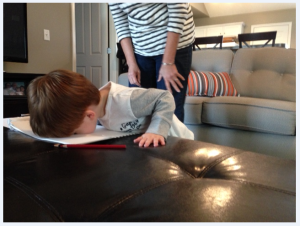
A two-year old had been working on drawing circles, so his grandma decided to amp it up a bit. She said, “Can you put a nose on it?” And he did.
With a smudge on his nose, he lifted his head with pride and accomplishment!
So, this is a cute, cute story. It’s easy to appreciate this young child exploring the world and functioning without learned behaviors or expected outcomes. In the same mind that plays these thoughts, other hypocritical thoughts contradict these beliefs. Are we even aware? Do we see possibilities in the “wrong” answers from our students and consider it to be neat?
If I were the grandma, I would have followed this “answer” with…”Can you show me another way to add a nose?” This approach helps the child develop flexible thinking without destroying his own thinking mind or confidence. He added a nose. It just wasn’t the…
Two recurring themes, amongst others on my blog, are ways of encouraging a love of literacy and of questioning in young children.
If you read my post Going on a treasure hunt! you will know that I greatly admire the work of Michael Rosen and its contribution to literacy development. You may have followed the links and checked out the riches in store on his website.
My post Child’s play – the science of asking questions introduces my thoughts about ensuring that children’s inborn curiosity is maintained through the encouragement of their questions.
You can imagine my delight, then, when I read a review of new book by Michael Rosen. (Thank you, Anne Goodwin, for alerting me to it.) The review, posted by Sabine Durrant in The Guardian on 6 September 2014, discusses Rosen’s new book How to be Your Child’s (and Your Own) Best Teacher. I confess that I have not read the book but I am very excited to see that it is now available as an audiobook, so it is next on my listening list. So much about the book appeals to me.
Rather than review the review I will simply leave with you the links to the review:
Every so often I read a post that has me nodding in agreement and leaves me smiling and full of hope for education. This post, by Vicki Vinton of “To Make a Prairie”, is one of those. I hope you enjoy it!
I know many teachers and students around the country are already back in their classrooms, but for the third year I’d like to mark what here in New York City is the start of the school year by sharing some of the incredibly inspiring and thoughtful comments that educators have left on this blog over the last twelve months. Those months have been marked with ongoing conflict about the Common Core Standards, the corporatization of public education, standardized testing and certain literacy practices. Yet, if the comments below are any indication, it’s also been a year in which teachers have increasingly found their voices and are using them to speak out with passion, knowledge, and the conviction that comes from experience about what students—and they, themselves—need in order to be successful. And if I see a trend in this year’s comments, one of the things teachers are speaking out about…
A recurring theme on this blog has been the inappropriateness of, and the difficulty faced by children sitting, large-scale external exams which require an immediate response to a stimulus that may have little relevance or interest to them. I have written about it here and here.
Making a judgment about student progress or achievement from one piece of writing, particularly one completed under conditions not necessarily conducive to encouraging one’s best work, is problematic.
It would be unrealistic of me to expect that everyone would agree with me, (though who wouldn’t want everyone to agree with them?) but it is always affirming to find that others share similar views. Maybe if enough people voice their concerns, change may occur.
Recently I read an article in our local newspaper that had me nodding in agreement. The article NAPLAN writers have trouble writing a writing testby Mary-Rose MacColl explained that a good part of the reason students didn’t do well on the NAPLAN writing task this year, is that the task itself wasn’t well written!
MacColl said that the task was wordy and the standards themselves (the criteria against which the writing is marked) poorly written. She pointed out how ludicrous it was for the ACARA CEO to write a letter explaining to parents that students should not view the test as ‘pass or fail’ when many children were experiencing extreme anxiety in the lead up to the test and parents were withdrawing their children from the tests in increasing numbers.
In addition to writing newspaper columns, MacColl is also a writer of fiction. She is pleased that the focus of NAPLAN is on persuasive rather than narrative writing, and goes on to describe some wonderful writing that is going on her son’s class.
Many teachers are doing wonderful things helping students develop a love of writing. Unfortunately, those setting external assessment tasks aren’t listening to the professionals.
I have given only a brief indication of what Mary-Rose MacColl had to say. Please read her article to fully understand her views.
Thank you for reading. I value your feedback. Please share your thoughts about any aspect of this post.
An interest in star signs is worldwide. A google search of ‘star signs’ brought up 126 000 000 results in 0.15 seconds. You can find out what your star sign is, famous people who share your sign, get a description of your personality, find out who you are or are not compatible with, and what the future holds for you.
But how accurate do you think your star sign is, and how accurate are the predictions?
Are they any more accurate than a teacher’s predictions of a child’s future?
Think back to your school days and the comments written by your teachers on your report cards. Have you lived up, or down, to their expectations?
Comments sometimes described me as conscientious and said that I worked hard. At other times I needed to work harder, and was told that I could do better, that I needed to concentrate more on … (insert subject name – any will do). Comments in opposition, like the two sides of a coin or the twins of my star sign Gemini.
However teachers do not always know, and cannot always predict future life journeys of their students. Consider how inaccurate were teachers’ predictions for people as diverse as Einstein, Edison, Churchill, Darwin and Pasteur who showed little promise while at school. Disney was accused of lacking imagination, and Salvador Dali of daydreaming. John Lennon’s teachers were not impressed when he answered “happy” in response to the question, “What do you want to be when you grow up?” The list of successful people with unforeseen potential is long. I’m sure you know stories of many others from all walks of life. Maybe yours is one!
Mine is not exactly about the zodiac, but about another form of prediction equally as accurate.
As expected
A lawyer, a doctor and a journalist walked into a bar, ‘Class of ’99’ emblazoned on their backs.
Talk flowed freely.
When someone mentioned old ‘four-eyes’ Proffet, laughter erupted.
“Thought he was a prophet,” they chorused.
“Mark my stars,” the lawyer mimicked, wagging his finger. “You need to learn to be less argumentative.”
The doctor peered over her glasses and giggled, “And you miss, will never amount to anything!”
“Remember Prophet’s favourite, ‘most likely to succeed’?” said the journalist. “Saw Daniel last week, handing out horrorscopes, on corner of Main and Black. Hardly recognised him. Poor sod.”
Thank you for reading. I appreciate your feedback. Please share your thoughts about any aspect of this post, including my flash fiction
I’ll leave you with a song about a star someone was born under. Not my star, and not the zodiac either, but a popular song when I was growing up.
I was born under a wandering star sung by Lee Marvin in Paint Your Wagon
Thinking is as much a part of life as is eating. Something to think about is often referred to as ‘food for thought’; and food for thought is just as important to wellbeing as is food for the body. When I’m not thinking about where I’ll partake of my next meal, or what I might eat, I’m often thinking about education.
I will be upfront and admit that I have not read the book and am commenting on the review alone which states that the book brings together “several years of research and experience into a methodology for applying their groundbreaking thought and technique.” It goes on to say that “The basic argument … is pretty basic: for our students to achieve excellence and equity, we need to teach them the skill of question formulation.” (my emphasis)
What I wonder about is: If it is so important for students to learn to ask questions, why do we spend so much time in school teaching them to stop asking questions and to learn just what is presented to them, whether they like it or not?
Aren’t children born asking questions? Aren’t they pretty good at asking questions (verbal or otherwise) to figure out what they need to know about the world? Why then do we sit them in desks all day and force-feed them content for future on-demand regurgitation?
His eyes widened, flitting across the table, scanning the feast, a smorgasbord of sensory delights. His mouth moistened and tummy growled.
Where to start? A bit of this. A little of that. A whole lot of that! Mmmm!
He rubbed his belly and licked his lips.
Suddenly he was marched away and slammed onto a hard wooden bench. A bowl of colourless pap was flung at him. “Eat this!”
He recoiled.
“Eat it!”
The overfilled spoon was shoved between tightened teeth.
He gagged.
“It’s good for you!”
He spluttered.
Over time he learned. “Not so bad,” he thought.
Okay. Maybe I’m exaggerating. Maybe I’m painting the picture darker than reality. Maybe. But sometimes that is necessary for even partial recognition of the situation to occur. You know about the swinging pendulum.
The picture painted by Scott McLeodof dangerously ! irrelevant is no brighter. In his post The declining economic value of routine cognitive work he says that while most employees (in the U.S.) are engaged in non-routine cognitive and interpersonal work; routine cognitive work is what students are mostly engaged and assessed in, and what traditionalist parents and politicians advocate. So while work tasks may require “problem-solving, intuition, persuasion, and creativity”, school tasks involve things such as automation and repetition.
My wish is that all parents, school administrators, education policy makers and teachers do as Rothstein and Santana suggest – let them ask questions!
Of course I couldn’t write a post about food and questions and not mention the blog of one of my very favourite questioners, Bec, who writes about “wholefoods, vegetarianism, slow living and their existential friends” at There’s no food. There’s much food for thought there!
And now for something a little bit different: The edible cookbook. It’s a cookbook you can read, cook and eat! I wonder what questions its designer was asking to come up with such an innovative and interesting design.
Thank you for reading. I appreciate your feedback. Please join in the discussion or share your thoughts about any aspect of this post, including my flash fiction.
In that post I linked to this TEDx talk by Dan Habib, Disabling Segregation.
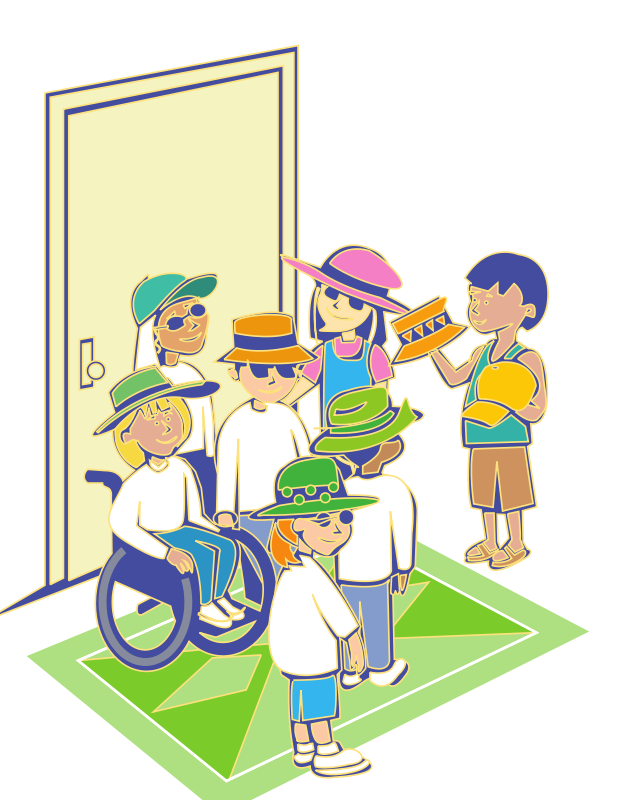
In the talk, Dan advocates for the inclusion of students with differences in mainstream schools. He explains that there are benefits for typical children as well as for children with disabilities.
The benefits include:
better communication skills
higher academic achievements
wider social networks, and
fewer behaviour problems.
He also says that typical children learn to be more patient, caring, compassionate and loving.
He decries the fact that although these benefits are known most children with differences still spend most of their day segregated.
The post received many wonderful comments, including some by Gary, which continued the discussion. It is worth having a peek back to see what people were thinking if you are interested.
Because your response to that post was so positive, I thought I would share with you some others that I have come across since publishing it.
On her blog, teacher versus mum, an Adelaide teacher wrote a post called When inclusivity becomes exclusion. In the article TeacherMumWife questions whether it is the attitude of teachers towards students with disabilities that impedes the progress of inclusivity.
TeacherMumWife describes a situation at a school in her local area as one promoting exclusion, rather than inclusion, through its lack of preparedness. She describes the aggressive and fear-inducing behaviour of one child and condemns the attitude of parents and teachers who question whether the school is the best place for the child. She asks, “isn’t it about time teacher attitudes got a kick up the bum, and teacher training programs and systemic funding be modified to reflect this need in our classrooms?”
I personally favour the idea of inclusion and believe that everyone deserves to be treated with respect and given a fair go. However in a situation such as that described by TeacherMumWife, a situation that many teachers are faced with on a regular basis, I have to admit teacher guilt in also questioning whether the regular classroom is the best place for the child.
A child with aggressive and disruptive behaviours, who injures teachers and classmates and who disrupts the learning of other students, in my opinion, is not giving others a fair go. I do not think accepting them into the classroom is equitable. If a child with special needs is placed into a classroom that is unable to provide for those needs, then it is not any more satisfactory for that child than it is for any other participants in the classroom.
There is already a great deal of pressure upon classroom teachers. The expectation that a general classroom teacher should be able to cater for a great diversity of special needs in addition to the range of diverse abilities and needs in a group of twenty-five to thirty or more students is, I believe, unrealistic in most current educational systems and environments. Qualifications to teach special education requires additional years of study. Teacher training, here is Queensland anyway, is already four years. How many years will it take to prepare teachers to cater for all needs that may present themselves at the classroom door?
I agree with TeacherMumWife that more training is required so that teachers may develop a greater understanding of differences, and develop a genuine empathy for parents of and students with those differences. Additionally education must receive more funding to provide trained teachers and support personnel to work with students with special needs, and enable them to be more integrated into a situation which caters to their needs as much as to the needs of others.
A commenter on the blog agrees, saying, “The teachers involved in any class environment, have a right and expectation not to be placed in a situation they are not trained for or feel threatened by the situation they find themselves in.” He describes the progress of his ASD daughter from early primary to high school years.
Blake Wiggs, an instructional coach shared an article called Rethinking tolerance: Ensuring all students belongon Edutopia. He explains an exercise conducted with his students that highlights a similar situation to that noted by Dan Habib in his TEDx talk: that people form friendships with those who are similar to themselves and that perceptions of those who are different may be influenced by stereotypical thoughts. Blake’s article did not address disability specifically but the activity and attitudes are relevant just the same. He noted three necessary ingredients for creating a more tolerant environment, including:
I think Jamie Davis Smithwould agree with those. In her post, I’m so sorry my daughter’s disability is such an inconvenience for you shared on HuffPost Parents, Jamie expresses a parent’s frustration at the lack of consideration shown to those with disabilities. However she is not talking about school inclusion, but acceptance and inclusion in society.
‘Every child is a joy! Imagine yourself in the mother of a disabled child’s shoes. Have empathy for that mom. Join in her admiration of her child, and maybe you will also internalize the concept that “God don’t make junk!”
I appreciate your feedback. Please share your thoughts about any aspect of this post.














 Norah Colvin