Live Love Laugh Learn … Create the possibilities

Category: Education

  • Celebrating individuals in your classroom using stories – Readilearn

    Celebrating individuals in your classroom using stories – Readilearn

    While a classroom is filled with a group of unique individuals, it can be easy sometimes to get caught up in treating them as one, with one set of needs, expectations and rules. Everybody do this, everybody do that—a bit like Simon Says but not always as much fun.

    It is useful to pause sometimes and celebrate the uniqueness of individuals in your class.

    International Children’s Book Day and Hans Christian Andersen‘s birthday on 2 April provide excellent excuses for reading and celebrating children’s literature, as if we needed any. We can also find stories that help us celebrate individuality.

    The Ugly Duckling Hans Christian Andersen

    Hans Christian Andersen was a prolific writer of fairy tales, many of which are well-known and have been made into movies. One of my favourite films as a child was about Hans Christian Anderson with Danny Kaye in the lead role. I was particularly touched by the story of The Ugly Duckling which Andersen told to a sad young boy whom no one would play with. You can watch the scene here.

    The story is a great starting point for discussing individual differences,

    Continue reading: #readilearn: Celebrating individuals in your classroom using stories – Readilearn

  • #readilearn – Learning literacy and mathematics with Easter classroom activities – Readilearn

    #readilearn – Learning literacy and mathematics with Easter classroom activities – Readilearn

    The celebration of special occasions such as Easter may bring interruptions to the usual class program with preparation for special events and performances such as Easter Hat Parades. It may also signal time to inject some fun into the program. But involving children in Easter activities doesn’t mean the learning has to stop.

    In this post, I explain how using readilearn early childhood teaching resources keeps the children thinking and learning while having fun with Easter-themed resources across curriculum areas. (Note: All readilearn Easter-themed resources can be found here.)

    Cultural studies 

    An inclusive classroom acknowledges all traditions celebrated by its children.

    Find out whether Easter is one of the traditions celebrated by the families of children in the class and discuss how it is celebrated.

    If you have already investigated Family traditions and celebrations, you will know which children celebrate Easter and which do not.

    For children who don’t celebrate Easter, be sensitive to the expectations their families may have for their participation.

    My personal view is that it is beneficial for children to learn about the traditions of others but that they can opt out of activities and celebrations if families wish. In my experience, few families have Continue reading: #readilearn – Learning literacy and mathematics with Easter classroom activities 

  • Learning to be friends to combat bullying – Readilearn

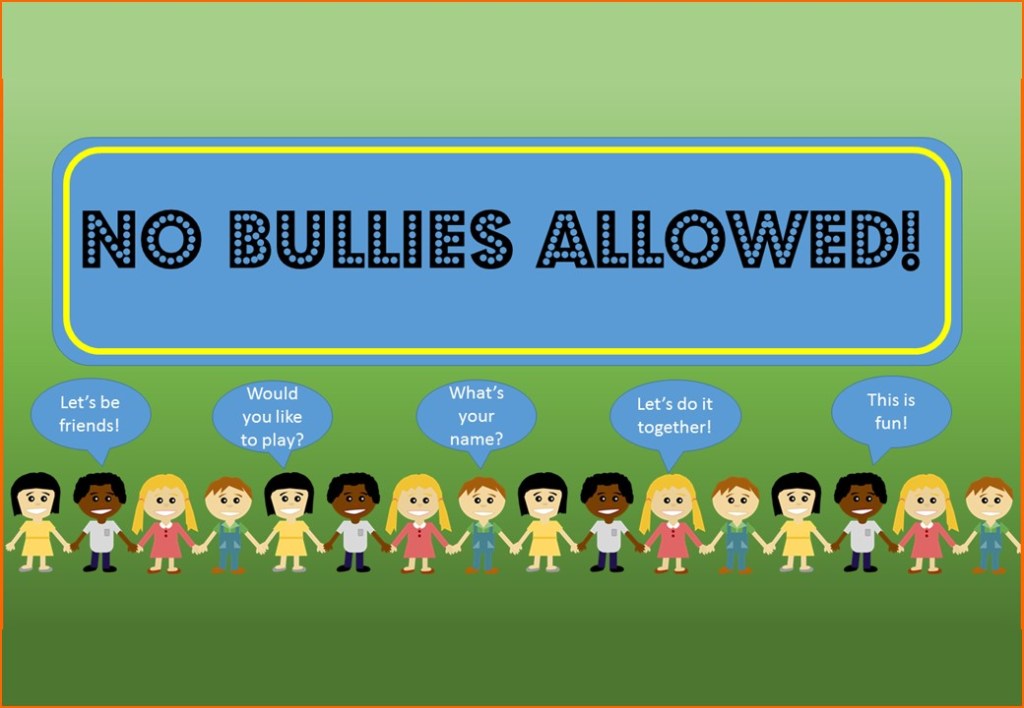
    Learning to be friends to combat bullying – Readilearn

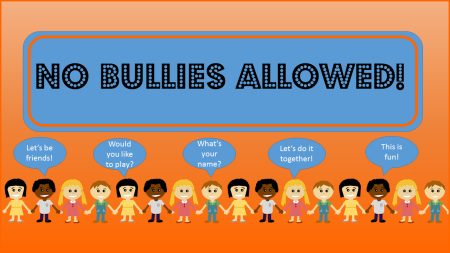
    With today 16 March being the National Day Against Bullying and Violence and next Wednesday 21 March being Harmony Day in Australia, now is a good time to think about what it means to be a friend, what bullying is, and how to combat it. Of course, any time is a great time for developing friendship skills, but these special days help to raise awareness.

    The purpose of the National Day Against Bullying and Violence is fairly clear in its title. Harmony Day is for celebrating cultural diversity. “It’s about inclusiveness, respect and a sense of belonging for everyone.” That sounds very much like friendship to me.

    The development of social skills, including the friendship skills of getting along, can not be left to chance. The skills must be actively encouraged and taught. Children must learn what behaviour is friendly, what is not friendly and what is bullying.

    The teaching of these skills and behaviours should not be left to one or two days of the year but integrated into the teaching program. In fact, the best way to encourage friendship and discourage bullying is through the implementation of policies that foster respect and accept

    Continue reading and see new teaching resources from readilearn: Learning to be friends to combat bullying – Readilearn

  • What makes a bully a bully?

    What makes a bully a bully?

    Charli Mills flash fiction challenge at the Carrot Ranch about balloons

    This week at the Carrot Ranch, Charli Mills has challenged writer to In 99 words (no more, no less) write a story that features a balloon. It can be a party balloon or a hot air balloon. How does it add to your story? Go where the prompt leads.

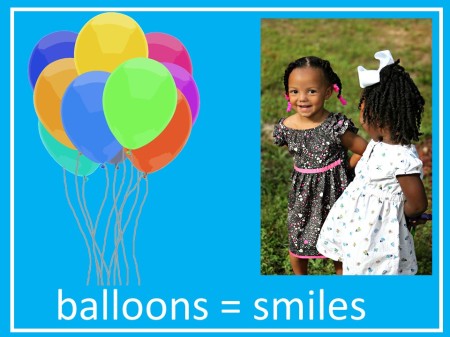
    balloons, celebrations, happy times, smiling kids

    Balloons are almost synonymous with fun and celebrations. They come in all shapes and sizes to decorate parties and other events. A child with a balloon is usually a child with a smiling face – until the balloon bursts, pops or escapes.

    What do balloons and bullies have in common, you may ask? I’m sure there are many ways balloons could be used for bullying.

    With this Friday 16 March being the National Day Against Bullying and Violence, I decided to write a story that could be shared with children and used as a stimulus for discussing bullying, bullying prevention, and what it means to be a friend. I hope you like it.

    Surprises for Marnie

    Brucie loved surprising Marnie on her way to school each day.

    Marnie expected that Brucie would meet her, but she never knew where.

    On Monday, he jumped from behind a bush screaming at her.

    On Tuesday, he stuck out his foot and tripped her.

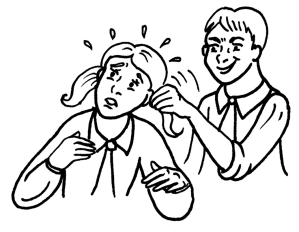
    On Wednesday, he snuck up behind and pulled her hair.

    On Thursday, he popped a balloon in her ear.

    On Friday, he surprised Marnie by not surprising her at all.

    But, after she’d put her bag away, he pulled it out and emptied its contents on the floor.

    “Whose mess is this?” demanded Mrs Brown.

    bullying, being mean, hurting, pulling hair

    What do you think? I have put the story together with some teaching suggestions in a resource to add to the readilearn collection.

    The story has the potential to initiate discussion around issues and questions such as the following; for example:

    • What is a friend? What do friends do?
    • What is a surprise? Are all surprises good?
    • What is bullying? Are some people always friendly? Do some people always bully?
    • How do you think Marnie responds to Brucie’s “surprises”? How does her body feel?
    • Why would Brucie bully Marnie?
    • Do you think Marnie tells anyone about what Brucie is doing? Why wouldn’t she tell?
    • What should you do if you see someone being mean or bullying another?
    • Have you ever been bullied?
    • How did you respond? What would be a better way to respond?
    • What could Marnie have done to get Brucie to stop?
    • Have you ever bullied anyone?

    These are just a beginning. The Bullying No Way website has some great resources to assist you in educating children about bullying and its prevention.

    Bullying is defined as

    “an ongoing misuse of power in relationships through repeated verbal, physical and/or social behaviour that causes physical and/or psychological harm.”

    The important words here are:

    ongoing, repeated, misuse of power, causing harm

    Single or isolated acts of unkindness or aggression are not considered bullying.

    Brucie is obviously engaging in bullying behaviour as he repeatedly abuses Marnie causing her physical as well as psychological (fear, anxiety) harm.

    Marnie is reluctant to talk about the situation for fear of making it worse.

    Children need to learn that there are safe people they can talk to about incidents that occur, and they also need to learn strategies for responding to unkindness and bullying.

    When discussing bullying situations, it is important to not label a child as either victim or bully, but to describe the behaviour. Behaviour can be changed but it is often difficult to remove a label once it has been applied. What we need most are supportive schools that fosters acceptance and respect.

    I have previously discussed bullying in Stop bullying now!, Safety in friendship, Targeting prey, and Bully for you.

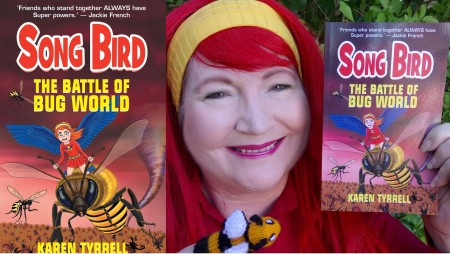
    Karen Tyrrell Songbird Superhero and Battle of Bug World empowering books for kids anti-bullying

    I also interviewed Karen Tyrrell, Australian author of empowering books for children and adults, about her junior fiction books Song Bird Superhero and The Battle of Bug World that, along with Stop the Bully, have important messages for kids about bullying.

    One of my other favourite books about bullying is Willy the Wimp by Anthony Browne.

    What are your favourites ways of discussing bullying with children?

    Thank you blog post

    Thank you for reading. I appreciate your feedback. Please share your thoughts.


  • Raw Literature: Asperger’s, Voice and the Search for Identity

    Raw Literature: Asperger’s, Voice and the Search for Identity

    I’ve been reading a lot of posts about Asperger’s Syndrome and Autism lately. It’s a topic about which I need to increase my understanding. If you’re like me, you will find this post by Sherri Matthews helpful.

  • readilearn: The importance of reading aloud – a guest post by Jennie Fitzkee – Readilearn

    readilearn: The importance of reading aloud – a guest post by Jennie Fitzkee – Readilearn

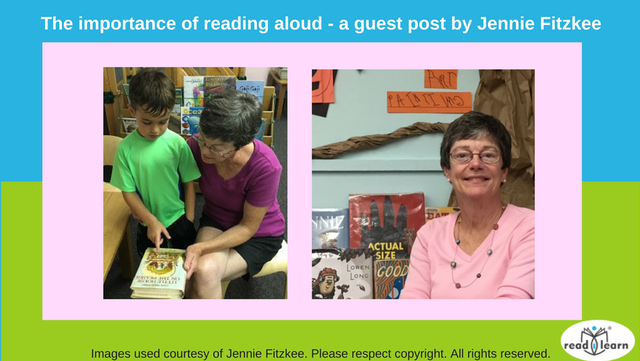
    Every day is a great day for reading aloud to children, but with the celebration of International Read to Me Day on March 19, now is a great time to give some thought to the importance of reading aloud in preparation for the Day’s celebrations. by arming yourself with a basket of books to read.

    To help put us in the mood and assist our preparations, Jennie Fitzkee is here to tell us why reading aloud to children is important.

    Jennie, a passionate and inspirational teacher, has been teaching preschool in Massachusetts for over thirty years.  She is considered by many to be the “book guru” and the “reader-aloud”.  She is also a writer and her work is often posted by The Eric Carle Museum of Picture Book Art.  This is what Jennie says of teaching:

    “I believe that children have a voice, and that is the catalyst to enhance or even change the learning experience.  Emergent curriculum opens young minds.  It’s the little things that happen in the classroom that are most important and exciting.  That’s what I write about.”

    Jennie is highlighted in the new edition of Jim Trelease’s bestselling book, The Read-Aloud Handbook  because of her reading to children.  Her class has designed quilts that hang as permanent displays at both the National Liberty Museum in Philadelphia, and the Fisher House at the Boston VA Hospital.  Their latest quilt is currently hanging at the Massachusetts State House in Boston.  In 2016, Jennie was one of seven teachers in Massachusetts to receive the Teacher of the Year Award.

    I’m sure you’ll agree that there is much we can learn from Jennie.

    Welcome to readilearn, Jennie. Over to you.

    Continue reading: readilearn: The importance of reading aloud – a guest post by Jennie Fitzkee – Readilearn

    Thank you blog post

    Thank you for reading. I appreciate your feedback. Please share your thoughts.

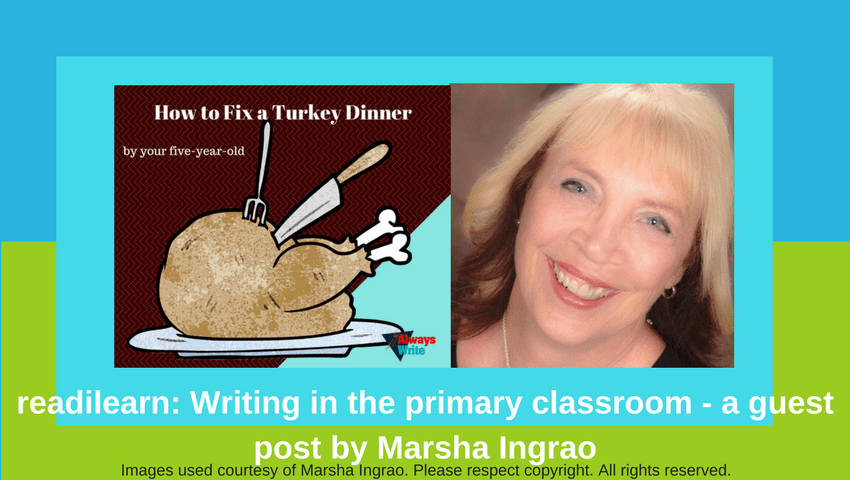
  • readilearn: Writing in the lower primary classroom – a guest post by Marsha Ingrao – Readilearn

    readilearn: Writing in the lower primary classroom – a guest post by Marsha Ingrao – Readilearn

    Providing children with fun and purposeful activities for writing is one of the best ways to encourage a love of writing, to replace the drear with enthusiasm.

    In this post, I introduce guest author Marsha Ingrao who shares suggestions for bringing joy to your writing lessons through the Language Experience Approach.

    “The Language Experience Approach (LEA) is a literacy development method that has long been used for early reading development with first language learners…It combines all four language skills: listening, speaking, reading, and writing.”

    Professional Learning Board

    Although Marsha retired from public education in 2012, her passion for education remains and she continues to educate through blogging, speaking engagements and volunteering for Kiwanis and the Chamber of Commerce. Her classroom experience ranged from teaching kindergarten to fourth grade. She left the classroom to work as a consultant for the county office of education first in math, working with migrant education, then in history and language arts. She is author of Images of America Woodlake, a history of her local Woodlake area, published by Arcadia Press.

    Welcome to readilearn, Marsha. Over to you.

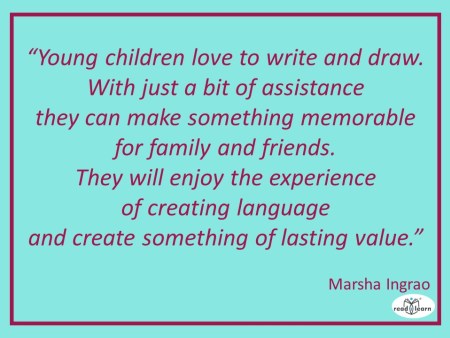
    Because LEA employs all four branches of language arts, listening, speaking, reading and writing, it is perfect for teaching writing to pre-school and primary students as well. With the thrust in the United States for non-fiction reading, the language experience approach becomes the perfect avenue for teaching writing to young children.

    To make the language experience approach applicable to all young students, adult assistance is required.

    The “How To” Essay

    Beginning in pre-school, we tackled one of the hardest types of writing, the “how to” essay. Holiday traditions are the perfect avenue for this

    Continue reading: readilearn: Writing in the lower primary classroom – a guest post by Marsha Ingrao – Readilearn

  • Everything you always wanted to know about unicorns

    Everything you always wanted to know about unicorns

    What do you know about unicorns?

    • mythical creatures
    • look similar to horses
    • usually white
    • have a single horn protruding from the forehead.

    What else is there to know?

    It appears there could be much more to learn by engaging in philosophical discussions, especially with young children, about the existence of unicorns and their features.

    For many years I have been a fan of Philosophy for Children (P4C), a pedagogical approach for teaching children to think critically, to wonder, question and reason. The approach is “taught” through student-led discussion in which the teacher is present to offer support, rather than leadership. Students are presented with a stimulus, about which they initially ask questions. When there are no more questions to ask, children discuss their thoughts and responses.

    I knew unicorns would be a great starting point for philosophical discussions with children, so wasn’t surprised to find suggestions for conducting an enquiry into Unicorn Horns – Thinking about Things that Don’t Exist by The Philosophy Foundation.

    The suggested discussion centres around fictional characters, including the more controversial ones such as Santa Claus and the Tooth Fairy which I’ve previously discussed here and here.

    What intrigued me most in the article was

    “The problem (is) characterized in this statement ‘The Tooth Fairy does not exist’, which seems to say ‘there is something that does not exist’, but then if it does not exist then how can it be anything?”

    Or another way of putting it,

    “‘If there is anything that can’t exist, then it exists, so there can’t be anything that can’t exist.’”

    Totally confused?

    Me too! Please pop over to the article for greater clarity. Then maybe you can explain it to me.

    The article continued with suggestions of other questions about unicorns that could be discussed; for example:

    • Are unicorns real?
    • If something doesn’t exist, can it have any special features?
    • How many horns does a unicorn have?
    • What if a unicorn is born without a horn, is it still a unicorn?
    • What if a horse is born with a horn, would it be a unicorn?
    • Since ‘uni’ means one, is any animal with one horn a unicorn?
    • What about a narwhal? Is it a unicorn?

    My thoughts of unicorns this week were instigated by the flash fiction prompt by Charli Mills at the Carrot Ranch to In 99 words (no more, no less) write a story about a unicorn. It can be realistic or fantastical. Go where the prompt leads.

    Now, I have written about unicorns before, here, here and here.

    In a post about security comforters, I explained that a toy unicorn was of comfort to Marnie when she was feeling particularly vulnerable. Her need for it continued into her early school years and its appearance was an indicator to teachers that things were going badly for her again. When, as a confident adult, she returned to her childhood home, she found she had long outgrown the unicorn that had given her comfort as a child.

    In some of Marnie’s stories, she was teased and bullied, mainly by a boy named Brucie. Fortunately, she had a good friend in Jasmine who was often there to offer her support.

    In my response to Charli’s unicorn prompt, I revisit Marnie and Brucie and attempt to add a little philosophy to their discussion. I hope you like it.

    Unicorns aren’t real

    “What’s that supposed to be?” sneered Brucie.

    Marnie bit her lip.

    “Doesn’t look like anything to me,” he scoffed, inviting an audience.

    “A unicorn,” she whispered.

    “Miss said, ‘Draw your favourite animal.’ A unicorn can’t be your favourite animal–it’s not even real.”

    Marnie continued drawing.

    “Anyway, doesn’t look like a unicorn with those four horns.”

    “They’re not horns.”

    “Marnie’s unicorn’s got four horns,” laughed Brucie, a little too loudly.

    Miss investigated.

    “He said my unicorn’s got four horns. He said unicorns aren’t real.”

    “How can unicorns have four horns if they’re not real?” asked Miss.

    Brucie was silent.

    Thank you blog post

    Thank you for reading. I appreciate your feedback. Please share your thoughts.

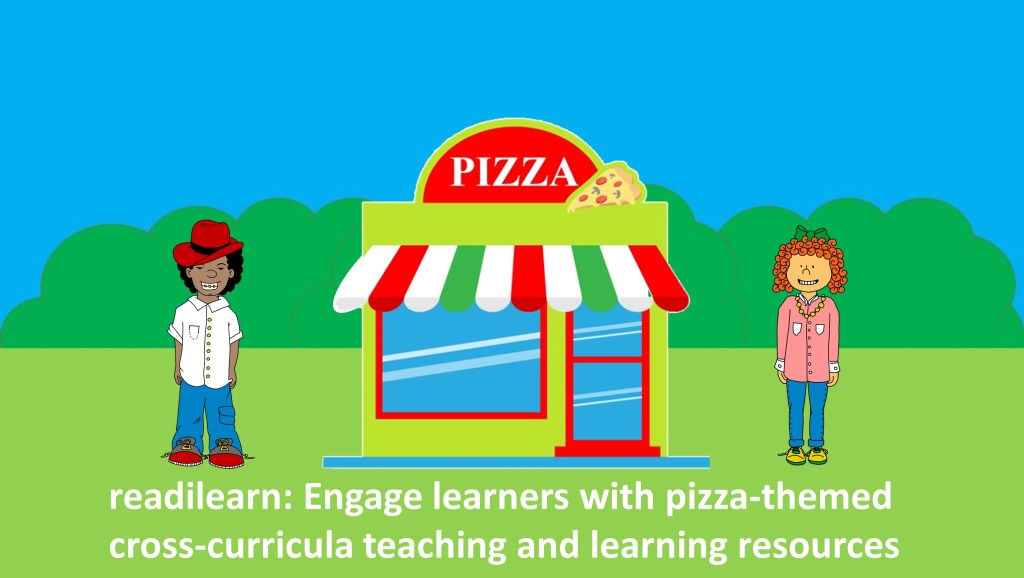
  • readilearn: Engage learners with pizza-themed cross-curricular teaching and learning resources

    readilearn: Engage learners with pizza-themed cross-curricular teaching and learning resources

    Pizza is a popular food in many countries around the world and is often a children’s favourite. Why not capitalize on children’s interests to make learning fun and meaningful?

    This week I have uploaded six new pizza-themed resources with suggestions for learning across the curriculum; including literacy, mathematics, and science.

    pizza-themed interactive cross-curricular teaching resources for lower primary

    The new interactive resource What’s on your pizza is a great stimulus for engaging children.  Children help Andy and Paige make their own pizza by choosing the toppings and working out the different combinations of toppings that are available. The resource can be used as a springboard for discussion, writing, mathematical investigations, science explorations and talking about healthy food choices.

    In this post, I outline some ways pizza-themed learning can be incorporated across the curriculum. I anticipate the suggestions will inspire ideas of your own with relevance to your own group of children.

    Literacy
    Oral Language

    Discussion is one of the best ways of developing children’s language. Starting with topics already familiar to and of interest to children facilities discussion into which new vocabulary and concepts can be added. Discussion could centre around; for example: who likes pizza, types of pizza, when children have pizza and their favourite pizzas.

    Reading and spelling

    Continue reading: readilearn: Engage learners with pizza-themed cross-curricula teaching and learning resources – Readilearn

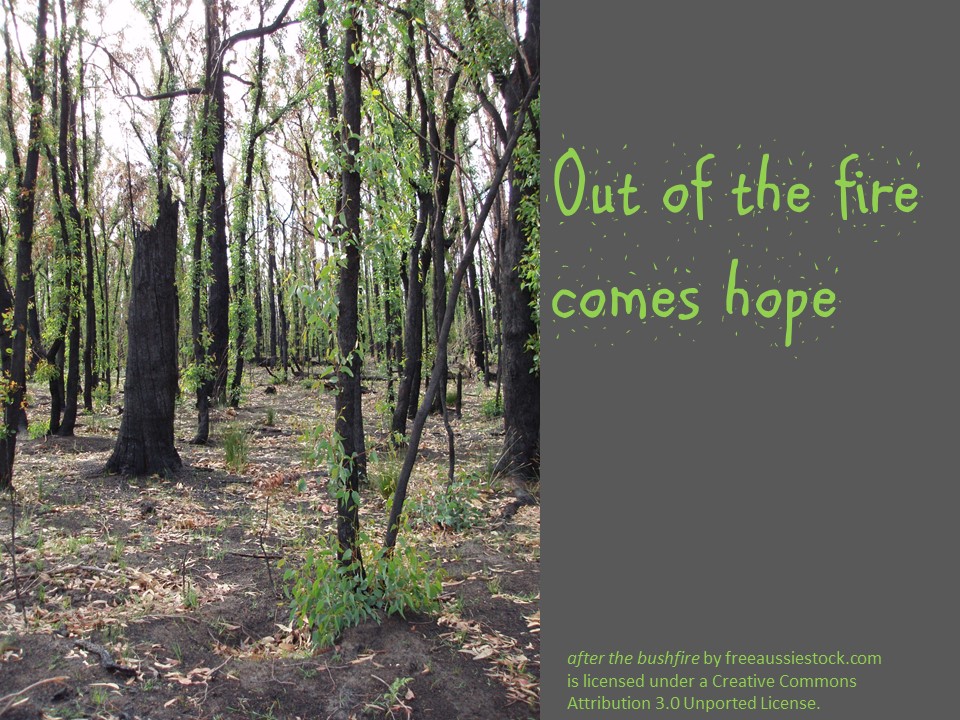
  • Out of the fire comes hope

    Out of the fire comes hope

    fireweed Charli Mills Carrot Ranch flash fiction

    This week at the Carrot Ranch, Charli Mills wrote about fireweed. She describes it thus:

    “the purple and pink flower that grows like a tall spear in a tribe of flower warriors. After a forest fire, mining reclamation, road grading or any kind of soil disturbance, fireweed grows back first from seeds born of despair. It’s a phoenix flower, a soil nourisher, a defier of the odds when life is bleakest.”

    She then went on to challenge writers to In 99 words (no more, no less) write a story that includes fireweed. You can use it as the plant, a flower, a metaphor or as the name of someone or something. Go where the prompt leads. Burn bright when you write.

    I don’t know of Charli’s fireweed, but I do know that Australia is home to a great variety of plants that are dependent on fire for regeneration. While large tracts of land destroyed by bushfires is devastating, a return to traditional land management practices of the indigenous peoples may see an  improved system.

    There is an oft-repeated quote by German philosopher, Friedrich Nietzsche.

    “What doesn’t kill you, makes you stronger.”

    While that may be true of Charli’s fireweed and much of Australia’s flora, I’m never convinced of the applicability of the saying to every situation, or of its power to lift one up when feeling personally devastated. What does not kill may require a good dose of determination and strength for it not to annihilate the spirit.

    While thoughts of how to approach Charli’s challenge were swirling around in my head, notification of a new post by The Wordy Wizard popped into my inbox. At the top of the post was this quote by  J.K. Rowling from Harry Potter and the Goblet of Fire:

     “Understanding is the first step to acceptance, and only with acceptance can there be recovery.”

    The addition of these words of J.K. Rowling to those of Friedrich Nietzsche, for me, complete the thought. Without acceptance there is denial and an inability to move on, with acceptance we can begin to repair and renew.

    Intermittently, over the past four years while I have been responding to Charli’s flash challenges, I have written about Marnie, an abused child who was able, with determination and support of caring others, to overcome the impact of her dysfunctional upbringing and make a better life for herself.

    Just as we look for green shoots of hope in the blackness of a bushfire’s destruction, we must look for signs of hope and renewal in those who have suffered.
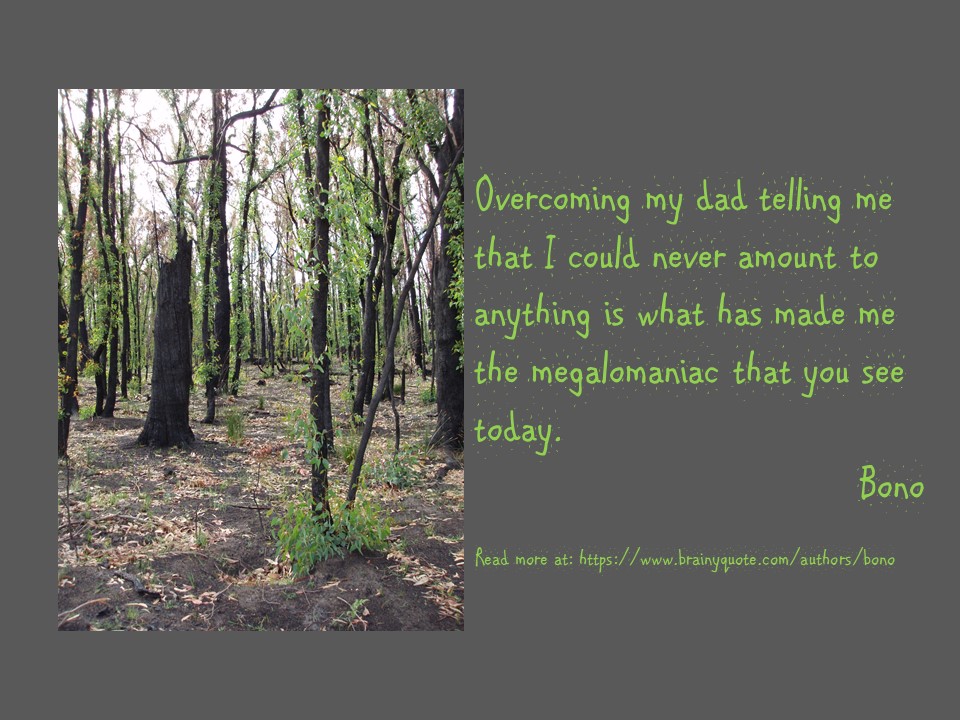
    Bono quote about why he's a megalomaniac

    While at times the negatives of children “burnt” by dysfunctional home lives, poverty, poor nutrition, lack of mental stimulation, and other factors that appear to obliterate potential can seem overwhelming and insurmountable, it is important to see within every child that seed of unlimited possibility and hope that needs to be nurtured.

    Marnie’s teacher Miss R. saw it in her. In one story, “Miss R. handed her a rose from the vase saying, “You are that rose. You may be surrounded by thorns, but the beauty of the rose is inside you. Remember that always. A rose by any other name would smell as sweet.

    Perhaps it would be just as apt to describe her as fireweed, “a defier of the odds when life is bleakest”. This is where Charli’s challenge took me this time:

    Burning with hope

    Miss R. avoided the staffroom’s negativity, popping in, like today, only if necessary. When she glanced over instinctively on hearing her name, regret flooded immediately.

    “Annette, we were just talking about you and that weed–from that noxious family–you know, Marnie-“

    She bristled, failing to withhold the words that exploded, singeing all with their ferocity.

    “Just look at yourselves. If Marnie’s a weed, she’s fireweed. Better than you will ever be. She’ll beat her odds and succeed, despite your belittling words and unhelpful opinions.”

    She left the silenced room, believing in her heart that her words were true.
    Thank you blog post

    Thank you for reading. I appreciate your feedback. Please share your thoughts.

    Note: The feature image after the bushfire by freeaussiestock.com is licensed under a Creative Commons Attribution 3.0 Unported License.