Live Love Laugh Learn … Create the possibilities

Category: Education

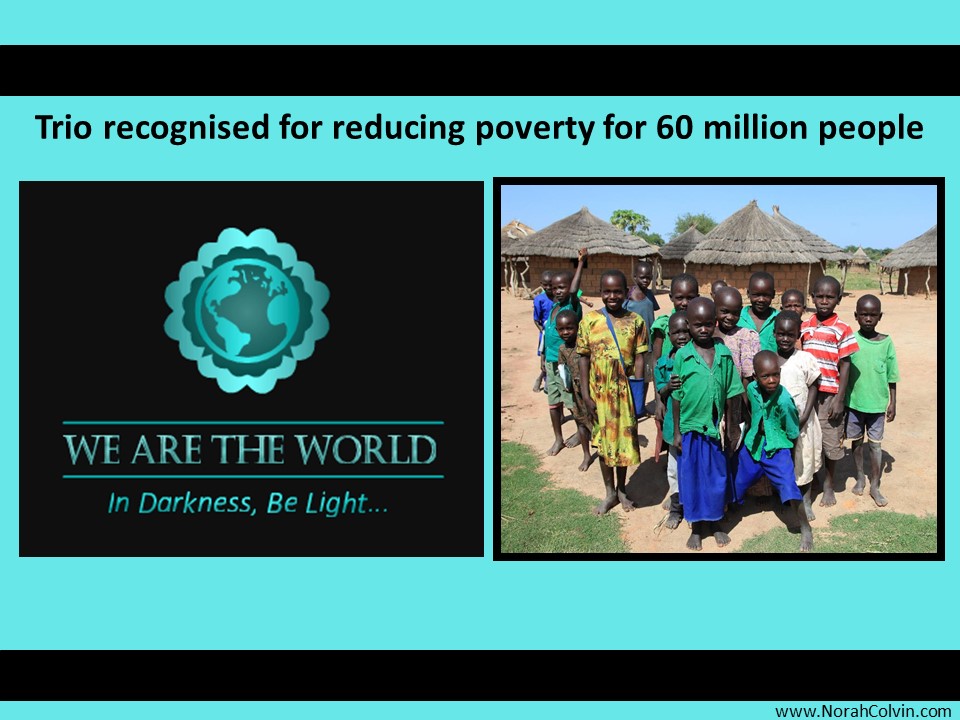
  • #WATWB Trio recognised for reducing poverty for 60 million people

    #WATWB Trio recognised for reducing poverty for 60 million people

    It’s the end of the month again, so time to share good news and spread some joy throughout the world with the We Are the World Blogfest (#WATWB).

    This month I am sharing the news of three US economists who were awarded the 2019 Nobel Economics prize for their work in fighting poverty. The three economists are Abhijit Banerjee, Esther Duflo and Michael Kremer. In the 50-year history of the Economics prize, Esther Duflo is the youngest, and only the second female, to be awarded the prize.

    The focus of the work for which the prize was awarded is education and healthcare. Over 60 Million children in Africa and India have benefited from the work.

    Read the whole story here.

    Click here to read more good news stories shared by other #WATWB bloggers.

    If you like to spread good news, you can join in too and help us make critical mass.

    As founders of #WATWB say, our newsfeeds often overflow with disasters and tragedies of all sizes, from large to small, that may overwhelm us with feelings of hopelessness and a loss of faith in the goodness of humanity. WATWB aims to combat those feelings with good news stories. They say, “There are many an oasis of love and light out there, stories that show compassion and the resilience of the human spirit. Sharing these stories increases our awareness of hope in our increasingly dark world.”

    If you would like to join in with #WATWB, here are the guidelines:

    1. Keep your post to Below 500 words, as much as possible.

    2. Link to a human news story on your blog, one that shows love, humanity, and brotherhood. Paste in an excerpt and tell us why it touched you. The Link is important, because it actually makes us look through news to find the positive ones to post.

    3. No story is too big or small, as long as it Goes Beyond religion and politics, into the core of humanity.

    4. Place the WE ARE THE WORLD badge or banner on your Post and your Sidebar. Some of you have already done so, this is just a gentle reminder for the others.

    1. Help us spread the word on social media. Feel free to tweet, share using the #WATWB hashtag to help us trend!

    Tweets, Facebook shares, Pins, Instagram, G+ shares using the #WATWB hashtag through the month most welcome. We’ll try and follow and share all those who post on the #WATWB hashtag, and we encourage you to do the same.

    The co-hosts for this month are:

    Sylvia McGrathLizbeth HartzShilpa GargMary Giese, and Belinda Witzenhausen.

    Please pop over to their blogs to read their stories, comment and share.

    Click here to join in and enter your link on the Facebook page. The bigger the #WATWB group each month, the greater the joy!

    Thank you blog post

    Thank you for reading. I appreciate your comments. Please share your thoughts.

  • Teaching critical and creative thinking and cooperative learning in the classroom – readilearn

    Teaching critical and creative thinking and cooperative learning in the classroom – readilearn

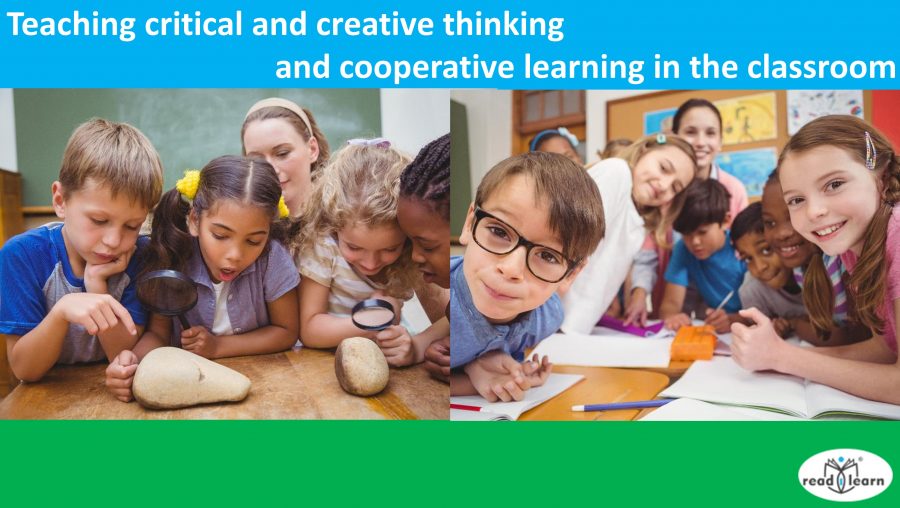
    Need ideas for teaching critical and creative thinking and cooperative learning in the classroom? Find out how thinkdrive can support your teaching.

    We are all aware of the importance of teaching critical and creative thinking and of providing opportunities for cooperative learning in the classroom. We know that critical and creative thinking are considered essential for life in the 21st century and, for this reason, form one of the general capabilities embedded in the Australian Curriculum. The ability to contribute productively to a team effort is also considered a highly desirable skill. These abilities are often more highly regarded by employers than academic achievement.

    However, in a busy classroom with content to be taught and tests to be administered, timetables to be followed and schedules to be kept, and with ever-increasing standards to be achieved, planning for lessons developing critical and creative thinking that engage children in cooperative learning can be the item on the list that rolls over from week to week.

    I’m here to tell you that it doesn’t have to be that way. Help is close at hand with thinkdrive. If you are not already familiar with itc thinkdrive, I recommend you take a look.

    itc thinkdrive

    Continue reading: Teaching critical and creative thinking and cooperative learning in the classroom – readilearn

  • School Days, Reminiscences of Kevin Cooper

    Welcome to the School Days, Reminiscences series in which my author and blogger friends share reminiscences of their school days.

    This week, I am pleased to introduce Kevin Cooper, author, songwriter and blogger. Kevin took a keen interest in the reminiscences previously shared by others and I am delighted that he agreed to share his own.

    Before we begin the interview, I’ll allow Kevin to tell you a little of himself:

    Kevin Cooper is an Author & Songwriter. After years of studying, and even more, years working in education, and management in the US, he returned to his hometown in England where he finally settled down to focus on his writing and music. He has since authored several works and recorded/released his first full music album.

    Kevin Cooper obtained an M.Ed in Secondary Education at Grand Canyon University.  He also did some post-graduate studies in Christian Counselling and Psychopathology at Asbury Theological Seminary. He completed his baccalaureate studies in Psychology with a minor in Classical Greek from Asbury College after devoting his first two years to studying Music Composition, and Religion at Western Kentucky University.

    Welcome, Kevin.

    Let’s talk school. First, could you tell us where you attended school?

    I went to school in England and left high school at 16 years of age with only three CSE’s. (Now called GCSE’s) After I turned 21, I emigrated to the USA and started studying again.

    Did you attend a government, private or independent school?

    In England, all the schools I attended were government schools which were very much under the influence of the ‘social class’ system back then. I also attended a state school in Kentucky after moving to the US and studied for GED to pave my way into university. I attended one state university: WKU for two years and then transferred to Asbury College. After graduating, I attended Asbury Theological Seminary for two years before moving again and enrolling in The Grand Canyon University where I received a fellowship.

    What is the highest level of education you achieved?

    M.Ed in Secondary Education. My teaching subject is English.

    What work or profession did you choose after school and was there anything in school that influenced this choice?

    I started out as a class tutor after being approached by a couple of professors. Later I did some private tutoring and substitute teaching. I obtained a part-time position as a music teacher for a short while then went into management for a Fortune 500 company and also obtained a part-time lecturer position for general studies. While I look back upon my years as an educator with fondness, I never set out, nor intended to become an educator. My passion was to become a clinical psychologist, but I allowed myself to be steered away from it.

    What is your earliest memory of school?

    Singing, All Things Bright and Beautiful in assembly at Marfleet Primary School. I loved the song from the first time I heard it and learned it quickly as it resonated with me as I played in my grandma’s gardens.

    What memories do you have of learning to read?

    Reading Dick and Jane books with Spot the dog.

    What memories do you have of learning to write?

    Graduating from printing words to joining the letters of the alphabet while writing. I found it intriguing.

    What do you remember about math classes?

    I hated math. The only time I enjoyed it was when we were given a project to take note of the different kinds of vehicles that passed us on the road and create a chart.

    What was your favourite subject?

    Kevin Cooper school days reminiscences

     History. I became entranced with the stories of inventors. Especially those like George Stephenson who were from poor families and told they would never amount to anything as a child.

    What did you like best about school?

    As a child, getting away from home. As an adult, I couldn’t get enough of learning new things.

    What did you like least about school?

    Kevin Cooper school days reminiscences

    As a child, being bullied even though upon reflection this was short-lived for me because I began to fight back after a while. Even so, it still had a profound influence on my mental state which was already a mess from being part of a dysfunctional family. As an adult, studying for exams. I loved research projects and writing term papers, but hated standardised exams with multiple choice and true/false questions.

    How do you think schools have changed since your school days?

    I think here in England there is more equality and less of a social class stigma these days. Although looking upon it almost as an outsider having lived in the USA the good part of 20 years, I could be mistaken.

    What do you think schools (in general) do well?

    I think schools follow curricula activities very well, unfortunately, these are not always mandated by the schools.

    How do you think schools could be improved?

    Kevin Cooper school days reminiscences

    First, there needs to be a far larger budget for schools in England. Class sizes need to be reduced and all teachers should have at least one assistant.

    There needs to be some kind of weekly after-school mandate for parents and teachers to educate and address current/ongoing issues that affect learning.  Schools should have specially assigned social workers in the schools that teachers can go to for advice and support as they are not equipped to deal with some issues. Schools also need to have a school psychologist on site.

    thank you for your participation

    Thank you for sharing your reminiscences of school and thoughts about education in general, Kevin. I agree with your thoughts about the budget for education, class sizes and assistants for teachers. It’s been wonderful to have you here. I’m sure others have enjoyed learning about you as much as I have.

    Find out more about Kevin Cooper

    On his blog:

    https://authorkevincooper.com/

    On his author page:

    https://www.amazon.co.uk/-/e/B00EWFEYKQ

    Connect with him on social media

    https://www.facebook.com/authorkevcooper

    https://twitter.com/KevinCo34737852

    Purchase Kevin’s Books:

    https://authorkevincooper.com/my-books/

    https://www.amazon.co.uk/-/e/B00EWFEYKQ

    Purchase Kevin’s Music:

    https://authorkevincooper.com/my-music/

    https://www.youtube.com/channel/UCf2xhbZpatTr4NwhxZwWN7Q

    https://soundcloud.com/user-17880724

    School Days, Reminiscences of the first 25

    If you missed previous reminiscences, check them out here: School Days Reminiscences – the first 25.

    You can also read some data drawn from the posts here, and some suggestions for how schools could be improved, as suggested by the contributors, here.

    Any new interviews will be posted here on a Sunday evening AEST as they are received.

    Thank you blog post

    Thank you for reading. I appreciate your comments. Please share your thoughts.


  • Library For All — a Force for Equality through Literacy – readilearn

    Library For All — a Force for Equality through Literacy – readilearn

    What is Library For All?

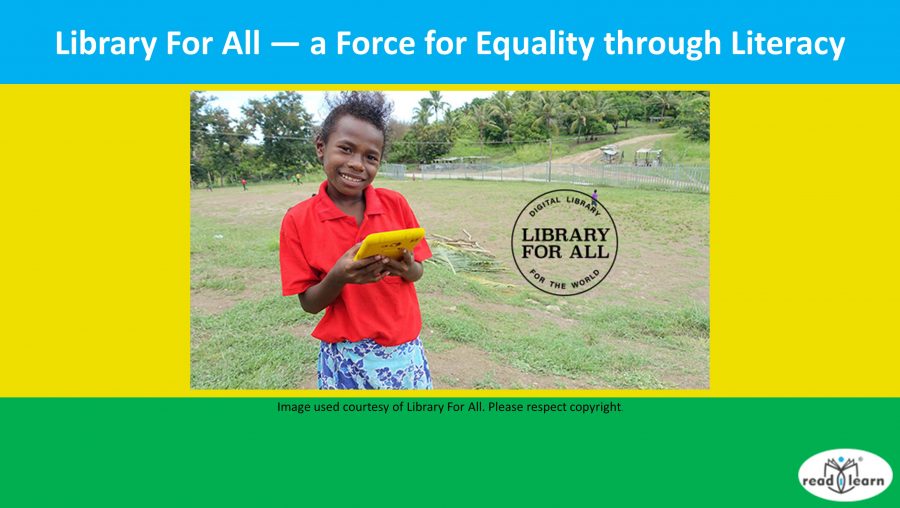
    Library For All is an Australian not for profit organisation with a mission to “make knowledge accessible to all, equally” through a digital library of books that is available free to anyone anywhere in the world. The focus is on providing high quality, engaging, age appropriate and culturally relevant books to children in developing countries and remote areas.

    Who can access Library For All?

    Library For All found that, even in “communities where history, poverty or remoteness are everyday barriers to accessing knowledge”, many children have access to mobile phones, e-tablets and readers. Recognising this, the digital library was created which allows children anywhere to freely access reading material through the app, available in the Google Play Store on any Android device.

    Teachers can also use the app with children in their classrooms. What a great way of accessing a range of culturally diverse books from simple beginning stories to chapter books.

    In addition to their availability on locally owned smart phones and tablets, through the support of development organisations around the world, the books are available to many schools and communities in developing countries and remote areas through the Spark Digital Library Kits.

    Continue reading: Library For All — a Force for Equality through Literacy – readilearn

  • Swim a Rainbow with Kim Michelle Toft – readilearn

    Swim a Rainbow with Kim Michelle Toft – readilearn

    Kim Michelle Toft is the author and illustrator of a collection of beautiful environmentally-themed picture books focussing on the conservation of marine environments. I have previously introduced you to Michelle when we spoke about her books The Underwater Twelve Days of Christmas and Coral Sea Dreaming.

    Kim illustrates all her books with unique and beautiful silk paintings. You can view Kim’s painting process in videos that show 40 hours of work in two minutes on her website here.

    In this post, to coincide with a special giveaway, we discuss her beautiful book I Can Swim a Rainbow.

    About I Can Swim a Rainbow

    I Can Swim a Rainbow adapts the lyrics of Arthur Hamilton’s song I Can Sing a Rainbow, with which most young children are familiar, to the colours of the ocean and its inhabitants. As are all Kim’s books, it is illustrated with her magnificent and unique silk paintings which highlight the beauty of the ocean’s colours. As always, the environmental message of this book is as strong as its pages are beautiful as it calls us to protect the world’s fragile reef environments.

    Continue reading to find out more about Kim’s beautiful book and a special giveaway until 18 October: Swim a Rainbow with Kim Michelle Toft – readilearn

  • The Interlude #flash fiction

    The Interlude #flash fiction

    Carrot Ranch flash fiction challenge The Interlude

    This week at the Carrot Ranch, Charli Mills challenged writers to In 99 words (no more, no less) write a story about an interlude. It can be a pause between two key moments, the pause between acts in a play, an intermission, or a temporary amusement Go where the prompt leads you!

    Instead of wrapping up my story in a post this week, I’ve simply written a response.

    The Interlude

    It was intended as an interlude filling the gap between childhood and marriage. Hired as governess to a grazier friend of a friend, they relished the possibility she’d meet a wealthy future-husband—plenty of single men in the bush— while she made herself useful.  But life doesn’t always comply with one’s plans, especially for another. The grazier’s children were eager students and she taught them well. Soon others came to learn from her tuition. They built a small schoolhouse which filled with willing minds. While suitors were a-plenty, none captured her love for teaching which became her main event.

    Thank you blog post

    Thank you for reading. I appreciate your feedback. Please share your thoughts.

  • How Schools Could Be Improved

    How Schools Could Be Improved

    In the recent School Days series which featured reminiscences of twenty-five authors and bloggers, each was asked for suggestions of improvements that could be made to schools.

    In this post, I share those suggestions. If you wish to read more of the authors and bloggers’ works, please click on their names to follow the links. If you would like to read their reminiscences, follow this link.

    This post concludes the series for now. I thank you all for joining in the conversation. I thoroughly enjoyed the discussion. There are still some who would like to share their reminiscences which I will post as they come in on a Sunday evening. For now, I’ll leave you with these wonderful suggestions of how school could be improved. (Note: I have arranged the bloggers in alphabetical order of first name.)

    Anne Goodwin, How do you think school could be improved?

    1. Reinvest in SureStart (it was a UK New Labour thing for at-risk preschoolers) so that all kids have the skills they need for school.
    2. Scrap private schools’ charitable status and put the taxes raised into state education.
    3. Abolish all religious schools, and schools established to follow a particular fad.
    4. Provide every child with a light breakfast and a three-course vegan lunch (to avoid the expense of catering for different diets) for free. Kids can’t learn if they’re hungry, and we desperately need to give the adults of tomorrow the skills to pursue a healthy diet. (So cooking and gardening lessons too.)
    5. Halve class sizes, and give teachers more support, including optional counselling / short-term therapy for anyone working with kids.
    6. Foreign language and music classes from the early(ish) years and (although I hated it) compulsory exercise through a diversity of sports. (Why should these life-long benefits be restricted to those whose parents can cough up the dosh?)
    7. Prevent (religious) parents from withdrawing their children from certain lessons, such as sex and relationships, including same-sex couples.

    Idealistic? Too expensive? Not if we care about the future society we build.

    Balroop Singh, How do you think schools could be improved?

    First, recruitment of qualified teachers who feel inspired to take the responsibility of teaching the next generation is essential. Second, they have to be paid at par with others to attract intellect and talent to this profession. Number of students in a class needs to be reduced and value-based education with flexible curriculum could be helpful for those students who want to pursue higher studies.

    Barbara Vitelli, How do you think schools could be improved?

    I would like to see approaches that encourage resiliency and independence. I think kids need to learn how to better handle disappointments and adversity. Perhaps that’s something that we parents are responsible for, but I think teachers can also make a big impact on our children in this area.

    Carol Taylor, How do you think schools could be improved?

    Having lived here, Thailand for 8 years now…and watched my grandsons grow up through the Australian school system …My observations are that schools are too politically correct now…too qualification driven…I think children should be allowed to be children first and foremost…I think more attention should be paid to the fact that not everyone is academic and if they have other qualities like working with their hands it should be encouraged…

    So should a community spirit which is high on the agenda here in Thailand…I was a late starter as regards qualifications and that door should always be open…By listening and advising in a non-doctorial way but a two way conversation… if a child struggles with reading let them read a book which is of interest to them and fosters questions.

    Charli Mills, How do you think schools could be improved?

    Most important, schools need to be safe. Early on, we need to give children the gifts of education and not the burdens. I think citizens should be involved in their public schools even if they don’t have children. How can we be part of the improvement? I don’t have the answers, but I’m willing to be a part of solutions. I support EveryTown for Gun Safety, and until we deal with the hardest cultural issues in our nation, it doesn’t matter if our schools achieve awards or graduate students who score well on tests.

    Chelsea Owens, How do you think schools could be improved?

    The issue I see as most harmful to the education system in America is that of encouraging everyone to attend college. Like, everyone. This needs to be changed so that people may test and train in technical fields if they wish, especially if they would succeed in that role instead of accrue a helpless amount of student loan debt. Entry level jobs have the requirement of a college degree now instead of a GED or high school diploma. We are simply adding more debt to an already-cynical generation.

    In a similar fashion, the public schools are required to accommodate everyone -including those with special needs. This a sore subject and one that I benefit somewhat from, since two of my children receive special education help for behavioral issues. I hold no animosity for children with more severe needs and know that they benefit from being around their more functional peers. Yet I also see most of the school’s resources going toward trying to entertain them all day and I see teachers with increasing numbers of more challenging pupils. Teachers already have a difficult job. I’ve yet to think of an ideal solution and fear it may involve limiting access for those children with needs.

    Christy Birmingham, How do you think schools could be improved?

    By listening to students, no matter their age. Hear what students want to see change about your school and determine if it’s feasible. Also, make libraries a priority as they are where students go to do research and can encourage a love of literacy.

    Lastly, engage with the local community rather than being independent of it as a school. By schools partnering with the communities they’re nestled within, students can enjoy a fuller educational experience. Also, schools can get ideas and support from the general community that can take the institutions further than they might otherwise go.

    Darlene Foster, How do you think schools could be improved?

    I do think teachers are often overworked. It is a demanding job and one in which you have to be on all the time. Many get burned out which is too bad as it is often the most dedicated that do. Perhaps hiring more assistants or having smaller classes would help. It is such an important job as these kids are our future.

    Debby Gies, How do you think schools could be improved?

    They could definitely use more government funding, more teachers, more after school programs, and more benefits for the children whose families can’t afford supplies and books for their kids, and for field trips.

    D. Avery, How do you think schools could be improved?

    Our schools don’t always seem to measure up, but what is the measure? Not everyone is measuring up to standardized tests, but if we really want to close achievement gaps, if we really want to leave no children behind then we need to reform much more than our schools.

    While I think we should first focus on out of school factors, within school we have to do more than give lip service to Gardner’s Multiple Intelligences. Which means schools need to not succumb to the testing culture; schools need to be less programmatic and prescriptive. Curricula should encourage empathy and build flexible and adaptive skills and strategies required for individuals to pursue their own interests and inclinations. Schools should be creative safe havens that sustain a sense of wonder and curiosity.

    Geoff Le Pard, How do you think schools could be improved?

    They can spend more time educating and less teaching. The tyranny of the curriculum is one of teaching’s greatest challenges. The notion that if you learn to a script and regurgitate that script and you will succeed is one of life’s top five fictions; no actor worth their salt merely delivers a script – they have to understand it, live it, get beneath and inside it. That is precisely the same with learning. Get beneath the surface, go round the back, take off the lid and see the workings and that way so much joy will be had and so many avenues will be opened. Good education acknowledges the world is round and that all we can ever do is proceed to the next horizon and see what’s there; bad teachers are education’s flat earthers.

    Hugh Roberts, How do you think schools could be improved?

    More needs to be done in educating children about diversity and the hate crimes we hear so much about nowadays. Nobody should feel afraid to go to school because they are bullied or just because they’re told they are different and don’t fit in. Children should be encouraged to read about different ways of lives and to speak out about bullying. As a child who was bullied at school, my life was made much worse because I was afraid to tell an adult what was happening. These were the days before social media where bullying and hate crimes have now taken up residence. Children, these days, have a lot more to put up with, but I think there are also more bullies these days than there were when I was at school.

    Joy Lennick, How do you think schools could be improved?

    It’s no secret there are a lot of problems in the world, generally – of course there always have been – but because of technology and the immediacy of news reaching eyes and ears, it is often exaggerated in our minds. Too much paper-work still seems to overload some teachers, and I wish there was more emphasis put on caring for each other. Not all parents are equipped for the job they undertook…(as my husband says: ‘You have to pass a test to drive a car, but any idiot can have a child…’ Religion should be discussed broadly, but taught and practiced in specific schools,  not mainstream, although children should be helped to accept and live and let live, when taught about caring.

    JulesPaige, How do you think schools could be improved?

    Public Schools need to prepare our children by starting language in the early grades and not waiting until older grades. Special language immersion classes were available in later years (of my children’s schools) for a select amount of students who were selected by a lottery. Public Schools also need to make sure basic math and estimation skills are taught without the assistance of calculators or iPads. Public schools also need to encourage acceptance of differences.

    If you choose to send your child to a public school, then you need to accept the parameters set therein. Public Schools also need to keep religion out of the schools. And if vaccines are a requirement, there should be no exceptions. Just one unvaccinated child can bring disease to a whole school population.

    Mabel Kwong, How do you think schools could be improved?

    At times school can be a place where we feel we don’t belong. As Hugh Roberts said in his interview for this series, ‘Nobody should feel afraid to go to school because they are bullied or just because they’re told they are different and don’t fit in.’ There needs to be more focus on bringing awareness towards discrimination, racism and bullying. Having more open discussions in class about different cultures, sexualities, gender, mental illness and disabilities would foster a stronger sense of belonging in school and encourage us to embrace and respect differences early on.

    Marsha Ingrao, How do you think schools could be improved?

    These questions made me think about how much schools have improved. We complain that kids can’t write, and indeed, texting has changed the way kids think. Capitalizing the word I is not important to them but is to educators. Communicating quickly is something kids have taken to a new level. What they don’t know how to do is think beyond the immediate. Just because they can communicate doesn’t mean that they do it well. Schools need to challenge students to step back to imagine the bigger picture and consider the consequences of their actions. This is why teaching social studies and humanities is essential.

    Miriam Hurdle, How do you think schools could be improved?

    At elementary school, there is not enough time of the day to teach all the subject to prepare the students for Junior High or High school. Schools end at 2:30 p.m. for lower grade and 2:45 p.m. for upper grade. For lower grades, teachers teach reading and math in the morning. After lunch, they may teach social studies and physical education. There is no time to teach science. Since the State test at the end of the year doesn’t test science, the teachers give up on teaching that subject.

    For upper grade, teachers teach reading and math in their homeroom. Some of them team teach social studies and science so the teacher could do the preparation and teach for more than one class. Students can benefit more learning if the school days are longer.

    Pamela Wight, How do you think schools could be improved? 

    I think schools should focus on the importance of empathy and compassion for all living beings, as well as the importance of learning a subject. Open up more lessons on diversity and how we each learn from each other. Additionally, we need more/better high school classes on ‘daily life’ activities like budgeting and nutrition.

    Pauline King, How do you think schools could be improved? 

    I’d love to see a return to a balanced education that includes academia and the arts and life skills.  I’d love to see each classroom be a living community where all kinds of kids learn to get along, learn to appreciate each other and learn that not everyone is good at everything.  But that everyone, even the least able, has a skill and a personality that offers much.  Where tolerance is taught and practised, and respect is modelled and expected.  A place where different cultures and different beliefs are seen as interesting and intriguing and when it’s all boiled down, people are people and we all feel the same way over the things that matter.

    I’d like to see geography and social studies and all kinds of real arts and crafts come back to life in the classroom, I’d like to see kids singing and dancing and playing together in between learning the Three R’s.  I’d like to see the slow expansion of a planned curriculum that ensures a deepening understanding of the natural sciences — again attached to the developmental stages and understanding of the students.  Never bring hard facts too soon to young people — they kill childhood!

    I’d like everyone to understand that we live in a world that is changing so quickly that it is highly likely the jobs their kids will do haven’t yet been invented.  The only way to ensure their children will succeed as adults is that they will have a healthily developed sense of themselves, their interests and their abilities and be able to think, to assess, to understand the needs of the world and to have the entrepreneurial spirit to meet them.  It’s less about passing exams and more about an ability to learn; less about gaining the skills for a job, more about gaining an ability to learn new skills.

    Pete SpringerHow do you think schools could be improved?

    Besides de-emphasizing state testing, schools have an increasingly challenging job of dealing with bullying.  Violence is prevalent in our culture, and schools have increasing numbers of violent students who are dealing with mental health issues. The school has to be a safe place for kids; a place that they can learn in a nonthreatening environment with role models who inspire them.  Teaching educators how to equip themselves with firearms is not the answer!  

    Ritu Bhathal, How do you think schools could be improved? 

    I think this answer doesn’t lie with the schools, but with the government. They really need to learn from the Scandinavian Education system, where the emphasis is on learning through play for the first few years, and formal schooling that starts at 7, when a child is more ready to learn in a classroom environment. And scrap the SATS! I speak from experience here as I have seen both my children go through the SATS and the upset it caused them at 7 and 11. In Finland, where my brother is bringing his family up, my nephew is 4 and the age of children I teach. What he can do at that age, in more than one language, astounds me, from his general knowledge, motor skills, numeracy and literacy! UK – please take note! 

    Robbie Cheadle, How do you think schools could be improved?

    The most important thing in our government schools is to get good teachers. Teachers that aren’t masters in their subject will struggle to teach others, particularly, children that can’t learn in one specific way but need the information presented in another way. The children also need a safe learning environment, which often isn’t the case, and basic learning materials.

    Sally Cronin, How do you think schools could be improved?

    I feel that there is a one size fits all approach to education which does not take into account the individual child’s needs or abilities. In the UK in particular there has been a push in the last decade to get children into university, and the loss of technical colleges (now rebranded as universities) that I went to for those who want a more practical approach to their careers. Also I believe that there should be a push for more apprenticeships and that some children who want to follow that route should be allowed to leave school at 14 as long as they are going into an approved apprenticeship. I understand that is happening in Australia and I think it should also be introduced in the UK and Ireland and other countries.

    Sherri Matthews, How do you think schools could be improved? 

    Which leads me to…less focus on those dreaded OFSTED ratings (Office for Standards in Education, Children’s Services and Skills) and more on the individual.  The expectation that all students should be good at all subjects is something I think needs to go. More emphasis on each student’s talents and strengths in smaller classrooms and rapport building between the teachers, student and parent is needed, fostering mutual respect. My youngest and middle boy finished their schooling years in England at a high OFSTED rated school, yet despite my frequent calls asking for support for my youngest, we got none.

    Susan Scott, How do you think schools could be improved?

    You’ll note that the last sentence ‘…says access to stories in their home languages’. This is a debate that rages on, and is relevant as we have 11 languages here in SA, including English and Afrikaans, of whom only about 8% have English & Afrikaans as home languages. Which means that when black children enter into school and are taught in English, they are already back footed. This apart from education still being for the most part barely up to scratch in spite of SA spending the most worldwide on education and yet having an abysmal record.

    You ask how I think schools could be improved. Literacy begins long before schooling. Children could be encouraged to read firstly which allows for the imagination to come into play. Einstein, when asked by parents how they could help their children become clever like he was, he replied ‘Read them fairy stories, and read them more stories’.

    Later on they can develop critical thinking skills. Chess would be a good subject to learn. Schools could encourage the art subjects more and I read that this is being encouraged around the world in order to develop both sides of the brain. Each side enhances the other.

    There could be more time for the playground, away from the confines of the classroom. They could learn to tend to a vegetable patch. They could see Nature in action more, e.g. the worms in the soil, or the ants, birds, butterflies and bees going about their business.

    It is as well that schools have rules and regulations of which parents and children are aware. From this basis they can break the rules, when they have the critical skills to do so.

    Schools should provide safe and secure places of learning where children have no fear of being attacked and bullied by fellow classmates and/or teachers.

    There could be skilled social workers or psychologists on hand to attend to any child or teenager who appears to be suffering from problems at home and with whom the child or teenager feels safe in revealing their problems.

    Quality education for all requires the support of government, schools, civil society, NGOs, families, communities and funders.
    Thank you blog post

    Thank you for reading. I’m sure you’ll agree there are many words of wisdom and great suggestions included in these responses. Now, if only we could get those with the power to take note.

    I appreciate your feedback. Please share your thoughts.

  • Introducing climate scientist Dr Sophie Lewis – readilearn

    Introducing climate scientist Dr Sophie Lewis – readilearn

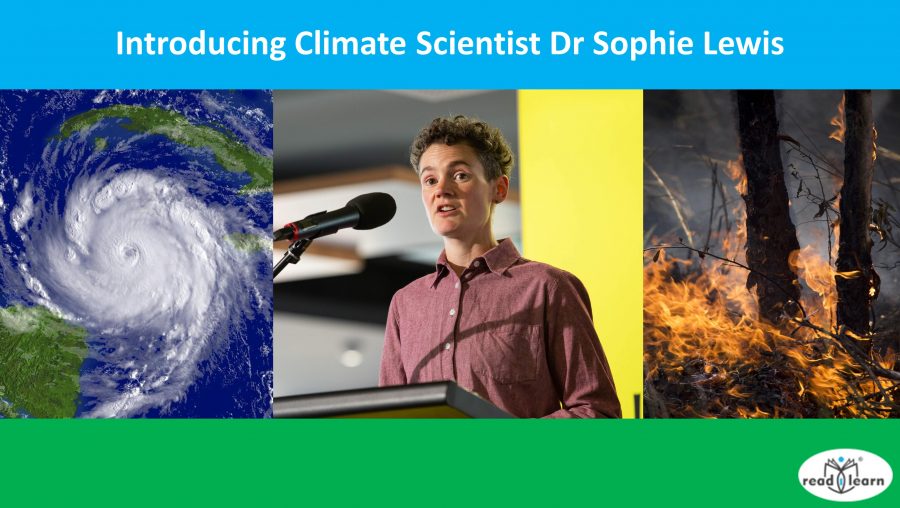
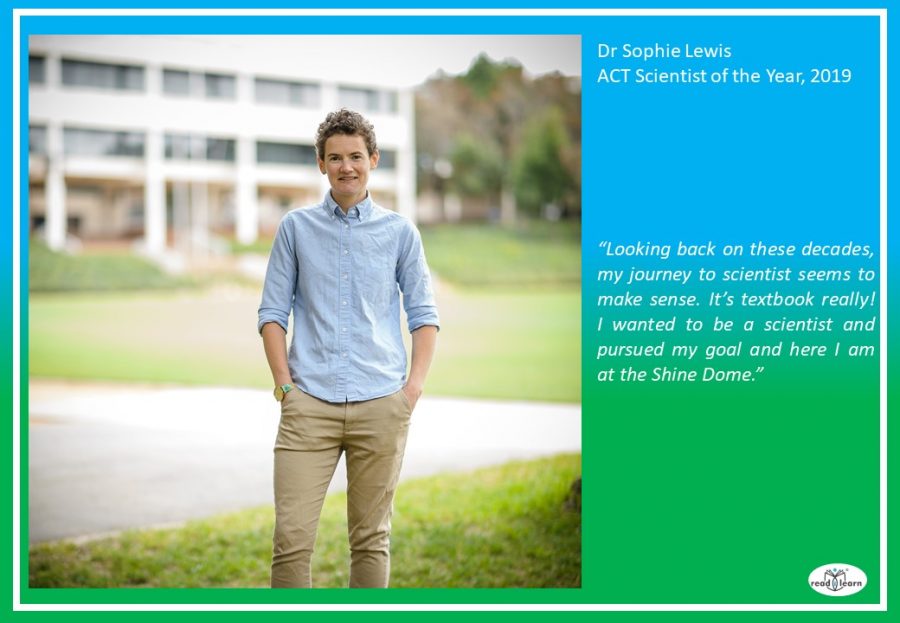
    Last month during Science Week, I had the pleasure of attending an address at the Shine Dome in Canberra given by the winner of the2019  ACT Scientist of the Year Award, climate scientist Dr Sophie Lewis.

    The ACT (Australian Capital Territory) Scientist of the Year Award ‘recognises the achievements of an up-and-coming local scientist with significant potential to continue to achieve in their chosen field of research.’

    As tomorrow 21 September is the International Day of Peace and this year’s theme is Climate Action for Peace, I thought this was the perfect time to introduce you to Sophie.

    About climate scientist Sophie Lewis

    Dr Sophie Lewis received the 2019 award for research and the development of innovative techniques that are helping climate scientists the world over understand the impacts of climate change at the local, national and global level.

    On her website, Sophie says “My primary research work involves investigating the contributions of human and natural influences to recent extreme climate events in Australia, such as heatwaves and floods.  Attribution studies are useful for understanding the potential risks and costs associated with future climatic changes. My interests are climate extremes, climate change and variability, and communicating climate change.

    I am currently a Lead Author on the Intergovernmental Panel on Climate Change’s Sixth Assessment Report (WG1, AR6) and a Domain Editor for WIREs Climate Change.”

    Becoming a climate scientist

    While I appreciate the importance of Dr Lewis’s research to the future of our planet, as an educator, what I enjoyed most about her talk was the story of her journey to becoming a scientist. I think all teachers and parents must be aware of the power their attitudes and actions have on the development of future scientists. Sharing and encouraging an interest in the world around them can have an enormous impact.

    Continue reading: Introducing climate scientist Dr Sophie Lewis – readilearn

  • Unpacking the greatest gift — comparatively speaking

    Unpacking the greatest gift — comparatively speaking

    Carrot Ranch flash fiction challenge - greatest gift

    This week at the Carrot Ranch, Charli Mills challenged writers to In 99 words (no more, no less) write a story that includes the greatest gift. Answer it as if it were a question, or show what it could be. Go where the prompt leads you!


    As usual, my mind jumps all over the place trying to find somewhere solid to land.

    For example:

    Do you remember learning the comparative and superlative at school?

    great                    greater                 greatest

    But what could be described as the greatest, indeed the greatest gift?

    Muhammad Ali had no trouble in declaring that he was the greatest.

    And ever since reading Charli’s post, I haven’t been able to get Whitney Houston out of my head.

    According to liveaboutdotcom, Whitney Houston“has been cited by the Guinness Book of Records as the most awarded female performer of all time.” It appears that those awards were not enough. Perhaps had she been able to find that love, it would have been her greatest gift

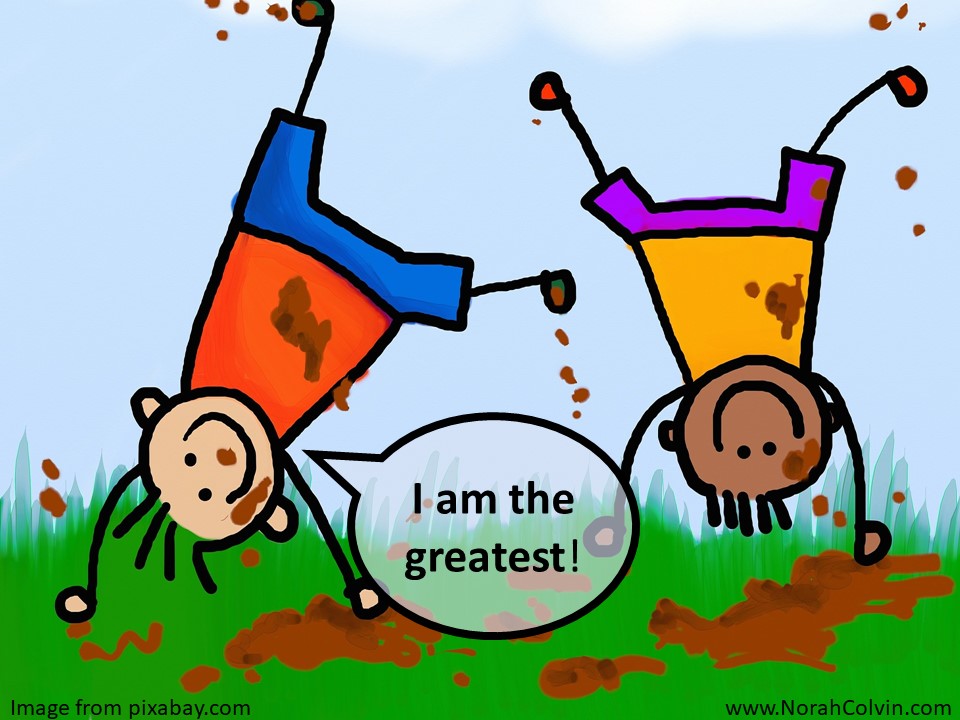
    Then there’s a chant I used to hear in the playground. A group of girls would gather and one would call out, “I am the greatest”. Others would respond, “No you’re not.” Then everyone would do a handstand. And so, it would repeat. I think whoever held the handstand the longest was entitled to call, “I am the greatest.” If only it were that easy.

    I am the greatest - playground game

    If one was to be the greatest at anything, would that be the greatest gift?

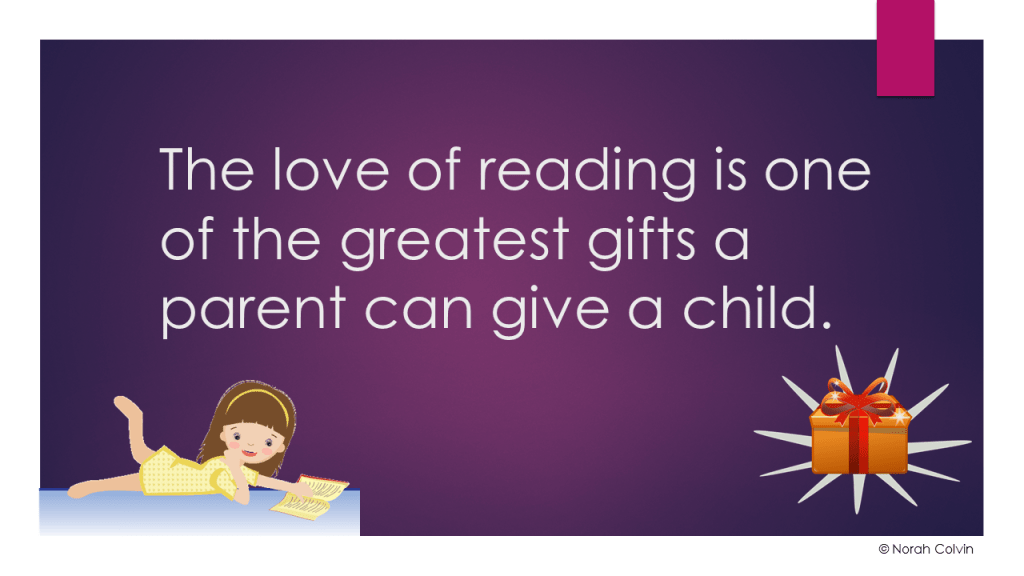
    I’ve often said that a love of reading is one of the greatest gifts that a parent can give a child.

    the love of reading is one of the greatest gifts a parent can give a child

    It is one of the greatest gifts not only for the joy that reading can give, but even more because the ability to read is empowering. It enables one to fully participate in what societies have to offer, to navigate one’s way through our complex environments and seek knowledge for oneself.

    If it is but one of the greatest gifts, what are the others, and is there one that is greatest of them all? Is it the gift of life? Of unconditional love? Of being accepted as you are? The most expensive car? The biggest house? The largest inheritance?

    Was winning the World Heavyweight Championship the greatest gift for Muhammad Ali? The greatest number of awards wasn’t the greatest gift for Whitney Houston.

    I think it’s too difficult to intellectualise. I’ve gone back to the concrete thinking of six-year-olds for my answer.

    The Greatest Gift

    The class was aflame with a mix of sadness and excitement.

    “She’s is leaving.”

    “She’s gunna have a baby.”

    “I’m gunna bring her a gift.”

    “I am too.”

    On her final day, the children jostled to give first, hopeful she’d love their gift the best.

    “Mine’s bigger than yours.”

    “Mine’s better.”

    “Mine’s the greatest.”

    The children gloated and nudged each other as the teacher opened the gifts.

    “How perfect.”

    “This is great.”

    “Thank you, everyone.”

    Finally, Tommy edged forward. His hands were empty. He looked shyly into his teacher’s eyes and whispered, “I’ll miss you, Miss. You’re the best.”

    Thank you for reading. I appreciate your feedback. Please share your thoughts.
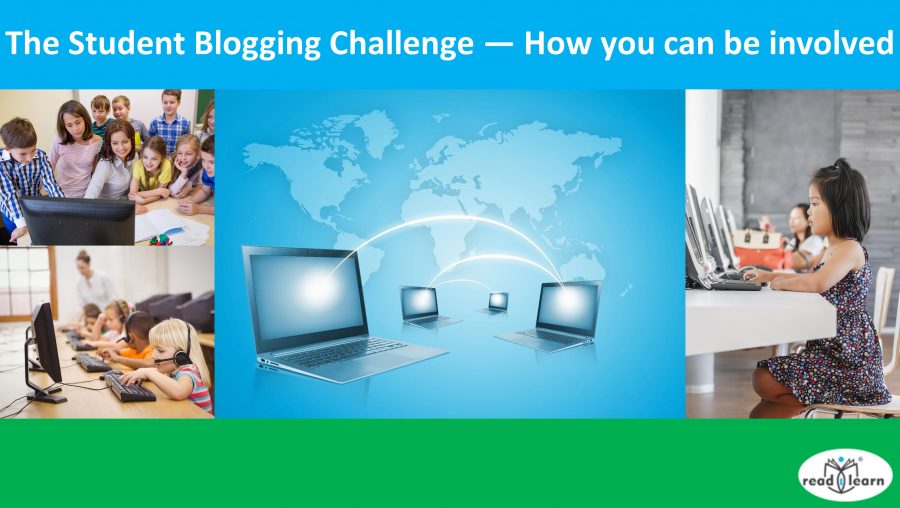
  • The Student Blogging Challenge — How you can be involved – readilearn

    The Student Blogging Challenge — How you can be involved – readilearn

    The Student Blogging Challenge is a project that encourages students around the world to create a blog and experience the benefits of publishing online including:

    • developing digital writing skills
    • becoming aware of the possibilities and responsibilities of digital citizenship
    • writing for and developing an authentic audience
    • making connections with others around the world.

    Founded in 2008 by Sue Wyatt, who I had the pleasure of meeting up with in Hobart a few years ago, the challenge has been held twice a year since then in March and October. The next Challenge, hosted by Kathleen Morris and Sue Waters, begins on 6 October and runs for eight weeks. A different blogging task is to be completed each week. Students can join in as part of a class group or individually. Participation is free.

    Who can be involved?

    The challenge is open to students from K–12 around the world. However, organisers suggest that it is most suited to students from 8–16 years.

    There are three ways to participate:

    As a teacher, you can register your class.

    Students can register individually.

    As an adult, you can register as a commenter on the student blogs.

    I joined in as a commenter for the first time in the March Challenge this year and have this lovely certificate to prove it.

    Continue reading: The Student Blogging Challenge — How you can be involved – readilearn