Live Love Laugh Learn … Create the possibilities

Category: Early childhood education

  • Learning At Its Best

    If you have been following my blog you will know that I have certain misgivings about traditional styles of education. That’s not to say that I don’t have certain misgivings about alternative styles of education as well, for I do. It was these collective misgivings that led me to home educate my daughter in her early years while attempting to establish an alternative school that met my expectations.

    In researching programs on offer in many traditional and alternative schooling environments, I read a lot of school descriptions, policy and philosophy statements. I usually find there is little to argue with in these statements, it is usually the way the beliefs are translated into practice with which I have difficulty.

    Occasionally I read something about a school that really excites me and I think “Wow, this school has really got it all together: philosophy and pedagogy. Children and their learning needs are at the centre of this organisation.”

    Recently I read a description that made me wish I was six years old again and enrolled to start my schooling there.

    According to the article it is
    “Learning at its best . . . where the MAGIC happens” and describes a “Disney World – only better”, where
    • Imagination can prosper
    • Friendship and freedom of speech is fostered
    • Conflict resolution skills are developed
    • Active and open listening is encouraged
    Among other things, it has:
    • a creativity corner
    • a nature reserve
    • a dramatic play area

    Why don’t I just let you read the article that fired my imagination, then you can let me know what you think . . .

    Hope's avatarshecando

    .. Is where the MAGIC happens.

    Given my interest in all things children, education and teaching, being lucky enough to have a tour of Miss Charlie’s classroom was like getting a private and personalized tour of Disney World – only better!

    Her class, and the rest of the Junior School (Kindy, Year 1 & 2), share newly renovated and connected federation houses in one part of the campus. Here they have their own tennis courts, play grounds, rooftop gardens, a junior library and even a secret corridor connecting them to the main gym and swimming pools and on to the rest of the school. It’s rather impressive, even if I say so myself.

    What really amazed me, and made me want to never leave (I’m not joking, I might have to apply for a teaching job there ASAP), was the open planned piazza that connects the junior school classrooms. This…

    View original post 616 more words

  • 10 reasons for including Christmas in the classroom

    10 reasons for including Christmas in the classroom

    The end of the school year in Australia is fast approaching; assessment is almost done and reports completed.

    After a hectic year, thoughts are turning towards Christmas and the long summer holidays.

    However the teaching and learning in the classroom doesn’t stop until the final farewells on the last day of school.

    These last few weeks of the school year allow a little more flexibility and time for spontaneous explorations of children’s interests after the curriculum’s imposed learnings have been achieved. Sure, skills still need to be practised and extended but the pressure is not so relentless.

    As the thoughts of most children are on Christmas and what they will do during the holidays, why not harness those interests and that excitement to make classroom learning meaningful and fun while developing important social and cultural concepts and understandings as well as practising and extending literacy and numeracy skills.

    Over recent years there has been some controversy over whether Christmas should be included in school programs, some arguing that it is not inclusive and excludes those students whose cultural backgrounds neither recognise nor celebrate Christmas.

    I have a number of reasons to support my argument that Christmas should be learned about in school, and my reference is to secular rather than religious celebrations which are best left to organisations dedicated to that purpose.

    I would like to say that the main reason is that I love Christmas (the excitement, the anticipation, the decorations, the gift-giving, the celebrations with family and friends)!

    But that would not be true.

    My focus is educational:

    1. Cultural respect: Most children in Australian schools celebrate Christmas. Including Christmas in the classroom program acknowledges this and draws upon their interests and prior knowledge.
    2. Cultural awareness: Investigation of traditions celebrated by other class members, community groups or countries develops a recognition of other perspectives, including those who do not celebrate Christmas and those who celebrate other traditions such as Hanukkah, Ramadan or Chinese New Year.
    3. Cultural understanding: Learning about the traditions of the dominant culture in which one lives makes one more comfortable within that society, more able to converse about important events and holidays, and able to develop shared experiences i.e. helps to develop feelings of being included, rather than excluded by participating in the outward traditions. However, this knowledge does not necessitate participation or belief.
    4. Cultural acceptance: Learning to understand that, although not everyone shares the same beliefs or traditions, we all share a common humanity and that there is good in everyone is important for creating a peaceful and nonjudgmental world.
    5. Self-awareness: Christmas is a time for reflecting on the year’s achievements and behaviour e.g. whether you have been “naughty or nice” or whether you have worked hard are superficial questions which can lead to deeper introspection. This self-reflection can lead to celebration as well as to the setting of positive goals for improvement.
    6. Other-awareness: Recognising one’s own strengths can help to identify, recognise and appreciate the strengths and achievements of others.
    7. Emotional intelligence: Children learn to recognise and describe their own emotions, and the emotions of others. They understand that not everyone thinks and feels the same way about similar events and learn to respect the thoughts and feelings of others.
    8. Social-awareness: Recognising how others think and feel about certain events can develop feelings of empathy. Children are more likely to find common ground upon which friendships can be built.
    9. Being kind to each other: Christmas is all about sharing and giving. In a classroom these can lead to discussions about working cooperatively and collaboratively, getting along with each other, and giving the greatest gift of all: friendship.
    10. Enjoyment, recognition and fun! I couldn’t stop at 9, and I think the inclusion of fun in the classroom is one of the most powerful ways to engage and motivate learners!

    Decorating the classroom is one way of setting the scene for explorations of Christmas traditions while encouraging the children to work cooperatively, take pride in their shared achievements and talk about how Christmas is celebrated (or not) in their families.

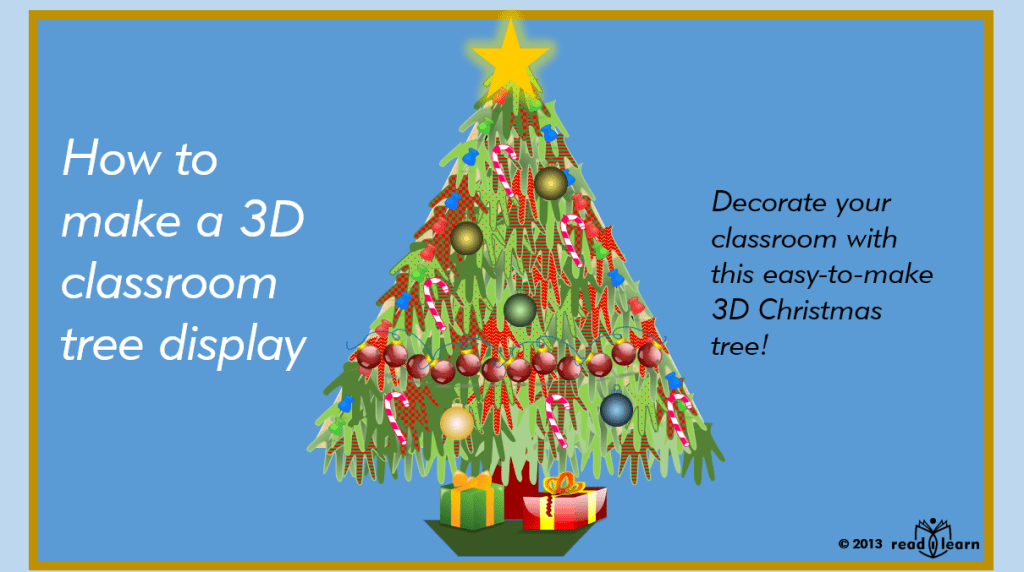
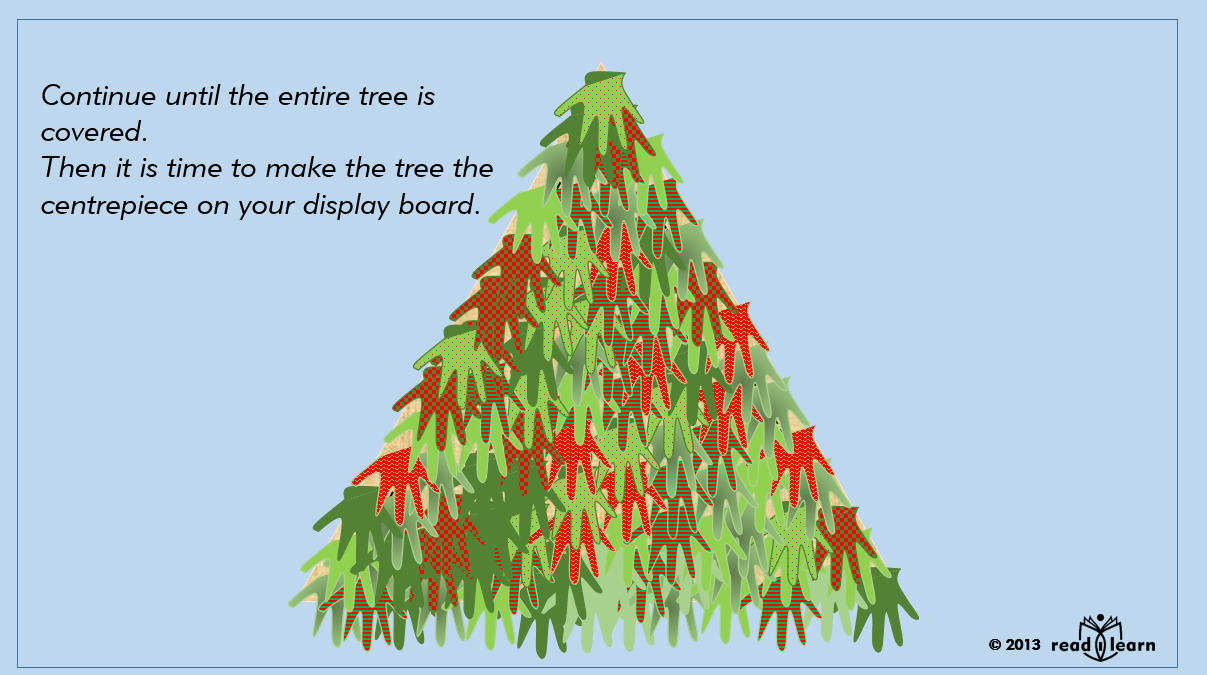
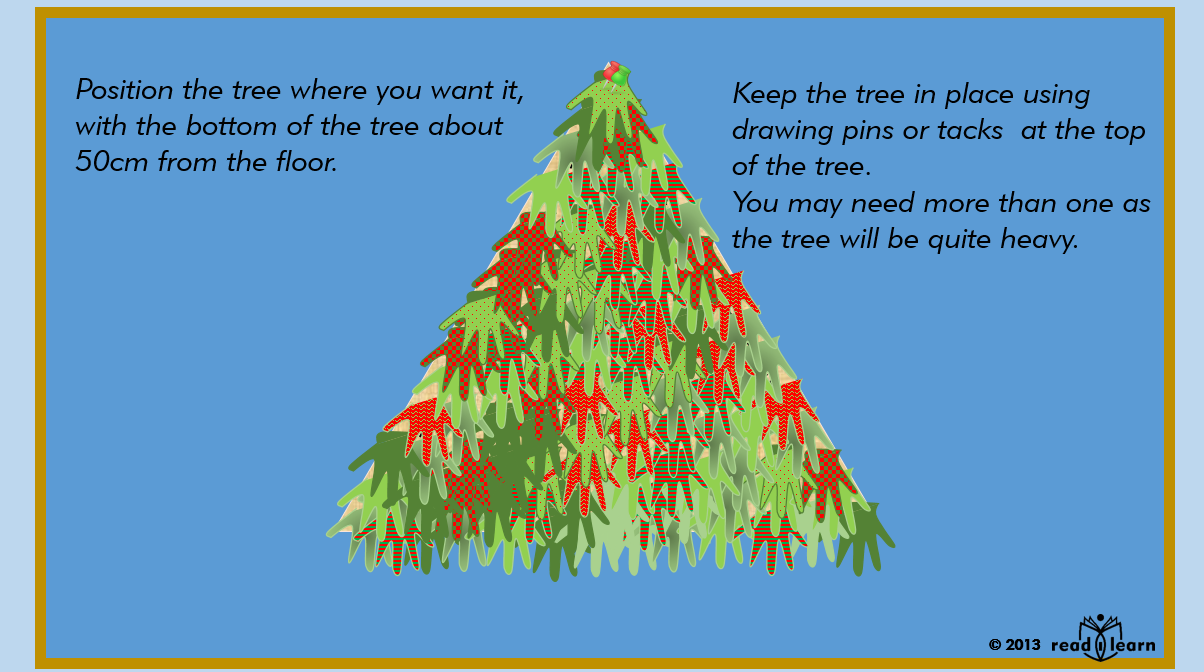
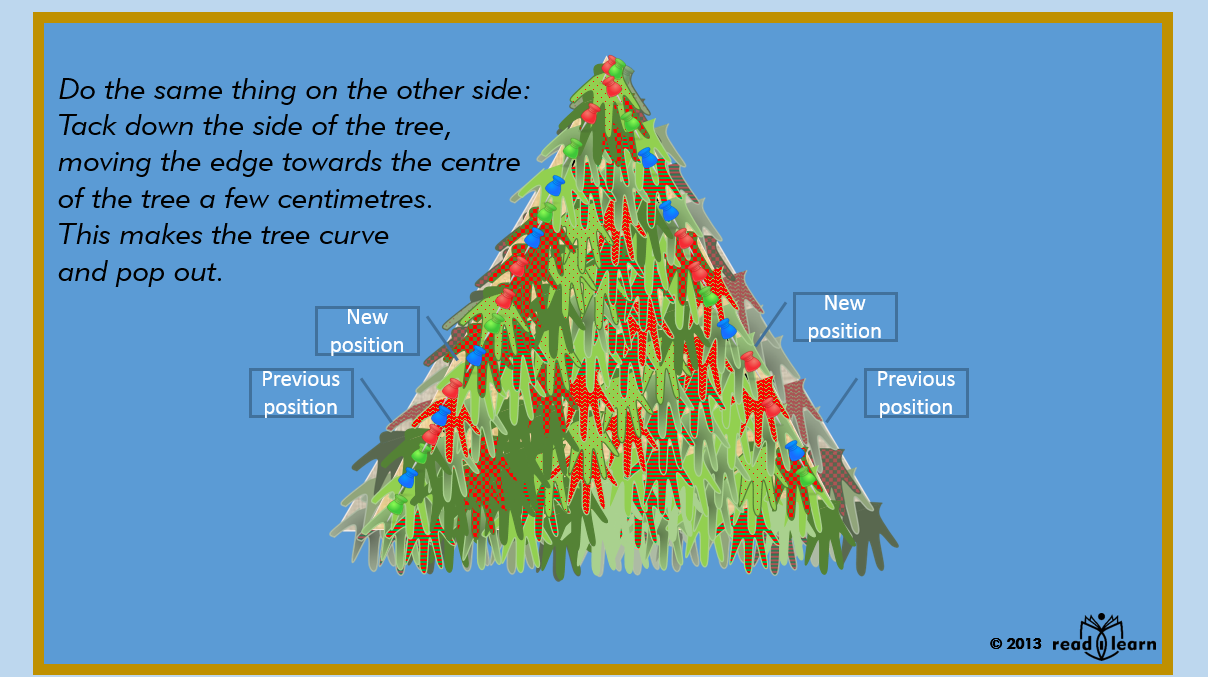
    It became a tradition in my year one classroom to make a large 3D Christmas tree to adorn our classroom wall and become the focal point of our learning.

    We would sit in front of it to have our discussions and read our stories.

    To the display surrounding it, we would add child-made decorations, stories and poems they had written, holiday messages and gifts.

    I would photograph each child in front of the tree, holding a sign with the message e.g. “Happy Christmas 2013”. These photographs would then be added to calendars which became a Christmas gift for parents.

    The children loved doing the tree, partly because of the inherent excitement at the end of the school year with Christmas holidays imminent. But they also loved doing it because they were working together, making something meaningful to them; and as they worked together and saw the tree take shape, they realised that what can be achieved together is far more (as well as more fun) than they would have achieved on their own.

    And while they were busily tracing and cutting, they were talking and sharing ideas and thoughts with each other and with me. We began to learn a lot about each other’s experiences, traditions and feelings.

    Having made the tree together, the children had an enormous sense of collective pride in what they had achieved, especially when all those viewing it remarked upon how lovely it looked.

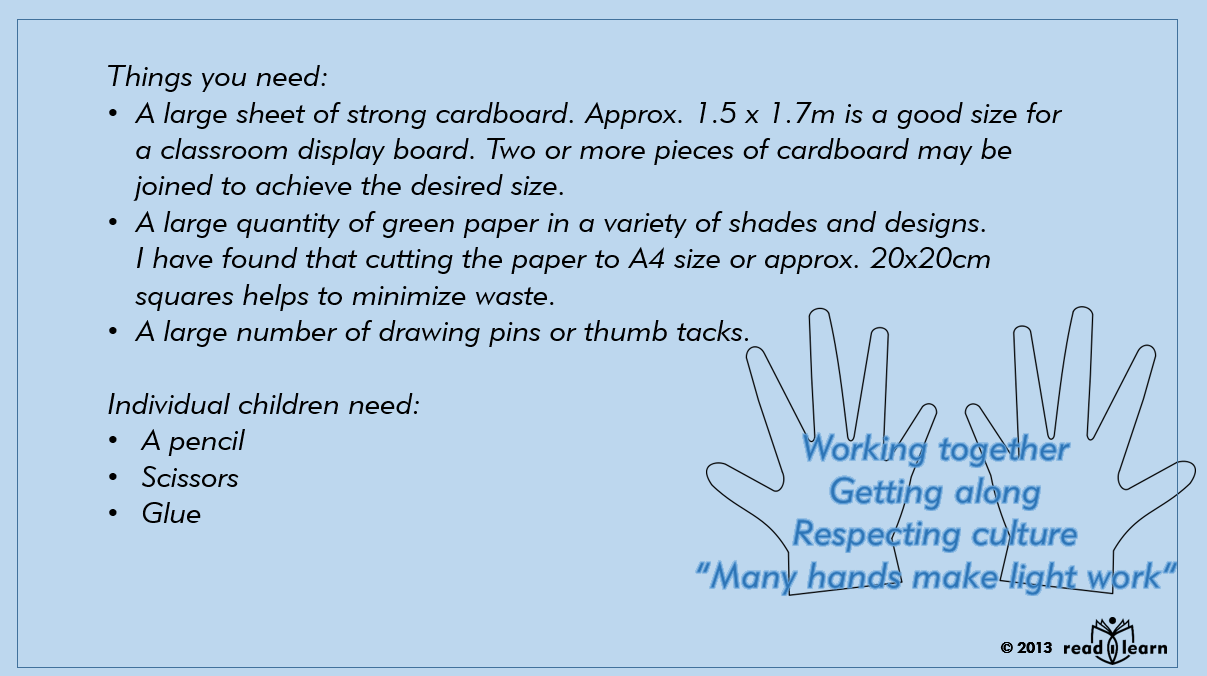
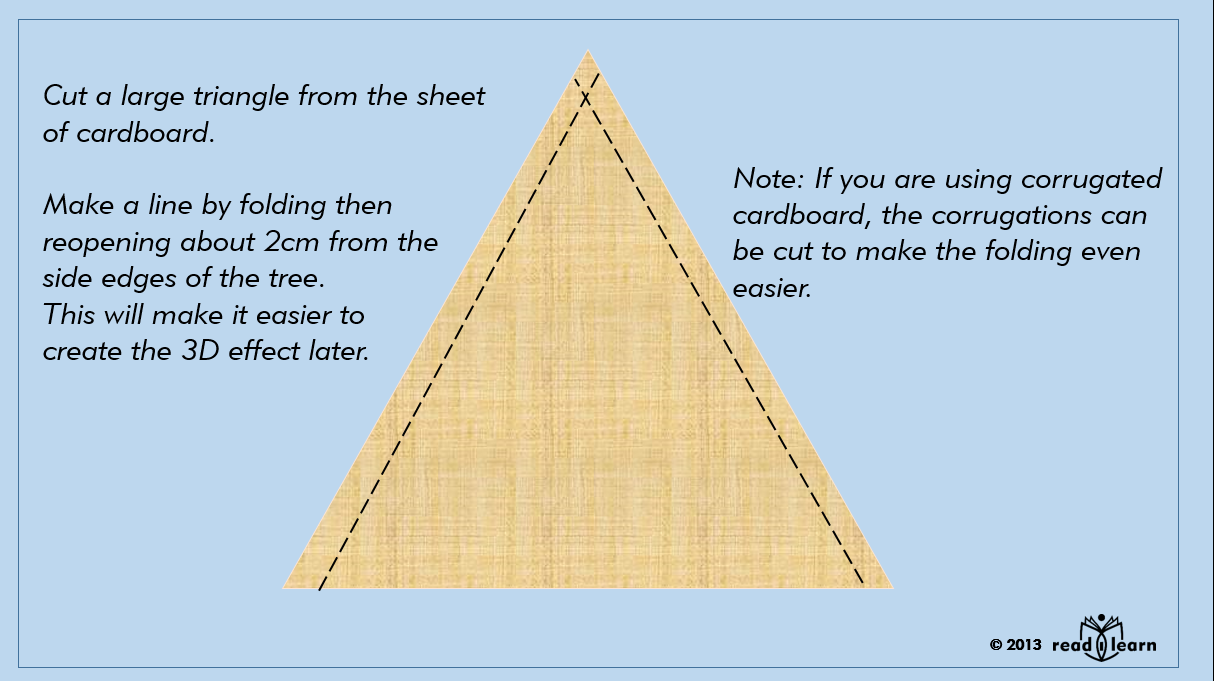
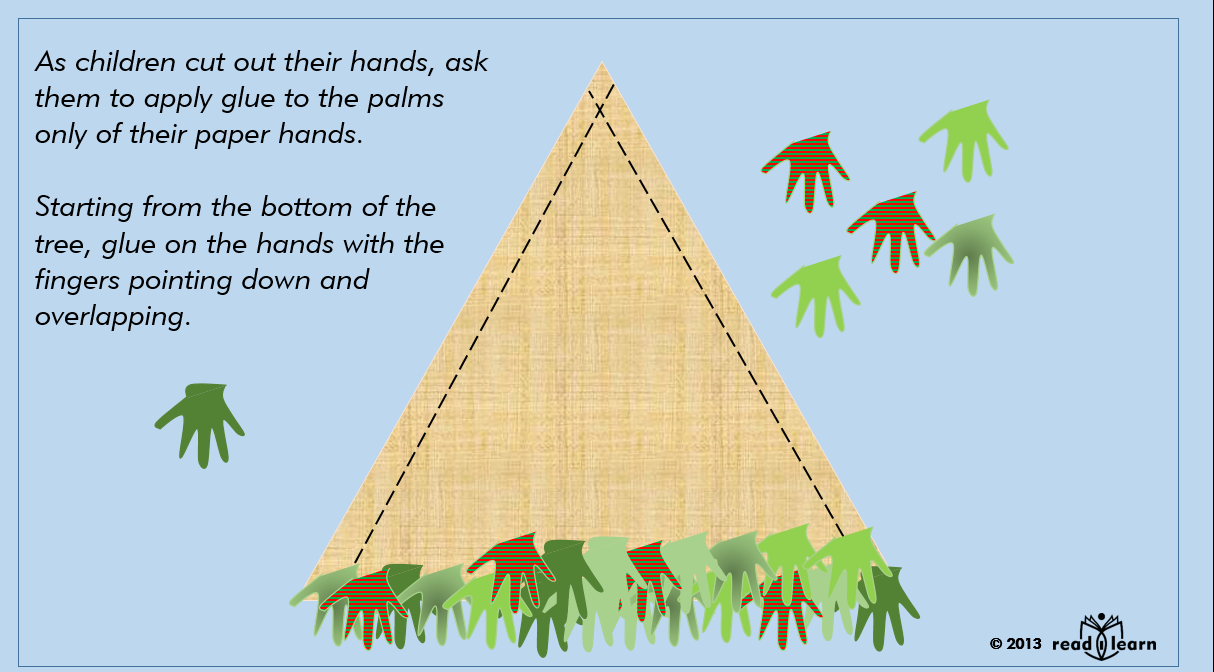
    While I include instructions for making the tree here, they are also available from readilearn.

    slide 2

    slide 3

    slide 4

    slide 5

    slide 6

    slide 7

    slide 8

    slide 9

    slide 10

    slide 11

    What do you think? Do you think Christmas should be celebrated in schools?

    What reasons would you add to my list? What do you disagree with?

    Leave a comment or indicate your thoughts below.

  • Friendship trees

    Friendship trees

    Summer_2010_ClipArt10_HeaderThe end of the school year in Australia coincides with Christmas and the summer holidays.

    TheresaKnott_christmas_tree

    This coincidence provides an opportunity to not only reflect on the year’ achievements, but to share appreciation of friendships made throughout the year while developing understanding of Christmas traditions.

    During the last few weeks of the school year, I use friendship trees with my early childhood classes for these purposes.

    About three weeks before the end of the school year each of the children make their own tree which is then displayed in the classroom until taken home on the last day of school. By then the trees are filled with messages of friendship and affirmation which the children write anonymously to each other each day.

    Although the end of the school year is when I use friendship trees in my classroom, they could be used at any time throughout the year. However they will work better when the children have been working together for a while and know a little about each other.

    These are some of the benefits of incorporating the friendship tree into the class program:

    • Is inclusive with its emphasis upon friendship
    • Provides an opportunity for reflection on friendships made
    • Encourages students to comment positively to classmates
    • Affirms students by the receipt of multiple positive comments
    • Encourages a giving attitude
    • Provides an opportunity to discuss Christmas traditions (tree as a bearer of gifts) as a way of developing cultural understandings
    • Develops understanding that kind words and actions are the greatest gift

    happy_sun_gm

    How it works

    • Children make and decorate a “friendship tree”, attaching or writing their name prominently on it. Trees are then displayed in the classroom.
    • Each day children select a name “from the hat”. (In preparation I prepare a class list of names in a table, one name per row, which I print out and cut into strips for the students to select and write their messages on.)
    • Children write a friendship note to the child whose name they have drawn, but they are to not tell anyone who it is or what they have written.
    • They may return the name and select another only if it is their own name or the name of someone for whom they have already written a message
    • They are to write something they like about the person, something the person is good at or something they appreciate about them.
    • I check what the children have written, ostensibly for readability, but also to ensure appropriateness of the message. However I have never had to edit the content. I have always been impressed by the messages the children write.
    • Children then fold and “secretly” place the messages into the tree of the recipient.
    • On the last day of school children take their trees, filled with positive messages, home to read and share with their family.

    Before children write their first message, we brainstorm what a friendship message might be. These are some examples:

    Thank you for being my friend.

    I like the way you laugh at funny stories.

    You are a good writer.

    You always do the right thing.

    Thank you for playing with me.

    However these ideas are only a starting point. I have always been amazed at the very appropriate and personalised messages the children write for each other. They really do notice the lovely things their classmates do throughout the year, and the different things that make them special.

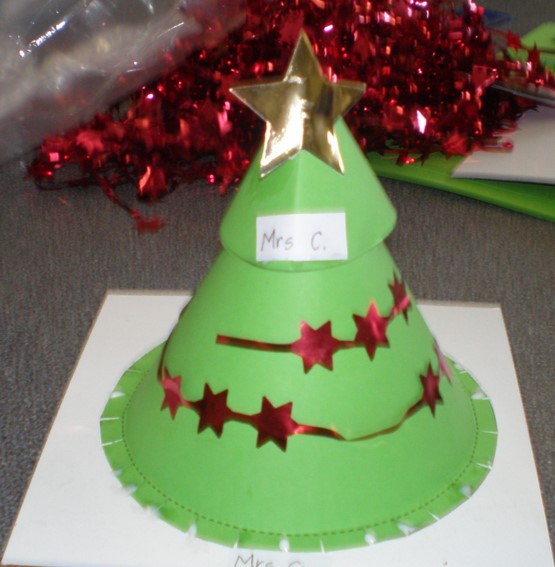
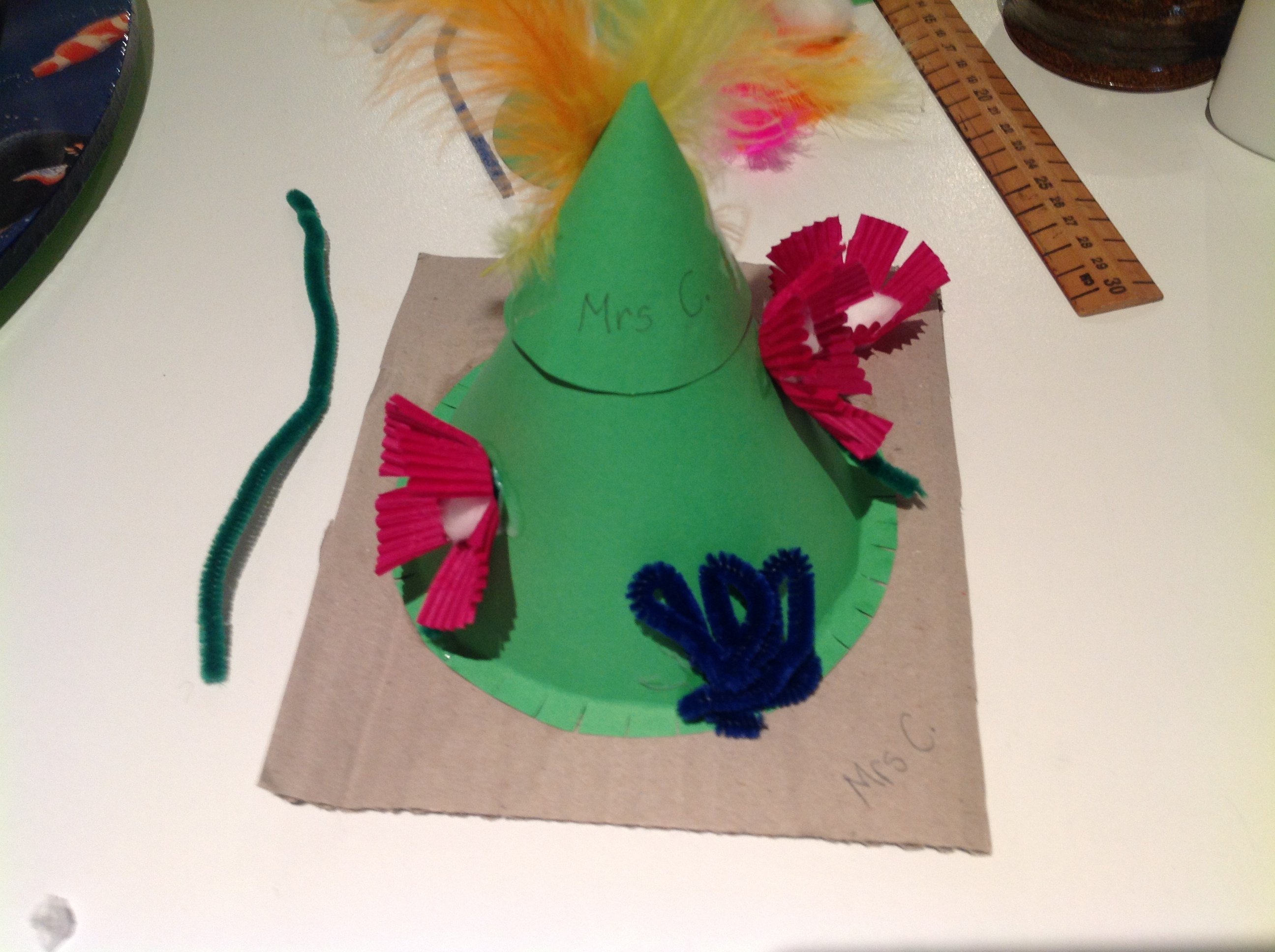
    Here are photographs of two  friendship trees I have made, one decorated for Christmas, the other for friendship:

    Friendship tree

    completed tree

    A cardboard cone (with a cut-off top) is attached to a cardboard base. A smaller cone (removable lid) tops the tree. Children lift the top to place their messages inside.

    If you would like to use a template for making the cone or view step-by-step instructions, I have made these available on the website TeachersPayTeachers. Please click here to follow the link.

    If after viewing this site, you decide to join up as I have, I would appreciate it if you refer your membership back to me my using this link. Thank you. tomas_arad_heart

    I hope you and your students enjoy the friendship tree experience as much as I and my students have!

    Let me know how it goes.

    Clipart courtesy of www.openclipart.org

  • How was your day?

    How was your day?

    Have you ever been asked that question and simply answered, “Same ol’ same ol’” without making any attempt to elaborate or delve deeper into the day’s activities.

    If so, did this mean that you didn’t enjoy your day and that there wasn’t anything interesting in it?

    Sometimes much of what we do on a daily basis can become routine with activities seeming to flow from one to another without a great deal of change or significance worthy of a remark.

    peole_laptoppeole_computer

    There are many reasons people don’t immediately share what has happened in their day, and the lack of a truly amazing outstanding event may be just one of them.

    johnny_automatic_magician_and_floating_lady

    Similarly, in response to the question “What did you do today?” school children, often simply answer “Nothing” (as described by SHECANDO) without making any attempt to elaborate or delve deeper into the day’s activities.

    Parents and others often jump to the conclusion that the child’s day has been uneventful and boring and, unless the child later volunteers some information, or the parent has a specific question to ask, that may be the end of the subject.

    However, just as with adults, there may be a number of reasons the “Nothing,” response is given, including the generalised nature of the question.

    Some reasons for this failure to elaborate, although unspoken and often unidentified, may be:

    15073-Briana-web
    Courtesy of eLearningbrothers

    ‘I’ve just finished a hard day, I don’t want to talk about it right now.”

    “So much happened today, I don’t know where to start.”

    “I don’t think you’d be interested in anything that happened to me.”

    “I can’t really think. What do you want to know: something bad, something funny or something amazing? I didn’t get into trouble.”

    Additionally, if children are not already practiced in the art of sustaining conversation with an adult, then these discussions will rarely come easily or spontaneously.

    Sometimes specific questioning, requiring more than a yes/no answer, may elicit a more detailed response that in turns leads to a more in-depth discussion of the day’s events, e.g.

    liftarn_Adult_and_child

    “Who did you sit with at lunch today?”

    “What games did you play at recess?”

    “What story did your teacher read to you? What was it about?”

    Knowing something of what occurred during the day helps parents formulate appropriate questions to elicit conversation.

    In my role as a year one classroom teacher I believe in the importance of these conversations between children and parents for a number of reasons, including:

    • to keep parents informed of what is happening the classroom, which in turn encourages a positive attitude and participation;
    • to develop children’s language skills by engaging them in conversations which require them to describe, explain, respond and exchange ideas;
    • to develop children’s thinking skills and memory, “What did I do today?” “What did I learn?” “What happened before/after lunch?”
    • to provide a time for reflection and review e.g. “What can I do now that I couldn’t do before?” “When we were doing x, we had to y. Oh, now I get it. That means . . . “
    • to provide opportunities to sort out feelings and emotions  experienced during the day, but not yet dealt with e.g. “I don’t know why that happened at lunch time. Tomorrow I will . . .”
    • to strengthen the child-parent relationship by sharing ideas, attitudes and events in their daily lives.

    In addition to giving children reminders before they left for home in the afternoons, I developed a strategy that specifically targeted the need to provide parents with a window into the child’s day in order to arm them with sufficient information to instigate robust discussion.

    I called this strategy

    Class news

    1269850054

    Each day I published class news which the children pasted into a book to take home and read with parents. These days many teachers, like Miss Hewes, use a blog to keep parents informed. However there were no blogs around when I began doing this in the 1980s!

    The class news consisted of three main sections:

    • News of individual students
    • Class things we did today
    • Class reminders

    News of individual students

    15026-Mac-web
    Courtesy of eLearningbrothers

    Each day 2 – 3 children told the class about an item of interest to them e.g. an activity, a recent purchase, a family event, or a wish.

    After each child shared their news, the class and I cooperatively composed a brief summary (one or two sentences at first). I scribed and the children read. Later in the day I printed this out for the children to take home and read to their parents.

    As well as being a very effective literacy learning strategy (which I will write about in a future post), it helped parents get to know the names of classmates and a little about each one; it provided a discussion starter about which their child could elaborate. It also affirmed the children by providing each a turn of “starring” about once a fortnight.

    Things we did today

    In this section I would tell parents briefly about a few things we did that day, e.g.

    “Mrs Colvin read “Possum Magic”. We talked about what it would be like to be invisible and discussed what we thought would be good and not-so-good about being invisible. Then we wrote our very own stories about being invisible. We had some very interesting ideas!”

    “We learned about odd and even numbers by finding out which number of different objects we could put into two even lines.  Where can you find some odd or even numbers of objects at home?”

    “In art we learned about lines: straight lines and wriggly lines; long lines and short lines; jagged lines and curved lines; thick lines and thin lines. What sort of lines can you see in your pictures?”

    When parents are informed about things that have happened during the day, they have a firm basis for opening a meaningful discussion with their child. This in turn validates the child by giving importance to the child’s activities.

    I often included a question to help parents realise that they could easily extend the child’s learning at home.

    Class reminders

    A reminder or two would be included if particular events were coming up, or payments needed e.g.

    “Sports day tomorrow. Remember to wear your sport uniform and running shoes.”

    “Friday is the final day that excursion payments will be accepted.”

    These reminders helped to reduce the possibility of a child being upset by forgetting or missing out on a class activity. They also provided parents with another opportunity for discussion and the ability to enthuse their child with the anticipation of future events.

    Publishing the class news like this every day did eat into my lunch time, but the advent of computers in the classroom helped as I was able to set up a template and print copies on the classroom printer. In the “olden” days of the spirit copiers, every day meant starting out again and having to go to another room to churn the copies out by hand.

    I continued using this strategy throughout three decades of teaching because I believe in its power to develop readers and talkers, and to involve parents by keeping them informed of classroom learning and activities. Having already received a child’s answer of ‘nothing’ to the question “What did you do today?” I was determined that no child from my class would have a reason to answer in the same way.

    What questions encourage you to open up and talk about your day?

    What questions encourage you to keep your mouth shut?

    What do you think of my daily class news?

    What other strategies do you suggest to encourage communication between parents and children?

    All images courtesy of www.openclipart.org unless stated otherwise.

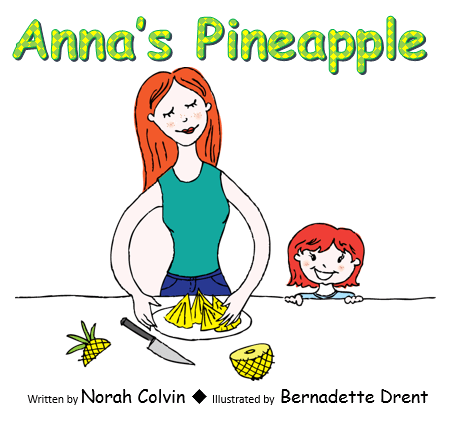
  • Anna’s pineapple

    Anna’s pineapple

    My gorgeous little granddaughter, Anna, turned two last Sunday.

    This is a story I wrote for her in celebration of her big day.

    It is based on a real event that occurred a week or two earlier. She just could not understand why her grandfather Bob had scoffed all the pineapple and left no more for her. He, of course, didn’t realise that the pineapple had been left for later, and thought that he was merely finishing off the leftovers.

    Anna’s Aunty Beckii was most amused, as was the rest of the family,  that Bob had eaten it all as he had already earned the title of “Bob the scoffer” by Anna’s big brother Artie. I must add that Aunty Beckii and Uncle Glenn had both given Artie considerable encouragement in bestowing this title!

    I am very grateful to Bernadette Drent who illustrated the story so well with only 2 days notice. I think she did a fantastic job and really captured the humour of the story.

    Have a read and let me know what you think. I’d love to know if it deserves a readership wider than that of family members.

  • Aren’t they amazing!

    Children, I mean.

    birthday cake 2

    My gorgeous little granddaughter is two years old today, and what a wonderful opportunity that provides me to reflect on the marvels of children’s ability to wonder and learn. I am forever in awe of their ability to learn language and all its nuances.

    Some people say they are “sponges”, spongebut I say they are far more than that. They are creators of their own understandings, learning far more than anyone could ever possibly teach them. From the moment they are born, children are actively seeking to make sense of the world: through their interactions with it and relationships they form in it.

    Anna is already using language for a multitude of purposes.

    She has an extensive vocabulary which includes:

    Names, for example, of

    • family members and friends
    • fruits and other foods
    • colours
    • animals
    • animal sounds
    • toys
    • dinosaurs (learnt from her big brother)
    • objects in the home and environment

    Action words (verbs) including eat, drink, play, read, watch, swim, jump, dance, clean

    Adjectives e.g. big and small

    Adverbs e.g. fast and slow

    Social graces for example greetings like hello and bye-bye, and manners like please and thank you

    She sometimes uses one word effectively to convey a complex meaning or thought, but more often now she is stringing together a number of words to form phrases and sentences. She is able to participate in conversations which require an exchange of information or an interchange of questions and answers.

    She uses:

    Questions with appropriate words and inflection to:

    • be informed e.g. Where’s Mummy?
    • request e.g. strawberry please Daddy? play trampoline Mummy?
    • interrogate e.g. why you eat pineapple Bob?

    Commands

    • more Beckii!
    • stop Bob!

    Statements e.g. I go sleep my home

    She understands the importance of facial expressions and body language that accompany these exchanges. She has learned the sway of accompanying a “please” with a smile and the power of an emphatic “No!”

    Although many of her sentences do not contain articles (a, the), prepositions or connectives, her meaning is easily understood in the context of the conversation.

    She knows the placement of adjectives before the noun e.g. “big ball”, not “ball big”.

    She pretends play, e.g. setting up a group of balls then instructing the adults to “shh”, because the eggs need quiet for hatching.

    She has learnt how to follow instructions and take turns in a game e.g. a game of memory turning over the cards to find the matching pairs.

    johnny_automatic_father_and_daughter_playingAnna understands far more than she is able to produce. She responds appropriately to the questions, commands and statements of her family, asking for more information and clarification if she needs it. She knows when the sounds are produced in play rather than for meaning e.g. “Billy-bobby-silly-Sally”, and responds with giggles rather than questions.

    She is familiar with the language of books and expects books to be a source of pleasure and language.

    party_pinguin__card_ocal

    She knows that songs and rhymes are not conversation and joins in rhythmically and tunefully. At her birthday party, she led the family in singing “Happy birthday” to herself, and did a marvellous job of conducting.

    All of these observations reveal but a sample of her actual language learning, glimpsed through the grandmother’s window, you could say, during weekend visits. The parents would be more able to describe in greater detail just how extensive the language development is.

    But is Anna’s ability with language remarkable?

    Yes, indeed it is. Just as the language learning of every other child is remarkable.

    In just two short years Anna, like most other children around the world, has learned the basis of her language. What conditions supported this enormous growth in language learning?

    johnny_automatic_playing_dress_up

    According to research, children are born with an innate ability to learn language. At first they have the potential to learn the sounds, words, grammar and use of any language, but as time goes on their ear is tuned to the language spoken around them, and by the age of one children have learned all the sounds of their native language. However, though this ability to learn language is innate, it doesn’t occur in a vacuum. It occurs in an environment rich in language, and the richer the environment, the stronger, the better the language growth.

    Anna is surrounded by a loving family who speak with her discussing the day’s events, explaining information, telling stories and playing imaginatively. They read to her many times a day, and play games that require thinking and talking. This exposure to language, both oral and written, is an important part of her life, every day.

    Conditions for language learning

    Anna’s environment clearly exhibits the conditions, described by Brian Cambourne, which encourage language learning:

    Immersion: Anna is surrounded by language. Her significant adults (parents and other carers e.g. aunt and uncle, grandparents) speak to her: interacting and playing with language. They read stories and sing songs to her. They hold conversations with each other about a wide range of topics. While not included in these conversations, Anna is quietly learning the nuances of adult discourse.

    Demonstration: Anna observes adults using language in many different situations and comes to understand the language of different contexts and purposes e.g. greeting friends, shopping, asking for help, giving information.

    Feedback: As soon as Anna started to make sounds of her own, her parents provided feedback by repeating the sounds she had made and by adding new ones for her to copy. When she started to say her first words, her parents responded with enthusiasm and encouragement.

    Approximation: Anna’s parents accept and respond to the message of her communication, without hint of it being incomplete or incorrect. Instead they support and elaborate, seeing it as part of the development towards language proficiency.

    Now that Anna is joining words into phrases and sentences, the adults respond, often with an agreement or explanation, by restating the sentence, and expanding on it, supplying the words not yet part of her vocabulary; demonstrating intuitively the target structures towards which Anna’s language is developing.

    The guidance offered by these responses is gentle and intuitive, giving both congratulations on the ability to communicate and reinforcing standard language usage. For example, when Anna says “Apple juice,” the parent may respond, “Would Anna like some apple juice? I will get some apple juice for Anna.”

    Expectation: Anna’s parents always expected that she would learn to talk and that her talk would develop through easily recognisable stages. They do not expect her to speak like a university professor at the age of two!

    They are also aware that not all children develop language at the same rate, and understand that if Anna wasn’t speaking in sentences at the age when another was, they would just continue to provide demonstration, feedback and support expecting that she would in her own time. While they know that seeking help early if concerned about a child’s language development in these early years is very important, they have no reason to be concerned about Anna’s language development.

    Responsibility: Anna’s parents recognise that the responsibility for her language learning rests with Anna. They provide the environment, they model language in use and provide her with feedback and support. They don’t attempt to formally teach her language structures which are not yet part of her developing language.

    Use: Anna uses language in real situations for real purposes: to get things done, to ask for help, to think and share.

    Don’t you agree it’s a pretty remarkable process?

    Children all over the world become proficient language users when they are immersed in rich language environments, often provided intuitively by parents who talk with and read to their children.

    Sadly, not all children have the benefit of an environment rich in language.

    If we could convince all parents of the importance of talking and reading with their children in these early learning years, we would have far fewer children with delayed learning abilities at school.

    Nor and Bec reading

    How do you think we can help parents of young children understand the difference it could make to the lives of their children, and themselves?

    Please share your ideas.

  • What did you do that for? Rewards and motivation

    ausines headphonesRecently, on the recommendation of my friend Rosie, I listened to a TED Talk by Michael Sandel “Why we shouldn’t trust markets with our civic life”.

    Rosie and I often suggest Talks to each other and then share thoughts and comments about them.

    This Talk, like most of those on TED, raises some very interesting, thought provoking and challenging ideas and issues. The issue of most importance to me in each of these Talks may not be the issue of most importance to Rosie, nor to any other listener. The understandings, beliefs and personal positions, (ideological, philosophical and ethical), that each person has will not only influence what they hear but how they interpret, organise and prioritise what they hear and what they take away from the Talk, whether intended by the speaker or not.

    In this Talk, Michael raises themoney bag issue of motivating students to learn, a challenge experienced in many schools.  He invited the audience to consider whether cash rewards should be used as incentives for students to perform well on tests or to read books.

    The reaction from the audience was mixed with fewer in favour of offering the rewards than against. When asked why cash incentives should not be used to encourage students to work harder or read more books, a participant stated that the students should be reading for intrinsic motivation, for an intrinsic desire to learn, and that a cash reward would take the intrinsic incentive away.

    studentbooksHowever: If a child is a reluctant reader or reads only when required, does that child have any intrinsic motivation for reading? If not with cash rewards, how can we inculcate an intrinsic motivation to read? What is or has happened in this child’s experience that an intrinsic motivation to read has already been killed? (I will offer some thoughts on these issues in a future post.)

    The argument for and against the use of rewards in schools, as well as homes, to encourage children to perform or behave in a particular way has waged for as long as I can remember and, I’m sure, even longer than that.

    stars

    Should children receive a sticker, a star or an award for that? Shouldn’t they just do what we want of them for the sheer joy of it / because it will do them good / because it’s the right thing to do? Shouldn’t they be intrinsically motivated and have no need of extrinsic rewards?

    It all sounds very good, doesn’t it? And maybe it works when a child is intrinsically motivated through a genuine interest, or maybe when children are happy to comply and perform expected tasks either through a need to please others or their own developing sense of how things should be.

    But what of the child who does not have this intrinsic motivation, no need to please or any ability to see a personal purpose in expected tasks or behaviours?

    One of the Talk participants suggested that results of offering a cash reward for reading books could be measured by a count of the books read while the reward was being offered, followed by a count of the books read after the payment ceased. Results of the experiment found that students, when offered cash rewards, read more books, but they also read shorter books.

    And why should we expect any more of children than we do of adults?

    tomas_arad_heart

    How many adults perform their work tasks for the sheer joy of it, powered by intrinsic motivation? Only the lucky few, I would guess, who are able to combine passion with employment, or who have sufficient resources to maintain the lifestyle they desire. Isn’t the extrinsic reward a major motivator for much of what we do? I dare say the performance of most adult workers would not measure highly after payment ceased!

    mystica_Coins_(Money)

    Okay. I know it’s not quite the same. The children are not in need of the cash rewards as they are supported by adults who receive cash rewards. Nevertheless, without that extrinsic reward, in most cases, that work would cease, regardless of whether the cash is actually required for survival or not.

    However I am always drawn back to an attempt at reconciling intrinsic motivation with compulsory schooling.

    tomas_arad_heartIntrinsic motivation is usually related to something of one’s own choice through interest, challenge or purpose. The motivation comes from within, not from the promise of any external reward.

    So how does this work for children in school?

    Not only is school attendance compulsory throughout most of their childhood years, children have few choices in school. They generally attend a school chosen by someone else, are taught by a teacher allocated by someone else, and expected to make friends with a group (class) allocated by someone else.

    teacherbellThey line up, eat, talk, play and toilet on the ring of a bell and are expected to perform academic feats on command. When they progress from one year to the next, they often suffer the disruption of new class group arrangements, decided by somebody else for questionable reasons. What would be so harmful about a child going through all the years of schooling with the same group of friends?

    Why then do we think that students should be intrinsically motivated to do something about which and in which they have very little choice and are most often powerless?

    Learning for the love of it, for the sheer fun and joy of it is a marvellous goal. And I believe children are innately intrinsically motivated to learn.

    How different would schools be if we began with the intrinsic motivation of each child and wrapped the leaning around that? How much more powerful would the learning be? What would that school look like?

    Is that what we call a child-centred approach? An approach that values the interests and needs of each learner. An approach that starts where the child is and supports them to find the paths that take them where they want to be. An approach that values their individual styles and timeframes while providing just the right amount of challenge to stretch them beyond where they thought they were able to go. That piques their interest in a vast array of topics and supports their learning of skills to achieve their desires.

    But often the lip service given to a child-centred approach in a traditional school, with all its constraints, still smacks of ‘You’ll do what I say but you’ll think that you have a choice’.

    What slap in the face it is to tell someone that they must do this, when to do it and how to do it; and then tell them they must do it because they want to do it!

    However there are teachers who passionately believe in a child-centred approach and in harnessing the power of intrinsic motivation. They work tirelessly and creatively, powered by their own intrinsic motivation, to employ a vast array of strategies designed to make a child’s opportunities for learning within the confines of an imposed curriculum of a traditional school motivating for each learner while targeting their individual needs.

    SnarkHunter_Arrow_in_the_gold

    Here are some strategies that teachers use in a child-centred approach:

    • Make connections with the children’s lives

    –          discussing their experiences

    –          valuing their contributions

    –          involving parents

    –          informing parents of classroom learning and experiences

    • Incorporate children’s interests

    –          using negotiated topics and tasks

    –          employing a variety of activities

    • Offer children some autonomy

    –          using negotiated topics and tasks

    –          employing a variety of activities

    –          providing opportunities for independent and self-directed learning

    • Make learning fun, meaningful and explicit

    –          using games, songs and hands-on participatory activity

    –          explaining how classroom learning connects to purposes in life

    –          providing clear and easy-to-follow procedures

    –          providing opportunities for finding solutions to real problems

    –          allowing explorations in creativity and innovation

    • Provide opportunities for cooperation and collaboration

    –          working with a partner or in groups

    –          allowing opportunities for discussion

    • Support and extend learning

    –          harnessing  spontaneous opportunities for optimising learning

    –          providing opportunities for practice and clarification

    –          challenging learners to stretch their imaginations and abilities

    • Add joy and laughter through happiness and humour every day

    These strategies may not tap into the intrinsic motivation of each student all of the time. However a supportive environment in which children are provided some choice of activities, opportunities to learn at a pace suited to their needs, and an understanding of the point of it all, will provide learners with the desire and skills to harness their intrinsic motivation for learning of their own choosing beyond the classroom.

    What do you think?

  • Being childwise, cultivating habits of the heart

    As a regular commenter on my blog Rosie has contributed additional value and insight, demonstrating her unlimited passion for the education of young learners as well as those who engage with them in a professional capacity.  A recurring topic in her comments is the importance of self-actualisation.

    I feel that Rosie’s message is important to share and, in response to my invitation, she has contributed a post, not just a comment, in order to more fully explain her views.

    Please enjoy Rosie’s contribution and feel welcome to add your own insights and comments in response.

    Growth toward self-actualisation (Maslow) requires integration of habits of heart and habits of mind.

    tomas_arad_heart             ryanlerch_thinkingboy_outline

    The development of these habits is essential to the balanced self. Schools have long attended to the habits of mind providing for a range of capabilities from the academic to the intellectual to the cognitive. The habits of the heart have received far less attention. Critically, however, attention to the first, habits of the mind, does little if it is not complemented by attention to habits of the heart.

    school cropped

    Curriculum frameworks have varied in the last forty years to the amount of attention focussed on habits of the heart. The trend to teach only that which is assessable and hence, that which can be measured, has resulted in many habits of the heart being neglected. To some teachers, habits of the heart, known also as the affective domain, are not within their role statement.

    CoD_fsfe_Checklist_icon

    Early years teachers have long recognised the importance of scaffolding the development of all aspects of the child. The belief that teaching the whole child has as its focus, the integration of emotional, social, physical, and cognitive. All interact as conditions for learning. When one area of development is not receiving attention, growth of the other areas may be restricted as well.

    58294main_The_Brain_in_Space-page-21-asian-girl-jumping

    From this perspective, words such as motivation, attitude, well-being, responsibility, independence, self-control, self-concept and identity become the “bread and butter” of a teacher’s daily activity. When learning is not occurring, the answer is not another worksheet or more of the same. These other conditions that form the habits of the heart are examined to formulate the next step to ensure growth.

    image courtesy of www.openclipart.org

    Views toward conditions for learning are slowly changing. For example, the Australian curriculum has at its focus, General capabilities embedded across all Learning areas. One of these capabilities refers to personal and social capability, bringing the affective domain into the realm of respectability as a teaching focus, at last. Despite this, the term ‘behaviour management’ continues to attract funding in some education systems.


    A proposal is to redirect attention away from behaviour management and engage with the direction of the Australian Curriculum. To do this, there is a need to view what needs to be taught and how to teach it if the habits of the heart are to develop.

    image courtesy of www.openclipart.org

    In looking at how to work with habits of the heart, some preservice teachers (now teachers), lecturers and a psychologist adapted “On becoming childwise” (Ezzo & Ezzo) to the needs of teachers and the classroom context. Documentation related to this program is available at www.teachersbeingchildwise.com.au. Videos are also available.

    teachersBeingChildwise

    All images, except Childwise, courtesy of www.openclipart.org

  • Dinosaur party

    My gorgeous little grandson is four years old tomorrow.

    He is captivated by dinosaurs and engages all members of the family in playing dinosaur games.

    To celebrate his birthday this week, I decided to make this little book about a dinosaur game with his family members (little sister Anna, parents, an aunt and uncle, and two sets of grandparents).

    I hope you enjoy it too!

    There are 2 choices of format: read it by yourself or read-along with me.

    Read it by yourself:

    You have three choice of arrows to use to page through the book : on the book itself, below the book, or on your keyboard.

    Click on the full screenbelow the image to view in full screen.

    Read-along with me:

    Click on the arrow to hear a reading of the story.

    Related article:

    Play. Dinosaur party (antlersandoctopus.com)


  • Affirmations: How good are they?

    In a recent post, Happy being me I wrote about the fragility of self-esteem and how affirmation songs such as those by Anne Infante, can help to build a positive environment.

    ‘I am Freedom’s Child’ by Bill Martin Jr. (mentioned in a previous post ‘I love the mountains’) is another great song of affirmation.

    Click on the link to view a poster outlining the benefits of singing Affirmation songs in the classroom.

    I invite you to submit any additional benefits of singing affirmations that you would like included on the list and I’ll be happy to update it.

    Feel welcome to make a copy of the poster to share with others if you wish.

    PS I made this poster using a template and cutout people I purchased (along with many others) from the eLearning Brothers. Check out their website here. I found out about them on another great site: the elearning coach.