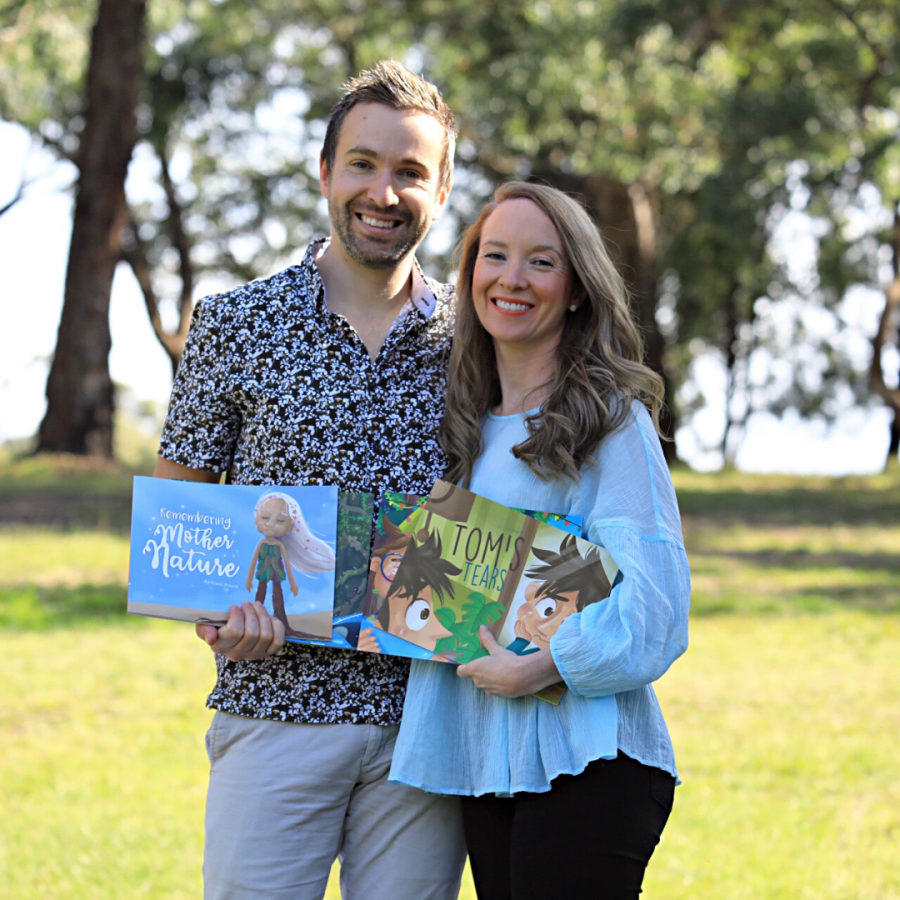
Today I am delighted to introduce you to a new publishing company Ethicool Books.
When I first heard about Ethicool Books, I was intrigued by the name and the play on words. When I delved a little further into their website, I was delighted to find what they were aiming to do.
The statement on their homepage says,
“Hi! we’re Ethicool. We publish remarkable children’s books about the world’s big issues, encouraging kids to make a positive change.”
I couldn’t find anything to argue with there. Or anywhere, in fact.
About Ethicool Books
Ethicool Books aims to encourage parents to engage children in discussions about issues such as climate change, ocean pollution, poverty and gender equality through stories told in their beautiful picture books.
As parents themselves, Stuart French and Teigan Margetts, the founders of Ethicool Books, realised the powerful role that parents have in educating their children for a positive future.
“Our little ones have the opportunity to create a different world, right from the ground up. The future is in their hands and if we give them the gift of knowledge and the inspiration to take action, they can create the world of their dreams.”
Ethicool Books.
But Ethicool Books are not only words. They are action also. They have partnered with 1% for the Planet, donating 1% of all book sales to that organisation. They are also eco-conscious and use soy inks in the printing process. You can read a little more about that here.
The Interview
Today, I have the great pleasure of introducing you to Stuart French, co-founder of Ethicool Books and author of the best-selling picture book Remembering Mother Nature.
Another month down. While I’m not wishing time away (I think most of us would always like more of that), I’m hoping that, as we step into this last quarter of 2020, we are stepping closer to a world free of restrictions, lockdowns and Covid-19. I’m sure you are all with me on that.
October begins in a wonderful way with World Smile Day on the first Friday in October — this year, 2 October. The day is a great reminder to spread smiles and share kindness with others. One of the best ways to spread smiles is by having an open heart and being friendly towards others.
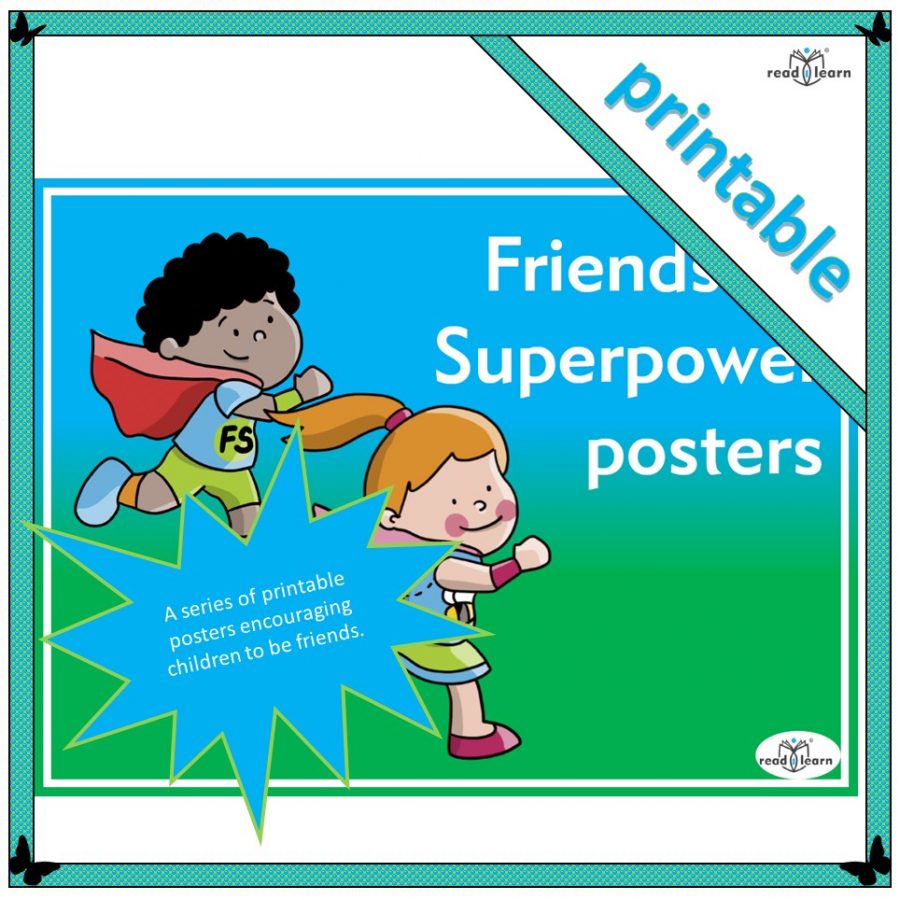
Here at readilearn, we have many resources you can use to teach your children friendship skills and encourage them to get along with each other. Resources include:
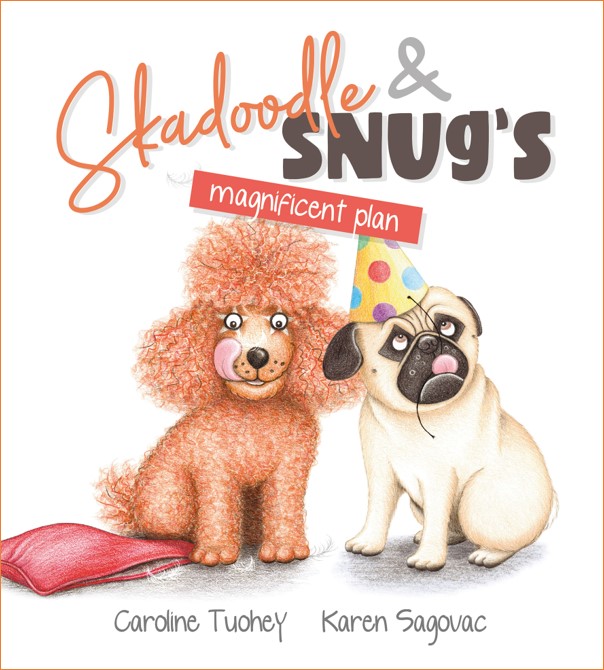
Today it is my pleasure to introduce you to Caroline Tuohey author of the delightful picture book Skadoodle and Snug’s Magnificent Plan.
I previously introduced you to some of Caroline’s work when I interviewed illustrator Muza Ulasowski about another of Caroline’s beautiful books Forest Wonder. But today we are talking about the adorable Skadoodle and Snug.
Caroline Tuohey is a children’s writer and poet whose main interest is picture books. She has five published picture books in print with a sixth due out with Ford Street Publishing in October 2020. She has also been published in children’s literature magazines in Australia and Ireland as well as in anthologies and poetry sites online. She enjoys holding story time sessions at libraries, schools and preschools and conducts workshops for both school students and adults. Her other interest is bush poetry – which she writes and performs. She lives on a farm in the Riverina region of New South Wales, with her husband, two children, several dogs and a horse or two.
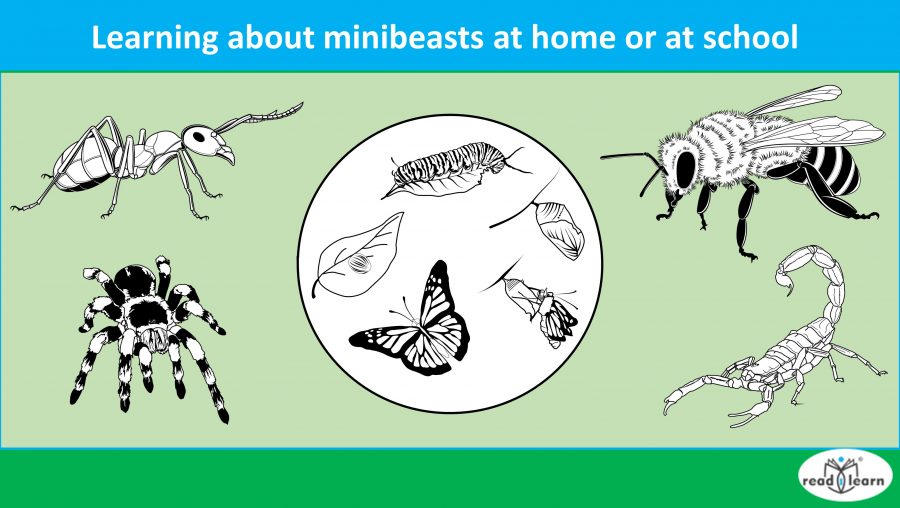
Whether learning at home or at school, there is a world of minibeasts for children to explore, inside and outdoors. Regardless of our feelings towards certain species, all are important to our environment and contribute to our lives in different and often unseen ways including pollinating our plants, decomposing waste and providing food for other species. It is fair to say that we need minibeasts more than they need us.
Learning about living things is an important part of the science curriculum for children in their first few years of school. They learn about the features of living things, their needs and their life stages. Studying minibeasts allows for learning in all these areas in a small space over a short amount of time.
At readilearn, we support your teaching and children’s learning about minibeasts with a constantly growing collection of resources. In fact, three new resources were uploaded this week.
Observe and record
An interesting project is to use a magnifying glass to discover the different species of minibeasts that live in and around our classrooms and homes. Much can be learned through observing their behaviour.
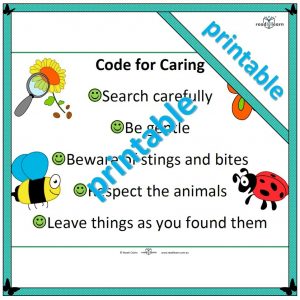
The Code for caring explains how to observe while maintaining safety for self as well as the minibeasts.
My Minibeast Diary provides a format and suggestions for recording children’s observations.
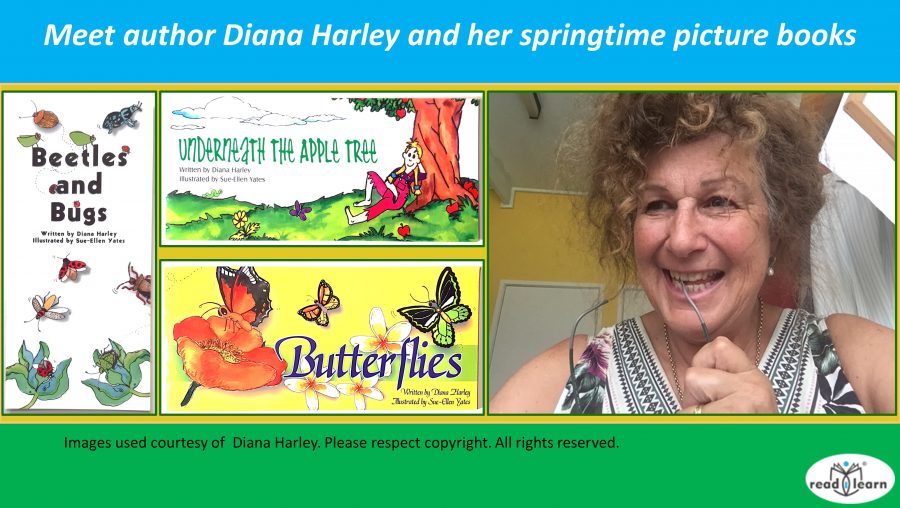
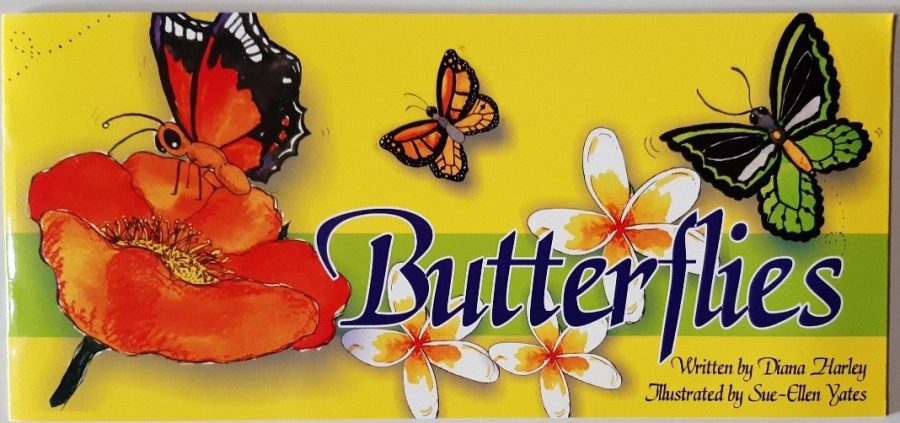
Today it is my pleasure to introduce you to Diana Harley as we discuss her three beautiful picture books that are perfect for sharing at springtime, or any time.
Here at readilearn, we have quite a fascination with minibeasts, especially butterflies, and have quite a variety of teaching resources that focus on them. Naturally, we are attracted to other resources which encourage children’s interest in minibeasts and the environment.
Diana Harley, Australian picture book author
About Diana
Diana Harley is a writer, author, poet and playwright living and working in the Bega Valley of NSW. Diana has written a number of fiction and non-fiction books for children, has had two adult poetry anthologies published and has won numerous awards for her poems and short stories. Many of her poems and stories have been included in various anthologies. She has done a few blogs and two of her short plays have been produced and performed in regional NSW. She has run writing workshops for both adults and children and enjoys getting writers writing! She is a chocoholic, loves wedgetail eagles and reading is her favourite hobby.
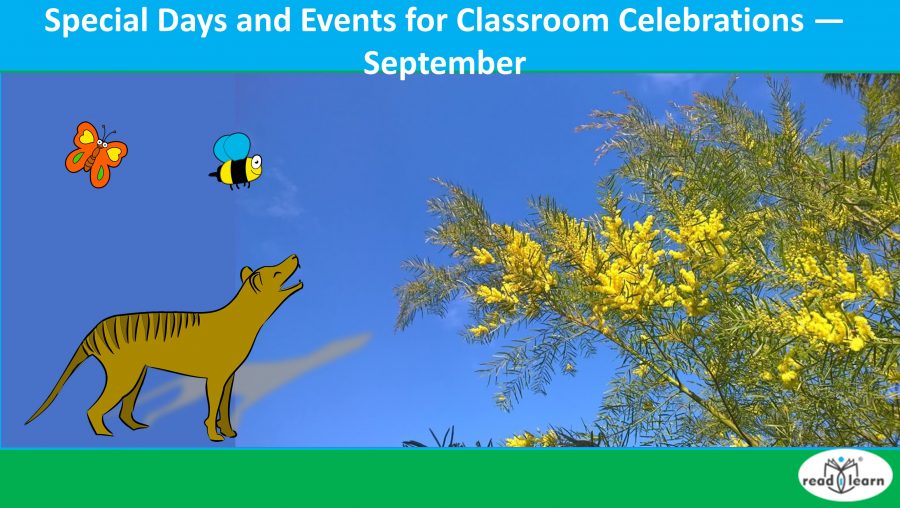
September has almost arrived, bringing spring to the Southern Hemisphere. I always enjoy spring when the world seems to brighten, and gardens fill with flowers, insects, birds and other small creatures. The days are pleasantly warm and don’t yet have the stinging heat of summer.
I hope wherever you are and whatever season you are in, you enjoy it too and that you find this list of September days and events useful.
Before we get into September days though, I want to share with you the sad news that Sir Ken Robinson passed away on Saturday 21 August after a brief battle with cancer.
Sir Ken has been an education hero of mine, and of millions of others around the world, since first hearing his TED Talk Do Schools Kill Creativity? Recorded in 2006, it is the most popular TED Talk of all time. This tribute in The Washington Post written by Valerie Strauss provides an overview of his career and impact on educational thinking.
To honour this great man, I again share his influential video on schools and creativity. It can never be shared or viewed too often.
He may be gone, but never forgotten, and greatly missed. Thank you for your contribution to making this world a better place, Sir Ken Robinson.
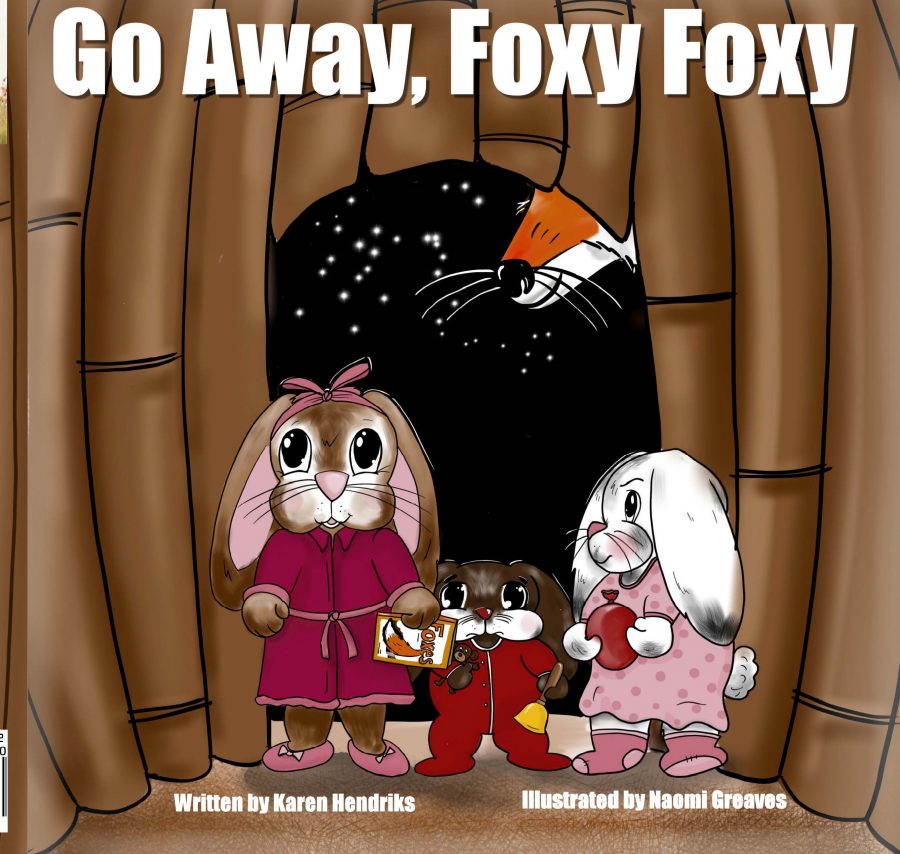
In this special Books on Wednesday post, I am delighted to introduce you to Karen Hendricks and her lovely new picture book Go Away Foxy Foxy.
In this post, written by Karen, she explains how creativity is explored in the picture book and suggests conversations you can have with children to encourage their creativity. The post is part of a Books on Tour promotion.
Go Away, Foxy Foxy is a delightful story of three little bunnies who decide to sleep out in a tree house one night. Outside in the dark, Foxy Foxy prowls. He’d like nothing better than to make a feast of those little bunnies. The bunnies show different levels of fear and bravery and use their intelligence, without having to resort to using the Mummy bell, to scare the fox away.
Children will easily identify with the different emotions displayed and will be encouraged to discuss different ways they may respond to the situation and solve the problem.
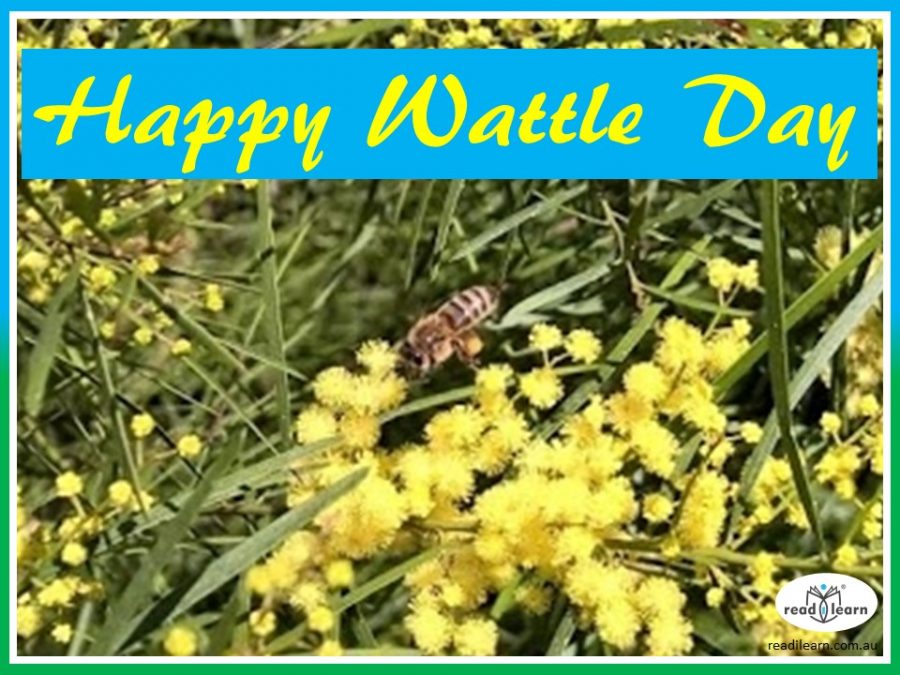
It’s almost spring here in the Southern Hemisphere. The garden is dressing up in blooms of many colours and filling the yard with the sweet scents of wattle, jasmine and other flowers. Bees busily collect the pollen, butterflies flutter from one flower to another, the butcherbirds sing joyously from the treetops, while the cockatoos noisily crack the wattle pods and prune the tree.
Things are starting to feel fresh and new again and encouraging me to emerge from my recent writerly hibernation. While, for the previous six years I’d hardly missed responding to a weekly flash fiction challenge at the Carrot Ranch, I’ve not joined in for the past few months due to the demands of other work responsibilities. I finished that work a couple of weeks ago but have found it difficult to shake off the cobwebs and give creativity some air again. Perhaps spring and this week’s (extended) challenge provides the impetus for doing so.
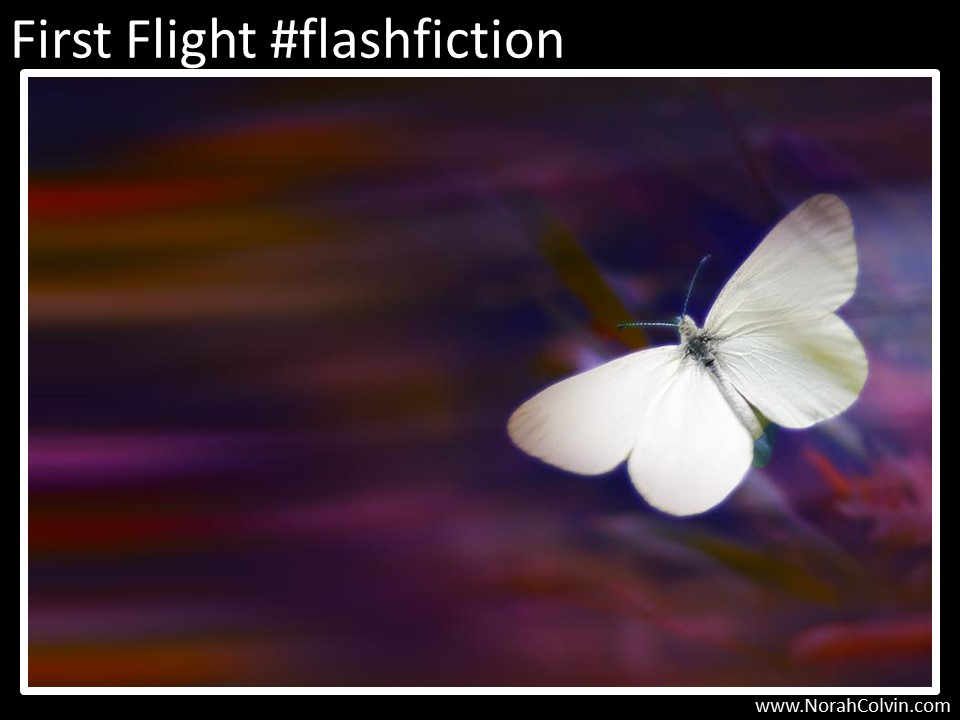
When thinking of a first flight and spring, how could I not think of butterflies?
One of my favourite things to do with my children in the classroom was to have a butterfly house and observe the magic of all the life stages from egg to butterfly. It was wonderful to have this special little piece of nature up close in the classroom where we could see what you don’t always get to see in the world outside.
Every day we would watch, fascinated, as the caterpillars munched their way through leaf after leaf, growing bigger and bigger. We eagerly awaited the moment they would form themselves into ‘j’ shapes, alerting us that they were about to pupate.
We were amazed at how quickly they shed their last skin to reveal the beautiful chrysalis they had become. Then we would watch and wait until they were ready to emerge as butterflies.
We knew when it was almost time as the chrysalis would become transparent and we could see the wings through the case. When they finally emerged, we would give them time to spread and dry their wings before releasing them into the garden for their first flight.
The growth of a butterfly is a great analogy for creativity or the development of an idea or project. Sometimes a lot of hard work has to be expended before the idea is ready to take flight and the beauty becomes a reality.
Here is my response to Charli’s challenge. I hope you like it.
Dear Butterfly, Love Caterpillar
Dear Butterfly,
You make the impossible seem possible. You inspire our thoughts, our hopes, our dreams. How can I be like you?
Dear Caterpillar,
Dreams create possibilities but now you are exactly who you were meant to be.
Dear Butterfly,
Life is monotonous. Everyone does the same thing, day after day. Shouldn’t life be more than this?
Dear Caterpillar,
Nothing happens overnight. Patience, determination and persistence will reward you in the end.
Dear Butterfly,
I’m tired. I can’t do this anymore. I think I will sleep forever. Goodbye.
Wake up, butterfly. It’s time to spread your wings and fly!
I thought I’d also share a poem that I wrote many years ago in response to an inspector’s visit to our school. As the title says, it is not really about a butterfly and was written long before I became the Butterfly Lady at another school.
I had always believed, and still do, that the children are the most important thing in the classroom and that we do our best for them every day. The teacher next-door wasn’t of the same view. We were in a large teaching space with our own areas separated by some cupboards arranged between us.
She spent a lot of time sitting at her desk, barking at the children to pay attention to her words. She had little of interest on display in the classroom and even less of the children’s own work. It was quite a contrast to my own space which was filled with activity, colour and children’s work.
When the inspector’s visit was announced, she suddenly decided to decorate her room and display children’s work. I was so flummoxed by this, that I was almost tempted to do the opposite. I believed that if what I did on a daily basis wasn’t good enough for the inspector, then it wasn’t good enough for the children either. I resisted the urge to tear everything down in protest (which might have been considered a flight from the situation) and wrote this poem instead.
Before reading it, I want you to know that the teacher and I were both teaching (perhaps I use that word lightly) year two and she was considerably younger than I.
Not Really About A Butterfly
Look at you now.
You put on your show.
Your butterfly colours are warmly aglow.
It’s hard to imagine
That not long ago
You were a mere silent pupa
With nowhere to go.
You flit and you flutter,
Cry, “Hey, look at me!”
And all turn their heads,
Wondrous beauty to see.
But where have you come from?
And how can this be?
Before . . .
Not one head would have turned.
There was nothing to see
— just a little green ball,
curled up on a tree.
Is it dishonest
to change rapidly?
Thank you for reading. I appreciate your feedback. Please share your thoughts.
On Monday 24 August, readilearn will be four years old, and what an amazing four years it has been — one day, one week, one month, one year at a time. We haven’t been without our hiccups, but we haven’t been without our successes either. I express my sincere gratitude to everyone of you who has supported me along the way. Rest assured, the journey is not over yet.
About Norah, founder of readilearn
For those who don’t know, below are #12 things about me that preceded and contributed to the establishment of readilearn, a collection of teaching resources to support teachers of the first three years of school.
Education is my life, my passion, especially literacy development and the education of young children.
I decided at age 10 that I wanted to be a teacher. That desire has never waned.
When I left school, I went straight into teachers’ college, and from there back into the classroom, but on the other side of the teacher’s desk.
I wasn’t always happy with everything that was expected of me as a classroom teacher and read widely about education and alternatives to schooling.
I undertook further study into language and literacy development.
Note: This article was first written for and published at the Carrot Ranch Literary Community as part of a series supporting parents with children learning at home. The benefits of playing board games are the same whether played at home or at school. If you have older children or adults available to support children while they play, board games are an excellent activity for learning in groups across many areas of the curriculum.
One of the best ways to have fun while learning, or to learn while having fun, is by playing board games. Playing games together as a family helps to bond family relationships. Adjustments can be made to suit most numbers and ages and rules can be adapted to suit your purposes. While the main thing is to have fun together, there is a lot of learning going on too.
Social Skills
One of the greatest benefits of playing board games is the development of social skills.
Some of the social skills children learn include:
Getting along and taking turns
Playing fair — accept the roll (if dice are used) or draw (if cards are used) for example, and respond accordingly: don’t try to pretend it

















 Norah Colvin