Live Love Laugh Learn … Create the possibilities

Category: Creativity

  • Introducing Andrew King author of the Engibear series – Readilearn

    Introducing Andrew King author of the Engibear series – Readilearn

    Today, I have great pleasure in introducing you to Dr Andrew King from Brisbane Australia. Andrew is an engineer, teacher, and writer of the popular Engibears series of picture books, designed to introduce children to engineering through friendly characters and story. Each book focusses on a particular aspect of engineering and, through examples and accompanying activities, is designed to encourage children to try engineering — to “Dream, Design and Develop”.

    Dream, Design and Develop

    Engibears have been part of Andrew’s family for many years. They were created while Andrew played and shared stories with his children.

    Andrew thinks he is very lucky to be working with Benjamin Johnston, a Sydney-based architect and illustrator. Ben’s fantastic illustrations have brought Engibears and Munnagong, the city in which they live, to life.

    Andrew is passionate about the role that Science, Technology, Engineering and Maths (the STEM subjects) will play in our sustainable future and equally passionate about the importance of STEM education. He regularly talks to students about engineering, and facilitates student-centred engineering activities and programs.

    His kids think he enjoys building shelves in his spare time. However, Andrew really enjoys spending time with his family, playing bass guitar, walking his dogs and trying to play golf.

    The Engibear series includes three books; Engibear’s Dream, Engibear’s Bridge and Engilina’s Trains. In the most recent, Engilina’s Trains, Engilina, Engibear and Bearbot are back to build transport for the future – a new maglev train that will run from Munnagong to Billaburra as fast as a plane. During the project, they discover an old steam engine which leads them on an interesting journey and creates an unexpected link to the past. It’s an interesting story of trains, teamwork, technology and time.

    Now let’s meet Andrew. Welcome to readilearn, Andrew. We are looking forward to getting to know a little more about you and your books.

    Thanks for inviting me.

    Andrew, when did you know you wanted to be a writer?

    Continue reading: readilearn: Introducing Andrew King author of the Engibear series – Readilearn

  • Carrot Ranch Round the World Tour, Pennsylvania, USA | Jules in Flashy Fiction

    Carrot Ranch Round the World Tour, Pennsylvania, USA | Jules in Flashy Fiction

    And now for the next stop on the Congress of Rough Writers Tour Around the World. We are with Jules Paige from Pennsylvania, USA.

    Jules has a unique ability to respond to a number of prompts and challenges in one. She even did six in one blow! What a feat. Read on to learn more about Jules and her writing process.

    Meanwhile Back at the Ranch….brought to you from JulesPaige – because “words are like Jewels on a Page” Jules from Pennsylvania, USA Writes for “The Congress of Rough Writers Flash Fiction Anthology Vol 1 World Tour.

    I was going to write about my first piece for Carrot Ranch until one of my unnamed characters did some forest bathing. I was struck by a comment from our Lead Buckaroo on my piece entitled ‘The Rescue’ that I wrote in February 2018. Charli says: “A lovely escape and a fine mashup, Jules. I’m impressed at the depths you go to mine language, prompts and even comments. That’s literary art!”.

    I’m drawn to what I call ‘mashing prompts’. One, two, five… sometimes I get carried away. But I managed to stuff The Rescue? a whole whopping 99 words with two prompts from one writing site, a photo prompt from another, the Unicorn prompt from Carrot Ranch as well as a quote from another piece I wrote that someone else liked as well as a comment I posted on another friends site.

    That’s six inspirations woven into one very short piece of fiction.

    Continue reader: Carrot Ranch Round the World Tour, Pennsylvania, USA | Jules in Flashy Fiction

    Pop over to the Carrot Ranch, too, to see what the Lead Buckaroo has to say about one of the “bright jewels of the Buckaroo Nation.”

  • Stop 7: Noosaville Australia: Congress of Rough Writers Round the World Tour: A Book Review with a Difference

    Stop 7: Noosaville Australia: Congress of Rough Writers Round the World Tour: A Book Review with a Difference

    The next stop on the Rough Writers Tour around the World is with fellow Aussie Irene Waters. Pop over to see how writing flash fiction contributes to Irene’s memoir writing.

    Irene Waters 19 Writer Memoirist's avatarReflections and Nightmares- Irene A Waters (writer and memoirist)

    tour-around-the-world

    May 21st 2014 I wrote my first flash in Charli’s 99 word flash fiction prompt. Little did I know that Charli’s vision of a site that would make literary arts available to all would see me join the ranks of the Congress of Rough Writers, participating in a writing rodeo both as contestant and leader of one of the competitions and writing a monthly post on memoir. The biggest achievement has been the publishing of  Anthology 1, but more about that in a minute.

    I had found Charli’s site via a Bite Size Memoir prompt  and found that as a memoir writer, writing fiction didn’t come easily, at first. Indeed, this very first flash was a BOTS, that is it was based on a true story that occurred when my father had gone to Sydney to teach for 3 months and my mother, brother and I were left in our…

    View original post 1,091 more words

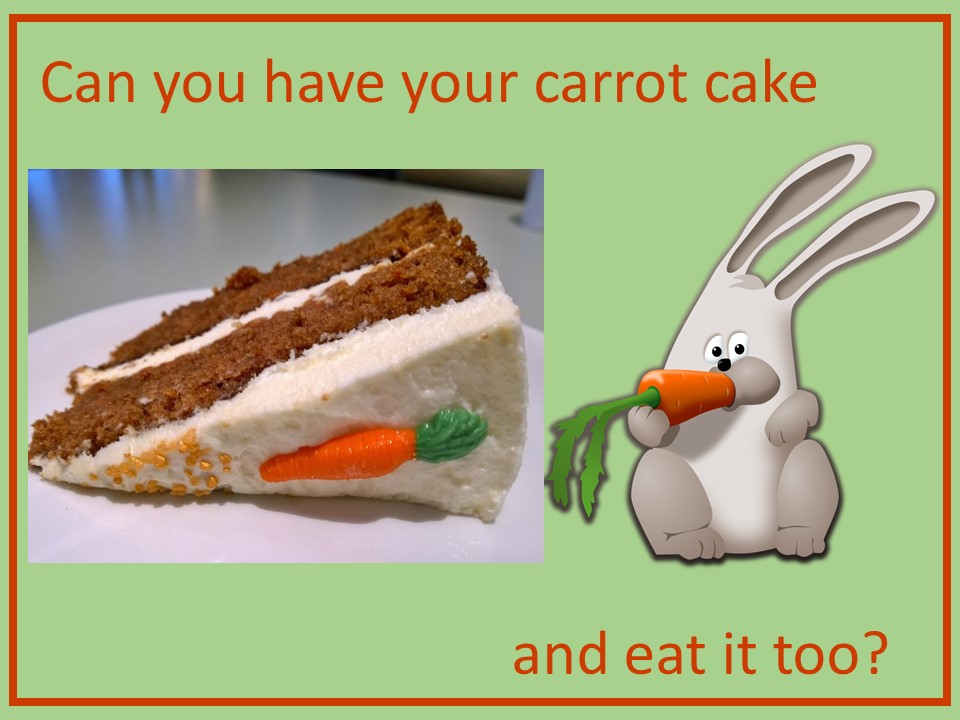
  • Can you have your carrot cake and eat it too?

    Can you have your carrot cake and eat it too?

    Charli Mills flash fiction prompt "Carrot cake"

    This week at the Carrot Ranch, Charli Mills challenged writers to In 99 words (no more, no less) write a story about carrot cake. It can be classic or unusual. Why is there cake? How does it feature in the story. Go where the prompt leads.

    Carrot cake is great for a celebration, and with Easter just around the corner, I decided to combine the two. I hope you like it.

    A carrot cake for Easter

    “What will we cook today?” asked Mum.

    “Carrot cake!” chimed the twins.

    “But you don’t like carrot cake.”

    “Carrot cake. Carrot cake.”

    “Why?”

    “Well, it’s going to be–“

    “Easter soon, and we want–“

    “to give the Easter Bunny–“

    “a surprise–”

    “present.”

    The twins smiled at each other.

    “Okay,” smiled Mum. “Carrot cake it is.”

    “Yay!”

    “First, we need the carrots.”

    The children raced ahead to the veggie patch.

    “What–“

    “happened?”

    Their eyes opened wide. The carrot patch was devastated; not one carrot left.

    “Carrot cake’s off,” said Mum. “That old rabbit can’t have carrot cake and eat them too.”

    bunny eating carrot public domain picture

    Thank you blog post

    Thank you for reading. I appreciate your feedback, please share your thoughts; and if you can help me with the following two questions, that would be wonderful.

    1. How should I punctuate the twins’ dialogue to show that they are finishing each other sentences? Have I done it correctly? If not, how should I have shown it? I checked my style guide and online and couldn’t find an explanation.
    2. Word counted the em dashes I have used to punctuate the interruptions, but I haven’t. Should I have? Most punctuation is not counted as words.

    Thanks for your advice.

  • Jump on board the Congress of Rough Writers Round the World Tour

    Jump on board the Congress of Rough Writers Round the World Tour

    Do you remember the moment you fell in love–the moment the passion ignited, and you knew life would never be the same again?

    I remember the moment my love affair with flash fiction began. Like many love affairs, it took me by surprise, lifting me up with its power to seduce, challenge and excite in a whirlpool of emotions.

    That moment occurred exactly four years and one week ago when, on 12 March 2014, I published my response to the first flash fiction prompt posted by Charli Mills at the Carrot Ranch. Charli challenged writers to In 99 words (no more, no less) write the aftermath of an avalanche of any kind from any perspective.

    Flash fiction was new to me. I’d written short stories, children stories, poetry, songs, and educational books and resources, but never flash fiction. However, I do love a challenge and had been anticipating having a go at flash fiction after Charli’s announcement a few months prior.

    This is my response, my first ever attempt at flash fiction:

    Avalanche

    The trickle began; imperceptible, unheeded and ignored.

    Needing more attention, the volume swelled and quickened pace.

    Still no attention was forthcoming so the surge became more urgent and incessant in its plea.

    “Slow down! Stop me!”

    To no avail.

    The avalanche engulfed her.

    Heat flashed through her body, from feet straight to her head.

    Heart pounding loudly, “Let me out of here!” it pled.

    With reverberations magnified in each and every cell,

    the heady swirl became too much –

    she trembling choked. “I’m dying?”

    But no:

    B-r-e-a-t-h-e   s-l-o-w.

    B-r-e-a-t-h-e   d-e-e-p.

    R-e-l-a-x.

    S-o-o-t-h-e.

    B-r-e-a-t-h-e . . .

    The panic abates.

    I was just one of five to respond to that first prompt. Four of those writers, including me of course, are still regular visitors to the Carrot Ranch, are members of the Congress of Rough Writers, and are contributors to the Congress of Rough Writers Flash Fiction Anthology Vol 1. That’s pretty awesome, I think.

    Carrot Ranch Anthology with 5 star review

    Watch the trailer here:

    Over the years, the number of Congress members has grown to thirty-two and the number of participants in the Flash Fiction challenges swells to more than fifty some weeks.
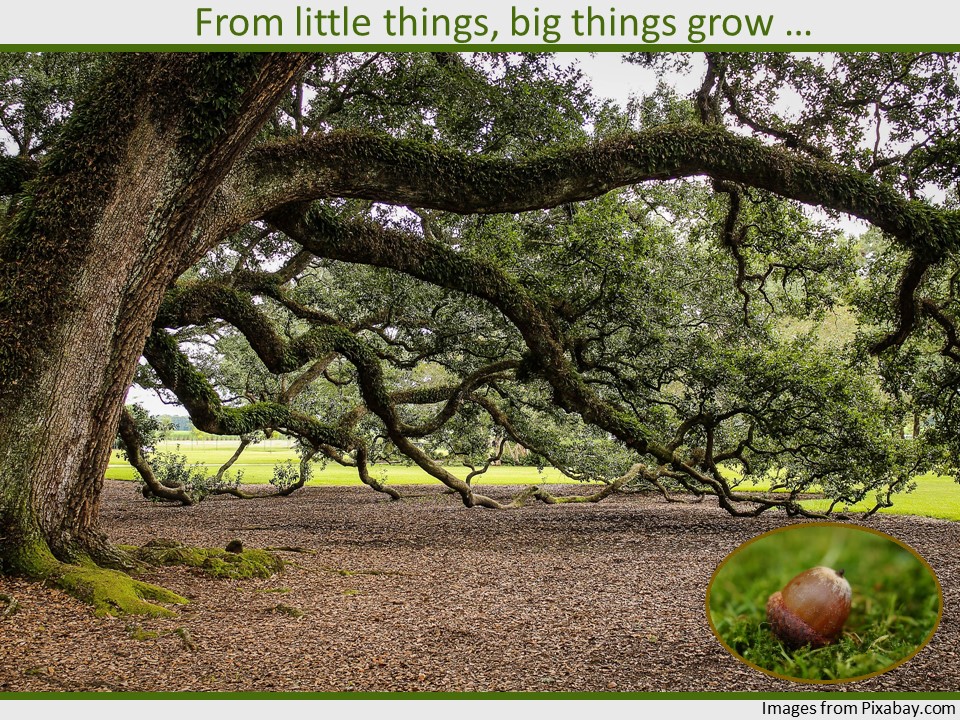
    from little things big things grow

    What an amazing achievement: from small things, big things grow. Charli’s vision has not wavered from the outset. She held to her path through all manner of life’s storms. Battered but not beaten, she persisted when lesser mortals would have caved. She continues to welcome, encourage and support all writers with her vision to make literary arts accessible to all. With the publication of this anthology, a digital compilation of entries in the inaugural Flash Fiction Rodeo now in production, and Anthology Vol 2 in the pipeline, she shows what is possible through vision, determination and growth mindset.

    During the four years I have been participating in Charli’s challenges, I have learned a lot, not only about writing, but about life. The warmth and encouragement of the community of writers that have gathered around Charli is uplifting. The synergy and combined effect of all our stories, written and shared in a safe environment, raises us up together to walk on each other’s shoulders.

    In 2015, I wrote this about what I had learned from writing flash fiction. The learning continues with my own “yet’ mindset.

    Carrot Ranch anthology a brilliant idea

    About the Anthology

    Thirty writers began with 99 words and forged literary feats. Vol. 1 explores the literary art of flash fiction, beginning with the earliest compilations at Carrot Ranch and later pieces based on a new flash fiction prompt. This is not your typical anthology. It continues with longer stories extended from the original 99-word format and essays on how flash fiction supports memoir writing. Based on the experiences at Carrot Ranch, the concluding section of Vol. 1 offers tips to other groups interested in using the flash fiction format to build a literary community.

    Charli Mills, Series Editor, Publisher & Lead Buckaroo
    Sarah Brentyn, Editor & Contributor

    The Congress of the Rough Writers (contributors):

    Anthony Amore, Rhode Island, USA; Georgia Bell, Toronto, Ontario, Canada; Sacha Black, England, UK; Sarah Brentyn, USA; Norah Colvin, Brisbane, Qld, AU; Pete Fanning, Virginia, USA; C. Jai Ferry, Midwest, USA; Rebecca Glaessner, Melbourne, Vic, AU; Anne Goodwin, England, UK; Luccia Gray, Spain; Urszula Humienik, Poland; Ruchira Khanna, California, USA; Larry LaForge, Clemson, South Carolina, USA; Geoff Le Pard, Dulwich South London, UK; Jeanne Belisle Lombardo, Phoenix, Arizona, USA; Sherri Matthews, Somerset, UK; Allison Mills, Houghton, Michigan, USA; Charli Mills, Hancock, Michigan, USA; Paula Moyer, Lauderdale, Minnesota, USA; JulesPaige, Pennsylvania, USA; Amber Prince, North Texas, USA; Lisa Reiter, UK; Ann Edall-Robson, Airdrie, Alberta, Canada; Christina Rose, Oregon, USA; Roger Shipp, Virginia, USA; Kate Spencer, British Columbia, Canada; Sarah Unsicker, St. Louis, Missouri, USA; Irene Waters, Noosaville, Qld, AU; Sarrah J. Woods, Charleston, West Virginia, USA; Susan Zutautas, Orillia, Ontario, Canada.

    From the back cover:

    Witness great feats of literary art from daring writers around the world: stories crafted in 99 words.

    Flash fiction is a literary prompt, form, and tool that unites writers in wordplay. This creative craft hones a writer’s skills to write tight stories and explore longer works. It’s literary art in thoughtful bites, and the collective stories in this anthology provide an entertaining read for busy modern readers.

    Writers approach the prompts for their 99-word flash with creative diversity. Each of the twelve chapters in Part One features quick, thought-provoking flash fiction. Later sections include responses to a new flash fiction prompt, extended stories from the original 99-word format, and essays from memoir writers working in flash fiction. A final section includes tips on how to use flash fiction in classrooms, book clubs, and writers groups.

    CarrotRanch.com is an online literary community where writers can practice craft the way musicians jam. Vol. 1 includes the earliest writings by these global literary artists at Carrot Ranch. Just as Buffalo Bill Cody once showcased the world’s most daring riding, this anthology highlights the best literary feats from The Congress of Rough Writers.

    The Congress of Rough Writers Anthology Vol 1

    In case you haven’t got yours yet, here’s where to purchase

    The Congress of the Rough Writers Flash Fiction Anthology Vol. 1 is available through distribution in 17 countries worldwide. Buy direct from our Print on Demand distributor at Book Baby.

    Preferred Seller:

    The-Congress-of-Rough-Writers

    Also available from:

    Amazon Global Digital
    Amazon Global Print

    Be sure to check out other stops on the Congress of Rough Writers Tour Around the World.

    We have already visited

    Sherri Matthews UK

    Luccia Gray in Spain

    Sacha Black in the UK

    Ann Edall-Robson in Canada

    Anne Goodwin in the UK

    Geoff Le Pard in the UK

    Next week we will visit Irene Waters, another Australian. (You’ve travelled so far, we want you to make the most of your journey!)

    The tour continues through April and into May. Be sure to not miss a stop along the way.
     

    Thank you blog post

    Thank you for reading. I appreciate your feedback. Please share your thoughts.

  • Real Memoir Imaginary Flash And Not Your Typical Anthology

    Real Memoir Imaginary Flash And Not Your Typical Anthology

    Welcome to Sherri Matthew’s Summerhouse in the UK: this week’s stop on the Rough Writers Tour Around the World.
    Sherri discusses the role that flash fiction plays in her memoir writing in both an entertaining and informative way.
    After you read Sherri’s post, pack your bags and get ready to travel. Next stop will be with me: from the UK in the north to sunny Queensland in the south. See you then!

    Sherri Matthews's avatarA View From My Summerhouse

    Summerhouse in Spring (c) Sherri Matthews

    When I moved house last October, I said goodbye to my Summerhouse.  That is, to the wood and nails of it.  To the little wooden house painted blue , strung with pretty bunting and lights which no longer belongs to me.

    My Summerhouse wasn’t just my writing space; over the years, it was home to a nest of bumble bees in the ground below, several spiders and their cobwebs spun in dusty corners, and a hedgehog who took up residence at the back.

    I miss it, but I smile through my wistful nostalgia when I look at the photos, because I know that it is the virtual essence of the Summerhouse that remains.

    My Summerhouse is imaginary now, a virtual meeting place, but it is no less real, filled with you, my lovely people.  A community created by the footprints you leave with…

    View original post 1,031 more words

  • Raw Literature: Asperger’s, Voice and the Search for Identity

    Raw Literature: Asperger’s, Voice and the Search for Identity

    I’ve been reading a lot of posts about Asperger’s Syndrome and Autism lately. It’s a topic about which I need to increase my understanding. If you’re like me, you will find this post by Sherri Matthews helpful.

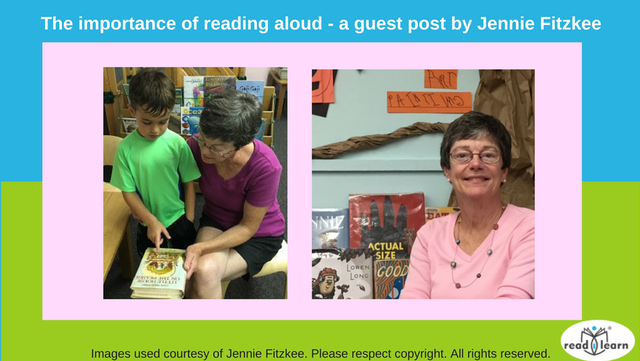
  • readilearn: The importance of reading aloud – a guest post by Jennie Fitzkee – Readilearn

    readilearn: The importance of reading aloud – a guest post by Jennie Fitzkee – Readilearn

    Every day is a great day for reading aloud to children, but with the celebration of International Read to Me Day on March 19, now is a great time to give some thought to the importance of reading aloud in preparation for the Day’s celebrations. by arming yourself with a basket of books to read.

    To help put us in the mood and assist our preparations, Jennie Fitzkee is here to tell us why reading aloud to children is important.

    Jennie, a passionate and inspirational teacher, has been teaching preschool in Massachusetts for over thirty years.  She is considered by many to be the “book guru” and the “reader-aloud”.  She is also a writer and her work is often posted by The Eric Carle Museum of Picture Book Art.  This is what Jennie says of teaching:

    “I believe that children have a voice, and that is the catalyst to enhance or even change the learning experience.  Emergent curriculum opens young minds.  It’s the little things that happen in the classroom that are most important and exciting.  That’s what I write about.”

    Jennie is highlighted in the new edition of Jim Trelease’s bestselling book, The Read-Aloud Handbook  because of her reading to children.  Her class has designed quilts that hang as permanent displays at both the National Liberty Museum in Philadelphia, and the Fisher House at the Boston VA Hospital.  Their latest quilt is currently hanging at the Massachusetts State House in Boston.  In 2016, Jennie was one of seven teachers in Massachusetts to receive the Teacher of the Year Award.

    I’m sure you’ll agree that there is much we can learn from Jennie.

    Welcome to readilearn, Jennie. Over to you.

    Continue reading: readilearn: The importance of reading aloud – a guest post by Jennie Fitzkee – Readilearn

    Thank you blog post

    Thank you for reading. I appreciate your feedback. Please share your thoughts.

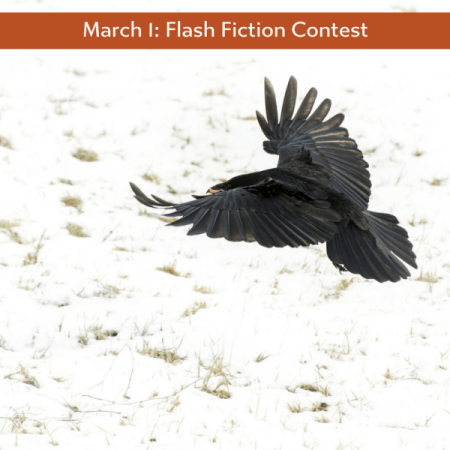
  • What’s there to crow about?

    What’s there to crow about?

    This week at the Carrot Ranch, Charli Mills challenged writers to In 99 words (no more, no less) write a story that includes a raven. It can be in nature or used to describe humanity as a metaphor. Follow the bird. Go where the prompt leads.

    While ravens and crows may have their differences, as an Australian, I can be forgiven for having difficulty in telling them apart. As this article about the Australian Raven in Birds in Backyards says,

    “There are six members of the family Corvidae found in Australia: five native breeding species and one infrequent self-introduction. Three are called crows and three ravens, although there is really little difference. Most Australian species are similar in size and colouration, and can be difficult to tell apart.”

    In fact, when I attempted to find photographs of crows and ravens, I found the same photograph labelled ‘crow’ in one location and ‘raven’ in another!

    I provide this information only so you’ll understand why I refer to crow rather than the raven of Charli’s prompt.

    You see, Charli’s prompt reminded me of this video in which a crow shares its bread with a mouse.

    I wondered why the crow would make such an effort to share with a mouse. Don’t crows usually eat mice?

    I was reminded, then, of the Aesop’s fable The Lion and the Mouse in which a lion, surprised at the idea that a mouse might one day be able to help him, forgoes a meal and releases the mouse. The mouse returns the favour one day by freeing the lion when it was ensnared by hunters.

    However, in the fable, it was the potential prey who helped the predator in an act of kindness.

    In the video, it is the predator showing kindness to potential prey. Finding a motive required some divergent thinking. This is what I came up with as a start.

    Crow and Mouse

    “Caw, caw,” called Crow in the morning from atop the tree.

    “Caw, caw,” called Crow at midday from the neat vegie patch.

    “Caw, caw,” called Crow, perched high on a wire, at the end of the day.

    “Shoo, shoo,” shouted Man in the morning, shaking knobbled fists.

    “Shoo, shoo,” shouted Man at midday, stamping his feet.

    “Shoo, shoo,” shouted Man, clattering his pans at the end of the day.

    Sneak, sneak went Mouse from his hole in the wall, to the kitchen and back, unnoticed by Man who was noticing Crow.

    And so it repeated, day after day.

    Until, one day, Man grew tired of shooing Crow and loaded his slingshot with a rock. Mouse, ready to sneak, saw Man take aim. Mouse ran–across the floor and up Man’s leg. Man stumbled. In so doing, he dropped the rock upon his toe. He hollered. Crow heard the commotion and flew away, cawing his thanks to Mouse.

    Man saw where Mouse hid. He fetched his hammer, nails and a board.

    Just in time, Mouse escaped–down the stairs, through the garden and into the woods. In the darkness, Mouse trembled.  All his life, he had filled his belly with three good meals a day from Man’s kitchen. Could he fend for himself? He looked about this unfamiliar world. When the quiet was interrupted by a flap-flap-flap, he ducked for cover.

    Too late–he’d been spotted.

    “There you are,” cawed Crow, placing a piece of bread on the ground in front of Mouse. “Thank you for your kindness. One good turn always deserves another.”

    What do you think?

    Stories, stories, everywhere

    I had fun writing the story and it reaffirmed for me that potential stories are everywhere, not only for adult writers, but for children too. I think children would love to discuss the video of the crow and the mouse and would ask many more questions and come up with more inventive stories than I did. What a fun writing prompt it would be. Children could also compose dialogue for the animals and act it as a play.

    Of course, this story is much too long to qualify for Charli’s flash fiction 99-word requirement. For that I thought I’d go back to school with a chance for the bully Brucie to learn some kindness. The timing is just right with the observation of National Day for Action Against Bullying And Violence on 16 March, and both Harmony Day and the International Day for the Elimination of Racial Discrimination on 21 March.

    In this article from ABC News, I discovered that clever crows are learning from magpies to swoop in order to protect their nests. It also seems that they never forget a face. Perhaps they are no happier to see bullying than we are.

    This is my response to Charli’s challenge. I hope you like it.

    Nothing to crow about

    Brucie had to get there first to stake his place at the very top. He didn’t slow on the still-wet grass, and only momentarily to laugh at Jasmine who slipped as he brushed past. From his perch, he smirked at the disappointed faces below.

    “Caw!” said a crow, alighting alongside.

    “Shoo!”

    It didn’t shoo–more came.

    Brucie shouted, waving his arms.

    The crows shuffled closer.

    Brucie thrashed wildly.

    Bang! Bang! Bang! Jasmine banged a cricket bat against the frame.

    The crows flew away.

    “Are you okay?” asked Jasmine.

    Brucie nodded, then let the others play.

    The crows never returned.

    Thank you blog post

    Thank you for reading. I appreciate your feedback. Please share your thoughts.

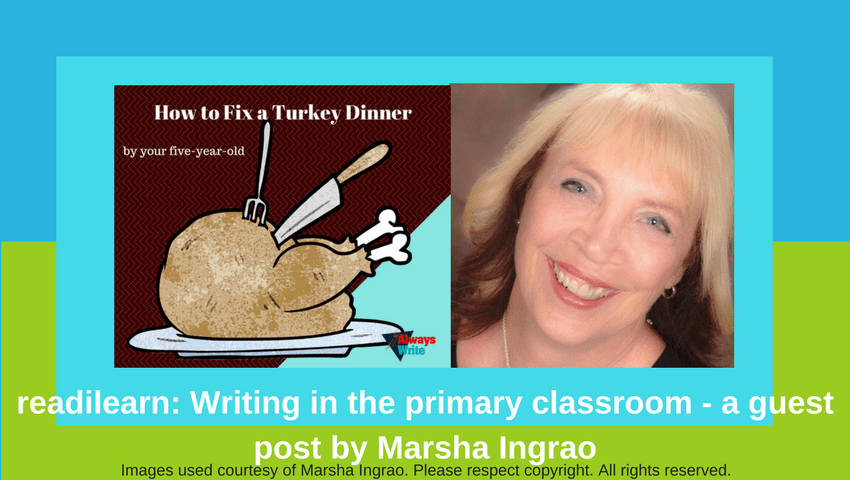
  • readilearn: Writing in the lower primary classroom – a guest post by Marsha Ingrao – Readilearn

    readilearn: Writing in the lower primary classroom – a guest post by Marsha Ingrao – Readilearn

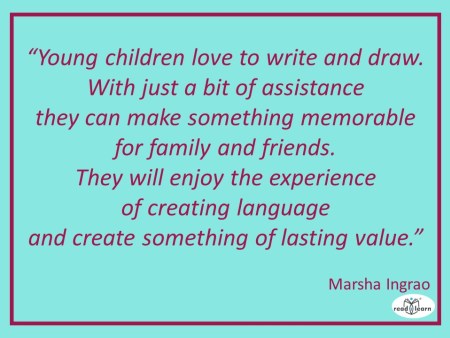
    Providing children with fun and purposeful activities for writing is one of the best ways to encourage a love of writing, to replace the drear with enthusiasm.

    In this post, I introduce guest author Marsha Ingrao who shares suggestions for bringing joy to your writing lessons through the Language Experience Approach.

    “The Language Experience Approach (LEA) is a literacy development method that has long been used for early reading development with first language learners…It combines all four language skills: listening, speaking, reading, and writing.”

    Professional Learning Board

    Although Marsha retired from public education in 2012, her passion for education remains and she continues to educate through blogging, speaking engagements and volunteering for Kiwanis and the Chamber of Commerce. Her classroom experience ranged from teaching kindergarten to fourth grade. She left the classroom to work as a consultant for the county office of education first in math, working with migrant education, then in history and language arts. She is author of Images of America Woodlake, a history of her local Woodlake area, published by Arcadia Press.

    Welcome to readilearn, Marsha. Over to you.

    Because LEA employs all four branches of language arts, listening, speaking, reading and writing, it is perfect for teaching writing to pre-school and primary students as well. With the thrust in the United States for non-fiction reading, the language experience approach becomes the perfect avenue for teaching writing to young children.

    To make the language experience approach applicable to all young students, adult assistance is required.

    The “How To” Essay

    Beginning in pre-school, we tackled one of the hardest types of writing, the “how to” essay. Holiday traditions are the perfect avenue for this

    Continue reading: readilearn: Writing in the lower primary classroom – a guest post by Marsha Ingrao – Readilearn