Live Love Laugh Learn … Create the possibilities

Category: Blogging

  • The magic of Christmas, “Bah humbug”!

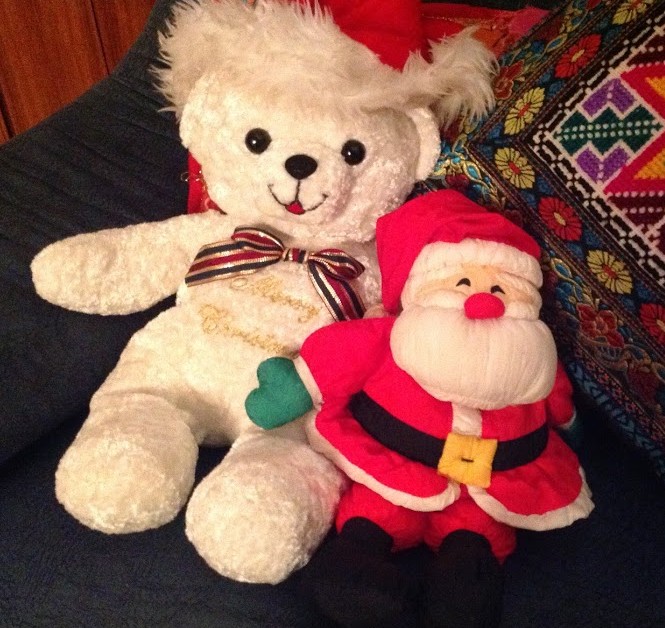
    Santa and bear

    At this time of year in many places around the world there are children excited about the magic of Christmas. I don’t know the numbers to compare but there are a good few, mainly adults I suspect, who say “Bah humbug!” While I was once a firm believer in the magic and did my best to keep it alive, I now tread warily, unsure of how best to approach this topic. As a parent I didn’t get it right so can offer no wisdom of my own.

    After many years of seeming to go along with the story, long after I thought it should have been abandoned, Daughter finally questioned why, if the stories weren’t true, would parents lie to their children.  She preceded her question with the request to not say if it was true or not, she just wanted to know why parents would lie.

    I let her down on both counts. I told her the truth of the story and couldn’t explain why parents would lie. I’m not sure that I’ve been forgiven for either failing, and I have never stopped thinking about what may have been a better way of handling the situation if I was ever offered the opportunity for a do-over.

    Interestingly I don’t recall having any similar concerns about my parents lying or disillusionment on finding out the truth. Daughter’s older brother voiced no concerns either, but I cannot be certain whether or not he had any. Until now when, with children of his own, the issue again is raised.

    At first Son’s intention was to not engage in Santa stories; but with one child at school and the other in kindy the situation becomes more complex. The children are more exposed to the stories through friends and organized events and there is the concern about “spoiling” things for other families. Caught between the pressures of a shared popular culture and the questions of intelligent, critical thinking children, the parents must make a decision. I sympathize and wish them better success than I experienced. I have suggested to Son that he consult his sister. She knows better than I about this one and can maybe help him avoid making the mistakes with his children that I made with her.
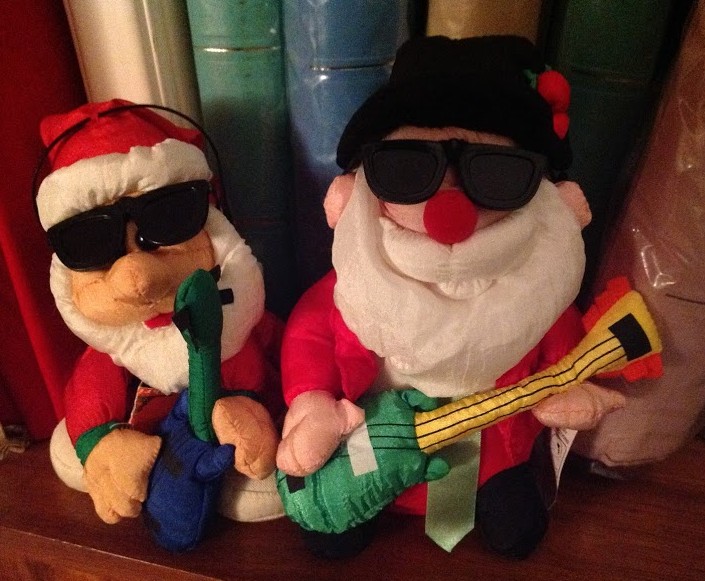
    musical Santas

    There is a lot of well-intentioned advice on the internet, but the value of some is debatable. Many explain the Santa story as being about love, kindness and generosity, and the magic as the assistance given by many helpers, including parents, throughout the world. Many explanations are likely based on the famous response, Yes Virginia, There is a Santa Claus, to an 8-year old’s letter, the authenticity of which has been questioned.

    Some of the explanations and stories encountered recently include:

    Feeling the magic by Autism Mom

    The Sweetest Way to Tell Your Kids the Truth About Santa by Sharon Silver

    Santa’s Powerful Message For Boy With Autism “It’s OK to be you” by Dominique Mosbergen

    A Sweet Story About the True Meaning of Christmas shared by Noelle Granger

    As much as I love the sentiments of these stories, they don’t really help me with my truth or lie dilemma. So I returned to a post by philosopher Michelle Sowey  HO HO HO! (Q.E.D.) in which she questioned the ethics of the Santa lie. I shared this post previously in April 2014.  Michelle agrees that the attempt at compromise in many of the explanations, It’s Santa, Jim, but not as we know him, is unsatisfactory because:

    • the historical figure St Nicholas is omitted
    • Christmas for most children is more about receiving than giving
    • of a conviction that children should be encouraged to believe in things that are real (visible or invisible, tangible or intangible) and to disbelieve in things that aren’t (all of which are invisible), and
    • it is better to develop critical thinking than to believe in intangible things.

    She says,

    “Parents can be powerful advocates for their children’s intellectual autonomy. They can help their kids to draw their own well-reasoned conclusions; to value coherence and logical consistency (among other things) in the construction of their worldviews; and to cleave to their beliefs with a level of confidence proportional to the amount and quality of evidence available.

    With a little analysis and reflection – perfectly accessible to an eight-year-old – it’s clear that believing in things without good evidence often means believing in things that aren’t true.”

    Santas

    Okay. We agree on that, but how would a parent extricate themselves from the myth once they have become entangled?

    When I re-read her post I noticed Michelle has, just this month, added a postscript linking to an article by ethicist David Kyle Johnson who asks the question DO PARENTS WHO TELL THEIR KIDS ABOUT SANTA END UP ON THE NAUGHTY LIST?

    David says that parents who lie to their children by supporting the myth are not necessarily bad parents (thank you!) but they would be better parents if they didn’t.

    He adds to Michelle’s list with these:

    • Children should thank their parents, who have purchased and sacrificed, not Santa; “gifts are the giver’s way of showing the recipient that he or she has worth and is loved. Children need assurance their parents see them as worthwhile and valuable – not Santa Claus.”
    • Santa shouldn’t be used as a threat e.g. stop doing that (bad behaviour) or Santa won’t come
    • It stifles imagination because you can’t pretend if you believe: “By tricking children into actually believing Santa exists we rob them of the opportunity to imagine he does.”
    • And the big one: the loss of trust “Finding out their parents have lied to them about Santa Claus can cause children to think their parents are lying to them about a great many other things.” He says it is probably a bigger risk than most parents realize.

    You can read more of David’s thoughts about the myth in this excerpt from his book The Myths that Stole Christmas.

    David says that the tradition of Santa and gift giving is relatively recent and “sold” to consumers primarily for financial reasons. He urges parents to stop tricking their children into believing the myth. My experience supports that, and I wonder how I would go about it if I had the opportunity again.

    This week at the Carrot Ranch Charli Mills challenges writers to In 99 words (no more, no less) write a story about “spreading the light.” While she suggests it could be used it to honor or memorialize a loved one, I thought I would attempt to shed light on the Santa myth and its potential for harm. Hopefully it’s not too far off the mark as I always loved, and protected, this myth; but perhaps a decision to protect the intelligence and critical thinking of my loved ones, and children in general, is even more important.

    https://pixabay.com/
    https://pixabay.com/

    How true?

    “What shall we read tonight?” asked Dad.

    Jimmy searched the shelf for something he hadn’t heard before. There weren’t many. Suddenly he found one, slid it off the shelf and nestled into Dad’s lap.

    “Twas the night before Christmas …” began Dad.

    “Who…, what…, where…, why…, how…,?” began Jim, marveling at flying reindeer and pondering possible destinations.

    As Dad closed the book Jimmy was ready with his usual question, “Is it true?”

    “What think you?”

    “As true as a fire-breathing dragon, a flower-petal fairy, and a talking animal,” laughed Jim; then added, “But you know, parrots really can talk!”
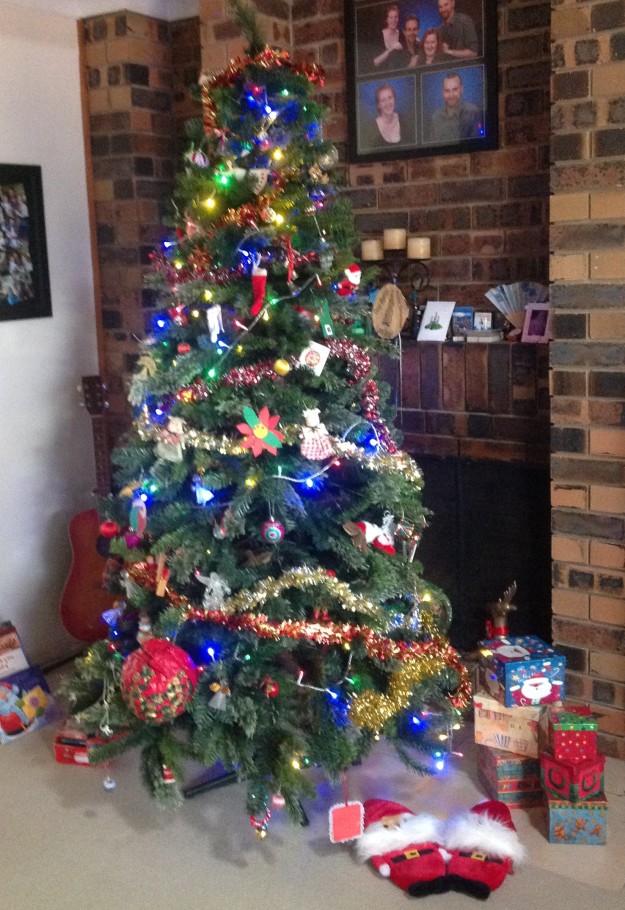
    Christmas 2014


    For whichever December festival you celebrate, and in whichever way you celebrate it, I wish you peace, joy and love enough to light up your world.

    Thank you

    Thank you for reading. I appreciate your feedback. Please share your thoughts.


  • Guess what you’re getting for Christmas!

    The love of reading is gift

    I went Christmas shopping yesterday, and guess what I bought!

    © Norah Colvin The titles of these books are hidden to maintain the “surprise” for the recipients.
    © Norah Colvin
    The titles of these books are hidden to maintain the “surprise” for the recipients.

    Books! It wasn’t difficult to guess was it? I have written in previous posts about both giving and receiving books as gifts.  I’ll let you in on a little secret though. I did buy a few others things as well. That’s probably a good thing, otherwise the memory game My grandmother went shopping and she bought … would not do anything to develop memory and would be rather boring:

    “My grandmother went shopping and she bought … a book … and a book … and a book … and a book …:

    one

    I have already received one beautiful book for Christmas this year: One: How many people does it take to make a difference?, and the recommendation of many others, some of which I have purchased for myself or as gifts. Books received as gifts often take a very special place in a collection.

    HeidiHeidi inside

    One of my strongest memories is of waking before sunrise one Christmas morning, checking to see if Santa had been, and discovering a book at the end of my bed. While there was not enough light at first to see the illustrations or read the words, I delighted in the smoothness of the cover and the smell of the pages. Slowly as the sun rose the title revealed itself: Heidi by Johanna Spyri, and I started to read. I loved that story and read it many times. After more than fifty years I still have the book in my possession, rather tattered and worn, not unlike its owner, but still loved.

    In a recent post I shared some Australian Christmas picture books.   In a comment on that post Sherri Matthews, who blogs at A View from My Summerhouse,  reminded me of the Janet and Allan Ahlberg book, The Jolly Christmas Postman.   Although it was given to Bec for Christmas exactly thirty years after I received Heidi, I still have it in my possession. Shh! Don’t tell Bec. Of course the reason it was not included in my list of Christmas books is that the authors were British. (Allan is now aged 77. Janet passed away in 1994.)

    cover

    The Jolly Christmas Postman was published in 1991 and followed the success of the original Jolly Postman story. It is a delightful interactive book in which the postman delivers Christmas mail to storybook characters, including:

    • A Christmas card for Baby Bear from Goldilocks and her sister
    • A game about being safe in the woods for Red Riding Hood from Mr Wolf, who declares he is a “changed wolf”
    • A Humpty Dumpty jigsaw puzzle for Humpty Dumpty from all the king’s men
    • A Christmas annual and book in a book for the Gingerbread Man from Pat O’Cake Bakers
    • A Wolf Spotter’s Guide for Mr Wolf from Red Riding Hood , and
    • A special concertina “peep-show” for the postman from Santa and Mrs Santa.

    activities

    After the postman delivers the children’s letters to Santa, has a cup of tea and receives his gift, he hitches a ride back home on Santa’s sleigh. What a delightful conclusion to the story.

    There is much to explore in this little book for both young and old; far too much for just one sitting. With books to read, games to play and puzzles to do it could entertain for hours. A full appreciation of the cleverness and humour in the story requires an understanding of fairy stories such as Goldilocks and the Three Bears, Red Riding Hood, The Gingerbread Man, The Three Little Pigs; and nursery rhymes such as Humpty Dumpty, Doctor Foster, and Pat-a-cake, amongst others. Reading the book is a literary adventure.

    I wonder how soon before it will also be an adventure in history. It was published in 1991 before email became popular and social media was invented. The number of items sent by “snail mail” is decreasing. It may not be long before children also need a history lesson to understand what is mean by “a postman”.

    Books make special memories. What special memories will you create for someone with a book this year? What books have made a special memory for you?

    Thank you

    Thank you for reading. I appreciate your feedback. Please share your thoughts.


  • The intrigue of nature 

    By nature, young children are explorers and discovers. Their purpose is to investigate the world around them and figure out what’s in it, how it works, and how they can get it to work for themselves. It takes little effort on the part of parents and early childhood teachers to nurture this innate curiosity and stimulate an interest in the natural world.

    Sharing in the excitement of children’s discoveries is a marvellous experience and something I loved about having my own young children and working in early childhood classrooms, I now have the additional privilege of sharing in the wonder with my grandchildren. I feel very proud watching my two children, their dad and aunt, as together they explore the flora and fauna in our backyard. I know I have done something right.

    These are just a few of the wonders we found this year:

    The ladybird life cycle on our beautiful wattle tree.

    © Bec Colvin
    © Bec Colvin

    A bee on the same wattle tree.

    © Norah Colvin
    © Norah Colvin

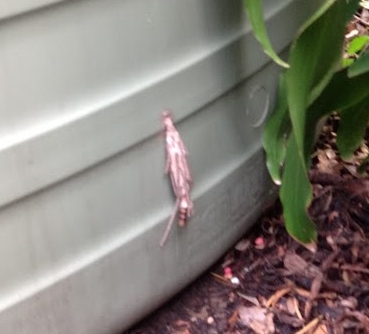
    A case moth attached to the rainwater tank.

    © Norah Colvin
    © Norah Colvin

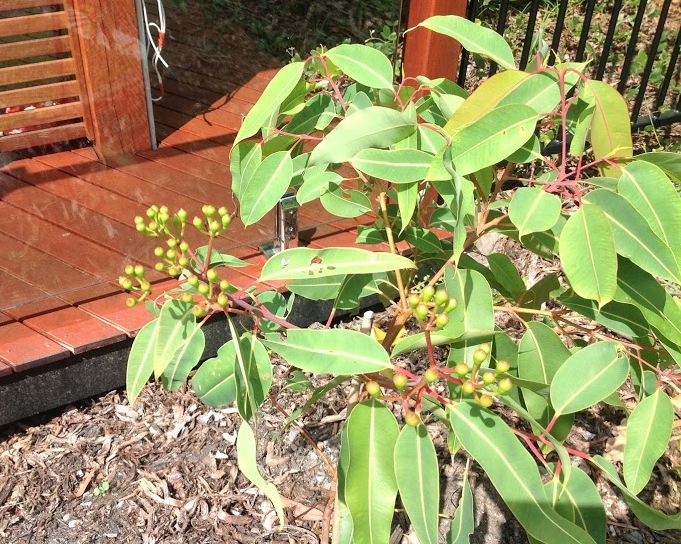
    Nuts already forming on my little gum tree.

    © Norah Colvin
    © Norah Colvin

    Flowers on the native ginger.

    © Norah Colvin
    © Norah Colvin

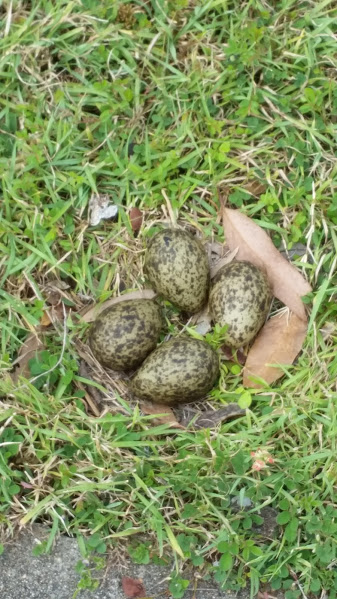
    Plover eggs in a nest.

    © Norah Colvin
    © Norah Colvin

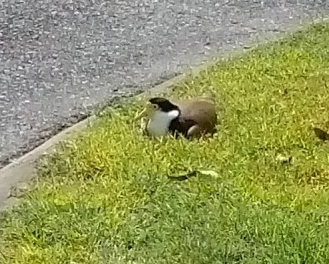
    The plover sitting on the eggs.

    © Norah Colvin
    © Norah Colvin

    Fruit on the sandpaper fig.

    © Norah Colvin
    © Norah Colvin

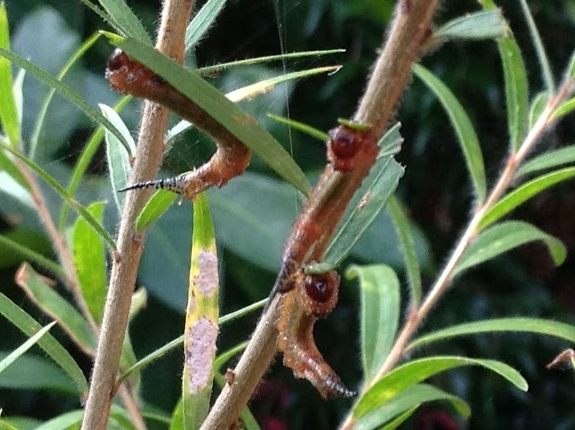
    Bottlebrush sawfly larvae.

    © Norah Colvin
    © Norah Colvin

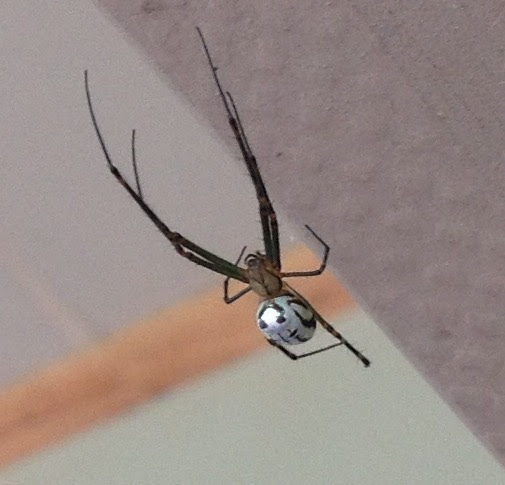
    A silver orb spider.

    © Norah Colvin
    © Norah Colvin

    Flowers on my wattle tree.

    © Norah Colvin
    © Norah Colvin

    This week at the Carrot Ranch Charli Mills was talking about having a “looky-loo”, I’d probably call it a “sticky-beak”, at the effects of a river in flood, and described the way that neighbours help each other out, even if they’ve never met before. But Charli dives deep into the analogy of a flooded river, feeling washed out and overwhelmed by the rising tide of fear fuelled by a lack of understanding and appreciation of difference. She pleads for all of us to find our common ground, to realise that, while we are complex and contradictory, we share the same needs and wants. She says that if we don’t understand we should, “Ask, don’t judge. Learn, don’t isolate.”

    Charli got me thinking about these issues, as she always does. I wondered, if we value, appreciate and marvel at diversity in the natural world, why don’t we appreciate it in other humans? After all, we are merely part of the natural world. That we have done more than any other species in manipulating it doesn’t alter that fact. Why can’t we all just agree to live and let live? Why do some think otherwise?

    These thoughts reminded me of something I had heard in a fascinating TED talk by Ed Yong, called Zombie roaches and other parasite tales. Ed Yong is a science journalist on a mission to “ignite excitement for science in everyone”. He blogs at Not Exactly Rocket Science for National Geographic.

    This particular TED talk is fascinating, funny, disgusting and very informative, with a little of something for everyone. He throws in terms like “mind control”, “eaten alive”, and “bursts out of body”. Science fiction has nothing on science fact.

    www.morguefile.com
    http://www.morguefile.com

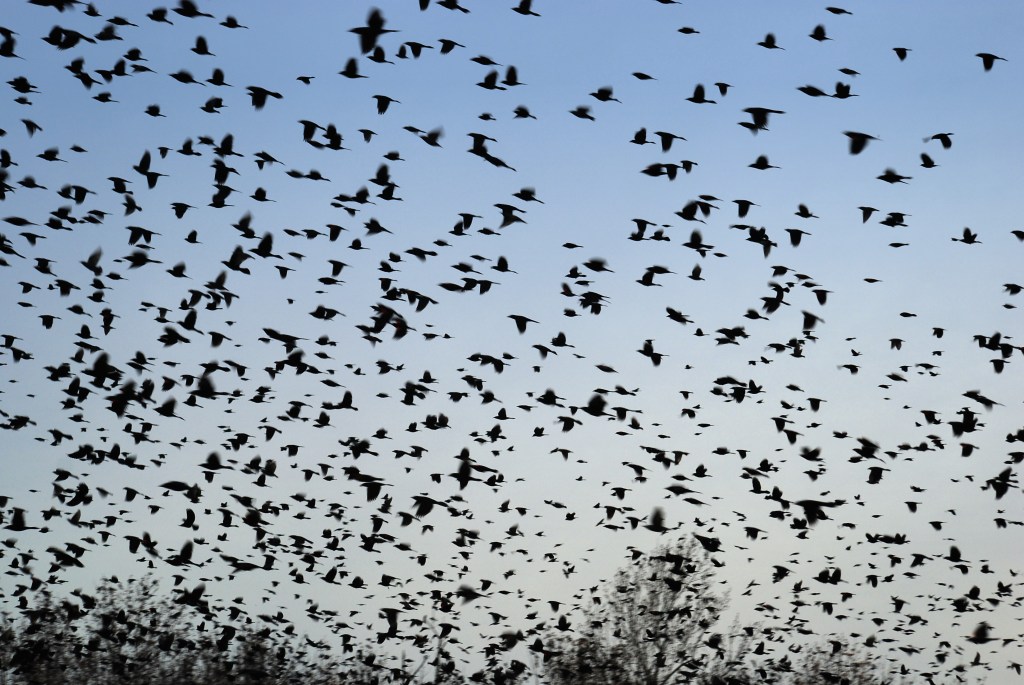
    He begins the talk by questioning whether animals choose their behaviour such as gathering in large flocks or herds for safety. He then talks about the popular children’s science “pet” brine shrimp, or sea monkey, and the ways in which a parasitic tapeworm influences the shrimp’s behaviour to enable its own reproductive cycle. He says, “The tapeworm hijacks their brains and their bodies, turning them into vehicles for getting itself into a flamingo.”

    But that is just the first of his stories of animals behaving in ways as a result of the mind-control of parasites. He describes others and says that “Manipulation is not an oddity. It is a critical and common part of the world around us, and scientists have now found hundreds of examples of such manipulators, and more excitingly, they’re starting to understand exactly how these creatures control their hosts.

    He describes a wasp that attacks a cockroach and “un-checks the escape-from-danger box in the roach’s operating system”. I wondered if this same box could be un-checked in humans. Not surprisingly, Ed went on to discuss humans but said that our methods of mind control were fairly primitive compared to the techniques of parasites. He said that this is what makes the study of parasites so compelling. We value our free will and fear having our minds controlled by others, but this situation occurs all the time in nature.

    Yong then asks what he considers an obvious and disquieting question:

    “Are there dark, sinister parasites that are influencing our behaviour without us knowing about it …?

    He talks about a parasite that manipulates cats, a parasite that many people have in their brains. While there is no conclusive evidence of parasitic manipulation of human behaviour, Yong suggests that “it would be completely implausible for humans to be the only species that weren’t similarly affected.” I urge you to have a looky-loo at the now not-so-secret behaviour of these parasites. I’m certain you will be as entertained as you are informed and challenged.

    So from a looky-loo in my backyard to a looky-loo at the world of parasites we come to my response to Charli’s flash fiction challenge to In 99 words (no more, no less) write about a looky-loo.

    www.morguefile.com
    http://www.morguefile.com

    Copy-cat Sticky-beak

    High in the branches Maggie practised her repertoire.  She watched people scurrying: erecting tents and marking long white lines.  She absorbed the rhythm of new songs: thump-thump, clink-clink.

    She breakfasted on scarab beetles and was ready when the children arrived. But they didn’t notice her playful mimicry. Instead they flooded the field with colourful shirts and excited chatter.

    Maggie watched silently. Soon she heard an unfamiliar song: “Go team, go team, go!” She flew to the top of the biggest tent and joined in. The children listened, then cheered. Maggie felt she’d almost burst. Instead she sang, and sang.

    Perhaps we could learn from the magpie, one who looks, listens and learns and shows appreciation for others in the most sincere form of flattery: singing their song.

    I love awakening to the beautiful songs of the magpie every morning. I chose to share this particular video, as yesterday we were also visited by a beautiful king parrot such as the one featured in this video. Awesome.

    Thank you

    Thank you for reading. I appreciate your feedback. Please share your thoughts about any aspect of this post or flash fiction.

  •  A celebration of Australian picture books #7 — celebrating Christmas


    With Christmas just around the corner it is appropriate to continue my series in Celebration of Australian Picture Books with some Australian Christmas picture books. This post is the seventh in a series celebrating picture books by Australian authors. If you missed earlier posts, please follow these links to the introductionMem FoxKim Michelle ToftNarelle OliverJeannie Baker and Jackie French.

    www.openclipart.org
    http://www.openclipart.org

    Christmas in Australia is unlike that in most other parts of the world that celebrate the holiday. In Australia, Christmas falls in summer and people generally head for the beach or somewhere with air conditioning to cool down. While many still follow the traditions of the Northern Hemisphere with baked dinner and plum puddings, many opt for seafood  and salad, and outdoor barbecues and picnics. Whatever the weather Christmas is a great time for catching up with family and friends (or not, depending on your family!)

    www.morguefile.com
    http://www.morguefile.com

    I shared some thoughts about Christmas in Australia last year when I posted I’m (not) dreaming of a white Christmas. This year the post is specific to picture books.

    Some Australian Christmas picture books
    Some Australian Christmas picture books

    Because our climate is so different and we have such a small population down here, most of what is available for us to read, sing or view deals with situations very different from our warm sunny days. I’m pleased to say, though, that there is an increasing number of songs and books with an Australian flavour available. However, many are merely innovations on the traditional such, as The Australian Twelve Days of ChristmasAussie Jingle Bells or An Aussie Night before Christmas.

    12 underwater days of Christmas

    One innovation I particularly like is The Twelve Underwater Days of Christmas by Kim Michelle Toft. I celebrated Kim’s work previously in this series. Kim is an Australian who uses her talents as author and illustrator to educate children about things for which she is passionate: ocean life and coastal habitats. The stunning illustrations in this book, as in others, are hand-painted on silk; providing a richness of information through visual as well as textual features. In addition to the information about the animals, Kim includes a stunning six-page foldout poster, and information about the original carol.

    Christmas Wombat

    Jackie French, another whose work I have previously shared in this series, also has a Christmas picture book in the Wombat series, Christmas Wombat. It is just as delightful as the other wombat stories and tells of Wombat’s Christmas Day with sleep, adventure, sleep, and treats.

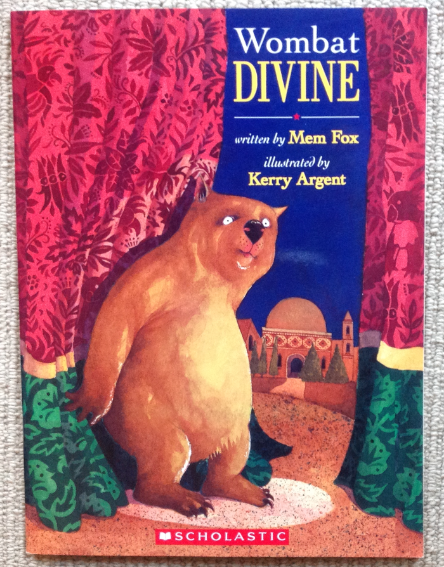
    Wombat Divine

    Using the traditional Nativity play as the setting, Mem Fox, another whose work I shared in this series created an original and fresh story in Wombat Divine. It is a delightful tale of Wombat who loved everything Christmas. When finally he was old enough to be in the Nativity Play he rushed along to the auditions. Unfortunately, it was difficult to find a role that was just right for Wombat. Can you guess which one he got? You’ll have to read the book to find out! Children all over the world will identify with Wombat and his predicament, and enjoy the heart-warming tale.

    PS who stole santa's mail

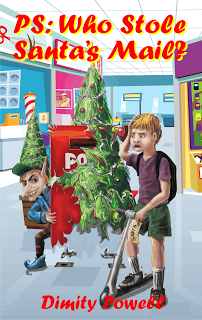
    For slightly older children there is the first chapter book PS: Who Stole Santa’s Mail by Dimity Powell, who is very active in the local SCBWI group. She blogs at  Dim’s Write Stuff. This is a fun story filled with mystery, magic and humour and a great first step into chapter books. I thoroughly enjoyed reading it.

    We do have a few original Christmas songs to listen to as well. One that I enjoyed listening to on the radio as a child, and delight in now hearing my grandchildren sing, is Six White Boomers. It is a lovely tale of a joey kangaroo who is lost and alone in a zoo. Santa rescues Joey and reunites him with his mother on Christmas Day. Of course to get there, Joey is treated to a ride on Santa’s sleigh pulled by six huge white kangaroos.

    Peter Combe has written two albums of original, but with a traditional rather than specifically Australian flavour, Christmas songs for children, including this one:

    Children around Australia are finishing their last few days of the school year within the next week. They will then have five to six weeks of holidays before starting back for a new school year. I have shared previously about the importance of keeping children’s love of learning alive and described easy ways of incorporating learning into everyday family activities. If you know of any families in need of suggestions, please give them a copy of:

    20 suggestions for maintaining reading momentum during the school holidays

    Let the children write! 20 suggestions to get children writing during the school holidays

    Counting on the holidays!

    These are available free download in my Teachers Pay Teachers and Teach in a Box stores. Soon they will also available free on my website.

    rg 1024, gift https://openclipart.org/detail/31159/gift
    rg 1024, gift https://openclipart.org/detail/31159/gift

    Of course books always make wonderful gifts and any of the books mentioned here would be a great addition to anyone’s collection.

    Thank you

    Thank you for reading. I appreciate your feedback. Please share your thoughts about any aspect of this post.


  • Storybook pirates and early childhood learning

    nicubunu, Comic Characters: Pirate https://openclipart.org/detail/21919/comic-characters-pirate
    nicubunu, Comic Characters: Pirate https://openclipart.org/detail/21919/comic-characters-pirate

    Would you believe that with the hundreds of picture books I have in my possession I do not have one about pirates! That surprises me. There must be oodles of books about pirates on the market.

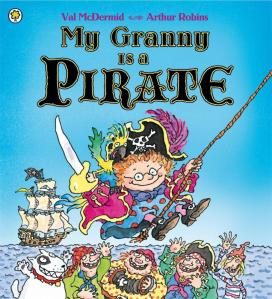
    my granny is a pirate

    When I was in London last year I did buy a delightful book for my grandchildren called My Granny is a Pirate by Val McDermid.  We had enormous fun reading it and laughing at the wonderful illustrations by Arthur Robins.

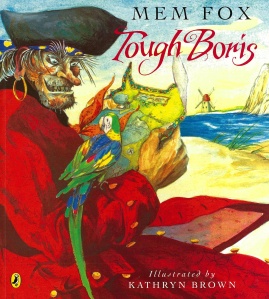
    Although I own many titles by Mem Fox, I don’t own her “all time classic and long-lasting bestselling” pirate book, Tough Boris . In the information about the story on her website, Mem explains how the story came to be and raises issues of sexism, particularly regarding the over-representation of male characters, in picture books. This is a topic that is very familiar to me.

    Tough boris

    In addition to not owning books about pirates, I can remember using a pirate theme for teaching on only one occasion. This surprises me too as pirates seems to be a perennial theme for birthday and fancy dress parties. Children and adults find the idea of pirates fun. You have only to look at the success of the Pirates of the Caribbean series to know that.

    Of course, in this post I am referring only to the pirates of picture books and movies such as these, that were no more real than other fanciful characters such as giants, fairies, elves and dragons.

    The occasion for my using a pirate theme was over twenty years ago when I was running early childhood classes as part of my home-based business Create-A-Way, and the inspiration for it was of a practical rather than literary nature. I was required to wear a patch over an eye after having a pterygium removed. A pirate day seemed like a great way to avoid upsetting the children and to have a bit of fun as well. Perfect!

    https://pixabay.com/
    https://pixabay.com/

    But why am I thinking about pirates you may wonder. Well, it’s in response to the post by Charli Mills at the Carrot Ranch and her challenge to writers to In 99 words (no more, no less) write a pirate story. As always Charli gets me thinking about different things with her prompts. She is talking about the piracy from her internet data service and drinking rum before 10 am, which is apparently something pirates do.

    As usual I take the prompt to the early childhood education setting, and I’m excited by doing so. Ever since reading Charli’s prompt I have had ideas for teaching and learning experiences based on a pirate theme swirling around in my head. I may be late coming to the party, but I’m not coming underdressed.

    https://pixabay.com/
    https://pixabay.com/

    One of the things I have always loved about teaching is the opportunity to be creative: to write and prepare fun educational resources to use with my children. What wonderful things could be done with a pirate theme. I can’t believe I have never done it. And while I am no longer in the classroom and the opportunity is not there for me to use them with my own class, I can make them for my website to share with other teachers. The fun of thinking, writing, and creating is still mine!

    I’m pleased to announce that my website is underway. I have signed with a web designer and developer. It should be ready to go live by the end of January, ready for the start of the new school year in Australia. I can’t wait. Well, I can wait. I still have so much work to do in the meantime. I have resources to finish and new ones to write. There are many “in progress”. While I won’t be rushing into making pirate themed resources, I am putting them on my list. I have lots of ideas.

    Actually now that I think about it, the mix of feelings I have now that the website is imminent may be similar to those experienced by someone walking the plank: there is no way back and the choice for the future is to either sink or swim. If I do manage to hold my head high and above water level, I hope I don’t get eaten by sharks!

    wsnaccad, shark https://openclipart.org/detail/19732/shark
    wsnaccad, shark https://openclipart.org/detail/19732/shark

    On my website subscribers will be invited to suggest or request resources to match their requirements. I love thinking of resources to suit particular topics or to teach particular skills or processes. I would love a request for pirate materials so that I could get started on making them sooner rather than later.

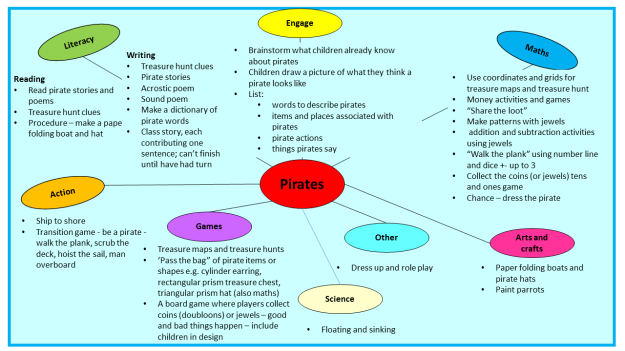
    Here are a few ideas I have to start with. I’m sure I would come up with many more given a little longer.

    © Norah Colvin 2015
    © Norah Colvin 2015

    But now here is what got me thinking about pirates in the first place: my flash fiction response to Charli’s prompt. I’m definitely sticking with my early childhood theme and a bit of fun for this one.

    https://pixabay.com/
    https://pixabay.com/

    If I was …

     If I was a pirate

    I would sail the ocean blue,

    In a boat made out of cardboard

    With my parrot Libby-Lou.


    I would wear a red bandana

    And purple polished boots.

    I would flash my pearls and silver sword

    And plunder pirate loot. 


    I would dig for buried treasure

    In the spot marked with an X,

    And all I’d find I’d stow inside

    My handy wooden chest.


    I would have no one to boss me

    I could do just as I please,

    Until my dad would call me

    “Anna, come, it’s time for tea!”

    Thank you

    Thank you for reading. I appreciate your feedback. Please share your thoughts about any aspect of this post or flash fiction.

  • You’ve got a friend in me


    https://openclipart.org/detail/117199/Friendship
    https://openclipart.org/detail/117199/Friendship

    One of the greatest contributors to a child’s happiness at school, indeed for happiness in life, is friendship. Talking with children about their day at school will more than likely contain some reference to their friends; who they played with, who they didn’t, who was absent, who was mean. If they felt sad during the day it was possibly because someone wouldn’t play, wouldn’t let them play, or was mean.

    Getting along with others seems to come naturally to some children, especially to those who see positive social skills modelled by parents and family friends, who are given lots of opportunities to mix with others of all ages, and who are encouraged to express themselves and their feelings. Other children don’t find it so easy, sometimes due to lack of positive role models, but often for other reasons.

    http://www.morguefile.com/
    http://www.morguefile.com/

    Most children require some explicit teaching from time to time, for example to share, take turns and to use friendly words. Many schools incorporate the development of friendship skills into their programs. Some schools, such as one that employed me to write and teach a friendship skills program in years one to three, develop their own programs. Other schools use published materials such as the excellent You Can Do It! program which teaches the social and emotional skills of getting along, organisation, persistence, confidence and resilience.

    In the early childhood classrooms of my previous school, we used the songs, puppets and stories included in the You Can Do It! Program. We also involved children in role play and discussion, providing them with opportunities to learn the language and practice the skills in supportive and non-threatening situations. Having a common language with which to discuss feelings, concerns and acceptable responses meant issues were more easily dealt with. More importantly children learned strategies for developing positive relationships and friendships with others. They came to understand their own responses as well as those of others.

    SMAG ccbyncnd

    I have talked about friendship in many previous posts, including here, here and here. My online friend Anne Goodwin, who blogs at Annecdotal even wrote about it in a guest post here, and I described friendship trees that I used with my class here.

    Friendship tree

    In this post I want to acknowledge a new friend and a long-time friend. (I can’t say ‘old’. She’s younger than I!)

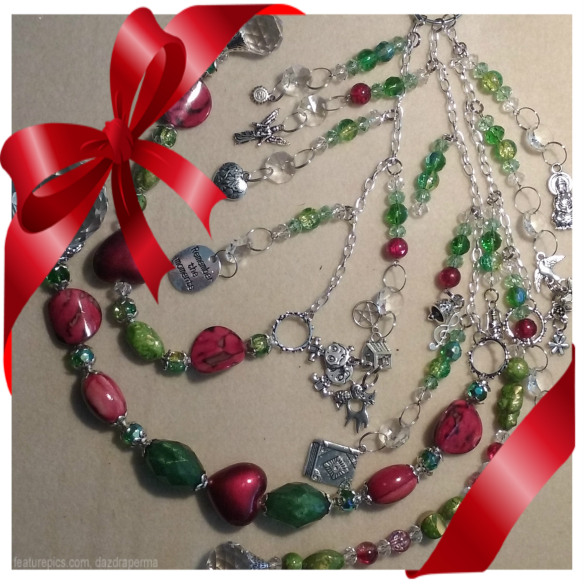
    My new friend is Pauline, The Contented Crafter. At the beginning of last week Pauline announced a very generous giveaway for Christmas which I shared with you here.  Pauline invited readers to nominate someone as a deserving recipient of her beautiful Christmas light catcher. She posted the nominees and their stories here and invited readers to vote for the two they would most like to receive the light catcher.

    pizap1

    I nominated Robin, a friend of over thirty years. That must be deserving of an award in itself! In case you missed her story on Pauline’s blog, I include it here so that you can understand why I value her friendship so highly.

    I have a wonderful friend for whom this beautiful light catcher would be a perfect gift. Each of its strands holds a special significance, as if Pauline had her in mind.

    She gifted her friendship to me more than thirty years ago and, thanks to a miracle and the protection of angels, it is a gift that continues.

    Over twenty years ago, on my birthday, she was involved in a serious car accident. My birthday became her life day, a constant reminder that life and each passing year is a precious gift. 

    Her many injuries, requiring numerous surgeries over the years, did not injure her bright, cheerful nature and positive outlook on life. Although she lives with constant pain you wouldn’t know unless you asked, and then only if she chose to tell you.

    She has an enormous generous and loving heart, and her home is warm and welcoming. Family, especially her two grown daughters and her dear Mum who passed this year, is important to her. She loves to bake and craft individual gifts for her family and friends. She is always busily thinking of others.

    She is a gifted musician and amazing music teacher. She plays the flute and sings like a Robin. She incorporates music and fun into classes for children and lessons for adults learning English. All come to her classes eager to learn and leave singing with joy and acceptance.

    At Christmas the family gather round to decorate the tree and “remember the moments” marked by ornaments made by smaller hands, collected on travels, or signifying achievements and occasions like graduations and engagements.

    I know my friend would treasure this beautiful light catcher as another reminder of life’s precious gifts and moments that make it magic. Thank you Pauline for the opportunity to express openly how much I value her friendship.

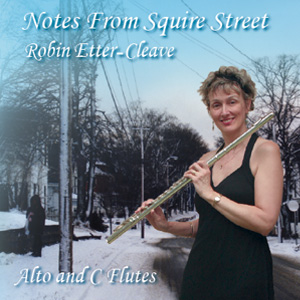
    You can find out more about Robin on her website and even purchase her wonderful CD “Notes from Squire Street”.

    Robin - Notes from Squire Street

    I am very excited to say that Robin is included in Pauline’s list of winners. In fact Pauline’s generosity is being extended to many of the nominees, and even to one for commenting on the post. Very soon Pauline’s light catchers will be dispersing rainbow light of friendship and joy around the world. I think that is a beautiful and generous gesture.

    Thank you

    Thank you for reading. I appreciate your feedback. Please share your thoughts.


  • Freeze!


    GDJ, Playful stick figures https://openclipart.org/detail/230070/playful-stick-figure-kids
    GDJ, Playful stick figures https://openclipart.org/detail/230070/playful-stick-figure-kids

    Freeze, or Musical statues as it is sometimes called, is a popular childhood game wherever groups of children gather.

    While not suggesting that playing the game has any great educational benefit, it can be used with good effect from time to time in early childhood classrooms.

    As with other games, it does provide opportunities for children to:

    • participate in a social situation
    • understand and follow game rules
    • accept game decisions, for example  being out
    • respond in positive ways to their own participation and the participation of others
    • have fun

    It also provides opportunities for activity and to release tension.

    In this post I describe how to play the basic game and a few variants and suggest some times suitable for its use.

    How to play Freeze

    The basic game

    Requirements:

    •  a manager, often a teacher or parent but can be a child
    • a group of participants, often children but anyone can play
    • enough space for the participants to move about without bumping into each other, and
    • a source of music that can be played and paused.

    How to play:

    • The participants find a spot within the defined space from which to start the game.
    • The manager plays a piece of music. Moving to the music, the participants move about the space without bumping into any other participants.
    • After a few seconds (varying duration between approximately 2-20 seconds) the manager pauses the music. As soon as the music is paused, the participants must “freeze”. Anyone seen moving is out of the game and sits to the side.
    • The game continues until only one participant remains.

    Variant #1 — Topic words

    No music is required.

    Before the game commences the manager, or the manager in consultation with the participants, decides on a set of specific statues to be used in the game. These statues are explained and demonstrated to participants.

    The manager turns away from the participants and counts loudly to ten, while participants form one of the statues. After ten the manager calls “freeze” and participants freeze in the statue they have chosen. The manager then calls out one of the statues and turns around to see who has made it. Those who did remain in the game. The others are out and sit to the side. (The reverse can also be played with the called statues going out and the others staying in. Participants would need to be informed of this before the game begins.)

    Suggestions:

    Monarch butterfly

    butterfly

    When learning about butterflies, participants could make these four statues:

    egg — curled up in a ball on the floor

    caterpillar — prone on the floor

    chrysalis — standing with knees bent out to the sides and one hand pointing up while resting on the head (attached to a leaf or twig)

    butterfly — fists on hips and elbows out to the side (for wings)

    shapes

    shapes 

    When learning about shapes, participants could make these four statues:

    circle — fingers meeting above head, arms forming a circle, feet and legs together

    square —arms out to side, elbows in line with shoulders, forearms and fingers facing upwards at right angles, feet and legs together

    triangle — legs wide apart, and hands on hips with elbows out to the side, making three triangles in all

    rectangle — lying on back on the floor with arms and legs extended straight upwards

    Suggestion: the possible statues could be written or illustrated on a dice to be rolled or on cards to be selected.

    Variant #2 — Groups

    Music is required.

    The manager calls a number from 2 – 5 then starts the music. While the music plays participants quickly form groups of that number. They must freeze in group formation when the music stops. Groups that do not freeze and participants who are not able to join or form a group are out of the game and sit to the side.

    Play the game until four participants remain. Call all participants back into the game to move to the music once again.


    GDJ, Stick figure kids https://openclipart.org/detail/221994/stick-figure-kids
    GDJ, Stick figure kids https://openclipart.org/detail/221994/stick-figure-kids

    Suggestions:

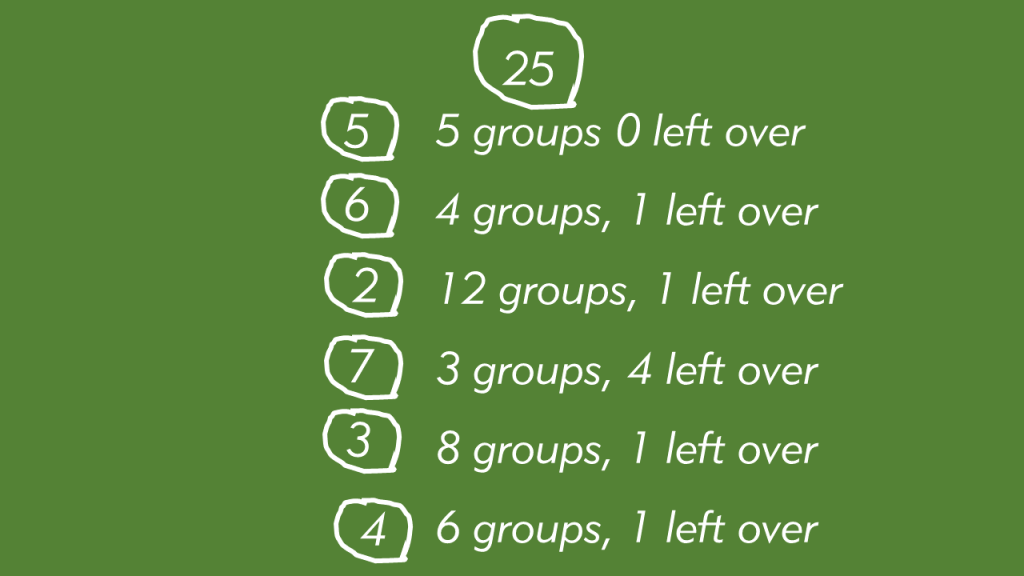
    This game can be a fun way of exploring groups using the number of children in a class. No one is out in this version.

    Count the number of children in the class. Write the number on the board or chart. Play the music. Participants move to the music. When the music is paused call out a number. Children quickly form groups of that number and freeze. As a class count the number of groups, identify the number in each group, and how many “left over”.  Write the information on the board or chart. Repeat with all children participating for different numbers.

    grouping 25

    Variant #3 — Find a partner who

    Music is required.

    This activity will be noisier and require more time than other versions.

    In this version participants try to link up with someone with a similarity; for example the same colour eyes, the same number of people in the family, the same favourite colour, or who plays the same sport.

    Before the music starts tell the participants who they need to find. When the music stops, those who have not found a match sit to the side, as the others explain their matches.

    Everyone joins in again for each new round.

    Suggestion: Add a bit more fun with this one by having partners freeze  touching the same body parts together, for example, ankles, elbows, tops of head, or bottoms.


    Suitable times for playing Freeze

    • To transition from a noisy activity to a quiet activity
    • To provide an opportunity for movement during lengthy sessions of seated work
    • To dismiss children for recess (use Variant #1 rather than the basic game)
    • To ease a tense situation
    • To settle children and prepare them for the next activity
    • To have fun in a few ‘spare’ moments
    • Whenever you think it’s appropriate

    The stimulus for my thinking about the game Freeze this week is the flash fiction prompt set by Charli Mills at the Carrot Ranch to In 99 words (no more, no less) write a frozen story. Charli suggested that the freeze could be related to weather, emotion or time.

    My first thought was to the movie “Frozen” which my granddaughter enjoys, being completely captivated by Elsa and her beautiful blue dress. I thought she should prefer Anna who shares her name (though pronounced differently) and hair colour.

    My second thought was to the scientific explanation of cold as the removal of heat. It’s all relative. Instead I decided to go with a bit of fun. However, for my flash I did incorporate a little science thinking spurred by the question “Why do ice cubes crack when you drop them in drinks?”

    Frozen

    To an external observer she would have appeared immobile as if frozen in place and time. But her insides churned as the heat engulfed her body in a wave from toes to head. She thought her heart would erupt from her chest and wasn’t sure she could contain the contents of her noncompliant belly or from which end of her body they would spew. Others mouthed soundless words, their messages obliterated by the relentless pounding in her head. Just when she thought she’d crack, like ice exposed to sudden temperature change, she breathed deep, composing her tumultuous fear-fuelled mind.

    Thank you

    Thank you for reading. I appreciate your feedback. Please share your thoughts about any aspect of this post or flash fiction.

  • Have you got a handle on it? Tweet!


    tweet bird

    Each week I read and comment on more than 50 blog posts. If I read a post I enjoy, and I rarely read one I don’t, I like to share it on Twitter. I usually share it immediately and then use Hootsuite to schedule future shares for hashtag days. It is quick, easy, and allows me to assist others to build a wider audience. I am happy to do it and have no expectation or need of “Thank you” tweets in return.

    thank you - rose

    Some blogs and posts are not easy to share as they have no sharing buttons, or their sharing buttons are difficult to find. While it is possible to copy the URL and paste it into Twitter or Hootsuite, it takes a little more effort to do so and is not something a reader should, in my opinion, be expected to do.

    If bloggers wish others to share their posts on any of the Social Media Platforms, I believe they should make doing it as easy as possible.

    I am familiar with WordPress only so am not sure how it works with others. However I do know that when I visit non-WordPress blogs, sharing doesn’t seem to be as straightforward.

    This next section is for WordPress users only.

    To add sharing buttons in WordPress, go to

    Dashboard — Settings — Sharing — Publicize

    WP -publicize

    1. Select in turn each of the social networking sites to which you belong and add your “address” to each. This is important. It means that people will be able to find you on those sites. It means that when your post is shared on Twitter you will know because the tweet will include your “handle”, your Twitter username.

    For example, when my posts are shared the tweet includes my username @NorahColvin and I know it has been shared; like this:

    tweet -me

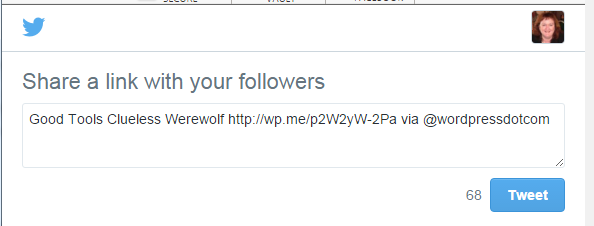
    If the username is not included the tweet will have @wordpressdotcom; like this:

    tweet - WP

    That’s not very exciting and you will never know that your post has been shared.

    Sometimes, if I know the blogger’s Twitter handle I will change the tweet to include it, but as I said before

    If bloggers wish others to share their posts on any of the Social Media Platforms, I believe they should make doing it as easy as possible.

    More often, if the handle is not included, I am less inclined to share more than once.

    2. Choose the buttons for each platform on which you wish to share your blog.

    sharing buttons

    I think it is a good idea to have the buttons appear on every post and page. Remember to save any changes you make!

    sharing buttons on

    I assume there are similar ways of adding sharing buttons on other sites. I know it is possible in Weebly as Anne Goodwin added her username after I alerted her to its absence. If there are ways, I recommend you use them. If you have chosen to not add your handle to your sharing buttons, I’d be interested to know your reasons.

    Earlier I expressed that I have no requirement for “Thank you” tweets in return for my sharing of a post. I consider the best way of saying “Thank you” to be sharing a post of mine in return. If you have shared one of my posts in a tweet, it is extremely likely that very soon I will sharing one of yours. I’m not talking about retweeting someone else’s shares here. I treat those differently.

    I mentioned scheduling tweets in advance. There are a number of hashtag days on Twitter. These are the ones I use most frequently. Not all posts are suitable for every hashtag. I generally share a post on each of the next 2-4 suitable days.

    Hashtags

    #SundayBlogShare

    #Mondayblogs

    #TuesdayShares

    #TuesdayBookBlog

    #wwwblogs (Wednesday – Women Writers)

    #BeWOW (Wednesday – all)

    #ThankfulThursdays

    #TBT (Throwback Thursday)

    #LinkYourLife (Friday)

    #BluSkyFriday

    #ArchiveDay (Saturday)

    Nothing says that I am right of course. What I have shared here is what works for me, at the moment. I’d love to know what works for you. How do you share on Twitter? Do you think it’s important to include the username in tweets? How often to you share the posts of other bloggers?

    Thank you

    Thank you for reading. I appreciate your feedback. Please share your thoughts.

  • Curiosity, dead chooks, science and the S.T.E.M. push

    Curiosity, questioning and science are recurring themes on my blog. How could a post entitled “Curiosity, dead chooks, science and the  S.T.E.M. push” not appeal to me? While I don’t think I’ve written about dead chooks, yet, when I was six I was the best chicken catcher in the family and I definitely saw a few chooks running around with their heads chopped off!
    In this post Sheryl Gwyther talks about the awakening of her scientific questioning at age four when seeing a similar a spectacle. The transcript of a talk delivered to other authors “Children are born scientists … It’s called curiosity” (my words exactly!) is included in the post. Sheryl urges authors to include science in their writing for children and suggests three rules for doing so:
    Never be didactic
    Entertain
    Create characters that children can connect with
    While she doesn’t say it in so many words, I think the message of keeping the science accurate is implied. (I have questioned the inaccuracy in The Very Hungry Caterpillar in previous posts.)
    Sheryl’s closing paragraphs motivate and inspire writers. She says,
    “We have the opportunity, the passion and hopefully, the commitment to reach out to young Australian children through stories about the wonder of science, and the responsibility for their future custody of this planet.
    Great stories, cleverly laced with scientific understanding not didactic waffle.
    Great stories to make them feel and think, and question.
    Great stories – for the sake of their future on this planet.”

    Some of the authors from my celebration of Australian picture book series are doing just that:
    Kim Michelle Toft
    Narelle Oliver
    Jeannie Baker
    Please read Sheryl’s post in its entirety. She offers much good advice and inspiration. You can find out more about Sheryl by following these links:
    Sheryl Gwyther SCBWI Assistant Regional Advisor Queensland Public Profile
    Author webpage
    Author blog
    Twitter

    Thank you

    Thank you for reading. I appreciate your feedback. Please share your thoughts.
  • The right place at the right time

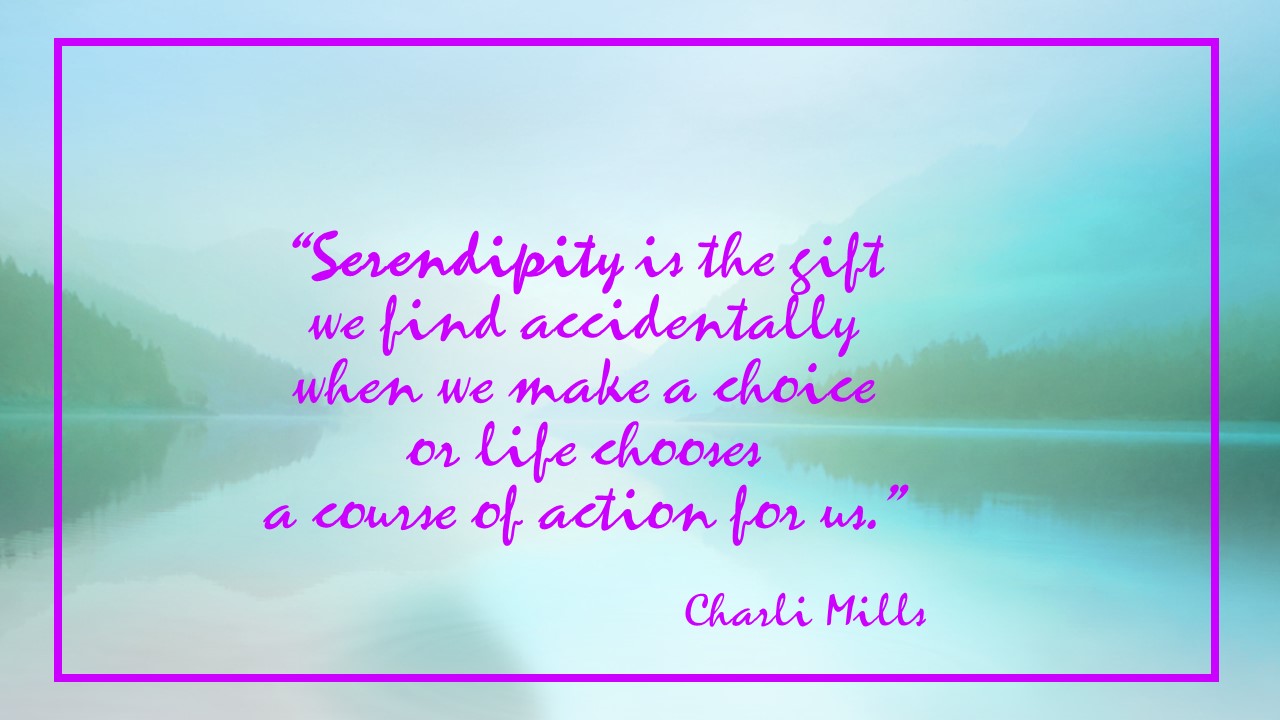
    Charli Mills Serendipity

    This week at the Carrot Ranch Charli Mills is talking about serendipity and describes it this way:

    “Serendipity is the gift we find accidentally when we make a choice or life chooses a course of action for us.”

    I often think of serendipity as being in the right place at the right time. There are many occasions in my life where that has occurred, and probably millions more when I’ve missed by a millisecond, but many of those I’ll never know.

    www.morguefile.com
    http://www.morguefile.com

    Our lives have been improved by many discoveries made through serendipity. This article on NOVA lists seven Accidental Discoveries  in medical science that have changed health outcomes people around the world:

    • Quinine
    • Smallpox vaccination
    • X-rays
    • Allergy
    • Insulin
    • Pap Smear
    • Penicillin

    Joseph Henry - seeds of discovery

    Lexi Krock, author of the article reminds us that, though some elements of serendipity, of chance, may have been involved in the discoveries, there was also a great degree of hard work, preparedness, creative thinking and an openness to possibilities. In fact Krock says that having an open mind is the most important ingredient. She quotes the words American physicist Joseph Henry:

     “The seeds of great discoveries are constantly floating around us, but they only take root in minds well prepared to receive them.”

    I came to that article through The story of serendipity on Understanding Science, which also talks about lucky coincidences, such as the story of Newton and the apple. This article states there is more than being in the right place at the right time to make a serendipitous discovery, including:

    • Background knowledge
    • An inquisitive mind
    • Creative thinking
    • The right tools, and
    • Good timing
    www.morguefile.com
    http://www.morguefile.com

    Another who attributes success in part, to serendipity, to being in the right place at the right time, is Malcolm Gladwell. Thanks to a serendipitous recommendation by Rowena, who blogs at Beyond the Flow, I have just finished listening to Gladwell read his book “The Outliers, The Story of Success”.

    Gladwell argues that there is more to success than just intelligence and hard work. Yes both are important: intelligence to a certain level and hard work to a greater degree. Through “The Outliers” Gladwell popularised the idea of 10 thousand being the “magic” number of hours to practice for success to occur, citing sporting heroes, The Beatles and Bill Gates, amongst others..

    However there is much dispute to this “rule”; and I must admit that, although I thoroughly enjoyed listening to and thinking about this book, it raised as many questions as it provided “answers” and I found myself wondering how much manipulation had gone into the figures to make them match his ideas, rather than the other way round. I am not saying there was any manipulation, I just wondered.

    www.openclipart.com
    http://www.openclipart.com

    However, one point he was making, that I think has value and fits with the theme this post, is that one’s circumstances; one’s family, environment and time, including birth year and month, play an enormous role in one’s success. These are things over which we have no control.

    According to Gladwell’s discussion of timing, I am correct in describing myself as “born too soon” in my Twitter bio. I was born just a few, but too many, years before the twelve month period that saw the births of Bill Joy, Steve Jobs and Bill Gates. I didn’t have the opportunities they had either.  Gladwell explains the importance of their timing, environment and opportunities in his book.

    In this Q and A Malcolm explains what an outlier is, what he thinks of as success, and how he thinks we should think of success. As well as the coincidence of Joy, Jobs and Gates, Gladwell says that “a surprising number of New York’s most powerful and successful corporate lawyers have almost the exact same biography: “they are Jewish men, born in the Bronx or Brooklyn in the mid-1930′s to immigrant parents who worked in the garment industry. “ He also says that “a hugely disproportionate number of professional hockey and soccer players are born in January, February and March.” Coincidence? He explains why.

    rg 1024, gift https://openclipart.org/detail/31159/gift
    rg 1024, gift https://openclipart.org/detail/31159/gift

    In her post Charli Mills states that

    “Serendipity holds no guarantees, but we can take the gifts it offers.”

    The gifts were there for the hockey and soccer players born in the first quarter of the year, but stacked against anyone born in the final months of the year. Likewise, serendipity held false promises for me when I was working towards establishing an alternative school.  Meeting the expectations of the Education Department proved no barrier. Meeting town planning requirements was much more elusive.

    The first property with any real potential we investigated was in Skew Street. Not surprisingly the odds were skewed against us and we couldn’t proceed there.

    Shortly after we located a much better property: more central, with ample indoor and outdoor space and a large playground. The arrangements seemed ideal, and the street names were much more promising. It was on the corner of Water and Love Street. Surely that had to bode better for us than Skew Street. Serendipity.

    Unfortunately, though it was definitely the right place, the timing was wrong. At the final moment, when leases were to be signed, a member of the organisation, who had been absent from previous meetings and discussions, turned up, objected and put an end to our plans.

    While some of us did continue to search for another location, it was like trying to find a needle in a haystack; there were few that met town planning requirements, and even fewer that met ours. Parents who had expected their children to start with us decided they could wait no longer and made other arrangements for their children’s education. The last minute loss of the ideal property rocked us to the core. With much heartbreak we finally admitted defeat and disbanded. Having read Gladwell’s book I am now willing to accept that it was not because I didn’t work hard enough but because there were other factors working against us.

    I decided that, in response to Charli’s flash fiction challenge to In 99 words (no more, no less) write a story that reveals or explores a moment of serendipity, this time I would provide Marnie with a positive experience, the beginning of a new phase in her life; serendipity working it’s magic.

    doors

    The wrong place at the right time

    Marnie was puzzled. The card definitely said 225; but there wasn’t any 225. There was 223, and 227, but no 225. She peered at the crack between the apartments as if willing 225 to materialise. Exhausted and confused, unsure of what to do next, she slumped on the step.

    “Can I help you?”

    The question interrupted her muddled thoughts. Seeing kindness in the eyes, Marnie explained her predicament.
    The woman read the card.

    “Street, not Avenue,” she said, pointing to the sign. “Are you Marnie? Lucky I got the wrong bus today. I’m Josephine. Come on. It’s not far.”

    Thank you

    Thank you for reading. I appreciate your feedback. Please share your thoughts about any aspect of this post or flash fiction.