Live Love Laugh Learn … Create the possibilities

Category: Blogging

  • Are you coming or going?

    © Norah Colvin

    My mother used to sometimes say that she didn’t know whether she was coming or going, meaning that she was a bit frazzled with too much to do and too little time. With a small house filled ten children, is it any wonder?

    Sometimes when asked “How are you going?” meaning “How are you going in life?” or simply, “How are you?” people respond, “Getting there”. Sometimes I wonder where they are getting, and wonder if they know too.

    But does it matter? Is it important to know where we are getting? Is not there joy in the journey itself? What if the “there” turns out to be totally unexpected, a surprise? I have no idea where I’ll be after the door on this life’s journey closes. I hope it’s a pleasant surprise, but I’m more inclined to think it will be no surprise at all. This convinces me that it is important to enjoy the journey whether we’re coming or going or anywhere in between.
    One of the purposes of education is to support people along their life’s journey, regardless of where they came from or where they are going.  I previously wrote about some issues affecting itinerant families in This too will pass. Saying goodbye to friends, if indeed there has been time to establish friendships can be difficult; so too the establishment of new friendships at each next place.

    Robbie Cheadle, who blogs at Robbie’s Inspiration, recently shared her experiences in a comment on the readilearn blog. She said, “I changed schools 14 times during my primary school years and it was very hard. I was always the new girl and always having to start over. It does teach you to get on with people and to be resilient.” Robbie obviously learned to do so, but it doesn’t happen that way for all.

    Sherri Matthews, another friend from the S.M.A.G. community, who blogs at A View from my Summerhouse recently shared her excitement at the publication of her essay Promise of a Rose Garden in Lady by the River: Stories of Perseverance, “a collection of  personal stories about facing everyday challenges”. This is a wonderful book and I have no hesitation in recommending it to you.

    In her moving story, Sherri describes “having her heart ripped out” at ten years of age when she realises that the goodbyes exchanged between herself and her father as she left for school were more permanent than she expected. She says she kept her feelings inside, telling no one how she felt about her mother leaving her father. She says, “I cried alone at night, missing my dad so much that I thought my heart would break”.

    These two experiences alone demonstrate that we may never know just what the children in our classrooms are experiencing. They may keep their feelings inside, not wanting to share. This is particularly so when the time that could be used for getting to know each other is pushed out to accommodate more drill and practice and standardised testing.

    No child’s situation is the same as any other. There is no standard experience that puts everyone in the same spot on the graph at the same time. We need to make the effort to get to know individuals and to tailor the situation to their needs. This means providing opportunities for them to share their experiences, discuss their feelings, and follow their interests.

    Of course, children should never be pressured to share more than they are comfortable with, but an open, welcoming, supportive classroom will provide them with a refuge from other issues that may confront them. I seem to keep returning to this point: the importance of a warm, welcoming, supportive classroom. I’m like a broken record, stuck in that groove. But it is the relationships that are vital and of greatest influence to a child’s ability to learn.

    There are many simple activities which can be incorporated into the school day to help build community. I’ve talked before about the way I used to do the roll, with each child standing in turn to greet classmates. How much more effective it may have been had children said “good morning” in their mother tongue, teaching others the greeting, and receiving it in response. Children enjoy learning words from other languages.  What a great celebration of diversity this would be.

    It was these thoughts that went around and around in my head this week when Charli Mills of the Carrot Ranch challenged writers to In 99 words (no more, no less) write a hello or a goodbye. You can pick any greeting that grabs you from howdy to fare thee well. It will be interesting to see how the collection intertwines the opposite greetings. Charli herself has experienced a series of hellos and goodbyes in recent times, with another goodbye imminent.

    For my goodbye story, I have taken another turn and gone full circle. I hope you like it.

    Round and round

    He felt tall, grown up, sitting in the saddle, holding the reins, feet in the stirrups.

    Mum was watching.

    “Hold tight,” she whispered. “Love you.”

    He smiled.  Then they were off. He turned, letting go quickly to wave one hand.

    “Goodbye,” he called. His lip quivered. How soon before he’d see her again? He turned, but she’d disappeared.

    Suddenly she was in front of him.

    “Hello,” she called.

    “Hello,” he smiled.

    Again, she was gone. “Goodbye,” he heard; then “Hello again!” He giggled.

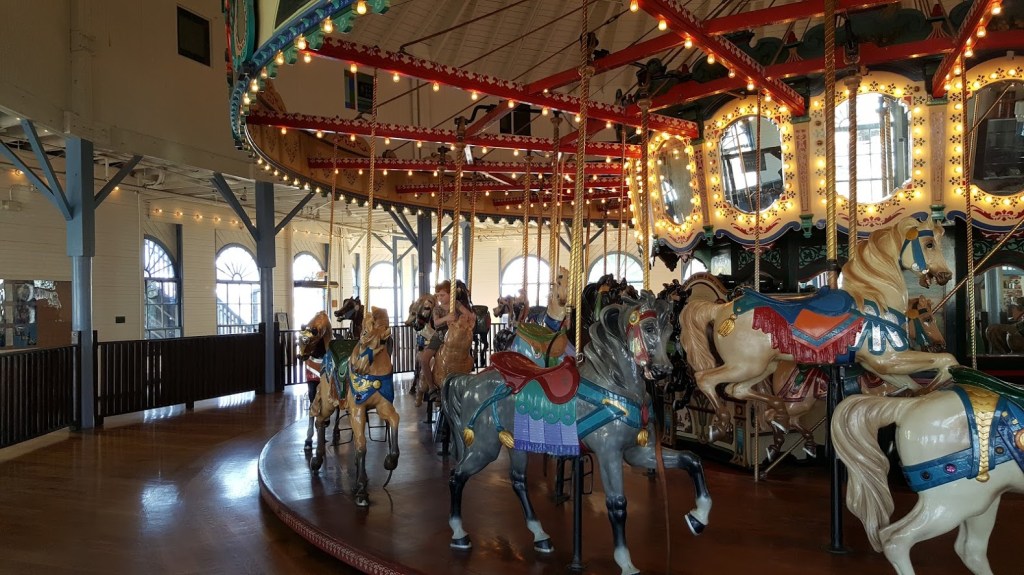
    “Going around in circles,” she thought. “Life’s like a carousel. You’ve got to enjoy the ride.”
    Thank you for reading. I appreciate your feedback. Please share your thoughts.

  • #WATWB Thank you SES Volunteers

    Susan Scott and Debby Gies have alerted me to a new blog hop that aims to spread light, rather than negativity, across the world.

    I thought this was a great opportunity to acknowledge the very generous work of the SES (State Emergency Service). These volunteers work tirelessly to give support to those who are affected by disasters such as cyclones, storms, floods, landslides, you name it.

    This week has seen many in Queensland and New South Wales suffer from the disastrous effects of Cyclone Debbie which has wreaked havoc down much of the eastern coastline of Australia.

    The SES volunteers have been there to assist people as the weather unleashed its fury, and in its aftermath.

    While I am one of the fortunate ones who have not required their services personally, I greatly value the assistance they provide to our communities, and recognise the light that their generosity spreads in the world. Our communities would struggle to cope without their services. I find it hard to believe that the essential services these amazing people provide is done voluntarily.

    Thank you, SES Volunteers, one and all, for your enormous generosity.

    Susan Scott says:
    Please join us if you would like to, and spread the word by adding your own personal story or some other enlightening event. Let’s set about diluting/dissolving the negativity around the world and bringing in the light. This is the link.
  • Are you ready to learn? A shout out for readilearn – Readilearn

    About six months ago, not long after the launch of readilearn, I was invited by Dr Gulara Vincent to talk a little about it on her wonderful blog through which she provides support for writers as they find their inner voice. I thought you might be interested in finding out a little more about how readilearn came to be. Although I share the interview here, please click through to meet Gulara and read the interview on her blog.

    Hi Norah, Welcome to my blog.

    Thank you for inviting me. I am delighted to be here.

    Norah, congratulations on the recent launch of your website. Tell us a little about readilearn.

    Thank you. I am very excited about my new website. readilearn is a collection of early childhood teaching resources that I have written. Many of the resources I used, trialled if you like, in my own classroom. I had always thought about sharing them with others but, when I was teaching full time, didn’t have the time to present them professionally or even think about marketing them.

    Norah, what makes your resources different? Why would people choose readilearn resources?

    Continue reading at: Are you ready to learn? A shout out for readilearn – Readilearn

  • Shaping the future #myfirstpostrevisited

    Almost every week since Charli Mills at Carrot Ranch Communications challenged writers with her first flash fiction prompt in 2014, I have written a 99-word story in response. Sometimes an idea forms quickly, like a cup of instant coffee. Other times the prompt needs to percolate interminably, before the flavour is rich enough to share.

    This is one of those weeks.

    In her wonderful post, Charli writes about the changing desert of Utah that she refers to as Mars, so different is the landscape from that of her beloved mountainous northern states.

    Charli, a historian, seeks clues to lives past and finds traces from different times. “Life is like multiple disconnected plays that share the same stage over and over,” she muses.

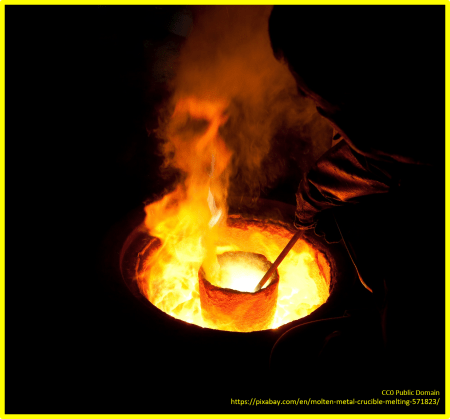
    She finds remnants of slag and uses it as an analogy to life, her life, and its changes, many forced upon her like the heat of a smelter and says that, “We are slag forged in the fires …, and want to fully transform into something of beauty and purpose.

    She concludes her post by challenging writers to “In 99 words (no more, no less) include slag in a story. Slag is a glass-like by-product of smelting or refining ore. Slag is also used in making glass or can result from melting glass. It can be industrious or artistic. Go where the prompt leads.”

    I was lost. How could I possibly tie a challenge like that into the educational focus of my blog? As usual, my thoughts scattered. I guess that makes me a scatterbrain. But I am a scatterbrain with focus, looking for ideas everywhere, trying for the proper fit. Sometimes I’m surprised where I find inspiration.

    A fellow participant in Charli’s challenges is Sarah Brentyn who blogs at Lemon Shark Reef. Sarah, who posted a piece called Transformation, also quoted Charli’s words about slag and transformation, and shared a tweet of her own from August 2016:

    Interesting to me is that August 2016 is when readilearn, my website of early childhood teaching resources, launched; and my first readilearn blog post was published. That was almost three years to the day after my first post here on NorahColvin.com.

    I could say that blogging has been a bit of a trial by fire, and that I too have, through both projects, endeavoured to create something of “beauty and purpose”, with NorahColvin forging the way for readilearn. No doubt a lot of slag has been manufactured and either shared or discarded in the process.

    On her other blog Lemon Shark (she’s got two, I’ve got two), Sarah recently invited me through her post My New Blog Scares me #MyFirstPostRevisited to share my first blog post. She provided me with some rules to follow, so in this post, I will do my best to follow two sets of rules, Sarah’s and Charli. Or not. Rules are meant to be broken. Aren’t they?

    I apologise for the length of this post which is really three rolled into one! Feel free to skip over or speed read any section you wish.

    This is my very first post from 15 August 2013:

    “Welcome to my blog. This is a whole new adventure for me and I am excited about where it may lead. I hope you will be inclined to pop in from time to time to share my journey and offer some encouragement along the way.

    Since education is my life a good deal of what I write will focus on my thoughts and ideas about education and learning. Check out my poem Education is on the “Education is” tab to see how different I believe education and schooling to be. I would love to hear the ways in which you may or may not agree with me. I am in for a bit of education myself as I explore this new world (to me) of blogging and I know there are many wonderful teachers out there ready to teach me what I need to know.

    When the student is ready the teacher appears.”

    I am ready.

    Let the adventure begin!”

    The post drew six comments (five from family and friends, one unknown from the blogosphere) and no likes.

    Three years later, on 23 August 2016, I published my first readilearn blog post:

    “Hi, welcome to readilearn, a new website of early childhood teaching resources.

    I’m Norah Colvin, founder of readilearn and writer of all readilearn materials. I’m excited to be able to share them with you, and hope you find them useful in your early childhood classroom.

    After making the decision to be a teacher at age ten, my focus has never wavered.  I have spent most of my life thinking, reading, discussing and learning about education. I have always been involved in education in some way, whether as classroom teacher, support teacher, home educator, private tutor, play group leader, or simply parent and grandparent.

    I am passionate about young children and their learning.

    I plan to post on this blog about once a week, usually on a Friday, but that may vary from time to time. Through the blog I will keep you updated with information about new resources I add to the site, provide teaching suggestions, and discuss topics relevant to early childhood educators. I also invite you to follow my other blog NorahColvin.com, and join in the conversation there.

    I believe strongly in the value of community and our ability to learn from each other. I welcome your feedback. If there are any topics that you would especially like me to address, suggestions for improvements to existing resources, or ideas for new ones, please let me know.

    In this post I will simply invite you to explore the readilearn website to see what is available. You may register for free to download a variety of free resources, or subscribe to access all resources. I am particularly excited about the range of interactive resources I have available. I hope you are too.”

    The post drew comments from three lovely supporters of this blog, including both Charli and Sarah who rate a big mention in this post. Thank you, lovely ladies, for your ongoing encouragement and support without which I wouldn’t have made it through those first three years.

    It then became obvious to me. Isn’t this our role as teachers – to shape, to sculpt, to mould, and to help each child shine by appreciating their uniqueness, polishing their strengths and abilities, and encouraging each to turn their best side to the world?

    This thought was further confirmed by a recent comment on an older post in which Anita Ferreri said that we teachers must try to pay it forward. Yes, that’s part of it too. We shape lives, hearts, and minds, as we work to create the future we wish to see.  We pay it forward, not only for each individual, but through them to the unknown future. The ripple effect is a mighty powerful thing. Never underestimate the effect of one thought, one word, one action

    So, thank you Charli, Sarah, and Anita, I am mixing up the thoughts, ideas, and challenges that your words have inspired, and (hopefully) refining them to mould something just a little artistic with both beauty and purpose. I hope you enjoy it.

    The artist

    They, each with a single colour, used packaged accessories to form identical sets of flat, life-less shapes. He worked by hand, collecting and incorporating their slag, as he explored the properties of his clump of multi-coloured dough. They proudly displayed neat rows of unimaginative templated shapes. With humble satisfaction, he regarded his creation with its countless possibilities. Each time they started again, they repeated the same familiar fail-safe patterns. Each time he began anew, exploring, seeking, discovering the dormant, hidden potential, sculpting to allow uniqueness to shine. They remained stuck in what is. He focused on creating the future.

    Oh, I almost forgot. One of Sarah’s rules was to tag five people to carry on her #myfirstpostrevisited challenge. Um, well, I did say that rules are meant to be broken. If you have read thus far, thank you, and consider yourself tagged. If you would like to join in the blog hop and wish to do a little better at following the rules than I have, please pop over to Sarah’s post. I would love to read your first posts. Please leave a link, if you wish, or not, in the comments.

    Thank you for reading, I appreciate your feedback. Please share your thoughts.

  • What lies beyond

    This week at the Carrot Ranch Charli Mills has challenged writers to In 99 words (no more, no less) write a story that steps beyond.

    She says,

    “The paths often fork and always seem steep. You just have to keep stepping out, risk being vulnerable, learn as you go from both masters and your own observations, and explore what could be.” 

    How apt a description for learners and teachers alike. The focus of a teacher’s work is always on what lies beyond; encouraging learners to step out, take those risks, embrace vulnerability, and explore the unknown. Each journey is unique with its own periods of calm interrupted by rough patches and inclines that require both teacher and learner to step beyond comfort and what is familiar.

    While learners are appreciated for who they are, and for their achievements, in each moment, a teacher is always stretching them to grow towards the possibilities of an unknown future; preparing learners to grasp, and create, new opportunities.

    In Are you ready to embrace the future? published in July 2014, I introduced you to Tony Ryan, learning consultant and futurist. In his online seminar Future-proofing Kids, Tony says,

    “Many of the children alive today in Western societies will still be around in the 22nd Century. How can we possibly predict what they will experience between now and then? And if we can’t do that, then how do we best prepare them for whatever is up ahead?”

    I listed, as essential to successfully living in that unknown future, the development of the following attitudes and character traits:

    •  Confidence
    • Persistence
    • Resourcefulness
    • Resilience
    • Able to seek solutions to problems
    • Openness to new ideas and possibilities
    • Creativity
    • Divergent thinking
    • Questioning
    • Optimism

    These add to basic levels of literacy and numeracy and the ability to critically evaluate material; for example, using information about an author’s credentials and purpose, and understanding the ways texts are constructed to persuade.

    On his website, Tony Ryan says,

    “The world up ahead will be amazing, but it will take each of us to push our intellect and our spirit beyond all previous possibilities.”

    He describes the focus of his work as supporting others to do just that

    In addition to educating for the future, teachers need to see past the labels to the truths that lie within, encouraging all learners to stretch beyond what they thought was possible. I hope there was a teacher in your life who enriched your journey.

    For the teachers among you: know the importance of your role and the effect on all learners when you help them see the value of self and open their eyes to their own potential. When you help them step beyond the limits imposed by others, you help them create possibilities in their own, and our collective, futures.

    It is from this perspective that I have written my response to Charli’s flash challenge.

    Beyond surface features

    The registrar ushered him to the doorway and promptly disappeared.  He stared blankly: hair askew, face dotted with remnants of meals past, shirt lopsided and collar awry, shoes scruffy. Another needy child. You name it, he had it: split family, mother in jail, successive foster homes, sixth school in two years, learning difficulties, generally unresponsive, prone to aggressive outbursts …  

    No magic ball, just a futures optimism, she saw beyond the exterior to the potential within. In a moment, she was there, smiling, taking his hand, reassuring. “Everyone, say good morning to Zane. Let’s welcome him into our class.”

    Thank you

    Thank you for reading. I appreciate your feedback. Please share your thoughts.

  • Books make the #1 best gifts!

    The love of reading is gift

    I am notorious for gifting books. I’ve written about this before in Guess what you’re getting for Christmas and other posts. It would not surprise me if you are also a notorious gifter of books. Perhaps that could be our super power: The Book Gifters!

    Reading is empowering. A book is a gift that continues to give, long after the occasion has past. It’s effects cannot always be measured.

    books-life-memories

    In this post, I suggest some books you may like to purchase for special people in your life. And why not treat yourself with one or two as well?

    Most, but not all, are fairly recent releases. A few are long-time favourites.

    Most, but not all, are written by people I know personally or through blogging. You might recognise their names from comments on other of my blog posts. A few are long-time favourites written by people who inspire me.

    I have read most. The only two not read (the books of short stories) are very, very recent. However I am happy to recommend them as I am already familiar with some of the stories, and the writers’ work  from their blogs.

    Disclaimer: These are books that appeal to me. They may not appeal to you. The important thing in choosing books for others is in finding something that they will like.

    The list is not exhaustive. It is just a beginning to provide a few ideas that you may not have considered. There are many other wonderful books that could just as easily have been included.

    I have arranged my list in this way:

    For children:

    Picture books (including fiction, non-fiction, and poetry)

    Early chapter books (for readers of about 7 to 12 years)

    For adults:

    Books of short stories

    Novels

    Memoirs

    Books for teachers and parents

    If you follow the links you will be able to discover more about the writers and their other work.

    For children:

    Picture books – Fiction

    picture-books

    Lauri Fortino The Peddler’s Bed This heart-warming story demonstrates that a kindness given can encourage kindness in others. You can read a lovely interview with Lauri on the readilearn blog here.

    Tara Lazar Little Red Gliding Hood In this fun fractured fairy tale, Little Red Riding Hood needs a new pair of skates. The only way she can acquire them is by winning a skating competition. But which fairy tale character will be her partner?

    Galvin Scott Davis Daisy Chain This is a beautifully illustrated, animated and interactive, anti-bullying book app, narrated by Kate Winslet.

    Non-fiction

    non-fiction-picture

    Rebecca Johnson The Insect Series This series of ten little books, each about a different insect, combines both fact and fiction with stunning close-up photographs. You can read a lovely interview with Rebecca on the readilearn blog here.

    Sue Fliess The Bug Book This book about bugs is beautifully illustrated with stunning photographs. Written in rhyme, it introduces children to many tiny creatures.

    Poetry

    book-cover

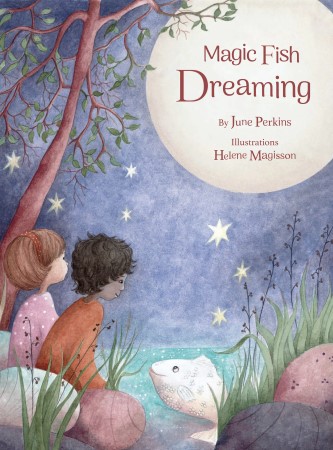
    June Perkins Magic Fish Dreaming This gorgeous book of poems with its focus on nature will uplift and inspire you and your children. You can read a lovely interview with June on the readilearn blog here.

    Early chapter books (about 7 to 12 years)

    early-chapter-books

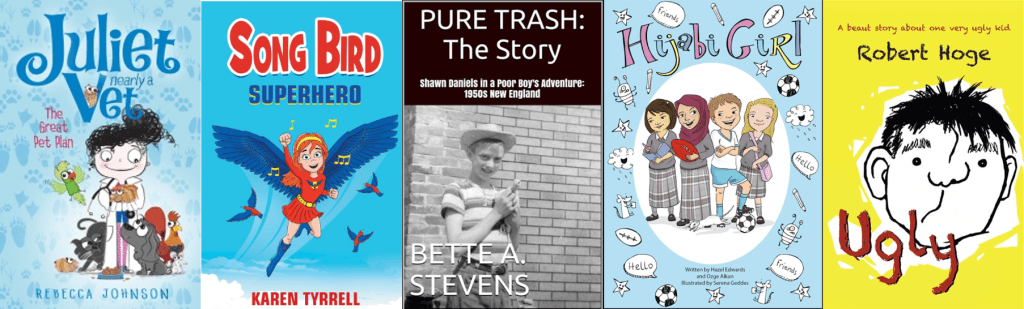
    Rebecca Johnson Juliet nearly a Vet This lovely series of books tells of the adventures of ten-year-old Juliet who aspires to be a vet, just like her mother.

    Karen Tyrrell Song Bird Superhero This story tells of Rosella Bird and her quest to fly. While she battles the bully at school and at home, she is empowered and discovers the joy of flight when she finds her voice.

    Bette A. Stevens Pure Trash: The Story Set in New England in the 1950s, this story tells of a Saturday afternoon adventure of two young boys. The Kindle version is free on Amazon until 29 November (today – be quick!). 

    Hazel Edwards & Ozge Alkan Hijabi Girl In this story, when eight-year-old Melek is deciding what to wear to the book parade, she is unable to find a super-hero who wears a hijab, so she creates her own.

    Robert Hoge Ugly (a memoir) Robert’s story is one of resilience, of survival against the odds, and of making hard decisions. While coping with difference and bullying, Robert shows that strength of character is a trait of survivors. I have introduced you to Robert previously here and here.

    Books of short stories

    short-stories

    Sarah Brentyn Hinting at Shadows This book is a collection of very short stories, each 100 words or less. While each may be a quick read, they will give insight, inspiration, and a greater understanding of what it means to be human.

    Hugh Roberts Glimpses Launching on 2 December, available for pre-order “28 short stories that will take your mind on a rollercoaster of a ride into worlds that conceal unexpected twists and turns.”

    Novels

    novels

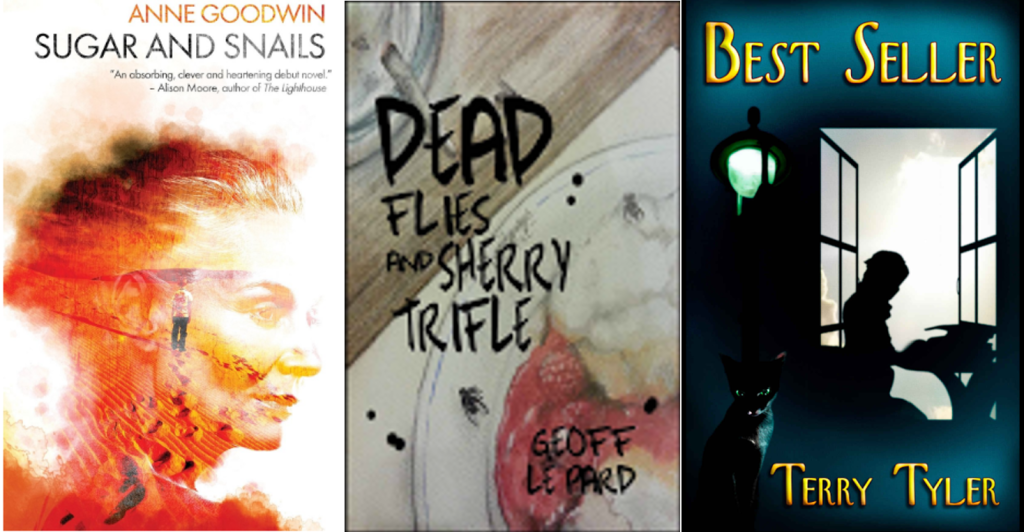
    Anne Goodwin Sugar and Snails In this mid-life coming-of-age story, Diana Dodsworth has some tough decisions to make as she comes to terms with who she really is. Anne has previously talked about her book on my blog here and here.

    Geoff Le Pard Dead Flies and Sherry Trifle This story about nineteen-year-old Harry Spittle, who is home from university for the hottest of hot holidays, will have you laughing out loud at his misadventures.

    Terry Tyler Best Seller This intriguing novella is about three writers, all of whom wish to write a best seller. One does; but which one?

    Memoirs

    memoir

    Robert Hoge Ugly (a biography) Robert’s inspirational story is one of resilience, of survival against the odds, and of making hard decisions. While coping with difference and bullying, Robert shows that strength of character is a trait of survivors. I have introduced you to Robert previously here and here.

    Lesley and Tammy Williams Not Just Black and White Told as a conversation between mother and daughter, this inspirational story tells of the importance of family, of difficulties experienced by many Indigenous Australians in relatively current times, with a drive to ensure that history is neither forgotten nor repeated.

    Malala Yousafzai Malala The Girl Who Stood up for Education and Changed the World The story of Malala, winner of the Nobel Peace Prize, is one of courage and of the difference that one person can make in the world. I have previously written about Malala here.

    Magda Szubanski Reckoning: A Memoir With a Polish father, a Scottish mother and an Australian childhood, Magda’s story is complex, courageous, compassionate, and inspirational.

    Books for teachers and parents

    for-teachers-and-parents

    Mem Fox Reading Magic This book provides lots of practical advice and support for parents in developing a love of reading in their children. I have introduced you to Mem many times previously, including here and here.

    Michael Rosen Good Ideas: How to be Your Child’s (and Your Own) Best Teacher This very readable book is packed full of suggestions for encouraging curiosity and learning in children (and you!) I have previously introduced you to Michael here and here.

    Vivian Kirkfield Show Me How Vivian passion’s for picture books and her understanding of the importance of literacy are obvious in this book that provides great ideas for reading and extending the learning experience associated with many picture books.

    Or, for a special early childhood educator, gift a subscription to readilearn, a collection of teaching resources that can be used throughout the year.

    special-gift-for-special-teacher-ad

    It’s easy. Simply send an email to hello@readilearn.com.au, arrange payment for the currently discounted subscription, and you will be emailed a voucher with a coupon code, unique to your special teacher. Print the voucher and personalise it with your own message before presenting your gift.

    Note: The subscription is for 12 months from date of activation, not purchase: a gift that will go on giving all year long.

    2

    I hope there is something in this list that you can add to your gift list.

    Thank you

    Thank you for reading. I appreciate your feedback. Please share your thoughts.


  • Around the campfire

    camping-1289930_1920

    You could count the number of times I have been camping on one hand with a few fingers chopped off. And those times, in the main, could not even be considered real camping. They involved cabins, water on tap, and flushing loos. Only once was I required to sleep in a tent, and the experience wasn’t one I wished to repeat: as much to do with other campers as with facilities.

    I am not into roughing it. I like the convenience of warm showers, flushable toilets, and power at the touch of a button. I acknowledge my privilege in being able to take these things for granted and, when I holiday, to choose accommodation at which they are available. I recognise that for much of the world’s population, that privilege is as unattainable as a dream.

    toilet-1033443_1280

    So, for this week, in which the flash fiction prompt by Charli Mills coincides with World Toilet Day, it is fitting to combine the two.

    World Toilet Day is a day to raise awareness and inspire action to tackle the global sanitation crisis – a topic often neglected and shrouded in taboos. Today, 2.4 billion people are struggling to stay well, keep their children alive and work their way to a better future – all for the want of a toilet.

    Anne Goodwin who blogs at Annecdotal has also combined Charli’s flash fiction prompt in her post about Fictional Toilets for World Toilet Day. Anne has included snippets of toileting issues from novelists whose characters, unlike most “fictional characters, (who) like royalty, don’t have to suffer the indignity of urinating or opening their bowels”, deal with the inconveniences of life. Her own novel Sugar and Snails is among those quoted. You can read the post here.

    who-gives-a-crap

    For a while now I have been supporting Who Gives a Crap, a company that takes toileting seriously. In its production of toilet paper, tissues, and paper towels it uses only 100% recycled paper, bamboo, or sugarcane. It also donates 50% of its profits to providing toilets for those in need. I am in favour of both those practices.

    I am also in favour of helping children recognise their privilege and to understand that not everyone in the world can take for granted what they can. With Christmas celebrations just around the corner, a picture book that encourages children to think of others, rather than just what they can get, is useful in starting the discussion.

    dear-santa-please-dont-come-this-year

    Dear Santa: Please Don’t Come This Year written by Michael Twinn and illustrated by Patricia D. Ludlow explains that Santa has tired of children’s requests, of their always wanting more, and of their lack of gratitude. He considers making this Christmas delivery his last; until he receives one final letter that turns his thinking around.

    The letter is from a group of children who write:

    “Dear Santa,

    Please don’t come this year … we have almost everything we want.

    So, we don’t want presents for ourselves this year  …

    We want to help other children, instead.

    And old people and animals in need …”

    Santa feels heartened by the children’s selflessness, and he spends the year travelling the world, sharing the gifts suggested by the children:

    “The gift of food

    The gift of health

    The gift of sight

    The gift of water

    The gift of technology

    The gift of hard work

    The gift of peace

    The gift of learning

    The gift of survival”

    At the end of the year, Santa realises that “The greatest gift is yourself.”

    (Note: I’m not sure if it is still so, but at the time of its publication, sales of the book helped raise funds for UNICEF.)

    Now, I seem to have strayed a little, but I’m thinking that’s probably what happens when a group is sitting around the campfire discussing life. I’m sure no subject is taboo, Blazing Saddles proved that, and that the conversation would flow from one topic to another with just a few meagre threads to hold it together.

    Song, too, would be a big part of the campfire tradition. I learned a campfire song from Bill Martin Jr. at a reading conference years ago. (I’ve written about that previously here.)

    The song “I love the mountains” is perfect for teaching to children and as a structure that children can use to write poems of their own. Sample innovations; for example, “Christmas in Australia” have been included just for that purpose in readilearn resources.

    poetry-examples-and-templates

    Writing “I love” poems is also a good way for children to express gratitude in their everyday lives, which fits perfectly with Thanksgiving celebrations in the United States, also this week.

    Happy Thanksgiving to my American readers!

    This week at the Carrot Ranch Charli Mills has challenged writers to In 99 words (no more, no less) write a story that is told around a campfire. It can be a bonfire, burning trash can, a fire pit, something flaming outdoors. It can be a prop, and you can tell the story of anything — ghosts, ancients, jokes. Who is gathered and listening?

    Even if you don’t intend joining in the challenge, and there is an extra week with this prompt if you are tempted, please pop over to the Carrot Ranch to read Charli’s fascinating report of her explorations of The Zion Valley area and of the historical artefacts and remnants she found there. You’re sure to find a gem or two, as she did.

    Here is my response to her challenge.

    Around the campfire

    “Smile,” they said. “It could be worse.”

    Than what: a compulsory “adventure”? navigating scrub lugging a loaded rucksack? avoiding plant and animal nasties? digging a toilet? erecting a recalcitrant tent? enduring inane chatter and laughter roaring as insanely as the campfire flames?

    “You’ll learn something,” they’d said.

    Fat chance.

    Darkness hung low like her spirits.

    Along with the dying flames, the mood quietened and, one by one, each told a story of horrors beyond her imaginings: of fleeing famine, war, abuse, hate …

    Along with the sky, her heart softened with the light of a new day, and gratitude.

    Thank you

    Thank you for reading. I appreciate your feedback. Please share your thoughts.
     

  • Author Spotlight: Lauri Fortino – Readilearn

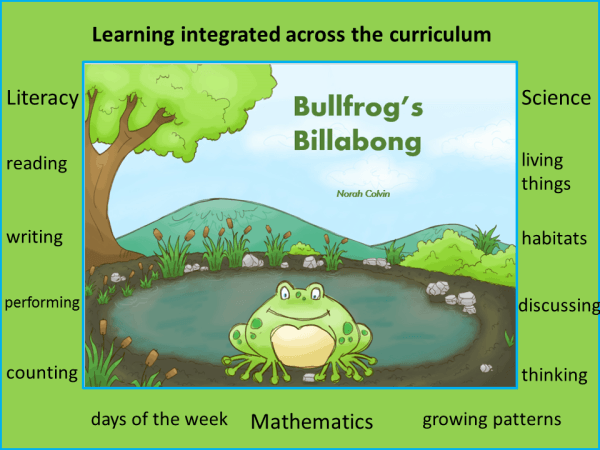
    The author in the spotlight this month is the wonderful Lauri Fortino, author of The Peddler’s Bed, illustrated by Bong Redila, published by Ripple Grove Press.

    Please pop over to the readilearn blog to read all about Lauri’s writing process and her delightful picture book.

    Source: Author Spotlight: Lauri Fortino – Readilearn

  • Welcome to spring!

    Responses to a previous post on the importance of feedback suggested that I trial republishing readilearn posts here.  As the suggestion came from a number of people I considered it sound advice and worth trying. As always, I will be interested to hear what you think.

    This post is republished from the readilearn blog.

    © Norah Colvin
    © Norah Colvin

    The first day of September marks the first day of spring in Australia. It is also recognised throughout Australia as Wattle Day.  The golden wattle is our national floral emblem. Its colours give the recognisable green and gold to our sporting teams.

    Like the people of our land, it is a plant that shows both diversity and resilience. There are hundreds of species of wattle growing in many different habitats across Australia.  They may be seen growing wild in bush areas and national parks, and cultivated in botanic gardens, on footpaths and in home gardens.

    © Bec Colvin
    © Bec Colvin

    I have three varieties of wattle growing in my garden. Last year, when the plants were one-year-old, they flowered abundantly and were home to ladybirds. It was wonderful to watch each stage of the ladybird’s growth, from egg to adult. This year, the trees were more heavily laden with blossoms, but there were no ladybirds. I was disappointed as I was looking forward to seeing the ladybirds again. However, it has been suggested that the absence of ladybirds may indicate the tree is healthier this year. I don’t know.

    In Australia we generally refer to seasons as occurring in particular months:

    Spring in September, October, and November

    Summer in December, January, and February

    Autumn in March, April, and May

    Winter in June, July, and August.

    However, it is not as simple as that.  Australia is a land of extremes, with different climate zones and types of weather experienced across the country. It can be cooler in the summers of southern areas than it is the months called winter in the north. For example, the average January (summer) daytime temperature in Hobart is 21.7⁰C, and the average July (winter) daytime temperature for Darwin is 30.5⁰C.

    Spring is a great time for exploring the garden and it’s inhabitants. What is spring like where you are?

    Getting to know readilearn resources

    Also coinciding with the beginning of spring is the Australian Father’s Day, celebrated on the first Sunday in September. It is a day not just for dads, but for grandfathers, stepfathers, and other male carers and role models. It is a day to let them know how much they are appreciated.


    how to make a book cover - cover

    One great way of providing children with a purpose and targeted audience for writing is to get them to make a book for their father figure. I have provided some ideas to get the writing started in the resource How to make a book cover. The resource itself provides step by step instructions for making a cover for a book using complementary colours. The instructions can be displayed on the white board for children to read and follow.

    Suggestions for writing include:

    • A list of statements about their Dad e.g. My Dad goes to work. My Dad makes my breakfast. My Dad has curly hair and a bushy beard. Children write and illustrate one statement on each page.
    • A recount or memoir about a favourite holiday or activity they do with their Dad.
    • A series of things about fathers e.g. Some fathers ride motorbikes. Some fathers ride horses. Children finish with a statement about their own dads, for example; But my father rides a skateboard.
    • A list of things that Dad likes, one to each page.

    Five Fabulous books to read for Father’s Day

    2015-09-19 10.52.00

    Guess How Much I Love You by Sam McBratney, illustrated by Anita Jeram

    My Dad

    My Dad by Anthony Browne

    going on a bear hunt

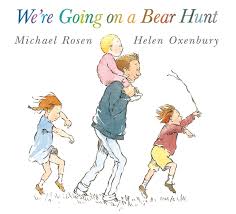
    We’re Going on a Bear Hunt by Michael Rosen, illustrated by Helen Oxenbury

    Just Me and My Dad

    Just Me and My Dad by Mercer Mayer

    2015-09-19 10.54.00

    Hey, I Love You by Ian Whybrow, illustrated by Rosie Reeve

    Of course, there are many more too.

    The Ice Cream Shop - estory

    The readilearn estory The Ice Cream Shop also features an outing with Dad. However, before reading it with your children, decide if you wish to use the interactive covered cloze version with them.  If desired, for most effective teaching and learning, the covered cloze should be used prior to any other familiarisation with the story. (You can find information about covered cloze as a teaching strategy here.)

    Please contact me if you have any questions. I welcome your feedback, especially suggestions for improvements to existing resources or ideas for new ones.

    Remember to use your coupon codes at the checkout to activate your discount. If you can’t see where to enter the coupon code, select “View basket“.

    ncblog firstin2


    Thank you

    Thank you for reading. I appreciate your feedback. Please share your thoughts.


  • Digging for dinosaur bones

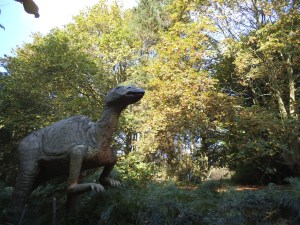
    Dinosaur Adventure, Norwich © NorahColvin
    Dinosaur Adventure, Norwich
    © NorahColvin

    My family has had a love affair, some might say obsession, certainly a fascination, with dinosaurs for almost forty years. My son initiated the affair when he was about three after being undecided whether to watch or not when dinosaurs burst onto the drive-in screen in One Million Years BC. I’m not sure when I first discovered dinosaurs, but It may have been at the same time.
    By the time Rob was four, like many children, he knew the names of a great number of dinosaurs and could rattle off screeds of information about them. It had been a steep learning curve for all of us, though he remembered far more than I. A travelling encyclopedia salesman was so impressed by his knowledge that he gave him a book about dinosaurs. (I’d already purchased; it wasn’t an incentive.) Later, his little sister Bec shared his interest.

    dinosaurs at museum Jan 91
    © Norah Colvin

    Now the affair continues with Rob’s own children. Six-year-old G1 can name and identify far more dinosaurs than I realised existed.  His younger sister G2 is not far behind. Such is the power of these mighty, and not so mighty, beasts to excite the imagination. The entire family become dinosaur experts in support of the children’s quest for knowledge.

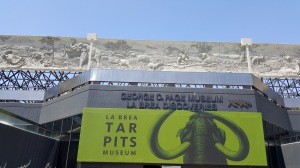
    I recently accompanied the family to the La Brea Tar Pits in Los Angeles, and the American Museum of Natural History in New York. I have mentioned this previously here. Both were wonderful learning experiences.

    © Norah Colvin
    © Norah Colvin

    La Brea Tar Pits is a museum located at a fossil site where there are ongoing excavations. In the grounds, we saw realistic sculptures of prehistoric woolly mammoths trapped in the tar. Inside, we saw fossilised skeletons removed from the tar pits; including skeletons of animals such as mammoths, sabre-toothed cats, dire wolves, and camels. Yes, camels originated in North America.

    © Norah Colvin
    © Norah Colvin

    Walking the grounds, we had to sidestep the smelly tar that still oozes in puddles around the site. It’s an amazing experience, walking on the same land where these prehistoric creatures walked, their presence almost tangible. In an enclosed area, a group of paleontologists were working with fossils recovered from the site. Scientists use these fossils to help construct our understanding of life before human history began.

    What I find interesting about the understandings derived from these fossils, is that much of it is guesswork; educated guesswork, yes, but fossils tell only part of the story. The rest must be filled in using knowledge of contemporary and recorded life. Sometimes assumptions are made, especially when only partial skeletons are found, that must be altered when, or if, complete skeletons are found.

    American Museum of Natural History © Norah Colvin
    American Museum of Natural History © Norah Colvin

    I was very impressed with the way this aspect of science was dealt with in the American Museum of Natural History. Many signs informed us that scientists don’t know for sure, but that they have substantial evidence for making their assumptions. Other signs told of claims that had been revised as new information was discovered. I appreciated being told, in essence: “This is what we know, this is what we think, and this is the evidence to support our claims.”

    This talk by palaeontologist Jack Horner, which I discovered via a link from Charli Millspost, demonstrates the process with some fascinating dinosaur discoveries and assumptions.

    This recent BBC article Meet Nanotyrannus, the dinosaur that never really existed provides additional evidence to support Horner’s claims.

    © Norah Colvin
    © Norah Colvin

    A study of dinosaurs provides many opportunities for learning across the curriculum and what a great way to incorporate children’s natural interests and curiosity when looking at topics such as scientific method, evolution and climate change.

    I’m grateful to Charli Mills at the Carrot Ranch for the incentive to write about this topic with her challenge to In 99 words (no more, no less) write a story that features a fossil or uses the word in its variant forms (fossilize, dino bones, petrification, gastroliths, ichnofossils, etc.)

    Since “discovering dinosaurs”, so to speak, I’ve always thought how wonderful it must be to unearth a great find. I haven’t made it an ambition, but I appreciate the potential for excitement. Here’s my response to Charli’s challenge. I hope you enjoy it.

    Old Bones

    She scratched at the surface tentatively at first, all senses keened, certain of imminent success. She’d uncovered bones here before. Usually one meant there’d be more. All it required was patience and persistence. Suddenly she contacted something more solid than the surrounding earth. She froze. Then exhaled. Could this be the object of her search? Frantically she scraped away the surrounding soil, exposing her find. She stepped back momentarily, assessing it, assuring herself it was real. Then with one final swoop, she removed the bone as carefully and proudly as any paleontologist would a dinosaur bone. “Woof!”

    Thank you

    Thank you for reading. I appreciate your feedback. Please share your thoughts.