
How is cooking like writing?
One’s a feast for the body, the other a feast for the mind. For some great flash fiction to get your teeth into (including one of mine!) read on:
Category: Blogging
-

Never Too Many Cooks: Literary Recipes in a Flash
-
Winner of Flash Fiction Rodeo Contest #1
I am delighted to announce the winner of my flash fiction contest “When I grow up”. Judging was a tough job, but we got there in the end.
Charli has made a lovely badge for contestants to put on their blogs. Check it out when you check out the winners.
Thanks for a fabulously fun rodeo, Charli.Share this:
-
Flash Fiction Rodeo Contest #7
Got murder on your mind? Here’s a chance to work it out; in fiction anyway – contest #7 in the Carrot Ranch Flash Fiction Rodeo #FFRODEO.
Share this:
-
A break in the Flash Fiction routine: #Flash4Storms #WATWB #FFRODEO
Usually at this time on a Tuesday evening (my time) I am posting a flash fiction response to the prompt by Charli Mills at the Carrot Ranch. But not tonight, and for good reason.

The usual weekly Carrot Ranch flash fiction prompt is on hold during the month of October, replaced by the Flash Fiction Rodeo which kicks off today. There are many prizes for both writers and readers. Check out the post for details of how you can win.
My contest runs first with a prompt about childhood ambitions. It will go live at the Ranch, and again here, on Thursday. I do hope you will join in.

You may have read my contribution to the We Are The World Blogfest with the story I posted on the weekend, #WATWB The Teacher Helping Hurricane Harvey’s Youngest Victims – And How You Can Help / A Mighty Girl | A Mighty Girl The story tells of a teacher from Texas who created the online Hurricane Harvey Book Club. The Club involves children recording videos of themselves reading books to share with children who, as a result of the devastation of Hurricane Harvey, have no access to books. Hundreds of videos were uploaded to Facebook, and the Club is also raising money to help restock classrooms devastated by the storm.
Hurricane Harvey was just the first. More was yet to come with Irma and Maria following close behind. Fellow Blogger and Rough Writer at the Carrot Ranch Sarah Brentyn, who blogs at Lemon Shark has extended a helping hand to those in need with her own flash fiction challenge #Flash4Storms.
For each flash fiction response to her prompt “Help”, Sarah will donate $1 to hurricane relief. Check out Sarah’s post to find out how you can join in and lend a helping hand. Let Sarah know in the comments that I sent you, and I’ll add another dollar to Sarah’s donation.
Here’s my response to Sarah’s challenge for a story of 50 words or less on the theme ‘Help’.
Kindness repaid
He was proud, never asking for or accepting help. If he couldn’t do it, it wasn’t worth doing. He’d always be first to help others though. Never too much trouble, there was little he couldn’t do. But, one day, when his world came tumbling down, they eagerly repaid his generosity.
Thank you for reading. I appreciate your feedback. Please share your thoughts.
Share this:
-
Get Ready to Rodeo!
Come, join in the Flash Fiction writing rodeo. Eight different challenges, eight prizes, tons of fun! Starts next week at the Carrot Ranch.
Share this:
-
Sucked out or sucked in
We often hear stories of swimmers being sucked out to sea by dangerous riptides and of the heroic efforts of lifeguards to save them. In Australia, life savers are volunteers who generously give up their time to help ensure the safety of others. According to this article from news.com.au, most drownings in Australia occur in ocean rips; many because people are overconfident of their ability to recognise them. Though surf life savers who patrol our beaches clearly identify areas under surveillance, many beachgoers choose to swim outside the flags, believing they will be safe, that it won’t happen to them.
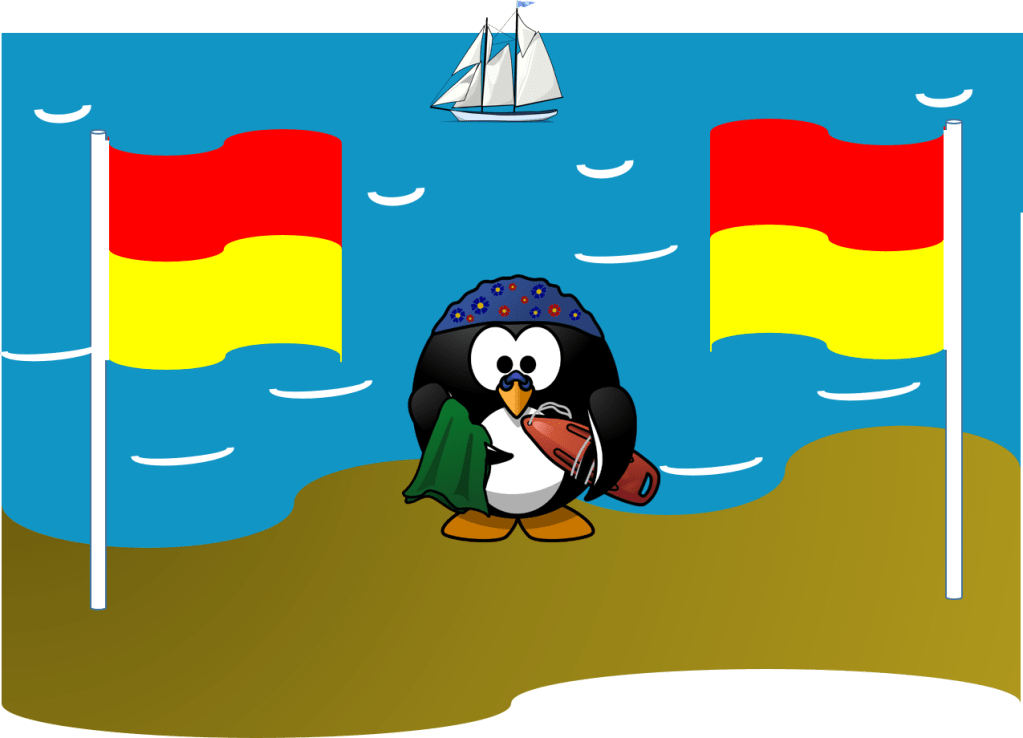
With summer on its way and warmer weather already (or still) here, people, including my grandchildren and their parents, are heading to the beaches for our spring school holidays. I urge everyone to stay safe and be wary of those unseen rips. I also offer a huge word of thanks to the generous volunteers who safeguard our swimmers.

This news report, which aired on Saturday evening, explains some reasons for their generosity:
“Life is just that precious. If we can’t see you, we can’t help you.”
“We get paid nothing, but it’s worth it.”
“It’s about the community giving back to the community, and you know, helping out.”

This week at the Carrot Ranch, Charli Mills is talking about riptides. She has sucked me along in the current with her challenge to In 99 words (no more, no less) write a story about a riptide. How can it be used to move a story? It could be a stretch of turbulent water or a pull of another kind. Go where the prompt leads even if you find it unexpected.
In her post, Charli repeats a line, reminiscent of a song of which I was unaware:
“I run down to the riptide”.
Each time Charli reaches the riptide, she opens a hatch of treasures and possibilities, of ideas and achievements with which she could swirl away. Me? At the mention of riptide, I was thinking of being sucked in and drowning, of being carried away from safety. But to be picked up and carried to a land of possibilities may be more enticing with more opportunities to explore. There may be more to currents than the ocean’s deadly pull. Let’s see where this one goes.
Where else but education?
For teachers, it’s important to not get carried away by the latest fads with their deceptive surfaces hiding dangers in their depths. Many teachers flounder in overwhelming workloads, unrealistic expectations, and defective advice. They lose sight of the shore and get dragged out to sea where, sadly, many drown.
It is also important for teachers to know where the (figurative) waters are safe for children, and where there are just enough ripples to challenge them, strengthening their grit and confidence.
Children themselves need to know how to interpret the waters, to avoid the dangers so that they might enjoy what is on offer. Standing on the edge in fear while others are having fun may spark “if only” thoughts of dissatisfaction. Jumping recklessly in too deep may be just as disastrous.
The same is true in life. If we don’t have a go, how will we ever know if success is possible?
I jumped into blogging just over three years ago, tested the waters and developed my swimming skills. I thought I was doing okay. A little over a year ago, I dived in deeper, perhaps a little recklessly though it didn’t seem so at the time, with the launch of readilearn, an online collection of early childhood teaching resources. I sometimes feel that I am treading water, struggling to hold my head above the surface and avoid the rip that threatens to suck me under. I knew it would be a learning journey. I just didn’t realise how much I needed to learn. Belief in what I’m doing and hope for what the future may hold, drives me forward. I swim, hoping to find the current that carries me towards my goal rather than away from it.
So, I’m thinking about the child on the beach, feeling the drag of the water underfoot, unsure of whether to enter or not. No dangerous undercurrents here. I hope you enjoy it.
Sucked in
The older ones squealed, dropped their towels, and raced for the water. The little one toddled beside Mum, each laborious step prolonged by distractions of beach debris, flapping gulls, and footprints in soft white sand. Mum’s eyes flitted between him and the two in the waves. Thankfully, guards were on duty. When they reached the water’s edge, he baulked, shook his head, and plopped backwards. Gentle waves lapped his feet, then tickled as they sucked out the sand. Mesmerised, he chuckled. His siblings joined him. When they offered their hands, he accepted, stepping joyfully alongside them in the shallows.
Thank you for reading. I appreciate your comments. Please share your thoughts.
Share this:
-
What’s the difference? #WATWB #FF

News from Charlottesville has flooded the media this week and it is difficult to not be gripped by despair at the hatred that exists and fear for the future.
I don’t usually express my political feelings publicly, other than the important role that education has in developing responsibility and compassion in all, and for all, travellers on our planet.
Education will remain my focus for I believe it is the solution. However, I am writing in this context, as that is the context chosen by Charli Mills at the Carrot Ranch Literary Community when setting her flash fiction prompt to In 99 words (no more, no less) write a story that heals America. Difficult and idealistic, I know. Think about building bonds of trust or stories of friendship. It could be a positive story about America. Bonus points for hugging a cat.

Well, I don’t know about healing America. I think any healing needs to start with the self. This situation implores us to look at ourselves and see where our own attitudes can be improved. Australia’s history of treating its indigenous peoples is no more admirable. Recognition as people in our constitution was granted a mere 50 years ago.
On the last Friday of each month many writers join in the We Are The World Blogfest which “seeks to promote positive news.” It says, “There are many an oasis of love and light out there, stories that show compassion and the resilience of the human spirit. Sharing these stories increases our awareness of hope in our increasingly dark world.” Follow the link if you wish to join in with their mission to “flood social media with peace and love.” Or contact this month’s co-hosts Simon Falk, Roshan Radhakrishnan, Inderpreet Uppal, Lynn Hallbrooks, Eric Lahti, and Mary J Giese.
https://openclipart.org/detail/117199/Friendship Charli’s post reiterates the importance of creating connections through trust and friendship. With both these prompts in mind, I share with you some positive messages that shine a light in the darkness that sometimes seems overwhelming. (Apologies to #WATWB. I have broken the 500 word rule.)
- On his Science and Education blog, Daniel Willingham, a psychologist who works at the University of Virginia in Charlottesville, wrote about Nazis in Charlottesville. He discusses the reasons why people hold onto false beliefs and the importance of education in teaching truths, fighting fake news, and standing up for media sites that get it right. He says,
“Truth is our greatest weapon against senseless evil. Fight with it. Fight for it. And don’t be discouraged.”
2. Fast Company published Ben Paynter’s article How Charlottesville’s Small Businesses Supported Their Community Against White Nationalists. The article tells of rainbow coloured posters displayed by small businesses in support of equality and against hate. The posters read,
“If equality and diversity aren’t for you, then neither are we.”
Seven different equality symbols are displayed at the bottom of the poster along with the words,
“Minority rights are human rights.”
- In the Huffington Post I read How I Handled Homophobia in my Third Grade Classroom by Ilana Greenstein. I agree with Ilana’s position that,
“teaching tolerance and acceptance is not and should not be remotely political.”
After overhearing a homophobic remark made by an eight-year-old student, she embarked on a discussion of family, family composition, and what makes a family. The discussions continued throughout the school year and included other topics such as inequality and stereotypes.
At the end of the year she asked the children to write about the role of president and what they would do if they were the president. The boy who had made the “gay” remark earlier in the year, wrote:
“As the president of the United States, I would want to be kind, brave, and nice. I would want to try to end fighting. I can do this by trying to let them be friends instead of being enemies. I also want to stop people saying ‘gay’ offensively. And last I want to stop people saying stereotypes.”
What a wonderfully hopeful statement that supports the importance of education for the whole person, not just cramming them with a bunch of facts to pass a test. Surely the ability to live a life that honours and respects others is the most important test to pass.
- On the theme of equality and diversity I wish to acknowledge two wonderful picture books by one of my favourite authors, Mem Fox:


Whoever You Are and I’m Australian Too.
While I’m Australian Too may be considered specific to the Australian multi-cultural situation, Whoever you are is suitable for reading to Little Ones, “whoever they are, wherever they are, all over the world.”

I was delighted to read that one of Mem’s books Possum Magic has been honoured by the Royal Australian Mint with its very own coin collection. Of course, I had to purchase a set or three, didn’t I? What a lovely celebration of a wonderful book by writer Mem Fox and illustrator Julie Vivas and the importance of children’s literature in general.
- I watched an inspirational video on the blog of one of the most inspiring teachers I have met online. Her name is Jennie and she blogs at A Teacher’s Reflections. Pop on over and find out how she improves the lives of all in her care. Here is the video titled Change the World. It’s a perfect fit for this post. I hope you watch it.
I have combined some of these ideas into my childish flash. I hope you like it.
What’s the difference?
She dumped the toys on the floor, then proceeded to arrange and rearrange them in groups. The largest group was of bears, a smaller group of cats, a few lizards, two puppies and an assortment of singles. With a finger tapping her cheek, she surveyed them. First, she dismantled the group of bears muttering about bows, hats and vests. She hugged Tiger as she separated all the toys. Then Dad appeared with his briefcase.
“Ready?”
“Not yet.”
“What’re you doing?”
“Thinking.”
“Which one to take?”
“I can’t choose,” she said, scooping them up. “I love them all the same.”
Thank you for reading. I appreciate your feedback. Please share your thoughts.
P.S. I hope I earned bonus points for hugging a cat!
Share this:
-
The Battle of Bug World – Book launch, Blog tour & Prizes!
Karen Tyrrell announces the second in her Song Bird Superhero series, The Battle of Bug World, a children’s fun-filled eco fantasy.
Can Song Bird STOP the bully, save her sister, the bees and the environment?
 Karen is an award-winning author who writes books to empower kids (and adults) and help them live strong and be resilient. After many years of classroom teaching experience, she continues to educate through sharing her own story of resilience as a survivor of bullying, through her words on the page, and through her workshops for adults that deal with writing, marketing, and funding, in addition to empowerment.
Karen presents workshops for children in schools, libraries, and other creative spaces. With her flair for costuming and performance, she conducts entertaining sessions with a splash of fun staring in her own scripted pantomimes. As I was lucky enough to attend the launch of her latest book The Battle of Bug World on Saturday, I can testify to the enjoyment that was shared by all attendees.
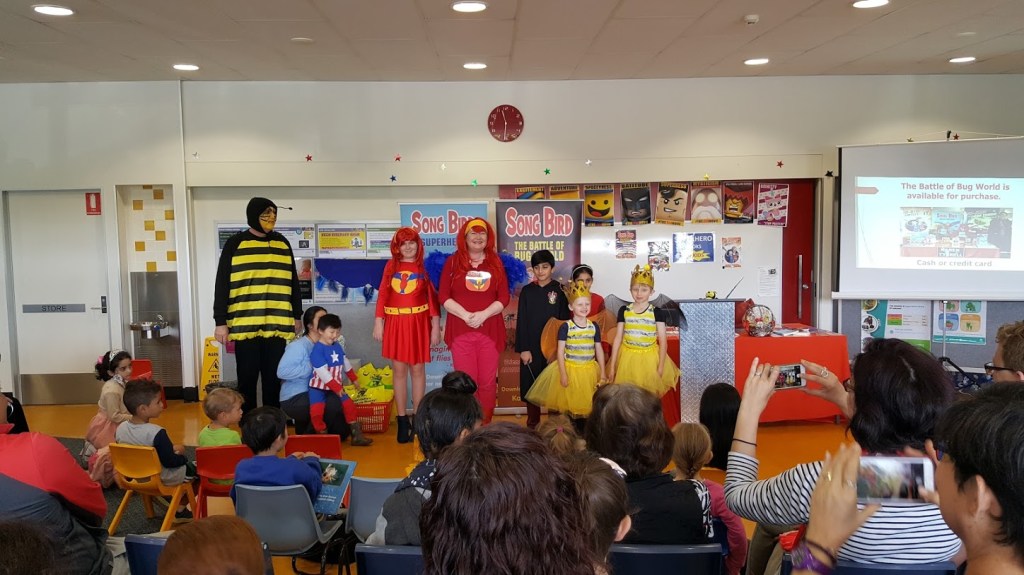 The Battle of Bug World is a fast-paced and action-packed story that children won’t want to put down until they find out if, and how, Song Bird can save her sister, her friends, and the environment from her evil neighbour Frank Furter.
I previously had the pleasure of interviewing Karen on readilearn about her first book in the series Song Bird Superhero, and am delighted to be a part of Karen’s blog tour celebrating the launch of this sequel, which even surpasses the first.
Please pop over to readilearn on Friday to read my post in the blog tour. Read other posts in the tour by following the links below. Leave a comment on any post for a chance to win great prizes including signed books, signed artwork, and a book critique (Comment on more posts for more chances to win!)

The Battle of Bug World – Song Bird 2 Blog Tour!Look what’s happening to celebrate the Amazon release of The Battle of Bug World.
BLOG TOUR!
From Mon June 26 AMAZON LAUNCH KarenTyrrell.com
From Tues June 27 CURLY Q’S Kids Book Review
From Tues June 27 REVIEW Just Write For Kids
From Wed June 28 REVIEW Georgina Ballantine
From Thurs June 29 Writing Junior Novels Megan Higginson’s Blog
From Fri June 30 REVIEW & interview readilearn blog
BOOK GIVEWAYS!
Just leave a comment on any of the posts in the blog tour, to win a copy of The Battle of Bug World (Song Bird 2). Add initials SB2
FREE Children’s Book Assessment!
Win a free children’s book assessment (up to 10 pages) by the author Karen Tyrrell. Just comment on any of the posts in the blog tour and add the initials CBA
FREE Artwork!
Win signed artwork by illustrator Trevor Salter. Add initials AW
Remember the more you comment, the more chances you have to win prizes for The Battle of Bug World Blog Tour. Good luck 😊
Share this:
-
Meet author-illustrator Chrissy Byers – Readilearn
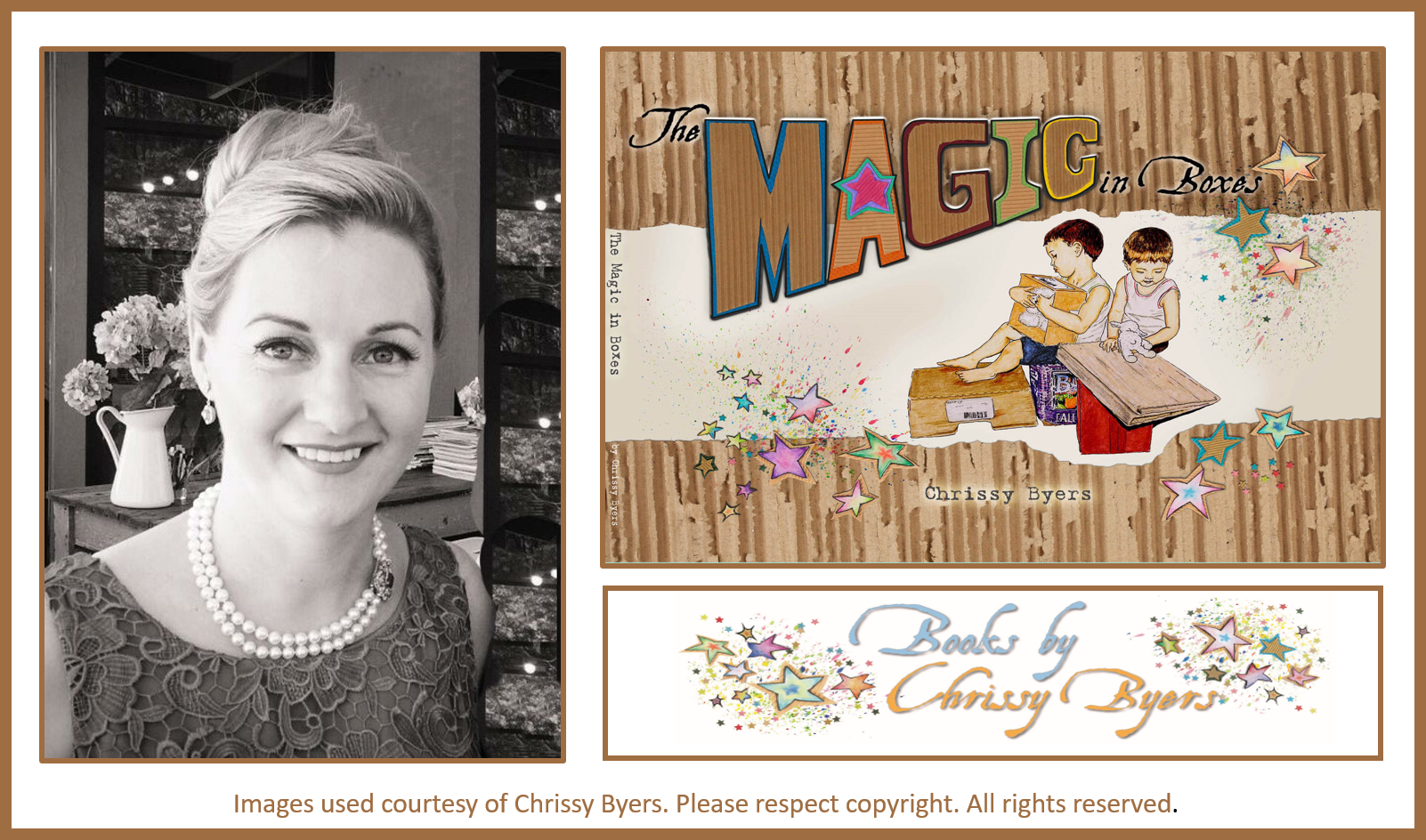
This month it is my pleasure to introduce you to Chrissy Byers – author, illustrator, and early childhood educator. It was only after many years in the classroom and becoming a parent herself that Chrissy was able to fulfil her lifelong dream of being an author and illustrator. With the success of her first book The Magic in Boxes, and another on its way, Chrissy shows us that dreams can come true.

Chrissy, what was your motivation for writing this book?
As an experienced early years class teacher, I had noticed that, with the rise in technology there was a decline in the amount of time children spent engaging in imaginative play. I was compelled to write and illustrate a children’s book which would remind parents, and inspire children, to see the magic in everyday household junk.
Unlike a traditional children’s book, I felt that the recount genre would suit my intentions better than a narrative. I saw this as being an additional bonus for primary teachers, as there are very few examples of recount picture books.
The repetitive text elements encourage pre-reading children to join in a shared reading experience. It also provides opportunity to incorporate hand gestures when reading, which helps focus young minds and occupy little hands during carpet time. The rhyming couplets assist in reading prediction and keep the beat of a fast-moving text.
Do you think of yourself more as a writer or an illustrator?
Continue reading: Meet author-illustrator Chrissy Byers – Readilearn
Share this:
-
Who’s That Blogger? Norah Colvin
This week I am feeling honoured to be featured on Who’s That Blogger? by Barbara Vitelli, Book Club Mom. Thank you, Barbara.

Blogmaster: Norah ColvinBlog names: Norah Colvin and readilearn
Type of blog: NorahColvin: education focus; readilearn: early childhood education teaching ideas and resources
Where in the world? Australia
Blogging since when? Norah Colvin August 2013; readilearn August 2016
What’s your story? When I started thinking about self-publishing stories and teaching resources, I did a lot of online research and attended many writing seminars. The collective intelligence promoted blogging as the primary avenue for writers to make connections and establish audience, and insisted on the importance of doing so prior to publication. Social media was also important, but secondary to blogging. At that time, I didn’t know much about social media and had no idea about blogging. Some of the course presenters suggested bloggers to follow, so I quickly got started and developed an understanding of what blogging was about. I was then keen to get…
View original post 419 more words
Share this:


 Norah Colvin