Mathematics is all around us. We use it every day for a wide range of purposes; from deciding on the sequence in which we dress ourselves, to calculating how much time we have available for an activity.
Number is just one component of mathematics but the ability to use it confidently and competently is essential to life in the 21st century; from managing one’s finances, to calculating time and distance, to knowing how many followers one has on social media.
The views that people hold of themselves as mathematicians, and their attitudes to mathematics in general, are formed early in life. It is important that we early childhood teachers provide children with mathematical experiences that are meaningful, engaging, and in context.
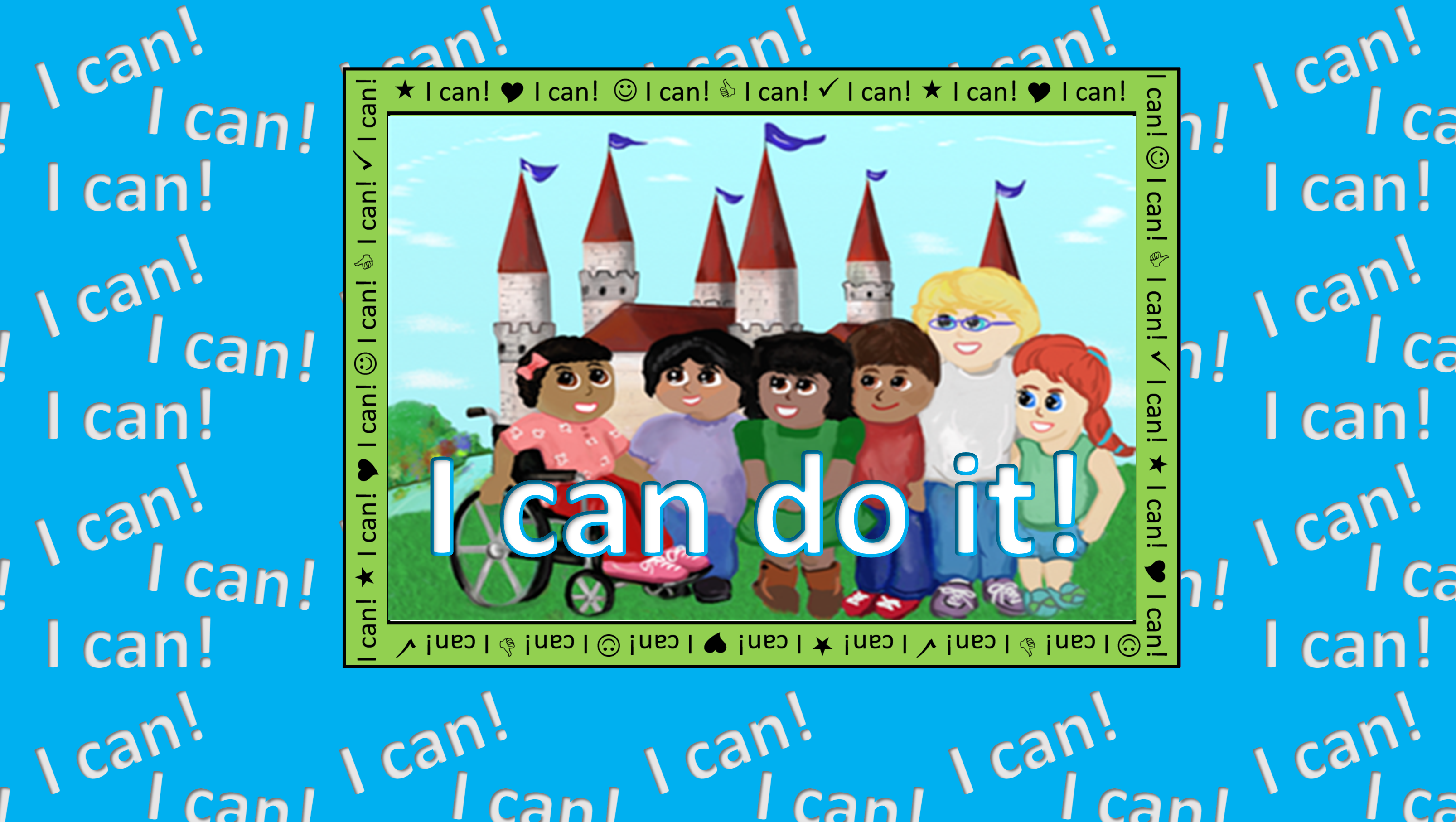
readilearn mathematics activities are designed to support you in doing so by providing a range of digital and printable resources that encourage mathematical thinking and discussion alongside hands-on experiences. It is important to provide children with a variety of learning contexts to encourage the development of “I can do it” attitude to number and maths.
Number combinations
A child’s ability to count is sometimes seen as an early indicator of ability with numbers. However, an understanding of number requires far more than
From the moment of birth children are watchers, learning from their observations of the world around them – objects, people, actions, interactions. The adage “Do what I say, not what I do” holds little significance for young children. They may do what you say, but they are more likely to mirror what you do. For this reason, it is important to model the behaviours you wish children to emulate; for example, kindness, patience, empathy, truthfulness, tolerance, understanding. You need to be the type of human being you wish them to be. Example is a powerful teacher.
Watching is also important to teachers, especially early childhood teachers who spend a lot of time observing children to discover more about their learning needs. Learning in this sense is not confined to the academic. It involves regard for the whole person, especially social-emotional development. So much of what we learn about getting along with others is learned in the early years. While the teachers are watching the children, the children are watching them.
Thank you to my wonderful students, and their lovely Mum who made this for me!
But children’s observations are not confined to the home or classroom. They are constantly watching the behaviour of others, learning about interactions and what is, and is not, acceptable. The responsibility for developing the kind of world citizens we want lies not solely with parents and teachers. We must all be mindful of the influence our actions may have upon the expanding world knowledge of those around us. That’s not to say we should be perfect. (Thank goodness, or I’d have been shot long ago!) We just need to be aware that little eyes (and big eyes) are watching and learning.
The way new situations are approached can vary according to personality as much as to the behaviour that has been observed in similar circumstances. Sometimes the expectation seems to be that, if children are put with a whole bunch of other kids their age, they will make friends easily. But that is no more likely than if a bunch of people my age were thrown together. Some of us are outgoing and feel comfortable talking with unknown others. Some like to observe for a while to determine an approach with which we may feel more comfortable. Some require support to venture into unknown territory.
For my response to Charli’s prompt, I have written about a little one, hurt in the past and now facing a new situation, hesitant to make the first move. When children are taught to be accepting of and friendly towards others, reluctance can turn into confidence. I hope it works.
Friends
He stood at the periphery, silently observing, calculating their disposition, weighing his chances. Were they friend or foe? Appearances could be deceiving, as could his gut reaction.
They seemed harmless enough; but his sweaty palms, throbbing temples, and churning belly turned his legs to jelly. Even breathing was a struggle.
He became aware of someone tugging his shirt. Though unsure if she was talking or mouthing, he understood, “Would you like to play?”
His head would neither nod nor shake, but she led him by the hand anyway.
“Hey, everyone! This is Amir,” she announced.
“Hi Amir!” they chorused.
Thank you for reading. I appreciate your feedback. Please share your thoughts.
In this post I introduce you to Michael Rosen, the storyteller. Michael’s story Going on a Bear Hunt many be more familiar to you than his name. But Michael Rosen is a storyteller extraordinaire and his website is a treasure trove to explore*.
*Note: Not all of Michael’s stories and videos are suitable for early childhood. Please preview them before presenting them to students.
One of my favourites of Michael’s stories is Chocolate Cake. Please follow the link to view it on his website.
In the story from when he was a boy, Michael sneaks downstairs in the middle of the night and eats all of the remaining chocolate cake, leaving not a skerrick for a lunchtime treat. If only he’d been able to restrain himself, then he would have had a treat as well.
Michael tells the humorous story with expressive voice and face. Children laugh out loud as they recognise themselves in the story, if only they dared (or did they?); and beg for it to be retold, often spontaneously joining in with the telling.
After a few repetitions, children are confident enough to retell the story independently, imitating many of Michael’s humorous gestures and intonations.
Listening to Michael tell stories is a great way to encourage the development of expression, in both telling and reading stories.
Oh my love is like a red, red rose That’s newly sprung in June; Oh my love is like a brand new book That’s in a waiting room
What? (I know. Hold on. I have a good reason for that atrocity.)
I’ve written about my love of books before.
I also have a few essays out there complaining about Valentine’s Day.
Red roses, puffy pink teddy bears, gaudy glitter-covered greeting cards, caramel chocolates, and the fact that this stupid day clearly brings out alliteration in full force. Along with the need to butcher perfectly beautiful poetry.
So February 14th is a wonderful holiday. Yes, I’ll say it again. Wonderful.
I wasn’t sure if rainbows would be seen in puddles that weren’t coated with oil, but it did make me wonder.
Pierre-Auguste Renoir The Umbrellas ca. 1881-86
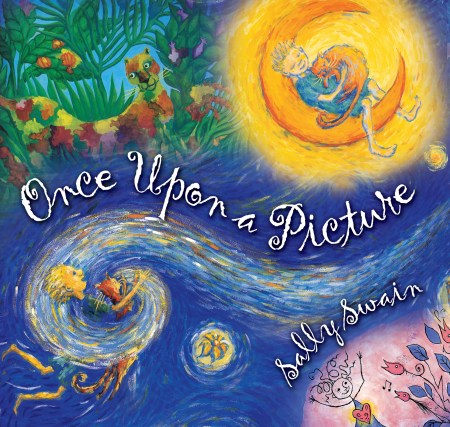
Sally Swain invites readers to wonder about the girl with the hoop in Renoir’s painting “The Umbrellas”. Swain asks, “What does she want to do? Play?” and illustrates her thoughts with pictures of the girl playing in the muddy puddles that are inevitable on a rainy day. There is not a hint of rainbow though.
Rainbows are common in works for children.
There is the beautiful series of Rainbow Fish books by Marcus Pfister with a simple message about the joy of sharing, of making oneself happy by making others happy too.
Rainbows are also popular for helping children learn maths facts and colours.
Of course, there is the science of rainbows too; but before the science comes the wonder: looking at rainbows in the sky, and wondering.
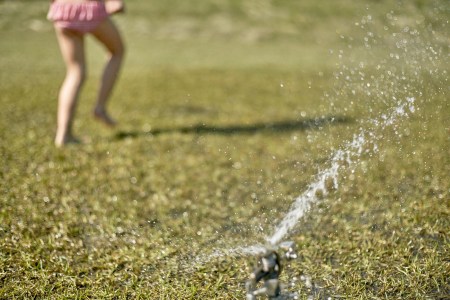
When I was a kid we loved playing with the hose or in the sprinkler. Depending on the angle of the water and the sun, we could make our own rainbows, we didn’t need to wait for rain.
This got me thinking of children who might go for years without seeing rain, or therefore a rainbow, and how exciting their first sighting might be. I have combined a few of these ideas in my flash. I hope you enjoy it.
Of puddles and rainbows
For children of the drought who had never seen rain, the gush when the pipe from the bore burst a seam was a rare opportunity for water play and unexpected learning. While Dad and his Station Hand worked to repair the hole, the children danced in puddles under the cooling spray.
“Look at the colours,” a child exclaimed, trying to capture each one. The men paused to smile at the children’s delight, remembering their own childhood glee. Mum watched from the verandah – without their precious resource, there’d be no washing off mud or cooking the dinner that night.
Thank you for reading. I appreciate your feedback. Please share your thoughts.
Developing a positive attitude to learning and an “I can do it!” attitude in young children is important. Children need to be willing to take a risk, to have a go, to try something new. They also need to realise that, if they can’t do it yet, it’s not the end of the world. If they try again, practise, and show persistence, one day they’ll be able to achieve many of the things they want. Giving up doesn’t achieve anything.
That little word “yet” is very important for children, and adults, to understand. It helps them see that learning is a process, not just a product. Learning is something that continues throughout life. If we want to develop life-long learners, it is important to view learning as a continuum. Every stage is important in and of itself, not just as a stepping stone to the next. If children are acknowledged for what they can do, they will be more willing to have a go at things they haven’t yet.
Developing confident children is at the heart of a supportive classroom environment.
An “I can do it!” attitude consists of three main parts:
This week at the Carrot RanchCharli Mills is talking about rocks; rock formations in the landscape and rocks in the middle of the road, literally and figuratively.
She talks about the mesas in Zion National Park near to where she is living in Utah.
She describes it as 250 million years old with sandstone cliffs reaching ¾ mile, or 1207 m, high.
Of course, I can’t think of large sandstone rocks without thinking of Australia’s Uluru/Ayers Rock, the world’s largest sandstone inselberg or “island mountain”, which I was lucky enough to visit a couple of years ago.
We’re not going into competition here, but Uluru is estimated to be about 600 million years old. Reaching (only) 348 metres high, it is not as high as Zion’s cliffs. However, it goes deeper under the ground than above.
While indigenous peoples of Australia have lived near Uluru for at least 10 000 years, it was only “discovered” by European explorers in the mid-nineteenth century. They named it Ayers Rock after the then Chief Secretary of South Australia Sir Henry Ayers. Since 1993 it has borne the dual name Uluru/Ayers Rock.
I couldn’t imagine what it must have been like for those first European explorers when they came across the enormous rock which reaches further below ground than it does above, though I guess they didn’t know that at the time. There are also many other hazards to negotiate in Central Australia.
With Charli’s challenge to write about a rock, I was tempted to innovate on Michael Rosen’s Going on a Bear Hunt.
“Oh-oh, a rock.
A big red rock.
Can’t go over it.
Can’t go under it.
Oh no! We’ve got to go around it.
Huff-puff. Huff-puff.”
But Charli moves on from the literal to the figurative as she describes challenges; the ones, unlike sand that is easy to sweep away; as “rocks in the road”, rocks that “cannot be ignored . . . (that) call us to change or be changed.”
Sometimes the rocks have been placed by someone or something else. Sometimes they are of own making. Sometimes they reside only in our heads. Often the rock’s size and our ability to move it depends on our attitude.
There is a rock in my path at the moment; small but, like a pebble in a shoe, bothersome. I have tried many alternatives but not yet found the solution. There is a popular saying that “When the student is ready, the teacher appears.” I’m ready and waiting.
Sometimes I feel that my attempts are a bit like those Sisyphus moving his rock, but without the physical effort. Sometimes I just think I’ve got rocks in my head. Most people don’t understand why I bother; but how can I not?
Edison said,
“I’ve not failed. I’ve just found 10 000 ways that won’t work.”
I don’t think I’m quite to 10 000 yet, but the number is growing.
As Charli says, those rocks call us to change; they give us an opportunity for new learning. I’m never against learning something new. I’ve combined these ideas in my story.
But before I take you there, I want to tell you about Charli. She has been squeezed between a rock and a hard place since she was kicked out of her beautiful home over six months ago. You can only admire her tenacity in remaining positive. With all the rocks that have been pelted at her, she still takes up the broom to sweep away the rocks that fall in others’ paths. Please check out her post and read of the J-Family, who have finally found a home after months of homelessness. Charli is hosting a Amazon Housewarming party to help them acquire basic household items. The seven-year old boy would also love some books to read. If you can help, please visit Charli’s post for details.
The newcomer was intrigued. Every morning she’d be there, filling a battered barrow with rocks from the road. You’d think that, after a day or two, she’d have removed them all. But, every morning, even earlier, a quarry truck would rumble by, spilling more.
Longer-term residents shrugged indifferently, “She’s got rocks in her head.”
When he asked her one day, she replied, “Come and see.”
He followed into her back garden, and watched. She stood at the edge of a pit and threw in the rocks. After each she listened, hopeful of a sound, of one day filling it.
Thank you for reading. I appreciate your feedback. Please share your thoughts.
I love poems. Children do too. Poetry is a great way of introducing children to the joy of language, as well as to features such as rhythm, rhyme, alliteration, similes and metaphors. What is taught through poetry can be as simple or as complex as required by the ages of the children or your teaching purpose.
One of the great benefits of teaching young children through poetry is the fun aspect. It’s enjoyable for teachers and students alike and, when children innovate on poems to create poems of their own, very motivating.
With St Valentine’s Day not far away it is timely to read and write love poems. One of my favourite poems for writing with young children is based on the traditional camping song I love the mountains. I was taught the poem by the amazing literacy educator Bill Martin Jr at a reading conference in the 1980s, and used it with every group of children I taught thereafter. I have previously written about that on my other blog here.
The repetitive structure and easy melody invites children to join in and is easy for children to use in writing poems of their own, whether they are emergent, beginning, or advanced writers. The poems can be completed using pictures or words.
I am a fan of creativity. I like to develop my own creativity, and I like to encourage the development of creativity in others.
One thing I always loved about teaching was the opportunity it gave me to be creative: writing stories, units of work, and lessons plans to interest and excite the children about learning. It is this love that drives me to write my blog posts each week, and to create new early childhood teaching resources for readilearn nearly every week.
Just as exciting was the opportunity to support the development of children’s thinking, imagination, and creativity. I am more in favour of treating children as individuals, than as one of a homogeneous group from which any difference is considered an aberration. After all, imagination and creative thinking are what inspire and drive improvement, innovation and progress.
I affirm my belief in the power of creativity in my tagline: ‘Create the possibilities . . .’, a tagline I previously used for an independent school I was establishing.
Preceding both was my first independent undertaking: Create-A-Way. Create-A-Way provided a richer educational and social setting for my young daughter than what was generally available, allowed me to share my educational philosophy and knowledge, and provided the same rich learning opportunities for other children and their parents. The development of imagination and creativity was a focus.
Guiding parents in play sessions for parents and children.
One of the things I love most about responding to the weekly flash fiction challenges set by Charli Mills at the Carrot Ranch is the additional opportunity to engage in something creative and to hone my writing skills. The supportive environment of a welcoming community makes it a safe and enjoyable experience. There is something affirming about belonging to a community of other creatives, online or in -person.
On Saturday I, along with a whole bunch of other women creatives, attended an excellent Book Marketing Masterclass conducted by authorpreneur Karen Tyrrell. (I am looking forward to interviewing Karen for the Author Spotlight series on readilearn in March.) The class was attended by writers of a variety of genres; including memoir, romance, science fiction, fantasy, YA, and picture books.
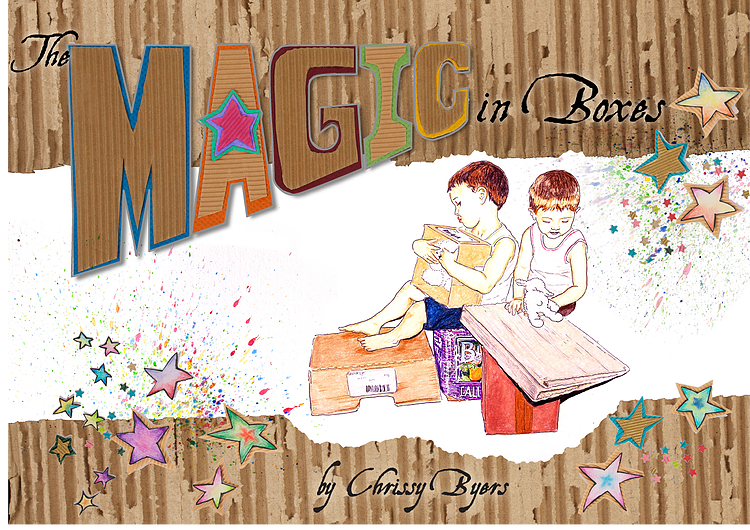
One of the attendees Chrissy Byers has created a lovely picture book The Magic in Boxes which “aims to capture the imagination of young readers and inspire creative play.”
Not only does the book suggest ways of stimulating creativity using recycled materials such as cardboard boxes, the book is made from recycled paper. I think that’s pretty awesome. It’s a beautiful book with a wonderful aim.
For a little more on creativity; in a previous post, Are you a lemon or a grapefruit? I shared ten articles about creativity. They are still relevant and worthy of a read if you haven’t yet done so.
I also shared one of my favourite TED talks by Sir Ken RobinsonHow schools kill creativity. If yours is not yet one of the over 41 million views, I urge you to watch it. As well as sharing a very important message, Ken is hugely entertaining.
The importance of reading cannot be overstated. It is an essential skill, integral to almost everything we do. Teaching children to read is one of the most important, and most rewarding, aspects of our role as early childhood educators.
Some children come to school already reading. Others come not yet reading, but with a love of books and an expectation that they will learn to read. They understand that reading involves making sense of the squiggles on the page. These children usually learn to read effortlessly regardless of what we do.
Other children come to school with little experience of books and reading. For them, learning to read is a mystery and a greater challenge. For these children especially, it is important that we provide an environment rich in language and book experiences. We need to excite them about books and reading, interest them in words and language, and show them that books can be both a source of enjoyment and information.
I often hear teachers lament that there’s just not enough time in the crowded curriculum to read to children any more. But reading aloud to children, especially early childhood children, should be non-negotiable and a priority every day. How can we excite them about books, and interest them in reading, if we don’t read to them?
It is impossible to turn children onto books in one isolated reading lesson each day. In fact, reading lessons as such probably don’t turn children onto reading at all. That is not their purpose. Their purpose is to teach skills. But those skills should always be taught in context, and never in isolation. Nor should they be confined to lessons timetabled for English. Reading must occur across the curriculum and for a multitude of purposes throughout the day, from noting who is at school, interpreting the job roster and group allocations, to understanding connected text in various subject areas.
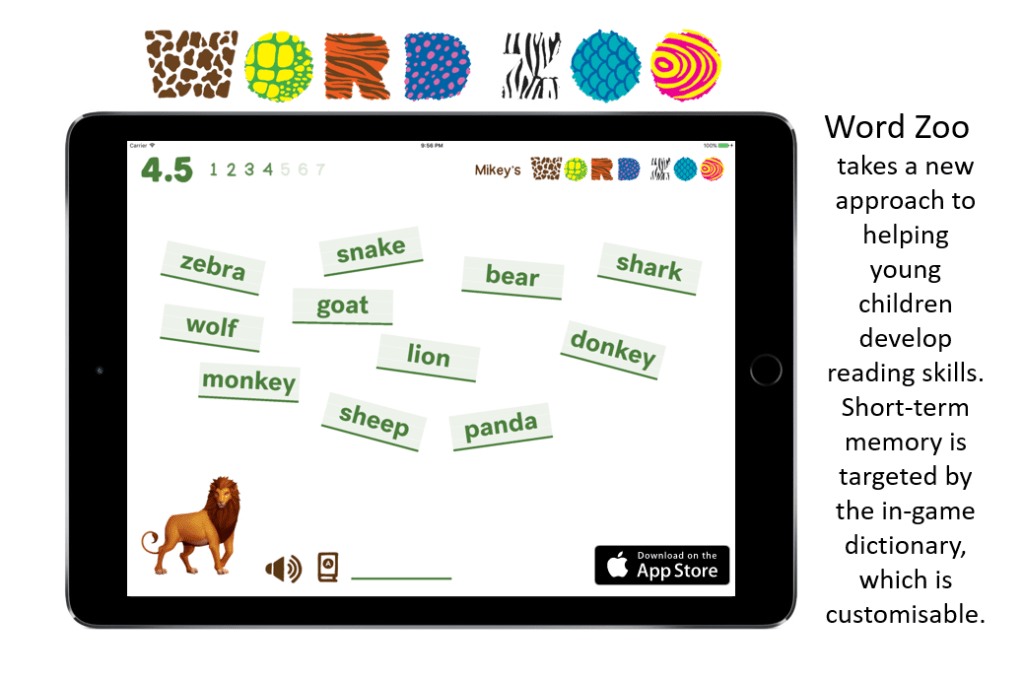
Many readilearn resources are designed to provide children with opportunities for reading across the curriculum. Even those designed specifically to develop reading skills have application in other subject areas.