Live Love Laugh Learn … Create the possibilities

Tag: Teaching Resources

  • When ideas mesh

    soda bubbles
    CC0 https://pixabay.com/

    Have you ever had that moment of inspiration when two ideas mesh and you know you’ve found the answer? I’m certain you have. It’s creativity. It’s energising. It’s like bubbles in a can, popping all over the place, bursting with exuberance, needing to express; and there’s no keeping it in.

    Writing is like that for me. Writing or teaching. Writing and teaching!

    Except for when it’s not.

    I can think and think and think and struggle to find an idea. But as soon as the two (or more) right ideas come together, there’s an explosion, and I just can’t wait to get it down, or try it out.

    It’s what I love about creating teaching resources. I think: how can I best explain this concept, what will children enjoy most, how will they best learn? Fizz! And I’ve just got to do it. I love the creative outlet. Without it, life’s just, well – dull.

    I like to think that what I write is different; that my teaching resources differ from the millions of repetitive worksheets that are written to keep children busily unengaged in the learning process. I imagine myself using them, and having fun with my class. I like to think of other teachers using them to encourage children to think creatively, critically, logically, imaginatively, and learning through discussion with their teachers and peers. But do they? I like to think.

    Do you hear that self-doubt? Like so many creatives, I find self-promotion difficult. I struggle to put my work out there for fear it might not be good enough. Each new step requires blinkered determination, focus, and practice, practice, practice to strengthen self- belief that wavers at the first hint of a breeze.

    But did you see that? I called myself a creative. Should I? Do I have the right? I always say that one thing I loved about teaching was the opportunity it gave me to be creative. Though I may think I was creative, does my thinking allow me the label?

    A few years ago, I gave myself some good talking-tos, took some deep breaths, and attended a writer’s group. Sure, they were the creative types – picture book writers and junior fiction writers. And me. Well, I was aspirational, but had a number of educational publications behind me and was working on my own collection of teaching resources.

    In turn, around the circle, we were required to introduce ourselves to the group, sharing what writing we were working on. I could have said I was working on picture books and junior fiction. I have several stuck away in drawers for future development, many with rejection slips to prove I was aspiring. I’d been collecting rejection slips since long before many of these writers were born. I must admit that none of them were recent though, as I’d been more involved in other things, including educational writing.

    When it was my turn, I took a deep breath, and stated that I was involved in educational writing at the moment. “Oh,” said the leader. “Educational writing. That’s so formulaic.” And she quickly turned to the next person. Well, if that didn’t burst my bubble. The confidence I’d struggled to muster to even attend the meeting was felled in one swoop.

    Not only was she wrong, (well, I believe she was wrong), her attitude was wrong, and her response to an aspiring writer was wrong. She asked no questions, gave no opportunity to discuss why my work may be considered creative, or what other more creative writing I might engage in. She obviously considered I had no business being there among the “real” creatives.

    Similar difficulties can be experienced by children in school. People are quick to judge, assess and dismiss on perceptions of background, ability and potential. It can be difficult to stay strong and persistent when the brush of other’s biases paints you inadequate. Without a strong framework and inner fortitude, the will may crack and crumble at the first sign of tension.

    Surely, one purpose of education must be to build those strong foundations in order to avoid wreckage in the future. Just as for buildings, we start from the bottom, building on a strong base, adding more to each layer. There’s no starting at the top, or even the middle. Each new layer must mesh with the one before.

    Charli Mills at the Carrot Ranch challenged writers to In 99 words (no more, no less) use the word mesh in a story. Mesh is both an object and a verb, which you can freely explore. You can play with its sound, too. Go where the prompt leads.

    I immediately thought of the mesh that is embedded in concrete to give it inner strength, to hold it together when under pressure, to prevent it cracking and crumbling. What a great analogy for both personal core strength and a foundation of a great education. How could I resist?

    Here’s my story. I hope you enjoy it.

    Strong foundations

    Jamie heard the vehicles; the doors slam; then men’s voices. He looked to his mum. She smiled and nodded. Dad was already there, giving instructions.

    “Watch, but don’t get in the way,” he’d said.

    Clara arrived, breathless. “What’s happenin’?”

    “Carport. Pourin’ the slab,” he answered. “That’s the frame. Keeps it in shape.”

    Beep. Beep. Beep. The concrete truck backed into position.

    The men quickly spread the mix, then lifted the mesh into place.

    “Makes it strong,” said Jamie.

    Another load of mix was spread.

    “All done,” said Jamie.

    Later, in the sandpit, the children experimented with strengthening their structures.

    Thank you for reading. I appreciate your feedback. Please share your thoughts.

    P.S. If you are a teacher of children of about 5 to 7 years of age in their first three years of school, I’d love your feedback on readilearn, my collection of early childhood teaching resources. Please complete the survey here and share this post with other early childhood educators you know. I am keen to receive honest feedback about the site’s visual appeal and usability, as well as suitability of resources. Thank you. 🙂

  • Let’s read, write and spell with Schuyler: readilearn

    I don’t normally post twice a week, but this post is really an addendum to the previous post What’s in a name? Teaching phonics, syllabification and more! so I decided to break with tradition and share it.

    For the inspiration for this post and the resource it describes, I must thank Pamela Wight, who featured in the author interview last month.

    In commenting on the What’s in a name? post, Pamela mentioned the awkwardness of singing and spelling her grandson’s name – Schuyler, a name with which I was unfamiliar. I joked to Pamela that I’d thought of recording a few names, innovating on the tune of BINGO, to show how “easy” it might be. Pamela suggested I should, even though I explained that my singing voice is anything but, and she told me the pronunciation for Schuyler: Skylar. Well, I couldn’t help myself. My head started racing with ideas of incorporating Schuyler’s name into reading and writing lessons teaching phonics and spelling skills. The result is the resource Let’s read, write and spell with Schuyler,

    and the recording.

    Continue reading: Let’s read, write and spell with Schuyler: readilearn

  • I spy butterflies – Readilearn

    I spy butterflies

    Learning about butterflies in the classroom, especially when observations of the life stages with a live learning kit are possible, is almost magic for children. The growth of the caterpillars is obvious and children can watch as they moult and pass through each instar. The voracious appetite of the caterpillars means that plants are quickly stripped of their leaves and, if children listen carefully, the munching of the mandibles can be heard.

    Many resources to support an early childhood science biology unit about butterflies in particular, or minibeasts in general, already exist in the readilearn collection; including:

    Butterfly diary

    Minibeast project

    My minibeast ABC

    Code for Caring

    I included suggestions for teaching about minibeasts, including butterflies, in a previous post Classroom minibeasts. While there are many minibeasts suitable to study in the classroom, butterflies are my favourite. This week the readilearn collection has grown with some new resources to support learning about butterflies; including:

    butterfly word cards

    Butterfly word cards

    Butterfly word cards is a collection of forty butterfly-relevant words which may be printed and displayed on a word wall or used to label a butterfly display. The words are presented in three different formats for printing choice.

    The words include some fascinating scientific terms; such as:

    • instar
    • frass
    • chrysalis
    • prolegs

    Continue reading: I spy butterflies – Readilearn

  • Ideas for playtime at school – Readilearn

    We generally think of recess as fun time for children. But it is not always so for those who find socialising difficult or for those who have trouble thinking of something to do.

    Incorporating social and friendship skills into the daily class program has enormous benefits in preventing unhappy times in the playground.

    Happy and peaceful playgrounds can be cultivated by:

    • providing children with strategies for friendly play, including how to join in, participate, and allow others to join in;
    • teaching children activities and games to play alone or with others;
    • offering equipment to support those activities and games.

    Peaceful playgrounds filled with happy active children contribute to a healthier, happier community more able to focus on learning during class time.

    Being active contributes to children’s overall physical development, including gross and fine motor skills and eye-hand coordination, and fitness.

    Opportunities for introducing activities and games can be seized in many areas of the curriculum. In addition to the obvious; physical education, they can be slotted into

    Continue reading: Ideas for playtime at school – Readilearn

  • Celebrating NAIDOC Week – Readilearn

    Celebrating NAIDOC Week – Readilearn

    This week, from 2 – 9 July, is NAIDOC Week in Australia with celebrations occurring all around the country. The purpose of the week is to celebrate the history, culture and achievements of Aboriginal and Islander Peoples and acknowledge their contributions to our country. The acronym NAIDOC stands for National Aborigines and Islanders Day Observance Committee.

    The theme of this year’s celebration is Our Languages Matter. When Europeans first arrived in Australia a little more than 200 years ago, more than 250 Indigenous languages were in use across the land. As the languages were spoken, not written, many of these languages have been erased. Fewer than half that number remain, and many of the young people are no longer familiar with the language of their ancestors.

    According to the NAIDOC website,

    “The 2017 theme – Our Languages Matter – aims to emphasise and celebrate the unique and essential role that Indigenous languages play in cultural identity, linking people to their land and water and in the transmission of Aboriginal and Torres Strait Islander history, spirituality and rites, through story and song.”

    This article in the Conversation provides a little more information about Australian Indigenous languages and the Dreaming.

    By now, NAIDOC Week celebrations are almost over, and most Australian school children are enjoying their mid-year break. However, many teachers will be looking for ways to share the celebrations with their students when school resumes. As any time is a good time to incorporate learning about Indigenous culture and history, in this post, I provide links

    Continue reading: Celebrating NAIDOC Week – Readilearn

  • Celebrating Mums – Readilearn

    Six early years activities for celebrating Mother’s Day. Develop literacy skills while making a personalised and special gift for Mums.

    Mother’s Day is celebrated on the second Sunday in May in many countries, including Australia, the United States, and Canada. With the celebration little more than a week away, I thought I’d share some suggestions that are low on cost but packed with learning opportunities to incorporate into your class literacy and art programs.

    Encouraging children to create and give a gift from the heart demonstrates that not all gifts need come from a shop. It allows children from even the poorest families to give their Mums a special Mother’s Day gift. It helps develop their creativity and teaches them skills that they can apply in future gift-giving situations. It shows how thoughtfulness and imagination can combine to make a unique gift that will be treasured.

    A gift of love lasts longer than many store-bought gifts.

    1. Read picture books featuring mothers

    A few of my favourites are:

    Continue reading: Celebrating Mums – Readilearn

  • Can you guess: Who am I? – Readilearn

    can you guess - who am I

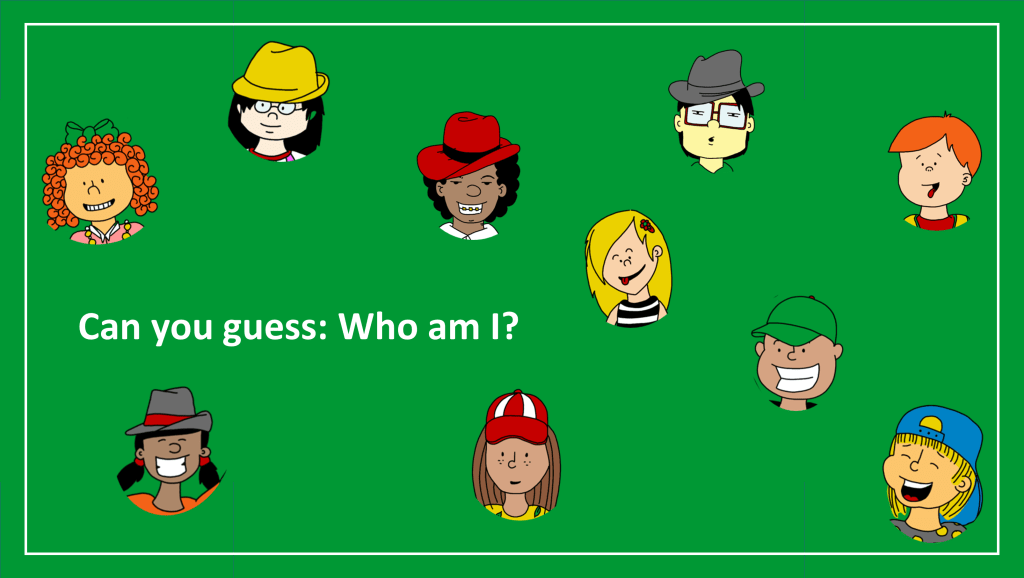
    Last week I shared an interview revealing a little about myself and my hopes and plans for readilearn. I also uploaded some little Who am I? Easter caption books. It’s seems timely then to discuss the value of creating, writing, and reading Who am I? puzzles in the classroom.

    Children love solving puzzles and it is good for them to engage in thinking activities. Who am I? puzzles involve deductive reasoning, and are easy for children to write. Solving them means listening attentively to the clues, remembering all the information, relating new information to existing information, and using the clues to eliminate options in order to identify the specific.

    In addition, the puzzles can be used to discuss and teach the difference between statements and questions and the appropriate way of punctuating each.

    Children can begin by writing statements about themselves, such as those they may have shared in About me booklets. They can also add interesting facts that others may not know about them. Remind children

    Continue reading at: Can you guess: Who am I? – Readilearn

  • Time for rhyme – Readilearn

    Yesterday, 2 March was Dr Seuss’s birthday. How did you celebrate? Did you read a favourite Dr Seuss story – maybe even more than just one or two? Which is your favourite?

    Children love the rhythmic, rhyming stories written by Theodor Seuss Geisel who was born in 1904. (A question for your children – how old would he be if he was still alive today?)

    Having fun with rhyme is a great way for children to learn about the sounds of language.

    In the beginning, the rhymes can be real or nonsense words, as are many employed by Dr Seuss, training the ear to hear. Children are delighted when they discover pairs of words that rhyme. It is great when parents and teachers share their excitement of discovery too.

    Like those of Dr Seuss, many stories and poems for young children are written in rhyme. The rhyme is pleasant to the ear, and encourages children to join in with the reading or telling, using meaning and sound to predict the next rhyming word.

    When children are ready, familiar rhyming texts are often the first they read independently, using a combination of memory and print. How many children do you know who first started reading with a Dr Seuss book; such as The Cat in the Hat, Fox in Socks, One Fish Two Fish, Ten Apples Up On Top, or any other favourite.

    For my part in the celebration, I joined in with a challenge extended by Vivian Kirkfield to write a story in 50 words. The reason behind the 50 word challenge is that, although the total word count of Green Eggs and Ham is over 700, only 50 unique words were used. (Some of your children may like to check if that is so. How could they do it?)

    I decided to write a rhyming nonsense story in exactly 50 words (title not included). I hope you and your children enjoy it.

    Lucky Duck

    Duck.

    Old Duck.

    Couldn’t see –

    Lost his glasses by the tree.

    Continue reading at: Time for rhyme – Readilearn

  • Who’s on the move?

    This week at the Carrot Ranch, Charli Mills raised the subject of migration and challenged writers to In 99 words (no more, no less) write a migration story.

    Although Charli always provides suggestions, she also permits writers to go where the prompt leads, allowing their thoughts to migrate in whichever direction they choose. This is good for me as my thoughts always bring me back to early childhood education and, if I can somehow squeeze it in, butterflies.

    Migration is a part of human history. We are told that humans originated in Africa, and that migration out of Africa began about 60 000 years ago (well, that’s one of the stories). That we are now spread across the world is no mean feat, particularly when we acknowledge that most of the migration occurred before the industrial age, long before steam ships and ocean liners, before motor cars and air travel.

    But migration continues still, and our countries and cities become home to those whose lives began far away and who share different cultural traditions. The purpose of the National Geographic Society’s Genographic Project is to discover more about our shared genetic heritage. In an early childhood classroom, we, too, can discover how much we have in common and learn to appreciate our differences.

    Whoever you are.

    Mem Fox’s beautiful book Whoever You Are is great for encouraging children to recognise, respect, and  appreciate each other, similarities and differences included.

    mem-fox-im-australian-too

    This year sees Mem publish another beautiful book I’m Australian Too which shows appreciation for everyone who is part of our wonderful multi-cultural Australia. (Follow the links to both books and you can listen to her read them too!)

    A number of readilearn resources support teachers in developing an appreciation for everyone’s heritage, including a history unit which helps children learn more about their own family history and traditions, and the histories and traditions of their classmates’ families.

    Just as amazing as stories of human migration, are those of animal migration. I was surprised when I first heard of the migration of monarch butterflies from Canada to Mexico in the autumn, and back again in spring, a distance of over 4800 miles or almost 8000 kilometres. What a long flight for a butterfly, I thought, the poor butterfly’s wings must be ragged by the end of the journey. But the round trip involves at least four generations.

    And although monarch butterflies are native to North America, they are now part of the Australian landscape, having arrived, possibly during the gold rushes of the mid-1800s.

    Even longer, twice as long in fact, than the monarch’s migratory flight, is that of a dragonfly which, also over four generations, makes a complete circuit of the Indian Ocean – almost 1000 miles or about 16 000 kilometres. The story of how this tiny insect’s epic journey was discovered is fascinating. Who knows what one may discover when wonder is mixed with observation.

    There’s obviously plenty of diversity from which to draw inspiration for a migration story. I’ve chosen to write a story set a little bit closer to home. I hope you like it.

    Please pop over to Charli’s post to see where the prompt has taken other writers.

    Adventurous plans

    His bag was packed. He was ready. He stopped at the door for one last look, then stepped outside, pulling it closed behind him. At that moment, he was certain; he would never return. There was nothing for him here. Exotic places and untold adventures awaited. At the stop, he hailed a bus and climbed aboard. “Where are you off to?” asked the driver. “I’m on an adventure,” he said, tendering a fistful of plastic coins. “But only if you take me with you,” said his out-of-breath mother, smiling. “Okay,” he said. The driver winked as she climbed aboard.

    Thank you

    Thank you for reading. I appreciate your feedback. Please share your thoughts.

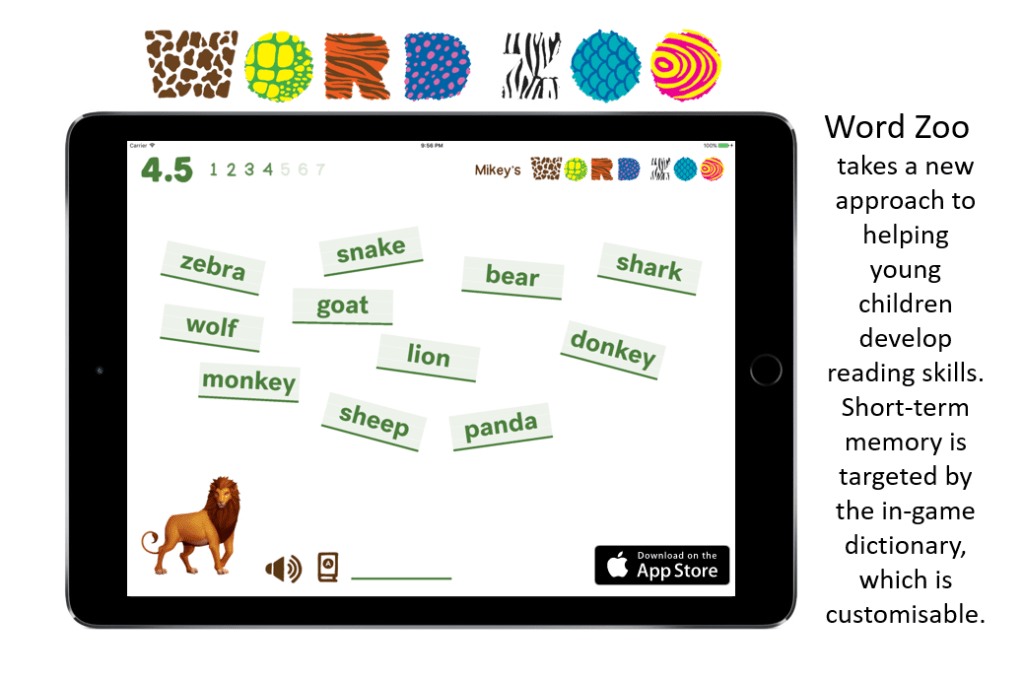
    P.S. I’m excited to announce the launch of a new app for beginning readers created by my son, Robert. If you know anyone with young children who may be interested, please let them know about Word Zoo, available now in the App Store.

    ad1


  • Developing an “I can do it!” attitude – Readilearn


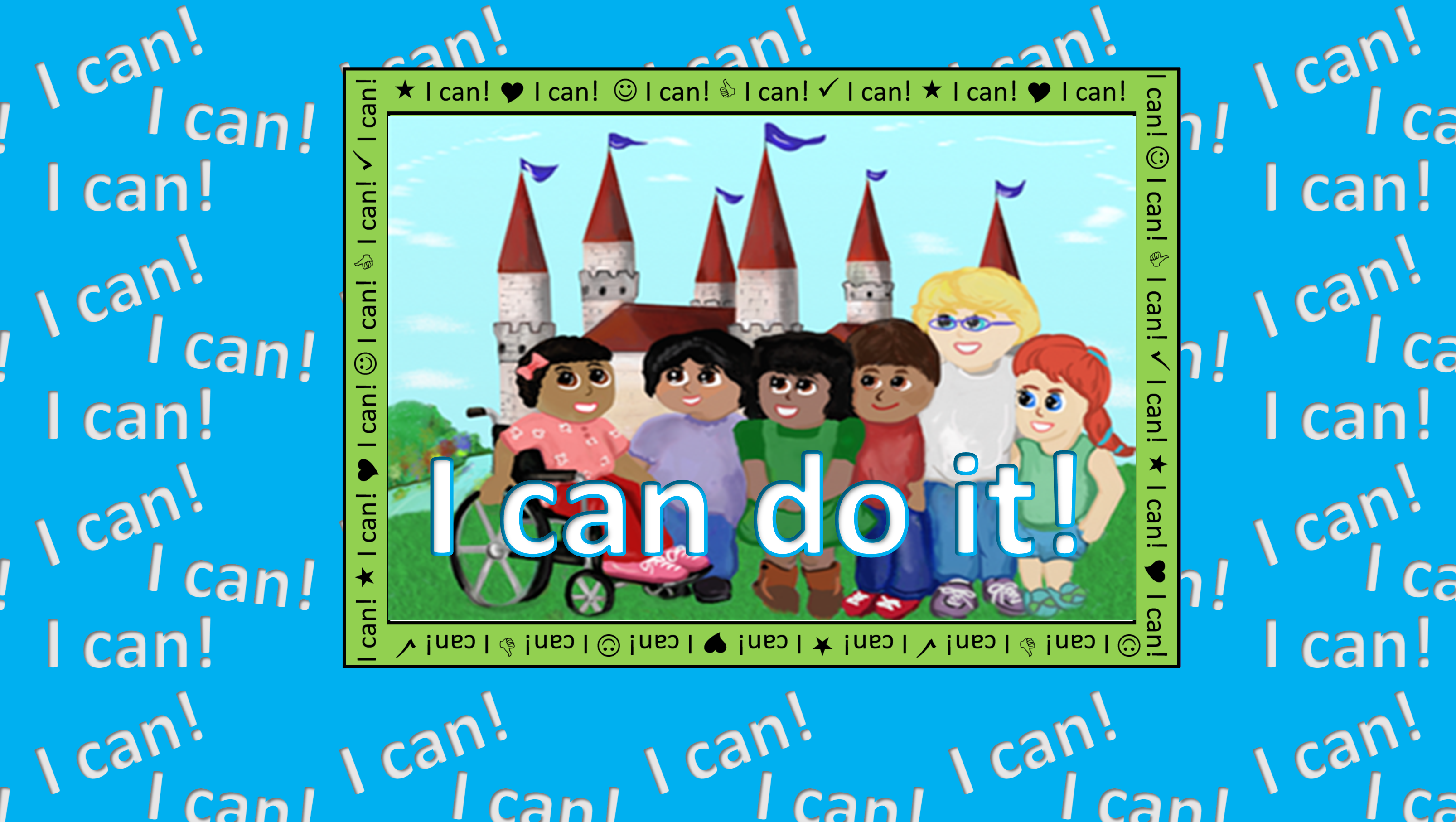
    Developing a positive attitude to learning and an “I can do it!” attitude in young children is important. Children need to be willing to take a risk, to have a go, to try something new. They also need to realise that, if they can’t do it yet, it’s not the end of the world. If they try again, practise, and show persistence, one day they’ll be able to achieve many of the things they want. Giving up doesn’t achieve anything.

    That little word “yet” is very important for children, and adults, to understand. It helps them see that learning is a process, not just a product. Learning is something that continues throughout life.  If we want to develop life-long learners, it is important to view learning as a continuum. Every stage is important in and of itself, not just as a stepping stone to the next. If children are acknowledged for what they can do, they will be more willing to have a go at things they haven’t yet.

    Developing confident children is at the heart of a supportive classroom environment.

    An “I can do it!” attitude consists of three main parts:

    Continue reading on: Developing an “I can do it!” attitude – Readilearn