I love poems. Children do too. Poetry is a great way of introducing children to the joy of language, as well as to features such as rhythm, rhyme, alliteration, similes and metaphors. What is taught through poetry can be as simple or as complex as required by the ages of the children or your teaching purpose.
One of the great benefits of teaching young children through poetry is the fun aspect. It’s enjoyable for teachers and students alike and, when children innovate on poems to create poems of their own, very motivating.
With St Valentine’s Day not far away it is timely to read and write love poems. One of my favourite poems for writing with young children is based on the traditional camping song I love the mountains. I was taught the poem by the amazing literacy educator Bill Martin Jr at a reading conference in the 1980s, and used it with every group of children I taught thereafter. I have previously written about that on my other blog here.
The repetitive structure and easy melody invites children to join in and is easy for children to use in writing poems of their own, whether they are emergent, beginning, or advanced writers. The poems can be completed using pictures or words.
The importance of reading cannot be overstated. It is an essential skill, integral to almost everything we do. Teaching children to read is one of the most important, and most rewarding, aspects of our role as early childhood educators.
Some children come to school already reading. Others come not yet reading, but with a love of books and an expectation that they will learn to read. They understand that reading involves making sense of the squiggles on the page. These children usually learn to read effortlessly regardless of what we do.
Other children come to school with little experience of books and reading. For them, learning to read is a mystery and a greater challenge. For these children especially, it is important that we provide an environment rich in language and book experiences. We need to excite them about books and reading, interest them in words and language, and show them that books can be both a source of enjoyment and information.
I often hear teachers lament that there’s just not enough time in the crowded curriculum to read to children any more. But reading aloud to children, especially early childhood children, should be non-negotiable and a priority every day. How can we excite them about books, and interest them in reading, if we don’t read to them?
It is impossible to turn children onto books in one isolated reading lesson each day. In fact, reading lessons as such probably don’t turn children onto reading at all. That is not their purpose. Their purpose is to teach skills. But those skills should always be taught in context, and never in isolation. Nor should they be confined to lessons timetabled for English. Reading must occur across the curriculum and for a multitude of purposes throughout the day, from noting who is at school, interpreting the job roster and group allocations, to understanding connected text in various subject areas.
Many readilearn resources are designed to provide children with opportunities for reading across the curriculum. Even those designed specifically to develop reading skills have application in other subject areas.
This week I am very excited to be interviewing the wonderful illustrator Helene Magisson, my first guest for the Illustrator Spotlight series.
Before we begin the interview, let me provide you with a little information about Helene.
Helene began her artistic career as a painting restorer in Paris, where she also trained in the art of medieval illumination*.
Helene has lived in countries all over the world, including Africa, France, and India. Her travels both inspire and enrich her work. She now calls Australia home, and it was when she settled in Australia, that Helene began a new career illustrating children’s books.
Helene has illustrated four books for New Frontier Publishing including The Velveteen Rabbit by Margery Williams Bianco, and The Night before Christmas by Clement C. Moore. She is now working on her seventh book for Wombat Books.
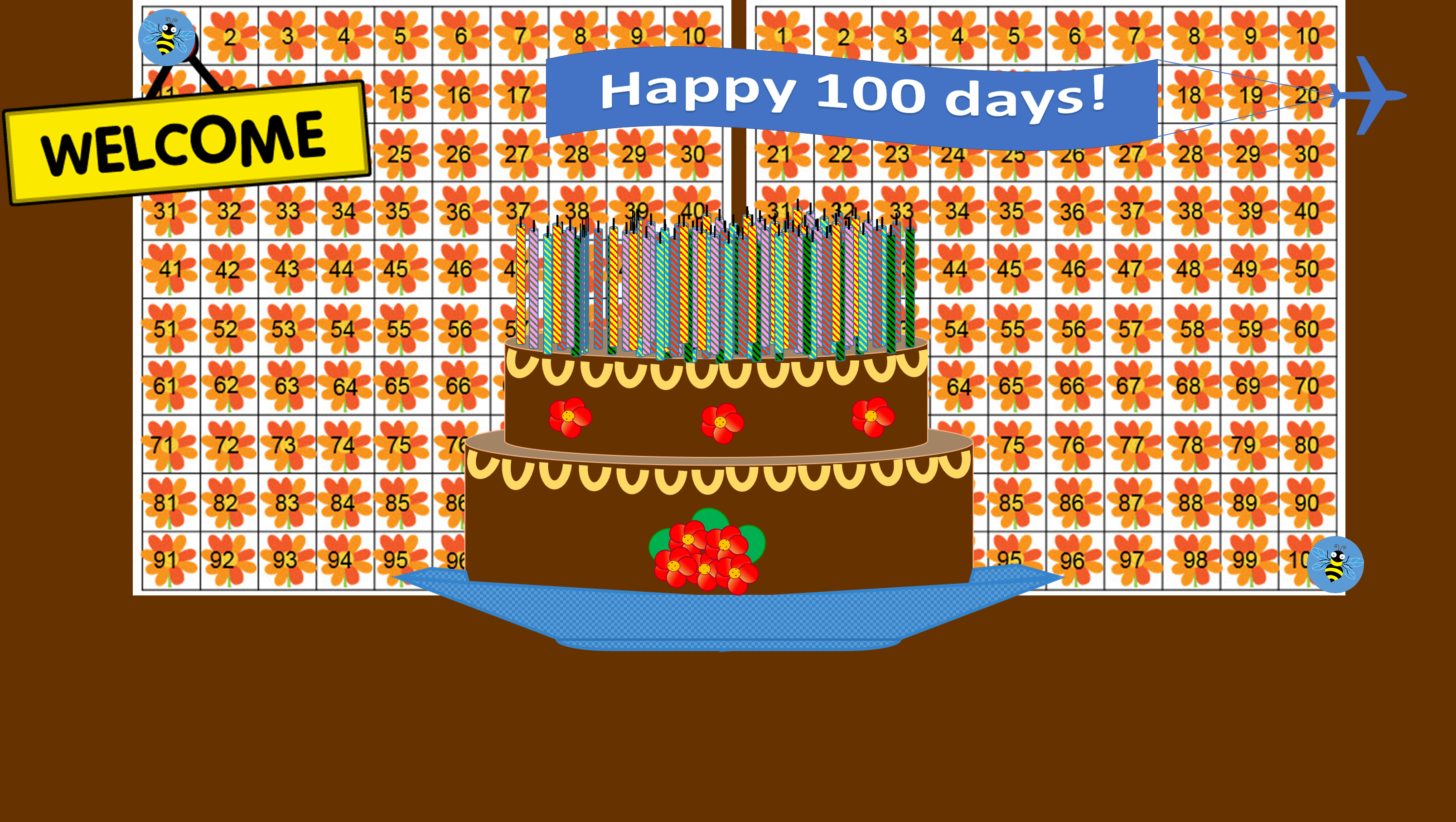
With the commencement of the Australian school year still two weeks away, it might seem a bit early to be thinking about the 100th day. Let me assure you it’s not. It’s great to be ready to start counting from day one. However, if you miss the start, you can always go back and count the days on a calendar. For those of you in the US and UK, the one hundredth day will be coming up soon in February.
In Australia there are 200 school days in a year. So, once you have counted up to 100 days, you are half way through and can then count down the number of days remaining. The US and UK have fewer school days: 180 in the US and 190 in the UK; so they are more than half-way through by the time they reach their 100th days.
Whatever their year level, children are always excited to count the days to this milestone, and it provides wonderful opportunities for learning about number.
Several readilearn resources support you and your students as you count up to and celebrate one hundred days, including:
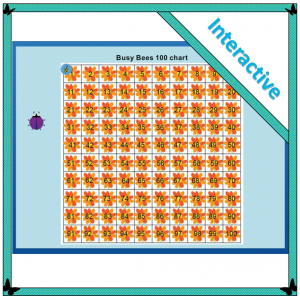
The interactive digital resource Busy Bees 100 chart is great for all your usual number board activities, and can be used to keep a count of how many days you’ve been at school. Simply display the resource at the beginning of each day and move the bee to the next number.
Just this week, I have uploaded a short video explaining how to use the resource. I am also including it here. I’d love to know what you think.
Wishing all my readers a very happy New Year with best wishes for peace and joy in 2017.
Thank you for your ongoing support. I’m looking forward to further conversations in 2017.
Click to read the original: Happy New Year! – Readilearn and view the video of inspirational teacher Chen Miller. Once a special needs student herself, Chen is now making a difference to the lives of children she teaches.
I am one of ten children, though none of us are children any more. The youngest has turned 50, and the oldest is nearing 70 (but don’t tell her that).
My mother sometimes had difficulty retrieving the correct name and often went through a list before hitting on the child she wanted. I know what it’s like. Sometimes it is difficult enough when there are only two or three to choose from! Maybe you’ve experienced it too. There’s probably a name for this phenomenon, but if there is, I’m not aware of it.
One day, when wanting to give me a direction, she rattled off a few names, but not mine. Finally, exasperated, she said, “Well, you know who you are.” It has become a family joke. It’s mostly true that I do know who I am. However, sometimes I’m not so sure! I must say that Mum had a wonderful memory until the day she passed just a few weeks before her 91st birthday.
This week at the Carrot Ranch, Charli Mills is talking about the importance of being able to name things and experiences. She says, “Names are such a human attribute,” and asks, “What is in a name?”
The ability to name things is important and a young child’s vocabulary often begins with the names of people and objects in the environment; for example, Mum, Dad, dog, car, cookie, juice.
I read once that children don’t really become aware of an object until they are able to apply a name to it. This doesn’t mean they must be able to say the name, just recognise it by name. Unfortunately I don’t remember the source and was unable to verify it with a Google search; but there is no denying that a well-developed vocabulary is a definite advantage to learning.
Children also quickly learn to recognise their own names. Choosing names for children can be a difficult process for parents, with much to consider; for example:
The name’s meaning
Whether anyone else in the family has the name
How it is spelled
What the initials will be
How the first and last names sound together
Teachers always have the extra burden of being influenced by the names of children they have taught.
Although this blog simply bears my name, choosing a name for my website was a more involved process. Years ago, I ran a home business called Create-a-Way. I chose the name as I thought it expressed the purpose of my business perfectly: children were encouraged to be creative, and it created a way for me to work with children in the way I wanted. I hoped to reuse the name for my website. Unfortunately, the domain names were not available, and I had to think even more creatively.
I eventually settled on the name readilearn as I love reading, and I love learning, and the ‘i’ in the centre puts the focus on the individual learner. I wanted the name of my website to show the importance of reading and learning to an individual’s growth and empowerment. However, when I say the name, I pronounce it “ready learn”. This refers to an individual’s innate readiness to learn, as well as to the resources which are ready for teachers to use in their support of learners.
One of the most important things for a teacher is to get to know the children. I used to pride myself on knowing the children’s names before morning tea on the first day. Of course, I had many strategies in place to help me with that. I have written about some of these strategies before, and there are readilearn resources to support teachers with that as well. In fact, writing this post has stimulated ideas for new resources to create, including resources that help children get to know each other. (Thanks, Charli!)
I have always found it fun to notice when people’s names are a good match for their profession; for example, Matt Dry the weather forecaster.
The community hall was abuzz. Everyone was outtalking the other, except Ms Penn who quietly recorded everything.
“I’m pretty cut up about it,” complained Mr Carver.
“He fired me,” moaned Mr Burns.
“Said I was just loafing around,” grumbled Mr Leaven.
“Could’ve floored me,” griped Mr Lay.
“He was fishing for something,” remarked Ms Salmon.
“Said he’d top me,” sprouted Ms Bean.
“Another nail in his coffin,” whined Mr Chips.
Ms Chalk took the stand. “It’s not just black or white. He knows why you all avoid him like, well … Give him a chance. He’s not his name.”
Did you recognise them all: the journalist, the butcher, the fireman, the baker, the tiler, the fishmonger, the greengrocer, the carpenter, the teacher; and, of course, the one they’re all talking about: the new doctor.
Thank you for reading. I appreciate your feedback. Please share your thoughts.
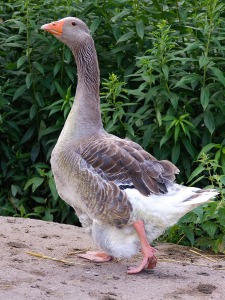
Gander, the verb, means to look. Since a gander, a male goose, has a long neck which is, without doubt, suitable for sticking out and into things, the meaning to take a look is probably apt. However, I must say that, until reading Charli’s flash pieces, I was unfamiliar with its use as a verb, and still feel a bit uncomfortable in using it so, but I’ll give it a go – later.
First: What I would love is for people to take a gander at readilearn, a website I have been working on for more years that I care to tally right now.
It is a year since I took the leap and engaged a company to develop the site. It was nine months (not the one month promised) before the site was launched, just over three months ago. To use the nine months analogy of pregnancy; it wasn’t an easy gestation or birth, and we’re still experiencing teething problems and growing pains, including “how to grow?” pains.
Audience wanted
Marketing, as in attracting, building, and maintaining an audience, is difficult, as any writer knows. It is not just a matter of writing the stuff and hoping an audience finds it. It takes time, effort, and know-how. I’m a bit short on all three, but I’m going to stick my neck out, and ask if you’d be willing to help me a little with the know-how in finding my target audience.
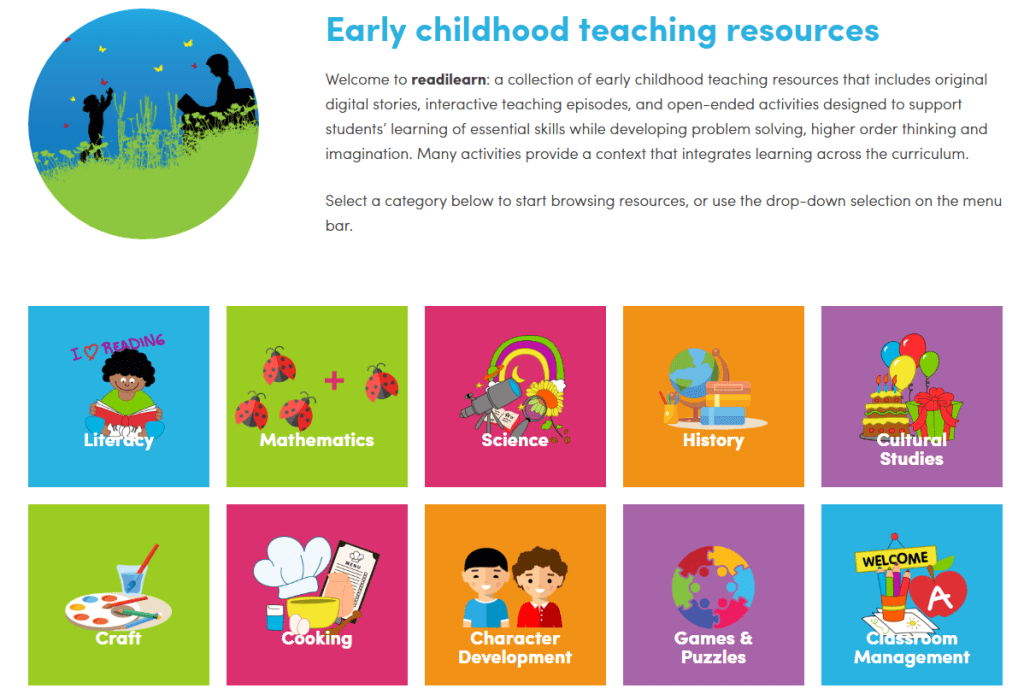
readilearn is a collection early childhood teaching resources. The target audience is teachers of children between 5 and 7 years of age, be they teaching in a school environment, or homeschooling their children. The resources are also suitable or use with children learning English as a second or other language, and with children with special needs.
There are resources for most areas of the curriculum, with suggestions for integrating learning across curriculum areas in a meaningful context.
The materials are Australian (I’m Australian) but are suitable for use internationally.
There are:
Digital and interactive resources to access and use online
Word and PDF documents to download and print
Including:
Original stories
estories (digital stories)
Teaching ideas and suggestions
Lessons plans
Readilessons (lessons ready to use)
Games
Printouts for parents
Features
New resources are added almost every week
Many resources are free to registered users
An annual subscription of less than 50c per week (or less than the cost of 5 cups of coffee a year!) is easily affordable; and that’s Australian dollars – even less for UK and US subscribers! It’s even discounted until the end of 2016!
So what’s different?
I think that what differentiates readilearn is the integrated resources focusing on purposeful learning in context. The open-ended nature of many of interactive resources allows teachers to adjust the discussion to suit the needs of their students. readilearn is not just bunch of worksheets for repetitive practice of skills in isolation, or endless pretty charts to hang in the room. It is designed to support effective teaching and learning in meaningful contexts.
More than just resources
Each Friday I publish a blog post filled with teaching ideas and information, including how to get the most from readilearn resources.
I also email users each Friday to inform them of new resources uploaded during the week – no more wondering if there’s anything new or where to find it.
The newsletter, published on the last day of each month, includes a summary of blog posts, a list of new resources, and a preview of events in the coming month.
I would very much appreciate it if you could spread the word to any of my target audience in your circles: teachers of children from 5 – 7 years. I’d also love some suggestions for ways of connecting with my audience. Although my audience may differ from yours, what you have learned may also be useful for me.
Maybe you’d like to gift an early childhood teacher their first year’s subscription. It’s easy. Just email hello@readilearn.com.au to find out how.
Now back to Charli’s challenge to include gander as a verb in a 99-word story. It got me thinking about all the bird words in common use, even when not referring to birds. I decided to incorporate as many as I could into a story while still maintaining a certain amount of sense. I have used over twenty. Can you (bird)spot them all? I hope you think it’s grouse! (Well, maybe just a little bit not too bad. 🙂 )
Bird (non)sense
Finch’d had an eagle eye on the play all day.
Robin’d been hawking chicken pies. Now sold out, he wandered over to gander with Finch.
Robin craned his neck, just as “He’s out for a duck!” was announced.
“He’s out for a duck,” he parroted. “That’s something to crow about.” One team was swanning around, exuberant as monarchs. The other was as despondent as miners on strike.
Martin was larking around. “Yeah,” he sniped. “The silly goose was distracted by the kite and missed altogether.”
“More like a turkey, I’d say,” Robin reterned swiftly.
“You’re a hoot!” chirped Finch.
Thank you for reading. I appreciate your feedback. Please share your thoughts.
As the school year in Australia comes to a close, teachers are busy preparing ways to say “Thank you” to their classroom aides and volunteers, organising gifts for their students (remember to add a 9 square Christmas puzzle), and gifts their students can make for their parents (a poem makes a great gift).
With all that going on, one would think it impossible for teachers to think ahead to the new school year, but they do; and are already making preparations to ensure the beginning of the year goes smoothly.
If students and teachers are fortunate enough to know to which class they will be allocated in the following year, things can be much easier.
One school made the transition from one year to the next more efficient than most with which I’d been involved.
The process of allocating children to new classes can be daunting
The latest post from readilearn explains resources for a new board game to play at Halloween.
The game is great for literacy and maths groups, to play with buddies or in family groups. It links literacy, maths and physical activity. Players collect treats and perform actions as they move
Next Tuesday 11 October is International Day of the Girl Child. It is a day for recognising the need to empower all girls, for it “is good not only for girls, but also for families, communities and society at large”.
This post honours International Day of the Girl Child on 11 October. The day was established to “to recognize girls’ rights and the unique challenges girls face around the world.” The empowerment of girls is seen as “fundamental to breaking the intergenerational transmission of poverty, violence, exclusion and discrimination and to achieving equitable and sustainable development outcomes.”
This year theme is Girls’ Progress = Goals’ Progress: A Global Girl Data Movement.“While …recognize how girls’ progress is good not only for girls, but also for families, communities and society at large, we must also take this opportunity to consider how existing gaps in data on girls and young women, lack of systematic analysis, and limited use of existing data significantly constrain our ability to monitor and communicate the wellbeing and progress of nearly half of humanity.”
While recognising the gravity of situations faced by girls around the world, the focus of this post pales, but is significant nonetheless. Sometimes the changes we need to make start at home. Empowering our girls will enable them to empower others.
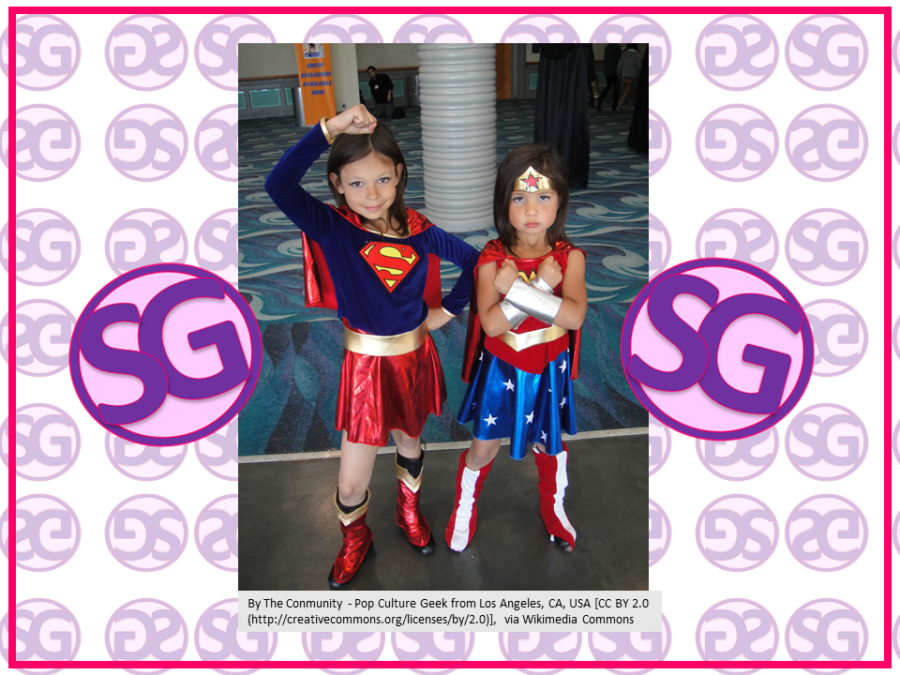
I recently listened to a TED talk Bring on the female superheroes by Christopher Bell, a media studies scholar and father to a 9-year-old daughter obsessed with Star Wars. If you have any concerns about gender stereotyping and gender equality, particularly with regards to toys and merchandising, have a listen. In less than the 16 minutes to view the video, Bell packs a powerful punch and takes a swipe at media corporations and merchandising for girls.














 Norah Colvin