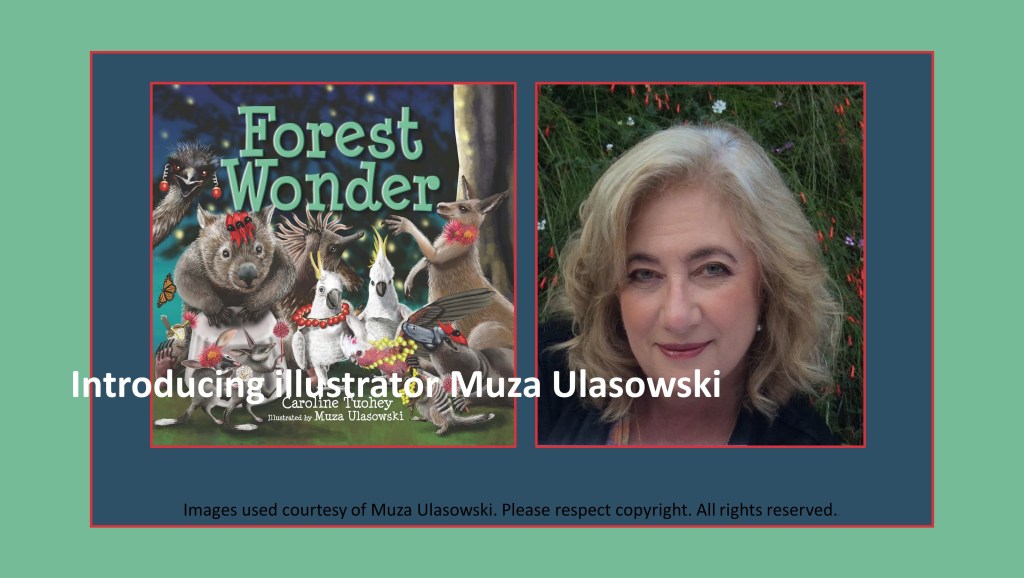
This month I am delighted to introduce you to the very talented illustrator Muza Ulasowski. I’m certain you will find her illustrations to be quite remarkable.
Although Muza has illustrated many books, I first came across her work in the beautiful picture book Forest Wonder, written by Caroline Tuohey. It is Forest Wonder, a winner of international awards, that Muza and I are discussing today. Before we get started on the interview, first let me tell you a little about Muza.
Muza Ulasowski is a graphic designer and children’s book illustrator based in the leafy western suburb of Brookfield in Brisbane, Queensland. Australia. She is inspired and surrounded by a vast array of local birds and animals who tend to make their appearances in her book illustrations. She shares her life with her wonderfully patient husband, their charismatic bulldog called Charlie and a black magic cat named Basil.
In 2010, she was invited to illustrate her first children’s picture book and enjoyed it so much, that
This week, from 2 – 9 July, is NAIDOC Week in Australia with celebrations occurring all around the country. The purpose of the week is to celebrate the history, culture and achievements of Aboriginal and Islander Peoples and acknowledge their contributions to our country. The acronym NAIDOC stands for National Aborigines and Islanders Day Observance Committee.
The theme of this year’s celebration is Our Languages Matter. When Europeans first arrived in Australia a little more than 200 years ago, more than 250 Indigenous languages were in use across the land. As the languages were spoken, not written, many of these languages have been erased. Fewer than half that number remain, and many of the young people are no longer familiar with the language of their ancestors.
According to the NAIDOC website,
“The 2017 theme – Our Languages Matter – aims to emphasise and celebrate the unique and essential role that Indigenous languages play in cultural identity, linking people to their land and water and in the transmission of Aboriginal and Torres Strait Islander history, spirituality and rites, through story and song.”
This article in the Conversation provides a little more information about Australian Indigenous languages and the Dreaming.
By now, NAIDOC Week celebrations are almost over, and most Australian school children are enjoying their mid-year break. However, many teachers will be looking for ways to share the celebrations with their students when school resumes. As any time is a good time to incorporate learning about Indigenous culture and history, in this post, I provide links
You could count the number of times I have been camping on one hand with a few fingers chopped off. And those times, in the main, could not even be considered real camping. They involved cabins, water on tap, and flushing loos. Only once was I required to sleep in a tent, and the experience wasn’t one I wished to repeat: as much to do with other campers as with facilities.
I am not into roughing it. I like the convenience of warm showers, flushable toilets, and power at the touch of a button. I acknowledge my privilege in being able to take these things for granted and, when I holiday, to choose accommodation at which they are available. I recognise that for much of the world’s population, that privilege is as unattainable as a dream.
So, for this week, in which the flash fiction prompt by Charli Mills coincides with World Toilet Day, it is fitting to combine the two.
Anne Goodwin who blogs at Annecdotal has also combined Charli’s flash fiction prompt in her post about Fictional Toilets for World Toilet Day. Anne has included snippets of toileting issues from novelists whose characters, unlike most “fictional characters, (who) like royalty, don’t have to suffer the indignity of urinating or opening their bowels”, deal with the inconveniences of life. Her own novel Sugar and Snails is among those quoted. You can read the post here.
For a while now I have been supporting Who Gives a Crap, a company that takes toileting seriously. In its production of toilet paper, tissues, and paper towels it uses only 100% recycled paper, bamboo, or sugarcane. It also donates 50% of its profits to providing toilets for those in need. I am in favour of both those practices.
I am also in favour of helping children recognise their privilege and to understand that not everyone in the world can take for granted what they can. With Christmas celebrations just around the corner, a picture book that encourages children to think of others, rather than just what they can get, is useful in starting the discussion.
Dear Santa: Please Don’t Come This Year written by Michael Twinn and illustrated by Patricia D. Ludlow explains that Santa has tired of children’s requests, of their always wanting more, and of their lack of gratitude. He considers making this Christmas delivery his last; until he receives one final letter that turns his thinking around.
The letter is from a group of children who write:
“Dear Santa,
Please don’t come this year … we have almost everything we want.
So, we don’t want presents for ourselves this year …
We want to help other children, instead.
And old people and animals in need …”
Santa feels heartened by the children’s selflessness, and he spends the year travelling the world, sharing the gifts suggested by the children:
“The gift of food
The gift of health
The gift of sight
The gift of water
The gift of technology
The gift of hard work
The gift of peace
The gift of learning
The gift of survival”
At the end of the year, Santa realises that “The greatest gift is yourself.”
(Note: I’m not sure if it is still so, but at the time of its publication, sales of the book helped raise funds for UNICEF.)
Now, I seem to have strayed a little, but I’m thinking that’s probably what happens when a group is sitting around the campfire discussing life. I’m sure no subject is taboo, Blazing Saddles proved that, and that the conversation would flow from one topic to another with just a few meagre threads to hold it together.
Song, too, would be a big part of the campfire tradition. I learned a campfire song from Bill Martin Jr. at a reading conference years ago. (I’ve written about that previously here.)
The song “I love the mountains” is perfect for teaching to children and as a structure that children can use to write poems of their own. Sample innovations; for example, “Christmas in Australia” have been included just for that purpose in readilearn resources.
Writing “I love” poems is also a good way for children to express gratitude in their everyday lives, which fits perfectly with Thanksgiving celebrations in the United States, also this week.
Even if you don’t intend joining in the challenge, and there is an extra week with this prompt if you are tempted, please pop over to the Carrot Ranch to read Charli’s fascinating report of her explorations of The Zion Valley area and of the historical artefacts and remnants she found there. You’re sure to find a gem or two, as she did.
Here is my response to her challenge.
Around the campfire
“Smile,” they said. “It could be worse.”
Than what: a compulsory “adventure”? navigating scrub lugging a loaded rucksack? avoiding plant and animal nasties? digging a toilet? erecting a recalcitrant tent? enduring inane chatter and laughter roaring as insanely as the campfire flames?
“You’ll learn something,” they’d said.
Fat chance.
Darkness hung low like her spirits.
Along with the dying flames, the mood quietened and, one by one, each told a story of horrors beyond her imaginings: of fleeing famine, war, abuse, hate …
Along with the sky, her heart softened with the light of a new day, and gratitude.
Thank you for reading. I appreciate your feedback. Please share your thoughts.
Hi, and welcome again to the readilearn blog. I hope you’ve had a good week. Thank you for your interest in readilearn. I apologise to those who have experienced difficulty in applying the discount coupon codes at the checkout. Know that I will honour the coupon offer with a PayPal discount refund if your subscription goes through with payment in full. I appreciate your persistence and patience while we improve flow with the payment system. Please contact me if you experience any difficulties.
Getting to know readilearn resources
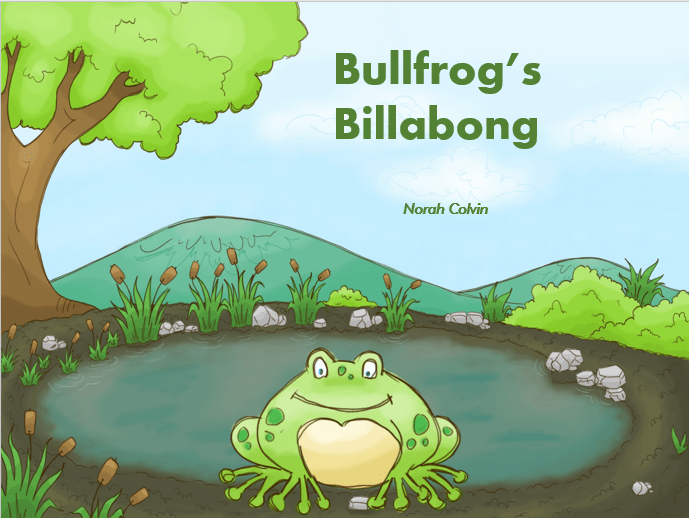
In this post I discuss the Bullfrog’s Billabong suite of resources.
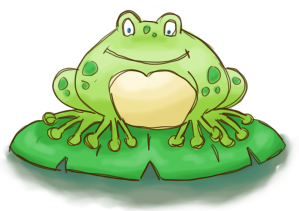
Bullfrog’s Billabong is a cumulative story which takes place at a fictitious Australian Billabong. Bullfrog is the first to arrive at the billabong. He decides it would be a great place to live and makes it his home. Each day, more animals arrive at the billabong. They too think it would be a good home and, after asking permission, decide to stay. Unfortunately, as the billabong becomes more and more crowded, the animals have difficulty in getting along. Their racket attracts another visitor who also sees the potential of the billabong as a home.
The story includes mathematical concepts including counting, growing patterns and days of the week.
The repetitive structure supports children’s reading and encourages them to make predictions based upon obvious patterns involving counting and days of the week. Their knowledge of narrative structure encourages prediction of possible events and conclusion. The end may surprise some children and they may or may not approve of the author’s choice. A discussion of alternative ways to conclude the story could lead to some interesting writing, and an understanding that what happens in stories is a choice made by the author.
While the animals will be familiar to Australian children, the story provides a great opportunity for children from other countries to find out about them too.
I hope you and your children enjoy reading the story and using the resources.
Bullfrog’s Billabong – Covered cloze (This interactive resource for use on the whiteboard is great for teaching effective reading strategies. For best effect, it should be used before any other Bullfrog’s Billabong resources.)
I have been working on new resources to support and complement the existing Bullfrog’s Billabong resources.
This week I have added three new resources to the collection:
Bullfrog’s Billabong – The facts (This information sheet explains what a billabong is and verifies that all the story’s animals may live in a billabong, though possibly not the same one.)
Bullfrog’s Billabong – Days of the week (Use these three sets of printable cards when teaching or revising the days of the week. There are A5 cards for use with the whole class, and smaller cards for use by individuals or small groups.)
I am working on other resources to add to the suite, including presentation of the story as a play. There is also a set of animals to print that can be used to make pop stick puppets for a performance. Watch for these, and others, coming soon.
I hope you and your children enjoy using these resources. I had fun making them and thinking about the responses of children.
Please contact me if you have any questions. I welcome your feedback, especially suggestions for improvements to existing resources and ideas for new ones.
Introductory discount
Remember, if you haven’t yet subscribed, an introductory discount of 20% is available to all who subscribe this year. Just use the coupon code welcome2 at the checkout to receive your discount.
I’ll see you next week. In the meantime, enjoy the weekend.
In stories we find our hopes, our dreams, our inspirations, and our fears. In stories our imaginations take flight as we contemplate ideas never before encountered. Stories help us figure out the world and our place in it. We come to understand the stories of others and develop compassion and empathy. We find ways of confronting our fears in safety. We escape the ordinariness of the everyday with dreams as much of the impossible as the possible.
Stories can be shared orally, in print, or through a variety of media. All are valid and valuable sources, but sharing the stories presented in books is especially important to the development of young children, and anything that can put books into the hearts and hands of children is to be encouraged. The ability to read is empowering and the love of books is one of the greatest gifts a parent can give a child. Not only can reading change the life of an individual, it can improve the lives of many through education.
“If we cannot change the world (and I suspect we can’t), we can provide all children the sorts of environments all children deserve in their school day—environments of kindness, compassion, safety, and challenges.”
I think Paul meant that we can’t change the whole world, that would be a rather daunting task, but the provisions mentioned are vital and change the lives of individuals in important ways, just as reading does. I like to think of changing the world with one thought, one word, one action at a time, or as Mem Fox says, also quoted in my post The magic effect – why children need books,
“. . . let’s get on and change the world, one page at a time.”
“I believe that every child’s Bill of Rights should be indelibly inked with the right to have picture books read to him/her and to own their very own books. “
I agree with her of course and consider her project to be very worthwhile. It reminds me of another very worthwhile program mentioned by Caroline Lodge, who blogs at Book Word, about providing books to prisoners. Both of these projects have the ability to change lives, to empower people and by so doing, change the world, not only their world.
As well as changing lives, stories influence our attitudes. If they encourage feelings of kindness and compassion, as Paul Thomas says, that may be a good thing. But what of the stereotypes that seem so pervasive? How many stories have you read about princesses in dire circumstances waiting to be rescued by handsome princes or knights in shining armour who must slay a dragon in doing so? What effect do these stories have upon the developing self-image of a young girl or boy? It is important to teach children to think critically about the stories they read, and about the portrayal of characters and their attitudes, especially stereotypes.
But that is in reading stories. What of writing stories? Writing stories, whether factual accounts or imagined events, is also empowering. In writing stories children, and adults, can express and explore their hopes, dreams, inspirations, and fears. In writing stories their imaginations take flight as they contemplate ideas never before encountered. Writing stories helps us figure out the world and our place in it.
Contentment is something that I too wonder about, and am especially perplexed by the need to push myself into new territory and new learning when others are content to sit back and watch the clouds pass by. Why are there so many things I feel I must do? Pretty soon I’ll be gone and it won’t matter a hoot. I have sometimes thought that if I were to write a fictionalised account of my life I would begin with the words “She was an unremarkable woman”.
Once upon a time there was an ordinary girl who lived an ordinary life with her ordinary family. She did all the ordinary things that others did and dreamed of nothing else. Each day followed one after the other with little difference. There was no magic. There were no fairies, and there were no dragons to slay. She just did what she had to do and took little notice of others doing the same. Strangely enough she was content for, from somewhere deep within, she knew that this ordinary life was but preparation for the extraordinariness of the next.
Thank you for reading. I appreciate your feedback. Please share your thoughts.
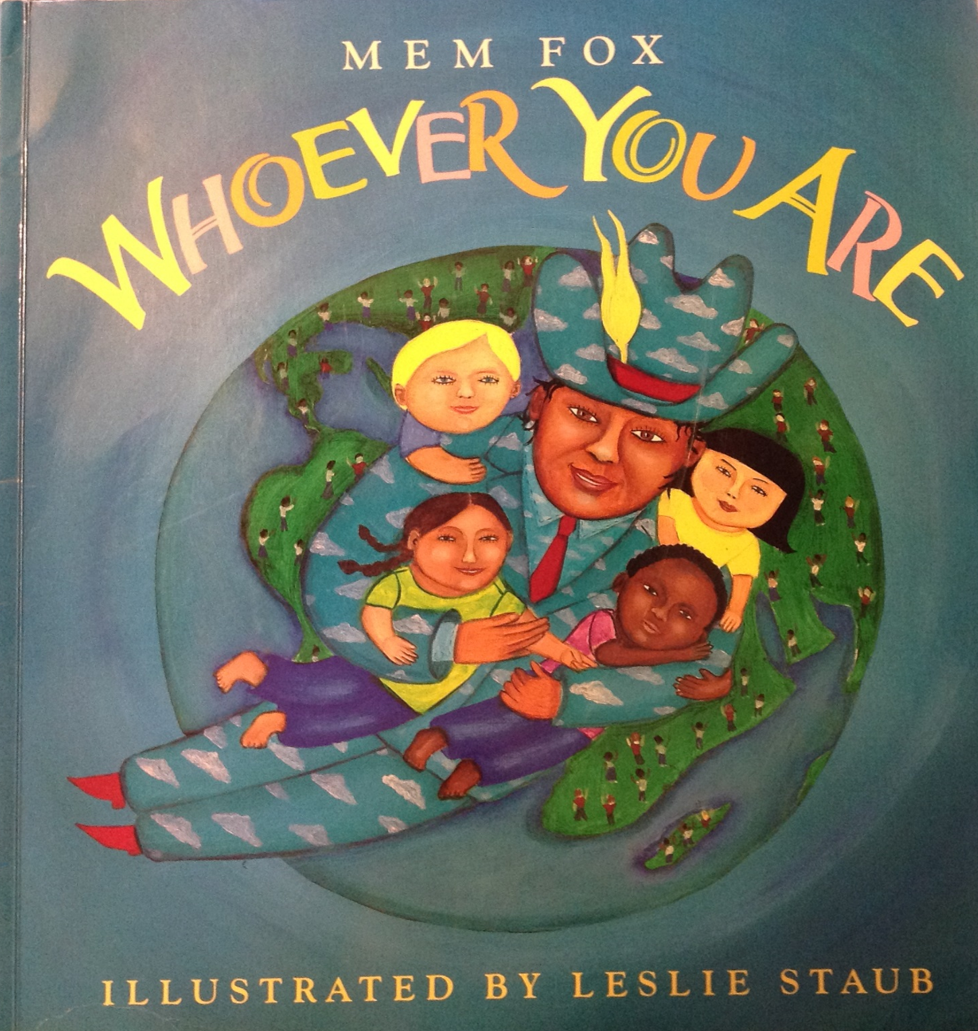
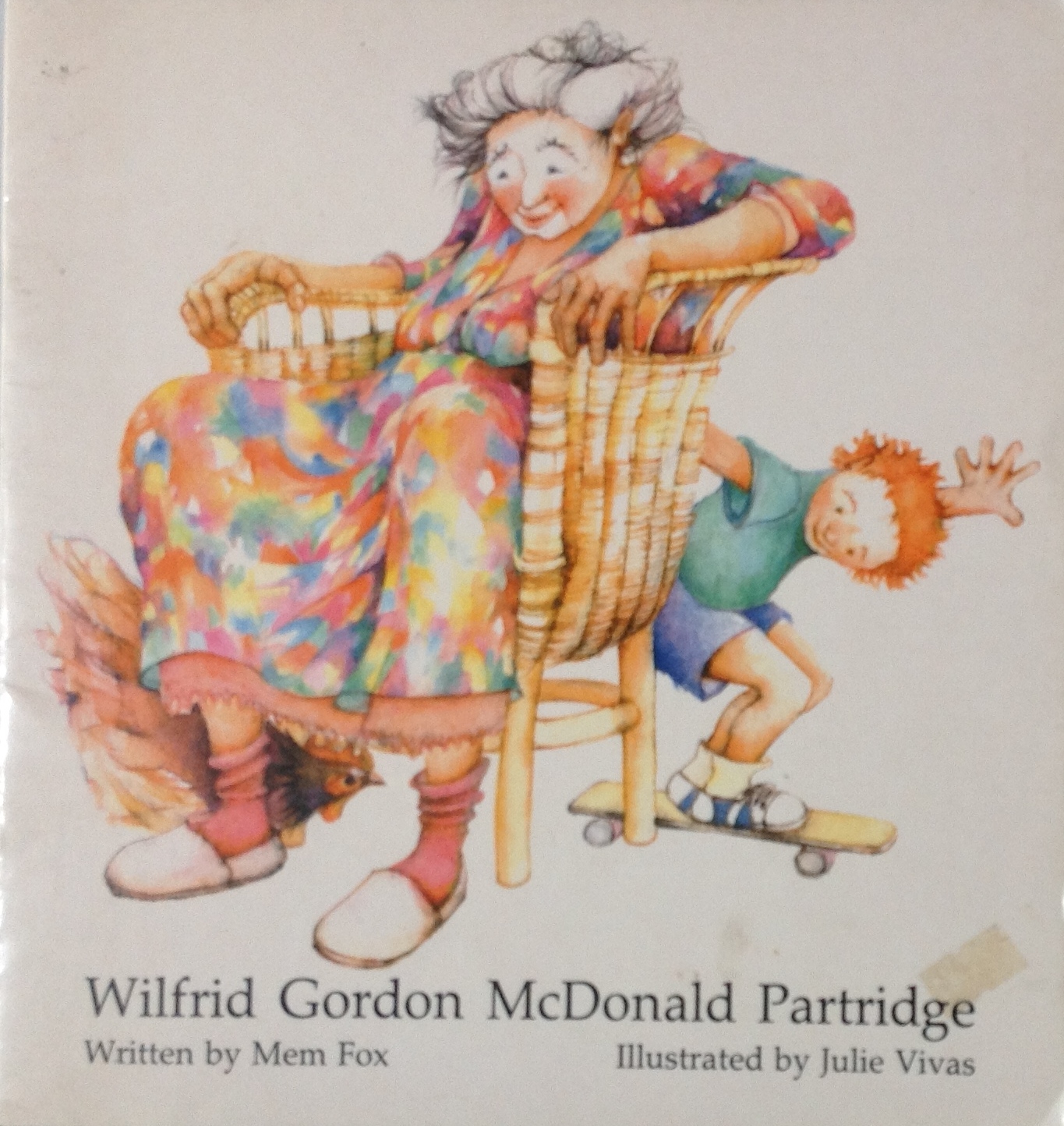
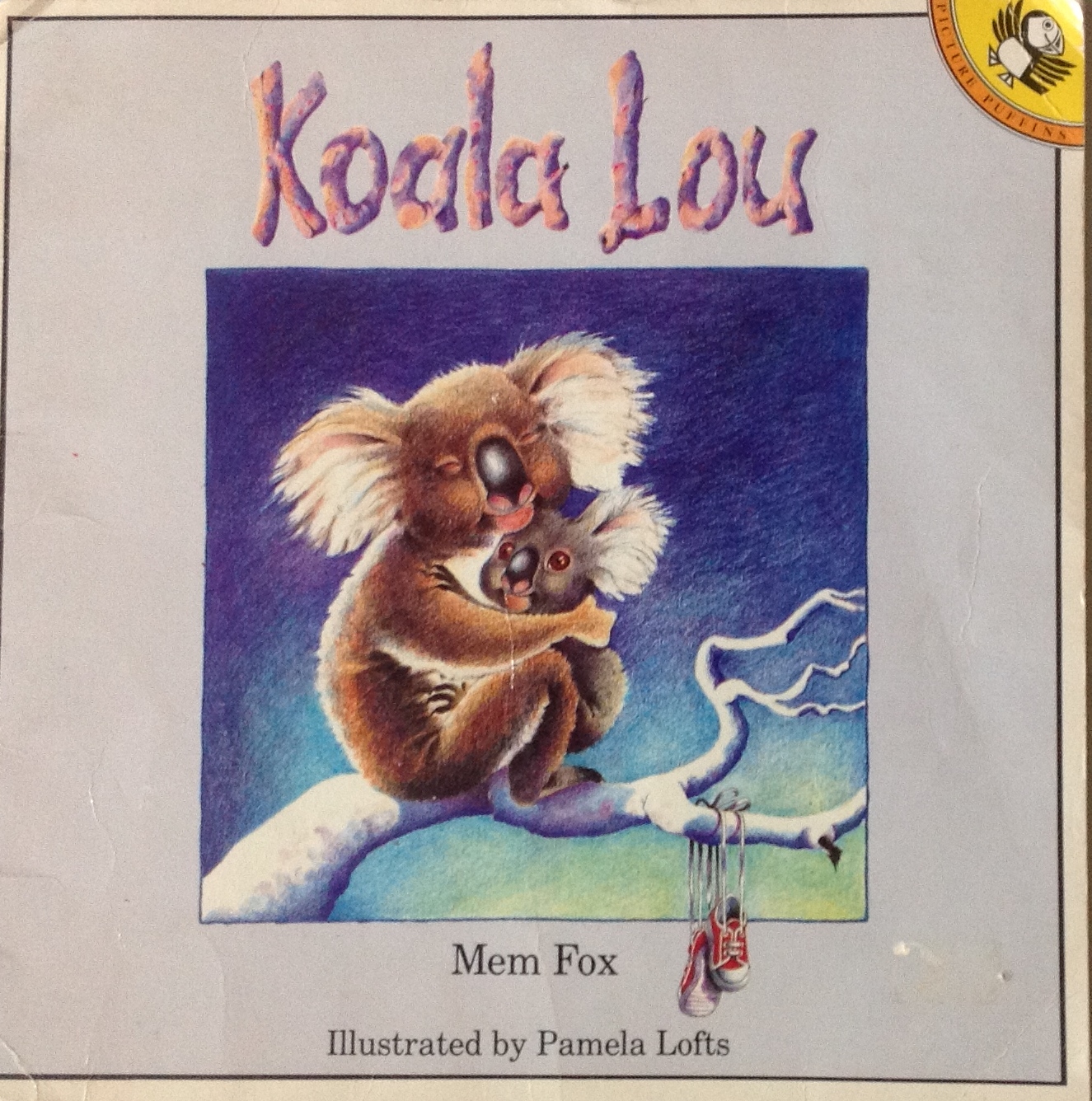
I own and have given away more picture books by Mem Fox than by any other author. To say I appreciate Mem’s work would be an understatement. I currently have on my shelves twelve of her more than thirty picture book titles and two of her eight nonfiction titles.
Her first picture book Possum Magic was published in 1983. I love the story behind this book, as much as the story itself. Mem wrote the first draft in 1978 and over the next five years it was rejected by nine publishers. When it was finally picked up by Omnibus Books she was asked to reduce it in length by two-thirds and to change the characters from mice to possums. The book is now one of Australia’s most popular with more than 3 million copies sold around the world.
You can listen to Mem read Possum Magicor some of her other books here.
In the ten years after the publication of Possum Magic Mem published almost twenty other books. I read her autobiography Mem’s the Word (released in the US as Dear Mem Fox) not long after it was published. At the time I was in my late thirties and was thrilled to find that Mem had also been in her late thirties when her first book was published. I thought there was still hope for me. I’d certainly had enough rejections by that time to fill a rather large shoebox, so maybe I just needed a few more!
Since then Mem’s output has hardly lessened and she has another new book coming out next month. In the meantime, I’m still hoping there’s time for me!
Mem is an author, not an illustrator. The twelve picture books I own were illustrated by eight different artists. Four illustrators did two of these books each. A quick glance at the list of Mem’s books confirms the number of artists who have been engaged to illustrate her work and the variety of artistic styles used. How wonderful for the artists to have that experience, and for teachers and parents the opportunity for discussing artistic styles with children.
My reason for raising this issue of author and illustrator is that I also am not an illustrator. A number of years ago when discussing picture book authors, an acquaintance scoffed at my praise for Mem’s work: how could she possibly consider herself a picture book author if she didn’t do the illustrations? This acquaintance, in the process of having her first picture book published, was author and illustrator. In the intervening years Mem has gone on to publish a number of books, and this acquaintance none. Okay, neither have I. Yet!
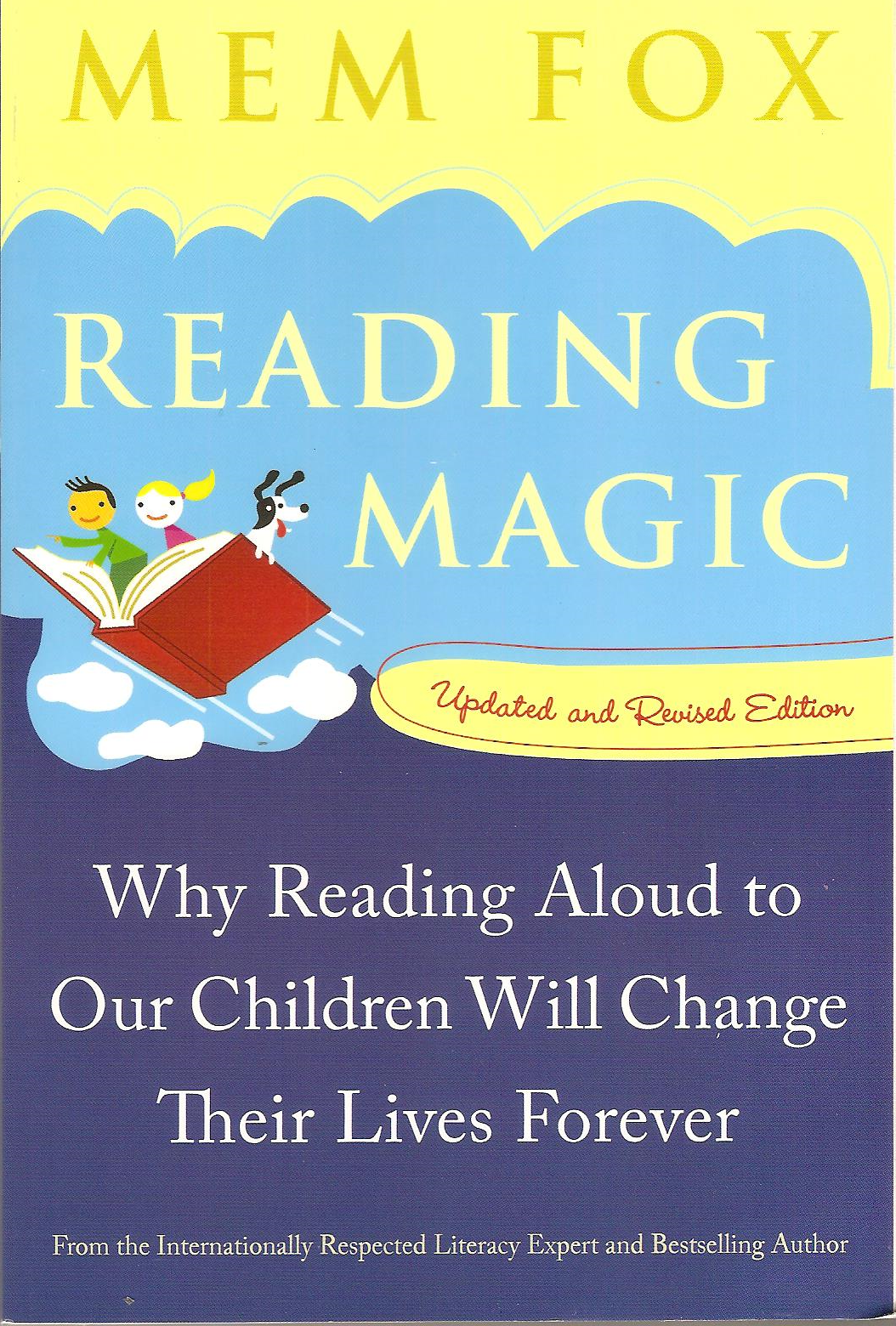
Another thing that Mem and I have in common is our passion for literacy and our advocacy of reading to children every day. Mem’s book Reading Magic should be placed in the hands of every new parent along with a collection of picture books. I practice what I preach by giving a bundle of these as gifts to friends with newborns. I have written about that here. As well as Reading Magic, the bundle generally includes Where is the Green Sheep? and Ten Little Fingers and Ten Little Toes, among others. Nurturing a love of books and reading is one of the greatest gifts a parent can give a child.
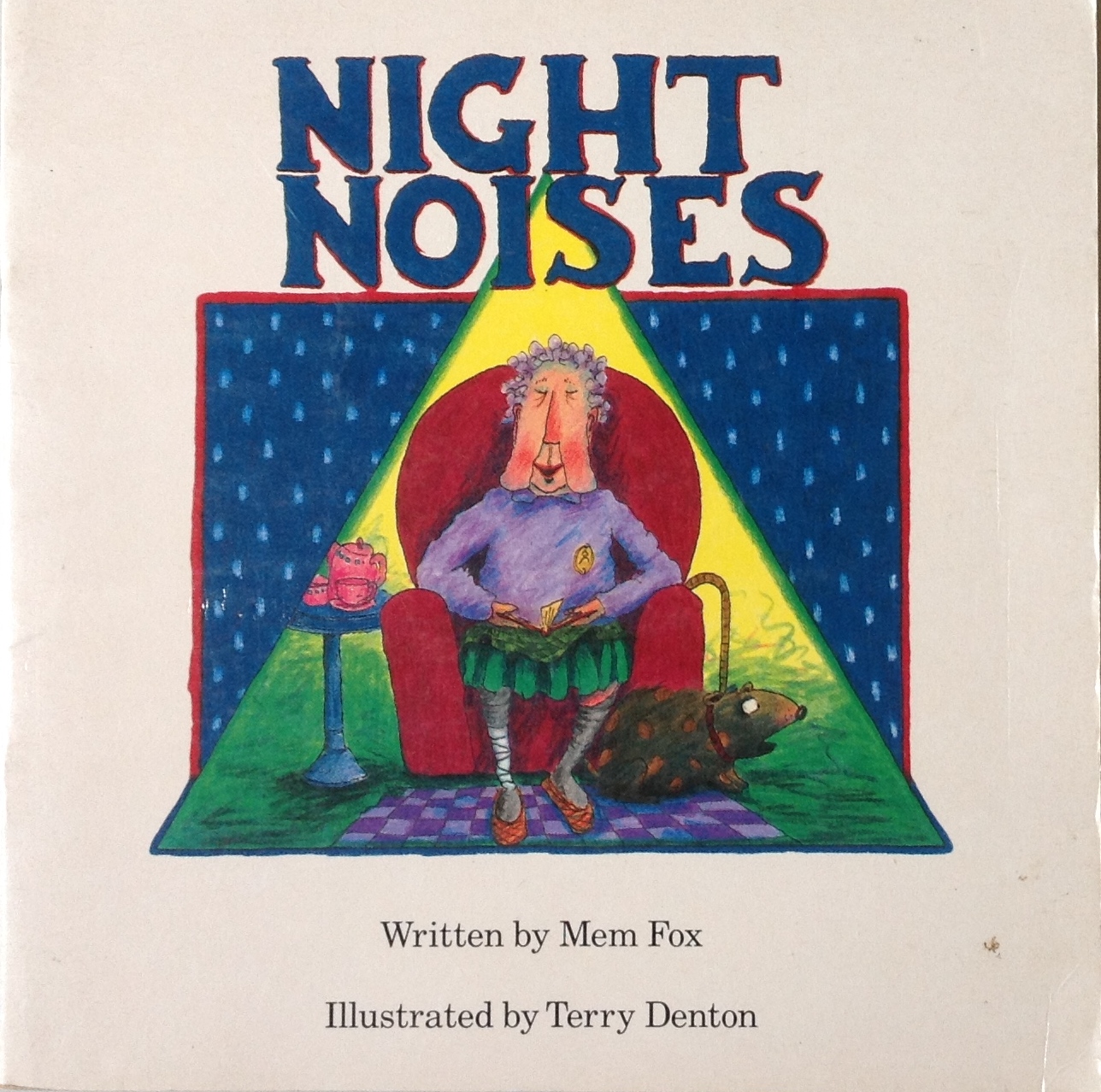
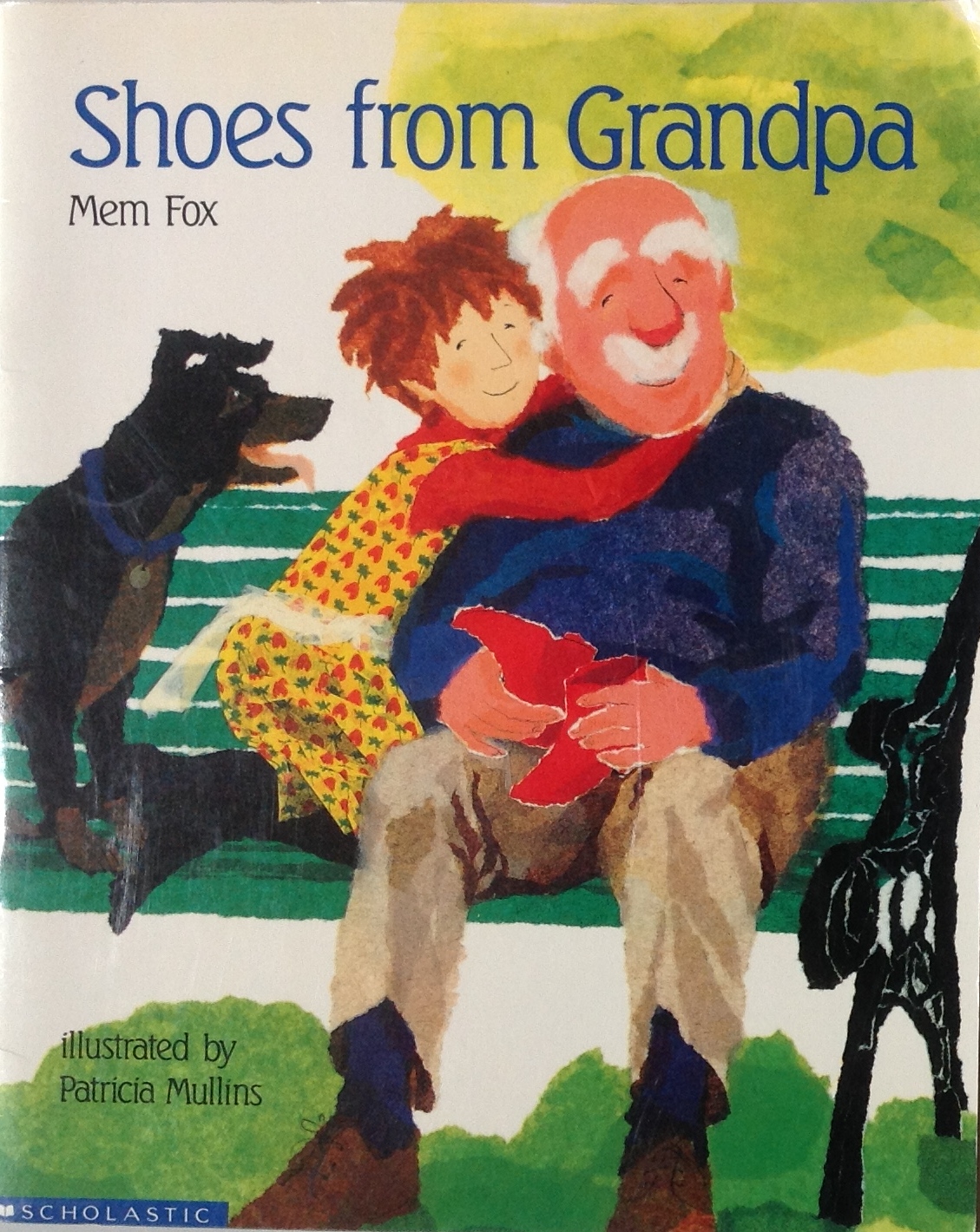
Below is a list of the Mem Fox books on my shelves at the moment (a few have mysteriously disappeared!) but the best way to check out Mem’s books is on her website here. While you are exploring her website, there is much else of value to discover, including suggestions for writers, teachers, parents, and children as well as other interesting information. Exploring Mem’s site is the best way of finding out about her wonderful books.
Here are the ones I own, in addition to the three mentioned above (in no particular order), with links to further information about each title on Mem’s site and to information about the illustrator where possible:
This week I was surprised to be nominated by, writer extraordinaire, Geoff Le Pard in a Five Photos Five Stories challenge. Geoff blogs at TanGental where he shares numerous and beautiful photos of his garden, family, travels and adventures. He writes an eclectic assortment of prose and poetry, memoir and fiction, with content both challenging and humorous. He also posts at the speed of light with at least one post each day. I can understand why the challenge would appeal to Geoff.
I’m not like that. I tend to stick to my routine of two posts each week and write mainly expository text about education with a response to a flash fiction prompt by Charli Mills thrown in. I rarely write explanations of or stories about photos and mostly use photos to support and add interest to the page. Why would Geoff nominate me?
Well it seems Geoff must have known something about me that I didn’t, as I have decided to throw caution to the wind and join in the challenge.
The rules of the Five Photos, Five Stories Challenge are:
1) Post a photo each day for five consecutive days.
2) Attach a story to the photo. It can be fiction, non-fiction, poetry, or a short paragraph. It’s entirely up to the individual.
3) Nominate another blogger to carry on the challenge. Your nominee is free to accept or decline the invitation. This is fun, not a command performance!
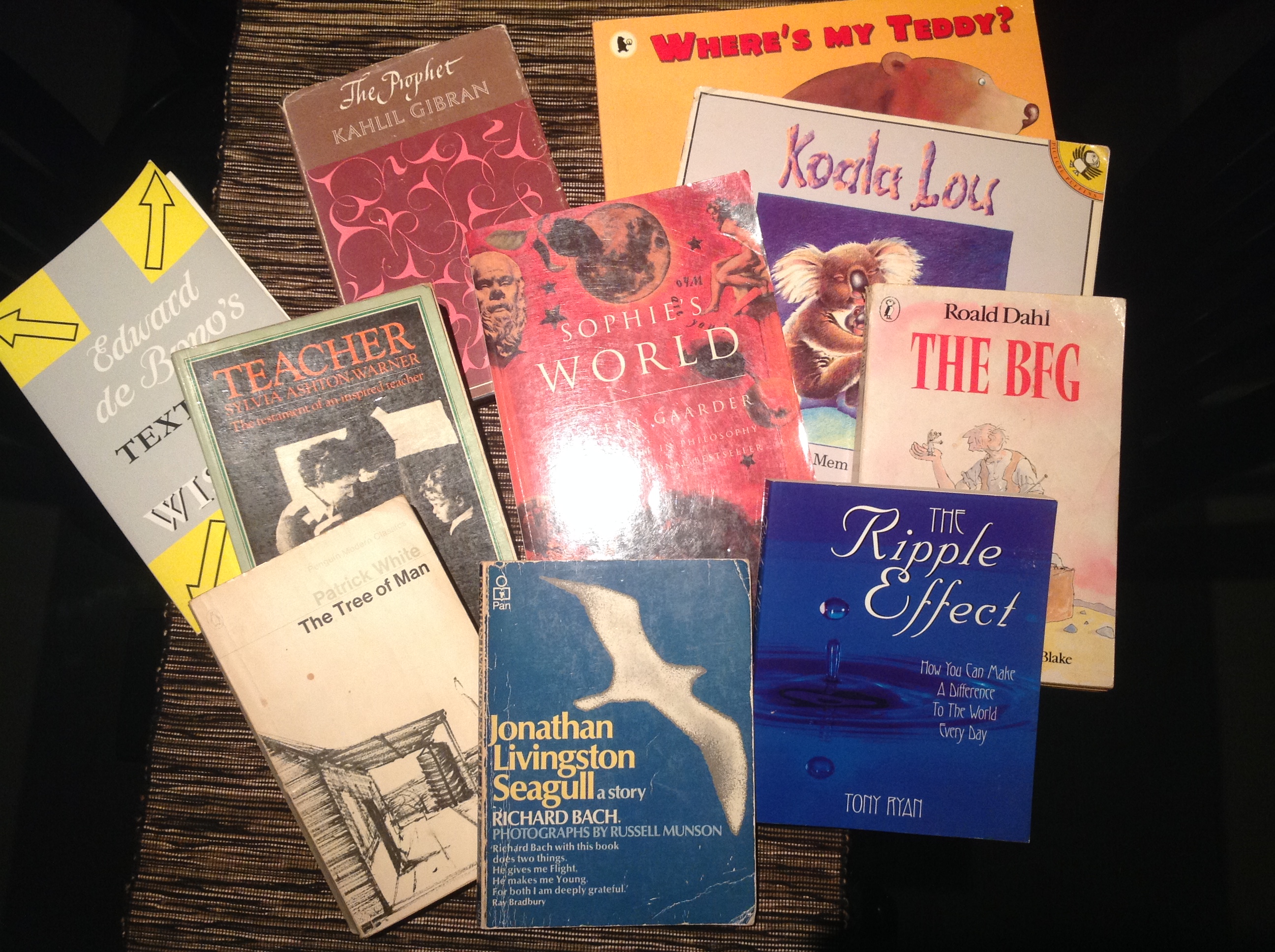
For my first photo I have chosen, and you won’t be surprised, books:
These are just a few of my favourites. As you can see I have chosen a range including picture books and chapter books for children and both fiction and non-fiction titles for adults. There are others that should have been there but I could not fit my entire collection into one photo!
Books have always been an important part of my life and I think a love of reading is one of life’s greatest pleasures. My love of books and reading is one of the reasons, if not THE reason I feel so passionately about education and the teaching of literacy. Sharing a learner’s excitement at becoming literate is both an honour and a joy. I have been privileged to share that excitement with many children during my teaching career, and of course with my own two children who both learned to read well before starting school.
I have written about the importance of reading many times before, including here, here, and here.
For this post, and for this photo, I will share ten totally random recollections of books and reading from my younger years.
I remember:
books as gifts for Christmas and birthdays
an expedition to the council library, a six-kilometre walk there and back, each Saturday afternoon for an armful of books to read during the week
being deaf to the world when totally absorbed in a book for hours on end (particularly so when there were jobs to be done)
the eagerness of wanting to get to the end of a book and the sadness and reaching the last page
the excitement of finding the next book in a series or by a favourite author
marvelling at words and phrases for the imagery or feelings they evoked
enjoying an author’s style and trying to emulate it by writing and writing and writing, and wishing to one day be an author too
the smell of new books
tracing the embossed lettering on the hardcover when the jacket was removed
being fiercely protective of my books and having a great dislike of seeing them torn or marked
the joy of ownership
And now I nominate the lovely Michelle James who blogs at Book Chat to take up this challenge if she so wishes. Her love of books is at least as great as my own!
Thank you for reading. I appreciate your feedback. Please share your thoughts about any aspect of this post.
I love writing. Always have. I usually confess that I am a better writer than a speaker.
I like the time that I can take to choose a word or phrase and combine them to mean just what I intend.
I like the opportunity to check a word’s appropriateness before using it. Often when speaking I leave my sentence hanging embarrassingly in mid-air while I grope around in the murkiness of my mind for the “correct” word. Why can my fingertips find the right word, without any thought, and the tongue cannot?
And of course there are all the opportunities that writing provides for self-expression, creativity and sharing ideas with a wider audience.
I started out writing stories, poems and songs, as most children, do and tried my hand at short stories, children’s stories and poetry as I got older. As I became more involved with my career in education, and in raising my children, I had (or made) less time for those creative pursuits.
There are many reasons I loved being a teacher and one of those was the opportunity it provided for me to be creative: creative and innovative in the way I worked with children to encourage their learning; and creative in writing resources to assist my teaching and the children’s learning.
I was fortunate in having a variety of opportunities to write materials for educational publishers at different times during my career, and I am currently writing documents to support curriculum implementation for my state educational authority. But I really wanted to be in control of my own writing.
At the back of my mind there was always the thought of sharing my teaching and learning resources with a wider audience. (Just a little bit further back, or maybe even close to equal footing, is the thought of publishing children’s stories, short stories, and maybe even a novel . . . one day.) I had had no success with submitting unsolicited manuscripts before and couldn’t think what publisher might be interested in the variety of educational resources I had made, many specifically for use on a computer.
So a couple of years ago I decided that a website of my own was the ideal platform for sharing my resources. Getting that website up and running is my primary goal. However, observers could be mistaken in thinking that writing a blog is my primary goal. The path to establishing a website has taken a side-track via blogging.
Blogging, Twitter, Facebook and other forms of social media were recommended me to right from the beginning as a way of targeting and establishing an audience. At the time I was familiar with none of these and set off learning how to become involved. It has been an exciting journey. I have learned lots and made many wonderful online friends.
However I am not sure how far it has moved me towards achieving my website goal. In fact, I think very little progress has been made.
I have not found and established my “target” audience and am really none the wiser about doing that.
The time that I am spending writing, reading and commenting on blogs is time that I am not spending on preparing materials for my website.
I need to be more proactive in finding illustrators for my work.
When I discovered the Teachers Pay Teachers site and established my Teachers Pay Teachers Store I had thought this may be an alternative avenue for sharing my work. But I haven’t been as successful there as I would like either. This may be telling me something about my website goal. What is it telling me? Should I listen?
So my dilemma comes down to these questions”
To blog or not to blog?
How to blog?
How much time for blogging?
The answer to the first one is easy:
Yes!I very much enjoy writing my post and receiving the almost immediate feedback from the wonderful community of writers I engage with.
Yes! I love reading and commenting on others’ blogs and joining in the discussions that ensue. We are a S.M.A.G. group: Society of Mutual Appreciation and Gratitude. What’s to not like?
The second two questions are a little more difficult.
The focus of my blog is education, but my audience consists of writers. Educators have shown little interest in developing a relationship with me online. I haven’t been able to figure that one out, but I have a few hazy ideas, none of which I think I want to address at this stage. If I change the way I blog I would quite likely fall out with the community I have become part of; and there is no guarantee I would pick up a teacher audience. So I’ll have to keep mulling this one over for a while.
The third question is the one I have been “researching” for close on five months. As time is limited and I need to devote more time to achieving my primary goal, it is important that time spent on blogging activities is worthwhile.
I decided to find out who is keen to engage with me and who isn’t.
I began keeping a record of the number of comments I made on others’ blogs, and of those they made on mine. It wasn’t always as I expected, and highlighted some interesting trends; the main one of which I have noted above:
Writers have a wonderful sense of community.
The record helped me ensure that, if someone visited and commented on my blog, I would visit and comment on theirs, maintaining a balance as much as possible.
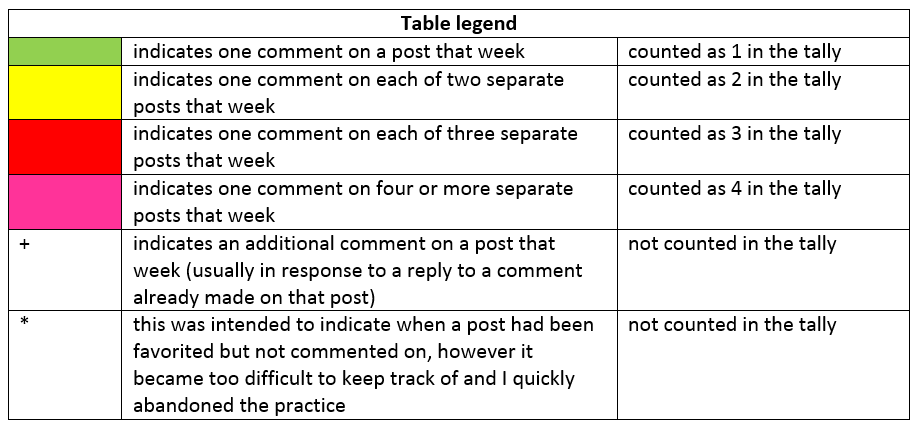
This key explains how to interpret the information on the tables below.
I have removed names from the tables to respect privacy. (I don’t really expect you to look too hard at the tables. You have better things to do. But they do look pretty!)
November 9 2014 – Jan 24 2015
Jan 25 2015 – March 26 2015
I have not included all blogs I “follow”, or even all the ones I have ever commented on. Only the ones on which there has been some consistency in connecting.
I have also not included the comments of those who follow and comment on my posts but do not have a blog of their own on which I could reciprocate.
I generally post twice a week.
Others post more often.
Sometimes the number of comments I make on their posts in relation to their comments on mine is affected by the greater number of times they post. If someone chooses to post more often than twice a week, I will not necessarily read all their posts, regardless of how much I enjoy reading them, as there are other ways I must use my time, including a reading greater variety of writer’s work, and getting more done on my own. I’m sure they have enough other readers to not miss me!
Sometimes when a blogger posts less frequently than I do, their comments on my posts may tip the scales in my favour. I can’t do much about that either, but I do try to catch up when next they post.
I have found that it can take a few weeks of commenting on a blog I like to get a return visit and comment on my blog. Frequently I don’t even get a response to a comment I’ve made on theirs. I guess that’s how it goes. Some bloggers blog to develop community. Others blog to broadcast. I just need to decide how best to use my time.
Contributing partly to my procrastination with responding to these wonderful invitations, which I do very much appreciate, is that I have already nominated the majority of bloggers I follow, or if I haven’t someone else has. And the remaining ones don’t wish to be nominated. What is a girl to do? I’d appreciate your suggestions.
Thank you for reading.
I appreciate your feedback. Please share your thoughts and advice, especially about how to increase time. If anyone knows a good time alchemist, I’d love to meet her!
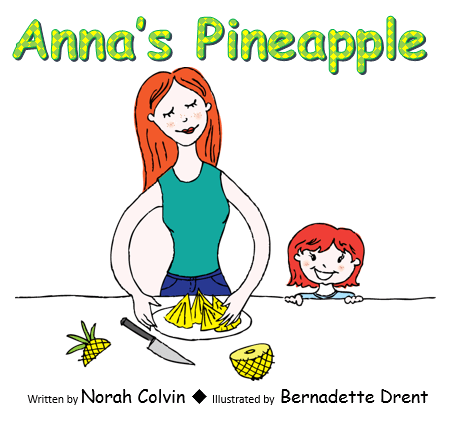
My gorgeous little granddaughter, Anna, turned two last Sunday.
This is a story I wrote for her in celebration of her big day.
It is based on a real event that occurred a week or two earlier. She just could not understand why her grandfather Bob had scoffed all the pineapple and left no more for her. He, of course, didn’t realise that the pineapple had been left for later, and thought that he was merely finishing off the leftovers.
Anna’s Aunty Beckii was most amused, as was the rest of the family, that Bob had eaten it all as he had already earned the title of “Bob the scoffer” by Anna’s big brother Artie. I must add that Aunty Beckii and Uncle Glenn had both given Artie considerable encouragement in bestowing this title!
I am very grateful to Bernadette Drent who illustrated the story so well with only 2 days notice. I think she did a fantastic job and really captured the humour of the story.
Have a read and let me know what you think. I’d love to know if it deserves a readership wider than that of family members.






















 Norah Colvin