Curiosity, questioning and science are recurring themes on my blog. How could a post entitled “Curiosity, dead chooks, science and the S.T.E.M. push” not appeal to me? While I don’t think I’ve written about dead chooks, yet, when I was six I was the best chicken catcher in the family and I definitely saw a few chooks running around with their heads chopped off!
In this post Sheryl Gwythertalks about the awakening of her scientific questioning at age four when seeing a similar a spectacle. The transcript of a talk delivered to other authors “Children are born scientists … It’s called curiosity” (my words exactly!) is included in the post. Sheryl urges authors to include science in their writing for children and suggests three rules for doing so: Never be didactic Entertain Create characters that children can connect with
While she doesn’t say it in so many words, I think the message of keeping the science accurate is implied. (I have questioned the inaccuracy in The Very Hungry Caterpillar in previous posts.)
Sheryl’s closing paragraphs motivate and inspire writers. She says, “We have the opportunity, the passion and hopefully, the commitment to reach out to young Australian children through stories about the wonder of science, and the responsibility for their future custody of this planet. Great stories, cleverly laced with scientific understanding not didactic waffle. Great stories to make them feel and think, and question. Great stories – for the sake of their future on this planet.”
I have been privileged to spend time with young children throughout my adult life: my own, children I have taught, and now my grandchildren. Spending time with young children is one of the best ways of maintaining a sense of wonder and awe in the everyday. Opportunities abound, if one is willing to see the world afresh through their eyes,
to notice:
the softness of petals in a newly opened flower
the collection of pollen on a bee’s legs as it rests within the flower
the snail’s silver trail on the pavement
to question:
where the puddle goes after the rain
how the toothpaste gets into the tube
how aeroplanes stay in the air
to wonder:
why the sky is blue
where clouds come from
why tigers have stripes and kangaroos hop
what came first: the chicken or the egg
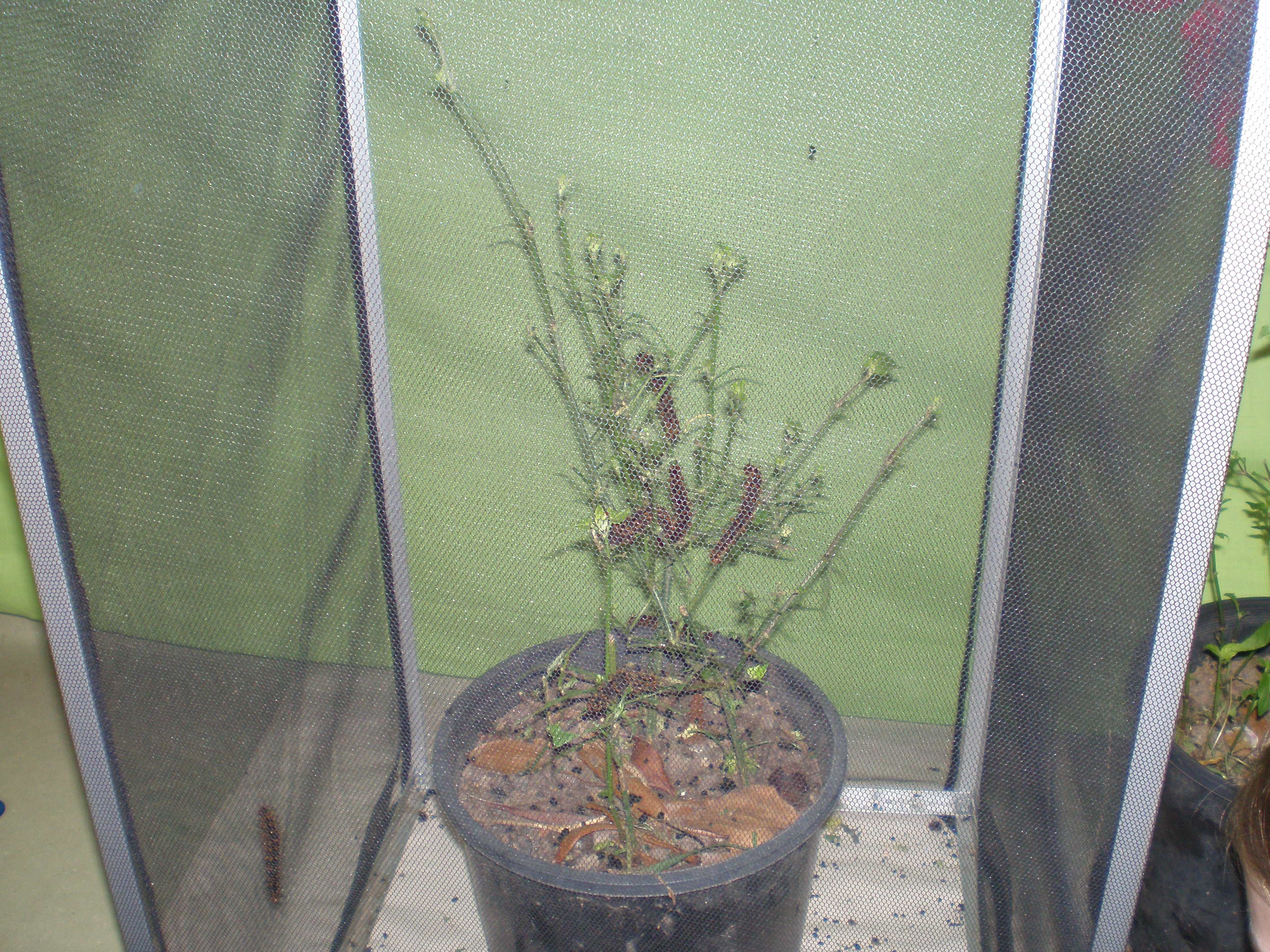
One of my favourite ways of bringing the wonders of nature into the classroom is through observations of a live butterfly kit. We would watch the tiny caterpillars hatch, eat voraciously as they grew larger and larger, and then pupate before emerging triumphantly as beautiful butterflies.
There are many opportunities to notice, to question and to wonder:
What will happen if the caterpillars eat all the leaves?
How big will the caterpillars grow?
How long will it take for the caterpillar to change into a butterfly?
How does the caterpillar breathe?
Does the caterpillar know it is going to be a butterfly?
Does the butterfly remember being a caterpillar?
What happens to the caterpillar in the chrysalis?
Why do they poo so much?
We got to know that when a caterpillar was ready to pupate, it made a ‘j’ shape, hanging from under a leaf or branch, or from the top of the butterfly house. It would stay that way for a number of hours. Children (and teacher) would sneak over from time to time to see if anything was happening.
As soon as the caterpillar started wriggling, we would quietly rush over to watch as it shed its last skin to become a pupa. It is an amazing spectacle, one that is not often seen “in the wild”. In fact it is a very quick process, and unless someone just happened to be watching at the time, we would miss it. Although we didn’t see every caterpillar pupate, we saw enough to appreciate and wonder.
Equally as exciting was watching a butterfly emerge from the chrysalis. As the time was approaching the chrysalis would become transparent and we could see the shape and colour of the butterfly’s wings through the chrysalis. Watching the butterfly push open the chrysalis and emerge with crumpled wings was amazing. Oftentimes the butterflies would emerge in the mornings before the children arrived. But sometimes they waited, and we all watched as the butterflies pumped up their wings and spread them to dry in readiness for flying.
When the butterflies’ wings were dry and they were almost ready to fly we would remove them from the house. If we timed it just right, we could hold them on our fingers, transferring carefully from fingertip to fingertip without touching the wings. When they were ready to fly, we would go outside and release them. The children loved to look for the butterflies at lunch time and learned that observation was the best way to appreciate them.
The children’s interest and excitement was shared with anyone who visited the classroom: administrators, other teachers and children, siblings and parents. I tend to think that the children’s sense of wonder may have ignited a spark in others too.
Watching the short stages of a butterfly’s life is a good way to get children thinking about life, its beauty and its frailty, its dangers and its strength. Watching the transformations that take place can certainly take one’s breath away. It is this that has inspired my response to Charli’s challenge. I hope you enjoy it.
Eclosion
I heard the scurry of footsteps. Then he was in the doorway; eyes ablaze, breathless.
“Come … quick … Miss,” he said, punctuating each word with puffs and pants.
Before I had moved, there were others behind him, imploring me to come.
With quickened pace I followed, hoping that I, that all, would be in time.
Others were there already, clustered around. I peered over their heads, expectantly, holding my breath in a vain attempt to make time stand still.
“Ahh!” we breathed in unison and awe as we watched the butterfly emerge from its now transparent shell.
Thank you for reading. I appreciate your feedback. Please share your thoughts about any aspect of this post or flash fiction.
This week at the Carrot RanchCharli Mills is talking about semicolons; but not the little squiggles on a page, the semicolons that are sprinkled liberally through life as new beginnings. Sometimes we see them and grasp the opportunity for renewal, other times we ignore them and miss the chance to revitalize. Sometimes we get pushed down and it takes all our strength to pull back up, grasping onto the semicolon as if it was a dragon’s tail.
Charli was inspired by Project Semicolon that provides this explanation:
“A semicolon is used when an author could’ve chosen to end their sentence, but chose not to. The author is you and the sentence if your life. Project Semicolon exists to encourage, love and inspire.”
Every day can be a new beginning in some way. With our thoughts, words and actions we can change our own lives, or the lives of others. The impact may be deliberate or unintentional. We may be aware of the effects, or we may never know the consequences.
Without wishing to diminish the importance of helping those “who are struggling with depression, suicide, addiction and self-injury”, which is the focus of Project Semicolon, my focus as always is on education and the importance of maintaining curiosity and an interest in and love of learning.
What better analogy of a semicolon of life than the transformation from a caterpillar in a pupa to the beauty and flight of a butterfly. An inspiring teacher can mean the difference between full stops and semicolons in learning.
In the article Berger discusses his obsession with “collecting student work of remarkable quality and value . . . the work of regular students in typical schools around the country . . . (whose) teachers have helped them develop the skills and mindsets necessary to produce work of exceptional quality, and have built classroom and school cultures in which exceptional work is the norm”.
Berger discusses ways of engaging students in authentic work, work that can have an impact on their communities and on the way they see themselves as learners. I remember Charli Millstelling me about similar work that her children were engaged in when they attended The School of Environmental Studies in Minnesota; and I shared some of Chris Lehmann’s work at the Science Leadership Academy in Philadelphia here.
Berger says,
“Once a student creates work of value for an authentic audience beyond the classroom — work that is sophisticated, accurate, important and beautiful — that student is never the same. When you have done quality work, deeper work, you know you are always capable of doing more.”
Semicolons in teaching and learning, all.
As with the three cited above, the situations referred to are often of teenagers in high schools. I am an early childhood teacher and, while I find the work exciting, I sometimes struggle to see the relevance to my situation. However, in this article Berger shares the work of Austin, a year one student from Boise, Idaho doing a project about a tiger swallowtail butterfly.
Austin was to illustrate his project with a detailed scientific drawing of the butterfly. His initial drawing was what I would consider to be fairly typical of a year one child. However he received feedback that was specific and not mean from follow students; and through a series of six drafts finished with a drawing that was much more sophisticated and demonstrated more careful ‘scientific’ observation.
Berger also shared work by year two students at another school, demonstrating what can be achieved “when students are allowed, compelled and supported to do great things”.
Last week Charli’s flash fiction challenge “the day the earth turned brown” prompted me to write about a student mixing all the colours together to make one muddy brown. The teacher paused before responding. There are many such pauses, (semicolons) in a teacher’s day. The teacher knows the power of every remark and must consider the impact that a response may have.
If you had provided each child with a palette of primary colours and black and white expecting them to mix a variety of colours and shades and tones to create an interesting picture; then found that one child had mixed them all together to make one muddy brown, how would you respond?
There were a number of comments on the flash including one from Geoff Le Pard who said that there were “So many questions as to why the little girl is making muddy browns and lathering them everywhere.”
So true. The teacher’s response would be influenced by knowledge of the child’s background, interest in art, and behaviour that day, among other things.
Charli Mills said that “It could mean many things and nothing!” She recalled, “mixing paints as a child hoping to create a vivid new color and (being) disappointed to end up with mud.” Anne Goodwin agreed, saying that “mixing paints to make a muddy brown, (was) a distinctive childhood memory”.
In my experience there was usually one child who ended up mixing all the colours together, often for no other reason than to see what happened. Sometimes the process of discovery gave as much pleasure as would a colourful painting of a house a tree and a sun.
However, there might be more to it than that. Charli Mills sympathesised with the teacher, saying that “So much is put on the teacher to figure it out.” She thought that the child “might be disturbed, highly imaginative or confident enough to experiment”. Sherri Matthews suggested that perhaps the child was “troubled . . . living in a dark, mixed up world, but . . . trying to find their way”.
So much to consider. So powerful the response. Will it be a full stop, or a semicolon?
She paused. The muddy brown extended beyond the paper virtually cementing it to the desktop. The palette too was brown with little trace of the beautiful primary colours she had prepared. Looking from desk to child she observed two large smears adorning the shirt. A bruise-like smudge on the cheek showed where an intruding hair had been brushed away. “Oh!”
She breathed; she counted to ten; and back again; “Breathe,” she told herself. “Why?”
She moved on, observing the assortment of smiling suns, houses and garden paths, but her mind was on the mud; the child . . .
What would be the appropriate response?
Thank you for reading. I appreciate your feedback. Please share your thoughts about any aspect of this post or flash fiction.
Most teachers try to incorporate a variety of experiences into their programs in order to maximise learning opportunities in the hope that, if students don’t “get” it one way, they will “get” it in another. The imposition of national standardised assessment makes doing this a challenge for teachers. The increased requirement for the implementation of particular approaches to teaching makes it even more so.
To say that I hold fairly strong views about learning, and the differences I consider there to be between education and schooling is perhaps an understatement, but it wasn’t always so.
My memory tells me that, while I probably didn’t “love” school, I probably didn’t “hate” it either. It was simply something that I had to do. I didn’t question it. I did my best to be a “good” girl, do what was expected of me, and conform. All of which I think I did pretty well.
The questioning came later and had more impact upon my teaching and parenting than it did on my own schooling. I came to view schooling as something that is “done” to us, and education as something that we do for ourselves. That is not to say that no worthwhile learning takes place in school, for it does, but education is a whole-of-life experience and schooling is but one small part of that.
However, if the importance of schooling, and here I mean learning of particular content by particular ages, is inflated and rated more highly than children’s natural curiosity, interests and abilities, then the consequences to individuals and the community in general can be more negative than positive. One consequence may be that children don’t enjoy school; another may be the view that only school knowledge is important; and yet another may be that children are turned off learning all together.
My first conscious discomfort with what, for convenience, I’ll call a factory model of schooling (children go in one end, have things “done” to them, and come out the other end all the same) was as a young teacher when all five year two teachers were expected to be doing the same thing at the same time. That imposition, along with other inadequacies that were beginning to become apparent, set me on a quest to learn more about learning and education. My quest has never ceased and I am still searching for answers.
Recently I read a book by Daniel T. Willingham entitled “Why Don’t Students Like School?” The title had instant appeal, of course, and I thought I’d recognise a few of the reasons at least. My initial expectation was of reading views similar to those of authors like John Holt, Ivan Illich, A.S. Neill and John Dewey whose books I had read in the 70s and 80s; but a closer look at the subtitle told me I was in for more: “A Cognitive Scientist Answers Questions About How The Mind Works and What It Means For The Classroom”.
The book is a wonderful read and I’m certain to share many of Willingham’s ideas with you in future posts. I enjoyed it because, in almost equal measure it reinforced, challenged and extended my thinking about many aspects of learning and how best to provide for and stimulate it in a classroom setting.
Sometimes Willingham would make a statement with which I agreed, and then go on to explain the faulty thinking behind it. Sometimes his statement would seem to completely contradict what I think but his explanation would show that we simply had different ways (mine perhaps inadequate) in explaining it.
What I really appreciate about the book is that Willingham carefully translates what has been learned from research into practices that can be implemented in the classroom to enhance student learning. Often research seems only to tell teachers what they already know from experience and observations, or provides information in such an abstract way that nothing of practical use can be gleaned.
The section of Willingham’s book that I refer to today is “Chapter 7 – How Should I Adjust My Teaching for Different Types of Learners?” Willingham opens the chapter with the words “All children are different.” He says that some learn visually, some auditorily; that some are linear thinkers and some holistic, for example, and that
“It seems that tailoring instruction to each student’s cognitive style is potentially of enormous significance”.
The important word in that sentence is “seems”. He talks about the differences in the way that hypothetical Sam and Donna might learn and says that “An enormous amount of research exploring this idea has been conducted in the last fifty years, and finding the differences between Sam and Donna that would fit this pattern has been the holy grail of educational research, but no one has found consistent evidence supporting a theory describing such a difference.”
He states that the “cognitive principle guiding this chapter is:
“Children are more alike than different in terms of how they think and learn.”
That statement really made me sit up and take notice: “Children are more alike than different”. But it turns out, those words are not the most important ones in the sentence. The most important ones are: “in terms of how they think and learn.”
He goes on to say that, “the claim is not that all children are alike, nor that teachers should treat children as interchangeable. Naturally some kids like math whereas other are better at English. Some children are shy and some are outgoing. Teachers interact with each student differently, just as they interact with friends differently; but teachers should be aware that, as far as scientists have been able to determine, there are not categorically different types of learners.”
He also talks about it in this video:
Willingham acknowledges that students differ in their cognitive abilities and styles. What he does in the chapter is “try to reconcile the differences among students with the conclusion that these differences don’t mean much for teachers.” In reading these words one might expect that Willingham is proposing that differentiation is not an important part of classroom practice. But such is not the case, as stated in this video:
In the book he writes, “I am not saying that teachers should not differentiate instruction. I hope and expect that they will. But when they do so, they should know that scientists cannot offer any help.” According to Willingham, scientists have not identified any types of learners or styles of learning. He says, “I would advise teachers to treat students differently on the basis of the teacher’s experience with each student and to remain alert for what works. When differentiating among students, craft knowledge trumps science.”
What Willingham says is of most importance for a learner to learn is background knowledge. If a student does not have sufficient background knowledge to understand the content or concepts which are presented, learning will not take place. This supports the advice that I repeatedly give to parents: read to your children, talk with them, and provide them with a wide range of experiences and activities.The same is true for teachers: ensure the students have sufficient knowledge on which to build the new work you are expecting them to grasp.
This week at the Carrot RanchCharli Mills has thrown a prompt with which I have struggled: In 99 words (no more, no less) write about the day the earth turned brown. I always like to tie my responses to the educational focus of my blog and this one had me stumped for a while. A mind journey following various twists and turns, retracing well-worn paths, and hitting many dead ends, finally led me to an oasis in the parched brown earth: the uniqueness of each of us; the amazing potential of each new child to create possibilities beyond our imagining; and the contrasting effect of a narrow test-driven school system that attempts to reduce each to the sameness of minimum standards and age (in-)appropriate benchmarks. A paint palette seemed a suitable medium for the story.
For those of you who have been following Marnie’s story, I apologise. She makes no appearance this time, though I have not ruled out the possibility with student M. I’d be pleased to know what you think.
Palette potential
She walked between the desks admiring their work. From the same small palette of primary colours, and a little black and white for shades and tones, what they produced was as individual as they: J’s fierce green dinosaur and exploding volcanoes; T’s bright blue sea with sailing boat and smiling yellow sun; B’s football match . . . At least in this they had some small opportunity for self-expression. She paused at M’s. M had mixed all the colours into one muddy brown and was using hands to smear palette, paper, desk and self . . .
Thank you for reading. I appreciate your feedback. Please share your thoughts about any aspect of this post or flash fiction.
Earlier this week the television was on as I was getting ready for work. I wasn’t taking much notice as the voices droned on. I was lost in my thoughts of what needed to be done, what I’d be doing at work, which illustrator I’d choose to win my design contest, what I’d write about next, what I needed to get at the shops on the way home from work . . . the usual clutter.
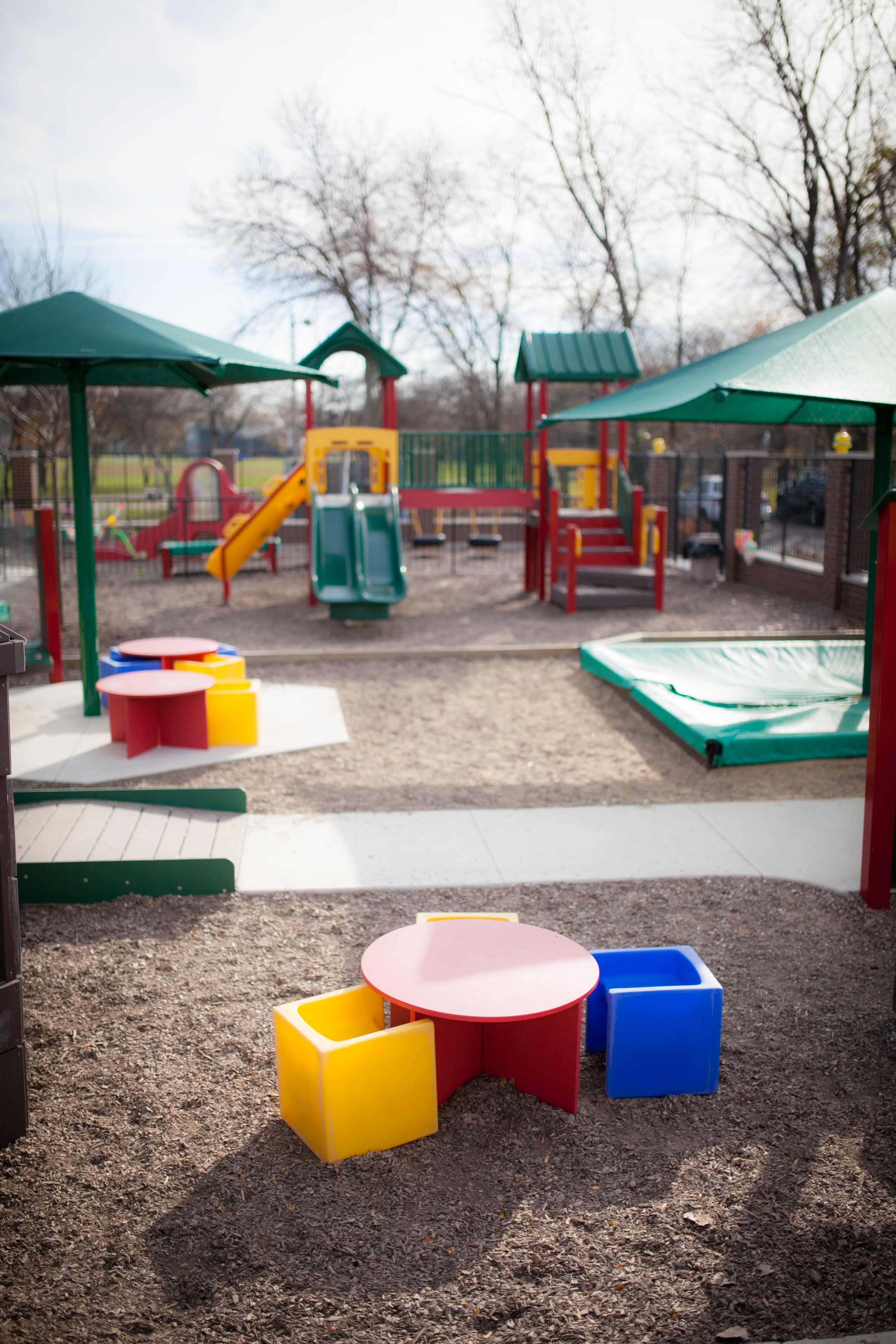
Suddenly the words “they don’t even know they are learning” drew my attention to the television. I paused to see what they were talking about. The image showed children of about three years of age in a child care centre. The children were counting as they walked along stepping stones laid out in a path!
Kids’ Work Chicago Day Care
Remarkable? I didn’t think so. Children were happily engaged doing what comes naturally to them: playing, having fun, making sense of the world around them. Pre-school children will naturally join in the fun of counting and learn to do so without structured lessons, with just an attentive adult who encourages it incidentally in daily activities. I have made a few suggestions here and here.
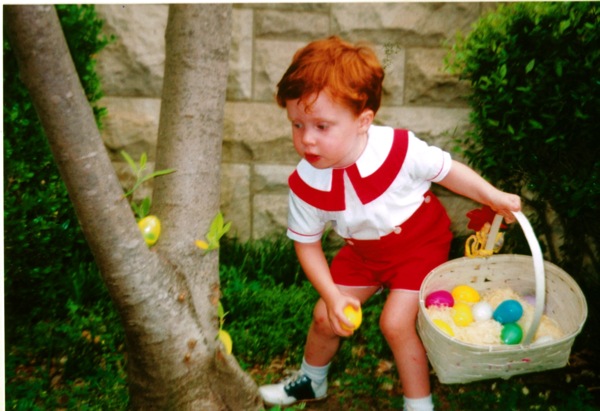
Easter Egg Patrol
What I think is far more remarkable (worthy of discussion) about those words is the insidiousness of the thinking that underlies them and what that thinking implies.
“They don’t even know they are learning!”
This to me implies that learning is something that:
children don’t want to do but “we” expect of them,
children won’t do unless it is “hidden” in sugar-coating,
must be planned for in a structured program and done to children by adults,
fits into a narrow band of skills and abilities with easily identifiable criteria that can be measured, and
is definitely NOT fun!
Perhaps more insidious is the implication that it occurs only in those situations.
Children are born to learn. Their every waking moment is spent figuring out how the world works and what they can do to have their needs met. They are born scientists. They have an innate desire to know. Why one should think it remarkable that children are learning, but they don’t even know they are doing so, boggles my mind.
Anyone who has spent any time with young children know that learning is what they do. They can spend hours absorbed in a particular activity figuring out how something works, how things fit together, what happens when and if …
As soon as an adult intervenes in an attempt to “teach” something that seems appropriate and important to the adult, the child switches off, disengages and chooses another activity.
That’s not to say that the adult shouldn’t intervene to support a child’s learning, but the adult needs to be sensitive to the child’s needs and responses and to not force the situation to one in which the learning may be more important to the adult than the child at that moment, when the child is doing very well on its own, thank you very much.
The article I refer to was broadcast on April 1st. An April Fool’s Day joke? Sadly, not. But if we fail to honour children’s natural curiosity and desire to learn and continue to value only that which can scored on a test, I fear we will develop a multitude of fools.
Thank you for reading. I appreciate your feedback. Please share your thoughts about any aspect of this post.
Yesterday, 8th March 2015, was celebrated as International Women’s Day around the world. While the day has a history (or herstory) of over one hundred years, yesterday marked the 40th anniversary of the date being claimed for this celebration by the United Nations and the 20th anniversary of the signing of the Beijing Declaration and Platform for Action.
“The Platform for Action covers 12 critical areas of concern that are as relevant today as 20 years ago: poverty; education and training; health; violence; armed conflict; economy; power and decision-making; institutional mechanisms; human rights; media; environment; and the girl child.”
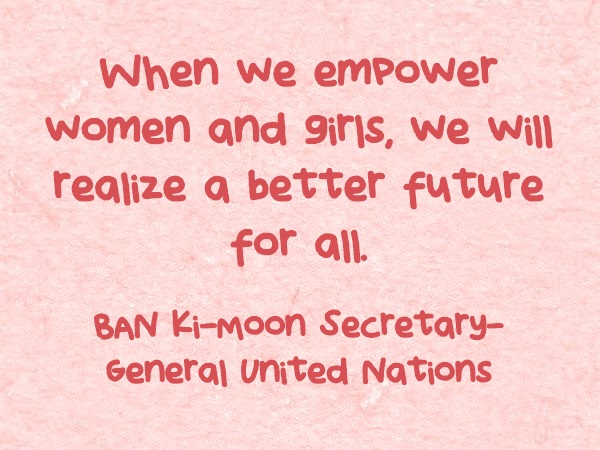
The Secretary-General of the United Nations concludes the foreword to the 2015 paper with these words:
The paper states that
“Nearly 20 years after the adoption of the Platform for Action, no country has achieved equality for women and girls and significant levels of inequality between women and men persist.”
This article in Time Magazine recognises that, while some gains have been made, there is still much more to be done to eliminate inequality. It repeats the call to action made by the UN Women Executive Director Phumzile Mlambo-Ngcuka:
In line with the general achievements that have been made towards gender equality, and the gaps that still exist, is the situation for girls in schools, especially with regard to maths and science education. While more girls are moving into those areas than did when I was at school, there are still not enough.
She says that “the data . . . shows that the difference among graduates is not due to girls’ ability to do math and science; instead, the gender gap is caused by attitudes and behaviors toward girls and women, especially in the classroom.”
This article by Claire Cain Miller in The New York Times reinforces this, saying that the attitude of elementary teachers is even more influential that attitudes in the home. Miller says that
“Reversing bias among teachers could increase the number of women who enter fields like computer science and engineering, which are some of the fastest growing and highest paying.”
This article by Sue Wilson cites research confirming the bias of teachers against girls showing that boys often received higher marks than did girls of equal ability. While the girls were discouraged from continuing their studies of maths and science subjects, the boys (whose teachers had over-assessed their ability) went on to be successful in those subjects.
For the past three years during which time I have been writing science curriculum documents, I have had the extreme good fortune of working with one of Australia’s top science teachers. In fact Deb Smith has won many awards for her science teaching including the Prime Minister’s Prize for Excellence in Science Teaching in Secondary Schools in 2010. Throughout her career Deb has been an advocate for girls in science and has encouraged many girls, who otherwise would not have, to pursue careers in science.
I haven’t yet considered whether Marnie, a character I have been developing through my flash fiction stories, would have, let alone pursue, an interest in maths and science subjects. I think it would be all she could do to survive. You see, Marnie’s childhood had little to recommend it: a dysfunctional family in which she suffered neglect and abuse, and difficulties at school and with friendships as a result. However a teacher like Deb Smith or Ainissa Ramirez could make a difference to her engagement with those subjects. Marnie was fortunate that a teacher saw in her something special and provided support and guidance at a time that was crucial to her survival.
This week, in response to the prompting by Charli Mills at the Carrot Ranch to In 99 words (no more, no less) color your story turquoise, I take Marnie one step closer to empowerment. Charli says that turquoise blue evokes trust and strength. I have also heard that it signifies protection, friendship and peace. What wonderful qualities to aspire to for Marnie, and for all women. Coincidentally, it is my favourite colour.
Here is my flash fiction response to Charli’s challenge, with a Marnie who has found a new inner strength and sense of peace, and recalls the trust that was given in friendship along with a charm for protection.
I hope you enjoy it.
Turquoise dreaming
Marnie paused at the gate. The house looked the same: roses by the steps, bell by the door, windows open and curtains tied back; just as she remembered.
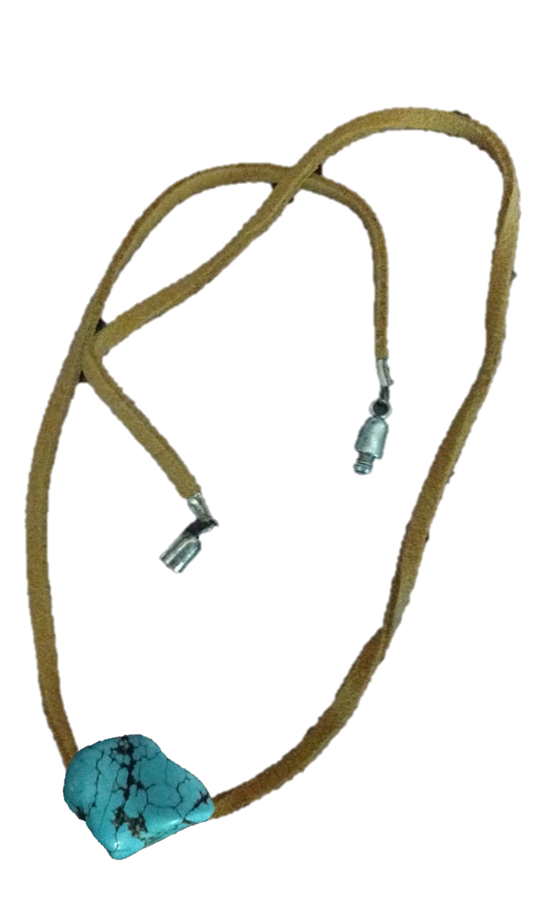
She shuddered as the memory of her last visit flashed momentarily: she was running, almost blinded by tears, stumbling with fear, up the steps, to the open door and open heart. She rubbed the turquoise pendant Miss had given her then, for “protection and peace”. She had worn it always.
Now, Marnie walked the path with an unfamiliar lightness. It was over. Really over!
She knocked at the door.
Thank you for reading.
I appreciate your feedback. Please share your thoughts about any aspect of this post and flash fiction.
The nature/nurture debate wages constantly. Are we who we were born to be, or are we shaped by our environment to be who we are?
To my untrained mind (I have no qualifications in psychology) it appears that who we become results from a mixture of each in combination with a dose of self-determination. Sometimes it can be difficult to separate the nature from the nurture. Are we that way because of genetics or because of the family environment in which we grew up?
It is true that no two individuals, even siblings, experience identical environments. Even in the closest of families the differences can be as pronounced as the similarities; in interests, capabilities, personalities and attitudes as well as physical characteristics. Both similarities and differences can be used to argue equally well for nature or nurture.
A paper published by NATSEM (National Centre for Social and Economic Modelling) in 2013 described a close link between education standards, employment and poverty, leading to social exclusion and disadvantage in Australia. It explained that lower education levels resulted in higher levels of unemployment, and therefore poverty, and that children living in poverty were at risk of not completing high school and of having poor nutrition. And so the cycle would continue.
That is not to say that children living in poverty are doomed to continue doing so throughout their lives (we all know successful people who through their self-determination have pulled themselves up and out of the situation) but it may be much more difficult for them to achieve the levels of success that seem to come so easily to others in kinder circumstances.
According to the Institute for Social Science Research at the University of Queensland “Research shows that when schools, families and community groups work together to support learning, children tend to do better in school, stay in school longer, and like school more.” Commencing this year, the “Parental Engagement in Schools” project aims to discover what type of involvement best supports student learning and outcomes. Encouraging parents to be involved is another issue.
While my general observations as a teacher, and those of many colleagues, support the notion of a connection between economic status and educational advantage, a paper recently released by the University of Bristol states that “Poorer parents are just as involved in their children’s activities as better-off parents”, and that “The findings support the view that associations made between low levels of education, poverty and poor parenting are ideologically driven rather than based on empirical evidence.”
Perhaps over-generalisations in this area are just as problematic as those that expect all family members to be alike. I think that, regardless of background, it is important for teachers to support all students to make positive choices for their future. This can be done through demonstration and modelling rather than criticism and blame.
I also recommend a certain set of strategies that all parents, regardless of their economic status, can employ to give their children a great start is life, including:
Love them
Talk with them
Read to them
Encourage their questions and curiosity
Help them seek answers and solve problems
Encourage their independence
Foster confidence, a willingness to have a go and to try multiple times and ways
Be accepting of differences and don’t prejudge their future based on the experiences and futures of others.
The old saying goes that “You can choose your friends, but you can’t choose your family”. Although I have read suggestions that we may be genetically close/distantly related to those we choose as friends, I can’t testify to the authenticity of the “science” that makes those claims. However, I think many families have at least one member they would probably prefer to disclaim relationship with! Not my family of course!
In my current out-of-the-classroom position I write science curriculum materials for use in early childhood classrooms. It is an interesting and challenging role, but also lots of fun as I work with a number of other writers who are also teachers, with an added qualification in science. As many of them have studied science at tertiary level, worked in various other fields, and taught science at high school level, I am surrounded by people with a lot of knowledge and experience different from mine.
One thing that is wonderful about working with a group of scientists is the range of topics that are raised for discussion around the table at lunch time. Scientists are naturally curious and they don’t take anything at face value. They delve into it, interrogate, investigate and explore until they have answers to questions that may have arisen. I learn a lot! Like the difference between degradable and bio-degradable; how close the asteroid came to Earth; and mitochondria, genetics and children with three parents!
On the home front too, I am surrounded by scientists; computer scientists and environmental scientists, each with a strong sense of social responsibility and ethics. I am fortunate to be swept along in learning by their interests and enthusiasm.
In previous posts I have shared some thoughts about the importance of curiosity and of my opinion that children are born scientists. I am always delighted when I come across something that supports my opinion. (Yes, there are others!)
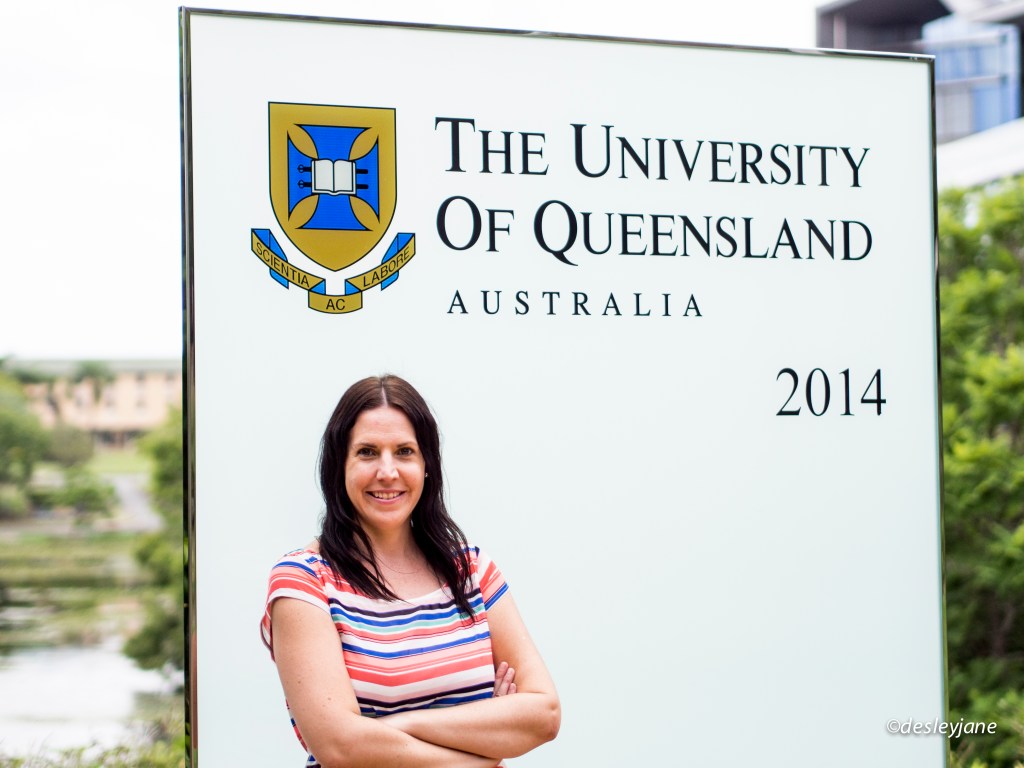
I have recently discovered a lovely blog Musings of a Frequent Flying Scientist written by a local scientist Desley Jane. This week she shared an interview with another local scientist Julia Archbold. I enjoyed it so much I decided to share it with you.
These are just a few of things I like about it: They are both young female scientists. (For too long science was seen as a male-only province.) The importance placed upon curiosity, asking questions and ‘quizativity’ (what a great word!) The excitement of learning. That their engagement with science makes a positive contribution ‘the world’.
Please visit Desley’s blog to read the entire interview and explore what else she has to offer.
Thanks for reading. I appreciate your feedback. Please share your thoughts about any aspect of this post.
This is my first interview for my Scientific Reasoning feature. The questions will be the same for each interviewee and I hope that they will give us some insight into the lives of a few of today’s scientists.
Dr Julia Archbold is a good friend of mine. We have known each other for many years and have worked together in the past in our twenties (ish). I admire Julia greatly, both as a scientist and as a person. She is warm and talented, with a quick wit and a very kind soul. She is about to embark on an exciting new adventure and I caught her just in time for this interview.
me: So I know you’re a scientist, but when did you decide to become a scientist? What were you thinking? (Not WHAT WERE YOU THINKING?!?! but what made you decide that science was going to be your future?)
Reading is a wonderful pastime. Since you are reading this blog I am sure you will agree.
People read for many different reasons, including:
for information e.g. about world events or something of interest, to find out what’s on offer, how to do something, or the time and place to catch a bus,
to be challenged e.g. by philosophical or ethical arguments and viewpoints
to stay in touch e.g. through letters, emails, blogs, Twitter, Facebook and other social media
to be enthralled by a story or delighted by poetic words and imagery
to escape the everyday.
I am certain you could add to the list in breadth and specificity without too much trouble.
Developing a lifelong habit, if not love, of reading is important to fully function in society. The “bug” is more easily caught in early childhood but can be developed at any stage throughout life when its rewards become apparent.
I have previously shared ideas about the importance of talking with and reading to young children, including here and here.
Another highly influential factor in creating readers is for children to see adults engaged in reading for real purposes, for information and pleasure; and having the opportunity to discuss the purposes of, and ways of reading, different material e.g. the way we read a menu is different from the way we read a story or a newspaper.
Additionally, it is useful for children to realise that the importance of reading extends beyond the home. There may be opportunities for them to observe people reading in the workplace or to discuss the need for reading in different roles.
Another important aspect of reading that I have previously discussed, using ”The Very Hungry Caterpillar” by Eric Carle as an example here, is critical literacy, the ability to interrogate the veracity of the information, its source and author.
I recently read discussions about difficulty experienced incorporating non-fiction material, especially science information, into classroom reading programs. I was a bit blown away by this because I believe that children will be interested in anything and everything if it is presented in an interesting way.
An information book doesn’t have to be read all at once, from cover to cover in any particular order. It can be dipped into, pored over, or explored bit by bit.
Sometimes information can be found in a work of fiction, but it is important, as cautioned with “The Very Hungry Caterpillar”, to check the source and the “facts”.
So to tie together the elements discussed above, these are important elements for motivating children to read:
Talking with them about things of interest to them
Reading to them
Modelling and discussing positive reading habits
Demonstrating the importance of reading
Discussing the importance of not believing everything that is read and of evaluating the source of the information and the intent of the author
Story Time From Space features astronauts on the space station reading story books to children. At the moment there is one story available, but more are planned, as are teaching suggestions and activities, including experiments.
The story, Max Goes to the International Space Station is the first of a series of five stories written by Dr. Jeffrey Bennett who describes himself as “an astronomer by training and a teacher by trade, but currently spend most of my time as a writer.”
In his post, Johnson expands on that, describing Bennett as “a research associate at the University of Colorado Center for Astrophysics and Space Astronomy, … (who) has worked at the California Institute of Technology Jet Propulsion Laboratories and NASA Headquarters in Washington, D.C.” He goes on to say that “Dr. Bennett strives to write books that are factually correct, fun, and interesting for students to read.” The experiments that the astronauts do will correspond to those in the books.
While parts of the Story Time From Space site are still “coming”, I think this project has great potential for motivating children to read and for inspiring an interest in the world and beyond. Being read a story by an astronaut isn’t something that happens every day!
Thank you for reading. I appreciate your feedback. Please share your thoughts about any aspect of this post.
Unknown source. Apologies. Happy to attribute if informed.
I often say that children are born scientists. From the moment they are born they are actively finding ways of figuring out how the world works, and how they can get it to work for them.1
Some people say children are sponges. But I say they are more than that. They are creators. They don’t just copy what they see. They don’t just repeat what they hear. They find new ways of working things out, new ways of expressing ideas, and new ways of thinking about things. Parents often remark, when children exhibit new behaviours or cute new phrases or ways of expressing themselves, “Where did they get that from? Where did they learn that?” Often the source cannot be identified, for the source is within the child.
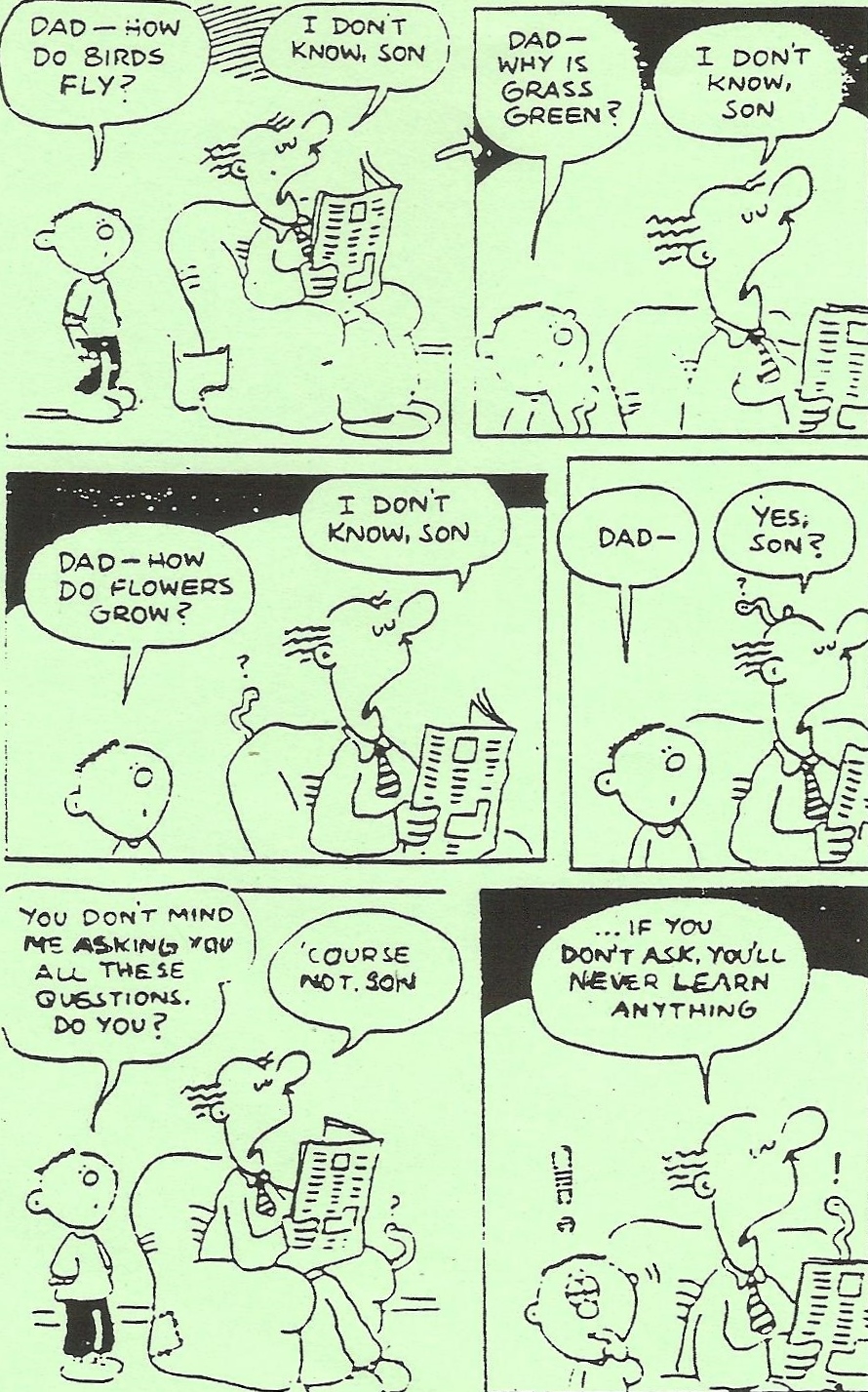
An important way to keep children creating their own understandings and ideas is to not only allow them to ask questions, but to actively encourage them to do so, and to help them seek answers to their questions. Adults can be quick to quiet children’s questions for a number of reasons including not knowing the answer, being too busy at the time to investigate an answer, or even considering the question unimportant or “dumb”.
Unknown source. Apologies. Happy to attribute if informed.
Remember, many things that adults may take for granted or that they may no longer question but simply accept (possibly as a result of not receiving appropriate answers or responses to their childhood questions) are new and unfamiliar to the child.
Sometimes it is easier to accept than to question for questioning means that something is unknown; and not knowing can lead to feelings of insecurity, doubt and instability. But it is these self-same feelings which drive innovation and progress. If everything was known, there would be no room for improvement, no need for anything new, no need for greater understanding.
This inspiring TED talk by Beau Lotto and Amy O’Toole, Science is for everyone, kids includedemphasizes the need for children to be given the opportunity of asking, and exploring answers to, questions.
Beau explains that what we see is based upon our experience, upon our expectations. But he asks,
“if perception is grounded in our history, . . . (and) we’re only ever responding according to what we’ve done before . . . how can we ever see differently?”
He goes on to explain that seeing things differently begins with a question and that questions lead to uncertainty. He says that
and explains that the answer to uncertainty is play. He says that play “is a way of being” and is important for five reasons:
Uncertainty is celebrated in play and makes play fun
Play is adaptable to change
Play is open to possibility
Play is cooperative
Play is intrinsically motivated
“Play is its own reward.”
Beau says that science, also, is a way of being; and that science experiments are like play.
He describes working with a group of 8-10 year old children, encouraging them to ask questions and involving them in an investigation of a question they posed.
Amy O’Toole, one of the children involved, joins Beau and describes the experiment which investigated the ability of bees to “adapt themselves to new situations using previously learned rules and conditions.”
The really exciting thing about the project, Amy says, was that they “had no idea whether it would work. It was completely new, and no one had done it before, including adults.”
The process of taking the findings of the project to publication, as Beau explains, was rather complex with a variety of complications, taking two years to achieve. The experiment itself took only four months! Publication of the paper made Amy and her friends the youngest ever published scientists.
Editor’s Choice in Science (a top science magazine)
the only paper forever freely accessible on Biology Letters and
the second-most downloaded paper from Biology Letters in 2011
Amy wraps up the talk by stating that
“This project was really exciting for me, because it brought the process of discovery to life, and it showed me that anyone, and I mean anyone, has the potential to discover something new, and that a small question can lead into a big discovery.”
She finishes by saying that
“science isn’t just a boring subject … anyone can discover something new.”
We might not all make those big scientific discoveries, but it is the questions we ask each day which lead to our own discoveries, no matter how small; it is our curiosity which keeps us learning.
What have you learnt today?
1 This is just my opinion formed from observations, discussions and reading. I am not supporting it with research references.






















 Norah Colvin