Live Love Laugh Learn … Create the possibilities

Tag: Reading

  • Of rainbows and unicorns – Part 2 – Do fairy tales and fantasy still have a place for children?

    https://openclipart.org/http://goo.gl/zzNhFF
    https://openclipart.org/http://goo.gl/zzNhFF

    I have many discussions with parents about whether they should read fairy tales and stories with magical elements to their children. These parents raise a number of issues, for example:

    • Horrible things happen – Hansel and Gretel are abandoned in the woods (by their parents) and are captured by a wicked witch – the wolf tries to trick the seven little kids left at home alone
    • Parents are often dead or absent – Cinderella, Beauty and the Beast, Rapunzel, Red Riding Hood, Jack and the Beanstalk
    • Stepmothers are mean – Cinderella, Snow White
    • Sexism, especially the need for a female to be rescued by a handsome prince – Cinderella, Sleeping Beauty
    • They contain “magical” creatures such as fairy godmothers (Cinderella, Sleeping Beauty), witches (Snow White), giants (Jack and the Beanstalk), trolls (Three Billy Goats)
    • Myth of happily ever after
    • Stereotypes – beauty is good, ugly is bad
    • The presence of magic – good magic of fairies and bad magic of witches – Sleeping Beauty; magical bean seeds and geese (Jack and the Beanstalk)
    • Bullying – Cinderella

    Maria L. Hughes, writing for The Little Prickle Press sums up the concerns this way:

    “many of the older tales incorporated rather dark themes devoted to death, suffering and children being murdered. But then there is also a second incorporation that has to do with later Disney movies of these fairy tales and them being too happy and can result in parents thinking their child will be deluded with ideas that the world will just work for them and things will be good.”

    While I acknowledge these elements occur, I am not prepared to abandon fairy tales because of it.

    While I may consider a diet of only fairy tales problematic, I think something would be lacking if a child was refused access to the richness of their stories and tradition. Like most fiction, they offer an avenue for escapism. In addition, the stories can be used as a tool for initiating non-threatening discussions of the issues listed above.

    In Once upon an if The Storythinking Handbook Peter Worley writes

    “Stories are just one way that we are able to sharpen our own character in order to prepare for the narratives we will one day find ourselves in as the story of our life unfolds before, around and within us.” 

    Following a comment by Richard Dawkins, a recent discussion on The Guardian considered whether fairy tales are harmful to children. So far the consensus seems to be that they are not.

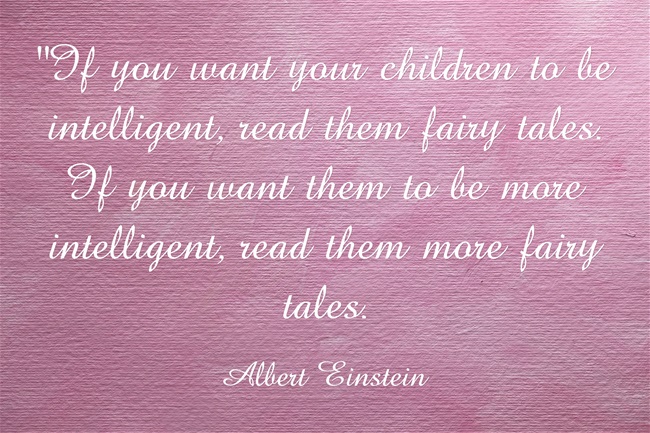
    Albert Einstein was a supporter of fairy tales and is often attributed with the following quote, discussed in more detail by Maria Popova on brain pickings.
    https://quozio.com/
    https://quozio.com/

    Anne Fine, in the Foreword to Once upon an if The Storythinking Handbook explains

    “In an increasingly complicated world, we more than ever want our children to be able to think with clarity, rather than lead lives hampered or derailed by all those false assumptions and unexamined prejudices that seem as easily inherited as freckles or brown eyes.

    How can we go about teaching them to peel back the surface of their first thoughts on a matter, or even their strongest beliefs, and look at them with more care? . . . fiction has always fostered the moral, intellectual and emotional development of the growing child. (‘Should she have done that?’ ‘Would I?’ ‘What else could have been done?’ ‘How would it feel?’) Good stories highlight the sheer complexity of things. They furnish a far greater understanding of the world and everyone in it. For most of us, fiction has always been the earliest – and many would argue the best – instrument we have had for ethical enquiry.”

    Think of the ethical inquiry that could occur when discussing Goldilocks and her break and enter, Jack’s theft of the giant’s belongings and the constant portrayal of the wolf as the bad guy; just to get you started.

    Melissa Taylor on her blog “Imagination Soup” suggests the following 8 reasons why fairy tales are essential to childhood:

    1. Show kids how to handle problems
    2. Build emotional resilience
    3. Give us a common language (Cultural literacy and canon)
    4. Cross cultural boundaries
    5. Teach story
    6. Develop imagination
    7. Can be used to teach critical thinking skills
    8. Teach lessons

    In a previous post about fairy tales, written in response to a flash fiction challenge set by Charli Mills  I mentioned that I was not a keen reader of adult fantasy. In a comment on that post Charli mentioned that she knew others with similar feelings. I will leave you with a link to another article on brain pickings in which Maria Popova discusses the thoughts of one of the masters of fantasy, J.R.R. Tolkien on Fairy Tales, Language, the Psychology of Fantasy, and Why There’s No Such Thing as Writing “For Children”

    What do you think? Should we read fairy tales to children? Why/why not?

    What are your favourite fairy tales and what lessons have you learned from them?

    Please share your thoughts.

  • Of rainbows and unicorns – Part 1 – Fantastic creatures and magical realms

    I am not a reader of adult fantasy novels. I have never read Lord of the Rings, The Hobbit or Watership Down. I just couldn’t buy into it. I’m sorry I have to admit it – it is true.

    However, I don’t mind a bit of fantasy in children’s books and, in fact, really enjoy it. I didn’t mind the rats’ use of language in Robert C. O’Brien’s The Rats of Nimh while I couldn’t handle the talking rabbits in Watership Down by Richard Adams. I cannot explain why my response is different but I’m sure it has something to do with the ability to suspend disbelief. I am obviously more able to do that when encountering fantasy in children’s stories than in adult fiction.

    As both parent and teacher (and now grandparent) I love sharing stories with children. In addition to all the good things I know it is doing for them, it is doing lots of good things for me as well. Reading children’s stories written by masterful authors is one of life’s greatest pleasures and I love having excuses for doing so.

    This week the flash challenge issued by Charli Mills at the Carrot Ranch was to

    In 99 words (no more, no less) write a story that includes a fantastical element or creature. 

    I am taking the opportunity of sharing with you some of my favourite fantastic creatures and magical realms from children’s stories. Each of these stories is wonderful to read aloud and share with children.

    Charli mentioned rainbows, unicorns and the phoenix.

    I thought of The Iron Man by Ted Hughes (a story in five nights, suitable for children from age 5 – 104)

    book 2

    “Taller than a house, the Iron Man stood at the top of the cliff, on the very brink, in the darkness.

    The wind sang through his iron fingers. His great iron head, shaped like a dustbin but as big as a bedroom, slowly turned to the right, slowly turned to the left. His iron ears turned, this way, that way. He was hearing the sea. His eyes, like headlamps, glowed white, then red, then infra-red, searching the sea. Never before had the Iron Man seen the sea.

    He swayed in the strong wind that pressed against his back. He swayed forward, on the brink of the high cliff.

    And his right foot, his enormous iron right foot, lifted – up, out, into space, and the Iron Man stepped forward, off the cliff, into nothingness.”


    and The BFG by Roald Dahl. (a longer tale for school age, and older, children)

    book 4

    “It wasn’t a human. It couldn’t be. It was four times as tall as the tallest human. It was so tall its head was higher than the upstairs windows of the houses. Sophie opened her mouth to scream, but no sound came out. Her throat, like her whole body, was frozen with fright.

    This was the witching hour all right.

    The tall black figure was coming her way. It was keeping very close to the houses across the street, hiding in the shadowy places where there was no moonlight.

    On and on it came, nearer and nearer. But it was moving in spurts. It would stop, then it would move on, then it would stop again.

    But what on earth was it doing?”


    I thought of Joan Aiken’s wonderful collections of fairy tales like A Necklace of Raindrops (for children in early years of schooling)

    book 3

    “And when she had nine raindrops Laura found that she could make the rain stop, by clapping her hands. So there were many, many sunny days by the sea. But Laura did not always clap her hands when it rained, for she loved to see the silver drops come sliding out of the sky.

    Now it was time for Laura to go to school. You can guess how the other children loved her! They would call, “Laura, Laura, make it stop raining, please, so that we can go out to play.”

    And Laura always made the rain stop for them.

    But there was a girl called Meg who said to herself, “It isn’t fair. Why should Laura have that lovely necklace and be able to stop the rain? Why shouldn’t I have it?”

    and The Kingdom Under the Sea (for children approx. 8 -12), each beautifully illustrated by Jan Pienkowski adding another element of wonder to the tales.


    book


    Charli suggested that we “think of how (we) can use the fantastical to enrich realities” and I thought of the mouse who invented The Gruffalo in Julia Donaldson’s story and showed how imagination could be used to solve problems that arise. (The Gruffalo is suitable for children in pre-school and early years of schooling)


    While the above excerpts are short, like flash fiction, each demonstrates the skill of the author in choice of words and sentence structure. In his book On Writing Stephen King refers to these as forming the top level of the tool box. But these excerpts show a depth greater than that also.  They create a connection, forming a relationship with and a need in the reader to know what happens.

    It is the ability of the author that sweeps us away, as if on a magic carpet, to other places and other lives. It is the ability of the reader to suspend disbelief that allows the journey to occur.

    I thought about how we, as either child or adult, use fantasy to escape realities that we may not wish, or not feel strong enough, to face. This brought me back to Charli’s unicorn.

    And now I offer my own bit of flash, which is not suitable for reading to children of any age.


    www.openclipart.org http://goo.gl/Ep1vK6
    http://www.openclipart.org http://goo.gl/Ep1vK6

    Unicorn knights

    She sat on the bed and looked around. Funny how some things don’t change.

    They had left it untouched for all those years since her escape, waiting for her return. But she never did. Never could. Until now.

    “You should,” she was told. “Make peace.” “Let it go.”

    It didn’t look so scary now. They were both gone. She was grown.

    Sunlight glinted on the unicorn. It had faded but waited still, on the night-table, for their nocturnal escapades away from cruel reality.

    She fingered it for a moment, remembering. Then dumped it in the wastebasket.

    “Sell!” she said.


    I welcome your comments on any aspect of this post; the books I have suggested for sharing and my own piece of flash.

    Don’t forget to pop over to the Carrot Ranch where you can read responses to Charli’s prompt by many other writers.


  • I Feel the Need, the Need to Read! by Tiffany Oppelt

    I Feel the Need, the Need to Read! by Tiffany Oppelt

    One reader’s story!

    Tiffany has a “read for fun everyday” policy. It’s a great one, don’t you think!

    CBethM's avatarNerdy Book Club

    Hello, my name is Tiffany and I am a reader.  Always have been and always will be.  Reading is more than a hobby or a pleasurable activity.  It is a true need in my life.

    It all started early.  I don’t remember learning to read.  I clearly remember the day the words began to make sense to me.  I was about five years old and sitting at the kitchen table with the Sunday comics.  I got up to ask my mom to help me with a word and I never looked back.

    From that day forward, I was unstoppable.  Aided in large part by extremely supportive parents and grandparents, as well as key teachers and librarians, I became a voracious reader.

    Books were my constant companion throughout my childhood.  I received countless books as gifts.  I haunted my public and school libraries.  I would lose myself in stories, making new…

    View original post 519 more words

  • Passionate about literacy education

    Education is my passion.

    I have spent almost my entire life thinking about how to educate, and the rest of it being educated.

    That is to say, just like everyone else, I began to learn about the world from the moment I was born, if not before; probably before.

    From age ten I knew that I wanted to be a teacher and worked hard through school to achieve that goal.

    When I completed school I was fortunate to receive a teacher’s scholarship which meant that my three years of training was provided by the state education system and, in return, I was required to teach within the system for three years. Without the scholarship that path would have been unattainable.

    I remember sitting in my classroom on, what I will say was, my first day of teaching. I gathered a group of children around me, each of us with a reader in our hands, ready for a reading lesson. Suddenly I realised I didn’t have a clue what to do.

    Realisation 1: Teaching reading isn’t as simple as putting book in the hands of children and telling them to read.

    This was a third grade class, so I’m hoping that most of them were already able to read and we figured it out together. Round robin reading seemed to be the method of the moment.

    During that first, and the following year, I put a lot of energy into sorting books into levels and children into groups to read the books at the different levels.  I’m not sure what the children learned but I know I was earning my pay. I was ‘teaching’.

    Realisation 2: Children learn to read at different rates.

    At the beginning of my third year of teaching I was listening to children read individually, in order to group them according to reading ability, when one of the children, considered a good reader by his previous teacher, informed me proudly that he could read the book without looking; and proceeded to do so. He had memorised it! He didn’t recognise any of the words and could not read any other book.

    Realisation 3: Reading is more than reciting the words on the page.

    Major realisation: There was something wrong with the way reading was being taught, and I still didn’t feel confident about teaching it.

    Fortunately most children learn to read despite how it is taught, and although I sometimes think I’d like to apologise to all those students I “taught” when I didn’t have much of a clue, I’d like to say “I hope they’re not reading this”, but I really hope they can!

    Not long after this I had a break from teaching for a few years. During that time I read a lot of books about education, especially alternative views of schooling. I continued to feel strongly about reading instruction and even wrote a series of readers (unpublished) based on instruction in phonics. (Such was my ignorance!)

    I worked with groups of upper primary remedial readers who made great progress ostensibly using a phonics program. However they also received lots of individual attention, encouragement and opportunities for reading real books.

    At the same time I watched my three year old son become a reader without any formal instruction. I read to him, talked with him, wrote stories for him and transcribed his stories which we read together. We played games with language making up rhymes, playing “I spy”, singing songs and talking about print in our environment. Before I knew it he was jumping into bed in the mornings, prising my eyes open and begging to read to me!

    I struggled to make sense of what I was observing.

    Then the serendipitous moment arrived: I saw an advertisement for a graduate diploma in reading and language. It sounded tailored to my needs exactly. And it was.

    We packed up the family and moved across the country to enable me to undertake the study.

    It was one of the best things I have ever done. Suddenly everything made sense. The course about developing literacy skills also supported my developing beliefs and understandings about learning in general. I was at last in a place I felt comfortable. This was where I belonged. The course reignited my passion and provided the knowledge and skills that would underpin everything I have since done in education. Time has moved on but the essential understandings are timeless.

    The coordinator of the course, the person who deserves my sincerest gratitude, is just as passionate about literacy education today as he was then, influencing new generations of teachers and students. His name is Brian Cambourne, Principal Fellow on the Faculty of Education at the University of Wollongong. He is affiliated with the International Reading Association and the Australian Literacy Educators Association.

    Recently a friend sent me a link to an article about reading on The Conversation. It is titled “The seven messages of highly effective reading teachers” and begins with a caption under a photo:

    Teaching kids to read isn’t just about learning the alphabet or “sounding out”, it’s about making sense of what’s on the page.

    I read the article and quickly responded to my friend saying that I agreed wholeheartedly and that I was, in fact, writing a book about those very same ideas, right at that moment!

    Then I checked the author. Imagine my surprise when I discovered it was Brian Cambourne! I am delighted to be able to share his wisdom with you.

    In the article Brian explains the seven messages that highly effective reading teachers share with their students:

    1. A reader’s major focus should always be meaning

    2. Effective readers draw on all sources of information in the text

    3. Effective readers are always predicting

    4. Effective readers self-correct

    5. Effective readers have a range of strategies

    6. Effective readers know how they read

    7. Effective readers love reading


    Please read Brian’s full article on The Conversation.


    I welcome any feedback.

  • The magic effect – why children need books

    Nor and Bec reading


    Children can be read to from the moment they are born, if not earlier. Preferably earlier!

    One of my favourite picture book authors and passionate advocate for reading to children is Mem Fox. I own, and have given as gifts, many of her wonderful books. I have attended her seminars and been mesmerised by her reading from her selection of stories. “Read more!” the adults beg. There are no children at these literacy seminars. This time it is a treat for only us: parents and teachers, literacy educators all.

    Currently Prince William, Kate and baby Prince George are visiting Australia. I was delighted to hear that they were given a gift of books by Australian authors, including some by Mem Fox. Over the years I have given many of Mem’s books as gifts; and kept just as many for myself!

     Reading magic

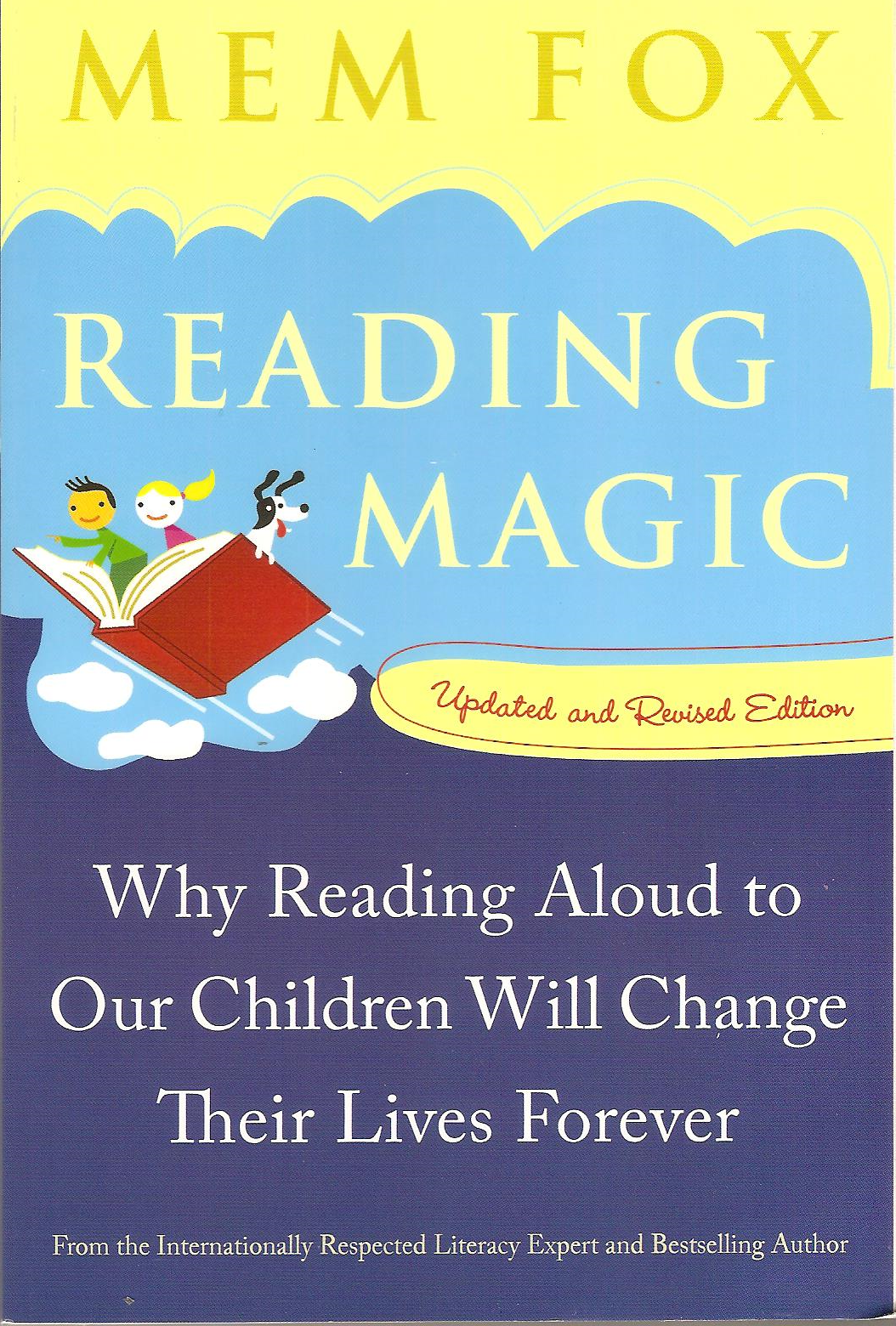
    One that I have given to many new or expectant parents, as I consider it a “must read”, is Mem’s book “Reading Magic – Why Reading Aloud to Our Children Will Change Their Lives Forever”.

    I would love to quote the entire book for you, but it is better you read it for yourself. I will provide you with this quote from the foreword as a taster for the richness to be found inside.

    “It stands to reason that if we’re able to raise happier, brighter children by reading aloud to them, the well-being of the entire country will ramp up a notch. Children who realize in their first few weeks and months of life that listening to stories is the purest heaven; who understand that books are filled with delights, facts, fun, and food for thought; who fall in love with their parents, and their parents with them, while stores are being shared; and who are read aloud to for ten minutes a day in their first five years, usually learn to read quickly, happily and easily. And a whole lot of goodness follows for the entire community.”

    Mem's website


    Mem’s website, too, is a treasure trove just waiting to be explored by writers, teachers, parents, children and children-at-heart.

    You can listen to Mem read from her selection of books on the Current Read Aloud page. She reads three different books each month. Currently the books are Possum Magic, Harriet, You’ll Drive Me Wild! and Goodnight, Sleep Tight. Be quick to listen to these, though, as they will change at the end of the month. But never mind, there’ll be another three to enjoy next month!

    Mem even gives a read-aloud lesson! Now there’s no excuse! As she says,

    “. . . let’s get on and change the world, one page at a time.”

    Yes, Mem, let’s!


    What are your favourite read-aloud books? What did you enjoy as a child? What do you enjoy now?

  • Finding power in a picture book – the main event

    Finding power in a picture book – the main event

    Teaching critical literacy through picture books

    This is the fourth is a series of posts about the role of picture books, especially The Very Hungry Caterpillar by Eric Carle.

    The purpose of this post is to discuss the importance of critical literacy and the necessity to teach children to

    • think critically
    • not accept everything that is presented in text (oral, visual or print)
    • evaluate the source of the information and the intent of the author
    • match incoming information with prior knowledge,  and
    • question, question, question.

    In these previous posts

    Searching for meaning in a picture book – Part A

    Searching for purpose in a picture book – Part B

    Searching for truth in a picture book – Part C

    I suggested ways of including The Very Hungry Caterpillar in an early childhood classroom and discussed the responsibility that authors have in differentiating between fact and fiction in story books.

    In Searching for truth in a picture book – Part C I pointed out the inaccuracies in The Very Hungry Caterpillar and the pervasiveness of the misconceptions, if not totally attributable to the book, then at least in part. This is verified by Jacqui who, in 2011, wrote on the Monarch Butterfly New Zealand Trust website

    “When speaking to teachers I often find raised eyebrows when I explain that butterflies’ larvae do not make cocoons. The teachers refer to Eric Carle’s book, The Very Hungry Caterpillar, where he refers to a ‘cocoon’.”

    Note that Jacqui refers specifically to this book, rather than to sources in general.

    As shown by Jacqui, though, it can be difficult, even for teachers without specialist entomological knowledge, to sort out fact from the fiction.

    These are two pieces of misinformation contained in the story:

    Misinformation 1:

    Caterpillars eat a lot of different food

    Fact

    Most caterpillars are fussy about their diet, some eating only one specific plant, others eating a variety of plant foods.

    Misinformation 2:

    Butterflies come out of a cocoon.

    Fact

    Butterflies emerge from a chrysalis.

    Moths come out of a cocoon.

    Watch these two videos:

    This one by Strang Entertainment shows the caterpillar becoming a chrysalis.

    This one shows a silkworm caterpillar spinning a cocoon (about 2 mins in).

    They are two very different processes.

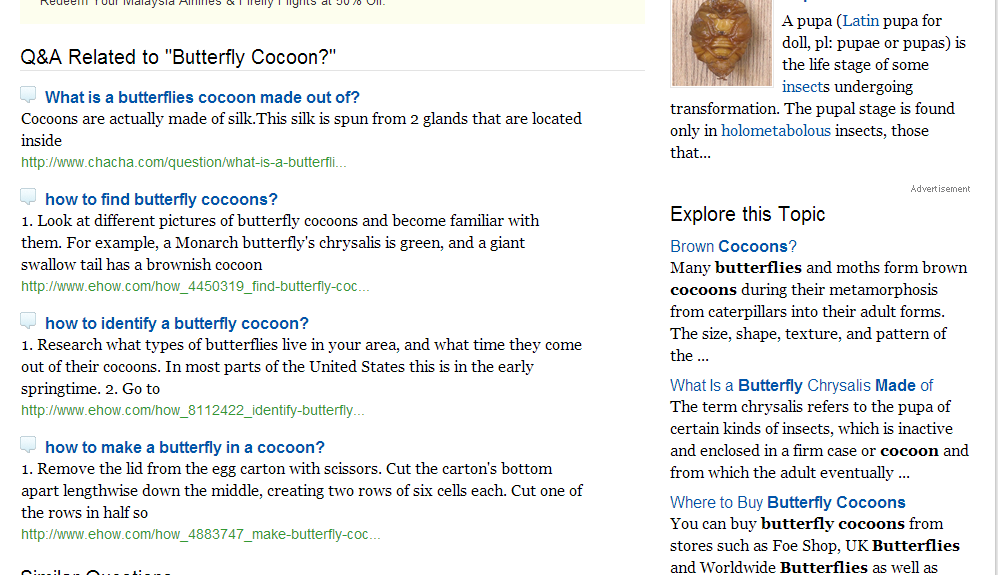
    However a quick glance at these Google search results shows just how pervasive the misconceptions are:

    Cocoon to butterfly

    butterfly cocoons

    Even seemingly authoritative educational websites misinform. Look at the way these two websites promote themselves, and consider the misinformation they are peddling.

    The website Math & Reading Help

    Maths and Reading Help

    states that The Very Hungry Caterpillar is “factually accurate . . . teaches your child to understand this biological process … a butterfly. . .(is) a caterpillar that has emerged from its cocoon”

    Primary upd8 which promotes itself as “UKs most exciting science resource”

    primary upd8

    also suggests using The Very Hungry Caterpillar for teaching about the life cycle of a butterfly.

    primary upd8 knowledge

    If self-professed “authorities” can’t get it right, how are we laypeople meant to make sense of it. Suggestions like these reinforce the need for the skills of critical analysis to be developed.

    Unlike those above, I contend that this book has no place in the science curriculum. Its greatest value is as a tool for teaching critical literacy.

    When children have learned about the life stages of a butterfly and then listen to The Very Hungry Caterpillar, they are very quick to pounce on the inaccuracies and immediately want to write to the author and tell him of his mistake.

    When told that he already knows and that he isn’t going to change it, as confirmed in an interview reported on the Scholastic website, they are incredulous.

    “Why would he do that?” they ask.

    Why indeed.

    When told that he doesn’t care that it isn’t right, they are indignant.

    But herein lies its value:

    I am able to affirm their learning: they know more than Eric Carle; and, more importantly, I am able to reinforce with them that just because something is in print, doesn’t make it true.

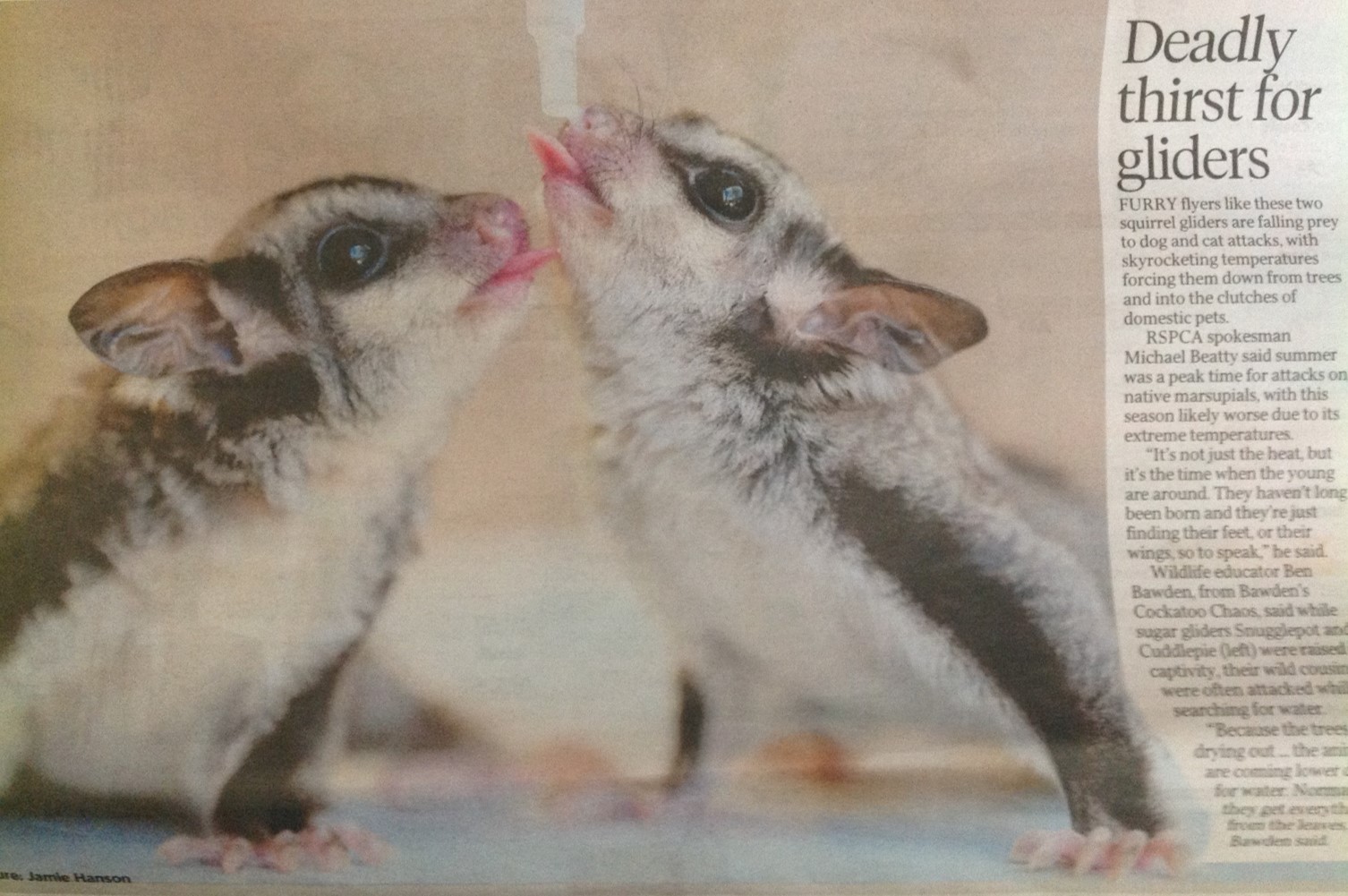
    In addition, it is important for them to realise that misinformation does not occur only in picture books, nor only in this picture book. It is just as common in news media, as shown by this article from Brisbane’s Courier-Mail on December 7 2013

    Butterfly emergingtext for photographs

    Nor is misinformation restricted to caterpillars and butterflies.

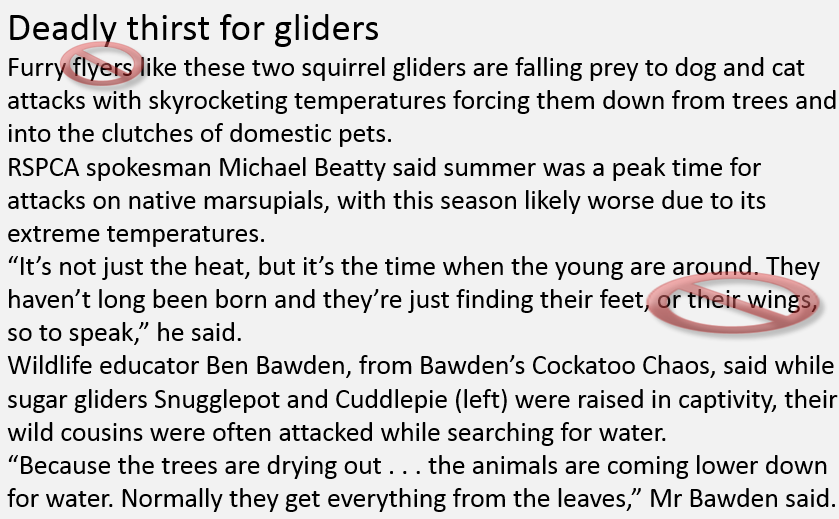
    This article, again from the Courier-Mail, on January 26 2014 also contains inaccuracies:

    Deadly thirst for glidersFurry flyers text

    Squirrel gliders don’t fly, and they don’t have wings.

    Suggestions for teachers and parents:

    • point out inaccuracies and inconsistencies
    • encourage children to think about what they are reading and hearing and to evaluate it against what they know
    • support children to verify the source of the information and to check it against other more authoritative/reliable sources
    • help them to recognise that every author has a purpose and to identify that purpose
    • invite children to ask questions about what they are reading and to interrogate the content
    • encourage them to question, question, question.

    As demonstrated by the Google results shown above, there is a good deal of misinformation available, often cleverly disguised as fact. Being able to navigate one’s way through it is a very important skill.

    Eric Carle says “If we can accept giants tied down by dwarfs, genies in bottles, and knights who attack windmills, why can’t a caterpillar (sic) come out of a cocoon?”

    What do you think?

    Do picture book authors have a responsibility for informing their audience? Is a butterfly coming out of a cocoon in the same realm as giants tied down by dwarfs? Would we accept a child hatching out of an egg? What parts of a story should be based in reality and which parts can be imagined?

    “Why can’t a butterfly come out of a cocoon?” asks Eric.

    Well, Eric, they just don’t.

    Please share your thoughts.
  • Reading aloud – sharing stories

    Reading aloud – sharing stories

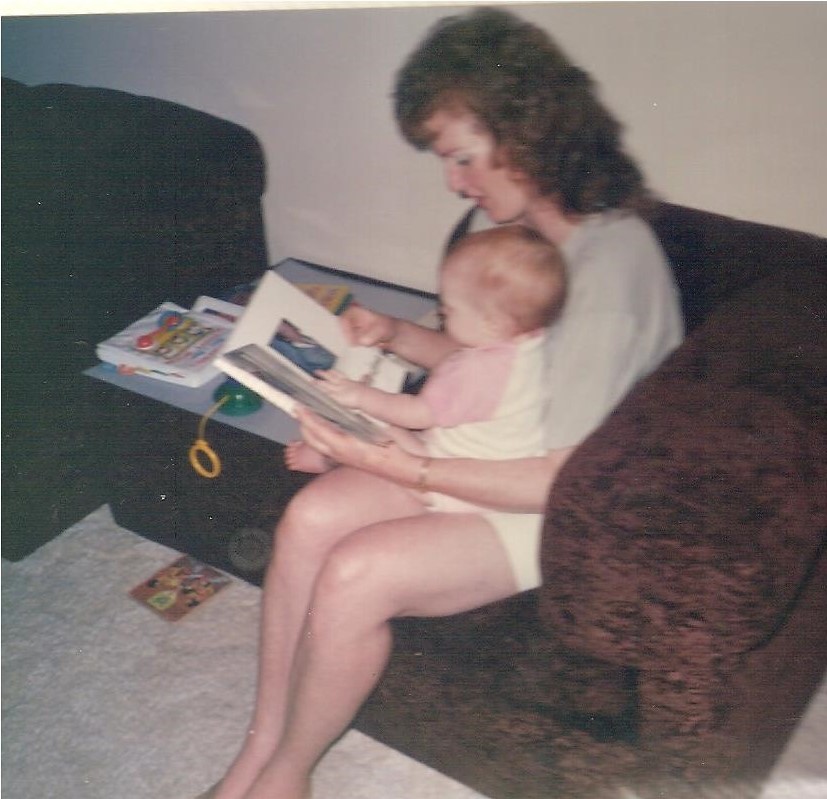
    I have always loved reading aloud to an audience, be it my own children, a class of children or, more recently, my grandchildren. I love the opportunity to escape into other characters and other worlds. I love to see the expressions on the children’s faces – anticipation, amusement, trepidation, relief, joy.  I love the sounds and rhythms of the language. I love the intricacies of story, poem and information.

    Reading stories aloud to children provides a great opportunity to establish a connection between author, reader and listener, a platform for sharing ideas, thoughts and dreams, an avenue for discussing ethical questions and implications of choices. These discussions may arise spontaneously and be child-initiated, or they may be pre-determined and teacher-lead as in philosophical discussions and bibliotherapy.

    Some parents find reading to their children a chore, something tedious that must be squeezed in around the day’s busyness. I am lucky. I never did.

    Some teachers find it difficult to make time for books in a content-driven classroom; but for me it was always priority.

    boy with books
    http://www.openclipart.org

    Some parents are delighted when their children start reading for it means the daily read-aloud ritual can cease. I never was. Well, I was delighted that they could read, but we kept on reading together.

    I read aloud with my children until they were almost teenagers. The books changed, but the joy of reading and sharing never did. During the teenage, and older, years we continued to discuss and share ideas about books we read and recommendations for reading. We still do: some for ourselves and some for the children, my grandchildren.

    Many of you reading this post take your ability to read and write for granted, as do I. But around the world many children do not have the opportunity to learn literacy skills. According to LitWorld more than 793 million people worldwide remain illiterate. About two-thirds of those are women.

    Like the people at Lit World, I believe that “the right to read and write belongs to all people”.

    I was delighted when I read about World Read Aloud Day on Gail Terp’s blog. I have been following Gail’s blog for a little while now. She titles her blog: “The Best Blog for Kids Who Hate to Read”. She says that one of her top goals is to connect children with books they love and her posts provide recommendations of great books to read to and with children, as well as to be read by children.

    In her post Read Alouds: Supporting Literacy One Book at a Time, Gail suggests 7 reasons for reading (picture books and other books) aloud:

        1. They are fun.
        2. They are motivating.
        3. They are easier to follow.
        4. They often introduce new vocabulary and expressions.
        5. They introduce a variety of writing styles, authors, and illustrators.
        6. They provide an excuse to stay close.
        7. They provide windows to complex subjects and ideas.

    Why not join in reading aloud on World Read Aloud Day this Wednesday, March 5.

    LitWorld, sponsors of the day, urge you to

    “imagine a world where everyone can read . . .”

    “World Read Aloud Day is about taking action to show the world that the right to read and write belongs to all people. World Read Aloud Day motivates children, teens, and adults worldwide to celebrate the power of words, especially those words that are shared from one person to another, and creates a community of readers advocating for every child’s right to a safe education and access to books and technology.

    By raising our voices together on this day we show the world’s children that we support their future: that they have the right to read, to write, and to share their words to change the world.”

    owl_books
    http://www.openclipart.org

    How will you celebrate and share World Read Aloud Day?

  • Happy birthday Dr Seuss!

    Happy birthday Dr Seuss!

    Theodor Seuss Geisel: March 2, 1904 – September 24, 1991

    Picture1

    Today, March 2nd is the birthday of Theodor Seuss Geisel, better known as Dr Seuss, author of over 40 children’s books.

    While several of the Dr Seuss books were published before I was born, and many others published during my childhood, I have no recollection of meeting them prior to my years as teacher and parent. Fortunately those two roles provided me ample opportunity to catch up on the delights that I had previously missed.

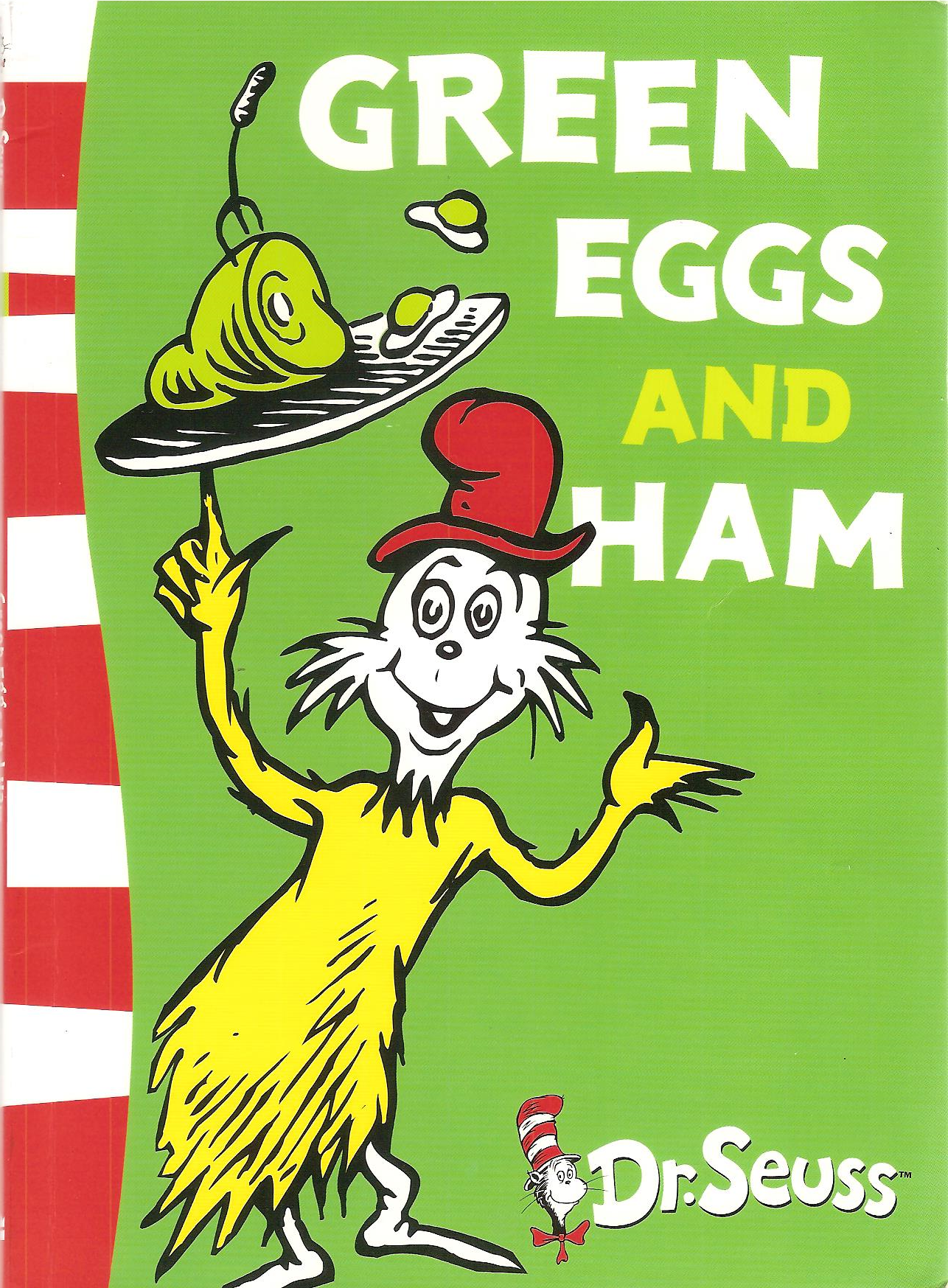
    Green Eggs and Ham

    I even apologised to Dr. Seuss in a previous post for leaning heavily on his book Green Eggs and Ham when writing about my relationship with exercise.  Click on Ode to Exercise to read my poem.

    You could celebrate his birthday by checking out the fun stuff and information on his author site seussville.com

    or pop over to Gail Terp’s Best Blog for Kids Who Hate to Read for lots of other suggestions:

    Celebrate Dr. Seuss’s Birthday with Books

    Dr. Seuss The Perfect Source for Literacy!

    Fun Dr Seuss games for the whole family

    How have the books of Dr. Seuss influenced your life?

    I invite you to share your thoughts.

  • A book worth reading: Stephen Grosz “The Examined Life”

    CoD_fsfe_Books_icon

    What appeals to a reader about a book, or what a reader takes away from a book is as individual and personal as the reader. What is of most significant to one, may be of lesser importance, or even insignificant to another. The fact that many different readers can read the same book and take away a very different impression, understanding and emotional connection is testament to the power of the written word, the value of reading and the ability of an author to reach readers on many different levels.

    Recently I read Anne Goodwin’s review of the book “The Examined Life: How We Lose and Find Ourselves” by Stephen Grosz. Anne described the book as a “must read for any thoughtful individual.”

    I was already familiar with the quote attributed to Socrates:

    “An unexamined life is not worth living.”

    and recently read an article by Simon Longstaff in the NewPhilosopher magazine examining the quote.

    Simon suggested that

    “one can make sense of Socrates’ claim if it is understood to mean something like – those who do not examine their lives (make conscious ethical decisions) fail to live a life that allows them to experience being fully human.”

    He goes on to say that

    “In a world of abiding uncertainty and complexity one can recognise a certain attraction in not examining too much, for too long in life. Thus the allure of those who offer to provide clear answers, simple directions, precise instructions (whatever) so that you may set aside examination and merely comply, or unthinkingly follow custom and practice – perhaps living a conventionally moral life rather than an examined ethical life. One can easily imagine how pleasant an unexamined life might be.” 

    I like to think of myself as a thinker often engaging in a bit of self- or other-reflection, living a somewhat examined life, not blindly complying or following customs and practice and always open to a challenge of my beliefs and ideas.

    Anne’s review intrigued me.  By fortunate coincidence I was finishing one audiobook and ready for another, and was delighted to find that “The Examined Life” was available in audio format.

    Anne’s review gives 7 reasons why readers and writers of fiction should read “The Examined Life”. You can read them here.

    As Anne suggested, I found it compelling “reading” throughout and agree with her description of the stories as

    “especially exquisite. Beautiful prose, tightly structured, these are moral stories without being moralistic, gentle fables . . . that leave us pondering the big questions of how to live.”

    Alex Clark on Vintage Books was also complimentary, saying that

    “what The Examined Life shows above all else is that we should not fear looking deeply into ourselves, because it is more likely that the effort of holding our feelings at bay will render them far more damaging.”

    In search of a succinct synopsis, I found this on the Book Depository:

    “We are all storytellers we create stories to make sense of our lives. But it is not enough to tell tales. There must be someone to listen. In his work as a practicing psychoanalyst, Stephen Grosz has spent the last twenty-five years uncovering the hidden feelings behind our most baffling behavior. The Examined Life distils more than 50,000 hours of conversation into pure psychological insight without the jargon. This extraordinary book is about one ordinary process: talking, listening, and understanding. Its aphoristic and elegant stories teach us a new kind of attentiveness. They also unveil a delicate self-portrait of the analyst at work and show how lessons learned in the consulting room can reveal as much to the analyst as to the patient. These are stories about our everyday lives: they are about the people we love and the lies we tell, the changes we bear and the grief. Ultimately, they show us not only how we lose ourselves but also how we might find ourselves.”

    Each of these reviews focused upon the importance of examining life, of delving into our own stories and emotions.

    At the commencement of this article I suggested that what we each take away from a book is as individual as we are; because what each of us brings to a book is very different, and what we need to take away is also different.

    The part of this book that had the greatest impact upon my thinking will the subject of my next post. I hope you will join me for it.

    If you have read or read “The Examined Life” by Stephen Grosz I would love to know what you think of it and which of it resonates mostly with you.

    Please share your thoughts.
    Quick links to articles mentioned in this post:

    Anne Goodwin (Annethology)

    New Philosopher

    Vintage Books

    Book Depository

  • Searching for purpose in a picture book – Part B

    Searching for purpose in a picture book – Part B

    What is the purpose of picture books? Is their purpose simply to entertain with an interesting story and rhythmical language that is fun to read and recite? Is it simply, as I said in my previous post Searching for meaning in a picture book – Part A, “. . . a special time of togetherness, of bonding; of sharing stories and ideas . . . “ Could the purposes of picture books extend beyond entertainment alone? I think most people would acknowledge that reading picture books to young children has a profound effect upon children’s learning and development. In addition to entertainment, picture books can be used for a multitude of purposes, including:

    • to encourage a love of reading and books
    • to develop vocabulary and knowledge of language (through immersion and engagement rather than direct instruction)
    • to provide a link between the language of home and the language used in the wider community and in education
    • to support children embarking on their own journeys into reading
    • to inspire imaginations
    • to provide opportunities for discussing feelings, emotions, ideas, responses
    • to develop feelings of empathy, identification, recognition, hope
    • to instill an appreciation of art by presentation of a wide variety of styles, mediums and techniques

    I’m sure you can think of many more than I have listed here. But what of knowledge, information and facts?

    yves_guillou_question
    http://www.openclipart.org

    How, and when, do children learn to distinguish fiction from fact, or fact from fiction? At the moment that question is too big for me to even think about answering, but it is a question that I ponder frequently and may return to in future posts.

    ryanlerch_thinkingboy_outline
    http://www.openclipart.org

    Children seem to realise early on that animals don’t really behave like humans and wear clothing.

    mouse dressed up
    http://www.openclipart.org

    They don’t expect their toys to come to life and start talking.

    teddy_bear_and_doll
    http://www.openclipart.org

    They quickly understand, when it is explained to them, that unicorns and dragons are mythical creatures and, to our knowledge, don’t exist.

    toy unicorn
    http://www.openclipart.org
    dragon_on_a_leash
    http://www.openclipart.org

    But what happens when the lines between fact and fiction blur and content, though presented in fiction, has the appearance of being based in fact? For example: The lion is often referred to as “King of the jungle” and appears in that setting in many stories. However, lions don’t live in jungles. According to Buzzle, they live in a variety of habitats and jungle isn’t one of them. You knew that didn’t you? But what about the children? When will children learn that lions are not really kings of the jungle? Do you think it matters if children grow up thinking that lions live in jungles?

    Lion_Cartoon
    http://www.openclipart.org

    What about when animals that don’t co-exist appear in stories together? For example: Penguins often share a storyline alongside polar bears. Does this encourage children to think that penguins and polar bears co-exist? When do adults explain to children that penguins and polar bears live at opposite ends of the planet? At what age do you think children will happen upon that information? Does it matter?

    tauch_pinguin_ocal
    http://www.openclipart.org
    lemmling_Cartoon_polarbear
    http://www.openclipart.org

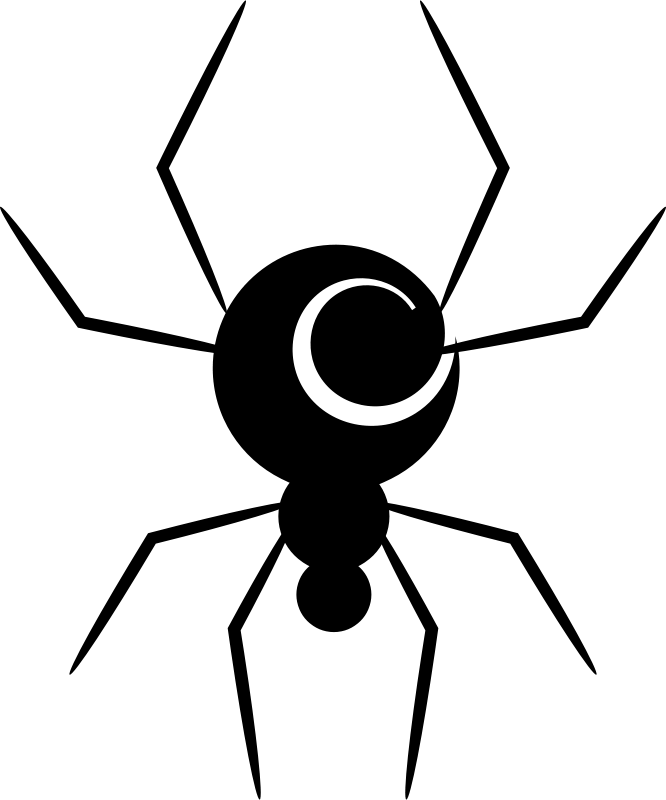
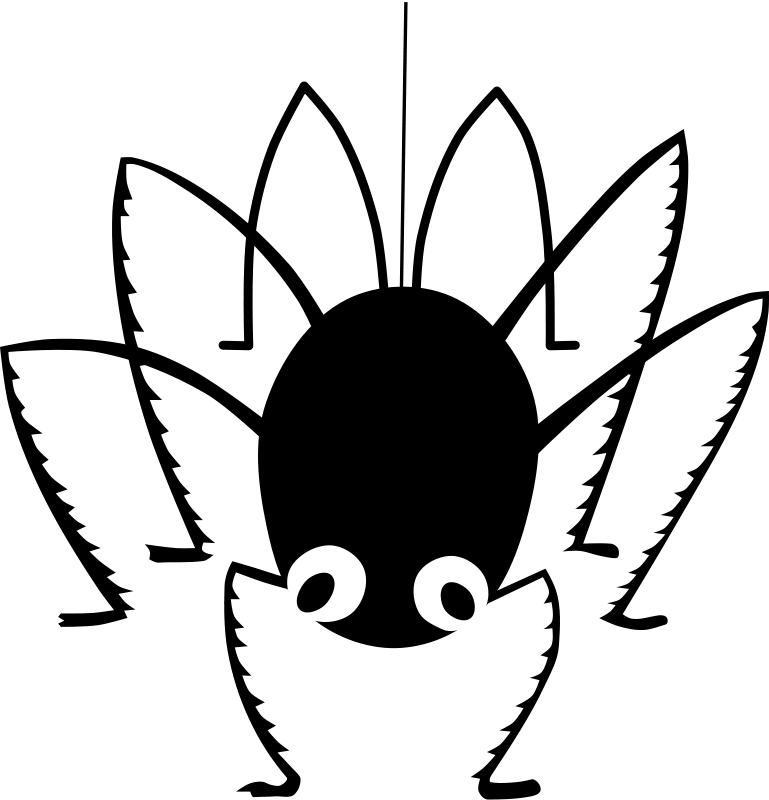
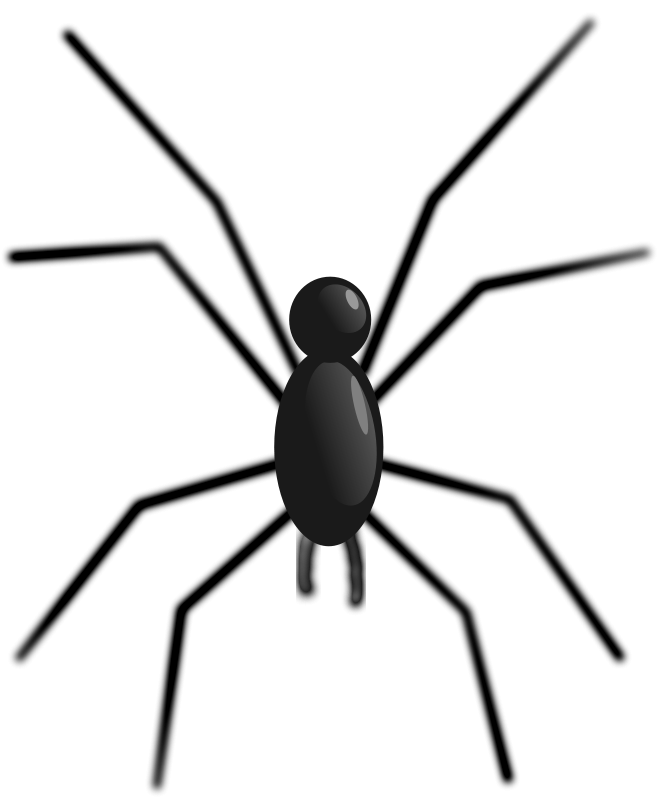
    What about the way animals are visually portrayed in stories? Must the illustrations be anatomically correct? For example: We all know that spiders have eight legs. Right? If I was to ask you to draw a picture of a spider, how would you do it? Have a go. It will only take a second or two. I can wait.

    whistle
    http://www.openclipart.org

    Now compare your drawing with these:

    spiderswirl2
    http://www.clipart.org
    Little_Miss_Muffet_Spider
    http://www.openclipart.org
    spider
    http://www.openclipart.org

    How did you go?

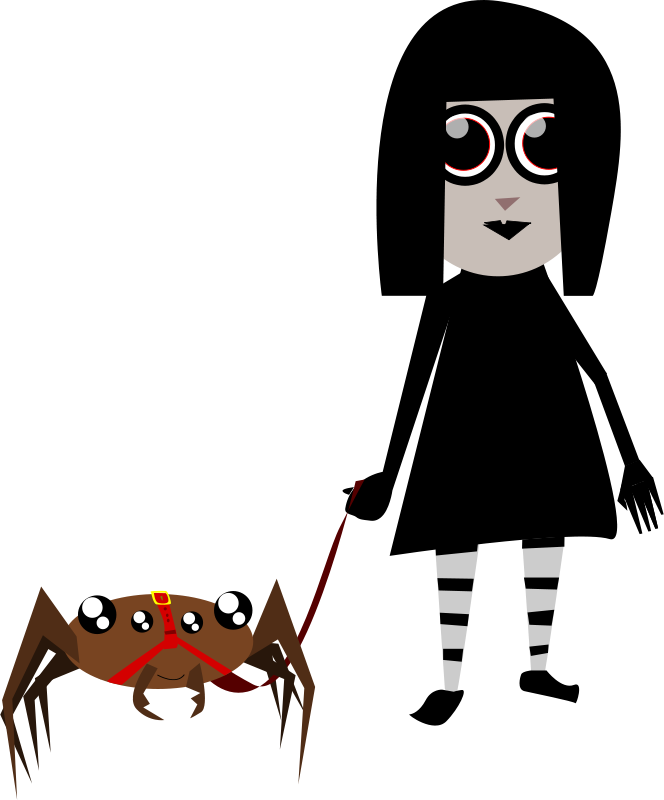
    While children easily realise that this picture is fictional:

    pet_spider_girl
    http://www.openclipart.org

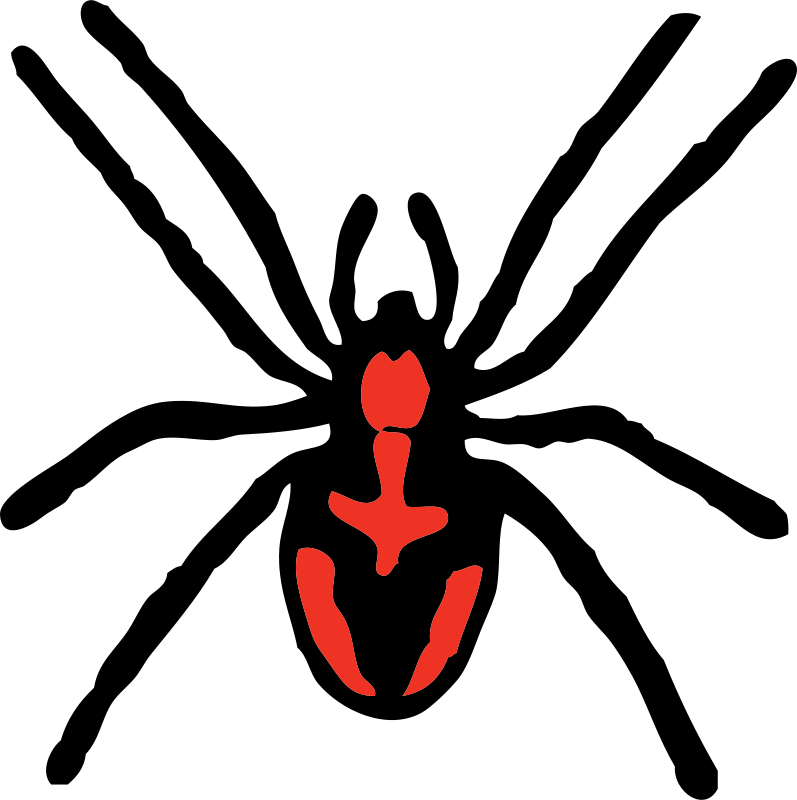
    They have less success is understanding what is wrong with the previous images. Spiders have eight legs. Those drawings show eight legged furry creatures. The story says they are spiders. That must be what spiders look like. Right? Unfortunately, real spiders look more like this one:

    johnny_automatic_spider
    http://www.openclipart.org

    All eight legs are attached to the cephalothorax, not the abdomen (or even one body part) as shown in most picture books. While I am sure you drew a spider correctly (didn’t you?), most children and many adults draw them more as they are depicted in children’s stories. Is this a problem?

    LOVE_2
    http://www.openclipart.org

    I am not for one moment suggesting that we get rid of fictional picture books and stories. I love them! And as I have said, and will continue to say, many times: they are essential to a child’s learning and development. There is no such thing as too many or too often with picture books. Instead, I would like you to consider the misconceptions that may be developed when the content of picture (and other) books may be misleading, and how we adults should handle that when sharing books with children. One of the books that gets me thinking most about this topic is “The Very Hungry Caterpillar” by Eric Carle.

    The Very Hungry Caterpillar

    As I said in a previous post, it has been published in over 50 languages and more than 33 million copies have been sold worldwide. I am almost certain that you will be familiar with it, and upon that assumption, I have one final task for you in this post. Please share your response to the question in this poll:

    To be continued . . .

    I would love to receive any other comments you would like to share regarding the content in this post.

    I do apologize that I have been unable to get the text and pictures in the layout I desire. I obviously have more investigations to carry out and learning to do.  🙂

    Maybe next time I’ll have it mastered, says she, hopefully!