Live Love Laugh Learn … Create the possibilities

Tag: learning

  • Ignorance is bliss … Learning to be explicit

    My Dad used to say that what I didn’t know wouldn’t do me any harm. He was not impressed when a brother wrote in my autograph book when I was in my early teens that what I didn’t know wouldn’t do me much good either!

    © Norah Colvin
    © Norah Colvin

    I’m torn between the two. I have come to realise that the more I know, the more there is to learn.

    the more I know the more there is to learn

    This learning journey never ceases. Each step is just one further into the unknown. I seem to know less now, or need to know more now, than I ever have before. How can that be?

    There are those around me who are content with who they are, with where they are, with what they are doing, and wake up to each day wanting no more than it brings. I strive to achieve that contentment, and practice the joy of being in the present moment, believing strongly in its rewards. But at the same time I strive to do more, to learn more, to achieve more. The doing and learning is joy in the present moment, for me. It is both exhilarating and disheartening to realise that the learning journey stretches so far ahead.

    Learning about learning

    I have spent almost my entire life thinking and learning about learning and education, particularly literacy education and the education of young children. Though the journey has been long, my knowledge is narrow and small, and of absolutely no use in a trivia quiz, unless the question happens to be about a nursery rhyme, and then don’t ask me too much about its “real” or original meaning.

    GDJ, Humpty Dumpty https://openclipart.org/detail/223086/humpty-dumpty
    GDJ, Humpty Dumpty https://openclipart.org/detail/223086/humpty-dumpty

    When I set upon my journey to create a website of teaching resources that I had made, I thought it was an easy thing. I had many resources already made. I just needed to get some illustrations done and put them on a website. What could be simpler than that?

    Simple?

    Every step I take drives me deeper into complexity, into the unknown. Unravelling the complexity demands that I be explicit, that I see and describe each minute step.

    Being explicit

    I always considered the ability to be explicit, to see and understand each step, essential to effective teaching in an early childhood classroom. If one was unable to see the exact spot where a child was going wrong, where a misunderstanding had been formed, or a misconception learned, or the potential for its occurrence, it was difficult to either prevent or repair it. I considered that ability to be one of my strengths as a teacher.

    nicubunu, broken chain https://openclipart.org/detail/22063/broken-chain
    nicubunu, broken chain https://openclipart.org/detail/22063/broken-chain

    Over the past few years when I have been giving art briefs to illustrators, my need to be explicit was stretched anew. I had to describe in precise detail exactly what I wanted. It was no use saying I wanted a castle on a hill and expect that the artist would be able to fill in all the details I could see in my mind. I had to explicitly describe it in detail:  did it need a moat or a drawbridge, was the drawbridge to be up or down, were there turrets or flags, and if there were flags, what colour and design they would have, how many windows, how many people, and what were they doing and how were they dressed …
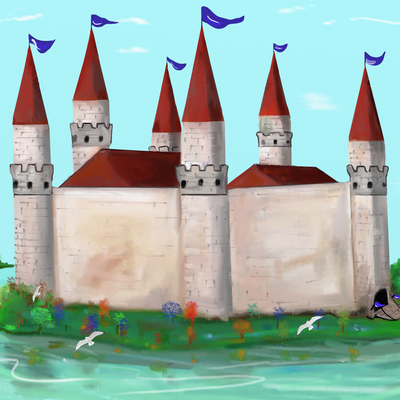
    © Norah Colvin Artwork by Kari Rocher Jones
    © Norah Colvin Artwork by Kari Rocher Jones

    Then it was time to start thinking more specifically about what I required of the website … More complexity to unravel!

    frankes, ship – colored  https://openclipart.org/detail/214500/ship-coloured
    frankes, ship – colored https://openclipart.org/detail/214500/ship-coloured

    Oh for a journey across the seas rather than deeper into complexity!

    It is said that it is darkest before the dawn. How much darker will it get?

    A recent comment by Sarah Brentyn of Lemon Shark alerted me to the fact that although I have mentioned my website in previous posts, I had not made it clear that the purpose of the website is to make my resources available through subscription i.e. to sell my resources. While some will be available without subscription, many will be available only by paid subscription. I have received a quote for establishing the website, which I am considering. I have previously referred to it being my jetski. I think I was fairly explicit about my requirements in discussions with the designer.

    However, I want some of my resources to be interactive, not downloadable, used only on the website by paid subscribers. It appears that creating the types of interactivity I have in mind will be more problematic, but they are what I consider will be my point of difference. I have had to learn to explain, very explicitly, the types of interactions I require. I even made videos demonstrating the interactions in the hope of achieving greater clarity.

    However, it was while being explicit about these steps that I realised I had omitted something from my website brief that will be necessary for the interactions to be used effectively, if they can be made at all.

    © Norah Colvin
    © Norah Colvin

    And so I go in my merry dance – up the ladders and down the snakes, hoping to fall into a pool of clarity rather than a puddle of complexity.

    Thank you for allowing me to express my muddle through writing in an attempt to make sense of it all.

    Thank you

    Thank you for reading. I appreciate your feedback and suggestions. Please share your thoughts.


  • Experiential learning – what’s good and what’s hot

    farm

    I am a proponent of learning by experience, of learning through one’s own explorations and making one’s own discoveries. In early childhood centres it is sometimes called ‘hands on’ learning. The recommendation is to provide opportunities for children to learn by doing rather than simply by listening to someone tell about it or by reading information in a book. For example, experiencing the sights, smells and sounds of a farm create an enriched understanding of farm life that is not possible simply from looking at pictures of farm animals in a caption book. Activities like mixing and making with modelling dough, or building and creating with construction sets provide opportunities for developing numerous skills and understandings.

    That’s not to say that experiential learning is best in every situation or that learning from the explanations of others, including reading information in a book, is less worthy. Indeed there is a place for each and it is important to get the balance, timing and application right. You would not need to view many posts on my blog (for example here and here) to realise that I am a proponent of reading also and believe that instilling a love of reading is one of the greatest gifts a parent can give a child.

    In their book A New Culture of Learning: Cultivating the Imagination for a World of Constant Change, Douglas Thomas and John Seely Brown discuss the differences between explicit knowledge and tacit knowledge.  This chart shows my understanding of some of the differences.

    Explicit and tacit learning


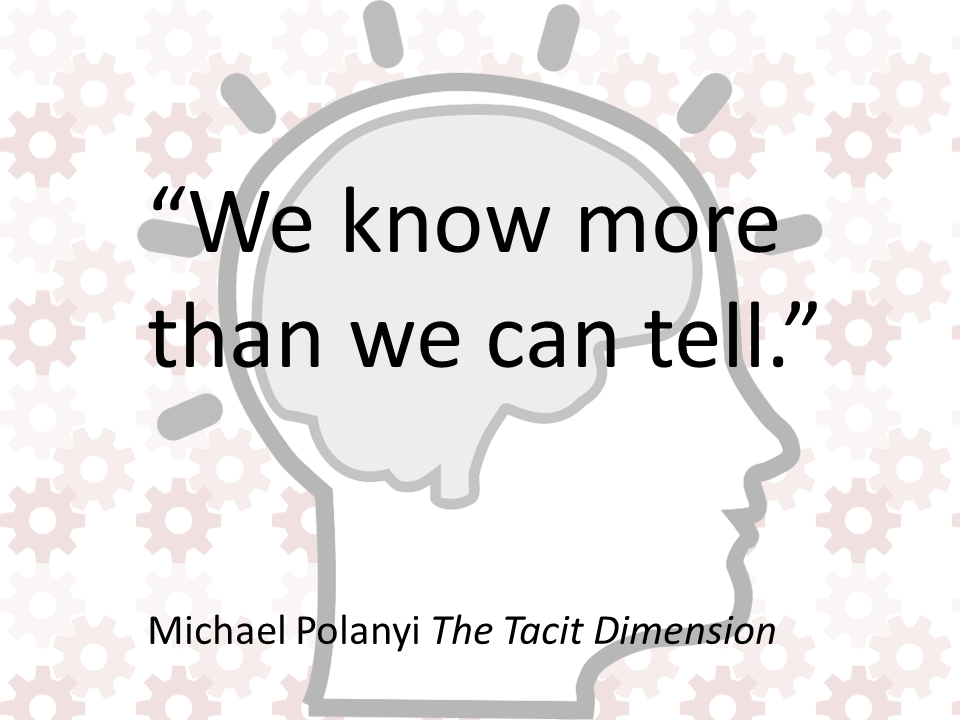
    Michael Polanyi  The Tacit Dimension

    I think it would be undisputed that there is knowledge best learned through explicit instruction and other best learned through experience. I am sure you can think of many examples in your own life, like riding a bicycle, learning a foreign language or playing a musical instrument.

    netalloy, glossy flame https://openclipart.org/detail/91951/glossy-flame
    netalloy, glossy flame https://openclipart.org/detail/91951/glossy-flame

    But what about teaching young children about heat? It is not far into the life of any young child that they are cautioned about the heat of an oven or stove, heater or barbecue plate. But what is “hot” if you have never experienced it?

    Thomas and Brown say that “when a parent first tells a child not to touch a flame because it is hot, the child will almost always put out her hand and get burned” because the child has only been given the explicit part of the information, the part that could be articulated: that “Fire is hot”. When the child is burned much more information is learned by the body: that it hurts and is unpleasant. The child is then able to make connections with other similar “hot” things and situations.

    I think neither of the authors nor any parent would suggest a child be burned “for educational purposes” but the power of experience can be seen in this example. Perhaps it also helps to explain why young children need constant reminders to stay away, or precautions need to be taken to protect them, from hot things. Without the burning sensation they have not formed a true understanding.

    thomas and brown - learning

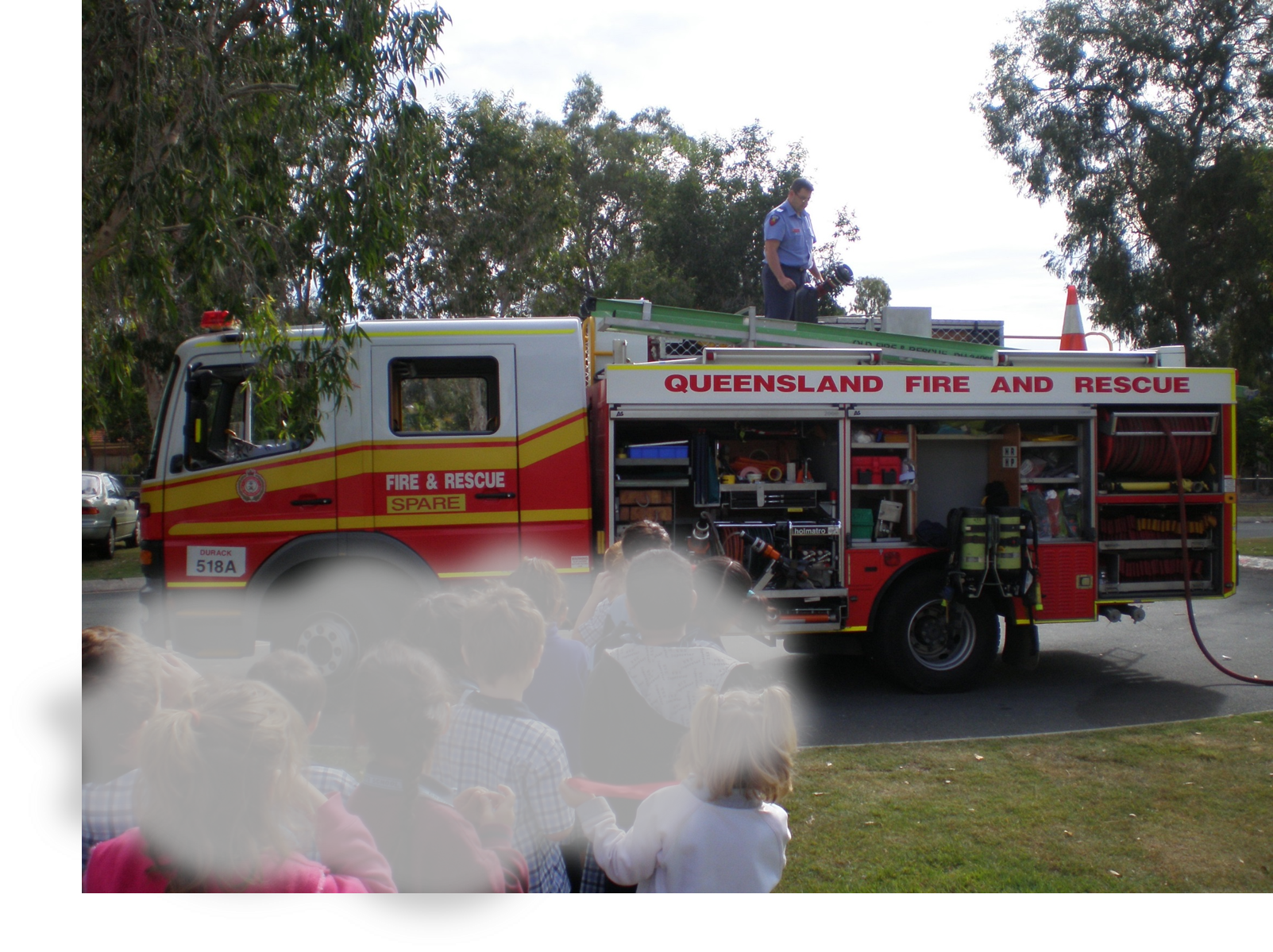
    At my previous school our year one classes were always visited by the local fire fighters who talked about fire safety, explaining the difference between “good” fires (like birthday candles, barbecues and campfires) and “bad” fires, while warning that even good fires could quickly become bad  if not monitored correctly.

    They talked about the need for smoke alarms in the home and the importance of having escape routes and meeting places planned and practised. They ensured students knew their full name and address and the procedure for calling emergency (000 in Australia) if the need should arise. These are things that all young children should know.

    firetruck

    The children were always excited about the firefighters’ visit as they got to look at the firetruck close up, maybe even sit in it or, if they were lucky, see how high they could spray water with the large hose. The tacit knowledge learned through this type of experience, combined with explicit knowledge provides a context that allows children to learn the realities of fire danger and the importance of safety. It wasn’t unusual for the crew to receive a call and rush away during one of their visits, adding further to the overall experience for the children.

    rg1924, unexpected frog in my tea    https://openclipart.org/detail/21079/unexpected-frog-in-my-tea
    rg1924, unexpected frog in my tea https://openclipart.org/detail/21079/unexpected-frog-in-my-tea

    Thinking about heat and education, and the hold that explicit knowledge and its testing has on current practice makes me think of the story about a frog in a pot of hot water.

    The story says that if you were to put a frog into a pot of hot water, it would jump out immediately; but that if you were to put the frog into a pot of cold water which is warmed slowly, the gradual increase in temperature wouldn’t be noticed and the frog would be boiled alive.

    Perhaps this is why some educational practices are accepted without question. People have become so used to them, with small incremental changes seeming insignificant and unworthy of comment. However the cumulative effects over time can be enormous. By the time they are realised, making amends would require so great a change, possibly a total restructuring, that it would defy plausibility.

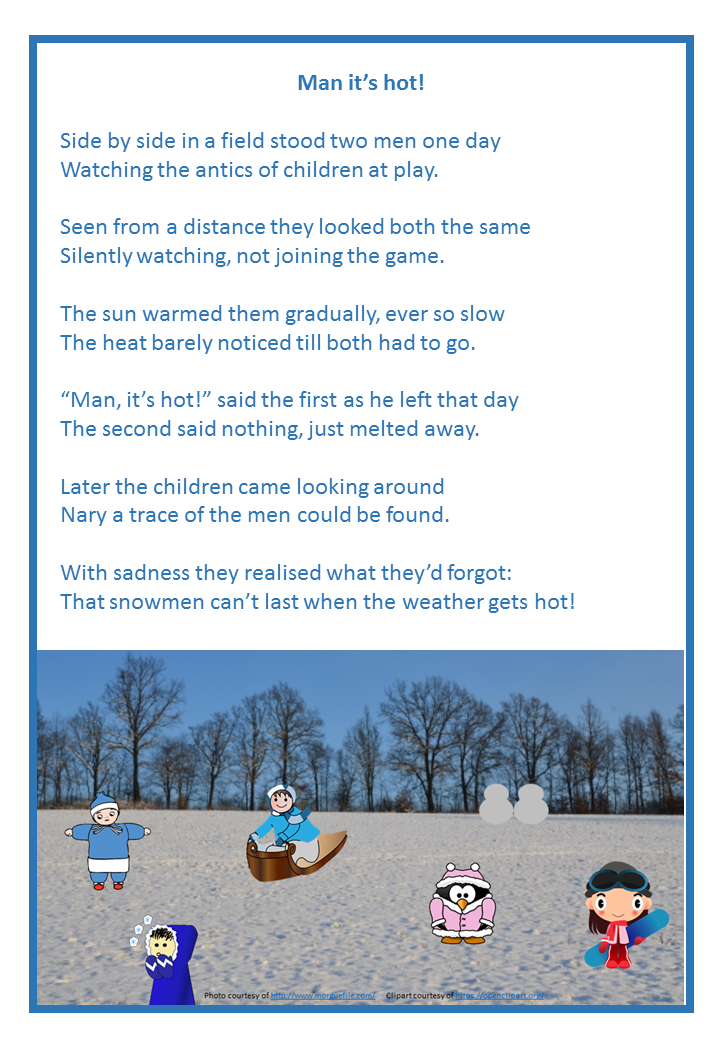
    It is this thinking that has led to me my flash response to the challenge set by Charli Mills at the Carrot Ranch this week to In 99 words (no more, no less) write a story that includes the phrase, “Man, it’s a hot one.” I hope my contribution is a little more environmentally friendly and suitable for young children than boiling frogs.

    Man it's hot

    Thank you

    Thank you for reading. I appreciate your feedback. Please share your thoughts about any aspect of this post or flash fiction.


  • Can you dig it?

    This week at the Carrot Ranch Charli Mills is talking about dirt and has challenged writers to In 99 words (no more, no less) write a story about dirt.

    In her post Charli says that,

    writing is like gardening - Charli Mills

    and talks about sowing compassion to make our world a “worthier place to live”.

    These are wonderful ways of thinking about dirt and good reminders of the importance of the earth beneath our feet, which is often taken for granted, even ignored, unless one is a farmer, a gardener, perhaps a miner, or possibly a child.

    Morguefile  http://mrg.bz/omEd2M
    Morguefile http://mrg.bz/omEd2M

    Children are often admonished about playing in the dirt, as if washing off a little soil  was the greatest difficulty. In our towns and cities we cover the soil with concrete and leave few patches of bare earth where children have an opportunity to dig.

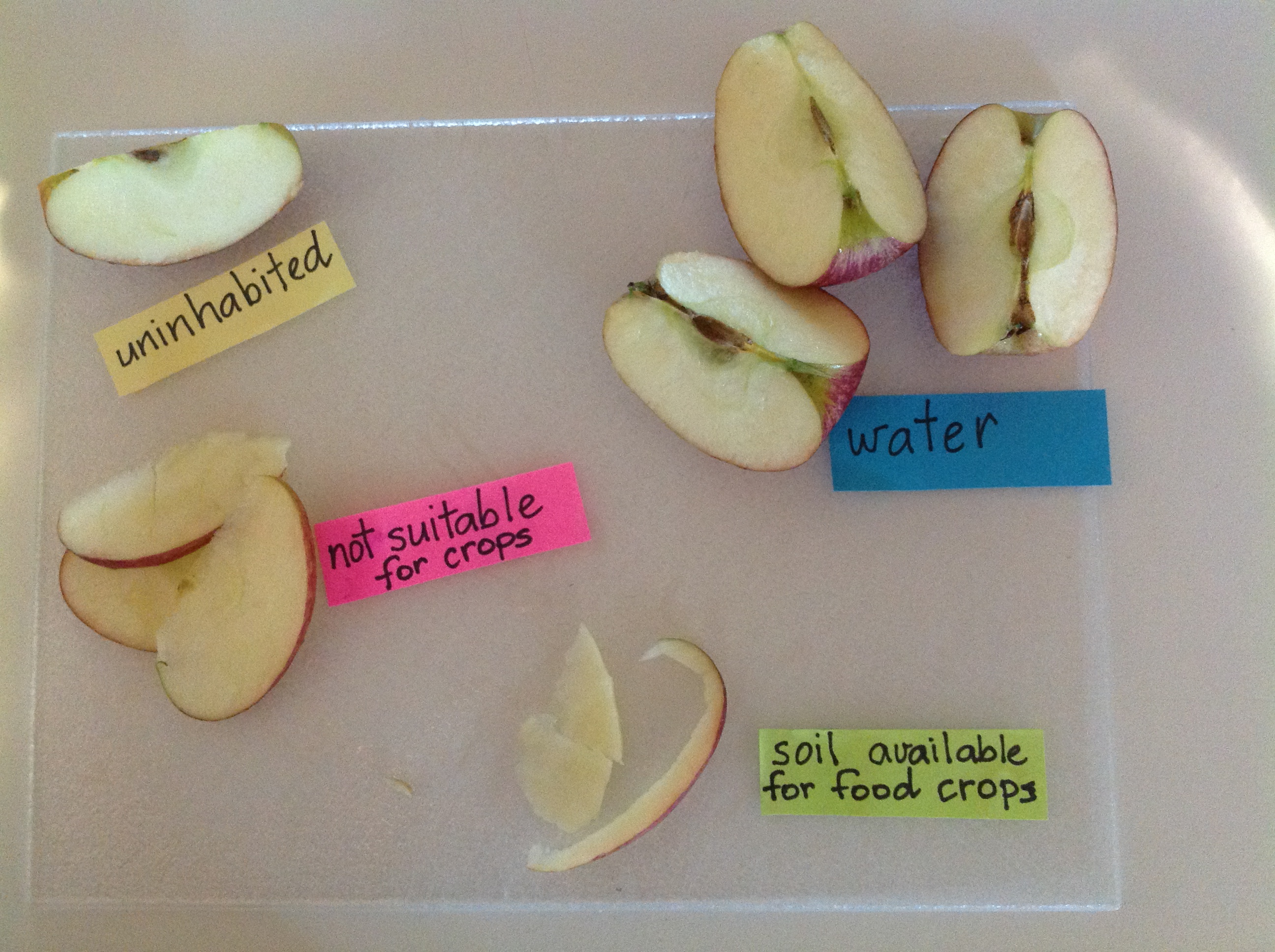
    Soil, though an essential resource of our Earth, is often overlooked. Ask a young child what living things need and they may say “water, air, food, sunshine and shelter”. Soil won’t rate a mention. But without it we wouldn’t have a thing to stand on! Nor would we have our other essentials: air, food and shelter – all dependent on the soil for their production.  The importance of soil and of conserving becomes even more evident with the realisation of how little of the Earth’s surface is available for producing food.

    © Norah Colvin
    © Norah Colvin If Earth was an apple . . .

    Another great gift from the soil is knowledge. Much of what we know of Earth’s history and human history has been revealed by the soil as successive layers have been exposed or excavated; uncovering secrets of the past and enabling a much richer understanding of earlier times.

    dinosaurs at museum Jan 91
    © Norah Colvin

    Our knowledge of dinosaurs has all been revealed from the earth with the first discoveries and identifications made only a few hundred years ago.  And there is still much more to be discovered. My children and grandchildren, along with many other children and adults, are fascinated by dinosaurs. How exciting it would be to make a new dinosaur discovery, find hidden treasures or unlock secrets of the past!

    © Norah Colvin
    © Norah Colvin

    It is possible that many more dinosaur, and other, discoveries are yet to be made. The world’s only known evidence of a dinosaur stampede was found in Australia just a little over fifty years ago.  Even more recently a gardener in the UK found a dinosaur bone in his backyard! In the US, if you find a dinosaur fossil in your backyard it’s yours to keep!

    According to this video, finding dinosaur fossils is quite easy:

    The excitement of making new discoveries  and finding answers to questions is motivation for many.

    In his book Good Ideas: How to Be Your Child’s (and Your Own) Best Teacher Michael Rosen relates a story told by David Attenborough. He says that, as a child, David took an interest in bones and if he was out walking and found some he would take them home and ask his father (a GP so would probably know) about them.

    But his father didn’t just tell him. Wanting his son to be curious and interested in finding things out for himself, he responded, for example: “I wonder if we can work it out . . .” They would then look through books about zoology and anatomy and try to identify the bone’s origin.

    Knowing that it is through the comparison of found bones with bones of familiar creatures that scientists have been able to work out much of what we now know about dinosaurs and other extinct creatures makes such an activity even more exciting and inspirational.

    Rosen goes on to share an experience from his own school days. When a teacher confessed to students that he didn’t understand Comus by Milton, which had been set for study, the class and teacher spent the year together figuring out its meaning. Rosen compares the effectiveness of this approach to many others, stating that study techniques, “didn’t teach me how to find things that I really wanted to learn about. It didn’t take me down interesting side-alleys where I would find things that I didn’t know I would be interested in until I found them.” But he says what he learned from exploring Comus was “something that’s more to do with feeling than knowledge or learning: it was a confidence that I could investigate and discover things for myself. It’s ironic, isn’t it, that I got that feeling from someone who quite genuinely didn’t understand something?

    A sense of wonder and curiosity, and a desire and willingness to find out for oneself answers to one’s own questions is fundamental to learning. Digging in the dirt occasionally can’t do that much harm. You never know what new discovery you may make!

    Moini, A treasure chest with lots of twinkling gold coins, https://openclipart.org/detail/188617/treasure-chest
    Moini, A treasure chest with lots of twinkling gold coins, https://openclipart.org/detail/188617/treasure-chest

    The thought of just such a discovery is what inspired my response to Charli’s challenge:

    Digging for gold

    Her spade crunched against the obstinate soil. Then tap, tap, tap, another thin layer loosened. She scooped up the soil and tossed it onto the pile growing steadily beside the excavation site. With expectant eyes and gentle fingertips she scanned each new surface. Then again: tap, tap, tap — toss; tap, tap, tap —toss!

    She pushed back her hat to wipe her sweaty brow, leaving a smudge of dirt as evidence. She glanced skyward. The sun was high. She’d been digging for hours. She must find something soon. What would it be? Pirate’s treasure or dinosaur bones . . .?


    Thank you

    Thank you for reading. I appreciate your feedback. Please share your thoughts about any aspect of this post or flash fiction.


  • Are you game?

    This week at the Carrot Ranch Charli Mills is talking about childhood games and has challenged writers to In 99 words (no more, no less) write a story that involves a children’s game or rhyme. I think she chose this topic just for me. Thank you, Charli.

    I love games and am a strong believer in the use of games to enhance learning. I have memories of playing games that span my lifetime, from early childhood until the present, and have visions of playing games far into the future.

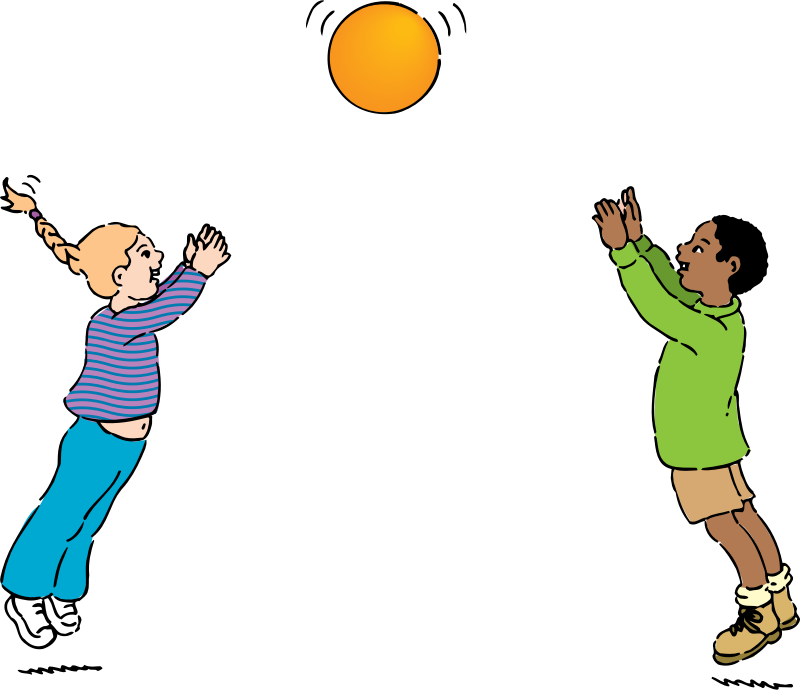
    Johnny Automatic, cartoon of a girl and boy playing with a ball https://openclipart.org/detail/721/playing-ball
    Johnny Automatic, cartoon of a girl and boy playing with a ball https://openclipart.org/detail/721/playing-ball

    One of my earliest memories of an organised game was of “Drop the hanky” played at a birthday party. I was about five years old at the time. I think that perhaps, until this event, I had only ever played imaginative games with my brothers and sisters. I was obviously not familiar with the rules or the ethos of the game. I’ll let my flash (non-) fiction explain.

    Plum pudding

    We sat in the circle chanting,

    “I wrote a letter to my love and on the way I dropped it.”

    “It” skipped around the outside, waving a handkerchief.

    “One of you has picked it up and put it in your pocket.

    Not you. Not you. Not y-o-u!”

    Suddenly “It” was running and children were scrabbling behind them.

    “Run,” they called.

    Then “It” was beside me.

    “Plum pudding!” they all screamed hysterically.

    The adult pointed to the centre of the circle. “We’ll have you for dessert,” he grinned.

    I cried, wondering what it would be like to be eaten alive!

    © Norah Colvin 2015
    © Norah Colvin 2015

    Obviously I was traumatised for the memory to be so vivid and almost nightmare-like since the memory ends abruptly with the fear. Obviously I wasn’t eaten for dessert, I survived the trauma and, to complete the fictional narrative, I guess you could say “I lived happily ever after.”

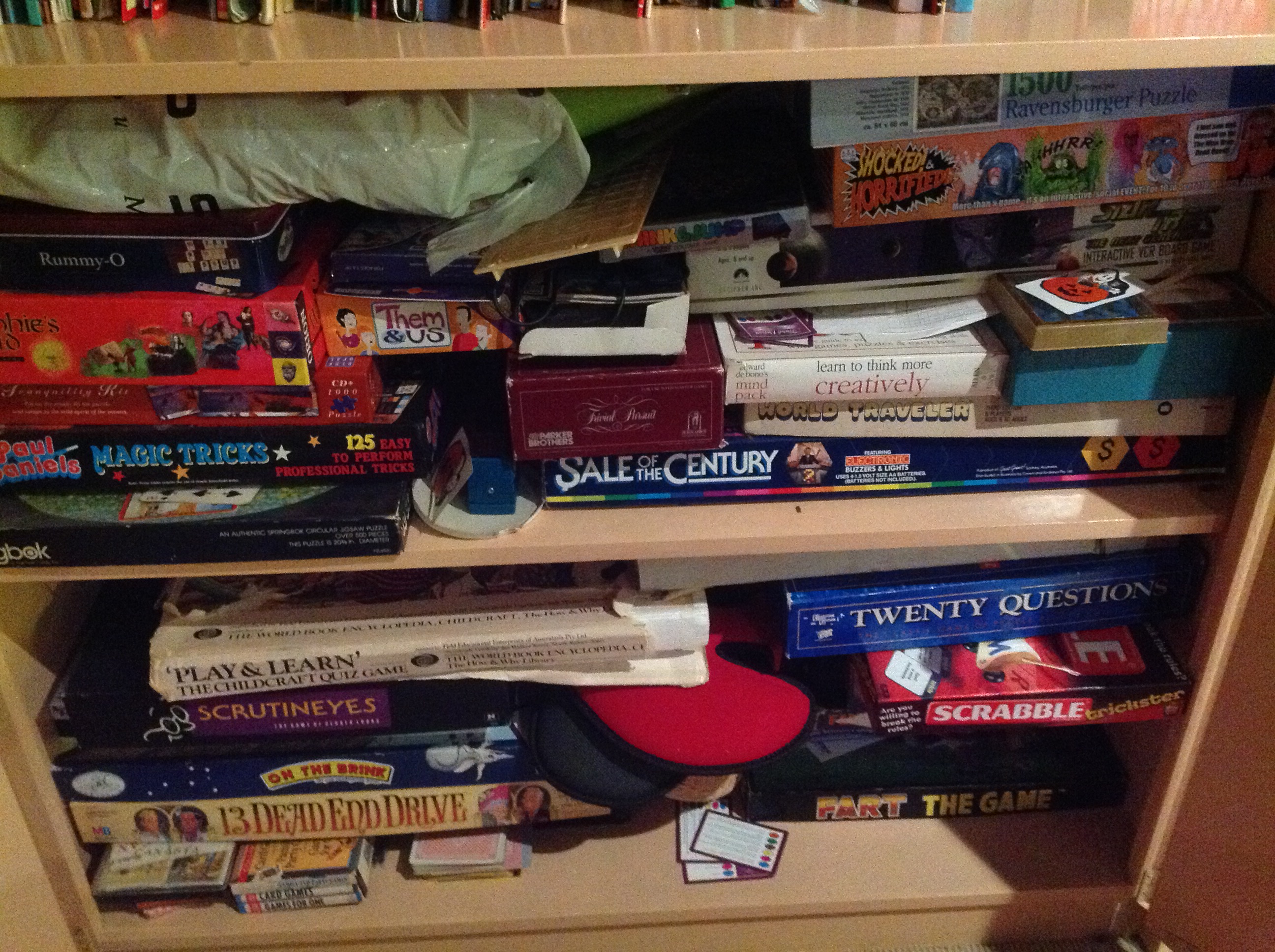
    But games don’t need to be traumatic. Games are better when they are fun; and I have many more memories of having fun with games than I do of being traumatised by them. Some of my “best” memories are of the laughs shared playing games like “Balderdash” and “Billionaire” when we (hub, son, daughter and partners) set aside traditional holidays for playing games together as a family. My house may have shelves laden with books, but they also have cupboards bursting with games.

    © Norah Colvin
    © Norah Colvin

    We didn’t always play purchased games. Sometimes we made up our own. It takes some skill in problem solving to think up a new game that will be fun to play with just the right amounts of challenge and competition, and an equal chance of “winning”, if there is a winner. Games without a winner, played for the fun of playing, are just as enjoyable.

    I have always included games in my class program. As well as being fun, if carefully chosen they can also progress learning. Games can be played at the beginning and conclusion of sessions; at transition times to reenergise, refocus and refresh; and as part of the teaching/learning program with whole class, small group or individual participation for targeting practice of particular concepts.

    One obvious benefit of playing games is the development of social skills such as:

    • Sharing
    • Taking turns
    • Cooperation
    • Dealing with competition
    • Accepting a loss
    • Accepting a win graciously

    In their book “A New Culture of Learning: Cultivating the Imagination for a World of Constant Change”, Douglas Thomas and John Seely Brown talk about ““arc of life” learning, which comprises the activities in our daily lives that keep us learning, growing and exploring.” They say, “Play, questioning, and — perhaps most important — imagination lie at the very heart of arc-of-life learning.”

    Throughout the book they talk about the importance of collaboration in engaging online in multi-player games and say that When understood properly . . . games may in fact be one of the best models for learning and knowing in the twenty-first century . . . Because if a game is good, you never play the same way twice.

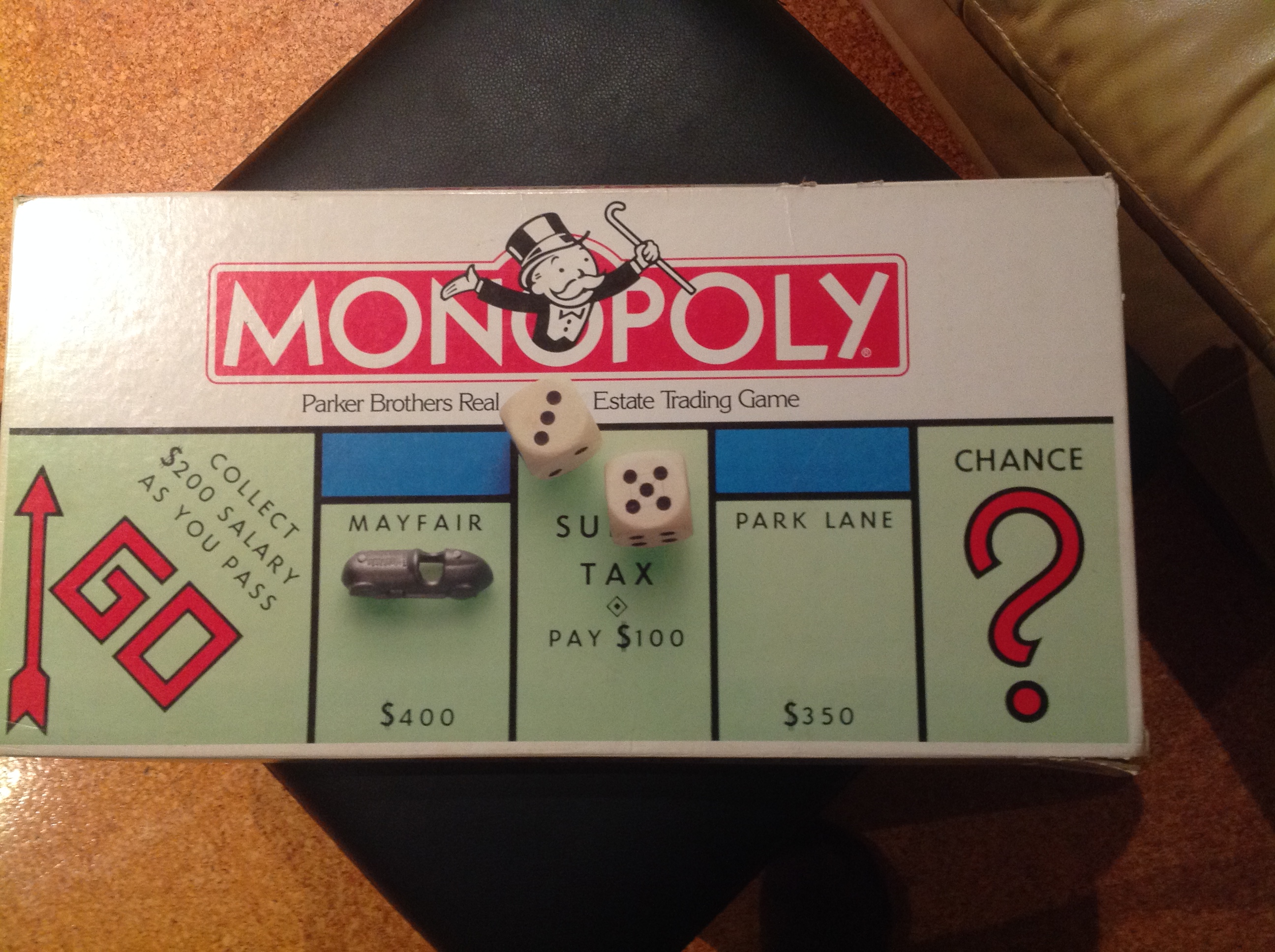
    monopoly

    Robert Kiyosaki in his book “Why “A” Students Work for “C” Students and Why “B” Students Work for the Government” talks about the importance of learning through games and explains how he learned, and was inspired to learn more, about finance from playing “Monopoly”. He says that Games are better teachers than teachers.” While I prefer to not agree with that statement in its entirety (I don’t even like playing Monopoly), I could understand his reasons for making it.

    Rarely a day would go by that at least one game wasn’t played in my classroom. We would play games in literacy groups that required children to read and think critically. We would play games in maths groups to practice skills in fun ways or to solve problems cooperatively. We would play games in science to try out ideas or research information. Some of the games involved physical as well as mental activity. Some were played with the entire class, and some on their own.

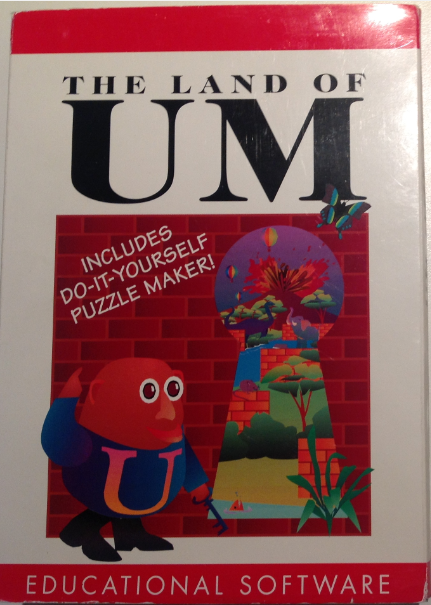
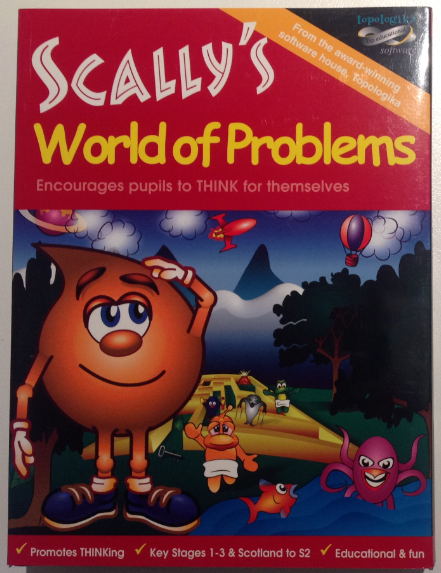
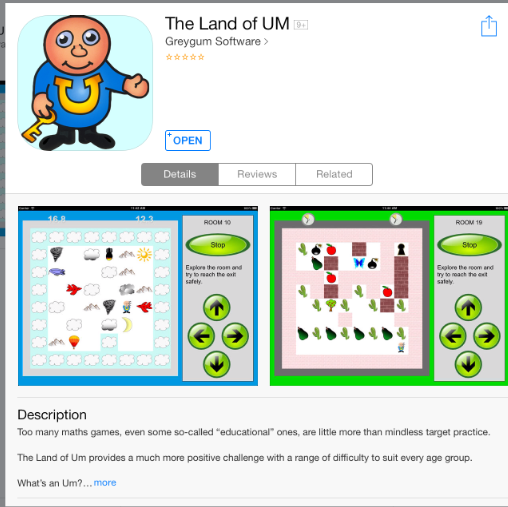
    One game we used in maths groups as well as an activity in the last few minutes of the day was a problem solving game that I was involved with from its inception, The Land of Um or, as it is known in the UK, Scally’s World of Problems. (Also available as an app.)

    http://www.greygum.com.au/nebula/index.php/the-land-of-um

    Scally


    When I was asked for an idea for a program, I suggested something that required children to explore to find out “what happens if” and “how things work”, much as they learn from their exploration of the “real world”. I also suggested that what they learn be consistent and apply at the next level. From that small seed and through the collaboration and synergy of a small group of creative people the “Land of Um” was born.

    Because, in my recollections anyway, it was “my” idea, I am very proud of “Um” and enthusiastic about its potential to encourage children to develop the thinking skills involved in solving problems.

    Um app

    In my class the children worked enthusiastically and collaboratively in small groups on an interactive whiteboard, taking turns to control the “Um” while working together to find the solution to each puzzle. As the level of difficulty increased the children needed to plan ahead, to visualise steps and predict what would happen and the effects of different actions. At each new level and in each new world, while the basics remained consistent, there was always something different to learn and explore. The children never tired of the using the program and were always eager to be the one to suggest the solution to the next problem. It was/is a joy to know that I had a part to play in the design of this program that has so many benefits to learners, not least of which is the fun of working together to solve problems.

    How significant are games in your life? What special memories do you have?

    If you are interested, there are many more stories about games to read on Charli’s blog.

    Thank you

    Thank you for reading. I appreciate your feedback. Please share your thoughts on any aspect of this post or flash fiction.


  • Playing with possibilities

    127

    Creating an environment which nurtures children’s learning and development is as important as creating an environment that nourishes and encourages the growth of plants in a garden. The link between the two was first recognised by Froebel in the early 19th century when he coined the term “kindergarten” which translates to “garden for children” (kinder meaning child and garten meaning garden), and created the first educational toys.

    Froebel “devoted his life to educating children and developing methods to maximize human potential”. He was the first to recognise the importance of a child’s early years (birth to three) and considered creativity to be something in all of us.

    Froebel’s kindergartens were the first “formal” education for young children and his work greatly influenced that of other educators such as Maria Montessori and Rudolf Steiner. His beliefs, for example that children have both unique needs and capabilities are still influential today. He believed in the importance of play and some of his toys were favourites of people such as Buckminster Fuller and Albert Einstein.

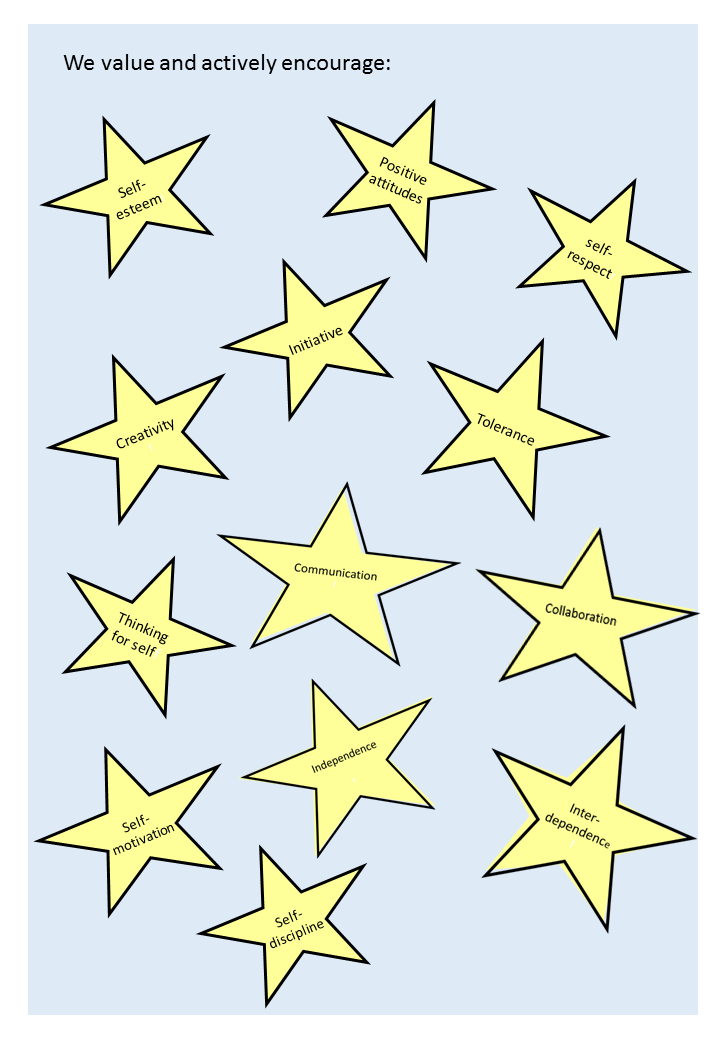
    I have touched on the topics of play, creativity and children’s uniqueness in previous posts. A respectful, encouraging, nurturing and stimulating environment underpins all that I value in education; as does a belief in the power of play to develop understandings of self, of others and relationships, of the world and how things work, and to inspire thoughts of what could be, to imagine possibilities never before imagined.

    The poem Education is expresses my beliefs about education and has informed my decision making every step of the way.

    In documents prepared for introducing myself to other educators or potential employers I explained it this way:

    Statement of values:

    I value individuality over group consensus

    I value creativity over conformity

    I value self-discipline over imposed order

    I value ingenuity over “one right way”

    I value choice over restriction

    I value questioning over silence

    I value independence over dependence

    I value self-confidence over submission

    I respect children as people in and with their own rights. I provide an environment which is rich, stimulating, open and caring, and in which the characteristics I value can flourish.

    At the time of writing it I believed it to be a true reflection of my values and the environment I provided in my “Create-A-Way” sessions, and would provide in the independent/alternative school I was working towards establishing.

    The values of the “school” I was setting up were stated this way:

    Colo Values

    Just as it is important for gardeners to learn from the wisdom collected by other gardeners, it is important for teachers to learn from the wisdom collected by other educators.

    56


    Without a set of guiding principles it is easy to be blown off-course by the winds prevailing at the time. While I acknowledge that I may have fallen far short of the values espoused, that they guided my direction, decisions and choices could not be questioned. The current climate makes it difficult, but I am yet to read of a time that could be considered a golden age of education.

    36

    This week at the Carrot Ranch Charli Mills is talking about roses; roses that grow in gardens and roses as symbols of life’s pleasures and joys. She challenged writers to In 99 words (no more, no less) write a story that includes a rose.

    Because my blog has an educational focus, I always like to give Charli’s prompt an educational twist. Over recent months I have enjoyed the additional challenge of finding a way of applying the prompt to the life of Marnie, a character whose story I have been developing.

    Marnie is from a dysfunctional family and suffers many disadvantages. Fortunately she has found an ally in an art teacher who helps her develop self-respect and hope for a better future. A few weeks ago (in response to a different prompt) we learned that she had lived under a different name after leaving home. Could it perhaps be Rose, a name inspired by this interaction with her adored teacher?

    99

    Still life

    Marnie observed the roses Miss R. had arranged for class, carefully assessing the colours and studying the lines while sketching them on the canvas, striving to match their perfection. Oblivious to all but Miss R. and the roses, for one hour nothing else mattered.

    As other students streamed out Marnie hung back to chat with Miss R.

    Miss R. handed her a rose from the vase saying, “You are that rose. You may be surrounded by thorns, but the beauty of the rose is inside you. Remember that always. A rose by any other name would smell as sweet.

    Thank you

    Thank you for reading. I appreciate your feedback. Please share your thoughts about any aspect of this post or flash fiction.

  • A garden party

    www.openclipart.org
    http://www.openclipart.org

    The purposes of education are many; but perhaps one important purpose of “free” public schooling is to ensure that everyone is provided with the opportunity of being educated. While this goal is achieved to a certain extent, inequalities of opportunity still exist, many of which are related to socioeconomic status (SES).

    letter from Camus

    While there is no doubt that a teacher can have a powerful effect upon the lives of students and any teacher would love to receive a letter such as that written by Albert Camus, socioeconomic status is often considered to be the most reliable predictor of success in school and, therefore, in life. There are many reasons for this, few of which have anything to do with intelligence.

    www.openclipart.com
    http://www.openclipart.com

    According to Macquarie University the majority of students in tertiary education are of mid to high socioeconomic status. The parents of these students may have professional backgrounds and may have attended tertiary institutions themselves.  Most have an appreciation of the benefits of higher education and are able to continue supporting their students, to some extent, while they study.

    While students of lower SES are attending tertiary institutions in greater numbers they are disadvantaged in doing so by a number of factors, primarily financial in origin. Although Australia is supposedly free of class distinctions, attitudes towards those from lower SES areas are often demeaning and unsympathetic. Students from these areas may battle to develop the self-esteem that seems to be a birthright for others from more privileged backgrounds. The negativism with which they are viewed, and some come to view themselves, can become a self-fulfilling prophecy.

    Ready for school - year 2
    Ready for school – year 2

    I was a fortunate one for, while I grew up in a family with low SES background, my parents saw the value in education and sacrificed much for their children to have the opportunities it provided. The high costs of tertiary education that are now incurred could not have been afforded, but I achieved well enough in school to obtain a scholarship to teachers’ college and a three-year bond (guaranteed employment) when that was finished.

    Nowadays there is no such thing as guaranteed employment and few scholarships. Many families cannot afford to have post-secondary/adult students continue to live at home and not contribute to expenses while they undertake further study. This means that students have the additional burden of working while they are studying. Many opt out of study altogether to seek long term employment, often in low paying jobs with little opportunity for advancement. And so the cycle continues. The lack of permanent employment even for graduates makes deferring earnings less desirable again.

    caravan

    Of course the disadvantage doesn’t just begin when approaching final years of school. The impacts can be observed from the earliest age. (My suggestion for an early learning caravan addresses this in part.) Although education is provided “free” to students, there are many other associated costs that families may struggle to meet, such as books, equipment, and extra-curricular activities such as excursions and incursions.

    In most Australian schools, the wearing of uniforms helps to minimize differences that may otherwise be obvious by choices of clothing and footwear. It also helps to reduce costs. Sometimes additional activities can be a drain on family expenses, and while many schools will fund expenses for those in need, not all families are willing to ask for that help.

    DCF 1.0

    Studies have shown that many children arrive at school without having eaten breakfast. While this phenomenon can occur in any family, it is more prevalent in low SES areas. Some schools are now providing a healthy breakfast for students when they arrive at school. I think this great as hungry children tend to have difficulty concentrating and learning, are often lethargic and may suffer from mood swings and negative attitudes. I know how irritated I become when I am hungry. My family “joke” about not getting in the way of me and my food! How much worse for children who come to school with empty bellies.

    Of course these issues are compounded for children who live in dysfunctional families. As much as we may try to be inclusive and equitable in the way we treat them, these students are often the ones who notice their differences and inadequacies and become most self-critical. It can be a very difficult task to change the attitudes and habits of generations.

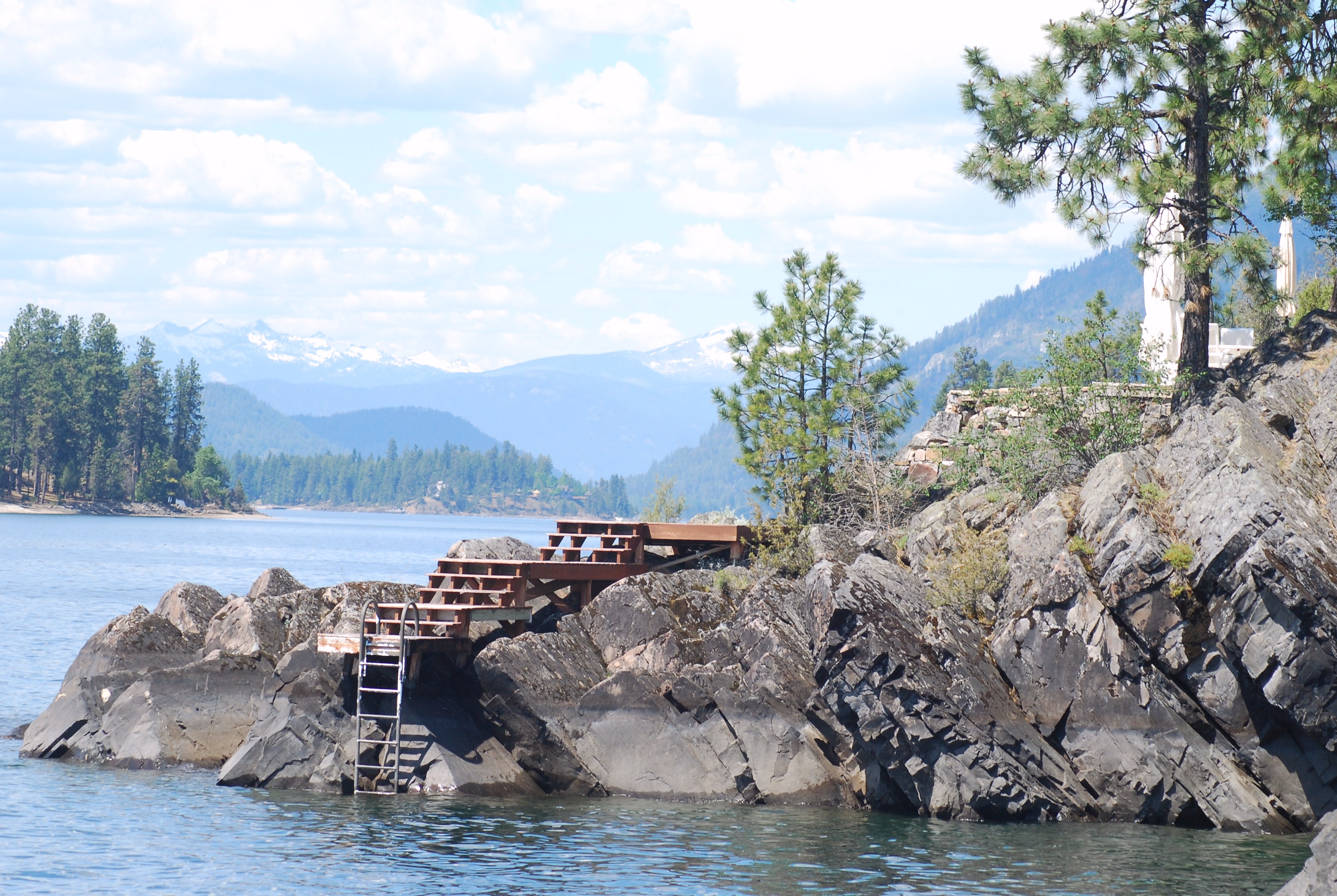
    This week at the Carrot Ranch Charli Mills talked about attending a garden party. The hosts and guests at this party had obviously enjoyed some of the finer things that life reserves for a few.

    lake-pend-oreile-cruise-may-21-31

    Charli shared a photo of a rather idyllic spot on an island and challenged writers to In 99 words (no more, no less) write a story, using the above photo as a prompt.

    Well the photo is beautiful, but I couldn’t get away, I was stuck at the garden party. I thought it was a wonderful analogy for the rewards that can be had from an education; rewards that may be obvious and perhaps available to many, but rewards that may be out of reach to others because of circumstances over which they have no real control. I thought of Marnie who suffers the double disadvantage of a dysfunctional family in a low SES area; but who knows there is something better out there and wants it for herself.

    Thanks to Charli for her prompt, here is another episode from Marnie’s life. I hope you enjoy it.

    The garden party

    Marnie’s face pressed into the bars of the tall white gate with amazement: white-covered tables laden with food; chairs with white bows; white streamers and balloons; and a band!

    But the ladies had her spellbound with elegant dresses and high, high heels; flowers in their hair and bright painted lips.

    A man in uniform opened the gate to guests arriving in limousines. Marnie followed.

    “Not you, Miss,” said the uniformed man.

    Marnie held out her invitation, “Jasmine . . .”

    But he’d closed the gate and turned away.

    Marnie looked down at her stained dress. What was she thinking?

    Thank you

    Thank you for reading. I appreciate your feedback. Please share your thoughts about any aspect of this post or flash fiction.

  • A creative mistake

    Today I am sharing a lovely post published by Marilyn Warner on her blog Things I Want To Tell My Mother. Her post Ooops! is just a short one but it includes some mighty fine reminders:
    • that mistakes can become successes if one doesn’t give up
    • that mistakes are only failures if one chooses them to be

    The ability to accept mistakes as inevitable, and to embrace the messages in them as stepping stones to success are important attitudes for learning at any stage. (And as Marilyn says, we are not talking here about life-changing, heart-breaking mistakes with tragic consequences, just the little ones that can be redefined if we don’t give up.)

    Enjoy!

    Thank you


    Thank you for reading. I appreciate your feedback. Please share your thoughts about this post.

    Marylin Warner's avatarThings I Want To Tell My Mother

    It would be a mistake to hire a 4-year-old to be your carpenter.  Cute, maybe, but still a mistake.  (Pictures by Marylin Warner) It would be a mistake to hire a 4-year-old to be your carpenter. Cute, maybe, but still a mistake. (Pictures by Marylin Warner)

    Using the wrong fork is  embarrassing, but it's a minor mistake. Using the wrong fork is embarrassing, but it’s a minor mistake.

    Texting and speeding and driving the wrong way is a serious mistake. Texting or speeding and driving the wrong way can be a very serious mistake.

    Years ago, before my dad’s Alzheimer’s and my mother’s dementia, they were included in a tour of one of the 3M facilities. When I asked how they’d liked it, my dad told me details from a businessman’s perspective. My mom’s perspective was different.

    She remembered ACM—the initials of Acrylate Copolymer Microspheres—from the tour. She nicknamed them “A Creative Mistake,” and they became an inspiration.

    In 1968 3M intended to create a super strong adhesive for the aerospace industry. But there was a mistake in the plan, and the end result was an incredibly weak product.  Years later, the reworked mistake became Press’n…

    View original post 278 more words

  • Not the ‘R’ word!

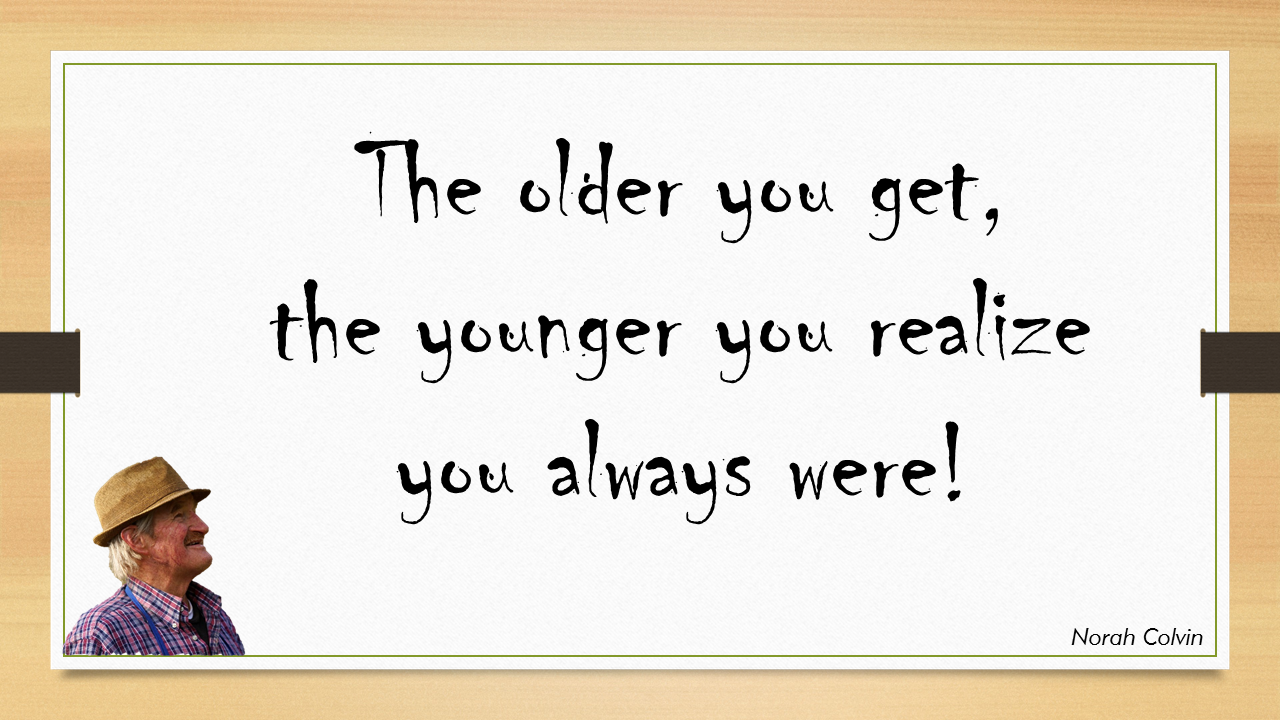
    the older you get

    For the past few years people have often asked me when I will retire. Some people think I already have. Some think I am too young to be thinking about it (they are either very kind or very blind), and others think I should have done it long ago.

    I have preferred to ignore the word ‘retire’ for the negative connotations I thought it embodied and the implication that I would have to admit to things like:

    • I’m getting old
    • I have nothing left to contribute
    • I am passed my use-by date and can’t keep up with modern trends and developments
    • I am ready for ‘God’s waiting room’. (I ‘m not even sure I’d be able to find the right room, and he’d probably keep me waiting for ever anyway!)

    Even this morning I heard an ad on the radio that put together the concepts of retirement, having more time on one’s hands, retirement village and nursing home.  If that’s what retirement means, it’s not for me.

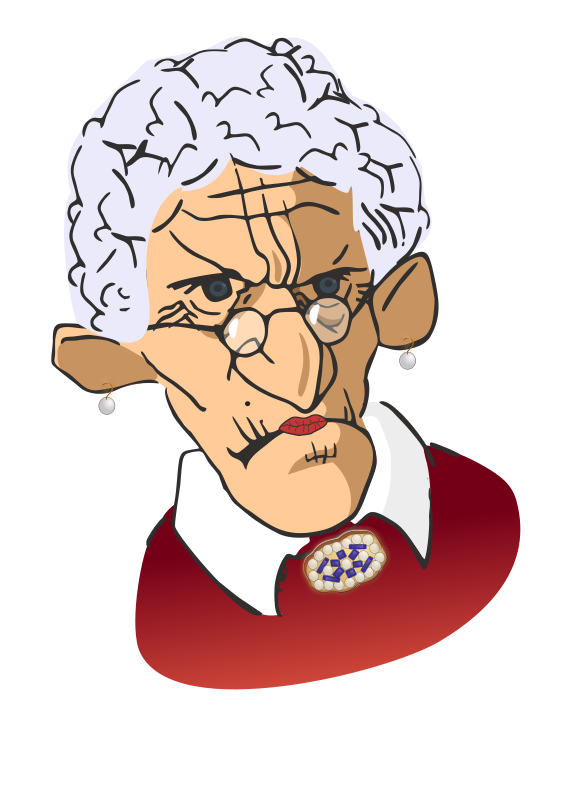
    https://openclipart.org/image/800px/svg_to_png/154735/faltige_frau.png
    https://openclipart.org/image/800px/svg_to_png/154735/faltige_frau.png

    When I was fifty-ish and working part-time, I awoke one morning to the realisation that, if I was going to retire at sixty, I had only ten years of working life left. With that in mind I returned to full-time work in order to earn as much as I could so that I could save enough to support myself in retirement. (I think I should have had the epiphany many years earlier!)

    When the ten years of teaching full-time as a year one teacher were done, I was still not ready to consider the ‘R’ word. However just at that time an opportunity to be involved in writing curriculum support materials was offered. A short break from the classroom to refresh and re-energise was a welcome idea and I accepted the position.

    After eighteen months in the role I reverted to working part-time in order to devote more time to my own writing while establishing a website for peddling said writing. I didn’t consider it retirement, transition to retirement, or anything to do with retirement. For me, the working week was simply a combination of paid work and working for myself. It was not time off.

    mystica_Coins_(Money)

    Now another eighteen months has past and I am indeed counting down the ‘paid’ working days until ‘retirement’. In my head and heart I still don’t consider it retirement, perhaps a re-alignment of priorities, but others do. I am breaking ties with my long-term on-and-off employer for the fourth and last time. This time there will be no going back. Even though I may have said that on each of the three previous occasions I resigned and still went back; this time I am very doubtful of that occurring. This time it is ‘officially’ retirement, and I accept that if I have more time on my hands to do my own work, then that is a good thing!

    It is the enthusiasm that others have for me and hearing them excitedly question, “What are you going to do?”  that has helped my change of heart and I am beginning to accept their use of the ‘R’ word. Denial would be another unwinnable battle. So what if I intend to spend the days of my retirement at the computer? Getting a website up and running might be just an expensive hobby, but not as expensive as others I could think of, like boating or flying! And definitely more fun for me.

    https://openclipart.org http://goo.gl/ZvsCFc
    https://openclipart.org
    http://goo.gl/ZvsCFc

    The changing view of self as transitioning through working full-time, part-time, being semi-retired, or retired is not unique to me. While some embrace the change, eager to accept every opportunity that freedom from employer demands and schedules has to offer; others like me sidestep in, with a similar appreciation of the freedom from outside expectations but an ever-increasing expectation of self.

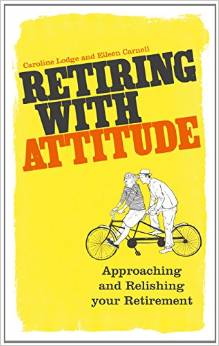
    retiring with attitude

    Last year “Retiring with Attitude”, written by one of my favourite bloggers Caroline Lodge and her colleague Eileen Carnell, was published. I found the title quite intriguing and thought it may apply to me, though I wasn’t sure to which attitude they were referring. However the subtitle “Approaching and Relishing your Retirement” gave a few clues and I knew I had to read it. Were they serious?

    In the introduction the authors explain that retirement should be viewed as “a time of further exciting possibilities”. They set out their goals which include convincing readers that the “old” view of retirement (they say “previous”) is no longer applicable; that possibilities abound; that outdated views of ageism and sexism should be challenged; and that “Learning is the most powerful means to handle changes and transitions” that occur in the retirement phase of life.

    Retiring with Attitude” is an easy and enjoyable read which I recommend to anyone approaching (from near or far) or already in retirement. The authors have drawn upon their own experiences and many years of research from which to explain options and make suggestions for every aspect of life. While “Chapter 11: This is Your Rainy Day: Relationships with Money” does discuss finances, the book raises many other issues including seeking and accepting support as well as ways to ensure you are not over-committed to fulfilling others needs and requests.

    The authors emphasize that there is no one way for everyone to do retirement but that learning and good communication are the key. They say that retirement can be the time of one’s life and that

    As an older person you can develop a new identity and redefine your life.

    I think that’s the ‘R’ word for me: Redefine. I’ll get to do those things I always wanted to do but didn’t have time for when my focus was elsewhere.

    Thank you

    Thank you for reading. I appreciate your feedback. Please share your thoughts.


  • Who wouldn’t be excited with high test scores?

    Regular readers of my blog are aware of my attitude to didactic top-down, content and assessment driven methods of schooling students to become machines regurgitating meaningless facts on command. A bit of push and shove it in and belch it out.  For those of you who weren’t aware – now you are!

    I probably should apologise for my indecorous description as I’m usually a little more temperate in the way I express my views, but I won’t as that is how I am feeling about it at the moment. The authorities who have the power to make the changes necessary are so caught up in their own murky visions that they fail to see either effects or solutions. Every time I read another report of test scores or hear of another child damaged by a faulty system my frustration grows.  It becomes one of those hysteria blossoming days.

    bag

    A few moments ago I read a post titled “Vietnam Wallops US on PISA. Vietnamese educators belittle value of PISA” on Diane Ravitch’s blog. Ravitch is an education historian.

    As the title suggests, Vietnamese fifteen year old students did better than their US, UK and most other EU counterparts in the 2012 PISA tests, ranking 12th out of 76. What I found interesting about the article was not the results but the attitude of Vietnam’s Deputy Minister of Education and Training. His view that the tests don’t reflect students’ overall competence, reminded me of a letter, shared in my previous post, written by teachers to students sitting the national tests last week in Australia. (PISA are international tests).

    In the article referred to by Ravitch, Dr Giap Van Duong was reported as making reference to UNESCO’s four pillars of learning: Learning to know, Learning to do, Learning to be and Learning to live together. His opined that PISA addresses only the first pillar, and in only a limited way. He said that while Vietnamese students did well on the tests, “many … students fail to land a job after graduation. (and that when) they study overseas, many have difficulties in meeting the requirements of advanced education systems like team-work, problem solving and creativity”. Perhaps they are not “out of basement ready” as described by Yong Zhao.

    Duong said that the reason Vietnamese students do well on the tests is because the “The whole system operates to serve only one purpose: exams.”

    Duong’s admission that Vietnamese students lack the ability to work in teams, to problem solve and to think creatively reiterates the fears of many teachers who are  ruled by expectations of high test results and provided little opportunity to inspire learning, which surely remains the real (if neglected) purpose of education. Counterbalancing one’s philosophy with an employer’s expectations sometimes seems like being caught between a rock and a hard place.

    This week at the Carrot Ranch Charli Mills is talking about rocks and hard places. But Charli knows that good can often spring from those seemingly hard places through making connections. She has challenged writers to In 99 words (no more, no less) write a story that shows a hard place and a connection.

    It is connections that are most important in my two main roles in life: parent and teacher. Neither is easy and neither will result in much good without making connections. I often worry about things I have said and the affect they may have had on others. To be truthful, occasionally it even keeps me awake at night. While I would rather think of my words and actions creating a positive ripple, there is no guarantee that, even when delivered with my best intentions, they won’t do harm.

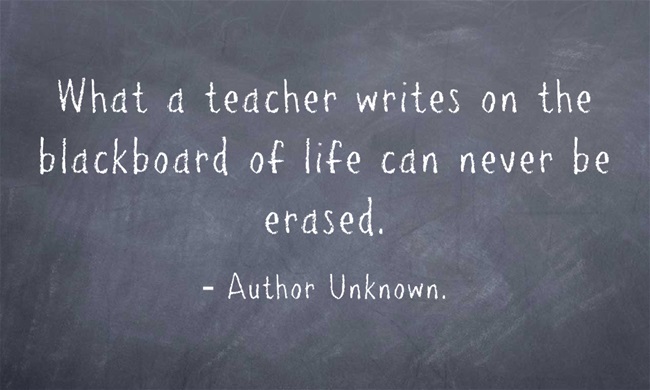
    Trevor Pilgrim shared a quote which puts it this way:

    What-a-teacher-writes-on

    In his article Pilgrim says,

    “teachers have (the power) to develop their students and shape their future lives.  The power to turn them on or off academically, stimulate or dampen their minds and heighten or destroy their engagement and intellectual curiosity.”

    Scary stuff!

    At about the same time I read an article that said that the influence of teachers is not as great as one might think; that socio-economic status, amongst other things, is more important. While I am happy with the thought of having a positive effect, I definitely do not wish to ruin anyone’s life so am happy to know that my influence is not be the most important to the lives of my students.

    https://openclipart.org/image/800px/svg_to_png/59389/happy_sun_gm.png
    https://openclipart.org/image/800px/svg_to_png/59389/happy_sun_gm.png

    For this challenge of Charli’s I am back thinking about Marnie’s art teacher and the hard place she found herself in when she saw the brown muddy mess that Marnie seemed to have made of her paints. That she must respond is a given; but how? Whatever she says will probably have a lasting impact so she must ensure that her response is appropriate. While her initial instinct is to express disappointment, she maintains her professional composure and delays commenting until she has thought it through.
    Here is my response:

    Brown.

    She glanced at the child, usually so eager to please, and knew this was no ordinary day.

    Downcast and avoiding eye contact, the child trembled. Her instinct was to reach out with comfort to soothe the hurt; but stopped. Any touch could end her career. What to say? Brown earth/brown rocks? would ignore and trivialise the pain. Any talk now would be insensitive with other ears listening. Any word could unravel the relationship built up over time. Nothing would harm more than doing nothing. Her steps moved her body away but her heart and mind stayed; feeling, thinking.

     Thank you

    Thank you for reading. I appreciate your feedback. Please share your thoughts about any aspect of this post or flash fiction

  • My time, your time, springtime!

    This week at the Carrot Ranch Charli Mills has challenged writers to In 99 words (no more, no less) write a story that is a snapshot of spring.


    At the moment approximately 90% of the world’s population are experiencing the season of spring. The rest of us, the 10% who live in the Southern Hemisphere are entering the cooler months. How those seasons are experienced varies from place to place. I have never experienced an autumn that would fit the description of ‘fall’; nor have I experienced a winter with snow. Those concepts are foreign to me. That is not to say that some living in the southern states of Australia haven’t experienced them. It all depends where one lives.

    The Australian Government describes Australia as having two main seasonal patterns in six different climatic zones. The Indigenous Peoples of Australia describe the changes as holistic changes in nature and life. In Australia, attitudes to and understanding of the seasons are as diverse as the experiences. While the weather doesn’t always know it, spring is marked on the Australian calendar from September to November. It doesn’t matter to which part of the country you travel, there is always something to see and do in spring.

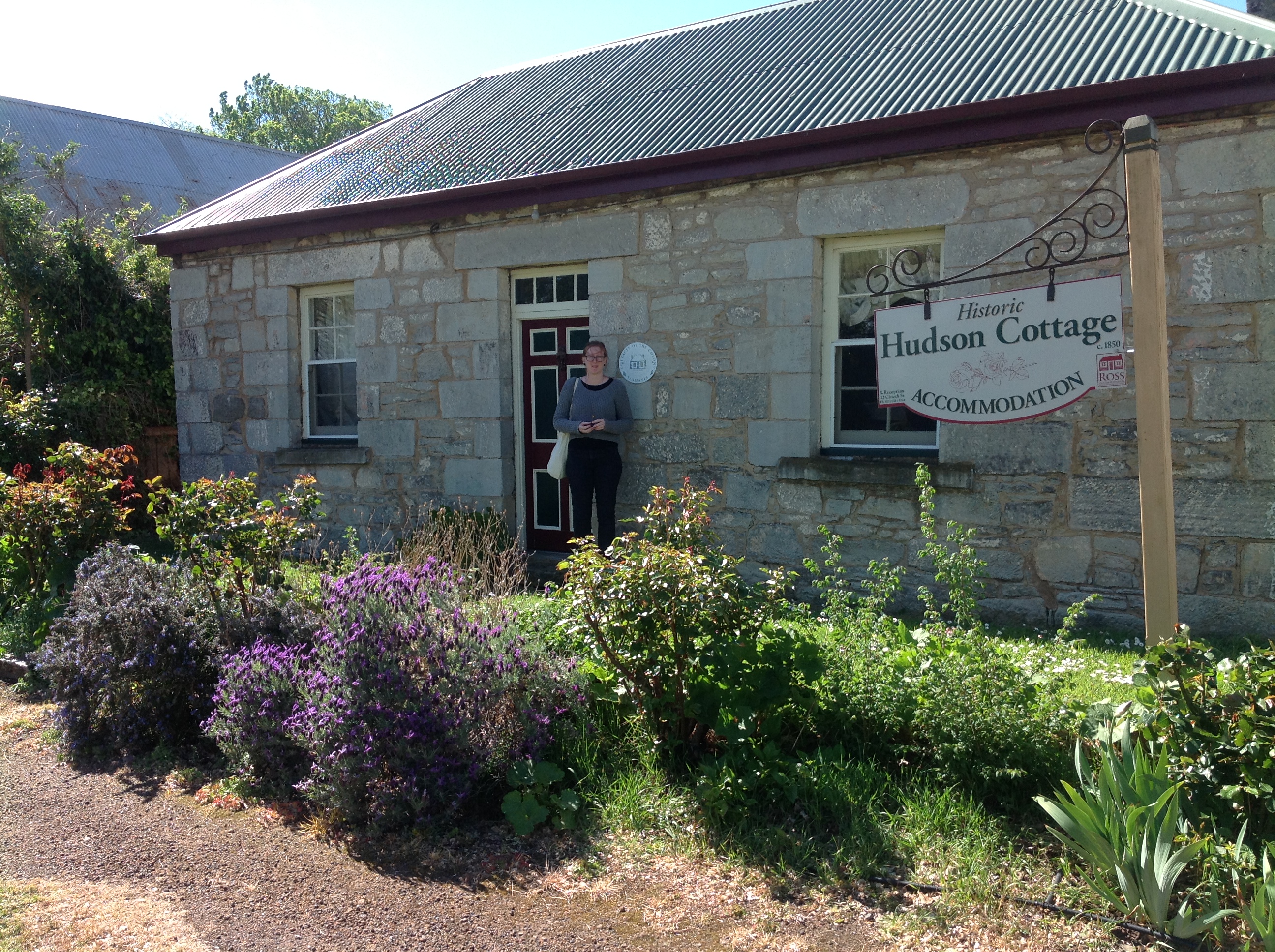
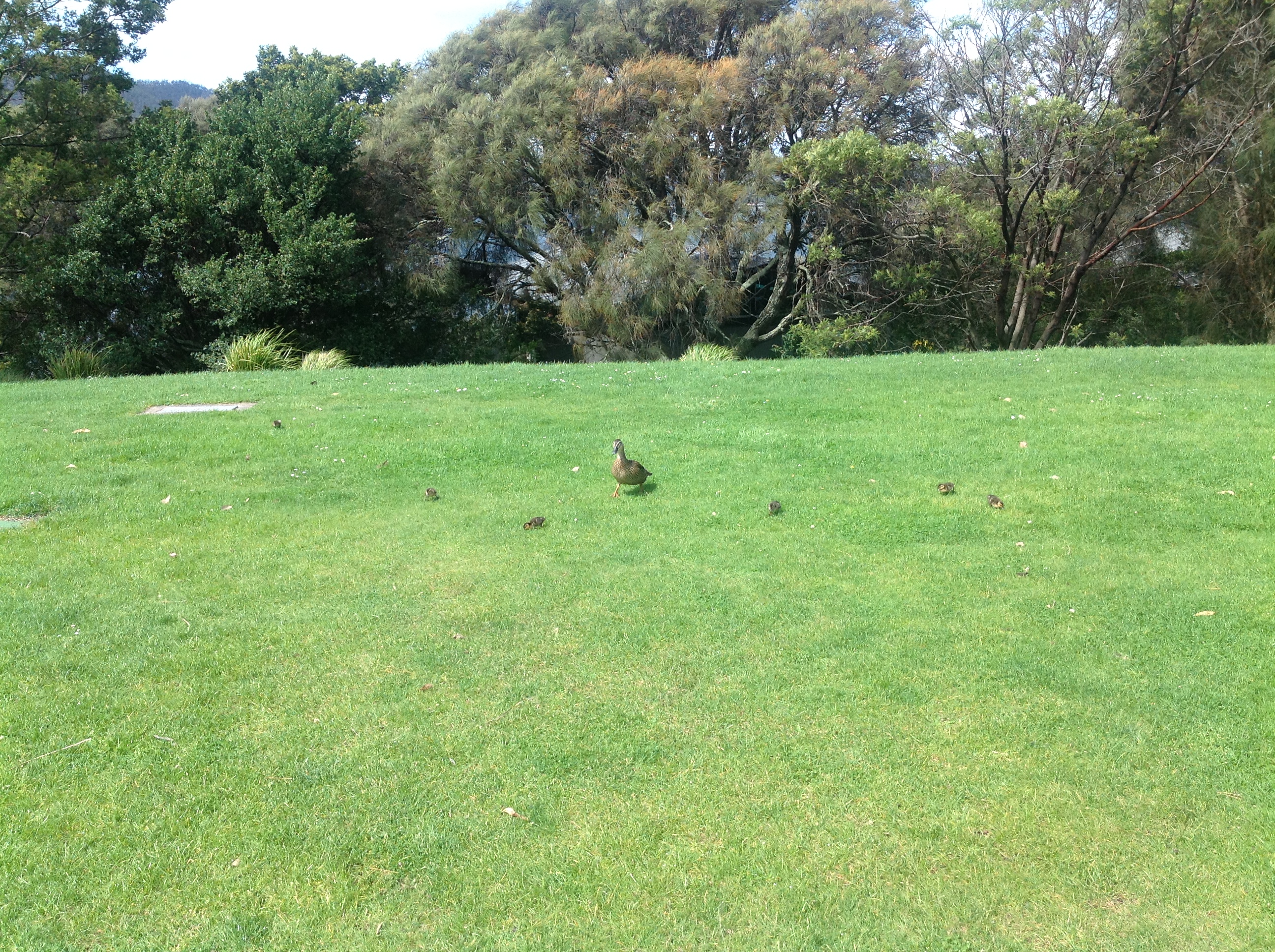
    Springtime in Tasmania 2014
    Springtime in Tasmania 2014

    Part of the daily routine in an early childhood classroom is observing and discussing the daily and seasonal changes in the weather. Each day the children observe the weather and discuss how it may influence their clothing and activities and the impact that changes may have to their local environment and other things including animals.

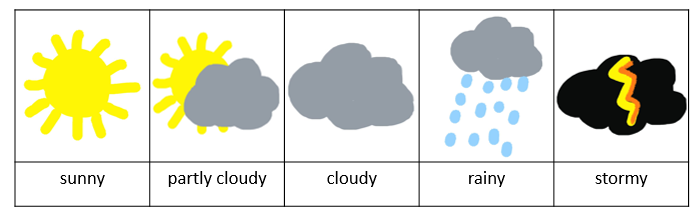
    Many classrooms have a calendar prominently displayed on which the children’s observations can be recorded and compared. Children are often invited to draw symbols and write words such as those shown here.

    weather symbols

    Discussions about how warm or how cool it is may also occur, though in some parts there is never really what could be called ‘cold’, just ‘cooler’.

    temperature chart


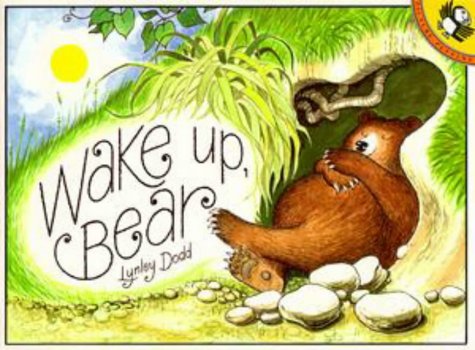
    Reading stories was always an integral part of my classroom practice and I needed little excuse to read another. When the seasons changed I was always looking for suitable books to read and the first I thought of at springtime was Wake Up Bear by Lynley Dodd, a New Zealander.

    Wake up bear

    While we don’t have bears in Australia, just these cute koalas often incorrectly called bears;

    or hibernating animals, except for this cute little mountain pygmy-possum;

    Wake Up Bear is a delightful story to herald spring. In the story, bear has slept all through winter, but when spring arrives he is not quite ready to wake up. The animals each try to wake him up and finally they succeed.

    While it was not Dodd’s intention with the story, it made me think about children learning in their own time, “waking up” when they are ready. Sometimes they need to be shown something just once. Sometimes they need a great deal of exposure and support to “get” it. Sometimes it’s better to leave them alone until the time is right. There have been previous discussions about this here my blog, including In their own time and Not Yet.

    I thought Charli’s spring challenge was perhaps another opportunity for talking about individual differences and the need to respect a learner’s journey. I’ve gone back to my early childhood roots. I hope you enjoy it.


    Springtime in Tasmania 2014
    Springtime in Tasmania 2014

     Spring

    Bees buzz

    Wildflowers bloom

    Cockatoos squawk

    “Gone is the gloom!”


    Mother duck waits

    For her babies to hatch.

    Here they come now

    The first of the batch


    So cute and cuddly

    All covered in fluff

    Eager and ready

    To show off their stuff


    “Patience!“ quacks mother

    “There’s no need to rush.”

    “One more is coming.

    Stand back. Please don’t crush.”


    With one final crack

    Last one’s out of his shell

    “I’m proud of you babies.

    You’ve all done so well.”


    Mother duck smiles

    As they waddle in line

    She knows that each duckling’s

    Own time will be fine.

    Thank you

    Thank you for reading.

    Springtime in Tasmania 2014

    Springtime in Tasmania 2014

    Happy spring to most of you! For the others: enjoy the cooler respite from the relentless heat!


    I appreciate your feedback. Please share your thought about any aspect of this post or flash fiction.