Live Love Laugh Learn … Create the possibilities

Tag: Flash fiction

  • Spend a copper penny

    Spend a copper penny

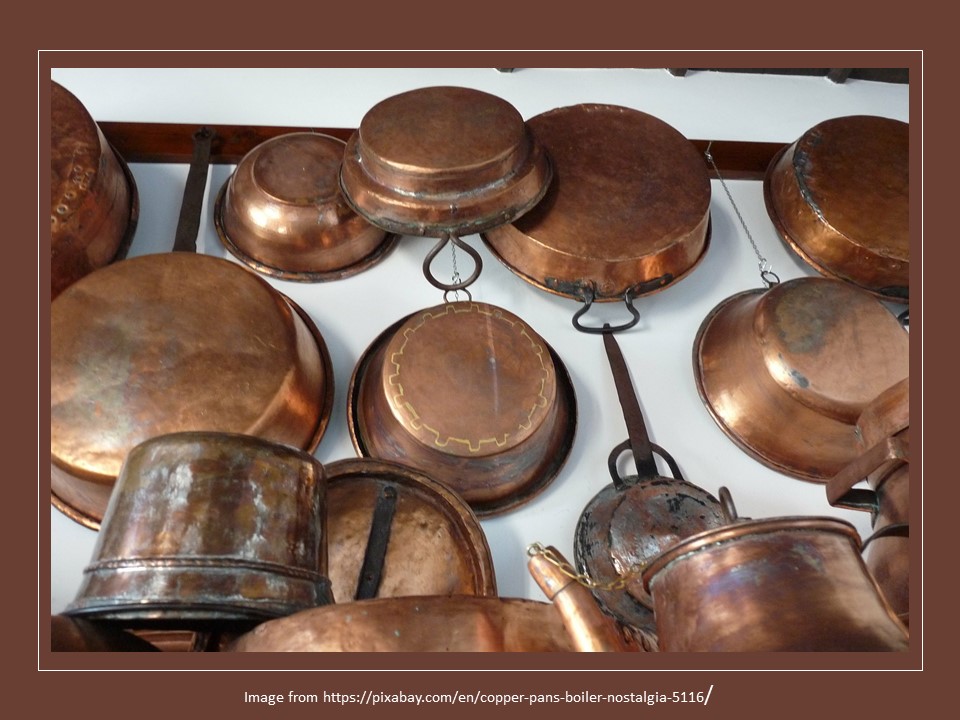
    This week at the Carrot Ranch, Charli Millis challenged writers to In 99 words (no more, no less) write a story about Copper Country. It can be any place, fictional, historical, or on another planet. Go where the copper leads.

    It may not be a country, but it seems as far away and foreign as any country might be–the country of my childhood, when:
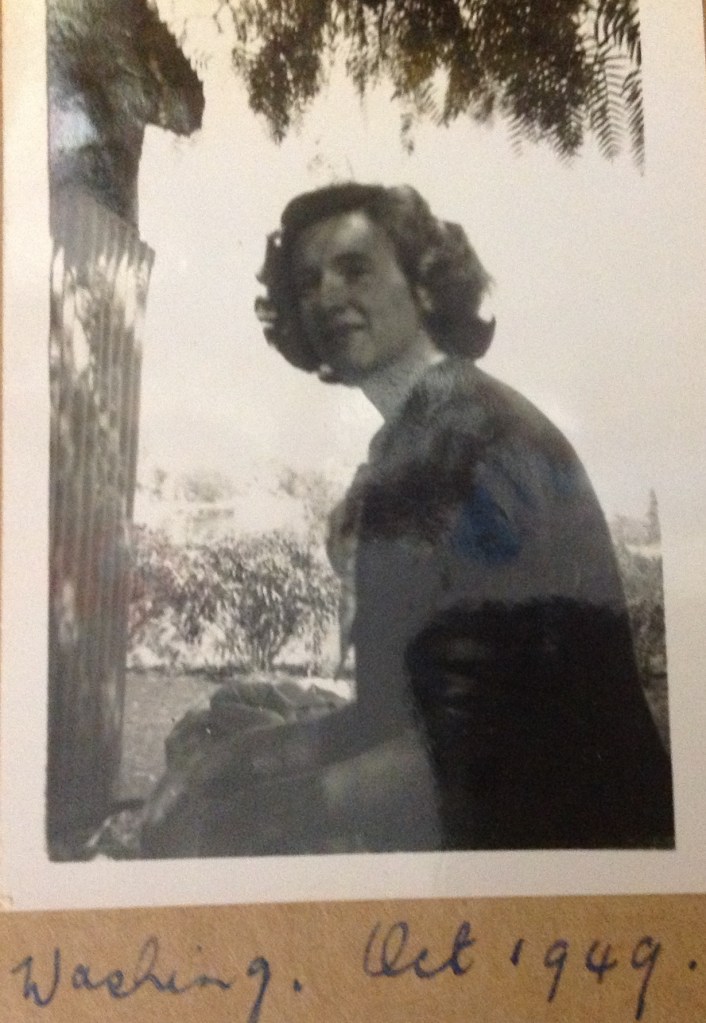
    Mum washing in copper

    • My mum did the laundry in a big copper pot heated over burning logs. She’d fill the pot and heat the water then use a long wooden stick to swirl around the sheets or clothes before hanging them over the line to dry in the sun. I wrote about this in a previous flash (nearly four years ago!): Washing Day.
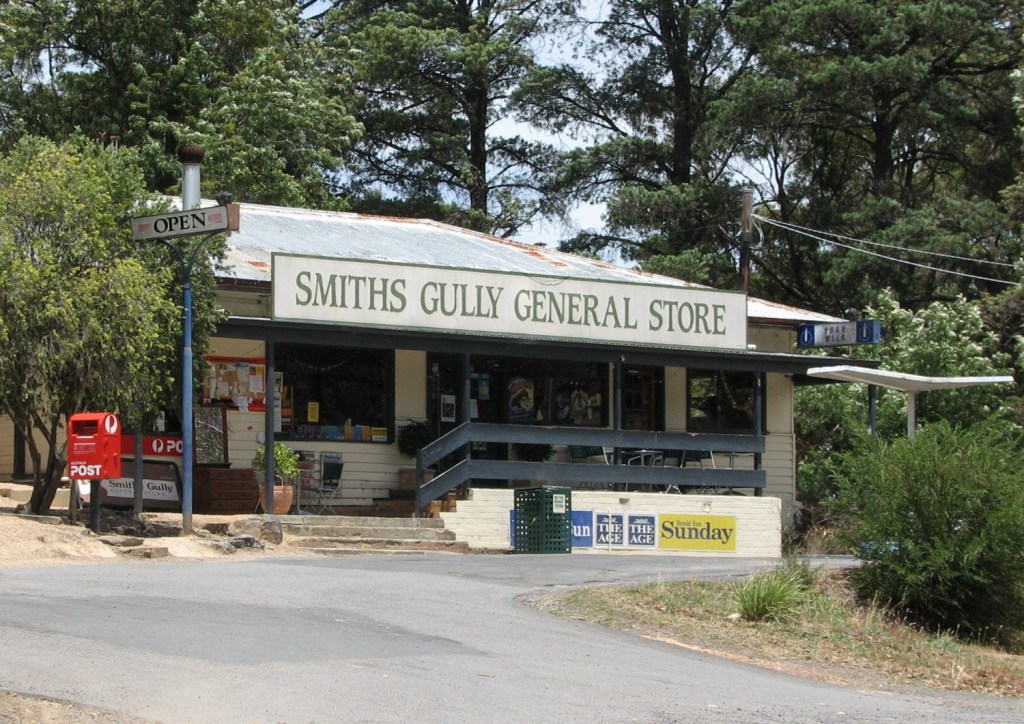
    general store Australia

    • Items were bought from a general store in exchange for coins or notes. There were no supermarkets, credit cards, pay pass or online shopping. Storekeepers were friendly and knew each member of the family by name.
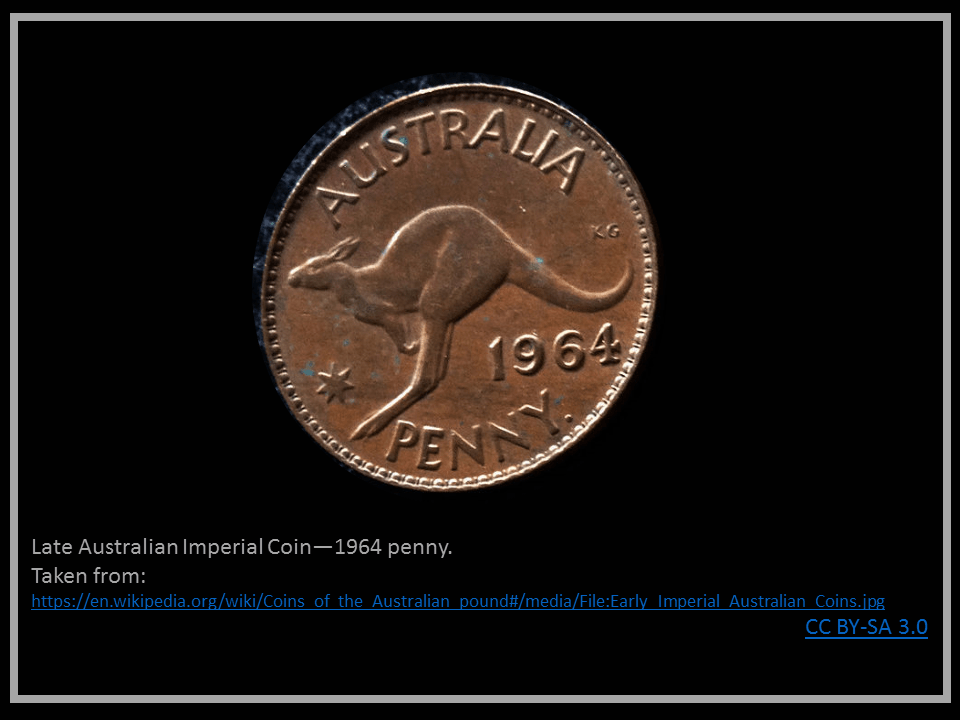
    My favourite coin was the penny with the Queen on the head, and a kangaroo on the tail. Though made from a bronze alloy and only 97% copper, we called it copper nonetheless.

    • Almost all water pipes, hot and cold, were made of copper. Most still are, but some have been replaced by plastic which is initially cheaper but not as long-lasting. I remember the colourful pipes leading to the concrete wash tubs when we moved to suburbia and Mum got a real washing machine. The hot water pipes were wrapped in asbestos.

    police and robber

    • Policemen (I don’t recall too many policewomen back then) were respected, and we had fun playing cops and robbers. There was always a debate over who was going to be the copper and who was going to be the robber, but it went without saying that the copper always won.

    Coppertone girl

    • I was a (naturally) copper-haired child, one of four in a family of ten. With our very fair skin, the sun wasn’t kind to us and our skin had no resemblance to that of the Coppertone girl who started to appear on billboards a little later.
    • We would “spend a penny” to use public facilities, sometimes handing our coin to an attendant, or even putting it into a slot in the door!
    • Days were long, and time and possibilities were infinite. Life was black and white, and we children had not a care in the world as parents knew everything and took care of everything.

    It’s to this childhood country of laid back times, when the whole world was open to us and copper pennies could buy happiness, that I have returned–it may not be the real world of my childhood, but rather one of my dreams.  I hope you like it.

    Spend a penny or two

    Coins jingled in his pocket as bare feet squeaked out every step along the sandy road. Every so often, he’d finger them–such big coins. In his mind, he spent and re-spent them: a dress for Mum, a hat for Dad, a pull-a-long toy for Baby–nothing for himself.

    He watched the boy place the copper on the counter. He followed the hopeful gaze, shook his head and pointed to lolly jars. The boy held up four fingers; he held up one. The boy hesitated, then shoved the coins back in his pocket–to spend another day.

    “Hold on…”
    Thank you blog post

    Thank you for reading. I appreciate your feedback. Please share your thoughts.

  • When you wish upon a star

    When you wish upon a star

    This week Charli Mills from the Carrot Ranch challenged writers to In 99 words (no more, no less) write a story about a wishing star. It can be central to the story or used in a different way. You can have a character interact or not. Go where the prompt leads.

    My mind skipped immediately to a song from my childhood, remembering Sunday evenings when we huddled around the television set to watch The Wonderful World of Disney:

    “When you wish upon a star

    Makes no difference who you are”

    What a wonderful thought – all success stories have to start somewhere – why not with us?

    But there is another saying too, Be careful what you wish for.

    This is my response. I hope you enjoy it.

    The wish

    The words replayed continuously as he sat on the step searching the sky for a wishing star: “When you wish upon a star …”

    Inside, the adults’ voices grew louder and harsher. He covered his ears and sang through his tears.

    A crash followed a thump, then all went quiet. He held his breath.

    He crept to the door and peeked in. Mum, slumped on the floor, cradled Dad’s head in her lap. Blood was everywhere.

    “Call triple zero.”

    Huddled together they watched paramedics try to revive him.

    “I didn’t mean …” each whispered to themselves, but weren’t convinced.

    Thank you blog post

    Thank you for reading. I appreciate your feedback. Please share your thoughts.

  • All-Around Best of Show

    Congratulations D. Wallace Peach for being the All Around Best of the Show in the inaugural Carrot Ranch #FFRODEO! What a feat!

  • Winner of Flash Fiction Contest #8

    And the results of the TUFFest Contest of all in the Carrot Ranch #FFRODEO are out. Congratulations Liz Husebye Hartman for TUFFing it out to win the contest!

  • Winner of Flash Fiction Contest #7

    Did you enter Contest #7 of the Carrot Ranch #FFRodeo? The winner is announced. It wasn’t me. Could it have been you? Read the fabulous entries. Who would have thought a murder story could be told in so few words?

  • Only in Australia

    Only in Australia - Australian Coat of Arms

    This week at the Carrot Ranch, Charli Mills challenges writers to In 99 words (no more, no less) write a story using the phrase “only in…” It can be used to tell a story about a profession, a place or situation. Go were the prompt leads you.

    This is my response. I hope you enjoy it. (Composed in the pool this morning.)

    Only in Australia

    The carollers woke her Christmas morning. After the preparation whirlwind, she’d collapsed into bed, only to continuously toss and turn, re-making each list and checking it twice. She groaned – please, just a few minutes more. The carollers insisted. She tumbled out of bed and stumbled to the door. They eagerly accepted her gifts. Breathing in the day’s freshness, she had to decide – bed? Nah – the pool! As each stroke soothed and each lap refreshed, she welcomed the day’s events. When a cockatoo’s shriek punctuated the chorus, the kookaburras laughed. “Only in Australia,” she thought. “It’s good to be home.”

    And now for a little more, if you so choose:

    Note: I’ve been kindly shown that some of my ‘only in Australia‘ statements are not quite correct. As I am not one for spreading falsehoods, I have added, in pink, corrections of which I have become aware. Thanks especially to Pauline King and Debby Gies for getting the ball rolling.

    Only in Australia do you see people wearing thongs and singlets in winter (“thongs” are flip-flops worn on feet, singlets are sleeveless shirts). (I now know Canadians also refer to flip-flops as thongs.)

    Only in Australia are there mammals that lay eggs (the monotremes – echidna and platypus. One species of echidna is found in New Guinea).

    Only in Australia are the emblem animals eaten (the meat of kangaroo and emu – both on the Australian Coat of Arms – is available in supermarkets and from restaurant menus). The animals were chosen for the coat of arms as neither can walk backwards – a symbol of a forward-moving nation.

    Only in Australia can you see these biggest things:

    The world’s largest living organism The Great Barrier Reef. Hopefully it will remain that way for generations to come.

    The world’s largest monolith – Uluru.

    The world’s longest fence – the dingo fence, built to keep dingoes out of the fertile farming areas on the eastern coast,  over 5 500 km.

    Only in Australia will you find the world’s oldest living culture.

    Only in Australia could you visit a different beach every day of the year and still have more to see.

    Only in Australia could you attend a cockroach race, a cane toad race and a boat race on a dry river bed.

    Only in Australia would you not see an active volcano. (Australia, the world’s largest island or smallest continent, is the only continent without an active volcano, though there are many dormant and extinct volcanoes.)

    Only in Australia do you have to travel overseas to travel internationally. (This is definitely not true – of course overseas and international travel are synonymous for any island nation, of which there are many, including New Zealand.)

    Only in Australia will you hear “Fair dinkum” and “True Blue”.

    Only in Australia, do we abbreviate everything, including names (is that why our years pass so fast – we abbreviate them too?) (Apparently, this habit is also prevalent across the ditch in New Zealand.)


    And if you still want more, check out these 88 Crazy Things You Probably Didn’t Know About Australia.

    And watch this video:

    Or come for a visit!

    Thank you blog post

    Thank you for reading. I hope you enjoyed finding out a little more about Australia. I appreciate your feedback. Please share your thoughts.


  • Winner of Flash Fiction Contest #6

    What fabulous stories in the Carrot Ranch #Contest 6 Bucking Bull go round, lead by the winner Kerry E.B. Black. Congratulations, Kerry, and to all the runners up, and entrants alike. Judge D. Avery says the judging was difficult. Reading these stories, that seems obvious. Well done, everyone!

  • How do you perform?

    theatre seating

    This week at the Carrot Ranch Charli Mills talks about her years as a ballet-Mum, working behind the scenes to ensure the performers were ready to take to the stage.

    She talks about the pleasure of watching from theatre stalls, a recent performance of dancers taught by the daughter she’d taken to lessons all those years before.

    She sees connections between her role as stage-Mom and her role as Lead Buckaroo at the Carrot Ranch; and similarities between ballet performances and performing with flash fiction.

    This, of course led to the week’s flash fiction prompt in which Charli challenged writers to In 99 words (no more, no less) write that features a performance. You can interpret what is a performance any way the prompt leads you.

    There is little in which Charli is unable to find an analogy to writing. Likewise, I am always keen to find the connections, similarities and analogies to teaching. I have long considered teaching to have elements consistent with entertaining and performing, with our classroom the stage, and the students the interactive audience, the participants for whom and by whom the daily enactment evolves. Regardless of how we feel, each day we enter our classrooms ready to perform, determined to give our students the best educational experience possible.

    But I am also familiar with other performances. I performed in many plays as part of studying Speech and Drama throughout school. Both children had a big interest in drama at school also, and I spent many hours ferrying them to classes around the city, making costumes, and watching rehearsals as well as final performances.

    As a teacher, I would provide opportunities for children to role play, improvise impromptu scenarios, create puppet plays, and perform songs or plays for parents throughout the year.

    Then there are the other impromptu performances that toddlers are great at turning on when the inappropriate moment takes them.

    Tonight, I had the pleasure of viewing a presentation, rather than performance, of a story written by local author Yvonne Mes. The story A Starry Christmas was animated and displayed in a spectacular light show on Brisbane City Hall. What an amazing way to have one’s work shared. Congratulations must go to Yvonne for writing the story, and the teams who animated it and produced it. You can watch a video of the story and read some additional information about the event on Yvonne’s website here.

    I thought I’d combine a few of these ideas into my response to Charli’s flash fiction prompt this week. I hope you enjoy it.

    Christmas lights

    A two-day city visit is never enough, but they were determined – trekking the city, visiting in-store Santas, viewing Christmas-dressed windows, watching street performers, even attending a pantomime, with just a brief playground stop for lunch. The light show was the day’s finale.  The tired parents and niggly children collapsed onto the lawn in anticipation. Suddenly the littlest began to perform – crying, screaming, stamping, flailing. Nothing would soothe. The eldest observed, zombie-like. Soon the light-show distracted, occasionally interrupting the performance. Only when the fireworks began, drowning out his cries, did he give in to sleep, sprawled indecorously on the grass.

    Thank you blog post

    Thank you for reading, I appreciate your feedback. Please share your thoughts.


  • The art of choosing – self-care

    This week, Charli Mills challenged the Carrot Ranch Literary Community to In 99 words (no more, no less) write a story that includes self-care. Does the character need it? What does the character do? Think about how you can use this action to deepen a character or move a story. Go where the prompt leads. She talks about being easy on ourselves and taking time to celebrate our progress and avoid being shackled by the imposter syndrome that masquerades as our harshest critic.

    Dr. Andrea Dinardo is also talking about self-care this week on her blog Thriving Under Pressure. Her post urges us to Work hard. Rest. Repeat, and recommends

    “If you get tired, learn to rest not quit.”

    Resting can be difficult when there is much we want to do and achieve, both personally and professionally; but sometimes, if we don’t rest by choice, we have it thrust upon us.

    This week, when I’m already masquerading as an overposter, as a mini-rest, an exercise in self-care, and care for you too, I’m presenting my flash response without the padding of a post. Here it is. I hope you like it.

    Rest. In. Peace.

    “You really should take a break,” they suggested.

    “I can’t. Too much to do.”

    “You need time off,” they said.

    “I know. Soon.”

    Eventually, “I’m taking a break,” she said.

    The afternoon sun warmed as the sand caressed her aching body. Her eyes closed. Only an occasional seagull’s squawk interrupted the repetitive swoo-oosh of the waves that jumbled with the office cacophony looping incessantly.

    “What? What happened?” they asked.

    He scrolled quickly, searching for details.

    “Sleeping. On beach. Seagull – ha!– dropped a baby turtle – landed on her head – died instantly.”

    “And we thought work would kill her!”

    Thank you blog post

    Thank you for reading. I appreciate your feedback. Please share your thoughts.


  • How important is perfection?

    Are you a perfectionist? If so, in what areas?

    I think it would be difficult to be a perfectionist in everything, indeed, in anything.

    I have never considered myself to be a perfectionist, though others have occasionally labelled my attitude to work that way. I do have certain standards that I like to meet, and I always strive to attain them, to do the best I can. I concede that my expectations of spelling, grammar and punctuation correction may tend towards perfection, but if I can, why would I not? Of course, the occasional imperfection will slip through. It is difficult to catch all when we are editing and proofing our own work. However, if I spot any, I will quickly change them, embarrassed that I let them escape.

    There are many areas in which I am far from a perfectionist – especially housework. I’ll do what needs to be done, but only if I must; and my idea of need may differ vastly from yours. I am often reminded of my mother’s words when I’d completed a household chore; for example, sweep the steps, when I was a child. She’d comment that I’d given it a “lick and a promise”. These days, housework rarely gets more than a promise, a promise I’m not good at keeping.

    As a teacher of young children, it was not perfection I was looking for in their work, but for the best they could do. I expected their work to reflect their development. If they were capable of the calculation, spelling or of using the correct punctuation, I expected them to use it. Opportunities to revise answers and responses were given and improvement was encouraged.

    I’ve hedged around this topic a few times in posts; such as, Is contentment compatible with a growth mindset? The end, Phrasing praise and What is failure.

    But how do we decide when good enough is good enough and that we have put in as much effort as the task requires? I know there are many who agree with me about housework, but what about other things; maybe like, hanging a picture, following a recipe, parking a car, making a payment, checking copyright, or painting a room?

    I recently watched a TED Talk by Jon Bowers entitled We should aim for perfection and stop fearing failure. Bowers provides some different perspectives on the topic of perfectionism, challenging an adjustment to thinking.

    He begins by discussing typos. We’ve all made them, haven’t we? The seemingly innocuous typo can give us a good laugh at times. But it can also do a lot of damage.

    Bowers tells us that “one little typo on Amazon’s supercode produced a massive internet slowdown that cost the company over 160 million dollars in the span of just four hours”, and “an employee at the New England Compound, which is a pharmaceutical manufacturer, didn’t clean a lab properly and now 76 people have died and 700 more have contracted meningitis.”

    Bowers says,

    “When did we come to live in a world where these types of typos, common errors, this do-your-best attitude or just good enough was acceptable? At some point, we’ve stopped valuing perfection, and now, these are the type of results that we get. You see, I think that we should all seek perfection, all the time, and I think we need to get to it quick.”

    traffic

    He talks about the need for perfection when behind the wheel of a vehicle. How many lives are lost daily through inattention, through lack of perfection?

    credit card

    He talks about the need for credit card manufacturers to demand perfection. How would it be if even 1% of our credit cards didn’t work properly?

    book

    He says that “if the Webster’s Dictionary was only 99.9 percent accurate, it would have 470 misspelled words in it.  If our doctors were only 99.9 percent correct, then every year, 4,453,000 prescriptions would be written incorrectly, and probably even scarier, 11 newborns would be given to the wrong parents every day in the United States.”

    He goes on to make many other statements that I’m sure will get you thinking too. At less than 11 minutes in length, the time commitment is far less than the potential learning gain.

    When I watched this video, I was contemplating my response to this week’s flash fiction prompt set by Charli Mills at the Carrot Ranch. Charli shared a “possibly spam” email received as an entry into the Carrot Ranch Rodeo Contest #2: Little and Laugh. You can read the email in Charli’s post, which also includes the challenge to In 99 words (no more, no less) write a fictional story about The Real Nanjo Castille. (The spammer).

    I thought the email to be a little too clever to be real spam, too many clever word choices, phonetic spellings, and our favourite: bitchcoin, that could be purchased for ten dollars, $20 or £20. And the poor writer has an identity crisis, not sure whether to spell his or her name Nanjo or Najno.

    I wondered about how the performance of this child in school might be viewed and what profession might be suggested as a goal.

    This is my response. I hope you enjoy it.

    A job for Nanjo?

    The parents waited.

    Start positive, she reminded herself.

    “Nanjo has a wonderful imagination.”

    They smiled.

    “Very creative too, especially with spelling and punctuation.”

    They exhaled.

    “Has trouble understanding money though, and his knowledge of number facts is non-existent – “ she hesitated, then continued quietly. “I can’t think of any employer who’d have him.”

    “Pardon?”

    “I mean, employment, suited to his – ah – special skills.”

    She cracked.

    “I’m sorry. Your son is unemployable. His spelling and grammar is atrocious. He can’t even spell his own name, for god’s sake! I don’t think he could even get a job as a spammer!”

    Make sure to check the results of Contest #2 at the Carrot Ranch. I’m not the winner. Nor is it Nanjo. Could it be you?

    Thank you for reading. I appreciate your feedback. Please share your thoughts.