
And so, the Rough Writers Tour Around the World is over. We’re back at the ranch with the lead Buckaroo Charli Mills, wrapping up the first adventure. This tour might be over, but the journey has just begun. Charli says, “Through writing together on projects of creative expression, we are on the trail to happiness. We ride the trail of peace.”
I respond, “The pen is mightier than the sword. Together our voices are stronger than one, but we don’t speak as one, we speak as a collective of individuals, supporting, and receiving the support of, an amazing leader. Doubters may have considered your vision a puff of cloud easily erased. But it is a rainbow of inspiration under which unicorns dance, writers write and readers read. How delighted I am to have shared in the journey.
If you haven’t yet, come and join us at the Carrot Ranch. There’s always room for more in the posse on the trail to happiness and peace.
Tag: Flash fiction
-

Rough Writer Tour: Happy Trails
-
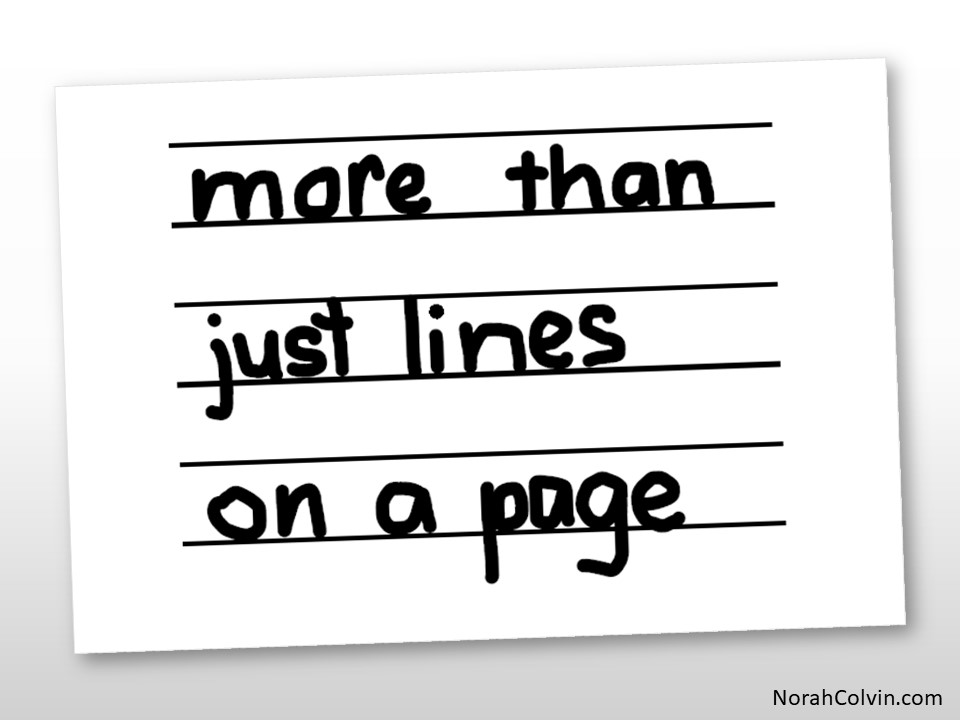
More than just lines on a page
This week at the Carrot Ranch, Charli Mills has challenged writers to In 99 words (no more, no less) use a line in your story. You can think of the variation of the word meaning, or you can think of visual references. Go where the prompt leads.
As an educator of young children, with a special interest in literacy development, I shouldn’t have needed to think for long. Although, there being so many possible ways of interpreting the prompt, I did. I finally decided on the lines that we as writers and artists make on the page, the meaning we assign to them, and the meaning others extract from them.
Children begin their journey into literacy by assigning meaning to marks they make upon the page and by realising that marks made by others also carry meaning. As their ability to both express and decipher develops, they come to realise that a text or image is more than the sum of the individual lines of which it consists. Communication deepens by interpreting and understanding the meaning conveyed below and between the marks.
The ability to both imply and infer meaning extends to the interpretation of facial expressions, body language and changes in the environment. We can accept what we see at face value or make a judgement about what may be implied or intended. While the messages are often considered obvious, misinterpretation is possible.
In response to Charli’s prompt, I’ve played with interpreting other lines. I hope you like it.

Reading between the lines
Four lines of footprints stretched along the shore. A line, mostly unbroken, edged one side; the other, a sequence of dots. The smaller prints danced lightly. The larger dragged heavily with one foot sideways. Criss-crosses of triple-pronged seagulls’ prints failed to obscure, unlike the smudge of ocean’s wet kisses. Tiny crabs scuttled their own story tracks through weeds, shells and stones coughed up by the sea. Beyond a collapsed castle, the footprints continued. In the distance—rocks. So far? He accelerated. Didn’t they know the tide had turned? Caught in the moment, they’d missed the signs. Lucky he didn’t.

Thank you for reading. I appreciate your feedback. Please share your thoughts.
Share this:
-

Reeling in the fishermen
This week at the Carrot Ranch, Charli Mills challenged writers to In 99 words (no more, no less) write a fish tale. It can be about fishing from any angle, about those who fish, or what might be caught. Go where the prompt leads.
I cast my net hoping to catch an idea.
Would I share some fish-themed picture books? For example:
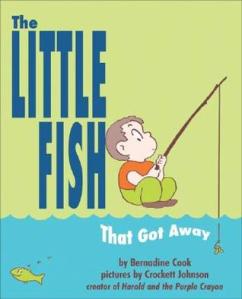
The Little Fish that Got Away, written by Bernadine Cook and illustrated by Crockett Johnson
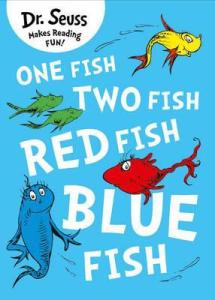
One Fish Two Fish Red Fish Blue Fish, by Dr. Seuss
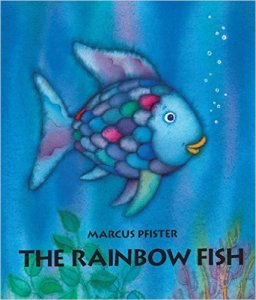
The Rainbow Fish, by Marcus Pfister
Would I consider rhyming words?
dish
fish
squish
swish
wish

Perhaps a childhood skipping game?
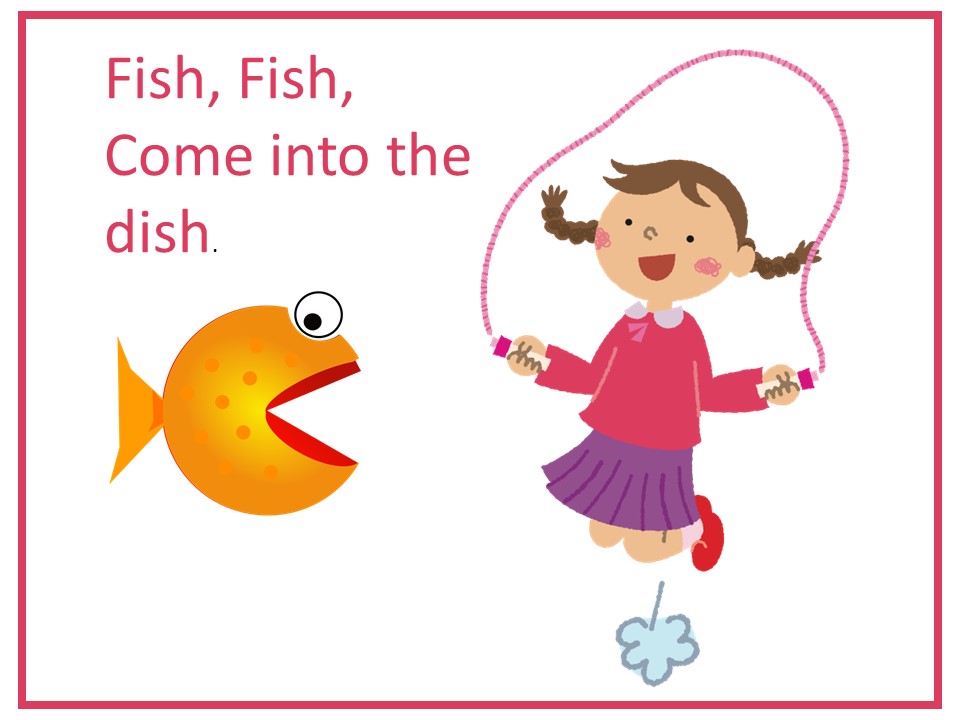
Fish, Fish,
Come into the dish.
Fish, Fish,
Turn around in the dish.
Fish, Fish,
Touch the bottom of the dish.
Fish Fish, run out of the dish.
Fishy sayings?

Sounds or smells fishy
A fish out of water
A dead fish handshake
Fell for it, hook, line and sinker
Plenty of fish in the ocean
Or maybe a childhood story?
When I was a child, my father fished a lot in his spare time. As well as being a cheap way of feeding his large family, he probably enjoyed getting out on the water in his rowboat for some peace. When the fishing was good, it could be on the menu twice a day, seven days a week. Exaggerations, maybe, but sometimes it seemed that way.
I did accompany him once. Neither of us caught anything edible. I caught a knotty eel, a tiny trumpeter and a desire to never go fishing again. I never have. Catching words is much more to my taste.
For my response to Charli’s prompt, I have gone with a story from my childhood. It incorporates some of the ideas that got caught in the net. I hope you like it.
Reeling in the fishermen
She sat by the window watching as the invisible painter coloured the morning sky. These moments lost in waking dreams, with the youngest of her brood suckling quietly, were precious. Slamming car doors and laughter interrupted the silence but not her thoughts. An occasional word invaded her consciousness…haul, fishing, catch. Wait—her man, a fisherman, was home. The night was not conducive to fishing. She leaned forward. Two dark figures unloaded a ute. They had neither lines nor nets, and it sure wasn’t fish in those boxes. “Fisherman, eh?” she thought as she dialled the local police. “You’re hooked.”
Thank you for reading. I appreciate your feedback. Please share your thoughts.
Share this:
-
Into the forest
Since its beginning in 1970, every 22 April is celebrated as Earth Day, a day for appreciating the beauty of our Earth and mobilising ourselves to protect it. Earth Day is credited with starting the environmental movement and is the largest worldwide environment event.
This year focuses on single-use plastic with the aim to End Plastic Pollution. The goals of the Earth Day Network “include ending single-use plastics, promoting alternatives to fossil fuel-based materials, promoting 100 percent recycling of plastics, corporate and government accountability and changing human behavior concerning plastics.”
While governments introduce regulations about the use of plastics, it is up to each of us to monitor and reduce our own usage.
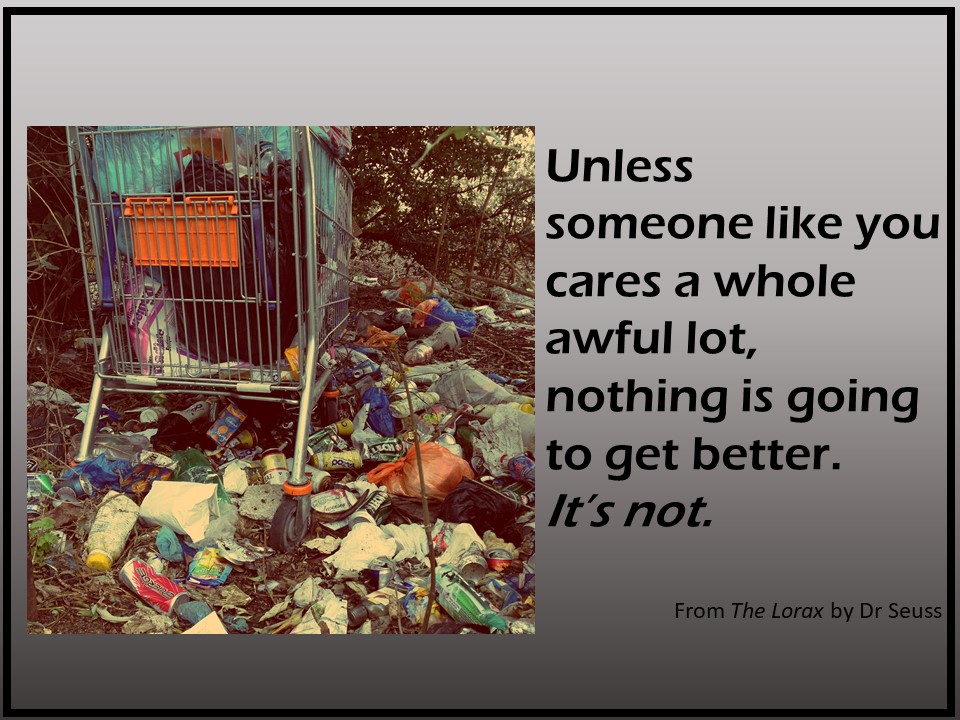
Other Earth Day campaigns include combating climate change, greening schools and cities, and protecting forests, anything to help create a greener, more sustainable future.
Five of my favourite picture books that include these themes are:

The Lorax by Dr. Seuss demonstrates the effects of pollution and destruction of the environment and highlights the important role of each person in protecting the environment.

Window by Jeannie Baker deals with the effect of progress on wilderness areas as towns and cities are built. (All book by Jeannie Baker carry strong environmental messages.)
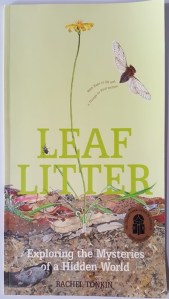
Leaf Litter by Rachel Tonkin helps children appreciate the smaller parts of our world and the way they are all interconnected.
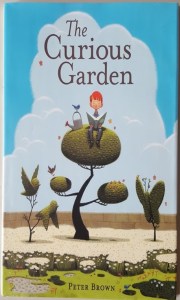
The Curious Garden by Peter Brown is about a boy who greens a dead part of the city.

One Less Fish by Kim Michelle Toft deals with dangers to marine life and suggests what can be done to improve the marine environment.
These are just a few of the many wonderful books available. Please let me know your favourite in the comments.
By the way, did you notice that each of these books is written and illustrated by an author-illustrator?
At the Carrot Ranch, Charli Mills celebrated Earth Day this year with a little forest bathing or Shinrin Yoku. Developed in Japan in the 1980s, Shinrin Yoku is about “fostering deeper relationships and positive experiences with forested areas”. Charli challenged writers to In 99 words (no more, no less) write a story about forest bathing. You can use the Japanese term, Shinrin Yoku, or you can make up your own ideas about the phrase. Go where the prompt leads.
A few weeks ago, in response to another prompt, I wrote this story about Crow and Mouse.
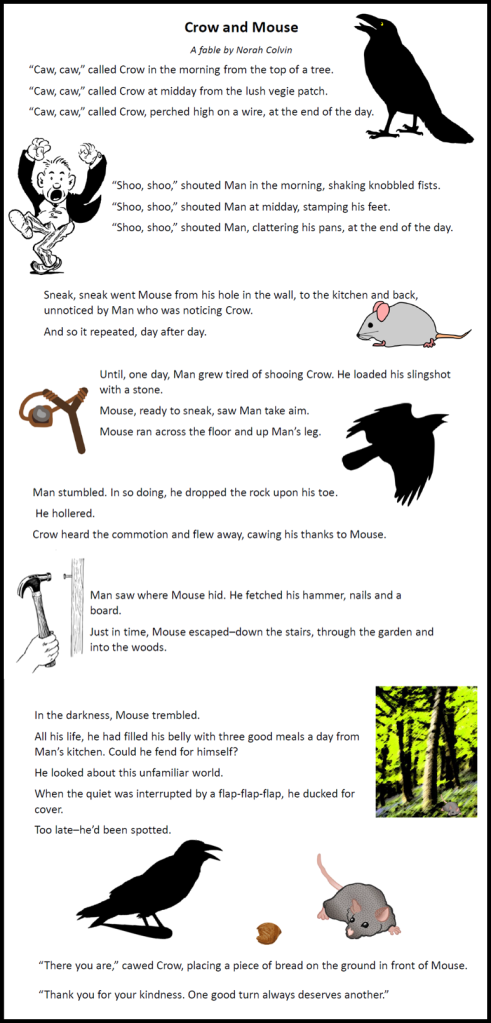
I presented the story to my local critique group and received some useful suggestions. One was to have Mouse explore the forest on his own in an attempt to fend for himself, rather than rely on Crow for food. I thought this fitted in nicely with the aim of Shinrin Yoku, and it is to that suggestion I have responded. I’ve changed the setting, for this prompt, from woods to forest. I haven’t quite managed to tell all I wanted in 99 words, which is usual for me, but I hope you like it.
We pick up the story from “In the darkness, Mouse trembled.”
Forest Feast
Unfamiliar sights, sounds and smells assailed his senses. He dived into a pile of leaves.
“Would you mind!” squealed Skink.
“Sorry,” said Mouse, backing into Frog.
“Hey! This is my cockroach,” said Frog.
“Ewww!” said mouse. “Who eats cockroaches?”
Mouse’s belly rumbled.
Skink was eating a slug. Frog had a cockroach. Nothing for Mouse anywhere.
“Try mushroom,” suggested Frog.
Mouse hesitated, then began nibbling.
Flapping overhead sent Skink and Frog for cover. Mouse, oblivious, had been spotted.
Crow alighted and placed a gift of bread at Mouse’s feet.
“Thank you,” said Mouse. “I like bread, but I love mushroom!”
Thank you for reading. I appreciate your feedback. Please share your thoughts.
Share this:
-

How to worm a cat, Flash Fiction and other ways to tackle Perfectionism.
This week, in the Rough Writers Tour Around the World celebrating the inaugural Carrot Ranch Anthology, we are back in England with the wonderful memoirist Lisa Reiter.
Lisa explains what value worming a cat and writing flash fiction have in attaining perfection. If you need help with perfectionism, Lisa is sure to help.Lisa Reiter – Sharing the Story
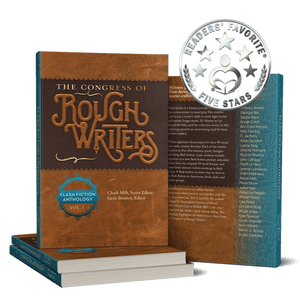 Welcome to my stop on the Rough Writers Tour Around the World as we launch the first flash fiction anthology from the Carrot Ranch on-line literary community. If you’re new here, you might be wondering why a memoir writer is peddling flash fiction? And we’ll get onto that,
 View original post 1,870 more words
Share this:
-
Going batty over flying-foxes
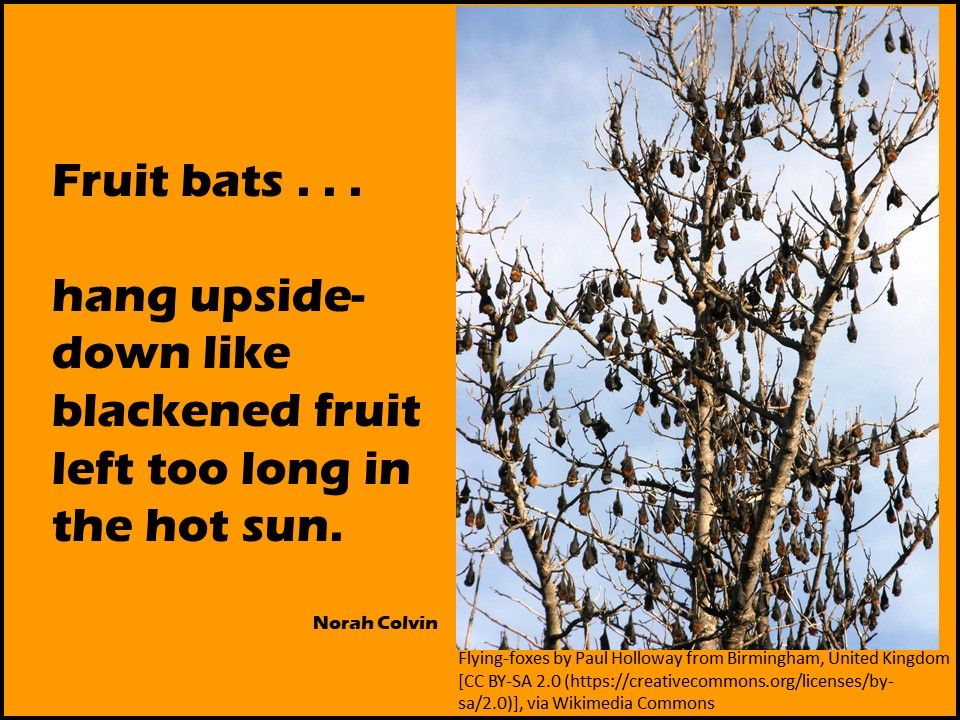
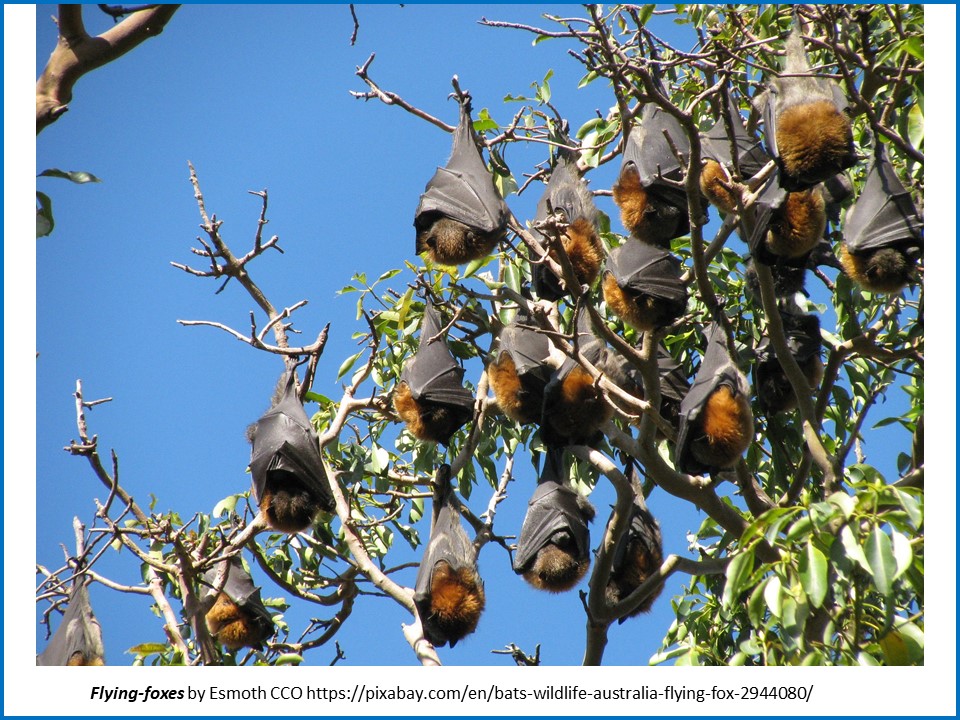
According to the Australian Museum, Australia is home to over 90 species of bat with almost a third found in Queensland. The species with which I am most familiar are the black flying-foxes, grey-headed flying-foxes and little red flying-foxes which have taken up residence in trees about a kilometre from my home. The diet of many of the species earned them the name “fruit bat”.

While the bats rarely pose a health risk to humans, they can send neighbours a little batty with their noisy, smelly and messy behaviour. And it’s not only their neighbours who are affected. The bats can fly up to 50 kilometres a night in search of food. They frequent our fig tree, interrupting our evenings with their incessant screeching and squawking and leaving their sticky calling cards for Hub to remove in the morning.
However, as all flying foxes enjoy the full protection of the law, it can be near impossible to move them away from peopled areas. It may even be that bats are attracted to these areas because of the planting we do. If we offer them a backyard filled with their favourite food, why wouldn’t they wish to visit?
The reason I’m going a little batty this week is in response to the Carrot Ranch flash fiction prompt in which Charli Mills challenged writers to In 99 words (no more, no less) write a story that includes a bat. You can use an association to the winged, cave-dwelling critter, or you can explore the word for other meanings. Bonus points for including a bat cave. Go where the prompt leads.
Though I love our nocturnal visitors and am constantly in awe of the numbers roosting in full sun through the heat of our summers and am entranced by their almost-silent departure flight overhead as each day changes to night, others I know consider them more of a bother.
My response is more a BOTS (based on a true situation) description than fiction, so there’s not a bat cave in sight. I hope you like it.
Flight of the Fruit Bats
All day they hang upside-down like blackened fruit left too long in the hot sun. Only an occasional stretch shows them capable of independent movement. Passers-by sometimes stop to wonder and photograph. Other keen observers travel greater distances to marvel at the spectacle.
Locals grow to abide their noisy, smelly presence and accommodate their daily activities.
Every evening at dusk, the colony flaps and stretches, then rises in unison like a cloud of dust shaken into the darkening sky. High above, their silent wings carry them away for night-time foraging. Others screech and squawk their joy in closer feasts.
Thank you for reading. I appreciate your feedback. Please share your thoughts.
Share this:
-

Carrot Ranch Round the World Tour, Pennsylvania, USA | Jules in Flashy Fiction
And now for the next stop on the Congress of Rough Writers Tour Around the World. We are with Jules Paige from Pennsylvania, USA.
Jules has a unique ability to respond to a number of prompts and challenges in one. She even did six in one blow! What a feat. Read on to learn more about Jules and her writing process.
Meanwhile Back at the Ranch….brought to you from JulesPaige – because “words are like Jewels on a Page” Jules from Pennsylvania, USA Writes for “The Congress of Rough Writers Flash Fiction Anthology Vol 1 World Tour.
I was going to write about my first piece for Carrot Ranch until one of my unnamed characters did some forest bathing. I was struck by a comment from our Lead Buckaroo on my piece entitled ‘The Rescue’ that I wrote in February 2018. Charli says: “A lovely escape and a fine mashup, Jules. I’m impressed at the depths you go to mine language, prompts and even comments. That’s literary art!”.
I’m drawn to what I call ‘mashing prompts’. One, two, five… sometimes I get carried away. But I managed to stuff The Rescue? a whole whopping 99 words with two prompts from one writing site, a photo prompt from another, the Unicorn prompt from Carrot Ranch as well as a quote from another piece I wrote that someone else liked as well as a comment I posted on another friends site.
That’s six inspirations woven into one very short piece of fiction.
Continue reader: Carrot Ranch Round the World Tour, Pennsylvania, USA | Jules in Flashy Fiction
Pop over to the Carrot Ranch, too, to see what the Lead Buckaroo has to say about one of the “bright jewels of the Buckaroo Nation.”
Share this:
-
Everything Susan: Rough Writer Tour Around the World
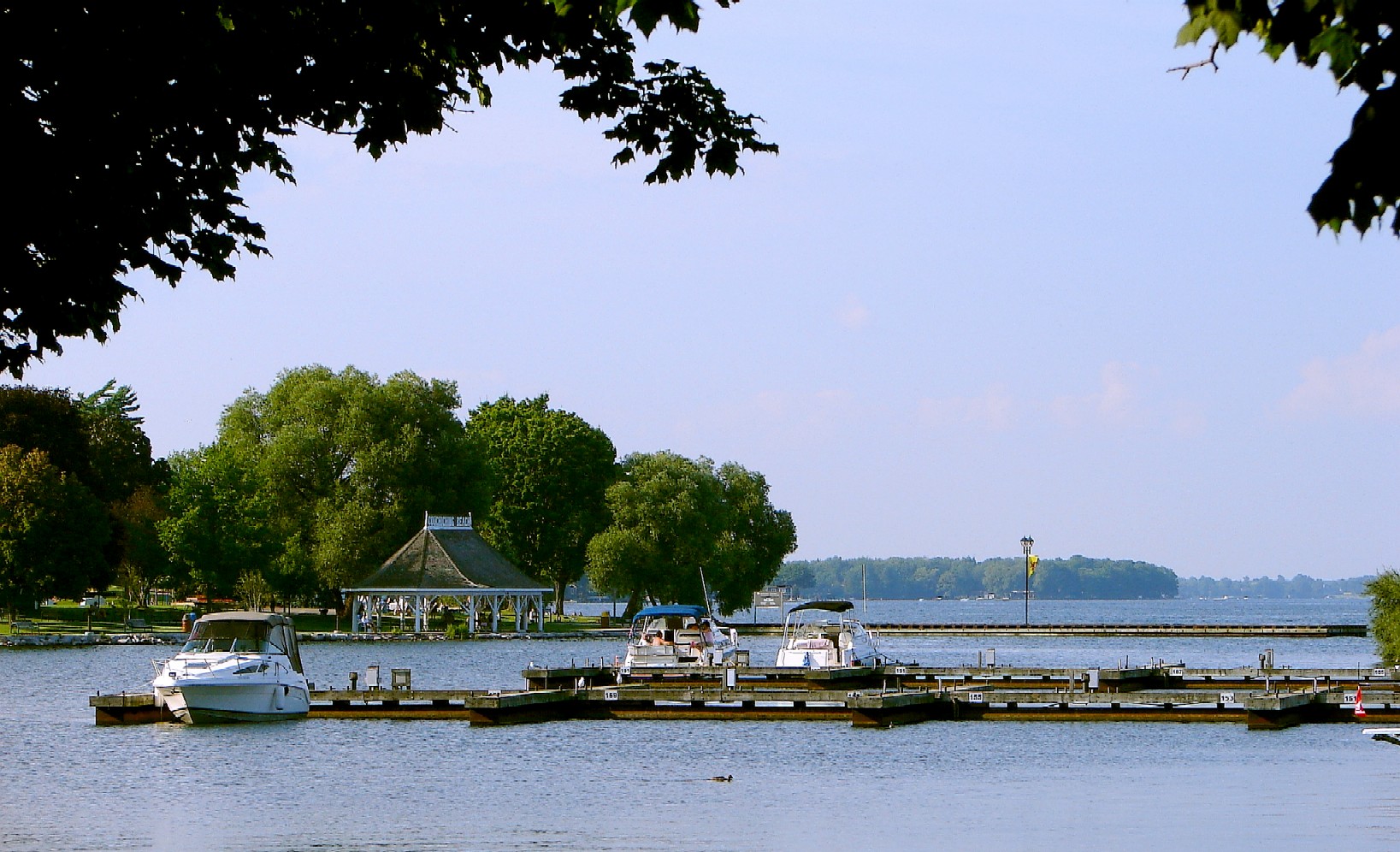
From autumn in Australia, we fly to spring in Orillia, Ontario to visit with Rough Writer Susan Zutautas on the next leg of the World Tour. Susan tells us about her beautiful location and the place of flash fiction in her writing process.
Continue reading: Everything Susan: Rough Writer Tour Around the World
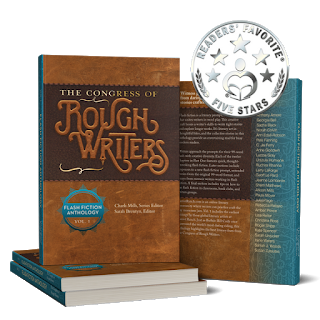
Also – just in – The anthology won a silver in the Literary Titan Book Awards April 2018. How exciting is that!
Share this:
-
Counting on fingers
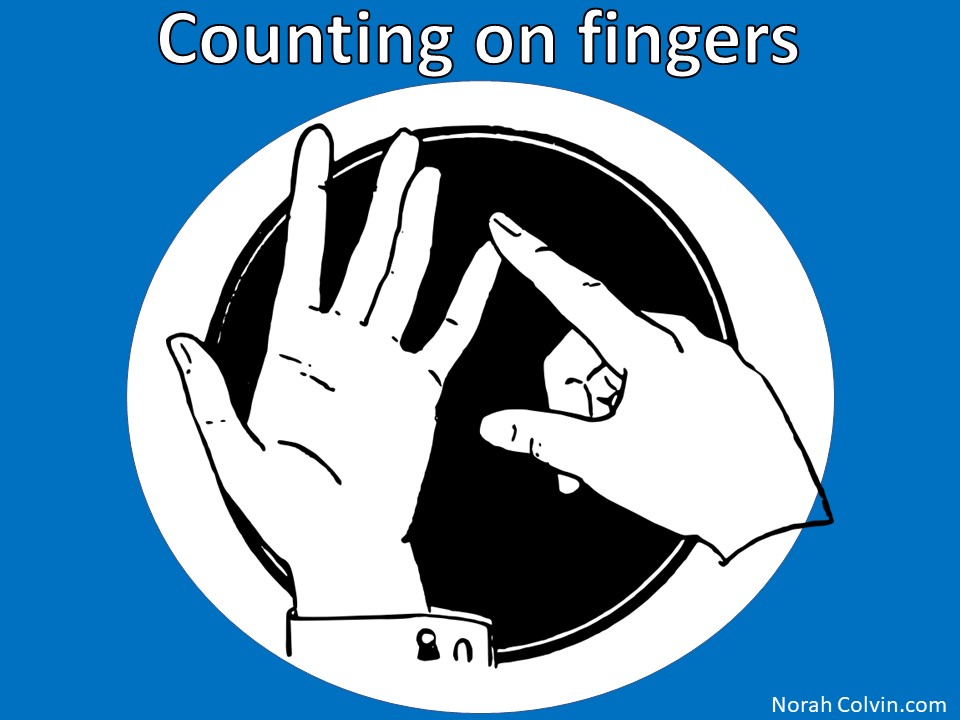
This week at the Carrot Ranch, Charli Mills challenged writers to In 99 words (no more, no less) write a story about fingers that fly. Think about the different ways we use our fingers and what happens when we add speed. Go where the prompt leads.
I thought about the use young children make of their fingers when counting. It may increase their speed and ease of calculation in the beginning, but continued use tends to slow them down.
I also thought about magicians, and how the speed of their fingers amazes us with tricks and sleight of hand.
Combining both thoughts brought me to the mathemagician Arthur Benjamin who never ceases to astound with his calculations.

Are you a math whiz, solving complicated problems and making calculations with large numbers effortlessly, or do you still need to count on your fingers at times?
I don’t think I was ever what would be considered a maths whiz, but I did have my confidence in maths taught out of me. Sadly, I think this happens to far too many.
Many children who have been provided experiences with number and engaged in discussions about number from a young age develop strong understandings and are able to calculate with little effort, arriving at answers almost intuitively. While it can be good to help them develop metacognition by asking them to explain how they knew, or how they worked it out, sometimes they don’t know how—they just know.
While some children need to be taught methods of working out answers, requiring maths intuitive thinkers to use the same working can cause them to second-guess themselves and to lose confidence by breaking what they know down into steps that only cause confusion.
I was interested to hear Arthur Benjamin’s plan for improving maths education when he is made “Czar of Mathematics”.

His suggestions relate more to high school than primary, but probability and statistics still have their place in the early years, as I’ve shown with many readilearn resources.
For my response to Charli’s prompt, I’ve considered what may occur if a child’s intuition with maths is neither appreciated nor encouraged.
Counting on fingers
Everyone said she had a way with numbers. Even when still in nappies she was counting effortlessly to large numbers in multiples of twos, fives and tens as well as ones. The parents didn’t dare think they’d bred a genius, an outlier. They wished for an ordinary child who fitted in, unnoticed, like them. They strove to inhibit her talent and discourage her enthusiasm. She tried to hide her ability by delaying responses with finger actions resembling calculation aids. But they slowed her none and flew too fast, earning her the nickname “Flying fingers” and ridicule instead of appreciation.Thank you for reading. I appreciate your feedback. Please share your thoughts.
Share this:
-
Of dreams and nightmares
This week at the Carrot Ranch, Charli Mills challenged writers to In 99 words (no more, no less) write a story using the theme “follow your dreams.” Bonus points for throwing a badge into the tale. Go where the prompt leads.
The prompt led me back to Marnie, a character about whom I have written a number of flash stories, as I try to figure out who she is and what her world is like. We know that she was both neglected and abused at home and bullied at school. One special teacher Miss R has been her confidante and champion over the years, instilling in Marnie an inkling of self-worth and giving her the will to survive. This story takes us to her graduation day.
Of dreams and nightmares
Marnie snuck into the back row. The ceremony was underway. “Follow your dream” and “What is your dream?” were displayed on the large screen above the stage. As each graduating student took the microphone to share their dreams for the future, images of past achievements were projected onto the screen. Marnie should have been there too: but what could she share? Who would listen or even care? Only Miss R. Marnie craned her neck for a farewell glimpse, then left as quietly as she had entered. Once she had escaped her nightmare, perhaps then she could begin to dream.
You can read more of Marnie’s story here.
Thank you for reading. I appreciate your feedback. Please share your thoughts.
Share this:


 Norah Colvin