Live Love Laugh Learn … Create the possibilities

Tag: Family

  • Displaying symptoms or true colours

    For just over a year now I have been participating in the weekly flash fiction challenge set by Charli Mills of the Carrot Ranch. I enjoy participating for a variety of reasons, including:

    Challenge: I enjoy the challenge of

    • thinking of something to write
    • telling in story or scene in the 99 word total
    • applying it in some way to my blog’s focus on education

    Variety: I enjoy writing in various forms and genres and the fiction is a pleasant change from the informational writing that I am primarily engaged with at the moment

    Practice: The requirement to tell a story in just 99 words means that I need to:

    • choose my words carefully to make my meaning explicit
    • decide what can be told, what can be implied, and what can be omitted
    • think of alternate ways of expressing an idea or describing a situation or character

    rough-writers-web-compCommunity: The Congress of Rough Writers: I have made connections and online friendships with a wonderfully supportive and encouraging group of bloggers, whose numbers are constantly growing.


    Feedback: The feedback that I receive in response to my flash fiction pieces and the posts in which I embed them gives meaning and purpose to the writing. I enjoy the in-depth discussions which quite often occur in response to the blog’s content and the additional thinking that I often need to do as a result. While it does distract me somewhat from my longer-term writing goals, the immediacy of the feedback is encouragement to continue and I am always appreciative of it.

    There are many other reasons and benefits of participating in the challenges. The above are just a few. If you have not yet considered joining in the fun, now might be the time to do so.
    www.openclipart.org
    http://www.openclipart.org

    This week Charli Mills wrote about a vivid dream that compelled her from her bed in order to capture it on paper before it escaped. She says that

    “Characters sneak into our dreams, our waking moments and tease us. We write to find out who they are.”

    Thinking about the character from her dream led her to consider symptoms, and the way that symptoms reveal more of who they are.  She challenged the Rough Writers to In 99 words (no more, no less) write a story to reveal a character’s symptoms. 

    Many of my responses to Charli’s challenges have been written to find out more about Marnie, who reveals snippets of her life, as if in flashbacks or dreams, at various ages. You can read what we already know about Marnie here.

    “Symptoms” seemed perfect for revealing a little more about Marnie. A child such as she would display a great variety, an important one of which would be her attempt to hide those symptoms from others.

    Here then is the next part of Marnie’s story, which follows on from the bullying episode shared last week.


     Symptoms

    The children suddenly appeared: one bedraggled and muddied, the other exuding authority.

    “Brucie tripped her. On purpose!” declared Jasmine.

    “Come on, Marnie. Let’s get you cleaned up,” said Mrs Tomkins. ”Then we’ll see about Brucie.  Is your mum home today?”

    Marnie looked down and shook her head.

    “Will I help you with that jumper?”

    A jumper? It’s too warm . . .” Her thoughts raced.

    Marnie turned away. As she pulled up her jumper, her shirt lifted revealing large discolorations on her back.

    Over the years Mrs Tomkins had seen too many Marnies; too many Brucies; never enough Jasmines.


    Sadly, children like Marnie and Brucie are very real and very familiar to many teachers.

    A few weeks ago I shared a post by Julieanne Harmatz on her blog To Read To Write To Be. I always enjoy reading Julieanne’s blog because it helps me walk right back into the classroom, in my mind. The Student Z she described in that post has many “symptoms” in common with other students I have worked with over the years.

    This week Julieanne shares ways she provides authentic opportunities for using digital technologies in her classroom. One of the ways is student blogging, and Julieanne linked to a post written by one of her students, Zoe. I was very impressed. I’m sure you will be too.

    In the post Zoe shares information about, and links to, her favourite song and singer. She says it is her “favorite song because it teaches you why not to bully.”

    The song is a rap version of “True Colours” with additional original anti-bullying content written by 12 year old MattyB to support his younger sister who is excluded and bullied because of her “symptoms”. I have not linked to the song here because I would like you to read Zoe’s blog and listen to the song there.

    I was so impressed by Zoe and MattyB, both showing traits of strength and of being an “upstander”, as described by Mrs Varsalona in the comments on Zoe’s post,  that I decided to find out a bit more about MattyB.

    Here is the story of how MattyB and his family wrote the song to support MattyB’s sister Sarah.

    I love to hear positive stories like this, don’t you?

    Thank you

    Thank you for reading. I appreciate your feedback. Please share your thoughts about any aspect of this post or flash fiction.

  • All in the family

    https://openclipart.org/image/800px/svg_to_png/20496/CoD-fsfe-calendar.png
    https://openclipart.org/image/800px/svg_to_png/20496/CoD-fsfe-calendar.png

    The nature/nurture debate wages constantly. Are we who we were born to be, or are we shaped by our environment to be who we are?

    To my untrained mind (I have no qualifications in psychology) it appears that who we become results from a mixture of each in combination with a dose of self-determination. Sometimes it can be difficult to separate the nature from the nurture. Are we that way because of genetics or because of the family environment in which we grew up?

    tweedles

    It is true that no two individuals, even siblings, experience identical environments. Even in the closest of families the differences can be as pronounced as the similarities; in interests, capabilities, personalities and attitudes as well as physical characteristics. Both similarities and differences can be used to argue equally well for nature or nurture.

    A paper published by NATSEM (National Centre for Social and Economic Modelling) in 2013 described a close link between education standards, employment and poverty, leading to social exclusion and disadvantage in Australia. It explained that lower education levels resulted in higher levels of unemployment, and therefore poverty, and that children living in poverty were at risk of not completing high school and of having poor nutrition. And so the cycle would continue.

    That is not to say that children living in poverty are doomed to continue doing so throughout their lives (we all know successful people who through their self-determination have pulled themselves up and out of the situation) but it may be much more difficult for them to achieve the levels of success that seem to come so easily to others in kinder circumstances.

    According to the Institute for Social Science Research at the University of QueenslandResearch shows that when schools, families and community groups work together to support learning, children tend to do better in school, stay in school longer, and like school more.” Commencing this year, the “Parental Engagement in Schools” project aims to discover what type of involvement best supports student learning and outcomes. Encouraging parents to be involved is another issue.

    While my general observations as a teacher, and those of many colleagues, support the notion of a connection between economic status and educational advantage, a paper recently released by the University of Bristol states that “Poorer parents are just as involved in their children’s activities as better-off parents”, and that “The findings support the view that associations made between low levels of education, poverty and poor parenting are ideologically driven rather than based on empirical evidence.

    Perhaps over-generalisations in this area are just as problematic as those that expect all family members to be alike. I think that, regardless of background, it is important for teachers to support all students to make positive choices for their future. This can be done through demonstration and modelling rather than criticism and blame.

    8-12-2013 7-38-33 PM

    I also recommend a certain set of strategies that all parents, regardless of their economic status, can employ to give their children a great start is life, including:

    • Love them
    • Talk with them
    • Read to them
    • Encourage their questions and curiosity
    • Help them seek answers and solve problems
    • Encourage their independence
    • Foster confidence, a willingness to have a go and to try multiple times and ways
    • Be accepting of differences and don’t prejudge their future based on the experiences and futures of others.


    https://openclipart.org/image/800px/svg_to_png/18499/Chrisdesign-Glossy-Smiley-Set-3.png
    https://openclipart.org/image/800px/svg_to_png/18499/Chrisdesign-Glossy-Smiley-Set-3.png

    The old saying goes that “You can choose your friends, but you can’t choose your family”. Although I have read suggestions that we may be genetically close/distantly related to those we choose as friends, I can’t testify to the authenticity of the “science” that makes those claims. However, I think many families have at least one member they would probably prefer to disclaim relationship with! Not my family of course!

    https://openclipart.org/image/800px/svg_to_png/30271/face-kiss.png https://openclipart.org/image/800px/svg_to_png/202307/Pink-Funny-Cartoon-Face.png
    https://openclipart.org/image/800px/svg_to_png/30271/face-kiss.png
    https://openclipart.org/image/800px/svg_to_png/202307/Pink-Funny-Cartoon-Face.png

    Which brings me to the flash fiction challenge set by Charli Mills at the Carrot Ranch this week. She wrote about an Aunt Bronco Billy and challenged other writers to: In 99 words (no more, no less) write a story that includes a nutty aunt.

    I hope I’m not that “nutty aunt” that everyone in the family shies away from, but I am aware of some who are. (Again, not in my family!)

    Here is my response to Charli’s challenge. I hope you enjoy it.


    “Aw, Muuuum!”

    “Don’t ‘Aw Mum’ me. She’s your dad’s only sister . . .”

    “But Mum …” I could already smell her stale cigarette breath and feel the stickiness of her too-red lipstick that wouldn’t rub off.

    “It won’t hurt you. She’s not staying long.”

    “Why can’t Jason?”

    “Because Jason’s going to work,” she said.

    “Yeah, Squirt,” grinned Jason, throwing his backpack over his shoulder.

    “Smoochie Coochie,” he mocked, squeezing my cheeks into a pucker while making loud lip-smacking sounds. His laughter followed him down the street.

    Suddenly she was there with her sharp green pistachio grin.

    “Smoochie Coochie!”

    Smoochie Coochie


    Thank you


    I appreciate your feedback. Please share your thoughts about any aspect of this post or flash fiction.

  • Talking the way out

    https://openclipart.org/image/800px/svg_to_png/100009/Coffee-by-netalloy
    https://openclipart.org/image/800px/svg_to_png/100009/Coffee-by-netalloy

    Recently I met up with some teacher friends and, as always happens with teachers, the discussion turned to school, teaching and children. There was talk about the crowdedness and inappropriateness of many aspects of the curriculum, of resources that were ambiguous and poorly written, of time spent practising and preparing for tests, of (other) teachers who were ill-equipped to teach and not interested in professional learning.

    It made me sad. It has always made me sad. Sad and frustrated with the inappropriateness of so much that happens in schools and the effect it has on diminishing our most precious resource: the ability to think, learn, innovate and create.

    The fact that I am unable to do anything about this situation at times overwhelms me and I just want to curl up in a ball in the corner and cry. That I have spent almost my entire adult life swimming against the tide trying, through a variety of means, to make a positive difference through education with an effect as insignificant as a grain of salt in the ocean, makes my efforts seem futile and worthless. A waste of time and energy. I should just give up.

    But, foolishly maybe, I haven’t and don’t. Here I am writing a blog about education. One more way to try; with a website on the way as well. What effect will they have? Probably very little, but at least I am doing something that is important to me; something that gives my life meaning; even if it has no real value beyond that.

    I have been out of the classroom now for three years. I escaped before the introduction of new programs which I would have found philosophically and pedagogically impossible to implement. It had always been a balancing act, doing what my employer expected of me and what I believed to be best for the children and their learning. (Of course there is no saying that what I thought was better. The value of my thinking may well have been just in my head!)

    Five times before I had left the classroom, only twice for reasons unrelated to dissatisfaction (the birth of children). But I could never shake off my belief that education delivery could be improved. I read widely, seeking alternative ways of making a positive difference but, although I had vowed at each departure to never return, something always drew me back.

    Man-resigning
    https://openclipart.org/detail/211086/man-resigning.-by-doodleguy-211086

    Rather than allowing the situation to overwhelm me by accepting that there was nothing I could do; rather than throwing my hands in the air, walking away and admitting that it’s all too hard, I didn’t let go. Perhaps it was foolhardy. Maybe I should. Maybe one day I will. But not yet.

    Instead I choose to focus on the good things I see happening; the parents, teachers, nannies and child care workers who strive to make a positive difference. We know we can’t change the whole world. We can’t rid it of all the injustices, inequalities, violence and other wrongdoings against humanity and the Earth. But we can make a difference in our own little corner; and my own little corner has always been my focus. If I can make a difference with something as simple as a smile or sharing a positive thought then I will do it. If I can do more than that then I will, but I will focus on what I can rather than what I can’t.

    So for my little bit of positivity today, I am sharing some of what I think are great things that are happening, making a positive contribution to education and children’s lives; some things that make my heart sing and confirm my belief that if we want to, we can make a difference.

    marshmallow 5

    I have previously shared some thoughts that stimulated great discussion about the famous Marshmallow Test conducted by Professor Walter Mischel.

    On All Our Words I recently read a report of an address made by Mischel to the team at All Our Kin.

    In that address, Mischel is quoted as saying,

    “When a child grows up in a high-poverty, extremely unpredictable environment – in which anything can happen, in which danger is constantly present, in which chaos is always possible – it affects him at a biological level. Those experiences turn into chronic stress, or toxic stress, and they actually change his brain. They limit the potential of the cool system to make long-term plans and be patient and work for a distant goal.”

    The author of the article, Christina Nelson writes

    “Fighting against the biology of disadvantage requires a sustained effort that begins at birth, or even earlier, which is why creating high quality early care and education is so important for vulnerable children.”

    Mischel’s address further supports that view and congratulates the team at All our Kin for their work, saying

    “By providing a sense of trust, a sense that the rewards are attainable, that promises will be kept, that life doesn’t have to be chaotic and unpredictable, you folks are providing exactly the basis for the development of the cool system, and for the regulation of the hot system. The kids who have that when they are two years old are the same kids who are successful at the marshmallow test at five.”

    The praise from Mischel would not have been given lightly. I’m impressed with what I have read about All Our Kin, including this from their mission statement:

    “. . . children, regardless of where they live, their racial or ethnic background, or how much money their parents earn, will begin their lives with all the advantages, tools, and experiences that we, as a society, are capable of giving them.”

    family1

    The Talking is Teaching program, which was launched by Hillary Clinton as part of the Too Small to Fail initiative, in Oakland aims to reduce educational (and life) disadvantages by teaching parents the importance of talking to their children from birth.

    Thanks to my friend Anne Goodwin and daughter Bec I was also alerted to an article in the New Yorker The Talking Cure which described a program in Providence that also encourages low-income parents to talk more with their children.

    The author of the article, Margaret Talbot says that “The way you converse with your child is one of the most intimate aspects of parenting, shaped both by your personality and by cultural habits so deep that they can feel automatic. Changing how low-income parents interact with their children is a delicate matter”. The aim of the program is to support parents in non-threatening ways to support their children.

    I have previously mentioned a recent publication by Michael Rosen entitled Good Ideas: How to Be Your Child’s (and Your Own) Best Teacher. This book provides wonderful support for parents of children of any age. In very readable, accessible language, Rosen’s book is packed full of simple, inexpensive, fun and powerful ways for parents to support their children’s learning, effectively but unobtrusively, in their everyday lives. I think this book should be supplied to all parents on the birth of their children.

    Closer to home here in Australia are Community Hubs  and other programs such as Learning for Life run by the Smith Family and Acting Early, Changing Lives by the Benevolent Society.

    These are but a few of the good things that are happening. I have focussed on community programs rather than individuals (except for Michael Rosen’s book) in this post. I know there are many more great programs, and individual teachers doing amazing work. I’d love to hear about some that you admire.

    Thank you

    Thank you for reading. I value your feedback. Please share your thoughts about any aspect of this post.


  • Whose story is it anyway?

    Nor and Bec reading

    Children love stories.

    They love being read stories and beg for them to be read, over and over again.

    Equally as much, if not more, they love being told stories, especially stories of their own lives. They beg for them to be told over and over, listening attentively and with wonder as their own stories (her story and his story) are being revealed. They commit these tales to memory so that eventually it is difficult to distinguish the genuine experiential memory from the telling. Even as adults they seem to not tire of hearing tales of the cute things they did when they were little, or of shared experiences.

    They also love being told stories of their parents’ lives. These are the stories that help define them and their existence: how they came to be. The stories tell of times gone by, and of how things used to be. They marvel that their parents were once children and try to imagine how that might have been.

    My daughter would often ask for stories about herself, her brother, myself or other family members. One day when she was about six, she asked again, ‘Tell me a story about when you were a little girl.’ Before I could respond she jumped in with, ‘What were the dinosaurs like?’ She was teasing, of course, and her comedic timing was perfect. A story was created, one that has been shared many times.

    History is a story, though at school I never saw it as such. Had it been a story of lives, as its name implies, I may have been interested. But history at school was a list of wars and dates, and kings and queens to be memorised and regurgitated for a test at the end of the term. There was no story, no human emotion, no semblance to any narrative that may have lured me in.

    I hope that today’s students of history are not required to commit sterile lists of facts to memory without the stories that would give them meaning and significance, some human element to help the information stick.

    History, as a subject, had always been relegated to high school. It was not a discrete part of the primary school curriculum, though aspects were explored in other subject areas such as ‘Social Studies’ when I was at school, or more recently ‘Studies of Society and Environment’. With the introduction of the new Australian Curriculum, History is now a stand-alone subject.

    As an early childhood teacher I was a bit terrified that young children would be required to memorise lists of seemingly random facts and dates. I’m pleased to say that, for the early years anyway, this is not so. Children in the early years start by exploring their own history and the history of their family, considering similarities and differences between their lives, the lives of their parents, and of their friends.

    I applaud this as an excellent starting point. I believe, when working with children, connections must always be made with their lives and what they know. What better starting point than investigating the traditions of their own family and culture.

    In Australia, as I am sure it is in many other places, a great diversity of cultures is represented in each classroom. Encouraging children to share similarities and differences of traditions with their classmates helps to develop understanding of each other’s traditions and beliefs, which in turn fosters respect and empathy. For this purpose, I developed some materials to make it easy for children to share their traditions. These are available in my Teachers Pay Teachers store.

    Whoever you areMem Fox has written a beautiful picture book Whoever you are that I love to share with children when discussing their cultures and traditions. It explains in a simple and beautiful way that although children around the world may live in different houses, wear different clothes, eat different foods, for example ‘inside, their hearts are just like yours.’ Mem Fox explains the story on her website.

    I also like to sing I am Freedom’s Child by Bill Martin Jr.; and in Australia we have a great song that tells about our different beginnings, I am, you are, we are Australian by Bruce Woodley.

    Heal the World by Michael Jackson is another great one for appreciating diversity and fostering inclusivity.

    What got me thinking about history in particular for this post is the flash fiction prompt posted by Charli Mills at Carrot Ranch Communications. Charli’s challenge is to In 99 words (no more, no less) write a story that considers history, near or far.


    This is my contribution:

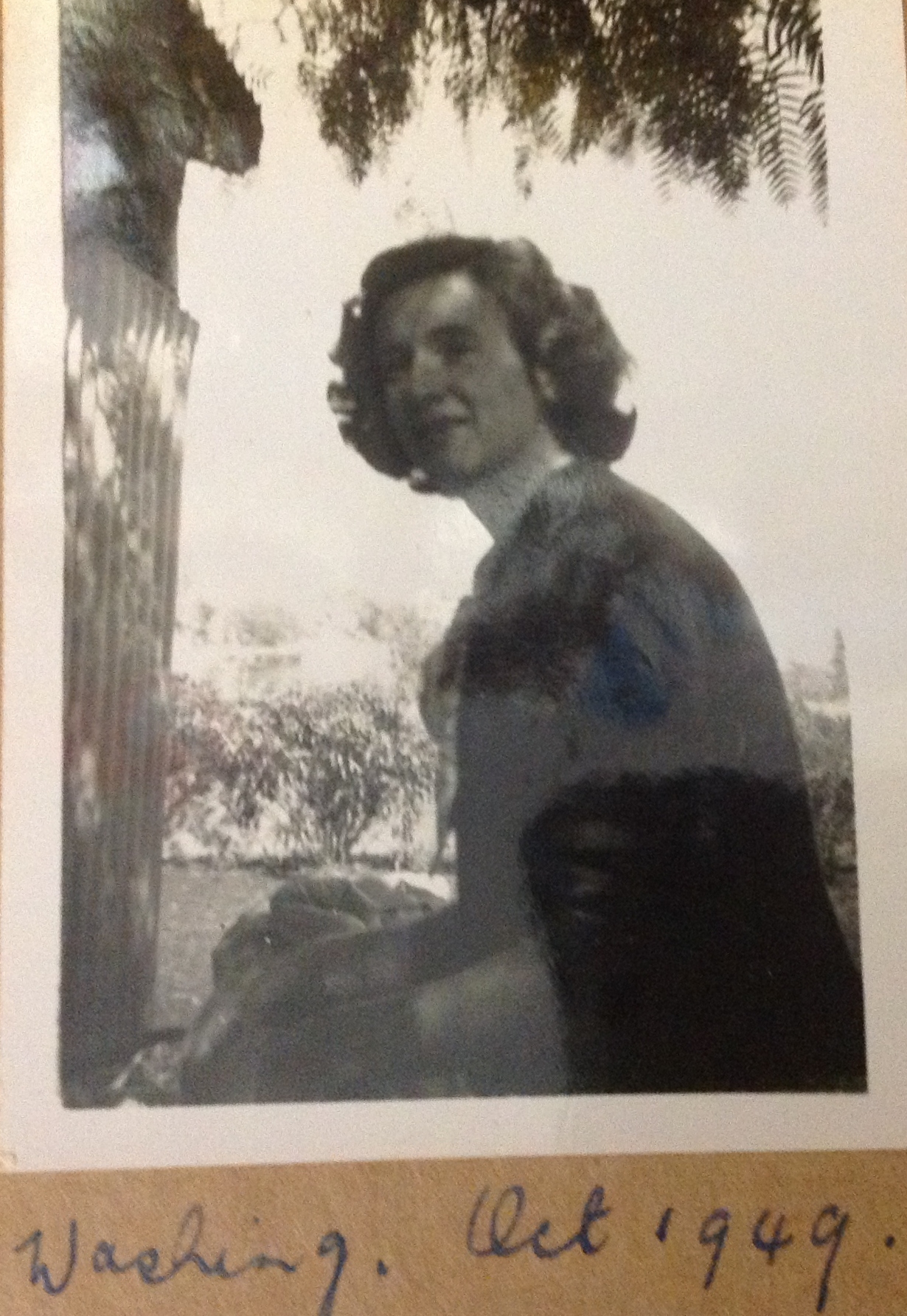
    washing 1949

    Washing day

    Her freckled, calloused hands were red and chaffed as they gripped the wooden stick and stirred Monday’s sheets in the large copper pot heating over burning blocks of wood.

    The children played in the dirt nearby, scratching like chickens, hopeful of an interesting find.

    The dirt embedded under her torn and splitting fingernails began to ease away in the warm sudsy water as she heaved the sodden sheets and plopped them onto the wooden mangles.

    The children fought to turn the handle, smearing dirty handprints on the sheets.

    She sighed, and hung them over the line. One chore done.


    I welcome your feedback. Please share your thoughts about any aspect of the article or my flash fiction piece.


  • Flash fiction – White flowers

    The sixth flash fiction challenge from Carrot Ranch Communications:

    In 99 words (no more, no less) write a story that includes white flowers.

    When Charli posted this challenge, I was thinking of writing about my Mum’s white flowers. At the time I didn’t expect that she would pass away before I had it written. After losing her my mind has been otherwise occupied and I have struggled to think beyond those two words “white flowers”. However, tonight I decided to write a brief tribute to my Mum who peacefully went “to Heaven” on Friday evening.  We will say our farewells to her tomorrow. So, it’s not really flash and it’s not really fiction but it is on the topic and is 99 words.

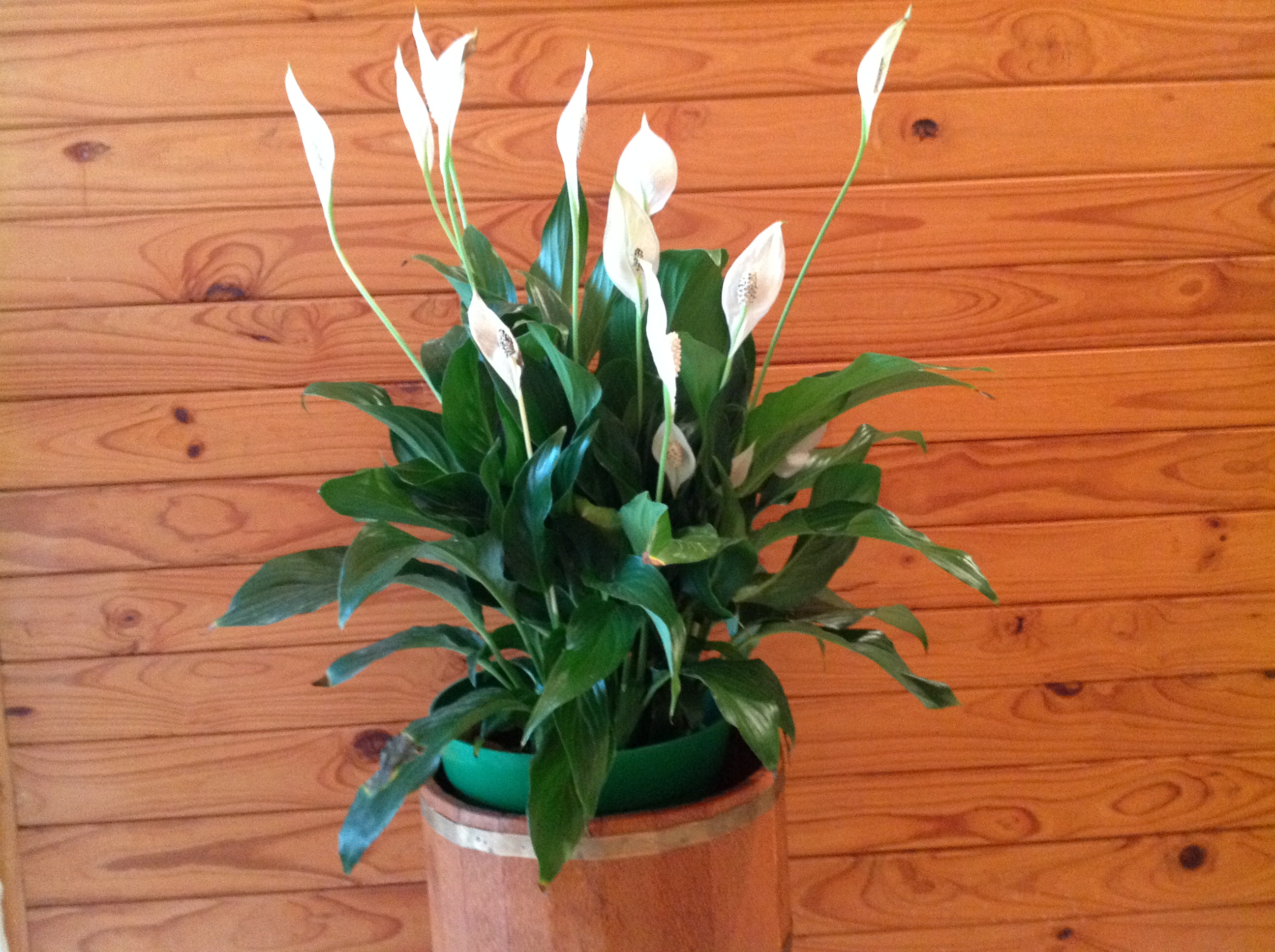
    peace lilies

    These white flowers in the pot at my door remind me of you.
    I bought them for you, to remind you of home, when you moved, with reluctant acceptance.
    Peace lilies.
    Your beautiful peace lily flourished in the warmth of the sunny spot beside your favourite chair; the favourite chair that you took with you to your new home; that transported you to Heaven. You were ready.
    Now they reside with me, in the pot made by his hands; a fitting spot.
    You will rest with him in his plot, together again, now at peace, forever.
    Love you, Mum.

  • Reading aloud – sharing stories

    Reading aloud – sharing stories

    I have always loved reading aloud to an audience, be it my own children, a class of children or, more recently, my grandchildren. I love the opportunity to escape into other characters and other worlds. I love to see the expressions on the children’s faces – anticipation, amusement, trepidation, relief, joy.  I love the sounds and rhythms of the language. I love the intricacies of story, poem and information.

    Reading stories aloud to children provides a great opportunity to establish a connection between author, reader and listener, a platform for sharing ideas, thoughts and dreams, an avenue for discussing ethical questions and implications of choices. These discussions may arise spontaneously and be child-initiated, or they may be pre-determined and teacher-lead as in philosophical discussions and bibliotherapy.

    Some parents find reading to their children a chore, something tedious that must be squeezed in around the day’s busyness. I am lucky. I never did.

    Some teachers find it difficult to make time for books in a content-driven classroom; but for me it was always priority.

    boy with books
    http://www.openclipart.org

    Some parents are delighted when their children start reading for it means the daily read-aloud ritual can cease. I never was. Well, I was delighted that they could read, but we kept on reading together.

    I read aloud with my children until they were almost teenagers. The books changed, but the joy of reading and sharing never did. During the teenage, and older, years we continued to discuss and share ideas about books we read and recommendations for reading. We still do: some for ourselves and some for the children, my grandchildren.

    Many of you reading this post take your ability to read and write for granted, as do I. But around the world many children do not have the opportunity to learn literacy skills. According to LitWorld more than 793 million people worldwide remain illiterate. About two-thirds of those are women.

    Like the people at Lit World, I believe that “the right to read and write belongs to all people”.

    I was delighted when I read about World Read Aloud Day on Gail Terp’s blog. I have been following Gail’s blog for a little while now. She titles her blog: “The Best Blog for Kids Who Hate to Read”. She says that one of her top goals is to connect children with books they love and her posts provide recommendations of great books to read to and with children, as well as to be read by children.

    In her post Read Alouds: Supporting Literacy One Book at a Time, Gail suggests 7 reasons for reading (picture books and other books) aloud:

        1. They are fun.
        2. They are motivating.
        3. They are easier to follow.
        4. They often introduce new vocabulary and expressions.
        5. They introduce a variety of writing styles, authors, and illustrators.
        6. They provide an excuse to stay close.
        7. They provide windows to complex subjects and ideas.

    Why not join in reading aloud on World Read Aloud Day this Wednesday, March 5.

    LitWorld, sponsors of the day, urge you to

    “imagine a world where everyone can read . . .”

    “World Read Aloud Day is about taking action to show the world that the right to read and write belongs to all people. World Read Aloud Day motivates children, teens, and adults worldwide to celebrate the power of words, especially those words that are shared from one person to another, and creates a community of readers advocating for every child’s right to a safe education and access to books and technology.

    By raising our voices together on this day we show the world’s children that we support their future: that they have the right to read, to write, and to share their words to change the world.”

    owl_books
    http://www.openclipart.org

    How will you celebrate and share World Read Aloud Day?

  • Anna’s pineapple

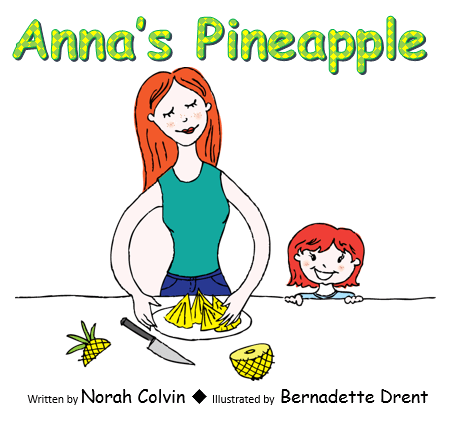
    Anna’s pineapple

    My gorgeous little granddaughter, Anna, turned two last Sunday.

    This is a story I wrote for her in celebration of her big day.

    It is based on a real event that occurred a week or two earlier. She just could not understand why her grandfather Bob had scoffed all the pineapple and left no more for her. He, of course, didn’t realise that the pineapple had been left for later, and thought that he was merely finishing off the leftovers.

    Anna’s Aunty Beckii was most amused, as was the rest of the family,  that Bob had eaten it all as he had already earned the title of “Bob the scoffer” by Anna’s big brother Artie. I must add that Aunty Beckii and Uncle Glenn had both given Artie considerable encouragement in bestowing this title!

    I am very grateful to Bernadette Drent who illustrated the story so well with only 2 days notice. I think she did a fantastic job and really captured the humour of the story.

    Have a read and let me know what you think. I’d love to know if it deserves a readership wider than that of family members.

  • Dinosaur party

    My gorgeous little grandson is four years old tomorrow.

    He is captivated by dinosaurs and engages all members of the family in playing dinosaur games.

    To celebrate his birthday this week, I decided to make this little book about a dinosaur game with his family members (little sister Anna, parents, an aunt and uncle, and two sets of grandparents).

    I hope you enjoy it too!

    There are 2 choices of format: read it by yourself or read-along with me.

    Read it by yourself:

    You have three choice of arrows to use to page through the book : on the book itself, below the book, or on your keyboard.

    Click on the full screenbelow the image to view in full screen.

    Read-along with me:

    Click on the arrow to hear a reading of the story.

    Related article:

    Play. Dinosaur party (antlersandoctopus.com)