At this school in Tokyo, five-year-olds cause traffic jams and windows are for Santa to climb into. Meet: the world’s cutest kindergarten, designed by architect Takaharu Tezuka. In this charming talk, he walks us through a design process that really lets kids be kids.
Some things that appeal to me about this kindergarten include:
the lack of boundaries between inside and outside, and between classrooms
the freedom of a child to choose to be in, or to leave, a space
the space and freedom for children to run
the sounds of happy children
the opportunity for children to help each other
and the attempt to use architecture to change the lives of children without controlling every waking moment
There are a few things that concern me, that make me feel uncomfortable, but maybe that’s just my urge to control being challenged.
What do you think?
Thank you for reading. I appreciate your feedback. Please share your thoughts about any aspect of this post.
Over the past few months in response to flash fiction challenges set by Charli Mills at the Carrot Ranch, I have been writing snippets from the life a character, Marnie, whose story is beginning to emerge as I respond to the prompts.
A couple of recent prompts had me writing about a particular situation which involved mixing paints in an art class. While all flash fiction stories relevant to Marnie’s story can be found on her own page, the two specific to this post can be read here and here (scroll to the bottom of each post for the flash fiction).
I was appreciative of the comments on both posts, with those specific to Marnie’s story encouraging me to reflect and think more deeply about the art class situation in relation to both Marnie and the teacher. While I am still mulling over the appropriate response the teacher may make, I thought I would write a longer piece to explore one possibility from Marnie’s point of view. This episode also relates to other flash fiction pieces, but hopefully the longer episode will be strong enough to stand on its own.
Art class
Marnie looked at the paints. The bright colours reminded her of a rainbow, and her unicorn. Her gaze dropped. She needed her unicorn now, but it was up in the office, drying out on Mrs Tomkin’s desk.
“It will be here waiting for you at home time,” Mrs Tomkin had said, smiling. “Okay?”
Marnie nodded, reluctantly, knowing there was no other choice. At least there was only the afternoon session left, and that was art with lovely Miss R.
Miss R. always wore beautiful dresses with colourful patterns. She had long wavy red hair, the colour of Marnie’s and her nails were always painted brightly, sometimes decorated with stars, sometimes with hearts, and sometimes with other patterns. She smelled of paint, and chalk and crayon and other scents Marnie found delightful. She noticed everything about Miss R.; because Miss R. noticed her. Miss R. always had a kind word to say:
“I like the way you used this shade of blue for the sky. I can see a storm is brewing.”
“Tell me about this picture. What’s it all about?”
“I can see you worked hard to get that looking just right.”
Marnie liked it best when she said, as she often did, “I like your choice of colour, Marnie. Your pictures are always bright. They make me happy when I look at them.”
But not today.
Miss R. stopped and looked at Marnie’s work. Her paper was covered in paint the colour of brown mud. Marnie felt Miss R.’s eyes on her work, then on her. She didn’t look up. She didn’t want Miss R. to see the tears that were threatening to fall, that would fall whatever was said. Her lip quivered.
Miss R. moved on.
“I am not crying. I am not, not, not . . .” but it took all her strength when her insides felt as muddy as the paint on her paper. She felt like mud. Maybe she should look like mud too. She smeared her paint-covered hands on her shirt, and wiped the strand of hair away from her eyes. She wanted to tell Miss R. She wanted to tell her about Bruce and what he had done. But she dare not. Bruce had threatened her and she knew he meant it.
Bruce had tripped her at lunch time and she’d fallen into the puddle. The mud had covered her from head to toe. She’d tried to hold her unicorn high; tried to keep it out of the mud. But it had fallen as she hit the ground. It was all muddy too. Everyone had laughed. Everyone except Jasmine, that is. Jasmine had taken her to Mrs. Tomkin, who had helped her clean herself up and gave her some clean clothes to wear. Mrs Tomkin had said she’d call her Mum, so that was another problem looming. At least things would be okay in art with Miss R.
But not today.
Bruce had pulled faces at her and made threatening arm movements as they lined up. He made fun of the oversized shirt Mrs Tomkins had found for her. Everyone was sniggering at it; at her.
Marnie looked straight ahead, trying to ignore the stares. “I am not crying!”
Then Miss R. was there and she suddenly felt protected, like everything was going to be alright; for a little while at least.
But not today. Today was a bad day, a very bad day. It had been bad in the beginning, and it was going to be bad at the end too. Nothing she could do.
Miss R. handed out the papers and paints. Everyone had their own brush but a small pot of water was shared by four.
Marnie couldn’t wait to get started. She knew what she was going to paint: a rainbow and a unicorn! Maybe a tree and some green grass, with some flowers. She couldn’t have her own unicorn but she could paint it. Miss R. would like her bright happy colours, and her pleasure would make her feel better, for a little while at least.
But not today.
While Marnie was contemplating which colours to mix for her unicorn’s mane, Brucie reached over and snatched Marnie’s brush. With one flourish he had dragged the brush through the middle of each of her colours leaving a dirty brown trail. Marnie had opened her mouth to speak, but Bruce silenced her with a threatening motion of a finger across his neck, as it to slit it open. He stashed her brush on the shelf out of reach, and turned back to his paper, innocent-like. Marnie’s eyes searched for Miss R.’s hoping she had seen and would come to her rescue. But Miss R. was talking to Jasmine and some others at the front, and didn’t see.
Marnie looked at her palette. “I am not crying,” she thought as she tried to still her quivering lip and stop the tears that would give Brucie so much pleasure.
She looked at him and poked her tongue. He held up a fist.
Marnie rubbed first one hand, and then the other into the coolness of the paint, blending all the colours. It felt soothing somehow, the way her hands slid easily through the paints. She watched each colour disappear into the muddy brown she was creating, wishing she too could slide away and disappear where no one would notice her anymore; where no one would taunt or bully or harm. If they couldn’t see her, if she was invisible, maybe she’d be safe.
She looked at her palms – covered in brown, just like the mud that had covered them earlier. She smeared the paint on her paper, covering it from edge to edge so nothing of it remained. She wiped what was left on her shirt. What did it matter? She couldn’t be in more trouble than she already was. They were already going to kill her. Sometimes she wished they would. Sometimes she wished she’d never been born. Sometimes . . .
Miss R. stood beside her desk. Marnie could hear her breathing; could still smell her marvellous scents above that of the muddy brown paint that was now her camouflage. She longed for Miss R. to paint her life away, to ask her about her work and what it meant. But she willed her not; and it must have worked because she walked away. How could she tell her? Her life was as muddy as the paint and she could see no way out.
Thank you for reading. I appreciate your feedback. I’d love to know what you think of this as a possibility of Marnie’s thinking.
This week at the Carrot RanchCharli Mills described a century old schoolhouse which adjoins her property. She is hoping that someone will buy it and make it a meeting place for the community, recognising the role it had to play in the education of generations past as well as its contribution to the history of the area. Her thoughts about the schoolhouse led her to thinking of community engagement and neighbourly relationships which, in turn, inspired her flash fiction challenge for this week, to In 99 words (no more, no less) write a story about nurturing a neighborly relationship.
I would have loved the little schoolhouse at Elmira Pond as the base for the alternative school I hoped to establish at the end of last century. The schoolhouse has a nice community feel to it, unlike many of the large brick, concrete jungle-type schools into which one can almost dissolve in a sea of sameness. Charli’s schoolhouse/community centre would also be a great meeting place for parents with their young children; a friendly early learning centre for both.
Based on my beliefs that:
parents are a child’s first and most important teachers;
the most important years of a child’s development are the years before school;
children who enter school with rich vocabularies, an interest in the world around them, and a love of books are primed to succeed;
children without those experiences are disadvantaged in their learning right from the start and face an enormous challenge in catching up;
waiting until children enter school is too late;
the best way to minimise or eliminate the disadvantage is by educating parents through programs that model effective parenting behaviours and support them in their interactions with their children;
parenting programs offering those types of support would be most effective if begun before birth of the children and continued at least until the child enters school, maybe beyond;
most parents want to do the best for their children, many just don’t know how to go about it.
There are any number of birthing classes, but not many that aim to support parents in nurturing their child’s development. In my opinion, investing time and money into developing programs such as these would have enormous benefit, not only to individual children and their parents, but to society as a whole.
I am not talking about programs that place children of increasingly (or should that be decreasingly) younger years into structured and formal “teaching and learning” situations. I am not talking about one-off talks or series of lectures to parents.
Many of the parents of children who begin school with the types of disadvantage I have mentioned are themselves products of similar disadvantage. In a previous post I discussed the roles of “nature” and “nurture” in a child’s development. In these cases especially, it can be difficult to tease out the differences. Many of these parents would not have positive feelings towards schools or any other public institution and may feel threatened, or reluctant for other reasons, to attend sessions in public halls or government offices.
What I am talking about is a program that:
goes to the parents and children in their neighbourhoods, meeting in a local park or community greenspace, on regular weekly occasions;
invites parents to talk with, read to and play with their children using provided books, games and toys;
models positive parenting behaviour, explaining to parents the benefits to their children of engaging with them in activities and discussions;
provides suggestions for inexpensive and easy activities to do at home;
encourages borrowing from a book and toy library.
Guiding parents in play sessions for parents and children.
I envision the program being delivered by an early children trained educator who is sympathetic to the situations and demands of people from diverse backgrounds, who is warm and supportive with good interpersonal skills with both adults and children, who drives a mobile early learning centre fully-equipped with books, toys, games, paper, pens and craft materials, including items for borrowing and distribution for activities to be done at home.
I see the centre as a brightly painted caravan with doors that open wide to display a colourful and engaging assortment of resources to delight the interests and eyes of young children and their parents. As the caravan travels into each neighbourhood it would play music to signal its arrival (think of the old icecream vans!) inviting parents and children to come, investigate, and join in.
Thinking about the excitement that such a program may stimulate in a neighbourhood, and the sense of community and belonging it may encourage, led me to write about it for my response to Charli’s prompt.
Familiar to most will be the weekly spelling test held on a Friday morning after a week’s practice at learning a list of words. Some will have dreaded the test fearing they may forget the “i before e”, “silent” letter or double letter rules, for example, their inadequacies made all too obvious by the large red crosses. Others would have relished the experience, requiring little effort to learn words they already knew, seemingly by osmosis, with the expectation of large red ticks and 10/10.
I dare say that most of you reading this blog are of the 10/10 variety. Just to be sure this is so, I have set you a little spelling test to do before you read any further. Please get your pen and paper, finger and notebook, or keyboard ready, then press PLAY to take the test.
So how did you go?
I hope you could see from that exercise that knowing how to spell has a lot to do with meaning. In fact the spelling of many of our words in English has more to do with morphology than with sound, and although sound can be helpful there are often many different letters or letter combinations that can be used to represent the same sound, for example:
“For 6092 two-syllable words among the 9000 words in the ‘comprehension vocabularies’ of a group of 6-9 year olds, 211 different spellings of the phonemes were needed – and these spellings required 166 rules to govern their use! Even at that, 10% of the words had to be left aside as ‘exceptions’; whichmeans that ‘even if a young child memorised these rules while learning to read he would still encounter hundreds of words not governed by them.’”
Lists of words, such as spelling lists, provide little support for learners, rarely providing context or meaning which might help them remember the words, or choose the correct meaning and therefore spelling, as shown by the spelling test exercise given above.
Rosen describes the alphabet as “a stunningly brilliant invention. We could call it a ‘cunning code’ or a ‘system of signs’ whereby we use some symbols (letters) to indicate some of the sounds of a language. … Though it is wonderful, there are some snags for users …” including:
letters and letter combinations do not represent the same sound each time they are used (e.g. ‘c’ in ‘cat’ and ‘city’)
letters represents different sounds according to regional accents
a particular sound is not always represented by the same letters (see the ‘eye’ example above)
He says that “Becoming or being a reader of English involves absorbing all these variations and then forgetting that they exist.”
He explains that the alphabet is more than a system of sounds and syllables and that “Our forebears devised alphabets so that they could store and retrieve meaning … over time and/or space”.
“Teachers should not take the importance of knowledge to mean they should create lists of facts . . . some benefit may might accrue, but it would be small. Knowledge pays off when it is conceptual and when the facts are related to one another, and that is not true of list learning. Also … such drilling would do far more harm by making students miserable and by encouragingthe belief that school is a place of boredom and drudgery, not excitement and discovery.”
When a child scores poorly in a spelling tests and their errors are marked in red they see themselves as bad spellers, lose confidence in their ability and have a defeatist attitude before they even try.
Why is spelling important?
Standard spelling is essential to ensure the meaning of the message is transmitted correctly from writer to reader. While readers may very quickly notice spelling errors in text they are reading, these few errors, when embedded in meaningful text, rarely inhibit the transmission of meaning. However if the bulk of the text is in nonstandard spelling, the message would be virtually indecipherable.
How do we learn to spell?
The most effective way most of us use to learn to spell is reading. While reading we are exposed to a large number of correctly spelled works in context. If we read often enough, we see words frequently and learn to recognise them. We notice when they are misspelled and so recognise how they are spelled.
The importance of spelling correctly is relevant to and a tool for our writing. The learning of particular words is best done in the context of writing.
These are some strategies that can be used with beginning writers:
Model writing for them, let them see you write for real purposes, think out loud so they can see what you are doing, for example: “I going to write a . . . I’m going to start … I need to write … ”
Encourage them to write for self-expression, to share ideas, to tell a story . . . sustained and uninterrupted writing without the fear of a red pen anywhere.
Encourage them to listen to the sounds in the words and write any of the letters they know (Beginners usually start with the initial consonant, then perhaps the initial and final consonant. Vowel sounds are the most difficult to hear and differentiate and are irregular in how they are represented.)
Respond to their writing with written comments to their messages, modelling the correct form, for example: If the child writes “I wet to the bich on the weced” you could reply with “Did you have fun when you went to the beach on the weekend?” This enables the child to see the importance of writing for communication, demonstrates the correct spelling without being “corrected” and provides a model which can be used in future writing.
Encourage children to proofread their own writing by circling words they weren’t sure how to spell. Don’t always expect them to discover the correct spelling. Being able to recognise when a word is or is not spelled correctly is a first step in developing competence.
Notice and comment on any development that can be seen in the child’s spelling ability, for example: “You have written the word ‘kitten’. You have written the ‘k’, you know that it begins with ‘k’; you have written the ‘t’ you can hear in themiddle and the ‘n’ at the end. You have listened very well to the sounds in the word.”
If you want to give a child a list of words to learn, use words that have been misspelled in independent writing. Independent writing provides you with information about what the child wants to write about.
As they begin using technology for writing, show them how to use the tools available for checking their spelling.
As a final note, in the Conversation this week was an article by Nathaniel Swain, entitled Spelling bees don’t teach kids literacy, or much else. The article discusses a soon-to-be aired television show that pits nine to thirteen year old children against each other in a spelling competition.
Swain says,
“How would you go spelling feuilleton, stichomythia, cymotrichous, or appoggiatura? More importantly, do you know the meaning of these words, and could you use them in a sentence?
Challenging and insightful, or obscure and essentially pointless? Spelling bees encourage endless memorisation of complex but low-frequency words – and are a distraction from the core of literacy education.”
Thank you for reading. I appreciate your feedback. Please share your thoughts about any aspect of this post.
Earlier this week the television was on as I was getting ready for work. I wasn’t taking much notice as the voices droned on. I was lost in my thoughts of what needed to be done, what I’d be doing at work, which illustrator I’d choose to win my design contest, what I’d write about next, what I needed to get at the shops on the way home from work . . . the usual clutter.
Suddenly the words “they don’t even know they are learning” drew my attention to the television. I paused to see what they were talking about. The image showed children of about three years of age in a child care centre. The children were counting as they walked along stepping stones laid out in a path!
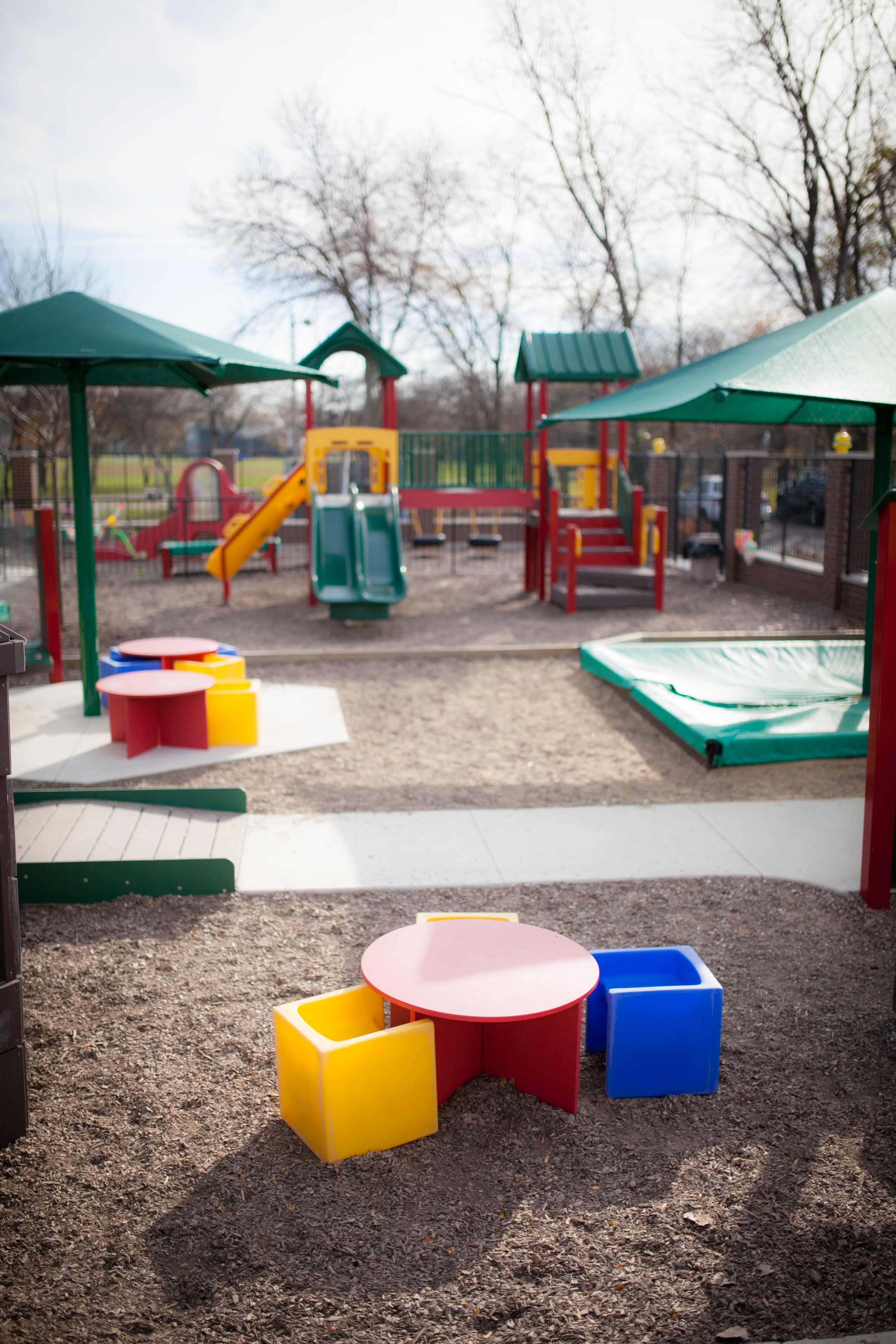
Kids’ Work Chicago Day Care
Remarkable? I didn’t think so. Children were happily engaged doing what comes naturally to them: playing, having fun, making sense of the world around them. Pre-school children will naturally join in the fun of counting and learn to do so without structured lessons, with just an attentive adult who encourages it incidentally in daily activities. I have made a few suggestions here and here.
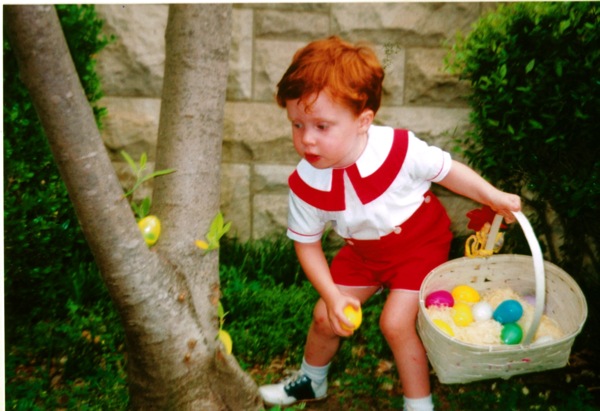
Easter Egg Patrol
What I think is far more remarkable (worthy of discussion) about those words is the insidiousness of the thinking that underlies them and what that thinking implies.
“They don’t even know they are learning!”
This to me implies that learning is something that:
children don’t want to do but “we” expect of them,
children won’t do unless it is “hidden” in sugar-coating,
must be planned for in a structured program and done to children by adults,
fits into a narrow band of skills and abilities with easily identifiable criteria that can be measured, and
is definitely NOT fun!
Perhaps more insidious is the implication that it occurs only in those situations.
Children are born to learn. Their every waking moment is spent figuring out how the world works and what they can do to have their needs met. They are born scientists. They have an innate desire to know. Why one should think it remarkable that children are learning, but they don’t even know they are doing so, boggles my mind.
Anyone who has spent any time with young children know that learning is what they do. They can spend hours absorbed in a particular activity figuring out how something works, how things fit together, what happens when and if …
As soon as an adult intervenes in an attempt to “teach” something that seems appropriate and important to the adult, the child switches off, disengages and chooses another activity.
That’s not to say that the adult shouldn’t intervene to support a child’s learning, but the adult needs to be sensitive to the child’s needs and responses and to not force the situation to one in which the learning may be more important to the adult than the child at that moment, when the child is doing very well on its own, thank you very much.
The article I refer to was broadcast on April 1st. An April Fool’s Day joke? Sadly, not. But if we fail to honour children’s natural curiosity and desire to learn and continue to value only that which can scored on a test, I fear we will develop a multitude of fools.
Thank you for reading. I appreciate your feedback. Please share your thoughts about any aspect of this post.
I love writing. Always have. I usually confess that I am a better writer than a speaker.
I like the time that I can take to choose a word or phrase and combine them to mean just what I intend.
I like the opportunity to check a word’s appropriateness before using it. Often when speaking I leave my sentence hanging embarrassingly in mid-air while I grope around in the murkiness of my mind for the “correct” word. Why can my fingertips find the right word, without any thought, and the tongue cannot?
And of course there are all the opportunities that writing provides for self-expression, creativity and sharing ideas with a wider audience.
I started out writing stories, poems and songs, as most children, do and tried my hand at short stories, children’s stories and poetry as I got older. As I became more involved with my career in education, and in raising my children, I had (or made) less time for those creative pursuits.
There are many reasons I loved being a teacher and one of those was the opportunity it provided for me to be creative: creative and innovative in the way I worked with children to encourage their learning; and creative in writing resources to assist my teaching and the children’s learning.
I was fortunate in having a variety of opportunities to write materials for educational publishers at different times during my career, and I am currently writing documents to support curriculum implementation for my state educational authority. But I really wanted to be in control of my own writing.
At the back of my mind there was always the thought of sharing my teaching and learning resources with a wider audience. (Just a little bit further back, or maybe even close to equal footing, is the thought of publishing children’s stories, short stories, and maybe even a novel . . . one day.) I had had no success with submitting unsolicited manuscripts before and couldn’t think what publisher might be interested in the variety of educational resources I had made, many specifically for use on a computer.
So a couple of years ago I decided that a website of my own was the ideal platform for sharing my resources. Getting that website up and running is my primary goal. However, observers could be mistaken in thinking that writing a blog is my primary goal. The path to establishing a website has taken a side-track via blogging.
Blogging, Twitter, Facebook and other forms of social media were recommended me to right from the beginning as a way of targeting and establishing an audience. At the time I was familiar with none of these and set off learning how to become involved. It has been an exciting journey. I have learned lots and made many wonderful online friends.
However I am not sure how far it has moved me towards achieving my website goal. In fact, I think very little progress has been made.
I have not found and established my “target” audience and am really none the wiser about doing that.
The time that I am spending writing, reading and commenting on blogs is time that I am not spending on preparing materials for my website.
I need to be more proactive in finding illustrators for my work.
When I discovered the Teachers Pay Teachers site and established my Teachers Pay Teachers Store I had thought this may be an alternative avenue for sharing my work. But I haven’t been as successful there as I would like either. This may be telling me something about my website goal. What is it telling me? Should I listen?
So my dilemma comes down to these questions”
To blog or not to blog?
How to blog?
How much time for blogging?
The answer to the first one is easy:
Yes!I very much enjoy writing my post and receiving the almost immediate feedback from the wonderful community of writers I engage with.
Yes! I love reading and commenting on others’ blogs and joining in the discussions that ensue. We are a S.M.A.G. group: Society of Mutual Appreciation and Gratitude. What’s to not like?
The second two questions are a little more difficult.
The focus of my blog is education, but my audience consists of writers. Educators have shown little interest in developing a relationship with me online. I haven’t been able to figure that one out, but I have a few hazy ideas, none of which I think I want to address at this stage. If I change the way I blog I would quite likely fall out with the community I have become part of; and there is no guarantee I would pick up a teacher audience. So I’ll have to keep mulling this one over for a while.
The third question is the one I have been “researching” for close on five months. As time is limited and I need to devote more time to achieving my primary goal, it is important that time spent on blogging activities is worthwhile.
I decided to find out who is keen to engage with me and who isn’t.
I began keeping a record of the number of comments I made on others’ blogs, and of those they made on mine. It wasn’t always as I expected, and highlighted some interesting trends; the main one of which I have noted above:
Writers have a wonderful sense of community.
The record helped me ensure that, if someone visited and commented on my blog, I would visit and comment on theirs, maintaining a balance as much as possible.
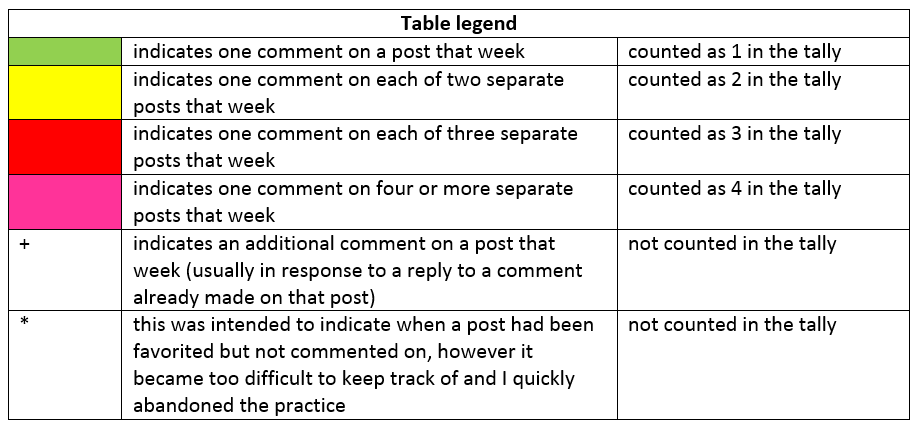
This key explains how to interpret the information on the tables below.
I have removed names from the tables to respect privacy. (I don’t really expect you to look too hard at the tables. You have better things to do. But they do look pretty!)
November 9 2014 – Jan 24 2015
Jan 25 2015 – March 26 2015
I have not included all blogs I “follow”, or even all the ones I have ever commented on. Only the ones on which there has been some consistency in connecting.
I have also not included the comments of those who follow and comment on my posts but do not have a blog of their own on which I could reciprocate.
I generally post twice a week.
Others post more often.
Sometimes the number of comments I make on their posts in relation to their comments on mine is affected by the greater number of times they post. If someone chooses to post more often than twice a week, I will not necessarily read all their posts, regardless of how much I enjoy reading them, as there are other ways I must use my time, including a reading greater variety of writer’s work, and getting more done on my own. I’m sure they have enough other readers to not miss me!
Sometimes when a blogger posts less frequently than I do, their comments on my posts may tip the scales in my favour. I can’t do much about that either, but I do try to catch up when next they post.
I have found that it can take a few weeks of commenting on a blog I like to get a return visit and comment on my blog. Frequently I don’t even get a response to a comment I’ve made on theirs. I guess that’s how it goes. Some bloggers blog to develop community. Others blog to broadcast. I just need to decide how best to use my time.
Contributing partly to my procrastination with responding to these wonderful invitations, which I do very much appreciate, is that I have already nominated the majority of bloggers I follow, or if I haven’t someone else has. And the remaining ones don’t wish to be nominated. What is a girl to do? I’d appreciate your suggestions.
Thank you for reading.
I appreciate your feedback. Please share your thoughts and advice, especially about how to increase time. If anyone knows a good time alchemist, I’d love to meet her!
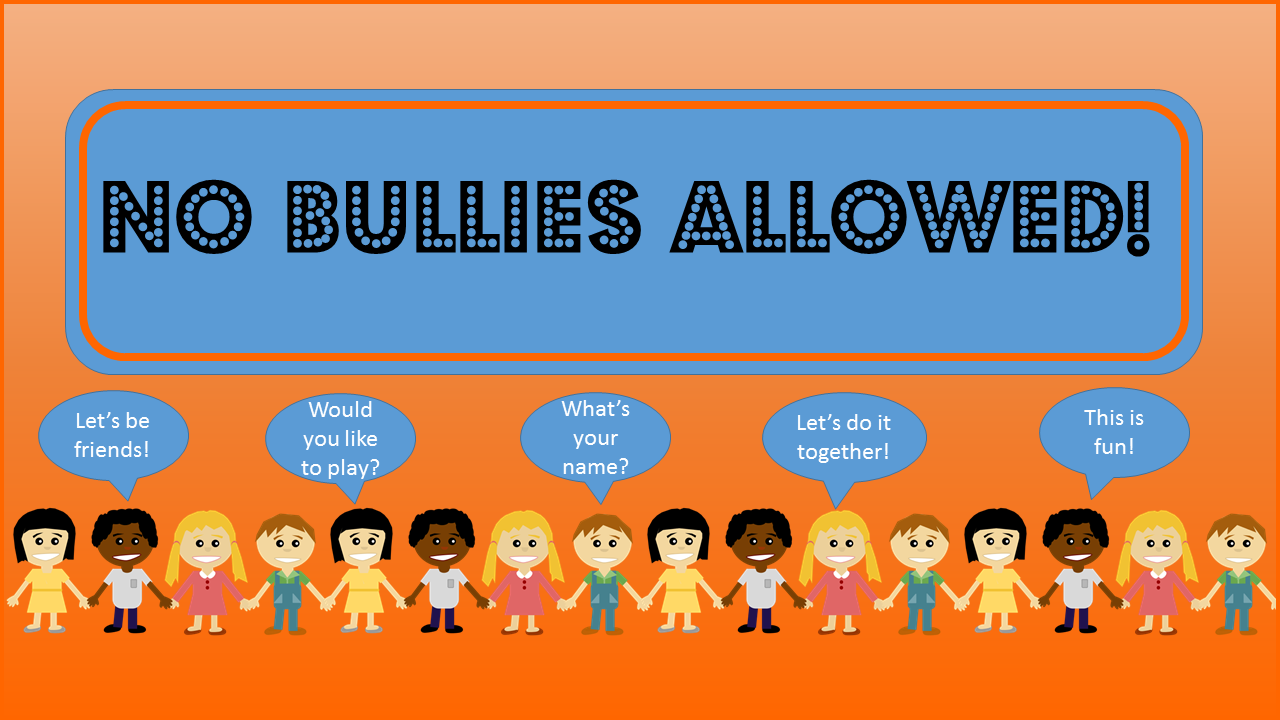
“create learning environments where every student and school community member is safe, supported, respected and valued”
A very worthwhile goal, I’m sure you’ll agree.
The Bullying No Way website has resources for parents, teachers and students, including this video for young children:
The Prime Minister Tony Abbott delivered a message to children telling them that there is no place for bullying in Australia, that bullying is wrong. I definitely agree!
Last month Yvonne Spence organized a very successful #1000 Speak for Compassion campaign. This month she has placed the focus on bullying and requested bloggers to unite their voices against bullying. You can join in by visiting the Facebook page. I have already linked my most recent post Bully for you! as well as this one. There are many others there to read.
Last week Charli Mills extended a challenge to write a flash fiction story about bullies. She has compiled the wonderful stories in her post Circling the Bullies.
My previous post, Bully for you! received many comments, some sharing experiences of bullying, either of themselves or someone close to them. One comment was from a new visitor to my blog Sherrill S Cannon who shared information about her books dealing with bullying for children, and also explained her involvement with I’m bully free.org to which she donates 50% of the revenue from her books purchased through that page.
There are many other organizations that promote information about and actions against bullying worldwide. Hopefully as more voices unite in making others aware of, and in speaking out against bullying, we can come close to eradicating it from our society.
“More needs to be done to prevent bullying. I really believe that there should be more intensive courses for teachers and administrators to learn to deal with the bully issue. We will never eradicate bullying completely. It is a tactic used by despots and terrorists, and sadly, they seem to thrive.”
Many of the comments on the post last week were in relation to the bullying incident involving Marnie. I share her story again here in case you missed it:
Not funny at all!
Jasmine and Georgie rushed towards the cluster of children who were laughing hysterically at something unseen. They expected to see an entertainer performing magic tricks. Instead they saw Marnie, face down in a puddle, reaching for her unicorn; sobbing.
“Good one, Brucie!” Two boys high-5ed. Another called, “Way to go!”
The children stood transfixed by the spectacle. Jasmine pushed through. She picked up the muddied unicorn, stretched out a hand to help Marnie up, then put an arm around her waist,
As she led Marnie away Jasmine glared at the group of disbelieving faces.
“Shame on you,” she said*.
*Thanks to Donna Marie for suggesting I change “mouthed” to “said”.
In this piece I tried to show that there may be many participants in bullying, not just the obvious “victim” and “bully”.
Marnie is the obvious victim. But there were many onlookers. None, except Jasmine, spoke up against the bully. By their silence were they condoning it? Or were they fearful that they would be the next targets if they said anything? Does that also make them victims? How does that affect their confidence and self-image?
Brucie was the obvious bully, causing Marnie’s embarrassment. But what of the boys who applauded with their high-5s and words of encouragement? Were they joining in because they too were mean; part of a gang of bullies? Or like the other onlookers, did they feel threatened about what may happen to them if they didn’t join in?
But is Brucie also a victim? What makes a bully a bully? Why did he pick on the vulnerable? What in his life caused him to act this way?
And what of Georgie who stood back in the crowd and did nothing while her friend Jasmine went to Marnie’s rescue? Why was she reticent to support her friend?
I wonder, too, what they all said when they turned away. Did they speak out in private about the bullies? Geoff Le Pardcommented on a similar lack of support for him when he was bullied at school.
Jasmine was the only one who came to her rescue? Why did she? How was she feeling? Had she been the victim of bullying and so felt empathy with Marnie? Did she just know it was wrong and that it was important for someone to take a stand? What had happened in her life to make her so strong?
Donna Marie of Writer’s Side Upcommented how being bullied had ruined her boyfriend’s life and suggested that more needs to be done to change the bully’s behaviour. Perhaps some bullies need protection from bullies themselves. Did they need to learn the behaviour somewhere?
The word bullying is sometimes used to describe a one-off unpleasant incident, like poking out a tongue or showing the “rude” finger. However bullying usually refers to something more ongoing, where there is an imbalance of power, the “stronger” picking on the “weaker”.
To avoid becoming the weaker, I think children need to develop resilience. They need to realise that just because somebody says it doesn’t make it true. They need to learn to take responsibility for their feelings, realise that they can choose to feel upset or choose to ignore it. I am in no way saying they should ignore aggressive, violent, intimidating behaviour, but learning to be resilient about the little things helps to develop strength of character.
I think we would probably all agree that bullying is a complex issue with many facets. That education is required to reduce its incidence is a given. What do you think?
Thank you for reading. I appreciate your feedback. Please share your thoughts about any aspect of this post.
The nature/nurture debate wages constantly. Are we who we were born to be, or are we shaped by our environment to be who we are?
To my untrained mind (I have no qualifications in psychology) it appears that who we become results from a mixture of each in combination with a dose of self-determination. Sometimes it can be difficult to separate the nature from the nurture. Are we that way because of genetics or because of the family environment in which we grew up?
It is true that no two individuals, even siblings, experience identical environments. Even in the closest of families the differences can be as pronounced as the similarities; in interests, capabilities, personalities and attitudes as well as physical characteristics. Both similarities and differences can be used to argue equally well for nature or nurture.
A paper published by NATSEM (National Centre for Social and Economic Modelling) in 2013 described a close link between education standards, employment and poverty, leading to social exclusion and disadvantage in Australia. It explained that lower education levels resulted in higher levels of unemployment, and therefore poverty, and that children living in poverty were at risk of not completing high school and of having poor nutrition. And so the cycle would continue.
That is not to say that children living in poverty are doomed to continue doing so throughout their lives (we all know successful people who through their self-determination have pulled themselves up and out of the situation) but it may be much more difficult for them to achieve the levels of success that seem to come so easily to others in kinder circumstances.
According to the Institute for Social Science Research at the University of Queensland “Research shows that when schools, families and community groups work together to support learning, children tend to do better in school, stay in school longer, and like school more.” Commencing this year, the “Parental Engagement in Schools” project aims to discover what type of involvement best supports student learning and outcomes. Encouraging parents to be involved is another issue.
While my general observations as a teacher, and those of many colleagues, support the notion of a connection between economic status and educational advantage, a paper recently released by the University of Bristol states that “Poorer parents are just as involved in their children’s activities as better-off parents”, and that “The findings support the view that associations made between low levels of education, poverty and poor parenting are ideologically driven rather than based on empirical evidence.”
Perhaps over-generalisations in this area are just as problematic as those that expect all family members to be alike. I think that, regardless of background, it is important for teachers to support all students to make positive choices for their future. This can be done through demonstration and modelling rather than criticism and blame.
I also recommend a certain set of strategies that all parents, regardless of their economic status, can employ to give their children a great start is life, including:
Love them
Talk with them
Read to them
Encourage their questions and curiosity
Help them seek answers and solve problems
Encourage their independence
Foster confidence, a willingness to have a go and to try multiple times and ways
Be accepting of differences and don’t prejudge their future based on the experiences and futures of others.
The old saying goes that “You can choose your friends, but you can’t choose your family”. Although I have read suggestions that we may be genetically close/distantly related to those we choose as friends, I can’t testify to the authenticity of the “science” that makes those claims. However, I think many families have at least one member they would probably prefer to disclaim relationship with! Not my family of course!
In my current out-of-the-classroom position I write science curriculum materials for use in early childhood classrooms. It is an interesting and challenging role, but also lots of fun as I work with a number of other writers who are also teachers, with an added qualification in science. As many of them have studied science at tertiary level, worked in various other fields, and taught science at high school level, I am surrounded by people with a lot of knowledge and experience different from mine.
One thing that is wonderful about working with a group of scientists is the range of topics that are raised for discussion around the table at lunch time. Scientists are naturally curious and they don’t take anything at face value. They delve into it, interrogate, investigate and explore until they have answers to questions that may have arisen. I learn a lot! Like the difference between degradable and bio-degradable; how close the asteroid came to Earth; and mitochondria, genetics and children with three parents!
On the home front too, I am surrounded by scientists; computer scientists and environmental scientists, each with a strong sense of social responsibility and ethics. I am fortunate to be swept along in learning by their interests and enthusiasm.
In previous posts I have shared some thoughts about the importance of curiosity and of my opinion that children are born scientists. I am always delighted when I come across something that supports my opinion. (Yes, there are others!)
I have recently discovered a lovely blog Musings of a Frequent Flying Scientist written by a local scientist Desley Jane. This week she shared an interview with another local scientist Julia Archbold. I enjoyed it so much I decided to share it with you.
These are just a few of things I like about it: They are both young female scientists. (For too long science was seen as a male-only province.) The importance placed upon curiosity, asking questions and ‘quizativity’ (what a great word!) The excitement of learning. That their engagement with science makes a positive contribution ‘the world’.
Please visit Desley’s blog to read the entire interview and explore what else she has to offer.
Thanks for reading. I appreciate your feedback. Please share your thoughts about any aspect of this post.
This is my first interview for my Scientific Reasoning feature. The questions will be the same for each interviewee and I hope that they will give us some insight into the lives of a few of today’s scientists.
Dr Julia Archbold is a good friend of mine. We have known each other for many years and have worked together in the past in our twenties (ish). I admire Julia greatly, both as a scientist and as a person. She is warm and talented, with a quick wit and a very kind soul. She is about to embark on an exciting new adventure and I caught her just in time for this interview.
me: So I know you’re a scientist, but when did you decide to become a scientist? What were you thinking? (Not WHAT WERE YOU THINKING?!?! but what made you decide that science was going to be your future?)
I decided to give myself a break from writing about the confusion that students may feel as they attempt to navigate the murky waters of expectations and inappropriate curricula that have little connection with their lives; or about how disoriented they may feel in an environment that bears little resemblance to any other they will experience.
Instead I decided to share an interesting story I heard this week and a flash fiction which is more memoir than fiction, a reminder to self of how lucky I am to be doing what I am.
“Each letter in the book is linked to a topic. Each chapter takes on different aspects of how the alphabet has been used. Each chapter is preceded by the short story of how that particular letter evolved, how its name came to be pronounced that way and something on how the letter itself is spoken and played with.”
When listening to Rosen read his chapter about the letter ‘K’, “K is for Korean”, I was fascinated to find out that the alphabet of South Korea, Hangul, is “the earliest known successful example of a sudden, conscious, total transformation of a country’s writing.”
The alphabet, described by Rosen as more of “syllabic monograms” than letters and is easy to learn, was devised in the mid-fifteenth century by the ruler of the time, King Sejong, as a way of enabling everyone to be literate.
Prior to the introduction of this alphabet, Chinese characters were used. According to an article on Wikipedia “using Chinese characters to write was so difficult for the common people that only privileged aristocrats usually male, could read and write fluently. The majority of Koreans were effectively illiterate before the invention of Hangul.”
Rosen says that what is “remarkable . . . is that there was an already existing system of writing which was, to all intents and purposes, overthrown in its entirety – not adapted. (It happened) because one part of the ruling elite decided that a total change was the only way in which everyone could read and write easily.”
Hear! Hear! I say, and express a wish that all our students of English would find learning to read and write far more easy and enjoyable than many do, that more emphasis would be placed upon helping students learn than in “teaching” particular content at particular times.
Also included in Rosen’s chapter about ‘K’ was mention of the Voynich Manuscript which appears to be scientific in origin, but which contains fictitious plants and is written in a “language” which no one, including codebreaking experts, has been able to decipher and read. Rosen says that “With one beautifully executed volume, (the author) causes instability and doubt at the heart of the production, ownership and use of knowledge. It is a carefully constructed absurdist joke.”
Unfortunately for a small (but too large) number of our students, reading and writing for them is often as confusing as the Voynich Manuscript.
For a little bit of reminiscing, here is a video of Michael Rosen talking about the dreaded Friday spelling test. I wonder how his experience matches yours.
And so to my flash fiction of disorientation and confusion . . .
Obfuscation
The pulsing train wheels pounded in my head.
Way off in the distance voices called instructions to each other.
“What day is it?” I said.
The voices were closer now. “She’s in here.”
“Can you walk? Come with us,” they said.
They led me to a vehicle and bade me lie down inside.
Then came the questions:
What’s your name? When were you born? What day is it? Why are you here? Who are you with?
Slowly, as if from the deepest recesses, I drew each recalcitrant answer, recreating identity.
“You’re okay. You bumped your head,” they said.
Thank you for reading. I appreciate your feedback. Please share your thoughts about any aspect of this post or flash fiction.




























 Norah Colvin