Live Love Laugh Learn … Create the possibilities

Tag: education

  • Reading across the curriculum – Readilearn

    The importance of reading cannot be overstated. It is an essential skill, integral to almost everything we do. Teaching children to read is one of the most important, and most rewarding, aspects of our role as early childhood educators.

    Some children come to school already reading. Others come not yet reading, but with a love of books and an expectation that they will learn to read. They understand that reading involves making sense of the squiggles on the page. These children usually learn to read effortlessly regardless of what we do.

    Other children come to school with little experience of books and reading. For them, learning to read is a mystery and a greater challenge. For these children especially, it is important that we provide an environment rich in language and book experiences. We need to excite them about books and reading, interest them in words and language, and show them that books can be both a source of enjoyment and information.

    I often hear teachers lament that there’s just not enough time in the crowded curriculum to read to children any more. But reading aloud to children, especially early childhood children, should be non-negotiable and a priority every day. How can we excite them about books, and interest them in reading, if we don’t read to them?

    It is impossible to turn children onto books in one isolated reading lesson each day. In fact, reading lessons as such probably don’t turn children onto reading at all. That is not their purpose. Their purpose is to teach skills. But those skills should always be taught in context, and never in isolation. Nor should they be confined to lessons timetabled for English. Reading must occur across the curriculum and for a multitude of purposes throughout the day, from noting who is at school, interpreting the job roster and group allocations, to understanding connected text in various subject areas.

    Many readilearn resources are designed to provide children with opportunities for reading across the curriculum. Even those designed specifically to develop reading skills have application in other subject areas.

    Continue reading at: Reading across the curriculum – Readilearn

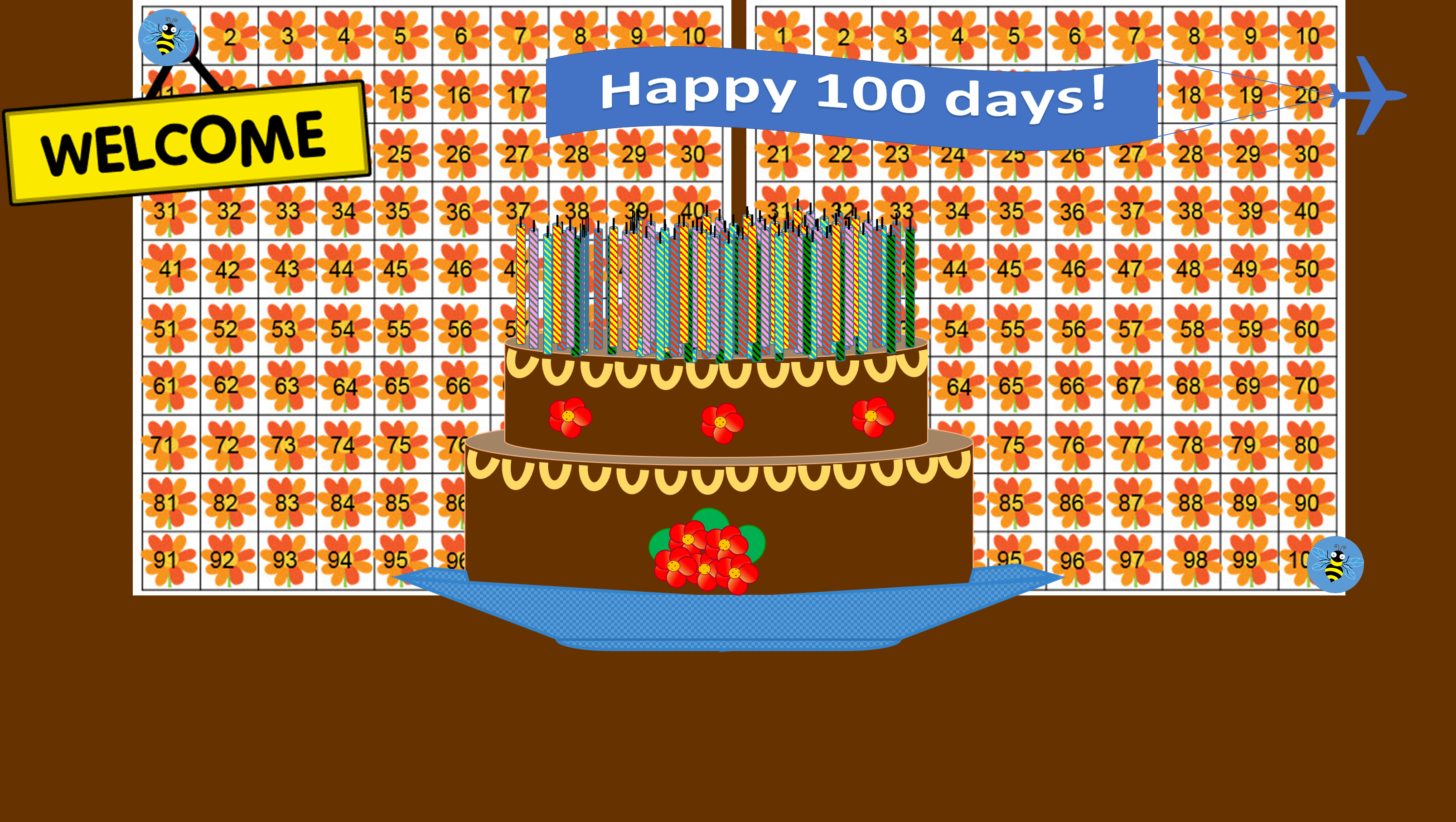
  • Counting one hundred days of school – Readilearn

    With the commencement of the Australian school year still two weeks away, it might seem a bit early to be thinking about the 100th day. Let me assure you it’s not. It’s great to be ready to start counting from day one. However, if you miss the start, you can always go back and count the days on a calendar. For those of you in the US and UK, the one hundredth day will be coming up soon in February.

    In Australia there are 200 school days in a year. So, once you have counted up to 100 days, you are half way through and can then count down the number of days remaining. The US and UK have fewer school days: 180 in the US and 190 in the UK; so they are more than half-way through by the time they reach their 100th days.

    Whatever their year level, children are always excited to count the days to this milestone, and it provides wonderful opportunities for learning about number.

    Several readilearn resources support you and your students as you count up to and celebrate one hundred days, including:

    The interactive digital resource Busy Bees 100 chart is great for all your usual number board activities, and can be used to keep a count of how many days you’ve been at school. Simply display the resource at the beginning of each day and move the bee to the next number.

    Just this week, I have uploaded a short video explaining how to use the resource. I am also including it here. I’d love to know what you think.

    Click to continue reading: Counting one hundred days of school – Readilearn

  • Happy New Year! – Readilearn

    Wishing all my readers a very happy New Year with best wishes for peace and joy in 2017.

    Thank you for your ongoing support. I’m looking forward to further conversations in 2017.

    Click to read the original: Happy New Year! – Readilearn and view the video of inspirational teacher Chen Miller. Once a special needs student herself, Chen is now making a difference to the lives of children she teaches.

  • What lies beyond

    This week at the Carrot Ranch Charli Mills has challenged writers to In 99 words (no more, no less) write a story that steps beyond.

    She says,

    “The paths often fork and always seem steep. You just have to keep stepping out, risk being vulnerable, learn as you go from both masters and your own observations, and explore what could be.” 

    How apt a description for learners and teachers alike. The focus of a teacher’s work is always on what lies beyond; encouraging learners to step out, take those risks, embrace vulnerability, and explore the unknown. Each journey is unique with its own periods of calm interrupted by rough patches and inclines that require both teacher and learner to step beyond comfort and what is familiar.

    While learners are appreciated for who they are, and for their achievements, in each moment, a teacher is always stretching them to grow towards the possibilities of an unknown future; preparing learners to grasp, and create, new opportunities.

    In Are you ready to embrace the future? published in July 2014, I introduced you to Tony Ryan, learning consultant and futurist. In his online seminar Future-proofing Kids, Tony says,

    “Many of the children alive today in Western societies will still be around in the 22nd Century. How can we possibly predict what they will experience between now and then? And if we can’t do that, then how do we best prepare them for whatever is up ahead?”

    I listed, as essential to successfully living in that unknown future, the development of the following attitudes and character traits:

    •  Confidence
    • Persistence
    • Resourcefulness
    • Resilience
    • Able to seek solutions to problems
    • Openness to new ideas and possibilities
    • Creativity
    • Divergent thinking
    • Questioning
    • Optimism

    These add to basic levels of literacy and numeracy and the ability to critically evaluate material; for example, using information about an author’s credentials and purpose, and understanding the ways texts are constructed to persuade.

    On his website, Tony Ryan says,

    “The world up ahead will be amazing, but it will take each of us to push our intellect and our spirit beyond all previous possibilities.”

    He describes the focus of his work as supporting others to do just that

    In addition to educating for the future, teachers need to see past the labels to the truths that lie within, encouraging all learners to stretch beyond what they thought was possible. I hope there was a teacher in your life who enriched your journey.

    For the teachers among you: know the importance of your role and the effect on all learners when you help them see the value of self and open their eyes to their own potential. When you help them step beyond the limits imposed by others, you help them create possibilities in their own, and our collective, futures.

    It is from this perspective that I have written my response to Charli’s flash challenge.

    Beyond surface features

    The registrar ushered him to the doorway and promptly disappeared.  He stared blankly: hair askew, face dotted with remnants of meals past, shirt lopsided and collar awry, shoes scruffy. Another needy child. You name it, he had it: split family, mother in jail, successive foster homes, sixth school in two years, learning difficulties, generally unresponsive, prone to aggressive outbursts …  

    No magic ball, just a futures optimism, she saw beyond the exterior to the potential within. In a moment, she was there, smiling, taking his hand, reassuring. “Everyone, say good morning to Zane. Let’s welcome him into our class.”

    Thank you

    Thank you for reading. I appreciate your feedback. Please share your thoughts.

  • Take a gander at this – #early childhood teaching resources


    gander-1559843_1920

    This week at the Carrot Ranch Charli Mills has challenged writers to In 99 words (no more, no less) write using the word gander as a verb.

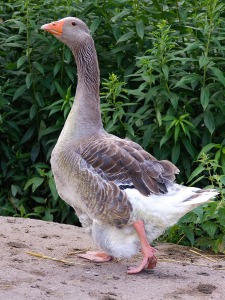
    Gander, the verb, means to look. Since a gander, a male goose, has a long neck which is, without doubt, suitable for sticking out and into things, the meaning to take a look is probably apt. However, I must say that, until reading Charli’s flash pieces, I was unfamiliar with its use as a verb, and still feel a bit uncomfortable in using it so, but I’ll give it a go – later.

    First: What I would love is for people to take a gander at readilearn, a website I have been working on for more years that I care to tally right now.

    It is a year since I took the leap and engaged a company to develop the site. It was nine months (not the one month promised) before the site was launched, just over three months ago. To use the nine months analogy of pregnancy; it wasn’t an easy gestation or birth, and we’re still experiencing teething problems and growing pains, including “how to grow?” pains.

    Audience wanted
    chairs-1738738_1920

    Marketing, as in attracting, building, and maintaining an audience, is difficult, as any writer knows. It is not just a matter of writing the stuff and hoping an audience finds it. It takes time, effort, and know-how. I’m a bit short on all three, but I’m going to stick my neck out, and ask if you’d be willing to help me a little with the know-how in finding my target audience.
    readilearn-home-page

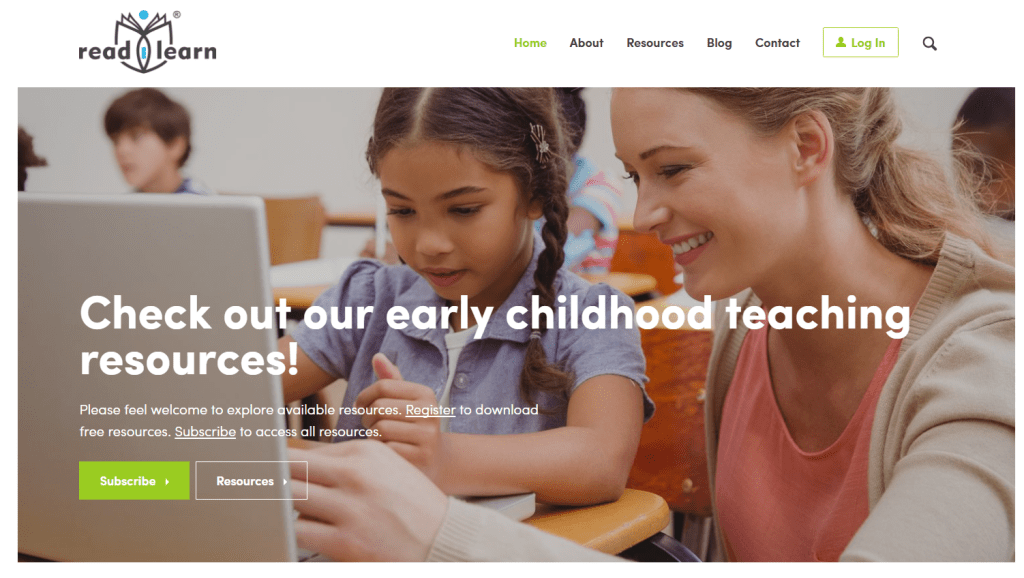
    readilearn is a collection early childhood teaching resources. The target audience is teachers of children between 5 and 7 years of age, be they teaching in a school environment, or homeschooling their children. The resources are also suitable or use with children learning English as a second or other language, and with children with special needs.
    resources

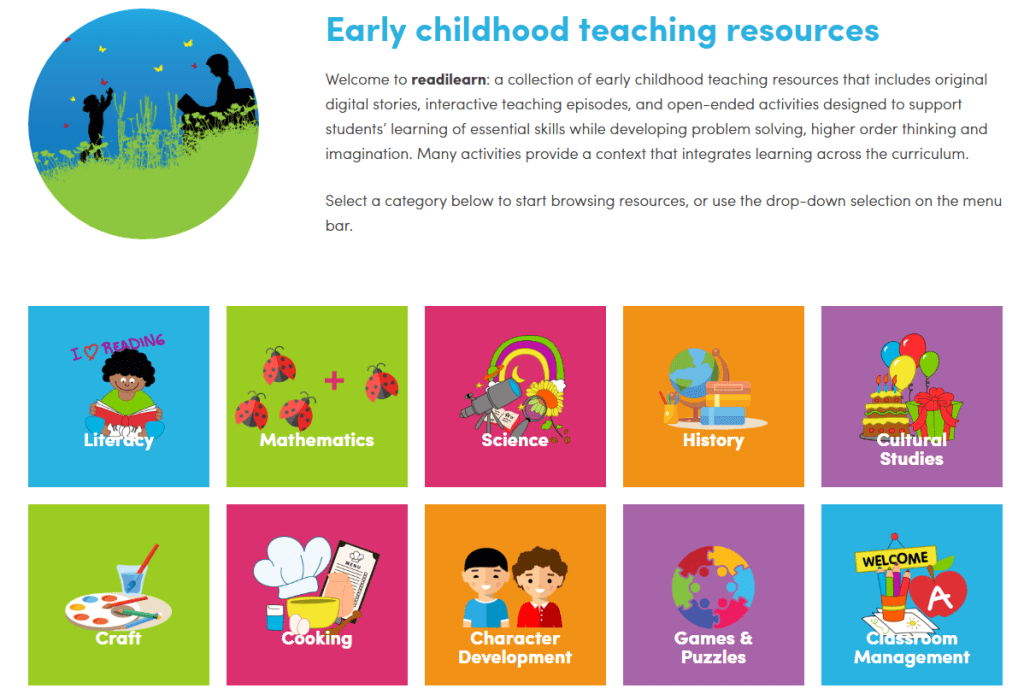
    There are resources for most areas of the curriculum, with suggestions for integrating learning across curriculum areas in a meaningful context.

    The materials are Australian (I’m Australian) but are suitable for use internationally.

    There are:

    • Digital and interactive resources to access and use online
    • Word and PDF documents to download and print

    Including:

    • Original stories
    • estories (digital stories)
    • Teaching ideas and suggestions
    • Lessons plans
    • Readilessons (lessons ready to use)
    • Games
    • Printouts for parents

    Features

    • New resources are added almost every week
    • Many resources are free to registered users
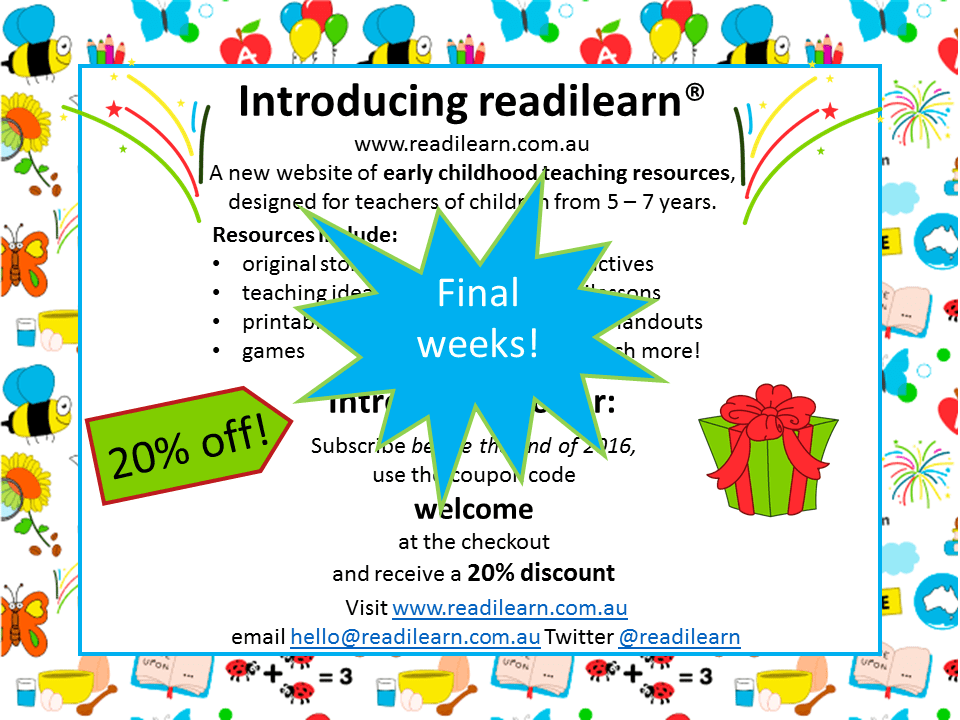
    • An annual subscription of less than 50c per week (or less than the cost of 5 cups of coffee a year!) is easily affordable; and that’s Australian dollars – even less for UK and US subscribers! It’s even discounted until the end of 2016!
    final-weeks

    So what’s different?

    I think that what differentiates readilearn is the integrated resources focusing on purposeful learning in context. The open-ended nature of many of interactive resources allows teachers to adjust the discussion to suit the needs of their students. readilearn is not just bunch of worksheets for repetitive practice of skills in isolation, or endless pretty charts to hang in the room. It is designed to support effective teaching and learning in meaningful contexts.

    More than just resources

    • Each Friday I publish a blog post filled with teaching ideas and information, including how to get the most from readilearn resources.
    • I also email users each Friday to inform them of new resources uploaded during the week – no more wondering if there’s anything new or where to find it.
    • The newsletter, published on the last day of each month, includes a summary of blog posts, a list of new resources, and a preview of events in the coming month.

    I would very much appreciate it if you could spread the word to any of my target audience in your circles: teachers of children from 5 – 7 years. I’d also love some suggestions for ways of connecting with my audience. Although my audience may differ from yours, what you have learned may also be useful for me.

    Maybe you’d like to gift an early childhood teacher their first year’s subscription. It’s easy. Just email hello@readilearn.com.au to find out how.

    special-gift-for-special-teacher-ad

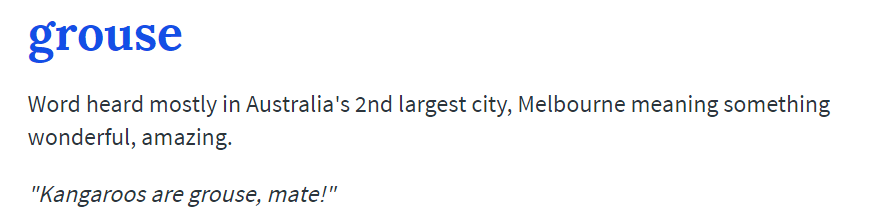
    Now back to Charli’s challenge to include gander as a verb in a 99-word story. It got me thinking about all the bird words in common use, even when not referring to birds. I decided to incorporate as many as I could into a story while still maintaining a certain amount of sense. I have used over twenty. Can you (bird)spot them all? I hope you think it’s grouse! (Well, maybe just a little bit not too bad. 🙂 )
    grouse

    Bird (non)sense

    Finch’d had an eagle eye on the play all day.

    Robin’d been hawking chicken pies. Now sold out, he wandered over to gander with Finch.

    Robin craned his neck, just as “He’s out for a duck!” was announced.

    “He’s out for a duck,” he parroted. “That’s something to crow about.”  One team was swanning around, exuberant as monarchs. The other was as despondent as miners on strike.

    Martin was larking around. “Yeah,” he sniped. “The silly goose was distracted by the kite and missed altogether.”

    “More like a turkey, I’d say,” Robin reterned swiftly.

    “You’re a hoot!” chirped Finch.

    thank-you-1200x757

    Thank you for reading. I appreciate your feedback. Please share your thoughts.

  • Preparing for holidays – Readilearn

    At this time of the year, people around the world are preparing to celebrate a variety of holidays. Christmas, celebrated by almost half of the world’s population, is perhaps the biggest holiday of the year. While traditionally a Christian celebration, its focus for many is now more secular than religious and is celebrated by both Christians and non-Christians. Even within the Christian community, there are many ways in which the festival is observed.

    In addition to Christmas, children in Australia are preparing for the end of the school year and their long summer holidays from approximately mid-December to late January. While not as long as that of some of our northern cousins, the six-week break challenges parents in thinking of ways to keep the children occupied, while ensuring that the achievements of the year are not lost before the new school year begins.

    In this post, I share some suggestions and readilearn resources to assist in preparation for both.

    Click here to read the original: Preparing for holidays – Readilearn

  • It’s not what you see

    1-2

    This week at the Carrot Ranch, Charli Mills is talking about the effect of changing a lens on how things are viewed. She says,

     “No matter what lens we apply, there is something to be seen in each of us that is worthy.

    Perhaps if we focus differently, we might actually achieve peace.”

    This is true too of children. Sadly, I think too often children are seen for what they are not yet, rather than appreciated for what they are. Childhood is all too fleeting, and with the current focus on assessment and teaching-to-the-test in many educational systems, it is becoming almost non-existent. Recess and free-play times are being eroded to cram in more cramming time.

    I recently read an article in the Washington Post that told of children in a US school having to walk laps during a 20-minute recess. The supposed intention was to get the children active. However, most children would be naturally active if allowed the freedom to run and play. The benefits of free-play activities for health, well-being, and social development would be far greater than that of walking laps.

    file1051239031460

    This practice contrasts with one described in an article in the Sydney Morning Herald. Children in Finland have fifteen minutes of mandatory outdoor play every hour, whatever the weather. “Fresh air, nature and regular physical activity breaks are considered engines of learning.”

    Each of these practices recognises the importance of activity, but each has a different way of providing for it, and only one is effective. I wonder why those with the power to make positive changes in education, fail to see the damage being done by didactic and test-driven practices that rob children of any love for or joy in learning. It seems to matter little what lens is used, they are unable to focus clearly on what matters most.

    In this TEDx talk, Nancy Carlsson-Paige explains what happens When Education Goes Wrong: Taking the Creativity and Play out of Learning.

    Towards the end of the talk, beginning at 12:45, Nancy says,

     “The difference between understanding concepts and reciting facts is very important for us to understand right now, because it captures the essence of what is happening in education today. There is a gross misunderstanding of what education is that has swept across the country, and the unfortunate belief is that you can direct teach, and you can measure and you can quantify learning; but the truth is, it is only the most superficial and the most mechanical aspects of learning that can be reduced to numbers. Unfortunately, this mistaken idea about the nature of education has pushed down to our youngest children. “

    She says that when we “drill and grill” kids, we not only lose the power of the learning experience, we lose all the amazing capacities that children bring to us in education:

    • initiative
    • creativity
    • the ability to define and solve their own problems
    • originality of thought
    • invention of new ideas
    • perseverance
    • cooperation.

    She says that when we take those capacities out, we take away the love of and joy in learning, not only from the children but from teachers too.

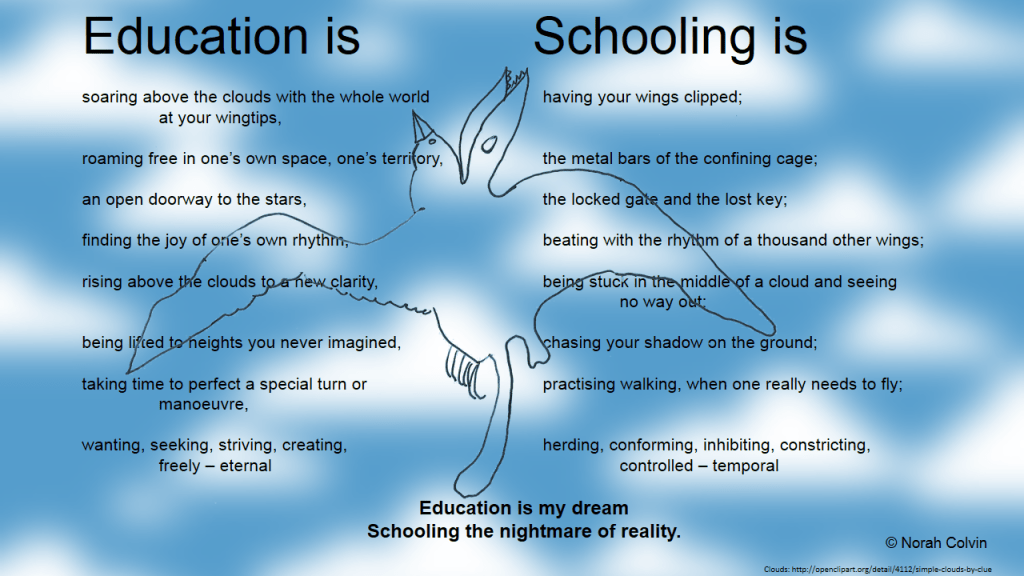
    These are themes that are familiar to regular readers of my blog, and the most influential when I decided to leave the classroom. More than thirty years ago I wrote a poem to describe the differences between what often is, and what could be.

    © Norah Colvin
    © Norah Colvin

    Sadly, I cannot say that nothing has changed. It has. The differences have become more stark.

    Here is my response to Charli’s prompt to: In 99 words (no more, no less) write a story using a lens. It can be literal, like looking at the world through rose-colored lenses or the need for spectacles.

    pink-sunglasses-clipart-1

    Unfortunately, I couldn’t find my rose-coloured glasses.

    What you see

    They saw him for what he wasn’t and what he lacked, not for what he was and what he could be. Their ill-fitting garments failed to clothe, and their unpalatable diet failed to nourish. If only they’d zoomed in upon his potential. Instead the wide-angled lens showed a panorama of disadvantage: an excuse for failure to fulfil his needs or enable his possibilities. A lens in proper focus may have seen a burning curiosity, a rich imagination, a wisdom older than time, and a heart in harmony with the universe. Instead they considered the negatives not worthy of development.

    Thank you

    Thank you for reading. I appreciate your feedback. Please share your thoughts.

  • What the world needs now

    This week at the Carrot Ranch Charli Mills is talking about needs. She questions why necessities sometimes feel like luxuries and why basic necessities, such as drinking water and access to a bathroom, incur a fee. While she is temporarily homeless, she is seeing first hand some of the ongoing difficulties of others faced with long-term homelessness. Surely to be treated with some compassion and afforded the dignity of respect is equally a basic human need and a right.

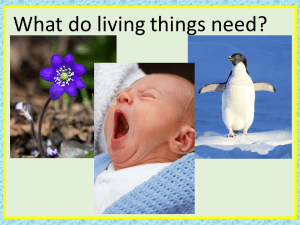
    what do living things need

    Young children begin to learn about needs when they start caring for plants and animals. In science they learn about the needs of living things and how those needs are met. It is not long before they start to learn about the differences between a need and a want. This understanding, and acceptance, can take a long time to develop. Some never develop it.

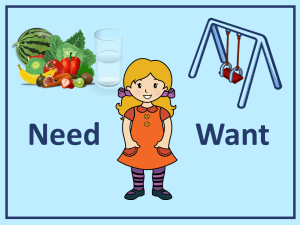
    need want

    Perhaps if there was a greater understanding of the difference between a need and a want, the gap between those who have much and those who have little would decrease. But perhaps not. While there is little increase to basic needs over time, the wants increase exponentially; and the more one has, the more one wants.

    If it is difficult for adults to distinguish between needs, wants and must haves, imagine how much more difficult it is for young children. It is possibly even more difficult for young children in an age with frequent replacement of one model for another, one gadget and one gimmick for another; the latest is always the best.

    This difficulty is the focus of my flash fiction response to Charli’s challenge to in 99 words (no more, no less) write a story that explores human needs.

    The latest thingamajig

    “But Mum, I need it. Everyone’s got one.”

    “Who?”

    “Marco; and Christopher; and … everybody!”

    Mum pictured their big houses and flashy cars.

    “Has Yin got one?”

    “No.”

    “Amir?”

    “No.”

    “Why do you want it?”

    “They won’t play with me if I don’t have one.”

    “Who?”

    “Marco and Christopher.

    “I thought Yin and Amir were your friends.”

    “But Marco and Christopher are cool.”

    “And you want to be cool like Marco and Christopher?”

    His eyes flickered.

    “Will you still be cool when they get the next best thing? What about Yin and Amir? Will they still be your friends?”

    ####

    In a recent post Home is where the start is, I wrote about the importance of the early years to a child’s development. I suggested that it is difficult to regain what is missed in those early years. However, as Sarah Brentyn who blogs at Lemon Shark said: it may be difficult, but not impossible to make improvements. Sarah was concerned that parents may not make an effort if they thought it was too late. I agree with Sarah that it is never too late to make improvements. However, it is much more difficult to change established patterns and to make up for lost learning time. Not impossible. Difficult. It is even more difficult for those who have not had their basic needs met.

    An article in the Huffington Post on June 30 compares two boys who were born on the same day in the same town, but will have dramatically different lives. The boys are now five years old. One boy who received a diet of nutrient-rich foods is now at school, making good progress, and has many friends.

    The parents of the other boy were too poor to do the same for their child. He now suffers from chronic malnutrition, or “stunting”, which affects growth, strength of the immune system, and brain function. According to the article, 1 in 4 children worldwide suffer from chronic malnutrition. The statistics reported in the article are quite confronting, and challenge a privileged view of needs and wants.

    After reading the article, it is with some embarrassment that I now admit to a need to be away from the blogosphere for the next few weeks. I will be back intermittently to read and respond to your comments. I apologise in advance for any delay in doing so. Please know that I do enjoy our conversations and appreciate your comments. I will be back to respond to you as soon as I can.

    Thank you

    Thank you for reading. I appreciate your feedback. Please share your thoughts.

  • Eroding thoughts

    Uluru © Norah Colvin 2015
    Uluru © Norah Colvin 2015

    This week at the Carrot Ranch Charli Mills is talking about erosion, but not just the literal kind. She says “It can be natural, cultural or something different.” Of course I must answer my usual call to tackle the “something different”.

    Generally, erosion refers to the wearing away of the earth. Sometimes it signifies the disintegration of our resolve, our self-image, or of our spirit. Just as various strategies can be employed to prevent erosion or to repair damage incurred by the land, there are strategies that can be used to shore up one’s resolve, build self-esteem, and mend a sagging spirit.

    rejection slip

    Perhaps nobody knows this better than writers with their stashes of rejection slips rated from encouraging to just plain rude, or non-existent. Few have achieved success without first receiving a downpour of those slips, who haven’t had to work at their skills and accept the edits without eroding their intended message. Sometimes it seems that, with every move, one lands on the “Go back to start” square; and that, while it feels like things are in motion, the end doesn’t appear any closer.

    go back to start

    Or maybe nobody understands the fragility of the spirit and self-esteem more than does a teacher; and of the importance of building on prior learning to take children from where they are to places they haven’t thought possible; to ensure their esteem stays strong and is not eroded by unrealistic expectations and the tedium of a repetitive diet of something meaningful only to others.

    Welcome pack
    Welcome pack

    I have written many times previously about the importance of establishing a supportive classroom environment, and of using affirmations in growing children’s confidence and self-image.

    This doesn’t mean a diet of empty praise, but it does mean that all individuals are recognised for what they can do, and are valued for the contribution they make to the classroom community. Included in these writings was a series, inspired by a Twitter discussion with Anne Goodwin, on praise culminating in Seeking praise – Stephen Grosz revisited and including a guest post by Anne.

    The Clever Children Resource

    I have also developed resources to support children’s growing confidence and self-image for inclusion on my in-progress website readilearn. One of these resources is a story called The Clever Children which teachers can personalise for use with their own class.

    The Clever Children printable

    Children write about and illustrate something they can do. The pages are then added to the story which is printed and collated into a book which can be placed in the reading corner or taken home to read to parents and siblings.  My children always loved being a part of this story. I am looking forward to other children being a part of it too. The story aims to build, rather than erode, self-esteem and a love of books and reading.

    Which brings me back to Charli’s challenge to In 99 words (no more, no less) write a story, using the power of erosion.

    The Nature Principle

    For my flash I combine two ideas:

    • Richard Louv’s suggestion in The Nature Principle that, for physical and mental health, we need to be more attuned with nature
    • the need for resolve and inner strength when faced with issues that would erode it.

    It’s not really a story, perhaps, but a moment in time. I hope you enjoy it.

    1 (7)

    The rock

    The rock, promising permanence, beckoned: perfect for contemplating expanses beyond while pondering life and one’s significance. She sighed, and succumbed. The waves, licking repetitively at the base, soothed somehow; as if each grain of sand stolen from beneath her feet loosened her tension. Becoming one with the rhythm, her heart sang the melody as her mind slowed, releasing all thought. Feeling whole again, as solid as the rock, and with renewed strength, she prepared to face those who sought to erode her. Though tides would rearrange and redecorate, and often do their best to annihilate, they could not obliterate.

    Thank you

    Thank you for reading. I appreciate your feedback. Please share your thoughts.

  • Thankful and inspired: schools and education

    I have just watched the movie “He named me Malala”. The message has not lost its importance or impact. Sadly the need for her message to be heard and responded to has only grown over time. I share this post again as a reminder of Malala’s courage, strength, and determination. She says, “The terrorists thought they would change my aims and stop my ambitions, but nothing changed in my life except this: weakness, fear and hopelessness died. Strength, power and courage were born.”

    Norah's avatarNorah Colvin

    In recent posts there was some discussion about the importance of education, the value of schools and the role of teachers. I thought it timely to re-share this post, first published in July 2015.

    Earlier this week I read a post by Kimmie of Stuck In Scared about Ten Things of Thankful. I have also read many other posts about things to be thankful for. These posts prompted me to share something for which I am thankful: schools and education.

    I know that I often write about what I consider the shortcomings of traditional schooling and make suggestions of how schools could be improved. However I live in a country that values education and in which every child has a right to a free education. For that I am thankful. Those of us who have access to schools and education are the lucky ones.

    This week I have been…

    View original post 238 more words