Live Love Laugh Learn … Create the possibilities

Tag: education

  • readilearn: Libraries: A wondrous universe to explore — A guest post by Dimity Powell

    readilearn: Libraries: A wondrous universe to explore — A guest post by Dimity Powell

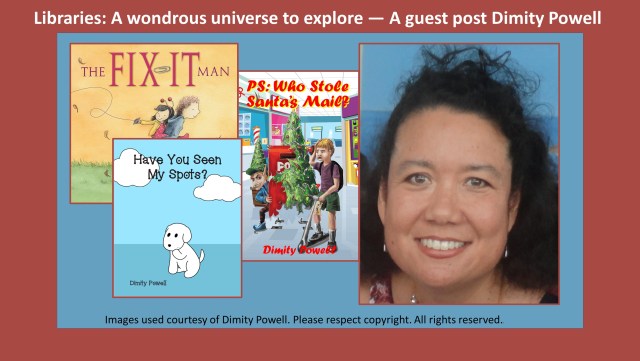
    This week I am delighted to introduce you to award-winning children’s author Dimity Powell.

    Dimity likes to fill every spare moment with words. She writes and reviews stories exclusively for kids and is the Managing Editor for Kids’ Book Review. Her word webs appear in anthologies, school magazines, junior novels, as creative digital content, and picture books including The Fix-It Man (2017) and At The End of Holyrood Lane (2018).

    She is a seasoned presenter both in Australia and overseas, an accredited Write Like An Author facilitator and a Books in Homes Role Model Volunteer in Australia.

    Dimity believes picture books are soul food, to be consumed at least 10 times a week. If these aren’t available, she’ll settle for ice-cream. She lives just around the corner from Bat Man on the Gold Coast although she still prefers hanging out in libraries than with superheroes.

    In this post, Dimity shares her love of libraries and explains why it is important to ensure every child has access to a library at school and every reader a local library.

    Welcome to readilearn, Dimity. Over to you.

    Continue reading: readilearn: Libraries: A wondrous universe to explore — A guest post by Dimity Powell

  • readilearn: Help your child read – some strategies

    readilearn: Help your child read – some strategies

    The importance of reading

    The ability to read is one of the most valuable skills we can acquire.  It is a tool for thinking, learning and entertainment. Reading opens doors and minds; it gives us the ability to unlock the secrets of the universe and release our imaginations. It is a skill that many of us take for granted, but without it the world would seem a more unfriendly place.

    No wonder learning to read is a vital part of each and every school day!

    Like everything else —the more you read, the better you get!

    Reading is more than just saying all the words on the page in order. Reading is a process of getting meaning from print. Effective readers use their knowledge of the world and of language in their quest to make meaning from the words on the page. Reading takes place when the reader understands the message of the writer.

    Strategies used by effective readers

    Effective readers use a combination of three cuing systems to predict and check what the author has written. The use of these systems is obvious in the miscues (rather than “mistakes”) that readers make.

    1. The most important cuing system is knowledge of the topic. If you know lots about dinosaurs, you can read those big difficult-looking words and understand what they mean. If you know nothing of legal jargon then even sounding out those big difficult-looking words won’t help you understand.
    2. The second system is knowledge of language and grammar. We expect the words to flow with meaning and not be a jumble of nonsense.
    3. The first two systems combine to predict the words on the page. We then check with the print to ensure our expectations were correct.

    For example, if the story is about a cowboy you may expect that he would jump on his pony, but when you look at the print, you find he actually jumped on his horse.

    Effective readers may say ‘pony’ instead of horse, but they definitely wouldn’t say ‘house’ (which looks similar) as it just wouldn’t make sense!

    Continue reading: readilearn: Help your child read – some strategies

  • readilearn: What do we do when we read?

    readilearn: What do we do when we read?

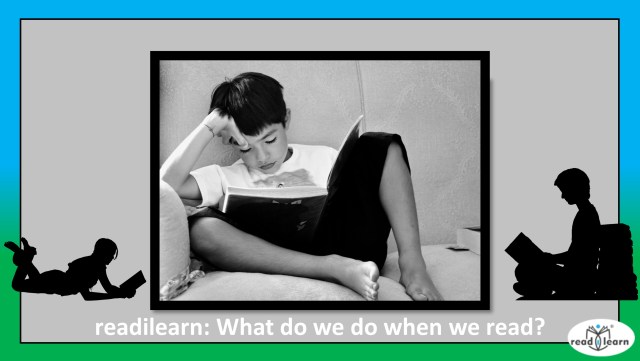
    Have you ever considered what we do when we read?

    For many of us, reading has become such a natural and intuitive process that we rarely stop to marvel at the way we are able to make meaning from print or to question how one learns to read.

    Although we know that we once weren’t readers, few can remember how we actually made the transition from being a non-reader to being able to read and have been doing it for so long now that it seems we always could.

    Some adult readers have recollections of various instructional methods that were used in school and attempt to engage their own learner readers in similar tasks.

    The recognition that some of the instructional methods did, and still do, equip readers with some tools for reading, does not imply that the use of these methods was the catalyst for learning to read. While they may have contributed to the development of reading, there are other influencing factors.

    Many children learn to read despite the instructional methods, and many others don’t read using them and, in fact, remain non-readers because of them.

    What is reading?

    Reading is more than simply translating letters and words to sound. Reading involves thinking. It is a process of getting meaning from print.

    Continue reading: readilearn: What do we do when we read?

  • readilearn: Teaching about living things in early childhood classrooms – turtles

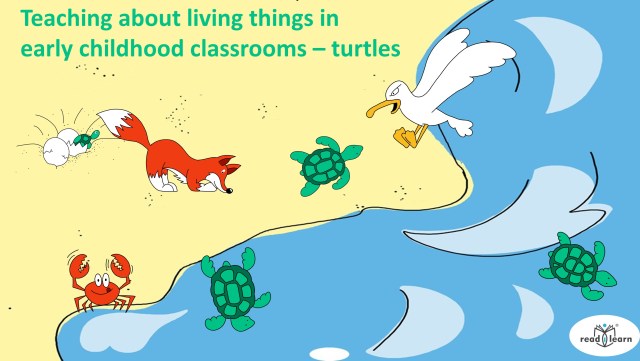
    readilearn: Teaching about living things in early childhood classrooms – turtles

    Teaching about living things has an important place in early childhood classrooms. In the science curriculum in their first few years of school, children learn

    • What is a living thing
    • Needs of living things
    • Features of living things
    • Life stages of living things

    I have previously written about keeping and observing minibeasts in the classroom, learning about life on a farm, learning about living things – sea turtles, and observing animals in the local environment. In addition to the teaching ideas suggested in the blog posts, there are many resources in the science collection to assist you with your work.

    Let's find out abut sea turtles is an interactive digital non-fiction texts about sea turtles, for children in their first three years of school

    This week, in celebration of World Turtle Day on 23 May and World Environment Day coming up on 5 June, I have uploaded new resources to support learning about sea turtles and the existing non-fiction digital text Let’s find out about Sea Turtles.

    Continue reading: readilearn: Teaching about living things in early childhood classrooms – turtles

  • #WATWB Malala returns to Pakistan for the first time in five years

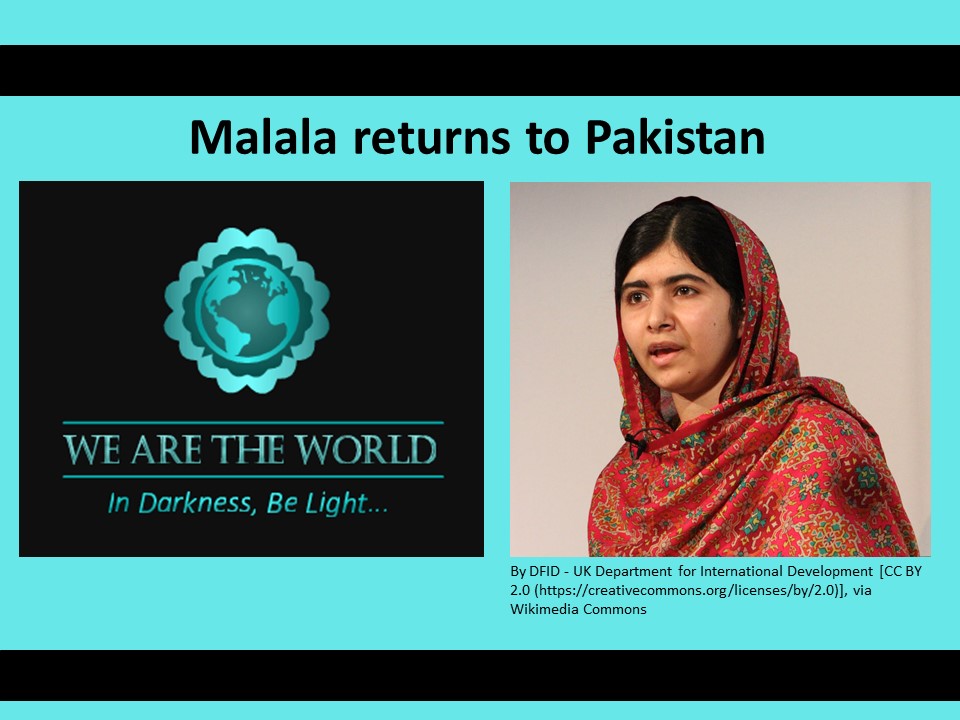
    #WATWB Malala returns to Pakistan for the first time in five years

    On the last Friday of each month, We Are the World Blogfest invites bloggers to join together in promoting positive news. If you would like to join in, please check out the rules and links below.

    “There are many an oasis of love and light out there, stories that show compassion and the resilience of the human spirit. Sharing these stories increases our awareness of hope in our increasingly dark world.”

    This month I am pleased to share the next chapter of Malala Yousafzai’s inspiring story.

    Malala fled Pakistan in 2012 after being shot in the face by Taliban militants for promoting education for girls. In 2014 she was awarded the Nobel Peace Prize. At the end of last month, five years after the attack, she returned to visit her home in Pakistan.

    Click to read the report published by the BBC.

    I read about it first on the Facebook page of A Mighty Girl,

    and watched it here:

    I admire Malala for her strength and the determination of her voice in campaigning for education for all. I particularly applaud these two quotes by Malala:

    “One child, one teacher, one book, one pen can change the world.”

    “When the whole world is silent, even one voice becomes powerful.”

    Here are the guidelines for #WATWB:

    1. Keep your post to Below 500 words, as much as possible.

    2. Link to a human news story on your blog, one that shows love, humanity, and brotherhood. Paste in an excerpt and tell us why it touched you. The Link is important, because it actually makes us look through news to find the positive ones to post.

    3. No story is too big or small, as long as it Goes Beyond religion and politics, into the core of humanity.

    4. Place the WE ARE THE WORLD badge or banner on your Post and your Sidebar. Some of you have already done so, this is just a gentle reminder for the others.

    1. Help us spread the word on social media. Feel free to tweet, share using the #WATWB hashtag to help us trend!

    Tweets, Facebook shares, Pins, Instagram, G+ shares using the #WATWB hashtag through the month most welcome. We’ll try and follow and share all those who post on the #WATWB hashtag, and we encourage you to do the same.

    The co-hosts for this month are:  :  Shilpa Garg, Dan Antion, Simon Falk, Michelle Wallace , Mary Giese.

    Please pop over to their blogs to read their stories, comment and share.

    Click here to join in and enter the link to your post. The bigger the #WATWB group each month, the greater the joy!

    Thank you for reading. I appreciate your comments. Please share your thoughts.


  • readilearn: Writing in the lower primary classroom – a guest post by Marsha Ingrao – Readilearn

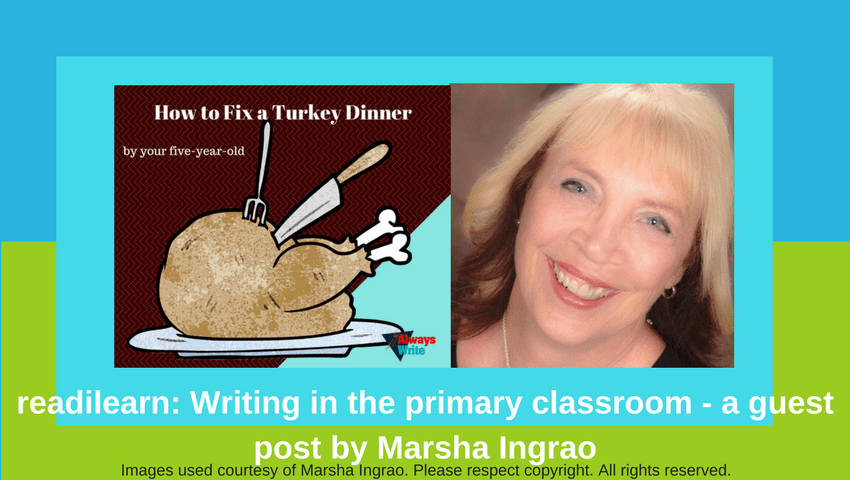
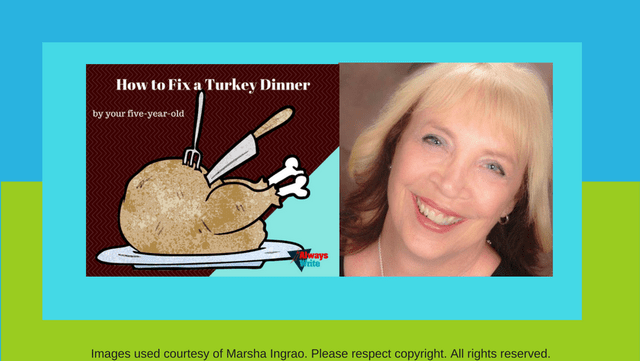
    readilearn: Writing in the lower primary classroom – a guest post by Marsha Ingrao – Readilearn

    Providing children with fun and purposeful activities for writing is one of the best ways to encourage a love of writing, to replace the drear with enthusiasm.

    In this post, I introduce guest author Marsha Ingrao who shares suggestions for bringing joy to your writing lessons through the Language Experience Approach.

    “The Language Experience Approach (LEA) is a literacy development method that has long been used for early reading development with first language learners…It combines all four language skills: listening, speaking, reading, and writing.”

    Professional Learning Board

    Although Marsha retired from public education in 2012, her passion for education remains and she continues to educate through blogging, speaking engagements and volunteering for Kiwanis and the Chamber of Commerce. Her classroom experience ranged from teaching kindergarten to fourth grade. She left the classroom to work as a consultant for the county office of education first in math, working with migrant education, then in history and language arts. She is author of Images of America Woodlake, a history of her local Woodlake area, published by Arcadia Press.

    Welcome to readilearn, Marsha. Over to you.

    Because LEA employs all four branches of language arts, listening, speaking, reading and writing, it is perfect for teaching writing to pre-school and primary students as well. With the thrust in the United States for non-fiction reading, the language experience approach becomes the perfect avenue for teaching writing to young children.

    To make the language experience approach applicable to all young students, adult assistance is required.

    The “How To” Essay

    Beginning in pre-school, we tackled one of the hardest types of writing, the “how to” essay. Holiday traditions are the perfect avenue for this

    Continue reading: readilearn: Writing in the lower primary classroom – a guest post by Marsha Ingrao – Readilearn

  • Out of the fire comes hope

    Out of the fire comes hope

    fireweed Charli Mills Carrot Ranch flash fiction

    This week at the Carrot Ranch, Charli Mills wrote about fireweed. She describes it thus:

    “the purple and pink flower that grows like a tall spear in a tribe of flower warriors. After a forest fire, mining reclamation, road grading or any kind of soil disturbance, fireweed grows back first from seeds born of despair. It’s a phoenix flower, a soil nourisher, a defier of the odds when life is bleakest.”

    She then went on to challenge writers to In 99 words (no more, no less) write a story that includes fireweed. You can use it as the plant, a flower, a metaphor or as the name of someone or something. Go where the prompt leads. Burn bright when you write.

    I don’t know of Charli’s fireweed, but I do know that Australia is home to a great variety of plants that are dependent on fire for regeneration. While large tracts of land destroyed by bushfires is devastating, a return to traditional land management practices of the indigenous peoples may see an  improved system.

    There is an oft-repeated quote by German philosopher, Friedrich Nietzsche.

    “What doesn’t kill you, makes you stronger.”

    While that may be true of Charli’s fireweed and much of Australia’s flora, I’m never convinced of the applicability of the saying to every situation, or of its power to lift one up when feeling personally devastated. What does not kill may require a good dose of determination and strength for it not to annihilate the spirit.

    While thoughts of how to approach Charli’s challenge were swirling around in my head, notification of a new post by The Wordy Wizard popped into my inbox. At the top of the post was this quote by  J.K. Rowling from Harry Potter and the Goblet of Fire:

     “Understanding is the first step to acceptance, and only with acceptance can there be recovery.”

    The addition of these words of J.K. Rowling to those of Friedrich Nietzsche, for me, complete the thought. Without acceptance there is denial and an inability to move on, with acceptance we can begin to repair and renew.

    Intermittently, over the past four years while I have been responding to Charli’s flash challenges, I have written about Marnie, an abused child who was able, with determination and support of caring others, to overcome the impact of her dysfunctional upbringing and make a better life for herself.

    Just as we look for green shoots of hope in the blackness of a bushfire’s destruction, we must look for signs of hope and renewal in those who have suffered.
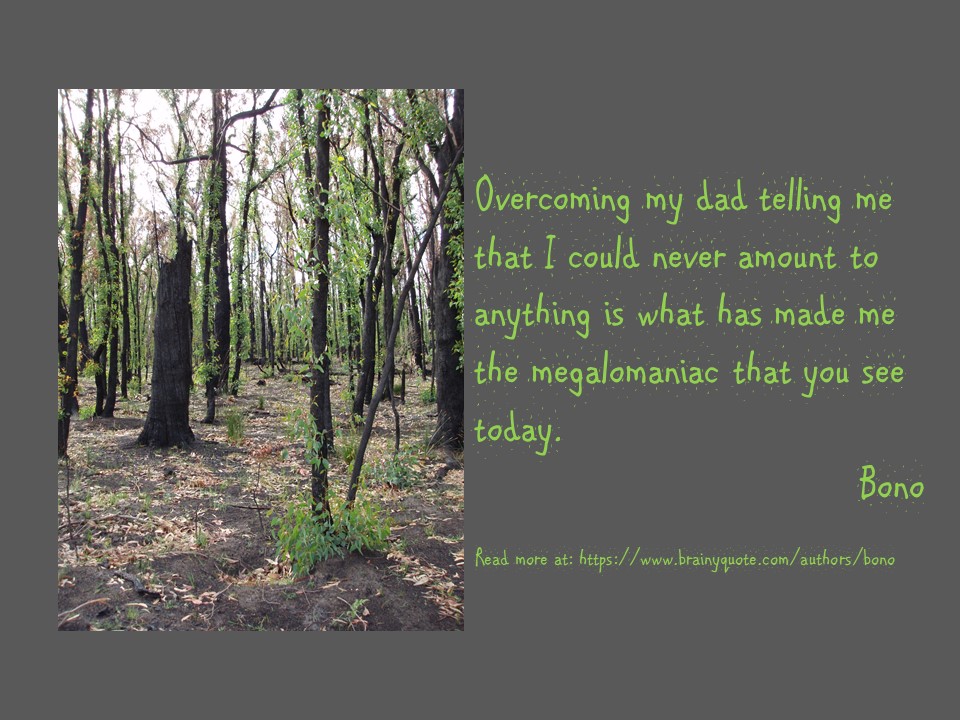
    Bono quote about why he's a megalomaniac

    While at times the negatives of children “burnt” by dysfunctional home lives, poverty, poor nutrition, lack of mental stimulation, and other factors that appear to obliterate potential can seem overwhelming and insurmountable, it is important to see within every child that seed of unlimited possibility and hope that needs to be nurtured.

    Marnie’s teacher Miss R. saw it in her. In one story, “Miss R. handed her a rose from the vase saying, “You are that rose. You may be surrounded by thorns, but the beauty of the rose is inside you. Remember that always. A rose by any other name would smell as sweet.

    Perhaps it would be just as apt to describe her as fireweed, “a defier of the odds when life is bleakest”. This is where Charli’s challenge took me this time:

    Burning with hope

    Miss R. avoided the staffroom’s negativity, popping in, like today, only if necessary. When she glanced over instinctively on hearing her name, regret flooded immediately.

    “Annette, we were just talking about you and that weed–from that noxious family–you know, Marnie-“

    She bristled, failing to withhold the words that exploded, singeing all with their ferocity.

    “Just look at yourselves. If Marnie’s a weed, she’s fireweed. Better than you will ever be. She’ll beat her odds and succeed, despite your belittling words and unhelpful opinions.”

    She left the silenced room, believing in her heart that her words were true.
    Thank you blog post

    Thank you for reading. I appreciate your feedback. Please share your thoughts.

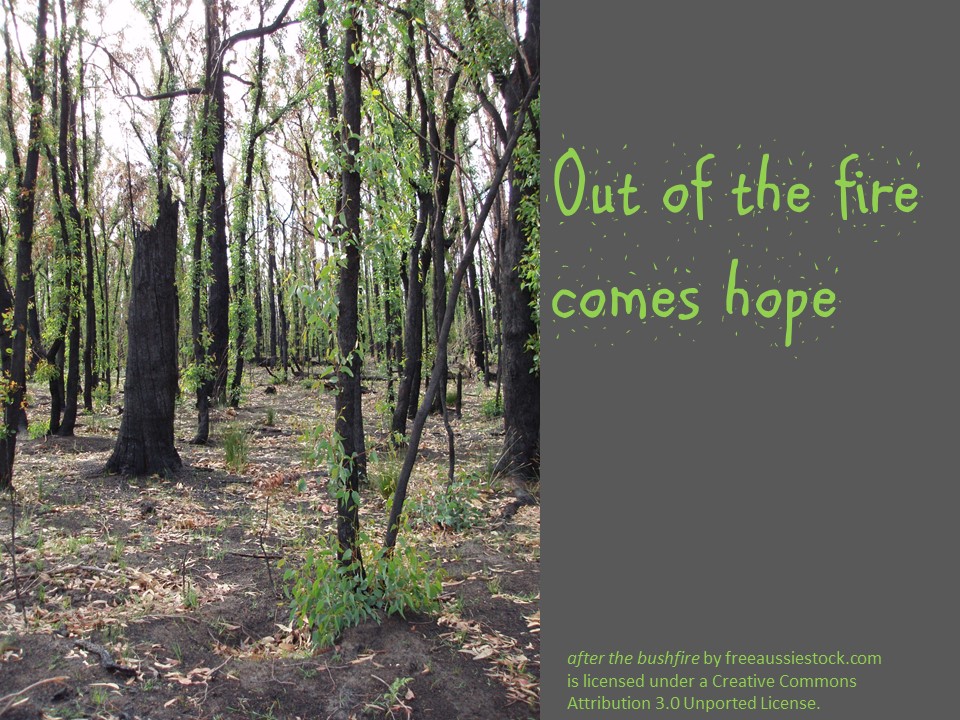
    Note: The feature image after the bushfire by freeaussiestock.com is licensed under a Creative Commons Attribution 3.0 Unported License.


  • Poised on the edge of the future

    Poised on the edge of the future

    Every morning we wake up to a new day and step into the future. The past is gone, in memories of yesterday and soon to be forgotten. How we approach each day–with excitement, fear, anticipation, dread, joy or boredom, lulled by repetitious acceptance devoid of creativity–is our choice. We can accept the mundane or jump into the unknown, feet first.

    This week Charli Mills of the Carrot Ranch challenged writers to In 99 words (no more, no less) write a story that goes to the edge. Consider what the edge might be and how it informs the story. Go where the prompt leads.

    I jumped straight in and wrote my 99-word response in one go. Normally I mull it over for days, struggling to find threads of meaning to tie together post and story.

    Last week in response to Charli’s “boots” prompt, I wrote about Grandma’s sparkly storytelling boots. I was pleased so many of you confirmed it was a great idea for a story. I had already decided to work on it and submit it to my critique group this week. You could say, I jumped into that abyss–boots first. Wearing grandma’s sparkly boots, I’m sure to fly.

    It’s funny when you write a post that connects with people in unexpected ways. I was surprised, delighted, honoured and extremely grateful this week when three of my favourite bloggers, whose work I admire shared my post on their blogs:

    Jennie Fitzkee–an inspiring early childhood teacher who, like me, expounds the benefits of respect for children, story reading and telling–blogs at A Teacher’s Reflections. If you haven’t visited her blog yet, I recommend you do. Every post delights.

    Dayne Sislen–an illustrator of children’s picture books who shares information about illustrating books and also writes about the importance of reading to children–blogs at Dayne Sislen Illustration. Her love of children’s picture books and illustration is obvious. In her post last week How to extend the attention span of your children, Dayne discussed the importance of reading to children. It was a wonderful match for mine about storytelling. You can find out more about Dayne on her blog or website.

    Charles French–who I came to know through Jennie reposting his series of inspiring quotes–blogs at Charles French Words Reading and Writing. How delightful to know that he also enjoyed my post enough to share with his readers. This is just one of his posts of quotations that spoke to me: Quotations on teaching. 😊 I suggest you pop over to visit Charles as well to share in his words of wisdom.

    children hold hands going into the future

    Those of you who write YA or adults novels, memoir or non-fiction, may wonder what we early childhood teachers and writers and illustrators of children’s picture books have that could be of interest to you. Let me tell you, we have everything. We have the key. We are the ones who create the readers of tomorrow, the future readers of your books. We turn the children onto reading as we take their hands and lead them to the edge of tomorrow when they leap into the unknown worlds of books.

    In case you haven’t yet read my response to Charli’s “edge” prompt, this is it. It doesn’t necessarily have anything to do with my previous statement but starting anything new can push us to the edge and we don’t really know just what will happen until we give it a try. I wish you all many joyous flights.

    The edge

    She stood at the edge of the abyss and wondered what would happen should she jump – would she fly, or would she plummet to the bottom and rest, fractured and alone, forgotten and abandoned, with all the others who dared to try but failed. It was fear that held her back, chained her to the ledge. But there was nowhere else to go. She’d tried all other paths. This was all that remained. Could she stay there forever. Would there be a point? What if she fell? But what if she flew? She inhaled, closed her eyes, and jumped…

    Thank you blog post

    Thank you for reading. I appreciate your feedback. Please share your thoughts.

  • readilearn: Meet Sofia Goodsoul author of Nian the Lunar Dragon – Readilearn

    readilearn: Meet Sofia Goodsoul author of Nian the Lunar Dragon – Readilearn

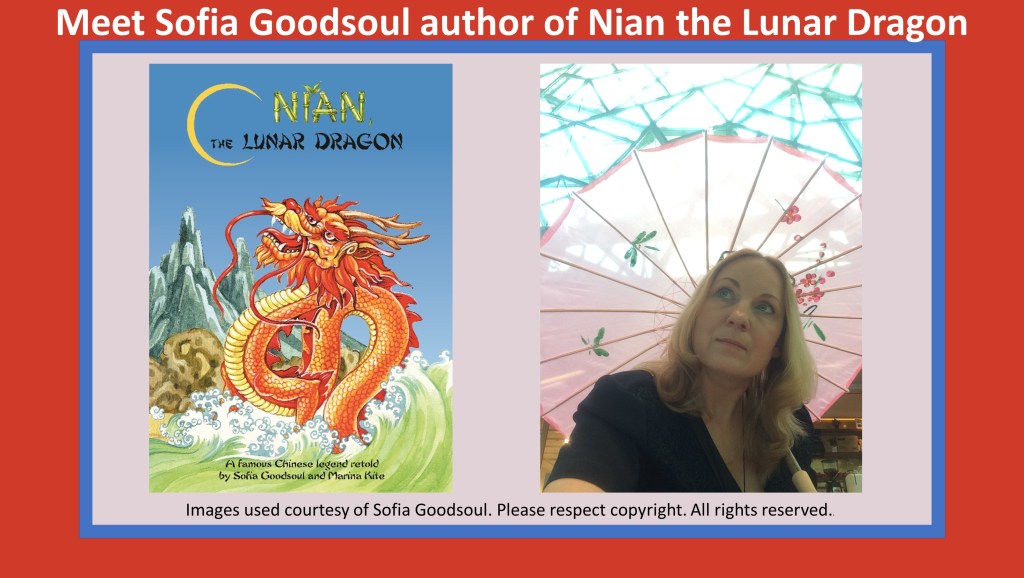
    This week I am very excited to be interviewing Australian author Sofia Goodsoul about her picture book Nian the Lunar Dragon, illustrated by Marina Kite. With Multicultural Children’s Book Day coming up on 27 January (see previous post I am Australian) and Chinese New Year on 16 February, the time is just right.

    Before we begin the interview, let me provide you with a little information about Sofia.

     Sofia Goodsoul is an author, emergency kindergarten teacher and indie-publisher. Her poetry writing has grown from a hobby into a great passion. Now she can’t live a day without writing poems, riddles and stories for young children. The children give themes and inspiration for her books.

     Sofia lives in Melbourne with her family and pets. She loves going to Zumba classes and taking long walks with her husband and family dog Mack.  Sofia dedicates all her spare time to her writing and publishing career.

    multicultural children's book diversity Chinese New Year

    Nian the Lunar Dragon, an entertaining and beautifully illustrated rhyming narrative for young readers, is Sofia’s second picture book in collaboration with Marina Kite. The book is about the legend behind the traditions and celebrations of Chinese New Year, sometimes called Lunar New Year. According to the lunar calendar, Chinese New Year commences with the new moon at the beginning of spring.

    A long time ago, the dragon named Nian lived in the deep ocean to the east of China. Nian was a strong and ferocious dragon, which no creature could defeat. Once a year, Nian climbed ashore to hunt for cattle and human prey. The people of the nearby villages and towns lived in terror, and each New Year’s Eve they had to leave their homes to save themselves. One day, a monk came to the village. He knew a well-kept secret about how to scare Nian away and free the Chinese people from the danger and their fear.

    Welcome to readilearn, Sofia. We are looking forward to getting to know you a little better.

    Thanks for inviting me!

    Sofia, when did you know you wanted to be a writer?

    I don’t remember capturing that specific moment, but my grandmother was a children’s book illustrator and I often stayed with her

    Continue reading: readilearn: Meet Sofia Goodsoul author of Nian the Lunar Dragon – Readilearn

    Thank you blog post

    Thank you for reading. I appreciate your feedback. Please share your thoughts.

  • The magic of storytelling

    The magic of storytelling

    Guiding parents in play sessions for parents and children.

    Telling stories to and with young children has many benefits. Including other things, it helps to develop:

    • relationships with the storyteller and other listeners
    • language – vocabulary, language structure, imagery
    • understanding of narrative structure as it applies to fiction and non-fiction accounts
    • curiosity about one’s family, the immediate environment, and other places
    • empathy for others
    • interest in books and reading
    • imagination

    There is something very special about telling, as opposed to reading, stories. The telling can be more fluid, more interactive, and change with the mood and with input from teller and listener. The distinction between teller and listener can blur and roles can change as the story flows.

    Sometimes it is the routine and the relationships that are more important and more memorable than any one story. For example, a parent telling stories as part of the bedtime ritual, stories told by a visiting grandparent, aunt or uncle, or even stories told in the classroom. Jennie Fitzkee often tells us about the magic effect of her storytelling sessions in her preschool classroom on her blog A Teacher’s Reflections.

    What were the dinosaurs like?

    Story telling doesn’t require any special talents, or even an especially exciting story. When my daughter was young she would often ask for a story about my childhood. (She loved hearing about the dinosaurs!) Stories such as these can occur at any time during the day, though storytelling times may need to be scheduled in a school day. A special treat for me as a young child was when, after dinner, Dad would sing us the story song asking, “Who made Little Boy Blue?”

    This week at the Carrot Ranch, Charli Mills has challenged writers to In 99 words (no more, no less) write a story that includes boots. Whose boots are they, where do they go and what is their significance? Go where the prompt leads.

    I immediately thought of a Grandmother, a storytelling expert, whose boots signified when a magical storytelling session was about to begin. I hope you like where the story leads. In fact, it can lead wherever you wish–

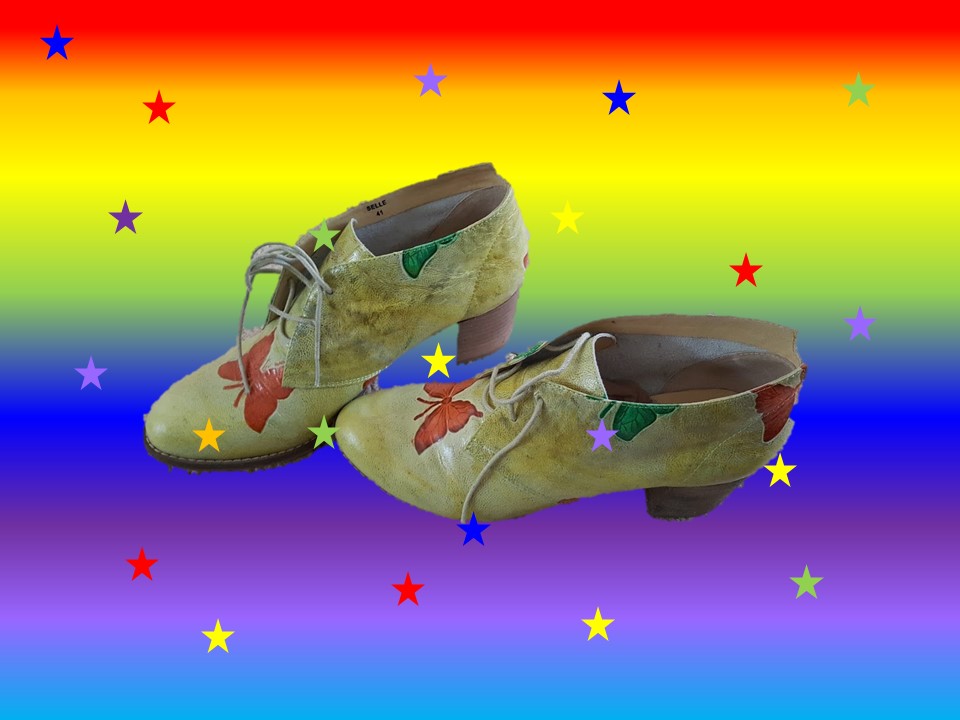
    Grandma’s boots

    Jess peered out, waiting, hoping, to glimpse Grandma arrive. Rainbow stars exploded outside her window just as the doorbell chimed–missed it again. Disappointment faded as she flung herself into Grandma’s enveloping arms. Grandma’s soft kisses promised secrets through scents of far-off places and unfamiliar things. Grandma’s boots sparkled, announcing story time. Jess and Grandma snuggled into their special chair. Clasping hands, they whispered their story-time chant. The chair shuddered and lifted off the floor. The roof opened and, quick as a wink, Jess and Grandma were whooshing across the sky to somewhere, “Once upon a time and faraway…”

    Thank you blog post

    Thank you for reading. I appreciate your feedback. Please share your thoughts.