Live Love Laugh Learn … Create the possibilities

Tag: early childhood

  • Motivation – why we do the things we do

    Over at the Carrot Ranch this week Charli Mills is talking about motivation, specifically the motivation of fictional characters to do the things they do. She explains that ‘motivation can be external–a desire to please, to be found attractive, to be accepted’ or ‘internal–a drive to succeed, a passion to experience adventure, a fear of failure’.

    Motivation is not a new concept to this blog and I have explored it in a number of previous posts.

    stars

    In What did you do that for? Rewards and motivation I discussed the use of extrinsic rewards (such as stickers, awards and cash incentives) for school students; and questioned the authenticity of intrinsic motivation, which ‘is usually related to something of one’s own choice through interest, challenge or purpose’, in an institution at which attendance is compulsory.  I suggested some strategies that teachers may employ to stimulate an intrinsic love of learning.
    why am I doing thiswhat's the point

    Continuing the consideration of the effect of compulsory schooling on a learner’s motivation, the post Why do I have to? explored the use of philosophy as a tool for making the goals of education explicit. All three philosophers: Peter Worley, Michael Hand and Stephen Boulter agreed that if students knew why they were expected to learn certain things, they would be more motivated to do so.
    the examined life

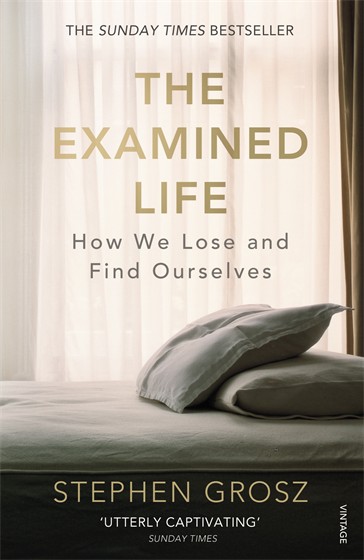
    A discussion of the impact of praise upon a learners’ motivation and achievement was stimulated by reading The Examined Life by Stephen Grosz, a book recommended by Anne Goodwin.  The Post Seeking praise – Stephen Grosz revisited explored Grosz’s suggestion that praise could cause a loss of competence, especially if children were being praised for being clever. Responses to the post, including a guest post by Anne Goodwin, added greater depth to the discussion.

    Other ideas about motivation abound.

    https://openclipart.org/image/800px/svg_to_png/59389/happy_sun_gm.png
    https://openclipart.org/image/800px/svg_to_png/59389/happy_sun_gm.png

    Shelley Wilson’s blog Live every day with intention,  which promises to inspire and motivate you (‘A motivational blog about living life to the full, writing, reading and feeling inspired to follow your dreams’) is the basis of her new book ‘How I changed my life’.

    In this TED talk The puzzle of motivation, Dan Pink explains that the value of intrinsic motivation is a scientific fact. While the focus of his talk is the business world, the findings are equally relevant to education. He says that external rewards may work in limited situations but that they often impede creativity. He says that ‘the secret to high performance isn’t rewards and punishments, but that unseen intrinsic drive – the drive to do things for their own sake. The drive to do things because they matter.

    Which brings me back to my motivation for writing this post and sharing these thoughts: Charli’s post, mentioned at the beginning of this article, was an introduction to her flash fiction prompt to In 99 words (no more, no less) show the underlying motivation of a character.

    My motivations for engaging with the flash fiction challenges set by Charli are both intrinsic and extrinsic:

    I enjoy:

    • the dual challenges of writing to a prompt with a clearly defined word count;
    • the opportunity of writing fiction;
    • exploring the application of Charli’s prompt, however tenuous, to education;
    • the camaraderie of the fellow writers and the opportunity to read and comment on their posts and flash fiction pieces; and

    I appreciate the feedback, support and encouragement I receive in response to my writing.

    In her prompt, Charli suggested that the character ‘may not even understand the motivation fully, but (that I should) let the reader grasp it.’ I have written two pieces in response to this prompt. I hope you enjoy them, and get an inkling of what motivates the characters.


    More than numbers

    The more he stared at the numbers the less sense they made.

    They swirled and blurred. He just didn’t get it.

    “Numbers don’t lie,” they’d admonished.

    “But they don’t tell either,” he’d thought.

    The hollowness left when all he knew had been extracted could not be filled with the smorgasbord of numbers loaded on the page.

    The richness of lives reduced to mere squiggles.

    “This is what’s important,” they’d said, fingers drumming tables of data.

    With heaviness of heart he closed the book and walked away.

    “They are not even numbers,” he thought. “If they were numbers, they’d count!”


    More than words

    “More!” they implored.

    She surveyed their eager faces then glanced at the clock.

    “Just one more?”

    “Okay. Just one more.”

    Before she could choose, a book landed in her lap.

    “This one,” he said.

    “Yes,” they chorused. “It’s a good one!”

    She smiled agreement, then started to read.

    They joined in, remembering, anticipating.

    She turned the page.

    “Wait!” he said. “Go back.”

    “Did you see that?” He pointed to the page.

    “But look what he’s doing,” someone else chimed in.

    They all laughed.

    The shared joy of a beloved book. Each time the same. Each time a little more.

    Thank_you_pinned_note

    Thank you for reading. I do appreciate your feedback. Please share your thoughts about any aspect of this post or my flash fiction pieces.


  • Just imagine . . . the power of imagination

    Have you ever wished you could:

    • be in two places at once?
    • clone yourself to ensure you get everything done?
    • slow time down so that you could achieve all you wanted?
    • make time stand still so you could stay in the present moment forever?
    • pop back in time to undo that embarrassing moment, or peek forward to see the result of a decision that is pending?
    • choose both options and follow each through consecutively, as in parallel universes?

    I have.

    https://openclipart.org/image/800px/svg_to_png/194578/07-Juli-goin-on-a-summer-holiday.png
    https://openclipart.org/image/800px/svg_to_png/194578/07-Juli-goin-on-a-summer-holiday.png

    Multiple invitations or engagements often occur on the same date. Deciding between desired activities is not always easy. Cloning would make choosing unnecessary. Additionally, sending a clone to an unpleasant but unavoidable engagement could also be desirable.

    penguins

    Sometimes the number of must-do tasks can be overwhelming. The ability to engage the assistance of clones, especially to complete less desirable tasks would be great.

    Time travel, wormholes and parallel universes are the stuff of science fiction; and while I am not a fan of the science fiction genre, I wouldn’t mind having access to some of its features. However, whether any, or which, of those features ever move from science fiction to science fact remains to be seen.

    The power of imagination to drive creativity and innovation cannot be overstated. Much of what we now accept as commonplace was once a part of science fiction. Imagination, the stuff of science fiction and scientific exploration and investigation, has brought them to reality.

    You are probably familiar with following quote, initially attributed to George Bernard Shaw but also made famous by Robert F. Kennedy:

     “Some men see things as they are and say why. I dream things that never were and say why not.”

    These words highlight the importance of questioning to stimulate imagination, and when paired with creative thinking, innovation can occur.

    Einstein said that,

     “Imagination is more important than knowledge. For knowledge is limited to all we now know and understand, while imagination embraces the entire world, and all there ever will be to know and understand.”

    He also said that,

     “Education is what remains after one has forgotten everything he learned in school.”

    Although I cannot be certain, from those quotes, what Einstein’s attitude to the current trends in schooling would be (he did attend school and was very advanced in maths and sciences but did not perform so well in the humanities) I think he would not favour a content-driven curriculum which excluded opportunities for imagination and creativity.

    On the other hand, Thomas Edison, the world’s most prolific inventor, was mostly educated at home by his mother who was able to encourage his experimentation and love of learning. He said,

     “To invent, you need a good imagination and a pile of junk.”

    If these significant thinkers of the 20th century, each of whom followed different educational pathways, recognise the importance of imagination, why would anyone argue against it?

    Charli Mills at Carrot Ranch Communications certainly doesn’t. As a fiction writer she embraces imagination. It is the tool of her trade, creating stories where before there were none. This week her challenge is to In 99 words (no more, no less) craft a multiverse situation, setting or character(s)

    Now the term ‘multiverse’ takes me back to the science fiction genre: wormholes, parallel universes and time travel, for example. I’m not sure how well I’ll do with this unfamiliar genre, but I will call upon my imagination and give it a try. See what you think – does my piece fit the criteria?


    Clone Magic

    Clone magic

    All night Leone had huddled in line, sleepless with excitement, waiting for the release.

    Now she had them! Clone pills!

    ‘Take one with water. Cloning occurs in 30 minutes and lasts 24 hours.’

    Leone swallowed one tablet, then another, and another; ignoring the small print: ‘Do not take multiple tablets. Effects are unpredictable.’ 

    When three clones appeared she instructed:

    “1. Clean the house. 2. Exercise. 3. Weed the garden.”

    She flopped on the couch. “Now to read.”

    But — their hands grabbed for her book, pulling her hair and clawing her eyes.

    “Me read! Me read! Me read!”


    Thanks for reading. I appreciate your feedback. Please share your thoughts about any aspect of this article or my multiverse flash.


  • Benefits of inclusion

    Recently I listened to a compelling TEDx talk by Dan Habib. You can listen to it here:

    Dan opens his talk by asking the audience some questions about their school days:

    Did kids with and without disabilities study together and learn together?

    Did they have a best friend who had a disability?

    Did they have a boyfriend or girlfriend that had a significant disability?

    Very few of the approximate one hundred in the audience answered in the affirmative.

    Then Habib asked the audience to consider and answer the following question:

    Did you feel some fear or nervousness when you were a kid about talking to a kid with a disability?

    The majority of the audience affirmed they did.

    Had I been in the audience, my responses would have been similar.

    When I was a kid, there were no children with disabilities in my classes. Children with disabilities were hidden away as an embarrassment and were segregated into what where called ‘opportunity schools’.

    Thinking back, my impression is that people with disabilities were not visible in the community and their needs were not catered for. They were not expected to have any participation in society. Often they were targets of taunts and laughter, but mostly ignored and avoided.

    https://openclipart.org/image/800px/svg_to_png/183559/oldmaninwheelchair.png
    https://openclipart.org/image/800px/svg_to_png/183559/oldmaninwheelchair.png

    However, when I was a kid discrimination wasn’t restricted to people with disabilities. It was a time in which racial discrimination and segregation was more prevalent; before the emergence of women’s rights and children’s rights.

    Sometimes when we see how far humanity still has to go towards equality, tolerance and compassion it is hard to see how far we have come. But looking back on the changes that have occurred in just my life time, the progress is obvious, if still insufficient.

    Even into my college years I had little contact with people with disabilities and my teacher training made no mention (that I can remember) of catering for students with disabilities, who were still segregated into what became called ‘special’ schools. I don’t recall catering for individual differences being high on the agenda back then.

    I worked as a remedial teacher for a few years, supporting students who were achieving below the expected level, of reading mainly. These children were generally of average intelligence but experiencing a learning difficulty. Children falling below average on an intelligence test would still be shunted away to special schools.

    I cannot recall the inclusion of any students with intellectual or physical disabilities at any school at which I taught prior to the 1990s when integration and mainstreaming was introduced. Dan Habib says in his talk that, as he was growing up, ‘disability was just a blip on the radar screen’ as well. Maybe this experience was similar to yours?

    When Dan came to accept that his son Samuel had a disability and that he would have that disability for life, he realized that they had to create a vision for Samuel, and let ‘Samuel create a vision for himself“.

    https://openclipart.org/image/800px/svg_to_png/195899/EPA-clubhousekids.png
    https://openclipart.org/image/800px/svg_to_png/195899/EPA-clubhousekids.png

    Part of this was the need for a sense of belonging: to the neighbourhood, the community and the local school. It was this that got Dan thinking about inclusion. Dan goes on to describe the ways in which Samuel was included in the school and the community, and the benefits, for both Samuel and others.

    He urges everyone to advocate for inclusive education as the benefits include better communication skills, higher academic achievements, wider social networks and fewer behaviour problems. He decries the fact that, despite the benefits, most kids with disabilities still spend their day segregated.

    He explains that the benefits are just as valuable for typical kids who achieve higher academically while learning to be patient, caring, compassionate, and loving. In my more recent years of teaching, I got to see these benefits of inclusion first hand. Not only did the children learn, so did I.

    I didn’t just chance upon this TEDx talk. It was included in a great guest post by Gary Dietz on The Cool Cat Teacher’s blog. The post introduced a book, written by Gary, about dads of kids with disabilities and proposed 5 practical lessons for elementary classroom inclusion. The book Dads with Disabilities is described as inspiring and ‘a must read for any teacher working with special needs kids’.

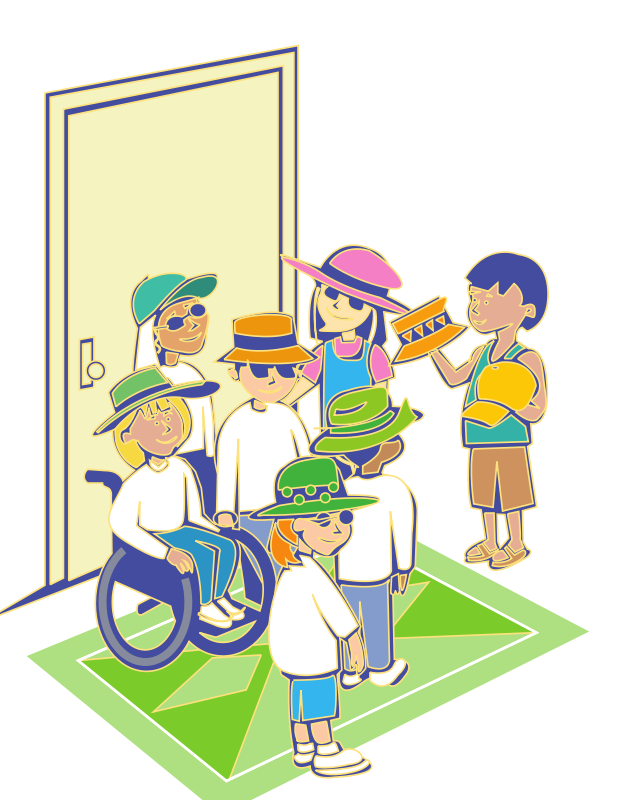
    https://openclipart.org/image/800px/svg_to_png/651/ryanlerch_kids_with_hats.png
    https://openclipart.org/image/800px/svg_to_png/651/ryanlerch_kids_with_hats.png

    The five suggestions (which I think are based on respect and are applicable for all students) are:

    1. ‘Meet the student “where the student lives” (where they need to be, at their level of development)
    2. Presume competence
    3. Be creative in your use of ‘adaptive’ technology (e.g. use of video and Skype or Facetime)
    4. Listen to parents and help them listen to the child
    5. Give “overlooked” children the same chance to shine as the superstars


    Vicki Davis is the Cool Cat Teacher. Her blog is consistently among the top 50 education blogs worldwide. Her byline is “A real teacher helping teachers be really excellent”. I agree that she is and recommend her blog to you.

    Update from Gary Dietz (12/08/2014):

    “The book ‘Dads of Disability’ is now a FREE loan if you subscribe to Amazon Prime or Kindle Unlimited. And if not, it is on sales as an ebook for $4.99. Look it up on Amazon. (Of course the paperback is still available!)”


    How do you view inclusion? What is your experience?

    I appreciate your feedback. Please share your thoughts about any aspect of this post.


  • Reading is all it’s cracked up to be: 10 tips for an early childhood classroom!

    This post almost didn’t get published. It almost fell through a crack into the never-never. But just in time the safety net sprang into action and saved it from obscurity.

    That may matter more to me than it does to you, but as an educator I hear too often about children who ‘fall through the cracks’, who fail to thrive in the school system, who miss out on the inspiration and timely support that would empower them on their journey to life-long learning.

    Like those children, this post was an also-ran. It didn’t quite get it, didn’t quite reach the expectations. But then I read something that confirmed for me the importance of sharing my message.

    You see, the love of reading is contagious. It can be caught from anyone, anytime.

    However, it can just as easily be extinguished; and the danger of that happening seems to be lurking in school systems packed too tight with lists of must do, must learn and must achieve expectations.

    I consider it imperative that teachers prioritize time for children to develop a love of literature and reading that will expand their horizons and create a worthwhile companion on the journey of their lifetime.

    https://openclipart.org/image/800px/svg_to_png/174860/bookworm_penguin.png
    https://openclipart.org/image/800px/svg_to_png/174860/bookworm_penguin.png
    Here are 10 easy tips for keeping the love of books alive in an early childhood classroom:
    1. Read aloud to children every day, ensuring that a variety of books and genres are being read and shared.
    2. Have a great supply and variety of children’s books available: picture books, fiction and non-fiction, collections of poetry, beginning chapter books, funny books, sad books, books about animals, space, people . . .
    3. Display books with covers facing out and give them pride of place. Make a display of ‘favourite reads’.
    4. “Sell” books to children (you won’t have time to read them all) by showing the cover and some illustrations; by telling what they are about, what happens, and what the children will enjoy about them.
    5. Make a reading corner with carpet, pillows and bean bags that invites children to get comfy while they read.
    6. Provide time for children to choose and read independently.
      • This can occur during quiet times set aside on a daily basis in which everyone, including the teacher, reads for 10 – 15 minutes. e.g. D.E.A.R. (drop everything and read) or U.S.S.R. (uninterrupted silent sustained reading).
      • It can also be integrated into reading group or literacy centre activities.
    7. Share the enthusiasm for books by providing time for children to excite each other about the books they are reading in a sharing circle.
    8. Display books written by the children and allow access to them for independent choice. Include them in the sharing and ‘selling’ sessions also.
    9. Make a time to visit the school library for reading and borrowing.
    10. Invite other adults to the class to read to the children e.g. teacher-librarian, administrators, support personnel, parents and grandparents.

    Let me know in the comment box a favourite tip of yours.

    This week I have read some fabulous posts by teachers who are making sure there is time for joy and independent choice in their literacy classrooms. I will share these with you below.

    The article that convinced me to share my thoughts was one that was not so joyful.

    Written by Alexander Nazaryan, a first-year teacher, the article appeared in the Opinion Pages of the New York Times on July 6, 2014. He talked about not being able to meet the needs of his students and explained that it was not the fault of the students though, the fault was that they were mostly of poor and immigrant families.

    He felt that asking these students to write about their own experiences did not have ‘the pedagogical value of a deep dive into sentence structure or a plain old vocab quiz.’

    I was immediately struck by the similarity of a statement made to me by my son’s teacher thirty years ago. At the time I was leading an in-service workshop about teaching writing. I would have been talking about ways of engaging students in the writing process by giving them opportunities to write at length about things of interest to them; by encouraging the writing of a first draft to get the ideas down; by providing opportunities for redrafting, rewriting and editing; and opportunities for feedback by sharing their writing with peers; and by making the most of teachable moments through individual conferences with each student.

    This teacher exclaimed that there was no way the children would be able to write anything of length as not one knew what a paragraph was, or indeed what a sentence was. The students were ten years of age and in their fifth year of school. I believe the statement to be more an indictment of the teacher’s inability to appreciate what the children could do, rather than an accurate estimation of their abilities. I knew for a fact that at least one student was more than capable of writing at length with a variety of sentence structures and correct paragraphing. I was certain he wasn’t the only one.

    I am inclined to agree with Nazaryan that ‘Expecting children to independently discover the rules of written language is like expecting them to independently discover the rules of differential calculus.’

    However trying to teach the skills of literacy through a barrage of meaningless drill and practice exercises in a joyless classroom is doomed to failure, and the children, sadly, will fall through the cracks.

    What the children need, in my opinion and unlike that of Nazaryan, is a balanced approach. The skills of literacy need to be taught in a meaningful context.

    That article and others, like this one from HuffPostParents about a year one girl who had to sit on the floor for weeks while her classmates sat at desks make me want to cry.

    However it is not all bad, and there are some wonderful things happening.

    Below are links to posts by or about teachers who are being far more inspirational to their students and other teachers on a daily basis.

    very inspiring blogger

    Tracking back to my post of July 9 The Very Inspiring Blogger Award (nominated by Geoff le Pard) I hereby nominate them for A Very Inspiring Blogger Award:

    Vicki Vinton, blogging at To Make a Prairie

    Matt Renwick at Reading By Example

    This article by Brett Vogelsinger and posted on the Nerdy Book Club

    Steven Peterson at Inside the Dog

    Julianne at To Read To Write To Be

    Carrie Gelson at There’s a Book for That

    Used Books in Class

    Three Teachers Talk


    This brings me back to the reason that got me thinking about cracks, and children falling through the cracks in the first place. This week’s flash fiction prompt set by Charli Mills at Carrot Ranch Communications was to In 99 words (no more, no less) write a story that involves a crack. 

    Here’s my response:

    The Crack

    She willed the earth to open up and swallow her whole. But it didn’t. She just stood there trembling, attempting to hold back the deluge that threatened to engulf her.

    She strained to remember, knocking her head with her fist. Quick. Try. Try. What’s the rule: i? e?  

    She stammered an answer.  Wrong again!  Too many rules! Stupid rules! Broken – just like her.

    She fled, eyes stinging, mouth twitching; and as she passed, with one hand grasped the confiscated unicorn sitting askew the teacher’s desk.

    Away they flew, the assault of mocking laughter fading far below.


    Thanks for reading. I appreciate your feedback. Please share your thoughts about any aspect of this post, including my flash piece.


  • Celebrating 100!

    Celebrating 100!

    Welcome to my 100th post!

    I’m excited!

    When I started this blog just under a year ago (I published my first post on August 15 2013) I set myself the goal of writing two posts a week. I am pleased that I have maintained that output, with only an occasional variance.

    Thank_you_pinned_noteI thank you all, my readers, whether you have been with me from the beginning, joined in along the way, or pop in occasionally to see what I am up to. I really appreciate your support and encouragement. If it wasn’t for your interest I may not have achieved my goal.

    One of the most rewarding things about blogging is belonging to a very special online community of readers and bloggers from whom I have learned a lot, and from whose encouragement I have developed the confidence to share my ideas.

    Celebrating 100 anything is a milestone.

    In Australia if you live to celebrate your 100th birthday you can receive a letter from the Prime Minister, the Governor-General and the Queen.

    In my year one classroom we would celebrate 100 days of school. In the ‘old’ days, when pre-school was part-time and not compulsory, before prep became the first year of formal schooling, year one was the first year of ‘real’ school, and the celebration really was of the first 100 days of school. After the advent of prep it simply became a celebration of the first 100 days of year one.

    Many valuable learning opportunities accompany the celebration.

    Preparation for the celebration would begin on the first day of school. We would count off each day on the number board, counting up the days we had been at school and how many more days there would be until we reached 100.

    Closer to the day we would explore what 100 items ‘looked like’ and count 100 children lined up for class, a tower built of 100 blocks, or 100 paperclips arranged around the edge of a piece of paper. We would count and collage 100 different items, and play games that involved counting to 100.

    celebratory cake

    One of the things that I enjoyed most was discussing with the children what they thought they would be like at 100 years of age. We would read A. A. Milne’s poem Now I am Six and talk about them being six or seven – what they looked like, things they could do, and their favourite things and activities. They would draw a self-portrait and write a description of themselves to accompany it.

    Then we would read books about growing older and discuss what it might be like to be 100 years old. They would do a self-portrait to show what they thought they would look like and write about what they would be able to do and activities they would enjoy.

    https://openclipart.org/image/800px/svg_to_png/154735/faltige_frau.png
    https://openclipart.org/image/800px/svg_to_png/154735/faltige_frau.png
    https://openclipart.org/image/800px/svg_to_png/103549/old_man01.png
    https://openclipart.org/image/800px/svg_to_png/103549/old_man01.png


    I wish I had some of their portraits and descriptions to share with you. They wrote about having grey hair, wrinkly skin and wearing glasses. They wrote about using walking sticks, living in nursing homes and having a lot of grandchildren. Overwhelmingly, they were happy.

    The last group of year one children I taught were born this century. They turned seven in year one in 2011. They will not celebrate their 100th birthdays until 2105! Chances are, with improvements to health and the increasing length of life expectancy, many of these children will get to celebrate that milestone.

    While the children had no difficulty imagining themselves as 100 years of age, I can’t imagine what life will be like for them in the next century; or even fifty years ahead. One hundred posts ago, I couldn’t even be sure if I would still be here writing this blog; but I am, and I thank you very much for reading and participating.

    To mark my 100th post, I have placed a new item in my Teachers Pay Teachers store with suggestions for celebrating 100 days of school. This also coincides with a storewide sale on Teachers Pay Teachers; so, for any teachers out there, it may be worth taking a look.

    sale_160_200

    Thank you for reading. I appreciate your feedback. Please share your thoughts about any aspect of this post or my blog in general.


  • The classroom garden

    The classroom garden

    Expecting every child in a class to respond to the same stimuli, develop at the same rate and achieve the same targets is like casting a handful of mixed seeds upon the soil and expecting them all to flourish.

    Just as each seed has its own specific requirements of soil type, temperature, sunlight and water, so too does each child have its own needs, interests and learning requirements.

    Differentiation is no less important in the classroom than it is the garden and tending to the learning and development needs of each child requires understanding of individual needs, appreciation of learning styles and a program that includes both a nurturing and expectation of individual growth with a sprinkling of well-timed instruction, support and attentive praise.


    This week Charli Mills at Carrot Ranch Communications posted a flash fiction prompt that immediately conjured up an image of a classroom as a well-tended garden in which each individual is appreciated for its own value and receives whatever is appropriate to foster its development.

    Charli’s challenge is to In 99 words (no more, no less) write a story that includes fruit.

    Jeff Kubina, Apple Orchard https://www.flickr.com/photos/kubina/2058047853/
    Jeff Kubina, Apple Orchard https://www.flickr.com/photos/kubina/2058047853/

    Here is my response about a little tree whose time has come:

    A fruitful harvest

    Little Tree stood alone at the edge of the orchard thinking, “What’s wrong with me?”

    The other trees grew tall. Their branches, laden with bright green leaves and sweet-scented blossoms, seemed to whisper mockingly.

    The sun shone. Rains watered the soil.

    Their blossoms turned to fruit, a plentiful harvest.

    Confused and dejected, Little Tree avoided the celebratory festival.

    Then all grew quiet. The bigger trees rested, preparing for the next season.

    Suddenly an insect orchestra and an unfamiliar fragrance startled Little Tree.

    “What’s up?” it asked.

    “You!” they buzzed relishing the richness of its golden blooms.


    Thank you for reading. I appreciate your feedback. Please share your thoughts about any aspect of this article or flash fiction piece.


    Featured image: rjp, Bird seed https://www.flickr.com/photos/zimpenfish/437991798/


  • Are you a lemon or a grapefruit? – Ten articles about creativity

    Are you a lemon or a grapefruit? – Ten articles about creativity

    I am a great fan of creativity.

    Imagination and creative thinking are what inspire and drive improvement, innovation and progress.

    I affirm my belief in the power of creativity in my header: ‘Create the possibilities . . .’

    In this post I share articles and blog posts that discuss creativity. It is not an exhaustive list, just a few to get you started. You will notice that many, but not all, are from Edutopia, a website that is ‘dedicated to improving the K-12 learning process through innovative, replicable, and evidence-based strategies that prepare students to thrive in their studies, careers, and adult lives’; and TED, an organisation of people who ‘believe passionately in the power of ideas to change attitudes, lives and, ultimately, the world.’

    1. In this article on Creativity and education Judy O’Connell says that

    ‘Every student is creative in some way, and the job of educators is to release and support that creative talent in an appropriate manner.’

    She adds that

    ‘Teaching creatively and for creativity entails taking students on a creative journey where their responses are not predetermined.’

    In her article Judy lists some features of teaching for creativity and includes a video of a new school in New Zealand that she suggests fits the criteria. It is quite exciting and worth a look.

    1. In this article shared on Edutopia Do Standards Kill Creativity Claus von Zastrow suggests creative ways of teaching creativity while teaching standards.

    Linking of subject areas, as we used to do through ‘themes’ in the old days, or more recently ‘integrated units’, before subjects were divided and each given their own slot in the timetable, was one suggestion.  A number of varied and interesting comments accompany the article.

    1. I have previously shared this TED talk by Sir Ken Robinson on How schools kill creativity here and here. If you have not yet listened to it, please do. As well as sharing a very important message, Ken is a very entertaining speaker. I’m sure you will enjoy it.

    4. Following on from that talk is this article by Bruce Price shared on examiner.com Ken Robinson and the Factory Method of Education. The article shares an animated talk by Ken Changing Education Paradigms.

    Bruce does not agree with Ken’s views and warns readers to be sceptical of information imparted by Ken. He says that Ken’s opposition to traditional schooling is unhelpful and argues that, unlike most others referenced here, that creativity cannot be taught.

    5. In this article by Deepak Kulkarni Recreational and Educational Value of Math Puzzles shared on Edutopia the suggestion is made that creative problem solving can be taught using maths puzzles.

    6. A variety of Techniques for creative teaching are shared on the Iowa State University Center for Excellence in Learning and Teaching website which states that

    in order to teach creativity, one must teach creatively’.

    7. In yet another article shared on Edutopia, Andrew Miller states enthusiastically Yes, You Can Teach and Assess Creativity! Andrew provides suggestions for recognising creativity as well as teaching and assessing it.

    8. Also on Edutopia, Diane Darrow talks about Creativity on the Run: 18 Apps that Support the Creative Process.

    9. In this rather long TED talk on his life, authenticity vs karaoke culture Malcolm McLaren postulates that ‘we’re living in a karaoke culture, with false promises of instant success, and that messiness and failure are the key to true learning.’ He talks about his own schooling and attitude to creativity.

    10. Michael Michalki shared an article on Edutopia regarding what he considers the 7 Tenets of Creative Thinking, including:

    Believe you are creative

    ‘While creative people believe they are creative, those who don’t hold that belief are not.’

    Work at it and ‘produce an incredible number of ideas — most of which (may be) bad. He says that

    ‘more bad poems were written by major poets than by minor poets’.

    Go through the motions – ‘Every hour spent activating your mind by generating ideas increases creativity’; visualise what you want and go for it.

    On his own website Creative Thinking, Michael Michalko suggests many more ideas for getting you to think creatively.

    The header of Michael’s website states that “A grapefruit is a lemon that took a chance.”

    lemons and grapefruit

    So which are you: a lemon or a grapefruit?

    I appreciate your feedback. Please share your thoughts about any aspect of this post and let me know whether you agree or disagree with the value of creativity and if it can be taught.

    Thanks for reading.

  • I’ve got the music in me – let me count the ways!

    I’ve got the music in me – let me count the ways!

    For any hearing person, music is integral to our lives.

    Every country has a national anthem which may be taught in schools and played or sung at many and varied ceremonies and occasions, inspiring unity and national pride. Many other organisations such as schools and colleges have their songs praising their strengths and fostering a sense of identity. Couples have their special or ‘theme’ songs.

    When we enter a store we are serenaded with music chosen to make us feel comfortable and entice us to stay longer and buy more.

    Joyful advertising jingles with their subliminal messages encourage us to memorize the product name and make it our next purchase. These jingles can stay in our heads for years, like this famous one about Louie the Fly:

    A few bars of a song can revive memories from long ago. I have written about this previously in a flash fiction piece, Vagaries of time.

    Music can call us to dance, to relax, to sing, to cry. It can be chosen to match our mood, or can help to create a mood or atmosphere. The soundtrack of a film or television show tells the audience what to expect and how to feel.

    Music is also an integral part of education and learning. Learning information in a song can help one remember. Many people like to have music playing when they are reading or studying. I did when studying towards my high school exams, but now I prefer quiet when I write. Programs such as Accelerated Learning recommend using Baroque music to help learners stay relaxed and focused, increasing retention.

    I have previously written about using songs in the classroom, such as I love the mountains which I learned from Bill Martin Jr. and affirmation songs such as those of Anne Infante here and here.  I have also composed class songs and chants such as Busy Bees chant, and used songs to support class work, for example The Ugly Bug Ball when learning about mini-beasts.

    I have used music to calm and settle after play breaks, and music for activity between seated activities. I used songs in the morning to signal to children that it was time to be ready for the day’s learning, including action songs or songs about our learning, for example a phonics song:

    Image courtesy of Anne
    Image courtesy of Anne

    But of course, once we were settled, every day started with an affirmation song, or two. It got everyone into a happy expectant mood. It’s hard to be sad when singing (unless it’s a sad song).


    image courtesy of www.openclipart.org
    image courtesy of http://www.openclipart.org

    . . . and  songs in the afternoons to send the children home happy and singing with joy.

    As a year level we would sing songs to settle the children when lining up to return to class after lunchtime play. The children hurried to join in and sang their way joyfully into class. This is quite different from when I was at school and we would line up in silence and then march into school in step, subdued and quietly obedient.

    I composed songs as a child but did not continue the practice as an adult, except for one: a lullaby that I sang to soothe my baby girl to sleep. A few years later I decided to learn to play the keyboard from a very talented musical friend who guided my writing of the accompanying music. This remains my one real musical accomplishment!

    For someone who does not consider herself at all musical I certainly enjoy, and promote the use of, music in many different ways.

    On that note, I leave you with my flash fiction response to the prompt set by Charli Mills of Carrot Ranch Communications: In 99 words (no more, no less) write a story influenced by a musical score.

    Final act

    A collective gasp interrupted the music mid-beat.

    All eyes turned synchronously, as if worked by unseen strings, towards the French doors, burst open and revealing a silhouetted figure framed by billowing gossamer-like curtains.

    Out of the darkness the figure emerged: clothed in black with coat tails flapping, a top hat in one hand and a white-tipped cane held aloft in the other.

    The conductor revived the orchestra as the figure glided across the floor, seized the heroine decisively and whirled her around and around.

    The spell now broken, the cast joined in the dance to tumultuous applause.

    I hope you can imagine the score that would be written to accompany this piece and its change of moods.

    What score would you give it?

    Thank you for reading. I appreciate your feedback. Please share your thoughts about any aspect of the article or my flash fiction piece.

  • Four fabulous female educators

    In a previous post I wrote about 3 inspiring educators. In no way did I wish to indicate that the number of inspiring educators was limited to those three or that all inspiring educators are male. The list of inspiring educators is far greater than that and includes both male and female representatives.

    The purpose of this post is to both honour, and share the wisdom of, other educators who have positively impacted my life and thinking as an educator and the lives and education of many others. The list doesn’t end here. There will be more to follow.

    Maria Montessori (1870 – 1952)

    Maria Montessori’s name is known worldwide as the founder of the Montessori Schools. However her influence is not restricted to those schools. Many educational practices implemented, especially in the early childhood setting were influenced by Maria Montessori.

    Maria resisted the gender-stereotyping conservative views of Italy where she lived in the late nineteenth century. She developed her interest in maths and sciences, especially biology, and became the first female doctor in Italy.

    As a doctor Maria worked with children from poor and working class families. She developed the belief that every child had an intrinsic intelligence. She studied child development and education extensively and developed methods of implementing her theories. She traveled Europe sharing her ideas and advocating women’s and children’s rights. Her success with disabled students led to implementation of her methods with ‘normal’ children.

    Montessori’s methods put the child’s interests at the front of the program. The teacher was to ‘follow the lead’ of the child.

    Practices now seen as standard that were initiated or influenced by Maria Montessori:

    • incorporation of children’s interests, putting their interests first
    • recognising the development of the individual and making education appropriate to it
    • use of child-sized furniture and shelving
    • practical activities such as sweeping and cleaning up
    • environmental activities such as gardening
    • health and hygiene practices, such as washing hands, sharing morning tea, cooking
    • indoor/outdoor areas that children move about freely
    • opportunities to work independently
    • respecting the child as an individual

    She valued independence and saw it as the aim of education, with the teacher as observer/guide of children’s development.

    This video explains  a little of her work.

    Sylvia Ashton-Warner (1908 – 1984)

    Sylvia Ashton-Warner is a New Zealand writer, poet and teacher whose educational work I became familiar with in the 1980s through her books Teacher and Spinster, the latter of which was also made into a movie.

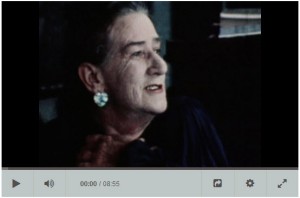
    Sylvia, who in the interview below states emphatically that she is not a teacher, that she hates teaching and can’t stand education, has been very influential on teachers around the world.

    i was unable to embed the video. Click on the image to go to the original site.
    i was unable to embed the video. Click on the image to go to the original site.

    Sylvia says,

    “There’s a formula for all my teaching. It’s quite simple. I supply the conditions where life can come in the door . . . where both our teacher and our child can be themselves.”

    Children-and-even-adults - Sylvia Ashton-Warner

    Working with Maori children from poor and dysfunctional families and using organic reading, she developed what is called the ‘Key Vocabulary’; those words holding most meaning and interest to the child. The child asks for a word, the teacher writes it on a card. The child reads the word and copies it to write. The words requested are usually nouns and hold a lot of meaning for the child.

    I implemented her ‘Key Vocabulary’ for many years and found it to be a successful tool for developing readers and writers.


    Marie Clay (1926 – 2007)

    Marie Clay is another New Zealand educator best known for her work with literacy education and the Reading Recovery program which was developed to support students whose reading skills were delayed. She believed that early intervention was the key to improving literacy skills.

    I first came across her work in her book Reading: The Patterning of Complex Behaviour in 1979. Her 1983 publication Record of Oral Language provided teachers with methods of observing and recording children’s development in literacy.

    The Reading Recovery program, based on Marie Clay’s work and developed in the early 1980s, provides one-on-one support for students who are experiencing difficulty with reading in the first years of school. The teachers undergo training which develops their understanding of the reading process and how to support a student’s development. The training is more intensive and thorough with methods specific to this purpose, than generalised teacher education. However knowledge of her research, innovations and methodologies are also of benefit to generalist teachers and have been incorporated into many teacher education programs.

    I was very disappointed, as were many other classroom teachers, when this successful program was discontinued in our region earlier this century.

    Barbara Arrowsmith-Young (1951 – )

    I first heard about Barbara Arrowsmith-Young in Norman Doidge’s book The Brain that Changes Itself.

    I couldn’t put this book down. My thinking about the brain and learning was being challenged but excited at the prospect of overcoming learning problems experienced by many students.

    For years I watched helplessly as scores of struggling learners were pummelled with repetition of the same boring and meaningless methods that created (or at least contributed to) their problems in the first place; of seeing them humiliated by having to repeat a year at school, or being considered ‘dumb’ because they couldn’t do what the other kids could do. Now here was a book that suggested this need not be so. If only those making the decisions and delivering the programs could be influenced.

    One of the most memorable stories from the book was that of Barbara Arrowsmith-Young. Barbara suffered from severe learning disabilities throughout her childhood and early adult years. Every known method of compensating for the disabilities was tried without success. Barbara felt humiliated and a failure.

    Her life changed dramatically when she heard about neuroplasticity of the brain (the ability of the brain to change in physiology and functionality) and created exercises for her brain, teaching herself to do things she had never done before.

    Her story is an inspiring one of courage, strength, and persistence. Barbara has changed her life. After turning her life around, Barbara has developed programs for others with disabilities to engage with. She started the  Arrowsmith School in  Toronto in 1978. The Arrowsmith Program is now used in schools in the US and Australia as well as Canada.

    Barbara’s “vision is of a world that we create in which no child has to live with the ongoing struggle and pain of a learning disability. . . that cognitive exercises become just a normal part of curriculum. . . that school becomes a place that we go to strengthen our brains to become really efficient and effective learners engaged in a learning process where not only, as learners, can we dare to dream, but we can realize our dream . . . This is the perfect marriage between neuroscience and education.”

    You can read her story in The Woman Who Changed her Brain, and listen to her speak in this video:

    She travels the world sharing her message so you may even have an opportunity of meeting her in person. I saw her last year at the Brisbane Writers’ Festival. Magic!


    You may have noticed some unifying threads with each of these educators:

    A focus on the child, the child’s interests and life

    A recognition of the child’s ability to learn

    An optimism in the child’s ability to learn, for success and the future

    All educators worked with students from disadvantaged backgrounds or with disabilities or both; and all achieved success.


    I welcome your feedback. Please share your thoughts about any aspect of this article.


  • Whose story is it anyway?

    Nor and Bec reading

    Children love stories.

    They love being read stories and beg for them to be read, over and over again.

    Equally as much, if not more, they love being told stories, especially stories of their own lives. They beg for them to be told over and over, listening attentively and with wonder as their own stories (her story and his story) are being revealed. They commit these tales to memory so that eventually it is difficult to distinguish the genuine experiential memory from the telling. Even as adults they seem to not tire of hearing tales of the cute things they did when they were little, or of shared experiences.

    They also love being told stories of their parents’ lives. These are the stories that help define them and their existence: how they came to be. The stories tell of times gone by, and of how things used to be. They marvel that their parents were once children and try to imagine how that might have been.

    My daughter would often ask for stories about herself, her brother, myself or other family members. One day when she was about six, she asked again, ‘Tell me a story about when you were a little girl.’ Before I could respond she jumped in with, ‘What were the dinosaurs like?’ She was teasing, of course, and her comedic timing was perfect. A story was created, one that has been shared many times.

    History is a story, though at school I never saw it as such. Had it been a story of lives, as its name implies, I may have been interested. But history at school was a list of wars and dates, and kings and queens to be memorised and regurgitated for a test at the end of the term. There was no story, no human emotion, no semblance to any narrative that may have lured me in.

    I hope that today’s students of history are not required to commit sterile lists of facts to memory without the stories that would give them meaning and significance, some human element to help the information stick.

    History, as a subject, had always been relegated to high school. It was not a discrete part of the primary school curriculum, though aspects were explored in other subject areas such as ‘Social Studies’ when I was at school, or more recently ‘Studies of Society and Environment’. With the introduction of the new Australian Curriculum, History is now a stand-alone subject.

    As an early childhood teacher I was a bit terrified that young children would be required to memorise lists of seemingly random facts and dates. I’m pleased to say that, for the early years anyway, this is not so. Children in the early years start by exploring their own history and the history of their family, considering similarities and differences between their lives, the lives of their parents, and of their friends.

    I applaud this as an excellent starting point. I believe, when working with children, connections must always be made with their lives and what they know. What better starting point than investigating the traditions of their own family and culture.

    In Australia, as I am sure it is in many other places, a great diversity of cultures is represented in each classroom. Encouraging children to share similarities and differences of traditions with their classmates helps to develop understanding of each other’s traditions and beliefs, which in turn fosters respect and empathy. For this purpose, I developed some materials to make it easy for children to share their traditions. These are available in my Teachers Pay Teachers store.

    Whoever you areMem Fox has written a beautiful picture book Whoever you are that I love to share with children when discussing their cultures and traditions. It explains in a simple and beautiful way that although children around the world may live in different houses, wear different clothes, eat different foods, for example ‘inside, their hearts are just like yours.’ Mem Fox explains the story on her website.

    I also like to sing I am Freedom’s Child by Bill Martin Jr.; and in Australia we have a great song that tells about our different beginnings, I am, you are, we are Australian by Bruce Woodley.

    Heal the World by Michael Jackson is another great one for appreciating diversity and fostering inclusivity.

    What got me thinking about history in particular for this post is the flash fiction prompt posted by Charli Mills at Carrot Ranch Communications. Charli’s challenge is to In 99 words (no more, no less) write a story that considers history, near or far.


    This is my contribution:

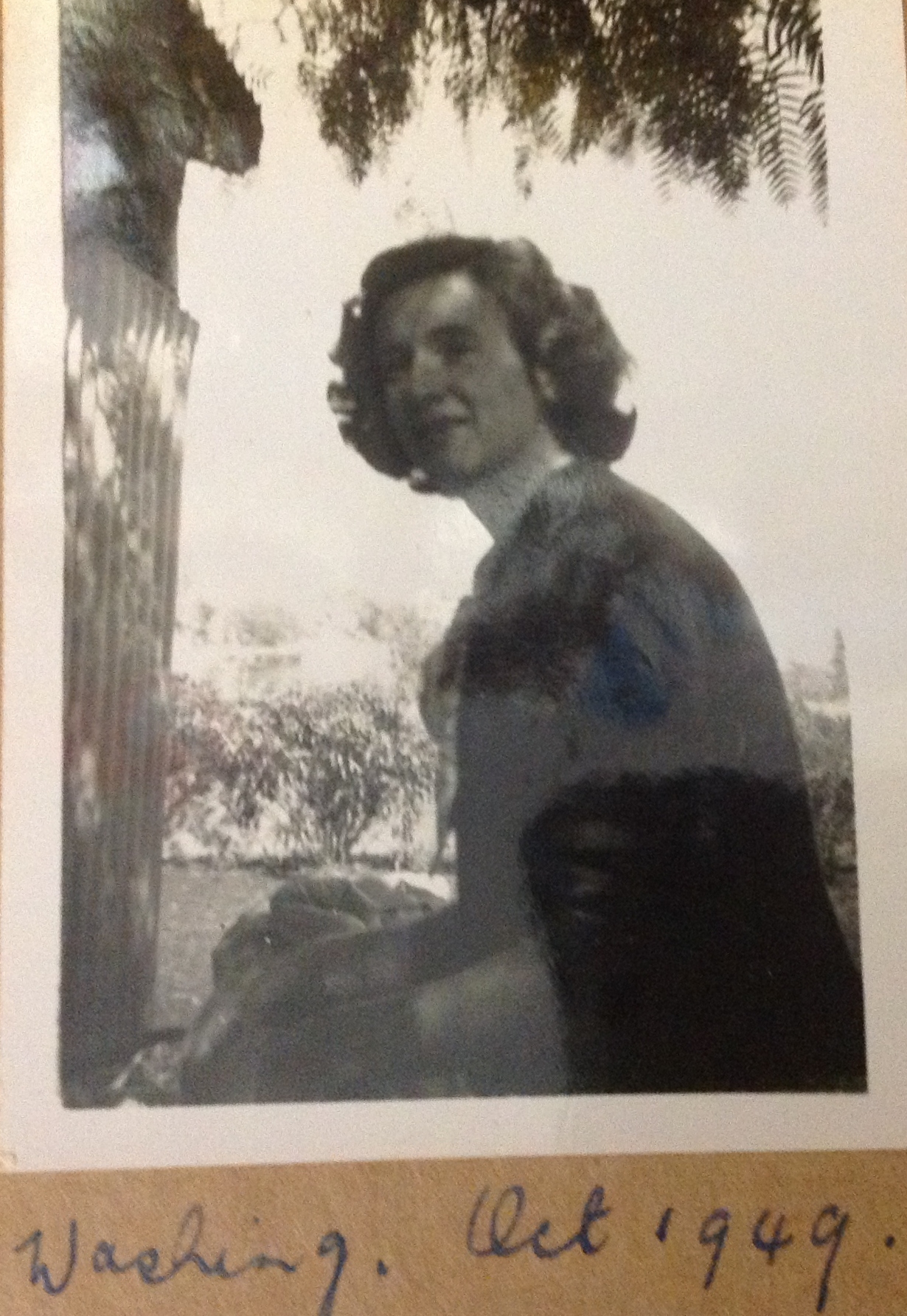
    washing 1949

    Washing day

    Her freckled, calloused hands were red and chaffed as they gripped the wooden stick and stirred Monday’s sheets in the large copper pot heating over burning blocks of wood.

    The children played in the dirt nearby, scratching like chickens, hopeful of an interesting find.

    The dirt embedded under her torn and splitting fingernails began to ease away in the warm sudsy water as she heaved the sodden sheets and plopped them onto the wooden mangles.

    The children fought to turn the handle, smearing dirty handprints on the sheets.

    She sighed, and hung them over the line. One chore done.


    I welcome your feedback. Please share your thoughts about any aspect of the article or my flash fiction piece.