Mathematical thinking involves more than just being able to count and recite number facts. The ability to solve mathematical problems requires us to think flexibly and creatively with numbers. We need to see that there are multiple ways of interpreting a situation and reaching a solution. It is never too early to get children thinking.
An easy way to get started is to give children a variety of objects to count. Rather than always counting groups of similar objects; for example, counters, bottle caps, or teddy bears, it is important for children to realise that collections for counting
Six early years activities for celebrating Mother’s Day. Develop literacy skills while making a personalised and special gift for Mums.
Mother’s Day is celebrated on the second Sunday in May in many countries, including Australia, the United States, and Canada. With the celebration little more than a week away, I thought I’d share some suggestions that are low on cost but packed with learning opportunities to incorporate into your class literacy and art programs.
Encouraging children to create and give a gift from the heart demonstrates that not all gifts need come from a shop. It allows children from even the poorest families to give their Mums a special Mother’s Day gift. It helps develop their creativity and teaches them skills that they can apply in future gift-giving situations. It shows how thoughtfulness and imagination can combine to make a unique gift that will be treasured.
A gift of love lasts longer than many store-bought gifts.
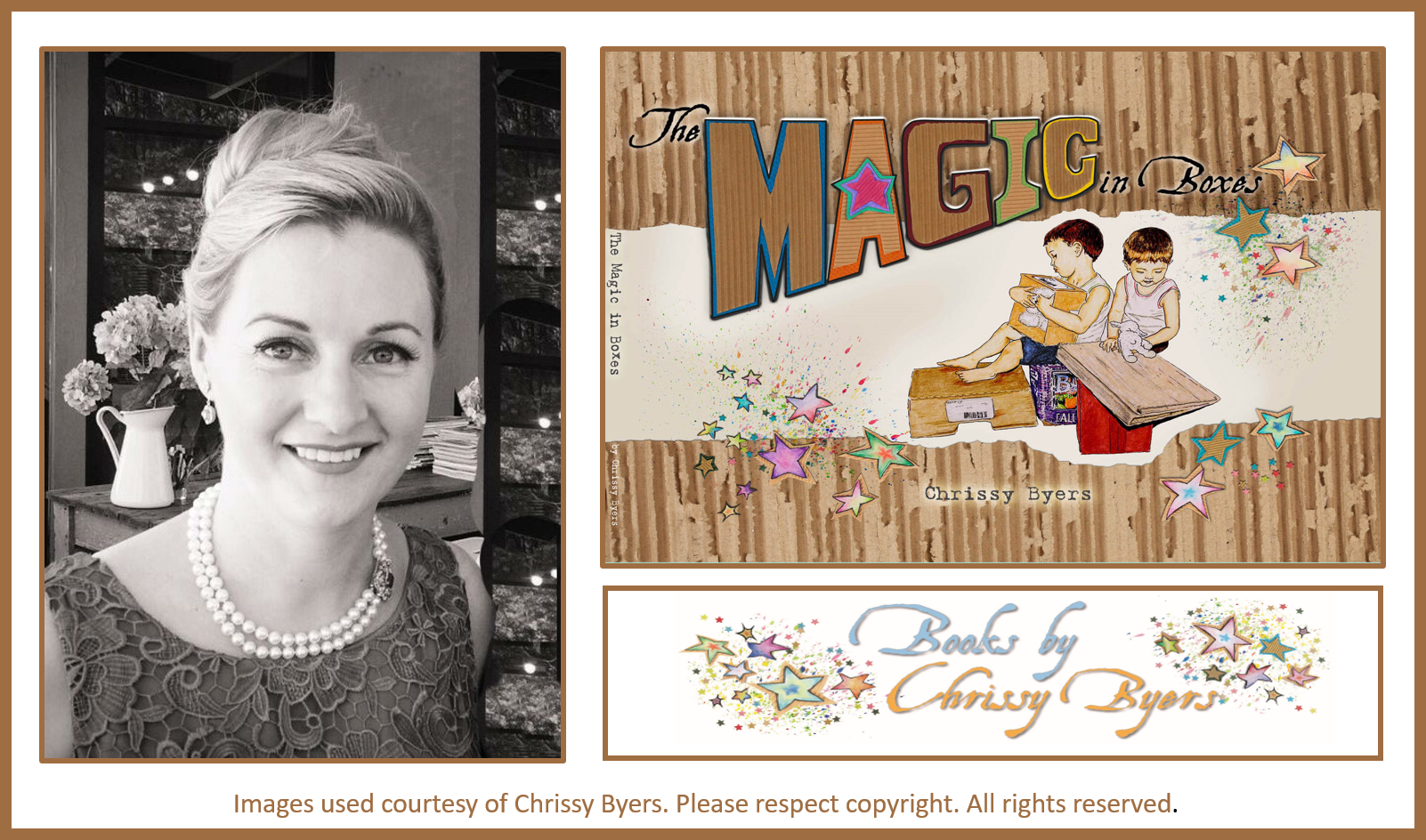
This month it is my pleasure to introduce you to Chrissy Byers – author, illustrator, and early childhood educator. It was only after many years in the classroom and becoming a parent herself that Chrissy was able to fulfil her lifelong dream of being an author and illustrator. With the success of her first book The Magic in Boxes, and another on its way, Chrissy shows us that dreams can come true.
Chrissy, what was your motivation for writing this book?
As an experienced early years class teacher, I had noticed that, with the rise in technology there was a decline in the amount of time children spent engaging in imaginative play. I was compelled to write and illustrate a children’s book which would remind parents, and inspire children, to see the magic in everyday household junk.
Unlike a traditional children’s book, I felt that the recount genre would suit my intentions better than a narrative. I saw this as being an additional bonus for primary teachers, as there are very few examples of recount picture books.
The repetitive text elements encourage pre-reading children to join in a shared reading experience. It also provides opportunity to incorporate hand gestures when reading, which helps focus young minds and occupy little hands during carpet time. The rhyming couplets assist in reading prediction and keep the beat of a fast-moving text.
Do you think of yourself more as a writer or an illustrator?
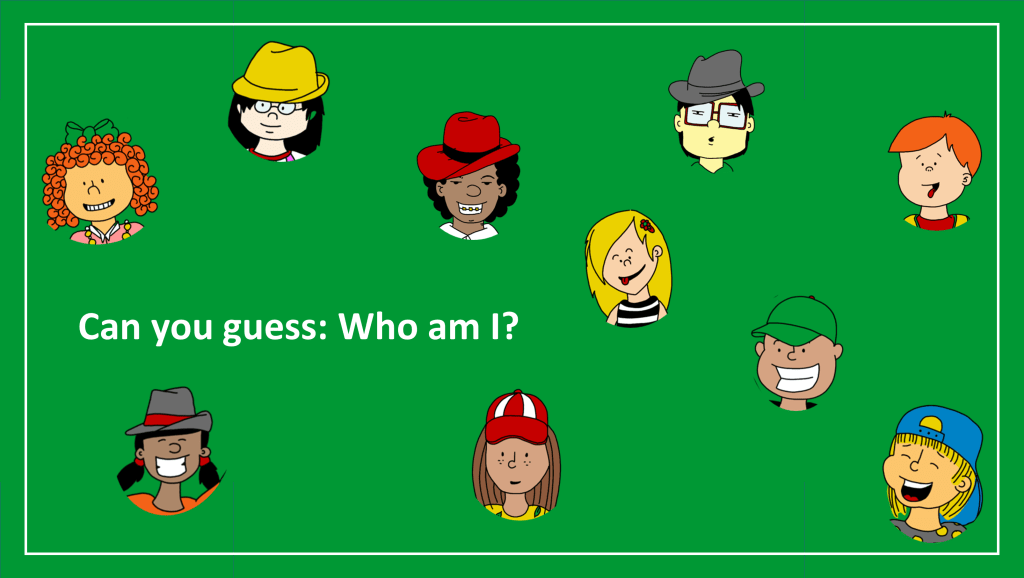
Last week I shared an interview revealing a little about myself and my hopes and plans for readilearn. I also uploaded some little Who am I? Easter caption books. It’s seems timely then to discuss the value of creating, writing, and reading Who am I? puzzles in the classroom.
Children love solving puzzles and it is good for them to engage in thinking activities. Who am I? puzzles involve deductive reasoning, and are easy for children to write. Solving them means listening attentively to the clues, remembering all the information, relating new information to existing information, and using the clues to eliminate options in order to identify the specific.
In addition, the puzzles can be used to discuss and teach the difference between statements and questions and the appropriate way of punctuating each.
Children can begin by writing statements about themselves, such as those they may have shared in About me booklets. They can also add interesting facts that others may not know about them. Remind children
About six months ago, not long after the launch of readilearn, I was invited by Dr Gulara Vincent to talk a little about it on her wonderful blog through which she provides support for writers as they find their inner voice. I thought you might be interested in finding out a little more about how readilearn came to be. Although I share the interview here, please click through to meet Gulara and read the interview on her blog.
Hi Norah, Welcome to my blog.
Thank you for inviting me. I am delighted to be here.
Norah, congratulations on the recent launch of your website. Tell us a little about readilearn.
Thank you. I am very excited about my new website. readilearn is a collection of early childhood teaching resources that I have written. Many of the resources I used, trialled if you like, in my own classroom. I had always thought about sharing them with others but, when I was teaching full time, didn’t have the time to present them professionally or even think about marketing them.
Norah, what makes your resources different? Why would people choose readilearn resources?
Yesterday, 2 March was Dr Seuss’s birthday. How did you celebrate? Did you read a favourite Dr Seuss story – maybe even more than just one or two? Which is your favourite?
Children love the rhythmic, rhyming stories written by Theodor Seuss Geisel who was born in 1904. (A question for your children – how old would he be if he was still alive today?)
Having fun with rhyme is a great way for children to learn about the sounds of language.
In the beginning, the rhymes can be real or nonsense words, as are many employed by Dr Seuss, training the ear to hear. Children are delighted when they discover pairs of words that rhyme. It is great when parents and teachers share their excitement of discovery too.
Like those of Dr Seuss, many stories and poems for young children are written in rhyme. The rhyme is pleasant to the ear, and encourages children to join in with the reading or telling, using meaning and sound to predict the next rhyming word.
When children are ready, familiar rhyming texts are often the first they read independently, using a combination of memory and print. How many children do you know who first started reading with a Dr Seuss book; such as The Cat in the Hat, Fox in Socks, One Fish Two Fish, Ten Apples Up On Top, or any other favourite.
For my part in the celebration, I joined in with a challenge extended by Vivian Kirkfield to write a story in 50 words. The reason behind the 50 word challenge is that, although the total word count of Green Eggs and Ham is over 700, only 50 unique words were used. (Some of your children may like to check if that is so. How could they do it?)
I decided to write a rhyming nonsense story in exactly 50 words (title not included). I hope you and your children enjoy it.
Although Charli always provides suggestions, she also permits writers to go where the prompt leads, allowing their thoughts to migrate in whichever direction they choose. This is good for me as my thoughts always bring me back to early childhood education and, if I can somehow squeeze it in, butterflies.
Migration is a part of human history. We are told that humans originated in Africa, and that migration out of Africa began about 60 000 years ago (well, that’s one of the stories). That we are now spread across the world is no mean feat, particularly when we acknowledge that most of the migration occurred before the industrial age, long before steam ships and ocean liners, before motor cars and air travel.
But migration continues still, and our countries and cities become home to those whose lives began far away and who share different cultural traditions. The purpose of the National Geographic Society’s Genographic Project is to discover more about our shared genetic heritage. In an early childhood classroom, we, too, can discover how much we have in common and learn to appreciate our differences.
Mem Fox’s beautiful book Whoever You Are is great for encouraging children to recognise, respect, and appreciate each other, similarities and differences included.
This year sees Mem publish another beautiful book I’m Australian Too which shows appreciation for everyone who is part of our wonderful multi-cultural Australia. (Follow the links to both books and you can listen to her read them too!)
A number of readilearn resources support teachers in developing an appreciation for everyone’s heritage, including a history unit which helps children learn more about their own family history and traditions, and the histories and traditions of their classmates’ families.
Just as amazing as stories of human migration, are those of animal migration. I was surprised when I first heard of the migration of monarch butterflies from Canada to Mexico in the autumn, and back again in spring, a distance of over 4800 miles or almost 8000 kilometres. What a long flight for a butterfly, I thought, the poor butterfly’s wings must be ragged by the end of the journey. But the round trip involves at least four generations.
And although monarch butterflies are native to North America, they are now part of the Australian landscape, having arrived, possibly during the gold rushes of the mid-1800s.
Even longer, twice as long in fact, than the monarch’s migratory flight, is that of a dragonfly which, also over four generations, makes a complete circuit of the Indian Ocean – almost 1000 miles or about 16 000 kilometres. The story of how this tiny insect’s epic journey was discovered is fascinating. Who knows what one may discover when wonder is mixed with observation.
There’s obviously plenty of diversity from which to draw inspiration for a migration story. I’ve chosen to write a story set a little bit closer to home. I hope you like it.
Please pop over to Charli’s post to see where the prompt has taken other writers.
Adventurous plans
His bag was packed. He was ready. He stopped at the door for one last look, then stepped outside, pulling it closed behind him. At that moment, he was certain; he would never return. There was nothing for him here. Exotic places and untold adventures awaited. At the stop, he hailed a bus and climbed aboard. “Where are you off to?” asked the driver. “I’m on an adventure,” he said, tendering a fistful of plastic coins. “But only if you take me with you,” said his out-of-breath mother, smiling. “Okay,” he said. The driver winked as she climbed aboard.
Thank you for reading. I appreciate your feedback. Please share your thoughts.
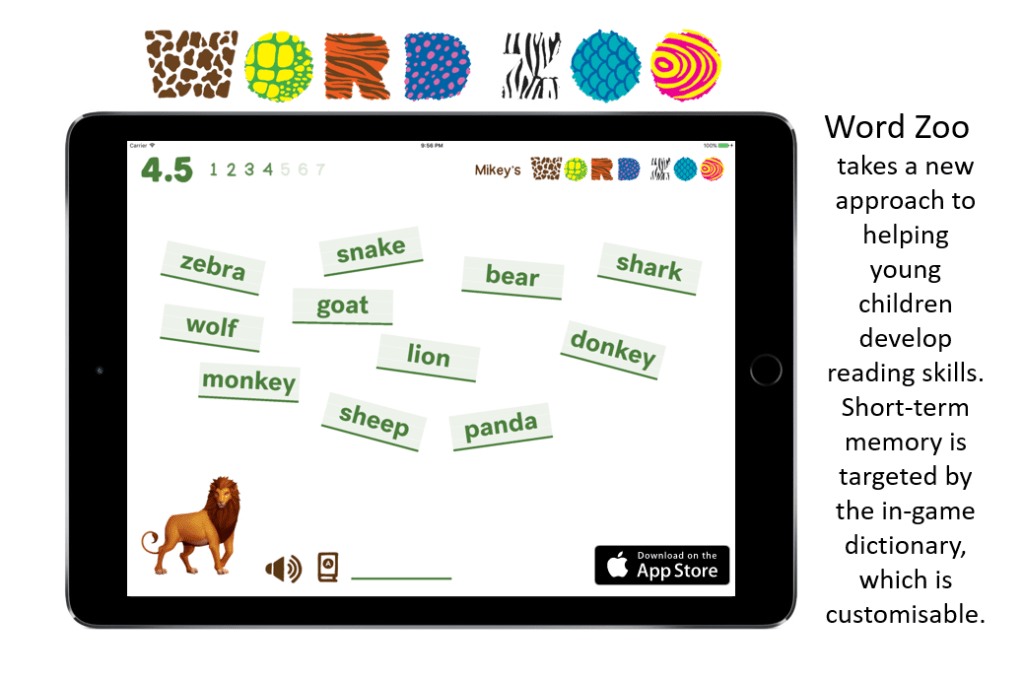
P.S. I’m excited to announce the launch of a new app for beginning readers created by my son, Robert. If you know anyone with young children who may be interested, please let them know about Word Zoo, available now in the App Store.
Mathematics is all around us. We use it every day for a wide range of purposes; from deciding on the sequence in which we dress ourselves, to calculating how much time we have available for an activity.
Number is just one component of mathematics but the ability to use it confidently and competently is essential to life in the 21st century; from managing one’s finances, to calculating time and distance, to knowing how many followers one has on social media.
The views that people hold of themselves as mathematicians, and their attitudes to mathematics in general, are formed early in life. It is important that we early childhood teachers provide children with mathematical experiences that are meaningful, engaging, and in context.
readilearn mathematics activities are designed to support you in doing so by providing a range of digital and printable resources that encourage mathematical thinking and discussion alongside hands-on experiences. It is important to provide children with a variety of learning contexts to encourage the development of “I can do it” attitude to number and maths.
Number combinations
A child’s ability to count is sometimes seen as an early indicator of ability with numbers. However, an understanding of number requires far more than
I love poems. Children do too. Poetry is a great way of introducing children to the joy of language, as well as to features such as rhythm, rhyme, alliteration, similes and metaphors. What is taught through poetry can be as simple or as complex as required by the ages of the children or your teaching purpose.
One of the great benefits of teaching young children through poetry is the fun aspect. It’s enjoyable for teachers and students alike and, when children innovate on poems to create poems of their own, very motivating.
With St Valentine’s Day not far away it is timely to read and write love poems. One of my favourite poems for writing with young children is based on the traditional camping song I love the mountains. I was taught the poem by the amazing literacy educator Bill Martin Jr at a reading conference in the 1980s, and used it with every group of children I taught thereafter. I have previously written about that on my other blog here.
The repetitive structure and easy melody invites children to join in and is easy for children to use in writing poems of their own, whether they are emergent, beginning, or advanced writers. The poems can be completed using pictures or words.
The importance of reading cannot be overstated. It is an essential skill, integral to almost everything we do. Teaching children to read is one of the most important, and most rewarding, aspects of our role as early childhood educators.
Some children come to school already reading. Others come not yet reading, but with a love of books and an expectation that they will learn to read. They understand that reading involves making sense of the squiggles on the page. These children usually learn to read effortlessly regardless of what we do.
Other children come to school with little experience of books and reading. For them, learning to read is a mystery and a greater challenge. For these children especially, it is important that we provide an environment rich in language and book experiences. We need to excite them about books and reading, interest them in words and language, and show them that books can be both a source of enjoyment and information.
I often hear teachers lament that there’s just not enough time in the crowded curriculum to read to children any more. But reading aloud to children, especially early childhood children, should be non-negotiable and a priority every day. How can we excite them about books, and interest them in reading, if we don’t read to them?
It is impossible to turn children onto books in one isolated reading lesson each day. In fact, reading lessons as such probably don’t turn children onto reading at all. That is not their purpose. Their purpose is to teach skills. But those skills should always be taught in context, and never in isolation. Nor should they be confined to lessons timetabled for English. Reading must occur across the curriculum and for a multitude of purposes throughout the day, from noting who is at school, interpreting the job roster and group allocations, to understanding connected text in various subject areas.
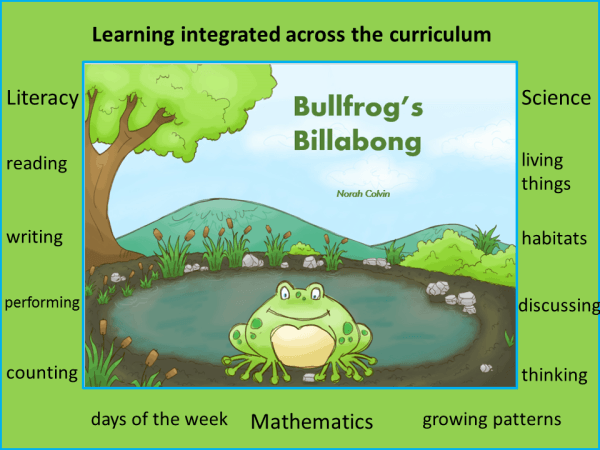
Many readilearn resources are designed to provide children with opportunities for reading across the curriculum. Even those designed specifically to develop reading skills have application in other subject areas.













 Norah Colvin