Live Love Laugh Learn … Create the possibilities

Tag: creativity

  • Let them loose

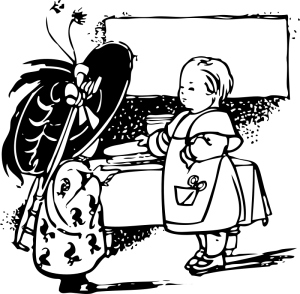
    johnny_automatic_playing_dress_up

    It is a wonderful thing to see children engaging in imaginative creative play. Let them loose with an assortment of bits and pieces and it’s amazing to see what they can construct, both physically with the equipment and in the ways they interact with their constructions, creating imaginative worlds and stories.

    A fabric offcut might be a cape, a veil, an apron, a dress, the sail of ship, a red carpet, or the curtain for a puppet theatre.

    A cardboard box might be a car, a home for a pet, a high-rise building, an explorer’s ship or a magician’s table.

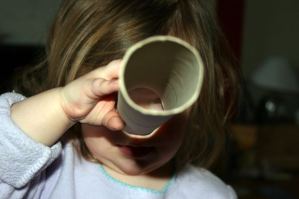
    A cardboard tube might be a ship’s funnel, a car’s garage, a railway tunnel, a fairy wand, or a telescope for gazing at the far-off stars and planets.
    www.morguefile.com
    http://www.morguefile.com

    Anything can create magic in a child’s imagination. Sometimes the cheapest things can offer the most value. You only have to watch a young child discard the expensive toy and spend hours playing with the wrapping and packaging materials to see this.

    Of course there is value in construction sets and other toys that allow children to imagine and create. However, a cardboard box decorated by the child can be as effective an oven as a fancy store bought one. And while most construction sets come with suggestions of what to build, it is best to put the instructions away and let the children discover for themselves what they can create, and how to incorporate the materials into their play.

    While learning to read and follow instructions is an important skill, making only what someone else has already created stifles the imagination and can even suppress the willingness to try, especially if the instructions and constructions are too difficult for the child, and sometimes even the adult, to follow.

    I expect young children to have ready access to a variety of materials, as well as opportunities to use them to support their play, both at home and in educational settings they attend. It is something I take for granted as being fundamental to early childhood development. It’s always been, and hopefully will always be.

    I was surprised, therefore, when I recently came across an unfamiliar term and theory for describing this type of play.

    Loose Parts Theory, according to articles like this one, was first proposed by architect Simon Nicholson. He believed that it is the loose parts in our environment, such as those that can be “moved, carried, combined, redesigned, lined up, and taken apart and put back together in multiple ways”, that stimulate creativity.  The term was unfamiliar, but not the thinking.

    It took me a little while to find the source of this theory but I finally found a paper written by Nicholson through this post by Kate on An Everyday Story.

    I find use of the term Loose Parts interesting. It is appropriate. However, the creative, imaginative play it describes was occurring long before anyone thought to apply such a term to it. If I suggested that it could be a “trendy” term to describe what has always been, I’d be showing just how much of a slow learner I am. Nicholson proposed the term in 1972!

    What do you think of Loose Parts Theory? Have you heard the term before? Did you engage in loose parts play when you were a child, or have you observed children playing imaginatively and creatively with loose parts?

    Thank you

    Thank you for reading. I appreciate your feedback. Please share your thoughts.

  • Scary monsters

    https://openclipart.org/detail/170917/little-monsters
    https://openclipart.org/detail/170917/little-monsters

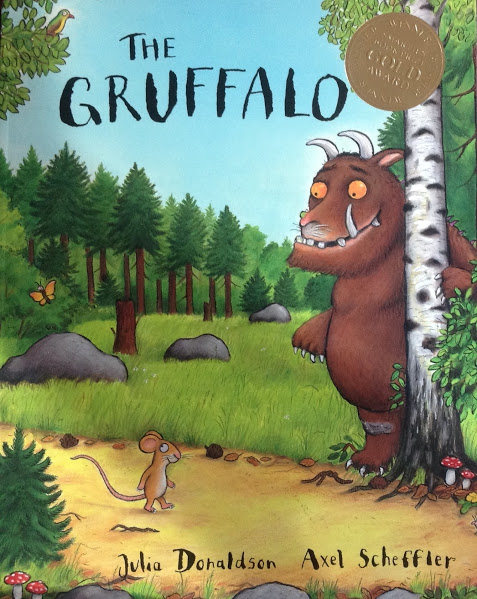
    This week at Carrot Ranch Communications Charli Mills has challenged writers to In 99 words (no more, no less) write a monster story.  Being an early childhood teacher I think immediately of picture books. Two of my favourites are The Gruffalo, written by Julia Donaldson and illustrated by Axel Scheffler, and The Monster at the End of this Book , written by Jon Stone and illustrated by Michael Smollin.

    The Gruffalo

    The Gruffalo is as fearsome as any monster you are likely to meet with its “terrible tusks, and terrible claws, And terrible teeth in his terrible jaws”; “a poisonous wart at the end of his nose” and “purple prickles all over his back”. The quick witted mouse, who imagines the Gruffalo into storybook “reality”, must find a way of ridding himself of the monster’s inherent danger and once again uses his ingenuity to escape.

    I’m not sure if it was Donaldson’s intention, but I think this is a great analogy for the monsters we create for ourselves such as self-doubt, unrealistic expectations, and (you can add your own monster here). Not that I’d be sharing that thought with young children.

    In this video Axel Scheffler explains his concept of the Gruffalo and even hints, a couple of times, that he too may be troubled by that all too common of personal monsters, self-doubt.

    Monster at the end of this book

    Throughout The Monster at the end of this Book Grover, from Sesame Street, pleads with the reader to not turn the page as there is a monster at the end of the book. You could almost say he is immobilised by this fear, or that he tries to immobilise the reader. Of course it is a lot of fun and provides much laughter. When we (reader and Grover) do get to the end of the book, he is rather embarrassed to find that he, “lovable, furry, old Grover” is the Monster. He tries to assure us that we, and not he, were the scared ones.

    Of course Grover wasn’t the monster only at the end of the book. He was always the “lovable, furry” harmless monster. It was his fear that was the real monster. How often are we immobilised by our fear, and how often when we take that jump despite it, do we find our fears to be groundless? Sometimes I think, or is it only me, we are our own worst monsters setting ourselves impossible targets with too-high expectations that lead us only to disappointment if we don’t achieve them.

    But if we view ourselves as works in progress, in the process of working out where we want to be and how to get there, we can find contentment in what we achieve along the way, in where we are and how far we have come, rather than ignoring those milestones and looking only at how much further we must (in our own minds) go.

    It is all too easy to contribute to the development of children’s personal monsters by doing to them what we do to ourselves: setting unrealistic targets, expecting too much, insisting on error-free work, measuring them against external benchmarks … To avoid this, we need to view them also as works in progress and encourage them, through a growth mindset, to reach their own milestones and goals in the time that is right for them.

    Like the mindset of the mouse in The Gruffalo who was able to think on his feet and overcome the obstacles, or that of Grover who realised there was really nothing to be worried about at all.

    We need to be not afraid of the monsters under the bed or in the cupboard, most of which we have created in our imaginations and stuffed there, sometimes with the assistance of others, allowing them to multiply like wire coat hangers until there is no room left for anything good. I have taken the theme of internal monsters for my response to Charli’s challenge.

    Open, close them, open anew

    The picture was clear. Taken with wide open shutters and long exposure, then developed in black and white for extra clarity, the result was undeniable and exactly what would be expected.

    “You’ll never amount to anything.”

    “That’s rubbish.”

    “Pathetic.”

    “You’re always the troublemaker.”

    “Because I said.”

    “Shut up!”

    “Stop asking questions.”

    An existence devoid of value was drilled with reminders hurled unrelentingly from birth. Well-schooled in self-loathing, the lessons were regurgitated without effort or question. The monsters without had created the monster within. How could one escape from what was recognised only as truth?

    And now for something a little lighter:

    The Monster Mash

    Thank you

    Thank you for reading. I appreciate your feedback. Please share your thoughts.

  • Writing poetry with children

    Horses go galloping

    This week at the Carrot Ranch Charli Mills has challenged writers to write about galloping. What keeps replaying in my head is the phrase “The horses go galloping, galloping, galloping” interspersed with the lines from “The Highwayman” by Alfred Noyes, a poem I learned at school.

    The Highwayman came riding, riding, riding,

    The Highwayman came riding, up to the old inn-door.

    tomas_arad_heart

    Learning poems at school was a joy. I love poetry and, in younger years, used to read a lot of it, less currently. Perhaps I should say I loved poetry, but that would unfair, just as it would be unfair to say that I no longer love an old friend that I haven’t seen for years, for at the moment we meet up again the connection is just as strong as ever, the ties never broken.

    Oftentimes when I read Charli’s challenges I know how I will respond immediately. Other times I need to massage the idea until I hit just the right spot. This time the horse has bolted and the paddock is left empty without a horse in sight. All I’m left with are my thoughts of poetry.

    Fortunately, as an early childhood teacher with a love of picture books, recent years haven’t been completely devoid of the poetic form. While not necessarily written in what might be considered “poetic language”, many are written in rhythmic rhyming verse. Others contain verses within the story, such as the refrain in The Gingerbread Man or the song in Love You Forever by Robert Munsch.

    The gingerbread man

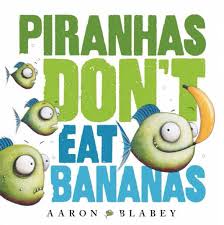
    A title recently added to my list of favourites, through repeated readings and recitations by my grandchildren, is Piranhas Don’t Eat Bananas by Australian author Aaron Blabey. Its rhythm, rhyme and sense of fun is an absolute joy. We laughed together at every reading by G1, and every recitation by G2. It begs to be read and re-read, recited and recited again. Sadly, I got to read it aloud only once, and even then not all the way through! “Hey,” I protested in vain. “I like to read picture books too!

    piranhas don't eat bananas

    Of course there are also many books of poems and rhymes written for children, including Nursery Rhymes, though many of those weren’t written with children in mind. There are also some that fit into a horsey theme such as

    In addition to reading poems and stories to my class I also enjoyed writing poems with them. At this early childhood stage the poems would be more rhythmical verse, sometimes rhyming and sometimes not, with only the hint of an introduction to poetic language.  I have previously written about writing our versions of I Love the Mountains, a traditional camping song.

    I have also written some resources for supporting teachers when Writing Christmas poems with early childhood students. These are available in my Teachers Pay Teachers store and soon to be included in readilearn resources. With easy-to-follow structures, writing these poems give children immediate boosts to their writing confidence.

    I had been thinking for a while that I should write some new versions suited to other times of the year, but hadn’t prioritised it. However, when I read Rowena Dreamer’s post Mr’s Poem: Through My Window on her blog beyondtheflow, another idea sprang to mind. Rowena discussed the writing of a poem “Through my window” that had been set as homework for her son.  I immediately thought of the sound poems that I had taught my students and wondered if the structure could be adapted for sight poems.

    The structure of a sound poem

    This is what I came up with:

    I saw as I looked through my window

    You’ll notice that I haven’t exactly maintained the structure. This is what happens, particularly when young children are writing their versions. It is to be expected and accepted. The purpose of the structure is to support, not restrict.

    I then wondered if it could be used with the other senses and, at the same time, realised that four verses, four senses, would just about reach the target of Charli’s challenge to In 99 words (no more, no less) write a story about galloping. With no other ideas galloping into view, how could I resist giving it a go?

    Disappointingly, I found the structure less accommodating for smell and taste, and had difficulty in conjuring different words to use for each. For example, I wanted to smell and taste the freshness of bread and the sweetness of apples. I had thought touch would be more difficult but have realised that’s not the case. The repetition of the word “felt” for both touch and emotion is perhaps not ideal though.

    I would love to say more here about the necessity for teachers to experiment before setting tasks for children, and of the value of learning from the process rather than the product, but I think I’ve probably said enough in this post.  I will just share what I’ve written which, though responding to Charli’s challenge, doesn’t actually fit the criteria of flash fiction. However, if you’d be kind enough, I’d still love to know what you think.

    Market Day

    I heard

    as I sat curled with a book

    the thundering of hooves

    the snorting of nostrils

    the jangle of stirrups.

    I felt anxious.

    I saw

    as I looked through the window

    the horse at the gate

    the rider on the path

    the bag in his hand.

    I felt excited.

    I smelled

    As I opened the bag

    The freshness of bread

    The sweetness of apples

    The promise of coffee.

    I felt famished.

    I felt

    As I savoured my lunch

    The crunchiness of crusts

    The crispness of apple

    The warming of coffee.

    I felt satisfied.

    Yum! Fresh produce.

    Thank you

    Thank you for reading. I appreciate your feedback. Please share your thoughts.
     

  • Reflections on living a contented life, teaching and school

    In a previous post I introduced you to Pauline King, The Contented Crafter. In comments on my blog, Pauline revealed that she was a teacher so passionate about education that she had attempted to establish an alternative school. I was excited to discover that we have these things in common and I immediately invited her to share some additional thoughts about children, learning, schools and education.

    I am honoured that she has agreed, and delighted to welcome her here. In this post Pauline shares a little of her life journey, and her reflections on teaching and school. In a future post she will share her some of her wisdom about children and parenting.

    Pauline, please tell us a little about yourself. What things are most important to you? What do you hope to achieve through blogging?

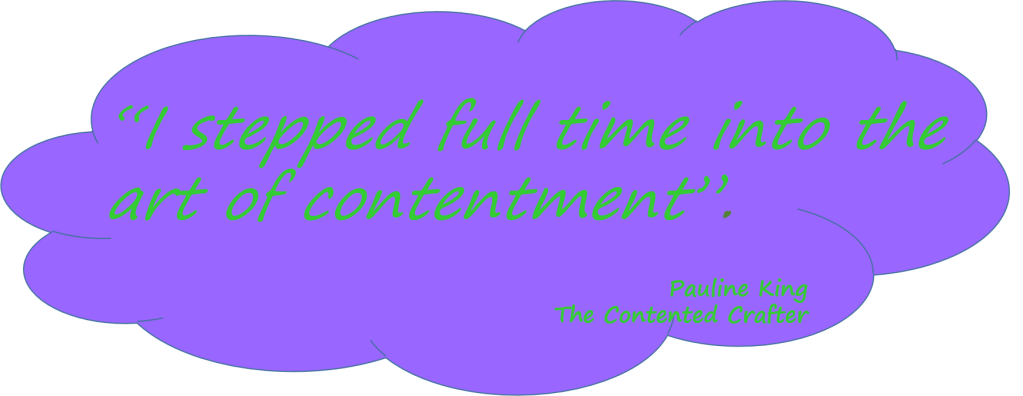
    art of contentment

    I was a Steiner School Teacher for some twenty years, here in NZ and in the UK briefly.  It was a demanding vocation that taught me more than I ever imparted to the students in my care.  I left teaching in 2003, spent a year or so recovering my health and eventually took up life coaching – a kind of a natural segue as I had spent a lot of my time in the school system mentoring young parents and teachers. I retired in 2014 and stepped full time into the art of contentment.  It’s what I think I spent my life looking for and in these later years what I taught to the women who came to me for life guidance. 

    joy of blogging

    In my personal life I have always been a creator – hand work, interior design and decorating, gardening and various crafting and artistic outlets that changed over the years.  I took up blogging almost three years ago simply to keep track of my creative work as I was notorious for making stuff, giving it away and not being able to remember what I made or the processes around it.  I soon started using my blog as an on-line diary, documenting the things that amused or dismayed me along with whatever I was playing around with at the time.  I don’t think I really expected anyone to read my blog and was quite surprised when I got comments and returned visitors and followers.  In a surprisingly short time I discovered a new world that was peopled by like-minded souls and fun people and I kept blogging for the joy found in the community that built up around my little blog.

    I live alone in a tiny house with a Maine Coon called Olando and a Shi-Tzu X named Siddhartha [Siddy for short].

    positivity

    I live simply and contentedly, paying close attention to my own personal development and take responsibility for the events in my life.  I am not religious but view life and the planet from a spiritual outlook.  I study quantum physics, enjoy nature and believe in spreading positivity wherever I can.

    I don’t write about education in my blog – even though it is an area I am passionate [and opinionated] about – I simply don’t want it to impinge into the simple creative life I lead nowadays.

    Pauline, you were a teacher? What was it that attracted you to teaching in the first place?

    teacher

    I always wanted to be a teacher, from a very young age.  School was a safe place for me in a family that was damaged and dysfunctional, so I guess that may have been the genesis.  However, I was not allowed to stay in school and was put to work in a factory at the age of 14 [my mother lied about my age].  When I gained my freedom I set about continuing my education and have kept on learning formally and informally ever since.  I was 33, a wife and mother, before I finally achieved the goal I had as a child.

    What things did you love about teaching?

    art of teaching

    I loved being in the classroom – working with the students and the Steiner curriculum [which is a wise and clever thing].  Later when I side-stepped into too much administration and other non-teaching roles I simply dried up and eventually became ill.  That made me really conscious that it was the art of teaching that I really loved.

    You said that you spent many years attempting to establish an alternative school for your eldest daughter. Why was this important to you? What was lacking in schools available to you? How would your school differ?

    bloom and blossom

    My feeble attempts to start a school were short lived, I did not go as far as you did as there was little support or enthusiasm for my initiative.  Within two years I had discovered Steiner Education and serendipitously fallen head first into that with my two daughters.  Both began to bloom and blossom in ways they never had in the state system they were so briefly in and I soon transferred my interest and passion to that form of education.  I began an informal study under the auspices of a venerable old retired teacher and soon went on to study full time.  I think I was incredibly fortunate for throughout this time I was mentored and supported by several practising teachers, and one wonderful head lecturer who went out of his way to keep pouring his wisdom into my listening ears.

    How wonderful to have the support and encouragement of a community so passionate about children and education. Do you have anything else to add?

    it takes a village

    Only that, from this vantage point I find I have become a person who would like schools scrapped and to see education in the true meaning of the word be given back to parents and the community.   My new mantra is ‘It takes a village to raise a child – and educate one too.’

    I totally agree with your new mantra, Pauline! Thank you for your openness in responding to my questions. I could hear the passion in your words as you answered them. I appreciate the time you took out of your contented creative schedule to share your thoughts with us. I think there are many of us who could do with some contentment mentoring. I look forward to welcoming you back next week to share in your wisdom about children and parenting. I’d also love to know more about the Steiner curriculum. Another conversation …

    Addendum: Since this post was published, in an attempt to add clarity to her statement referring to the scrapping of schools, Pauline has expressed some of her reasons for wishing to see changes to schools and the way children are educated. She has done so in a response to an observation made and query posed by Anne Goodwin which you can read here, and a little more clarification here. I apologise, Pauline, if the inclusion of that statement misrepresented your position and caused you concern. It made perfect sense to me! The differences I see between education and schooling feature regularly in my posts.

    Connect with Pauline on Twitter or on her blog The Contented Crafter where you can also check out her delightful Gift Shop

    Thank you

    Thank you for reading. I appreciate your feedback. Please share your thoughts.

  • Which school? I found one!

    school cropped

    Most parents want to provide what is best for their children. However, they don’t always know what that best is, where it is available or how to get it. This is just as true of schooling as it is of anything else. Fortunately, most children are adequately schooled locally, be it at a state or privately run facility.

    I attended a Catholic school and have taught in both the Catholic and State systems. I see little real difference between what is offered in local private and local public schools as far as philosophy, pedagogy and quality of teaching goes. The differences, as I see them, are more due to the inequities in funding for facilities and resources, the restriction to accessibility by the imposition of fees, and the ability of privately run organisations to decline students as opposed to the state’s willingness to cater for all.

    While I think most schools do an excellent job of schooling, there are aspects I don’t like.

    © Norah Colvin
    © Norah Colvin

    Fortunately, most children survive school and graduate adequately prepared for life in the adult world. But the scarring carried by many, whether visible or hidden, emotional or intellectual, is a cost that should not be accepted.

    In this TED talk Sir Ken Robinson asks “Do Schools Kill Creativity? He explains why he thinks they do and the manner in which they do it. He ends the talk saying,

    “our task is to educate their whole being, so they can face this future. … we may not see this future, but they will. And our job is to help them make something of it. “

    By the time Bec was born I had already decided that I wanted more than schooling for her. I had read voraciously about learning and education. I had observed the magic of learning as my son wondered, questioned, explored and reignited my own curiosity, during his before school years. I saw those same traits inhibited by uninspiring teachers. I have written about this before here and in an article published in a teachers’ magazine when Bec was of school starting age. At that time, it was necessary to make decisions about her ongoing education.

    To school or not to school

    www.openclipart.org
    http://www.openclipart.org

    I had already explored local (and not-so local) alternatives. I attended information sessions, read their publications (no Google back then), and visited schools to observe their practices and speak with teachers, children and parents. Disappointingly I found none that met all of my criteria.

    Some “schools” provided little stimulus or input to extend or challenge children’s thinking. Some were very structured and without flexibility in their approach. Some that claimed to be alternative appeared to be not so with uniforms and strict rules and timetables. Some that claimed to be mainstream were more child-focused with an organic curriculum matched to children’s interests, but lacked other things I sought.

    When the pluses and minuses of each were considered, there wasn’t one with a compelling scoresheet. There was nothing for it but to found my own, a possibility I had been contemplating for some time and a “dream” shared by many teachers. The Centre of Learning Opportunities was born. These are some of the original documents drawn up by the team back then.

    Vision

    Symbol

    outside

    COLO brochure inside

    While working to establish this alternative to school, I began an MPhil research project “Educational Diversity: Why school? What school?” which, as well as exploring educational alternatives, was to record the first year of an (my) alternative school. As part of the project I conducted a survey of local alternative schools with the aim of recording the diversity of approaches available in order to demonstrate that there is more than one way to obtain a quality education.

    Although the degree went down the same dead end path as the school, I was able to (self) publish and distribute the results of my research to participating schools in a document titled “Diversity in Schooling: Discovering educational alternatives in South-East Queensland.” (Surprise, surprise, I have just discovered it in a Google search. How weird is that!)

    Diversity

    I was reminded of my research and this document by a recent discussion with Pauline King, The Contented Crafter in response to my post Life — A “choose your own” adventure. When I alluded to the wisdom of young children and “our” efforts to obliterate it, Pauline agreed and suggested that she could do a post-long comment on the topic.  I jumped at the chance and immediately invited her to do so. Pauline again agreed but suggested I refine a set of questions as she could fill a book with her ideas. I”m working on it.

    Responding to The Industrious Child Pauline wrote,

    “Teachers need to be SO flexible in their ability to see their world, their work, their class as a whole and their individual students – it is never a one step process and different expectations and challenges can be laid down for different abilities. Almost every child will shine somewhere within the curriculum and many struggle somewhere else. After all, we all have our different talents and abilities. Schools are structured to meet the needs of a certain academic ability and those who fall above or below that parameter are, in my opinion, so often mis-educated.”

    It is obvious that Pauline, Ken Robinson, and I, along with many others, are part of the same revolution.

    In another comment on my post I found it first Pauline shared that she had spent many years trying to establish a school of her own but had found “an already working alternative system and never regretted it.”

    I think I have questions enough for Pauline to fill a book’s worth of posts and look forward to sharing some of these in the future. If you have questions of your own, please pop them into a comment and we’ll see what we can do.

    Thank you

    Thank you for reading. I appreciate your feedback. Please share your thoughts.

  • @aussietony’s 20 gift suggestions for #life-long learning

    Wrapped in living

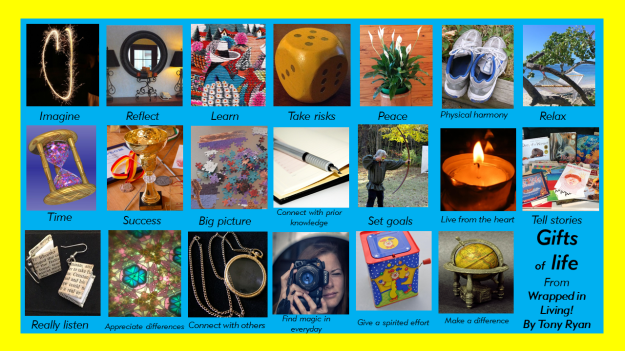
    Today I share with you a book by a passionate educator and life-long learner, Tony Ryan. I have shared material by Tony before. Here I wrote about his book The Ripple Effect, here I wrote about his Thinkers Keys, and about his seminar on Future-Proofing Kids here. In this post I nominated him as an educator I find inspiring.

    The book, Wrapped in Living! 20 Gifts for Creating Passion in Your Life! is now in its twentieth year but has lost no relevance with the passing years. Its gifts are perennial and I find myself dipping back into it for reminders from time to time. With one of the busiest gift-giving times just around the corner you may consider the book as a gift for yourself or for someone else, or perhaps taking one or some of the ideas to make a gift of wishes.

    Wrapped in Living is described as

    A highly innovative approach to effective living and learning. Twenty special metaphorical gifts for re-discovering passion in life. Each of the gifts represents a vital principle for creating enthusiasm in life-long learning experiences. Full of entertaining stories and quotes.”

    The gifts include such things as A Set of Sparklers to “unleash your imagination”; A Tapestry to “Become a life-long learner”; A Potplant to “create a peaceful environment”; A Hammock to “learn to relax; and An Hourglass to “take your time”. There are gifts for setting goals, for telling stories, for listening, for finding the magic in the everyday, and for knowing that you can make a difference, and more.

    rg 1024, gift https://openclipart.org/detail/31159/gift
    rg 1024, gift https://openclipart.org/detail/31159/gift

    Tony describes each metaphorical gift, explains why it is important, and suggests how it might inspire you, how you might implement the gift in your daily life. He includes stories and quotes that add meaning and inspiration. For example I opened the book to a page at random and found a story by Anthony De Mello about a man sitting in a marketplace strumming one note on his guitar. A crowd gathered. Soon he was asked why he didn’t vary his playing like other musicians do. His response: Those fools. They’re searching for the right note. I’ve already found it.”

    Tony’s message from this:

    “You do not always have to search elsewhere for the information that you require. It already may be within you.”

    tapestry

    Tony’s third gift, a tapestry, “offers a perspective from start to finish, and reminds you that you must Become A Life-Long Learner.

    He says,

    “Many famous tapestries display a long–term historical perspective on different cultures. They allow you to view events from beginning to end. You also should look at yourself in the same way. Think of life as a learning journey from start to finish. You are born to learn, and you should continue to learn until the day you die.”

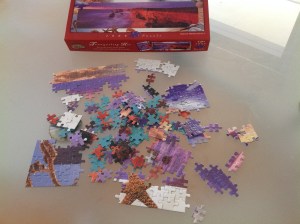
    jigsaw

    Tony’s tenth gift is a jigsaw to “encourage you to Look For The Big Picture”.

    He says,

    “When you play with a jigsaw, you often use two strategies to finish the puzzle. The first is to assemble the parts. The second is to view the cover of the jigsaw packet. Your life needs both of these approaches, namely, to place the parts together, and also to look for the big picture.”

    globe

    The final gift in Tony’s book is a very important one today when the problems around the world can seem insurmountable and overwhelming. It reminds us to look at what we can change rather than what we can’t; to find and focus on the positives, rather than seek out the negatives and allow them to destroy us; to focus on those things we have the power to influence.

    It is a globe to “help you to Know That You Can Make A Difference”.

    Tony says,

    “When you look at your globe, you can see more easily that this beautiful planet is a single entity, rather than an infinite collection of people and problems. Suddenly the world does not appear quite so overwhelming. This can help you to believe that you actually can make a difference with your daily actions. In fact, because everything on this ONE planet is connected in mysterious and special ways, your actions can ripple out and benefit others around the world every day.”

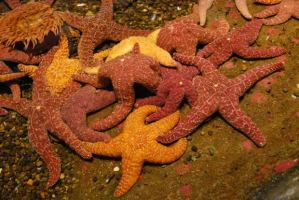
    starfish

    He includes a story that takes place on a beach dotted with thousands of starfish which had been left stranded by the receding tide. A man was picking up the starfish one at a time and throwing them back into the sea. A passer-by questioned what he was doing and remarked that there were so many starfish he couldn’t possibly make a difference. As the man picked up one starfish and threw it into the water he replied,

    “Made a difference to that one!”

    As an individual we sometimes feel that we can’t make much difference to the world. But looking at it another way, we realise we can make a world of difference to another. How will you make a difference today? Tony has many suggestions in this book and other publications including The Ripple Effect.

    Tony Ryan's 20 gifts

    Which of these gifts have you received? Which would you like to receive? Which would you gift to another?

    Thank you

    Thank you for reading. I appreciate your feedback. Please share your thoughts.

  • Between the lines

    Morguefile http://mrg.bz/omEd2M
    Morguefile http://mrg.bz/omEd2M

    For a few months I had been aware of the new colouring books for adults craze that is sweeping the world but had chosen to ignore it. That is, until I read a blog post by Alana Munro stating that “According to Psychologists, Colouring is the Best Alternative to Meditation” and I thought I’d add my two cents worth.

    I had already been urged by some writing, publishing and marketing entrepreneurs to quickly create a colouring book and cash in on this new lucrative market. Apparently it’s easy to create a book using royalty free creative images found online and publish the books on Amazon where they have their own genre.  People are buying them by the dozens. The books are also displayed prominently in bookstores, and promoted on social media.  What is there to lose?

    As a teacher and parent I have never been in favour of colouring books for children. I know some argue that colouring does have a (small) place. Children may develop fine motor skills when colouring between the lines, and colouring is sometimes integrated with other things such as graphing, mapping, and colour-by-number activities.

    © Norah Colvin
    © Norah Colvin

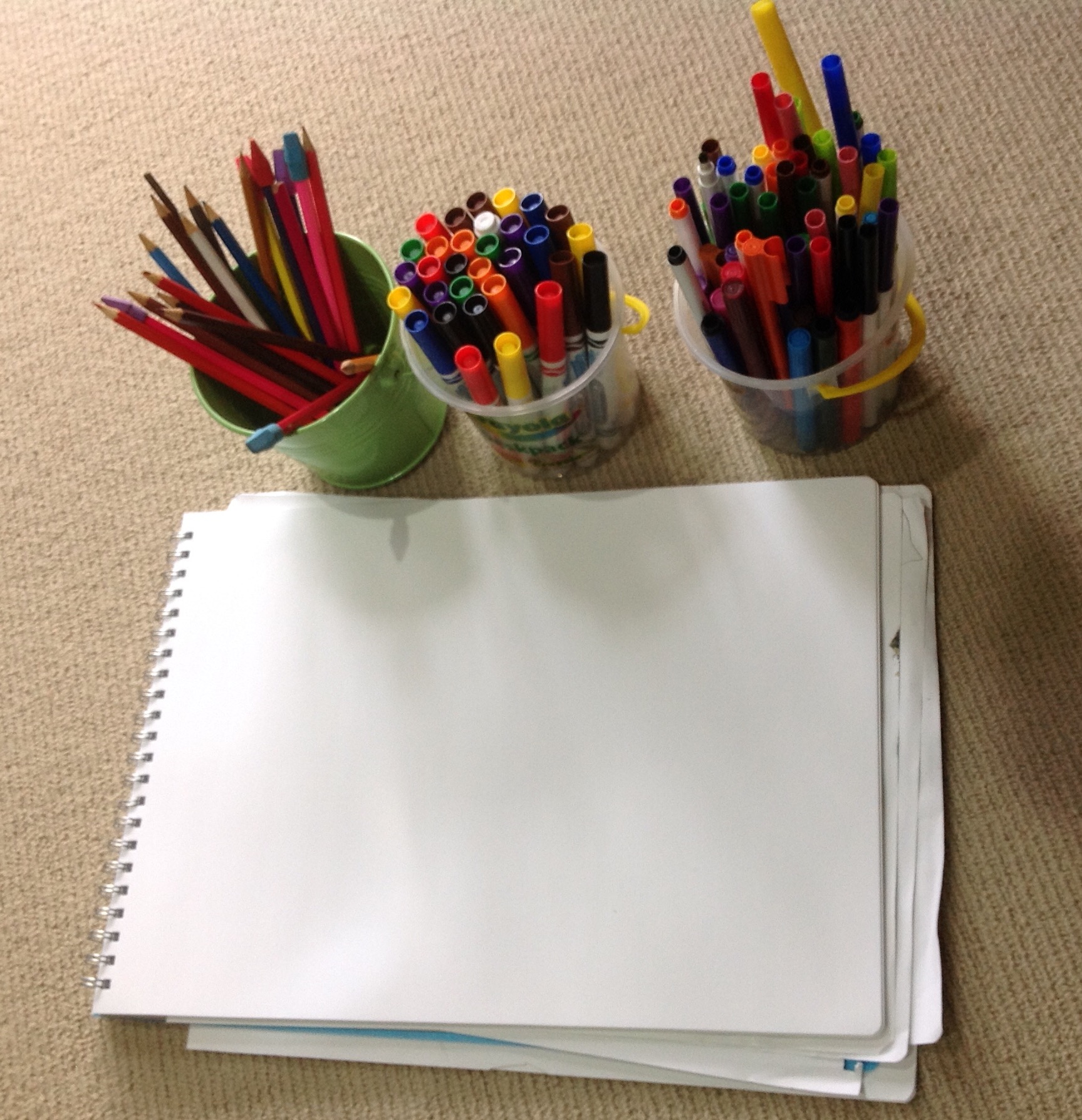
    But I have rarely given a colouring book as a gift. I would rather give a blank art book and a variety of pencils and pens for children to create images from their own imaginings. Their fine motor skills and their creativity will develop perfectly well that way and it may help to avoid the feelings of inadequacy that can develop from spending too much time colouring the works of others.

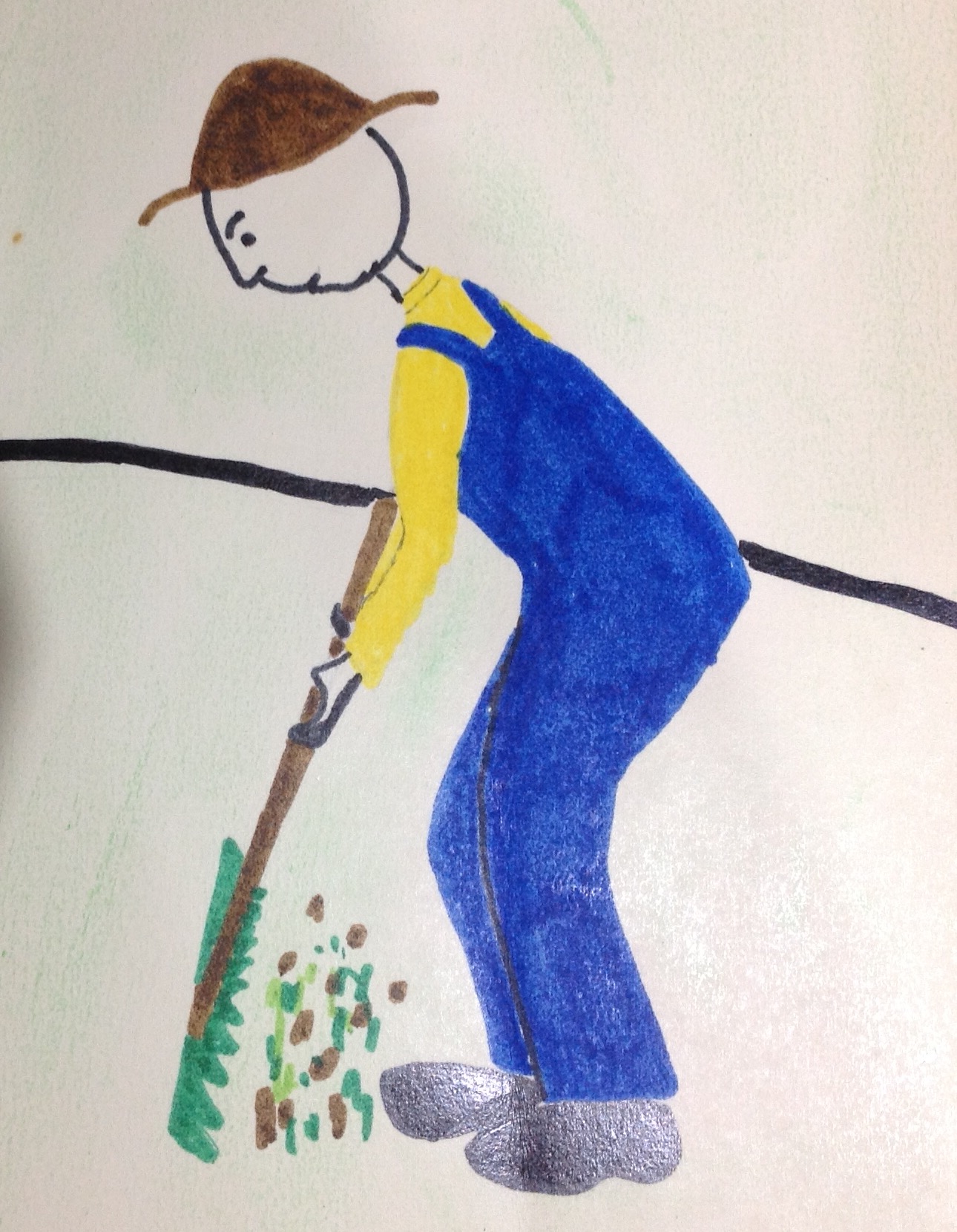
    That’s not to say that learning some of the artist’s techniques is a bad thing. Twenty-five years ago I did a short “Drawing on the Right Side of Your Brain” course, based on the work of Betty Edwards. I didn’t consider myself an artist, and still don’t, preferring to write than to draw. But being interested in learning and anything to do with the brain, I decided to see what I could do. I was amazed at the results. Unfortunately, I don’t have many pre-course drawings to share with you, just this one of a gardener, but please take my word for it that I showed little promise.

    © Norah Colvin
    © Norah Colvin

    In the course I learned the importance of drawing what the eye sees, not what the mind thinks it sees; for example we might think of the roundness of the rim of a cup, but what we actually see is an ellipse. The importance of seeing accurately is true whether drawing an actual or imagined object or scene.

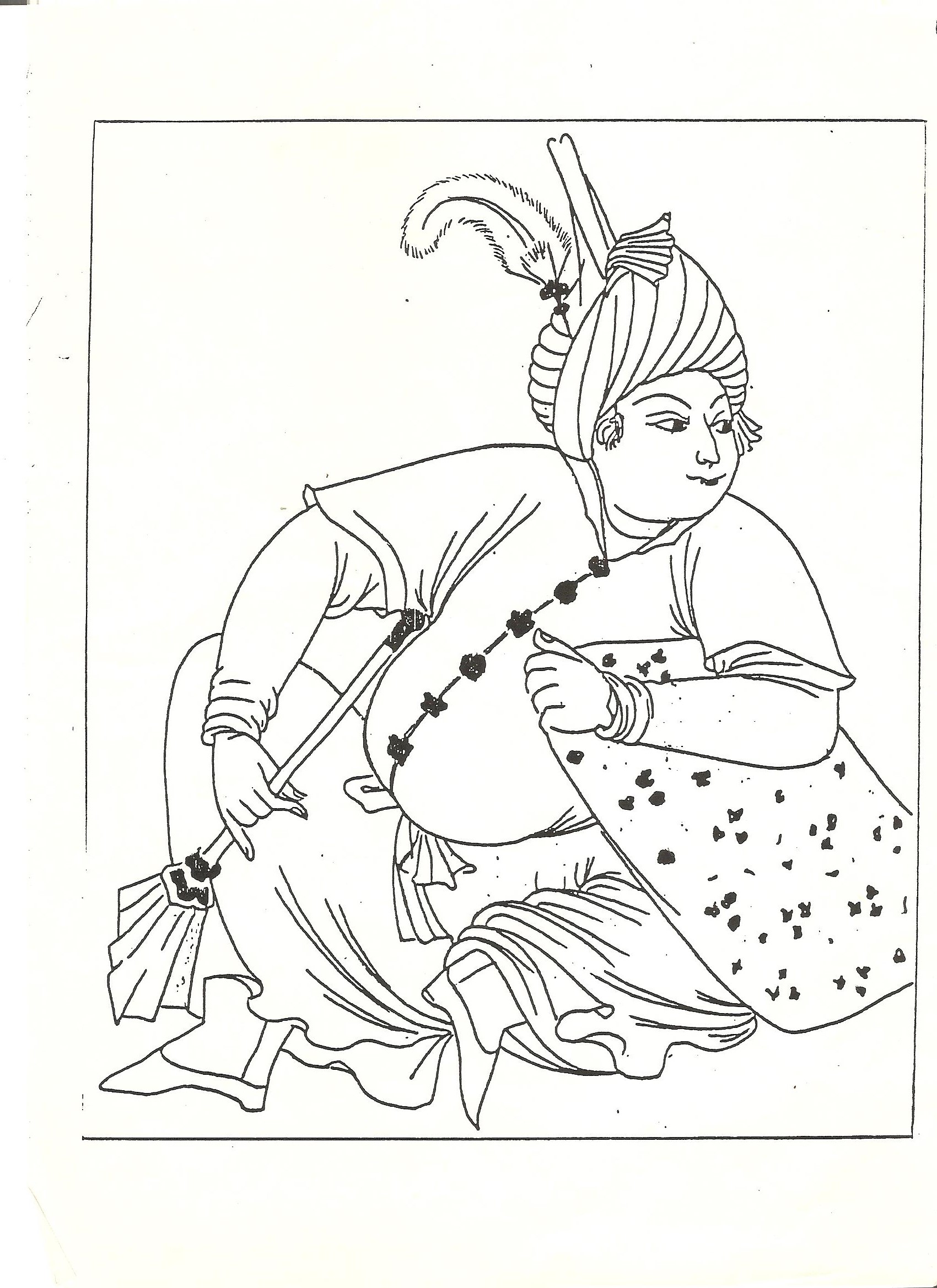
    In the first lesson we were given this picture to copy.

    original

    I admit that I didn’t have high expectations as I began. We were told to turn the picture upside down and to start copying from one corner. In doing this we focussed only on each of the lines, drawing just what we could see. We were not to turn the picture the right way up until we had finished. There was to be no interference from what we thought we were drawing to what we were actually drawing. Everyone in the class was amazed with their results.

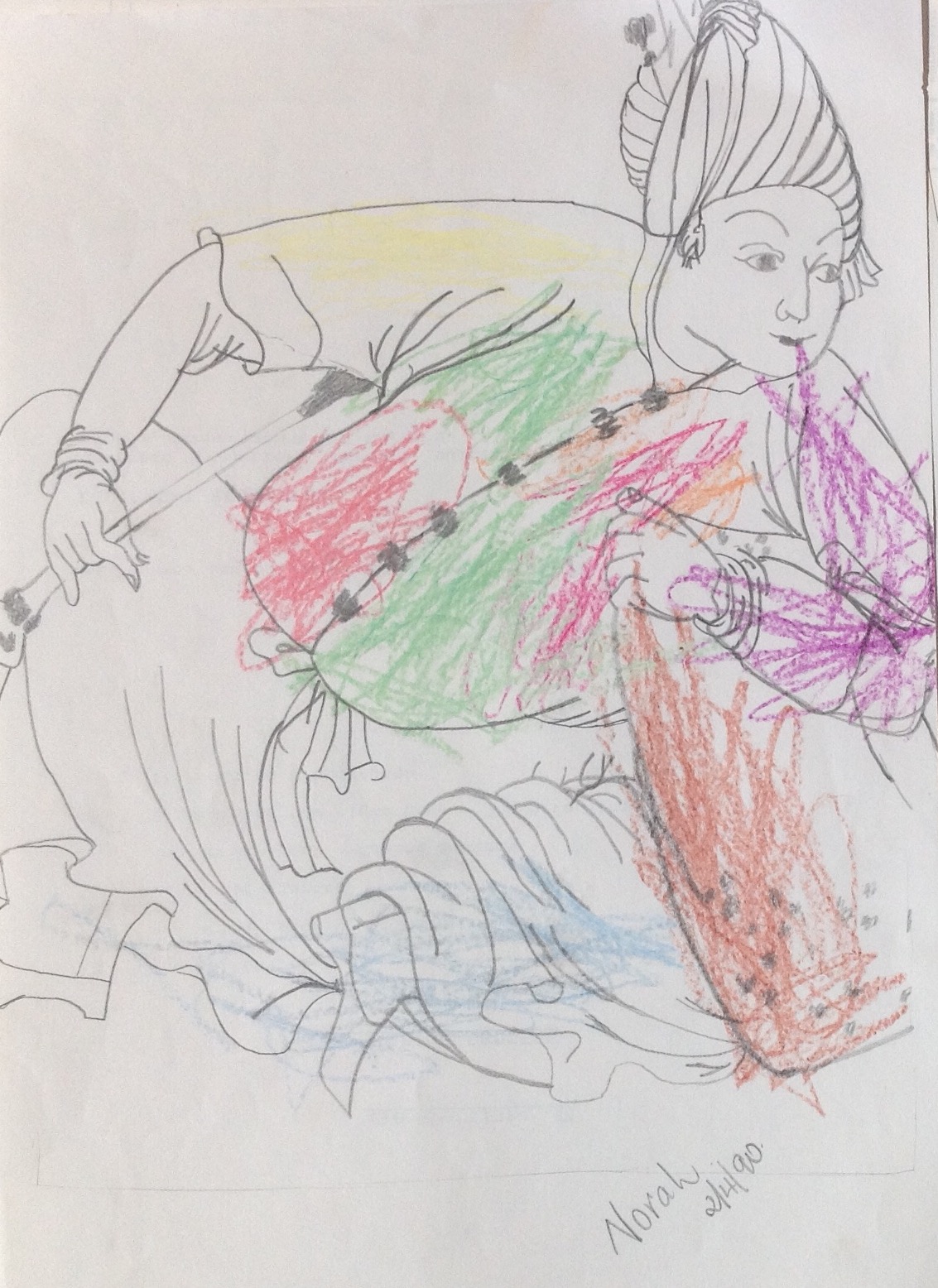
    This is mine:

    © Norah Colvin
    © Norah Colvin

    And thank you to Bec, who was three at the time, for deciding it needed some colour!

    For a short while I engaged in a flurry of drawing activities, but soon abandoned them to other more pressing or preferred activities. I had proved to myself it was possible. That was sufficient. Now someone just needs to come with a singing on the right side of the brain course for me!

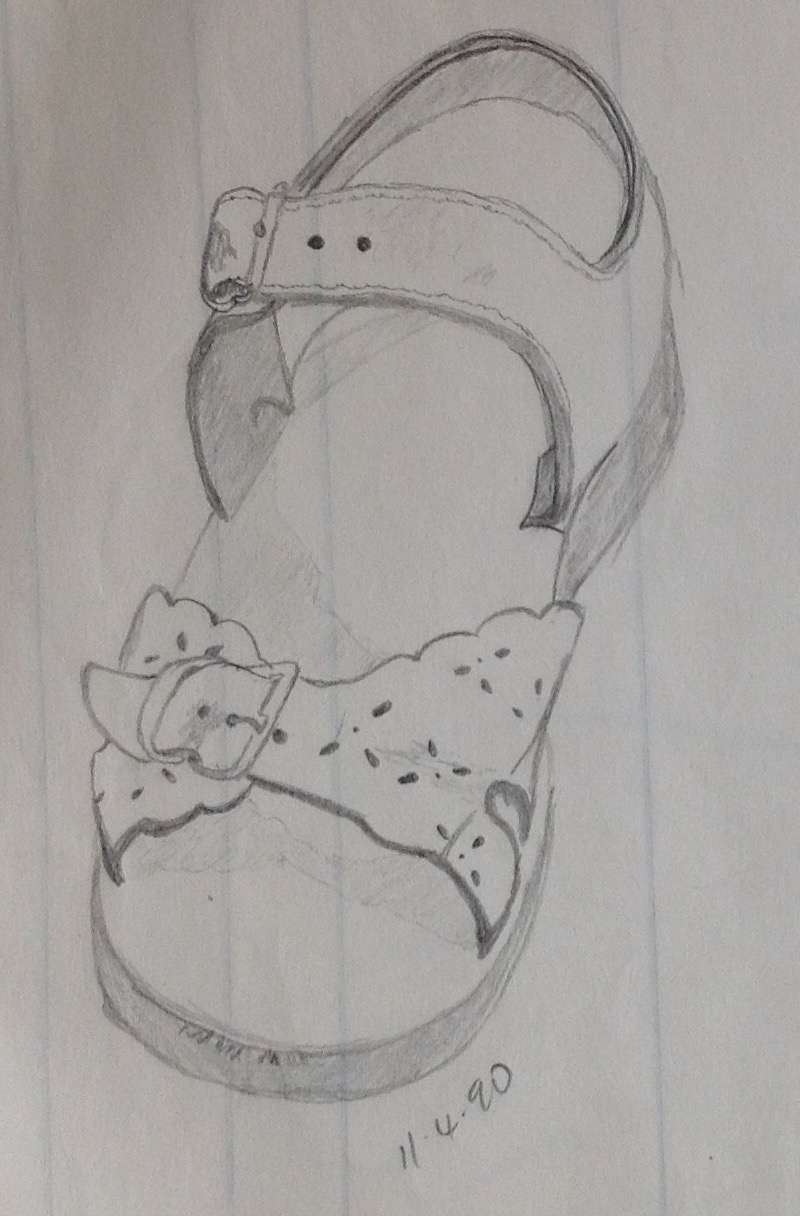
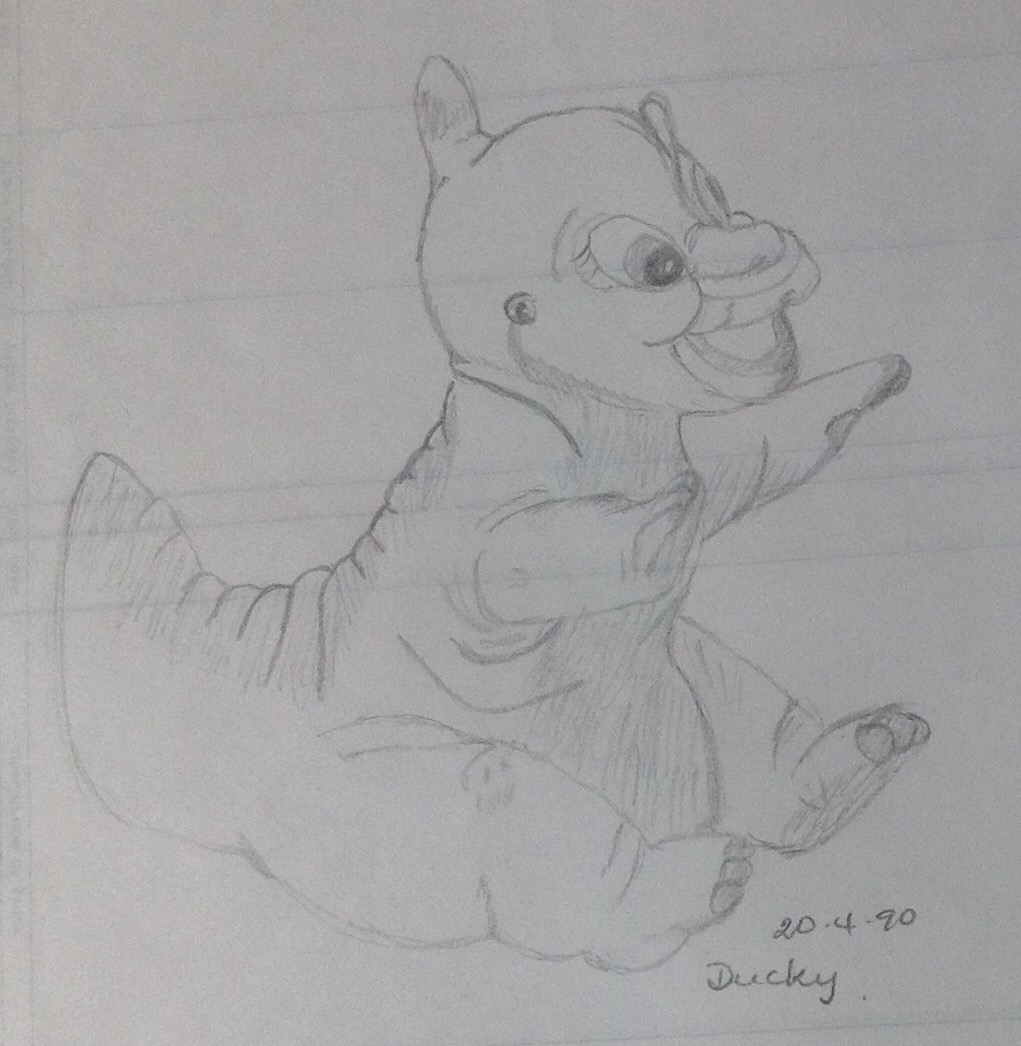
    These are some of the drawings I did at that time, each from observation of a real, not imagined object:

    © Norah Colvin
    © Norah Colvin
    © Norah Colvin
    © Norah Colvin
    © Norah Colvin
    © Norah Colvin
    © Norah Colvin
    © Norah Colvin

    In my pre-service teaching days I was cautioned to not use simple drawings on the board, for example a stick person or a smiley face sun, for the children to copy as it may limit their drawing ability. It was always a concern of mine. I didn’t want to limit anyone’s ability!

    After doing the drawing course I bought a copy of Drawing on the Right Side of the Brain for Children and used its recommendations in art lessons. In his article about How to Teach Drawing to Children Marvin Bartel warns against showing children how to draw and emphasises the need for close observation, and practice, practice, practice. I agree with his advice to not add one’s own changes or lines to a child’s drawing.

    In recent years I came across some fabulous picture books by Mo Willems.

    © Norah Colvin
    © Norah Colvin

    At first I didn’t find the books appealing with their simple black outlined drawings and minimal use of colour. It was only after a colleague’s repeated exhortations that I gave in and reluctantly read one. Halfway into the book The Pigeon Finds a Hot Dog!” I was a fan! With what appears to be a few simple lines, Mo creates a great variety of expressions and moods, telling stories that children can identify with and that have them (and their teachers) holding their sides with laughter.

    In the app Don’t Let the Pigeon Run This App Mo encourages children to add their voices, making the story their own. He also includes videos of how to draw the characters. The app is as much fun as the books. There are many videos by others on youtube sharing how to draw Mo’s characters, but none is better than Mo himself.

    Here is a PDF of his instructions for drawing the pigeon:

    Mo Williams pigeon_draw01

    and a video of Mo talking about how he creates his characters. Sorry, Mo, I underestimated you at first.

    So while I accept that colouring books may have benefits for mental health for adults who choose that activity and understand that colouring can induce a meditative state and be very relaxing, I think a blank piece of paper and a variety of pencils and pens would have the same effect and, who knows, you might unleash the artist within. I certainly don’t consider their use in the best interests of children’s development and creativity.

    What do you think of colouring books for children and adults? Is colouring a recreational pursuit for you? Have you bought your first colouring book for grown-ups yet?

    Thank you

    Thank you for reading. I appreciate your feedback. Please share your thoughts.


  • Five Photos Five Stories – Day two

    Back to Day one and introduction

    What am I?

    One may wonder why I have responded to Geoff Le Pard‘s challenge almost immediately when there are other invitations that have lain opened but unanswered for longer than I like to admit. For example, some months ago Anne Goodwin tagged me in a writing process blog hop. She shared the what, how and why of her writing process and invited me to share mine. She applied no pressure or time constraints and neither nudged me to comply nor chastised me for not having done so.  Not quite as long ago Sherri Matthews tagged me in a work space blog hop. She shared beautiful images and descriptions of her delightful Summerhouse writing space and invited me to share mine. Sarah Brentyn then shared some questions for writers that I hinted I might answer, but haven’t yet.

    Why the procrastination?

    1. I’m still figuring out what kind of writer I am and how to describe my process.
    2. My writing space isn’t all that exciting. It’s a just a laptop sitting on a desktop that is cluttered with books and other paraphernalia waiting to be organised or dealt with, and surrounded by shelves filled with more of the same; not a bad analogy to my writing process perhaps.
    3. I’ve been working in other quadrants, dealing with ‘easier’ stuff as it arises.

    As with Geoff’s challenge, responses to these blog hops are not compulsory and there is no set time-frame but I do wish to, and do intend to, answer them. Thank you Anne, Sherri and Sarah for your patience. I will get there. Eventually.

    My writing space 14 May 2015
    My writing space 14 May 2015

    My procrastination is in part due to the way I view myself as a writer.

    I find it difficult to define the “type” of writer I am. That I am a writer is true. But what kind? I wonder if I am a writer without a label, without a box?

    Perhaps if you can help me answer this I’ll be more confident about joining in conversations about writing.

    I am not a novelist, not a poet, not a biographer or an auto-biographer, not a picture book writer . . . I am an educational writer, incorporating something of each genre.

    I remember doing a psychometric test at some past time. The results suggested that a desire to be everything to everybody would be my undoing. Perhaps that is also an issue with my writing?

    Sometimes when asked by other writers what type of writing I do, for want of another label I refer to myself as an educational writer. I immediately feel a shrinking away as if educational writing isn’t ‘real’ writing and I’m perhaps not a “real” writer.

    “Oh educational writing,” they judge, “that’s so prescriptive. It’s not creative.”

    Sure I have done my share of prescriptive writing. The “writing” for which I have been employed for the past three years is definitely prescriptive – more cross the “t”s and dot the “i”s without a modicum of creativity; and as my list of publications shows, I have written workbooks for other publishers, “prostituting” myself one kind-hearted friend suggested. But there are worse ways to earn a living, right?

    I don’t consider my self-initiated educational writing as prescriptive. Most of what I write is designed to encourage thinking, problem solving, creativity, interest in a variety of topics, or develop literacy and numeracy skills, but definitely not in a structured, skills-oriented, prescriptive approach. I write fiction, non-fiction and poetry; and open ended materials that encourage children to question. I love to add a touch of humour where possible and mostly aim for engaging materials that motivate thinking and learning.

    My current writing schedule involves writing content for this blog and for an in-progress online store of early childhood educational resources.

    So, what sort of writer am I?

    There is one I know I am not. I am not a songwriter.

    I nominate Anne Goodwin, Sherri Matthews and Sarah Brentyn to take up this Five Photos Five Stories challenge if and when they so choose. But they need to be aware that I require no more of them than they have expected of me!

    The “rules” of the Five Photos, Five Stories Challenge are:

    1) Post a photo each day for five consecutive days.
    2) Attach a story to the photo. It can be fiction, non-fiction, poetry, or a short paragraph. It’s entirely up to the individual.
    3) Nominate another blogger to carry on the challenge. Your nominee is free to accept or decline the invitation. This is fun, not a command performance!

    Thank you

    Thank you for reading. I appreciate your feedback. Please share your thoughts about any aspect of this post.

  • Playing with possibilities

    127

    Creating an environment which nurtures children’s learning and development is as important as creating an environment that nourishes and encourages the growth of plants in a garden. The link between the two was first recognised by Froebel in the early 19th century when he coined the term “kindergarten” which translates to “garden for children” (kinder meaning child and garten meaning garden), and created the first educational toys.

    Froebel “devoted his life to educating children and developing methods to maximize human potential”. He was the first to recognise the importance of a child’s early years (birth to three) and considered creativity to be something in all of us.

    Froebel’s kindergartens were the first “formal” education for young children and his work greatly influenced that of other educators such as Maria Montessori and Rudolf Steiner. His beliefs, for example that children have both unique needs and capabilities are still influential today. He believed in the importance of play and some of his toys were favourites of people such as Buckminster Fuller and Albert Einstein.

    I have touched on the topics of play, creativity and children’s uniqueness in previous posts. A respectful, encouraging, nurturing and stimulating environment underpins all that I value in education; as does a belief in the power of play to develop understandings of self, of others and relationships, of the world and how things work, and to inspire thoughts of what could be, to imagine possibilities never before imagined.

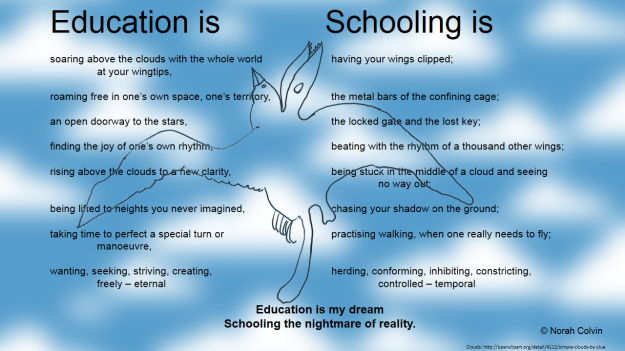
    The poem Education is expresses my beliefs about education and has informed my decision making every step of the way.

    In documents prepared for introducing myself to other educators or potential employers I explained it this way:

    Statement of values:

    I value individuality over group consensus

    I value creativity over conformity

    I value self-discipline over imposed order

    I value ingenuity over “one right way”

    I value choice over restriction

    I value questioning over silence

    I value independence over dependence

    I value self-confidence over submission

    I respect children as people in and with their own rights. I provide an environment which is rich, stimulating, open and caring, and in which the characteristics I value can flourish.

    At the time of writing it I believed it to be a true reflection of my values and the environment I provided in my “Create-A-Way” sessions, and would provide in the independent/alternative school I was working towards establishing.

    The values of the “school” I was setting up were stated this way:

    Colo Values

    Just as it is important for gardeners to learn from the wisdom collected by other gardeners, it is important for teachers to learn from the wisdom collected by other educators.

    56


    Without a set of guiding principles it is easy to be blown off-course by the winds prevailing at the time. While I acknowledge that I may have fallen far short of the values espoused, that they guided my direction, decisions and choices could not be questioned. The current climate makes it difficult, but I am yet to read of a time that could be considered a golden age of education.

    36

    This week at the Carrot Ranch Charli Mills is talking about roses; roses that grow in gardens and roses as symbols of life’s pleasures and joys. She challenged writers to In 99 words (no more, no less) write a story that includes a rose.

    Because my blog has an educational focus, I always like to give Charli’s prompt an educational twist. Over recent months I have enjoyed the additional challenge of finding a way of applying the prompt to the life of Marnie, a character whose story I have been developing.

    Marnie is from a dysfunctional family and suffers many disadvantages. Fortunately she has found an ally in an art teacher who helps her develop self-respect and hope for a better future. A few weeks ago (in response to a different prompt) we learned that she had lived under a different name after leaving home. Could it perhaps be Rose, a name inspired by this interaction with her adored teacher?

    99

    Still life

    Marnie observed the roses Miss R. had arranged for class, carefully assessing the colours and studying the lines while sketching them on the canvas, striving to match their perfection. Oblivious to all but Miss R. and the roses, for one hour nothing else mattered.

    As other students streamed out Marnie hung back to chat with Miss R.

    Miss R. handed her a rose from the vase saying, “You are that rose. You may be surrounded by thorns, but the beauty of the rose is inside you. Remember that always. A rose by any other name would smell as sweet.

    Thank you

    Thank you for reading. I appreciate your feedback. Please share your thoughts about any aspect of this post or flash fiction.

  • Who wouldn’t be excited with high test scores?

    Regular readers of my blog are aware of my attitude to didactic top-down, content and assessment driven methods of schooling students to become machines regurgitating meaningless facts on command. A bit of push and shove it in and belch it out.  For those of you who weren’t aware – now you are!

    I probably should apologise for my indecorous description as I’m usually a little more temperate in the way I express my views, but I won’t as that is how I am feeling about it at the moment. The authorities who have the power to make the changes necessary are so caught up in their own murky visions that they fail to see either effects or solutions. Every time I read another report of test scores or hear of another child damaged by a faulty system my frustration grows.  It becomes one of those hysteria blossoming days.

    bag

    A few moments ago I read a post titled “Vietnam Wallops US on PISA. Vietnamese educators belittle value of PISA” on Diane Ravitch’s blog. Ravitch is an education historian.

    As the title suggests, Vietnamese fifteen year old students did better than their US, UK and most other EU counterparts in the 2012 PISA tests, ranking 12th out of 76. What I found interesting about the article was not the results but the attitude of Vietnam’s Deputy Minister of Education and Training. His view that the tests don’t reflect students’ overall competence, reminded me of a letter, shared in my previous post, written by teachers to students sitting the national tests last week in Australia. (PISA are international tests).

    In the article referred to by Ravitch, Dr Giap Van Duong was reported as making reference to UNESCO’s four pillars of learning: Learning to know, Learning to do, Learning to be and Learning to live together. His opined that PISA addresses only the first pillar, and in only a limited way. He said that while Vietnamese students did well on the tests, “many … students fail to land a job after graduation. (and that when) they study overseas, many have difficulties in meeting the requirements of advanced education systems like team-work, problem solving and creativity”. Perhaps they are not “out of basement ready” as described by Yong Zhao.

    Duong said that the reason Vietnamese students do well on the tests is because the “The whole system operates to serve only one purpose: exams.”

    Duong’s admission that Vietnamese students lack the ability to work in teams, to problem solve and to think creatively reiterates the fears of many teachers who are  ruled by expectations of high test results and provided little opportunity to inspire learning, which surely remains the real (if neglected) purpose of education. Counterbalancing one’s philosophy with an employer’s expectations sometimes seems like being caught between a rock and a hard place.

    This week at the Carrot Ranch Charli Mills is talking about rocks and hard places. But Charli knows that good can often spring from those seemingly hard places through making connections. She has challenged writers to In 99 words (no more, no less) write a story that shows a hard place and a connection.

    It is connections that are most important in my two main roles in life: parent and teacher. Neither is easy and neither will result in much good without making connections. I often worry about things I have said and the affect they may have had on others. To be truthful, occasionally it even keeps me awake at night. While I would rather think of my words and actions creating a positive ripple, there is no guarantee that, even when delivered with my best intentions, they won’t do harm.

    Trevor Pilgrim shared a quote which puts it this way:

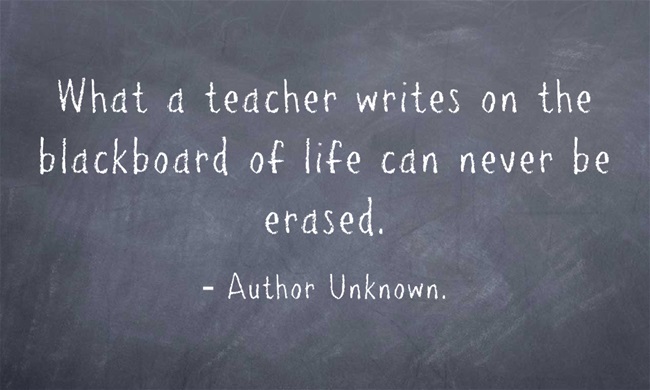
    What-a-teacher-writes-on

    In his article Pilgrim says,

    “teachers have (the power) to develop their students and shape their future lives.  The power to turn them on or off academically, stimulate or dampen their minds and heighten or destroy their engagement and intellectual curiosity.”

    Scary stuff!

    At about the same time I read an article that said that the influence of teachers is not as great as one might think; that socio-economic status, amongst other things, is more important. While I am happy with the thought of having a positive effect, I definitely do not wish to ruin anyone’s life so am happy to know that my influence is not be the most important to the lives of my students.
    https://openclipart.org/image/800px/svg_to_png/59389/happy_sun_gm.png
    https://openclipart.org/image/800px/svg_to_png/59389/happy_sun_gm.png

    For this challenge of Charli’s I am back thinking about Marnie’s art teacher and the hard place she found herself in when she saw the brown muddy mess that Marnie seemed to have made of her paints. That she must respond is a given; but how? Whatever she says will probably have a lasting impact so she must ensure that her response is appropriate. While her initial instinct is to express disappointment, she maintains her professional composure and delays commenting until she has thought it through.
    Here is my response:

    Brown.

    She glanced at the child, usually so eager to please, and knew this was no ordinary day.

    Downcast and avoiding eye contact, the child trembled. Her instinct was to reach out with comfort to soothe the hurt; but stopped. Any touch could end her career. What to say? Brown earth/brown rocks? would ignore and trivialise the pain. Any talk now would be insensitive with other ears listening. Any word could unravel the relationship built up over time. Nothing would harm more than doing nothing. Her steps moved her body away but her heart and mind stayed; feeling, thinking.

     Thank you

    Thank you for reading. I appreciate your feedback. Please share your thoughts about any aspect of this post or flash fiction