Next Friday 15 September is International Dot Day, a day for celebrating and promoting creativity, courage and collaboration.
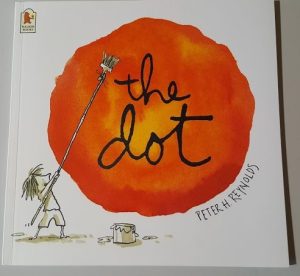
Celebration of the day was initiated in 2009 with teacher Terry Shay introducing his class to the picture book The Dot by Peter H. Reynolds.
The story is of Vashti and a teacher who encouraged her to make a mark and have a go. Lacking self-belief and courage, Vashti was reluctant to participate in art class. When the teacher framed and hung her signed painting of a tiny dot, Vashti was determined to do better. She painted all kinds of dots that wowed the people at the school art fair. What happened when one little boy admitted to Vashti that he wished he could draw will inspire children everywhere to be brave, have a go, and be creative.
For a wealth of celebratory suggestions, visit the International Dot Day Get Started page and sign up to download a free Educator’s Handbook, which includes a lovely certificate of participation which can be printed and personalised for each child.
I have included a link to the page in the new resource Getting creative with dots in which I suggest additional ideas to add to the celebration.
The suggestions, of which examples are shown below, can be used in conjunction with International Dot Day, or any day when you feel like going a little dotty.
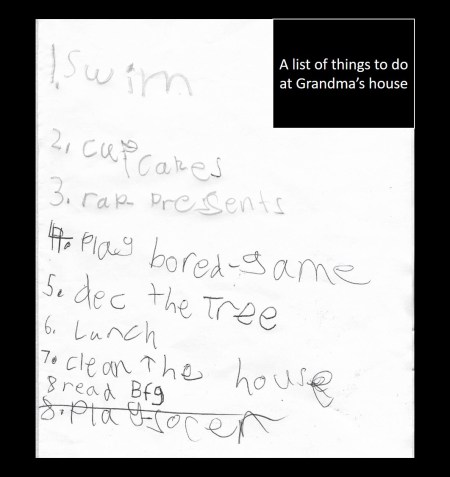
One thing I love about working with beginning literacy learners is their use of invented spellings. To avoid inhibiting the flow of ideas, children are encouraged to “have a go”. This invention involves an interaction of
knowledge of letter sound correspondence
recall of familiar words, such as basic sight words
memory of words previously encountered including words of interest or meaning to them,
in conjunction with available resources such as classroom word walls or lists.
The purpose is to encourage them to write, to express their ideas. There’s plenty of time for attention to the finer details later.
We early childhood teachers become experts at reading children’s writing. Like all effective readers, we use a combination of letter-sound knowledge, syntax, and meaning. If we are ever unable to decode a message, the writer is always happy to read the work to us, and may never realise the request stemmed from our reading disability.
As children’s knowledge of written language develops, their spellings more closely approximate the conventional. The comparison of writing samples taken over time informs teachers of the child’s progress. Consonants, especially beginning consonants, usually appear first; then a combination of first and last consonants. Vowels may be the last to be included.
It is not surprising that vowels are the last to appear. They are more difficult to hear and distinguish, and not only may they be represented in more than one way (think of the long ī sound from my recent post A piece of pie), their pronunciation may (does) vary from locale to locale. Not only that, they are less important to reading than consonants. Think of text messages on the phone, or check out this article A World Without Vowels.
Or maybe now with predictive text available on phones, you are less likely to use the abbreviated form of words and allow your phone to predict what you want to write. That tends to work less than perfectly for me. It doesn’t always predict what I’m thinking and is just as likely to accept gobbledegook as any real word, let alone the correct one. Give me children’s invented spellings any day. At least I can use meaning and prior knowledge to help me unlock the message.
As a literacy educator, I am particularly interested in written language and fascinated by children’s development. I enjoyed the opportunity to write about children’s writing in a guest post on the Carrot Ranch A Class of Raw Literature earlier this year. I previously shared thoughts about spelling tests and the difficulty of knowing how to spell a word if its meaning is unknown. A variety of resources for teaching writing also appear in the readilearn collection.
To signal the occurrence of something (usual disastrous)
Can I include all four?
Here goes.
MISSPELLING SPELLING DISASTER AVERTED: NEW SPELL RELEASES OLD FOR A SPELL
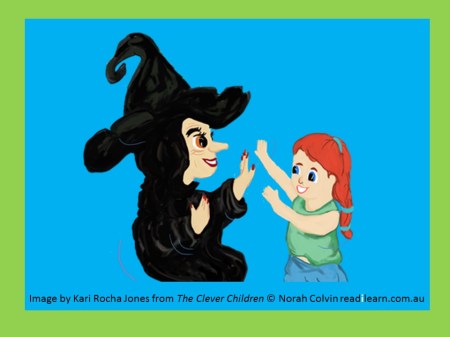
Chatter erupted as assessment commenced. A pass would grant membership to the Spellnovators, but the best would replace Imara, who, for her final duty, mixed their potions and tested their spells. She praised ingenuity as stars exploded, flowers blossomed, and extinct animals reappeared. Choosing her replacement would be difficult. Suddenly her glare in Ruby’s direction spelled trouble. The chatter ceased. “What’s this?” she demanded. “Mix in happy witches!?” Ruby’s lip quivered. “Wishes. I meant to spell wishes.” Voices united in wishes. Instantaneously, everywhere, hearts opened with love. Goodwill rained down, filling all with hope. Imara would spell in peace.
Thank you for reading. I appreciate your feedback. Please share your thoughts.
I have always welcomed and appreciated parent volunteers in the classroom. The value they add to the classroom program and children’s learning is enormous. I always loved that we could do much more with the assistance of parent volunteers than we could without.
But effective use of the parent volunteer’s time requires a certain amount of organisation and preparation. Just as there is little point in a parent volunteer turning up at a scheduled time if you are unprepared; there is also little value in a parent appearing at the door during class time and asking, “Can I help?”
Parent volunteers can play a very important role in the classroom, especially with group work in literacy and maths, assisting with art lessons, outdoor activities and work in the computer lab. They may also help in administrative-type roles such as changing reading books and checking sight words. Perhaps they could read to groups or individual children, or listen to children read.
How their support is utilised will depend upon their availability and your class program.
For a variety of reasons, not every parent is able to offer regular assistance in the classroom. Indeed, parent help should not be viewed as an expectation but appreciated as a gift of their precious time.
Sometimes parents welcome the opportunity to share a special skill or information related to their
We sometimes think of reading as a form of escapism. But many stories, including those in picture books, feature an escape as part of the complication or resolution.
It doesn’t require much thought to create a list. Here are just a few to start:
#6 Traditional stories
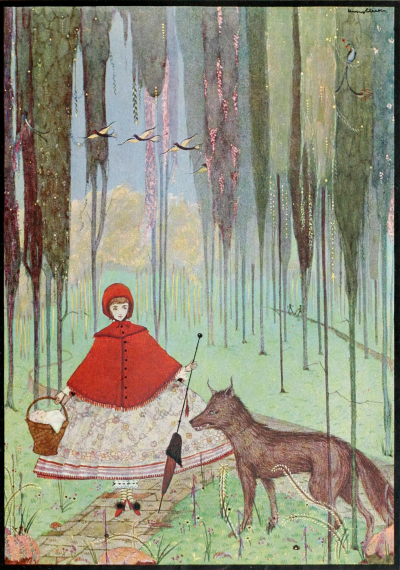
By Charles Perrault, Harry Clarke (ill.) [Public domain], via Wikimedia CommonsJack and the Beanstalk– Jack escapes from the giant
Hansel and Gretel – the children escape from the witch
Snow White– escapes death ordered by the jealous queen
The Three Pigs – escape from the Big Bad Wolf
The Lion and the Mouse – the mouse helps the lion escape the hunter’s trap
The Gingerbread Man – escapes from the oven and those who pursue him
I had a little more difficulty in finding modern tales involving an escape, but here are a few:
#6 Modern tales
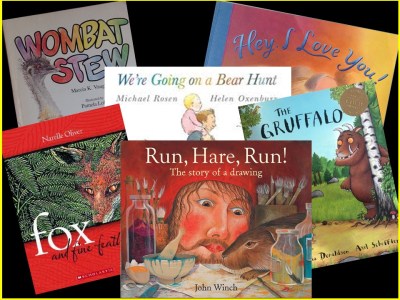
Hey, I Love You!by Ian Whybrow – father and son mouse escape the claws of the cat
The Gruffalo by Julia Donaldson – the mouse uses his wiles to escape being eaten
Wombat Stew by Marcia Vaughan – Wombat’s friends help him escape being Dingo’s dinner
Fox and Fine Feathers by Narelle Oliver – with the help of the nightjar the birds escape being a feast for fox
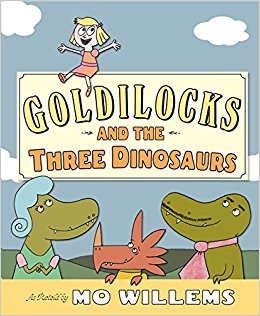
This Mo Willems story is an innovation on the traditional tale of Goldilocks escaping from the three bears. In Goldilocks and the Three Dinosaurs, Goldilocks has a lucky escape out the back door just as the dinosaurs return home through the front door. Willems concludes his story with two morals, one for the dinosaurs:
Lock the back door!
And one for Goldilocks:
If you ever find yourself in the wrong story: leave.
What a great philosophy that we could perhaps employ more often. If we don’t like where we’re at, just leave. Life’s decisions are not always that easy though.
I rather like the idea of characters appearing in the wrong story. What a great topic for discussion with children and a wonderful stimulus for their writing.
What if the Big Bad Wolf knocked on the Giant’s door?
What if the Three Pigs chased the Gingerbread Man?
What if Goldilocks came to the house of Red Riding Hood’s grandma?
What if?
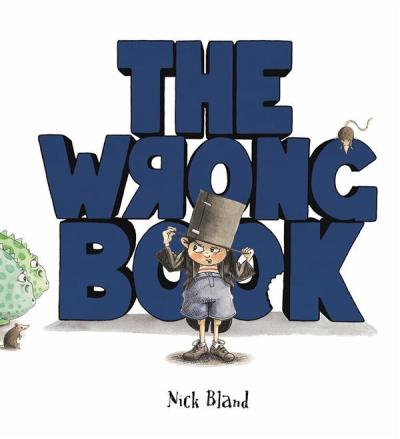
In fact, Nick Bland has written a story that utilises this concept. In The Wrong Book, Nicholas Ickle tries to tell his story but keeps getting interrupted by other characters such as an elephant, monsters, a queen and a pirate. Nicholas tells them that they are in the wrong book and to go away. By the time they leave, we get to the end of the book and there is no time for him to tell his story.
But what if the story characters didn’t want to be in the book at all, and decide to escape? How would they escape? What would the writers do if their characters revolted and walked off the job?
Where could I escape to if not picture books? Here’s my contribution. I hope you like it.
Let’s get out of here
Delaying the inevitable, she was picking wildflowers when she heard sobbing. She gasped to see him cowering behind the bushes but ignored instructions to avoid strangers.
“What’s wrong?”
“I can’t do it anymore. Every day: first the pigs; then your grandma. They’ve painted me bad. I’m not. I’m –“
A giant with a goose crash-landed beside them.
“I’ll not let that nasty boy steal my goose, again. And he says I’m bad.”
A diverse troupe in T-shirts emblazoned “Freedom for princesses” appeared.
“We want out,” they all chanted.
A witch magicked a rocket from a pinecone and everyone disappeared.
Thank you for reading. I appreciate your feedback. Please share your thoughts.
This week we celebrate readilearn’s first birthday. Last year we launched with just over one hundred resources to support early childhood teachers in their role. Now there are more than 250, and the number continues to grow with new resources uploaded nearly every week.
Resources across most areas of the curriculum support teachers of children in their first three years of school. All resources are original and teacher-made, designed to lighten workloads by providing lessons and activities teachers would make themselves, if they only had time.
The collection consists of digital stories, and interactive resources for use on the interactive whiteboard. There are printable activities, teaching suggestions, and notes for distribution to parents. If you can’t find what you’re looking for, let us know and we’ll do our best to support you.
This week, in celebration of the milestone, I have uploaded two new free resources which can be personalised for individual children on their birthday.
News from Charlottesville has flooded the media this week and it is difficult to not be gripped by despair at the hatred that exists and fear for the future.
I don’t usually express my political feelings publicly, other than the important role that education has in developing responsibility and compassion in all, and for all, travellers on our planet.
Well, I don’t know about healing America. I think any healing needs to start with the self. This situation implores us to look at ourselves and see where our own attitudes can be improved. Australia’s history of treating its indigenous peoples is no more admirable. Recognition as people in our constitution was granted a mere 50 years ago.
On the last Friday of each month many writers join in the We Are The World Blogfest which “seeks to promote positive news.” It says, “There are many an oasis of love and light out there, stories that show compassion and the resilience of the human spirit. Sharing these stories increases our awareness of hope in our increasingly dark world.” Follow the link if you wish to join in with their mission to “flood social media with peace and love.” Or contact this month’s co-hosts Simon Falk, Roshan Radhakrishnan, Inderpreet Uppal, Lynn Hallbrooks, Eric Lahti, and Mary J Giese.
Charli’s post reiterates the importance of creating connections through trust and friendship. With both these prompts in mind, I share with you some positive messages that shine a light in the darkness that sometimes seems overwhelming. (Apologies to #WATWB. I have broken the 500 word rule.)
On his Science and Education blog, Daniel Willingham, a psychologist who works at the University of Virginia in Charlottesville, wrote about Nazis in Charlottesville. He discusses the reasons why people hold onto false beliefs and the importance of education in teaching truths, fighting fake news, and standing up for media sites that get it right. He says,
“Truth is our greatest weapon against senseless evil. Fight with it. Fight for it. And don’t be discouraged.”
“teaching tolerance and acceptance is not and should not be remotely political.”
After overhearing a homophobic remark made by an eight-year-old student, she embarked on a discussion of family, family composition, and what makes a family. The discussions continued throughout the school year and included other topics such as inequality and stereotypes.
At the end of the year she asked the children to write about the role of president and what they would do if they were the president. The boy who had made the “gay” remark earlier in the year, wrote:
“As the president of the United States, I would want to be kind, brave, and nice. I would want to try to end fighting. I can do this by trying to let them be friends instead of being enemies. I also want to stop people saying ‘gay’ offensively. And last I want to stop people saying stereotypes.”
What a wonderfully hopeful statement that supports the importance of education for the whole person, not just cramming them with a bunch of facts to pass a test. Surely the ability to live a life that honours and respects others is the most important test to pass.
On the theme of equality and diversity I wish to acknowledge two wonderful picture books by one of my favourite authors, Mem Fox:
While I’m Australian Too may be considered specific to the Australian multi-cultural situation, Whoever you are is suitable for reading to Little Ones, “whoever they are, wherever they are, all over the world.”
I was delighted to read that one of Mem’s books Possum Magichas been honoured by the Royal Australian Mint with its very own coin collection. Of course, I had to purchase a set or three, didn’t I? What a lovely celebration of a wonderful book by writer Mem Fox and illustrator Julie Vivas and the importance of children’s literature in general.
I watched an inspirational video on the blog of one of the most inspiring teachers I have met online. Her name is Jennie and she blogs at A Teacher’s Reflections. Pop on over and find out how she improves the lives of all in her care. Here is the video titled Change the World. It’s a perfect fit for this post. I hope you watch it.
I have combined some of these ideas into my childish flash. I hope you like it.
What’s the difference?
She dumped the toys on the floor, then proceeded to arrange and rearrange them in groups. The largest group was of bears, a smaller group of cats, a few lizards, two puppies and an assortment of singles. With a finger tapping her cheek, she surveyed them. First, she dismantled the group of bears muttering about bows, hats and vests. She hugged Tiger as she separated all the toys. Then Dad appeared with his briefcase.
“Ready?”
“Not yet.”
“What’re you doing?”
“Thinking.”
“Which one to take?”
“I can’t choose,” she said, scooping them up. “I love them all the same.”
Thank you for reading. I appreciate your feedback. Please share your thoughts.
P.S. I hope I earned bonus points for hugging a cat!
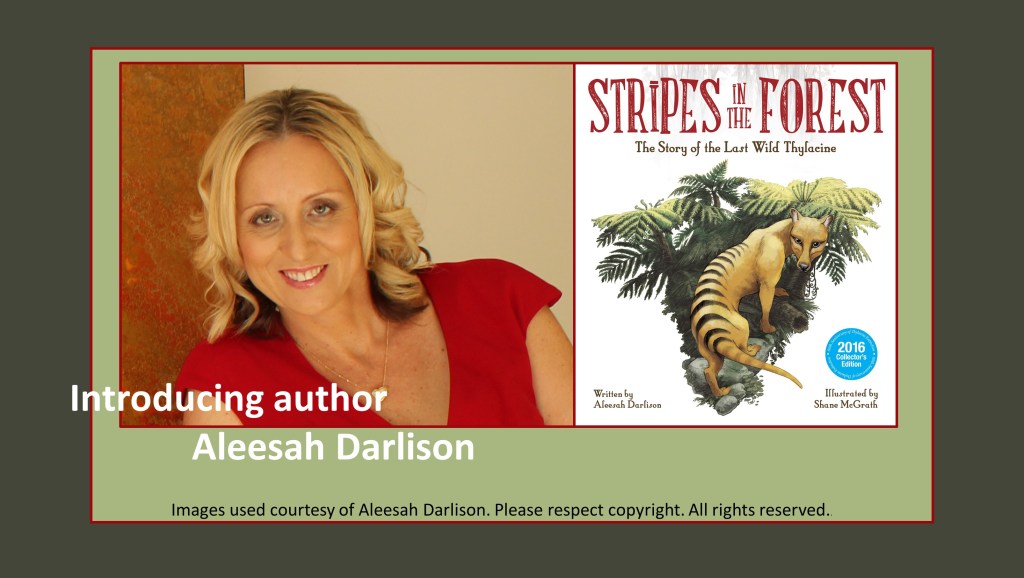
This month, it is my pleasure to introduce you to award-winning Australian author Aleesah Darlison. Aleesah writes picture books, chapter books and novels. Her much-loved stories promote courage, understanding, anti-bullying, self-belief, teamwork and environmental themes. In 2015, she won the Environment Award for Children’s Literature (Non-Fiction) for her picture book, Our Class Tiger. She has won numerous other awards for her writing.
Aleesah has written over thirty-five books for children and in 2016, she set up Greenleaf Press, a business designed to provide critical support services to authors and illustrators. The company also acts as a booking agency for school and preschool visits.
Today, Aleesah and I are talking about her picture book Stripes in the Forest. With National Threatened Species Day just a couple of weeks away on 7 September, it is a timely interview. Stripes in the Forest is the story of an iconic species lost.
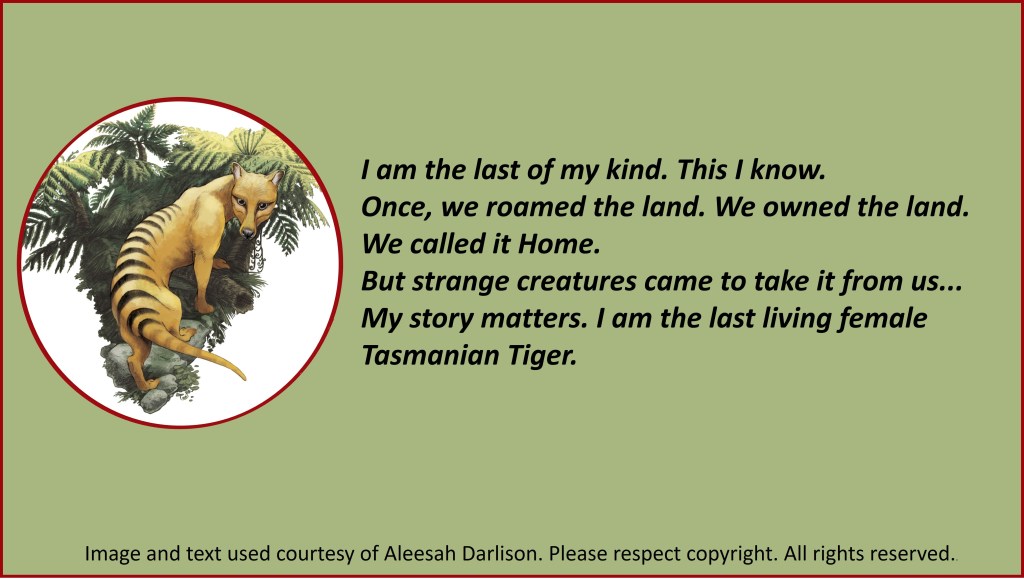
Told from the perspective of the last wild female thylacine, it provides readers with an insight into the rare beauty and uniqueness of these amazing animals, explains their fight for survival and provides important lessons for future generations.
An emotive and moving story, children will connect with the solitary, stoic and courageous female thylacine who does all she can to protect her young – just as a human mother would do. The story takes readers to a place in the past, but also offers a twist that projects them
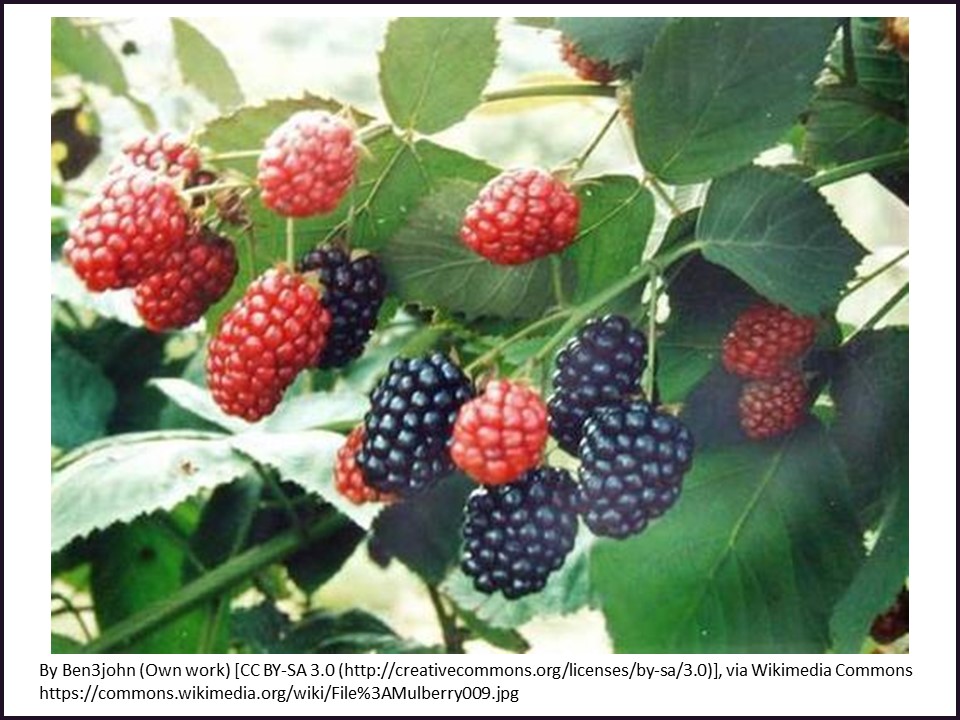
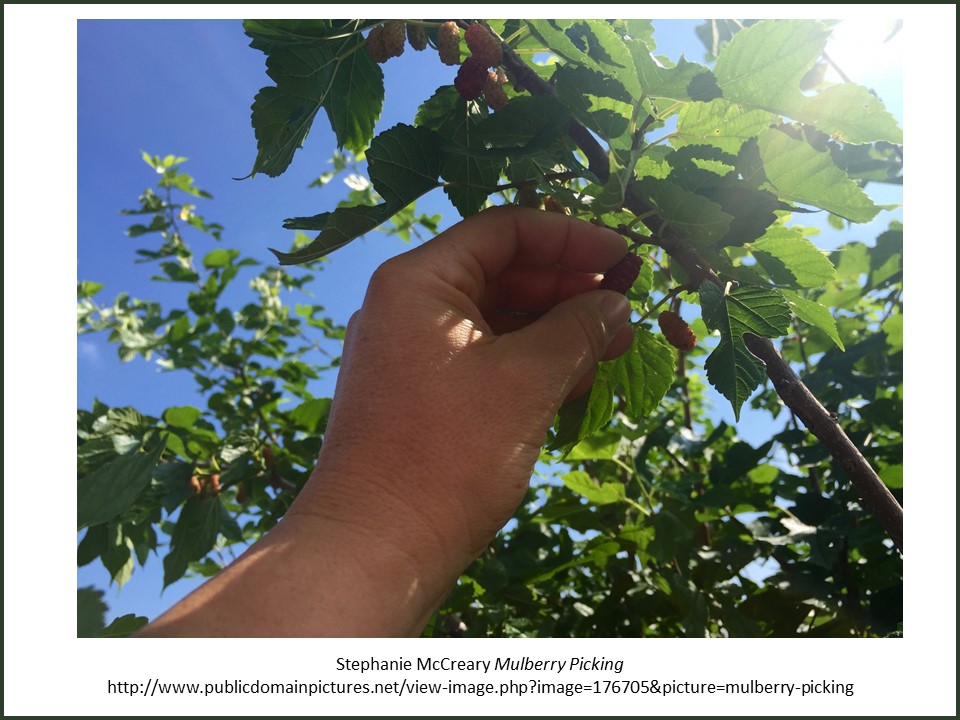
When I was a child, there was a huge mulberry tree growing in the backyard of one of our neighbours who was kind enough to allow access to the multitude of children in our family. Each summer the tree would be laden with fruit and we would pull at its branches to gather as much as we could into buckets and bowls. We would go home stained with purple on our bodies and our clothes and, mostly, around our mouths. We couldn’t wait to eat and there were plenty to go around. Mum would bake mulberry pies and fill jars with mulberry jam that was delicious on our buttered bread for breakfast or lunch.
Since then, I have encountered few mulberries trees, only occasionally sourcing their leaves to feed voracious silkworm caterpillars. The berries themselves seem not to be harvested for store sales. However, I was recently reminded of Mum’s mulberry jam when I spotted some on a shelf at the Jamworks gourmet deli. I must admit though, while I resisted the mulberry jam, I couldn’t resist the fig and ginger variety.
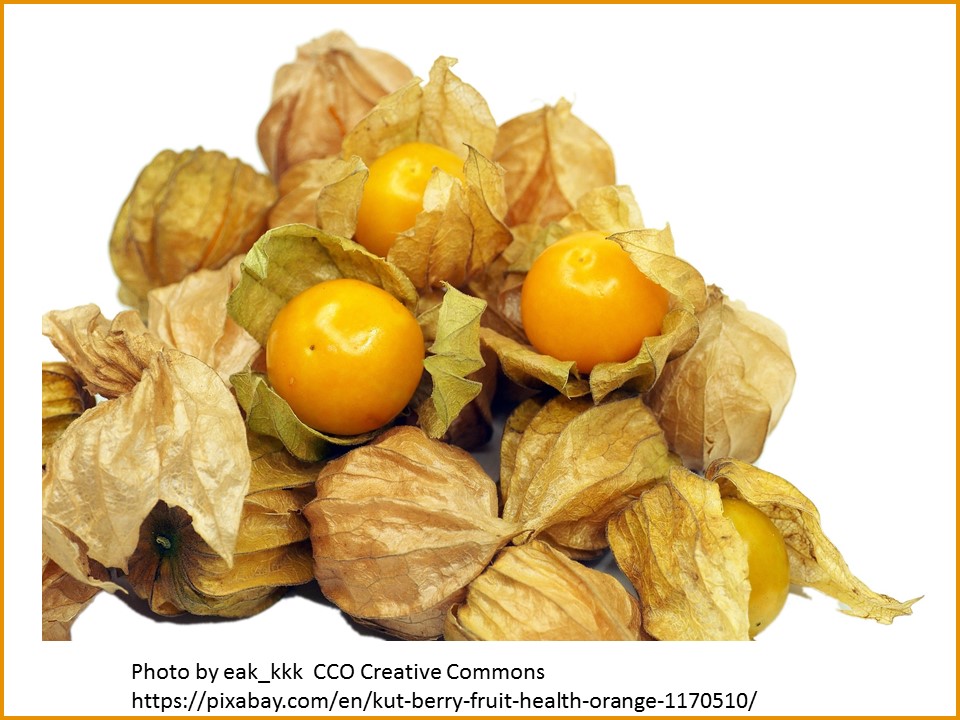
The other berry that was most familiar to me as a child, but never since seen, was what we called the gooseberry. There were gooseberry plants growing by our back fence. I remember picking the berries, peeling back the outer leaves and eating the small fruit, which I think had quite a tart flavour. As I recall, Mum would also make jam, but not pies, with these.
(c) Norah Colvin
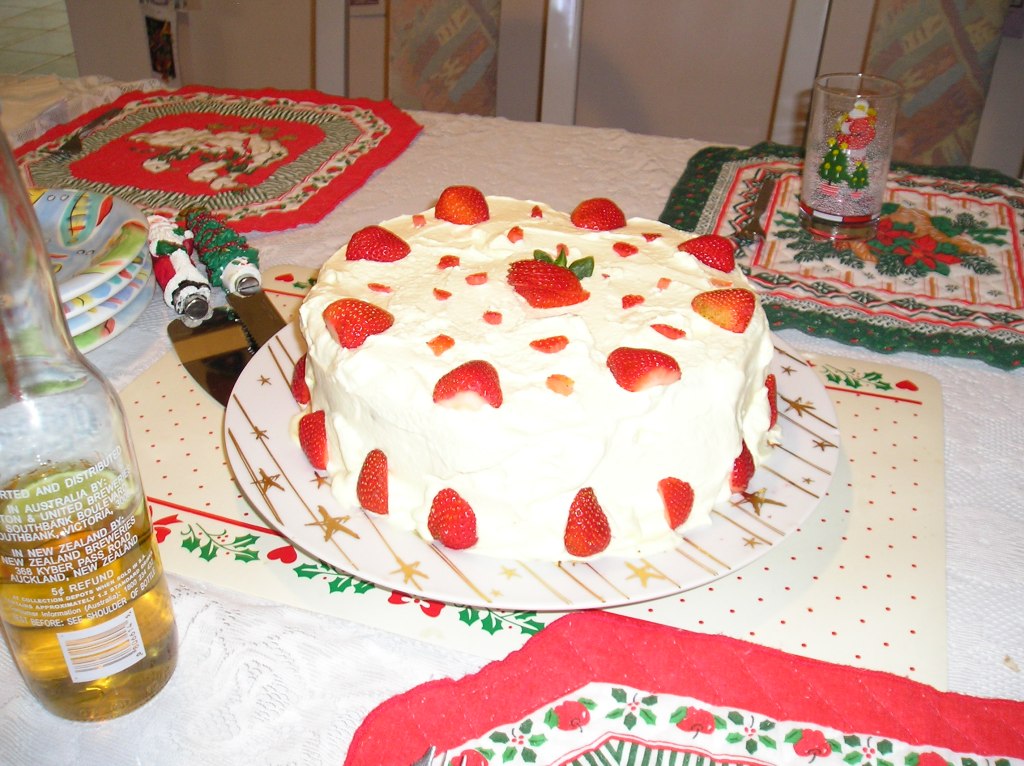
I recall that, even as a young adult, a serving of strawberries and cream had seemed a very luxurious and decadent dessert. Now strawberries are more affordable and readily available all year round. They are a favourite of my granddaughter. So much so that I need to have at least one punnet in the fridge for her when she visits. A strawberry torte is my family’s pick for special occasions such as birthdays and Christmas. I wrote about it and included the recipe here.
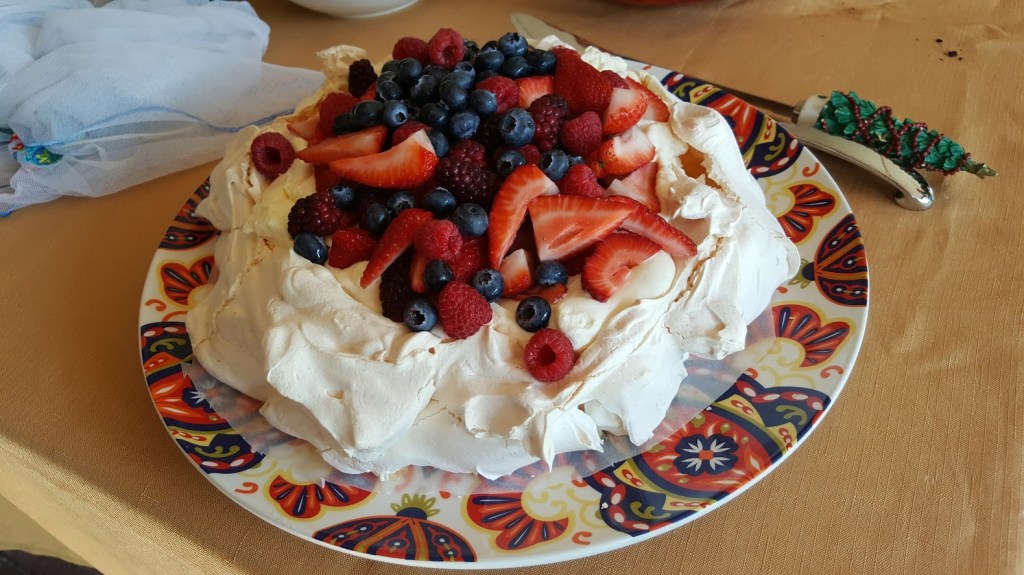
In addition to strawberries, stores now have a variety available all year round; including blueberries, blackberries, raspberries and cranberries. The berries make a wonderful filling for the other family favourite, pavlova.
(c) Norah Colvin
But do you know what a berry is?
I checked with Wikipedia for the definition of a berry, and found that it is “a fleshy fruit without a stone produced from a single flower containing one ovary”.
Botanically, the following fruits (and vegetables) are berries:
Grapes
Currants
Tomatoes
Cucumbers
Eggplants
Bananas
Kiwi fruit
Blueberries
Cranberries
Coffee beans
Pumpkin
Watermelon
and these, commonly called berries, are not:
Strawberries
Raspberries
Mulberry
Blackberry
Do you need to change you answers to my initial questions:
What is your favourite berry?
Which berries make your taste buds sing?
Or are you happy to go with common usage? If I write about mulberries, will I be fulfilling the requirements of Charli’s prompt? Perhaps I should write about picking watermelons instead.
Mulberry Stew
Branches hung heavy with berries in reach of even the youngest child. They ate more than they bucketed; but there were plenty, including for birds singing in higher branches. Mum had forbidden them. “Mrs Wilson’s poorly. Don’t disturb her.” But they couldn’t resist. They scampered the instant she called.
“Where have you been?” She eyed the purple stains.
“We …” the youngest began to sing.
“Nowhere,” they shushed with hands concealed.
“What were you doing?”
“Nothing.”
Her lips twitched. “Hand them over.”
Later they pondered together how she knew.
When Dad got home, they’d have to face the music.
Thank you for reading. I appreciate your feedback. Please share your thoughts.
While many around the world celebrated Father’s Day in June, here in Australia Father’s Day is celebrated on the first Sunday in September. Since that is now just a few weeks away, I thought I’d get in early with some low-cost Father’s Day gift suggestions that can be incorporated into your literacy and art programs.
A cautionary note
However, before I share them, I’ll begin with a cautionary note.
Be aware of the diversity of families in your class and the needs of individuals. Not all children have a father present in their lives, and not all fathers fit the perfect role model. While the day is not just for dads, but for grandfathers, stepfathers, and other male carers and role models too, a day to let them know how much they are appreciated; for some children, the day can be a painful reminder of someone missing. Be sure to adjust what you do to be inclusive of children’s circumstances, for example; “Celebrating a special adult in my life day”, or consider leaving any celebration to the children and their families.
Most classrooms are peopled by children from a diversity of traditions and cultures. Learning about and appreciating the similarities and differences is an important part of establishing a supportive classroom environment and encourages acceptance of and respect for each family’s composition and heritage. Suggestions to support discussions are available in readilearn History resources. Conducting Getting to know you surveys about families and who children live with can also help identify suitability of the celebration with your class.
Gifts from the heart on Father’s Day
Encouraging children to create and give a gift from the heart demonstrates that not all gifts need come from a shop. It allows children from even the poorest families to give their Dads a special Father’s Day gift. It helps develop their creativity and teaches them skills that they can apply in future gift-giving situations. It shows how thoughtfulness and imagination can combine to make a unique gift that will be treasured.
A gift of love lasts longer than any store-bought gift.
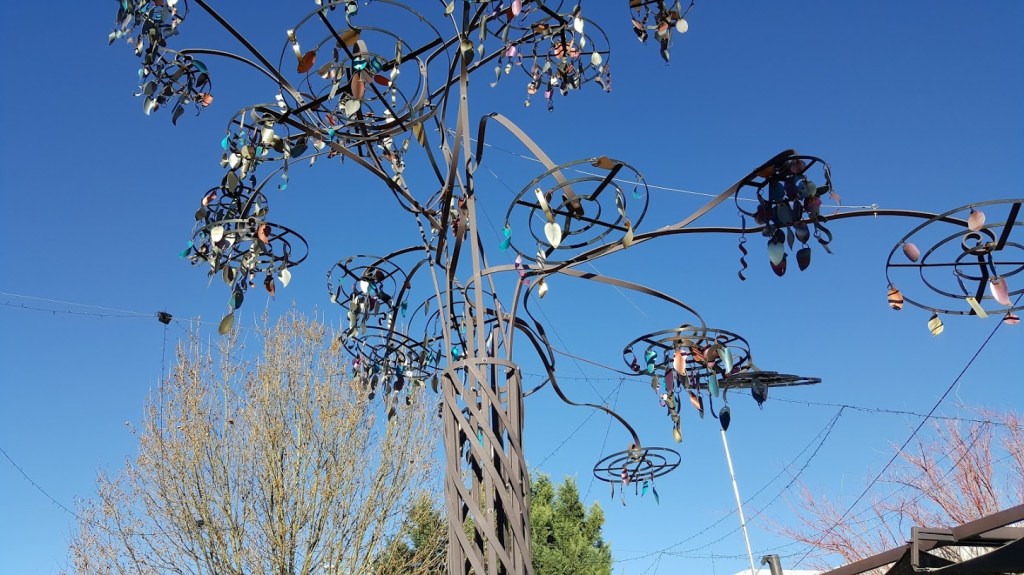
While reading Charli’s post in a motel room, I listened to an amazing chorus of birds in the trees outside. They were mostly magpies, but their song was not quite the same as that of the magpies at home, and I found it entrancing. Not long after, I went for a walk down town and serendipitously came across this beautiful tree sculpture with tinkling metal leaves. Would these sound bites be useful in responding to Charli’s challenge?
I have written about sound in other posts.
In Listen to the sounds I discussed the use of onomatopoeia in children’s picture books, including sounds made by:
animals,
machinery,
musical instruments, and
actions.
I listed pictures books that make use of each, and included a flash fiction piece about storm sounds.
In Sounds like … I wrote about the natural sounds made by some of our native wildlife; the beautiful music of our song birds heralding changes in the days and seasons; and other more unusual sounds that may alarm the unfamiliar, like that of the brushtail possum.
I wrote about the unnerving sound of mutton birds in response to Charli’s challenge in that post.
In Writing poetry with children I shared the structure of a sound poem and experimented with using the structure to write poems about other senses in a 99-word flash fiction. I also wrote about these poems on the readilearn blog. Instructions for writing the poems are available in readilearn resources, including here and here.
I wasn’t sure where to go this time, and after much consideration, found myself in more of a contemplative mood, stuck between ideas. I did what I suggest to children when they say they don’t know what to write: just write what’s in your head.
Sounds surround us
The deadline looms and I wonder how to extract a 99-word story from my unwilling brain. Contemplation, false starts, abandoned ideas: the well is dry. But listen! Outside, the day fades. Birds serenade folk hurrying homewards and signal the changing shifts. Soon they’ll sleep and the night time chorus will begin. Inside, the computer hums patiently, waiting to tap out the words. In the kitchen, doors creak: pantry then fridge. Vegetables are scraped and rinsed. Water bubbles on the stove. What joy! Yes, I get to eat tonight; but my, how the gift of hearing enriches my world. Gratitude.
Thank you for reading. I appreciate your feedback. Please share your thoughts.















 Norah Colvin