Live Love Laugh Learn … Create the possibilities

Category: Teaching resources

  • Feeling a little prickly?

    Australia is home to a great diversity of, and many unique animals. Most native Australians are not found anywhere beyond its territories. I guess that’s not surprising since it is the world largest island or smallest continent country with vast expanses of ocean between it and other continents.
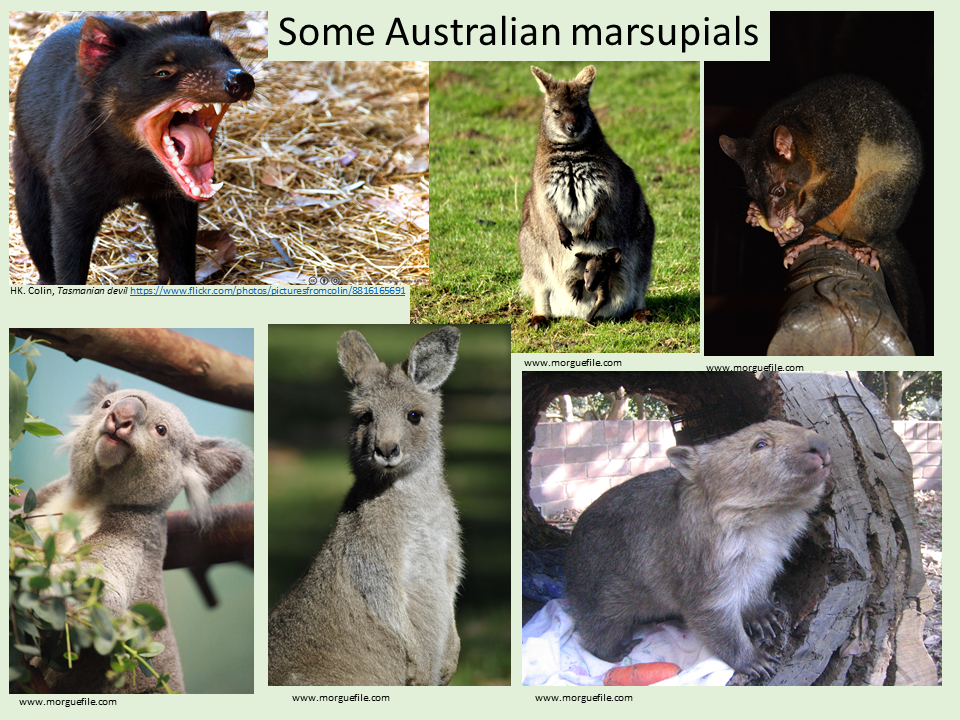
    feeling-prickly-marsupials

    Australia is home to almost 70% of the world’s marsupials. Other marsupials are found in the Americas, mostly South America. Kangaroos, wallabies, koalas, possums, wombats, Tasmanian devils, numbats, bilbies, and quolls are among the species of marsupials found in Australia.

    Marsupials are mammals that give birth to live young before they are fully developed. The young, usually referred to as joeys, continue to develop in the mother’s pouch for a number of months, suckling on their mother’s milk.
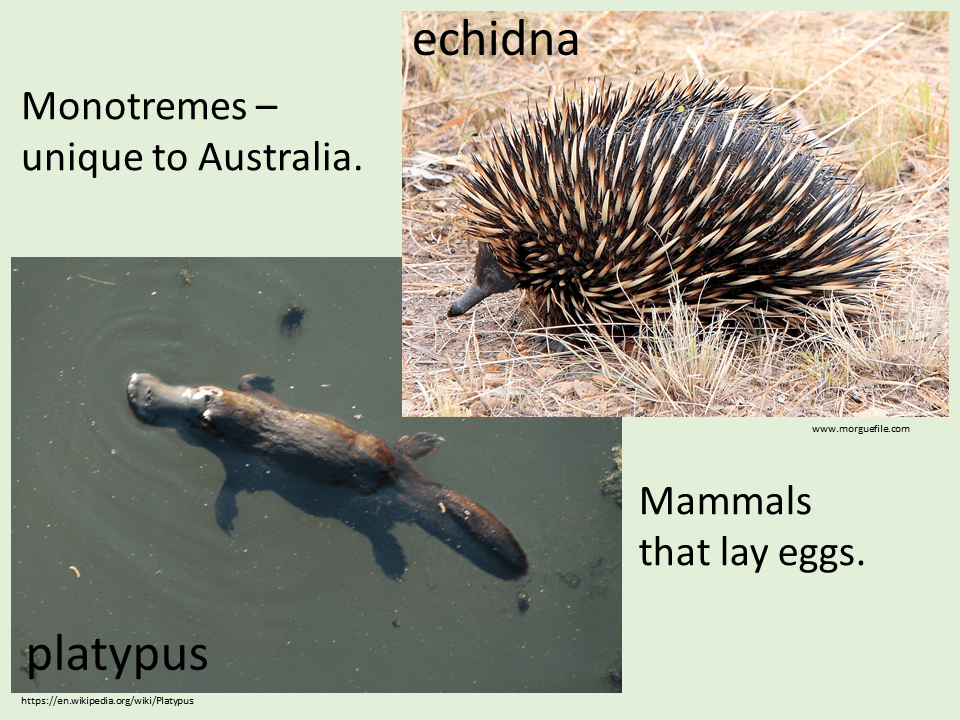
    feeling-prickly-monotremes

    There is another group of even more unusual mammals: the monotremes. Monotremes are egg-laying mammals. The platypus and the echidna, the only existing species of monotremes, are unique to Australia.

    The platypus

    When Europeans first saw a platypus, they thought it was a hoax with its bill like a duck’s, tail like a beaver’s, and feet like an otter’s. It has fur like other mammals but, unlike other mammals, it lays eggs.

    The platypus lives in burrows on the banks of freshwater streams and small rivers in eastern Australia, including Tasmania. It spends much of its time foraging in the muddy river beds for crayfish, worms and insect larvae.

    Female platypus usually lay two eggs. When the young hatch, the mother releases milk from pores in her skin. The milk pools on her abdomen and is lapped up by the young for about three to four months. There is no special baby name for baby platypus. They are simply called ‘baby platypus’.

    The male platypus, with a poisonous spur on its hind foot, is one of only a few venomous mammals.

    Platypus predators include crocodiles, eagles, dingoes, and introduced animals such as foxes and feral cats.

    The echidna

    Echidnas, the oldest surviving mammals, live all over Australia in many different habitats. They usually live alone and are not territorial. Although it is rare to see an echidna in the wild, they are considered common. They generally hide away under vegetation, in logs, or in the burrows of other animals.

    Echidnas eat termites and ants, and sometimes the larvae of other insects. They use their long snouts to forage in leaf litter, rotting logs, or ant mounds in search of food. Their long tongues are covered in sticky saliva for catching prey.

    Echidnas are covered with spines along the head, back and tail. The spines are sharp and used for defence against predators.

    Female echidnas usually lay one egg at a time. When the young, called a “puggle”, hatches, it makes its way to the mother’s pouch area to suckle milk. When the puggle starts to develop spines, at about 50 days, it is removed from the pouch. The mother continues to suckle it until it is about six to seven months old, at which time she deposits it at the entrance to the burrow, then walks away and abandons it.

    Predators include goannas, Tasmanian devils, dingoes, eagles, and introduced animals such as foxes and feral cats. When threatened an echidna may run away or curl up in a ball.

    Although all have spines, echidnas are not related to either hedgehogs or porcupines.

    Here is a great article about these amazing echidnas.

    If you are looking for books about Australian animals, check out the Steve Parish Storybook Collection by Rebecca Johnson, featured in last month’s Author Spotlight, which includes stories about both monotremes, many marsupials, and other fabulous creatures.

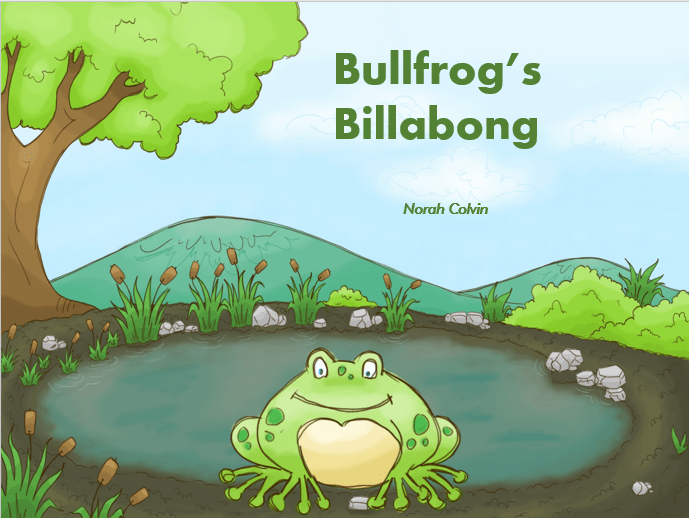
    Monotremes and marsupials feature in the readilearn stories Bullfrog’s Billabong and Little Koala’s Party and their suite of resources.

    Bullfrog's Billabong - coverlittle-koalas-party-cover

    I was prompted to think about the diversity and uniqueness of these Australian animals, especially the echidna, by this week’s flash fiction challenge set by Charli Mills at Carrot Ranch Communications. She challenged writers to In 99 words (no more, no less) write a prickly story. I thought there was no better opportunity to share with you some of our amazing creatures, particularly since just last week I was lucky enough to see an echidna in the wild for the very first time.

    The uniqueness and diversity of Australian animals reflects our own individual uniqueness and the diversity among us. We have much to learn about accepting difference, appreciating diversity, and acknowledging the unique characteristics each individual contributes to the enrichment of our collective humanity. Together we stand. Divided we fall.

    Here is my response. I hope you enjoy it.

    Stronger together

    She bristled, warning platypus to stop. He didn’t.

    “Feeling a little prickly, are we?”

    Kookaburra, oblivious, laughed at the “joke”.

    She smarted. Couldn’t he see the hurt in his words? Like a spur in her side, that last barb, really stung. Mocking difference pushed them apart.

    The bush quietened. Not a breath of wind. Not a leaf’s rustle. Not a bird’s chirrup. Were all waiting for the victor to be decided?

    Suddenly, out of the undergrowth, rushed a devil, hungry for blood.

    Platypus turned to echidna. She contemplated leaving him. But stayed. Spur and spines together: a powerful defence.


    Author’s note: Tasmanian devils have been known to eat echidnas, spines and all!

    Thank you

    Thank you for reading. I appreciate your feedback. Please share your thoughts.

  • A view from space

    Next week sees two celebrations:

    wsw-logo-color-wsw-text_dates_white_background1

    World Space Week from 4 – 10 October, and

    World Teachers’ Day on 5 October.

    On the readilearn blog this week there are 20 quick suggestions for teaching and learning about space in an early childhood classroom, as well as a bookmark that can be printed and given as a gift to a special teacher.

    Readilearn bookmark

    This post is republished from the readilearn blog.

    Since its inauguration in 1999, World Space Week has been celebrated each year from 4 to 10 October. Its purpose is to celebrate the “contributions of space science and technology to the betterment of the human condition”. The dates were chosen to commemorate the launch of Sputnik 1 on 4 October 1957 and the Outer Space Treaty signed on 10 October 1967.

    wsw2016-poster-final-global-with-text-small

    This year’s theme is “Remote Sensing: Enabling Our Future” which focuses on the contribution of observations from space to our knowledge of the world, including our ability to

    • monitor changes in the environment, and
    • understand and predict weather patterns,
    • which in turn assists planning for agriculture and helps to prepare for weather events.

    World Space Week has a free downloadable Teacher Activity Guide for classes from K – 12. While many of the activities are more suited to older students, there are some that can be adapted for the early grades.

    There are no particular requirements for participation. You choose how to involve yourself and your students. Or, better still, introduce the topic to the children and see where their questions and suggestions lead. Contemplating the skies and what lies beyond has excited imaginations since the beginning of human time. Why not give your children the opportunity to wonder, imagine, and create?

    If you have neither the flexibility nor the time to explore “space’ in depth, here are a few suggestions for incorporating learning about space in your busy program:

    space-week-display

    • Cover a large display board or wall with dark blue paper. (Each child could paint a piece of A3 paper to contribute to the background.) Add the children’s wonderings, questions, ideas, suggestions, pictures, and writing to the display.
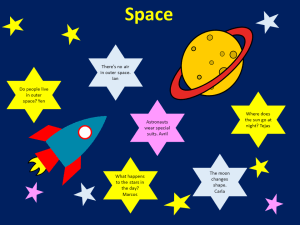
    • Ask children what they wonder about space, and record their wonderings. Many of their wonderings will match those of philosophers and scientists throughout history; for example, “Yen wonders if people live in outer space. Jan wonders what Earth looks like from space. Margot wonders how long it would take to get to the sun.” This is not a time for answers. It is a time for questions. If children are writers, you could supply them with (star-shaped) sticky notes on which to write their wonderings, one per note. Display the wonderings.
    • Record what children want to know about space. This is also a time for questions, and not for answers. There will be time for answers later. It is important for children to know that their questions are both valid and valued; for example, “Marcos wants to know what happens to the stars during the day. Tejas wants to know where the sun goes at night.”
    • Record what children already know, or think they know, about space, space exploration,

    Click to continue reading the original post.

    Thank you

    Thank you for reading. I appreciate your feedback. Please share your thoughts.

  • What’s the procedure?

    This post is republished from the readilearn blog.

    sift

    Reading and following procedures is a part of everyday life. We need to follow a procedure to make a cake, take medicine, repair a bicycle, treat head lice, assemble a DIY bookcase, or install an app on a digital device. The list in inexhaustible.

    Sometimes procedures are presented as text, sometimes as illustrations or diagrams, and sometimes as a combination of both. They work best when each step of the sequence is accurately described and illustrated.

    However, not all procedural texts are created equal. Sometimes the language may be inappropriate and unclear. Sometimes steps are omitted or sequenced incorrectly. Sometimes diagrams have little resemblance to what is required and confuse, rather than clarify, the process.

    Trying to figure out what to do can cause a great deal of frustration in such circumstances.  The more practised we are with following procedures, the more adept we are at interpreting inadequate instructions to achieve a good outcome.

    It is never too soon for children to learn to read and follow procedures. The inclusion of procedural texts in a classroom literacy program has many benefits.

    Following a procedure provides a context and purpose for reading.  It requires children to interpret instructions through a combination of text and visual representation. It generally implies that children are doing or making something, which engages their interest and encourages participation. It develops an essential real-life skill that is transferrable to a range of situations. The sense of achievement in successfully completing a project is both affirming and empowering and often requires no other feedback.

    Procedural texts can be easily incorporated into a class reading program as an independent or group reading activity. An assistant to support, encourage and oversee can be invaluable.

    Features of procedural texts

    The reading of a procedural texts differs from reading fiction or non-fiction texts.

    • The title, and sometimes a short description, tells what will be done or made.
    • There is generally a list of requirements.
    • The body of the procedure is written as a sequential series of commands.
    • The verb, telling the action to be performed, occurs at the beginning of the sentence.
    • The sentence is directed to the reader, and means, “You do this.”
    • Each sentence is generally short with one action to be performed in each step.

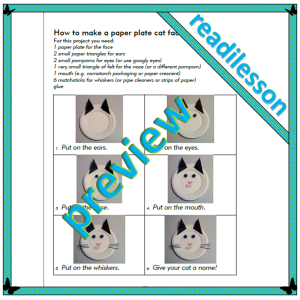
    There is a range of readilearn resources to involve children in reading and following procedural texts. Many of the procedures are provided in different formats for use with the whole class or with small groups or by individuals. Some are supported by additional resources, and How to make a paper plate cat face is presented with two levels of text.

    These include:

    How to make a paper plate cat face

    how-to-make-a-paper-plate-cat-face-level-1

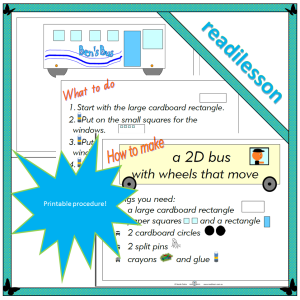
    How to make a 2D bus with wheels that move

    how-to-make-a-2d-bus

    How to make a friendship tree

    how-to-make-a-friendship-tree-readilesson

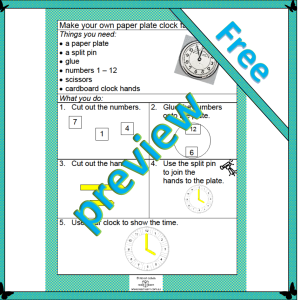
    Make your own paper plate clock face

    make-your-own-paper-plate-clock-face-free-preview

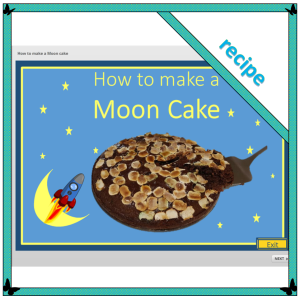
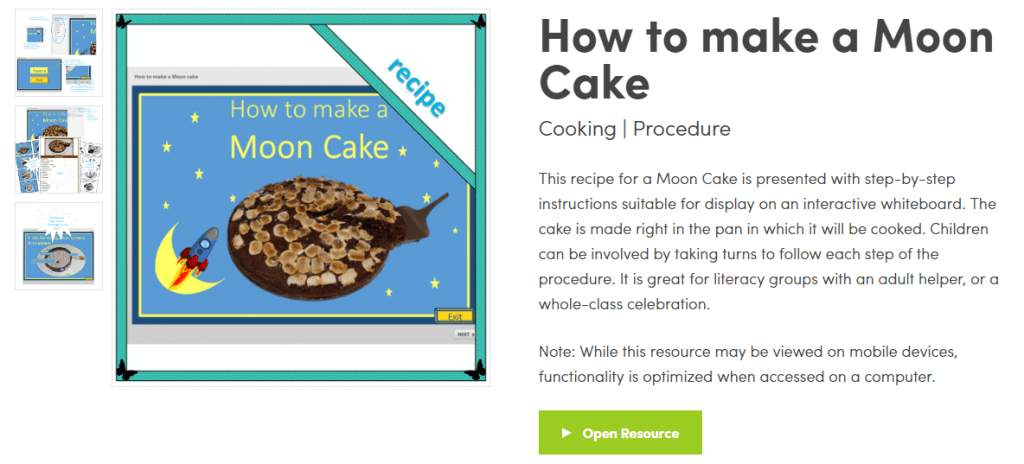
    How to make moon cake

    how-to-make-a-moon-cake-sl

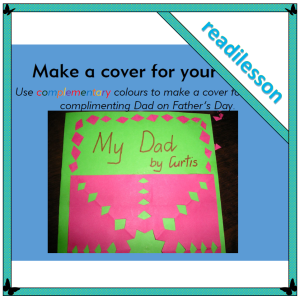
    How to make a book cover

    how-to-make-a-book-cover-readilesson

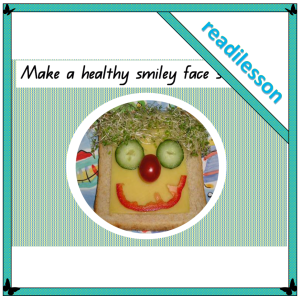
    How to make a healthy smiley face sandwich

    make-a-healthy-smiley-face-sandwich-readilesson

    I hope you and your children enjoy using these resources. They were always enjoyed in my own classroom, and have been the most popular resources in my Teachers Pay Teachers store.

    Please contact me if you have any questions. I welcome your feedback, especially suggestions for improvements to existing resources and ideas for new ones.

    Remember, if you haven’t yet subscribed, an introductory discount of 20% is available to all who subscribe this year. Just use the coupon code welcome2 at the checkout to receive your discount.

    I’ll see you next week. In the meantime, enjoy the weekend.

    Thank you

    Thank you for reading.

    Happy teaching and learning,

    Norah


    You can contact me:

    via email hello@readilearn.com.au

    via the Contact page

    on Twitter @readilearn or @NorahColvin

    on Facebook @readilearnteachingresources

    on my other blog NorahColvin.com

    I invite you to rate and review any resources you use, and to share information about readilearn on social media.


  • Author Spotlight: Rebecca Johnson

    This post is republished from the readilearn blog.

    Hi, welcome to the readilearn blog and the first in our Author Spotlight series.

    Spring is here and summer is on its way in Australia. The excitement of new life is everywhere as flowers bloom, birds sing, and insects abound. The excitement flows into the classroom as children observe and record the life stages of the amazing minibeasts that inhabit our world.

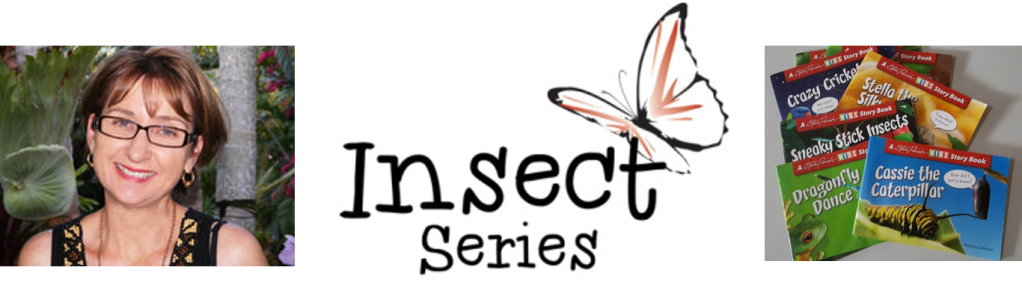
    There is no better time than spring to introduce you to Brisbane author Rebecca Johnson and her Insect Series which was awarded the 2014 Whitley Certificate of Commendation for Best Educational Series.

    rebecca
    Rebecca Johnson: award-winning author and primary school science teacher

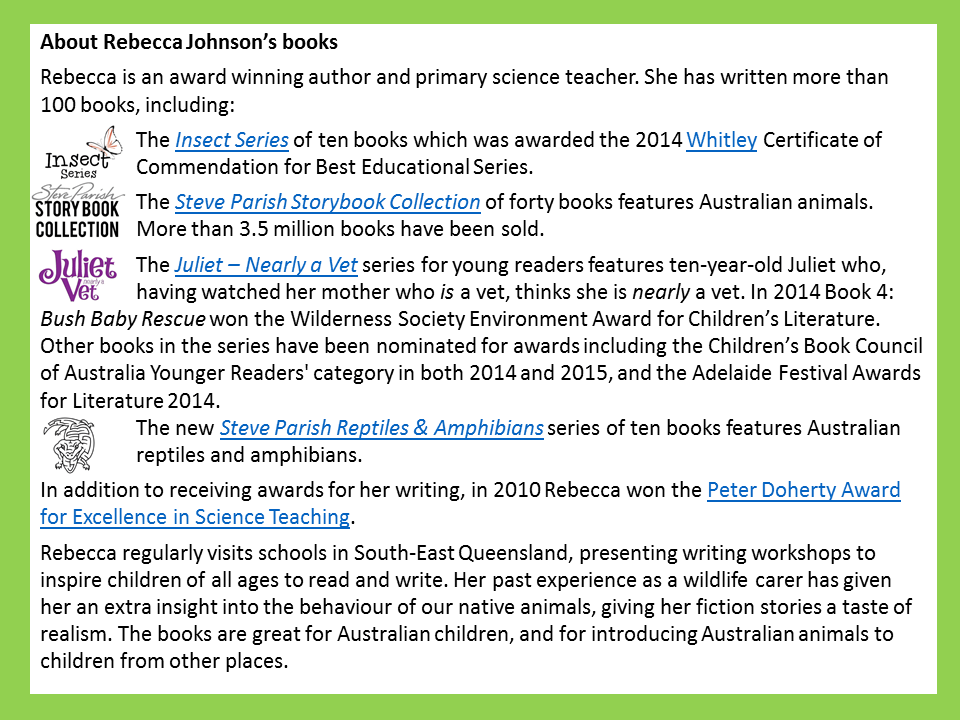
    about-rebecca-johnsons-books

    Rebecca’s Insect Series of ten books focuses on metamorphosis, survival, adaptations, properties of natural materials and the usefulness of insects through fiction stories. The stories are accompanied by stunning close-up photos of insects of all kinds.

    The books, which won the 2014 Whitley Award for Best Educational Series, have strong listed links to the Australian Curriculum for many year levels. They are a great resource for teaching and learning about insects. The fiction stories that accompany the facts make the learning even more fun. Two free blackline masters support the use of each book. The blackline masters can be accessed on the Blake Education Website.

    While the books feature Australian insects and have links to the Australian curriculum, they are loved by children all over the world. I am happy to introduce you to Rebecca and her lovely series of books.

    Welcome to readilearn, Rebecca. We are looking forward to getting to know you a little better.

    Thanks for inviting me!

    When did you know you wanted to be a writer?

    When I was reading a lot of picture books to my very young children and could see how much they loved them.

    Where do you write? Do you like to be by yourself in the quiet, or do you like to write in a noisy space?

    I do most of my ‘writing’ in my head.  I think about my stories for ages and pitch them verbally to victims until I am sure I have it all sorted in my head, then I sit to write in my lovely, quiet study overlooking my garden. I encourage children to tell their stories out loud before they write too, because, in my opinion, it is almost impossible to write a good story if you can’t tell one.

    What do you use to write – pencil and paper or computer?

    Head first. VERY few drafts, then I type it into the computer. I can type a 7000 word novel in a week that is publisher-ready, but I have thought about it and pitched it and sounded it out in my head for weeks beforehand. I hate sitting down all day, and I hate re-doing things over and over even more, so I do heaps of my drafting mentally whilst I do other (fun) stuff like gardening, then by the time I sit down to write, it’s like typing out a movie I know really well. People give you more honest feedback too, when you tell them a story. They feel less nervous about letting you know how they really feel about it. Try it some time.

    When is the best time for you to write?

    I do my best work from 5am when the house is really quiet. I’m always too tired at night (I still teach three days a week) for anything too creative.

    When and where do you get your ideas?

    From my life’s experiences as a mother, teacher, child and my own children. I think you have to write about what you know and love.

    What gave you the idea for this series about insects?

    I am a science teacher and I love insects, and I just couldn’t find the books I needed to succinctly and factually tell kids about the life-cycles and characteristics of insects in a fun way, so I wrote some.

    What do you like best about the series?

    Kids love them because they are funny and a bit silly, but they are still full of facts and information. I think they remember things better if it is presented in more appealing and humorous way.

    What can you tell us about the photographs that illustrate the books?

    My sister (Narinda Sandry) took most of them and it was hilarious. We didn’t want to harm any of the insects, so we had to put some, like the mealworms, in the fridge for a while to slow them down to get the shots. I will always smile as I recall the day we sat around a cow pat in a paddock trying to photograph dung beetles before they re-dug themselves in! The old farmer that had let us into the paddock stood to the side scratching his head in disbelief.

    caterpillar-spread

    How did your feel when you wrote these stories?

    I was really pleased when they came out because the photos are just gorgeous, and they were very well received by schools and parents. Winning the Whitley awards was really lovely recognition too.

    How do you hope readers will feel?

    Hopefully empowered with more information and knowledge, and perhaps inspired to look more closely at the wonderful world of insects and an appreciation of the benefits they bring.

    How would you like teachers to present your books to children?

    I’d love them to make them part of their science lesson, and even team them with some real insects (like mealworms) to make it all so much more engaging. There are two free blackline masters for each one too, that are designed to be able to be used independently by children in reading groups etc. There are heaps of facts inside the covers, and a glossary of terms, so plenty to learn in each one.

    Are there any messages you would like them to discuss?

    The main thing is that insects are so important and not just a good excuse to whack something!

    Do you have any advice for teachers in their role as writing guides?

    As I said earlier….talk before writing as much as you can. It is amazing how hard kids find it to describe something verbally and yet we ask them to do it in the written form all the time with disappointing results.

    Do you have any advice for children as writers?

    Tell, tell, tell, and don’t be too hard on yourself if it takes a long time to get it right. It took me five years to get my first book published.

    What is your favourite picture book? What do you like about it?

    I have so many favourites, but Bob Graham’s Greetings from Sandy Beach always makes me laugh out loud, and humour is really important to me in a book.

    Who is your favourite children’s author? What do you like about his or her work?

    The Lion the Witch and the Wardrobe (CS Lewis).  He made me see a movie in my head. I could picture every scene, decades before there was a movie.  I remember thinking that one day, I wanted to make a reader feel like that.

    thank-you-authors-and-illustrators

    Thank you Rebecca Johnson for sharing these insights about your Insect Series and your writing process. We wish you success.

    Thank you, and thanks for having me!

    To find out more about Rebecca and her award winning books visit her website at rebeccajohnson.com.au. You can find out about and purchase her Insect Series and other books on her website.

    Look what's new

    This interview and information about Rebecca is available as a printable resource in a new subcategory in readilearn literacy resources: Author Spotlight. The information may be displayed in your classroom or included in a class book about authors and illustrators.

    Check out the readilearn resources My Minibeast ABC and Minibeast Alphabet – A list for teachers which can also be used when learning about minibeasts.

    Thank you

    Thank you for reading.

    Happy teaching and learning.

    Norah


    You can contact me:

    via email hello@readilearn.com.au

    via the Contact page

    on Twitter @readilearn or @NorahColvin

    on Facebook @readilearnteachingresources

    on my other blog NorahColvin.com

    I invite you to rate and review any resources you use, and to share information about readilearn on social media.

  • Caps off for maths!

    This post is republished from the readilearn blog.

    Hi, and welcome again to the readilearn blog. I hope you’ve had a good week.

    Rarely, when the costs of education are being calculated, is the contribution made by teachers from their own pockets acknowledged. It is not very well publicised that many teachers spend a lot of their own money resourcing their classrooms, which would be far less interesting places if teachers refused to contribute in this way.

    Today I demonstrate that not all resources need be expensive. A versatile, free, and readily available resource is the humble bottle cap or lid, which  is often discarded, but can fulfill a number of functions in the classroom.

    collection

    It doesn’t take long to gather an extensive collection of lids even on your own. But ask your children to bring in lids from home and the collection builds even quicker.

    Lids have many uses.

    Children can, for example:

    Sort by colour or size

    sort-colour sort-size

    Order according to size – diameter or height

    order-diameter order-height

    Make patterns – repeating or growing

    growing-pattern repeating-ab-pattern

    Count – by ones, twos or fives

    count-in-onescount-in-2s count-in-5s

    Learn to subitise, and discover conservation of number

    conservation

    Compare, add, substract and share

    compare

    Measure length and mass

    measure-length measure-mass

    Use for collage or craft, or as tokens when playing games

    collage snakes-and-ladders

    These are just a few ideas. What other uses have you found for lids? Please share in the comments below.

    Look what's new

    What’s new – Uploaded this week!

    These ideas and others are  now available in a free maths resource Caps off for maths.

    caps-off-for-maths

    have-you-used

    Getting to know readilearn resources

    Snakes and Ladders is a popular game and great for maths groups. With some guidance from an adult, the game can be used to stimulate mathematical thinking alongside practice of computations. The readilearn resource Snakes and Ladders – An activity for maths groups provides suggestions that can be given to an assistant to maximise learning opportunities while playing the game.

    snakes-and-ladders-printable-preview

    Please contact me if you have any questions. I welcome your feedback, especially suggestions for improvements to existing resources and ideas for new ones.

    Remember, if you haven’t yet subscribed, an introductory discount of 20% is available to all who subscribe during 2016. Just use the coupon code welcome1 at the checkout to receive your discount.

    I’ll see you next week. In the meantime, enjoy the weekend.

    Thank you

    Thank you for reading.

    Happy teaching and learning,

    Norah

    You can contact me:

    via email hello@readilearn.com.au

    via the Contact page

    on Twitter @readilearn or @NorahColvin

    on Facebook @readilearnteachingresources

    on my other blog NorahColvin.com

    I invite you to rate and review any resources you use, and to share information about readilearn on social media.

    All images in this post are copyright Norah Colvin.

  • About Bullfrog’s Billabong

    This post is republished from the readilearn blog.

    Hi, and welcome again to the readilearn blog. I hope you’ve had a good week. Thank you for your interest in readilearn. I apologise to those who have experienced difficulty in applying the discount coupon codes at the checkout. Know that I will honour the coupon offer with a PayPal discount refund if your subscription goes through with payment in full. I appreciate your persistence and patience while we improve flow with the payment system. Please contact me if you experience any difficulties.

    Bullfrog's Billabong - cover

    Getting to know readilearn resources

    In this post I discuss the Bullfrog’s Billabong suite of resources.

    Bullfrog’s Billabong is a cumulative story which takes place at a fictitious Australian Billabong. Bullfrog is the first to arrive at the billabong. He decides it would be a great place to live and makes it his home. Each day, more animals arrive at the billabong. They too think it would be a good home and, after asking permission, decide to stay. Unfortunately, as the billabong becomes more and more crowded, the animals have difficulty in getting along. Their racket attracts another visitor who also sees the potential of the billabong as a home.

    The story includes mathematical concepts including counting, growing patterns and days of the week.

    The repetitive structure supports children’s reading and encourages them to make predictions based upon obvious patterns involving counting and days of the week. Their knowledge of narrative structure encourages prediction of possible events and conclusion. The end may surprise some children and they may or may not approve of the author’s choice. A discussion of alternative ways to conclude the story could lead to some interesting writing, and an understanding that what happens in stories is a choice made by the author.

    While the animals will be familiar to Australian children, the story provides a great opportunity for children from other countries to find out about them too.

    I hope you and your children enjoy reading the story and using the resources.

    The suite of existing resources includes:

    Bullfrog’s Billabong – an estory (The story can be displayed on the whiteboard for reading to, with, or by the children.)

    Bullfrog’s Billabong – Covered cloze (This interactive resource for use on the whiteboard is great for teaching effective reading strategies. For best effect, it should be used before any other Bullfrog’s Billabong resources.)

    Bullfrog’s Billabong – Cloze – How to use this resource  (Refer to this resource for suggested use of the covered cloze interactive resource. For more information about covered cloze as a teaching strategy, refer to Covered Cloze – teaching effective reading strategies)

    Bullfrog’s Billabong – Covered cloze Sampler (This is a free one-page sneak peek at how the interactivity works before making a commitment to purchase a subscription.)

     Look what's new

    What’s new – uploaded this week!

    I have been working on new resources to support and complement the existing Bullfrog’s Billabong resources.

    This week I have added three new resources to the collection:

    Bullfrog’s Billabong – The facts (This information sheet explains what a billabong is and verifies that all the story’s animals may live in a billabong, though possibly not the same one.)

    Bullfrog’s Billabong – the next chapter (Children draw and write what they think happens next on this printable sheet.)

    Bullfrog’s Billabong – Days of the week (Use these three sets of printable cards when teaching or revising the days of the week. There are A5 cards for use with the whole class, and smaller cards for use by individuals or small groups.)

    © Norah Colvin
    © Norah Colvin

    I am working on other resources to add to the suite, including presentation of the story as a play. There is also a set of animals to print that can be used to make pop stick puppets for a performance. Watch for these, and others, coming soon.

    I hope you and your children enjoy using these resources. I had fun making them and thinking about the responses of children.

    Please contact me if you have any questions. I welcome your feedback, especially suggestions for improvements to existing resources and ideas for new ones.

    Introductory discount

    Remember, if you haven’t yet subscribed, an introductory discount of 20% is available to all who subscribe this year. Just use the coupon code welcome2 at the checkout to receive your discount.

    ncblog welcome2

    I’ll see you next week. In the meantime, enjoy the weekend.

    Thank you

    Thank you for reading.

    Happy teaching and learning,

    Norah


    You can contact me:

    via email hello@readilearn.com.au

    via the Contact page

    on Twitter @readilearn or @NorahColvin

    on Facebook @readilearnteachingresources

    on my other blog NorahColvin.com

    I invite you to rate and review any resources you use, and to share information about readilearn on social media.


  • Welcome to spring!

    Responses to a previous post on the importance of feedback suggested that I trial republishing readilearn posts here.  As the suggestion came from a number of people I considered it sound advice and worth trying. As always, I will be interested to hear what you think.

    This post is republished from the readilearn blog.

    © Norah Colvin
    © Norah Colvin

    The first day of September marks the first day of spring in Australia. It is also recognised throughout Australia as Wattle Day.  The golden wattle is our national floral emblem. Its colours give the recognisable green and gold to our sporting teams.

    Like the people of our land, it is a plant that shows both diversity and resilience. There are hundreds of species of wattle growing in many different habitats across Australia.  They may be seen growing wild in bush areas and national parks, and cultivated in botanic gardens, on footpaths and in home gardens.

    © Bec Colvin
    © Bec Colvin

    I have three varieties of wattle growing in my garden. Last year, when the plants were one-year-old, they flowered abundantly and were home to ladybirds. It was wonderful to watch each stage of the ladybird’s growth, from egg to adult. This year, the trees were more heavily laden with blossoms, but there were no ladybirds. I was disappointed as I was looking forward to seeing the ladybirds again. However, it has been suggested that the absence of ladybirds may indicate the tree is healthier this year. I don’t know.

    In Australia we generally refer to seasons as occurring in particular months:

    Spring in September, October, and November

    Summer in December, January, and February

    Autumn in March, April, and May

    Winter in June, July, and August.

    However, it is not as simple as that.  Australia is a land of extremes, with different climate zones and types of weather experienced across the country. It can be cooler in the summers of southern areas than it is the months called winter in the north. For example, the average January (summer) daytime temperature in Hobart is 21.7⁰C, and the average July (winter) daytime temperature for Darwin is 30.5⁰C.

    Spring is a great time for exploring the garden and it’s inhabitants. What is spring like where you are?

    Getting to know readilearn resources

    Also coinciding with the beginning of spring is the Australian Father’s Day, celebrated on the first Sunday in September. It is a day not just for dads, but for grandfathers, stepfathers, and other male carers and role models. It is a day to let them know how much they are appreciated.


    how to make a book cover - cover

    One great way of providing children with a purpose and targeted audience for writing is to get them to make a book for their father figure. I have provided some ideas to get the writing started in the resource How to make a book cover. The resource itself provides step by step instructions for making a cover for a book using complementary colours. The instructions can be displayed on the white board for children to read and follow.

    Suggestions for writing include:

    • A list of statements about their Dad e.g. My Dad goes to work. My Dad makes my breakfast. My Dad has curly hair and a bushy beard. Children write and illustrate one statement on each page.
    • A recount or memoir about a favourite holiday or activity they do with their Dad.
    • A series of things about fathers e.g. Some fathers ride motorbikes. Some fathers ride horses. Children finish with a statement about their own dads, for example; But my father rides a skateboard.
    • A list of things that Dad likes, one to each page.

    Five Fabulous books to read for Father’s Day

    2015-09-19 10.52.00

    Guess How Much I Love You by Sam McBratney, illustrated by Anita Jeram

    My Dad

    My Dad by Anthony Browne

    going on a bear hunt

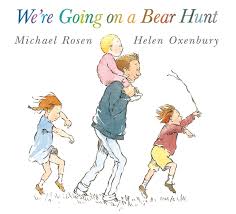
    We’re Going on a Bear Hunt by Michael Rosen, illustrated by Helen Oxenbury

    Just Me and My Dad

    Just Me and My Dad by Mercer Mayer

    2015-09-19 10.54.00

    Hey, I Love You by Ian Whybrow, illustrated by Rosie Reeve

    Of course, there are many more too.

    The Ice Cream Shop - estory

    The readilearn estory The Ice Cream Shop also features an outing with Dad. However, before reading it with your children, decide if you wish to use the interactive covered cloze version with them.  If desired, for most effective teaching and learning, the covered cloze should be used prior to any other familiarisation with the story. (You can find information about covered cloze as a teaching strategy here.)

    Please contact me if you have any questions. I welcome your feedback, especially suggestions for improvements to existing resources or ideas for new ones.

    Remember to use your coupon codes at the checkout to activate your discount. If you can’t see where to enter the coupon code, select “View basket“.

    ncblog firstin2


    Thank you

    Thank you for reading. I appreciate your feedback. Please share your thoughts.


  • The importance of feedback


    39

    Feedback, whether inherent in the task itself or supplied by another, is essential to learning. This is true whether figuring out what happens when an item is dropped from a high chair (will it always land on the floor; will a carer always retrieve it?), how hard and at what angle to kick a ball to send it over the goalpost; how much a sibling can be antagonised before retaliation ensues; or whether your performance meets expectations.

    In almost all of these cases, the tasks are self-selected and the feedback is integral and immediate, enabling the learner to adjust what happens next accordingly. While those conditions may also be true when considering the success of performance; such as our own assessment of our output, it is not always so.

    F

    Students and employees may be engaged in tasks that are not of their choosing, which provide little inherent feedback, and are reliant upon feedback from others that may be neither timely nor specific to the learners’ needs. Sometimes the feedback can be unhelpful and hinder, rather than encourage, learning, without any real explanation of how improvement could be made.

    As a teacher, I found it necessary for an exchange of feedback between me and my students. This was sometimes supplemented with feedback from carers and other school personnel. How well the students engaged in the classroom, participated in class activities and performed tasks provided me with feedback on my performance as a teacher and provided important information about what to do next, which in turn involved feedback to students.

    While feedback is an essential ingredient in any classroom task, one of the most enjoyable for me was the daily journal. Each morning the children would write to me and every afternoon after they had gone home I would read and respond to their messages. The children loved writing these diaries as much as I loved reading and responding to them. Responding was time consuming but I believe it was worth it:

    • The children had a purpose for writing
    • Their writing had an audience
    • They saw writing as a tool for communication

    When responding to their writing, I would make neither corrections nor changes. However, I would model correct grammar, spelling and punctuation as I responded to the content of their messages. The children were then able to refer to my comment when writing their next message.

    Sometimes the children would tell me about something different each day. Sometimes we would have conversations that could extend over weeks. I always felt it a privilege to have this window into the children’s lives. At the same time, it provided a record of their development as writers.

    At the end of the year I would bundle up all of the journals that had been filled during the year and present them to the children to take home. Recently when I was talking to the mother of a child I taught in the eighties, she told me how they had been looking at those journals with his young children who are now at a similar age to his when he wrote them. How gratifying it is to know that they were treasured by at least one family.

    thank you - rose

    When I started blogging, unbelievably, almost three years ago, I had no idea of what to expect. I am a little more knowledgeable now, with thanks to those who provide feedback by reading and commenting. I am very grateful to all who have joined me along the way. The conversations here or on your own blogs are what have made the journey enjoyable and worthwhile.

    yves_guillou_question

    Now I have a decision to make and I would appreciate your feedback in helping reach it.

    At the same time as I have been blogging, I have been preparing early childhood teaching resources for my website readilearn. I always expected readilearn to include a blog and a newsletter. I knew I couldn’t write that additional content alongside posting twice weekly here and preparing new readilearn resources as well. I thought to:

    • post once a week on this original blog by continuing to participate in the flash fiction challenges set by Charli Mills at the Carrot Ranch, as I have done for more than two years; and
    • post once a week on the readilearn blog with content written specifically for early childhood teachers rather than general readership.

    However, it has recently come to my attention that it may not be possible for readers to leave comments on the readilearn blog, which leads to my quandary.

    I enjoy the discussions in response to posts almost as much as writing them; and

    I am disappointed when I am unable to “like”, leave a comment on, or share another’s blog post I have enjoyed.

    megaphone

    It seems some bloggers are more interested in broadcasting than engaging with a community, but that is not my way.

    Newsletters differ from blogs, though, and the readilearn newsletter, which will provide information about new resources, teaching suggestions and other educational content, will “broadcast” and not invite feedback.

    How important, then, is it to have a blog that doesn’t invite feedback. I’m thinking that, without feedback, I’ll quickly lose motivation.

    What do you think?

    When you read blogs, do you look for an opportunity to add your voice through a “like” button, leaving a comment, or sharing content on social media? Is the ability to engage with the writer important to you, or do you simply read?

    As a blogger, do you welcome comments and discussion, or is it more important just to get your ideas out there?

    Thank you

    Thank you for reading. I am very interested to know what you think and appreciate your feedback. Please share your thoughts.
     

  • Can I help?

    81

    I have written a few posts recently about requesting help and the difficulty many of us experience in doing so. It’s a topic that is oft repeated. Not only do many have difficulty in asking for help, we are often unsure about when to offer help, how to help, and whether any assistance will be beneficial.

    20

    In a comment on one of those posts Anne Goodwin, who blogs at Annecdotal, said that the way our first cries for help are responded to in infancy influences our attitudes to asking for help later in life. I suggest that the way we are responded to when offering to help in those early years also influences our attitudes later.

    In an earlier post entitled Lending a helping hand, I asserted that

     “Little ones love to help and hate to be helped in almost equal measure. “Let me do it!” and “I can do it myself!” are two frequently heard phrases in households with little ones. Opportunities for both are essential for their developing sense of self, independence and confidence. Both require a great deal of patience on the part of parents and a larger allocation of time than one would normally feel necessary.”

    Sometimes, when young children ask, “Can I help?”, parents are reluctant to involve them because of the additional time required, and often the extra effort it takes to clean up the mess that may also be created. However, I recommend that the time and energy expended are more than compensated for by the benefits to the parent-child relationship, as well as to the child’s development of knowledge and skills.

    Nor and Bec reading
    © Norah Colvin

    Just as time to play together and read together is factored into the family routine, it is important to set aside time for tasks such as cooking and cleaning that help to develop independence and life skills.

    With cleaning, as with other tasks, it is important to provide guidance and encouragement, and to accept the result. Don’t expect the child’s efforts to match yours. You can always finish off the task later, if you must, when the child is out of sight. Expecting too high a standard or being too critical will discourage a child’s willingness to try again.

    As at home, in the classroom children can take responsibility for cleaning up after themselves and working together to keep the room organised and tidy on a daily basis. It may take a little longer to establish good habits initially, but the benefits are reaped throughout the year.

    When I was in the classroom I provided children with a number of strategies to help them develop organisation skills.

    • At the beginning of the year I showed them how to organise their belongings in their tidy trays so that they could easily find what they were looking for. I made a photo display to provide visual as well as verbal reminders.
    • Throughout the day I would play music or transition games to help them move from one activity to another, and to indicate how much time remained until they were to be ready for the next activity.
    • We had a wonderful programme called You Can Do it! which helped children develop personal and social skills, one of which is organisation. We had a great set of songs to support development of the skills. At the end of each day when it was time to pack up, I would play the organisation song. The children would happily sing along and have the room neat and tidy and themselves ready for home by the time the song ended.

    These simple strategies helped the day run smoothly and required a minimum of instructions and reminders.

    cooking banner
    © Norah Colvin

    Cooking, or more specifically food preparation not necessarily requiring heat, in the classroom requires additional planning which will be influenced by the facilities and support available. Whenever possible I organised cooking experiences for small groups with the assistance of an aide or parent volunteer. This gave children more opportunities for discussion and involvement.

    © Norah Colvin 2016
    © Norah Colvin 2016

    I always organised for the healthy smiley face sandwich to be made in small groups.

    kebab 1
    © Norah Colvin

    Cutting up fruit and making fruit kebabs is suitable for small groups too. Children can be asked to bring in a serve of fruit to contribute to the choices. We used to have a daily mid-morning fruit snack so it did not require any extra effort on the part of parents, just scheduling on my part.

    © Norah Colvin
    © Norah Colvin

    One of my favourite cakes to cook with children is a moon cake. It is both fun to make and delicious to eat, and provides many opportunities for discussion. It is just as suitable for making in the classroom as it is for home. I have prepared a guided recipe which will be available on my readilearn website.

    © Norah Colvin
    © Norah Colvin

    I recently made the recipe with my grandchildren. They were eager to help and took turns to add and mix the ingredients. There are sufficient things to do to give everyone in a small group an opportunity of being involved. However, it is also suitable to do with the whole class observing while individual children do different tasks.

    tasks to do

    Making the cake provides great opportunities for observing, turn taking, vocabulary development, curiosity, and development of science knowledge. All of these contribute to life skills and experiences. And then there’s the treat at the end!

    © Norah Colvin
    © Norah Colvin

    Although involving children in tasks like cooking and cleaning at home or at school involves extra organisation and time, it is well worth it for the long-term, as well as immediate, benefits.

    Do you have any recollections of helping with tasks at home or at school? How did you feel about it? How has it influenced your current attitudes?

    Thank you

    Thank you for reading. I appreciate your feedback. Please share your thoughts.


  • Asking and accepting help

    Last week I shared with you the post in which Charli Mills acknowledged that the Carrot Ranch was in Crisis. She admitted that, although she doesn’t like to ask for help, she needed it. She explained not only the type of help she required, but also the ways in which she is able to help others. I know many of you popped over to the Carrot Ranch to read Charli’s story and lend a helping hand. I sincerely thank you for doing so.

    Difficulty in asking for help is something from which many of us suffer. The reasons are probably quite complex and may differ depending on the circumstance; for example, we may not:

    • wish to inconvenience others
    • consider ourselves worthy, there are always others with greater need
    • know who or how to ask
    • wish to admit that we can’t do it on our own, that we’re not perfect, not coping, or can’t do it all.

    We may:

    • fear rejection
    • or fear making our vulnerabilities obvious when we had tried so hard to obscure them.

    Of course, once one asks for help, then one must be prepared to accept kindness from others. Again, this is not always easy.

    Susan Bruck who blogs at To Wonder at Beauty admitted as much in her recent post Appreciating kindness — the Practice of Gratitude.

    Susan says, “I used to feel that I had to do everything myself.  I never thought I was perfect, but I wanted other people to think I was.” She says that she needed to learn how to accept that making mistakes was a part of life.

    In the post, Susan shares some quotes from Brené Brown’s book The Gifts of Imperfection: Let go of Who You Think You’re Supposed to Be and Embrace Who You Are, including this one:

    “One of the greatest barriers to connection is the cultural importance we place on “going it alone.” Somehow we’ve come to equate success with not needing anyone. Many of us are willing to extend a helping hand, but we’re very reluctant to reach out for help when we need it ourselves. It’s as if we’ve divided the world into “those who offer help” and “those who need help.” The truth is that we are both.”

    Barbara Vitelli who blogs at Book Club Mom also confessed her reluctance to ask for help in a post entitled The Art of Asking, using the title of  Amanda Palmer’s book, which she reviews. Although the title appealed for its “self-help” potential, Barbara considers herself to have been misled as it is “mostly a memoir about Palmer’s performance and music career.” I guess this demonstrates, in part, that admitting help is required, if only to oneself, doesn’t always bring forth the assistance required. We need to know where to look and who to ask.

    Barbara alerted me to a  TED talk by Palmer about the art of asking.

    Palmer talks about her time as a street performer, then as a musician when she asked her fans for a place to sleep, for food, and for musicians to support her performances. She talks about making her music available for free, and explains the difference between making people pay, and asking people to pay. My son-in-law has been telling me about this concept for some time as he uses it for music he performs and purchases.

    Three other organisations that do something similar by requesting financial support rather than payment by subscription are Wikipedia, The Conversation, and Brain Pickings . I’m sure there are others but these ones came immediately to mind.

    Launching soon - readilearn2

    As readilearn, my website of early childhood teaching resources, moves ever so slowly towards launch day, these ideas have got me thinking about my decision to go with a subscription model. My intention is that some resources will be available free to registered users, but the majority will be available through an annual subscription of $25.

    I’m not about to change my mind, but I wonder how well it would work if I was to ask users to pay on an honour system, as others do. Of course I don’t have a following like Palmer’s fan base, or a readership to match Wikipedia. How useful others will consider my resources is yet unknown.

    It will be impossible for me to ensure that users of my site don’t share with others or keep resources after their subscription expires. It’s just the way it is in the digital world, and with teachers. I know that. In this way I am already placing a certain amount of trust in people’s sense of fairness. I hope they consider my price fair, and that they will treat me fairly in return.

    It is an interesting concept. It is often said that you only get what you pay for. If you don’t have to pay, will you? Everybody loves to get something for nothing, don’t they? It would be interesting to be able to compare two similar (small) projects, one with a set price, one with an honour system.

    What do you think? Do you find it easy to ask for help, or are you in the reluctant boat? Have you ever put your hand out and asked for help? Have you used an honour system of payment, either in a project of your own, or when using the products of someone else? Do you consider, as Palmer does, that the honour system of payment is similar to asking for help?

    Thank you

    Thank you for reading. I appreciate your feedback. Please share your thoughts.