Live Love Laugh Learn … Create the possibilities

Category: Teaching resources

  • Everything you always wanted to know about unicorns

    Everything you always wanted to know about unicorns

    What do you know about unicorns?

    • mythical creatures
    • look similar to horses
    • usually white
    • have a single horn protruding from the forehead.

    What else is there to know?

    It appears there could be much more to learn by engaging in philosophical discussions, especially with young children, about the existence of unicorns and their features.

    For many years I have been a fan of Philosophy for Children (P4C), a pedagogical approach for teaching children to think critically, to wonder, question and reason. The approach is “taught” through student-led discussion in which the teacher is present to offer support, rather than leadership. Students are presented with a stimulus, about which they initially ask questions. When there are no more questions to ask, children discuss their thoughts and responses.

    I knew unicorns would be a great starting point for philosophical discussions with children, so wasn’t surprised to find suggestions for conducting an enquiry into Unicorn Horns – Thinking about Things that Don’t Exist by The Philosophy Foundation.

    The suggested discussion centres around fictional characters, including the more controversial ones such as Santa Claus and the Tooth Fairy which I’ve previously discussed here and here.

    What intrigued me most in the article was

    “The problem (is) characterized in this statement ‘The Tooth Fairy does not exist’, which seems to say ‘there is something that does not exist’, but then if it does not exist then how can it be anything?”

    Or another way of putting it,

    “‘If there is anything that can’t exist, then it exists, so there can’t be anything that can’t exist.’”

    Totally confused?

    Me too! Please pop over to the article for greater clarity. Then maybe you can explain it to me.

    The article continued with suggestions of other questions about unicorns that could be discussed; for example:

    • Are unicorns real?
    • If something doesn’t exist, can it have any special features?
    • How many horns does a unicorn have?
    • What if a unicorn is born without a horn, is it still a unicorn?
    • What if a horse is born with a horn, would it be a unicorn?
    • Since ‘uni’ means one, is any animal with one horn a unicorn?
    • What about a narwhal? Is it a unicorn?

    My thoughts of unicorns this week were instigated by the flash fiction prompt by Charli Mills at the Carrot Ranch to In 99 words (no more, no less) write a story about a unicorn. It can be realistic or fantastical. Go where the prompt leads.

    Now, I have written about unicorns before, here, here and here.

    In a post about security comforters, I explained that a toy unicorn was of comfort to Marnie when she was feeling particularly vulnerable. Her need for it continued into her early school years and its appearance was an indicator to teachers that things were going badly for her again. When, as a confident adult, she returned to her childhood home, she found she had long outgrown the unicorn that had given her comfort as a child.

    In some of Marnie’s stories, she was teased and bullied, mainly by a boy named Brucie. Fortunately, she had a good friend in Jasmine who was often there to offer her support.

    In my response to Charli’s unicorn prompt, I revisit Marnie and Brucie and attempt to add a little philosophy to their discussion. I hope you like it.

    Unicorns aren’t real

    “What’s that supposed to be?” sneered Brucie.

    Marnie bit her lip.

    “Doesn’t look like anything to me,” he scoffed, inviting an audience.

    “A unicorn,” she whispered.

    “Miss said, ‘Draw your favourite animal.’ A unicorn can’t be your favourite animal–it’s not even real.”

    Marnie continued drawing.

    “Anyway, doesn’t look like a unicorn with those four horns.”

    “They’re not horns.”

    “Marnie’s unicorn’s got four horns,” laughed Brucie, a little too loudly.

    Miss investigated.

    “He said my unicorn’s got four horns. He said unicorns aren’t real.”

    “How can unicorns have four horns if they’re not real?” asked Miss.

    Brucie was silent.
    Thank you blog post

    Thank you for reading. I appreciate your feedback. Please share your thoughts.

  • readilearn: Engage learners with pizza-themed cross-curricular teaching and learning resources

    readilearn: Engage learners with pizza-themed cross-curricular teaching and learning resources

    Pizza is a popular food in many countries around the world and is often a children’s favourite. Why not capitalize on children’s interests to make learning fun and meaningful?

    This week I have uploaded six new pizza-themed resources with suggestions for learning across the curriculum; including literacy, mathematics, and science.

    pizza-themed interactive cross-curricular teaching resources for lower primary

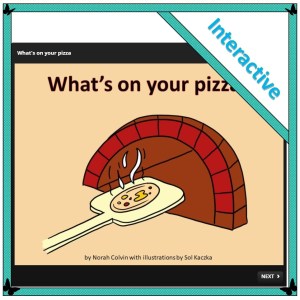
    The new interactive resource What’s on your pizza is a great stimulus for engaging children.  Children help Andy and Paige make their own pizza by choosing the toppings and working out the different combinations of toppings that are available. The resource can be used as a springboard for discussion, writing, mathematical investigations, science explorations and talking about healthy food choices.

    In this post, I outline some ways pizza-themed learning can be incorporated across the curriculum. I anticipate the suggestions will inspire ideas of your own with relevance to your own group of children.

    Literacy
    Oral Language

    Discussion is one of the best ways of developing children’s language. Starting with topics already familiar to and of interest to children facilities discussion into which new vocabulary and concepts can be added. Discussion could centre around; for example: who likes pizza, types of pizza, when children have pizza and their favourite pizzas.

    Reading and spelling

    Continue reading: readilearn: Engage learners with pizza-themed cross-curricula teaching and learning resources – Readilearn

  • readilearn: Introducing Jacqui Halpin – picture book author – Readilearn

    readilearn: Introducing Jacqui Halpin – picture book author – Readilearn

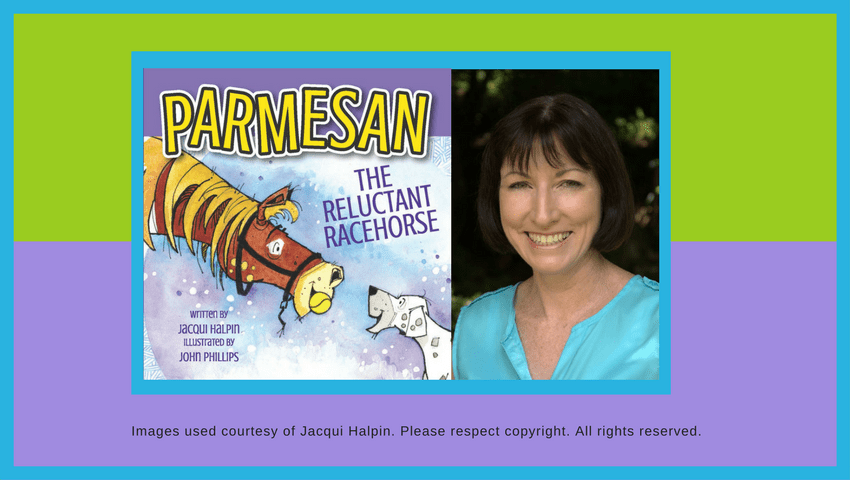
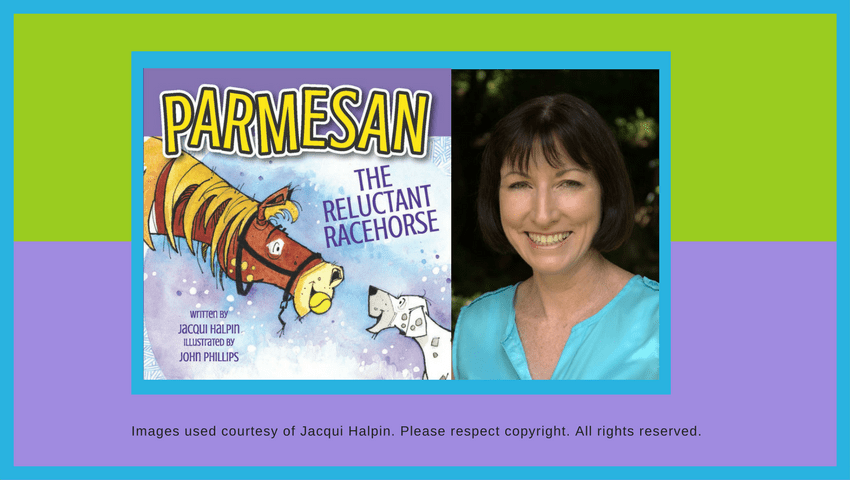
    This week, it is my pleasure to introduce you to Jacqui Halpin – author, founding member of Write Links (a local group of published and unpublished authors and illustrators of children’s books), a former nurse and tuckshop convenor.

    Jacqui grew up in Brisbane where she still lives with her husband, one of her three adult children, and a cat called Loki. While writing and editing, Jacqui likes to sip tea from fine china and eat copious amounts of chocolate. She says she should never be allowed in a bookshop with a credit card in her possession.

    Jacqui writes picture books and short stories, some of which appear in anthologies by Stringybark Publishing and Creative Kids’ Tales. She co-wrote and independently published her elderly father’s memoir, A Long Way from Misery.

    Today Jacqui is talking with us about her first picture book Parmesan The Reluctant Racehorse, humorously illustrated by John Phillips and published by Little Pink Dog Books in October 2017. Jacqui’s second picture book, Where’s Lucky?, based on an orphaned swamp wallaby joey at a wildlife shelter, will be published in mid-2019.

    Parmesan is a delightful story of a thoroughbred racehorse who should be winning races and earning lots of money for his owner. However, Parmesan thinks he’s a dog. Instead of training with the other horses, he’s off with his doggy friends doing doggy things like playing fetch. His owner is not happy. If Parmesan isn’t ready to run in the Spring Carnival, he’s getting rid of him. Parmesan’s trainer is worried. He knows Parmesan won’t be ready, but as they arrive at the Spring Carnival, he thinks of a brilliant way to get Parmesan to run around the track. Parmesan’s triumph proves you can be a winner and stay true to who you are.

    Welcome to readilearn, Jacqui, we are looking forward to getting to know you better.

    Thanks for inviting me.

    Jacqui, when did you know you wanted to be a writer?

    I always liked writing stories and poems at school, but it wasn’t until I read picture books to my own children  Continue reading: readilearn: Introducing Jacqui Halpin – picture book author – Readilearn

  • readilearn –Learning sight words by reading and writing in context – Readilearn

    Learning lists of sight words is an activity familiar to beginning readers, their parents and teachers. There’s no denying the importance of being able to recognise words by sight, and the aid it is to reading fluency and comprehension. Yes, comprehension. Due to the constraints of short-term memory, it is difficult to think about meaning, when working memory is employed in attempts to figure out individual words.

    Many lists of basic sight words are available, but there is a consistency to the words included and their number, generally varying between one and two hundred. Many of the words do not have a regular letter-sound correspondence and cannot be “sounded out” using knowledge of phonics. They are also words that have meaning only in context and cannot be “pictured”. The words make up a high percentage of those appearing in texts for beginning readers and so are often referred to as high frequency words.

    Children are often given lists of words to take home and learn with the assistance of parents. Not all parents know how to encourage children to learn the words and it can be a battle if children struggle to remember them. If you are sending children home with words to learn, it is important to provide parents with strategies as well as what they need; for example:

    Provide the words on strips or in small booklets with the word written on one side and a short sentence with a picture on the other for checking.

    sight words sentence strips

    Provide one set of words. Spread the words face up on the table. Ask the child to find the word; for example, put. This is easier at first as other letter/sound cues can be used. Later, as the child is

    Continue reading: readilearn –Learning sight words by reading and writing in context – Readilearn

  • readilearn: The significance of the Chinese New Year – a guest post by Mabel Kwong

    readilearn: The significance of the Chinese New Year – a guest post by Mabel Kwong

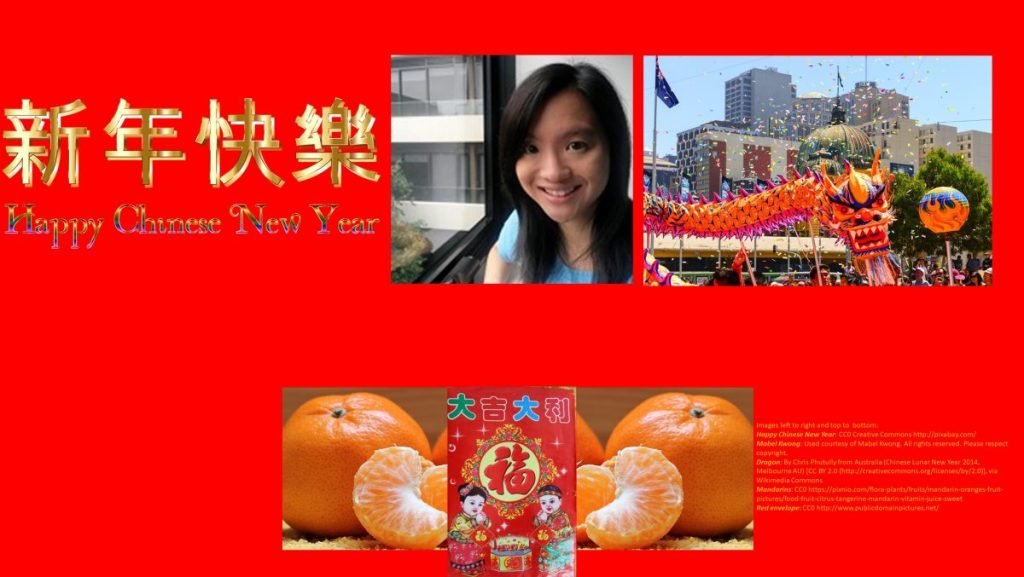
    Chinese New Year is an important Chinese festival celebrated around the world, not only in Asian countries, but in many countries where there is a large population of Chinese people or their descendants, including Australia. Maybe it is celebrated where you are too.

    This week I have the great pleasure of introducing you to Mabel Kwong, a writer and Chinese Australian. Mabel explores and writes about the topics of multiculturalism, cultural diversity and identities. She feels that the more you get to know others of different backgrounds and each other’s cultures, the more you learn to see things from different perspectives. In her spare time, she is a keen photographer and video gamer.

    In this post Mabel shares with us some background information about the Chinese New Year as well as her personal experience of Chinese New Year celebrations when she was growing up in Malaysia and Singapore.

    Chinese New Year celebrations in the classroom

    Mabel has written the post in such a way that it could be read to a class of children. Indeed, we have worked together to prepare it as such, and it is now available as an estory, free to everyone—there is no need even to register—in Chinese New Year Cultural Studies resources.

    Continue reading: readilearn: The significance of the Chinese New Year – a guest post by Mabel Kwong

  • readilearn: Meet Sofia Goodsoul author of Nian the Lunar Dragon – Readilearn

    readilearn: Meet Sofia Goodsoul author of Nian the Lunar Dragon – Readilearn

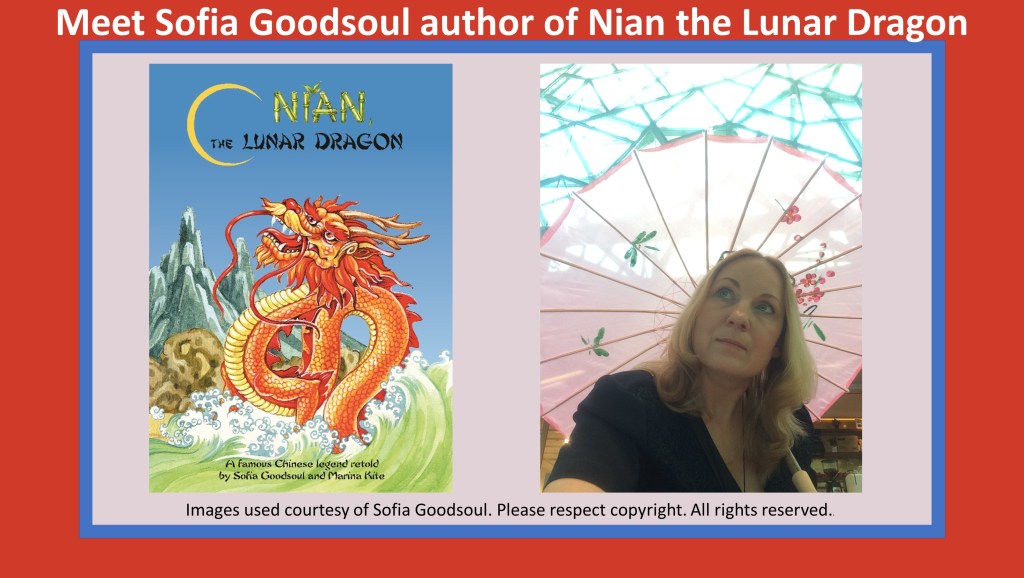
    This week I am very excited to be interviewing Australian author Sofia Goodsoul about her picture book Nian the Lunar Dragon, illustrated by Marina Kite. With Multicultural Children’s Book Day coming up on 27 January (see previous post I am Australian) and Chinese New Year on 16 February, the time is just right.

    Before we begin the interview, let me provide you with a little information about Sofia.

     Sofia Goodsoul is an author, emergency kindergarten teacher and indie-publisher. Her poetry writing has grown from a hobby into a great passion. Now she can’t live a day without writing poems, riddles and stories for young children. The children give themes and inspiration for her books.

     Sofia lives in Melbourne with her family and pets. She loves going to Zumba classes and taking long walks with her husband and family dog Mack.  Sofia dedicates all her spare time to her writing and publishing career.

    multicultural children's book diversity Chinese New Year

    Nian the Lunar Dragon, an entertaining and beautifully illustrated rhyming narrative for young readers, is Sofia’s second picture book in collaboration with Marina Kite. The book is about the legend behind the traditions and celebrations of Chinese New Year, sometimes called Lunar New Year. According to the lunar calendar, Chinese New Year commences with the new moon at the beginning of spring.

    A long time ago, the dragon named Nian lived in the deep ocean to the east of China. Nian was a strong and ferocious dragon, which no creature could defeat. Once a year, Nian climbed ashore to hunt for cattle and human prey. The people of the nearby villages and towns lived in terror, and each New Year’s Eve they had to leave their homes to save themselves. One day, a monk came to the village. He knew a well-kept secret about how to scare Nian away and free the Chinese people from the danger and their fear.

    Welcome to readilearn, Sofia. We are looking forward to getting to know you a little better.

    Thanks for inviting me!

    Sofia, when did you know you wanted to be a writer?

    I don’t remember capturing that specific moment, but my grandmother was a children’s book illustrator and I often stayed with her

    Continue reading: readilearn: Meet Sofia Goodsoul author of Nian the Lunar Dragon – Readilearn

    Thank you blog post

    Thank you for reading. I appreciate your feedback. Please share your thoughts.
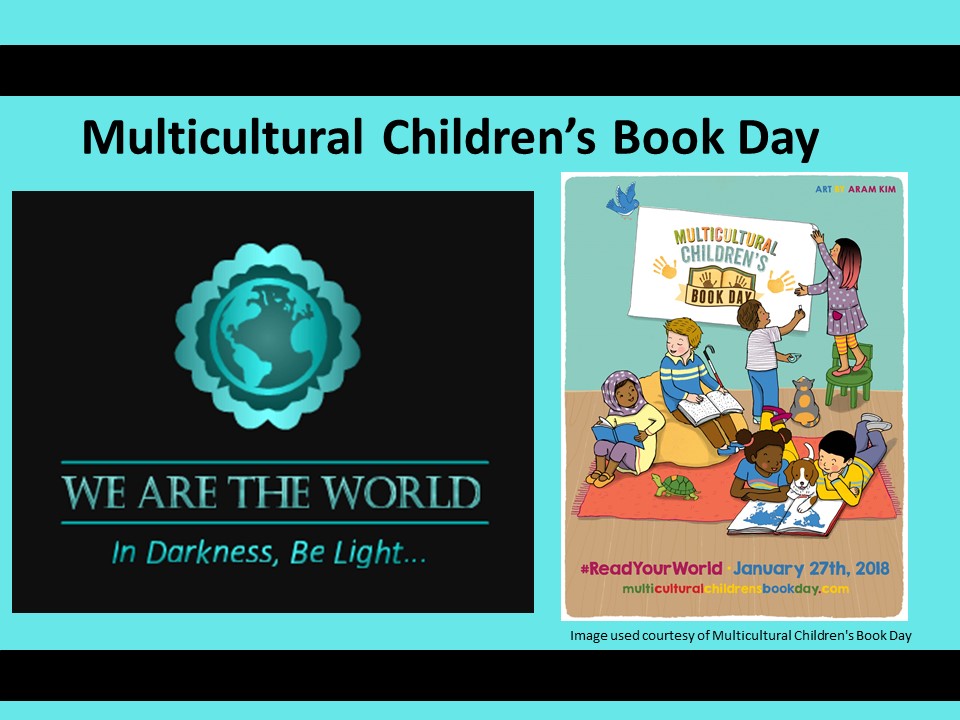
  • #WATWB #ReadYourWorld Multicultural Children’s Book Day

    #WATWB #ReadYourWorld Multicultural Children’s Book Day

    On the last Friday of each month We Are the World Blogfest invites bloggers to join together in promoting positive news. With this the first for 2018, it’s a good time to think about joining in. If you would like to do so, please check out the rules and links below.

    A statement of mission from the We are the World Blogfest website:

    “There are many an oasis of love and light out there, stories that show compassion and the resilience of the human spirit. Sharing these stories increases our awareness of hope in our increasingly dark world.”

    The co-hosts for this month are:  Shilpa Garg, Simon Falk, Lynn Hallbrooks, Eric Lahti, Damyanti Biswas and Guilie Castillo. Please pop over to their blogs to read their stories, comment and share.

    This month I am sharing an inspiring story that, while it may not be “News”, was certainly news to me and maybe is news to you too. I hope it fits the criteria for sharing.

    A little while ago I came across the Multicultural Children’s Book Day website. I admire the mission of the organisers to:

    “not only raise awareness for the kid’s books that celebrate diversity, but to get more of these of books into classrooms and libraries.”

    There is certainly a need for more understanding, acceptance, empathy and compassion in the world, and it is very pleasing to see projects such as this being promoted. I’m sure you’ll agree that education of our children is a great place to start.

    Multicultural Children's Book Day
    Used courtesy of Multicultural Children’s Book Day

    Multicultural Children’s Book Day was initiated by Valarie Budayr from Jump Into a Book and Mia Wenjen from Pragmatic Mom, and is celebrated for the fifth time this year on 27 January with a #ReadYourWorld Twitter party!

    There is much to explore on the Multicultural Children’s Book Day website; including resources such as, a list of diversity books and activities for teachers and parents, and  a free Classroom Empathy Kit that includes a book list and activities to help children develop empathy. You can even sign up to get a free diversity book for your classroom.

    (Note: There is also a great way for authors and publishers to help out by donating their books with multicultural themes.)

    I hope you see how both these organisations are working towards making our world a more positive place for all of us.

    Here are the guidelines for #WATWB:

    1. Keep your post to Below 500 words, as much as possible.

    2. Link to a human news story on your blog, one that shows love, humanity, and brotherhood. Paste in an excerpt and tell us why it touched you. The Link is important, because it actually makes us look through news to find the positive ones to post.

    3. No story is too big or small, as long as it Goes Beyond religion and politics, into the core of humanity.

    4. Place the WE ARE THE WORLD badge or banner on your Post and your Sidebar. Some of you have already done so, this is just a gentle reminder for the others.

    1. Help us spread the word on social media. Feel free to tweet, share using the #WATWB hashtag to help us trend!

    Tweets, Facebook shares, Pins, Instagram, G+ shares using the #WATWB hashtag through the month most welcome. We’ll try and follow and share all those who post on the #WATWB hashtag, and we encourage you to do the same.

    Click here to join in and enter the link to your post. The bigger the #WATWB group each month, the greater the joy!

    Thank you blog post

    Thank you for reading. I appreciate your feedback. Please share your thoughts.
     

  • readilearn: I am Australian – Readilearn

    readilearn: I am Australian – Readilearn

    Australia is a continent populated mostly by immigrants or their descendants. According to the Australian Bureau of Statistics, in 2016, the number of Aboriginal and Torres Strait Islander peoples living in Australia was less than 3 per cent of the population. This means that over 97 have ancestors who were born elsewhere, though most will feel the influence of no more than two previous generations and consider themselves firmly Australian. In fact, the number of Australians born overseas is still increasing and was over 28 per cent in 2016.

    What this means for teachers in Australia, is that the composition of their classes will include children from a great diversity of cultural backgrounds. Possibly it is the same for you.

    This proxy Australian anthem I Am Australian, written by Bruce Woodley and Dobe Newton, is a moving song that honours the diversity of cultures in Australia, from the First Australians to more recent immigrants. It is often sung in schools to help develop an understanding of and appreciation for the richness of the Australian peoples.

    It is important to teach children acceptance of and appreciation for each other and their traditions. A supportive classroom will value each child’s contribution and heritage. Getting to know each other at the beginning of a school year provides the perfect opportunity for learning about the traditions of others. However, it can be done at any time of the year.

    readilearn resources that assist you do this are: Continue reading.

    Source: readilearn: I am Australian  – Readilearn

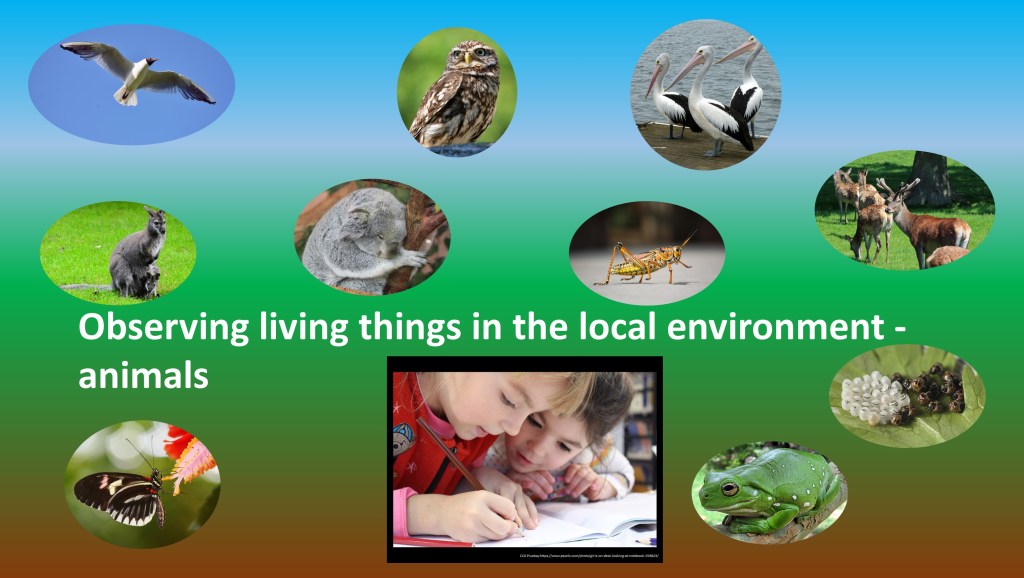
  • readilearn: Observing living things in the local environment – animals – Readilearn

    readilearn: Observing living things in the local environment – animals – Readilearn

    Observing living things in the local environment helps children develop an appreciation for all living things, not just the exotic animals that feature most commonly in picture books and wildlife shows. It also helps them appreciate the diversity of living things in their local area and may stimulate an interest to know more.

    Conducted over a week, including a weekend, observations can reveal a surprising number of creatures. If the observations are repeated throughout the year; for example, during different seasons, a greater diversity may be observed.

    Be part of a larger project

    While observations can be conducted independently as part of the class curriculum, sometimes you can be involved in larger citizen science projects such as these two Australian projects: the Aussie Backyard Bird Count and The Atlas of Living Australia. Data on The Atlas of Living Australia enables you to find out what living things others have observed in your local (Australian) area.

    For those living outside Australia, you may find resources specific to your location by searching National Geographic, Scientific American or simply by conducting an internet search.

    Books and other resources

    While many species observed may be identified through an internet search, particularly using the resource section of your local museums, it is also useful to source books about the wildlife of your area, or to seek out local groups and experts to assist identification and to develop understanding of local habitats and living things.

    Circle picture book by Jeannie Baker

    Include picture books if possible too. For example, earlier this week I had the pleasure of attending the launch of an exhibition of collages created by Australian author and illustrator Jeannie Baker to continue reading

    Source: readilearn: Observing living things in the local environment – animals – Readilearn

  • readilearn: Establishing a supportive classroom environment from day one – Readilearn

    readilearn: Establishing a supportive classroom environment from day one – Readilearn

    Establishing a supportive classroom environment from day one builds a strong foundation of positive relationships and attitudes to school and learning. It is important to begin the year as you wish it to continue, and a welcoming classroom helps children and families feel valued. Having an organised classroom is just a part of it.

    Many existing readilearn resources support the establishment of a supportive classroom environment.

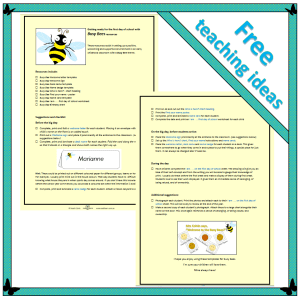
    The free resource Getting ready for the first day with Busy Bee resources lists some of the available resources and suggestions for using them; including:

    busy Bees welcome to first day of school package

    These resources are available to download individually, or as a collection in the zip folder Busy Bee – Welcome resources for Day one.

    In many of the schools in which I have worked, children are expected to bring their own set of supplies – books, pencils, scissors, glue, paint shirts, even tissues. I recognise that not all schools have this requirement, so ignore any suggestions that are not relevant to your situation.

    Whether children are required to bring their own supplies or not, it is useful to have spares

    Source: readilearn: Establishing a supportive classroom environment from day one – Readilearn