Live Love Laugh Learn … Create the possibilities

Category: Poems

  • Experiential learning – what’s good and what’s hot

    farm

    I am a proponent of learning by experience, of learning through one’s own explorations and making one’s own discoveries. In early childhood centres it is sometimes called ‘hands on’ learning. The recommendation is to provide opportunities for children to learn by doing rather than simply by listening to someone tell about it or by reading information in a book. For example, experiencing the sights, smells and sounds of a farm create an enriched understanding of farm life that is not possible simply from looking at pictures of farm animals in a caption book. Activities like mixing and making with modelling dough, or building and creating with construction sets provide opportunities for developing numerous skills and understandings.

    That’s not to say that experiential learning is best in every situation or that learning from the explanations of others, including reading information in a book, is less worthy. Indeed there is a place for each and it is important to get the balance, timing and application right. You would not need to view many posts on my blog (for example here and here) to realise that I am a proponent of reading also and believe that instilling a love of reading is one of the greatest gifts a parent can give a child.

    In their book A New Culture of Learning: Cultivating the Imagination for a World of Constant Change, Douglas Thomas and John Seely Brown discuss the differences between explicit knowledge and tacit knowledge.  This chart shows my understanding of some of the differences.

    Explicit and tacit learning


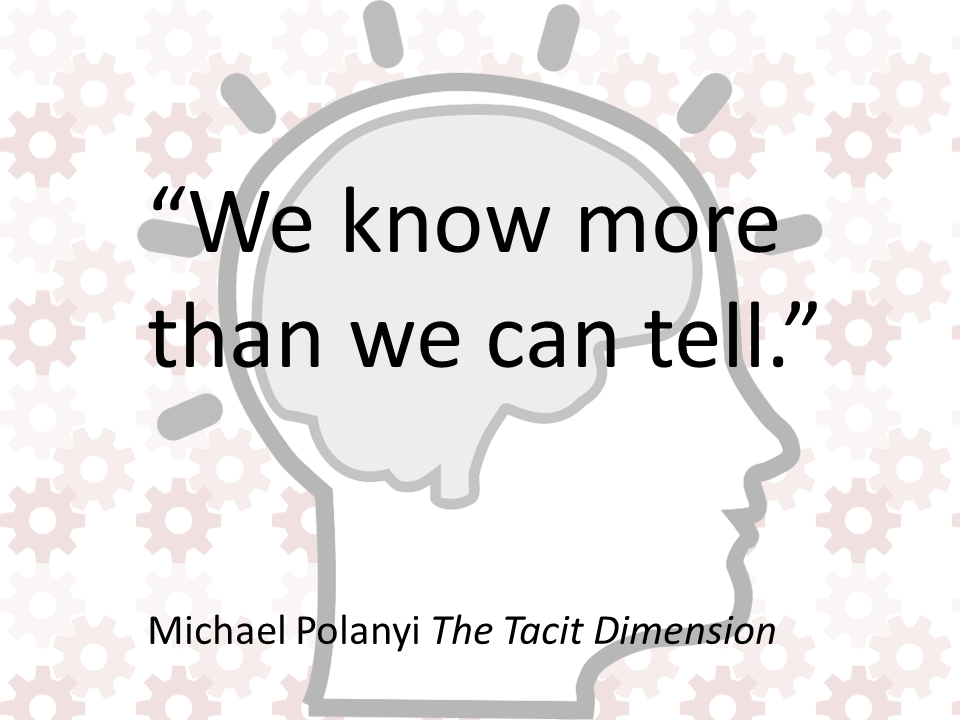
    Michael Polanyi  The Tacit Dimension

    I think it would be undisputed that there is knowledge best learned through explicit instruction and other best learned through experience. I am sure you can think of many examples in your own life, like riding a bicycle, learning a foreign language or playing a musical instrument.

    netalloy, glossy flame https://openclipart.org/detail/91951/glossy-flame
    netalloy, glossy flame https://openclipart.org/detail/91951/glossy-flame

    But what about teaching young children about heat? It is not far into the life of any young child that they are cautioned about the heat of an oven or stove, heater or barbecue plate. But what is “hot” if you have never experienced it?

    Thomas and Brown say that “when a parent first tells a child not to touch a flame because it is hot, the child will almost always put out her hand and get burned” because the child has only been given the explicit part of the information, the part that could be articulated: that “Fire is hot”. When the child is burned much more information is learned by the body: that it hurts and is unpleasant. The child is then able to make connections with other similar “hot” things and situations.

    I think neither of the authors nor any parent would suggest a child be burned “for educational purposes” but the power of experience can be seen in this example. Perhaps it also helps to explain why young children need constant reminders to stay away, or precautions need to be taken to protect them, from hot things. Without the burning sensation they have not formed a true understanding.

    thomas and brown - learning

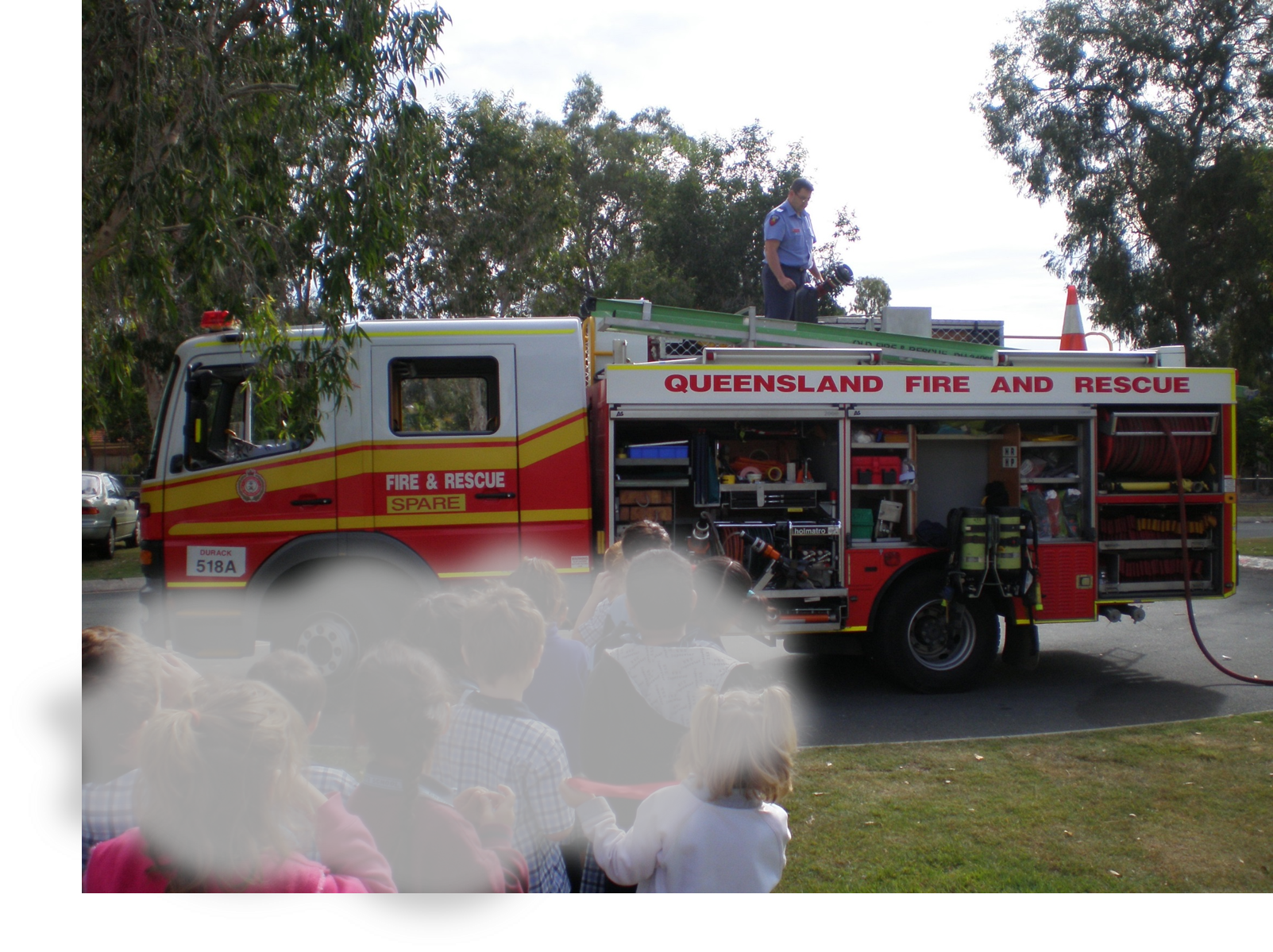
    At my previous school our year one classes were always visited by the local fire fighters who talked about fire safety, explaining the difference between “good” fires (like birthday candles, barbecues and campfires) and “bad” fires, while warning that even good fires could quickly become bad  if not monitored correctly.

    They talked about the need for smoke alarms in the home and the importance of having escape routes and meeting places planned and practised. They ensured students knew their full name and address and the procedure for calling emergency (000 in Australia) if the need should arise. These are things that all young children should know.

    firetruck

    The children were always excited about the firefighters’ visit as they got to look at the firetruck close up, maybe even sit in it or, if they were lucky, see how high they could spray water with the large hose. The tacit knowledge learned through this type of experience, combined with explicit knowledge provides a context that allows children to learn the realities of fire danger and the importance of safety. It wasn’t unusual for the crew to receive a call and rush away during one of their visits, adding further to the overall experience for the children.

    rg1924, unexpected frog in my tea    https://openclipart.org/detail/21079/unexpected-frog-in-my-tea
    rg1924, unexpected frog in my tea https://openclipart.org/detail/21079/unexpected-frog-in-my-tea

    Thinking about heat and education, and the hold that explicit knowledge and its testing has on current practice makes me think of the story about a frog in a pot of hot water.

    The story says that if you were to put a frog into a pot of hot water, it would jump out immediately; but that if you were to put the frog into a pot of cold water which is warmed slowly, the gradual increase in temperature wouldn’t be noticed and the frog would be boiled alive.

    Perhaps this is why some educational practices are accepted without question. People have become so used to them, with small incremental changes seeming insignificant and unworthy of comment. However the cumulative effects over time can be enormous. By the time they are realised, making amends would require so great a change, possibly a total restructuring, that it would defy plausibility.

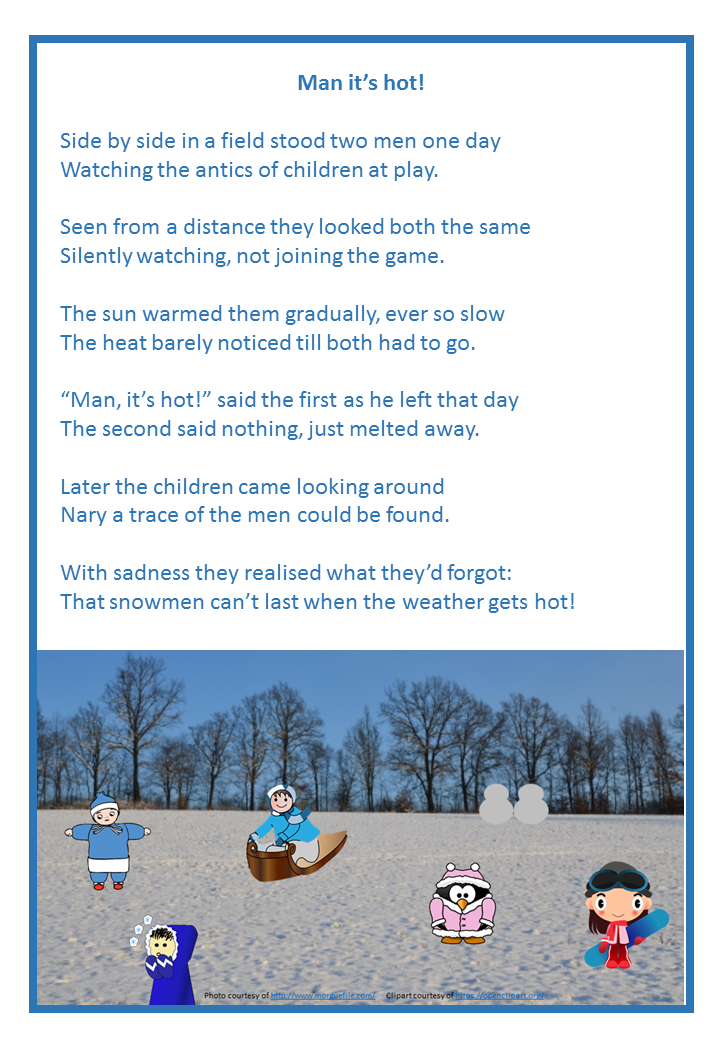
    It is this thinking that has led to me my flash response to the challenge set by Charli Mills at the Carrot Ranch this week to In 99 words (no more, no less) write a story that includes the phrase, “Man, it’s a hot one.” I hope my contribution is a little more environmentally friendly and suitable for young children than boiling frogs.

    Man it's hot

    Thank you

    Thank you for reading. I appreciate your feedback. Please share your thoughts about any aspect of this post or flash fiction.


  • Playing with possibilities

    127

    Creating an environment which nurtures children’s learning and development is as important as creating an environment that nourishes and encourages the growth of plants in a garden. The link between the two was first recognised by Froebel in the early 19th century when he coined the term “kindergarten” which translates to “garden for children” (kinder meaning child and garten meaning garden), and created the first educational toys.

    Froebel “devoted his life to educating children and developing methods to maximize human potential”. He was the first to recognise the importance of a child’s early years (birth to three) and considered creativity to be something in all of us.

    Froebel’s kindergartens were the first “formal” education for young children and his work greatly influenced that of other educators such as Maria Montessori and Rudolf Steiner. His beliefs, for example that children have both unique needs and capabilities are still influential today. He believed in the importance of play and some of his toys were favourites of people such as Buckminster Fuller and Albert Einstein.

    I have touched on the topics of play, creativity and children’s uniqueness in previous posts. A respectful, encouraging, nurturing and stimulating environment underpins all that I value in education; as does a belief in the power of play to develop understandings of self, of others and relationships, of the world and how things work, and to inspire thoughts of what could be, to imagine possibilities never before imagined.

    The poem Education is expresses my beliefs about education and has informed my decision making every step of the way.

    In documents prepared for introducing myself to other educators or potential employers I explained it this way:

    Statement of values:

    I value individuality over group consensus

    I value creativity over conformity

    I value self-discipline over imposed order

    I value ingenuity over “one right way”

    I value choice over restriction

    I value questioning over silence

    I value independence over dependence

    I value self-confidence over submission

    I respect children as people in and with their own rights. I provide an environment which is rich, stimulating, open and caring, and in which the characteristics I value can flourish.

    At the time of writing it I believed it to be a true reflection of my values and the environment I provided in my “Create-A-Way” sessions, and would provide in the independent/alternative school I was working towards establishing.

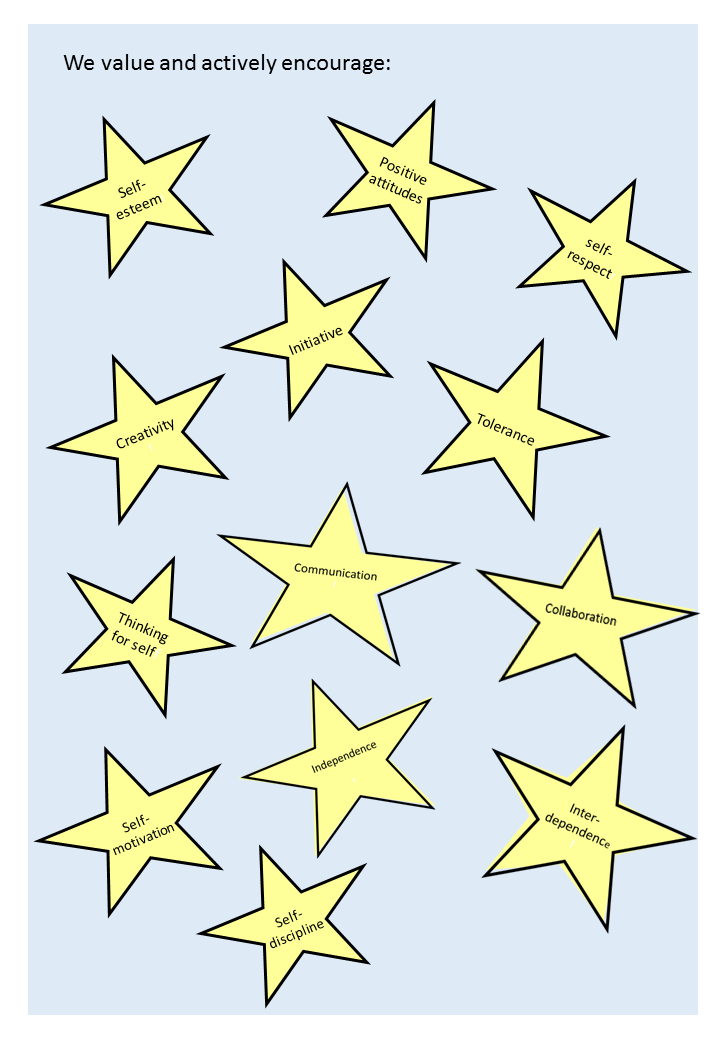
    The values of the “school” I was setting up were stated this way:

    Colo Values

    Just as it is important for gardeners to learn from the wisdom collected by other gardeners, it is important for teachers to learn from the wisdom collected by other educators.

    56


    Without a set of guiding principles it is easy to be blown off-course by the winds prevailing at the time. While I acknowledge that I may have fallen far short of the values espoused, that they guided my direction, decisions and choices could not be questioned. The current climate makes it difficult, but I am yet to read of a time that could be considered a golden age of education.

    36

    This week at the Carrot Ranch Charli Mills is talking about roses; roses that grow in gardens and roses as symbols of life’s pleasures and joys. She challenged writers to In 99 words (no more, no less) write a story that includes a rose.

    Because my blog has an educational focus, I always like to give Charli’s prompt an educational twist. Over recent months I have enjoyed the additional challenge of finding a way of applying the prompt to the life of Marnie, a character whose story I have been developing.

    Marnie is from a dysfunctional family and suffers many disadvantages. Fortunately she has found an ally in an art teacher who helps her develop self-respect and hope for a better future. A few weeks ago (in response to a different prompt) we learned that she had lived under a different name after leaving home. Could it perhaps be Rose, a name inspired by this interaction with her adored teacher?

    99

    Still life

    Marnie observed the roses Miss R. had arranged for class, carefully assessing the colours and studying the lines while sketching them on the canvas, striving to match their perfection. Oblivious to all but Miss R. and the roses, for one hour nothing else mattered.

    As other students streamed out Marnie hung back to chat with Miss R.

    Miss R. handed her a rose from the vase saying, “You are that rose. You may be surrounded by thorns, but the beauty of the rose is inside you. Remember that always. A rose by any other name would smell as sweet.

    Thank you

    Thank you for reading. I appreciate your feedback. Please share your thoughts about any aspect of this post or flash fiction.

  • Spelling tests – How well do you score?

    ABC

    Familiar to most will be the weekly spelling test held on a Friday morning after a week’s practice at learning a list of words. Some will have dreaded the test fearing they may forget the “i before e”, “silent” letter or double letter rules, for example, their inadequacies made all too obvious by the large red crosses. Others would have relished the experience, requiring little effort to learn words they already knew, seemingly by osmosis, with the expectation of large red ticks and 10/10.

    Spelling test

    I dare say that most of you reading this blog are of the 10/10 variety. Just to be sure this is so, I have set you a little spelling test to do before you read any further. Please get your pen and paper, finger and notebook, or keyboard ready, then press PLAY to take the test.

    So how did you go?

    I hope you could see from that exercise that knowing how to spell has a lot to do with meaning. In fact the spelling of many of our words in English has more to do with morphology than with sound, and although sound can be helpful there are often many different letters or letter combinations that can be used to represent the same sound, for example:

    eye

    According to the Bullock Report, published in 1975:

    “For 6092 two-syllable words among the 9000 words in the ‘comprehension vocabularies’ of a group of 6-9 year olds, 211 different spellings of the phonemes were needed – and these spellings required 166 rules to govern their use! Even at that, 10% of the words had to be left aside as ‘exceptions’; which means that ‘even if a young child memorised these rules while learning to read he would still encounter hundreds of words not governed by them.’”

    Lists of words, such as spelling lists, provide little support for learners, rarely providing context or meaning which might help them remember the words, or choose the correct meaning and therefore spelling, as shown by the spelling test exercise given above.

    Alphabetical

    In his book “Alphabetical: How Every Letter Tells a Story”, Michael Rosen explains that transmitting meaning is the reason for writing, for having an alphabet.

    Rosen describes the alphabet as “a stunningly brilliant invention. We could call it a ‘cunning code’ or a ‘system of signs’ whereby we use some symbols (letters) to indicate some of the sounds of a language. … Though it is wonderful, there are some snags for users …” including:

    • letters and letter combinations do not represent the same sound each time they are used (e.g. ‘c’ in ‘cat’ and ‘city’)
    • letters represents different sounds according to regional accents
    • a particular sound is not always represented by the same letters (see the ‘eye’ example above)

    He says that “Becoming or being a reader of English involves absorbing all these variations and then forgetting that they exist.”

    a phonic's teacher's lament

    He explains that the alphabet is more than a system of sounds and syllables and that “Our forebears devised alphabets so that they could store and retrieve meaning … over time and/or space”.

    While not speaking specifically about learning spelling words, in his book “Why Don’t Students Like School? A Cognitive Scientist Answers Questions About How The Mind Works and What It Means For Your Classroom” (referred to in a previous post here), Daniel T. Willingham consistently refers to the importance of meaning when acquiring knowledge. He says,

    “Teachers should not take the importance of knowledge to mean they should create lists of facts . . . some benefit may might accrue, but it would be small. Knowledge pays off when it is conceptual and when the facts are related to one another, and that is not true of list learning. Also … such drilling would do far more harm by making students miserable and by encouraging the belief that school is a place of boredom and drudgery, not excitement and discovery.”

    When a child scores poorly in a spelling tests and their errors are marked in red they see themselves as bad spellers, lose confidence in their ability and have a defeatist attitude before they even try.

    Why is spelling important?

    Standard spelling is essential to ensure the meaning of the message is transmitted correctly from writer to reader. While readers may very quickly notice spelling errors in text they are reading, these few errors, when embedded in meaningful text, rarely inhibit the transmission of meaning. However if the bulk of the text is in nonstandard spelling, the message would be virtually indecipherable.

    How do we learn to spell?

    The most effective way most of us use to learn to spell is reading. While reading we are exposed to a large number of correctly spelled works in context. If we read often enough, we see words frequently and learn to recognise them. We notice when they are misspelled and so recognise how they are spelled.

    The importance of spelling correctly is relevant to and a tool for our writing. The learning of particular words is best done in the context of writing.

    These are some strategies that can be used with beginning writers:

    • Model writing for them, let them see you write for real purposes, think out loud so they can see what you are doing, for example: “I going to write a . . . I’m going to start … I need to write … ”
    • Encourage them to write for self-expression, to share ideas, to tell a story . . . sustained and uninterrupted writing without the fear of a red pen anywhere.
    • Encourage them to listen to the sounds in the words and write any of the letters they know (Beginners usually start with the initial consonant, then perhaps the initial and final consonant. Vowel sounds are the most difficult to hear and differentiate and are irregular in how they are represented.)
    • Respond to their writing with written comments to their messages, modelling the correct form, for example: If the child writes “I wet to the bich on the weced” you could reply with “Did you have fun when you went to the beach on the weekend?” This enables the child to see the importance of writing for communication, demonstrates the correct spelling without being “corrected” and provides a model which can be used in future writing.
    • Encourage children to proofread their own writing by circling words they weren’t sure how to spell. Don’t always expect them to discover the correct spelling. Being able to recognise when a word is or is not spelled correctly is a first step in developing competence.
    • Notice and comment on any development that can be seen in the child’s spelling ability, for example: “You have written the word ‘kitten’. You have written the ‘k’, you know that it begins with ‘k’; you have written the ‘t’ you can hear in the middle and the ‘n’ at the end. You have listened very well to the sounds in the word.”  
    • If you want to give a child a list of words to learn, use words that have been misspelled in independent writing. Independent writing provides you with information about what the child wants to write about.
    • As they begin using technology for writing, show them how to use the tools available for checking their spelling.

    bee 5

    As a final note, in the Conversation this week was an article by Nathaniel Swain, entitled Spelling bees don’t teach kids literacy, or much else. The article discusses a soon-to-be aired television show that pits nine to thirteen year old children against each other in a spelling competition.

    Swain says,

    “How would you go spelling feuilleton, stichomythia, cymotrichous, or appoggiatura? More importantly, do you know the meaning of these words, and could you use them in a sentence?

    Challenging and insightful, or obscure and essentially pointless? Spelling bees encourage endless memorisation of complex but low-frequency words – and are a distraction from the core of literacy education.”

    Thank you

    Thank you for reading. I appreciate your feedback. Please share your thoughts about any aspect of this post.


  • Taking a risk with flash fiction!

    For the past couple of months I have been participating in a weekly flash fiction challenge set by Charli Mills of Carrot Ranch Communications.


    This week’s prompt:


    In 99 words (no more, no less) write about the experience of letting go of something that feels safe like training wheels.


    appeals to me because it is about stepping out to something new, moving out of the comfort zone, letting go of the past, and releasing previously held beliefs and feelings.


    These are not always easy things to do, but they are a necessary part of life. Indeed, it could be said that the very act of being born is the first of such occasions.


    The ability to try new things, the willingness to take risks, the determination to get up and try again after failure and the persistence to keep going are important attributes of successful people.


    In my role as teacher it was important for me to encourage the development of these traits in myself, as much as in my students. Without these abilities no learning occurs, no growth takes place.


    Sometimes a gentle push (read encouragement/incentive) may need to be applied to help overcome an initial reluctance for a particular activity. This reluctance may soon be replaced by an enormous excitement, energy and future love for the activity. Other times no amount of coaxing can get an unwilling participant to budge.


    It is equally possible that an activity towards which one rushes (headfirst, arms flailing, bells ringing) in due course loses its lustre to disappointment.


    Below is the piece I wrote in response to Charli’s challenge. I have not revealed the activity I had in mind. I’m sure that you have experienced or witnessed several similar responses throughout your life. I’d love to know which one springs to your mind!


    Please share your thoughts. I hope you enjoy this piece of flash fiction!


    www.openclipart.com http://goo.gl/EY7z5L
    http://www.openclipart.com http://goo.gl/EY7z5L

    About ___________?


    I don’t want to.

    I don’t feel like it.

    You can’t make me.

    It’s not fair.

    No-oo!

    Leave me alone.

    Sob.

    Sob, sob.


    No-oo!

    I don’t want to.

    Alright. I’ll sit over there,

    But I won’t do it.

    You can’t make me.

    I won’t even look.

    Stomp.

    Stomp, stomp.

    Thump.


    Humph! Stupid.

    It’s not even fun.

    They can do it.

    I don’t care;

    Don’t know why they dragged me here anyway.

    Told them I wasn’t going to do it.


    Haha. What happened?

    That looks like fun.


    Hey! Let me do it.

    It’s my turn.


    Boy, this is fun!


  • Going on a treasure hunt!

    we're going on a bear hunt

    A few weeks ago I had the great pleasure of taking my two gorgeous grandchildren to a performance of Michael Rosen’s “We’re Going on a Bear Hunt”. To say we enjoyed it would be an understatement. We had a rollicking good time.

    The performance involved a lot of audience participation including spraying the entire audience with water from the “deep cold river”; an event which left everyone slightly wet, screaming with anticipation and laughter, and genuinely having a wonderful time interacting with this fabulous text.

    We were already familiar with the text, of course, and had read it, recited it, acted it out and played a board game which has been made to accompany the text. None of this really prepared us for the delightful stage performance; but these pale in comparison with a telling by the master storyteller himself, Michael Rosen.

    Michael Rosen’s website is a veritable treasure chest with much to explore and delight.  From his home page you can visit his blog which he describes a as a place where he’ll

    “post up some thoughts and ideas – especially on literature in education, children’s literature in general, poetry, reading, writing, teaching and thoughts on current affairs.”

    You can also check out a full list of his publications. He’s very prolific!

    After attending the performance of “We’re Going on a Bear Hunt” I shared with my grandchildren the video of Michael Rosen performing the story, which is also available from his home page. They loved it and we watched it “Again!”

    Then I showed them the video of Rosen performing his fabulous poem Chocolate Cake. We watched it four times! Artie, who is four (and a half) was joining in with the telling the second time, and by the fourth time was copying many of Michael’s actions as well as facial and vocal expressions. Artie laughed along with the story and excitedly called other members of the family to watch it with him.

    The next time Artie came to visit he was performing his own version, “Lollipop”, with similar actions and both facial and vocal expressions. His younger sister also had to have her turn telling the story. It was delightful and convinced me, though I needed no convincing, of the power of a great performer to turn children onto the fun of language, of playing with words, of performing, and of composing writing of their own. Creativity ignited!

    If you haven’t yet watched Michael perform Chocolate Cake, I urge you to do so. You are in for a treat. I’m certain you will not be able to watch it without a smile on your face.

    Michael is so passionate about making poetry come alive for children, he has made many videos on his website freely available to teachers for use in their classrooms.

    In his article “Teachers write to me saying, ‘What about poetry?’”, Michael begins by saying,

    The-best-thing-you-can

    He then goes on to present many fun ways of engaging children with poetry, none of which involve word study or comprehension exercises. He makes suggestions for performing, writing and talking about poems; and says that

    “The best and most important thing you can do with any poem that a child writes is either get it performed or ‘published.”

    and offers suggestions of how to do just that.

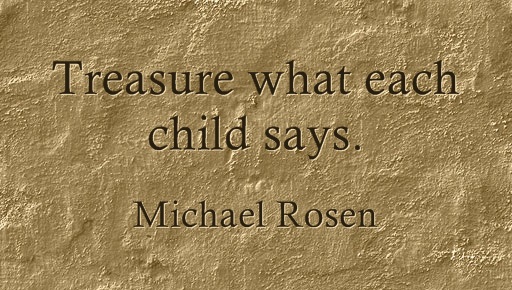
    Another thing he says in that article, which was the inspiration for the title of this post, is

    Treasure-what-each-child

    I couldn’t agree more.

    This is just a brief sample of the riches to be found on the Michael Rosen website. There are so many videos of Michael’s performances available that I have not yet watched them all. Please let me know your favourites and I will make sure I watch those too.

    Thanks Michael Rosen. We can learn so much from you while we are having fun!

  • Paying it forward – a Liebster Award!

    Paying it forward – a Liebster Award!

    Last week I was intrigued, surprised and delighted to find that I had been nominated for a Liebster Award.

    I was intrigued because I had never heard of a Liebster Award; had no idea of what it was for or why I should have been nominated for it;

    I was surprised because I’d had no inkling that such an honour was about to befall me;

    and I was delighted to receive the nomination from fellow blogger, Harriet the Bloom whose blog is “A place for educators to reflect, recharge, and revive.” Thank you, Harriet, I am indeed honoured.

    In reality, before feeling delighted and honoured, I felt a little confused. Confusion, if acted upon, leads to learning. So I headed over to Google and Harriet’s blog to see what I could find out.

    It appears that the purpose of the Liebster Award is to:

    • provide encouragement for new bloggers with a following of fewer than 200
    • promote communication between bloggers,
    • recommend blogs to others.

    Nominating others for the award is like paying a compliment forward.

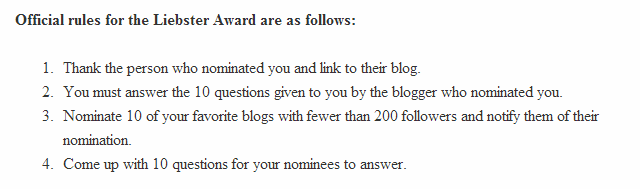
    According to Harriet, the

    Liebster rules

    Answers to the 10 questions posed by Harriet:

    1. Congratulations! You just won the Liebster Award! What are you going to do next?

    The immediate answer is contained in this post. The longer term answer is: keep on blogging!

    2. Describe yourself in three words.

    Happy. Thoughtful. Loyal.

    3. Describe your thoughts on your very first job.

    In my early teens I swept out a carpenter’s workshop on a Sunday morning. It was hard, dirty, tiring work. The head of the heavy wooden broom was about 60 cm long and difficult to manoeuvre. It would take about 2 hours to sweep up all the sawdust and I would go home and sleep for about the same length of time to recover. For hours I would be blowing black dust out of my nose, but the crisp $1 note I received in payment was sufficient encouragement for me to return and do it all again the following week.

    4.If you could go anywhere in the world, where would you go and why?

    I would love to visit Monet’s garden. I would love to sit on a seat near the bridge overlooking the waterlilies and ponder the big questions of life. I would like to share my contemplations with the artist, his contemporaries and philosophers from all eras. I love the works of Impressionist painters, especially Monet’s Waterlilies and Van Gogh’s Starry Night. The mood evoked by these beautiful paintings is especially conducive to philosophical musings.

    5. I like food. What is your favorite recipe?

    Whenever we have a family get-together it is expected that I will make a pavlova. It is enjoyed by all generations, and although I make a double (using 8 egg yolks) there is rarely any left over.

    However, for birthdays and Christmas with my immediate family (husband and children) I usually make a strawberry torte. It is a special treat that I have been making on these occasions for almost 40 years. While the in-laws find it a little rich for their taste buds, the grandchildren are taking to it in true Colvin fashion.

    OLYMPUS DIGITAL CAMERA

    strawberry torte

    6. Give a short summary of the book you are currently reading.

    As usual I have a few books “on the go” at the moment, but the one of which I have read most at this stage is “Why ‘a’ Students Work for ‘c’ Students and Why ‘b’ Students Work for the Government: Rich Dad’s Guide to Financial Education for Parents” by Robert Kiyosaki. Of course it appealed to me because of its relevance to education and because I had read others of his books years ago: “If You Want to be Rich & Happy: Don’t Go to School” and “Rich Dad Poor Dad”. In this book Kiyosaki contends that schools don’t educate students for financial success and urges parents to teach children about finances at home. He suggests that playing “Monopoly” is a great way to start. He is greatly concerned about the “entitlement mentality” which he considers to be so pervasive in our society. Some of his ideas are challenging and confronting; others make perfect sense. I recommend the book to anyone wanting to achieve financial independence. I would love the opportunity of discussing his ideas with others.

    7. What inspired you to start blogging?

    Blogging wasn’t a goal, or even an idea, initially. My intention is to create my own website to market teaching resources that I produce. I have a lot of learning to do before I am ready, and part of that learning involves attending seminars. Some of these seminars recommended having an online presence and building a “brand”. Blogging was suggested as one avenue for achieving this. I decided to give it a go, and have found it rewarding in itself – an unexpected pleasure, delightful detour and amazing adventure.

    8. How did you come up with the name for your blog?

    My blog is simply my name; that wasn’t difficult.

    9. What do you do when you experience writer’s block?

    Eat. Procrastinate. Go on with something else. Push through it. Write around it.

    10. Which post are you most proud of and why? Provide a link.

    This is tricky. I don’t think I’ve written it yet! However I very much enjoyed the comments and discussion that ensued from my series of posts about “The Examined Life” by Stephen Grosz.  The series includes:

    A book worth reading: Stephen Grosz “The Examined Life”

    Seeking praise – Stephen Grosz revisited

    and a guest post by Anne Goodwin in response:

    Examining praise: Stephen Grosz – the third instalment!

    The discussion stretched my thinking and learning and I am grateful to all participants in the conversation. Learning is what life is all about!

    Nominate 10 bloggers for the Award:

    As the rules appear to be blurred rather than definite e.g. Harriet’s rules differ slightly from those on Wording Well , which differ again from those on Sea Play Photography, I decided to nominate 13 bloggers.

    Belinda Pollard of Small Blue Dog Publishing (Australia)

    I’m starting with Belinda Pollard of Small Blue Dog Publishing because it was Belinda’s recommendation that prompted me to enter the world of blogging and tweeting. At a seminar hosted by Queensland Writers Centre last year Belinda urged all writers to have an online presence. She said that Twitter was like the water cooler for writers. I’m beginning to see that she was right. Belinda’s posts about all aspects of writing and self-publishing, including blogging, have been a great source of information for me and I appreciate what I have learned from her.

    Belinda, I know you have thousands of followers on Twitter but Word Press tells me that you have fewer than 200 followers on your blog so I hope you are happy to accept this award.

    NANNY SHECANDO (Australia)

    Next I’d like to introduce you to Hope who blogs at NANNY SHECANDO. Hope blogs about her experiences as a nanny, cooking and craft. She says, “We’re staying young, Peter Pan style, by embracing the creativity and sunshine in life.”

    Anne Goodwin (UK)

    Anne Goodwin’s website is rich with things to read: short stories, interviews with authors, book reviews, blog posts and more. Anne is one of the writers I met at ‘the water cooler’ and we have had many interesting and thought provoking conversations since then. I love the way Anne has called her website Annethology and her blog Annecdotal. She tweets @Annecdotist. Very clever!

    Caroline Lodge (UK)

    Caroline Lodge blogs at book word . . . about books, words and writing. She joined with Anne and me and we stood around the water cooler sharing ideas and exchanging thoughts. I’m certain you will find much of interest on her blog including suggestions for blogging, great books to read and writing tips.

    PS Cottier (Australia)

    For a little bit of poetry I recommend PS Cottier who posts a poem every Tuesday, and occasionally writes prose.

    Teachling (Australia)

    Teachling is a blog dedicated to improving education with ideas about teaching, learning and parenting. Teachling believes that “Improving a child’s life-chances is everyone’s responsibility” Along with me and millions of others, Teachling is a big fan of Ken Robinson.

    I have always enjoyed reading philosophy and engaging in philosophical discussions. I support the teaching of philosophy as an active thinking subject in schools and am excited about the benefits of a thinking population to the future of our world. I have two great blogs to recommend in this category:

    Peter Worley’s philosophy foundation (UK)

    Michelle Sowey at The Philosophy Club (Australia)

    Note: Last year I reblogged one of Michelle’s posts:

    Can you kill a goat by staring at it? A critical look at minimally invasive education

    There’s No Food ( Australia)

    A bit closer to home (actually much closer to home, it’s my daughter’s blog) I’d like to recommend There’s No Food. Bec blogs about “wholefoods, vegetarianism, slow living and their existential friends.” She has interesting thoughts about the impact of our food choices on the environment and practical suggestions for changes we can make to our everyday routines.

    Obscure Pieces (Australia)

    Glenn at Obscure Pieces expresses himself through black and white photography. His special interest is urban and landscape photography. He frequently offers support and comments on my posts and has generously allowed my use of some of his photographs. Thanks Glenn.

    Cultivating Questioners (USA)

    On her Cultivating Questioners blog, Nicole posts about her experiences as a teacher, especially encouraging her young students to use higher-order thinking skills . I love to see a young teacher so passionate about education.

    Nillu Nasser Stelter (UK)

    Nillu Nasser Stelter is a fiction and freelance writer and her blog features short stories, flash fiction and tips for writing. I love the ways she uses words effectively in her writing to create a picture or emotion.

    Carrot Ranch Communications (USA)

    Charli Mills at Carrot Ranch Communications also blogs about writing. As of Wednesday 5 March she launched a flash fiction challenge. Each week writers have the opportunity to accept the challenge to write a 99 word “story”. This is something I haven’t done before so I’m hoping to join in the fun. What about you? I’m sure it’s not as easy as it sounds!

    Now my nominees, it is your turn.

    These are the things I would like to know about you:

    Note: Although I have listed 13 questions, you need answer only 10. You may substitute one of your own if you wish.

    1. What do you value most in life?
    2. What activities do you enjoy and why?
    3. What is something you wish you had more time for?
    4. What is one change you would like to make in the world?
    5. What is something you would like to change about yourself?
    6. What surprises you most about your life – something good in your life that you hadn’t expected, dreamed of or thought possible?
    7. What ‘big” question do you often ponder?
    8. What sorts of things amuse you?
    9. What do you like to collect?
    10. If you could talk with anyone and ask them to explain their ideas and/or actions, who would it be, and why?
    11. What is something you can’t do without?
    12. What is something important you learned about life, and how did you learn it?
    13. What is your earliest memory?

    I look forward to reading your responses and continuing our discussions at my place or yours!

    Happy blogging!

    Footnote:
    How to find out the number of followers on a blog:
    For Word Press blogs:
    View the blogs in the Reader
    Click on the blog name at the top of the blog
    Lo and behold, you will be provided with the number of followers. Easy for Word Press.
    For other blogs
    I wasn’t sure how to find out for others not using Word Press so I sent them a message on Twitter asking their numbers. Simple.
  • Happy birthday Dr Seuss!

    Happy birthday Dr Seuss!

    Theodor Seuss Geisel: March 2, 1904 – September 24, 1991

    Picture1

    Today, March 2nd is the birthday of Theodor Seuss Geisel, better known as Dr Seuss, author of over 40 children’s books.

    While several of the Dr Seuss books were published before I was born, and many others published during my childhood, I have no recollection of meeting them prior to my years as teacher and parent. Fortunately those two roles provided me ample opportunity to catch up on the delights that I had previously missed.

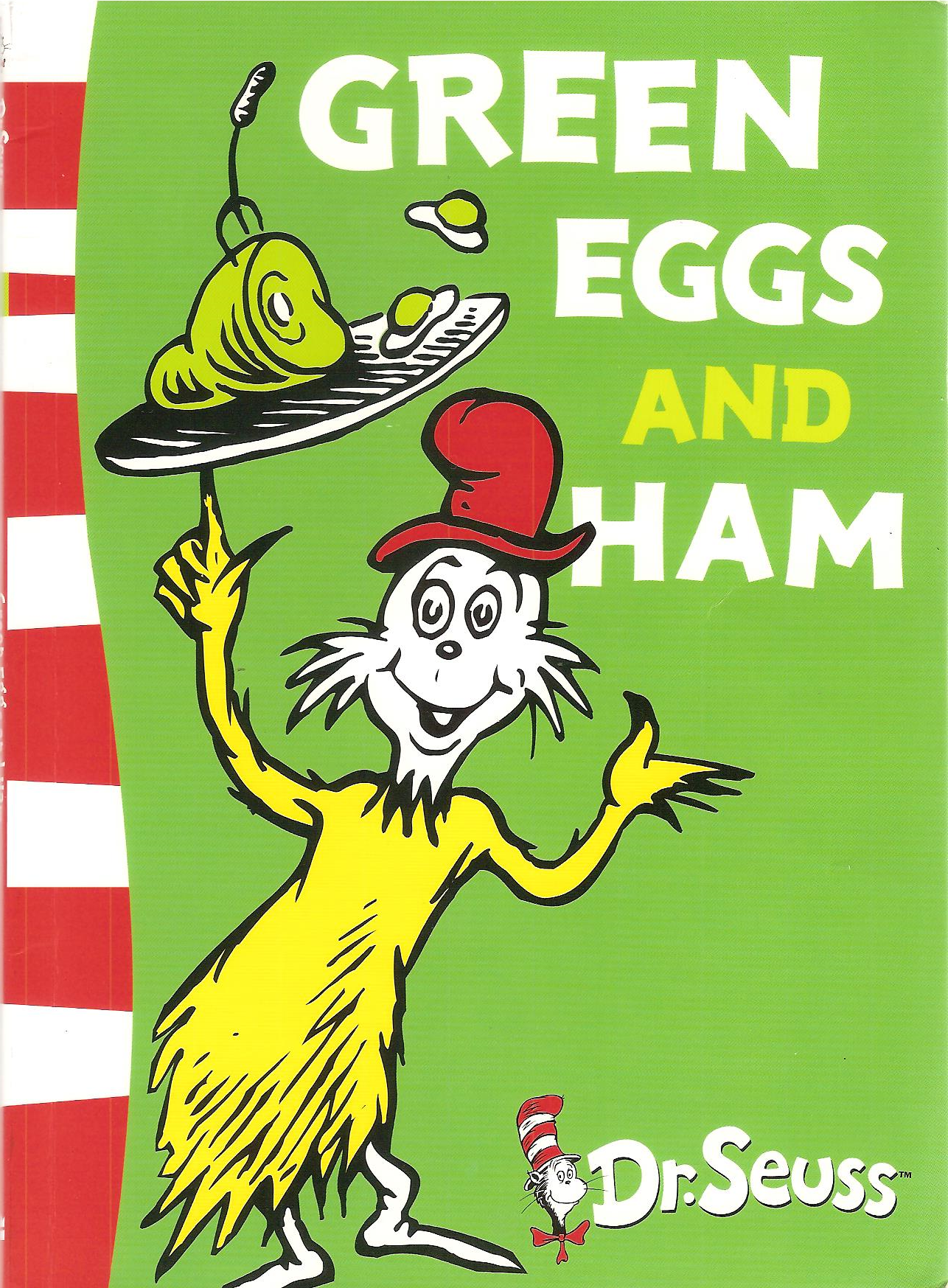
    Green Eggs and Ham

    I even apologised to Dr. Seuss in a previous post for leaning heavily on his book Green Eggs and Ham when writing about my relationship with exercise.  Click on Ode to Exercise to read my poem.

    You could celebrate his birthday by checking out the fun stuff and information on his author site seussville.com

    or pop over to Gail Terp’s Best Blog for Kids Who Hate to Read for lots of other suggestions:

    Celebrate Dr. Seuss’s Birthday with Books

    Dr. Seuss The Perfect Source for Literacy!

    Fun Dr Seuss games for the whole family

    How have the books of Dr. Seuss influenced your life?

    I invite you to share your thoughts.

  • Whose idea is it anyway?

    Whose idea is it anyway?

    First of all, let me say, there is nothing scientific in this article.
    The notions, unless otherwise attributed, are just my thoughts and ideas.

    Or are they?

    Have you ever had an idea just ‘pop’ into your head?

    What about an entire poem or song? Maybe even a story?

    Have you ever had an idea; only to find out that another has had almost the exact idea at roughly the same time as you with no chance of collaboration or leak?

    Where have these ideas come from?

    Do you really think you have thought them up when they have come fully-formed and unbidden?

    Sometimes I am not so sure.

    ryanlerch_thinkingboy_outline
    http://www.openclipart.org

    Sometimes an idea pops into my head; an idea with no connection to any current thought. It may take me by surprise and make me think: Why didn’t I think of that before? Or rather, why did I think of that at all?

    I can’t explain the force that at times propels my hand across the page, fervently trying to keep pace with and capture the words as they spill forth, lest they escape to a region from which they would never be retrieved.

    Sometimes I’ve written stories, which I may, or may not, have submitted to a publisher, only to find another very similar in print not long after. How can this be? There was definitely no collusion. My story had been written before the other was in print; and the other would have been underway by another publisher before mine had been submitted.

    Have you ever noticed that often two movies on a similar topic or theme are released almost simultaneously? Is this coincidence or planned?

    I know that sometimes songs are very similar, and in fact, there have been court cases over certain bars and riffs. I am surprised this doesn’t happen more often. How can new combinations of notes still be arranged? How difficult it can be to get a melody out of one’s head. How much more difficult it must be to be certain whether that melody is one of your own creation or one that your ears have captured.

    image courtesy of openclipart.org
    image courtesy of openclipart.org

    I remember hearing someone suggest, many years ago, that there are many ideas out there (floating around somewhere in the universe?) ready to be picked. Sometimes they are picked simultaneously by different people in different places around the world.

    I wasn’t too sure about that, but it did provide an explanation, of sorts, for the duplication of ideas.

    A few months ago, I listened to a fascinating TED talk by Elizabeth Gilbert: Your elusive creative genius.

    The focus of Elizabeth’s talk is a little different from my own, but she did offer some thoughts on this topic also.

    I was particularly interested to hear that in ancient Greece and Rome

    people did not happen to believe that creativity came from human beings . . . People believed that creativity was this divine attendant spirit that came to human beings from some distant and unknowable source, for distant and unknowable reasons.

    The Romans called this entity a “genius”. A genius was not a clever individual. It was the spirit that would help shape the artist’s work. The artist did not need to take full credit or responsibility for the work, as the work was that of the “genius’ working through the artist.

    Now that seems to support the notion of ideas arriving fully-formed, as does this next one:

    Elizabeth went on to talk about the American poet, Ruth Stone, who described how “she would feel and hear a poem coming at her from over the landscape” and she would have to run back to house in order to “collect it and grab it on the page” before it thundered on to another poet. I won’t quote the whole story here. Please follow the link to read the rest. It may surprise you as much as it surprised me!

    Looking for a little more content for this article, I came across this blog post by Amanda CraigSynchronicity, or when writers have the same idea

    Amanda writes,

    “Synchronicity is when two or more people have the idea at the same time. Science is littered with examples of this. Darwin only published his Origin of the Species because a fellow biologist had also deduced the concept of natural selection, and sent him his own book in manuscript; several people can claim to have invented the computer, and so on. So, too, in literature. I still remember a Spectator Diary Susan Hill wrote when she found out that Beryl Bainbridge was working on a novel about Scott’s doomed expedition to the Antarctic. She had to abandon it. Rival biographies of the same person are commissioned simultaneously, and sometimes even films (like the two versions of Les Liasons Dangereuses).”

    Now, is that just what I’ve been talking about?

    Follow the link to her entire article to find out what she thinks about synchronicity.

    Still eager for more, this article about Multiple discovery explains that scientists, also, are similarly burdened and, according to Robert K. Merton

    Sometimes the discoveries are simultaneous or almost so; sometimes a scientist will make a new discovery which, unknown to him, somebody else has made years before.

    So where is all this leading me?

    It is simply to introduce the poem,  “A leaf floated down” which came to me as I was preparing for my day. The thoughts were not connected to any others of the moment; the first verses simply wrote themselves, and the parts that I am least happy with, are the parts I laboured to bring forth. I hope it is my own!

    I’d love to know what you think about this synchronicity that we, as creatives, often experience. Please share your thoughts!

  • The pretender – putting on a show!

    19178-School-Building-Graphic

    Back in the early days of my teaching career, back before many of our younger teachers were born, let alone teaching, we used to have a visit from a school inspector every year or two. The role of the inspector was to monitor and evaluate the implementation of school programs as well as to provide advice and support to teachers.

    However many teachers tended to think of them in less positive ways and these visits often engendered a sense of fear in some teachers as the inspector could appear at the classroom door at any time and ask to see current curriculum programs and mark books, test the spelling and computational ability of the class as a whole, and hear individual children read.

    Because of this, when one of these visits was imminent there was often a flurry of activity getting curriculum documents and assessment up to date, and displaying children’s work in the classrooms and foyer.

    But I wasn’t one of those teachers frantic in preparation and fear of being found out. I firmly believed that if what I was doing each day for the children in my class wasn’t good enough, then so be it. They were the ones that mattered after all and their education was my priority. I could not see what else I could do to prepare for these visits.

    My programs were well researched, up to date and innovative. They were responsive to individual needs which were well documented with anecdotal records and diagnostic assessments as well as required testing, and supported by samples of student work. My classroom had an ever-changing display of children’s current work allowing visitors to see what we had been working on as well as giving the students a sense of pride in their achievements.

    I guess also, for me back then, the school inspector was only one of the many visitors to my classroom as I was used to people coming to see what we were doing. Parents were always welcome and there were many who helped out on a regular basis and others who made the effort to come for special events and celebrations.

    The principal was very involved and supportive and often popped in to see what we were up to and to provide additional support for children’s learning. In addition, teachers from other schools would visit in order to observe and take ideas back to their own classrooms; and pre-service teachers (student teachers they were called then) were often involved.

    So, for me, the inspector’s visit was just another day, business as usual.

    I am having difficulty in summoning words to describe how I felt when I saw the teacher next door (our classrooms were open, separated only by cupboards and shelves) busily testing children and writing marks in mark books, filling in “current” curriculum programs for the preceding term’s work and covering the previously bare classroom walls with displays of children’s work completed that day.

    I guess you could say I was aghast at what I considered to be blatant dishonesty. I felt it was so wrong that I almost wanted to remove what I had on display for fear of the inspector thinking it was simply there for his benefit.

    I didn’t.

    Instead I turned to poetry, as I often do, to express my feelings; and I would like to share it with you, its first readers.

    I had forgotten all about it until I came across it unexpectedly while looking for something else. It reminded me of the attempt at deception I saw enacted. I say “attempt” because, of course, the principal would have been aware of the situation and I have no doubt that these trained inspectors would be able to see through the veneer.

    I think if I was writing the poem now, rather than 30 years ago, I would not be so generous with my analogy, nor so disrespectful to the butterfly.

    Here it is:


    ©Glenn Althor www.http://obscurepieces.com/ Used with permission.
    ©Glenn Althor www.http://obscurepieces.com/ Used with permission.

    Not really about a butterfly

    Look at you now.

    You put on your show.

    Your butterfly colours are warmly aglow.

    It’s hard to imagine

    That not long ago

    You were a mere silent pupa

    With nowhere to go.

    You flit and you flutter

    Cry, “Hey, look at me!”

    And all turn their heads

    -wondrous beauty to see.

    But where have you come from?

    And how can this be?

    Before . . .

    Not one head would have turned.

    There was nothing to see,

    –          just a little green ball,

    curled up on a tree.

    Is it dishonest

    To change rapidly?

    What do you think?

  • Flag this Twitter advice

    stop email

    I have just read a very helpful post by Claire Diaz-Ortiz explaining how to unsend an email.

    Reading it prompted me to write me this post which I have been mulling over for some time now. I would like to read a post entitled:

    “How to unflag on Twitter”.

    You see, I am a newcomer to Twitter; reading, tweeting and re-tweeting for just over two months now.

    Luckily for me there are many wonderful bloggers who generously share their tips and information to help newbies like me get started. I have read and re-read some of these blog posts many times in order to glean as much information as possible in order to avoid making it obvious to everybody just what a newbie I am.

    Just as an email can be unsent, the delete button on Twitter can be used to withdraw a message tweeted by mistake. That’s easy.

    However it is not so easy, in fact it is impossible, so far as I can see, to unflag a flag.

    Now I’m a reasonably intelligent person, and I have used a number of computer programs and applications over the years, and one thing that I have discovered is that learning is transferrable. What is learned in one program or application can generally be applied in others. I have also learned that one should not worry too much about clicking the wrong button because most things can be undone and not much harm can be done anyway.

    I had plenty of prior experience with flags to understand their use.

    Anonymous_globe_of_flags_1

    nicubunu_Game_marbles_-_flags

    In Microsoft  Word, the little flag icon is used to bookmark a part of the text one wishes to locate later.

    The flag in Microsoft Outlook is used to mark an email to follow up.

    I may use a flag to highlight a section of text in a book if I consider its content important or interesting enough to revisit another time.

    swim between the flags

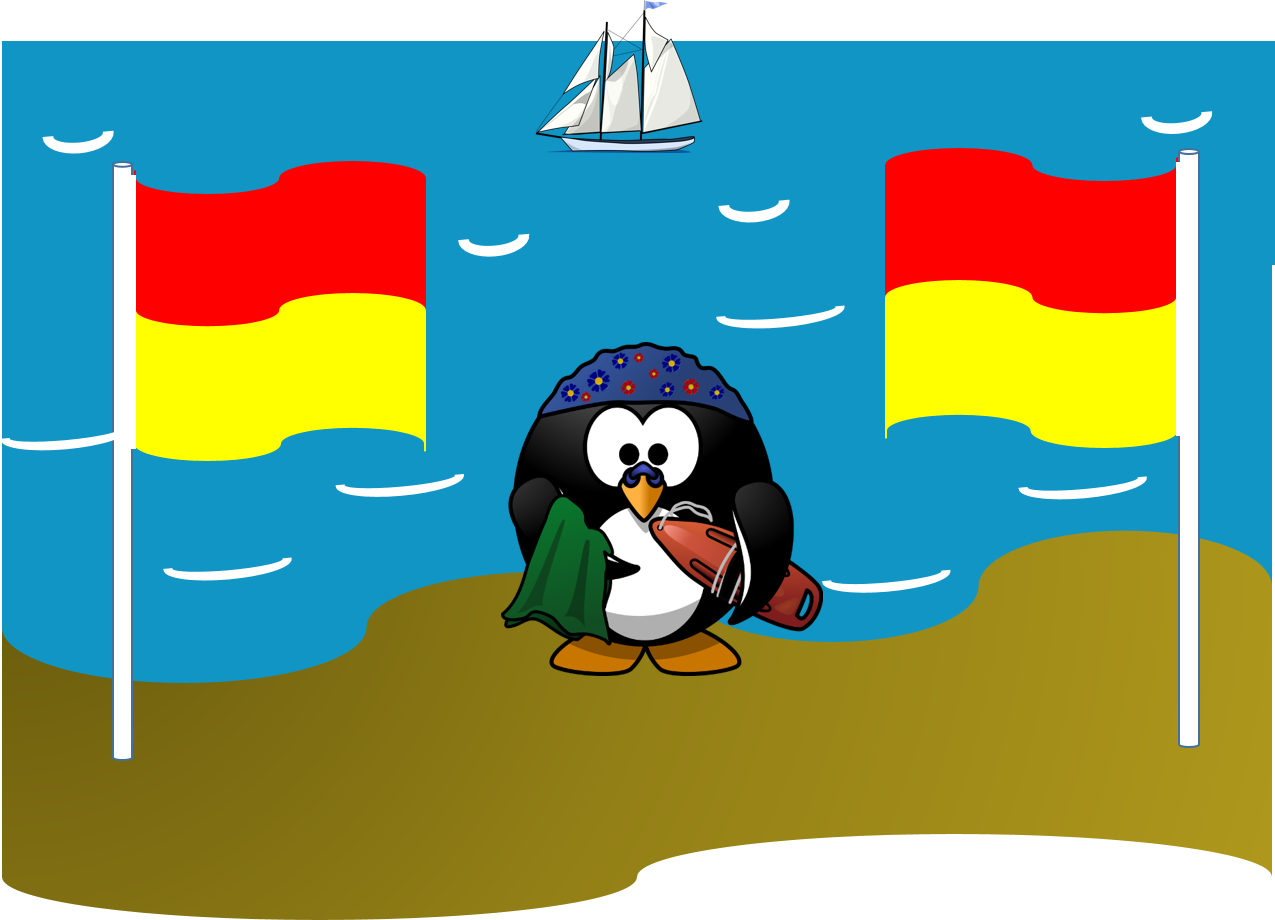
    Flags on the beach indicate areas where it is safe to swim.

    Flags on a car-yard are there to entice would-be buyers.

    HappyNewYear_by_Rones
    Party time!

    In all these instances flags are used to draw attention to items of interest or importance to make them easy to locate. So it follows that I should be able to transfer this knowledge to other applications. Right?

    Well, usually; but not with Twitter.

    tweet bird
    A little Twitter panic!

    I learned this from my own first-hand experience though, so the learning is powerful and permanent and I will not need to revisit this situation again to make sure I have got it right. The learning was also accompanied by quite a degree of embarrassment and anguish, so if I can prevent anyone else from making the same mistake, my purpose in writing this post will be accomplished.

    tragicmaskThis is how the tragedy unfolded:

    One day I encountered a tweet with a fun poem attached as media. I wanted to be able to come back to this poem at a later time to reflect on it some more. I wondered how I might do that.

    Flag media

    Then, out of the corner of my eye, I noticed a little box down to the right that said “Flag media”.

    “Great,” I thought, “Easy,” and pressed the button.

    Immediately the button changed to “Flagged learn more”.

    Now where there’s a link there’s a way to new learning, so of course I clicked on it . . .

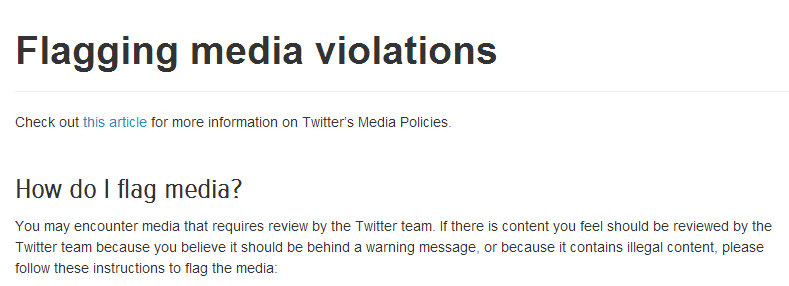
    and was totally aghast when I came to the Twitter Help Centre “Flagging media violations”.

    flagging media violations

    I hadn’t wanted to flag the poem as a media violation. I just wanted to read it again later.

    “Quick,” I thought, “better unflag it before anyone notices; especially the author!”

    As I frantically searched the Twitter Help Centre, the panic started to rise as I could find no instructions for unflagging.

    I couldn’t remember it being mentioned in any of the articles I had read, but I went back and checked, just to make sure. Nowhere could I find mention of flagging, let alone unflagging. I just had to let it be and hope that when the Twitter team checked the flag, they would realise that an error had been made. However, I do sincerely apologise to George and can only be thankful that my followers were few, and hopeful that nobody, especially George, noticed.

    So here is my number one piece of advice when using Twitter: Don’t flag!

    don't flag

    Not unless you consider “there is content you feel should be reviewed by the Twitter team because you believe it should be behind a warning message, or because it contains illegal content”.

    I wish I had read that before I flagged George’s poem, “Everything is a car!”

    Anonymous_double_star

    However you could use this strategy if you wish to come back to a tweet later:

    favourite it.

    That way it will turn up in your favourites list and you will easily be able to locate it.

    Just be wary of favouriting too many tweets as advised by Mary C. Long in the Social Times earlier this year. However Mary’s warning doesn’t apply to favouriting a tweet in the way I have just suggested.

    What have you learned about Twitter that you think I should know?

    What learning experiences would you like to share?

    Here are seven great bloggers or websites with useful advice about using Twitter appropriately:

    Mom this is how Twitter works

    The eLearning coach Ten ways to learn from Twitter

    Claire Diaz-Ortiz How to create your own Twitter profile (and others)

    Belinda Pollard Why emerging authors need Twitter (and others)

    Molly Greene  Ten tweets you should never send (and others)

    Jeff Bullas 10 tips for creating marketing and sharing content on Twitter

    Judy O’Connell Being web savvy includes twitter

    Rachel in the OC Ten quick tips to help any author

    And don’t forget the Twitter Support Centre

    Happy tweeting!

    All clipart courtesy of  www.openclipart.org  some with minor modifications and additions.