Live Love Laugh Learn … Create the possibilities

Category: Mathematics

  • Storybook pirates and early childhood learning

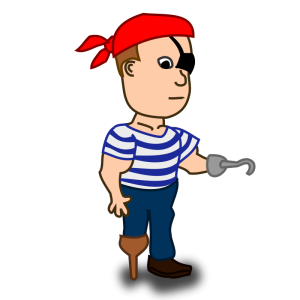
    nicubunu, Comic Characters: Pirate https://openclipart.org/detail/21919/comic-characters-pirate
    nicubunu, Comic Characters: Pirate https://openclipart.org/detail/21919/comic-characters-pirate

    Would you believe that with the hundreds of picture books I have in my possession I do not have one about pirates! That surprises me. There must be oodles of books about pirates on the market.
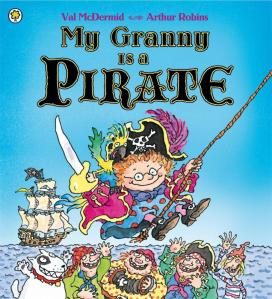
    my granny is a pirate

    When I was in London last year I did buy a delightful book for my grandchildren called My Granny is a Pirate by Val McDermid.  We had enormous fun reading it and laughing at the wonderful illustrations by Arthur Robins.

    Although I own many titles by Mem Fox, I don’t own her “all time classic and long-lasting bestselling” pirate book, Tough Boris . In the information about the story on her website, Mem explains how the story came to be and raises issues of sexism, particularly regarding the over-representation of male characters, in picture books. This is a topic that is very familiar to me.
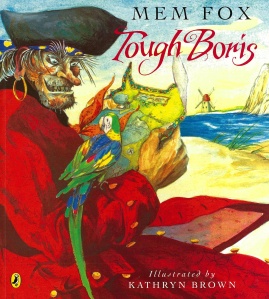
    Tough boris

    In addition to not owning books about pirates, I can remember using a pirate theme for teaching on only one occasion. This surprises me too as pirates seems to be a perennial theme for birthday and fancy dress parties. Children and adults find the idea of pirates fun. You have only to look at the success of the Pirates of the Caribbean series to know that.

    Of course, in this post I am referring only to the pirates of picture books and movies such as these, that were no more real than other fanciful characters such as giants, fairies, elves and dragons.

    The occasion for my using a pirate theme was over twenty years ago when I was running early childhood classes as part of my home-based business Create-A-Way, and the inspiration for it was of a practical rather than literary nature. I was required to wear a patch over an eye after having a pterygium removed. A pirate day seemed like a great way to avoid upsetting the children and to have a bit of fun as well. Perfect!
    https://pixabay.com/
    https://pixabay.com/

    But why am I thinking about pirates you may wonder. Well, it’s in response to the post by Charli Mills at the Carrot Ranch and her challenge to writers to In 99 words (no more, no less) write a pirate story. As always Charli gets me thinking about different things with her prompts. She is talking about the piracy from her internet data service and drinking rum before 10 am, which is apparently something pirates do.

    As usual I take the prompt to the early childhood education setting, and I’m excited by doing so. Ever since reading Charli’s prompt I have had ideas for teaching and learning experiences based on a pirate theme swirling around in my head. I may be late coming to the party, but I’m not coming underdressed.
    https://pixabay.com/
    https://pixabay.com/

    One of the things I have always loved about teaching is the opportunity to be creative: to write and prepare fun educational resources to use with my children. What wonderful things could be done with a pirate theme. I can’t believe I have never done it. And while I am no longer in the classroom and the opportunity is not there for me to use them with my own class, I can make them for my website to share with other teachers. The fun of thinking, writing, and creating is still mine!

    I’m pleased to announce that my website is underway. I have signed with a web designer and developer. It should be ready to go live by the end of January, ready for the start of the new school year in Australia. I can’t wait. Well, I can wait. I still have so much work to do in the meantime. I have resources to finish and new ones to write. There are many “in progress”. While I won’t be rushing into making pirate themed resources, I am putting them on my list. I have lots of ideas.

    Actually now that I think about it, the mix of feelings I have now that the website is imminent may be similar to those experienced by someone walking the plank: there is no way back and the choice for the future is to either sink or swim. If I do manage to hold my head high and above water level, I hope I don’t get eaten by sharks!
    wsnaccad, shark https://openclipart.org/detail/19732/shark
    wsnaccad, shark https://openclipart.org/detail/19732/shark

    On my website subscribers will be invited to suggest or request resources to match their requirements. I love thinking of resources to suit particular topics or to teach particular skills or processes. I would love a request for pirate materials so that I could get started on making them sooner rather than later.

    Here are a few ideas I have to start with. I’m sure I would come up with many more given a little longer.
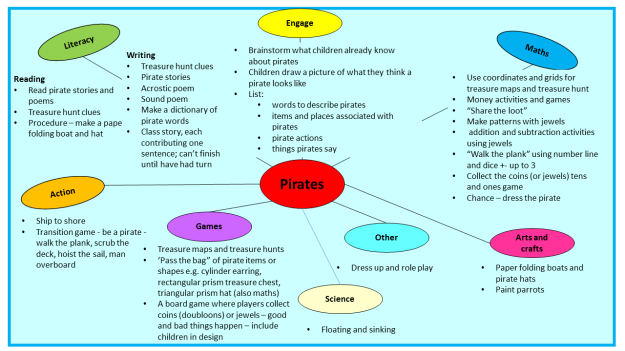
    © Norah Colvin 2015
    © Norah Colvin 2015

    But now here is what got me thinking about pirates in the first place: my flash fiction response to Charli’s prompt. I’m definitely sticking with my early childhood theme and a bit of fun for this one.

    https://pixabay.com/
    https://pixabay.com/

    If I was …

     If I was a pirate

    I would sail the ocean blue,

    In a boat made out of cardboard

    With my parrot Libby-Lou.


    I would wear a red bandana

    And purple polished boots.

    I would flash my pearls and silver sword

    And plunder pirate loot. 


    I would dig for buried treasure

    In the spot marked with an X,

    And all I’d find I’d stow inside

    My handy wooden chest.


    I would have no one to boss me

    I could do just as I please,

    Until my dad would call me

    “Anna, come, it’s time for tea!”

    Thank you

    Thank you for reading. I appreciate your feedback. Please share your thoughts about any aspect of this post or flash fiction.

  • A celebration of Australian picture books #4 — Narelle Oliver

    This post is the fourth in a series celebrating picture books by Australian authors. If you missed earlier posts, please follow these links to the introduction, Mem Fox and Kim Michelle Toft.

    Narelle Oliver

    In this post I introduce you to Narelle Oliver, a Brisbane-based author and illustrator. There is much to explore on Narelle’s site, including: information about her writing process and tips for would-be picture book authors; the research involved in creating her books, many of which are about nature; and illustration techniques that involve the use of linocut printing and rubbing, and other assorted media.

    Narelle conducts workshops for children and adults. She visits schools to share with children the wonder of her books and talks to them about her writing and illustrating processes. When she visited “my” school she brought along first thoughts and illustrations for, and a dummy book of, The Very Blue Thingamajig, plus a soft toy prototype – and we all wanted one! She also brought a fox from the museum and talked about illustrating Fox and fine feathers. She read to the children, involved them in activities and gave them an experience of linocut printing. It was fascinating for both children and teachers.

    Narelle talks about her workshops and sessions in this video.

    While you can find a complete list of Narelle’s books here, I will share those I have on my bookshelf (in no particular order).

    2015-09-19 11.14.10

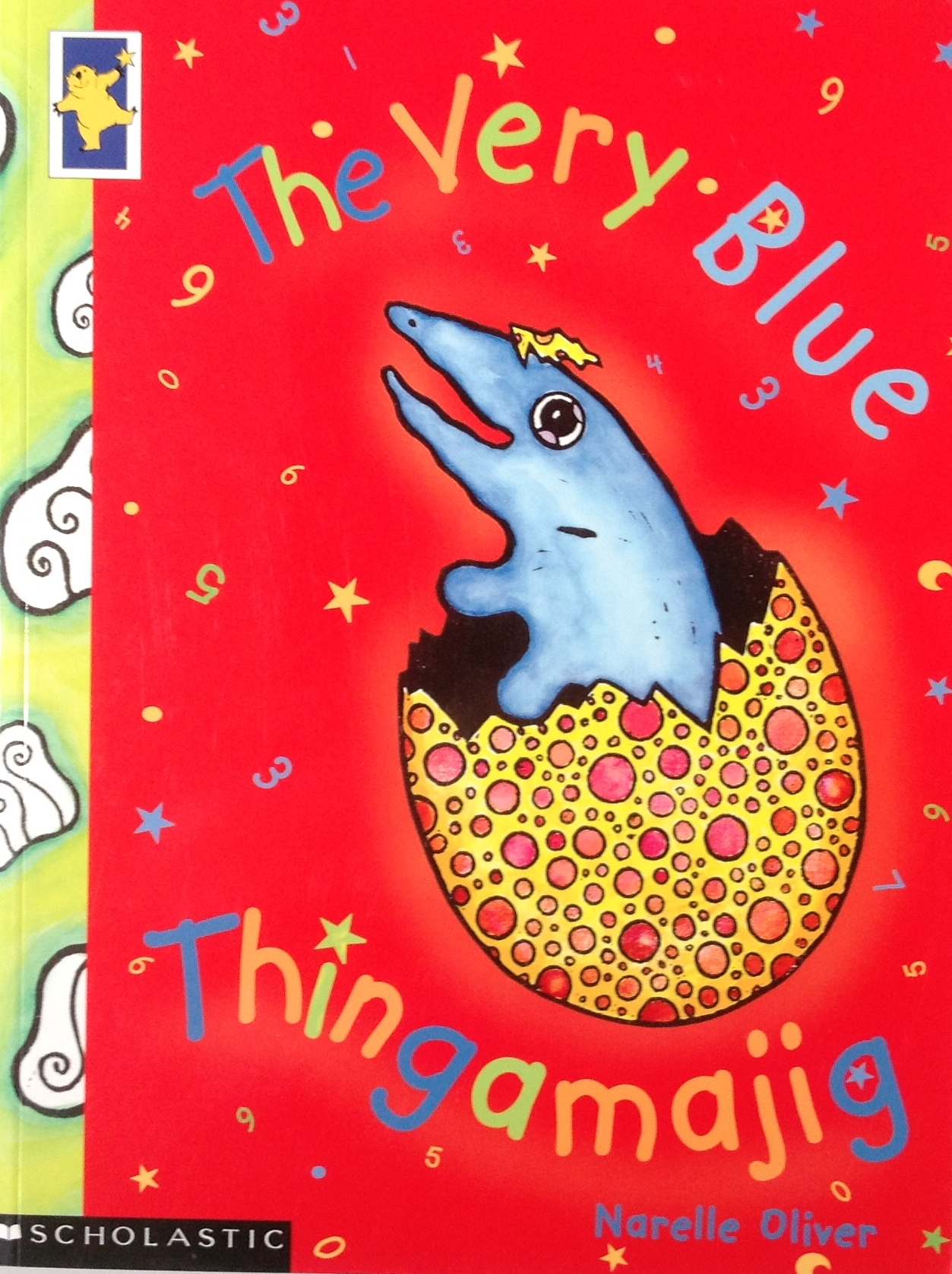
    The Very Blue Thingamajig is as story about difference and acceptance told in a fun way involving mathematical concepts of patterns, counting and days of the week. The colourful illustrations made using hand-coloured linocuts are appealing, and children love to find the little bird who provides a secondary story throughout the book. On Narelle’s fun page you can colour and decorate your own thingamajig.

    2015-09-19 11.11.44

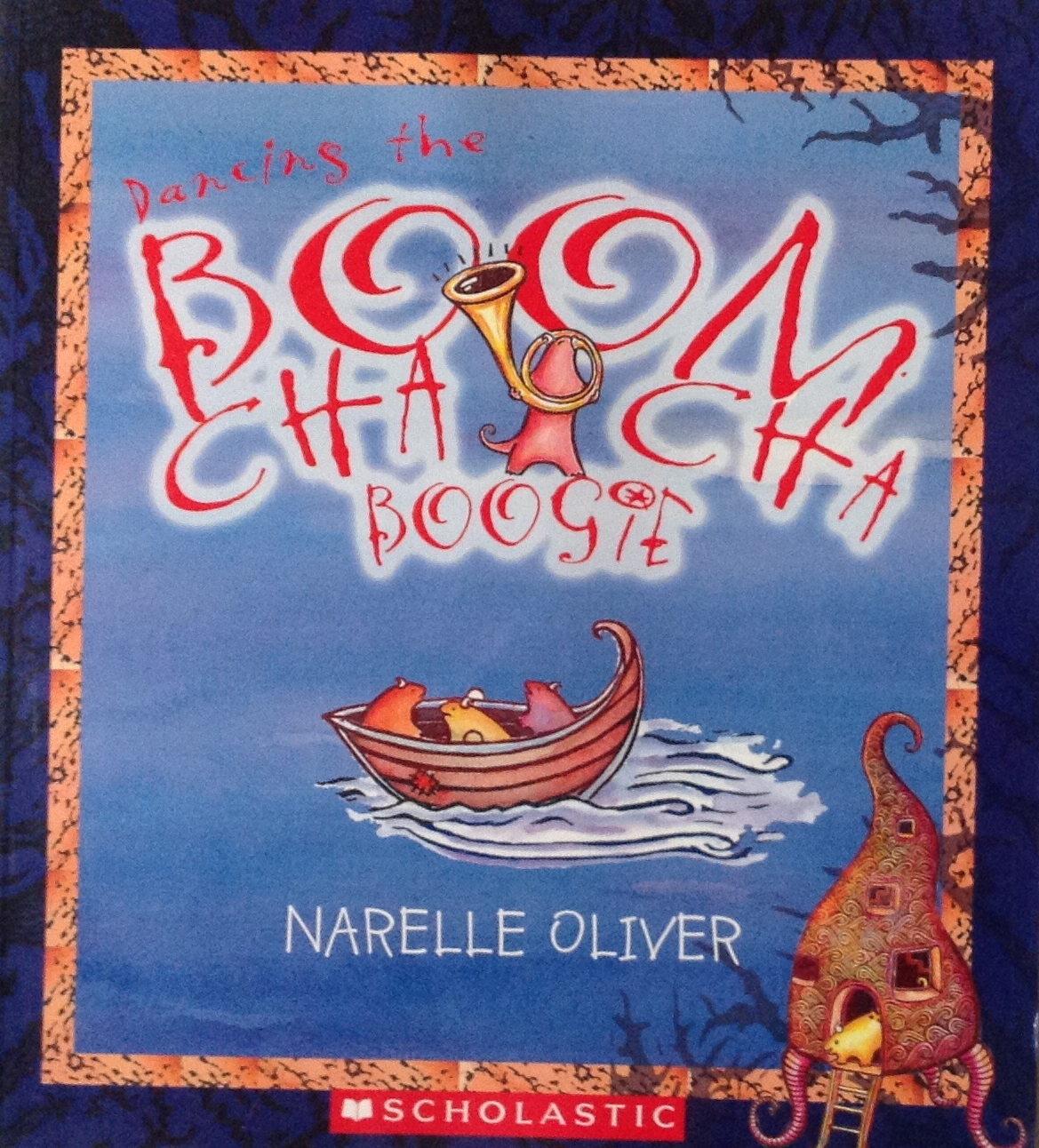
    Dancing the Boom Cha Cha Boogie is a gorgeous tale of three little murmels who are washed out to sea in an arkel and arrive on a foreign shore where they are not welcomed by the resident snigs. They are imprisoned until when, the arkel is repaired, they are to leave. At night a young snig releases the murmels who teach the snig to have fun. In the end the murmels are accepted and stay happily in Snigdom with the snigs, learning from and enjoying each other’s company. This book is illustrated with hand-coloured linocuts.

    2015-09-19 11.13.26

    Fox and fine feathers is a story of friendship, of looking out for each other and keeping each other safe. The attention to detail in these linocut illustrations coloured with pencils and pastels is amazing and accurately depicts the five creatures and the forest setting. Narelle has supported the story with information about the birds, their habitat and the dangers imposed by the feral fox, which is now a serious threat, along with other feral animals, to native species in Australia.

    2015-09-19 11.12.23

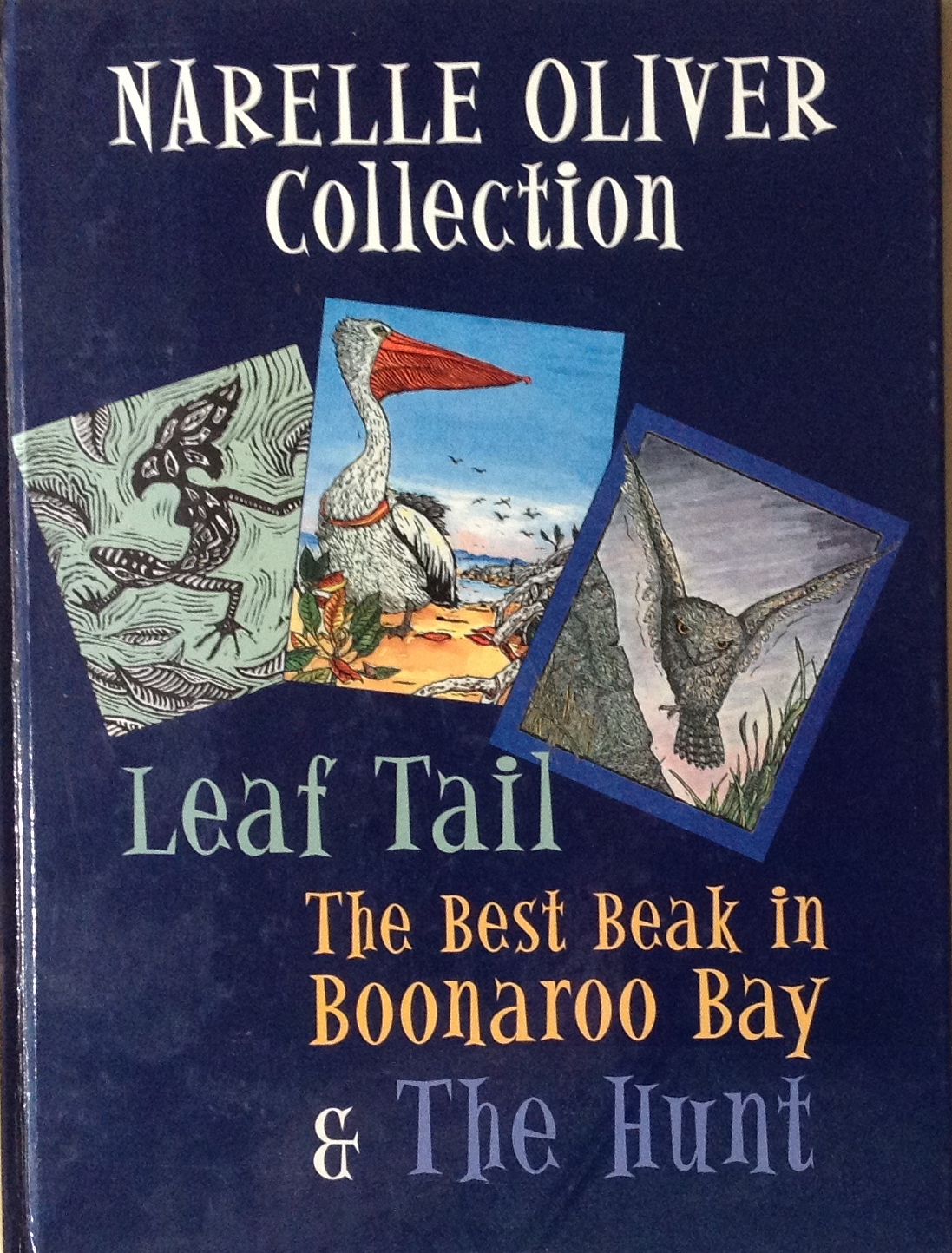
    Narelle Oliver Collection of three stories: Leaf Tail, The Best Beak in Boonaroo Bay and The Hunt.

    • Leaf Tail, Narelle’s first picture book, illustrated by beautiful linocuts, tells the story of a leaf tail gecko and the importance of camouflage to survival in the Queensland forest.
    • The Best Beak in Boonaroo Bay, also illustrated with hand-coloured linocuts, tells of a squabble between five different birds, each professing its own beak to be the best. Finally clever pelican holds a contest that enables the birds to see that each beak is best in its own way. As well as a delightful story about wildlife, it also provides a springboard into discussions about, and appreciation of, differences.
    • The Hunt is another beautifully illustrated wildlife story of camouflage and survival. The story is supported with information about its setting and the workings of animal camouflage and disguise. There are also black and white drawings showing where to find the animals camouflaged in each illustration. It is fun to see if all the animals can be found without referring to the guide.

    2015-09-19 11.15.11

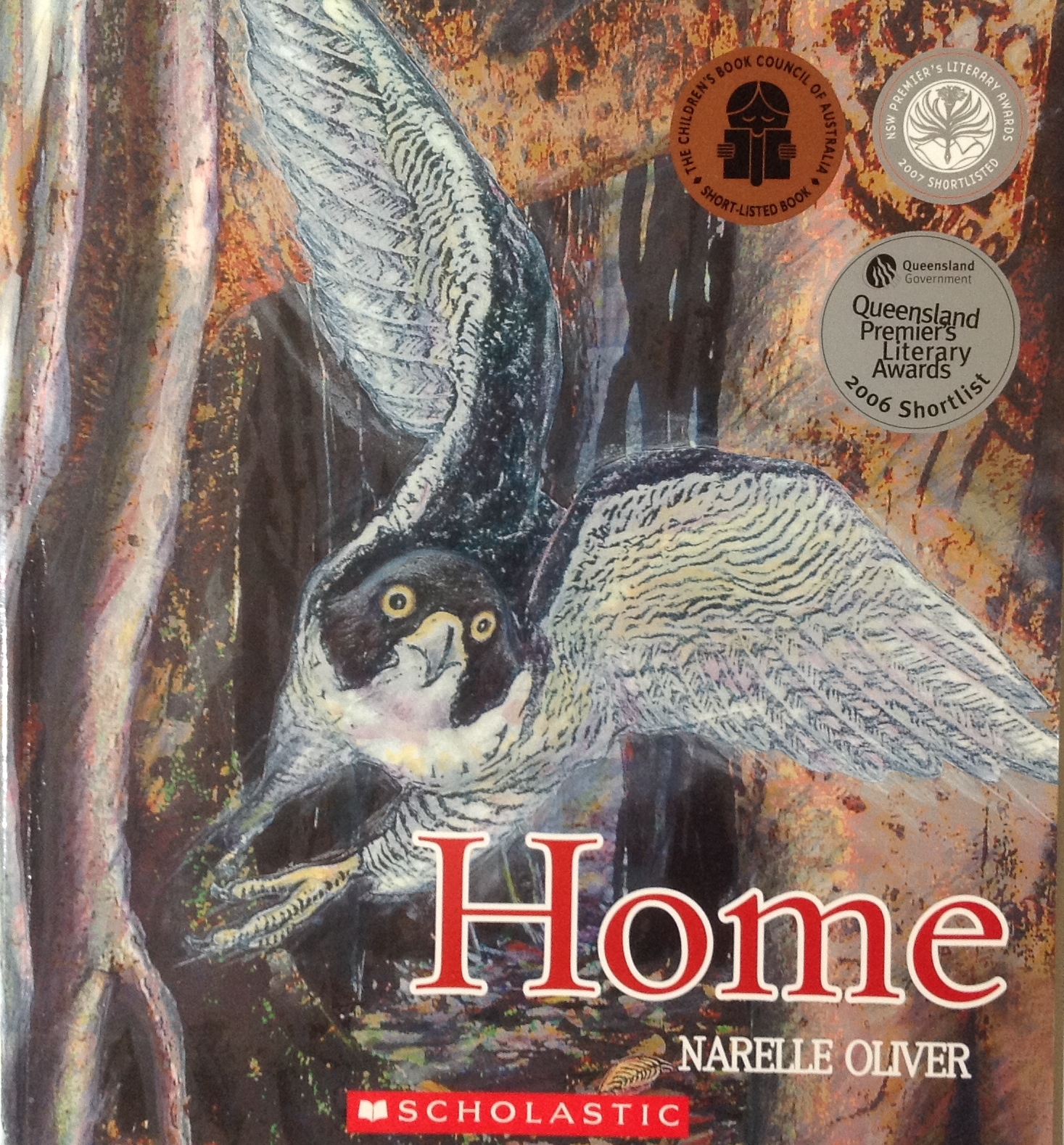
    Home, referred to in a previous post Home or away, is perhaps a favourite if only because it is based on a true story of a pair of peregrine falcons that nested at the top of a 27-storey building in the city of Brisbane. The birds, named Frodo and Frieda, fascinated a city and, for a while, had their own reality show “Frodocam”. The story, beautifully illustrated using a combination of media including linocut rubbings, collage, photographs, pencil, pastels and watercolours, tells of the adaptation of wildlife to new landscapes and environments.

    Each of these books can be appreciated for its story or used as a springboard for discussion. The illustrations appeal to adults and children alike for the attention to detail and accurate representation of wildlife. The addition of supporting information encourages an appreciation for wildlife and their habitats and develops an awareness of the need for their protection. They would be a wonderful addition to any book collection and be much appreciated as gifts.

    Thank you

    Thank you for reading. I appreciate your feedback. Please share your thoughts.

  • Home or away

    Many people look forward to a holiday away from home; an opportunity to escape the routines of the everyday and enjoy new experiences.  Many people look forward just as much to the return home, to familiar comforts and routines.

    During the past twelve months I have enjoyed a few escapes away.

    I travelled overseas and far away for my first visit to London.

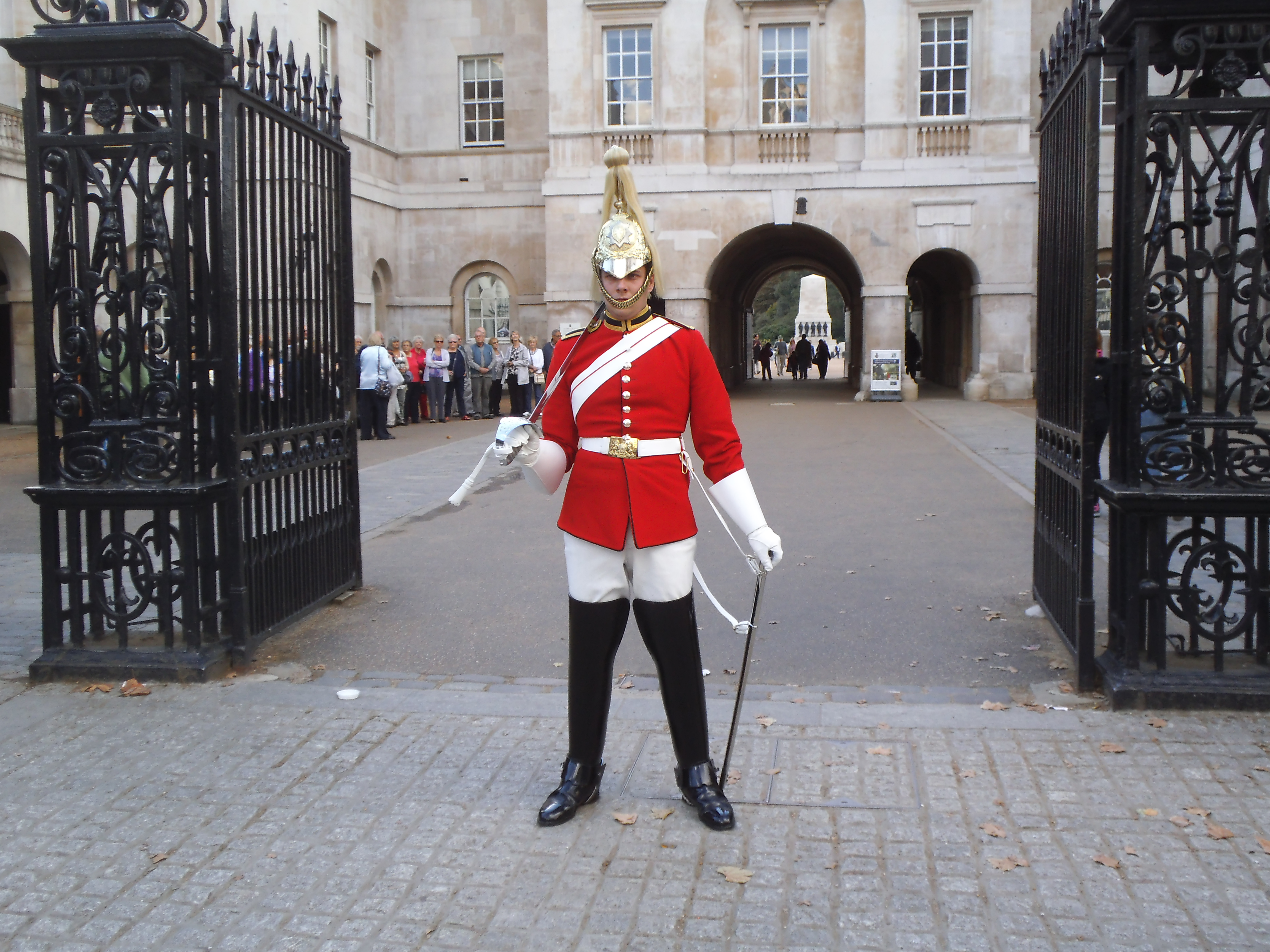
    Whitehall, London © Norah Colvin
    Whitehall, London
    © Norah Colvin

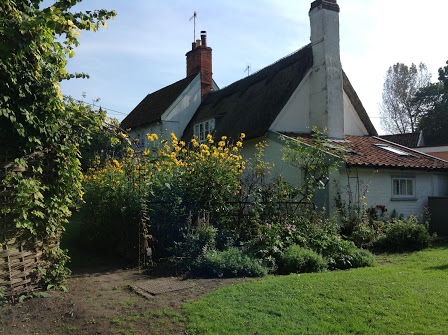
    My visit to the UK included a few days at Saxmundham to the north

    Cottage at Saxmundham © Norah Colvin
    Cottage at Saxmundham
    © Norah Colvin

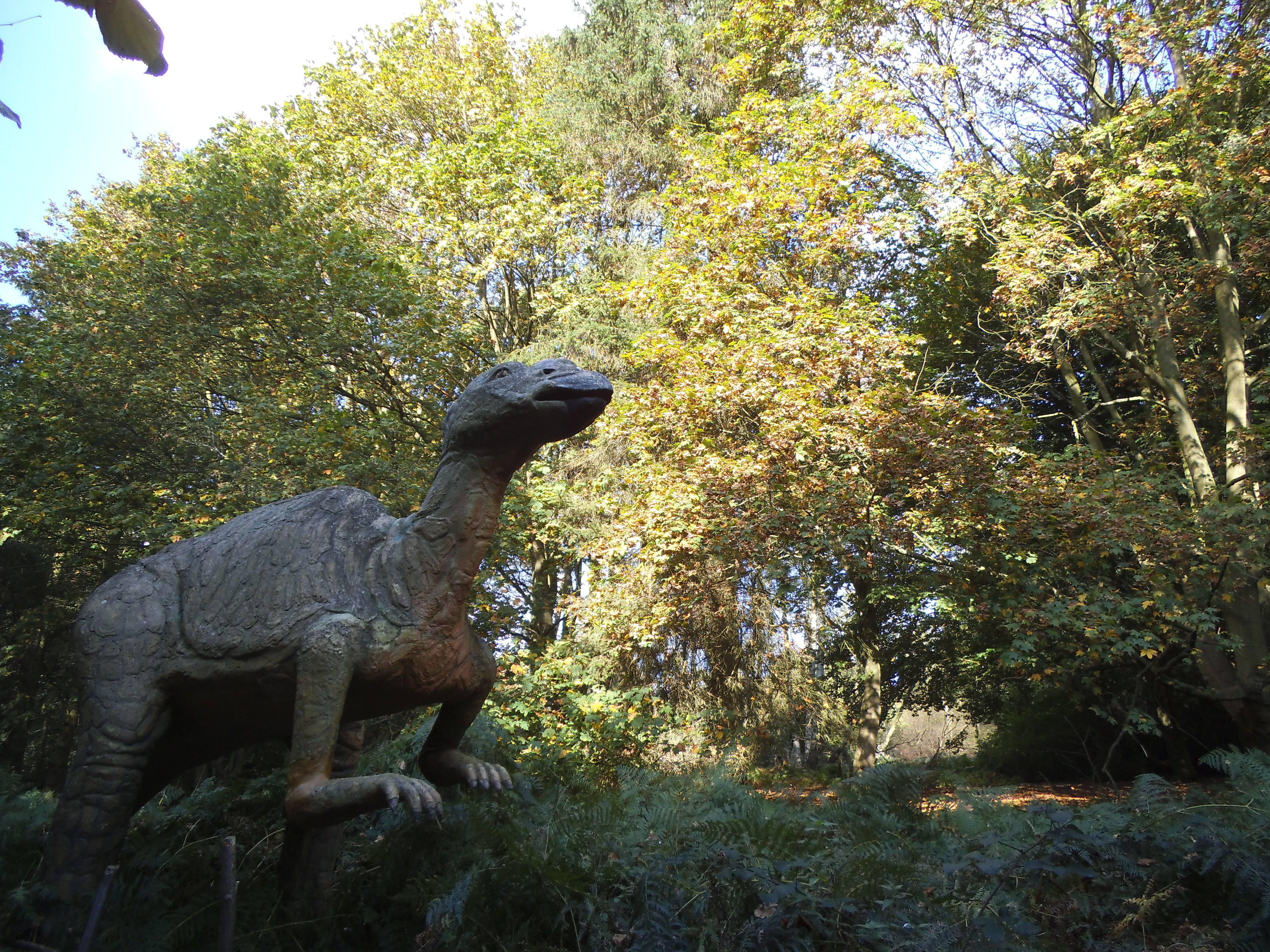
    and a visit to Dinosaur Adventure at Norwich for Grandson’s fifth birthday.

    Dinosaur Adventure, Norwich © NorahColvin
    Dinosaur Adventure, Norwich
    © NorahColvin

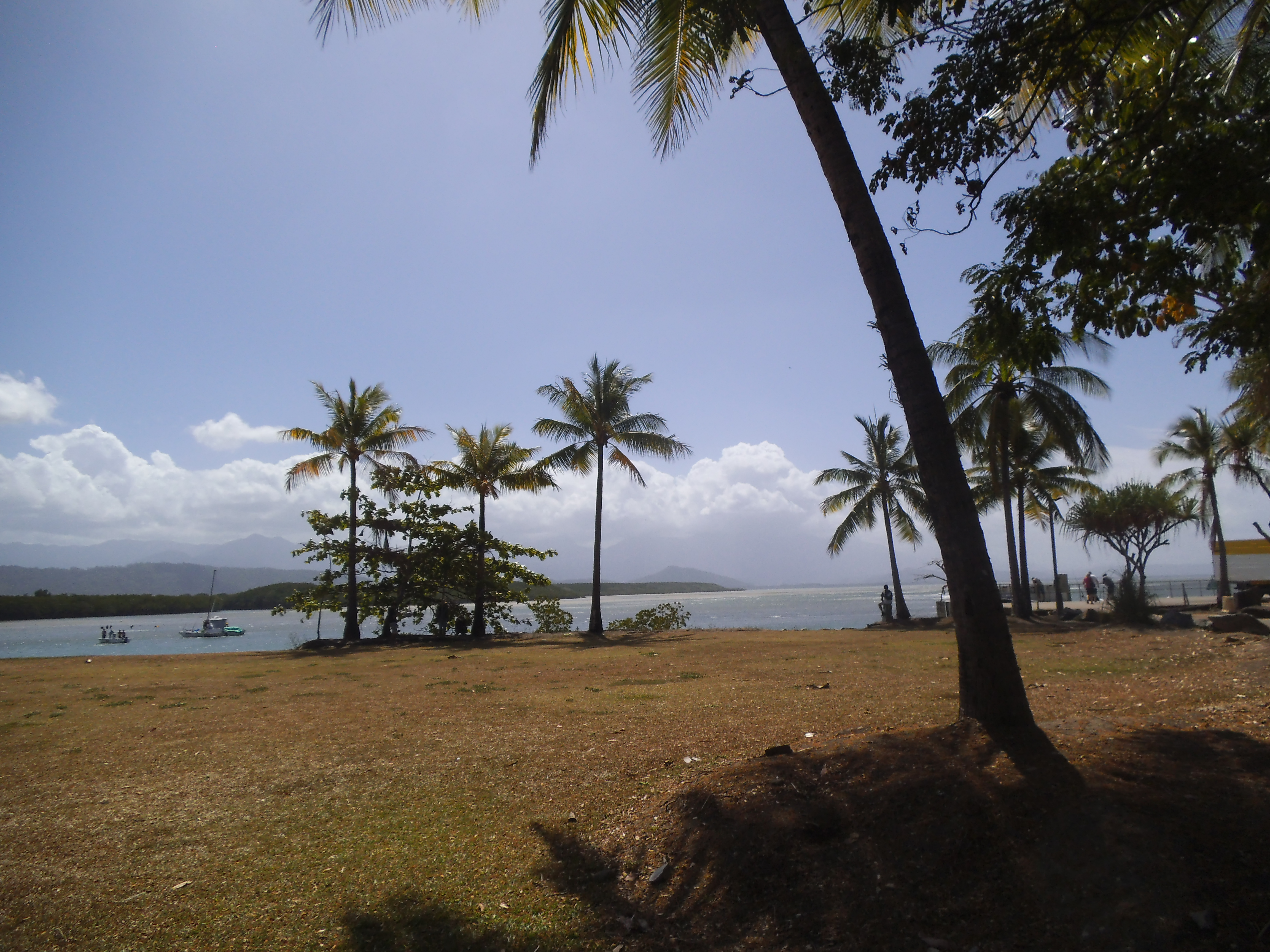
    I travelled to Cairns and Port Douglas in northern Queensland,

    Port Douglas © Norah Colvin
    Port Douglas
    © Norah Colvin

    and from north to south through Tasmania from Hobart to Launceston.

    Hobart © Norah Colvin
    Hobart
    © Norah Colvin

    I visited Alice Springs and Uluru in Central Australia.

    Uluru © Norah Colvin
    Uluru
    © Norah Colvin

    I also visited some seaside locations closer to home, including Hervey Bay and Marcoola to the north and Coolangatta to the south.

    Hervey Bay © Norah Colvin
    Hervey Bay
    © Norah Colvin

    Just last week I enjoyed a few days at a farmstay celebrating Grandson’s sixth birthday.

    Farm © Norah Colvin
    Farm
    © Norah Colvin

    Looking at that list, one might think I am never at home; but it doesn’t seem that way to me.

    Visiting places away from home can be educational as well as enjoyable and fun; meeting new people, learning about different cultures and ways of life, experiencing new foods, activities and routines, and seeing different geographical features. This is true for adults and children alike. The learning is integral to the experience, not an add-on or a lesson.

    However the experiences can be recorded by, with or for children to enhance learning opportunities; for example, but not restricted to:

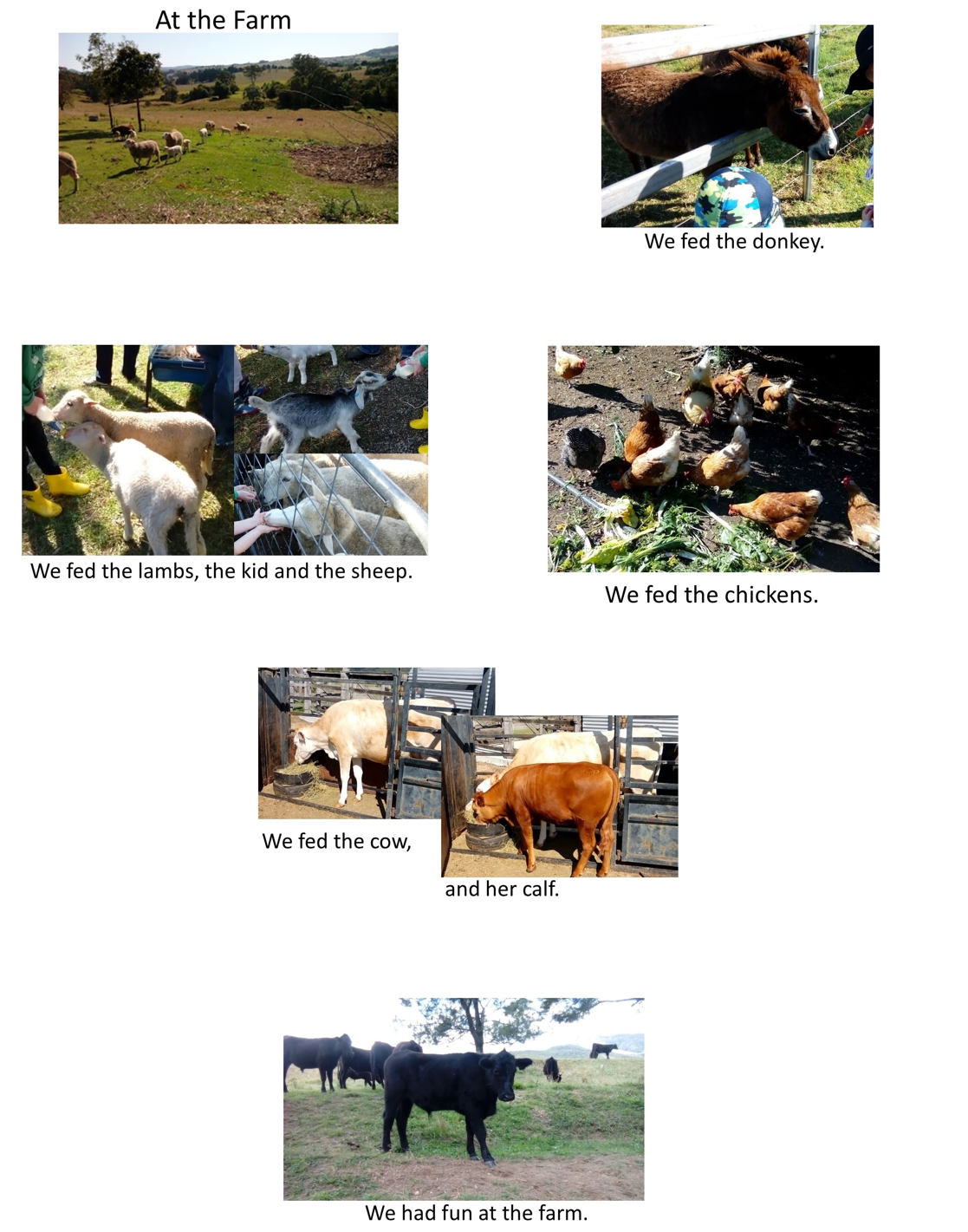
    • Photo stories with accompanying text provide wonderful opportunities for reading and discussion and for keeping the memories alive over the years.
    • Diary or journal records that include dates, places and events provide opportunities for writing and reading. These entries can be supported with photographs, drawings, or “souvenirs” such as stickers, postcards, entry tickets and brochures.
    • Letters and postcards sent to family and friends provide further opportunities for sharing, writing and reading.
    • Emails can also be used to share highlights with family and friends and provide opportunities for using and learning about technology. I have found that including myself as a recipient for each email provides an effective alternative, or addition, to diary writing.
    • Marking routes and places visited on maps helps develop a sense of location and direction. Combining these with photographs or photo stories or diaries makes them even more meaningful.
    • Using a calendar to count down the weeks or days until departure, mark the days at each location, and the date of returning home helps to develop an understanding of the passage of time as well as the ability to read and use a calendar.
    • Discussion of departure and arrival times, the time until and the duration of journeys or events,  and relating these to time shown in both digital and analogue format helps develop an understanding of the use of time measurement and the passage of time. Use of printed and online timetables, as well as those displayed in airports, train stations and at bus stops provides opportunities for in-context and purposeful learning.
    Example of a simple photo story for preschoolers
    Example of a simple photo story for preschoolers © Norah Colvin

    Books, including atlases and photo books, can be used to ignite interest in places to be visited during a planned holiday or generally to arouse interest in other places. Stories can also be used.

    Felix

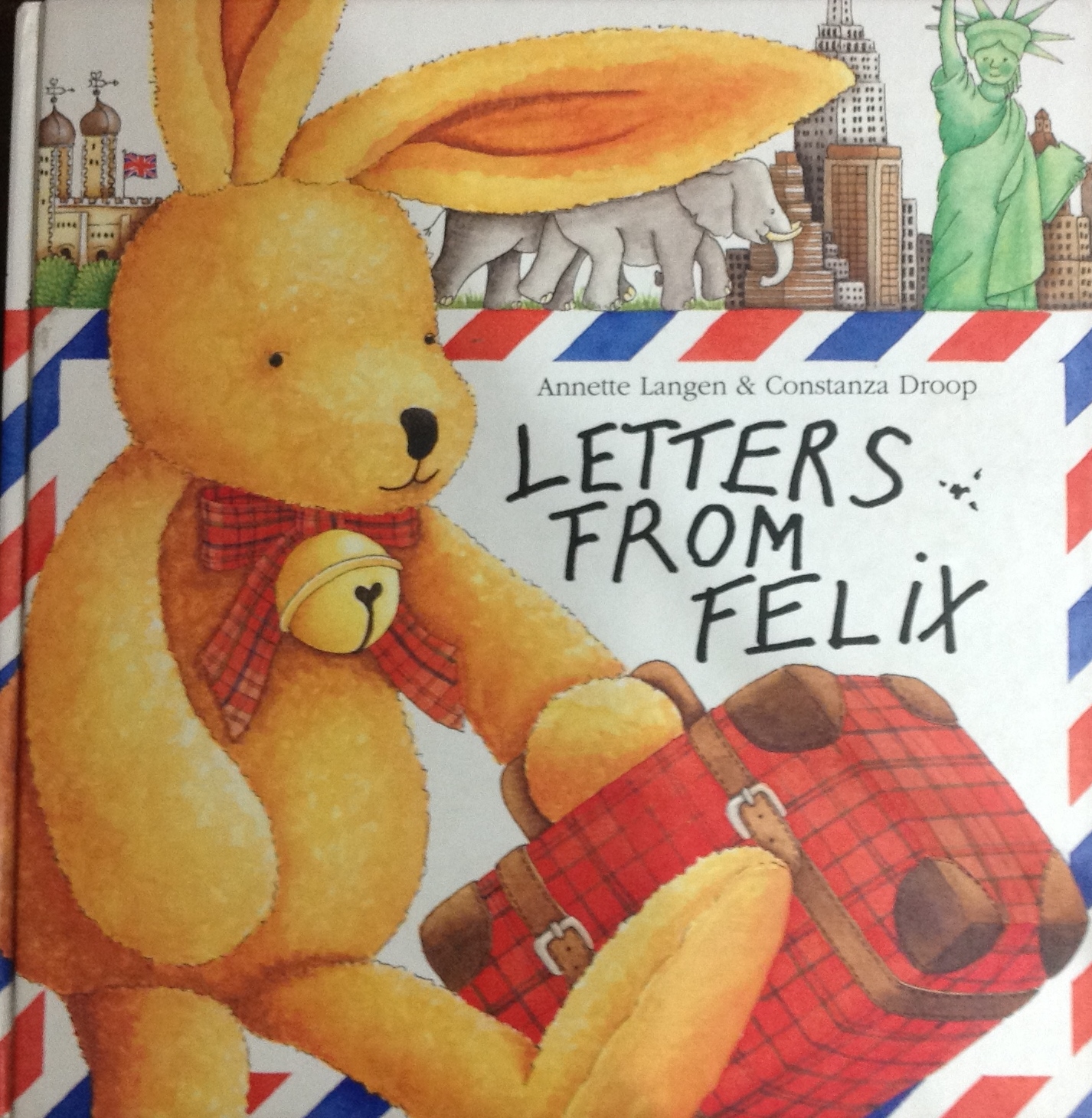
    One such story is Letters from Felix by Annette Langen and Constanza Droop. It tells of Felix, a toy bunny who was lost at the airport, as he travels the world on his way home to Sophie. In my version Sophie lives in Hobart, Tasmania and she receives letters from Felix in London, Paris, Rome, Cairo, Kenya and New York. (If anyone owns a different version, I’d love to know the countries included.) In each letter, the information shared by Felix inspires Sophie to find out more about the location. When Felix finally arrives home he has a surprise gift for Sophie: a sticker from every location visited.

    Letters from Felix is a great story to read at any time, but takes on extra meaning when one, or someone known, is travelling or returning from travels. It can be used to support or encourage an interest in geography in the classroom or at home. If children are not visiting locations as exotic as those visited by Felix, they may still be encouraged to record and share their experiences in the ways described above.

    Of course, when children arrive home, they may be just as excited to rediscover their familiar comforts, toys and books and reconnect with friends and family left behind. As the song says, “There’s no place like home.”

    What inspired me to think about holidays and home this week is the flash fiction challenge set by Charli Mills at the Carrot Ranch to In 99 words (no more, no less) write a story about a return to home. I have written about Marnie’s return to the place she had grown up but had never felt was “home”. It also provides a segue to the next post in my series celebrating Australian picture books which includes “Home” by Narelle Oliver. I hope you will join me for that post. In the meantime, here is my flash:

    The return

    Her eyes looked outward but her gaze was inward, trying to unravel the confusion of tumultuous emotions: anger for what had been, sadness for what wasn’t, regret she hadn’t escaped sooner, fear of her reaction, coldness at their passing. The bus carried her back; some things familiar, some as different now as she, returning “home” after so many years. Home? She’d called it home, back then, but now realised it hadn’t been home, not really; not safe and warm and loving as any home should be. She’d left vowing to never return. She returned now for finality and closure.

    Thank you

    Thank you for reading. I appreciate your feedback. Please share your thoughts about any aspect of this post or flash fiction.
  • Life is like . . . a game of Snakes and Ladders

    http://www.morguefile.com/
    http://www.morguefile.com/

    Well, maybe not the whole of life; that would be rather two dimensional; but certainly parts of life. I’m feeling a little that way at the moment about my website plans. No sooner do I seem to find a ladder to climb up, than I encounter a huge snake, and down I go again. At the moment I seem to be stuck in a three-steps-forward three-steps-back dance.

    © Norah Colvin
    © Norah Colvin

    I won’t say that everything one needs in life can be learned from playing Snakes and Ladders, but there are certainly some good lessons to learn from playing games. I mentioned some previously in Are you game? written in response to a flash fiction challenge set by Charli Mills at the Carrot Ranch; and observed them recently when playing Snakes and Ladders with my five year old grandson:

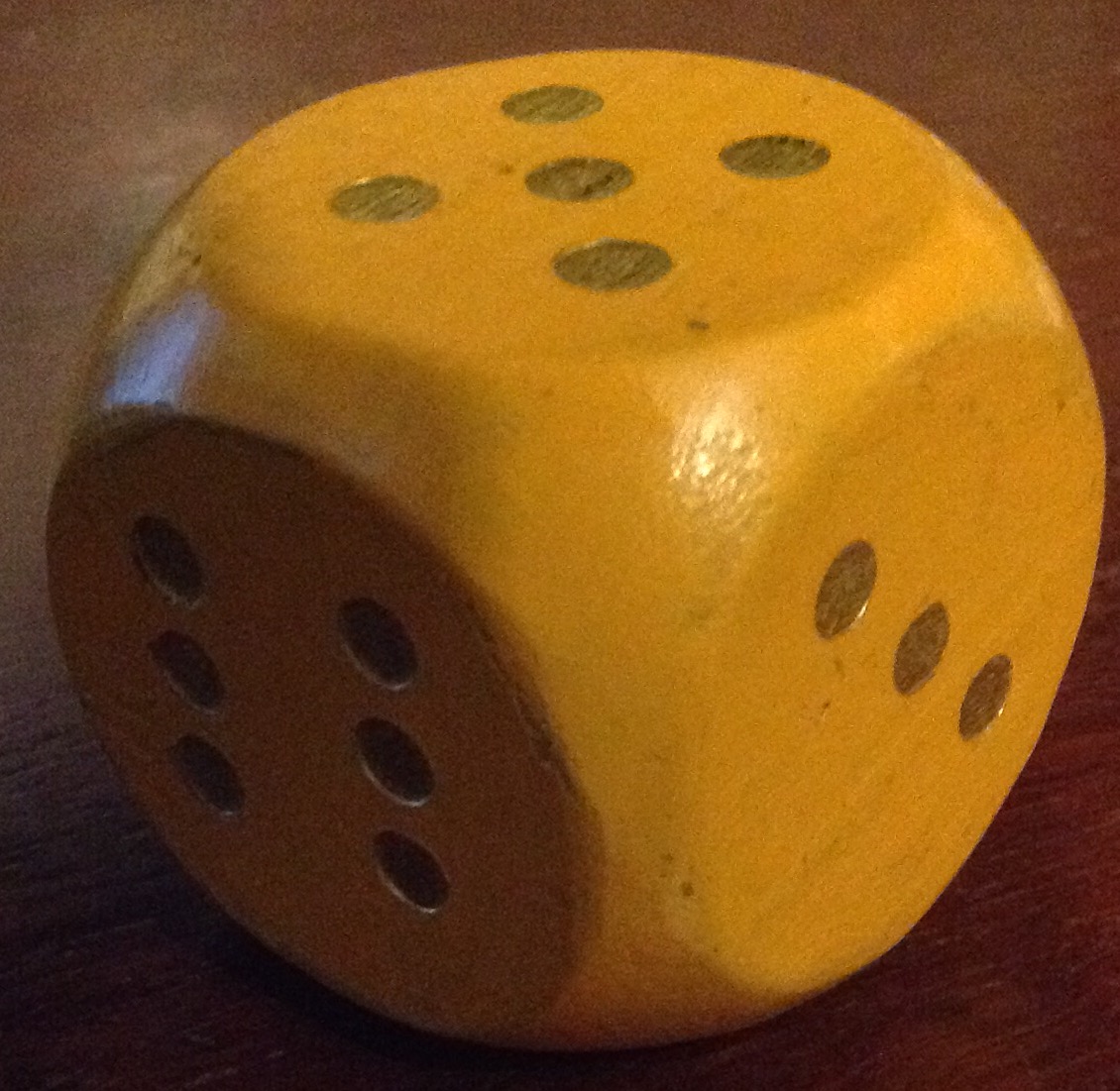
    dice

    • Getting along and taking turns
    • Acceptance – accept the roll and respond accordingly: don’t try to pretend it wasn’t a “proper” roll (e.g. dropped); or attempt to change the count by skipping or counting twice on a square
    • Resilience ­– stay strong and focused and don’t crumple with repeated setbacks: okay, so you’ve been swallowed by this same snake three times now; next time you just might overcome it
    • Persistence – keep going: you might roll a succession of small numbers but each moves you closer to the goal
    • Humour and fun – always look for the light side: it is just a game after all, it’s not the winning that matters, it’s how you play it. (On the board that we played, one of the ladders ended on the same square as a snake’s head! What could we do but laugh!)
    © Norah Colvin
    © Norah Colvin

    I guess those are lessons I need to apply to my website “game”: I have made some good progress preparing resources; I have had some work illustrated; and I approached a web designer for a quote. The ladders seemed to be lining up just right.

    Then I landed on another snake!

    In a comment on a previous post Anne Goodwin, who blogs at Annecdotal and is author of the soon-to-be-released Sugar and Snails, suggested that I be mindful of my Unique Selling Point (USP).

    I think my USP is probably the same as what I consider my Point of Difference (POD): resources that are interactive. Unfortunately, judging by the quote I received, the POD snake has an extreme appetite.

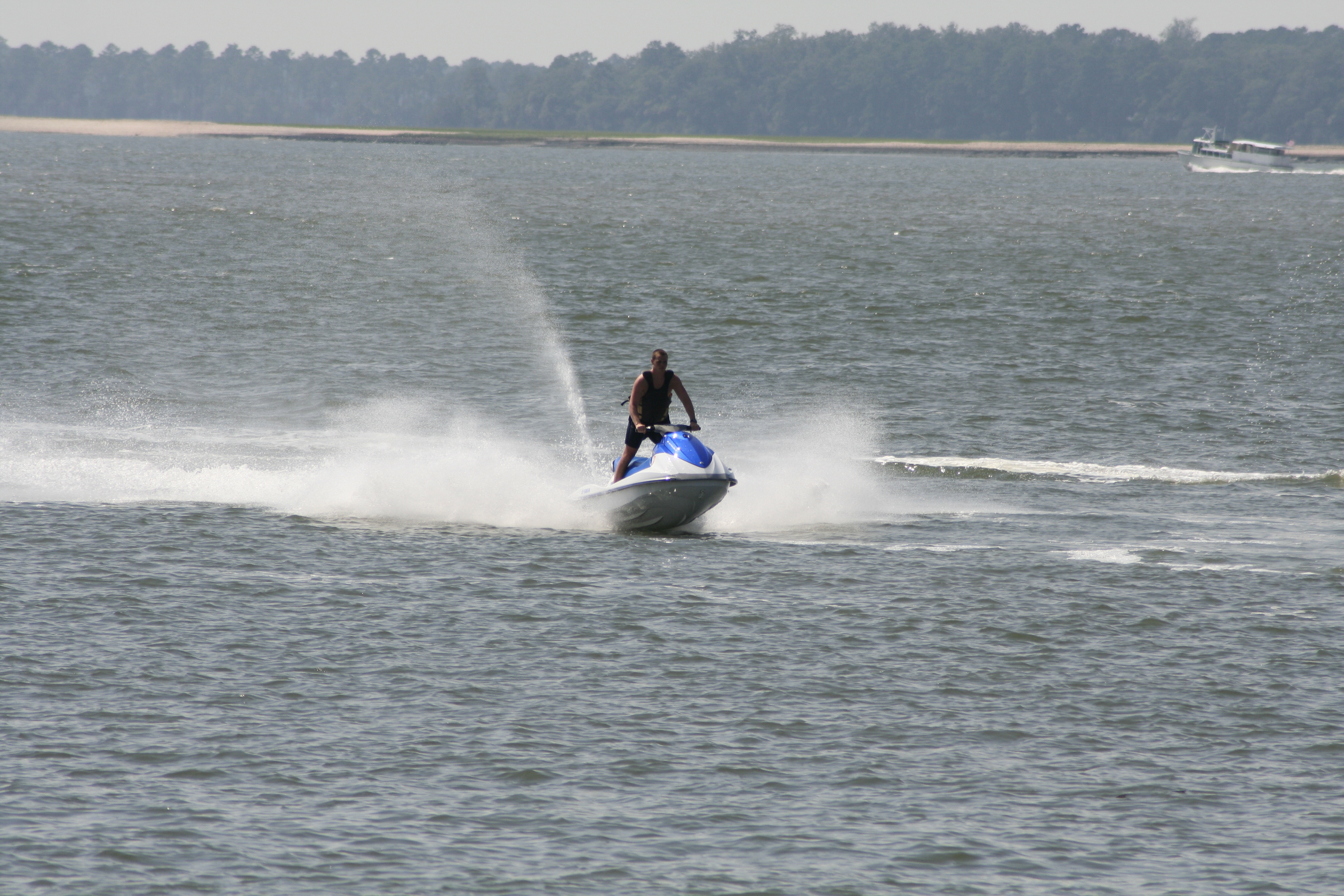
    In a post about his self publication journey Geoff Le Pard, author of Dead Flies and Sherry Trifle who blogs at TanGental, stated that he wanted to spend as little “real” money as possible. I know that I need to spend some to achieve my goals, and as a way justifying the expense to myself, if not to anyone else, I decided to consider it a “retirement jetski”.

    My retirement jetski
    My retirement jetski

    However an initial quote indicates that the interactive component of resources could end up costing as much as a Bugatti or a Lamborghini!

    http://www.morguefile.com/
    http://www.morguefile.com/

    Okay, I am exaggerating – a little.

    But I think I’ve slid down the back of that long snake and need to do a little recalculation as recommended a short while ago Charli Mills. I will let you know how I go extricating myself from the loop.

    Snakes and ladders – Opportunities for learning

    In the meanwhile, here are some suggestions for parents to make the most of learning opportunities while playing Snakes and Ladders with their children over the long summer holidays. We don’t want the progress that children have made during the term to be swallowed up by those snakes as was suggested as a distinct possibility by Sarah Brentyn in her post Harry Potter or Sidewalk Chalk? on her blog Lemon Shark. While I provided some suggestions for preventing that slide in a previous post, these suggestions are specifically for

    Making the most of “teachable moments” while playing snakes and ladders:

    On each turn, ask children to:

    • identify the number rolled on the dice and move their tokens the corresponding number of squares, counting them out. Ensure they do not count the square they are on.
    • tell the number they land on.

    Other opportunities for discussion:

    • Who is coming first? What number are they on? What number are you on? How many do you (they) need to catch up? Could you (they) catch up with the next throw? Why/Why not?
    • How many do you need to throw to land on a snake, on a ladder? Do you want to land on a snake or a ladder? Why or why not? If you land on a snake (or a ladder), will the number be higher or lower than where you are now?
    • What number do you not want to roll if you don’t want to land on a snake?
    • What number do you need to roll to land on a ladder?
    • How many do you need to win?

    Ask the children what they notice about the way the numbers are arranged. How does it differ from a usual 100 board? ( On a Snakes and Ladders board, 100 is at the top and the numbers “snake” back and forth across the board. On a 100 counting board, 100 is at the bottom and each row of ten numbers goes from left to right.)

    100 flowers outline
    100 counting board © Norah Colvin

    Ask the children why the numbers may be arranged differently (eg 100 has to be at the top so you can go up the ladders, numbers go back and forth so you can just keep going).

    But most of all, just have fun!

    Thank you

    Thank you for reading. I appreciate your feedback. Please share your thoughts.


  • Learning fun for the holidays, without a slide in sight!


    Alanspeak, A slide for children to play on https://openclipart.org/detail/191139/childrens-slide
    Alanspeak, A slide for children to play on https://openclipart.org/detail/191139/childrens-slide

    A week or two ago my good friend Sarah Brentyn who blogs at Lemon Shark (Navigating the uncharted waters of parenting and life) raised the issue of students having required reading over the summer holidays. Sarah recalled that when she was at school she had lists of books to read, and book reports to complete as proof of having done so. She expressed concern that no holiday reading is currently required of her school-age sons.

    nlyl, reading man with glasses https://openclipart.org/detail/3133/reading-man-with-glasses
    nlyl, reading man with glasses https://openclipart.org/detail/3133/reading-man-with-glasses

    The basis for Sarah’s concern is what is known as “the summer slide”, the loss of skills, especially reading, if not practised over the long summer holidays.  Studies show what teachers observe: that students start a new school year with skills at lower levels than just a few months earlier. Revision and review of the previous year’s work must be factored in before new work can be commenced.

    Sarah wasn’t so much concerned for her sons who are avid readers and will read regardless of whether it is required or not. Knowing Sarah, her sons will also benefit from an environment enriched with a variety of other learning experiences. All children could benefit from the types of support and encouragement Sarah provides for her sons.

    Sarah’s concern was for children who don’t choose reading as a holiday activity. She believes children should continue to learn over the holidays, and does not understand why learning can’t be fun. I agree with Sarah. However I am a bit ambivalent about the requirement that particular books be read, and probably am not in favour of asking that book reports be submitted.

    CoD_fsfe_Books_icon

    There was never any set reading to be done over the holidays when I went to school, or when my children went to school, and I am not aware of any such requirement of children attending school currently in Australia. The fact that it is not a requirement doesn’t make it either right or wrong. It is simply a new concept to me.

    I would be reluctant to set homework for completion over the holiday period, especially the summer holidays for a number of reasons, including:

    • students will be moving to a new class and teacher, some even to a new school, after the holidays and that teacher may not view the set work in the same way
    • students have spent the school year reading, writing and performing other activities required of them, activities that may have little relevance or interest to them
    • students may spend the holiday period in alternate activities and then rush or “fudge” required tasks, seeing them simply as work that must completed, rather than something they want to do
    • I think children need time to follow their own pursuits and interests without having to fill in a worksheet to say what they have done
    • I think children and their families need some time together without the stress of completing set tasks
    • I think it is important for children to have time to wonder, imagine and create, to be comfortable in their own company, devising their own plans and schedules and activities, some of which may be just down time (the ability to relax in an ever-hurried world is very desirable).

    gardening

    But, like Sarah, I wouldn’t always be leaving children to their own devices, allowing them to wander the bush and beach from daylight till dusk as I did during the school holidays (when I wasn’t reading a book, playing games with siblings or friends or doing household chores). I would be mindful of their activities, ready to make suggestions, provide experiences or encourage other interests; but the direction would always be theirs and never forced or “required”.

    However I am equally as keen to avoid the occurrence of that “summer slide”. As my contribution towards its prevention while also promoting the notions that learning is fun and that opportunities for it abound, I link to three of my previous posts:

    20 suggestions for maintaining reading momentum during the school holidays

    Let the children write! 20 suggestions to get children writing during the school holidays

    Counting on the holidays!

    While I reproduce the suggestions from each post here, each set of suggestions is also available as a free downloadable PDF in my TEACHERS PAY TEACHERS store. For your convenience, I have provided a link to each in the headings below:

    https://openclipart.org/image/800px/svg_to_png/174860/bookworm_penguin.png
    https://openclipart.org/image/800px/svg_to_png/174860/bookworm_penguin.png

    Reading

    1.  Read to and with your child every day – continue the practice established throughout the year with special sharing times during the day or at bed-time — or both!
    2. Demonstrate that you value reading by making time for your own reading, or setting aside a special quiet time when everyone in the family reads.
    3. Visit the library and borrow to read, read, read!
    4. Read poetry books, song books, picture books, joke and riddle books, crossword books, information books, chapter books (these can be read to younger children, or with older children – taking turns to read a page or a chapter each) — what are your favourites?
    5. Trade books no longer read for others at a second-hand book store.
    6.  When dining out, have your children read the menu and choose their own meal.
    7. Include your child in holiday cooking and have them read the recipe – ingredients and method. Perhaps they could read the recipe book to select the meal for the day.
    8. Suggest your child read the TV guide to find when favourite programs are showing and establish a timetable for viewing, rather than haphazard watching with random flicking through channels.
    9. Provide your child with bookstore catalogues and encourage them to read book descriptions to guide their next selection.
    10. Bestow upon your child the title of ‘Family weather watcher’ and have them consult weather forecasts in the newspaper or online to select the most suitable days for planned outings and activities. 
    11. Include your child in making decisions about holiday activities. Give them the guide, or read the guide together and jointly choose the activities.
    12. Make the library, museums and art galleries high on the list of must-dos. Many of these offer a wonderful assortment of free holiday entertainment for children, and reading is an essential part of getting the most from each visit! 
    13. Engage your child in some craft activities which require them to follow written instructions. The ability to understand and follow procedures is empowering and requires the ability to read written, as well as visual, instructions.
    14. Encourage your child to ask questions about every day events and phenomena. Help them to research in books at home, in the library or on the internet. 
    15. Provide eBooks as well as books in print. Good ones bring a new dimension to the reading experience.
    16. When going out for the day, or journeying further away on a holiday, support your child in locating destinations on a map and in selecting an appropriate route. Engage your child in giving directions while en route. 
    17. Include your child when reading bus or train timetables.
    18. When doing the family grocery shop, give your child their own list of items to look for. 
    19. Listen to recorded books on long car journeys, or have books for listening to or reading along with in bed.
    20. Make the most of every reading opportunity that occurs throughout the day!


    https://openclipart.org http://goo.gl/ZvsCFc
    https://openclipart.org
    http://goo.gl/ZvsCFc

    Writing

    1. Use adhesive notepaper to write messages to your child and encourage your child to write a message back.
    2. Encourage children to write letters or emails, cards or postcards to grandparents, aunties, uncles and friends. These can be to inform them of the holiday or the year’s activities, or to thank them for a visit or gift.
    3. Demonstrate that you value writing by making time for your own writing, e.g. keeping a diary, writing letters and cards to family or friends, writing a shopping list.
    4. Display a message board prominently in the home and list important events, reminders and messages. Encourage your child to add their own messages to the board.
    5. Provide a calendar or diary and ask your child to note family birthdays, holidays and events for future reference.
    6. Encourage your child to keep a diary in which important events and feelings are noted.
    7. Play word games e.g. Scrabble and other crossword games; Boggle or ‘hangman’. (If you don’t like the connotation of ‘hangman’, give each player ten counters to start with. Each time an incorrect guess is made, they give away a counter. If all counters are used then they miss that word.)
    8. Write poems and songs together.
    9. Encourage children to write and perform ‘plays’ for the family.
    10. Take photos of events during the day and use them to make a photo book. This can be done instantly on a computer with photos taken using a phone or tablet and emailed with accompanying text.
    11. Insert photos from a phone, digital camera or tablet into a slideshow program such as PowerPoint, then add text to create a digital story or record. With one click these can be saved as an automatic show or MP 4 video.
    12. Involve children in planning the weekly meals by selecting recipes for a menu they write, and for which they create a shopping list of required ingredients.
    13. Write rebus messages to your children and ask them to write a rebus message back, e.g.                 I think you are great
    14. Invite your child to create lists e.g. activities they would like to do over the holidays, movies they would like to see or friends they would like to invite to a sleep over.
    15. Encourage your children to write the step-by-step instructions for making a craft item they have just designed, or to write down the rules for a game so that everybody is sure how to play.
    16. Suggest that your child write down questions they would like answered, and then write the information discovered during research (by interviewing or asking people, reading books or internet search).
    17. Suggest to children that they make a storybook for a younger sibling or friend.
    18. When going out for the day, or journeying further away on a holiday, children could be asked to write directions for the journey as discovered by consulting paper or online maps.
    19. Help children to set up and maintain a blog to create a record of activities and events to be shared with family and friends. The posts could be regular e.g. daily or weekly, or follow particular activities.
    20. Make the most of every writing opportunity that occurs throughout the day!
    Moini, sleuth penguin https://openclipart.org/detail/221475/sleuth-penguin
    Moini, sleuth penguin https://openclipart.org/detail/221475/sleuth-penguin

    Maths

    Number and place value

    1. Count items e.g. birds in the sky, shells collected from the beach, people for lunch, steps in a staircase, windows on a house, seats in a bus . . .
    2. Count out the cutlery required for each person at dinner
    3. Include your child in shopping activities by helping them to:
    • Recognise the coins and notes
    • Count the value of coins and notes
    • Predict whether they have enough money to purchase an item, and whether there will be change
    • Tender the money in payment for an item

    4. When your child is sharing e.g. the biscuits, balloons or slices of fruit, ask them to:

    • Predict if there will be enough for everyone to have one, or more than one each
    • Share out the items, allocating the same number to each
    • Determine if there are any left over and what to do with them

    5. Use terms like half and quarter correctly, e.g. when cutting apples, oranges, sandwiches, pizza, to indicate pieces of equal size

    6. Play games that involve counting, e.g. counting the number of skips, balls in hoops, pins knocked down or dice games like snakes and ladders that require adding as well as number recognition and counting

    7. Make up number stories e.g. “We had five apples in the bowl. I ate one, and you ate one, how many are left?”

    8. Read books with number concepts e.g. Pat Hutchins The Doorbell Rang, Eric Carle Rooster’s off to see the world  or Kim Michelle Toft One Less Fish

    Patterns and algebra

    1. Use items to make patterns e.g. sort and create a pattern from shells collected at the beach, building blocks or toy cars
    2. Look for patterns in the environment e.g. fences, tiles, walls and window, zebra crossings
    3. Decorate cards and drawings with a patterned frame
    4. Make gift wrapping paper by decorating with potato prints or stamp patterns

    Measurement and geometry

    1. Include your child in cooking activities and allow or support them to:
    • measure the ingredients
    • set the temperature on the oven
    • work out the cooking finish time
    1.  A child’s understanding of volume and capacity can be developed when they:
    • pour glasses of water from the jug and discuss terms such as enough, full, empty, half or part full, more, less
    • pour from one container into another of a different shape to compare which holds more and which holds less
    1.  Scales can be used to compare the mass of different items or quantities e.g. compare an apple and an orange, measure the mass of butter required for a recipe
    2.  Measuring length can be included by:
    • measuring and comparing height
    • cutting a length of string to tie a package
    • measuring who is closest to the jack in a backyard game of lawn bowls
    1.  Use the calendar to
    • Learn the names and sequence of days in the week or months in the year
    • count the passing days or the number of days until an event
    1.  Identify shapes in the home and environment e.g.
    • 2D shapes: tiles on floor and walls, shapes of windows, sections of footpath
    • 3D shapes: cereal boxes (rectangular prism), balls (sphere), bottles or cans (cylinder), dice (cube)
    1.  Play games that involve shapes e.g. jigsaw puzzles, tangrams
    2.  Talk about directions e.g. left, right, forwards, backwards and follow directions on a grid
    3.  Play games that involve directions and movement in space e.g. battleship,Hokey Pokey,Simon Says, snakes and ladders, ludo
    4.  Read and discuss books that include measurement concepts e.g. Pamela Allen:Who Sank the Boat?(volume); Eric Carle: The Very Hungry Caterpillar (days of the week) and The Bad Tempered Ladybird (time); Penny Matthews and Andrew McLean A Year on our Farm (months and seasons); and for looking at places on a map Mem Fox Sail Away The ballad of Skip and Nell or Annette Langen & Constanza Droop Letters from Felix

    Probability and statistics

    1. When discussing the weather or desired activities include the language of probability e.g. possible, certain, likely, unlikely, impossible
    2. Encourage children to collect data about family or friends by asking yes/no questions e.g. do you like swimming, or making a graph of the family’s favourite colour or meal.
    3. Play games with spinners and dice and talk about the likelihood of spinning or throwing a particular number.


    I hope these activities demonstrate how easy it is to maintain learning while having fun over the holidays. I’m sure you will have many more favourites of your own.

    Thank you

    I appreciate your feedback. Please share your thoughts about any aspect of this post.

  • Are you game?

    This week at the Carrot Ranch Charli Mills is talking about childhood games and has challenged writers to In 99 words (no more, no less) write a story that involves a children’s game or rhyme. I think she chose this topic just for me. Thank you, Charli.

    I love games and am a strong believer in the use of games to enhance learning. I have memories of playing games that span my lifetime, from early childhood until the present, and have visions of playing games far into the future.

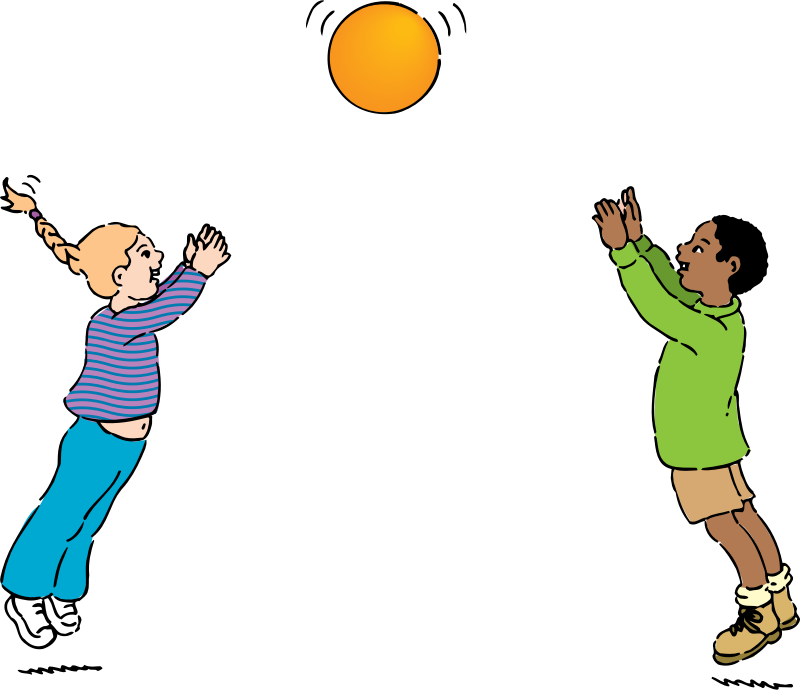
    Johnny Automatic, cartoon of a girl and boy playing with a ball https://openclipart.org/detail/721/playing-ball
    Johnny Automatic, cartoon of a girl and boy playing with a ball https://openclipart.org/detail/721/playing-ball

    One of my earliest memories of an organised game was of “Drop the hanky” played at a birthday party. I was about five years old at the time. I think that perhaps, until this event, I had only ever played imaginative games with my brothers and sisters. I was obviously not familiar with the rules or the ethos of the game. I’ll let my flash (non-) fiction explain.

    Plum pudding

    We sat in the circle chanting,

    “I wrote a letter to my love and on the way I dropped it.”

    “It” skipped around the outside, waving a handkerchief.

    “One of you has picked it up and put it in your pocket.

    Not you. Not you. Not y-o-u!”

    Suddenly “It” was running and children were scrabbling behind them.

    “Run,” they called.

    Then “It” was beside me.

    “Plum pudding!” they all screamed hysterically.

    The adult pointed to the centre of the circle. “We’ll have you for dessert,” he grinned.

    I cried, wondering what it would be like to be eaten alive!

    © Norah Colvin 2015
    © Norah Colvin 2015

    Obviously I was traumatised for the memory to be so vivid and almost nightmare-like since the memory ends abruptly with the fear. Obviously I wasn’t eaten for dessert, I survived the trauma and, to complete the fictional narrative, I guess you could say “I lived happily ever after.”

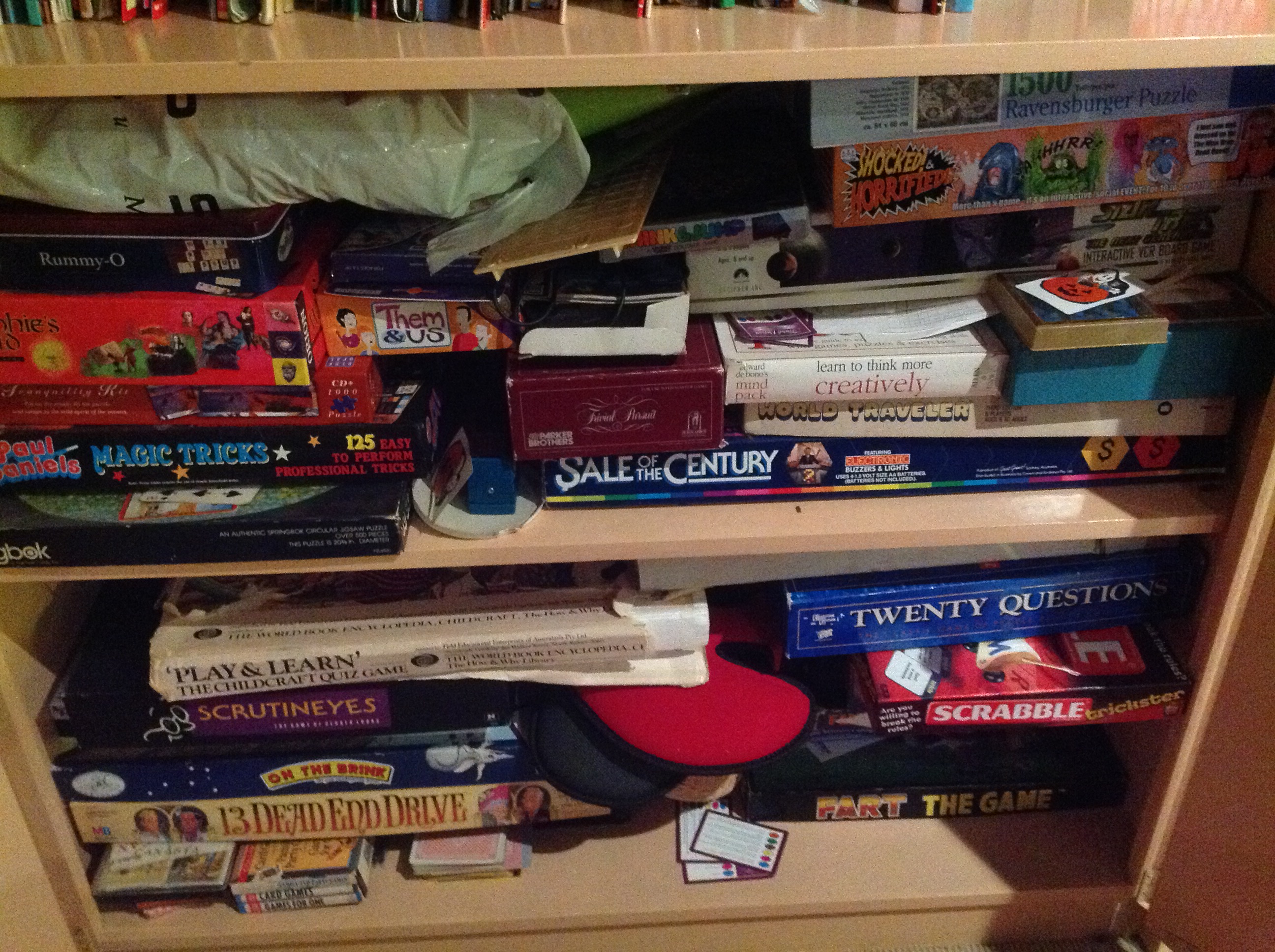
    But games don’t need to be traumatic. Games are better when they are fun; and I have many more memories of having fun with games than I do of being traumatised by them. Some of my “best” memories are of the laughs shared playing games like “Balderdash” and “Billionaire” when we (hub, son, daughter and partners) set aside traditional holidays for playing games together as a family. My house may have shelves laden with books, but they also have cupboards bursting with games.

    © Norah Colvin
    © Norah Colvin

    We didn’t always play purchased games. Sometimes we made up our own. It takes some skill in problem solving to think up a new game that will be fun to play with just the right amounts of challenge and competition, and an equal chance of “winning”, if there is a winner. Games without a winner, played for the fun of playing, are just as enjoyable.

    I have always included games in my class program. As well as being fun, if carefully chosen they can also progress learning. Games can be played at the beginning and conclusion of sessions; at transition times to reenergise, refocus and refresh; and as part of the teaching/learning program with whole class, small group or individual participation for targeting practice of particular concepts.

    One obvious benefit of playing games is the development of social skills such as:

    • Sharing
    • Taking turns
    • Cooperation
    • Dealing with competition
    • Accepting a loss
    • Accepting a win graciously

    In their book “A New Culture of Learning: Cultivating the Imagination for a World of Constant Change”, Douglas Thomas and John Seely Brown talk about ““arc of life” learning, which comprises the activities in our daily lives that keep us learning, growing and exploring.” They say, “Play, questioning, and — perhaps most important — imagination lie at the very heart of arc-of-life learning.”

    Throughout the book they talk about the importance of collaboration in engaging online in multi-player games and say that When understood properly . . . games may in fact be one of the best models for learning and knowing in the twenty-first century . . . Because if a game is good, you never play the same way twice.

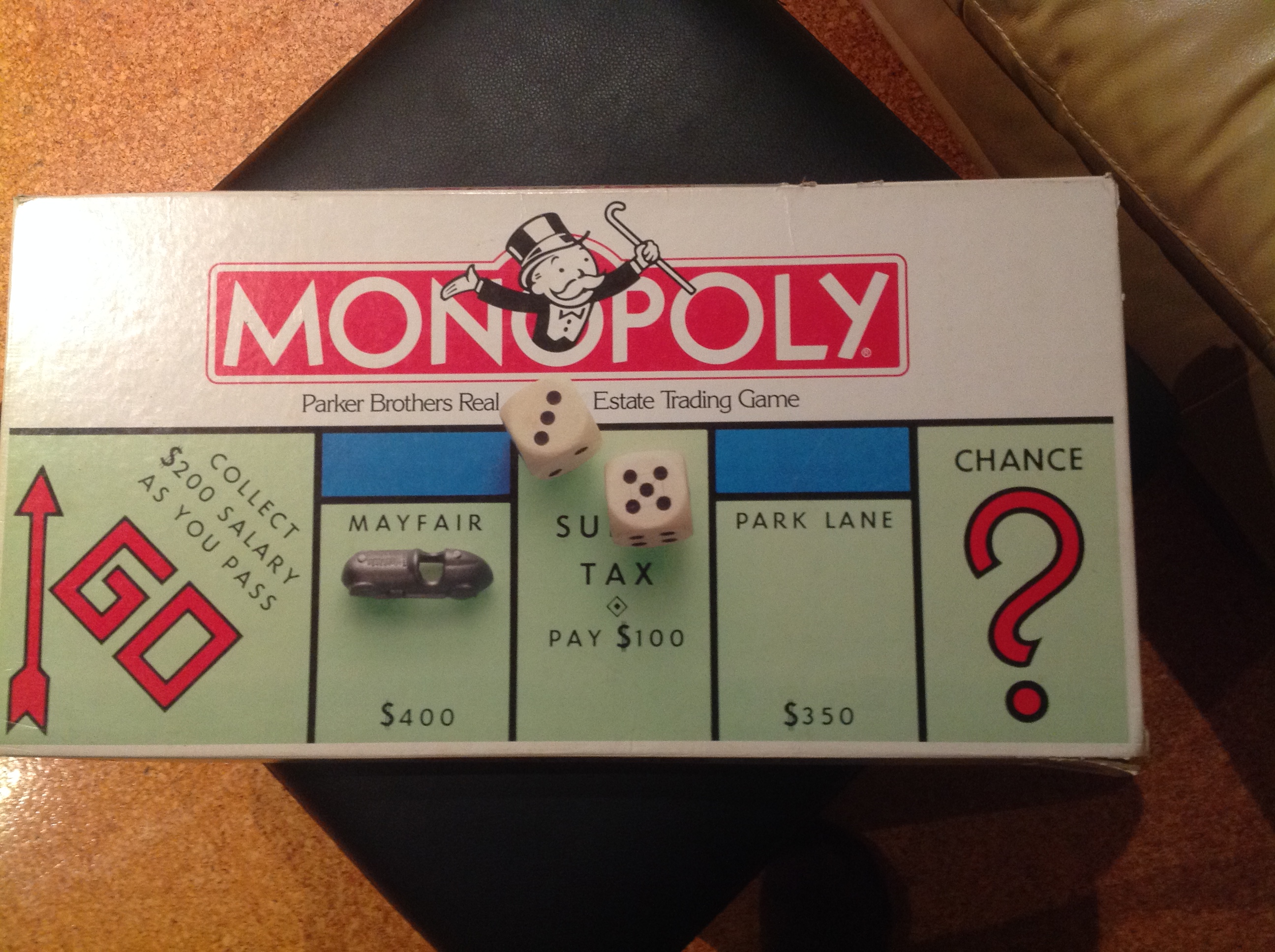
    monopoly

    Robert Kiyosaki in his book “Why “A” Students Work for “C” Students and Why “B” Students Work for the Government” talks about the importance of learning through games and explains how he learned, and was inspired to learn more, about finance from playing “Monopoly”. He says that Games are better teachers than teachers.” While I prefer to not agree with that statement in its entirety (I don’t even like playing Monopoly), I could understand his reasons for making it.

    Rarely a day would go by that at least one game wasn’t played in my classroom. We would play games in literacy groups that required children to read and think critically. We would play games in maths groups to practice skills in fun ways or to solve problems cooperatively. We would play games in science to try out ideas or research information. Some of the games involved physical as well as mental activity. Some were played with the entire class, and some on their own.

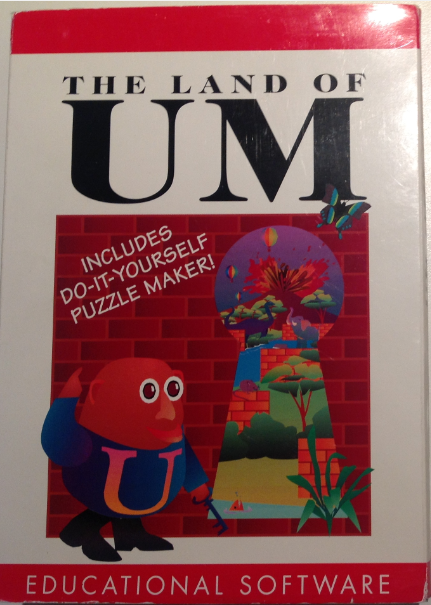
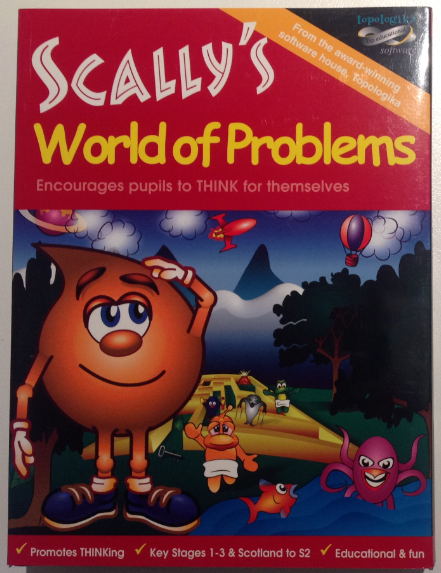
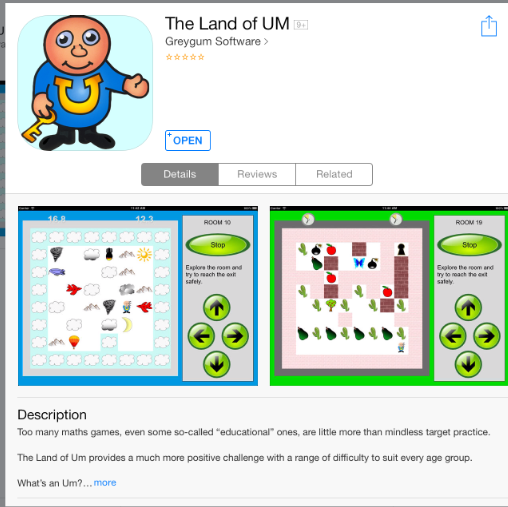
    One game we used in maths groups as well as an activity in the last few minutes of the day was a problem solving game that I was involved with from its inception, The Land of Um or, as it is known in the UK, Scally’s World of Problems. (Also available as an app.)

    http://www.greygum.com.au/nebula/index.php/the-land-of-um

    Scally


    When I was asked for an idea for a program, I suggested something that required children to explore to find out “what happens if” and “how things work”, much as they learn from their exploration of the “real world”. I also suggested that what they learn be consistent and apply at the next level. From that small seed and through the collaboration and synergy of a small group of creative people the “Land of Um” was born.

    Because, in my recollections anyway, it was “my” idea, I am very proud of “Um” and enthusiastic about its potential to encourage children to develop the thinking skills involved in solving problems.

    Um app

    In my class the children worked enthusiastically and collaboratively in small groups on an interactive whiteboard, taking turns to control the “Um” while working together to find the solution to each puzzle. As the level of difficulty increased the children needed to plan ahead, to visualise steps and predict what would happen and the effects of different actions. At each new level and in each new world, while the basics remained consistent, there was always something different to learn and explore. The children never tired of the using the program and were always eager to be the one to suggest the solution to the next problem. It was/is a joy to know that I had a part to play in the design of this program that has so many benefits to learners, not least of which is the fun of working together to solve problems.

    How significant are games in your life? What special memories do you have?

    If you are interested, there are many more stories about games to read on Charli’s blog.

    Thank you

    Thank you for reading. I appreciate your feedback. Please share your thoughts on any aspect of this post or flash fiction.


  • Revisiting The Very Hungry Caterpillar

    Recently, in a post introducing the idea of S.M.A.G. (Society of Mutual Admiration and Gratitude), I reflected upon my blogging journey and the gradual growth of readership and development of a S.M.A.G. over time. With this reflection came the realisation that many have missed earlier posts. That realisation, along with a comment by Sarah Brentyn, prompted me to share a few of my favourites.

    The Very Hungry Caterpillar

    The first posts I will revisit are from a series about using Eric Carle’s picture book The Very Hungry Caterpillar for educational purposes in an early childhood setting.

    The series of four posts;

    • explores benefits of reading picture books to children
    • questions the place of factual information in fictional texts, and
    • suggests the importance of teaching critical literacy from a young age.

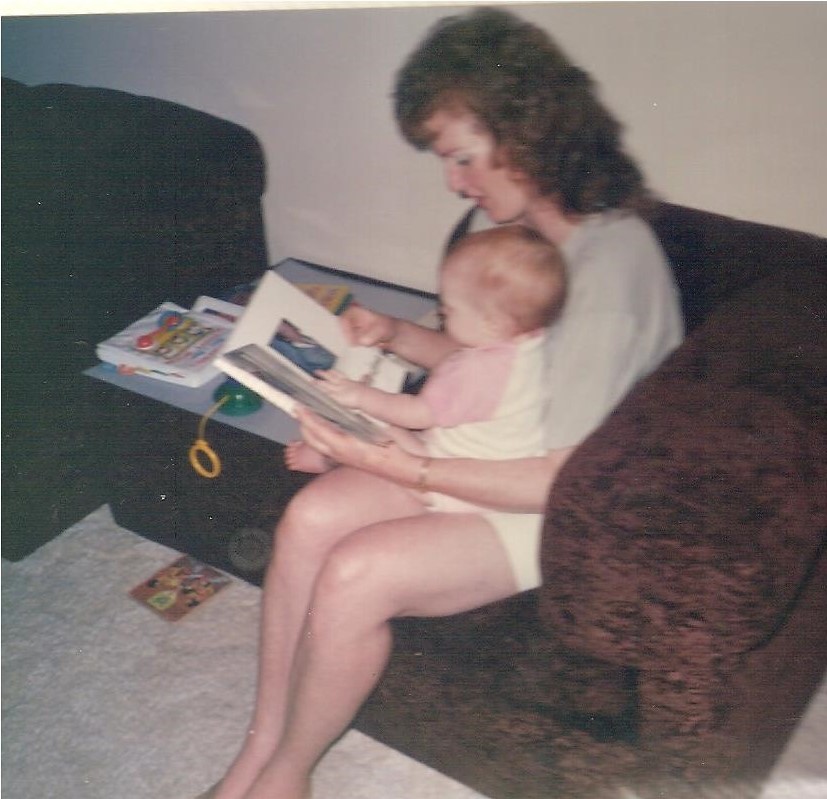
    Nor and Bec reading

    I will provide a brief overview of each post. I would be delighted to have you  follow the links to read the posts in full.

    Searching for meaning in a picture book — Part A

    In this post I explained that sharing picture books with children has many benefits, including:

    At home:

    • It can help strengthen the parent-child bond, becoming a special time of togetherness and of sharing stories and ideas.
    • It has a very positive effect upon their learning, helping them develop language, knowledge of print and books, and exposes them to new ideas and concepts.

    8-12-2013 7-38-33 PM

    In early childhood classrooms, The Very Hungry Caterpillar provides opportunities for work in many subject areas including:

    • Literature appreciation
    • Reading
    • Maths
    • Visual arts, and
    • Philosophical inquiry, but not Science (as I will explain later)


    Searching for purpose in a picture book – Part B

    In this post I discuss some purposes for using picture books and raise some questions about their content.

    A sampling of purposes:

    • encourages a love of reading and books
    • develops vocabulary and knowledge of language
    • provides a link between the language of home and the language used in the wider community and in education
    • supports beginning readers
    • inspires imagination
    • provides opportunities to discuss feelings, emotions, ideas, responses
    • develops feelings of empathy, identification, recognition, hope
    • instils an appreciation of art

    spiderswirl2

    Some questions:

    Do fictional picture books have a role, and do picture book authors have a responsibility, in imparting factual information in their books?

    Does it matter:

    • that, although lions don’t live in jungles, they are often referred to as “King of the jungle” and appears in that setting in many stories?
    • if animals that don’t co-exist, for example penguins and polar bears, appear in stories together?
    • if the portrayal of animals in stories is not anatomically correct, for example spiders shown with legs joined to their abdomens rather than cephalothoraxes?

    Do errors such as these influence children’s understanding of the world?

    How should adults handle the misinformation when sharing books with children?


    Searching for truth in a picture book – Part C

    In this post I refer specifically to inaccuracies in The Very Hungry Caterpillar and the pervasiveness of the misconceptions, if not totally attributable to the book, then at least in part. I suggest how acknowledging the inaccuracy can help develop critical literacy.

    In his book Eric Carle writes that

    “He (the caterpillar) built a small house, called a cocoon, around himself. He stayed inside for more than two weeks. Then he nibbled a hole in the cocoon, pushed his way out and . . . he was a beautiful butterfly!”

    Monarch butterfly

    However, as this (hopefully correct) information from the Australian Museum shows, butterflies do not spin cocoons around themselves. Moths do. Some butterflies and skippers do form a silken shelter, but not a cocoon as in Carle’s picture book.

    Unfortunately many articles found in an internet search share the same misinformation. I wonder how many adults grew up believing what Carle shared through his picture books. Even teachers have been surprised to learn that butterfly caterpillars do not spin cocoons.

    In the original post I share some lovely videos related to butterfly and moth metamorphosis. It is worth taking a peek at them.

    Does it matter if children (and adults) think that butterflies hatch out of cocoons? Eric Carle didn’t seem to think so. Do you?

    Finding power in a picture book – the main event

    In this post I argue that The Very Hungry Caterpillar has no place in a science lesson because of the misinformation contained therein: caterpillars do not eat many different foods and butterflies do not come out of cocoons.

    ryanlerch_thinkingboy_outline

    The greatest value of the book is as a tool for teaching critical literacy; for teaching children that just because something is in print, doesn’t make it true. It is also important to realise that misinformation is not restricted to picture books, and that they need to question all sources of information for the author’s credentials and purpose in writing.

    I suggest that teachers and parents:

    • point out inaccuracies and inconsistencies
    • encourage children to evaluate what they are reading and hearing against what they already know
    • support children to verify the source of the information and to check it against other more authoritative/reliable sources
    • help children to recognise that every author has a purpose and to identify that purpose
    • invite children to ask questions about what they are reading and to interrogate the content
    • encourage them to question, question, question.

    Eric Carle says “If we can accept giants tied down by dwarfs, genies in bottles, and knights who attack windmills, why can’t a caterpillar (sic) come out of a cocoon?”


    What do you think? Do picture book authors have a responsibility to be accurate? Is a butterfly coming out of a cocoon in the same realm as giants tied down by dwarfs? Would we accept a child hatching out of an egg? What parts of a story should be based in reality and which parts can be imagined?

     “Why can’t a butterfly come out of a cocoon?” asks Eric.

    Well, Eric, they just don’t.

    Thank you

    Thank you for reading. I appreciate your feedback. Please share your thoughts about any of issues I have raised in these posts.


  • Empowering women – International Women’s Day

    international women's day


    Yesterday, 8th March 2015, was celebrated as International Women’s Day around the world. While the day has a history (or herstory) of over one hundred years, yesterday marked the 40th anniversary of the date being claimed for this celebration by the United Nations and the 20th anniversary of the signing of the Beijing Declaration and Platform for Action.

     “The Platform for Action covers 12 critical areas of concern that are as relevant today as 20 years ago: poverty; education and training; health; violence; armed conflict; economy; power and decision-making; institutional mechanisms; human rights; media; environment; and the girl child.”

    The Secretary-General of the United Nations concludes the foreword to the 2015 paper with these words:

    When-we-empower-women

    The paper states that

     “Nearly 20 years after the adoption of the Platform for Action, no country has achieved equality for women and girls and significant levels of inequality between women and men persist.”

     This article in Time Magazine recognises that, while some gains have been made, there is still much more to be done to eliminate inequality. It repeats the call to action made by the UN Women Executive Director Phumzile Mlambo-Ngcuka:

    In line with the general achievements that have been made towards gender equality, and the gaps that still exist, is the situation for girls in schools, especially with regard to maths and science education. While more girls are moving into those areas than did when I was at school, there are still not enough.

    Ainissa Ramirez, who describes herself as a “Science Evangelist” says in her article Girls and Science: A Dream Deferred, that it is important to nurture girls’ interest in science and maths.

    She says that “the data . . . shows that the difference among graduates is not due to girls’ ability to do math and science; instead, the gender gap is caused by attitudes and behaviors toward girls and women, especially in the classroom.”

    This article by Claire Cain Miller in The New York Times reinforces this, saying that the attitude of elementary teachers is even more influential that attitudes in the home. Miller says that

    “Reversing bias among teachers could increase the number of women who enter fields like computer science and engineering, which are some of the fastest growing and highest paying.”

    This article by Sue Wilson cites research confirming the bias of teachers against girls showing that boys often received higher marks than did girls of equal ability. While the girls were discouraged from continuing their studies of maths and science subjects, the boys (whose teachers had over-assessed their ability) went on to be successful in those subjects.

    For the past three years during which time I have been writing science curriculum documents, I have had the extreme good fortune of working with one of Australia’s top science teachers. In fact Deb Smith has won many awards for her science teaching including the Prime Minister’s Prize for Excellence in Science Teaching in Secondary Schools in 2010. Throughout her career Deb has been an advocate for girls in science and has encouraged many girls, who otherwise would not have, to pursue careers in science.

    I haven’t yet considered whether Marnie, a character I have been developing through my flash fiction stories, would have, let alone pursue, an interest in maths and science subjects. I think it would be all she could do to survive.  You see, Marnie’s childhood had little to recommend it: a dysfunctional family in which she suffered neglect and abuse, and difficulties at school and with friendships as a result. However a teacher like Deb Smith or Ainissa Ramirez could make a difference to her engagement with those subjects. Marnie was fortunate that a teacher saw in her something special and provided support and guidance at a time that was crucial to her survival.

    This week, in response to the prompting by Charli Mills at the Carrot Ranch to In 99 words (no more, no less) color your story turquoise, I take Marnie one step closer to empowerment. Charli says that turquoise blue evokes trust and strength. I have also heard that it signifies protection, friendship and peace. What wonderful qualities to aspire to for Marnie, and for all women. Coincidentally, it is my favourite colour.

    Here is my flash fiction response to Charli’s challenge, with a Marnie who has found a new inner strength and sense of peace, and recalls the trust that was given in friendship along with a charm for protection.

    I hope you enjoy it.

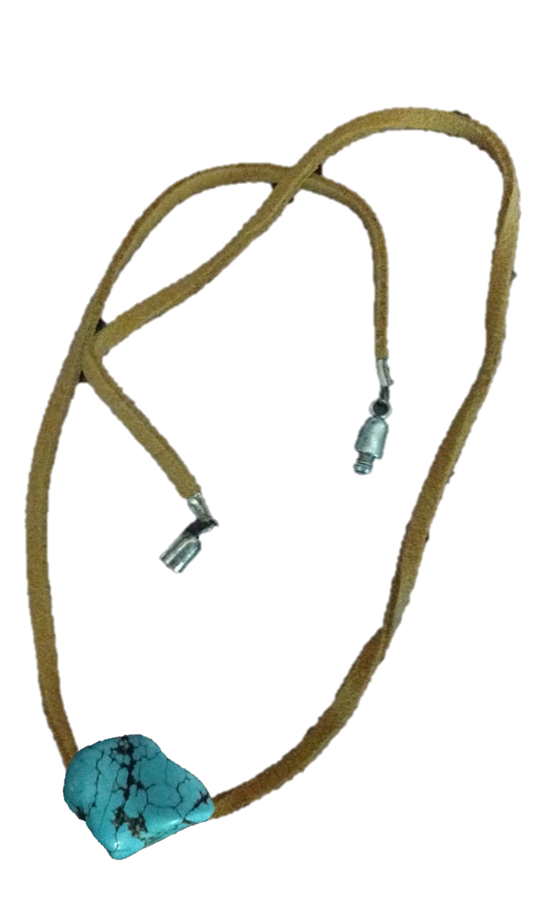
    turquoie necklace

    Turquoise dreaming

    Marnie paused at the gate. The house looked the same: roses by the steps, bell by the door, windows open and curtains tied back; just as she remembered.

    She shuddered as the memory of her last visit flashed momentarily: she was running, almost blinded by tears, stumbling with fear, up the steps, to the open door and open heart. She rubbed the turquoise pendant Miss had given her then, for “protection and peace”. She had worn it always.

    Now, Marnie walked the path with an unfamiliar lightness. It was over. Really over!

    She knocked at the door.

    Thank you

    Thank you for reading.

    I appreciate your feedback. Please share your thoughts about any aspect of this post and flash fiction.
     

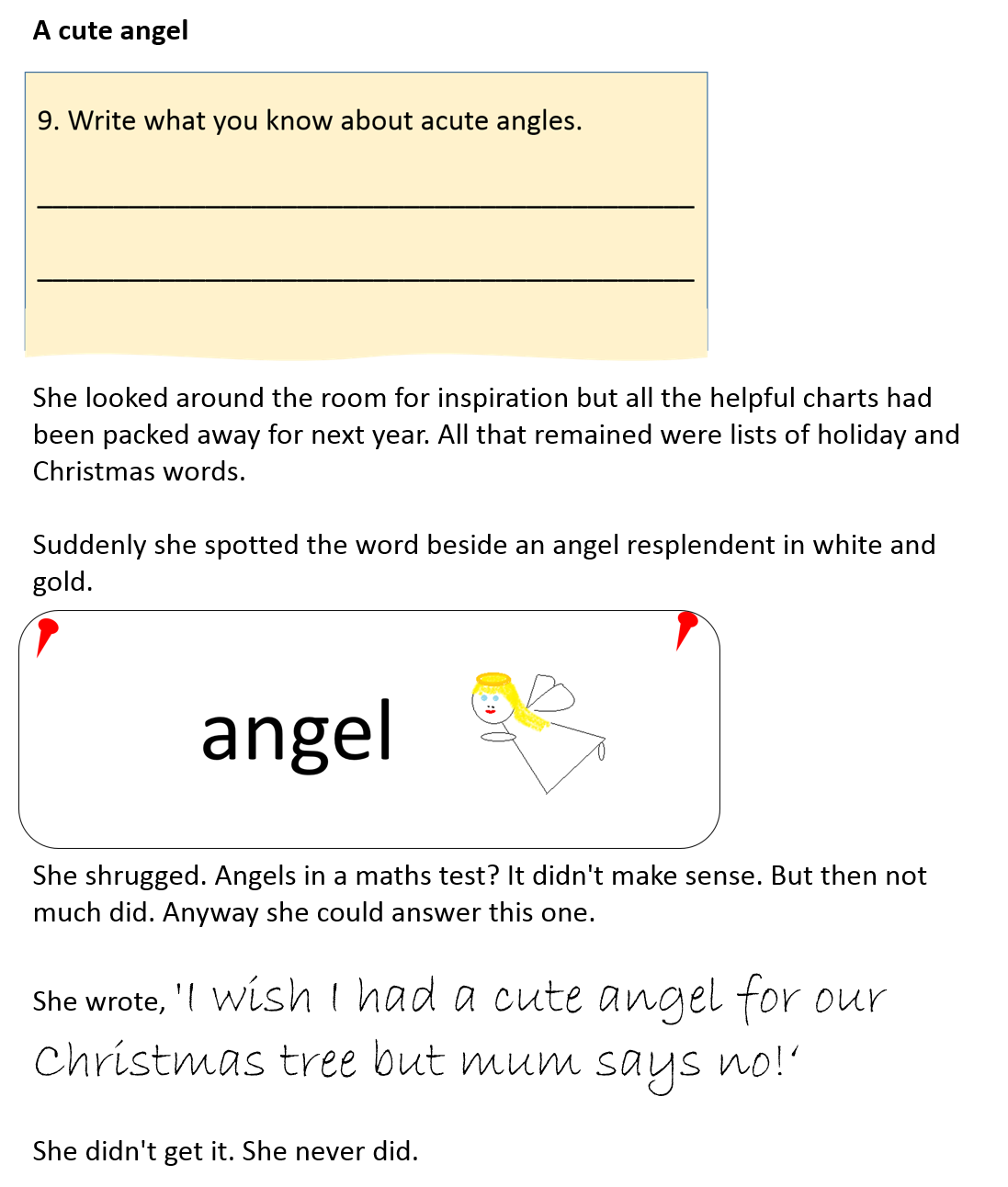
  • A cute angel

    This week at the Carrot Ranch Charli Mills has set an angel prompt: In 99 words (no more, no less) write a story that features an angel.

    Usually I include my responses to Charli’s prompts in longer posts sharing some thoughts about education.

    This week I’m going to leave it as a stand-alone, without the padding I usually provide. I am hopeful that the educational issues I have alluded to will be as obvious to you as they are to me. I’d love to know what you think.

    A cute angel

    Thank you

    Thanks for reading. I appreciate your feedback. Please share your thoughts about this flash and what you consider its message to be.


  • Learning in the kitchen

    Learning in the kitchen

    The kitchen is a great place for learning.

    kitchen

    When children participate in the preparation and cleaning up of meals and other food items the learning is richer than just cooking and cleaning, they are learning skills which will be invaluable for their future independent lives such as:

    • cooperation, sharing, taking turns and patience (how long before they’ll be ready?)
    • the etiquette of dining.
    • hygienic food handling.
    • the language of food and cooking and the preciseness of vocabulary such as the difference between dice and chop, shred and slice, boil and steam, bake and roast.
    • counting and one to one matching when setting the table with one of each item for each person.
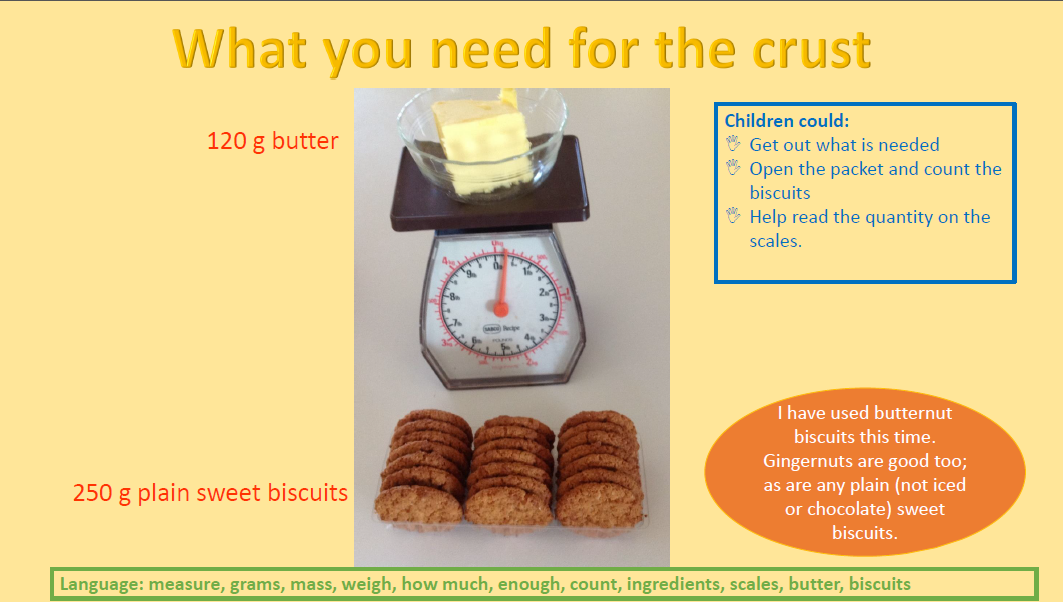
    • the mathematics of measuring mass (250 g), volume (1 cup or 250 ml) and time (bake for 15 minutes).
    • the mathematics of linear measurement; measuring the length, width and depth of baking tins and trays.
    • reading and following procedures, and understanding that unless the steps of a recipe are followed in order the outcome may not be what was expected.
    • writing of menus and shopping lists.
    • organisational and preparation skills: making sure all ingredients and utensils are available and assembled.
    • the science of mixing and combining, heating and cooling, and the different effects these may have upon different ingredients and utensils.
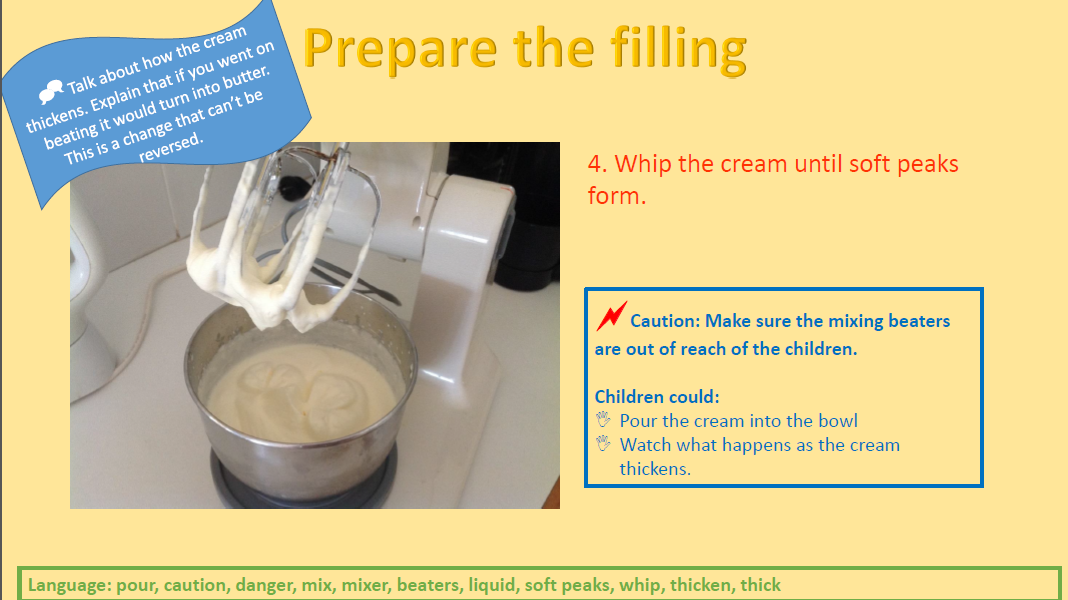
    • understanding that some of the changes that occur are reversible e.g. water to ice and back again; but that some are irreversible e.g. cream to butter, but not back again.
    While it is not suitable for children to use knives or handle hot utensils or heating appliances when young, and only under careful adult supervision when older, children can be included in many kitchen tasks from a young age.

    Watching, discussing and asking questions provide great opportunities for learning. Children can be introduced to tasks such as mixing, pouring, measuring, menu planning and cleaning up, amongst others, as they grow.

    One of the fantastic things about food preparation is the opportunity it provides for asking questions: it can be an ongoing edible science experiment, for example:

    Why do the cakes rise?

    What makes the water bubble?

    Why is a cloud coming out of the jug?

    Where does the water go when it boils?

    Why isn’t the egg white white before it’s cooked?

    What would happen if I didn’t put the egg in the cake mixture?

    Why is some sugar brown?

    What the difference between sugar, caster sugar and brown sugar?

    What happens to cream when it is beaten?

    At the moment I am grappling with a kitchen science dilemma, and if you can provide an answer to my question, I’d be very appreciative.

    My question is:

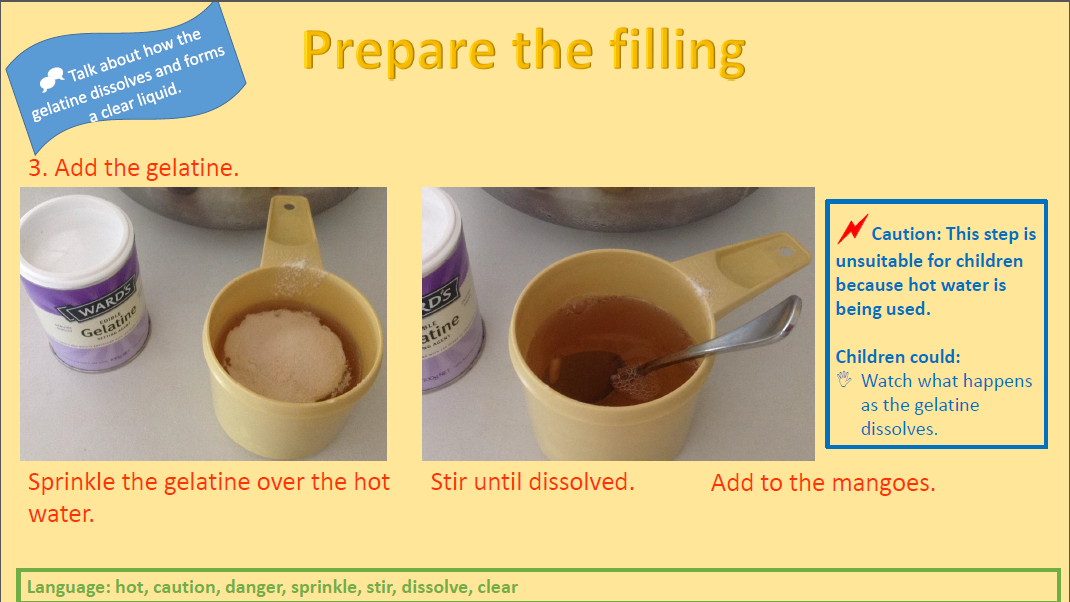
    What is a suitable vegetarian substitute for gelatine?

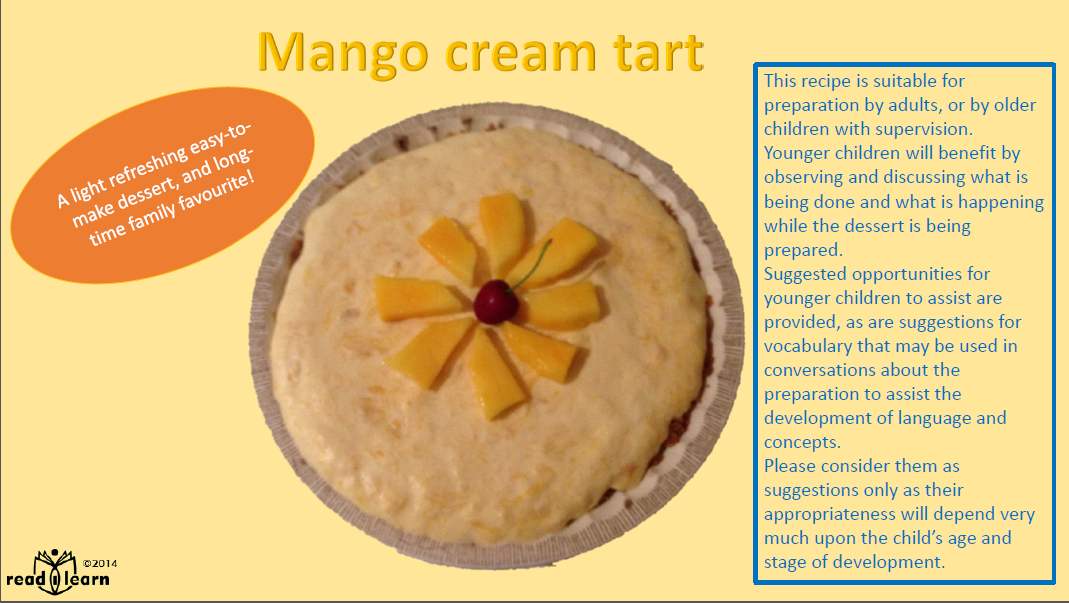
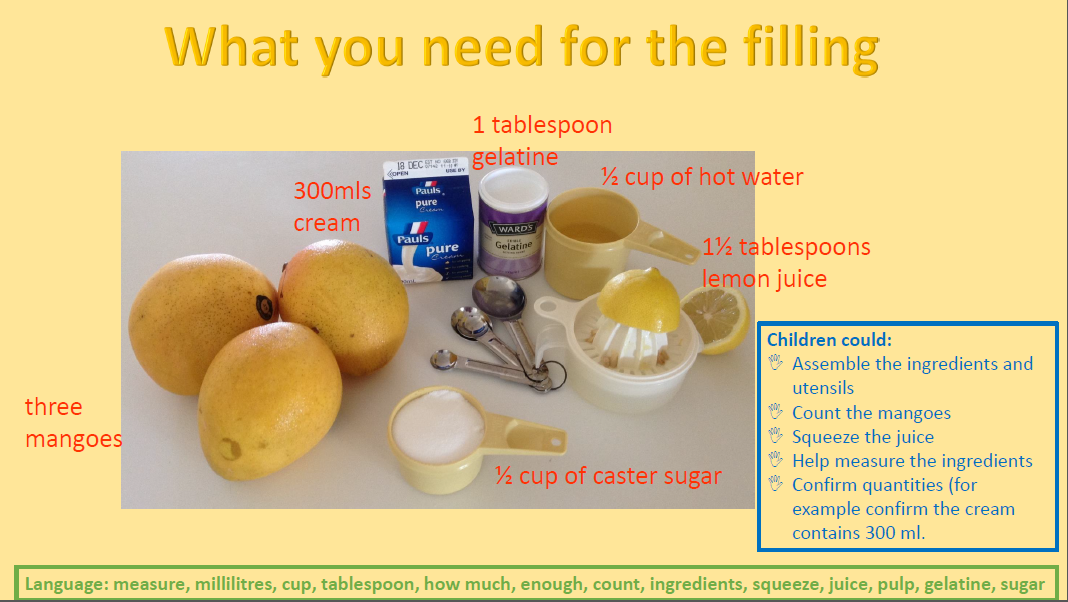
    One of my family’s favourite desserts is Mango Cream Tart. Gelatine is used as a setting agent in the dessert.

    Some of my family members are vegetarians who, upon discovering the answer to the seemingly innocuous question

    What is gelatine made from?

    realised that eating anything containing gelatine no longer suited their food choices.

    So rather than remove the dessert from family menus, or make something that was unacceptable to these family members, I decided the only thing to do was find a substitute for the offending ingredient.

    I have purchased two different vegetarian substitutes but both require being boiled in the liquid which they are to set and are therefore unsuited to the Mango Cream Tart and other cream cheese cheesecakes I may wish to make. An additional factor confirming their lack of suitability is the warning that they may not set some fruit juices.

    I did an online search and found 3 Vegetarian Substitutes for gelatine. If you have used with success any these products, or another product, that may be suitable to use in my Mango Cream Tart recipe I would love to know please.

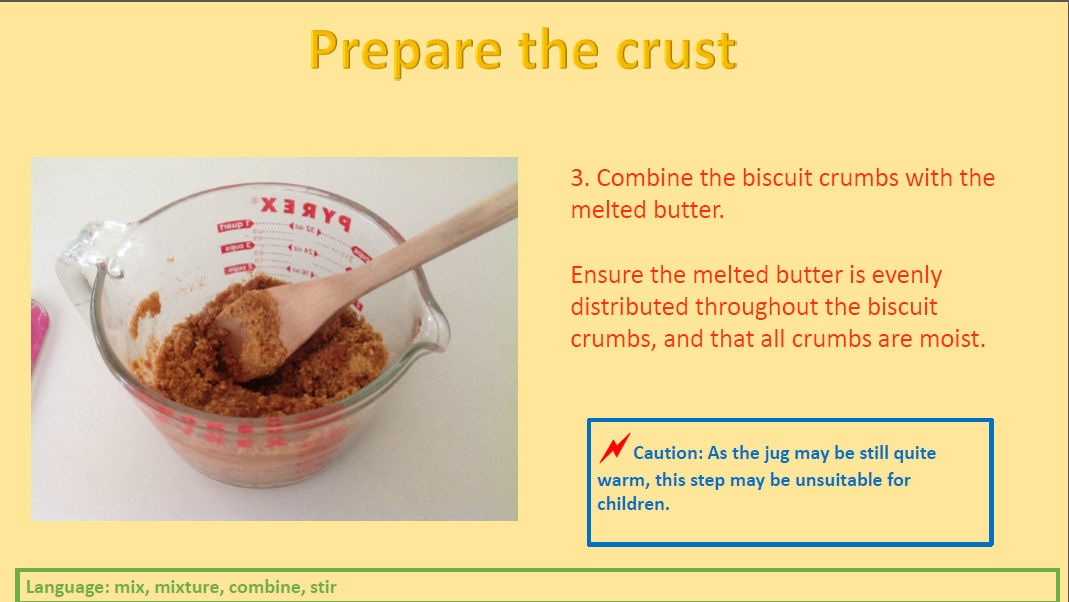
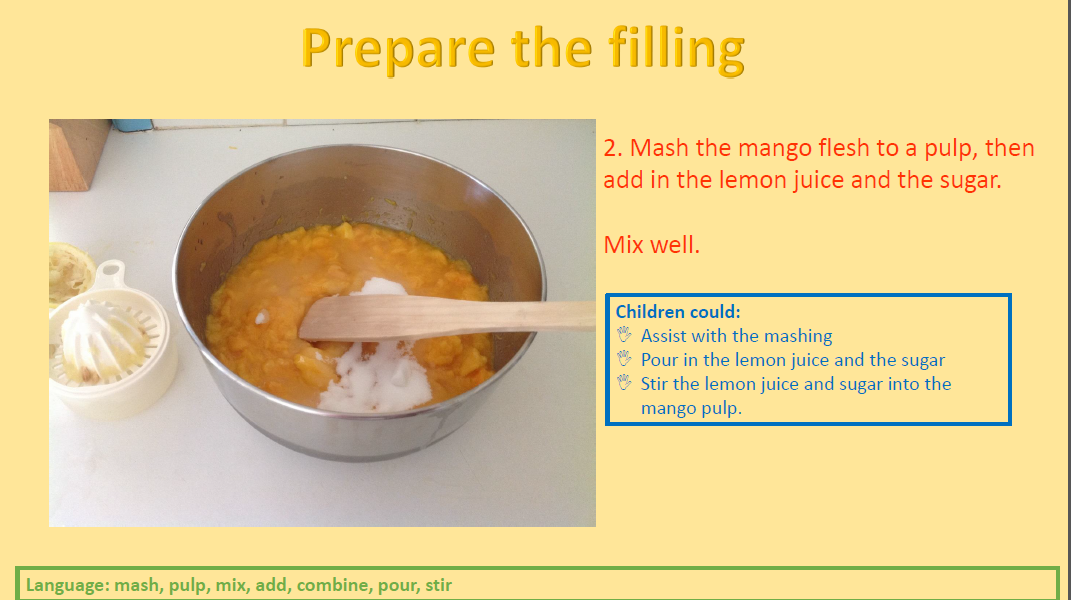
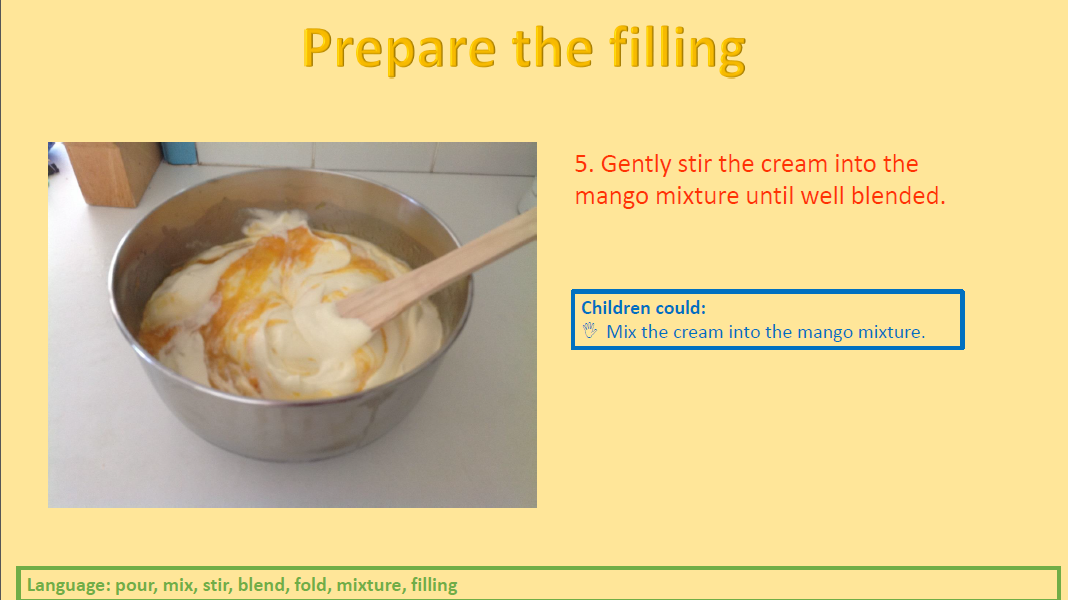
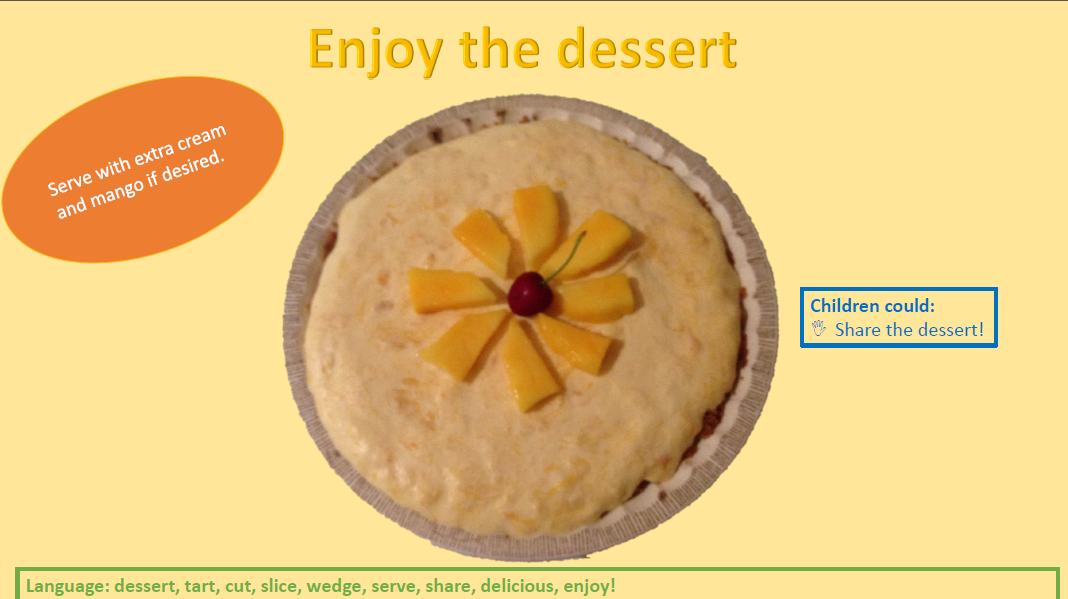
    Here is the recipe which includes suggestions for parents on how they can incorporate learning opportunities for their children while making it. If you can’t help solve my gelatine dilemma, I’d love to know what you think of the way I have presented the recipe. Would this format be useful to parents of young children?

    Mango 1

    mango 2

    Mango 3

    mango 4

    Mango 5

    Mango 6

    Mango 7

    Mango 8

    Mango 9

    Mango 10

    mango 11

    mango 12

    Mango 13

    Mango 14

    You can click on this link: Mango cream tart – recipe for a full-screen slideshow of the recipe.

    The quote by Michael Rosen at the top of this post is from his new book: Good Ideas How to Be Your Child’s (and Your Own) Best Teacher. In the book he includes a chapter “The Kitchen” explaining why he thinks the kitchen is the best classroom invented.

    Thank you

    Thank you for reading. I appreciate your feedback. Please share your thoughts about any aspect of this post. I’d especially appreciate feedback on my presentation of the recipe and suggestions for a vegetarian substitute for gelatine.


    Kitchen photo credit: https://www.flickr.com/photos/john-schilling/364481975/  http://creativecommons.org/licenses/by-nd/2.0/