Live Love Laugh Learn … Create the possibilities

Category: Mathematics

  • Ideas for learning at home when you can’t go out – #readilearn

    Ideas for learning at home when you can’t go out – #readilearn

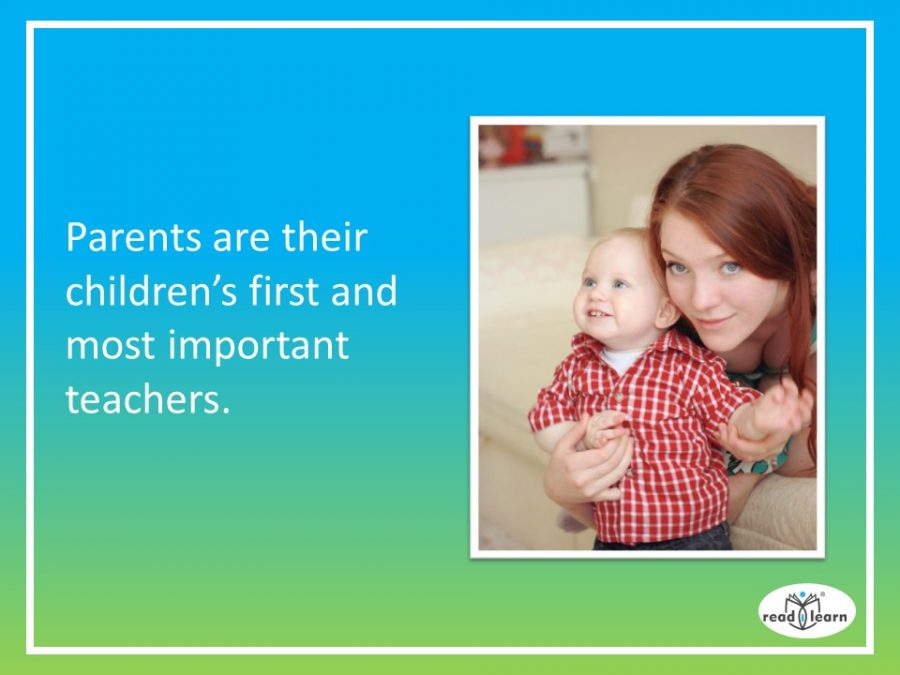
    Not all learning happens in school. It has always been that way. While teachers are responsible for children’s learning of curricula, and held responsible for more than they really should be, parents have always been their children’s first and most important teachers.

    It is in those years before school that children learn many of their attitudes to life and learning, develop language and, hopefully, a love of reading. It is parents who are the primary influencers in the early years. And that doesn’t change once they start school. Ask any teacher.

    Now that many schools are closed and parents are required to support their children’s learning at home, many parents are feeling anxious and lacking in confidence about their ability to do so. It is understandable when, for so long, it has been the expectations that, at age five or six, parents will pass over the responsibility for their children’s academic progress to teachers.

     Parents, you’ve got this.

    Parents, I say to you, for these, hopefully, few short months out of school, you’ve got this.

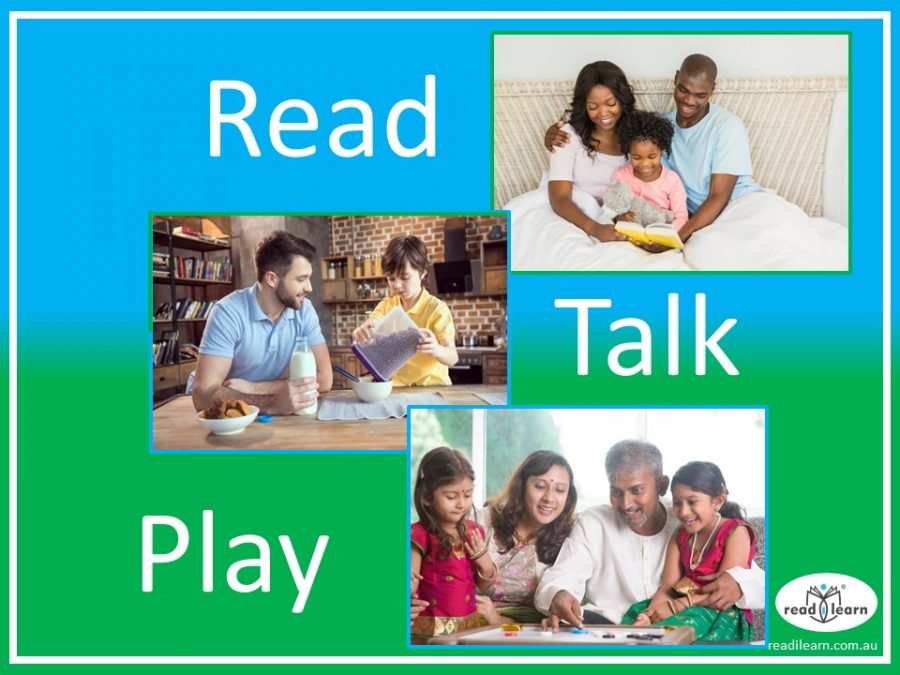
    The most valuable things — read, talk, play

    Continue reading: Ideas for learning at home when you can’t go out – readilearn

  • Special Days and Events for Classroom Celebrations — April – #readilearn

    Special Days and Events for Classroom Celebrations — April – #readilearn

    We are only a quarter into the year but it seems so much longer with so much happening and situations changing constantly. While the situation will be far from business as usual for most of you, I will try to keep this post as close to usual as possible.

    Whether children are at home or at school, their learning must continue. readilearn supports you with lessons and activities that focus on progressing children’s learning rather than simply keeping them busy. With resources easily affordable, and many of them free, readilearn is good value for teachers or parents working with children aged 5 – 7. If you feel yours is a special situation which places this low-cost resource out of your reach, please contact us.

    April Fools’ Day

    Be careful on 1 April as it is April Fools’ Day and tricksters and pranksters are about. Be on the lookout for fake news stories and all sorts of jokers trying to trip you up. Who will you trick?

    International Children’s Book Day  

    Continue reading: Special Days and Events for Classroom Celebrations — April – readilearn

  • Rabbits on the Roof — Who’s Counting? #flashfiction

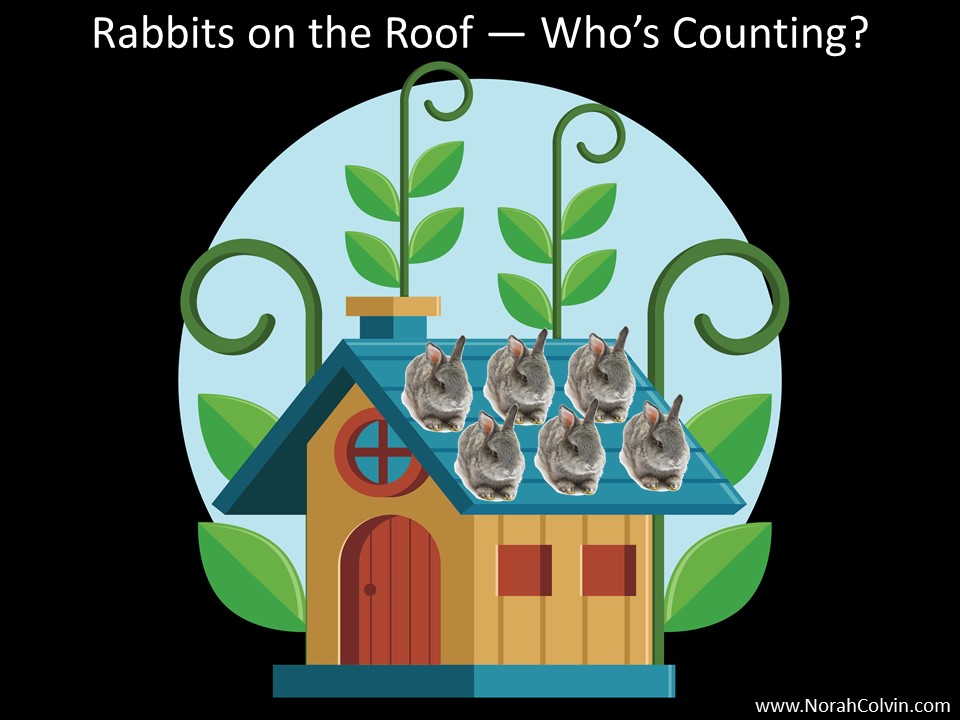
    Rabbits on the Roof — Who’s Counting? #flashfiction

    Carrot Ranch - Rabbits on the roof

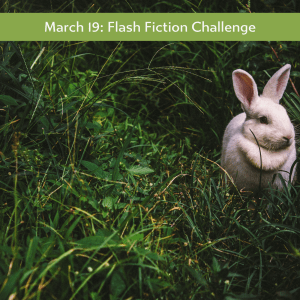
    This week at the Carrot Ranch, Charli Mills challenged writers to In 99 words (no more, no less), write a story about a rabbit on the roof. Or many rabbits. Why are they there? Explain the unexpected, go into any genre. Go where the prompt leads!

    As I mentioned in my comment on Charli’s post, all I could think about was the Fibonacci Rabbit Problem.

    I wrote about the Fibonacci number sequence previously in a post called Counting on Daisies.

    In the Fibonacci sequence, each number is the sum of the two preceding numbers: 1, 1, 2, 3, 5, 8, 13, 21, 34, 55, 89, and so on.

    As the sequence progresses, the numbers get exponentially larger, not unlike the numbers succumbing to the dreaded virus that engulfing our world at the moment.

    The number sequence occurs naturally in many situations; for example, in bee populations, in spirals of snail shells, in leaves on plants and petals on flowers.

    But who was Fibonacci, why does he have a number sequence named after him, and what is the problem with rabbits?

    Fibonacci was the Italian mathematician who introduced the Arabic-Hindu system of numbers and arithmetic (the numbers we use) to the Western World in the 12th Century.

    Fibonacci wasn’t his real name. He was really Leonardo Bonacci. His famous book Liber Abaci was handwritten, long before the era of the printing press (let alone computers and indie publishing).  A couple of centuries later, some students reading his tome, misread what he had written (‘filius Bonacci’ meaning ‘son of Bonacci’) as Fibonacci and that’s how he’s still known today.

    Fibonacci (Leonardo Bonacci) wrote about the number sequence that now bears his name in his book Liber Abaci. He explained the sequence using an example often referred to as The Rabbit Problem. The problem involves rabbits breeding profusely. While the situation described isn’t necessarily accurate, it is entertaining and helps us get the picture.

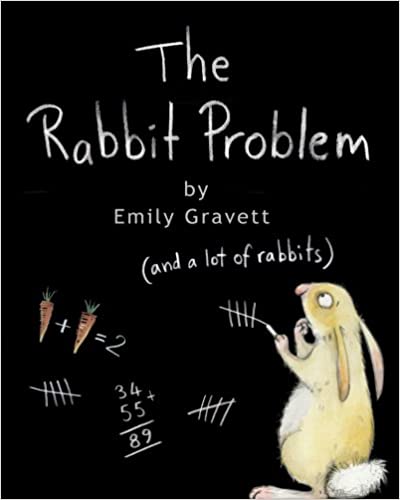
    The Rabbit Problem by Emily Gravett

    A beautiful picture book by Emily Gravett, also named The Rabbit Problem, is a fun way of introducing the concept to children. Set on Mr Fibonacci’s farm, the rabbits multiply each month for a year according to the number sequence. However, each month, new problems for the rabbits arise.

    If you’re interested in finding out more about Fibonacci’s numbers, I highly recommend this video by mathemagician Arthur Benjamin.

    But now for my story in response to Charli’s challenge. Perhaps it has an underlying message suited to these troubling times. Maybe you’ll see it too. If not, I hope it’s just a fun story that you enjoy.

    What Rabbits?

    “Wassup?” He knew something was when she stopped rocking.

    “Nothin’.” She continued rocking.

    “Musta bin somethin’.”

    “Nah. Thought I saw a rabbit on that roof, is all.”

    “I ain’t never seen no rabbit on a roof.”

    “You ain’t never seen nothin’.”


    “What?”

    “Thought there was two rabbits on that there roof.”

    “That’s crazy.”


    The rabbits multiplied, but she never stopped rockin’ and she never said nothin’.


    One day, he stopped.

    “Shhh. I hear somethun.”

    “What?”

    “Sounds like …”

    A multitude of rabbits exploded from the roof, landing all around, even in their laps.

    “What?”

    “Nothin.”

    They kept on rockin’.

    Thank you blog post

    Thank you for reading. I appreciate your feedback. Please share your thoughts.

  • Keep children engaged and learning with fun Easter lessons and activities – #readilearn

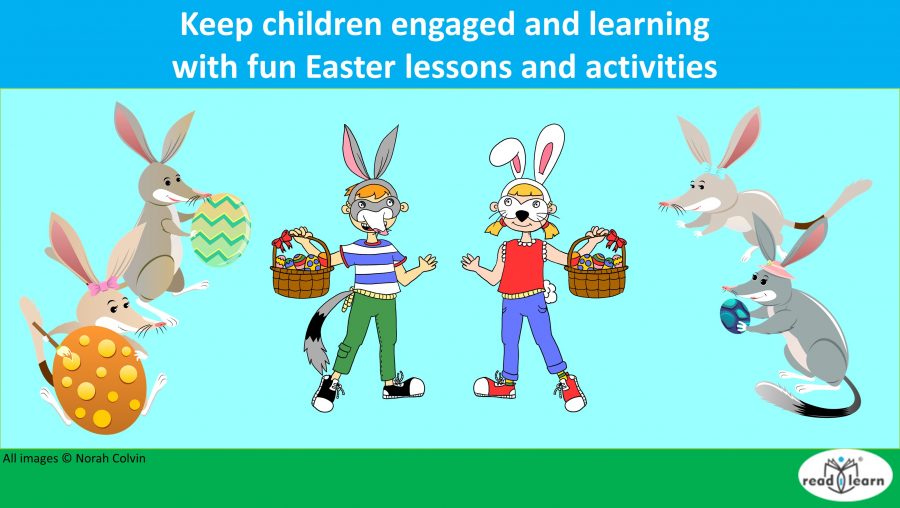
    Keep children engaged and learning with fun Easter lessons and activities – #readilearn

    Easter is coming in 2020 along with school holidays, school closures and lockdowns. While readilearn lessons and activities are designed with teachers of the first three years of school in mind, perhaps, in these challenging times, parents may also find them useful in supporting their children’s learning while they are out of school.

    The collection now numbers over 400 resources and more than 70 of these are interactive lessons and stories. All resources can be accessed with a small annual subscription or purchased individually. Many of the resources are free.

    While teachers would normally use the interactive lessons on the interactive whiteboard with the whole class or small group, parents access them on their home computers. Just as teachers would discuss the resources when using them with a class, so too, parents discuss them with their children as they work through them together. The most benefit for children comes from the discussion. They are not designed for children to use independently.

    Lessons and activities with an Easter focus

    Lessons and activities in the readilearn collection cover a range of topics and curriculum areas. However, the focus of this post is on those with an Easter theme and how they can be used to keep the children thinking and learning while having fun. (Note: All readilearn Easter-themed resources can be found here.)

    Continue reading: Keep children engaged and learning with fun Easter lessons and activities – readilearn

  • Leap into learning with leap year fun – #readilearn

    Leap into learning with leap year fun – #readilearn

    Next Saturday 29 February is a leap day. A leap day is an extra day added to every fourth year to keep the calendar in line with the solar year. Since we only have one 29 February every four years, it is a day worthy of celebration. Here are some ideas to get you started.

    20 Fun facts about leap years

    1. A leap year occurs once every four years.
    2. A leap year has 366 days instead of the 365 days of other years.
    3. The extra day added to a leap year is 29 February.
    4. The extra day is added to keep the calendar year in line with the seasons and astronomical calendar.
    5. The number of leap years are all divisible by 4; for example, 2000, 2004, 2008, 2012, 2016, 2020, 2024, 2028.
    6. However, although all hundred years are divisible by 4, not all hundred years are leap years. Hundred years are only leap years if they are divisible by 400. So, while 2000 was a leap year, the next hundred year to be a leap year will be 2400.
    7. Leap years were first introduced by Julius Caesar over 2000 years ago with the Julian calendar. His rule was to add a leap day to every year that was divisible by 4.
    8. The leap year as we now know it, with the hundred year rule, was introduced by Pope Gregory VIII in 1582. In that year, Pope Gregory had to remove ten days from calendar to keep it in sync with the solar year. The calendar we still use, the Gregorian Calendar, is named after him.

    Continue reading: Leap into learning with leap year fun – readilearn

  • Learning with Halloween fun – readilearn

    Learning with Halloween fun – readilearn

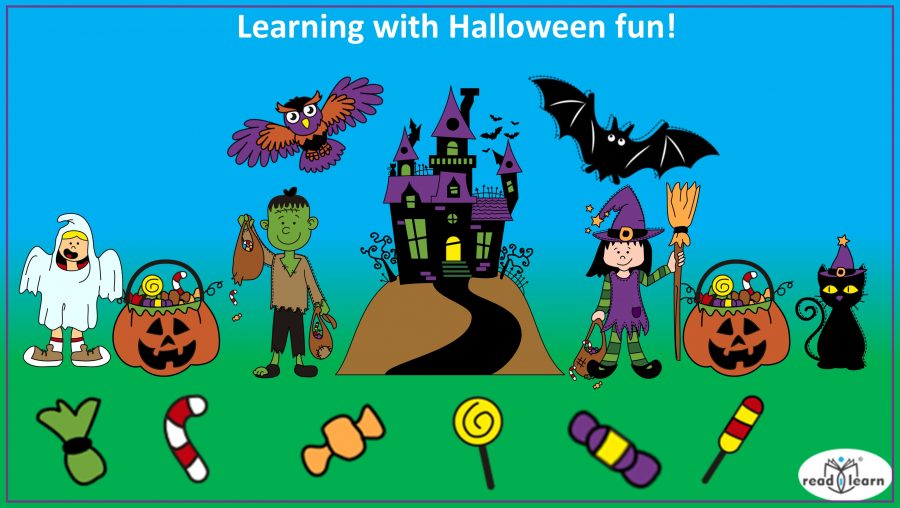
    Halloween is just around the corner and many of us wonder how we can have fun with a Halloween theme while ensuring learning is not forgotten in repetitious and meaningless worksheets.

    readilearn teaching resources support teachers in keeping the learning alive while the children are having fun with Halloween-themed lessons.

    trick or treat printable game for Halloween

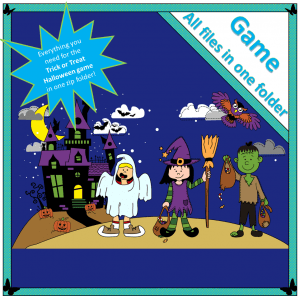
    The printable Trick or Treat Game for Halloween is a fun board game for two or more players of all ages, suitable for use in maths and literacy groups, with buddies or in family groups. It combines reading, mathematics, activity, and loads of fun and laughter.

    Everything required to play the game is included in the zip folder. All you’ll need to add is a dice and a sense of fun. There are treats to collect and instructions to follow. Try not to be scared by those witches and ghosts and, most of all, look out for your friends.

    The kit also includes additional ideas for lessons in maths and writing.

    Each of the game components are also available individually to use in other ways if you wish.

    Continue reading: Learning with Halloween fun – readilearn

  • School Days Reminiscences — Some Data

    School Days Reminiscences — Some Data

    School days and their impact on our lives has been a major topic of discussion here over the past six months when authors and bloggers have shared their reminiscences. (You can catch up on any reminiscences you missed here.)With no one else quite ready to share just yet, I thought it would be interesting to have a look over some aspects of the reviews.

    The first questions I asked were related to where schools had been attended and whether the schools were government, private or independent.

    Where did the interviewees attend school?

    A total of twelve countries were listed:

    • USA (8)
    • England (7)
    • Canada (3)
    • South Africa (3)
    • India (1)
    • Wales (1)
    • Australia (1)
    • Malaysia (1)
    • Singapore (1)
    • New Zealand (1)
    • Malta (1)
    • Zimbabwe (1)
    • And the British Colony of Hong Kong (1)

    Three interviewees attended schools in two or more countries (two attended in three).

    This gives us quite an international flavour to the interviews.

    Were the schools government, private or independent?

    This one is a little more difficult to summarise as the systems seem to be classed differently from country to country. However, the majority of interviewees appear to have attended government schools, with a smattering attending private or independent schools, and some a mixture of both.

    Was there an overall favourite subject?

    graph - what was your favourite subject

    Discussions on the posts indicated that there might have been a trend towards a liking for English and a dislike of physical education and maths. I think the trend away from PE and maths especially may have emerged through the discussions themselves, as when I went back through the posts, it wasn’t so obvious. However, I didn’t specifically ask which subject was most disliked.

    English with its related subjects like reading and writing was definitely the overall favourite with eleven listing it as such.

    The list of favourites includes:

    • English (11)
    • History (4)
    • Music (2)
    • Geography (2)
    • Social Studies (2)
    • French (1)
    • PE (1)
    • Art (1)
    • Humanities (1)
    • Maths (1)
    • Drama (1)

    (Note: If people listed more than one, I may have included it.)

    What aspect of school was most disliked?

    As I didn’t ask the question about subjects that were disliked, but what was most disliked about school, I received a variety of responses.

    PE did figure in the responses of six respondents, but the social aspect of fitting in and making friends, including when changing schools was listed by seven. Subjects such as maths, physics, geography, biology and geometry rated only one mention each. Other dislikes included disruption due to war, rules, long distances to and from school, and being picked out to answer questions. Others said that there was nothing they had disliked about school.

    It is interesting that the social aspect of school and physical education ranked so highly. I wonder how much of the dislike for physical education was related to the social aspect of it.

    Thank you blog post

    Thank you for reading. I appreciate your comments. Please share your thoughts.


  • Celebrating 100 days of school with lessons ready to teach – readilearn

    Celebrating 100 days of school with lessons ready to teach – readilearn

    Celebrating 100 days of school is a wonderful opportunity for acknowledging the passage of time, learning progress and a growing understanding of number. Children love a party and there can be nothing better than a celebration to increase their motivation and get them all involved.

    As the school year in Australia consists of approximately 200 days, the 100th day occurs close to the half-way mark. While it is fun to count up to 100, it can also be fun to count back from 100 to know how many more school days remain in the year.

    Celebrate 100 days

    Several readilearn resources with lessons ready to teach support you and your students as you count up to and celebrate one hundred days, including:

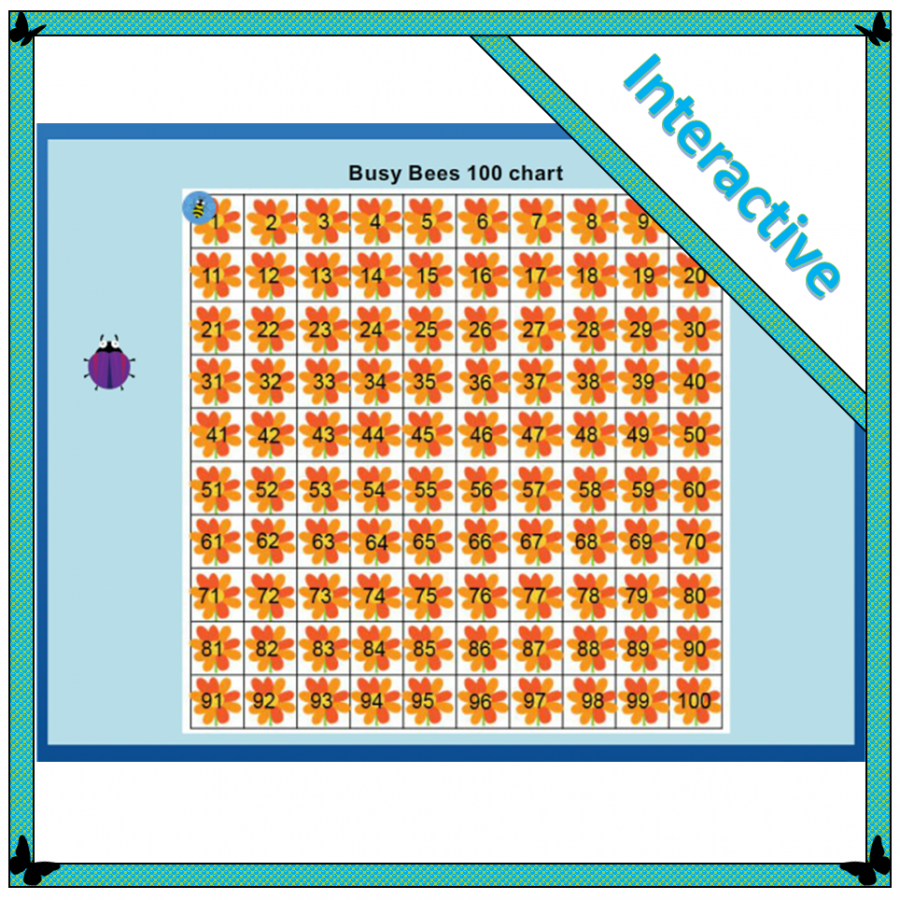
    Whether you’ve used it from the beginning of the year or not, the interactive digital resource Busy Bees 100 chart is great for all your usual number board activities and can be used to keep a count of how many days you’ve been at school. Simply display the resource on the whiteboard at the beginning of each day and move the bee to the next number. The chart also helps to develop a visual idea of what 100 objects look like.

    Each of these next three resources can be accessed individually or through the Busy Bees 100 chart.

    Continue reading: Celebrating 100 days of school with lessons ready to teach – readilearn

  • Developing Number Concepts with Lessons Ready to Teach – readilearn

    Developing Number Concepts with Lessons Ready to Teach – readilearn

    Ensuring children have a firm understanding of number concepts is important before moving them on to working with larger numbers and more abstract concepts. A strong foundation makes for greater confidence when working with numbers of any size.

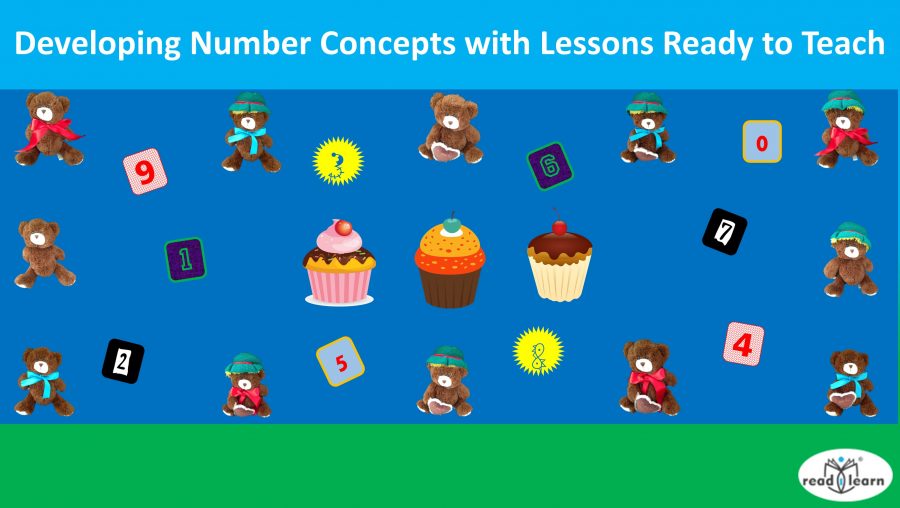
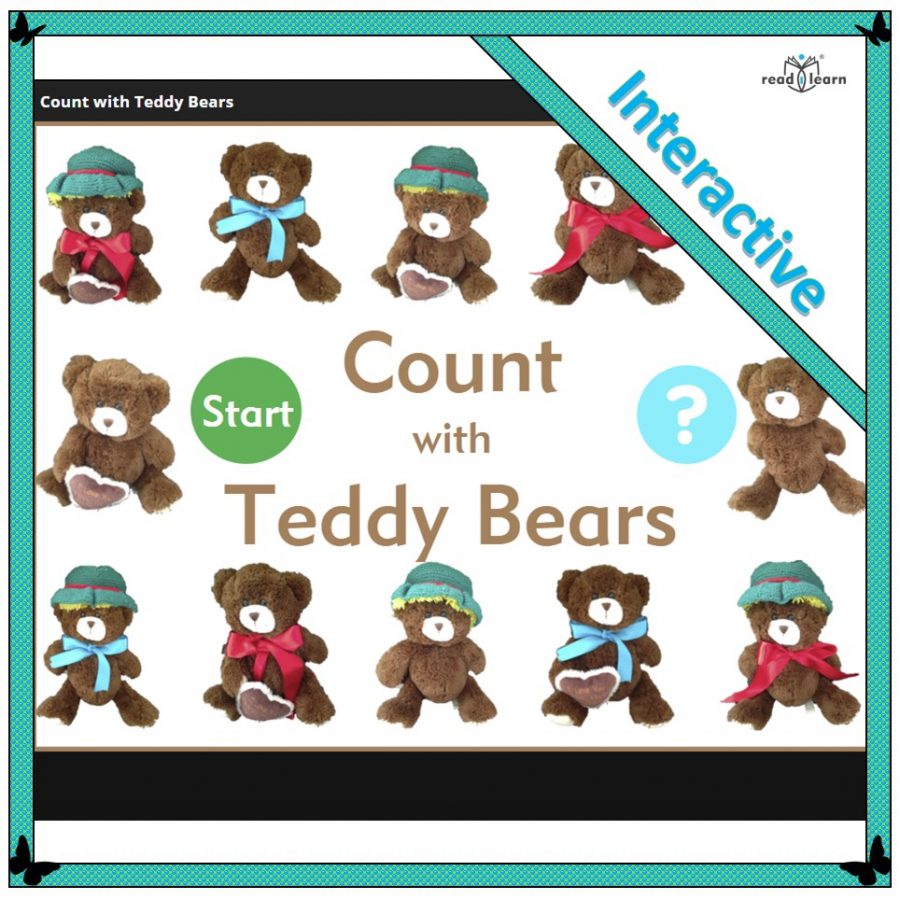
    To support your teaching of early number concepts, I have produced a new interactive resource, Count with Teddy Bears, with lessons ready for you to teach on the interactive whiteboard. The resource extends the range for teaching understanding of number already available from readilearn.

    The lessons in Count with Teddy Bears provide opportunities for teacher explanations, teacher-student discussions, and student demonstration of understanding.

    Interactive lessons are engaging for students, and with the children focused on the lesson, the teacher can identify areas of misunderstanding that require further teaching as well as concepts about which the children are already confident.

    About Count with Teddy Bears

    Count with Teddy Bears incorporates five separate sections with teaching in five main concept areas:

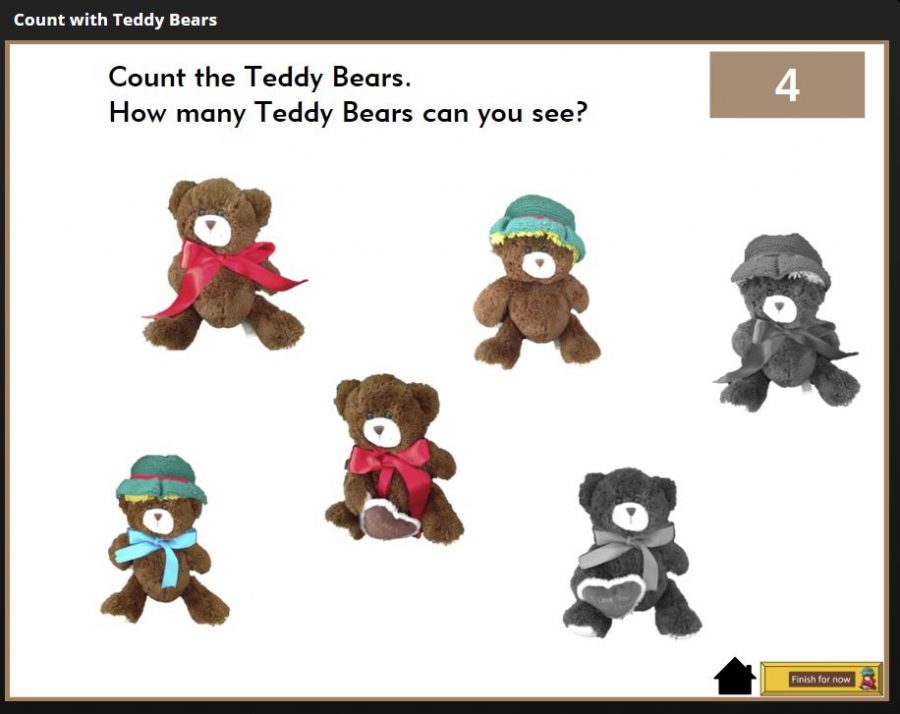
    Count Teddy Bears — Counting in ones from 1–12.

    Children click on each Teddy to count. As it is clicked, the Teddy is coloured, and one is added to the total.

    Teddy’s Cupcakes — One-to-one matching up to 10.

    Continue reading: Developing Number Concepts with Lessons Ready to Teach – readilearn

  • School Days, Reminiscences of Robbie Cheadle

    School Days, Reminiscences of Robbie Cheadle

    Welcome to the School Days, Reminiscences series in which my champion bloggers and authors share reminiscences of their school days. It’s my small way of thanking them for their support and of letting you know about their services and publications.

    This week, I am pleased to introduce Robbie Cheadle, author, poet and blogger. I’m not sure when or where I first met Robbie, but I know was captivated by her delightfully unique Sir Chocolate series of picture books which she illustrates with amazing fondant figurines. I was also intrigued to know that these books were jointly written with her and her son Michael, starting from when he was ten years old. There are now six books in the Sir Chocolate series and, since then, Robbie has published a memoir of her mother’s war-time childhood, co-written a book of poems, and had others of her poems and short stories featured in anthologies.
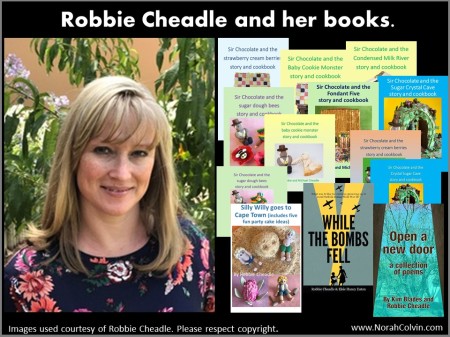
    Robbie Cheadle and her books

    Before we begin the interview, I asked Robbie to tell you a little of herself:

    Robbie, short for Roberta, is an author with six published children’s picture books in the Sir Chocolate books series for children aged 2 to 9 years old (co-authored with her son, Michael Cheadle), one published middle grade book in the Silly Willy series and one published preteen/young adult fictionalised biography about her mother’s life as a young girl growing up in an English town in Suffolk during World War II called While the Bombs Fell (co-authored with her mother, Elsie Hancy Eaton). All of Robbie’s children’s book are written under Robbie Cheadle and are published by TSL Publications. 

    Robbie has recently branched into adult horror and supernatural writing and, in order to clearly differential her children’s books from her adult writing, these will be published under Roberta Eaton Cheadle. Robbie has two short stories in the horror/supernatural genre included in Dark Visions, a collection of 34 short stories by 27 different authors and edited by award winning author, Dan Alatorre. These short stories are published under Robbie Cheadle.

    Robbie has also recently published a poetry collection, Open a new door, together with fellow South African poet, Kim Blades.

    Welcome, Robbie.

    Let’s talk school. First, could you tell us where you attended school?

    I went to fourteen different schools as we moved around a lot. My first school was Craighall Convent in Johannesburg. The school I learned the most at was a bilingual school in George in the Western Cape. I was only there for six weeks but I learned the basics of Afrikaans (second language in South Africa) which I had missed out on before.

    Did you attend a government, private or independent school?

    I attended a mixture of schools. I attended a couple of private schools when I was in primary school including two convents. I went to public schools when we lived in George for the first time and when we lived in Cape Town. I attended a public high school in Johannesburg.

    What is the highest level of education you achieved?

    I have a degree and an honours degree in Accounting as well as my board examinations to become a chartered accountant. I was keen to do an economics degree a few years ago when I wrote my publications on direct foreign investment into Africa but I couldn’t find anything suitable. I reverted to self-study and analysis instead and this research is in my publications.

    What work or profession did you choose after school and was there anything in school that influenced this choice?

    Immediately after school I went to a secretarial college for a year where I learned typing, shorthand and the other skills of a professional secretary. I then worked for a few years and saved money which I used to pay for some of my university education. I attended a correspondence university and worked shifts in a video shop to earn money while I did my first degree. I applied for, and was accepted, for an internship at KPMG in Johannesburg when I finished my degree. KPMG paid for my studies for my honours degree and I studied part time in the evenings and during public holidays and weekends. It was hard but I managed to do it and I passed all my examinations first time around, even my honours degree where I had to pass all nine examinations in one sitting.

    What is your earliest memory of school?

    Robbie Cheadle as a school girl in the news

    I remember having my photograph taken for the national newspaper on the first day of school. My friend’s father was a photographer for the newspaper and he used me as his “First day of school” photograph that year.

    I also remember being left out when the girls (aged 7 years old) when to mass and practiced for their first Holy Communion. I recall being sad that I didn’t have a long white dress and candle. I only took my Holy Communion when I was 12 years old and we were living in George.

    What memories do you have of learning to read?

    I remember being fascinated with books and reading. I can recall sounding out the words by myself and the triumph of reading Little Bear all by myself. Once I got the hang of reading, I just went from strength to strength. I got books for every birthday and Christmas and belonged to the library. When I was 9 years old and we lived in Cape Town, I used to cycle to the library twice a week and take out 7 books at a time to read (4 library cards were mine and 3 were my sister, Cath’s, but she let me use them.)

    What memories do you have of learning to write?

    I remember writing my name in my books and I always inverted by b’s, d’s and p’s. I had a bit of remedial help and this was corrected when I was 8 years old. My old books still have the inscription Roderta Eaton.

    What do you remember about math classes?

    I have very little memory of maths class other than I was able to do reasonably well without much effort which left me lots of time to read. I remember my high school maths teacher writing a remark on my report that said: “Generally speaking, Robbie is generally speaking.” I have always remembered that comment. I had one teacher that told my mom that I had layers like an onion which you needed to peel back to find the real me. My mother was also told by a teacher that I practiced “silent insubordination.”

    Robbie Cheadle discusses what she liked best about school

    What was your favourite subject?

    I enjoyed English firstly and then History. Accounting and Maths were both relatively easy for me and I hated Afrikaans with a passion. My second ever Afrikaans teacher embarrassed me in front of the whole class and I would never bother with learning this language after that.

    What did you like best about school?

    I have two lovely memories of school, one, was creating a play with my friends to perform for the class when I was 8 years old. I loved organizing the cast and teaching them their roles. I have always enjoyed project management and organizing. The other memory I cherish was being chosen to be Mary in the Nativity Play when I was 12-years old. I was simply thrilled.

    What did you like least about school?

    I can’t think of anything I really didn’t like about school; it just was something I did every day for 12 years. I have always been a loner and would always chose books over people. We moved a lot, so I learned not to get too close to other children, it was easier to uproot myself that way. I am still quite good at accepting change and I don’t retain long-term physical friendships. I prefer my virtual friends who are constant and always there.

    How do you think schools have changed since your school days?

    Unfortunately, the quality of the public education in South Africa for underprivileged children has not improved much since 1994. Lots of children start learning English late in their school career (at the age of 10 or 11 years old) and it is difficult for them to cope with being taught in English.

    There is still a huge shortage of school basics in many rural schools and children are still being taught under trees and in classes with few desks and chairs and even fewer learning materials. There are often no proper toilets for the children to use.

    I belong to charities which donate books and stationery to underprivileged schools. A lot is done to help by the private business sector and individuals.

    My sons both attend private schools and the college my older son attends is exemplary in its out-reach programme. It supports a disadvantaged college in a rural area and has a programme to train teachers from disadvantaged backgrounds. It also has a programme to help disadvantaged children with potential to achieve at school. This is run in the afternoons and the teaching staff freely give of the own time and skills. It is a sad that the public education is poor because our world is evolving into one where higher-level skills are becoming vital to get and retain jobs. English and maths skills are essential.

    What do you think schools (in general) do well?

    I can only answer this question from the point of view of my own sons. Both of their schools have outcomes-based education programmes and this works so well. Their curriculums are marvelous and I often find myself thinking how much I would have enjoyed their schooling when I was a girl. My older son’s school has programmes to give accelerated learning opportunities to boys who find learning easier and support programmes for boys that find some areas of learning more difficult. They just do such wonderful things, read fantastic books and have marvelous learning opportunities. Of course, as with all things in life, you have to grasp opportunities or else they pass you by.

    How do you think schools could be improved?

    The most important thing in our government schools is to get good teachers. Teachers that aren’t masters in their subject will struggle to teach others, particularly, children that can’t learn in one specific way but need the information presented in another way. The children also need a safe learning environment, which often isn’t the case, and basic learning materials.

    thank you for your participation

    Thank you for sharing your reminiscences of school and thoughts about education in general, Robbie. It was interesting to hear the comparisons between your own schooling and that of your son’s current schooling. I was interested to hear your response to learning Afrikaans and was surprised at how late English was taught. The photographs of you from the newspaper are very cute and to be treasured.

    Find out more about Robbie Cheadle on her blogs

    Bake and Write

    Robbie’s inspiration

    And her Goodreads author page:


    Connect with her on social media

    Facebook @SirChocolateBooks

    Roberta Writes

    Twitter @bakeandwrite

    @robertaeaton17

    Robbie’s books can be purchased from

    Amazon

    Or

    TSL Publications

    If you missed previous reminiscences, check them out here:

    Charli Mills

    Sally Cronin

    Anne Goodwin

    Geoff Le Pard

    Hugh Roberts

    Debby Gies

    Pauline King

    JulesPaige

    D. Avery

    Christy Birmingham

    Miriam Hurdle

    Look for future interviews in this series to be posted on Sunday evenings AEST.

    Coming soon:

    Marsha Ingrao

    Ritu Bhathal

    Joy Lennick

    Susan Scott

    Mabel Kwong

    Sherri Matthews

    Chelsea Owens

    Pete Springer

    with more to follow.

    Thank you blog post

    Thank you for reading. I appreciate your comments. Please share your thoughts.