The themes of emotional intelligence, empathy and compassion have featured frequently on my blog, especially the need for them to be incorporated into classroom practice and taught, particularly through modelling, to children.
My most recent series of posts about compassion, starting with Who cares anyway? and concluding with Ripples through time, with three more in between, were prompted by the #1000Speak for Compassion Project.
I thought I was done with that theme for a little while at least, but last night I read a very moving post by Julieanne Harmatz on her blog To Read To Write To Be.
Julieanne wrote with much emotion and compassion about a child in her class; a child who tears at your heartstrings, (and sometimes makes you want to tear out your hair), a child most teachers will recognise from their practice, a child you wish to be everything to but know that at least if you can be someone who really sees the child within, for a little while, you have done something worthwhile.
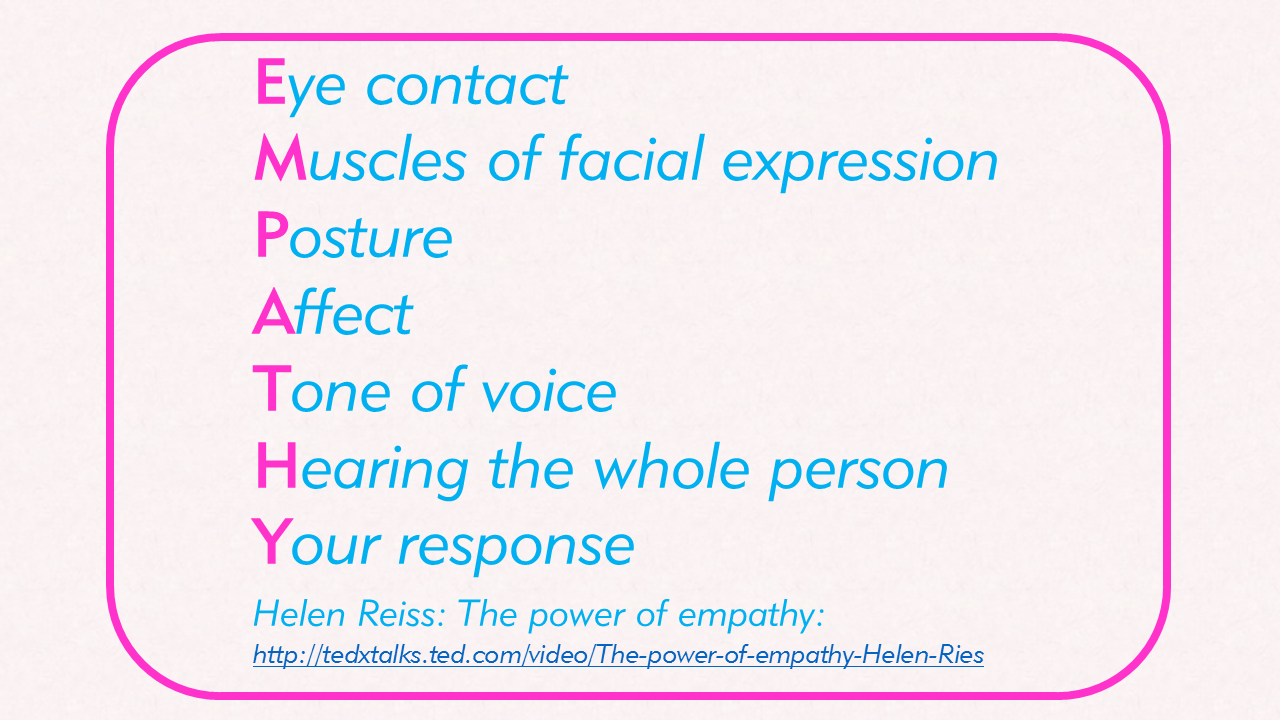
I urge you to read Julieanne’s story, and watch the TEDxtalk by Helen Riess that Julieanne has embedded in her post. Riess explains what empathy means through this acronym:
Thank you for reading. Please share your thought about any aspect of this post.
Magic moments happen in teaching, and they make our hearts soar.
But, there are moments that can break. Us and our hearts.
Z is struggling. He lies down on the picnic table outside the room. When we’re all inside, he enters saying, “I don’t want to sit there.” He paces. We look for a place. He settles beside N. Then moves. Again and again. Searching for a spot.
Sitting is painful. School doesn’t fit, and the discomfort emanates from his being.
Someone says something about dads. He blurts, “My dad doesn’t come home no more.”
Gulp.
Enter Reading Workshop. Z gets together with his book group they are planning. Z says, “I don’t read at home. I read here, not at home.”
Later, Z paces in the corner, reading his book, Reading and walking, in circles. This is his way.
Lunch happens. Z doesn’t eat. He doesn’t want to. Can’t. He just…
that you never step into the same river twice (from the Heraclitus quote).
You are probably familiar with the terms “the ripple effect” and “the butterfly effect”. Both terms refer to the effects, which can be far-reaching and unintended, of small changes or events which may seem insignificant or even go unnoticed at the time.
In his book The Ripple EffectTony Ryan shares many stories about small actions having a positive effect on the lives of others. He has a firm belief that each of us makes a difference with our everyday actions be it through a smile, a kind word or a helping hand. He says,
“you must believe in your personal power to create ripples that spread out and change the world. In fact, if it is not you who is going to do it, then who else do you think is likely to make the effort? Remember that every change on this planet begins with a human being somewhere, somehow. It may as well be you.”
None of us can ever know the full impact of words and actions. The potential for teachers to create ripples is powerful and this knowledge, for them, can induce as much anxiety as it does joy. While I am always the first to acknowledge my shortcomings, I hope that positive effects far outweigh the negative.
Sometimes expressing an opinion that differs from the status quo can be considered ‘making ripples’ or even ‘making waves’. On his blog Theory and Practice, Matt Renwick is making waves this week talking about assessment and standardised testing. (I have expressed my thoughts on the subject here and here, for example.) I wish Matt’s waves a long journey with school-changing effects.
Matt summarises five articles about testing, including one by Noam Chomskyfrom which he quotes,
“All of the mechanisms – testing, assessing, evaluating, measuring – that force people to develop those characteristics… These ideas and concepts have consequences…”
The consequences, the ripples, are not always the ones we want: stressed and anxious students afraid of trying and of failure are just part of it. The effects reach further: inappropriateness of tasks, reduced equity, mis-placed funding, teacher dissatisfaction . . .
Matt’s voice is not alone. He expresses what most teachers know. Unfortunately teachers are not the ones writing policies and setting procedures about what happens in schools. Often they are not even consulted. The companies who have most to gain by sales of their testing programs can be very influential.
Matt concludes his article saying,
“I think this information needs to be shared over and over again. . . . To not advocate is to concede our authority as the experts in our profession. We are in the right on this one. There is nothing to be afraid of.”
I agree with Matt. We must advocate for the children, the students, their education and their teachers. So many administrators are talking about data, proclaiming that data is what is important. Now there is even “data mining”, big data mining, as explained in this article by the Australian Council for Educational Research. Check out this great new tool for use in mining data! Don’t they realise the children, their curiosity, wonder and creativity, are the treasure!
And as for the quote that you can never step into the same river twice because you will have changed and the river will have changed. Well I think it’s possible that that situation doesn’t apply to schools. What happens in many schools probably doesn’t look all that different from what has happened for at least the last two hundred years: children sitting in rows chanting meaningless lists. Harsh? Maybe. Reality? Pretty much.
And now to finish in a more positive way with my flash which combines both ideas: the life-changing consequences of a seemingly insignificant event at precisely the appropriate moment, and the difference in the person and the river on two separate occasions. And the person? None else but Marnie.
Ripples in the river
Marnie paused on the bridge and gazed into river.
“My life began here,” she thought.
. . .
More than twenty years before she’d stood there, begging for release from torments she could no longer endure; when a gentle voice beside her said, “Beautiful, isn’t it?” and stood there with her in silence a while before asking, “Care to walk a little?”
. . .
Marnie flicked the agent’s card into the water and watched momentarily as it carried away the last remnants of that other existence.
“I wonder if Miss still lives there,” she smiled. “Must say hello.”
Thank you for reading. I value your feedback. Please share your thoughts about any aspect of this post or flash fiction.
During the past few weeks I have been exploring the idea of compassion, along with many others in the blogosphere, in response to the #1000Speak for Compassion project.
In a TED Talk I shared in a previous post Joan Halifax questioned why, if compassion was so important, didn’t we teach it to children.
That question provided me with a challenge. Indeed I wondered if the question was really fair. The question implied that children were not being taught compassion. And while that assumption may be true for many, it is just as true that many children are being taught to be compassionate – in their homes, in their schools, and in other groups to which they belong. By recognizing the many who do, I in no way wish to indicate that enough is being done. Indeed, much more needs to be done, but let’s not make a sweeping statement that attempts to colour everyone with the same inadequacy in teaching compassion.
I decided to investigate just what ideas were available for teaching children compassion. I had to look no further than one of my blogging friends for evidence that children are being taught compassion through their daily activities. In a number of posts on her own blog Lemon Shark, and in a number of comments on mine, Sarah Brentyn has described practices that she uses to teach her children to be compassionate by involving them in compassionate acts.
Some practices that Sarah recommends for developing compassion include things from as simple as using common courtesies and good manners to volunteering and making personal donations to homeless shelters.
I defy you to read her post 1000 Voices for Compassion without being moved by her generosity and compassion. It tells a beautiful story of compassion in action, a lesson for not only her children, but for all of us.
In her following post entitled Defining Compassion vs. Compassion in Action Sarah described asking her children what the word “compassion” meant. They weren’t sure how to answer her. But when she asked them to describe something compassionate they had no difficulty coming up with examples – from their own lives. Why? Because from the moment they were born Sarah’s children have been living in a compassionate world. They have been treated compassionately and they have not only had compassionate actions modelled for them, they have been involved in those compassionate actions. I congratulate you Sarah, for inspiring us to be compassionate, and for being a role model for us to emulate.
Looking beyond Sarah’s examples for further suggestions, I came across a number of other articles. Each seemed to reiterate what Sarah had already shared.
In an article for the Huffington Post Signe Whitson, author and child and adolescent therapist, says that “experts agree that fostering compassion in young people is among the best ways to prevent verbal, physical, and emotional aggression” and shares 8 Ways to Teach Compassion to Kids:
Walk the walk
“Show young people that anytime is the right time to engage in acts of service and compassion for others.”
Put the Child on the Receiving End of Compassion
“tending to a child when he is feeling down or under the weather is the best way to teach him how to show compassion to others.”
Talk the Talk
“talk explicitly about acts of compassion . . . communicate its importance as a prized family value”
Volunteer Your Time
“When children become actively involved I acts of showing compassion to others, they learn about his value in a very deep and enduring way”
Care for a Pet
“Children who care for pets learn important values such as responsibility, unconditional love, empathy, and compassion for all living things”
Read All About It
“Children’s books are great for providing a window into the experiences of others.”
Compassion It TM
Wear a Compassion It band as a daily and “personal reminder to act compassionately towards someone else”
Make a Wish
The “Make-a-Wish Foundation provides hope, strength, and joy to children with life-threatening medical conditions . . . can have a truly impactful experience of being able to provide tangible help and joy to a peer”
Other than the references to the specific organizations, Compassion it and Make a Wish Foundation, the suggestions are things that have been discussed before in various posts about compassion, including Sarah’s.
Like Sarah, Whitson believes that it is the accumulation of little everyday actions that make a difference. She states that, as a bullying prevention trainer, she considers “big” solutions — such as policies, procedures, and trainings are trumped each and every day by the seemingly little, yet extraordinarily powerful, acts of compassion and kindness that adults show to the young people in their lives.”
In her article about How to Instill Compassion in ChildrenMarilyn Price-Mitchell agreed about the importance of teaching compassion, saying that “children who participate in programs that teach kindness, respect, empathy, and compassion and who have families that reinforce those strengths at home develop the muscles they need to become civically-engaged adolescents and adults.”
Price-Mitchell suggested that parents could help teach their children compassion by providing opportunities to practice compassion, by helping children understand and cope with anger, and by teaching children to self-regulate.
Jane Meredith Adams, in her article Raising a Compassionate Child says that “children have an inborn capacity for compassion … they naturally identify with stuffed animals, other kids, pets, and underdogs. The tricky part is that their empathy must compete with other developmental forces, including limited impulse control – which makes them pull the cat’s tail – and their belief that their needs absolutely must come first – which makes it hard for them to let their cousin push the col fire truck.”
Adams says that teaching compassion is “part of day-to-day life: how you answer your child’s questions, how you solve conflict at the park, how you nudge his or her growing capacity to understand and think about other people.” Adams suggests to “Promote sweetness” every day by showing children how to be gentle to others, by speaking to them softly, by rejecting rudeness, and by saying sorry when you have made a mistake. I think Sarah would agree with all of those.
Similar ideas are proposed by Kim McConnell, and Leticia of techsavvymama who sums it all up nicely with these suggestions:
Model the kinds of behaviour we expect
Exercise patience
Listen to our kids
Teach resiliency by providing strategies, and
Use quality educational content to reinforce the concept (e.g. books, DVDs and downloadable material)
I’m sure that many of these suggestions are familiar to you through your own personal experiences, either when growing up or as an adult. I think what my exploration of this topic shows me is that, while it may be useful to teach about compassion in schools, children really only learn to be compassionate if they are treated compassionately and have compassion modeled for them, if it is an integral part of their everyday lives.
What do you think?
Thank you for reading. I appreciate your feedback. Please share your thoughts about any aspect of this post.
Hearing these good things is good for my soul which could otherwise become burdened down by the cruelty that is experienced on a personal, local and global level.
Areas of Queensland and the Northern Territory were, over the weekend, devastated by severe weather, other states by fires, parts of the northern hemisphere by cold and snow. Nature itself is so destructive, why do humans think we have to add to it?
Many homes in Central Queensland were destroyed by damaging winds when the cyclone hit. In the early morning news the following day there were already reports of looting. It seems incomprehensible to me that people would do that to each other. Stealing from homes of those left vulnerable and sheltering in a community evacuation centre!
In the same bulletin there was a report about people receiving payments from the government while training to fight overseas for terrorist groups. The list goes on. The news media are not the best places for seeking uplifting stories or developing a habit of meliorism.
I turn back to my blogger friends for their stories of compassion and inspiration, and thoughts of how we can raise children to be kind, caring and compassionate.
My two most recent posts, Who cares anyway? and #1000Speak for Compassion, addressed the issue of compassion and received a number of comments which added more interest and value to the topic. Most of those who responded have also shared their thoughts about compassion on their own blogs, each post as individual as they. Here are a few links to get your reading started:
I am very happy to belong to a community that values kindness and compassion. As at least one blogger commented though, it may be difficult for someone who has not experienced compassion to express compassion for others. Compassion may be a natural feeling, but it also may need to be learned. It reminds me of those famous words, “Father forgive them for they do not know what they are doing.” and also of a story shared by Lata on Hot Cup of Kaapi as part of the #1000Speak for Compassion project. (Note to self: Remember this!)
At about the same time as I was reading these posts about compassion, I also read a post on one of my favourite educational sites Edutopia about Creating More Compassionate Classrooms.
The author of this article, Joshua Block teaches at The Science Leadership Academy in Philadelphia, which you may recall I mentioned in a post about Chris Lehmann and Visioning a better school, a better way of educating. I was certainly impressed by Chris Lehmann, so I expected to be impressed by this article and its suggestions, and I wasn’t disappointed.
In the article Block talks about the Academy establishing an Ethics of Care as described by Nel Noddings. I am both embarrassed and disappointed to admit that I hadn’t previously heard of Noddings but I will be looking more in depth at her work in the future. So much of her work is pertinent to these discussions we have been having about compassion, including her understanding of the terms sympathy and empathy, for example. The article about Nel Noddings, the ethics of care and education states that
“We learn first what it means to be cared-for. ‘Then, gradually, we learn both to care for and, by extension, to care about others’ (Noddings 2002: 22). This caring-about, Noddings argues, is almost certainly the foundation for our sense of justice.”
It sounds familiar, doesn’t it?
Block questions how he can create a more compassionate classroom without adding to the demands already placed upon him as a teacher. He wonders what a compassionate classroom would look like and suggests
“A compassionate classroom environment is not an environment that lacks academic rigor. In this environment, students are understood to be complex people. Here, young people feel that they belong. Here, they meet challenge and encouragement while we ask them to be the best versions of themselves. Compassionate classrooms are places where student voices and student ideas are prioritized.”
I do like the sound of that classroom environment.
Block goes on to suggest six practices that help to develop that environment:
Remembering to Check-in
Informal Conferencing
Increasing Personal Connections with Content
Asking Better Questions
Expressing Belief in Student Abilities
Being Flexible and Accepting Failure When It Happens
I think each of these practices could fit under the banner of being attentive, of really tuning in to the needs of the students. They are all great practices that should form the basis of establishing any classroom environment.
Joshua Block has his own blog: Mr J Block: Reimaging Education and his article can also be accessed there, along with many other interesting posts and information.
I trust that somewhere in Marnie’s life she had a teacher (or more) as compassionate as Mr J Block.
I feel good!
She stood at the door for one final glance. Not much had changed, but it felt, oh, so different. They were gone. Gone!
Almost twenty years had passed since she’d stood in this spot; since she’d fled their cruel ways. Twenty years of dodging shadows, double-locking doors, and fearing the phone’s ring.
But no more. They were gone. Gone! And for more than five years! Five years to track her down! All that remained was the house. She’d sell of course.
With the door closed behind her she almost skipped down the stairs, her heart singing, “I feel good!”
Thank you for reading. I appreciate your feedback. Please share your thoughts about any aspect of this post or flash fiction.
This week I am joining in with the #1000Speak for Compassionproject which calls on “Bloggers from all over the world (to come) together to talk about compassion, in one epic event on February 20, 2015.”
Thanks Charli for explaining that Weltschmerz refers to “world pain” or the grief we feel at how the world keeps falling short of our expectationsand meliorism to a belief that the world can be improved by the actions of humans.
Some of the items listed above are definitely cause for both weltschmerz and meliorism, but most send us a call to action. What action we take depends very much upon our beliefs and our circumstances. In an article in The Guardian earlier this year, Oliver Burkeman states that “World pain is bad – but numbness to world pain would be worse.”
However compassion is more than weltschmertz (seeing the pain) and more than meliorism (believing that something can be done about it).
In this TED talk, Joan Halifax explains that
“compassion is comprised of that capacity to see clearly into the nature of suffering. It is the ability to really stand strong and to recognize that I’m not separate from this suffering … (and that) we actually aspire to transform suffering. And if we’re so blessed, we engage in activities that transform suffering. But … we cannot be attached to the outcome.”
In the talk Halifax explains that compassion is good for us, it enlivens us and makes us resilient, it also develops our immunity.
She asks
“if compassion is so good for us, I have a question. Why don’t we train our children in compassion?”
In my next post, to coincide with #1000Speak for Compassion on Friday 20th I will be looking at some ways that have been suggested to answer that question. If you wish to add your voice to the call follow this link for suggestions of how you can be involved.
For now I will leave you with my response to Charli’s challenge. I have not tried to address compassion on a global scale but have thought smaller.
In her talk Halifax said that “compassion is actually an inherent human quality. It is there within every human being. But the conditions for compassion to be activated, to be aroused, are particular conditions.”
I wondered how feelings of compassion might be activated in the life of a young woman from an impoverished and abusive background.
Understanding
In the ‘smart’ outfit carefully selected by the charity shop attendant, Marnie was surprised how well the confident exterior masked the whirlpool of fear, anxiety and insecurity.
Without looking up, the receptionist handed Marnie a number and waved her to the waiting area.
“9”. Her heart sank. “That many?”
Avoiding contact and ‘contamination’, she squeezed into the only available space: between a boy slouching awkwardly and a girl picking her fingernails.
The girl started crying. Marnie stiffened, but glanced sideways. The girl cried into her sleeve.
Marnie breathed, proffered her unopened purse packet of ‘just-in-case’ tissues, and smiled, “Here.”
Thank you for reading. I appreciate your feedback. Please share your thoughts about any aspect of this post or flash fiction.
Most of the full-length book reading I currently do is in audiobook format. My in-car time on the way to work is usually from about 45-60 minutes and I use this time to listen to audiobooks. During the past year I have listened to quite a variety including both fiction and non-fiction. I particularly enjoy it when the author reads the book, as with my current “read” Alphabetical: How Every Letter Tells a Story by Michael Rosen.
Blog posts are probably my number one source of reading material at the moment. I read a variety of blogs; some about writing for writers, some about teaching for teachers, some with a variety of information about a range of subjects, lots about books! Picture books, young adult novels, fiction and non-fiction. I am always on the lookout for something new to read or to give as a gift for someone else to read.
Sometimes when I read reviews or think of all the wonderful books I could be reading, I chastise myself for the little “reading” I do. But then I remind myself that the reading I choose/need to do at the moment is different. One day soon I’ll be back to more fiction rather than informational texts.
“I have so much left to read and reread and so little time left in which to do it that I want to select what fills my emotional needs — needs which are often different from, or unknown to, even my closest friends.”
Zolotow goes on to explain that
“It was not this way when I was an adolescent or in my middle years, when I had a wide, all encompassing, devouring, greedy desire to read everything. But if I think back, I do remember as a child wanting certain books over and over again and others not at all. Very young children, like older people, want to read or hear read books that help them sort out their own most acute needs, their own inquiries about life.”
I thought how true it is. Throughout life our reading habits and choices change. I have always been a reader. As a child and teenager I read fiction, and lots of it. Even as a young adult I continued to read fiction and poetry, but my reading of non-fiction, mainly but not exclusively to do with education, began to exceed those choices. At that time there were only paper books, and I loved them, thinking that nothing could come between me and my books.
How wrong I was and how times change. Now I read online, ebooks and audiobooks. There is a much greater variety of material available for readers and, I think, the demands are greater. In days gone by if you weren’t reading books you weren’t reading. Now the distinction is not so clear. Because I am not reading full-length paper books as frequently as before, I think of myself as a non-reader. But that is unfair and untrue. I spend most of my day reading, and when I am not reading, I am writing. But these days reading is a huge part of my writing. I am constantly researching and reading online to give extra credence or support to what I am writing.
What about you? How do you view yourself as a reader? Does one need to read books to be considered a reader?
Thank you for reading. I appreciate your feedback. Please share your thoughts.
In my current out-of-the-classroom position I write science curriculum materials for use in early childhood classrooms. It is an interesting and challenging role, but also lots of fun as I work with a number of other writers who are also teachers, with an added qualification in science. As many of them have studied science at tertiary level, worked in various other fields, and taught science at high school level, I am surrounded by people with a lot of knowledge and experience different from mine.
One thing that is wonderful about working with a group of scientists is the range of topics that are raised for discussion around the table at lunch time. Scientists are naturally curious and they don’t take anything at face value. They delve into it, interrogate, investigate and explore until they have answers to questions that may have arisen. I learn a lot! Like the difference between degradable and bio-degradable; how close the asteroid came to Earth; and mitochondria, genetics and children with three parents!
On the home front too, I am surrounded by scientists; computer scientists and environmental scientists, each with a strong sense of social responsibility and ethics. I am fortunate to be swept along in learning by their interests and enthusiasm.
In previous posts I have shared some thoughts about the importance of curiosity and of my opinion that children are born scientists. I am always delighted when I come across something that supports my opinion. (Yes, there are others!)
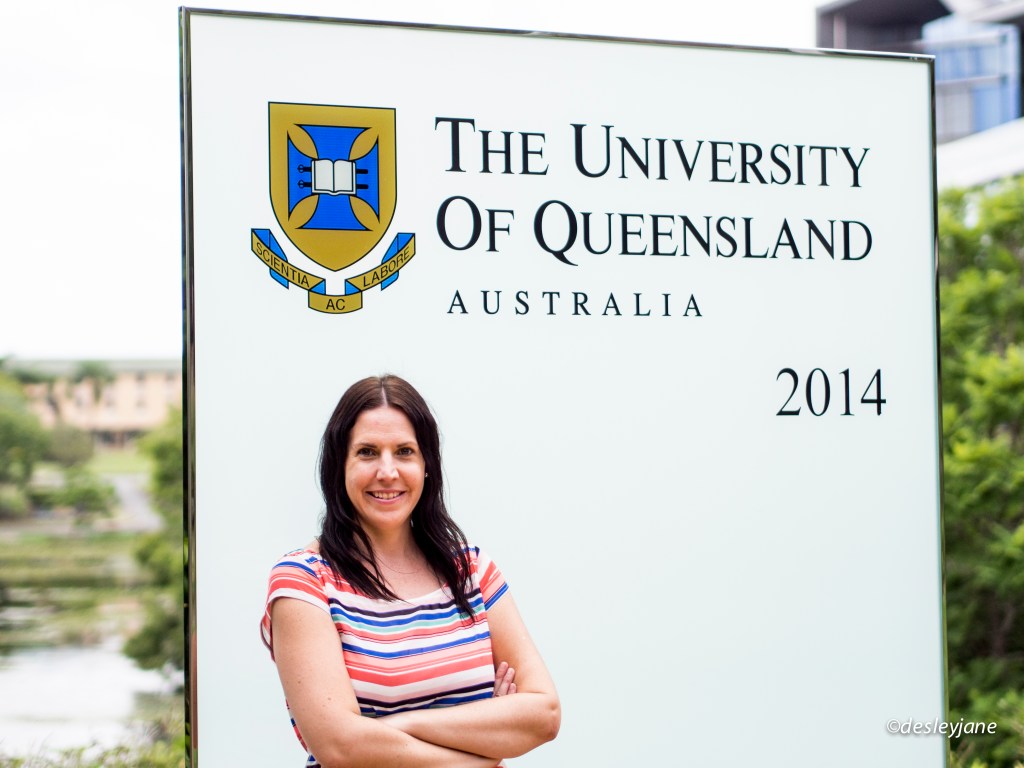
I have recently discovered a lovely blog Musings of a Frequent Flying Scientist written by a local scientist Desley Jane. This week she shared an interview with another local scientist Julia Archbold. I enjoyed it so much I decided to share it with you.
These are just a few of things I like about it: They are both young female scientists. (For too long science was seen as a male-only province.) The importance placed upon curiosity, asking questions and ‘quizativity’ (what a great word!) The excitement of learning. That their engagement with science makes a positive contribution ‘the world’.
Please visit Desley’s blog to read the entire interview and explore what else she has to offer.
Thanks for reading. I appreciate your feedback. Please share your thoughts about any aspect of this post.
This is my first interview for my Scientific Reasoning feature. The questions will be the same for each interviewee and I hope that they will give us some insight into the lives of a few of today’s scientists.
Dr Julia Archbold is a good friend of mine. We have known each other for many years and have worked together in the past in our twenties (ish). I admire Julia greatly, both as a scientist and as a person. She is warm and talented, with a quick wit and a very kind soul. She is about to embark on an exciting new adventure and I caught her just in time for this interview.
me: So I know you’re a scientist, but when did you decide to become a scientist? What were you thinking? (Not WHAT WERE YOU THINKING?!?! but what made you decide that science was going to be your future?)
I decided to give myself a break from writing about the confusion that students may feel as they attempt to navigate the murky waters of expectations and inappropriate curricula that have little connection with their lives; or about how disoriented they may feel in an environment that bears little resemblance to any other they will experience.
Instead I decided to share an interesting story I heard this week and a flash fiction which is more memoir than fiction, a reminder to self of how lucky I am to be doing what I am.
“Each letter in the book is linked to a topic. Each chapter takes on different aspects of how the alphabet has been used. Each chapter is preceded by the short story of how that particular letter evolved, how its name came to be pronounced that way and something on how the letter itself is spoken and played with.”
When listening to Rosen read his chapter about the letter ‘K’, “K is for Korean”, I was fascinated to find out that the alphabet of South Korea, Hangul, is “the earliest known successful example of a sudden, conscious, total transformation of a country’s writing.”
The alphabet, described by Rosen as more of “syllabic monograms” than letters and is easy to learn, was devised in the mid-fifteenth century by the ruler of the time, King Sejong, as a way of enabling everyone to be literate.
Prior to the introduction of this alphabet, Chinese characters were used. According to an article on Wikipedia “using Chinese characters to write was so difficult for the common people that only privileged aristocrats usually male, could read and write fluently. The majority of Koreans were effectively illiterate before the invention of Hangul.”
Rosen says that what is “remarkable . . . is that there was an already existing system of writing which was, to all intents and purposes, overthrown in its entirety – not adapted. (It happened) because one part of the ruling elite decided that a total change was the only way in which everyone could read and write easily.”
Hear! Hear! I say, and express a wish that all our students of English would find learning to read and write far more easy and enjoyable than many do, that more emphasis would be placed upon helping students learn than in “teaching” particular content at particular times.
Also included in Rosen’s chapter about ‘K’ was mention of the Voynich Manuscript which appears to be scientific in origin, but which contains fictitious plants and is written in a “language” which no one, including codebreaking experts, has been able to decipher and read. Rosen says that “With one beautifully executed volume, (the author) causes instability and doubt at the heart of the production, ownership and use of knowledge. It is a carefully constructed absurdist joke.”
Unfortunately for a small (but too large) number of our students, reading and writing for them is often as confusing as the Voynich Manuscript.
For a little bit of reminiscing, here is a video of Michael Rosen talking about the dreaded Friday spelling test. I wonder how his experience matches yours.
And so to my flash fiction of disorientation and confusion . . .
Obfuscation
The pulsing train wheels pounded in my head.
Way off in the distance voices called instructions to each other.
“What day is it?” I said.
The voices were closer now. “She’s in here.”
“Can you walk? Come with us,” they said.
They led me to a vehicle and bade me lie down inside.
Then came the questions:
What’s your name? When were you born? What day is it? Why are you here? Who are you with?
Slowly, as if from the deepest recesses, I drew each recalcitrant answer, recreating identity.
“You’re okay. You bumped your head,” they said.
Thank you for reading. I appreciate your feedback. Please share your thoughts about any aspect of this post or flash fiction.
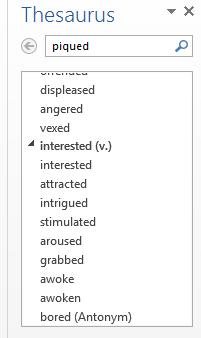
These words piqued* my interest as they wafted to my ears from the TV set in the other room.
“Who is that?” I called out.
“Jackie French,” he replied.
I jumped up, eager to see and hear more.
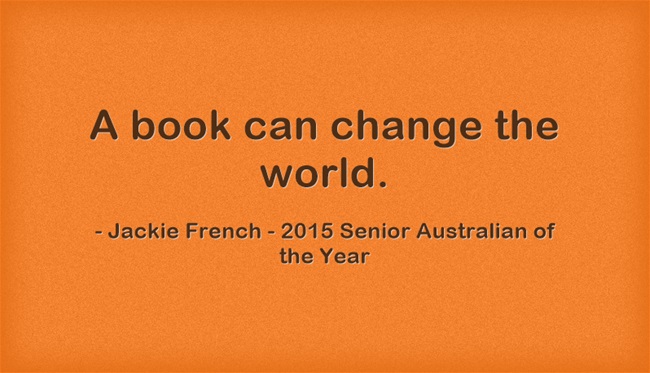
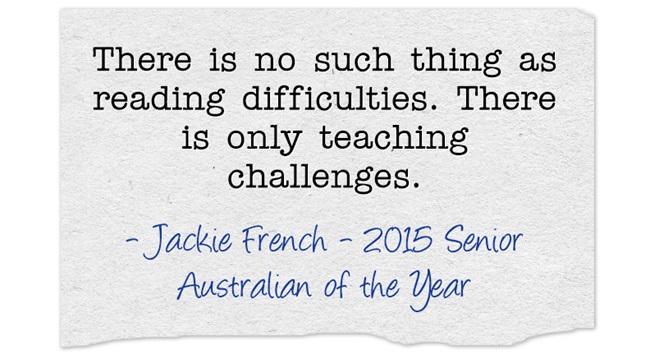
Jackie French is a well-known Australian author and advocate for literacy and the environment. She is currently the Australian Children’s Laureate with the task of promoting “the importance and transformational power of reading, creativity and story in the lives of young Australians”.
The media announcement released by the Minister for Social Services explains that Jackie was recognised for her “long and distinguished career as a beloved children’s writer, earning more than 60 literary prizes for her books.”
“Jackie embodies this commitment (to changing lives in our community) and I’d like thank her for the work she continues to do sharing the power of reading and story-telling for young Australians, and her work in conservation.”
Here is Jackie, Senior Australian of the Year 2015, accepting her award.
In this next video Jackie talks about her book “Hitler’s Daughter”. You don’t have to have read the book to glean much of interest from the interview. In the discussion Jackie shares her thoughts about reading and writing. She questions how the ‘world’ in which one is, influences thoughts about good and evil and decisions that are made. She discusses how the need for evil to be resolved in a work of fiction differs between children and adults. She talks about whether it is necessary for a child to apologise for the sins of the previous generation, and how still controversial issues can be dealt with in an historical situation. It is worth listening to if you simply want something to ponder over.
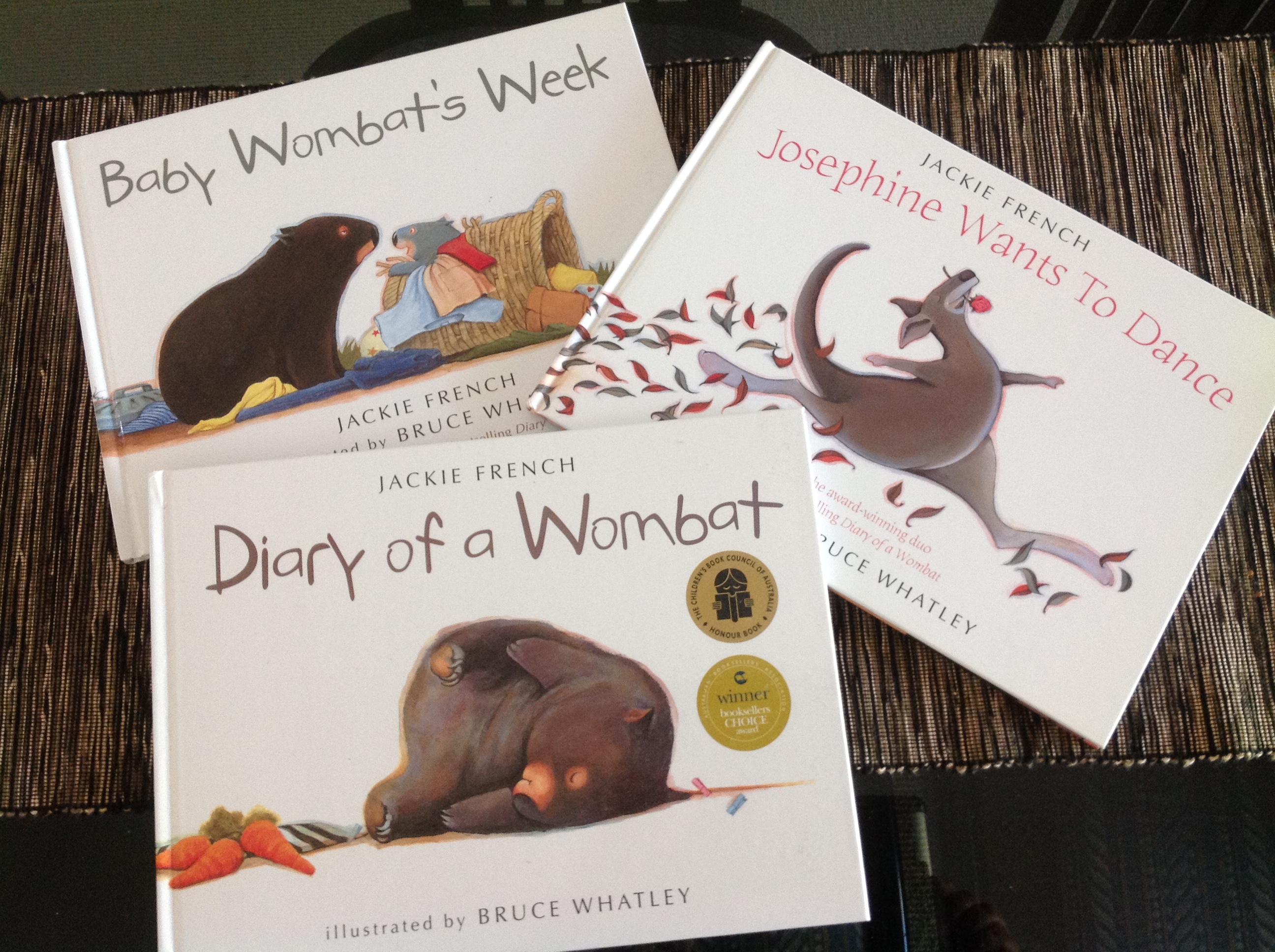
Being an early childhood teacher I am more familiar with Jackie’s picture books such as
I congratulate Jackie on her award and thank her for the contribution she is making to the lives of so many and the future of our planet.
*piqued
In this sentence, I am using the word “piqued” to mean “stimulated or aroused my interest”.
How can one word be used to express opposite meanings? I don’t know how anyone is expected to learn or understand the nuances of this language we call English!
When I checked with my thesaurus to ensure I had chosen the correct word, this is what I found:
How many other words do you know that could almost be listed as its antonym?
Thank you for reading. I appreciate your feedback. Please share your thoughts about any aspect of this post.
Without the addition of a date to signify, I would find it difficult to separate out the memories and distinguish how far apart events occurred or in which sequence.
If the “The only reason for time“ was applied to the school situation, it might be quite different, for example,
“The only reason for time is to ensure that everyone is doing the same thing at the same time.”
In previous posts I have talked about the importance of having a growth mindset and the power of ‘not yet’ thinking. Most respondents to these posts agreed on a preference for thinking about their own goals as not yet achieved, rather than as failed to achieve. Much like for a twelve month old child who is not yet walking, ‘not yet’ implies no failure, just steps in the right direction, an expectation of success, when the time is right and the child is ready.
For many things we do in life there is no hard and fast rule about when they should be achieved. Most developmental milestones are presented as an average, a range of ages during which time most will achieve. But the edges are blurred and, unless attainment falls way beyond the guide, there is generally no cause for concern.
When it comes to school learning there is much more anxiety about achievement and reaching particular benchmarks by certain ages. Anne Goodwin hinted at this is her comment on my post Reading is out of this world. Anne said,
“we need to create the conditions in which children want to learn to read and to continue reading regularly. Sadly, I think some kids are put off by attempts to teach them to read before they are ready, which just gives the message that it’s hard or boring or both.”
She said that we need ways to “get them in their own time, to where they need to be.”
Anne is right. Children may be put off reading by attempting to teach them before they are ready; just as often, I would add, by inappropriate methods that present reading as a series of unrelated skills devoid of context, meaning and enjoyment.
Children may come to reading at various ages and in various ways. Some read early. Mem Fox says that, if she were queen of the world, “children would learn to read easily, long before they came to school”, like my two did. Others suggest a “better late than early” approach or not hurrying the child.
I think it is important to recognise that a ‘one size fits all’ approach has no place in education. I would love Mem Fox to be queen of the world and for all children to learn to read easily and with joy before school age, but there is much to do for that ideal situation to exist. David Elkind says that no one believes in hurrying children but parents, educators and legislators can always find a reason to do so.
Being out of step with peers can be a great cause of anxiety; and anxiety begets anxiety which further impedes learning, as shown in this presentation by Heidi Lyneham.
To improve the situation for learners we need to recognise that
Learners learn in their own time. We need more flexible timeframes that honour each child’s development and learning journey.
Learners learn in ways that are as individual as they are. However there are conditions which improve the chances of learning occurring, such as these conditions for literacy learning as proposed by BrianCambourne.
In her comment on my post Reading is out of this world, Nicole Hewes indicated support for this view by describing how she assisted a student’s learning by providing books about whales, a topic the student was greatly interested in.
Along with the recognition of different timeframes, there must be recognition of and value placed upon the time required by students to develop the skills; and time and opportunity must be provided for that development.
Just when I was writing this post, Bec, who loves to look after my reading and learning needs, sent me a link to this article by Pernille Ripp who asks,
“Why do we forget that time to read is the one thing readers need the most to become better readers?”
Time: everything was pointing in the same direction.
Thinking of a learner’s timing being out of sync with that of others made me think about waking up in the middle of the night (say 2am) and not being able to get back to sleep; knowing that one should be asleep; that everyone else is asleep; that one needs to be asleep because there’s a “big” day head. And all the while the anxiety grows as quickly as the ability to sleep fades. Maybe you can identify?
One moment deep asleep. Next, upright; breath still; ears intent; staining to hear above her pounding heart.
Nothing. Just the familiar: fan whirring, palm frond swishing against the house.
Must investigate: bravely, fearfully.
With limbs trembling, palms sweating and mouth dry, she eases her legs out of the bed, puts her feet on the floor, pushes herself up and pads to the window.
Peeking out she scans the yard, illuminated by the full moon.
Nothing. A dream?
She pads back to bed. 2am.
“Ooh! Only three hours!” She closes her eyes, wishing hopelessly for sleep until morning’s liberation.
Thank you for reading. I appreciate your feedback. Please share your thoughts about any aspect of this post or flash fiction.

























 Norah Colvin