Live Love Laugh Learn … Create the possibilities

Category: Education

  • Five Photos Five Stories — Day five

    Back to Day one (books) and introduction to the challenge

    Back to Day two (writing)

    Back to Day three (Break out)

    Back to Day four (My retirement jetski)

    Happy birthday to me!

    I had a wonderful day today. It was both my birthday and my final day of work for Education Queensland, my on-again off-again employer for more than half of the forty+ years since I began my teaching career.

    My work colleagues spoiled me with kind words and wishes and generous gifts. We celebrated with lunch yesterday and morning tea today and shared stories, laughs and wishes for each other for the future. They made me a beautiful photo book filled with their thoughts and wishes. I think it is my new favourite book and will remain so for a very long time.

    It was quite overwhelming to have such a demonstration of appreciation for my contribution to the team, especially when my intention was just to flutter out quietly as if carried on butterfly wings. They are a wonderful group of people and I was very fortunate to have the opportunity of working with them. They definitely belong to S.M.A.G. and I showed my appreciation for them by having some magnets made up to tell them so.

    For morning tea I took along a marble mudcake in remembrance of the marble cakes my mother used to make for my birthdays. I intended to post a photo of the cake but got carried away chatting and totally forgot until it was almost all gone.

    However I have something more special to share.

    I had dinner with my family at the home of my son and his partner and children. Bec and Glenn were there, and Bob, and my sister Ruth. We had Thai take away, one of my favourites. But what was very special was that Rob and the children made a chocolate self-saucing pudding for dessert. It is Rob’s speciality. I’m sorry there’s not enough to share, but I assure you it was delicious!
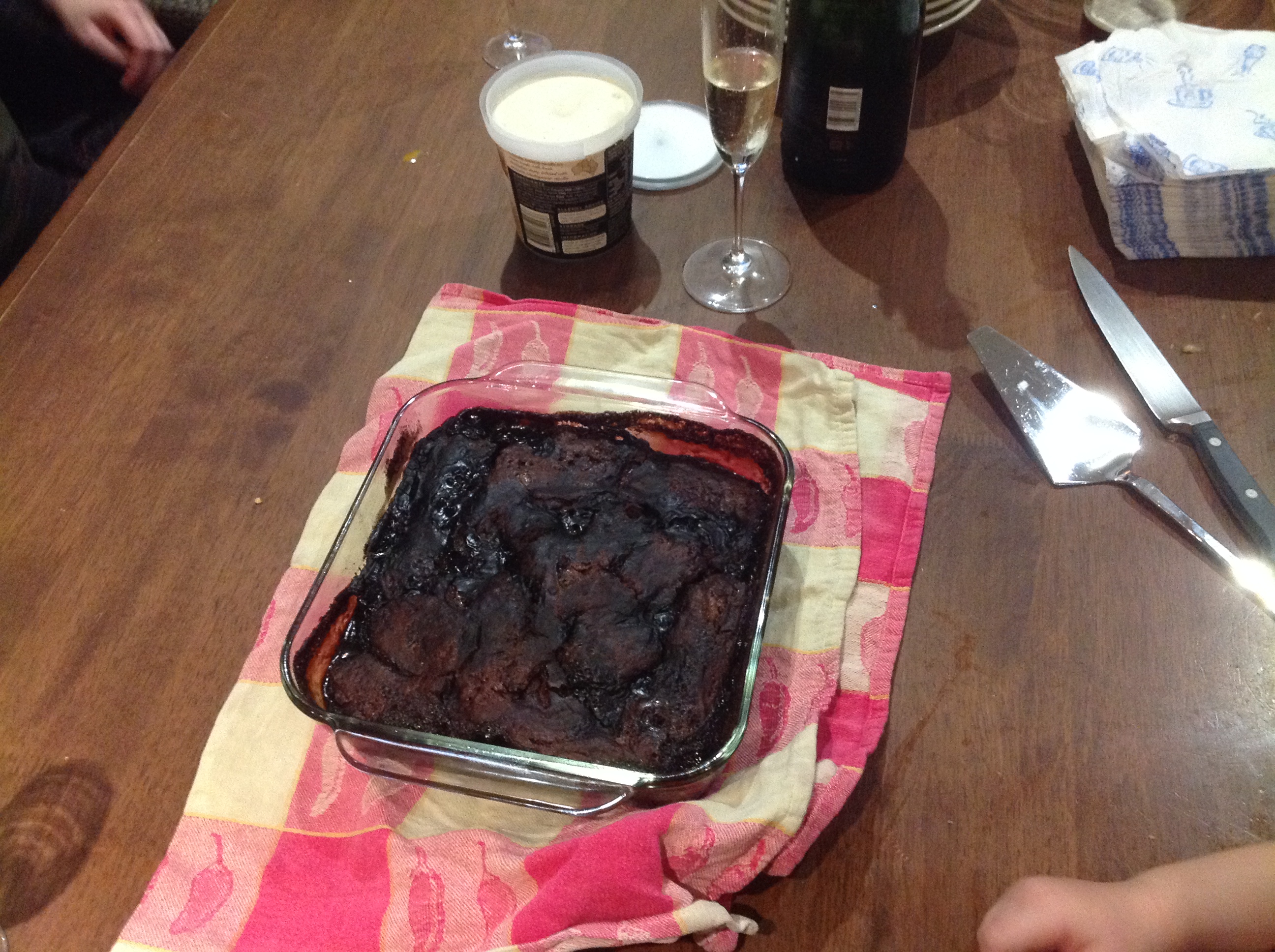
    Rob's self-saucing pudding 18 June 2015
    Rob’s self-saucing pudding 18 June 2015

    Of course my family spoiled me too with wonderful gifts and birthday wishes.

    This is my last post in a series of five in response to a challenge by Geoff Le Pard. Thank you, Geoff. I enjoyed the challenge though I wrote more than I thought I would.

    My week has been extremely busy with things to organise for my last week in this job as well as respond to this challenge so I have not kept up with reading posts and responding to comments on mine. Hopefully I’ll be able to remedy that real soon. Thank you for your patience.

    I invite my sister Ruth Irwin to participate in this challenge. Ruth is just getting started with blogging, inspired by the flash fiction challenges by Charli Mills at the Carrot Ranch, and may find photos easier than text at this stage with just a phone for posting.

    The rules of the Five Photos, Five Stories Challenge are:

    1) Post a photo each day for five consecutive days.
    2) Attach a story to the photo. It can be fiction, non-fiction, poetry, or a short paragraph. It’s entirely up to the individual.
    3) Nominate another blogger to carry on the challenge. Your nominee is free to accept or decline the invitation. This is fun, not a command performance!

    Thank you


    Thank you for reading. I appreciate your feedback. Please share your thoughts.


  • Five Photos Five Stories — Day three

    Back to Day one (books) and introduction to the challenge

    Back to Day two (writing)

    Break out!

    With this post I am going to “kill two birds with one stone” (though why I would want to kill any birds is beyond me).

    I am posting a Day three photo and story in response to the challenge set by Geoff Le Pard, and responding to the flash fiction prompt set by Charli Mills at the Carrot Ranch to In 99 words (no more, no less) write a story about an animal rescue.


    My children had pet-deprived childhoods. It could hardly have been any other way. Both their parents also had pet-deprived childhoods. I know all the theory about pets helping to develop responsibility, caring for others and compassion and I’m all for it. But with that responsibility comes restriction, and I’m not all for that. For me, a pet-free childhood led to a pet-free adulthood. I’m not certain that I am any less responsible, caring or compassionate as a result.

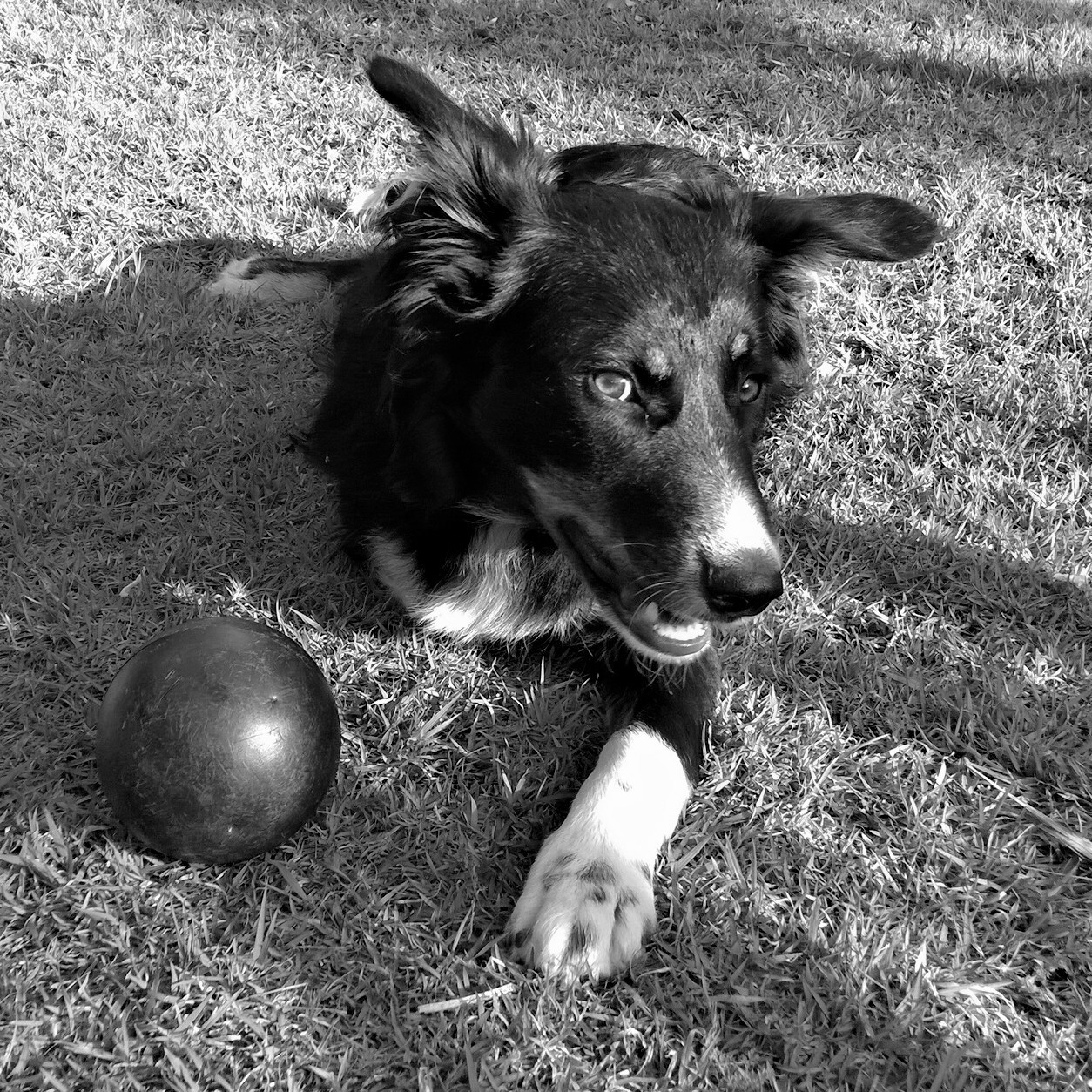
    While Rob may have had the occasional goldfish or Siamese fighting fish and Bec may have had guinea pigs, mice and rats at different times they never got over the deprivation of not having a real pet, of not having a puppy. As soon as the opportunity arose, they each adopted their own puppy. This is a photo of Bec’s puppy.

    My flash fiction deals with a situation in which a rescue is required. I realise that once again I have gone dark rather than light. Apologies. I hope you enjoy it.

    Break out

    Your wide-open eyes fix on me through bars, imploring and accusing at the same time.

    Why am I here? Don’t leave me! I don’t – want – to be here! I want – to go – home!

    My heart tightens in a vice-like squeeze. My palms sweat and hands tremble.

    I meet your stare with overwhelming hopelessness and helplessness.

    I didn’t know . . . I thought . . . I never meant . . . I thought it would help. 

    They close the door, turn the key and lead you away.

    “Damn those rules!” I scream silently, futilely planning your rescue.

    ***

    Today I nominate the lovely compassionate Bec who blogs intermittently at There’s No Food and engages in discussions with challenging suggestions and new ideas in comments on my blog while working diligently towards completing a PhD in Environmental Management.

    ! also nominate the wonderful awe-inspiring multi-tasking Charli Mills to take up the challenge if she so wishes. As well as being a very talented writer and generous supporter of my blog, she also posts beautiful photo stories on a second blog Elmira Pond Spotter.

    The rules of the Five Photos, Five Stories Challenge are:

    1) Post a photo each day for five consecutive days.
    2) Attach a story to the photo. It can be fiction, non-fiction, poetry, or a short paragraph. It’s entirely up to the individual.
    3) Nominate another blogger to carry on the challenge. Your nominee is free to accept or decline the invitation. This is fun, not a command performance!

    Thank you

    Thank you for reading. I appreciate your feedback. Please share your thoughts about any aspect of this post or flash fiction.


  • Five Photos Five Stories – Day two

    Back to Day one and introduction

    What am I?

    One may wonder why I have responded to Geoff Le Pard‘s challenge almost immediately when there are other invitations that have lain opened but unanswered for longer than I like to admit. For example, some months ago Anne Goodwin tagged me in a writing process blog hop. She shared the what, how and why of her writing process and invited me to share mine. She applied no pressure or time constraints and neither nudged me to comply nor chastised me for not having done so.  Not quite as long ago Sherri Matthews tagged me in a work space blog hop. She shared beautiful images and descriptions of her delightful Summerhouse writing space and invited me to share mine. Sarah Brentyn then shared some questions for writers that I hinted I might answer, but haven’t yet.

    Why the procrastination?

    1. I’m still figuring out what kind of writer I am and how to describe my process.
    2. My writing space isn’t all that exciting. It’s a just a laptop sitting on a desktop that is cluttered with books and other paraphernalia waiting to be organised or dealt with, and surrounded by shelves filled with more of the same; not a bad analogy to my writing process perhaps.
    3. I’ve been working in other quadrants, dealing with ‘easier’ stuff as it arises.

    As with Geoff’s challenge, responses to these blog hops are not compulsory and there is no set time-frame but I do wish to, and do intend to, answer them. Thank you Anne, Sherri and Sarah for your patience. I will get there. Eventually.

    My writing space 14 May 2015
    My writing space 14 May 2015

    My procrastination is in part due to the way I view myself as a writer.

    I find it difficult to define the “type” of writer I am. That I am a writer is true. But what kind? I wonder if I am a writer without a label, without a box?

    Perhaps if you can help me answer this I’ll be more confident about joining in conversations about writing.

    I am not a novelist, not a poet, not a biographer or an auto-biographer, not a picture book writer . . . I am an educational writer, incorporating something of each genre.

    I remember doing a psychometric test at some past time. The results suggested that a desire to be everything to everybody would be my undoing. Perhaps that is also an issue with my writing?

    Sometimes when asked by other writers what type of writing I do, for want of another label I refer to myself as an educational writer. I immediately feel a shrinking away as if educational writing isn’t ‘real’ writing and I’m perhaps not a “real” writer.

    “Oh educational writing,” they judge, “that’s so prescriptive. It’s not creative.”

    Sure I have done my share of prescriptive writing. The “writing” for which I have been employed for the past three years is definitely prescriptive – more cross the “t”s and dot the “i”s without a modicum of creativity; and as my list of publications shows, I have written workbooks for other publishers, “prostituting” myself one kind-hearted friend suggested. But there are worse ways to earn a living, right?

    I don’t consider my self-initiated educational writing as prescriptive. Most of what I write is designed to encourage thinking, problem solving, creativity, interest in a variety of topics, or develop literacy and numeracy skills, but definitely not in a structured, skills-oriented, prescriptive approach. I write fiction, non-fiction and poetry; and open ended materials that encourage children to question. I love to add a touch of humour where possible and mostly aim for engaging materials that motivate thinking and learning.

    My current writing schedule involves writing content for this blog and for an in-progress online store of early childhood educational resources.

    So, what sort of writer am I?

    There is one I know I am not. I am not a songwriter.

    I nominate Anne Goodwin, Sherri Matthews and Sarah Brentyn to take up this Five Photos Five Stories challenge if and when they so choose. But they need to be aware that I require no more of them than they have expected of me!

    The “rules” of the Five Photos, Five Stories Challenge are:

    1) Post a photo each day for five consecutive days.
    2) Attach a story to the photo. It can be fiction, non-fiction, poetry, or a short paragraph. It’s entirely up to the individual.
    3) Nominate another blogger to carry on the challenge. Your nominee is free to accept or decline the invitation. This is fun, not a command performance!

    Thank you

    Thank you for reading. I appreciate your feedback. Please share your thoughts about any aspect of this post.

  • Five Photos Five Stories – Day one

    For the love of books

    This week I was surprised to be nominated by, writer extraordinaire, Geoff Le Pard in a Five Photos Five Stories challenge. Geoff blogs at TanGental where he shares numerous and beautiful photos of his garden, family, travels and adventures. He writes an eclectic assortment of prose and poetry, memoir and fiction, with content both challenging and humorous. He also posts at the speed of light with at least one post each day. I can understand why the challenge would appeal to Geoff.

    I’m not like that. I tend to stick to my routine of two posts each week and write mainly expository text about education with a response to a flash fiction prompt by Charli Mills thrown in. I rarely write explanations of or stories about photos and mostly use photos to support and add interest to the page. Why would Geoff nominate me?

    Well it seems Geoff must have known something about me that I didn’t, as I have decided to throw caution to the wind and join in the challenge.

    The rules of the Five Photos, Five Stories Challenge are:

    1) Post a photo each day for five consecutive days.
    2) Attach a story to the photo. It can be fiction, non-fiction, poetry, or a short paragraph. It’s entirely up to the individual.
    3) Nominate another blogger to carry on the challenge. Your nominee is free to accept or decline the invitation. This is fun, not a command performance!

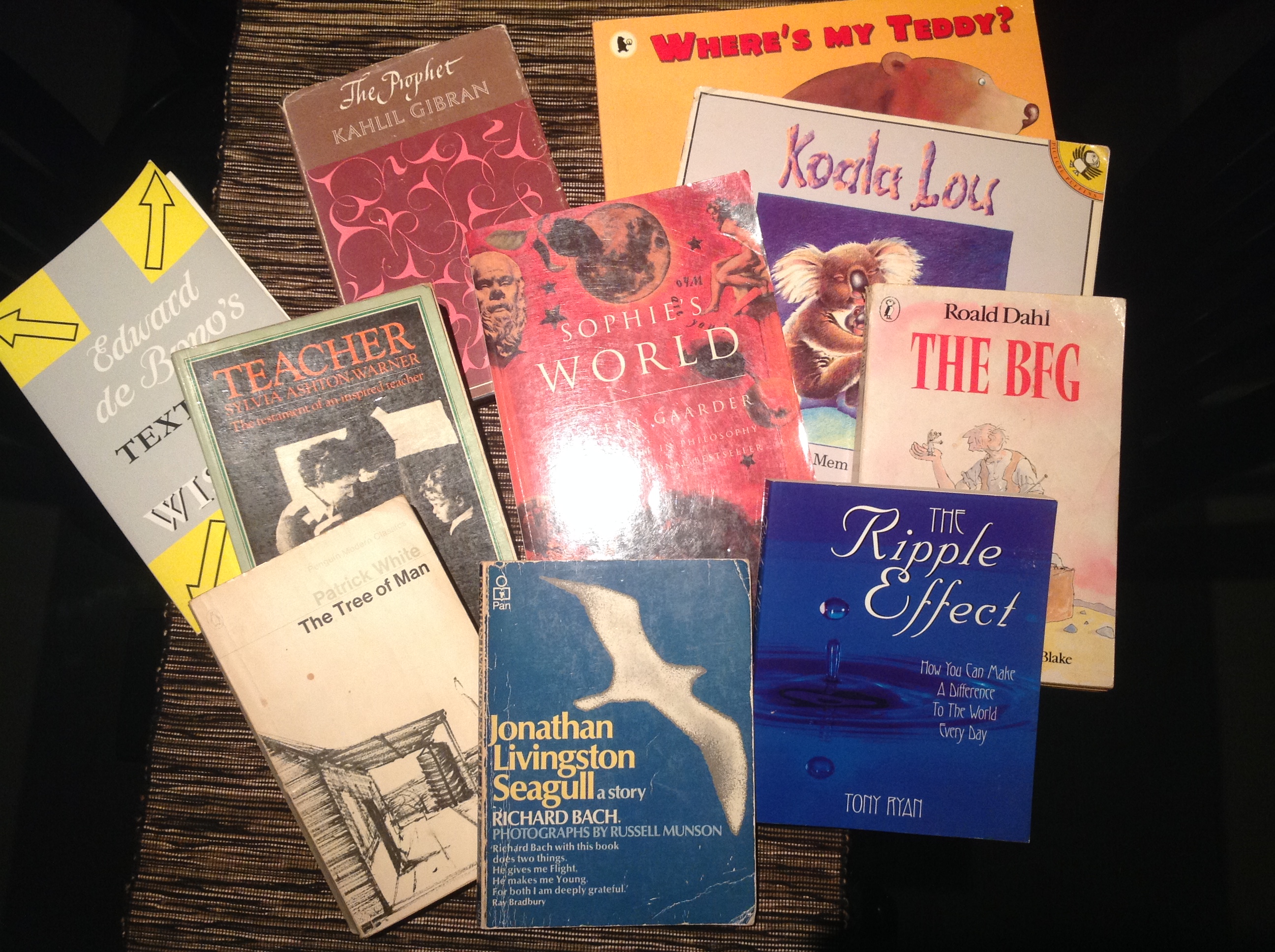
    For my first photo I have chosen, and you won’t be surprised, books:

    books

    These are just a few of my favourites. As you can see I have chosen a range including picture books and chapter books for children and both fiction and non-fiction titles for adults. There are others that should have been there but I could not fit my entire collection into one photo!

    Books have always been an important part of my life and I think a love of reading is one of life’s greatest pleasures. My love of books and reading is one of the reasons, if not THE reason I feel so passionately about education and the teaching of literacy. Sharing a learner’s excitement at becoming literate is both an honour and a joy. I have been privileged to share that excitement with many children during my teaching career, and of course with my own two children who both learned to read well before starting school.

    I have written about the importance of reading many times before, including here, here, and here.

    For this post, and for this photo, I will share ten totally random recollections of books and reading from my younger years.

    I remember:

    • books as gifts for Christmas and birthdays
    • an expedition to the council library, a six-kilometre walk there and back, each Saturday afternoon for an armful of books to read during the week
    • being deaf to the world when totally absorbed in a book for hours on end (particularly so when there were jobs to be done)
    • the eagerness of wanting to get to the end of a book and the sadness and reaching the last page
    • the excitement of finding the next book in a series or by a favourite author
    • marvelling at words and phrases for the imagery or feelings they evoked
    • enjoying an author’s style and trying to emulate it by writing and writing and writing, and wishing to one day be an author too
    • the smell of new books
    • tracing the embossed lettering on the hardcover when the jacket was removed
    • being fiercely protective of my books and having a great dislike of seeing them torn or marked
    • the joy of ownership

    And now I nominate the lovely Michelle James who blogs at Book Chat to take up this challenge if she so wishes. Her love of books is at least as great as my own!

    Thank you


    Thank you for reading. I appreciate your feedback. Please share your thoughts about any aspect of this post.

  • Revisiting The Very Hungry Caterpillar

    Recently, in a post introducing the idea of S.M.A.G. (Society of Mutual Admiration and Gratitude), I reflected upon my blogging journey and the gradual growth of readership and development of a S.M.A.G. over time. With this reflection came the realisation that many have missed earlier posts. That realisation, along with a comment by Sarah Brentyn, prompted me to share a few of my favourites.

    The Very Hungry Caterpillar

    The first posts I will revisit are from a series about using Eric Carle’s picture book The Very Hungry Caterpillar for educational purposes in an early childhood setting.

    The series of four posts;

    • explores benefits of reading picture books to children
    • questions the place of factual information in fictional texts, and
    • suggests the importance of teaching critical literacy from a young age.

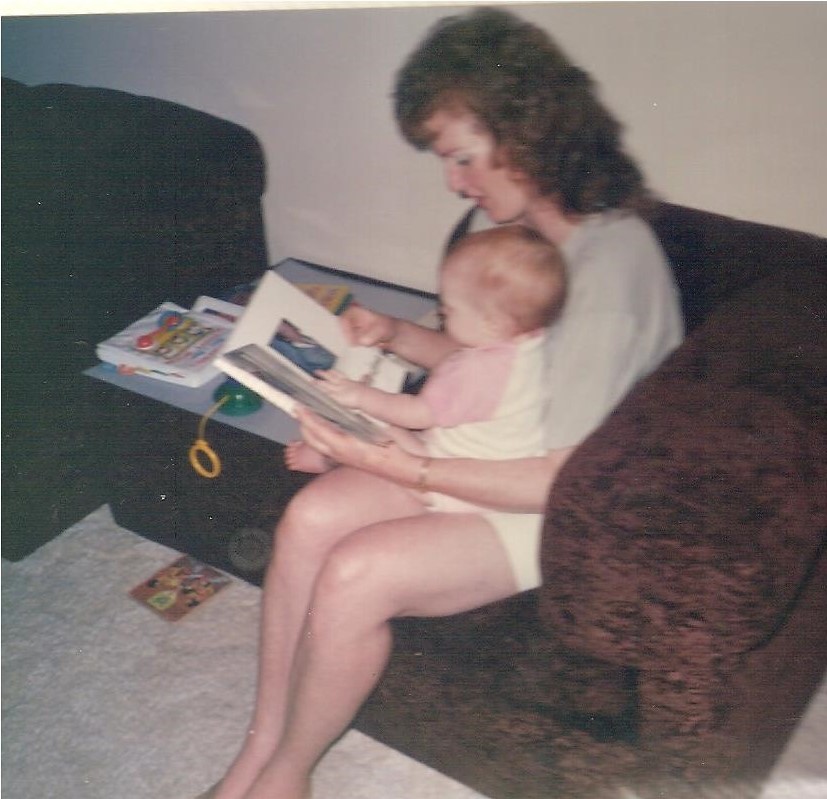
    Nor and Bec reading

    I will provide a brief overview of each post. I would be delighted to have you  follow the links to read the posts in full.

    Searching for meaning in a picture book — Part A

    In this post I explained that sharing picture books with children has many benefits, including:

    At home:

    • It can help strengthen the parent-child bond, becoming a special time of togetherness and of sharing stories and ideas.
    • It has a very positive effect upon their learning, helping them develop language, knowledge of print and books, and exposes them to new ideas and concepts.

    8-12-2013 7-38-33 PM

    In early childhood classrooms, The Very Hungry Caterpillar provides opportunities for work in many subject areas including:

    • Literature appreciation
    • Reading
    • Maths
    • Visual arts, and
    • Philosophical inquiry, but not Science (as I will explain later)


    Searching for purpose in a picture book – Part B

    In this post I discuss some purposes for using picture books and raise some questions about their content.

    A sampling of purposes:

    • encourages a love of reading and books
    • develops vocabulary and knowledge of language
    • provides a link between the language of home and the language used in the wider community and in education
    • supports beginning readers
    • inspires imagination
    • provides opportunities to discuss feelings, emotions, ideas, responses
    • develops feelings of empathy, identification, recognition, hope
    • instils an appreciation of art

    spiderswirl2

    Some questions:

    Do fictional picture books have a role, and do picture book authors have a responsibility, in imparting factual information in their books?

    Does it matter:

    • that, although lions don’t live in jungles, they are often referred to as “King of the jungle” and appears in that setting in many stories?
    • if animals that don’t co-exist, for example penguins and polar bears, appear in stories together?
    • if the portrayal of animals in stories is not anatomically correct, for example spiders shown with legs joined to their abdomens rather than cephalothoraxes?

    Do errors such as these influence children’s understanding of the world?

    How should adults handle the misinformation when sharing books with children?


    Searching for truth in a picture book – Part C

    In this post I refer specifically to inaccuracies in The Very Hungry Caterpillar and the pervasiveness of the misconceptions, if not totally attributable to the book, then at least in part. I suggest how acknowledging the inaccuracy can help develop critical literacy.

    In his book Eric Carle writes that

    “He (the caterpillar) built a small house, called a cocoon, around himself. He stayed inside for more than two weeks. Then he nibbled a hole in the cocoon, pushed his way out and . . . he was a beautiful butterfly!”

    Monarch butterfly

    However, as this (hopefully correct) information from the Australian Museum shows, butterflies do not spin cocoons around themselves. Moths do. Some butterflies and skippers do form a silken shelter, but not a cocoon as in Carle’s picture book.

    Unfortunately many articles found in an internet search share the same misinformation. I wonder how many adults grew up believing what Carle shared through his picture books. Even teachers have been surprised to learn that butterfly caterpillars do not spin cocoons.

    In the original post I share some lovely videos related to butterfly and moth metamorphosis. It is worth taking a peek at them.

    Does it matter if children (and adults) think that butterflies hatch out of cocoons? Eric Carle didn’t seem to think so. Do you?

    Finding power in a picture book – the main event

    In this post I argue that The Very Hungry Caterpillar has no place in a science lesson because of the misinformation contained therein: caterpillars do not eat many different foods and butterflies do not come out of cocoons.

    ryanlerch_thinkingboy_outline

    The greatest value of the book is as a tool for teaching critical literacy; for teaching children that just because something is in print, doesn’t make it true. It is also important to realise that misinformation is not restricted to picture books, and that they need to question all sources of information for the author’s credentials and purpose in writing.

    I suggest that teachers and parents:

    • point out inaccuracies and inconsistencies
    • encourage children to evaluate what they are reading and hearing against what they already know
    • support children to verify the source of the information and to check it against other more authoritative/reliable sources
    • help children to recognise that every author has a purpose and to identify that purpose
    • invite children to ask questions about what they are reading and to interrogate the content
    • encourage them to question, question, question.

    Eric Carle says “If we can accept giants tied down by dwarfs, genies in bottles, and knights who attack windmills, why can’t a caterpillar (sic) come out of a cocoon?”


    What do you think? Do picture book authors have a responsibility to be accurate? Is a butterfly coming out of a cocoon in the same realm as giants tied down by dwarfs? Would we accept a child hatching out of an egg? What parts of a story should be based in reality and which parts can be imagined?

     “Why can’t a butterfly come out of a cocoon?” asks Eric.

    Well, Eric, they just don’t.

    Thank you

    Thank you for reading. I appreciate your feedback. Please share your thoughts about any of issues I have raised in these posts.


  • Playing with possibilities

    127

    Creating an environment which nurtures children’s learning and development is as important as creating an environment that nourishes and encourages the growth of plants in a garden. The link between the two was first recognised by Froebel in the early 19th century when he coined the term “kindergarten” which translates to “garden for children” (kinder meaning child and garten meaning garden), and created the first educational toys.

    Froebel “devoted his life to educating children and developing methods to maximize human potential”. He was the first to recognise the importance of a child’s early years (birth to three) and considered creativity to be something in all of us.

    Froebel’s kindergartens were the first “formal” education for young children and his work greatly influenced that of other educators such as Maria Montessori and Rudolf Steiner. His beliefs, for example that children have both unique needs and capabilities are still influential today. He believed in the importance of play and some of his toys were favourites of people such as Buckminster Fuller and Albert Einstein.

    I have touched on the topics of play, creativity and children’s uniqueness in previous posts. A respectful, encouraging, nurturing and stimulating environment underpins all that I value in education; as does a belief in the power of play to develop understandings of self, of others and relationships, of the world and how things work, and to inspire thoughts of what could be, to imagine possibilities never before imagined.

    The poem Education is expresses my beliefs about education and has informed my decision making every step of the way.

    In documents prepared for introducing myself to other educators or potential employers I explained it this way:

    Statement of values:

    I value individuality over group consensus

    I value creativity over conformity

    I value self-discipline over imposed order

    I value ingenuity over “one right way”

    I value choice over restriction

    I value questioning over silence

    I value independence over dependence

    I value self-confidence over submission

    I respect children as people in and with their own rights. I provide an environment which is rich, stimulating, open and caring, and in which the characteristics I value can flourish.

    At the time of writing it I believed it to be a true reflection of my values and the environment I provided in my “Create-A-Way” sessions, and would provide in the independent/alternative school I was working towards establishing.

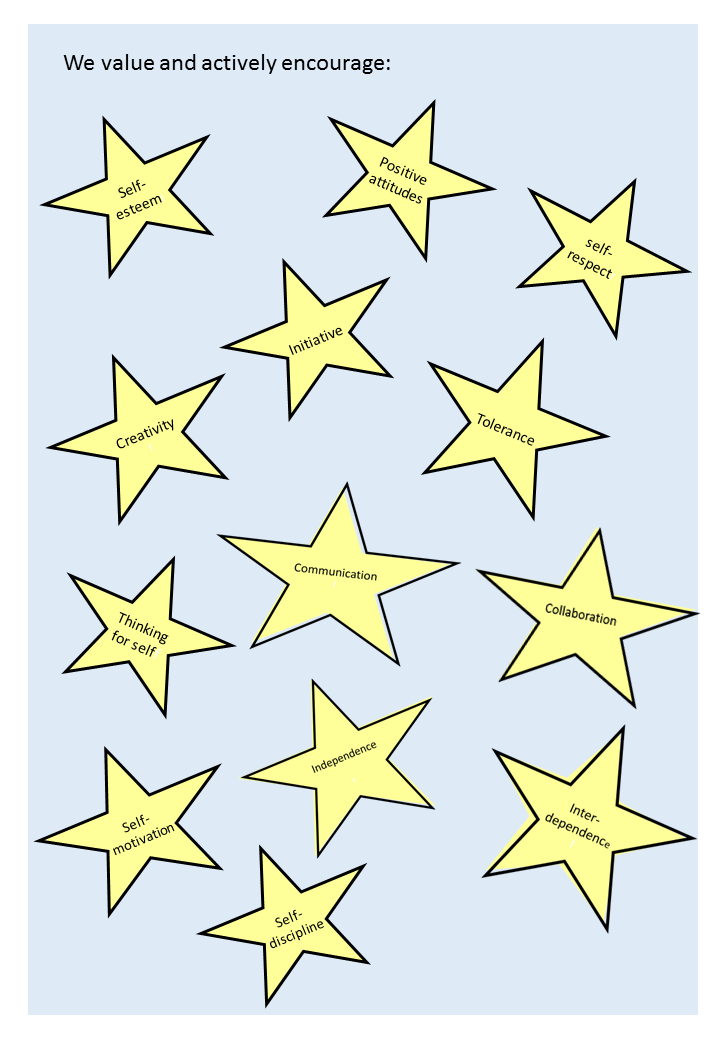
    The values of the “school” I was setting up were stated this way:

    Colo Values

    Just as it is important for gardeners to learn from the wisdom collected by other gardeners, it is important for teachers to learn from the wisdom collected by other educators.

    56


    Without a set of guiding principles it is easy to be blown off-course by the winds prevailing at the time. While I acknowledge that I may have fallen far short of the values espoused, that they guided my direction, decisions and choices could not be questioned. The current climate makes it difficult, but I am yet to read of a time that could be considered a golden age of education.

    36

    This week at the Carrot Ranch Charli Mills is talking about roses; roses that grow in gardens and roses as symbols of life’s pleasures and joys. She challenged writers to In 99 words (no more, no less) write a story that includes a rose.

    Because my blog has an educational focus, I always like to give Charli’s prompt an educational twist. Over recent months I have enjoyed the additional challenge of finding a way of applying the prompt to the life of Marnie, a character whose story I have been developing.

    Marnie is from a dysfunctional family and suffers many disadvantages. Fortunately she has found an ally in an art teacher who helps her develop self-respect and hope for a better future. A few weeks ago (in response to a different prompt) we learned that she had lived under a different name after leaving home. Could it perhaps be Rose, a name inspired by this interaction with her adored teacher?

    99

    Still life

    Marnie observed the roses Miss R. had arranged for class, carefully assessing the colours and studying the lines while sketching them on the canvas, striving to match their perfection. Oblivious to all but Miss R. and the roses, for one hour nothing else mattered.

    As other students streamed out Marnie hung back to chat with Miss R.

    Miss R. handed her a rose from the vase saying, “You are that rose. You may be surrounded by thorns, but the beauty of the rose is inside you. Remember that always. A rose by any other name would smell as sweet.

    Thank you

    Thank you for reading. I appreciate your feedback. Please share your thoughts about any aspect of this post or flash fiction.

  • S.M.A.G. is here!

    writing

    In just a couple of months it will be two years since I started blogging. Writing a blog had never been a goal of mine. In fact it would be fair to say that until I started blogging I didn’t have much of an idea of what it was; or of any social media platforms for that matter. I was a latecomer to the party considering, according to Wikipedia, blogging began in the 1990s!

    My goal at the time of beginning blogging was, and still is, to set up a website of educational resources for use in early childhood classrooms or homes. The main message I received when attending a writers’ seminar about digital publishing was the importance of having an “online presence”. I took the advice and started tweeting and blogging.  Here I am now, a semi-experienced tweeter and blogger, still a bit unsure about the online presence.

    tweet bird

    I started blogging with a goal of posting twice a week, which I have pretty much maintained since then. Initially I had just few readers, all of whom were “real” people, family and friends, I already knew. As much as I was, and am, very grateful for their continued support and encouragement, it was very exciting to receive my first “outside” comment two months later.

    It was over four months before any new readers visited and commented regularly. Some of those first readers are still with me (Anne and Caroline), others have moved on, and others have since joined. Now I have a wonderful group of online friends. As with offline friendships we interact when we can, exchanging comments and ideas with each other, mostly on our blogs and Twitter.

    https://openclipart.org/detail/117199/Friendship
    https://openclipart.org/detail/117199/Friendship

    I have been as fortunate with my online friendships as I have with my offline friendships. (I was tempted to use the word “real” instead of “offline”, but I consider my online friendships no less real.) We don’t have to see each other every day, every week, or even every month, for the friendships to flourish. Wherever the friendships form, they require certain ingredients to keep them strong, including:

    respect, acceptance, attention, appreciation, gratitude, and open communication that goes both ways.

    I really appreciate people who challenge and extend my thinking as much as those who are happy to jump on my bandwagon with me, or just come along for the ride.

    Gerald_G, Kids wagon https://openclipart.org/image/800px/svg_to_png/40459/Kids-Wagon.png
    Gerald_G, Kids wagon https://openclipart.org/image/800px/svg_to_png/40459/Kids-Wagon.png

    During the past few months when some of my blogging friends and I have been sharing appreciation for each other and our comments, I have suggested that we belong to S.M.A.G.: The Society of Mutual Appreciation and Gratitude.

    It started off in a light-hearted way (yes, I coined it) but others seemed to appreciate the thought and welcomed the idea of belonging to a group that required of them no extra effort. I decided that a S.M.A.G. badge to be displayed by anyone who wished was in order.

    In a previous post, I discussed the need for Making choices in how I allocate my use of time while working towards achieving my goals (including posting twice weekly). I shared thoughts about using a contest on 99designs to obtain illustrations for some of my work. While I was very happy with the illustrations, I was a bit uncomfortable with the contest process. However I decided that engaging each of the three runner-up finalists to do other illustrations in a guaranteed one-on-one project would (in my mind) help, in a little way, to make up for all the work they had done without reward. I have since done this and feel much happier about the process and am pleased with the results.

    One of the designers, Kari Jones (ArtbyJonz), is now illustrating a second book for me and I approached her for the S.M.A.G. badge. This is what she produced. I love it. I hope you do to.

    SMAG ccbyncnd

    If you would like to display it on your blog, and share it with your blogging friends, I would be honoured for you to do so, but please attribute it to me and link back to this page.

    I have found Kari wonderful to work with. She has been very helpful and accommodating and I am delighted with the artwork she has produced for me. If you are looking for illustrations I am happy to recommend Kari. You can check out some of her other work on her ArtPal page and contact her on Facebook if you have any queries.

    So thank you, all my friends, for your continued support and readership. Whether or not you choose to post the badge, you are still part of S.M.A.G. and it is a pleasure knowing you.

    Thank you

    Thank you for reading. I appreciate your feedback. Please share your thoughts about any aspect of this post.

  • A garden party

    www.openclipart.org
    http://www.openclipart.org

    The purposes of education are many; but perhaps one important purpose of “free” public schooling is to ensure that everyone is provided with the opportunity of being educated. While this goal is achieved to a certain extent, inequalities of opportunity still exist, many of which are related to socioeconomic status (SES).

    letter from Camus

    While there is no doubt that a teacher can have a powerful effect upon the lives of students and any teacher would love to receive a letter such as that written by Albert Camus, socioeconomic status is often considered to be the most reliable predictor of success in school and, therefore, in life. There are many reasons for this, few of which have anything to do with intelligence.

    www.openclipart.com
    http://www.openclipart.com

    According to Macquarie University the majority of students in tertiary education are of mid to high socioeconomic status. The parents of these students may have professional backgrounds and may have attended tertiary institutions themselves.  Most have an appreciation of the benefits of higher education and are able to continue supporting their students, to some extent, while they study.

    While students of lower SES are attending tertiary institutions in greater numbers they are disadvantaged in doing so by a number of factors, primarily financial in origin. Although Australia is supposedly free of class distinctions, attitudes towards those from lower SES areas are often demeaning and unsympathetic. Students from these areas may battle to develop the self-esteem that seems to be a birthright for others from more privileged backgrounds. The negativism with which they are viewed, and some come to view themselves, can become a self-fulfilling prophecy.

    Ready for school - year 2
    Ready for school – year 2

    I was a fortunate one for, while I grew up in a family with low SES background, my parents saw the value in education and sacrificed much for their children to have the opportunities it provided. The high costs of tertiary education that are now incurred could not have been afforded, but I achieved well enough in school to obtain a scholarship to teachers’ college and a three-year bond (guaranteed employment) when that was finished.

    Nowadays there is no such thing as guaranteed employment and few scholarships. Many families cannot afford to have post-secondary/adult students continue to live at home and not contribute to expenses while they undertake further study. This means that students have the additional burden of working while they are studying. Many opt out of study altogether to seek long term employment, often in low paying jobs with little opportunity for advancement. And so the cycle continues. The lack of permanent employment even for graduates makes deferring earnings less desirable again.

    caravan

    Of course the disadvantage doesn’t just begin when approaching final years of school. The impacts can be observed from the earliest age. (My suggestion for an early learning caravan addresses this in part.) Although education is provided “free” to students, there are many other associated costs that families may struggle to meet, such as books, equipment, and extra-curricular activities such as excursions and incursions.

    In most Australian schools, the wearing of uniforms helps to minimize differences that may otherwise be obvious by choices of clothing and footwear. It also helps to reduce costs. Sometimes additional activities can be a drain on family expenses, and while many schools will fund expenses for those in need, not all families are willing to ask for that help.

    DCF 1.0

    Studies have shown that many children arrive at school without having eaten breakfast. While this phenomenon can occur in any family, it is more prevalent in low SES areas. Some schools are now providing a healthy breakfast for students when they arrive at school. I think this great as hungry children tend to have difficulty concentrating and learning, are often lethargic and may suffer from mood swings and negative attitudes. I know how irritated I become when I am hungry. My family “joke” about not getting in the way of me and my food! How much worse for children who come to school with empty bellies.

    Of course these issues are compounded for children who live in dysfunctional families. As much as we may try to be inclusive and equitable in the way we treat them, these students are often the ones who notice their differences and inadequacies and become most self-critical. It can be a very difficult task to change the attitudes and habits of generations.

    This week at the Carrot Ranch Charli Mills talked about attending a garden party. The hosts and guests at this party had obviously enjoyed some of the finer things that life reserves for a few.

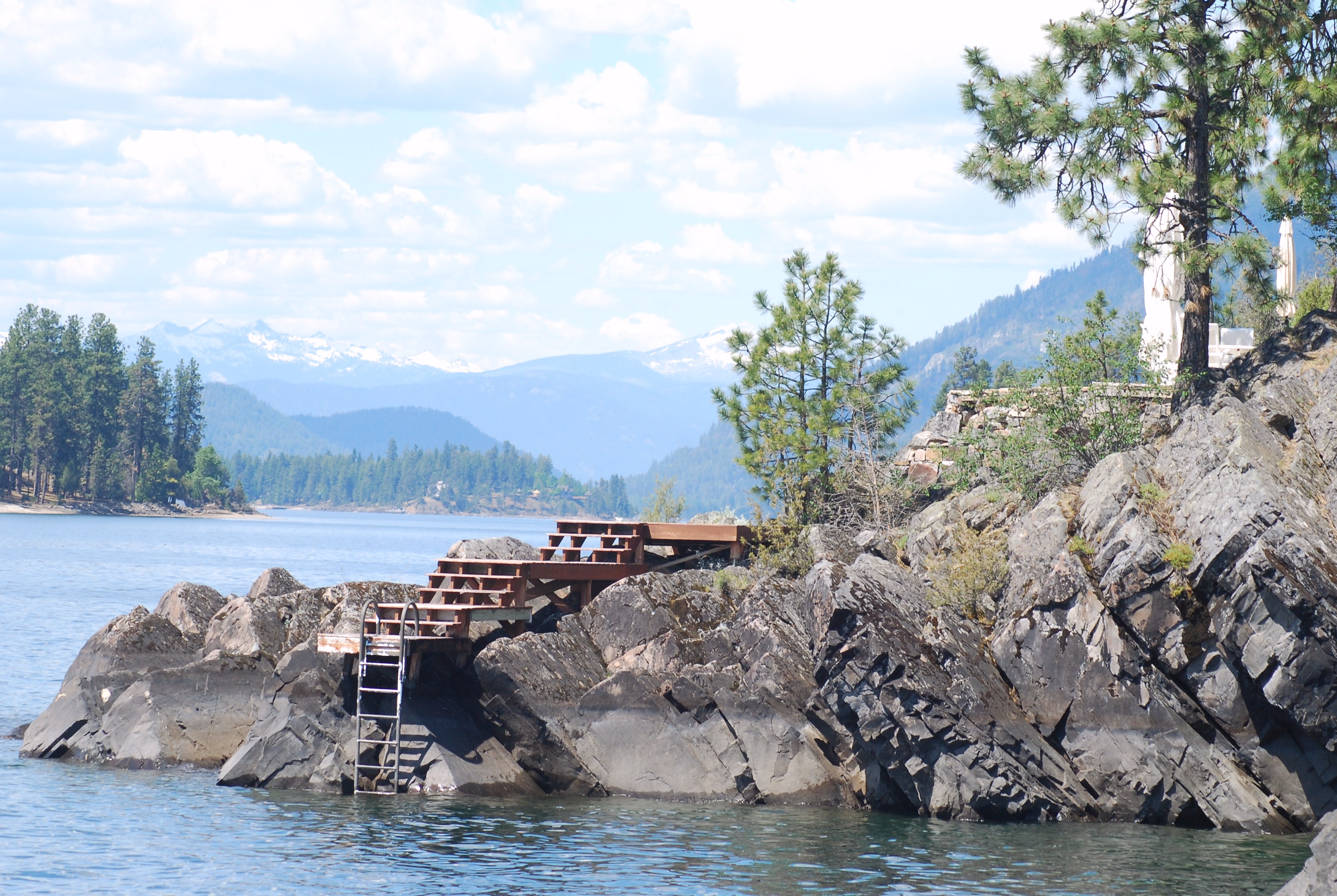
    lake-pend-oreile-cruise-may-21-31

    Charli shared a photo of a rather idyllic spot on an island and challenged writers to In 99 words (no more, no less) write a story, using the above photo as a prompt.

    Well the photo is beautiful, but I couldn’t get away, I was stuck at the garden party. I thought it was a wonderful analogy for the rewards that can be had from an education; rewards that may be obvious and perhaps available to many, but rewards that may be out of reach to others because of circumstances over which they have no real control. I thought of Marnie who suffers the double disadvantage of a dysfunctional family in a low SES area; but who knows there is something better out there and wants it for herself.

    Thanks to Charli for her prompt, here is another episode from Marnie’s life. I hope you enjoy it.

    The garden party

    Marnie’s face pressed into the bars of the tall white gate with amazement: white-covered tables laden with food; chairs with white bows; white streamers and balloons; and a band!

    But the ladies had her spellbound with elegant dresses and high, high heels; flowers in their hair and bright painted lips.

    A man in uniform opened the gate to guests arriving in limousines. Marnie followed.

    “Not you, Miss,” said the uniformed man.

    Marnie held out her invitation, “Jasmine . . .”

    But he’d closed the gate and turned away.

    Marnie looked down at her stained dress. What was she thinking?

    Thank you

    Thank you for reading. I appreciate your feedback. Please share your thoughts about any aspect of this post or flash fiction.

  • A creative mistake

    Today I am sharing a lovely post published by Marilyn Warner on her blog Things I Want To Tell My Mother. Her post Ooops! is just a short one but it includes some mighty fine reminders:
    • that mistakes can become successes if one doesn’t give up
    • that mistakes are only failures if one chooses them to be

    The ability to accept mistakes as inevitable, and to embrace the messages in them as stepping stones to success are important attitudes for learning at any stage. (And as Marilyn says, we are not talking here about life-changing, heart-breaking mistakes with tragic consequences, just the little ones that can be redefined if we don’t give up.)

    Enjoy!

    Thank you


    Thank you for reading. I appreciate your feedback. Please share your thoughts about this post.

    Marylin Warner's avatarThings I Want To Tell My Mother

    It would be a mistake to hire a 4-year-old to be your carpenter.  Cute, maybe, but still a mistake.  (Pictures by Marylin Warner) It would be a mistake to hire a 4-year-old to be your carpenter. Cute, maybe, but still a mistake. (Pictures by Marylin Warner)

    Using the wrong fork is  embarrassing, but it's a minor mistake. Using the wrong fork is embarrassing, but it’s a minor mistake.

    Texting and speeding and driving the wrong way is a serious mistake. Texting or speeding and driving the wrong way can be a very serious mistake.

    Years ago, before my dad’s Alzheimer’s and my mother’s dementia, they were included in a tour of one of the 3M facilities. When I asked how they’d liked it, my dad told me details from a businessman’s perspective. My mom’s perspective was different.

    She remembered ACM—the initials of Acrylate Copolymer Microspheres—from the tour. She nicknamed them “A Creative Mistake,” and they became an inspiration.

    In 1968 3M intended to create a super strong adhesive for the aerospace industry. But there was a mistake in the plan, and the end result was an incredibly weak product.  Years later, the reworked mistake became Press’n…

    View original post 278 more words

  • Understanding family relationships

    At the Carrot Ranch this week Charli Mills is talking about cold cases and challenges writers to, In 99 words (no more, no less) write about an old mystery in the current time. Is it a discovery? Is it solved? Does it no longer matter, or does it impact innocent generations in between?

    My thoughts immediately turned to a mystery that occurred in my family over one hundred years ago when the two-year old brother of my grandfather disappeared and was never seen again.

    http://www.clker.com/clipart-10083.html
    http://www.clker.com/clipart-10083.html

    Most families do have a skeleton or two in the closet. Not all families like it to be known. Many Australian families who can trace the arrival of ancestors back to before the end of convict transportation in 1868 can find a convict in their ancestry. I have two; one on each side of the family. Generally the reasons for transportation were rather minor so I am not too concerned about sharing that information. In fact, many Australians are delighted to find a convict in the past as it adds a little interest and colour to their family tree.

    Children generally love to hear stories of their own lives and families. I have written about that before here. However young children probably have no need for or interest in delving as far back into family history as the three stories I have mentioned above. An interest in ancestors further back than living relatives (grandparents and great-grandparents) usually develops later, if at all.

    A great place to start thinking about history in early childhood classrooms is sharing stories about the families of children in the class. Most classes in Australia are comprised of children from variety of backgrounds so sharing those stories helps to develop an appreciation for each other as well as knowledge of the world. I developed a unit called Getting to know you for use in early childhood classroom which aims to develop discussion about family histories.

    But children can start learning about family relationships even earlier than that by discussions of who’s who in the family and explanations of the words and relationships; for example father/daughter; brother/sister; aunt/niece; grandmother/granddaughter. Here is a picture of some pages of a book I made for Bec when she was just a little tot, just to give you the idea.

    family book

    Photo books of family members are much easier to make these days with digital photos and programs such as PowerPoint, as well as glossy books you can make and order online.

    I am very proud of my two grandchildren, as any grandparent would be, and am pleased to say that they have a good understanding of who is in their family and their relationships to each other. It is a frequent topic of discussion. However I was very tickled when my three year old granddaughter proceeded to tell me, with some excitement, that her Daddy and her Aunty Bec were brother and sister in real life; in REAL life, she emphasized.

    Regular readers of my blog may be familiar with a character I have been developing in response to Charli’s flash fiction challenges: Marnie. Her story is not real life but, sadly, aspects of it could be, for others. There was a period of about twenty years when, after escaping her dysfunctional family, Marnie was untraceable, living without any connection to her family and past, a mystery. It took authorities five years after both parents had passed to track her down with the ‘news’. This episode takes up there.

    Found

    The officers looked friendly enough but still she tried to hide the tremble in her soul and tremor in her voice behind the blankness of her stare.

    She’d opened the door just a crack, as far as the chain would allow.

    “Marnie Dobson?” they asked. She shook her head. She’d not . . . ; not since . . . ; no longer. She shook again.

    They asked her to step outside. With no other option she reluctantly unlocked and emerged into the glare of daylight.

    “Marnie Dobson,” one said, “We are here to inform you . . .”

    Thank you

    Thank you for reading. I appreciate your feedback. Please share your thoughts about any aspect of this post or flash fiction.