Live Love Laugh Learn … Create the possibilities

Category: Education

  • Is the ‘right way’ always the best way?

    Giving children opportunities to question, to be creative, and to problem solve are high on my priorities. Children need to be given the time and opportunity to figure out things for themselves. While it is sometimes easier just to tell or show them what to do, or even do it for them, it is generally better for their development, to let them have a go at finding a method or solution. Please note: I am not talking about dangerous things here like playing with fire, testing to see how fierce that dog really is, or driving a car.

    If children are constantly told there is a right way of doing things, they will stop exploring, discovering, and inventing their own or new ways of doing things. This is an issue because, if we always do what we’ve always done, we’ll never progress. There is generally no harm in, but much to learn from, each successive attempt.

    Opportunities to explore, discover, and use intuition are also important to the development of mathematical thinking. When children are developing understanding of number, they often invent their own strategies for working with numbers. Sometimes, as attested in this paper by Heirdsfield, Cooper and Irons, the strategies used display more advanced thinking, and are more efficient, than those taught as ‘the’ correct way of solving a problem using pencil and paper.

    I have noticed a change in the speed and agility with which my seven-year-old grandson works with numbers now that he has learned there are certain ways of; for example, adding two numbers. He tends to second-guess himself as he attempts to mentally calculate using the pencil and paper method he has been taught, rather than other more effective strategies he had previously invented and used. Perhaps you have noticed something similar.

    Provocations, such as these 3 Fun Inquiry Maths Activities for the Last Week of School by Steph Groshell on Education Rickshaw,  are great to get children thinking about different ways of solving real problems.
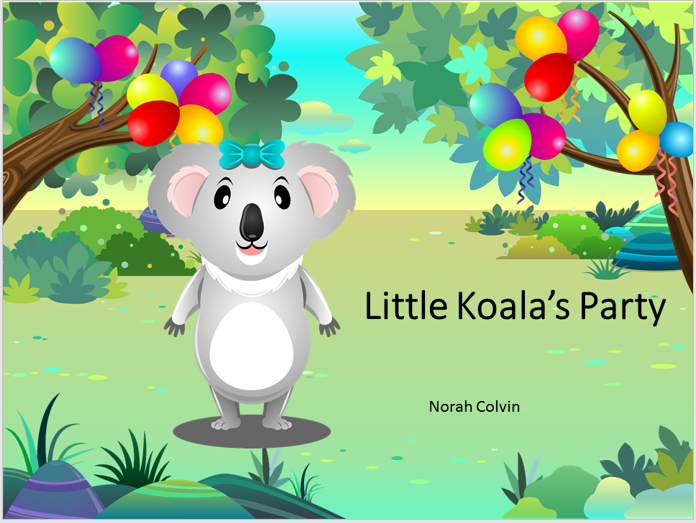
    Little Koala’s Party – a story for problem solving in the readilearn mathematics resources also encourages mathematical thinking and planning. Children help Little Koala organise a party for her family and friends, deciding who will be invited, the number of guests, and what’s on the menu. The suggestion is made that children plan a party of their own and they are asked to consider how they would go about it. The discussion and sharing of ideas, rather than the imposition of one ‘right’ way, is the important thing in developing mathematical thinking.

    Now it might seem a stretch to tie this in with a piece of flash fiction, but I hope you’ll be able to follow my thinking through the mist and into the light.

    This week at the Carrot Ranch, D. Avery took the reins from Charli Mills and challenged writers to in In 99 words (no more, no less) write a story that symbolically, mythically, mystically, or realistically involves dawn, as a noun or verb. Write about the dawn of time or the time of dawn, or the dawning of an idea. As always, go where the prompt leads.

    The right way

    Father and Son sat side by side. Father cracked his knuckles and sighed repeatedly while Son sharpened his pencils, each pencil, and arranged them meticulously according to undisclosed criteria.

    “Come on. Just get it done. Then you can play.”

    “I’m thinking.”

    “Think faster.”

    “I know it’s 96.”

    “Well write it down.”

    “Sir says I have to do the working out.”

    “Then do it.”

    “I don’t know how.”

    “Like this. See.”

    “That’s not how we do it. Sir says…”

    “Then do what Sir says.”

    Slowly it dawned on Dad: Sir’s way may not be the best way for all.

    Thank you for reading. I appreciate your feedback. Please share your thoughts.


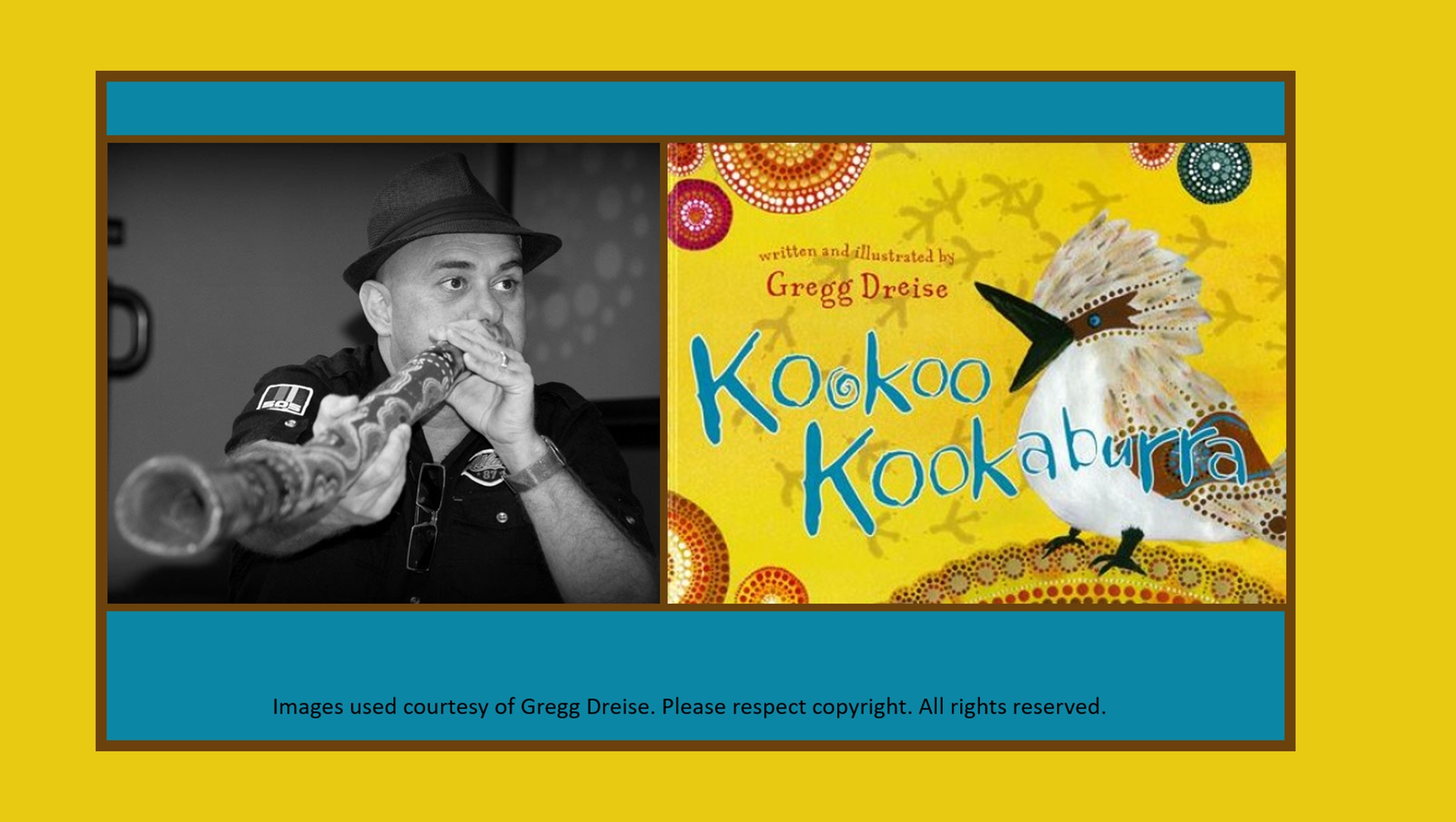
  • Introducing author-illustrator Gregg Dreise – Readilearn

    This month it is my pleasure to introduce you to Gregg Dreise, gifted artist, storyteller and musician. Gregg is a descendant of the Kamilaroi and Yuwalayaay people of south-west Queensland and north-west New South Wales. He is a proud ex-student of St George State School. When he visits schools and is involved in festivals, he features the didgeridoo and guitar in his performances.

    Gregg is author and illustrator of three award-winning books Silly Birds, Kookoo Kookaburra  and Mad Magpie. A fourth book Why are you Smiling is to be released soon. All four stories are about teaching morals. They address friendship, kindness, tempers and bullying.

    Gregg also illustrated Di Irving’s retelling of the classic story Tiddalik the Frog, and Elaine Ousten’s second megafauna picture book Megal the Massive Megalania.

    In this post, I am talking with Gregg about his award-winning book, Kookoo Kookaburra.

    Oh, here he is now!

    Yarma – hello, I’m Gregg Dreise the author and sillystrator of Kookoo Kookaburra. This is a story about


    Continue reading: Introducing author-illustrator Gregg Dreise – Readilearn

  • Outdoor games

    Being outdoors, especially in a natural area, is good for the body, mind, and spirit. It is so for children as it is for adults. It is great to incorporate outdoor activity into the daily routine, including the regular school day. With our beautiful Queensland weather, children get to play outdoors most lunchtimes. While one day of indoor play on a wet day is a novelty, more than one and we start to feel cooped up.

    However, other than at lunch breaks, outdoor play is not always scheduled as part of the school routine as it is in Finland, where children have, according to this article in the Sydney Morning Herald, ‘a mandatory 15-minute outdoor free-play break every hour of every day.’

    I support the premise of Finnish education that ‘Fresh air, nature and regular physical activity breaks are considered engines of learning.’

    GDJ, Playful stick figures https://openclipart.org/detail/230070/playful-stick-figure-kids

    They must also have benefits to health and happiness. In Where will the children play? I suggested that ‘While it is great for children to have unstructured play time. It is also important to have equipment to support their play, be it imaginative, social, or physical.’ The reason for this statement is the disagreements I’ve seen occur when children have nothing to play with and no ideas for creating games of their own. It seems that many of the games played in the not-so-long-ago days, before the invention of video games and television, have been lost to subsequent generations.

    Johnny Automatic, cartoon of a girl and boy playing with a ball https://openclipart.org/detail/721/playing-ball

    In Are you game?  I wrote about some of the ways playing games can contribute to the development of social skills such as:

    • Sharing
    • Taking turns
    • Cooperation
    • Following rules
    • Dealing with competition
    • Accepting a loss
    • Accepting a win graciously

    When in the classroom, I incorporated some type of game, whether indoor or outdoor, small group or large group, into every day’s schedule. Some of these ideas I have already shared on the readilearn website, including instructions for How to play freeze. I recently added some Maths games and activities for the whole class #1  which include suggestions for playing outdoors, such as Odd and Even. (Both these resources are free!)

    This week at the Carrot Ranch, Charli Mills is also talking about outdoor games. She mentioned childhood favourites; such as, tether tennis, hopscotch, hide-and-see, jump rope, and flashlight tag. As I do, Charli wonders how playing these games compares to playing screen games. I have to admit that I like both, but I think it would be great for children to learn how to play some of my childhood favourites; such as:

    • Drop the hanky
    • Cat and mouse
    • Red rover
    • Fly
    • Skipping
    • Elastics
    • Hula hoops
    • Ball tag (brandy)
    • Hide and seek
    • Tag (tiggy)
    • Spotlight (flashlight)
    • Ball games

    I’m sure you could add others. You know, all games were invented by someone at some time, and it is fun to make up games of your own.  Give children a little equipment, or none, let them use their imaginations and see what games they can come up with.

    I have ‘invented’ a few games over the years. Some of them are already available on readilearn, others are on the list of to-dos. They are not all outdoor games, there are a variety of board games. But Charli has specifically asked for outdoor games. She said,

    In 99 words (no more, no less) write a story that involves playing an outdoor game, like tetherball, hoops, tag. It can be made up, traditional, cultural or any kind of twist. Go where the prompt leads.

    This is my response. I hope you like it.

    Wanna play?

    From the verandah, the park looked enormous and inviting. The men, lugging boxes and furniture upstairs, stopped chatting. Mum bustled them too, ‘Here. Not there.’

    ‘Stay out of the way,’ she’d commanded. He suggested the park. ‘Not by yourself,’ she’d said.

    He went anyway, crossing the wide road alone. He watched a group of kids kicking a ball around. They looked friendly, but… He glanced back at the house. Not missed. Would they let him play?

    ‘Hey, kid,’ one shouted. He turned to run. ‘Wait!’ called the voice. ‘Wanna play?’

    Reassured by smiling faces, he joined in the game.

    Thank you for reading. I appreciate your feedback. Please share your thoughts.
  • Learning about living things – sea turtles – Readilearn

    Learning about living things – sea turtles – Readilearn

    Children love learning about animals and, by adulthood, must of us have a basic knowledge of many. Unless there is a specific reason for us knowing or finding out more, the knowledge can remain just that – basic, sometimes even with misconceptions. For example:

    Remaining curious and continuing to seek information is a characteristic of a life-long learner. One of the purposes of school is to encourage life-long learning.

    In the early childhood science curriculum, children begin to learn formally about living things, their needs, and their life stages. This knowledge helps to develop an understanding of, and appreciation for, all living things. As well as providing children with the science concepts included in the curriculum, it is important to stimulate their curiosity by encouraging them to ask questions and explore additional information; for example,

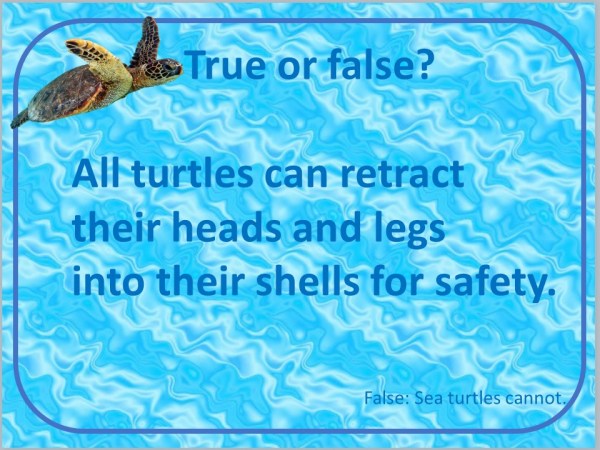
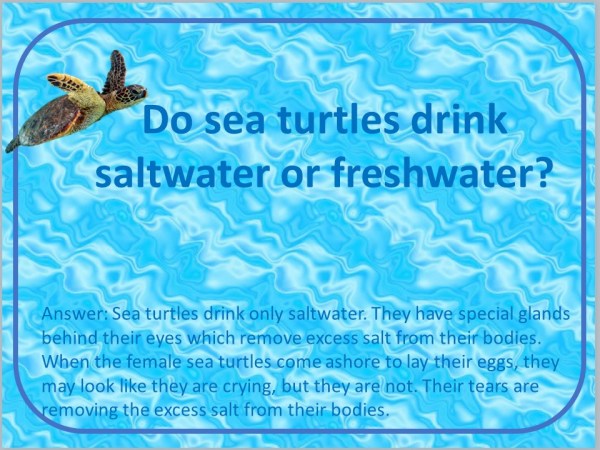
    This week I have uploaded a new free interactive digital resource to assist children in their first three years of school learn about living things by learning about sea turtles. With interactive features and fun facts, the resource is also suited to multi-age classrooms. It would be of interest to any curious child with a thirst for knowledge.

    Continue reading: Learning about living things – sea turtles – Readilearn

  • Is contentment compatible with a growth mindset?

    I am quite a fan of the growth ‘not yet’ mindset which focuses on a belief in the ability to do and achieve more through persistence and hard work. I have previously written about this mindset in What do you have in mind? and in The power of not yet.

    I wonder how compatible a growth mindset is with a complacency or acceptance of the way things are; a “This is it. I can’t do anything about it.” attitude.

    When I think of contentment, I think of serenity, tranquillity, a feeling of peace and acceptance. I think of it as a positive state of mind. The dictionary defines it as:

    Does this imply that there is no wish for things to be different?

    I often talk about the importance of imagination and creativity to inspiring innovation and invention. But do they also require a certain degree of disequilibrium or discontent with the way things are? Is it necessary to find fault with something in order to improve upon it? How many gadgets do you use regularly, accepting their imperfections without a thought of how they might be improved? It is not necessary to have the ability to improve them in order to imagine how they might be improved.

    A fun thing to do with children is to get them to think of an easier or more enjoyable way of conducting a routine activity. How about an alternative to the traditional, in Australia anyway, emu parade which has children criss-crossing the school grounds, bobbing up and down to pick up rubbish? How about something to carry their heavy back-packs home? Or something to do their homework? (Oh, that’s right, they’ve already invented parents for that!)  I’m sure children, and you, can imagine far more exciting improvements.

    Imagination is the driver of innovation and change. But it also requires action. It is the action that gets us into the growth mindset; perseverance, hard work and repeated attempts. As Edison is oft quoted,

     “I have not failed. I’ve just found 10,000 ways that won’t work.”

    He also said,

    “To invent, you need a good imagination and a pile of junk.”

    I wonder how my friend Pauline King The Contented Crafter would respond to my title question. While I know she has reached a certain stage of contentment in her life, I also know that she strives to better her craft, and does what she can to make the world a better place. How much need for change or improvement can contentment tolerate?

    Charli Mills of the Carrot Ranch and her flash fiction challenge to In 99 words (no more, no less) write a story about feeling content  got me wondering about this. Charli talked about moments of contentment sprinkled among frustrating events and dreams of change.

    It helped me realise that, while they appear to be in contradiction, we need a little of both. We need to be happy with who we are, what we have, and what we have achieved; while at the same time, we need to be aware of what can and should be improved, and some strategies for action. Questioning is important to stimulate imagination, and when paired with creative thinking, innovation can occur. We need the inspiration of just one forward-thinker to lead us into the future.

    The same balance between contentment and growth can be seen in children’s play. I have used it as my response to Charli’s challenge. I hope you enjoy it.

    Purpose in play

    They worked furiously as if with one mind; digging, piling, shaping, smoothing the sand.  As if on cue, two began to tunnel through from opposite sides, meeting in the middle. Others carved into the surface, forming window-like shapes. Sticks, leaves, and other found objects adorned the structure. Then, simultaneously, the work stopped. They glowed with collective admiration. But Than was not yet content. Something was missing. He swooped on a long twig and stuck it into the top, antenna-like. “For communicating with the mother ship,” he declared. Soon they were all feverishly adding other improvements to their alien craft.

    Thank you for reading. I appreciate your feedback. Please share your thoughts.


  • The Penguin Lady responds to An Oily Problem

    Imagine my delight when The Penguin Lady read and responded to my post!

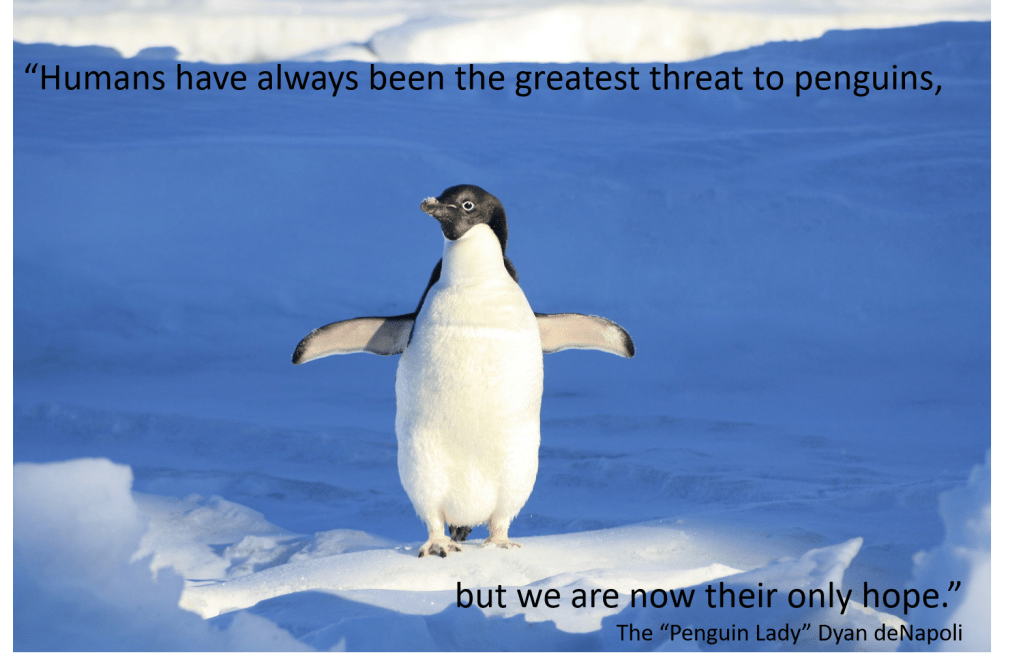
    In a recent post I shared this Ted talk The Great Penguin Rescue in which “the penguin lady” Dyan deNapoli talks about an oil spill that occurred when a ship sank off the coast of South Africa in the year 2000, oiling nearly 20,000 (almost half) of the total population of African penguins, and the efforts made to rescue them.

    The rescue was successful with 90 percent of the oiled penguins returned to the wild.

    I found Dyan’s story inspiring, not only for the penguin rescue, but for the learning she credits to the rescue, especially that one person can make a difference, and that “when we come together and work as one, we can achieve extraordinary things.”

    I was delighted when Dyan read the post and supplied additional information. Since so many of you were interested in her story, I wanted to share with you what Dyan had to say.

    This is her comment:

    Hello Norah! I just came across your great post about oil and oil spills. Thank you so much for sharing my TED talk about the Treasure oil spill rescue, and for informing your audience about these important issues. I really enjoyed your flash fiction, and listening to Cesar Harada’s TED talk as well.

    Thank you for providing information about how folks can adopt a penguin. I wanted to share the websites of a few more penguin rescue centers that are in need of support, and through which folks can adopt a penguin or fund the hand-rearing of an abandoned penguin chick. There are many organizations rescuing penguins throughout the Southern Hemisphere (there’s actually a complete list of these groups in the appendix of my book, The Great Penguin Rescue), but the following three are organizations doing great work that I regularly support and like to highlight. These are all groups that are doing direct, hands-on work to save oiled or injured penguins. (I also regularly support The Penguin Foundation in Australia, which you’ve already listed above.)

    SANCCOB (the center we worked with during the oil spill rescue in 2000): https://sanccob.co.za/

    Dyer Island Conservation Trust (DICT – also working to save Endangered African penguins): http://dict.org.za/pages/give-to-save/give-to-save.php

    Yellow-Eyed Penguin Trust (YEPT – saving Endangered Yellow-Eyed penguins in New Zealand): http://www.yellow-eyedpenguin.org.nz/passion/support-the-trusts-work/make-a-donation

    Thanks again – and keep up the great work!

    Cheers,
    Dyan deNapoli – The Penguin Lady

    These are the ones I listed:

    Seabirds. Adopt a penguin

    The Penguin Foundation

    The World Wildlife Fund

    Wildlife Adoption and Gift Centre

    I hadn’t realised that Dyan had written a book about The Great Penguin Rescue, but I immediately downloaded and started listening to the audiobook. It is a great read and I highly recommend it. I am not alone in doing so. The book has won three awards.

    In the book, Dyan tells the story of how she came to be The Penguin Lady, provides information about penguins, and explains how the great penguin rescue was carried out. (Probably other stuff too, but I haven’t finished listening yet.) I have also ordered a hardback copy as it includes colour photographs. I’m looking forward to receiving it in a week or two.

    In a subsequent comment, Dyan shares some of her story:

    And to answer your question about when and how I became interested in penguins, it was quite accidental. I had returned to college at the age of 31 to pursue my lifelong dream of working with dolphins (which I briefly did in Hawaii), and during my senior year I landed a full-time, 4-month internship in the Penguin Department at the New England Aquarium in Boston, MA. From the moment I stepped into the penguin exhibit and found myself surrounded by 65 honking, braying, cavorting penguins, I was pretty-much hooked. Their behaviors captivated me, and I was totally surprised to discover that each individual had their own unique personality and temperament – not really what I had expected in a colonial bird. And I wanted to learn more about them.

    I stayed on as a volunteer at the aquarium after graduating, and when a position finally opened up a year later, I applied for and got the position of Penguin Aquarist. I was at the aquarium for 9 years in total, and after leaving there at the end of 2004, I founded my company, The Penguin Lady, to teach kids and adults of all ages about penguin biology, behavior, and conservation. I speak in a variety of settings both locally and internationally, and donate 20% of my proceeds to penguin rescue, research, and conservation groups. One of my favorite gigs is being a guest speaker/penguin expert on nature cruises, and next February I’ll be returning to Antarctica as a guest lecturer for Lindblad Expeditions/National Geographic, which I’m VERY excited about!! My mission is to raise awareness and funding to protect penguins – 13 of the 18 penguin species are currently listed as Vulnerable, Near-Threatened, or Endangered, and that is what drives me to do the work that I do.

    Thank you, Dyan, for sharing so generously.

    There is much more to discover about The Penguin Lady and The Great Penguin Rescue. She is as passionate about education as she about penguins. Through educating us about caring for penguins, she is helping us care for the environment and make a better world. You may be surprised by some of the information in this wonderful educational video. I was.

    And I’ll leave you with Dyan’s reminder:

    You can connect with Dyan on both Facebook and Twitter.

    Thank you for reading. I appreciate your feedback. Please share your thoughts.


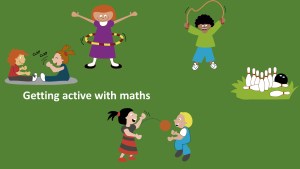
  • Getting active with maths – Readilearn

    Many games involve children in practising maths skills, and playing games is a great way of incorporating fun into the maths program. With the additional benefit of supporting the development of social skills and, oftentimes, literacy skills, there is no reason to not include games. A daily dose of fun with maths contributes much to an enjoyable classroom experience, developing positive attitudes to maths, in addition to providing opportunities for consolidation and practice of maths learning.

    Adding a little physical activity to the game increases the benefits, and there are many simple games that can be played with the whole class, indoors or out; some that require equipment and some that don’t; some that take just a few minutes, and some that take several. Many games can be invented on the spot to suit current learning.

    Continue reading: Getting active with maths – Readilearn

  • Shaping up – activities with 2D shapes. – Readilearn

    Shapes are all around. Everything we see has a shape. Some of those shapes are regular, some not so regular. In early childhood, children are introduced to the basic regular shapes of circles, triangles and rectangles, including the special rectangle that we call a square.

    Even before they begin formal learning, most young children can recognise and name these four basic shapes. They see them in picture books and encounter them in puzzles and games.

    But learning about shape goes much deeper than just being able to recognise and label those colourful images.  An understanding of shape has relevance to many other activities such as reading maps, construction, laying tiles, and stacking items. They need to know how shapes can be combined to form others, and what happens when they are cut, flipped or turned. They will use their knowledge of shape in more advanced geometry such as finding perimeter, area, and volume.

    The colourful, and sometimes humorous cartoon-like, ways in which shapes are introduced to young children, can make them appear fairly basic, and parents and teachers may state with pride, “My child knows all the shapes.” But with shape forming a basis for so much other understanding, it is important to use language that enables understanding and discourages the formation of misunderstanding.

    Misunderstandings occur when objects

    Continue reading: Shaping up – activities with 2D shapes. – Readilearn

  • The significance of number

    It’s not always wise to follow the crowd.

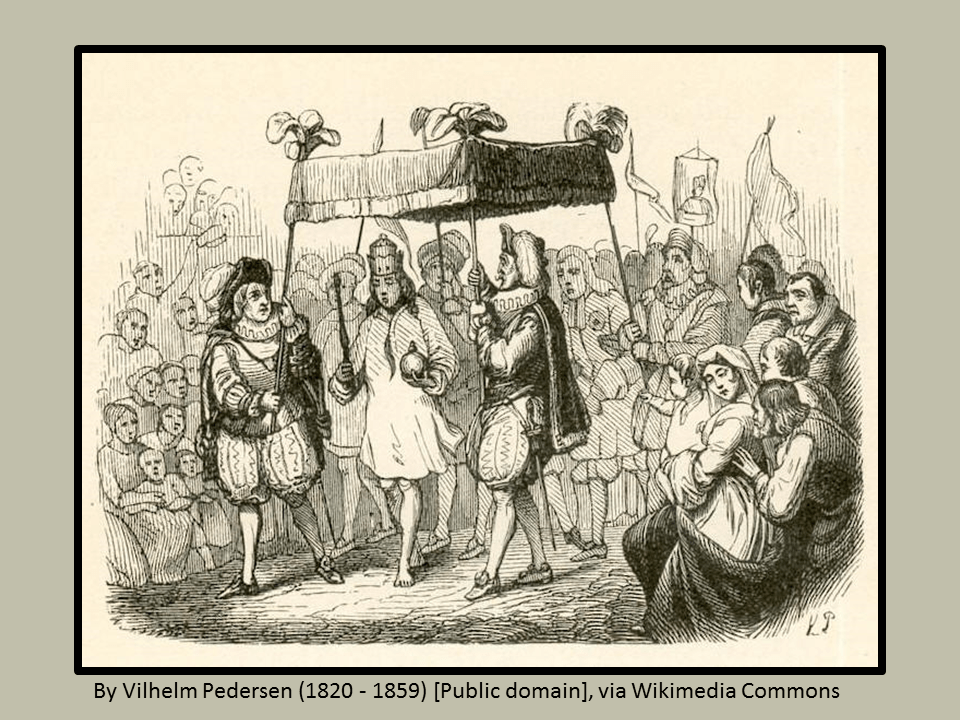
    Remember the story of The Emperor’s New Clothes by Hans Christian Andersen?

    A pair of weavers tricked the conceited Emperor into believing they had made him a fine set of clothes; clothes so fine, they would be visible only to those worthy of their position, and invisible to anyone lacking intelligence. Not wanting to appear stupid, his subjects were quick to join in the admiration of his (invisible) clothes. It took a young child to see through the claims and announce the deception.

    Honesty is a trait often admired, even found refreshing, in children. However, the same kind of honesty is not always endearing in an adult. As we grow, many of us learn to use a little more finesse when telling someone what we think of them or their work. It is sometimes wiser to take the side road, rather than the direct route.

    I have always loved the story of the Emperor and his invisible clothes. I found the people’s dishonesty frustrating. I just wanted to shake them, “Can’t you see?” But I loved that it was a child who told it like it was.

    The story is a wonderful allegory for so much that is going on in the world today, and probably always has. (The story was published 180 years ago.) Someone comes up with a bright new idea. It is promoted; and before long everyone is following the trend, proclaiming its, often-questionable, value. It happens in education too. Those who see through the hype are often ridiculed.

    The importance of interrogating ideas to determine their worth cannot be overstated. The ability to question and to think critically is essential for an intelligent society. Just because everyone is doing it, doesn’t make it wise, right, or best.

    This week at the Carrot Ranch, Charli Mills has challenged writers to In 99 words (no more, no less) write a wise story. It can be about wisdom, expressing wisdom or advice for turning 50! It can be a wise-cracking story, too. Go where wisdom leads you.

    The reason for the prompt including the suggestion of “advice for turning 50” is that Charli celebrated her significant 50th birthday on the weekend.

    I remember turning 50. I had a big party that I spent months organising. A magician helped break the ice early in the evening and prepared everyone for joining in games that were interspersed throughout the evening. People danced and were entertained by a musical duo who also liked to tell jokes. It was a memorable occasion for me, if not for anyone else. I’m pleased I did it then, as I wouldn’t be bothered now, though the numbers do seem to get significantly bigger each year.

    It was about that time that I realised I wasn’t as mature and wise as I’d expected to be. Didn’t adults give the appearance of wisdom when I was a child? They’d certainly seemed convinced of what they were telling me, and rarely displayed hesitation in decision making. I figured, if I wasn’t mature and wise by then, I was never going to be. So what the hell. I’d just stay a six-year-old for life!

    Remember the A. A. Milne poem?

    “When I was One,
    I had just begun.
    When I was Two,
    I was nearly new.
    When I was Three
    I was hardly me.
    When I was Four,
    I was not much more.
    When I was Five, I was just alive.
    But now I am Six, I’m as clever as clever,
    So I think I’ll be six now for ever and ever.”

    Anyway, I would like to wish Charli a very happy fiftieth birthday, and welcome her to the second half-century. I’ve been there a while and it’s not too bad. I’d hazard a guess that it’s better than the alternative. There are still plenty of new discoveries to be made. But you must make the most those years. They can just fly away.

    Coinciding with her birthday, Charli has announced a new project on her website. Charli is a wonderful source of support and inspiration to writers all over the globe and, as you know, the instigator of the flash fiction I, and many others, write each week.

    Charli says, “If I can raise the funds, I will start an imprint for Carrot Ranch, expand our platform to benefit those who write in this community and seek new ways to inspire and inform other writers beyond the ranch hands.” She is developing a Patreon. If you would like to help Charli get this work started, please ride on over to her website and donate to the project.

    In the meantime, here is my response to her challenge to write a “wise” story. I hope you enjoy it.

    Growing into wisdom.

    “My Dad knows everything!” bragged six-year-old Billy.

    “Parents,” grumbled Will E., at surly sixteen, “They know nothing.”

    For thirty-year-old William, at the top of his game, conversations were strained. One more “In our day…” he’d surely explode.

    By forty-five, with kids of his own, “But kids are different these days,” Will would state.

    Dad would wink and suggest, “Not that different.”

    Throughout the fifties, his recalcitrant teens mirrored those years of his own.

    Into his sixties, with kids gone and more time for chatting with Dad, he discovered, almost too late, they shared more than he had ever appreciated.

    Thank you for reading. I appreciate your feedback. Please share your thoughts.

  • Introducing author Cynthia Mackey – Readilearn

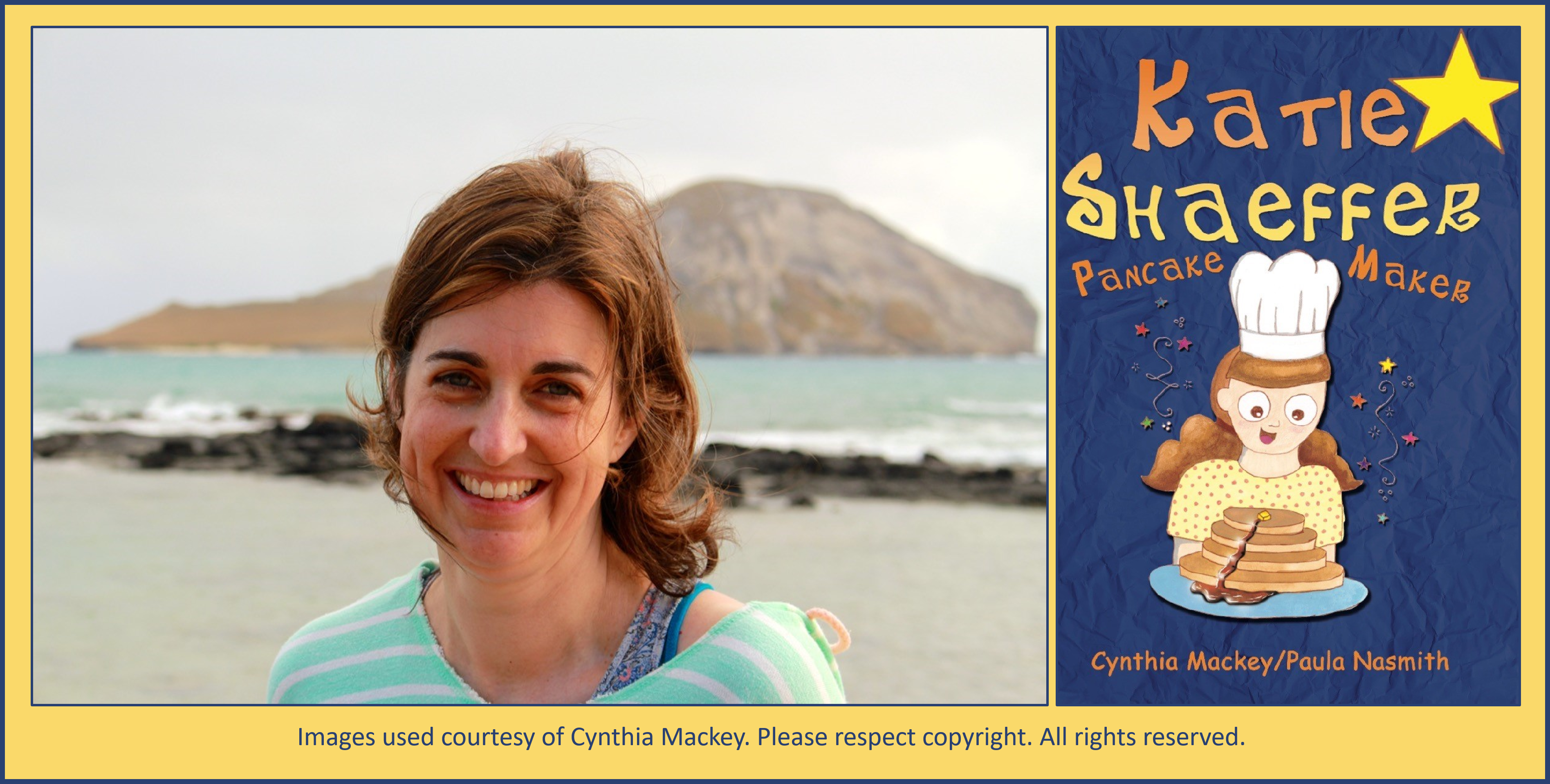
    This month I am pleased to welcome first time author Cynthia Mackey to the readilearn blog.

    Cynthia has always loved children’s literature.  After years of teaching preschool and kindergarten, she is proud to have written her first children’s book, Katie Shaeffer Pancake Maker.  Cynthia writes in her spare time and has plans to publish more picture books for children.  She lives on the west coast of British Columbia, Canada with her family and her piano where she faithfully continues her weekend pancake tradition.

    Synopsis: In Katie Shaeffer Pancake Maker, Katie is too young to use the stove so she dreams of making her very own pancakes. Join Katie and her friend Baxter in this fun story as they use a passion

    for collecting and building to find a way to realize Katie’s pancake dream!  This upbeat energetic tale with great potential for reading aloud will appeal to adults and young children alike.  The book includes a predictable rhyme that will have children chiming in as the story unfolds.  Children will celebrate with Katie and Baxter as their pancake dream becomes reality!

    Welcome to readilearn, Cynthia. We are looking forward to getting to know you a little better.

    Thanks for inviting me!

    Cynthia, when did you know you wanted to be a writer?

    Continue reading: Introducing author Cynthia Mackey – Readilearn