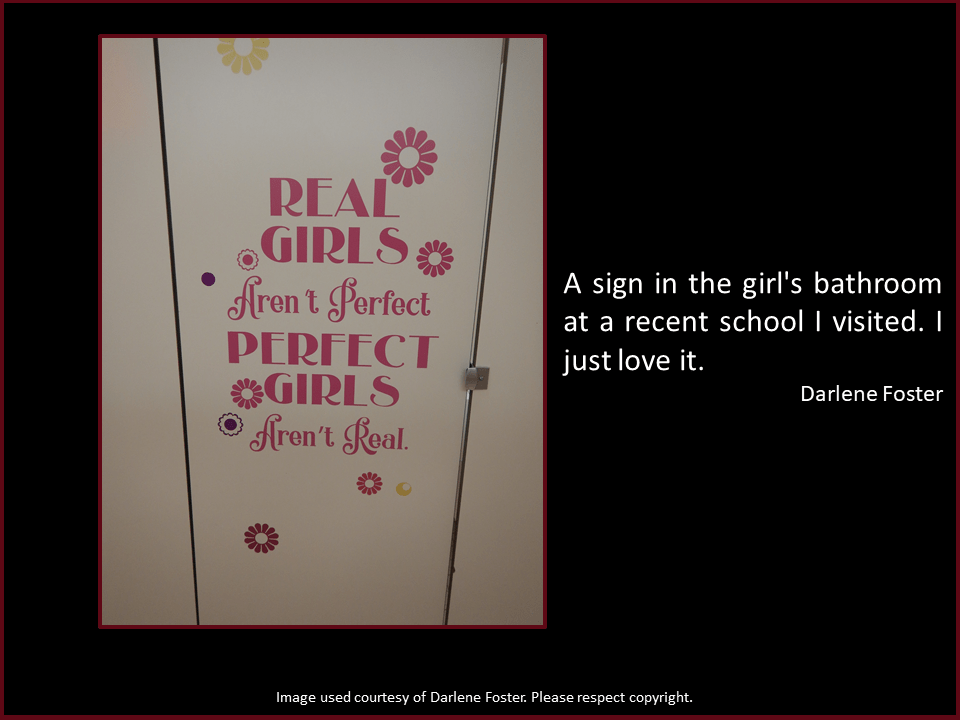
Live Love Laugh Learn … Create the possibilities

Category: Education

  • Surprise Party for a Koala

    Surprise Party for a Koala

    Carrot Ranch flash fiction challenge Koala

    Last week at the Carrot Ranch, Charli Mills challenged writers to In 99 words (no more, no less) write a story about a koala in a kingdom. You can create a character out of Norah’s koala and give it a Vermont adventure. Or you can make up a story however you want! Can you pull off a BOTS (based on a true story)? Go where the prompt leads!

    While most prompts run for just one week, this one runs for two as Charli has been in Vermont conducting the inaugural and very successful Carrot Ranch Writers’ Refuge.

    A Kingdom for a Koala flash fiction

    Although I submitted A kingdom for a Koala in response to the prompt last week, I thought I’d have another go this week. The koala is one of my favourite Australian animals and also the animal emblem of my home state Queensland.

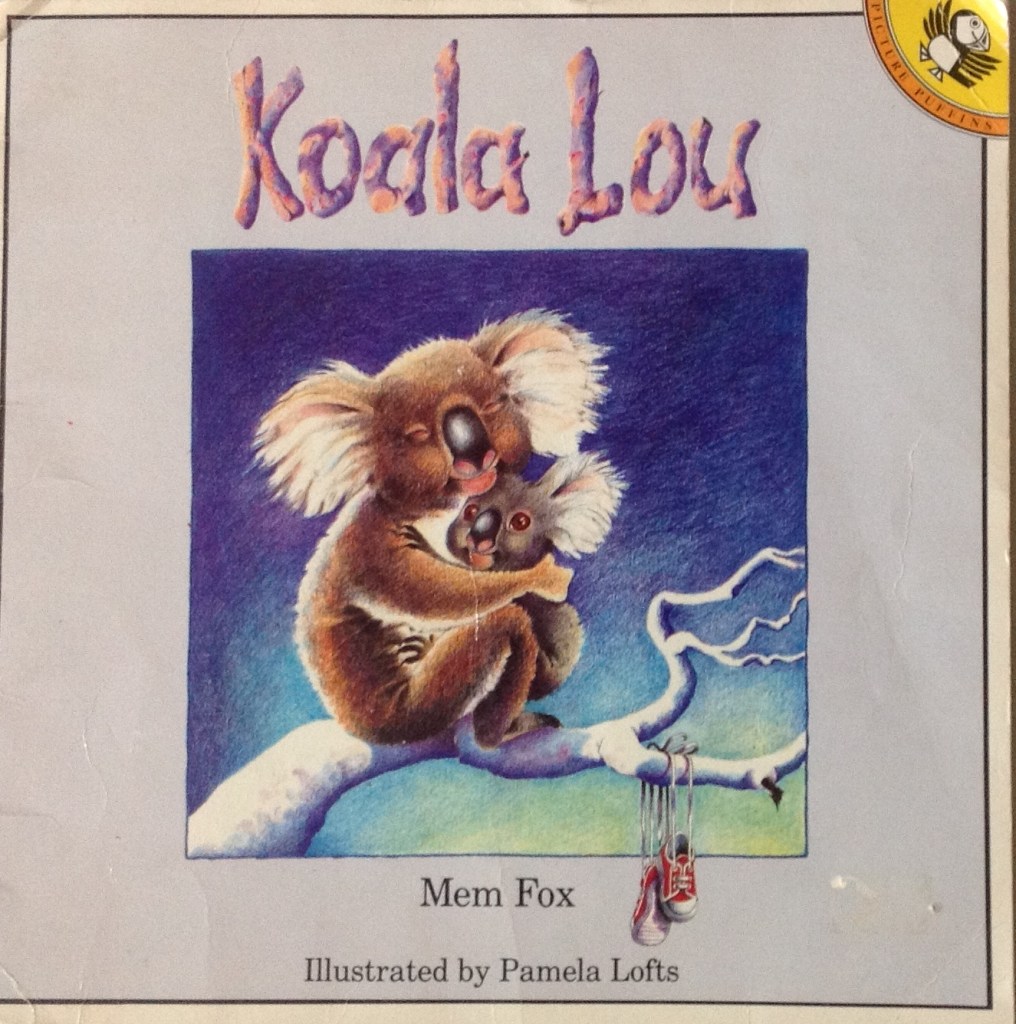
    Koala Lou by Mem Fox

    I always list Koala Lou by Mem Fox among my (many) favourite picture books. (You can listen to Mem read it by following that link.)

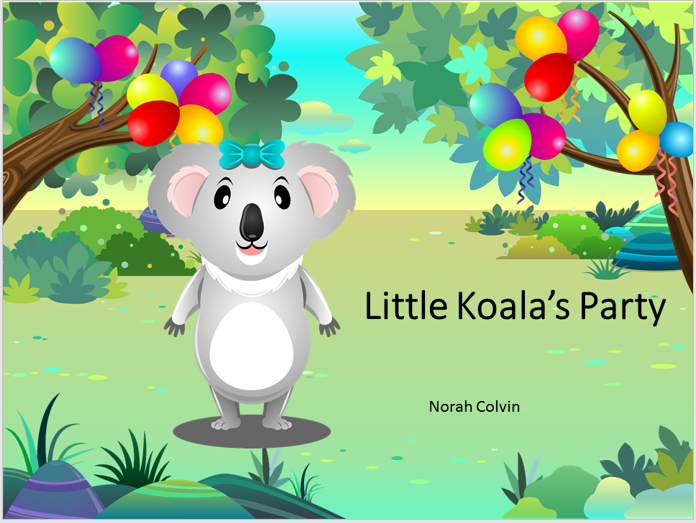
    Little koala's party

    Little Koala’s Party — a story for problem solving is one of my favourite readilearn teaching resources. The story engages children in helping Little Koala work out the number of guests and items required for her party. They can then use the same strategies to organise a party of their own. I always loved the illustrations that were done by an artist I met on 99designs.

    That’s a lot of favourites so how could I not write another koala story? I decided that, for this week’s story, I would link Charli’s prompt with thoughts of a party. I hope you like it.

    Surprise Party for a Koala

    BANG! BANG! BANG!

    Little Koala’s eyes pinged open.

    There it was again. BANG! BANG!

    She stretched, clambered down the tree and headed towards the noise.

    She stopped under possum’s tree and peered into the branches.

    “What’s going on here?”

    Possum peeked out, glancing left and right. “Nothing.”

    “Tell me!”

    “Nothing. Go away.”

    Koala scrambled up the tree. “What’re you doing?”

    Possum grimaced, pointing to a sign.

    “You know I can’t read yet.”

    Possum placed a crown on Koala’s head. “It was supposed to be a surprise. Happy birthday.”

    Koala felt special as a princess when all her friends arrived.

    Thank you blog post

    Thank you for reading. I appreciate your comments. Please share your thoughts.

  • School Days, Reminiscences of Sherri Matthews

    School Days, Reminiscences of Sherri Matthews

    Welcome to the School Days, Reminiscences series in which my champion bloggers and authors share reminiscences of their school days. It’s my small way of thanking them for their support and of letting you know about their services and publications.

    This week, I am pleased to introduce Sherri Matthews, memoir writer, essayist, short story writer and blogger. It seems Sherri and I have been friends forever. We love to hang out (online) at each other’s places as time permits and are always understanding when life gets in the way. We know we will pick up where we left off.  Sherri’s Summerhouse is always open to visitors and she has been one of the most active in raising awareness of SMAG (Society of Mutual Appreciation and Gratitude) and I love that, after four years since its inception, she still refers to it in her comments.

    Before we begin the interview, I’ll allow Sherri to tell you a little of herself:

    Sherri once worked in the medical and legal fields. When she got laid off, she praised the heavens for the chance, at last, to write her book. Six years later, her memoir, Stranger In A White Dress, is in final edits. Blogging at her Summerhouse along the way, Sherri also writes from her life as a Brit mum raising her children in California and as advocate for her youngest, diagnosed with Asperger’s Syndrome at 18. Sherri also shares snippets of life with her dear old jailbird dad. Today, Sherri lives in England with her hubby, Aspie, two black cats and a grumpy Bunny Nutkins. She walks, takes photos and finds joy creating a garden full of bees and butterflies with her dad’s words, ‘Keep smiling, Kid’, ringing in her ears. Especially when the robin sings.
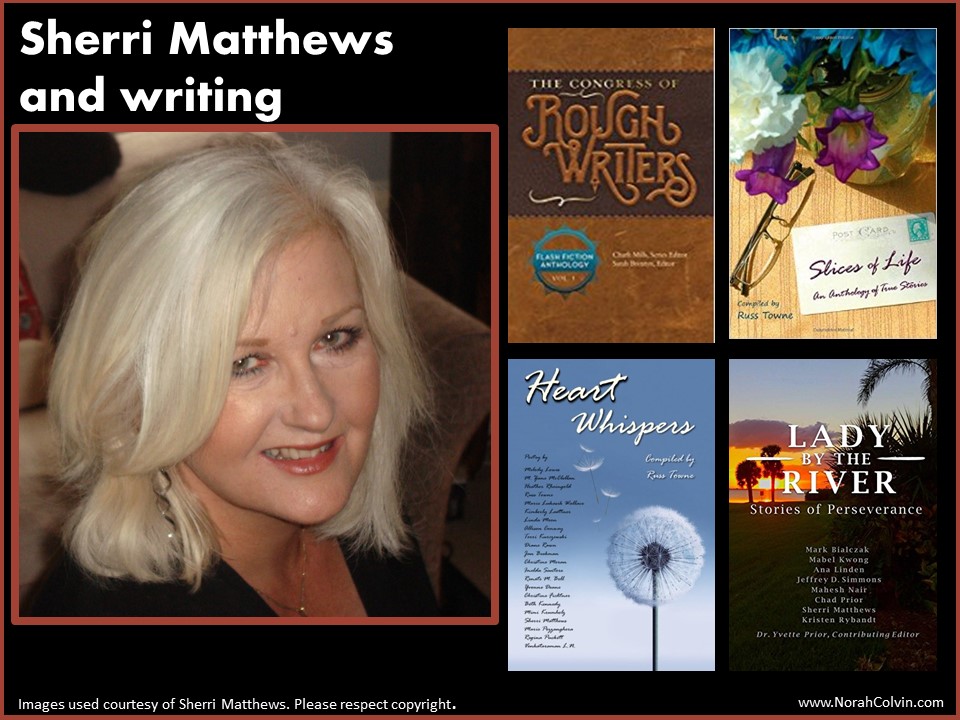
    Sherri Matthews reminiscences of school days

    Welcome, Sherri.

    Let’s talk school. First, could you tell us where you attended school?

    England, first in Surrey, then at ten moved to Suffolk.

    Did you attend a government, private or independent school?

    Government.

    What is the highest level of education you achieved?

    I left high school at 16 with enough ‘O’ Level qualifications to get a semi-decent first job. Buying a car was my priority, thanks to living miles from town. And yes, even turning down the opportunity to go on to University, fully funded by the Government (I know, I know…kick me, someone, please…). But at 19 and wanting better prospects, I returned to full time education and was accepted for a full time, year-long course, at my local college, attaining an RSA (Royal Society of Arts) Diploma as a Personal Assistant with business and legal studies.

    What work or profession did you choose after school and was there anything in school that influenced this choice?
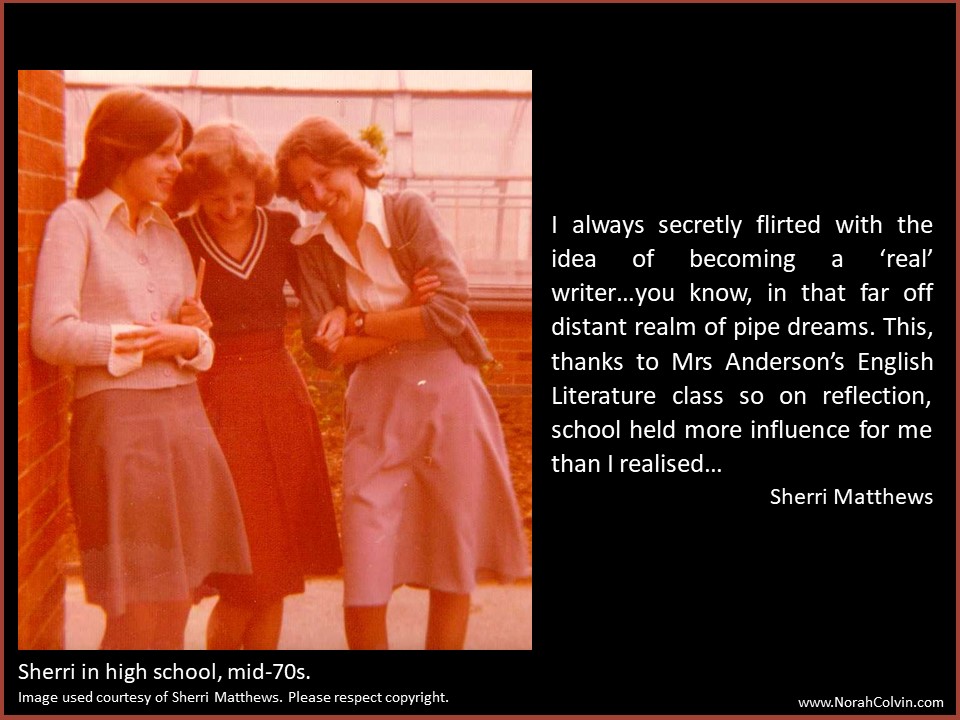
    Sherri Matthews reminiscences of school days

    At first thought, nothing at school influenced me, finding rather than choosing my job as a Postal Officer, which I enjoyed. Had my own till and everything. I was always drawn to both the medical and legal profession, but it was my diploma that influenced my eventual chosen profession of paralegal when I moved to California. But now you ask, Norah, I always secretly flirted with the idea of becoming a ‘real’ writer…you know, in that far off distant realm of pipe dreams. This, thanks to Mrs Anderson’s English Literature class so on reflection, school held more influence for me than I realised…

    What is your earliest memory of school?

    Feeling homesick and counting the seconds to the last bell and the school bus ride home. And calling my teacher ‘Mummy’ by mistake, going bright red when she smiled and gently corrected me. She had white, fluffy hair I recall, strangely and rather amusingly reminding me of Rupert Bear.

    What memories do you have of learning to read?

    Oh, I loved to read! I had a lot of Ladybird early reader Janet and John books at home and was able to read by the time I started primary school. I adored all of Enid Blyton’s The Famous Five books, especially Five Go To Treasure Island, a wonderful ripping adventure. I loved the tomboy Georgina. I had the A A Milne paperback book set of Winnie The Pooh and felt very grown up reading Now We Are Six when I was…well…six. Most of my reading, I recall, was in bed waiting for my dad to come home from work.

    What memories do you have of learning to write?

    My earliest memories are of scribbling illegible ‘notes’ in the margin of my reading books and getting told off by Mum. At school, I practised letters in a lined exercise book, graduating to daily ‘Morning News’ about the night before, mine usually describing eating baked beans on toast and watching Jackanory. Later, we learnt how to write italics with ink filled fountain pens, beautiful flowing cursive I would not recognise as my own today. Being a leftie, I always ended up with ink smudges on my hand and arm.

    What do you remember about math classes?

    Sherri Matthews reminiscences of school days

    Not liking it, except when my maths teacher turned up in old tweeds, a projector and slides of his safaris in Africa. No wonder I didn’t learn much. Yet mental arithmetic I’ve used in several jobs, so I must have learned something. But algebra and the like? Forget it. The best maths lesson that actually helped me in life came from the headmistress of my village primary school in Suffolk. At the end of each day, our class stood up reciting by rote until we knew by heart the entire Times Table. We grumbled, but it’s ingrained to this day.

    What was your favourite subject?

    Creative writing, biology, music, athletics and gymnastics. And country dancing, because we girls got to hold hands with the boys.

     What did you like best about school?
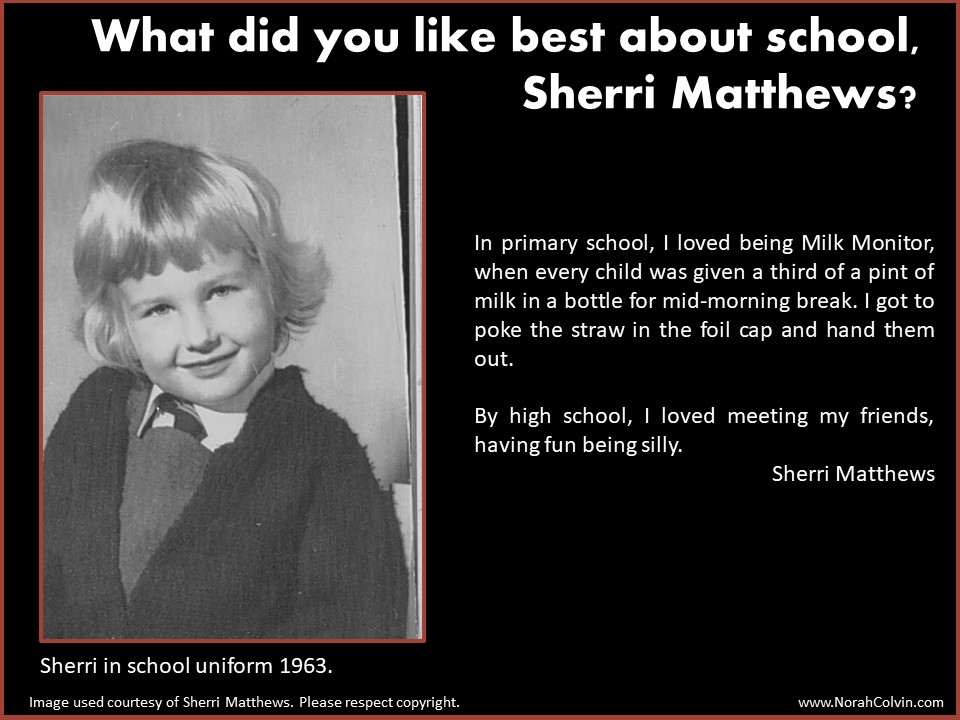
    Sherri Matthews reminiscences of school days

    The last bell. I jest…or do I? In primary school, I loved being Milk Monitor, when every child was given a third of a pint of milk in a bottle for mid-morning break. I got to poke the straw in the foil cap and hand them out. I loved quiet reading and writing time and holiday times like Christmas when we got to make homemade gifts. By high school, I loved meeting my friends, having fun being silly. I met my then best friend playing flute in the school orchestra. And drama was fun, though I scraped my shin falling off the stage once and still have the scar.

    What did you like least about school?

    I enjoyed my Food and Nutrition class, but each week I had to write an in-depth essay and bring all the ingredients to school. I then had to travel home with my cooked dishes. Not easy, since I travelled 20 miles each way by two buses, and often with no spare seat on the public bus. By the time I got home, I was sick to my stomach of the smell of my food, but my Mum and brother couldn’t wait for ‘tea’. I also didn’t like the girl gang headed up by a really mean girl nicknamed, Noddy.

    How do you think schools have changed since your school days?

    Because my children were raised and educated mostly in California, I am more familiar with the system as it was then, though students here seem now to have the same more relaxed relationship with their teachers as there, from what I have observed. The teachers in my day were much stricter. I got my knuckles rapped with a wooden ruler once and it hurt. No more of that, thank goodness. I think there’s more interaction today in class, fostering more interest from the students instead of the boredom of rote learning of my day.

    What do you think schools (in general) do well?

    I was struck by the way my children’s elementary classes in California fostered a climate of being kind and thoughtful to others, of being awarded for not just academic progress, but for good citizenship. I was fully hands-on as a volunteer, but I never saw my parents at school, except for sport’s day. Nobody noticed when I cried at school, but today I think there is more awareness generally for struggling children, though there is still a great need for improvement. My youngest slipped through the cracks and wasn’t diagnosed with Asperger’s Syndrome until eighteen.

    How do you think schools could be improved?

    Sherri Matthews - how schools could be improved

    Which leads me to…less focus on those dreaded OFSTED ratings (Office for Standards in Education, Children’s Services and Skills) and more on the individual.  The expectation that all students should be good at all subjects is something I think needs to go. More emphasis on each student’s talents and strengths in smaller classrooms and rapport building between the teachers, student and parent is needed, fostering mutual respect. My youngest and middle boy finished their schooling years in England at a high OFSTED rated school, yet despite my frequent calls asking for support for my youngest, we got none.
    thank you for your participation

    Thank you for sharing your reminiscences of school and thoughts about education in general, Sherri. It’s been a pleasure to have you here. I enjoyed reading about your own school experiences and agree with your suggestions for improving schools through smaller classes and better relationships. It is disappointing to know that your own daughter was one of those who ‘slipped through the cracks’.

    Catch up with Sherri Matthews on her blog

    A View from My Summerhouse

    Or connect with her on social media

    Facebook Author Page: A View from My Summerhouse

    Twitter: @WriterSherri

    LinkedIn: Sherri Matthews

    Blurb for Sherri Matthew’s soon-to-be-published memoir Stranger in a White Dress

    ‘We must be willing to let go of the life we have planned,
    so as to have the life that is waiting for us.’
    ~E. M. Forster~

    Set against the backdrop of the late 1970s, the story of a chance meeting one summer’s night between two eighteen year olds unfolds: Sherri, an English girl living in rural Suffolk, and Jonathan (Jon), an American G. I. from California newly posted to a USAF base nearby.

    They fall in love fast, but Sherri, delighted to show off her homeland to this “new boy”,  soon discovers that although growing up thousands of miles apart, they share dark similarities, which quickly threaten to unravel their relationship.

    Their mothers divorced from alcoholic fathers, both were raised by abusive step-fathers.  Jon’s increasing drug use and resulting paranoia clash with Sherri’s insecurities as hopes of “fixing” him and of the stable family life she dreams of slip away.

    Los Angeles and lust; obsession and rage; passion and the power of love: theirs is a love affair defined by break-ups and make-ups, and then a shattering revelation explodes into this already volatile mix, altering the course of both their lives profoundly and forever.

    A tale of darkest tragedy, yet dotted with moments of hilarity and at times the utterly absurd, this is a story of two young people who refuse to give up, believing their love will overcome all.

    Not until decades after their chance meeting, and during a return trip to Los Angeles in 2013, does Sherri discover that Jon’s last wish has been granted.

    It’s then that she knows the time has come to tell her story.

    ♦♦♦

    Other publications by Sherri Matthews
    Sherri Matthews - writing

    You can find a list of where Sherri has been published in magazines and online here.

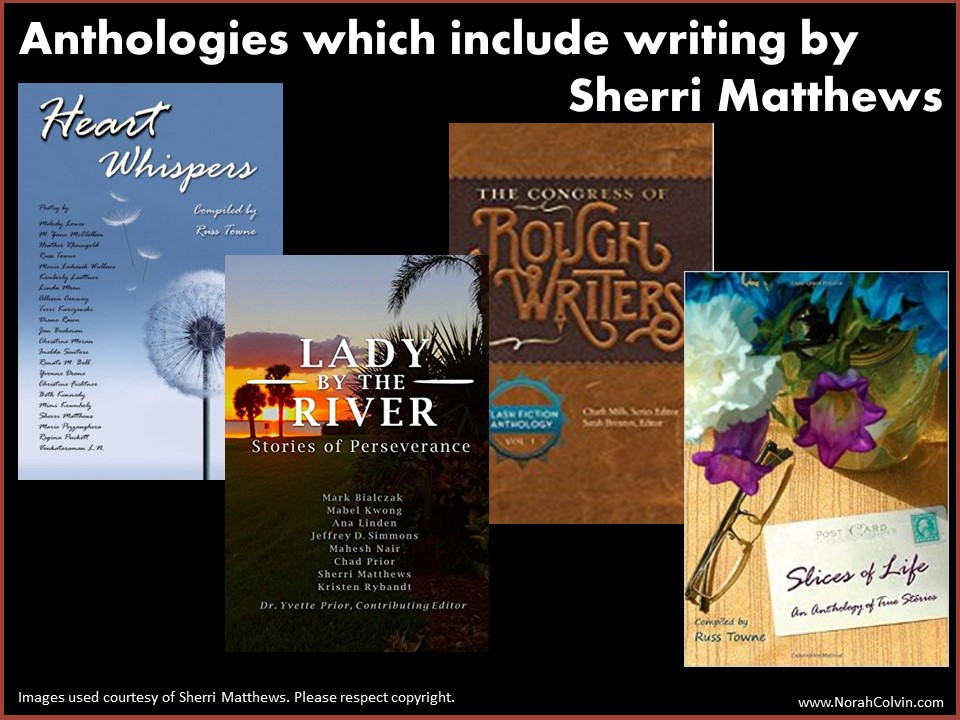
    Her writing also appears in these anthologies:

    The Congress of Rough Writers: Flash Fiction Anthology Vol. 1

    Lady By The River: Stories of Perseverance

    Slices of Life: An Anthology of Selected Non-Fiction Short Stories

    Heart Whispers: A Poetry Anthology

    If you missed previous reminiscences, check them out here:

    Charli Mills

    Sally Cronin

    Anne Goodwin

    Geoff Le Pard

    Hugh Roberts

    Debby Gies

    Pauline King

    JulesPaige

    D. Avery

    Christy Birmingham

    Miriam Hurdle

    Robbie Cheadle

    Marsha Ingrao

    Ritu Bhathal

    Joy Lennick

    Darlene Foster

    Susan Scott

    Barbara Vitelli

    Look for future interviews in this series to be posted on Sunday evenings AEST.

    Coming soon:

    Mabel Kwong

    Chelsea Owens

    Pete Springer

    Carol Taylor
    Thank you blog post

    Thank you for reading. I appreciate your comments. Please share your thoughts.

  • Review: The Secret Science Society’s Spectacular Experiment – readilearn

    Review: The Secret Science Society’s Spectacular Experiment – readilearn

    Welcome to my review of The Secret Science Society’s Spectacular Experiment, a new junior fiction chapter book co-authored by Kathy Hoopmann and Josie Montano.

    The book will be launched on 10 August, timed to coincide with National Science Week 10–18 August and just prior to Children’s Book Week 17–23 August. I received an advance copy from the authors in return for an honest review.

    About The Secret Science Society’s Spectacular Experiment

    Authors: Kathy Hoopmann and Josie Montano

    Illustrator: Ann-Marie Finn

    Publisher: Wombat Books

    Publication date: 10 August 2019

    Genre: Junior fiction

    Number of pages: 92

    The blurb

    Mona likes to moan. Kiki is a worry-wart. Bart loves following rules. And Zane HATES following rules.

    When the four of them are put into the Secret Science Society together, this could only mean one thing: DISASTER!

    Will they be able to work together to create an experiment that Mona won’t moan about, Kiki knows is safe, Bart will think is perfect and that is really, REALLY exciting for Zane? But sssshhh, the ending is a secret.

    Continue reading: Review: The Secret Science Society’s Spectacular Experiment – readilearn

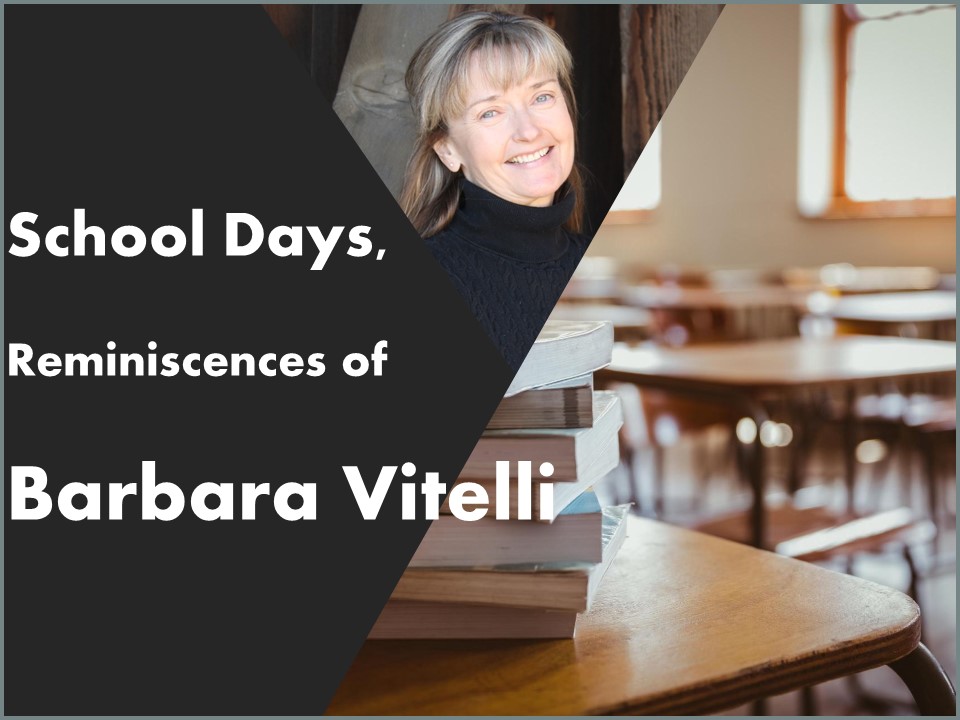
  • School Days, Reminiscences of Barbara Vitelli

    School Days, Reminiscences of Barbara Vitelli

    Welcome to the School Days, Reminiscences series in which my champion bloggers and authors share reminiscences of their school days. It’s my small way of thanking them for their support and of letting you know about their services and publications.

    This week, I am pleased to introduce Book Club Mom Barbara Vitelli, fellow book lover, librarian, blogger and fiction writer. We’ve been following each other’s blogs for a few years now. I enjoy reading Barbara’s book reviews and have read the occasional book as a result of Barbara’s recommendation. In fact, I’m currently listening to The Other Wes Moore One Name Two Fates, a memoir and New York Times Bestseller that Barbara reviewed. What a fascinating story with a strong theme of ‘that could have been me’ and how circumstances influence life’s outcomes. What makes the audiobook even more special is that Wes reads it. A great recommendation, Barbara. Thank you.

    Barbara also dabbles in fiction of her own. I’ve been enjoying her serialised story A Man and His Phone, the most recent episode of which can be read here. If you haven’t already met Barbara, I suggest you pop over to her blog and say, ‘Hello’.

    Before we begin the interview, I’ve invited Barbara to tell you a little of herself:

    Barbara Vitelli is a mom of four children and works part-time as a Reference Librarian at her local library. She also runs a blog called Book Club Mom, home to book reviews, indie author profiles, bookish talk and some occasional original fiction. Before settling into semi-rural suburban life in Pennsylvania, she lived in New Jersey, upstate New York, Washington, D.C. and Virginia. Maybe someday she will publish a novel, but in the meantime she’s happy to work her way through the many great books already out there.

    School Days Reminiscences of Barbara Vitelli

    Welcome, Barbara.

    Let’s talk school. First, could you tell us where you attended school?

    I attended elementary school, junior high and high school in Madison, New Jersey, college in upstate New York and business school in Washington, D.C., all in the United States.

    Did you attend a government, private or independent school?

    I attended all public schools through high school.

    What is the highest level of education you achieved?

    After college, I earned a Master’s Degree in Business Administration and my major was Finance and Investments.

    What work or profession did you choose after school and was there anything in school that influenced this choice?

    My first job out of college was as a secretary for an air conditioning and refrigeration trade association outside of Washington, D.C. My only goal at that time was to get a full-time job with benefits. I was thinking about graduate school, but I needed time to decide. After a year, I switched jobs and worked for a Sheraton Hotel chain in the Washington, D.C. area. I worked there for 5 years while I attended graduate school at night.

    What is your earliest memory of school?

    I attended Kindergarten in the same school as my next older brother and one day at recess, the school bully pushed me into a muddy puddle. I had to point out the bully to one of the teachers and the offender was promptly sent to the principal. The bully was a boy in my brother’s class and we worried that he’d take it out on my brother. Nothing happened, though!

    What memories do you have of learning to read?

    School Days Reminiscences of Barbara Vitelli

    We all started to learn to read in Kindergarten, although I mostly pretended to know, “reading” books that my mother and father had read to me so much I had them memorized. My favorite book was A Friend Is Someone Who Likes You by Joan Walsh Anglund.

    What memories do you have of learning to write?

    I remember using big fat red pencils and paper with wide rules and dotted lines in the middle. I liked learning how to print and write cursive. I still like writing cursive!

    What do you remember about math classes?

    School Days Reminiscences of Barbara Vitelli

    I remember learning my times tables in third grade and when I got into fourth grade, learning long division. In high school, I loved Algebra because I liked solving problems where everything worked out on both sides. I wasn’t a big fan of Geometry, but I got through it. I took no math in college, but I had to take Calculus in graduate school – that was a struggle!

    What was your favourite subject?

    I didn’t have a favorite subject in the lower grades, but my favorite subject in high school was French (despite my love for Algebra). I even thought about majoring in French in college (I also considered Music and Peace Studies), but in the end I majored in English because I like to read. Now, besides reading, my favorite thing to think about is marketing. If I could do business school over again, I would pick that as my major. Finance and Investments was the hot major at the time (think Michael Douglas and Charlie Sheen in Wall Street) so I just went with the flow. 

    What did you like best about school?

    School Days Reminiscences of Barbara Vitelli

     As a young girl, I liked the beginning of the school year when all our supplies were new. In junior high and high school, I liked that but I also liked the social side of school where I played sports, was a class officer and was in a lot of clubs. I was a little less active in college and focused more on a smaller group of friends and activities.

    What did you like least about school?  

    I generally liked school so I can’t say I disliked anything in particular. But I loved summer vacations because my family and I spent them at the Jersey shore. I had another group of good friends there and I was always excited to finish the year and see them. I was also sorry to see the summer end.

    How do you think schools have changed since your school days?

    School Days Reminiscences of Barbara Vitelli

    Without question, the biggest change has been technology. Kids now do a great deal of schoolwork on a screen, rather than writing it on paper. In many ways, technology helps kids do their work quickly and efficiently, but I think they miss out on the thinking part that happens when you write things out by hand. I think this is especially true for working out math problems and writing.

    What do you think schools (in general) do well?

    On the flip side of my technology comment, I think our schools have done a great job keeping up with technology and making changes to their curriculums to reflect this. These skills, particularly knowing how to use computer programs and do research on the Internet (besides using Google), are required skills in college and the workforce.

    How do you think schools could be improved?

    I would like to see approaches that encourage resiliency and independence. I think kids need to learn how to better handle disappointments and adversity. Perhaps that’s something that we parents are responsible for, but I think teachers can also make a big impact on our children in this area.

    thank you for your participation

    Thank you for sharing your reminiscences of school and thoughts about education in general, Barbara. It’s been wonderful to have you here. I’m sorry you got pushed over into the mud when you were in kindergarten, and can just imagine how concerned you were that your brother might also be bullied. I love that you didn’t mind school but that summer holidays were your favourite! Like you, I also loved my new supplies at the beginning of the year. There is nothing quite like the smell of new books.

    To find out more about Barbara Vitelli visit her blog

    Book Club Mom: bvitelli2002.wordpress.com

    or connect with her on social media

    Twitter: @BookClubMom
    Facebook: @BookClubMom

    If you missed previous reminiscences, check them out here:

    Charli Mills

    Sally Cronin

    Anne Goodwin

    Geoff Le Pard

    Hugh Roberts

    Debby Gies

    Pauline King

    JulesPaige

    D. Avery

    Christy Birmingham

    Miriam Hurdle

    Robbie Cheadle

    Marsha Ingrao

    Ritu Bhathal

    Joy Lennick

    Darlene Foster

    Susan Scott

    Look for future interviews in this series to be posted on Sunday evenings AEST.

    Coming soon:

    Sherri Matthews

    Mabel Kwong

    Chelsea Owens

    Pete Springer

    Carol Taylor

    with more to follow.

    Thank you blog post

    Thank you for reading. I appreciate your comments. Please share your thoughts.

     

  • Celebrating Man’s First Moon Walk – readilearn

    Celebrating Man’s First Moon Walk – readilearn

    Celebrating man’s first moon walk in the classroom with ideas for reading, writing, maths, science, technology, and history.

    This year marks the 50th anniversary of man’s first moon walk. On 20 July 1969, Neil Armstrong was the first man to place foot on the moon. Buzz Aldrin joined him shortly after and they spent just over two hours together outside the spacecraft.

    Since then another ten astronauts, all of whom were American men, have walked on the moon. The six crewed moon landings took place between 1969 and 1972.

    Celebrations of the first moon landing are taking place around the world. You can check out NASA events here and NASA resources for educators here.

    The way you celebrate the event in your classroom can be big or small. Here are a few easy-to-implement suggestions for different subject areas:

    Ideas for the classroom

    Critical thinking

    When Neil Armstrong stepped onto the moon, he said, “That’s one small step for [a] man, one giant leap for mankind.”

    Ask children to give their opinions about the intended message of Neil Armstrong’s words. Were his words effective? How else could it be expressed?

    Writing
    • If I were an astronaut

    Continue reading: Celebrating Man’s First Moon Walk – readilearn

  • In search of history

    In search of history

    When we introduce young children to history, we usually begin with the history of their own families and then extend the circle outward through space and time to other families, other localities and other times.

    It was for this purpose that I wrote the Family Traditions and Celebrations history unit for readilearn.

    As children love to hear stories about themselves and their families, there’s no better way to introduce them to history. Sadly, some of us miss the opportunity of learning our family’s history until it’s too late.

    Carrot Ranch flash fiction challenge Keweenaw microhistory

    This week at the Carrot Ranch, Charli Mills challenged writers to In 99 words (no more, no less) write a story using your choice of microhistory from Keweenaw National Historic Park. Be historical, funny, or flagrantly fictional. Choose a character, time, place, or event. Be as creative as you want in telling the story.

    So, our task was to use one of the histories from the Keweenaw National Historic Park website as the basis for a story to be shared in a public reading at Fort Wilkins on 25 July. I’ve interpreted the task to be one of filling the historical gaps with fiction.

    The history I chose as the beginning of my story is that of Mary Metesh Plutt, an immigrant from Yugoslavia. Mary had eight children before the age of 38, seven of whom lived until adulthood. The second youngest was Agnes who married at age 20, had one child, and died at age 24. Agnes and her husband did not live in the Keweenaw. They lived in Milwaukee, Wisconsin. When Agnes died, her husband returned her to the Keweenaw to be buried. No further details of the husband or the child were supplied.

    My story attempts to fill in a little of that gap, taking up the story of Agnes’s daughter Nette towards the end of her own life. It was assisted by the information and photographs supplied by the Houghton County Historical Society about the Traprock Valley Schoolhouse. Although this isn’t the schoolhouse that Agnes would have attended, it is of the same era in which she would have attended school.

    I hope you like my story.

    In Search of History

    Sorting through her father’s papers, Nette discovered secrets never revealed in life. “Mum” wasn’t mum. Her birth mother died when she was two. Although obviously named Antonette Mary after her maternal grandparents, their stories had never been told. Now, she needed to know. In the old schoolhouse, she traced her mother’s name—Agnes—so long ago carved into the wooden desktop. She’d felt no connection at the cemetery, nor reading the family’s Census record. But when the school bell rang, she shivered as the spirits of children past, her mother, aunts and uncles, joined her for Keweenaw history lessons.

    Thank you blog post

    Thank you for reading. I appreciate your feedback. Please share your thoughts.

  • School Days, Reminiscences of Susan Scott

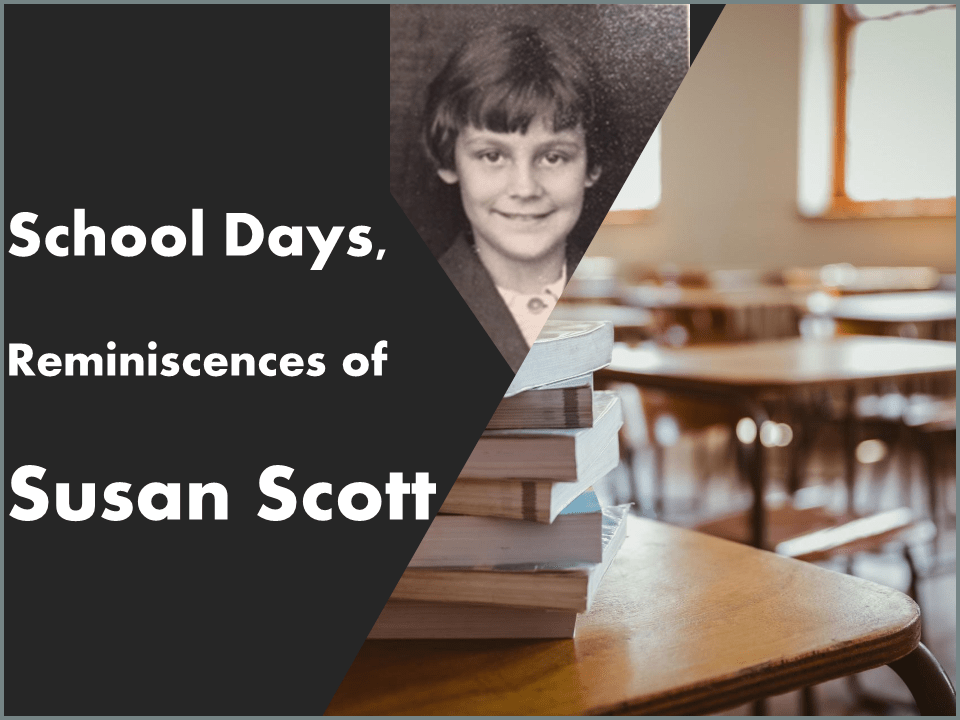
    School Days, Reminiscences of Susan Scott

    Welcome to the School Days, Reminiscences series in which my champion bloggers and authors share reminiscences of their school days. It’s my small way of thanking them for their support and of letting you know about their services and publications.

    This week, I am pleased to introduce Susan Scott, author and blogger. Susan and I have been following each other’s blogs for quite some years now. Susan’s posts are often philosophical and intrigue me with new ideas to contemplate. She thinks deeply and writes about a range of subjects from as big as our place in the universe to the smaller like her garden in South Africa. Her outlook is always optimistic with a wish for peace in the world. I like the way she concludes her posts with the words, “May the force be with you” or similar that reflects her desire to find the good in every situation.

    As I usually do, before we began the interview, I invited Susan to tell you a little of herself.

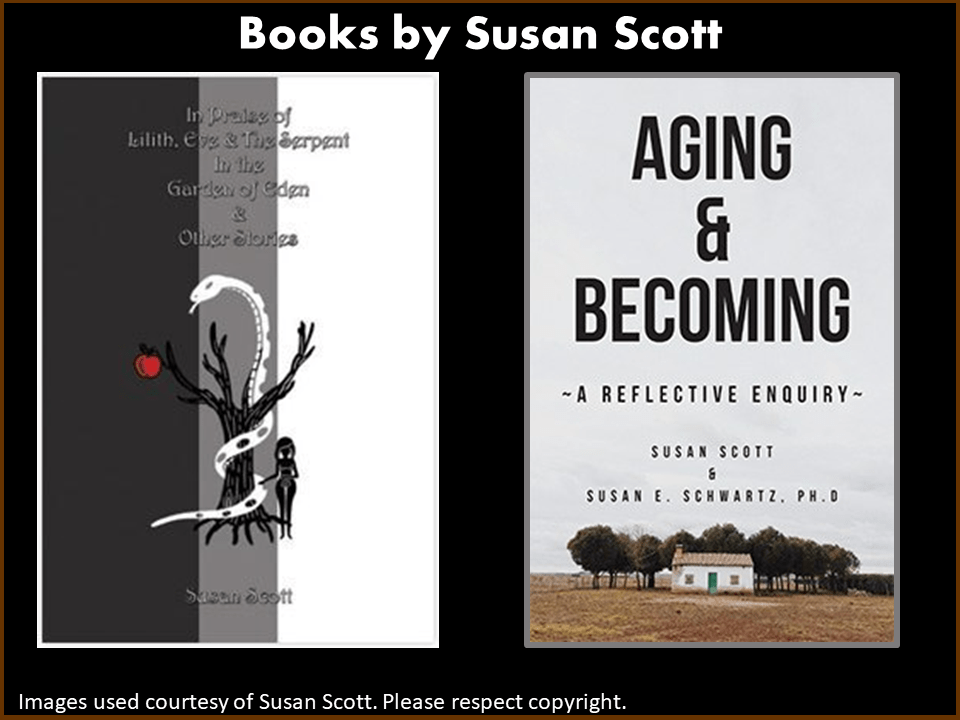
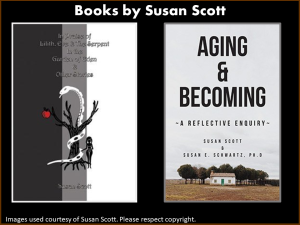
    Born in Port Elizabeth, lived in various parts of the country and abroad. Married, two adult sons, one a musician, the other an animator. Author of two books, ‘In Praise of Lilith, Eve & the Serpent in the Garden of Eden & Other Stories‘ (a collection of psychological essays); and 2nd book co-authored with Dr. Susan E Schwartz Jungian analyst in Phoenix Arizona “Aging & Becoming ~ A Reflective Enquiry‘. We express our own thoughts on the process of aging in letters to each other.

    BA Clin. Psych. Hons

    At the moment I’m living between two worlds. We are relocating from Johannesburg to Plettenberg Bay on the south-west Cape. It’s a big move, packing up personal belongings so that a corporate rental can take over in a week’s time.

    I enjoy walking and hiking, reading and writing.

    My blog, which is intermittent, is usually of a psychological nature. I’m an ongoing student of my own inner world and of that around me – living between two worlds as I said earlier!

    Garden of Eden Blog. https://www.gardenofedenblog.com

    Books by Susan Scott

    Welcome, Susan.

    Let’s talk school. First, could you tell us where you attended school and if they were government, private or independent schools?

    I attended a variety of schools in South Africa and Zimbabwe, some private some public (government schools). Some girls-only schools, a few co-ed – boys! – in high school. Which took my attention off the lessons to be learned. The fingers on both hands are insufficient for the number of schools I attended.

    What is the highest level of education you achieved?

    BA (HONS) Clinical Psychology, as a mature student, in my late 20’s and early 30’s. 

    What work or profession did you choose after school and was there anything in school that influenced this choice?

    I was in banking for many years – different branches around the country here in South Africa, and a stint in London. For several years after that I worked for an American computer company that had set up a training course exclusively for black students pro bono to learn computer skills. My job was to guide the students for placement in the industry which meant meeting with the captains of industry to secure employment for them. Apartheid was entrenched in those days though businesses were keen to show otherwise. My job was to place the graduated student in a suitable environment.

    What is your earliest memory of school?

    It’s not a happy memory –  that of being around 8 years old at a school in Harare (Zimbabwe. Then it was Salisbury, Rhodesia). The girls circled around me and called me all sorts of unmentionable names on account of my very dark skin. It’s strange that this is the one that stands out and that I don’t recall from any earlier …

    What memories do you have of learning to read?

    It helps to have siblings who occasionally fill in the gaps. My older brother was visiting recently, and he said that I was a very early reader happily ensconced in e.g. Enid Blyton preferring nose in books instead of my nose outside playing. Which of course I did do, in the sun, hence an olive skin that darkened easily.

    What memories do you have of learning to write?

    If I dredge my memory bank, I recall teachers admonishing us to hold the pencil correctly. Write upright, hold the pencil straight between the thumb and forefinger, other end to point over your shoulder close to your neck. Thumb, forefinger and middle finger on the pencil. Cross the t’s dot the i’s. Write neatly.

    What do you remember about math classes?

    School days, reminiscences of Susan Scott

    In a way I loved maths, the order and logic of it all. I could see the bigger picture, arriving at a correct conclusion, rather than the details as to how the answer was arrived. This was not especially pleasing to any maths teacher, nor my father who was a mathematical whizz. The times table was drilled into us until we could say them backwards as were theorems. To this day I calculate the cost of goods as I unload the shopping trolley and am pretty accurate most of the time!

    What was your favourite subject?

    School days, reminiscences of Susan Scott

    My favourite subject was probably English and the set works including the poetry of the greats. Writing essays (in a very neat cursive handwriting) gave me a measure of pleasure for the opportunity of expression as I saw it.

    What did you like best about school?

    I came into a little bit more of my own in my last years of high school, a co-ed. I finally gave up my very bad stuttering around age 16 which made my life a lot easier as I could hold a conversation and be part of life instead of apart from it. And of course, boys! Bunking school became an art with a few of my subversive girlfriends. My mid-teen years were possibly those that formed me into a closet anarchist (in the best sense of the word).

    What did you like least about school?

    School days, reminiscences of Susan Scott

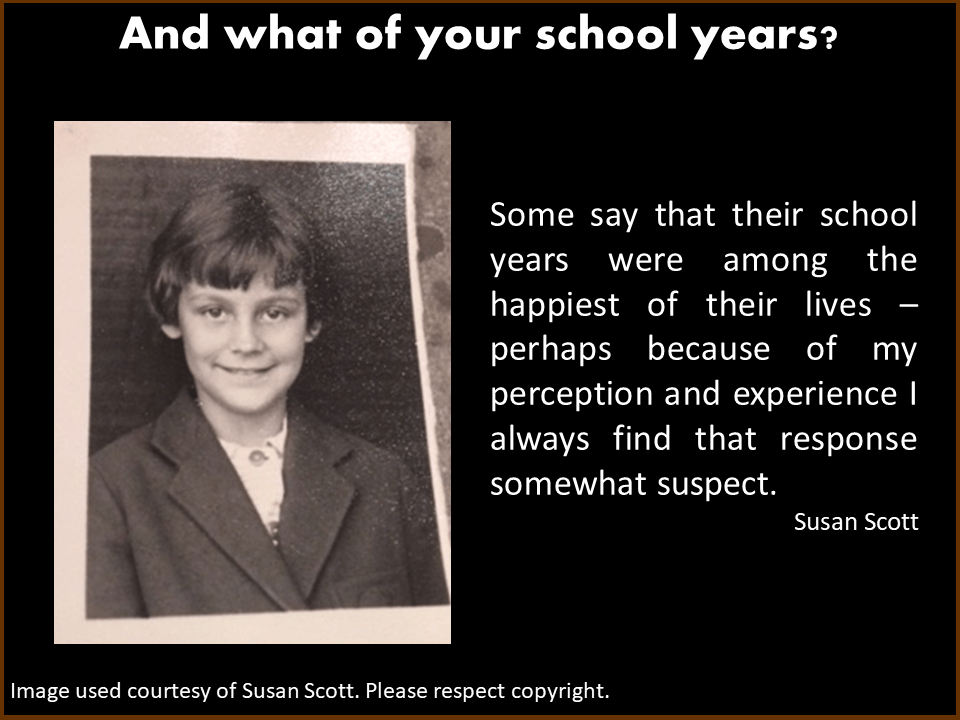
    My earlier years in school were always difficult because of my stuttering. I felt I was deliberately picked out to answer a question in front of class or read from a passage, which was practically impossible for me to do. And if I didn’t answer, being put in a corner with my back to the class. Some say that their school years were among the happiest of their lives – perhaps because of my perception and experience I always find that response somewhat suspect. (Though my younger son loved high school and I know others of my sons’ peers who feel likewise. My husband loved his school years). I can’t say I hated school or the many schools I attended. The one I attended here in Johannesburg for 18 months were good. I made a lasting friend from then, even though for many years we lived in different parts of the world until her death two years ago.

    How do you think schools have changed since your school days?

    Similar dynamics from my schooldays probably still reign in contemporary schools among classmates, those of e.g. bullying, scapegoating and meanness. There was no violence in my days among pupils such as we see or hear of today where pupils carry weapons to school and knock off a fellow pupil or teacher. We were ‘pupils’ at school; here in SA we are ‘learners’. Classes are usually larger in government schools, certainly for the majority and there are not enough classrooms. It is not uncommon to hear of 50 pupils sharing 3 or 4 to a desk. There is high teacher absentee-ism in many government schools and badly trained teachers to boot. Children seem to have more rights than their teachers or the stated school philosophy. Parents sadly leave it all up to the school to instil good behavior, not realizing that their role as parent and early educator is the most fundamental one.

    What do you think schools (in general) do well?

    There are many examples of government schools providing an excellent education for their pupils even those from extremely impoverished backgrounds. I guess it takes a stern yet caring approach from those in authority, from the headmaster down. Schools that do well encourage learning from the beginning, as do parents of course who can set a good example by early reading to their children.

    There are many NGO’s who do their best to improve literacy in schools. Illiteracy, despite matriculating, is still very prevalent.

    This next, Norah, is recent and interesting but I couldn’t find the URL for it. Please shorten as you see fit. (Norah’s note: I didn’t shorten it as I enjoyed it and hope you will too. I also found these links to further information here and here.)

    Nal’ibali, the national reading-for-enjoyment campaign scooped a big international award for their hard work of encouraging good reading habits in South Africa.

     Aarhus, Denmark – Nal’ibali, the national reading-for-enjoyment campaign aimed at sparking children’s potential through reading and storytelling, has been awarded The Joy of Reading Prize by the Systematic Joy of Reading at Dook 1 in Aarhus, Denmark. The award was presented by the president of the International Library Association, IFLA, Glòria Pérez-Salmerón from Spain on Saturday, 1 June.

    Twenty-eight projects from around the world were nominated, focussing on initiatives that disseminate the joy and ability to read, and thus engage in the fight against illiteracy. Jade Jacobsohn, Nal’ibali’s Managing Director, received the award on behalf of her dedicated team in South Africa.

    “I would like to dedicate this award to the 17000 literacy activists in South Africa – we call them FUNda Leaders – everyday ordinary people who have signed up with Nal’ibali to create opportunities for children in their lives to fall in love with books.”

    “I’d also like to dedicate this award to my fierce and fabulous team of fellow Nal’ibalians who are immersed on a daily basis in the hardships of social inequality and poverty, as they fight to give children the best chance they can get of rising out of it. The ability to read with understanding” lauded Jacobsohn.  

    She concluded with the formidable words of Nelson Mandela, ‘Education is the most powerful weapon which you can use to change the world. The foundation of education is literacy.’ 

    The international jury applauded Nal’ibali for its long-term impact and influence on local communities in South Africa and for parents in particular, who have become role models for their children’s reading habits. They complimented Nal’ibali’s framework that creates a nurturing environment, as well as generating the assortment of multilingual reading materials, so that children from all age groups, can learn to love reading in the many mother tongues spoken in South Africa. 

    This international recognition award comes with a prize of $10 000 which will go towards stocking up Nal’ibali’s newly launched mobile libraries for Story Power in Motion, ensuring both children and adults have access to great stories in their home languages.

    How do you think schools could be improved?

    You’ll note that the last sentence ‘…says access to stories in their home languages’. This is a debate that rages on, and is relevant as we have 11 languages here in SA, including English and Afrikaans, of whom only about 8% have English & Afrikaans as home languages. Which means that when black children enter into school and are taught in English, they are already back footed. This apart from education still being for the most part barely up to scratch in spite of SA spending the most worldwide on education and yet having an abysmal record.

    You ask how I think schools could be improved. Literacy begins long before schooling. Children could be encouraged to read firstly which allows for the imagination to come into play. Einstein, when asked by parents how they could help their children become clever like he was, he replied ‘Read them fairy stories, and read them more stories’.

    Later on they can develop critical thinking skills. Chess would be a good subject to learn. Schools could encourage the art subjects more and I read that this is being encouraged around the world in order to develop both sides of the brain. Each side enhances the other.

    School days, reminiscences of Susan Scott

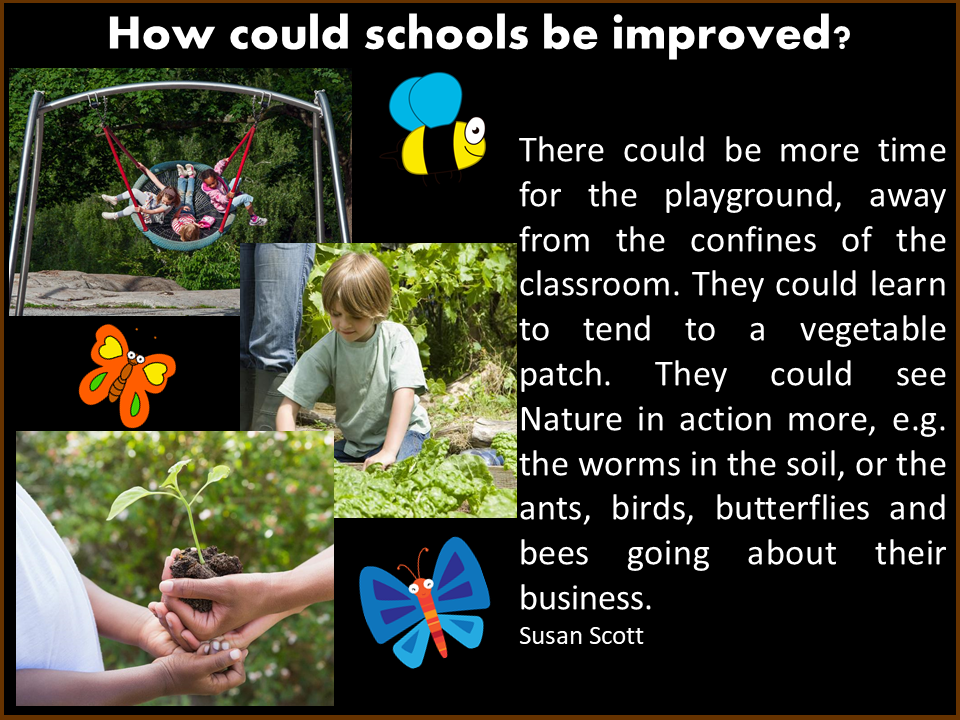
    There could be more time for the playground, away from the confines of the classroom. They could learn to tend to a vegetable patch. They could see Nature in action more, e.g. the worms in the soil, or the ants, birds, butterflies and bees going about their business.

    It is as well that schools have rules and regulations of which parents and children are aware. From this basis they can break the rules, when they have the critical skills to do so.

    Schools should provide safe and secure places of learning where children have no fear of being attacked and bullied by fellow classmates and/or teachers.

    There could be skilled social workers or psychologists on hand to attend to any child or teenager who appears to be suffering from problems at home and with whom the child or teenager feels safe in revealing their problems.

    Quality education for all requires the support of government, schools, civil society, NGOs, families, communities and funders.

    thank you for your participation

    Thank you for sharing your reminiscences of school and thoughts about education in general, Susan. It’s been wonderful to have you here. I especially enjoyed reading about Nal’ibali, the national reading-for-enjoyment campaign. While I agree with the improvements you suggest for education, I am disappointed to hear that your schools days were not so enjoyable and that you were bullied in school. The situation that you describe existing in many schools is also something that none of us anywhere can be proud of when education should be universal.

    Find out more about Susan Scott

    on her blog: Garden of Eden Blog

    Connect with her on social media

    Facebook: Susan Scott – Author

    Twitter: Susan Scott


    Purchase your own copy of Susan’s books:

    Books by Susan Scott

    In Praise of Lilith, Eve & the Serpent in the Garden of Eden & Other Stories

     Aging & Becoming ~ A Reflective Enquiry


    If you missed previous reminiscences, check them out here:

    Charli Mills

    Sally Cronin

    Anne Goodwin

    Geoff Le Pard

    Hugh Roberts

    Debby Gies

    Pauline King

    JulesPaige

    D. Avery

    Christy Birmingham

    Miriam Hurdle

    Robbie Cheadle

    Marsha Ingrao

    Ritu Bhathal

    Joy Lennick

    Darlene Foster

    Look for future interviews in this series to be posted on Sunday evenings AEST.

    Coming soon:

    Barbara Vitelli

    Sherri Matthews

    Mabel Kwong

    Chelsea Owens

    Pete Springer

    Carol Taylor

    with more to follow.

    Thank you blog post

    Thank you for reading. I appreciate your comments. Please share your thoughts.


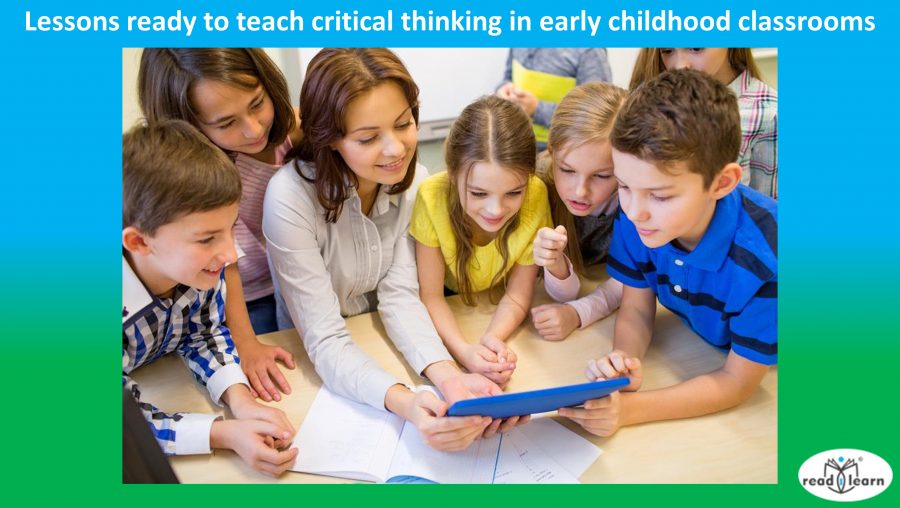
  • Lessons ready to teach critical thinking in early childhood classrooms – readilearn

    Lessons ready to teach critical thinking in early childhood classrooms – readilearn

    Even young children in early childhood classrooms can be taught to think critically about material that is presented to them. Being able to discern the accuracy of what they read is increasingly important in this era of fake news.

    In this post, I provide some suggestions with lessons ready to teach using children’s picture books. The types of questions and ideas can be applied to other books for checking the accuracy of information.

    To assist in verification of information, children can be encouraged to ask and answer questions such as:

    • What do we already know?
    • Does this match what we already know?
    • What do we want to find out?
    • How can we find out?
    • How can we be sure the information is true?
    • Is it fact or is it fiction?

    Children, and adults, need to be aware that misinformation, often cleverly disguised as fact, is available everywhere, including on the internet. Being able to navigate one’s way through it all is a very important skill, regardless of age. This article by Tech Teacher Jacqui Murray has some useful advice about Fake News or Fact? How do you tell?

    We don’t need to present young children with fake news stories to teach them the skills of critical thinking. We can begin with discussions of stories and information we present to them each day.

    Continue reading: Lessons ready to teach critical thinking in early childhood classrooms – Readilearn

  • Art Class 101—Portrait Painting

    Art Class 101—Portrait Painting

    Carrot Ranch flash fiction challenge - painting

    This week at the Carrot Ranch, Charli Mills challenged writers to In 99 words (no more, no less) write a story that involves paint. It can be fresh, peeling or in need of a coat. What is being painted and why? Go where the prompt leads!

    For my response to the challenge, I have written a story that begins with an innovation on a true-life story but finishes with something much more common. Potential is not always recognised, even when visible, in children and students. I hope you enjoy it.

    Art Class 101—Portrait Painting

    The task completed, he took a fresh sheet of paper and sketched the teacher with an enormous warty chin and hair sprouting like an unravelling steel wool pad. He added her name and then, with a flourish, his. He nudged his neighbour whose stifled guffaws drew attention. When the teacher investigated, only the task was visible.

    Behind the papers, the portrait remained forgotten at class end. Until discovered by the teacher.

    Later, having no satisfactory explanation, he was sentenced to weeks of lunchtimes painting bricks.

    Years later, when he was a famous cartoonist, they delighted in telling his story.

    Thank you blog post

    Thank you for reading. I appreciate your feedback. Please share your thoughts.

  • School Days, Reminiscences of Darlene Foster

    School Days, Reminiscences of Darlene Foster

    Welcome to the School Days, Reminiscences series in which my champion bloggers and authors share reminiscences of their school days. It’s my small way of thanking them for their support and of letting you know about their services and publications.

    This week, I am pleased to introduce Darlene Foster, world traveller and writer of travel adventure books for children and adventurers of all ages. Darlene joined in the conversations about school days from the beginning and was keen to share her own reminiscences with you.

    Before we begin the interview, I’ll allow Darlene to tell you a little of herself:

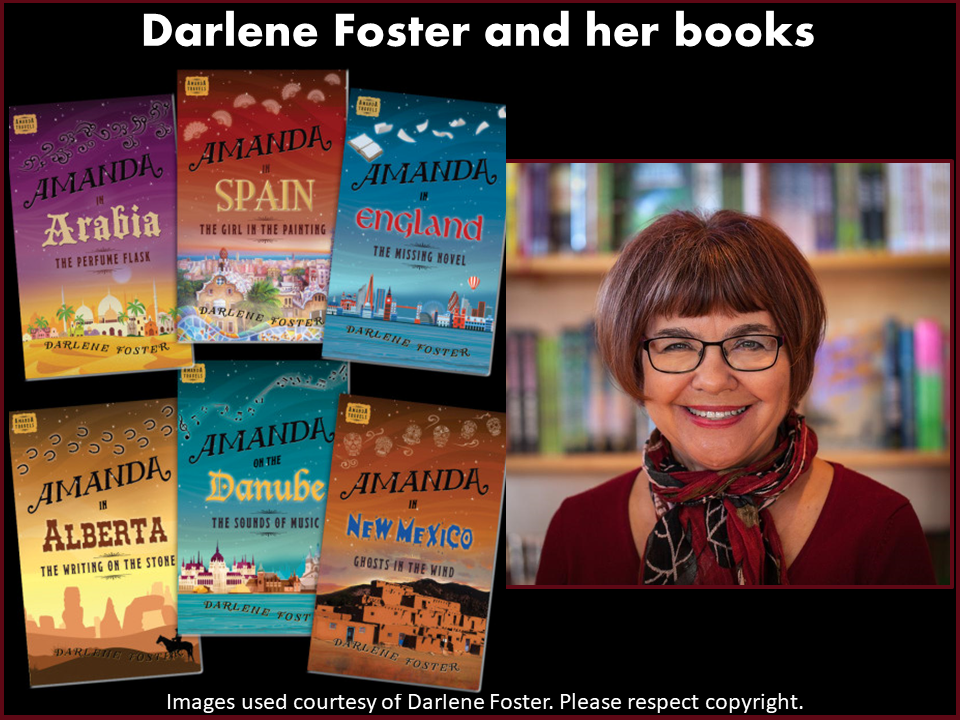
    Growing up on a ranch near Medicine Hat, Alberta, Darlene Foster dreamt of writing, travelling the world, and meeting interesting people. She also believed in making her dreams come true. It’s no surprise she’s now the award-winning author of Amanda Travels, a children’s adventure series featuring a spunky twelve-year-old who loves to travel to unique places.  Readers of all ages enjoy following Amanda as she unravels one mystery after another. When not travelling herself, Darlene divides her time between the west coast of Canada and the Costa Blanca, Spain with her husband and entertaining dog, Dot.

    Darlene Foster and her books

    Welcome, Darlene.

    Let’s talk school. First, could you tell us where you attended school?

    Until grade 4, I attended a small rural school in the Canadian prairies, Hilda, Alberta, in which one teacher taught two grades. Then we moved to another rural community, Irvine, Alberta, where I attended a much larger school with separate grades including high school for the rest of my school days.

    Did you attend a government, private or independent school?

    These were government schools, which we call public schools in Canada.

    What is the highest level of education you achieved?

    I left school in Grade 11 so did not graduate with my classmates. I did however complete high school via correspondence. I took many college courses over the years and when I turned fifty, I graduated from the University of Saskatchewan with a Diploma in Teaching English as a Second Language, via distant learning. I also acquired a number of Certificates in Human Resource Management and Job Search Facilitation. I believe in lifelong learning and will continue taking courses for the rest of my life.

    What work or profession did you choose after school and was there anything in school that influenced this choice?

    I worked in retail management, recruitment, employment counselling and as an ESL Teacher, all as a result of courses I have taken. I have also taken many writing courses over the years, including university-level courses, which have been very beneficial to me now as a writer.

    Darlene Fosters's earliest memory of school

    What is your earliest memory of school? 

    I remember the first day I walked into the classroom. I thought I was in heaven, all those books and so much to learn. I was like a sponge, thirsty for knowledge. I loved school from before I even started and could easily have been a professional student. Even now when I walk into a classroom for an author presentation, I get that same feeling of awe.

    What memories do you have of learning to read?

    I could read a bit before I started school. I recall my dad reading the comics, which we called the funny papers, in the weekly newspaper with me. That may have been how I started to read. I loved the Dick and Jane readers at school and being able to read a story on my own was so exciting.

    What memories do you have of learning to write?

    I recall that being able to print was great but when I learned cursive writing, I was delighted. My writing was very neat and tidy for the first couple of years and I even won prizes for it. Then I started to write stories of my own and my writing couldn’t keep up with my thoughts and ideas. It soon became very messy, but I just had to get it all down on paper. It is totally unreadable now. Thank heaven for computers.

    What do you remember about math classes?

    Math classes were OK but not my favourite. I always had to work harder on math but still got good marks. I do recall enjoying algebra though, while everyone else hated it. Proof that I am a letters person, not a numbers person.

    What was your favourite subject? 

    It was a tie between English Literature, Social Studies and Drama.

    what Darlene Foster liked best about school

    What did you like best about school?

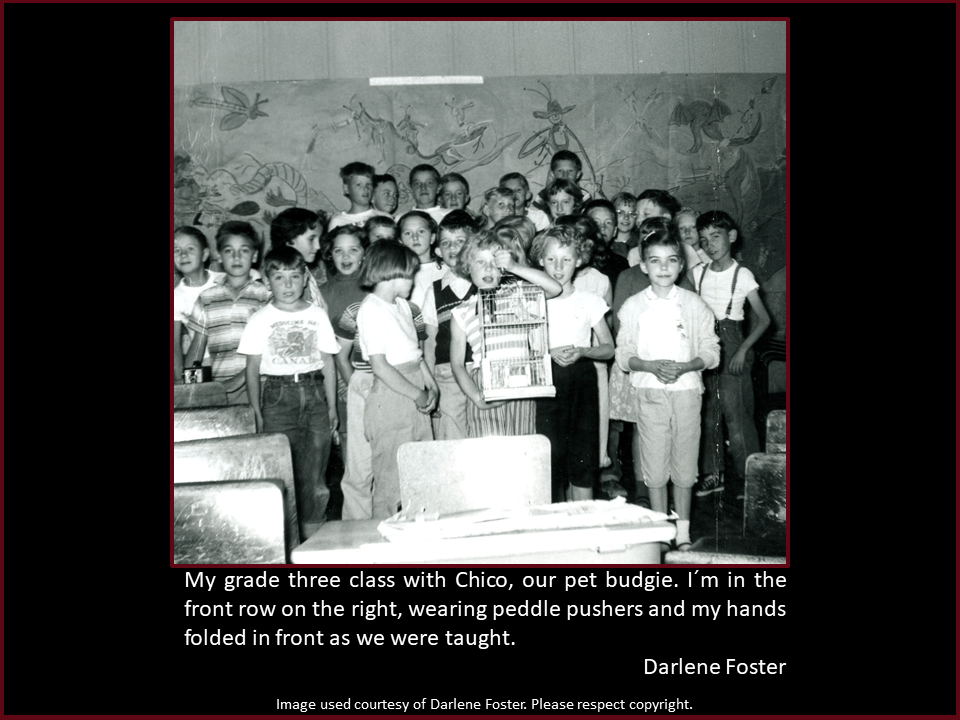
    Learning new things and the teachers. My grade three teacher, in particular, was amazing. She taught us about other countries by getting us involved. When we learned about Mexico she gave us Spanish names, cooked Mexican food for us and brought in colourful serapes and sombreros for us to wear. She instilled in me the desire to travel and see the world. She also encouraged me to write my stories down. I will be forever grateful to her.

    I was an odd child and actually enjoyed taking tests. When we moved, the school season had already started by two months and I had started grade 5 at the old school. I was so excited about going to what I considered a much more modern school. It was a day the class was taking a provincial pre-packaged test and there wasn’t a package for me. I was devastated that I couldn’t take the test and actually cried. The other students thought I was crazy as they would have happily given up doing the test.

    Darlene Foster reminiscences of school days

    What did you like least about school? 

    Physical Training. I was never good at sports and was always the last to be picked for a team. I came up with all kinds of excuses not to participate and was often sick on P.T. day. And those awful bloomers we had to wear! One wise teacher gave me the job of being the scorekeeper, which I enjoyed.

    How do you think schools have changed since your school days?

    Since it has been a long time since I went to school, they have obviously changed, a lot. They have changed since my own kids went to school. The biggest change is the use of technology of course. I love those whiteboards that act as a computer screen. They are like magic. There is much more positive reinforcement and focus on diversity and individuality today. I like the fact that school is less formal and more relaxed. We couldn’t even wear pants (trousers) to school and had to wear skirts even on -40C days. Now they even have pyjama days!

    What do you think schools (in general) do well?

    As a writer, I often visit schools to do readings and I am very impressed with schools today. The students are so eager to learn and proud of their accomplishments. There seems to be an emphasis on reading and creative activities which is so good to see. Children respond to learning if it is fun and there is no reason for it not to be. Personally, I would love to be a student in today’s schools.
    Darlene Foster reminiscences of school days

    How do you think schools could be improved?

    I do think teachers are often overworked. It is a demanding job and one in which you have to be on all the time. Many get burned out which is too bad as it is often the most dedicated that do. Perhaps hiring more assistants or having smaller classes would help. It is such an important job as these kids are our future.

    thank you for your participation

    Thank you for sharing your reminiscences of school and thoughts about education in general, Darlene. It’s a pleasure to have you here. I especially love that you are excited about learning and particularly being a life-long learner. I enjoyed reading your positive views about schools today.

    Find out more about Darlene Foster

    On her website: http://www.darlenefoster.ca/

    On her blog: https://darlenefoster.wordpress.com/

    Or her Amazon author page: https://www.amazon.com/Darlene-Foster/e/B003XGQPHA/

    Goodreads: https://www.goodreads.com/author/show/3156908.Darlene_Foster

    Connect with Darlene on social media

    Facebook: https://www.facebook.com/DarleneFosterWriter/

    Twitter:  https://twitter.com/supermegawoman

    Instagram: https://www.instagram.com/darlene6490/

    Books by Darlene Foster

    Purchase your own copies of Darlene’s books from Amazon.

    If you missed previous reminiscences, check them out here:

    Charli Mills

    Sally Cronin

    Anne Goodwin

    Geoff Le Pard

    Hugh Roberts

    Debby Gies

    Pauline King

    JulesPaige

    D. Avery

    Christy Birmingham

    Miriam Hurdle

    Robbie Cheadle

    Marsha Ingrao

    Ritu Bhathal

    Joy Lennick

    Look for future interviews in this series to be posted on Sunday evenings AEST.

    Coming soon:

    Susan Scott

    Barbara Vitelli

    Sherri Matthews

    Mabel Kwong

    Chelsea Owens

    Pete Springer

    with more to follow.

    Thank you blog post

    Thank you for reading. I appreciate your comments. Please share your thoughts.